
Search:puerto rico
- 1
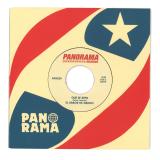
We keep the fire burning with PAN009, a scorching slice of Latin soul from Puerto Rico’s own Nacho Sanabria, better known as El Sabor De Nacho. Originally released in 1973, his version of “Que Se Sepa” takes the Roberto Roena classic and injects it with a new energy — fiery brass, driving percussion, and that unmistakable swagger that defines the golden age of salsa.
Born in Cataño, Puerto Rico in 1929, Nacho Sanabria grew up surrounded by the rhythms of bomba and plena, performing on stage as early as age nine. After relocating to New York in the late 1940s, he became a key figure in the Latin dance scene, performing with groups like Sonora Boricua, Orquesta Panamericana, and later Rafael Cortijo’s Combo. By the mid-1960s, Sanabria formed his own band, El Sabor De Nacho, combining tight horn arrangements, sharp percussion, and his signature charismatic delivery. His 1970s recordings — including Alma Primitiva and Salsa Caliente — stand as shining examples of Puerto Rican salsa at its peak.
Sanabria’s version isn’t a straight cover — it’s his own Puerto Rican interpretation, full of character and swing. The rhythm section stays tight and earthy, the horns punch with intent, and his vocal delivery brings that effortless charm only a seasoned bandleader could deliver. A proper Latin soul mover that sits somewhere between the barrio and the dancefloor, perfect for warm evenings and deeper DJ sets.
Rescued from obscurity and lovingly restored for today’s floors, PANORAMA Records continues its mission to reintroduce rare and essential music to new generations. From deep funk, jazz and global grooves to Latin dancefloor heat, the label’s 45s series shines a light on overlooked gems that still sound fresh today. Supported by tastemakers like Gilles Peterson, Patrick Forge, and the Mr Bongo DJs, this one’s destined to move both hips and feet.

- Puccio | Roelens E La Sua Grande Orchestra Tv - Caravan
- Gegè | Munari Percussion Modern - Police Man
- Don | Marino Barreto Junior- Napolitano D'o Brazil
- Tony | Esposito - Pagaia
- Naco | Volando Con Milton
- Rosario | Jermano - Grand Oceano
- Tullio | De Piscopo - Temptation
- Tony | Cercola - Lumumba
- Gabriele | Poso – Ritmo Italiano
- Agostino | Marangolo - Certi Giorni Mi Sento Bene, Certi Giorni Mi Sento Male
- Tony | Cercola - Lumumba (Clap! Clap! Version)
- Vico | Anthony And His Percussion
12
also available
Red Vinyl[27,31 €]
Mr Bongo proudly presents Ritmo Italiano ‘Unspoken Sounds of Italian Tamburo’ a captivating compilation of percussive-driven, Italian gems curated by Sardinian multi-instrumentalist, percussionist and producer, Gabriele Poso. A journey into the heart of Italian musical history, it celebrates Italy’s rich rhythmic traditions, showcasing a selection of genre-traversing, Italian treasures from the ‘60s to the early ‘90s. Honouring the timeless rhythms of Italian percussion masters, alongside a brand-new exclusive composition by Gabriele, ‘Ritmo Italiano’ shines a light on the universal, primal language of the drum.
A connection sparked from an early age; percussion has always deeply resonated with Gabriele. It led to years of studying percussion traditions across Cuba, Puerto Rico, and Brazil, crafting his own songwriting skills in the process. An acclaimed producer and compiler, his releases on Yoruba Records, BBE and Soundway Records have garnered global support. Yet a growing need to rediscover the essence of his country’s cultural heritage laid the foundations for this new compilation.
In Gabriele’s own words, “Italy has always been a crossroads of civilizations, with influences from the Mediterranean, North Africa, the Middle East, and Europe converging over centuries. Ports like Naples, Genoa, and Venice played a crucial role as gateways for musical exchange, a melting pot of sounds and cultures brought by sailors, merchants and travellers. These influences blended with Italy’s own folk and religious traditions, creating Italy’s unique and emotionally resonant rhythms.”
Across the 12 absorbing tracks, there’s jazz influences, Italian library music aesthetics and experimental beats mixing with Afro-Cuban and Mediterranean rhythms. It’s a broad selection anchored by the drums. The synth-heavy, ‘80s jazz funk flavours of Gegè Munari's ‘Police Man’, sit side-by-side with the samba-infused ‘Napulitano D' 'O Brasil’ by Don Marino Barreto Jr. Tribal, earthly energy radiates from Naco’s ‘Volando Con Milton’, with Tullio De Piscopo serving up cosmic disco brilliance, and blistering jazz funk mastery coming courtesy of Agostino Marangolo. Taking the name of the compilation, a new original track by Gabriele, ‘Ritmo Italiano’, blends traditional rhythms with contemporary energy, Afro-Latin influences with Italian jazz essence. Recorded live in one take, it captures a raw, unfiltered vibe.
“Each track tells a story, connecting the past with the present, and highlighting the deep-rooted traditions that shape Italy’s rhythms. The collection also offers a glimpse into the diversity of Italian music with a variety of styles from the organic, earthy beats to the more experimental and modern takes on traditional rhythms. It’s a reflection of how these rhythms have not only shaped Italian culture but also influenced global music.”

Cali Lanauze makes label debut on Crosstown Rebels with his ‘Borderline’ EP.
The three-tracker, landing on 14th February 2025, features a first-time collaboration with Cari Golden alongside two solo cuts.
Hailing from the vibrant shores of San Juan, Puerto Rico, Cali Lanauze has spent over a decade carving out his space in the global electronic scene. A trailblazer since his teens, Cali’s rich, eclectic grooves reflect both his Caribbean roots and his deep connection to underground music. Now, with his debut on Damian Lazarus’ Crosstown Rebels, he follows an impressive outing via sister label Rebellion with his ‘Borderline’ EP, cementing his position as one of his nation’s finest electronic exports.
The title track sees Cali team up with LA-based singer/songwriter Cari Golden, whose credits include collaborations with Groove Armada, Camelphat, Anja Schneider, Audiofly, and more. Having debuted on Crosstown Rebels with Fur Coat on ‘You and I’, Cari’s second appearance sees her soulful, evocative vocals intertwine effortlessly with Cali’s melancholic yet uplifting production. On the flip, Cali showcases his solo prowess. ‘Temple of Confessions’ takes listeners on a hypnotic journey with trippy grooves inspired by the otherworldly energy of Hï Ibiza’s Club Room, while ‘Talk To My People’ delivers a heady mix capturing the essence of his dynamic artistry.
Cali’s journey from a young producer in Puerto Rico has welcomed releases on labels like Flying Circus, Visionquest, and My Favorite Robot, garnering support from legends such as Carl Cox, Radio Slave, and DJ Sneak. Curating groundbreaking events in Puerto Rico, gracing iconic venues like Hï Ibiza and Brooklyn Mirage, and heading up his own label, Opulenc, Launauze has created a platform for his innovations and genre-spanning productions.

- A1: Flug 8 - Puerto Rico (The Velvet Circle Mix)
- A2: The Black Frame - Sacrosanct (Mount Obsidian Remix)
- A3: The Novotones - Liberty Bell
- A4: Sascha Funke - Mathias Rust
- A5: La Finca - What Clouds Say
- B1: Paulor - The Last Coke In The Desert
- B2: Mount Obsidian - Fade Feat Charlotte Jestaedt
- B3: The Velvet Circle - Our Tribe
- B4: Seb Martel Feat Las Ondas Marteles - Dark Mambo (Joerg Burger Mix)
- B5: Mount Obsidian - Marole Feat Charlotte Jestaedt
10
Kompakt unveils the third volume of Jörg Burger’s Velvet Desert Music compilation series, dedicated to music that hits the sweet spot between the cinematic, the (pop) ambient, and the psychedelic. With Velvet Desert Music Vol. 3, Burger and his friends wander afar, taking trips away from, or adjacent to, the dancefloor that’s acted so long as the crucible for the Kompakt aesthetic. Like its predecessors, it’s a gorgeous, lambent collection of late-night mood music.
Because it’s such a broad church, Velvet Desert Music admits all kinds of new experiences, as well, with Burger looking for music that "leads out of the desert into the velvet universe". Indeed, of all the volumes in the series, this third instalment feels closest to an album made by a true collective. The roster has changed, with new contributors Flug 8 and Seb Martel, both with his trio Las Ondas Marteles and with Chocolate Genius and Zsela as La Finca, joining regulars The Novotones, Mount Obsidian, The Golden Bug, Paulor and Sascha Funke.
Burger himself reappears, too, alongside Fritz Ackermann (of The Novotones), Max Würden and Thore Pfeiffer, in The Velvet Circle. Their contributions are pure lush life electronica: “Our Tribe” hitches a ride with a low-slung groove, flickering psychedelic reels of acoustic guitar traipsing across moody bass and taffeta layers of drone; their opening remix of Flug 8’s “Puerto Rico” gently introduces the album with softly tangling electronic tones, while guitars, drenched in reverb, pirouette in the background. A Mount Obsidian remix of “Sacrosanct” by Burger’s The Black Frame -project is a swirling treat for the ears.
La Finca’s electronics and voice miniature, “What Clouds Say”, is a masterclass in poetic restraint; Martel’s “Dark Mambo”, remixed by Burger, is one of the collection’s big surprises, for it indeed does what the title says, a drifting, surrealist take on the mambo form, full of pensive chords, rich with unrequited longing, a breathy saxophone whispering under the song’s sly rhythmic carriage.
Elsewhere, The Novotones chime in with a slyly propulsive, Krautrock-esque charmer, “Liberty Bell”, and the guitar-led tone-drift of “Valley of Oblivion”; Paulor’s “The Last Coke in the Desert” is a chiming, lilting dreamscape; Mount Obsidian are joined by vocalist Charlotte Jestaedt for two modern takes on early-hours art song, “Marole” and “Fade”; Sascha Funke’s “Mathias Rust” is a lavish dancefloor dream, vocal samples drifting through the song as it slowly envelops the listener in its opulent radiance.
This is just a taste of the rich pleasures of Velvet Desert Music Vol. 3, a triumph of a compilation that takes the psychedelic visions of its predecessors and looks for the desert within, a dusty kiss, a road-movie hallucination flickering on the listener’s eyelids, a cinematic projection from deep inside the mind.
- A1: El Nuevo Montuno Llego
- A2: Llamé A Chango
- A3: Monina Y Ramon 4:00
- A4: Balanceate 6:50
- B1: Triste Arrabal
- B2: Me Queda Un Guaguanco
- B3: Dichoso 3:30
- B4: Oye Tu Son Borinquen
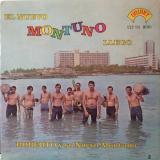
Roberto y su Nuevo Montuno recorded their first album, “El Nuevo Montuno Llegó” (1970), when Roberto Berríos was just 22 years old. This was also the debut release on Haddock’s own Uniart label. Berríos remembers that they did the recording in two sessions, splitting it up into four tracks per visit. The engineer was the famed Pedro “Pedrito” Henríquez, who recorded El Gran Combo, Roberto Roena and many others. The band had a mix of tasty, powerful originals, from Tony Cintrón’s title track that announced the band had arrived, ‘El Nuevo Montuno Llegó,’ to Quique Dávila’s mournful ‘Triste Arrabal.’ Then there was the hit Santería themed tune, ‘Llamé a Changó,’ which was a song that Quique Dávila brought to the band, but had been originally composed by Carlos Pinto, though Quique was given the credit. Dávila also composed ‘Me Queda Un Guaguancó,’ which is Roberto’s favorite song on the record (as well as a fan favorite), with Papo sounding like his friend Héctor Lavoe, and Quique Dávila’s proud manifesto declaring that Puerto Rico now had its own son montuno, ‘Oye Tu Son, Borinquen,’ featuring the pianist’s tasty but brief solo. The cover versions came from the group’s earliest period when most of their repertoire consisted of renditions of beloved but lesser known tunes, and include Louie Ramírez’s ‘Balancéate’ (a favorite of Roberto’s from Ray Barretto’s songbook), Bobby Valentín’s ‘Monina y Ramón’ (recorded during his stint with Willie Rosario), and a bolero indelibly sung by Cheo Feliciano when he was with the Joe Cuba Sextet, ‘Dichoso,’ written by Joe Cuba’s talented pianist, Nick Jiménez. Some of the arranging was done by Cintrón and some by Dávila, though Quique had some help from his old friend from El Combo Moderno, Freddie Miranda, who at that time was with Roberto Roena’s Apollo Sound. Roberto says that the arrangements of the cover tunes were made specifically to be different and more contemporary sounding than the originals. “El Nuevo Montuno Llegó” has become a legendary salsa dura classic from Puerto Rico and we are thrilled to present this first legitimately licensed and remastered vinyl reissue. It includes detailed liner notes that reveal the untold story of the band and their debut album, and rare photos.

10
The wild lunar landscape of Lanzarote is the dreamy frame in which Populous paints his new album, “Isla diferente”.
An instrumental trip between cumbia and latin ambient music through the mysterious and magical landscape of Lanzarote, with some gloomy vocal interventions from Fuera (Italy), Javier Arce (Costa Rica), Eva de Marce (Mexico) and Esotérica Tropical (Puerto Rico).
An organic mixture of sweet ethereal melodies and experimental electronic sounds which the artist himself labeled as “latin ambient”.

- Highest 2 Lowest
- Trunks
- Da Lowdown
- King David
- Both Eyes Closed
- Puerto Rico
- Prisencolin (Americano Joint)
- And Now We Shall Begin
- Oh, What A Beautiful Mornin
- All Money Ain't Good Money
- Loving Partners (Trio)
- Somebody Got Trey
- Father 2 Son
- Paul Begs (Score)
- Lobby Talk
- Balcony Disconnect
- Da Kings
- Questioning Kyle
- Brooklyn Hospital
- The Chase
Spike Lees neuester Film ,Highest 2 Lowest" zeigt das Leben des Gründers des fiktiven Plattenlabels Stackin Hit's, gespielt von Denzel Washington. Der Soundtrack hat eine coole Auswahl an Original-Songs von etablierten Musikgrößen und neuen Künstlern. Die aufstrebenden Sängerinnen Jensen McCrae und Aiyana-Lee bringen ihre einzigartigen Stimmen ins Album ein, während die Harlem-Legende Eddie Palmieri mit seinem Salsa-Orchester für energiegeladene Auftritte sorgt. Das absolute Highlight ist der ebenfalls aus New York stammende A$AP Rocky (der auch in dem Film mitspielt), der zwei knallharte Ohrwürmer beisteuert, die uns daran erinnern, warum er einer der modernen Superstars des Rap ist. Die Starpower des Soundtracks wird durch eine mitreißende Orchesterpartitur von Howard Drossin untermalt und durch ein vom Jazzpianisten Fergus McCreadie angeführtes Trio ergänzt.

10
Pablo Sánchez´s new solo album “Archipiélago” is out now. The new long player, a follow-up to his “Nocturnal” album as Basic Need will be released on Sisternoise Records and is a 42 minute voyage sailing through uncharted waters.
Every archipelago is a constellation of islands, distinct yet bound by invisible tides. Archipiélago, the latest work from Pablo Sánchez, follows this same geography of sound and memory. Its islands are not of sand and rock, but of places which inspired the artist throughout his life; Buenos Aires, Caracas, Puerto Rico, New York, Madrid, Berlin, and Barcelona. Each city has left a trace, a shoreline carved into Sánchez’s musical journey and left a distinctive musical mark.
The ten songs gathered here are like sovereign entities, each with its own character, its own rhythm, its own language. Together they form a single territory, a map drawn by musical experience, longing, and imagination. They are ports of call, but also fragments of a larger voyage, where tradition and experimentation, nostalgia and discovery, coexist to create a common territory. Along the way guest magicians Animal Feelings and Salomeya add their vocal sparks to the voyage.
Archipiélago is not a destination but a map of crossings, a territory of sound where the journey itself becomes home.

3
Having lifted dancefloors all summer long, Cali Lanauze and Aquarius Heaven’s tripping club collaboration ‘Just Like Magic’ sails to fresh, otherworldly waters, courtesy of remixes from two of dance music’s best-loved and most creative producers, Luciano and Roman Flügel.
Luciano’s remix captures the prolific Swiss-Chilean DJ and producer at his minimalistic finest. Spinning out a simple percussive loop, Luciano takes Slacker85’s crew on a winding journey that places the dancehall-indebted vocals of Aquarius Heaven front and centre, blending his story with almighty swells of bass and an addictively ethereal atmosphere.
Presenting a more full-bodied take, Roman Flügel’s peerless genre-blending finds a sweet spot between the tropical hustle of the original, flirting cheekily with the rubbery bassweight of his own studio. Impactful enough for the biggest of rooms, yet as detailed and precise as Flügel’s finest work, the Frankfurt maestro performs his own sorcery within the Puerto Rico producer’s authentic incantations.

- A1: Malavoi - Te Traigo Guajira
- A2: Los Caraibes - Donde
- A3: Tropicana - Amor En Chachacha
- A4: Ryco Jazz - Wachi Wara
- A5: Eugene Balthazar - Dap Pignan
- A6: Roger Jaffort - Oye Mi Consejo
- A7: Les Kings - Oriza
- B1: Les Supers Jaguars - Tatalibaba
- B2: Super Combo De Pointe A Pitre - Serrana
- B3: L'ensemble Abricot - Se Quedo Boogaloo
- B4: Henri Guedon - Bilonga
- B5: Les Aiglons - Pensando En Ti
- B6: Los Martiniquenos - Caterate
13
In Guadeloupe, many people think that jazz and ka music are like a ring and a finger. To some extent, the same could be said about so called Latin music and the music played in the French West Indies.
Both aesthetics were born in the Caribbean and bear so many connections that they can easily be considered cousins. In constant dialogue, there are lots of examples of their fruitful alliance and have been for a while. The English country dance that used to be practiced in European lounges came to be called kadrille in Martinique and contradanza in Cuba. They both featured additional percussion instruments inherited from the transatlantic deportation. Drawing from shared feelings about the same traumatized identity – later to be creolized – it would be hard not to assume that they were meant to inspire each other. The golden age of the orchestras that graced the Pigalle nights during the interwar period further proves the point. As soon as the 1930s, Havana-born Don Barreto naturally mixed danzón and biguine music in a combo based at Melody's Bar. In the following decade, Félix Valvert, a conductor who was born and raised in Basse-Terre in Guadelupe, also worked wonders in Montparnasse with La Coupole, which was an orchestra made up of eclectic musicians. Afro- Caribbean performers of various origins were often hired on rhythm and brass sections in jazz bands, which used to enliven the typical French balls of the capital. In the 1930s and onwards, Rico’s Creole Band was one of them.
Martinican violinist-clarinettist Ernest Léardée, who would become the king of biguine music as well as the main figure of French Uncle Ben's TV commercials (a dark stigma of post-colonial stereotypes), had musicians from the whole Caribbean sphere play at his Bal Blomet – and they all enchanted "ces Zazous-là" (according the words of Léardée's biguine-calypso piece). In les Antilles (French for French West Indies), music history started to speed up in the 1950s, when trade expanded and radio stations grew bigger. The Guadelupean and Martiniquais youth tuned in their old galena radio sets to South American and Caribbean music. As for the women traders, les pacotilleuses, they bought and sold goods across different islands (the "passing of items through various hands" was thought to be most pleasurable) and brought back countless sounds in their luggage. Such was the case of Madame Balthazar, who once returned from Puerto Rico with the first 45rpm and 33rpm to ever enter Martinique.
Out of this adventure was created the famous Martinican label La Maison des Merengues, a music business she opened and undertook with her husband and which proved to be a major landmark. At the end of the 1950s, in Puerto Rico, Marius Cultier competed in the Piano International Contest playing a version of Monk's Round 'Midnight. He won the first prize and this distinction foreshadowed everything that was to come. Cultier, the heretic Monk of jazz, was quickly praised for writing superb melodies, always tinged with a twist that conferred a unique sound to his music. It didn't take long for the gifted self-taught musician to get to play with Los Cubanos, making a name for himself thanks to his impressive maestria on merengues.
The rest is history. Besides, in the late 1950s, Frantz Charles-Denis, born into the upper middle class in Saint-Pierre and better known by his first name Francisco, went back home after working at La Cabane Cubaine – a club located rue Fontaine where he had caught the Latin fever. Francisco's music was therefore heavily marked by his Cuban cousins' influence, which gave the combos he led a specific style and also led to renewal. Things were swinging hard in La Savane, located in the main square in Fort-de-France. He set up the Shango club close by and tested out the biguine lélé there, a new music formula spiced up with Latin rhythms. Soon afterwards, fate had him fly to Puerto Rico and Venezuela.
As for percussionist Henri Guédon (percussions were only a part of his many talents), he was born in Fort-de-France in May 22nd 1944, the day marking the celebration of the abolition of slavery. As an old man, he could remember that in " his father's Teppaz, a lot of hectic 6/8 music was constantly playing...". In the opening lines of his Lettre à Dizzy, a small illustrated collection of writings published by Del Arco, he highlighted the huge impact that cubop had on him as a teenage boy, around 1960. He eventually turned out to be the lider maximo in La Contesta, a big band steeped in Latin jazz. He was also the one who originated the word zouk to describe music which brought the sound of the New York barrio to Paris. It was the culmination of a journey that started in Sainte-Marie: "a mythical place for bélé, the equivalent of Cuban guaguancó". In the early 1960s, the tertiary economy developed to the detriment of agriculture. Yet rural life was where roots music emerged in Martinique and in Guadeloupe.
Record companies played a major part in the process of Latin versions sweeping across the islands – before reaching everywhere else. Producer Célini, boss of the great Aux Ondes label, and Marcel Mavounzy, both the head of Émeraude records - a firm which was founded in 1953 - as well as the brother of famous saxophonist Robert Mavounzy, were big names to bear in mind. Although there were many of them - all of whom are featured on this record - Henri Debs was definitely the major figure in the recording adventure. He proved to be so influential that he even got compared to Berry Gordy. In the mid 1950s, when he acquired his first Teppaz, he worked on his first compositions: a bolero and a chachacha. Then, he became the one man who made people discover Caribbean music, from calypso to merengue. He was among the first ones to rush out to San Juan, Puerto Rico, to buy records and distribute them through a store run by one of his brothers in Fort-de-France. He had members of the Fania All Star come and perform there, which he was madly proud about. He was also the first one to pay attention to Haitian music, such as compas direct and various other rhythms which would soon flood the market. As a result, many of the combos hitting his legendary studio would end up boosted by widespread "Afro-Latin" rhythms. However, he never denied his identity: gwo ka drums were given a major role, although they were instruments which had long been banned from the "official" music spheres. The present selection bears witness to such a creative swarming. Here are fourteen tracks of untimely yet unprecedented cross-fertilization: all types of music rooted in the Creole archipelago have found their way, whatsoever, to the tracklisting. Whether originating from the city or being more rural, they all go back to what Edouard Glissant, in an interview about the place of West Indian music in the Afro-American scope, called "the trace of singing, the one which got erased by slavery." "It is so in jazz, but also in reggae, calypso, biguine, salsa... This trace also manifests through the drums, whether Guadelupean, Dominican, Jamaican or Cuban... None of them being quite the same. They all point to the idea of a trace, seeking it out and connecting to each other through it. This is the hallmark of the African diaspora: its ability to create something new, in relation to itself, out of a trace. It may be the memory of a rhythm, the crafting of a drum, a means of expression which doesn't resort to an old language but to the modalities of it." The opening track features one of the emblematic orchestras of this aesthetic identity, criscrossing many music types from the archipelago. The 1974 Ray Barretto guajira – Ray Barretto was a major New York drummer influenced by Charlie Parker and Chano Pozzo – is magnificently performed by Malavoi, a legendary Fayolais group (i.e from Fort-de-France). Additionally, the compilation ends on a piece by Los Martiniqueños de Francisco. It symbolically closes the circle as it is a genuine potomitan of Martinique culture which also functions as a tireless campaigner for Afro-Caribbean music. Practicing the danmyé rounds (a kind of capoeiria) to the rhythm of the bèlè drum, it delivers a terrific Caterete, a kind of champeta of Afro- Colombian obedience which was originally composed by Colombian Fabián Ramón Veloz Fernández for the group Wgenda Kenya. The icing on the cake is Brazilian Marku Ribas, who found refuge in Martinique in the early 1970s, bringing his singing to the last trance-inducing track. These two "versions" convey the whole tone of a selection composed of rarities and classics of the tropicalized genre, swarming with tonic accents and convoluted rhythms. It is the sort of cocktail that the West Indians never failed to spice up with their own ingredients. For instance, the Los Caraïbes cover of Dónde, a famous Cuban theme composed by producer Ernesto Duarte Brito, has a typical violin and features renowned Martinique singer Joby Valente and his piquant voice.
The track used to be – or so we think – their only existing 45rpm. The meaningful Amor en chachachá by L'Ensemble Tropicana, a band which included Haitian musicians among whom was composer and leader Michel Desgrotte, also recalls how Latin music was pervasive in the tropics in the mid-1960s. They were the ones keeping people dancing at Le Cocoteraie in Guadelupe and La Bananeraie in Martinique. Around the same time, another "foreign" band, Congolese Freddy Mars N'Kounkou's Ryco Jazz, achieved some success on both islands by covering Latin jazz classics – such as their adaptation of Wachi Wara, a "soul sauce" by Dizzy Gillespie and Chano Pozo whose interweaving of strings and percussions can have anyone hit the dancefloor. How can you resist Dap Pinian indeed, a powerful guaguancó by Eugene Balthazar, performed by the Tropicana Orchestra and published by the Martinique-founded La Maison des Merengues? It also acts as a symbol of the maelstrom at work. Going by the name Paco et L'orchestre Cachunga, Roger Jaffory used to play guaguancó too: his Fania-inspired Oye mi consejo is one example of his style. Baila!!!!! Dancing was also one of the Kings' focus points. Oriza is a Puerto Rican bomba and a "classic" originally composed by Nuevayorquino trumpeter Ernie Agosto, which reserves major space for brasses, giving it a special sheen.
Emerging from the New York barrios crucible was also La Perfecta, a Martinique group originating from Trinidad, whose name directly references the totemic Eddie Palmieri figure as well as his own band, also called La Perfecta. Here they borrow Toumbadora from Colombian producer and composer Efraín Lancheros and interpret it by emphasizing percussions, which set fire to the track even more than the wind instruments. The same goes for Martinique's Super Jaguars, who use Tatalibaba – a composition by Cuban guitarist Florencio "Picolo" Santana which was made famous by Celia Cruz & La Sonora Matencera – as a pretext for sending their cadences into a frenzy. In a more typically salsa vein, the Super Combo, a famous Guadelupean orchestra from Pointe-Noire that was formed around the Desplan family and had Roger Plonquitte and Elie Bianay on board, adapt Serana, a theme by Roberto Angleró Pepín, a Puerto Rican composer, singer and musician also known for his song Soy Boricua. Here again, their vision comes close to surpassing the original. In the 1970s, L'Ensemble Abricot provided a handful of tracks of different syles, hence reaching the pinnacle of the art of achieving variety and giving pleasure. They played boleros, biguines, compas direct, guaguancó and even a good old boogaloo - the type they wanted to keep close to their hearts for ever, "pour toujours", as they sang along together in one of their songs. Léon Bertide's Martinican ensemble excelled at the boogaloo which had been composed by Puerto Rican saxophonist Hector Santos for the legendary El Gran Combo.
Three years later, in 1972, Henri Guédon, with the help of Paul Rosine on the vibraphone, tackled the Bilongo made famous by Eddie Palmieri. Such a classic!!!!! And so were the Aiglons, the band from Guadelupe: choosing to execute Pensando en tí, a composition by Dominican Aniceto Batista, on a cooler tempo than the original, they noticeably used a wonderfully (un)tuned keyboard in place of the accordion. On the high-value collectible single – the first one released by Les Aiglons under the Duli Disc label – there is a sticker classifying the track under the generic name "Afro". Now that is what we call a symbol. Jacques Denis

- Puccio Roelens E La Sua Grande Orchestra Tv - Caravan
- Gegè Munari Percussion Modern - Police Man
- Don Marino Barreto Junior- Napolitano D'o Brazil
- Tony Esposito - Pagaia
- Naco - Volando Con Milton
- Rosario Jermano - Grand Oceano
- Tullio De Piscopo - Temptation
- Tony Cercola - Lumumba
- Gabriele Poso – Ritmo Italiano
- Agostino Marangolo - Certi Giorni Mi Sento Bene, Certi Giorni Mi Sento Male
- Tony Cercola - Lumumba (Clap! Clap! Version)
- Vico Anthony And His Percussion
12
also available
Black[25,17 €]
Mr Bongo proudly presents Ritmo Italiano ‘Unspoken Sounds of Italian Tamburo’ a captivating compilation of percussive-driven, Italian gems curated by Sardinian multi-instrumentalist, percussionist and producer, Gabriele Poso. A journey into the heart of Italian musical history, it celebrates Italy’s rich rhythmic traditions, showcasing a selection of genre-traversing, Italian treasures from the ‘60s to the early ‘90s. Honouring the timeless rhythms of Italian percussion masters, alongside a brand-new exclusive composition by Gabriele, ‘Ritmo Italiano’ shines a light on the universal, primal language of the drum.
A connection sparked from an early age; percussion has always deeply resonated with Gabriele. It led to years of studying percussion traditions across Cuba, Puerto Rico, and Brazil, crafting his own songwriting skills in the process. An acclaimed producer and compiler, his releases on Yoruba Records, BBE and Soundway Records have garnered global support. Yet a growing need to rediscover the essence of his country’s cultural heritage laid the foundations for this new compilation.
In Gabriele’s own words, “Italy has always been a crossroads of civilizations, with influences from the Mediterranean, North Africa, the Middle East, and Europe converging over centuries. Ports like Naples, Genoa, and Venice played a crucial role as gateways for musical exchange, a melting pot of sounds and cultures brought by sailors, merchants and travellers. These influences blended with Italy’s own folk and religious traditions, creating Italy’s unique and emotionally resonant rhythms.”
Across the 12 absorbing tracks, there’s jazz influences, Italian library music aesthetics and experimental beats mixing with Afro-Cuban and Mediterranean rhythms. It’s a broad selection anchored by the drums. The synth-heavy, ‘80s jazz funk flavours of Gegè Munari's ‘Police Man’, sit side-by-side with the samba-infused ‘Napulitano D' 'O Brasil’ by Don Marino Barreto Jr. Tribal, earthly energy radiates from Naco’s ‘Volando Con Milton’, with Tullio De Piscopo serving up cosmic disco brilliance, and blistering jazz funk mastery coming courtesy of Agostino Marangolo. Taking the name of the compilation, a new original track by Gabriele, ‘Ritmo Italiano’, blends traditional rhythms with contemporary energy, Afro-Latin influences with Italian jazz essence. Recorded live in one take, it captures a raw, unfiltered vibe.
“Each track tells a story, connecting the past with the present, and highlighting the deep-rooted traditions that shape Italy’s rhythms. The collection also offers a glimpse into the diversity of Italian music with a variety of styles from the organic, earthy beats to the more experimental and modern takes on traditional rhythms. It’s a reflection of how these rhythms have not only shaped Italian culture but also influenced global music.”

- A1: Sun People (Intro)
- A2: Sun Children (Original Mix)
- A3: La Lluvia (Feat Richard Shepard & Quantic)
- A4: The Love Feeling (Feat Brian J)
- A5: 2 Sips & Magic
- B1: Just Move! (Feat Mc Kwasi)
- B2: Brookarest
- B3: Didibina (Feat Falu & Quantic)
- B4: Gira Do Sol (Feat Liliana Araujo)
- B5: Calle Sol (Feat Tempo & Candela All Stars)
- B6: N`dini (Feat Ismael Kouyaté)
11
Wonderwheel is happy to present the very first pressing of Nickodemus' longtime classic "Sun People", pressed on translucent yellow vinyl. Originally released in 2009 by Thievery Corporation's Eighteenth Street Lounge label, "Sun People" was built with songs made for people who love the sun, sunshine and brighter days to come. Appropriate, of course, as Nickodemus has made his mark soundtracking NYC summers with his massively popular Turntables On The Hudson live events as well as with 20 consecutive years touring the World. The songs were inspired by various people Nickodemus met and places he's been, along with his collective feelings of optimism. It's these positive sonic vibes from all over the globe that Nickodemus matches with collaborators hailing from destinations including Guinea, Colombia, Puerto Rico, Brazil, Romania, India, Turkey, United Kingdom and New York City. These are the Sun People.As songs like "N'dini" "Sun Children" & "The Love Feeling" continue to kept parties dancing until today, "Calle Sol" & "Gira Do Sol" are being discovered by new fans & playlists today. As Jason Bentley, former Music Director at KCRW once said, "Sun People reflects a rich musicality, while infectious rhythms keep the party live. Nickodemus truly knows
no borders on this global dancefloor."Wonderwheel recordings is happy to keep the fire burning with this special limited color vinyl reissue out on June 21st, 2024.
a 01: Sun People (Intro) feat. Ismael Kouyaté
b 02: Sun Children (Original Mix) [feat. The Real Live Show]
8
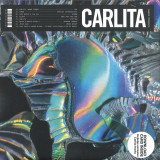
fabric Records has enlisted Turkish-Italian DJ and producer Carlita for the next instalment of its prestigious mix compilation series, ‘fabric presents’. Set for full release on April 11, fabric presents Carlita will showcase her meticulous curation, featuring two new original tracks.
The double vinyl sampler features eight full length tracks taken from Carlita’s mix. Her two exclusives ‘Raf’ and ‘Stop Now’ are cut to A1 and C1 respectively.
The two black vinyl plates are 140g and are packaged in black inners, inside a matt printed reverse board printed sleeve. The vinyl package accompanies the CD, digital download and streaming of fabric presents Carlita mixed compilation across all major platforms on 11th April 2025.
The announcement of Carlita’s mix arrives alongside the release of the first single, “Raf,” a collaboration with Toronto producer Andre Zimmer, out now via fabric Records. “Raf” is a high-energy fusion of classic house and rave influences, crafted with the dancefloor in mind. The track pairs infectious, soulful vocal elements with punchy synth stabs and rolling breakbeats, all anchored by a deep, groovy tech-house bassline. “Raf,” along with an additional original from Carlita, “Stop Now,” is nestled among storied house and techno juggernauts such as Butch, Alex Metric, and Paco Osuna, as well as rising underground producers Prunk, Toman, Alinka, and more.
Beyond the club and festival circuit, Carlita is a leading figure at the intersection of music and fashion. She’s been featured in British Vogue and on the cover of Vogue Italia, performed at exclusive events for Louis Vuitton, Versace, and Fendi, and curated performances featuring The Blessed Madonna and Heron Preston at her own multi-sensory Senza Fine parties. Most recently, she collaborated with Audemars Piguet to mark the release of her debut album, Sentimental.
Carlita (real name Carla Frayman) comes from a background of musical mastery, having played classical cello for the Royal Academy of Music in London in her earlier years (after learning to play piano at age 3). Since her earliest memories, Frayman has never stopped developing her musical talent, picking up more instruments, learning music theory, and after university, saving up enough money to pursue it full time. She hasn’t stopped chasing her dreams and is now playing high-profile DJ slots (check out her Cercle set at Cinecittà in Rome), and has quickly risen as a producer with her phenomenal debut album Sentimental on Ninja Tune last year, as well as remixes for Disclosure and RÜFÜS DU SOL.
Coming up, Carlita be performing at festivals and clubs in Puerto Rico, Switzerland, Germany, and many more. On April 12, celebrating her fabric presents release, Carlita will be taking over Room 2 at fabric alongside Jennifer Loveless, Tommy Gold, and Pedrose.

He's the original (and maybe only self-proclaimed?) house gangster and he is back in 2025 and sounding as good as ever. Puerto Rico by way of Chicago's DJ Sneak makes beats as raw as the meat he likes to chuck on his BBQ grill and UK house legend Nail must be a fan cause it's his label he lands on now. This is a solid four-tracker that ticks all the boxes with its killer grooves and smart loops. 'All I Need In Life' is a playful opener, 'Das Gud!' gets more intense and trippy with its bleepy melodic refrains and 'Help Me Somebody' then sinks back into loose and dusty, disco-tinged drums with classic cowbell hits. 'What You Expecting From Me' is a sweaty and gritty warehouse banger to close with aplomb.

11
Marina y su Melao is a band from Barcelona led by Puerto Rican Marina Molina. After a period of live activity, in 2025 they will release their debut album, "Rezo al agua", where Puerto Rico's bomba, an eminently rhythmic genre, expands to fuse with the colours and flavours of other Afro-Caribbean sounds. Tradition and folklore are embodied in a powerful and innovative conception.
In "Rezo al agua", Marina Molina expresses an attachment to the land, the landscape, the culture, the beliefs and the environment where she was born, Puerto Rico. She does this through bomba, one of the country's most identifying musical expressions. Bomba is as old as the slavery of those who gave birth to it in order to tell their tribulations and hopes, armed with the instrument they had at hand: the drums. It is a kind of meta-genre that includes a multitude of rhythmic varieties.
But Marina is something more than bomba, the legacy she received from her elders and which she does not wish to turn into a frozen object of veneration, an untouchable totem, mystical and ruled by norms bequeathed by the years. Marina, who has Colombian blood in her veins, is an artist of today, of a world in which cultures can mix, people migrate, influence each other, travel, exchange their cultural traces, can see online what happens at the other end of the world and thus open the window that facilitates the mixing of identities. These mixtures redraw borders and genres, allowing popular music to avoid its fossilization.
Marina grows in this fertile territory. She has a ductile and powerful voice, as clear as her strong, independent mindset. This is a remarkable element in the lyrics of the album, which despite being written from a current perspective, contain the sense that popular lyrics have always had: they explain life with the small letters of the everyday. And all this is presented in the bomba genre. Impure. There is an African guitar, a pedal steel guitar, a Wurlitzer, an accordion and everything that Marina and Miguelito Superstar, the album's producer, thought was necessary to accentuate the musicality of a full voice and drums that resonate raw with the vibration of tradition. A tradition now in the hands of a woman who aspires to her own space in life, to write her own chapter.

4
Record includes 2 page insert and download
Flipping rhythms from Guadeloupe, Cuba, Senegal and Puerto Rico, Time Capsule founder Kay Suzuki releases an acid-soaked collection of remixes that transcends time and space.
From the blacked-out basement of Plastic People to the psychedelic dancefloor of Beauty and the Beat, Kay Suzuki’s musical world has been shaped by some of London’s most iconic sound systems. High quality audio, he says, can open portals to new universes. Rhythm is time made plastic and beauty is the space between the beats.
Spanning over fifteen years of music from the prolific DJ, producer, Time Capsule label boss and one time Brilliant Corners sushi chef, this collection of remixes is the logical conclusion of Kay Suzuki’s musical thinking. Drawn to unique percussive or syncopated rhythms, he describes remixes as conversations between the original artist’s sense of time and his own. Weaving broken beat, house and dub influences into rhythms from across the Black Atlantic, these four tracks find each other kinship on the dance floor.
The A-side begins with a dubbed-out rework of the Gwoka celebration rhythm ‘A Ka Titine’ by Guadeloupe’s Gaoulé Mizik that was originally released by Beauty and the Beat in 2022. Layering electronic flares, dub sirens and space echo reverb across the shuffling toumblak beat, Suzuki leans into the track’s creole heritage, turning the track into a sought-after dancefloor jam, played by everyone from Colleen Cosmo Murphy and John Gomez to Yu-Su and Bradley Zero.
Skipping to Puerto Rico, Broki’s ‘Es Que Lo Es’ emerged from a collaboration between Bugz in the Attic’s Afronaut and Seiji and local musicians. Here Suzuki reworks the Afro-Latin percussion into a subtle bruk, conjuring a third space between London and San Juan that remains both of and outside the era in which it was made.
Blackbush Orchestra’s ‘Sortez, Les Filles!’ opens the B-side, taking apart the original and kneading the Senegalese percussion into a chugging Balearic house track, buoyant and full of life. Also first released by Beauty and the Beat, the track features new synth and structural elements that bring out the innate dancefloor potential beneath the surface of the original.
The final track on the collection heads back to the Caribbean and the island of Cuba, where Sunlightsquare a.k.a. Claudio Passavanti worked with vocalist Rene Alvarez and expert in Afro-Cuban percussion, Giovanni Imparato, on ‘Oyelo’. Here, Suzuki strips out the kick completely, leaving an implied rhythm which he calls an “imaginary four-to-the-floor” - a groove that is felt rather than heard, leaving the listener floating in another universe entirely.

10
This is one of Ray Pérez’s most highly sought-after albums, not only for its strong salsa dura anthems and funky boogaloo numbers but also for its brave, quirky eclecticism and youthful, rebellious spirit, all of which are reflections of “El Loco” Ray’s unique genius, making him a beloved figure in rare record collector circles everywhere.
The original is not that easy to find today and carries a hefty price. Thankfully, it has been remastered from the original tapes, fully licensed, with the original artwork, preserving and presenting the legacy of this great Venezuelan music for today’s generation.
DESCRIPTION
The late 1960s was a very busy time when Pérez was juggling several different studio bands: Los Dementes, Los Calvos and Los Kenya.
The daring experiment Pérez created with Los Calvos laid the basis for Los Kenya, an actual working band that released six albums between 1968 and 1972. Despite being titled “Los Kenya, Vol. 2” because it was the second released by Discomoda, the record actually represents Los Kenya’s third album, and is perhaps the most mature, well-rounded venture in the lot.
In February 1969, on Discomoda, came “Los Kenya, Vol. 2” focused on the upcoming carnival season and was calculated to compete with rival bands Federico Y Su Combo Latino and Sexteto Juventud for the plethora of gigs offered at that time of year.
The album, like all Ray Pérez releases of the time, is short and powerful, with five tracks per side, showcasing a variety of singers, genres, rhythms, influences and arrangements, making this one of his more eccentric and interesting efforts. 1960s California “sunshine pop” rock (often referred to as ‘surf’ on Los Kenya records), guajiras, boogaloos, descargas and even Mexican mariachi corridos are all added to the pot of salsa cooked up by “El Loco Ray” and his band.
The album has been rescued from obscurity and lovingly restored, remastered from the original tapes, fully licensed, with its original artwork intact, preserving and presenting the legacy of this great Venezuelan music for today’s generation of global salsa dura fans.

8
The seeds of composer Rafael Anton Irisarri’s latest LP were first planted during his 2016 tour in Italy, months before that Autumn’s unexpected presidential election. The linguistic glitch of an innocuous diner in Milan named “il Mito Americano” – meant as “The American Dream” but translated literally to English as “The American Myth” – sparked a series of ideas, both conceptual and musical.
Amid the chaos of 2020, while exploring the stark world of brutalist architecture and inspired by the false fronts of Potemkin villages, a vision started to take shape: FAÇADISMS. Composed over three years, it’s a late capitalist lament of simmering electric despondency.
Irisarri’s obsession with repeating motifs mirrors the cyclical nature of our tumultuous political history. The album’s eight tracks heave and storm like a tempest being drained of its rage. This is the sound of majestic dissipation, of morning afters, fashioned from a mournful haze with cavernous guitars and granular twilight. A euphony of a receding tide as one sifts through the remnants of what remains: dust, delusion, and memory.
Opening with the somber gauze of “Broken Intensification," FAÇADISMS moves fluidly between moments of absence and abandon. Ashen swaths of electronics billow above smoldering embers of melody, guitar, and scattered streaks of processed strings and voice, as on the rapturous doom of “Control Your Soul's Desire for Freedom,” featuring Julia Kent on cello and Hannah Elizabeth Cox on vocals. "The impoverished peoples of the Americas have known all along that 'freedom' is a cruel illusion crafted by the elites, akin to Potemkin's fake villages designed to impress Catherine the Great," Irisarri indicates. "FAÇADISMS illustrates a twisted inversion where the rulers deceive their subjects with illusions of safety, democracy, and free speech to create a grotesque mirage of control over their own lives.”
Elsewhere, Irisarri leans into passages of hushed oblivion (“Hollow,” “Dispersion of Belief”), while ragged drones rumble and disintegrate into wind-battered ambient wreckage. One has the sense that it’s all too late. The hour of fury has passed. The beauty has come and gone. Irisarri’s muse has become the crack in the façade of the unraveling myth.
The record closes with a climax of grand departure. Co-written with Kenyan sound artist KMRU, “Red Moon Tide” surges from flickering elegy to celestial disquiet, roiling waves of hymnal descent, and bristling noise. The effect is unsettling and unmooring: a soundtrack for the soul leaving the body, only to discover a void. It’s the sound of the center not holding, of shared illusions being dissolved in a tunnel of white light.
The cover photograph captures a profound sense of desolation. Taken in the historic shanty town of La Perla, Puerto Rico, where Irisarri spent his childhood, brutal colonial mysteries are lost to time. A skeletal concrete structure decays against an expansive blue horizon. Only the shadow of its shell ripples on the empty sea.
Has the American myth finally run its course?

8
The seeds of composer Rafael Anton Irisarri’s latest LP were first planted during his 2016 tour in Italy, months before that Autumn’s unexpected presidential election. The linguistic glitch of an innocuous diner in Milan named “il Mito Americano” – meant as “The American Dream” but translated literally to English as “The American Myth” – sparked a series of ideas, both conceptual and musical.
Amid the chaos of 2020, while exploring the stark world of brutalist architecture and inspired by the false fronts of Potemkin villages, a vision started to take shape: FAÇADISMS. Composed over three years, it’s a late capitalist lament of simmering electric despondency.
Irisarri’s obsession with repeating motifs mirrors the cyclical nature of our tumultuous political history. The album’s eight tracks heave and storm like a tempest being drained of its rage. This is the sound of majestic dissipation, of morning afters, fashioned from a mournful haze with cavernous guitars and granular twilight. A euphony of a receding tide as one sifts through the remnants of what remains: dust, delusion, and memory.
Opening with the somber gauze of “Broken Intensification," FAÇADISMS moves fluidly between moments of absence and abandon. Ashen swaths of electronics billow above smoldering embers of melody, guitar, and scattered streaks of processed strings and voice, as on the rapturous doom of “Control Your Soul's Desire for Freedom,” featuring Julia Kent on cello and Hannah Elizabeth Cox on vocals. "The impoverished peoples of the Americas have known all along that 'freedom' is a cruel illusion crafted by the elites, akin to Potemkin's fake villages designed to impress Catherine the Great," Irisarri indicates. "FAÇADISMS illustrates a twisted inversion where the rulers deceive their subjects with illusions of safety, democracy, and free speech to create a grotesque mirage of control over their own lives.”
Elsewhere, Irisarri leans into passages of hushed oblivion (“Hollow,” “Dispersion of Belief”), while ragged drones rumble and disintegrate into wind-battered ambient wreckage. One has the sense that it’s all too late. The hour of fury has passed. The beauty has come and gone. Irisarri’s muse has become the crack in the façade of the unraveling myth.
The record closes with a climax of grand departure. Co-written with Kenyan sound artist KMRU, “Red Moon Tide” surges from flickering elegy to celestial disquiet, roiling waves of hymnal descent, and bristling noise. The effect is unsettling and unmooring: a soundtrack for the soul leaving the body, only to discover a void. It’s the sound of the center not holding, of shared illusions being dissolved in a tunnel of white light.
The cover photograph captures a profound sense of desolation. Taken in the historic shanty town of La Perla, Puerto Rico, where Irisarri spent his childhood, brutal colonial mysteries are lost to time. A skeletal concrete structure decays against an expansive blue horizon. Only the shadow of its shell ripples on the empty sea.
Has the American myth finally run its course?

8
The seeds of composer Rafael Anton Irisarri’s latest LP were first planted during his 2016 tour in Italy, months before that Autumn’s unexpected presidential election. The linguistic glitch of an innocuous diner in Milan named “il Mito Americano” – meant as “The American Dream” but translated literally to English as “The American Myth” – sparked a series of ideas, both conceptual and musical.
Amid the chaos of 2020, while exploring the stark world of brutalist architecture and inspired by the false fronts of Potemkin villages, a vision started to take shape: FAÇADISMS. Composed over three years, it’s a late capitalist lament of simmering electric despondency.
Irisarri’s obsession with repeating motifs mirrors the cyclical nature of our tumultuous political history. The album’s eight tracks heave and storm like a tempest being drained of its rage. This is the sound of majestic dissipation, of morning afters, fashioned from a mournful haze with cavernous guitars and granular twilight. A euphony of a receding tide as one sifts through the remnants of what remains: dust, delusion, and memory.
Opening with the somber gauze of “Broken Intensification," FAÇADISMS moves fluidly between moments of absence and abandon. Ashen swaths of electronics billow above smoldering embers of melody, guitar, and scattered streaks of processed strings and voice, as on the rapturous doom of “Control Your Soul's Desire for Freedom,” featuring Julia Kent on cello and Hannah Elizabeth Cox on vocals. "The impoverished peoples of the Americas have known all along that 'freedom' is a cruel illusion crafted by the elites, akin to Potemkin's fake villages designed to impress Catherine the Great," Irisarri indicates. "FAÇADISMS illustrates a twisted inversion where the rulers deceive their subjects with illusions of safety, democracy, and free speech to create a grotesque mirage of control over their own lives.”
Elsewhere, Irisarri leans into passages of hushed oblivion (“Hollow,” “Dispersion of Belief”), while ragged drones rumble and disintegrate into wind-battered ambient wreckage. One has the sense that it’s all too late. The hour of fury has passed. The beauty has come and gone. Irisarri’s muse has become the crack in the façade of the unraveling myth.
The record closes with a climax of grand departure. Co-written with Kenyan sound artist KMRU, “Red Moon Tide” surges from flickering elegy to celestial disquiet, roiling waves of hymnal descent, and bristling noise. The effect is unsettling and unmooring: a soundtrack for the soul leaving the body, only to discover a void. It’s the sound of the center not holding, of shared illusions being dissolved in a tunnel of white light.
The cover photograph captures a profound sense of desolation. Taken in the historic shanty town of La Perla, Puerto Rico, where Irisarri spent his childhood, brutal colonial mysteries are lost to time. A skeletal concrete structure decays against an expansive blue horizon. Only the shadow of its shell ripples on the empty sea.
Has the American myth finally run its course?

We’re excited to present you Yurk’s First Vinyl album on Chomp! Chomp! This six-track all original music by Yurk, is diverse and rhythm heavy across the electronic genres. Kicking off the album with “Delay Tech,” this 90s-inspired acidic house track is festival-ready with big energy. Then we dive into “Bustin’” - a bouncy Tech House with punchy and multiform tones. Follow by “Sin Control,” warm Jazzy House grooves accompanied by delayed filled Trumpet theme. On the B side, “Cosita” - a hard-hitting Detroit-inspired dub techno composition that treks into 90s territory. Follow by “El Nuevo Jazz”, a playful and dynamic track which combines punchy percussive electro breaks with a high-spirited bassline. To conclude the album - “Satori,” takes us on a spaced-out acid house journey, inspired by the Japanese Buddhist term for awakening, offering a psychedelic and uplifting finale.
Yurk is a dynamic producer and DJ from Puerto Rico, now making waves in Brooklyn's music scene. Blending Latin rhythms with global electronic beats, he has released music with local labels like Mechanical in Queens, NY. As the head of Organized Disorder, Yurk hosts a biweekly radio show, along with an all vinyl monthly Saoco! Party focused on Caribbean and outernational music.
All Tracks written and produced by Yurk. Mixed and mastered by Justin Van Der Volgen. A3 trumpet by Robert PM. B1 vocals by Timo Lee. Album Art by Bráulio Amado. "Dedicated to Erik and my beloved mother Laura, whose spirits guide every note with love and grace.” -Yurk

10
This vinyl reissue celebrates Roberto Roena y Su Apollo Sound’s first release for Fania Records in 1970. Founded in 1969, “Apollo Sound” was considered one of the best salsa bands in Puerto Rico. Standout tracks include “Tu Loco Loco, y Yo Tranquilo,” “El Escapulario” and the Bobby Capó classic “Soñando con Puerto Rico.” Featuring (AAA) lacquers cut from the original master tapes by Kevin Gray at Cohearent Audio, this 180-gram vinyl pressing is housed in a vintage-style tip-on jacket. US import.

This single comprises two stand out tracks from “Power-Fuerza” (1972), one of the best Latin funk albums ever recorded, with all the right ingredients to shake dance floors worldwide. Produced by boogaloo-don Bobby Marin, these tracks are a vibrant tapestry, weaving together the raw energy of the South Bronx streets and the soulful melodies born from the band's Puerto Rican heritage. The Bronx in the 1970s, marked by the presence of notorious gangs, presented a complex and challenging urban landscape reflected in abandoned buildings and neglected public spaces. The prevalence of street gangs, such as the Ghetto Brothers, contributed to an atmosphere of heightened tension and occasional violence. The Ghetto Brothers, originating from the Melendez family who moved from Puerto Rico to the South Bronx in the 1950s, faced challenges involving violence and crime. Despite this, Benjy Melendez, a key figure, directed the group towards community improvement. The Ghetto Brothers embraced music, crafting a potent, NYC-flavored musical fusion that caught the attention of record mogul Ismael Maisonave (Salsa Records). Their collaboration resulted in the recording of eight tracks in a single electrifying day at Manhattan's Fine Tone Studios, skillfully produced by Latin studio maestro Bobby Marin (Harvey Averne, La Lupe, Brooklyn Sounds…) This musical odyssey showcases the band's ability to seamlessly blend genres, creating a NYC-flavored stew that captivates listeners with its authenticity.

JAZZ MONEY, the debut album from multiinstrumentalist, composer, and producer Zacchae'us Paul is an irreverent, fresh take on "America's classical music" that speaks to the 24 year old artist’s deep-beyond-his-years understanding of Black music and the African diaspora. Paul stretches and bends jazz sounds around the Atlanta hip-hop he grew up with, the gospel sounds and philosophies that have long shaped his music making, and the Caribbean rhythms he learned studying in Puerto Rico. He has created a wholly personal sound that is youthful, and thoughtful all at once.
"When you listen to this album, listen to it again," Paul says. "A lot of the songs have multiple meanings, and I'd love for people to have different perspectives on them." Made with a cast of improvising upstarts and veterans that includes the album's executive producer, Terri Lyne Carrington, fellow Atlanta native and Candid recording artist Morgan Guerin and Paul's fiancée and star vocalist Melanie Charles, Jazz Money is jazz music for this, and future, generations.

12
Multitudes" ist das Debütalbum der Singer/Songwriterin Alisa Amador aus Cambridge, MA. Die Songs von "Multitudes" sind eine Synthese aus den
vielen Stilen, die Alisa unersättlich aufgesogen hat: Rock, Jazz, Funk und alternativer Folk, alles verpackt in den Geist der lateinamerikanischen Musik,
mit der sie aufgewachsen ist. Alisa hat live bereits für Künstler wie Hozier, Lake Street Dive, Madison Cunningham, Watchhouse, Hiss Golden
Messenger und viele andere eröffnet.
Das Album ist ein kühnes, fesselndes Selbstporträt, das nicht nur zeigt, wie weit Amador gekommen ist, sondern auch ihre Herkunft feiert (ihre
Wurzeln liegen in Puerto Rico, New Mexico, Argentinien und New England). Die Sammlung, die mühelos zwischen Spanisch und Englisch wechselt und
auf der auch Gaby Moreno, Madison Cunningham und Quinn Christopherson zu hören sind, ist ein wunderschönes Album - die Art und Weise, wie
Amadors kristalline Stimme die üppigen Synthesizer, verträumten Gitarren und filmischen Streicherarrangements des Albums durchbricht, ist
schlichtweg bezaubernd - aber mehr noch, es ist ein intensives Werk, eine tiefgründige, aufschlussreiche Meditation über Triumph und Verlust, Ende
und Anfang, Identität und Zugehörigkeit.

also available
black LP[35,25 €]
The Marías ist so etwas wie das Psychedelic-Soul-Wunschkind zwischen der in Puerto Rico geborenen und in Atlanta aufgewachsenen María Zardoya und dem aus Los Angeles stammenden Josh Conway. Komplettiert wird Band durch ihren besten Freunde Jesse Perlman an der Gitarre und Edward James an den Keyboards. Geleitet von einer intuitiven musikalischen Chemie, ist ihre Musik ein sanftes Rendezvous von Jazz-Percussion, hypnotischen Gitarrenriffs, rauchig-samtigem Gesang und nostalgischen Horn-Solos. Wenn The Marías Jazz, Psychedelia, Funk und Lounge miteinander verschmelzen, hat das etwas Traumgleiches und zugleich unglaublich Sinnliches
„We’re back”, so meldeten sich The Marías Mitte Februar zurück zum Dienst. Drei Jahre nach ihrem hochgelobten, Grammy-nominierten Debütalbum taucht die kalifornische Indie-Pop-Band mit ihrem U-Boot zurück an die Oberfläche. Exakt so, „Submarine“, lautet nämlich der Titel des zweiten Albums, das The Marías am 31. Mai veröffentlichen. Für The Marías steht der Titel „Submarine“ für die Themen Einsamkeit und Erkundung. Auf dem Album tauchen sie ab in die Komplexität menschlicher Emotionen. Was bedeutet es, sich für die Einsamkeit zu entscheiden? Wo liegen der Schmerz und die Schönheit, die untrennbar damit verbunden sind? Die neue Single „Run Your Mouth“ ist eine erste Einführung in die immersive Welt, zu der die Band durch dieses Album inspiriert wurde.

8
Brooklyn Sounds legendary 1971 debut album, full of heavy Nuyorican underground salsa dura propelled by raw trombones and in-your-face percussion, born of the barrio streets and the band’s Caribbean heritage.
Fully authorized by producer Bobby Marin, with liner notes detailing the Brooklyn Sounds story, featuring never-before seen photos and pressed on 180g vinyl.
also available
clear LP[35,25 €]
The Marías ist so etwas wie das Psychedelic-Soul-Wunschkind zwischen der in Puerto Rico geborenen und in Atlanta aufgewachsenen María Zardoya und dem aus Los Angeles stammenden Josh Conway. Komplettiert wird Band durch ihren besten Freunde Jesse Perlman an der Gitarre und Edward James an den Keyboards. Geleitet von einer intuitiven musikalischen Chemie, ist ihre Musik ein sanftes Rendezvous von Jazz-Percussion, hypnotischen Gitarrenriffs, rauchig-samtigem Gesang und nostalgischen Horn-Solos. Wenn The Marías Jazz, Psychedelia, Funk und Lounge miteinander verschmelzen, hat das etwas Traumgleiches und zugleich unglaublich Sinnliches
„We’re back”, so meldeten sich The Marías Mitte Februar zurück zum Dienst. Drei Jahre nach ihrem hochgelobten, Grammy-nominierten Debütalbum taucht die kalifornische Indie-Pop-Band mit ihrem U-Boot zurück an die Oberfläche. Exakt so, „Submarine“, lautet nämlich der Titel des zweiten Albums, das The Marías am 31. Mai veröffentlichen. Für The Marías steht der Titel „Submarine“ für die Themen Einsamkeit und Erkundung. Auf dem Album tauchen sie ab in die Komplexität menschlicher Emotionen. Was bedeutet es, sich für die Einsamkeit zu entscheiden? Wo liegen der Schmerz und die Schönheit, die untrennbar damit verbunden sind? Die neue Single „Run Your Mouth“ ist eine erste Einführung in die immersive Welt, zu der die Band durch dieses Album inspiriert wurde.

11
$E VENDE RINCON ist eine Punk'n'Roll-Band aus Rincon, Puerto Rico, der Surfhauptstadt der Karibik, und der Lower East Side von New York City. Ihr Debütalbum "Gracias" ist eine Mischung aus Punkrock der alten Schule (siehe The Ramones, Dead Kennedys, Misfits oder Iggy & The Stooges) und Chicago Blues der 50er und 60er Jahre (man denke an Muddy Waters, Lil Walter, Hound Dog Taylor, Howlin' Wolf). Für $E VENDE RINCON sind Punk und Blues von der Einstellung her dasselbe.

10
Afro-Cuban star Daymé Arocena has announced her new album 'Al-Kemi' which will be released on February 23 via Brownswood Recordings. It is her first album since 'Sonocardiogram' in 2019.
Dayme's new single "American Boy" accompanies her album announcement. No other song on the album embodies Arocena’s artistic liberation like “American Boy” - an exhilarating, futuristic slice of progressive pop. “I wrote it ten years ago, but thought it was too much of a pop song,” Dayme reflects. “In an indirect way, the music industry had shown me that I wasn’t welcome in that world. There isn’t a Black woman like me who enjoys the kind of success usually reserved for Rosalía or KAROL G. The image of music genres like salsa or bachata has been painfully distorted throughout the years. You are supposed to clone and fuse yourself in order to conceal your Black or indigenous side. They told me I didn’t fit in that world, but I’m going to prove them wrong.”
When Daymé decided to switch gears and record her fourth studio album in Puerto Rico with the iconic producer Eduardo Cabra (Calle 13), she never imagined that she would end up moving there.
“From the moment I stepped foot on the island, I realized that I never wanted to leave,” says the 31 year-old Cuban singer/songwriter with a hearty laugh. “At the time, I had spent three years away from Cuba, living in Canada with my husband. I called and asked him to come over to Puerto Rico, and to please bring all my stuff. It wasn’t a conscious decision on my part. It was simply love at first sight.”
Relying on instinct and intuition is how Daymé has managed her career since she burst on the international scene with 'Nueva Era,' her prodigious debut album, in 2015. Now, she has fully reinvented her sound with 'Al-Kemi,' a revolutionary – and transformative – fusion of neo soul singing, Afro-Caribbean beats and slick new millennium pop.
The album is titled 'Al-Kemi' with the Yoruba word for alchemy. "It means the cosmovision of transformation," she explains. "It is mixing all the elements to achieve an unbeatable result, full of shine and light, like gold springing from the skin."
From the cosmopolitan smoothness of lead single “Suave y Pegao” – an effortless fusion of jazz, bossa nova and urbano stylings with reggaeton star Rafa Pabön on guest vocals – to the smoldering neo-soul of “A Fuego Lento,” with Dominican singer Vicente García, Daymé’s latest album relies on sacred formats of the past but rearranges them in a conscious quest to redraw the very definition of what Latin pop is supposed to sound like.
“It was definitely a team effort,” she reflects from her new home in San Juan. “Flexibility may well be my biggest virtue. I’m always open to every possible suggestion when it comes to making things better. My piano player, Jorge Luis "Yoyi" Lagarza, and I worked on the demos with the rest of my band. Then with Eduardo Cabra’s direction, we enlisted musicians from all over the Caribbean – Cuba, Puerto Rico, the Dominican Republic. Everybody added their energy and coloring.”
It was Daymé’s piano player who originally suggested she contact Eduardo Cabra known for combining commercial aptitude with a refined sense of craftsmanship. Not only did Cabra accept the singer’s offer, but he also invited her to stay at his home during the four months when they recorded 'Al-Kemi' in his Puerto Rico studio.
“I had no idea that he was familiar with my music,” she enthuses. “Eduardo has been in the industry for a long time, and he comes from a world that is more global and commercial than mine. He was the ideal candidate for this project, but I initially didn’t know if he would understand the social, psychological and personal complexities of the message that I wanted to express.”
“Daymé is one of the most talented musicians that I’ve ever worked with,” says Cabra. “Working together was a joy, because she knew exactly the kind of fusion that she was going for: a cross between her Afro-Cuban roots – which clearly are strong on this album – with the more contemporary vein of analogue synths, samples and a bit of electronica. We wanted both worlds to communicate, to be both respectful and disrespectful to the ancestral colors. I feel comfortable with both, and even Calle 13 walked the two paths. This is also the album where Daymé opened up to the Caribbean at large. Her understanding of harmony and her performance skills are out of this world.”
Born in Havana in 1992, Daymé grew up immersed in Afro-Cuban folk, but also listening to cassette tapes of Sade Adu, her father’s favorite singer. She was identified as a prodigious
talent at only 8 years old and soon started studying music. After studying at the prestigious Amadeo Roldán conservatory, she became co-founder and band member of the Cuban-Canadian jazz collective Maqueque in 2017. With the collective, she launched several international tours and earned a GRAMMY nomination.
“In Cuba, the emphasis on technique is exacerbated,” Daymé explains. "At the same time, opportunities are scarce on the island. A career in music provides a potential for escape, which is why the competitiveness is off the charts.”

19
Malegra, Reyna Tropical's long-anticipated debut full-length album, is at once a vibrant arrival and an electrifying bridge. The album is a contemporary celebration and continuation of wide-reaching cultural traditions - from Congolese, Peruvian, and cumbia rhythms to revolutionary artists like lesbian Mexican guitarist-singer Chavela Vargas - these influences meld and are remixed through the distinctive lens of trailblazing guitarist and songwriter Fabi Reyna. Traversing themes including queer love, feminine sensuality, and the transformative power of intentional relations to the earth, Malegría spotlights narratives often pushed to the margins and offers them a sonic homeland. The portmanteau, born from a 1998 Manu Chao song by the same name, is akin to bittersweet and blends the Spanish "mal" which means "bad" and "alegria" which means "happiness." Malegria marks Reyna Tropical's return to centering creative joy and movement through music. Whether enjoyed during listening parties or infectious live sets, the music will move listeners and irresistibly command a jump - into action in protection of the land, into the arms of a crush, into your own power and fearlessness, into steady body rolls along to the beat. Malegria offers us all a chance to witness history in the making.

- A1: Los Megatones De Lucho - El Tumbaleque
- A2: Sonora Venezuela - Pero En Caracas
- A3: Los Megatones De Lucho - Muñeca
- A4: Al Ramos Y Su Orquesta - El Candidato
- A5: Orquesta Sonoramica - Oye Como Suena
- A6: Microbanda Marabina - Maracaibo
- B1: Principe Y Su Sexteto - Salsa De Guaguancó
- B2: Genaro Y Sus All Stars - Mambo Tema
- B3: Orquesta Universidad - Atado A Un Recuerdo
- B4: Los Kenya - No Salgas De Tu Barrio
- B5: Nelson Y Sus Estrellas - Disparo Goajira
- C1: Los Kenya - Pa' Puerto Rico
- C2: Principe Y Su Sexteto - Analiza
- C3: Supercombo Los Tropicales - Juana Guaguancó
- C4: Los Satélites - El Tostao
- C5: Johnny Sedes Y Su Orquesta - Algo Diferente
- D1: Los Satélites - Fiesta En Venezuela
- D2: Rodrigo Mendoza - Lija
- D3: La Renovación - Mi Redención
- D4: Los Blanco - Corta El Bonche
- D5: Grupo Yakambu - Si Eres Tú
21
Established in 1948 by César Roldán, Discomoda is one of the earliest record labels of Venezuela and the oldest family operated label in the country. Home to one of the most complete folkloric and popular music catalogues of Venezuela, the label also invested heavily in Afro-Caribbean and tropical rhythms that became popular in the 60s and 70s.
In the 1960s and before the Salsa era truly kicked off, Venezuela had a significant dance orchestra and big band movement. Unlike local record competitors dedicated to selling foreign productions, Discomoda achieved its leading position by recording the most important national bands, including Los Megatones de Lucho, Orquesta Sonoramica and Super Combo Los Tropicales; all featured in this compilation.
Later on, surrounding the festivities for the 400th anniversary of Caracas in 1967, the word "Salsa", which had been recently coined by famed radio host Phidias Danilo Escalona, was formalized to identify an Afro-Caribbean musical style with growing popularity in Venezuela and beyond. By then, the country was among the top 20 music markets in the world, with the local label Discomoda leading the way, responsible for one out of every five records sold in the country.
With the prolonged celebrations approaching due to the 400 years of the city, Discomoda and other labels began to capitalize on this new musical style by betting on both established and new local bands, such as Nelson y sus Estrellas, Los Kenya, Principe y su Sexteto and Los Satélites. As a result, this would kick off what could be considered a golden era of Salsa in Venezuela and which lasted until the mid-70s.
As we approach the 80s and with the emergence of new musical styles and bigger multi-national record labels funded by larger pockets, a lot of the previously popular bands begin to disband or choose to leave the country. Nonetheless, a few artists, like Rodrigo Mendoza, La Renovación and Grupo Yakambu, were still pushing out quality music.
We are thrilled and honored to celebrate one of Venezuela's and, equally, Latin America's most significant record labels, and to share a slice of their enduring influence in advancing Venezuelan-made Salsa music.

8
The Bronx in the 1970s, marked by the presence of notorious gangs, presented a complex and challenging urban landscape. Amidst the crumbling infrastructure and economic decline, neighbourhoods bore the scars of disinvestment, reflected in abandoned buildings and neglected public spaces. The prevalence of street gangs, such as the Ghetto Brothers, contributed to an atmosphere of heightened tension and occasional violence. Graffiti adorned subway cars and buildings, expressing both social unrest and the vibrant creativity of the community. Despite the challenges, there was a resilient spirit among residents, evidenced by grassroots efforts to address social issues. The Bronx during this era was a dynamic yet tumultuous mix of cultural expression, social struggle, and the determined spirit of a community facing adversity. The Ghetto Brothers, originating from the Melendez family who moved from Puerto Rico to the South Bronx in the 1950s, faced challenges involving violence and crime. Despite this, Benjy, a key figure, directed the group towards community improvement. The Ghetto Brothers embraced music, crafting a potent, NYC-flavored musical fusion that caught the attention of record mogul Ismael Maisonave (Salsa Records). Their collaboration resulted in the recording of eight tracks in a single electrifying day at Manhattan's Fine Tone Studios, skillfully produced by Latin studio maestro Bobby Marin (Harvey Averne, La Lupe, Brooklyn Sounds…). This musical odyssey showcases the band's ability to seamlessly blend genres, creating a NYC-flavored stew that captivates listeners with its authenticity. The hypnotic rhythms, infectious guitar riffs, and impassioned vocals reflect the Ghetto Brothers' commitment to expressing their unique experiences and uplifting their community through the universal language of music. "Power-Fuerza" is not just an album; it's a sonic testament to the Ghetto Brothers' fusion of resilience, cultural richness, and musical innovation. Each track is a vibrant tapestry, weaving together the
raw energy of the South Bronx streets and the soulful melodies born from the trio's Puerto Rican heritage. Embrace the timeless resonance of the Ghetto Brothers’ “Power-Fuerza”, one of the best Latin funk albums ever recorded…
- Sally Go Round The Roses
- Angels Of Mercy
- Move Your Hand
- Latin Slide
- Who You Fooling
- The Ghetto
- Road Runner
- Soul Sauce
- Baila Mi Guaguancò
- Cocoa Leaf
Arriving from various points in Mexico, Panama, Cuba and Puerto Rico, this nine-man group led by Benny Velarde found each other and their music in San Francisco in the early 1970’s. They brought the music of their homes to the heavy sounds of San Francisco and merged the two, resulting in this soulful, joyful and unique 1973 recording. This Verve By Request title is pressed on 180-gram vinyl at Third Man in Detroit.

16
IDK says of USEE4YOURSELF, his second album and the sequel to his 2019 debut Is He Real?. The project sees Jay reflect upon how the lack of love in his home growing up has affected his views on relationships, women, and lastly, religion—tying back to the theological themes of Is He Real?.
US4Y features more ambitious production than IDK’s past releases, showcasing how he could be viewed as a producer before a rapper—which he himself has touched upon in tweets. It also boasts an impressive feature list of twelve other artists ranging from Slick Rick to Young Thug to MF DOOM to T-Pain. Furthermore, US4Y includes uncredited spoken appearances from DMX, Mike Tyson and others
Following the success of his 2022 mod-club, soul-jazz adventure with Mick Talbot, on 27 January Acid Jazz Records will release Chris Bangs' compendium of dance-floor fillers and Latin dynamite. Chris, who coined the term 'acid jazz', has created a new solo album of 10 tracks that takes his unique spin on jazz DJ-ing and turned it to producing an album that is totally reminiscent of the classic '80s era on the UK dance scene.
Recent single 'Firebird' (Jazz FM's Breakfast show 'track of the week') encompasses a lifetime of Chris's musical influences to present a jazz-tastic smorgasbord of bossa, fusion, bop jazz funk, salsa and a myriad selection of other jazz stylings all delivered with his trademark ear for the grooves and melodies to go with it. Paying tribute to his roots, 'East Coast' is the distinctive sound of jazz-funk fusion which spread through UK clubs in the early '80s, whereas 'Dinamita's heavy duty percussion-led Montuno Salsa groove tips its hat to the sound of '70s NYC via Puerto Rico.
Elsewhere the album features a tough Batucada rework of Dom Um Romao's 'Kitchen (Cosina)', the bossa of Cal Tjader's 'Samba Do Sueno', Brazilian disco funk-jazz 'Sambara' via the epic samba fusion 'Lifetimes'. Firebird features an array of in-demand and exceptional musicians, including jazz guitarist Nigel Price (Van Morrison, David Axelrod, JTQ), supreme jazz piano stylist Janette Mason (Seal, KD Lang, Robert Wyatt), trumpeter Dave Priseman (Jeff Beck, Imelda May), bassist Ernie Mckone (Boogie Back), saxophonist Simon Bates (Elvis Costello, Chaka Khan, Carleen Anderson), and fresh from his remix work with Paul Weller, vibesman Roger Beaujolais. This brilliant team of collaborators have helped a remarkable musical maverick create a truly unique and incredibly exciting album. Independently self-produced and composed, Firebird is a set of tunes better than any Chris Bangs had ever done.

"Matasuna Records" musical journey takes the listener this time to "Panama" - a country in Central America, which offers a rich and breath-taking variety of musical treasures. In a first reissue, two songs from the legendary "Loyola Records" label were selected, both released in 1969: one by "Camilo Azuquita" and one by the group "Panama Brass". Two super-rare tunes that fetch crazy prices, if you're lucky enough to find a copy at all. Available for the first time as an official remastered reissue on 7inch vinyl - the song by Panama Brass even makes its 7inch premiere. Don't sleep on it!
The A-side features the killer boogaloo tune "Borombon" by "Camilo Azuquita". Its take of the song composed by "Javier Vasquez" is undoubtedly the best version of this song. The striking piano, driving bass and rich horns are fueled by percussive accompaniment and especially by Azuquita's powerful voice. A terrific song that has also recently gained new notoriety in movies and series - such as "Better Call Saul".
The B-side features the instrumental Latin Jazz/Guaracha tune "Con La Mano En La Biblia" by "Panama Brass" - an orchestra led by the excellent organist "Cristobal Munoz Jr." and consisting of Panama's best musicians. A no less energetic and furious song composed by "G. Garcias". The musicians of the orchestra combine a great musicality and diversity in the song, delivering a special delicacy.
"Camilo Luis Argumédez" is a singer and composer born in "Colon (Panama)" on February 18th 1945. He became world famous under his stage name Camilo Azuquita. He began his career at a young age, when he participated in various competitions organized by local radio stations. He left Panama for the first time for an engagement in "Lima (Peru)" - the prelude tocountlesstrips.
After returning to Panama, another engagement in 1966 took him to "Puerto Rico", where he also recorded music. Due to a tour he was involved in, he ended up in "New York City" where he made new & fruitful acquaintances with other artists that resulted in some more recordings.
In 1968 he returned again to Puerto Rico, where he joined a band to record an album. In the following years, tours and concerts followed, as well as an engagement in a club where he musically accompanied many stars of Latin American music.
Between 1972 and 1976 he spent four years in "Los Angeles", where he performed in night clubs, recorded two albums and toured California with his own band "Melao". In LA, through a brother of the "Fania" boss, he got a contract with "Vaya Records", a subsidiary of the Fania label, which brought him back to New York City in 1976. There he joined the band "Tipica'73" and their two following albums brought him much success.
A tour led him to "Paris", where he met the journalist "Pierre Goldman". A proposed project became reality two years later: Azuquita opened the first Parisian Salsa Club. As this became a complete success and the audience filled the club on each of the evenings, a first engagement of one month was extended to several years. In France, he performed at the world-famous "Olympia Theater "or played at the "Old Bourget airport", opening for a live concert by reggae legend "Bob Marley" in front of 75,000 people. From France, he traveled throughout Europe, where the performances in front of European audiences brought him enormous prestige.
From 1985 to 1987, "Azuquita y su Melao" toured extensively in "California", where he signed a 1-year contract at "Club Candilejas" in "Hollywood" in 1988. In the following decades, he recorded many more albums - in NYC, Cali (Colombia), France or Havana (Cuba), among others. In addition, he was still very active on tours, festivals and concerts around the globe. An extremely remarkable artist, whose activity has brought him to the top.
---
"Panama Brass" was an orchestra directed and orchestrated by the excellent organist "Cristobal Munoz Jr." The orchestra consisted of one of the best musicians of Panama at that time. Munoz was an exclusive artist of "Loyola Records" at the time and was considered a promising or up-and-coming conductor. That this album could be realized at all had only been possible thanks to Hubert J. Pretto. Pretto, then Assistant Vice President & General Manager of "Coca Cola Panama" arranged the funds necessary for the realization of this album and supported the campaign to promote music culture in Panama. This album would remain the only one released by this group.

also available
Black Vinyl[26,01 €]
Grammy-winning global percussion collective Planet Drum reunite to make their first music in 15 years with In the Groove, out August 5th. Here is an inside look at the creation and inspiration behind In the Groove, featuring renowned global rhythm masters Mickey Hart (USA), Zakir Hussain (India), Giovanni Hidalgo (Puerto Rico) and Sikiru depoju (Nigeria) in the studio. Planet Drum's message of unity is needed now more than ever. In a world rife with conflict and division, Planet Drum leads by example with In the Groove, symbolizing the idea of bringing different cultures together to create one collective rhythm. Planet Drum's groundbreaking self-titled original release, which remains one of the most successful percussion recordings of all time, topped the Billboard Charts for 26 weeks. and won the first-ever Grammy Award for Best World Music Album, completely changing the perception of percussive world music. Their second effort, 2007's Global Drum Project earned their second Grammy Award for Best Contemporary World Music Album in 2008.

also available
Emerald Green Vinyl[27,69 €]
Grammy-winning global percussion collective Planet Drum reunite to make their first music in 15 years with In the Groove, out August 5th. Here is an inside look at the creation and inspiration behind In the Groove, featuring renowned global rhythm masters Mickey Hart (USA), Zakir Hussain (India), Giovanni Hidalgo (Puerto Rico) and Sikiru depoju (Nigeria) in the studio. Planet Drum's message of unity is needed now more than ever. In a world rife with conflict and division, Planet Drum leads by example with In the Groove, symbolizing the idea of bringing different cultures together to create one collective rhythm. Planet Drum's groundbreaking self-titled original release, which remains one of the most successful percussion recordings of all time, topped the Billboard Charts for 26 weeks. and won the first-ever Grammy Award for Best World Music Album, completely changing the perception of percussive world music. Their second effort, 2007's Global Drum Project earned their second Grammy Award for Best Contemporary World Music Album in 2008.

11
Heavy-duty Colombian salsa group The Latin Brothers were formed in 1974 by the Discos Fuentes A&R team as a sibling band of Fruko Y Sus Tesos in order to provide the local market with a trombone-heavy ensemble in the mode of the popular Nuyorican Willie Colón orchestra. The band was led by Julio "Fruko" Estrada on bass, featuring basically the same musicians as Los Tesos, minus the trumpets and highlighting the cutthroat trombone work of Gustavo "La Pantera" García. At the time Fruko's Tesos were going through a transition and his talented former lead vocalist, Píper Pimienta, left to sing lead in The Latin Brothers while Joe Arroyo and Wilson "Saoko" Manyoma took over vocal duties in Los Tesos. "El Picotero" was The Latin Brothers' debut album and remains to this day a favorite of salsa dura fans the world over. The album established The Latin Brothers as a bona fide contender in the crowded field of trombone-centric salsa bands taking over the airwaves and dance floors around Latin America. With this bold and brassy record The Latin Brothers would inspire future Colombian salsa orchestras as well as helping establish Medellín as a center of salsa almost as famous as Cali.

12
Die legendäre belgische Band Vaya con Dios, mit über 10 Millionen verkauften Alben weltweit, kehrt mit einer Sammlung von Neuaufnahmen ihrer größten Songs, inklusive ihres Hits 'What’s A Woman', zurück. Die Songs werden nur von der Klavierbegleitung und der der Stimme der Sängerin Dani Klein getragen und zeichnen sich so durch eine ganz besondere Intimität aus.
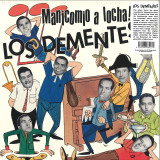
10
This album marks the debut recording for Venezuela's Velvet label by pianist Ray Pérez and his trombone-led salsa band Los Dementes. Heavy dance numbers and the distinctive vocals of Perucho Torcat make this historic 1967 rarity a sought-after collector's item. Now the LP has been lovingly restored, mastered from the original tapes, with its original artwork intact, preserving the legacy of Los Dementes for today's generation of salsa lovers everywhere. First time reissue. Salsa pianist, vocalist, composer and arranger Ray Pérez, acquired his nickname "Loco" by being a free, independent spirit, an innovator and iconoclast who was initially branded as "crazy" for the freshness and audacity of his sound. Amazingly, he is not that well known in the US, where he spent some time in the late 1960s and salsa was king during the 1970s. Yet he was quite popular in his home country from the beginning, especially amongst the working class of Caracas and Maracaibo, who adopted Cuban music played by New York Puerto Ricans as their own and called it "salsa" years before the term was employed by US labels like Fania as a marketing tool. Pérez is revered in Venezuela, as well as in Mexico and Colombia, and his storied career, which spans seven decades and thousands of concerts, has yielded more than 35 albums recorded by his various bands, including Los Dementes, Los Kenya, and Los Calvos, all of which are collector's items today. At the start of 1967 Pérez debuted Los Dementes, with vocalists Claudio Zerpa and Perucho Torcat backed by an ace band featuring only trombones in the brass section. Titled "¡Alerta mundo! Llegaron los 'The Crazy Men'" the record was released on the small Venezuelan label Prodansa. Soon after, Prodansa folded and Los Dementes were left without representation or much compensation for their efforts, being paid only in records. In the end of February of that year, Pérez returned to Caracas from a stint in Maracaibo in order to finish his first LP with the well-established and larger Velvet label, entitled "Manicomio a locha". In the first quarter of 1967, Velvet unleashed a trilogy of salsa records in order to compete with rival label Palacio and their recent success with Federico y su Combo Latino: "Porfi '67 Salsa & Boogaloo" by Porfi Jiménez y su Orquesta, "Guasancó" by Sexteto Juventud and lastly "Manicomio a locha". The LP begins appropriately with the boisterous title track, written by the band's conguero Carlos "Nené" Quintero, who would become a legend in coming years. Torcat describes a jam session in mental institution and introduces the band, with tasty solos by trombonist Rufo García followed by Ray on piano. Already you can hear something was different about Ray and his "Crazy Men"-a sound as wild and innovative as what was happening in New York with Eddie Palmieri, but with a more unhinged, raw feeling in line with Willie Colón and other younger Nuyorican bands. Next up is an intriguing track sung in a mix of Italian, English, Spanish and Papiamento by Pérez himself, performed in the complicated rhythm of the mozambique, an Afro-Cuban carnival beat developed in the early 1960s. This is followed by the heavy dancer 'Rico guaguancó', penned by Angelito Pérez, which changes from the guaguancó to the mozambique rhythm mid-way through, proving that Los Dementes were "different from the rest" as the lyrics say. 'Puerto Libre', sung by Torcat, is dedicated to the Venezuelan island of Margarita in the Oriente region, and the independent spirit of its working people. The rhythm changes from guaguancó to guajira and back again but remains danceable all the way through. The side closes out with a "3 in 1" medley inspired by the popular formula of the mosaicos of Billo's Caracas Boys, seamlessly knitting together several different tempos, rhythms, moods and compositions. Side two starts strong with the fierce yet satirical 'Corte e' patas', then 'Alma Cumanesa', a typical folk song refashioned as a guaguancó. This is followed by the funky 'Guajira con Boogaloo'. The tune echoes the sound of young Latin New York, pointing out the connection between Cuban and African American soul music. The pace picks up again with 'Fiesta de trombones', a hot descarga and then the album closes with another medley. Though this marks the end of a rather short album, it also signaled the emerging success of Los Dementes and their involvement with the salsa boom in Venezuela, quickly selling out of its initial run of 1000 records and making for a memorable debut on the Velvet label. Now this rare and sought-after LP has been lovingly restored, mastered from the original tapes, with its original artwork intact, preserving the legacy of Los Dementes for today's generation of salsa lovers everywhere.

6
Triumph breeds confidence, and with confidence comes an expansion of ambition, a focus of ability, an emboldening of audacity. De-Loused In The Comatorium had risked everything Omar and Cedric possessed on the wildest of gambits, the most impossible of dreams: making sense of the riot of influences ricocheting about Omar’s head, and memorialising their departed friend Julio Venegas through Cedric’s magical realist roman-a-clef. It Clouds Hill shouldn’t have worked. But it did, and with that fiendish tightrope act successfully accomplished, the duo stretched the wire even further and higher, over a figurative fiery pit peopled with lions, crocodiles, piranha and other sharp-toothed beasts not yet known to man. Because how do you make great art without taking great risks? Frances The Mute was no De-Loused Part Two. For one thing, the band’s configuration had changed, in the most painful way. Shortly before the release of De- Loused, sound manipulator and founder member Jeremy Michael Ward passed away, a wound Omar says the group never recovered from. But even though his inspired fucking- with-the-sonic-parameters is absent from Frances The Mute, his spirit and influence can still be determined, the album’s concept derived from a diary Ward had encountered in his day-job in repossession. “Jeremy picked up lots of interesting stuff when he was a repo man,” remembers Cedric. “Weird things, including this diary, He let us read it a bunch of times. It was by a guy who’d been adopted and was searching to find his real parents. It was very surreal, it didn’t make much sense – the guy might’ve been schizophrenic – but it was very inspiring. It felt like how certain music helps you escape your boring every-day life. The names and scenes in the diary directly inspired these songs.” Some of the tracks pre-dated De-Loused, having their origins in early demos Omar recorded at the duo’s Long Beach home Anikulapo, songs such as The Widow and Miranda The Ghost Just Isn’t Holy Anymore. Cedric had heard these jams in their embryonic state and began working in his mind on what he could bring to them. “I was attracted to The Widow like you would be to a lover, right?” Cedric remembers. “I sang over it with Omar while we were touring De-Loused in Australia on the Big Day Out, like, ‘Okay, I’ve got something for this.’” A potent ballad, laden with emotional crescendos and evoking the epic drama of Ennio Morricone – an effect aided by an elegiac trumpet part performed by Flea – The Widow would become The Mars Volta’s first song to chart on the Billboard Top 100, capturing the album’s potent sorrow and widescreen sprawl in miniature. Indeed, the lush sound of the album, the depth of detail and breadth of instrumentation, belies its grungy roots. Having tasted the luxury of Rick Rubin’s mansion, Omar veered in the opposite direction when recording Frances, cutting the album in what he describes as “a shithole... Basically a warehouse with one little air conditioner on its last legs, awful wiring and a console you couldn’t rely on. We were there night and day – I would literally lock engineer Jon DeBaun in there. He slept on a mattress in the vocal booth.” A considerably more complex and ambitious album than its predecessor – four of its five tracks lasted over ten minutes in length, with its closing epic Cassandra Gemini spanning over half an hour – Frances The Mute wasn’t recorded “live” by an ensemble, but with the individual musicians coming into the “shithole” and recording the parts Omar had scripted for them separately. “They had to have absolute trust in me,” Omar remembers, “Like actors trust their director.” In addition to the core band – now fleshed out with incoming bassist Juan Alderete, and Omar’s brother Marcel on keyboards and percussion – the album featured guitar solos from John Frusciante, saxophone and flute by future member Adrian Terrazas-Gonzales, a full string section, and piano played by Omar’s hero, salsa legend Larry Harlow. “It was a childhood dream come true,” Omar says. “We recorded with him in my hometown in Puerto Rico, and my father flew in to watch the session. Larry was a perfect gentleman, and a very lively spirit.” The album’s fevered intensity infected even the staid string section, Cedric remembers. “When they performed the part on Cassandra Gemini, ’25 wives in the lake tonight’, one of the guys in the orchestra played so hard he broke his bow, this real old, antique bow. And you could see his ‘classical’ side come out – like, ‘I broke this playing a fuckin’ rock song??’ He was pissed off. But I was like, ‘Fuck yeah, man, that’s on the record! You’ve got to realise things like that are cool.’” The album also features field recordings of “the coqui of Puerto Rico” during the opening minutes of Miranda That Ghost Just Isn’t Holy Anymore. “We took a page out of the Grateful Dead’s book there,” laughs Cedric. “They recorded air. We recorded fuckin’ frogs in Puerto Rico.”

Essential Gerard P.J. Brown soul-disco-reggae-funk-fusion reissued officially for the first time and cut loud from the studio master tape onto 12” single via Backatcha Records. Hailing from St. Kitts and Nevis, percussionist and vocalist P.J. Brown originally produced and recorded ’Sexy Lady’ and ‘Keep Dancing’ for his sought-after 1982 self-released EP. Whilst the A-side was Soca-heavy, the B-side featured these two disco DJ-friendly gems performed and recorded alongside Browns’s G.I.’s Brass International bandmates at Ochoa Studio in Puerto Rico, a favoured recording location by musicians from the neighbouring islands. Bootlegged heavily on bad pressings, ’Sexy Lady’ finally gets a definitive quality release coupled by ‘Keep Dancing’, P.J. Brown’s other stand-out favourite amongst disco heads that has remained unobtainable until now.
Don’t wait, these always sell out on pre-sell fast.

10
With endless Afro-latin percussion & drums patterns woven throughout ten tracks of tropical dance floor heaters, Italian multi-instrumentalist and master percussionist, Worldwide FM presenter and director of the Yoruba Soul Orchestra, Gabriele Poso is to release his seventh LP, Tamburo Infinito, via New York record label Wonderwheel Recordings. Recorded in Lecce in the south of Italy and almost entirely on his own (unlike previous productions), the undisputed star of the show is once again the drum and the percussion, the Tamburo Infinito.
Although born in Italy, Gabriele has always looked across the Atlantic for inspirations and rhythms, and this album is no different. This time his sonic adventures took him to the French West Indies and the French Caribbean island like Guadeloupe Martinique, "I'm in love with everything about the sound of their drums, it's very unique warm and deep sound."
The album kicks off with the hot & sticky Ritmo, setting the tone for the record with a kaleidoscope of tropical rhythms and influences. First single La Bola is jammed full of exultant horns and syncopated drum beats carried on the back of a driving, funky bassline. By the time the horns drop in on the aptly named Party People the carnival is in full swing over jubilant percussion and spaced out synths.
Gabriele Poso's musical passion has taken him around the world, initially to Rome, then to Puerto Rico, Cuba, and most recently, Berlin. Between 1998 and 2001, Gabriele delved deep into the study of Afro-Cuban percussion, first at the "Timba" School Of Music in Rome, under the guidance of the most important representative of Afro-Cuban culture in Italy, Roberto "Mamey" Evangelista. Later in 2001, he moved to San Juan, Puerto Rico to attend the "Universidad Interamericana De Puerto Rico" to continue his studies, finally culminating in a masterclass at "Escuela Nacional De Arte" in Havana, Cuba.
2008 saw the release of Poso's debut solo album, From The Genuine World, released on Yoruba Records, Osunlade's label, which sparked a career performing around Europe and the rest of the world. His second solo album, Roots of Soul arrived in 2012 on the German label INFRACom!, his third solo album entitled Invocation in 2014, on the German label Agogo Records with other full length efforts released on renowned British labels, Barely Breaking Even (Awakening - 2018) and Soundway Records (Batik - 2019), culminating in an impressively deep and diverse catalogue of solo work.

Cinema – which features tracks in English and Spanish – draws inspiration from the classic films and directors that María and Josh grew up watching, including Pedro Almodóvar and Wes Anderson. The title also pays homage to how the band first began creating music in the first place.
The Marías have fast proven among the most visionary and entrancing new bands in recent memory. Born in Puerto Rico and raised in Atlanta, María Zardoya moved to Los Angeles in 2016 where she met drummer Josh Conway after a performance at the famed Kibitz Room Bar at Canter’s Deli. The two began writing together, crafting a remarkable collection of mesmerizing original songs fusing kaleidoscopic soul, gentle jazz, and imagistic, bilingual lyricism.
Last year saw The Marías unleash a series of new songs affirming their continued creative evolution. “Hold It Together” and “Jupiter” were released in the top half of 2020, accompanied by official music videos. The former received praise from The FADER, which wrote, “The pop-leaning and low-key love song features guitar and key lines that interlock hand in hand. Right in the pocket is the cotton candy-textured voice of vocalist María that coolly asks you to slow down with her. ”Meanwhile, “Jupiter” was hailed as “a soothing dream from retro outer-space,” by Melted.
In October of last year, the group released two new songs written and recorded during lockdown – “Care For You” and “bop it up!” – both joined by official videos co-directed by María with longtime visual collaborator Bethany Vargas. “Care For You” received acclaim from V Magazine, which praised it as “a slow, jazzy jam, both sensual and soothing,” while Órale enthused, “‘bop it up!’ is unlike any project The Marías have put out before... Although their signature tenderness is still recognizable, listeners will discover a newfound sense of invigoration. ”International art and fashion magazine Teeth added: “Both tracks are quarantine jams to dance and cry to, the kind of music we need during this endlessly trying time... The Marías have this incredible ability to transport you.”

Conjunto Papa Upa returns with “Todo Parao” (“Total Shutdown”), another boundary pushing tropical smasher. Bringing you the ultimate (humourous) hymn to the pandemic over an exquisite blend of highly danceable Caribbean rhythms (zouk, cadence, kompás, guaracha) and classic synths. Backed by a deep sea dub on the flip, complete with resplendent cowbell(!), timbales and Wurlitzer solos. Another stepping stone that showcases yet another angle of the unique and radical production style of Alex Figueira. Drop this 45 at your next virtual party and watch everybody leave their computers in a desperate search of a dancing partner.
Conjunto Papa Upa is the Afro Caribbean centered solo project of Figueira, backed live bysome of the best musicians from Amsterdam’s Latin and free jazz scenes. Their debut LP was recently released on legendary American indie label Names You Can Trust. Figueira is also known for his percussive work on tropical psych power trio Fumaça Preta or his regular live incursions with Amsterdam’s turkish psych folk powerhouse, Altin Gun.
Having spent the whole night working on the melodic structure of the song, Figueira took a break to take advantage of the different time zones and check on his dad in Venezuela, and ask how the pandemic was unfolding there. His answer: “Todo Parao” (“Total Shutdown”). The same two words he had used multiple times before, this time pronounced in a hilarious Rum-infused way, giving Alex an unexpected flush of inspiration in the form of an instant infectious chorus. He excused himself and immediately got locked back in the studio. The result is this incredibly catchy tune, displaying the optimistic approach of a boyfriend to the chaos, uncertainty and worrying of his girlfriend about the pandemic, presenting her with his own lascivious lockdown plan for the two, declaring at a certain moment: “while everyone is lamenting, you and I are going to enjoy”.
In the musical side, rhythms from Haiti, Guadaloupe, Martinique, Puerto Rico and Cuba are unscrupulously mixed with the most diverse and strikking elements: strident cowbells that evoke the toughest salsa of 70's New York, harmonized guitars evidencing the inconfesable influence of 80’s heavy metal, a delicate Wurlitzer piano reminiscent of Black America’s greatest Soul ballads, Casio keyboards rescued from a child’s toy cabinet and a whole plethora of half-broken classic Synths, to create an equally irresistible and unclassifiable hybrid.
On the flip side, Part 2 opens with a prominent dose of the lead guitar that appeared briefly on the A side, working as a preamble to an instrumentalist frenzy that is not concerned about displaying technique. Its mere intention is to tell you the rest of the story without using words. A few bars into the song, the first gear shifts with a monumental solo given by the least probable of all “soloist” instruments: the cowbell (!). After it, a crispy Timbal crashes the party, making a statement out of its only appearance in the entire recording. Finally, the longed-for turn of the melodious Wurlitzer, who left everybody craving for more on the other side of the record, giving the modest keyboard skills of Figueira an imposing pentatonic virtue.

LIMITED TO 300 COPIES. NOT TO BE REPRESSED.
Raw and wild soul-funk-r&b-garage from 1970, recorded and released only in Algeria! Imagine JAMES BROWN fronting THE SONICS!
Born in Puerto Rico, Bob Destiny grew up in Harlem (USA) and has a fascinating story: from starting playing piano as a child (self-taught) and tap dancing with the Five Chocolate Drops when he was 6 years old, to meeting Billie Holliday and playing with her; from appearing in a film with Shirley Temple to musicals in Broadway, dancing at Mankiewicz’s movie “Cleopatra”, singing at the San Remo Festival...
In 1969, Bob went to Algeria to teach music at the Algerian National Theater. He also continued with his singing career while living there. In 1970, he released a couple of 45s featuring “Wang Dang” and “Mahna (Troubles)” on the Freedom Musique label. He was also involved with the creation of the first Pan African Festival with Mahboud Bati and Frank Pourcel.
These 45s are very rare and were first discovered by the great Habibi Funk label a few years ago, who included “Wang Dang” on one of their compilations. For our Pharaway Sounds 45, we’ve selected one track from his first 45 and another from his second one.
After playing in Morocco with Hahmed Maraki and forming bands like The Fingers, Bob arrived to Spain in the 80s. He created a jazz school in Zaragoza and was involved with the famous “Jazz en la Margen” festival. In the 90's, Bob move to France, focusing in composition, gospel, musicals and soundtracks. Sadly, he passed away on March 31, 2016.

10
Los Afroins was the flagship salsa band of the obscure but beloved INS label from Colombia. Their 1975 LP "Goza La Salsa" is just as hard to find as their first record, and contains 10 bright and sassy salsa dura treasures that light up the dance floor with their incessant rhythms, syncopated trumpets and trombone and buoyant melodies. There are smoking covers of hits by Panama's Bush y sus Magníficos ('Salsa Al Pindin') and Bronx timbalero Orlando Marín and His Orchestra ('Está De Bala') as well as updated renditions of old Cuban chestnuts 'La Masacre' (written by Joseíto Fernández of 'Guantanamera' fame) and 'Matusa' (originally titled 'Macusa', composed by Francisco Repilado aka Compay Segundo).
The entire record makes for a very tasty and satisfying party platter filled with guaguancó, mozambique, pachanga, descarga and bolero that deserves to be more accessible and better known by today's fans of Colombian salsa who may have heard of The Latin Brothers or Sonora Carruseles, but have yet to discover the short-lived but highly sought after Los Afroins. "Goza La Salsa" is presented here in facsimile artwork and pressed on 180 gram vinyl.
“The aptly named Goza La Salsa (Enjoy Salsa) is the second album by Los Afroins, the flagship salsa band of the obscure but beloved INS label (Industria Nacional Del Sonido Ltda., Medellín, Colombia). The combo's repertoire focused mostly on cover versions hit tunes from New York, Cuba and Puerto Rico, both classic and contemporary, but for this record, their sophomore outing from 1975, their arrangements got tighter and there are more original compositions, which makes for a satisfying evolution in both style and content. Pianist Agustín "El Conde" Martínez, who would later work with Joe Arroyo and Juan Piña, led the group and did some arranging, with studio session production by INS artistic director Alfredo "Sabor" Linares. The vocals were handled by a pair of fresh-faced singers, Lucho Puerto Rico and Roy "Tayrona" Betancourt, who would later go on to fame in the 1980s, the former with his own Lucho Puerto Rico Y Su Conjunto Sonero and Conjunto Son Del Barrio (both in collaboration with Alfredo Linares), and the latter with Willie Salcedo, Reales Brass De Colombia, and Los Caribes. Additional arrangements were by Luis Felipe Basto of Los Black Stars and Luis E Mosquera, while the rest of the band was made up of INS related studio musicians. Goza La Salsa is just as hard to find as their first record and contains 10 bright and sassy salsa dura treasures that light up the dance floor with their incessant rhythms, syncopated trumpets and trombone and buoyant melodies. There are smoking covers of hits by Panama's Bush y sus Magníficos ('Salsa Al Pindin') and Bronx timbalero Orlando Marín and His Orchestra ('Está De Bala') as well as updated renditions of old Cuban chestnuts 'La Masacre' (written by Joseíto Fernández of 'Guantanamera' fame, and a hit for Cuarteto Caney) and 'Matusa' (originally titled 'Macusa', composed by Francisco Repilado aka Compay Segundo and made famous by Duo Los Compadres). This time around there are six excellent originals with the hottest pair being Lucho Puerto Rico's theme song 'Puerto Rico Power' and the percussion heavy final track, 'Alejada' sung and composed by Roy Betancourt. Just like the first album, the entire record makes for a very tasty and satisfying party platter filled with guaguancó, mozambique, pachanga, descarga and bolero that deserves to be more accessible and better known by today's fans of Colombian salsa who may have heard of The Latin Brothers or Sonora Carruseles, but have yet to discover the short-lived but highly sought after Los Afroins." Pablo E Yglesias DJ Bongohead of Peace & Rhythm
10
Sotomayor is the electronic music project with afro latin influence by siblings Raul (music production) and Paulina (vocals). It is a dance music project that fuses rhythms like cumbia, afro beat, dancehall, Peruvian "chicha" and merengue with futuristic electronic beats.
The band debuted in 2015 with "Salvaje," an album that allowed them to perform in several festivals around the globe in countries like England, US, Mexico and Colombia.
The album received excellent reviews from foreign media in countries like Japan, Australia, United Kingdom, Chile, United States and Colombia. They also appeared in more than 25 lists of the best of the year from medias from all around the world. 2020 will see the release of "Orígenes" their 3rd studio album trough the NY based label Wonderwheel Recordings.
This album was recorded between Mexico and Puerto Rico, and was produced by the 28 times Grammy Winner Eduardo Cabra aka "Visitante" from the legendary band "Calle 13." In this production Sotomayor explores a new Afro Caribbean vision in the music, much more dance floor focused, and highly influenced by percussion

9
FUTURE AFRO-LATIN JAZZ HOUSE FROM MASTER PERCUSSIONIST, MULTI-INSTRUMENTALIST AND COMPOSER GABRIELE POSO.
A true multi-instrumentalist, Gabriele Poso found a particular affinity for percussion at a young age, studying in Puerto Rico and Cuba. His latest album ‘Batik’, to be released on Soundway Records, is once again entirely selfproduced and features guest vocalists Nailah Porter, Nina Rodriguez, Quetzal Guerrero & Sofia Rollo.
Following a long-term collaborative partnership with Osunlade / Yoruba Records, as well as albums on BBE and Agogo Records, Gabriele Poso has garnered acclaim from reviewers and selectors including Gilles Peterson. On ‘Batik’, Poso further develops and matures his sound - exploring his extensive roots in Afro-Cuban percussion, while delving into the realms of jazz and soulful house. Much of the album features Poso on not only vocals but many of the instruments - including percussion, guitar and kalimba. With mixing by renowned Spanish DJ and producer Kiko Navarro, the lead single “Africa Linda” is an up tempo live take on Latin house, featuring American-born soul singer Quetzal Guerrero on vocals.

12
Roots and Wings is the fourth studio album by the Belgian band Vaya Con Dios, released in 1995. Singer Dani Klein worked together with different studio musicians and the American Muscle Shoals Horns to record this album. The songs are all easy listening and gives you the perfect feeling for those rainy days.
Vaya Con Dios was founded in 1986 by Dirk Schoufs, Dani Klein and Willy Lambregt. They had some international success with songs like "Just A Friend Of Mine", "What's a Woman" and "Puerto Rico". In 2013 they started their farewell tour which ended on 25 October 2014 in Brussels.
Roots and Wings is available as a limited edition of 750 individually numbered copies on transparent vinyl.

4
Red Vinyl
In 9 records and 22 years Schmer has given you the same four dudes: Prototype 909, DJ RX-5 and bpmf. Now is the time to unleash a new generation of Schmers on an unprepared world and they are prepared to set the world on fire.
Coming out strong to whip us all into shape we've unleashed Isabella and she'll leave you "Spun Out". Isabella has done tracks for Jacktone, Embalming Lately, Borft, S1, Peder Mannerfelt Produktions. She uses hardware, live, to produce unhinged techno. Now she has done one for Schmer, which had already lost its hinges decades before.
Since 2015, Ciel's monthly radio show "Work In Progress" in Montreal has been highlighting the best and weirdest in underground electronic music produced by women. She has released tracks on Junted (Marshall Applewhite's new imprint), the benefit compilation Power Puerto Rico, and a three- track EP on Peach Discs which landed on numerous year-end lists from Fact Magazine, Mixmag, and Resident Advisor. She provides Schmer with the pristine sounds of "Bad Luck Comes in 3s".
Hiroko Yamamura is the Classic Chicago ride or die style DJ/producer influenced by The Warehouse, technology, and straight up techno, its no wonder she has been named one of Chicago's top 10 DJs by XLR8R magazine. Finally Schmer stops messing around with the Chicago sound and puts the real thing out with Hiroko's "Babyayez" track.
Experimental Housewife is Evelyn Malinowski, a longstanding DJ and maker of music.(Run The Length Of Your Wildness / Jacktone Records / Perfect Location / Juxtatextureall) Now based in San Francisco, she partakes in multiple open collaborations, like the one with the highly skilled DJ and producer Andrew Bowen aka Bilaga´ana. "Free Ends" was created, a track with grit yet full of innocent meandering. Its the cherry on top of our Schmerlicious cake.

The Afro-Funk side of the Latin Soul maestro!
Born in Gao (Mali), Boncana Maïga is one of the most talented and popular producer of West-African music since the 60's. He studied flute and Latin arrangements in Cuba during the 60's and founded the famous Les Maravillas du Mali' in 1968.
He became orchestra leader for the national Ivorian TV in Abidjan in the mid-seventies, and toured all over the world with the famous Africando band. During his recording sessions in NYC at the beginning of the 80's with a lot of Latin musicians' from Puerto Rico, Venezuela or Colombia, Boncana Maïga also recorded few rare Funky tracks with heavy breaks!
With the artist, we decided to reissue four rare tracks from 1978 to 1982 dedicated to dancefloor, including a really rare soundtrack for the oil company of Ivory Coast called Petroci'.
In 2018, he'll be back on tour with Les Maravillas du Mali', still have a weekly TV show on TV5 Monde and with this reissue will continue to warm your Afro-Funk parties!
Fully licensed, 12inch vinyl (45 RPM) including interview. Remastered by The Carvery!

4
The next volume of Wonderwheel's long running Turntables on the Hudson series, curated by Nickodemus, heads down to the Caribbean encompassing diverse music made for the dancefloor. TOTC touches on the culturally rich shores of Cuba, Puerto Rico, Haiti, Jamaica, Belize, Mexico, Colombia and the USA and beyond with Island inspired vibes.
This double 7" taken with our favorite cuts from the compilation features tracks from DJ Jigoe, Captain Planet feat Chico Mann, Corrado Bucci, and Poirier. On the A side, Afro Cuban artist and recent US & UK Press Darling DJ Jigue gives us the stripped down, Cuban house stomper that is "RIVE", while on the B side Italian producer Corrado Bucci teams up with the classic Columbian group Los Corraleros de Majaguel for a brand new modern take on their Cumbia classic "La Cuidad De Eterna Primavera". On the C side, Captain Planet & Chico Mann's tropical AfroLatin dancefloor smash "Aguacero" finally sees vinyl release, while on the D side, Montreal producer Poirier delivers a jumping Haitian/Creole tune "Pale Mal" with Fwonte on vocals to round out the compilation.

4
The next volume of Wonderwheel's long running Turntables on the Hudson series, curated by Nickodemus, heads down to the Caribbean encompassing diverse music made for the dancefloor. TOTC touches on the culturally rich shores of Cuba, Puerto Rico, Haiti, Jamaica, Belize, Mexico, Colombia and the USA and beyond with Island inspired vibes.
This double 7" taken with our favorite cuts from the compilation features tracks from DJ Jigoe, Captain Planet feat Chico Mann, Corrado Bucci, and Poirier. On the A side, Afro Cuban artist and recent US & UK Press Darling DJ Jigue gives us the stripped down, Cuban house stomper that is "RIVE", while on the B side Italian producer Corrado Bucci teams up with the classic Columbian group Los Corraleros de Majaguel for a brand new modern take on their Cumbia classic "La Cuidad De Eterna Primavera". On the C side, Captain Planet & Chico Mann's tropical AfroLatin dancefloor smash "Aguacero" finally sees vinyl release, while on the D side, Montreal producer Poirier delivers a jumping Haitian/Creole tune "Pale Mal" with Fwonte on vocals to round out the compilation.

- A1: The Eloise Trio - Come To The Caribbean
- A2: Cachao Y Su Ritmo Caliente - Trombon Criollo
- A3: Duke Of Iron - Bambouche
- A4: Lucho Azcarraga Y Su Conjunto - Tamboritos Panamenos
- B1: Alfredito - Timbales
- B2: King Scratch - Christmas Time In Nassau
- B3: Guy Du Rosier Orchestra - Panono M'tombe
- B4: Noro Morales Orchestra - Mississippi Mambo
- C1: Peanuts Taylor - Nassau Blues
- C2: Katherine Dunham Ensemble - Nago
- C3: Hubert Porter & The Jamaican Calypsonians - Rum & Coconut Water
- C4: The Bay Street Boys - Donkey Wants Water
- C5: Guy Du Rosier Orchestra - Anatole
- D1: Sonny Burke & His Orchestra - West Indies
- D2: Dioris Valladares & His Conjunto Tipico - Los Dos Merengues
- D3: Julio Gutierrez - Theme For Conga
- D4: Hubert Porter & The Jamaica Calypso Funmakers - Mary's Lamb
17
Soul Jazz Records’ new album 90 Degrees of Shade features the music of the Caribbean – Mambo, Calypso, Mento, Merengue, Latin Jazz and much more. The music of Cuba, Jamaica, Haiti, Puerto Rico, Dominican Republic and more all feature in this lightning journey through the many island sounds.
This is the sound of independence, righteous and hot jump-up sounds from the 1950s and 60s, an exciting period of endless new musical styles that would travel across the world – Mento, the Jamaican precursor to reggae; mambos and descargas from Cuba, Dominican merengue, Haitian compas – and more.
This album coincides with the release of Soul Jazz Records’ massive new deluxe large format hardback book 90 Degrees of Shade: 100 Years of Photography In The Caribbean (with foreward by Paul Gilroy) featuring hundreds of fascinating and unique photographs spanning one hundred years of Caribbean history.
The new album comes as a deluxe two-CD pack complete with large outsize booklet, packed full of info and original artwork. There are also two limited edition separate heavyweight double LP vinyl editions, each one housed in gatefold sleeves complete with insert, full text and free download code. Also comes as a worldwide digital release.

- A1: The Eloise Trio - Come To The Caribbean
- A2: Cachao Y Su Ritmo Caliente - Trombon Criollo
- A3: Duke Of Iron - Bambouche
- A4: Lucho Azcarraga Y Su Conjunto - Tamboritos Panamenos
- B1: Alfredito - Timbales
- B2: King Scratch - Christmas Time In Nassau
- B3: Guy Du Rosier Orchestra - Panono M'tombe
- B4: Noro Morales Orchestra - Mississippi Mambo
- C1: Peanuts Taylor - Nassau Blues
- C2: Katherine Dunham Ensemble - Nago
- C3: Hubert Porter & The Jamaican Calypsonians - Rum & Coconut Water
- C4: The Bay Street Boys - Donkey Wants Water
- C5: Guy Du Rosier Orchestra - Anatole
- D1: Sonny Burke & His Orchestra - West Indies
- D2: Dioris Valladares & His Conjunto Tipico - Los Dos Merengues
- D3: Julio Gutierrez - Theme For Conga
- D4: Hubert Porter & The Jamaica Calypso Funmakers - Mary's Lamb
17
Soul Jazz Records’ new album 90 Degrees of Shade features the music of the Caribbean – Mambo, Calypso, Mento, Merengue, Latin Jazz and much more. The music of Cuba, Jamaica, Haiti, Puerto Rico, Dominican Republic and more all feature in this lightning journey through the many island sounds.
This is the sound of independence, righteous and hot jump-up sounds from the 1950s and 60s, an exciting period of endless new musical styles that would travel across the world – Mento, the Jamaican precursor to reggae; mambos and descargas from Cuba, Dominican merengue, Haitian compas – and more.
This album coincides with the release of Soul Jazz Records’ massive new deluxe large format hardback book 90 Degrees of Shade: 100 Years of Photography In The Caribbean (with foreward by Paul Gilroy) featuring hundreds of fascinating and unique photographs spanning one hundred years of Caribbean history.
The new album comes as a deluxe two-CD pack complete with large outsize booklet, packed full of info and original artwork. There are also two limited edition separate heavyweight double LP vinyl editions, each one housed in gatefold sleeves complete w
- 1
Items per Page:
