We welcome Habgud back on Warg Records after his release on our various artists compilation.
The rumbling and driving low end combined with the rhythmic hats in each of the tracks brings out a lively energy. Dominics use of stylistic and funky vocals is
distinctive, adding a sense of ambience to such a powerful style of production.
out of Stock
Last delivered 10 months ago available to reorder, subject to availability
Oakland's Naked Roommate have been slinking around the Bay Area lighting up stages, shaking asses & confounding listeners since 2018, when the group - originally just the duo of real-life partners Andy Jordan & Amber Sermeno (both formerly of The World) - self-released a cassette of demos (2018's "Naked Roommate"). Members Michael "Mig" Zamora & Alejandra Alcala (Blues Lawyer) joined soon after to augment the sound & live band with their proper full-length album "Do The Duvet", co-released in September of 2020 via UK label Upset! The Rhythm & Trouble In Mind. 2024 finds the lineup expanded even further to incorporate the horn section of Geoff Saba & Jeanne Oss on tenor & alto saxophones as well as percussion & marimba as the band readies their sophomore effort, the dizzyingly ecstatic "Pass The Loofah" Recorded by members Andy Jordan & Mig Zamora from 2021-2023 as time & restrictions allowed, "Pass The Loofah" retains the wild energy of their debut, but leans into the rhythmic throbs perpetuated by forbears like Kid Creole & The Coconuts, Lizzy Mercier Descloux & ESG; the signature sound of UK's On-U Sound & NYC's 99 Records, but with a decidedly West Coast irreverence & a knack for absurdist exposition. Make no mistake, this is music designed to make your body MOVE & Naked Roommate won't stop until they 've made sure every ass is shook. The band freely incorporates elements of the dancier side of post-punk (think A Certain Ratio or Liquid Liquid) as well as disco, funk, & house music. However, the group's uplifting melodicism belies a deeper subtext, understanding the importance of the sense of community of dance music & the culture surrounding it and leaning into a Neo-socialist lyrical context. Shit is fucked, & we get thru it by helping one another & acknowledging & addressing the failures of disaster Capitalism & tech-bro hegemony (a state the band is all-too familiar with, living in The Bay Area) Take the first single "Bus"; a four-on-the-floor banger & salutary paeon to the ups & downs of the people's transport that throbs & pulses with a late-night sashay (and a bridge that launches the tune into the stratosphere). Elsewhere, "Fight Flight "s funky horn stabs and Sermeno's slinky vocals swoon over Numan-esque synth squiggles that are fortified & funkified toward the dance floor. "Broken Whisper " edges into new territor y for the group, adding a Caribbean flavor a'la Kid Creole or The Specials that punctuates the persistent & synthetic beats underneath. Meanwhile instrumental interludes like "Ducky & Viv", "G-Y pt. 1" & "G-Y pt. 2" oscillate into zones of sci-fi meets soap opera soundtracks, sounding not unlike the electronic experiments of UK industrial pioneers Chris & Cosey. Album closer "I Can't Be Found" might be the album's secret weapon; It 's swooning synth melody & processed vocals recall early Daft Punk or MGMT by way of Derrick Carter & The Au Pairs. It 's a beautiful song; perfect for the late night (or early morning) car ride home from the club. "Pass The Loofah" is released worldwide on October 25th, 2024 via Trouble In Mind Records digitally via most DSPs & on black vinyl & limited "disco ball " silver vinyl.
Limited metallic silver/white "disco ball" splatter vinyl available while supplies last.
Oakland's Naked Roommate have been slinking around the Bay Area lighting up stages, shaking asses & confounding listeners since 2018, when the group - originally just the duo of real-life partners Andy Jordan & Amber Sermeno (both formerly of The World) - self-released a cassette of demos (2018's "Naked Roommate"). Members Michael "Mig" Zamora & Alejandra Alcala (Blues Lawyer) joined soon after to augment the sound & live band with their proper full-length album "Do The Duvet", co-released in September of 2020 via UK label Upset! The Rhythm & Trouble In Mind. 2024 finds the lineup expanded even further to incorporate the horn section of Geoff Saba & Jeanne Oss on tenor & alto saxophones as well as percussion & marimba as the band readies their sophomore effort, the dizzyingly ecstatic "Pass The Loofah" Recorded by members Andy Jordan & Mig Zamora from 2021-2023 as time & restrictions allowed, "Pass The Loofah" retains the wild energy of their debut, but leans into the rhythmic throbs perpetuated by forbears like Kid Creole & The Coconuts, Lizzy Mercier Descloux & ESG; the signature sound of UK's On-U Sound & NYC's 99 Records, but with a decidedly West Coast irreverence & a knack for absurdist exposition. Make no mistake, this is music designed to make your body MOVE & Naked Roommate won't stop until they 've made sure every ass is shook. The band freely incorporates elements of the dancier side of post-punk (think A Certain Ratio or Liquid Liquid) as well as disco, funk, & house music. However, the group's uplifting melodicism belies a deeper subtext, understanding the importance of the sense of community of dance music & the culture surrounding it and leaning into a Neo-socialist lyrical context. Shit is fucked, & we get thru it by helping one another & acknowledging & addressing the failures of disaster Capitalism & tech-bro hegemony (a state the band is all-too familiar with, living in The Bay Area) Take the first single "Bus"; a four-on-the-floor banger & salutary paeon to the ups & downs of the people's transport that throbs & pulses with a late-night sashay (and a bridge that launches the tune into the stratosphere). Elsewhere, "Fight Flight "s funky horn stabs and Sermeno's slinky vocals swoon over Numan-esque synth squiggles that are fortified & funkified toward the dance floor. "Broken Whisper " edges into new territor y for the group, adding a Caribbean flavor a'la Kid Creole or The Specials that punctuates the persistent & synthetic beats underneath. Meanwhile instrumental interludes like "Ducky & Viv", "G-Y pt. 1" & "G-Y pt. 2" oscillate into zones of sci-fi meets soap opera soundtracks, sounding not unlike the electronic experiments of UK industrial pioneers Chris & Cosey. Album closer "I Can't Be Found" might be the album's secret weapon; It 's swooning synth melody & processed vocals recall early Daft Punk or MGMT by way of Derrick Carter & The Au Pairs. It 's a beautiful song; perfect for the late night (or early morning) car ride home from the club. "Pass The Loofah" is released worldwide on October 25th, 2024 via Trouble In Mind Records digitally via most DSPs & on black vinyl & limited "disco ball " silver vinyl.
Something About Livingis an album of live recordings by experimental jazz composer/multi-instrumentalist Robert Stillman. The music was captured over the course of Stillman's time as the solo support act for The Smile (Thom Yorke, Jonny Greenwood, Tom Skinner). The album weaves excerpts from various theater and arena shows along the tour's North American routing into a seamless whole, creating a 40-minute program that represents an expanded version of Stillman's ever-transforming live set.
Something About Livingis the product of a steady, on-stage evolution that happened over the course of the nearly 60 shows opening for the Smile across the EU, UK, US, Canada and Mexico. However, the creative origins of the set began in relative isolation during the pandemic, through Stillman's work on projects like his multi-media installationUnseen Forcesand his monthly broadcast for Margate Radio, both of which drew upon solo improvisation using saxophone, cassettes, Yamaha DX7 synthesizer, and effects.
"At the time The Smile asked whether I'd like to open for them on their first tour, I felt like I'd already been preparing without really knowing it," says Stillman. "I'd been doing this music constantly, but always for a hypothetical audience" During the pandemic, Stillman's solo set-up served as the research lab where he worked on all the concepts he was interested in: solo improvisation, creating and manipulating cassettes, FM synthesis, analogue delays chains, no-input mixing, and non-metric rhythmic pulses. So when he was offered the first Smile tour, the idea was to bring "the lab" onto the stage.
What Stillman could not have prepared for was the experience of playing in venues with capacities of up to ten thousand listeners. "The first tour was in summer 2022, so not that long after the worst of the pandemic, when I had pretty much made peace with the idea that I might never be able to perform for an audience again. Then all of a sudden I found myself in front of huge numbers of people, and felt the massive responsibility of being with an audience, of this thing I'd done alone for so longactually being witnessed, and it was completely overwhelming!" On the flip-side, Stillman also recalls, was a new appreciation of how powerful the live performance was as a social phenomenon. "It's a cliche, but also true: the moment of making and hearing music in a shared time and space has a very specific meaning and power; there was a sense that everyone in the venue was necessary to make it real, regardless of what they were doing, or how they felt about it. There was an inevitability about it that I'd never fully appreciated."
Over the course of the tours that followed, Stillman transformed this appreciation of the shared moment into an ethic of spontaneity that guided the development of his live set. "An important reference for this set has always been an Animal Collective show I saw when I first moved to New York, probably in 2001 or so, that has always set the high-water mark for what I wanted to do live- they were improvising a lot, and out of what would seem to be absolute chaos they'd find their way to something structured, and then back out again into the unknown. It was so thrilling to witness".
ThoughSomething About Livingcompiles recordings from different dates along the tour, Stillman has edited and mixed them into a work that seeks to reflect the ebb and flow between 'chaos and control' that characterizes his live set. Among the compositions featured are some from previous album releases ("Time of Waves", "What I Owe", "What Does it Mean to Be American") as well as some new compositions ("The Dream of Waking", "Renaissance 2.0," and the title track, "Something About Living").
The album/track title "Something About Living" is a reference to a line from Stillman's favorite film,My Dinner With André: "André Gregory is explaining the value of life experiences that, as he says, are'to do with living'.That really struck me, the way he articulated it. I strongly believe live music situations can ask these kinds of questions, for performers and audiences. I hope that's reflected in this music."
[a] 01: Time of Waves (Live in Miami FL) [Live]
[b] 02: What Does It Mean to Be American (Live in Forest Hills NY) [Live]
[c] 03: The Dream of Waking (Live in St Augustine FL) [Live]
[d] 04: Something About Living (Live in Richmond VA) [Live]
[e] 05: What I Owe (Live in Chesterfield MO) [Live]
[f] 06: Renaissance 2.0 (Live in Chesterfield MO) [Live]
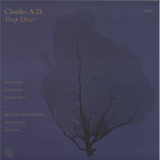
The sea has long been central to Japanese culture, symbolizing both sustenance and spiritual depth. Charles A.D.'s Deep Diver draws inspiration from this, channeling the ancient traditions of diving and fishing into his music. Historically, the sea has influenced everything from Shinto rituals to the livelihoods of coastal communities. In Deep Diver, this reverence flows through aquatic soundscapes, where rhythmic waves of 90s house and Detroit techno meet Japanese minimal production techniques, New Age and Pacific Jazz. Like the tides, the album ebbs and flows, creating a serene yet dynamic homage to the timeless connection between Japan and the sea.
The opening track 'Deep Diver' plunges into the depths, its abstract sound design capturing the sensation of deep-sea propulsion. Rhythmic bubbles pulse gently alongside slow-moving chords, creating an otherworldly atmosphere. The textures are lush yet restrained, setting a tranquil stage that pulls the listener into a submerged world. 'Underwater Ruins' builds on this aquatic theme, introducing rhythmic layers and bass-heavy notes reminiscent of mid-90s Japanese ambient techno. The smooth, melodic flow nods to pioneers like Mr.YT and Susumu Yokota, while subtly incorporating the Detroit techno influence through soulful, deep basslines.
The track feels like a fusion of ambient and techno, balancing serene tones with a rolling groove, emblematic of Japanese techno soul. As the album progresses into 'Bubble Ring', it becomes clear that Charles A.D. is a master of minimalism. The production is timeless, leaning
on analog techniques where echo-drenched chords and carefully layered soundscapes take on an addictive, hypnotic quality. The simplicity of the composition is deceptive, as each element carries weight, drawing the listener deeper into the rhythm and space between the notes.
'Merperson' is where organic rhythms truly come into play. Charles A.D. gently evolves the patterns, allowing each percussive hit to flow naturally into the next. Soothing melodies emerge from within the track’s structure, eventually reaching an emotional peak without ever feeling forced. The organic nature of the arrangement creates an effortless progression that feels deeply connected to the natural movement of water.Starting the second half with 'Deep Exploration', the theme of underwater excursions becomes even more pronounced. Light, steady drumming anchors the track, allowing the melodic layers
to develop gradually. It unfolds with a calm, measured pace, before ending softly, almost as if the sounds are drifting off into the oceanic depths. 'Diffuse Reflection' stands out as the most dub house-influenced on the album, with rolling rhythms and hypnotic elements reminiscent of Maurizio's deep, pulsing sound. Yet here, the production feels submerged, with aquatic effects swirling around the rhythmic core, blending dub house with a fluid, oceanic touch. 'Traitors' delves even deeper into dub-inspired territory. Deep, resonant bass hits combine with wooden drums, while static-like sounds evoke the image of a radio tuning through static to find clarity.
Chords shimmer briefly before fading back into the liquid depths, evoking the ebb and flow of the tide. The final track on Deep Diver 'Levitation', is a fitting conclusion, as the rhythms merge and overlap like waves gently lapping the shore. The minimalistic arrangement allows each element to blend effortlessly into the next, creating a sense of unity and closure. The sounds move with the gentle grace of water, ending the album in a way that feels both complete and
open-ended, like the infinite motion of the sea.
out of Stock
Last delivered 19 months ago available to reorder, subject to availability
0860 is a project by Charlie Fieber aka Fracture inspired by London Pirate Radio. The project includes an album, radio station and interview series that explores the history and legacy of Pirate Radio and its importance in the development of UK underground music.
0860.fm has broadcast interviews with Bryan Gee, Eastman, DJ Flight, Scratcha, Dextrous, Uncle Dugs, Mantra, Missing, Eddie Peake, Om Unit & Laurent Fintoni, Naina & Sherelle, Stamina MC and more. It also broadcasts lost recordings of original 90s & 00s London pirate station broadcasts from the likes of Kool, Rinse, Pulse and more.
out of Stock
Last delivered 22 months ago available to reorder, subject to availability
Black Truffle is pleased to announce a tenth anniversary reissue of Oren Ambarchi’s Quixotism, originally released on Editions Mego in 2014. Recorded with a multitude of collaborators in Europe, Japan, Australia and the USA, Quixotism presents the fruit of two years of work in the form of a single, LP-length piece in five parts. Quixotism takes the driving rhythmic aspect of works such as Sagittarian Domain to new levels, with the entirety of this long-form work built on a foundation of pulsing double-time electronic percussion provided by Thomas Brinkmann. Beginning as almost subliminal propulsion behind cavernous orchestral textures and John Tilbury’s delicate piano interjections, the percussive elements (elaborated on by Ambarchi and Matt Chamberlain) slowly inch into the foreground of the piece before suddenly breaking out into a polyrhythmic shuffle around the halfway mark, and joined by master Japanese tabla player U-zhaan for the piece’s final, beautiful passages.
The pulse acts as thread leading the listener through a heterogeneous variety of acoustic spaces, from the concert hall in which the Icelandic Symphony Orchestra were recorded to the intimacy of crys cole’s contact-mic textures. Ambarchi’s guitar itself ranges over this wide variety of acoustic spaces, from airless, clipped tones to swirling, reverberated fog. Within the complex web Ambarchi spins over the piece’s steadily pulsing foundation, elements approach and recede in a non-linear fashion, even as the piece plots an overall course from the grey, almost Nono-esque reverberated space of its opening section to the crisp foreground presence of Jim O’Rourke’s synth and Evyind Kang’s strings in its final moments. Formally indebted to the side-long workouts of classic Cologne techno, the long-form works of composers such as Éliane Radigue and the organic push and pull of improvised performance,
Quixotism is constantly in motion, yet its transitions happen slowly and steadily, often nearly imperceptible, the diverse elements which make up the piece succeeding one another with the logic of a dream.
At the time of its first release, Quixotism was clearly a summation of Ambarchi’s work in the years leading up to it. Now, listening back a decade later, it also seems like an arrow pointing to the future, suggesting paths that would be explored further in works to come: the pulsating guitar layers of Hubris, the album-length collaboration with Jim O’Rourke and U-zhaan on Hence, Shebang’s joyous layering and percussive drive. Now sounding better than ever in a new remaster by Joe Talia, the time is ripe to rediscover its quixotic charms.
out of Stock
Last delivered 23 months ago available to reorder, subject to availability
When the world — and his previous band Star Tropics — crumbled in the early days of the pandemic, Chicago's Loren Vanderbilt began rebuilding himself through song. Daydreaming to the chime of IRS-era R.E.M., Felt, The Railway Children, New Order, and 90's staples like Ride, Pale Saints and Slowdive, he fell backwards in time through records as a means of escape. To break away from the present and embrace the nostalgia of musical eras gone by, Loren formed Humdrum — a band built around his favorite elements of dream-pop, indiepop, shoegaze, and new wave. On his debut album, "Every Heaven," Loren establishes himself as a talented songwriter and master of melody across 10 tracks brimming with jangly guitars and lovelorn vocals—all punctuated by the pulse of a driving beat. A deeper listen reveals a juxtaposition between the album's carefree melodies, and its sobering truths about the life, loss, and the questions of being a queer 30-something artist. With "Every Heaven" Humdrum has presented 10 songs that speak to life's dynamic moments. And they can't wait for you to hear them.
Die Londoner Experimentalisten Kinkajous releasen ihr neues Album auf dem Nottinghamer Label Running Circle. "Nothing Will Disappear" ist Ambient-Maximalismus in seiner subtilsten und zartesten Form. Anklänge an Floating Points und subtile Klangfarben-Shifts á la Jon Hopkins und James Holden sind deutlicher zu erkennen als bei anderen zeitgenössischen Jazzacts. Die beiden Vorgänger "Hidden Lines" (2019) und "Being Waves" (2021) sind Paradebeispiele für ihre Mischung aus analoger, akustischer und orchestraler Instrumentierung und schafften es beide in zahlreiche Jahresendlisten.
Von CLASH als "ein wichtiger Teil der britischen Musiklandschaft" beschrieben, beziehen Kinkajous ihre Inspiration aus Orchester-, Instrumental- und elektronischer Musik und sind für ihren fesselnden und filmreifen Sound bekannt. Angeführt von Schlagzeuger/Produzent Benoît Parmentier und Saxophonist Adrien Cau, können sie mit einer beeindruckenden Besetzung aufwarten, zu der auch Keyboarder Jack Doherty und Bassist Andres Castellanos gehören. Die mutigen neuen Räume, in die Kinkajous vorgedrungen ist, kommen gut an, mit ausverkauften Headliner-Shows im Londoner Jazz Café und King's Place, neben einer gigantischen Zusammenarbeit im letzten Winter mit dem London Contemporary Orchestra im Londoner Earth Theatre und Auftritten bei den Bluedot und EFG London Jazz Festivals.
Chita, the third album proper by Japanese guitar pop trio Usurabi, is their most elegant, stylish confection yet. Over the past four years, Toshimitsu Akiko (vocals, guitar), Kawaguchi Masami (bass) and Morohashi Shigeki (drums) have been recording, playing live, and releasing songs of rare melodic warmth, centring Toshimitsu’s unique musical vision, where melancholy and joy can co-exist, a split-second flick of her wrist switchblading the guitar from languorous sweetness to overloaded rock action.
Chita expands on the smartly sculpted pop and rock songs found on their previous albums, Remains Of The Light (2021) and Outside Of The World (2023), while infusing the music with more of the rough- housing energy that also coursed through the live CD, Once In A Red Room, they self-released in January 2024. There’s still a through-line, of course, that connects the music here to Toshimitsu’s earlier groups, Doodles and Animone, but Chita feels more deeply like a sussed, sharp take on the crumbling edges of sixties psychedelic folk and rock: the harmonica that blasts through the opener, “Bansho”, is pure Dylan in effect.
One of the many smart things about Usurabi, though, is that they never feel beholden to the historical moment. Soon after “Bansho”, we encounter “TurnOff”, a lush pop song that turns on a dime, with Toshimitsu tearing fuzztone notes from six strings that are like a more folk-reverent Kaneko Jutok. And there’s something about the guitar and bass riff that doubles through the thrilling two-and-a-half minutes of “Hakanonaka” that’s a dead ringer for the Only Ones. Flip the record, and things get more expansive, the spindly jangling of the title song spiralling ever inwards, before the sweet, sugary rush of “Kanata” resolves to the martial rhythms that pulse through “Aseranai”, winding the album down to its poetic, becalmed resolution.
out of Stock
Last delivered 23 months ago available to reorder, subject to availability
Pearson Sound returns to his Hessle Audio label with Which Way Is Up, a 4 track EP showcasing a range of textures and tempos with soundsystem pressure as the anchor. The 808-laced 'Hornet' kicks things off with a sound palette inspired as much by '80s Miami as '10s London. 'Twister' dials up the energy with a jagged lead and scattered breakbeats pulling in opposing directions, while the steppers pulse of 'Slingshot' evokes formative experiences at Subdub in Leeds. The EP is brought to a close with the blissed out title track 'Which Way Is Up', whose arpeggios dance around each other until they fizzle to breaking point. Support from Mala, Mary Anne Hobbs, Joy Orbison and more.
out of Stock
Last delivered 23 months ago available to reorder, subject to availability
NoLand sounds like a story already experienced. A series of lyrical landscapes infused with deviant pop sonorities.
In the second album on Knekelhuis, Reymour gives us the keys to three years of life's passages through mist and clearings, delving deep into their innermost selves and emotions.
By merging new inspirations with new encounters, they weave and unravel their tale.
out of Stock
Last delivered 23 months ago available to reorder, subject to availability
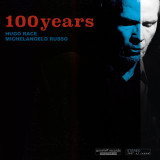
Hugo Race (Dirtmusic, Fatalists, ex-Bad Seeds) and Michelangelo Russo (True Spirit), fuse rock, blues, ambient and electronic sounds on their raw, compelling new album "100 Years".
In 2017, the duo released John Lee Hooker's World Today (Glitterhouse/Gusstaff Records), a tribute to the blues legend's delta blues legacy reinvented in a swirling mix of analog grit and deep trance pulses.
100 Years showcases the duo's sonic chemistry against Race's stark songwriting. Inspired by the raw majesty of early blues recordings, the album was recorded in two days in a non-stop live Hugo Race & Michelangelo Russo - 100 Years session. Amplified harmonica, open-tuned guitars, smoky vocals and primal foot beat walk us through a landscape of dreamlike devastation, a hypnotic wall of sound suspended in time and space celebrating endurance and redemption, hand-made from ancient roots. "Tradition does not mean passing the ashes, but the fire."
100 Years. Recorded November 1 & 2, 2023.
Engineered by Andrew 'Idge' Hehir at Soundpark Studios, Melbourne.
Mastered by Giovanni Versari at La Maesta, Milano.
Published by Peermusic.
PRESS about former album:
Rock'n'Roll Monuments, Greece:
"Race and Russo's pioneering electronic atmospheres give the historical Blues something you never imagined possible."
Rolling Stone, Germany: 'Dark Eros and transcendental blues…'
Musikreviews.de, Germany: "A psychedelic ghost blues of a profound sort, a mature, sensitive interpretation of the music and lyrics of John Lee Hooker. (Race and Russo) have blown us away in slow motion, economically instrumented and with painfully beautiful intensity. "
Q, London: "A darkly singular experience then, and one of the best records (Race) has ever made..."
The Music, Australia: "A collection of bluesy, brooding songs from a talented singer-songwriter with three decades of musicianship under his belt."
Eclipsed, Germany: "Hypnotic rhythms and haunting guitars, this album tingles under your skin..."
Focus Kultur, Germany: "No one else makes music like this, and that in itself is an achievement..."
Rock and Folk, Paris: 'This traveler without borders advances through a menacing atmosphere of no-wave electro-acoustics. Here is the spirit, and he does not forget
the body and the soul ... '
Tom Tom Rock, Italy: "An almost epic attack, worthy of the soundtrack of an apocalyptic post-nuclear catastrophe film… a talking blues of the third millennium, filtered by years of psychedelia and industrial music - and the Berlin years of Hugo Race can certainly be felt - hypnotic and dark, but precisely for this reason enveloping and fascinating. A record in which the music of the legendary bluesman is completely transfigured, without, however, the fidelity to his "spirit" and his "message" being questioned in the slightest. In short, JLH is alive and fighting with us, if we find the strength to follow him."
Hugo Race (Dirtmusic, Fatalists, ex-Bad Seeds) and Michelangelo Russo (True Spirit), fuse rock, blues, ambient and electronic sounds on their raw, compelling new album "100 Years".
In 2017, the duo released John Lee Hooker's World Today (Glitterhouse/Gusstaff Records), a tribute to the blues legend's delta blues legacy reinvented in a swirling mix of analog grit and deep trance pulses.
100 Years showcases the duo's sonic chemistry against Race's stark songwriting. Inspired by the raw majesty of early blues recordings, the album was recorded in two days in a non-stop live Hugo Race & Michelangelo Russo - 100 Years session. Amplified harmonica, open-tuned guitars, smoky vocals and primal foot beat walk us through a landscape of dreamlike devastation, a hypnotic wall of sound suspended in time and space celebrating endurance and redemption, hand-made from ancient roots. "Tradition does not mean passing the ashes, but the fire."
100 Years. Recorded November 1 & 2, 2023.
Engineered by Andrew 'Idge' Hehir at Soundpark Studios, Melbourne.
Mastered by Giovanni Versari at La Maesta, Milano.
Published by Peermusic.
PRESS about former album:
Rock'n'Roll Monuments, Greece:
"Race and Russo's pioneering electronic atmospheres give the historical Blues something you never imagined possible."
Rolling Stone, Germany: 'Dark Eros and transcendental blues…'
Musikreviews.de, Germany: "A psychedelic ghost blues of a profound sort, a mature, sensitive interpretation of the music and lyrics of John Lee Hooker. (Race and Russo) have blown us away in slow motion, economically instrumented and with painfully beautiful intensity. "
Q, London: "A darkly singular experience then, and one of the best records (Race) has ever made..."
The Music, Australia: "A collection of bluesy, brooding songs from a talented singer-songwriter with three decades of musicianship under his belt."
Eclipsed, Germany: "Hypnotic rhythms and haunting guitars, this album tingles under your skin..."
Focus Kultur, Germany: "No one else makes music like this, and that in itself is an achievement..."
Rock and Folk, Paris: 'This traveler without borders advances through a menacing atmosphere of no-wave electro-acoustics. Here is the spirit, and he does not forget
the body and the soul ... '
Tom Tom Rock, Italy: "An almost epic attack, worthy of the soundtrack of an apocalyptic post-nuclear catastrophe film… a talking blues of the third millennium, filtered by years of psychedelia and industrial music - and the Berlin years of Hugo Race can certainly be felt - hypnotic and dark, but precisely for this reason enveloping and fascinating. A record in which the music of the legendary bluesman is completely transfigured, without, however, the fidelity to his "spirit" and his "message" being questioned in the slightest. In short, JLH is alive and fighting with us, if we find the strength to follow him."
Following up on his fantastic full length from a couple years ago, Adriano Mirabile continues to bring forth that down tempo and mid-tempo organic house mood and chillout lounge atmosphere blend with his productions. Side A we get the original Traumfänger tracks showcasing all that we've loved from the get about what Adriano brings to our imprint. Side B offers up two reinterpretations courtesy of Aus Music recording artist, Lee Jones, and Stasis Recordings mainstay, Sanderson Dear. Both take the chillout and bump up the pulse a bit with their techy flare.
out of Stock
Last delivered 2 years ago available to reorder, subject to availability
Amputechture Beneath the technical flash, the fury, the fearless creative brinkmanship of the first two Mars Volta albums lay a potent seam of the blues, an existential vexation that powered every twist and turn of Omar and Cedric’s imaginations. That mournful vibe would come to the surface of the group’s third full-length Amputechture, a simmering/blistering set that was unquestionably the group’s darkest yet. There was no overarching theme here, no interlinking concept binding the songs together, though Cedric concedes that, lyrically, the album was influenced “by a lot of stuff I was going through, a really bad break-up and a lot of other crazy stuff, and trying to put that feeling into the record.” But Amputechture – its name another of the late Jeremy Michael Ward’s invented words – was no downbeat bummer. Opener Vicarious Atonement might’ve been a deliciously gloomy, slow-burning thing, capturing Cedric in delirious duet with Omar’s swooning guitar lines, accompanied by squalling saxophone by Adrian Terrazas-Gonzales and dream-frequency fuckery by the group’s new sonic manipulator, former At The Drive- In member Paul Hinojos. But second track Tetragrammaton swiftly set pulses racing, an epic-in-miniature and containing more ideas within its 16 minutes than most bands manage over an entire career, its proggy, complex guitar figures tessellating in infinite configurations and converging as if conforming to mathematical formulae from another reality. The raw material Amputechture was hewn from started life on the road. Omar now travelled with his own mobile recording studio – a little Neve ten-channel tape recorder and an array of microphones – and was able to work on new ideas on tourbuses, in hotel rooms and during soundcheck (and, occasionally, after the show was done). After touring for Frances The Mute was complete, Omar relocated to Amsterdam, staying with his photographer friend Danielle Van Ark and her partner, Nils Post. It’s here that he demoed Amputechture, flying in engineer Jon DeBaun, drummer Jon Theodore and his brother, Chino, to work on these raw sketches. He later returned to Los Angeles, where the album was finally recorded. Omar ceded guitar duties to his dear friend and kindred spirit John Frusciante, instead assuming the role of musical director. “I wanted to hear the sound of the band,” he says. “I thought, I’ll be able to sit at the console, feel the air of the speakers moving, the unified sound of everything, and not feel distant from it. It was fun, but it was also challenging.” Part of Omar’s new method was to teach the musicians their parts only moments before the tapes rolled. “To keep things fresh, and to keep everyone on edge,” he says, before chuckling. “No, not on edge – on their toes. Amputechture would prove The Mars Volta’s most diverse set yet, drawing into the group’s tornado of influences moments of fiery jazz spirituality and esoteric folk introspection, finding space for passages of devastating subtlety and also their most fierce and full-on moments to date. The aforementioned Vicarious Atonement found its meditative mood echoed by Asilos Magdalena, an intimate, acoustic piece that invoked traditional Latin folk music, as Cedric sang in Spanish a sorrowful tale of a lost soul’s quest for sanctuary within a Magdalen Asylum, a refuge set up by the Catholic church for “fallen women”. The shadowy, sinister closer El Ciervo Vulnerado, meanwhile, tapped into the darker side of spiritual jazz to further explore the album’s themes of redemption and religious myth and magick. Elsewhere, the interplay between guitar and clarinet on Viscera Eyes created complex, unsettling counter-melodies, while the coiling, ornate Meccamputechture – Cedric’s wild fusion of sacred texts, occultism and dystopian science fiction – proved a great showcase for Ikey Owens’ swarming, infernal organ runs, in concert with Frusciante’s arcane guitar-play. But it was Day Of The Baphomets that would prove Amputechture’s most ambitious and most defining epic. Cedric’s lyrics tore into the hypocrisy of religious cant and myths of sin and punishment. “I wanted to make a song that was like the movie The Believers, where this cabal stole kids and did some occult shit with them,” he explains. “But I wanted it to be like, ‘What if the people you hire to do jobs you don’t wanna do rise up one day and then pull some shit like that?’ Like it was the guerrilla warfare, them taking over – wouldn’t that be some fucked up shit? And the music just lent itself to that – the big intro, the bass solo, and all of the ruckus that occurs.” That ruckus was some of the most thrilling Mars Volta music yet, as Omar directed his musicians to rumble through fiery modes of wild tribal groove, ransack-the-palaces riot- rock and supreme progressive experimentalism. Amputechture, then, is the sound of The Mars Volta in imperial mode: fearless, insatiable, unstoppable.
Maelstrom returns to Central Processing Unit for the fourth time, and it's the one born Joan-Mael Péneau's lengthiest drop on the Sheffield label yet. The French artist has been a mainstay in the European electro game since the 2000s, and Malestrom brings that experience to bear on new LP The FM Tapes. He goes about this album with the assurance of a seasoned pro, combining his mastery of electro production techniques with a trademark guile to craft an expertly-paced eleven-track affair.
The first section of The FM Tapes sets out the album's stall with style and aplomb - listeners are in store for a rich feast of off-kilter machine-funk which will feature no shortage of intriguing detours. On opener 'Ondes Courtes' the mix throbs with all manner of strange electronic gristle: a distorted bass hum rattles the monitors; wisps of distortion float across the mix; eerily pretty keys wax and wane before giving way to a radar pulse.
'Ondes Courtes' is an ominous slouch of a scene-setter, and it lines things up perfectly for following cut 'Alt50ser' to lock in. This track's churning, gurgling mid-tempo rattle brings to mind the wacky insistence of Modeselektor. Maelstrom repeats the slow-fast one-two again directly afterwards - 'La Vie Sociale Des', a strange nugget that sounds like an early Eski instrumental stripped for parts and blasted into the cosmos, is an ideal prelude to the twitchy space-funk of 'My Digitone'.
Maelstrom's staying power in the electro world comes, in no small part, from his ability to apply his delightfully idiosyncratic choices to some of the genre's staple production tropes. On The FM Tapes, he marks himself out once more as a pleasingly unorthodox talent by taking tracks in unexpected directions to produce surprising - and often rather moving - results.
There are multiple cuts here which channel the more cerebral end of Richard D. James' AFX/Analord output: 'My Digitone' may be a quicksilver techno-electro number, but there's still something cinematic about the synth treatment here which softens the edges; 'Suede's minor-key oscillations bring other CPU veterans like Cygnus and Bochum Welt into view; 'Res 06', one of two Fasme collaborations on the record, is full of pathos even as the beat programming bangs and whirrs throughout.
While there's a deep emotional undercurrent to The FM Tapes, though, Maelstrom's commitment to bringing the thrills surfaces time and again. If 'Res 06' had Maelstrom and Fasme getting wistful, the album's other Fasme link-up 'Trempo' is one of the hardest club joints here, a piece of old-school Detroit energy replete with some great cascading drum production. Indeed, 'Trempo' comes in the middle of a run towards the album's end where Maelstrom takes the handbrake off - there's a wild-eyed sense of fun to 'The Operator' and 'Upside Down DX7' which has one thinking of the zany cut-and-thrust of KiNK's best work.
Maelstrom's latest drop for Sheffield's Central Processing Unit label is an album of leftfield electro numbers that bring both pounding beats and poignant production.
From Cape Town to Cairo, and now to fans, stages and screens around the world, PJ Morton shares his newest album, fully made in the motherland. Cape Town to Cairo is a collection of songs that he created in 30 days throughout 4 countries in Africa — South Africa, Nigeria, Ghana and Egypt. Described as the best trip of his life, this transformative journey began as just the seed of an idea last fall, but instantly grew into his most sonically-sprawling and immediately-inspired record to date. With no music, lyrics or preconceptions, he stepped foot onto the continent with two thoughts: a wild dream to write and record his next LP in less than a month, and a mission to immerse himself in as many different cultures, stories and communities as he could.
Surrounded by featured collaborators like Fireboy DML, Mádé Kuti, Asa, Ndabo Zulu, and Soweto Spiritual Singers, as well as additional producers including P.Priime and The Cavemen., his own live band and local musicians, PJ Morton used music as his common language. Always his greatest way of communicating, he expressed his feelings and experiences of Africa through songs he and others were forming together on the spot, side-by-side in different studios, cities and towns for the very first time. None of the tracks were written before he arrived or after he left, and the arrangements showcase both the countries’ native genres as well as the innate, stylistic instincts that have made Morton a 5x GRAMMY-winner and 20x GRAMMY-nominee, whether it be his soul, R&B and gospel roots, or the pop prowess he has further honed as a member of Maroon 5.
“When you’ve been in music as long as I have, you’re constantly looking for inspiration,” says PJ Morton. “And you’re looking for the things that made you want to do it in the first place. I’ve made albums every type of way you can think, so I wanted to try something I hadn’t done before. As a Black American who had never been to South or West Africa, I knew there was something there waiting for me. So I put a little pressure on myself to make a full record in a month, but I also said, ‘If I’m gonna go to Africa, I want to see Africa.’ We made music, but we also formed connections. We made new friends, and this is just the start.”
ESSENCE adds, "This trip is not just a physical move, it's a spiritual return…The soul of Africa pulses through every note he plays and every word he sings,” and VIBE adds that “the multi-faceted artist is fully embracing a new phase in his life.” Cape Town to Cairo marks PJ Morton’s first album since 2022’s Watch The Sun, which featured collaborations with Stevie Wonder, Nas, JoJo, Wale, Jill Scott, Alex Isley and more. Since then, Morton has become the first Black composer to write an original song for a Disney attraction, having just finished making the music for Tiana's Bayou Adventure, opening on June 28th, 2024 at Disney World and Fall 2024 at Disneyland. He also won his latest GRAMMY earlier this year, worked with Samara Joy on “Why I’m Here” for Regina King’s Netflix film Shirley, and landed a cover of his song “Don’t Let Go” as the soundtrack to Apple’s iPhone 15 commercial.
PJ Morton recently returned from headlining his debut shows in Asia, New Zealand and Australia, and announced an extensive Cape Town to Cairo Tour for North America summer and fall 2024. Following iconic performances at New Orleans Jazz Fest, The Kennedy Center, Roots Picnic and Newport Jazz Fest, Morton will embark on a run of more than 25 dates across the country, including New York City’s Beacon Theatre, Chicago’s Chicago Theatre, Nashville’s Ryman Auditorium, Los Angeles’ The Wiltern, and dozens of others.
On the heels of his headline tour and Maroon 5’s Las Vegas residency, PJ Morton will publish a life-spanning new book titled Saturday Night, Sunday Morning. The memoir sees him recounting and reflecting upon a trailblazing path that continues to defy expectations and straddle the tensions of music and faith, race and culture, expression and identity. As the son of two pastors and gospel artists, Morton grew up grounded by the sound of the Church, but soon found himself drawn to R&B, pop and soul, writing songs that the industry, his family and community struggled to understand. In the face of mounting pressure, rejection and constant miscategorization, he committed himself to a steadfast path of independence: making music on his own terms, launching his own record label, joining one of the biggest bands in the world while staying true to his New Orleans roots. The risks he took paid off, and through his transformation from preacher's kid to the busiest man in showbiz – performing everywhere from his local congregation to the Super Bowl, collaborating with everyone from his father to Stevie Wonder, Erykah Badu, Jon Batiste and Lil Wayne – he hopes to encourage readers and listeners to overcome obstacles as they seek their dreams.
“I am OBSESSED with the 80s. I love the loud neon colours and fashion and the kinetic energy of the music. It’s uplifting and bittersweet with a ton of keyboards, what’s not to like?” reasons Morgane when asked what it is she likes about the decade. This exuberance is brightly reflected in the mirror ball synthpop of her third album released at the end of September. It is her second long player to appear on vinyl after the release of Between The Funk And The Fear debut on the Polytechnic Youth label.
Morgane was the keyboard player in Stereolab between 1995 and 2001 during which time they released Emperor Tomato Ketchup (her favourite) and Dots And Loops. As a teenager though she first played the drums, then guitar and bass. She only learnt the keyboards one month before joining the group. “They gave me 40 songs to learn, it was a baptism of fire”.
After leaving Stereolab, Morgane first moved to New York for nine years; she’d always planned to move to America having spent a lot of time there with her parents and of course those space-pop pioneers. The warmer weather of LA enticed her though and you can hear its pulse in Day-Glo Chaos. The album’s thumping heart is pumped by the city’s night sky and when asked she cites three particular albums as her favourites: the oddball analogue electro of Jacno’s 1979 debut; John Carpenter’s ‘Escape From New York’ and The B-52’s ‘Cosmic Thing’. There’s also a strong nod to the playful computerised harmonies of Yellow Magic Orchestra whilst she’s somewhat partial to the synth prog of Yes and Soft Machine. “I actually created a synth on Ableton Live named after Rick Wakeman’. I should create one after Mike Ratledge next!”
Throughout her work (but especially on this record) you can hear the influence of computer games. “I’m an avid gamer and have been one since I was a teenager and fell in love with my Commodore 64”. Though not a fan of Hotline Miami or the GTA series (“too violent”) she liked Hang On and loved Outrun which she used to play a lot on her Sega Master System. “I just got the soundtrack reissue from Data Disc and it is beautiful” she enthuses.
You’ll see and hear such influences on the lead single from the album ‘Midnite Rogue’ the video to which pays (im)perfect juddering homage to such arcade culture. Car tyres glued to sticky tarmac, French pop music lost in the air. The title was inspired by a Fighting Fantasy book which she adored as a kid. “I love the idea of this entity causing mischief during night time”, she beams. It’s not hard to see why.
Continuing his fruitful relationship with Discrepant after the third volume of his ongoing Organic Music Tape Series on Sucata Tapes, Tiago Sousa returns with two longform pieces for organ with 'A Thousand Strings'. A self-explanatory title in itself, 'A Thousand Strings' drifts fluidly into a celestial realm of cascading melodies and cycling patterns that never feel forced or strict throughout its two hypnotic tracks. Pulsating with life and ecstatic abandon.
Taking cues from the tradition of American minimalists like Steve Reich and, particularly, Terry Riley, the Portuguese composer's work flows with a life of his own, that, while acknowledging those influences, transcends them into his own signature. On the A side, 'A Thousand Strings' goes seamlessly from intertwining crepuscular harmonies to ascending keyboard runs in the manner of 'Persian Surgery Dervishes' finishing with a coda of rhythmic marimba-like pulses. On the flipside, 'The Things Passed' creates this maze-like tapestry of melodies that seem to drift apart only to converge back again into its internal process before setting on sustained tones infused with a sense of longing. For all things passed. For what is yet to come.
At the height of the First World War, two young British soldiers, Schofield (Captain Fantastic’s George MacKay) and Blake (Game of Thrones’ Dean-Charles Chapman) are given a seemingly impossible mission. In a race against time, they must cross enemy territory and deliver a message that will stop a deadly attack on hundreds of soldiers—Blake’s own brother among them. 1917 is directed by Sam Mendes, who wrote the screenplay with Krysty Wilson-Cairns (Showtime’s Penny Dreadful). Rotten Tomatoes critical consensus reads: ""Hard-hitting, immersive, and an impressive technical achievement, 1917 captures the trench warfare of World War I with raw, startling immediacy."" The music to the movie is composed by Thomas Newman (The Shawshank Redemption, American Beauty, Road to Perdition). Newman has received a whopping 15 Oscar bids throughout his career, including one for this epic score. Since the film is designed to be told in one continuous shot from cinematographer Roger Deakins, Newman’s pulse-pounding score often serves as a unique form of editing. The music cuts off during dramatic cues, ramps up in battle scenes and, in one breathtaking moment, becomes almost operatic as MacKay runs through war ruins to escape being seen from enemy flares. 1917 is available as a limited edition of 500 individually numbered copies on translucent blue coloured vinyl. The package includes an 8-page booklet with movie stills and liner notes by Sam Mendes.
Rodenwald - Tauchstation ENNI2
by Rodenwald feat. Remixes by Pozek & Too Old Boys
With their grandiose deep techno remix of Peska's "Kick It Slow", released on Endless Night 1 (ENNI1), the duo from Rodenwald shot themselves straight into the role of favorites for the subsequent release on our sister label. And here it is, the latest Rodenwald creation - Tauchstation. Flanked by 2 outstanding remixes by Pozek and Too Old Boys.
It goes pumping downwards into the depths of nighttime worlds when „Tauchstation“ sets off on its journey. We sink deep with whipping synthesis in which the acid soon gets involved... a grandiose intro that prepares you for the fact that this journey will expand your consciousness... It's good that you're on board! It's going to be long…and deep!
Pozek´s Remix tickels the potential for the driving force of this journey. 145 bpm is a must - your training pulse - so stay calm - we sink together and experience worlds that no individual has seen before. You can feel the passion with which Pozek navigates here.
The Two Too Old Boys (Tommers and Introspective Views) bring a harder gear with their remix. The characteristic sound of 90s synths underpinned by biting industrial beats lets us sink deeper with Rodenwald's "Tauchstation" - and feels like you're in the middle of one of Stefan ZMK's superbly arranged sets. Goosebumps that will make you realize once again - What looked like morning was the beginning of Endless Night.
Includes digital download code, artwork sticker & label sticker and the highly coveted “What looked like morning... “ sticker
CREDITS
Creation/Performance: Rodenwald, Pozek, Too Old Boys
Mastering: Pozek
Artwork/Layout :TDSiGNZ
Executive Producer: Lyta Hall
out of Stock
Last delivered 77 days ago available to reorder, subject to availability
By it's very nature "Radio Chevére", the new album by Rio 18 and their host of guests cannot be categorized simply: at once both a Latin mixtape and a radio show, it's also an internationalist love letter, an offering to the goddess of Tropical Music and all that it encompasses. Ambitious, yes. Foolhardy, possibly. But sincere, committed and FUNKY? Definitely.
With the voice of guest DJ Coco Maria as our guide, "Radio Chévere" takes us on a journey through myriad musical styles and stories. Stopping off at Uruguay, Brazil, Venezuela, Colombia, Mexico, California, New York and countless other sonic destinations via Samba, Salsa, Funk, Cumbia, Joropo, Disco, Psychedelic and Electronic stylings, "Radio Chévere" is also a musical metaphor for migration - a journey from one continent, one life to another.
This album features songs in no less than four languages (Spanish, Portuguese, Welsh and English) and includes collaborations with Brazilian legends the +2's (Moreno Veloso, Kassin and Domenico Lancellotti) on the tender samba ballad, "Oh Minha Querida", transatlantic Yacht Rock gods Young Gun Silver Fox ("She's In LA"), "Sao Paulo's finest" Silvia Machete on the sweaty funk "Maybe Man" and Venezuelan Llanera and Joropo queen Luzmira Zerpa sings "Padre Tiempo", set to an incessant Afro-Venezuelan pulse. Why this torrent of eclectica now? Having recorded three albums in Welsh, predominantly inspired by Brazilian music, Rio 18 founder, Carwyn Ellis had a hard time following 2021's "Yn Rio": "We'd made a concept album with an orchestra. How do you follow that?" he says. "So I retreated to my laboratory, learned as much new music as I could, started learning Spanish too, and ended up writing tunes in a bunch of languages and styles, all of which reflected things I've learned or experienced over the last couple of years."
Since the group's inception in 2018, on the suggestion of Chrissie Hynde when he toured South America as a member of the Pretenders, Carwyn has been on a voyage of musical discovery through the styles of that continent. And in those five years he learnt a lot! But in a radical new move, Carwyn has stepped back from the mic, preferring to focus on writing and producing, handing over the vocal duties to band members Baldo Verdu (Venezuela) and Elan Rhys (Wales) plus a host of collaborators. "They can sing and express what I'm feeling so much better than I can, and both Elan and Baldo bring an authenticity and strength to our songs that surprise and elevate me. Collaborating with so many other inspiring artists on this album has helped us to grow and assimilate more styles - we're halfway through our next album already."
Rio 18 is an internationalist collective with Celtic and Latin roots and love at their core. With eye popping carnivalesque cover art by the brilliant Colombian graphic artist, Yoda, "Radio Chévere" is both timely and timeless.
out of Stock
Last delivered 2 years ago available to reorder, subject to availability
The principles of pleasure radiate a knowing, carnal heat throughout the genre-fluid sound of LSDXOXO. His decade of dedication to the sensibility of underground club culture has brought forth club classics interwoven with pop music hooks and subversive, tongue-in-cheek lyrics.
After four years of what LSDXOXO, real name RJ Glasgow, calls a period of “healing and self-discovery,” he is consolidating his multiplicitous sound with one compelling masterstroke: the debut album DOGMA, to be released on his own imprint F.A.G. DOGMA marks a complete paradigmatic shift: it is a poetic and fantastical performance, a route for deep escapism through an expanded musical palette including piano and guitar, and a deeply personal confessional through a fresh approach to songcrafting.
Within DOGMA, RJ meditates on the interlinked qualities of fame, infamy, lust and submission, as he rediscovers a pure, unadulterated approach to music-making, all the while adopting a futurist approach to pop music appreciation. RJ’s unmistakable signatures—the smutty dancefloor caller, the maker of irresistible bangers, the latter-day electroclash and DnB nostalgist—take on even more shades and intricacies. Despite his widespread acclaim as a collaborator with and songwriter for other artists, RJ strips DOGMA down almost exclusively to himself, carving out intentional space as a chameleonic vocalist and performer. He breathes life into the album with private thoughts, external fears and a red thread through personal themes that crystallise the album’s narrative from front to back.
The album’s promo single “Bloodlust” offers angsty, intimate indie-tronica, and musings on the intoxicating nature of love and infatuation. The lead single “Ghost” reaches beyond RJ’s Philadelphia origins to find itself in the deep south, in a sultry fever dream of coquettish R&B featuring backing vocals from close collaborator Kelela. Elsewhere on the album futuristic love, pensive pop earworms, evocative vintage dance styles and sleazy club tracks intermingle. While the DOGMA era will eventually explore remixes and reworks, the album is RJ’s purest embrace of himself and his artistry.
RJ first garnered attention as LSDXOXO in New York City with his on-the-pulse Soundcloud edits and then as part of the cult GHE20GOTH1K collective. His DJ sets and productions quickly earned him acclaim across globally-linked underground scenes. His decision to shift from sampled vocals to picking up the pen and microphone pushed his reach out to the stratosphere; his association with XL Recordings via the Dedicated 2 Disrespect EP in 2021 was a turning point for the burgeoning superstar.
This multiplicity of the LSDXOXO sound has led to enviable co-signs. These include being selected as the opening DJ for Beyoncé’s German Renaissance tour dates, remixing Lady Gaga, Pink Pantheress and Shygirl and producing five tracks for Kelela's highly acclaimed 2023 album for Warp Records, Raven. His fully-realised live show has also taken to the stage, serving fierce charisma to huge audiences at festivals including Primavera, Nuits Sonores and Rewire.
out of Stock
Last delivered 2 years ago available to reorder, subject to availability
Monument is one of Portico Quartet’s most accessible, direct records to date. If Terrain addressed the darker side of how Duncan Bellamy and Jack Wyllie made sense of the pandemic, then Monument resonates as an ode to better times. If not quite a dance record, it nonetheless pulses with an energy, radiance and a scalpel sharp focus. Jack Wyllie explains: “It’s possibly our most direct album to date. It’s melodic, structured and there’s an economy to it that is very efficient. There’s not much searching or wastage within the music itself, it is all finalised ideas, precisely sculpted and presented as a polished artefact.” Bellamy expands “Monument sits somewhere between our albums Portico Quartet and Art in the Age of Automation. It has perhaps a more overtly electronic edge to its sound – there are more synthesisers and electronic elements than we have used before and the music is often streamlined and rhythmic”.
out of Stock
Last delivered 2 years ago available to reorder, subject to availability
The single features a collaboration between Studio Kosmische from UK and Cloud Canyons from Italy. Side A is a rework by Studio Kosmische of “Under Neon Stars”, a track from Cloud Canyon’s 2023 debut album “Dreaming Of Horses Running In Circles”: by adding a few parts and alchemically blending the original elements of the song - the relentless motorik pulse, the ethereal female vocals, the multilayers of monophonic analogue synths - Studio Kosmische’s version moulds a shrouding and lilting veil on the 9-minutes long original track. Side B features a brand new track, “Black Fruit”, also sprung from the creative dialogue between the two bands and clocking at about 9 minutes side-long. Born as an instrumental piece by Studio Kosmische, “Black Fruit” developed in a full song thanks to the vocal additions by Michelle Cristofori, Laura Storchi and Stella Baraldi (Cloud Canyons’ singers) and a rich yet minimalistic array of instrumental parts by Studio Kosmische’s Dom Keen, who ingeniously shaped the keys harmonies and rhythmic textures around the vocal lines. Accomplished by some subtle electronics treatment by Cloud Canyons’ Nicola Caleffi, “Black Fruit” ideally complements “Under Neon Stars” as a two-sided creature, hanging somewhere between krautrock and electronica.
Mermaid Chunky. It's all in a name, sometimes. The danceable, costumed, curiosity rich duo of artists Freya Tate and Moina Moin are as imaginative as they profess. Or, to get more to the point, as we all need them to be. Freya and Moina are two visual artists and musicians from Stroud and South London, places where they importantly found communities (Stroud's SVA and the capital's Total Refreshment Centre) of like minded people just as willing to chase down an idea to its possibly illogical conclusion. And it is in the collective and the idea of participation that Mermaid Chunky really clicks. This is a party, a collective dance, made all the better with more: people, ideas, layers, kick drums, recorders, saxophones, frogs. To wit, the album's first track and first single, "Céilí," named after a traditional Scottish or Irish social gathering and dance, which builds from a simple recorder line into a swelling, warm burst of major chord dance music. Goosebumps or check your pulse. Further down the rabbit hole, "Chaperone" is almost boardwalk electro, like Fischerspooner on a ferris wheel; "Frogsporn" and "Nature Girl" are mucky, trippy dirges filled with stalactites of synth and squelch; "Tiny Gymnast" is a kaleidoscopic waltz into the night. Hold onto your seats, ladies and gentlemen. You might be wondering how we, DFA Records, all the way over in cynical Brooklyn, entered the picture. There was a day a few years ago, sun shining in full Springtime splendor, when James heard something while waiting for a coffee down the street from the office. It sounded simple yet deceptively complex: a dance track, but one where the one - that anchoring first beat in a measure - could be heard a thousand different ways. Frustrated and interested, he Shazamd the song, playing at the shop from an episode of Zakia's Questing show on NTS, and brought it back to the office, where we all listened to it about fifty times. (The song was "Friends," from Mermaid Chunky's VEST EP, released in 2020. It led to an invitation to open for LCD at Brixton Academy in 2022. Mermaid Chunky has also played live alongside The Comet Is Coming, Alabastair Deplume, Snapped Ankles, and many others.) Thus began our search for Mermaid Chunky. A quest it has been and a quest it will always be.
WE ARE WINTER'S BLUE AND RADIANT CHILDREN (WAWBARC) is the new quartet of Mat Ball (BIG|BRAVE), Efrim Manuel Menuck (Godspeed You! Black Emperor, Thee Silver Mt. Zion), and Jonathan Downs and Patch (both Ada). On "NO MORE APOCALYPSE FATHER" they present six modal lullabies drenched in seared distortion, slathered across striding electronic pulses. Ball and Menuck began creating music in and for the bleakest moments of Montréal winters: "We're honoring that idea of winter, when you come inside and your house is warm, a place that only exists because of how cold it is outside," says Menuck. They later recruited Downs and Patch to flesh out their initial ideas. Menuck met them in 2015 when recording Ada's final album at Montréal's Hotel2Tango _ where they reconvened to make this record. "NO MORE APOCALYPSE FATHER" is an album about witnessing bleakness from a place of safety. Carrying newfound descriptive depth, thanks to the quartet's open-ended songs freeing him from writing in meter, Menuck likens his lyrics to photorealism. On opener `Rats and Roses' he sings of an unnamed city struck by an unknown cataclysm, but the details are local: specifically, his neighbors inadvertently poisoning birds when tackling a rat infestation. It's backed by blown out synths and guitars reaching a soaring crescendo. "Seeing things from a distance and not being able to intervene happens a lot on the record," Menuck explains. "If you're a feeling and thinking person, that's just part of the human condition. We watch horror unfolding from afar, unable to do anything concrete to change it." A powerless witness, able to describe but not intervene. `Dangling Blanket From A Balcony (White Phosphorous)' references Michael Jackson holding his child over a hotel balcony in 2002_the bizarre media spectacle still lodged in Menuck's psyche. This and the album's closing track also elegize white phosphorous, a technology of war designed to light up battlefields but capable of inflicting horrific burns on those it touches. Illumination and horror in one, here underpinning scenes picturesque and terrifying. "The last song `(Goodnight) White Phosphorous' is deliberately like a lullaby," says Menuck. "Written from the viewpoint of watching white phosphorous falling outside your window." Scorched and tarnished and laden with harrowing imagery, "NO MORE APOCALYPSE FATHER" is also a record bathed in light: the bewilderment of hopeful spirits witnessing despair, watching a blizzard of distress unfold outside from a place of relative shelter and comfort. You could call that emotional ambivalence, maybe numbness. But those words are too passive for the weight of conflicted feeling resonating through the album. "I never know how I feel on an overcast day when the sun is still bright despite the grayness and the light is very flat. The colours become more saturated, and you see a single flower, say a morning glory, whose colour is so vibrant beneath the gray, I don't know if that's a lovely sensation or a terrible sensation. It's both," says Menuck.
Opium Warlords' sixth album "Strength!" out on Svart Records in September 2024! Opium Warlords, led by Sami Albert ”Witchfinder” Hynninen (Reverend Bizarre, The Puritan, The Candles Burning Blue), return with their sixth album Strength! It is a versatile but tight combination of pussy techno, sludge, industrial pop, hardcore punk, drone, shamanistic pulse, noise, heavy metal, old school gothic rock and march music. It is a take on European rhythmic patterns: stagnant factory beat – no groove, no swing, just a rhythm of industrialism that pierces through different genres and styles. Comparing to the dark and oppressive Nembutal (2020), Strength! is significantly more light-hearted, with its postmodern lyrics emitting from sources such as shampoo bottles and television UFO series to the Pan-Europa myth or morbid lore of death-hungry Transylvanian Iron Guard. However, the sting of irony and sarcasm is balanced with more serious subjects: Strength! is a hate/love letter to Europe and a self-reflection on Machiavellian and Nietzschean philosophies of strength and elitism. True to the band’s soul everything is covered with pure toxic misanthropy. Strength! 2LP/digital/2CD will be released 13th of September on Svart Records. Album’s first outtake, Erotomania, is out right now via digital services worldwide.
Opium Warlords' sixth album "Strength!" out on Svart Records in September 2024! Opium Warlords, led by Sami Albert ”Witchfinder” Hynninen (Reverend Bizarre, The Puritan, The Candles Burning Blue), return with their sixth album Strength! It is a versatile but tight combination of pussy techno, sludge, industrial pop, hardcore punk, drone, shamanistic pulse, noise, heavy metal, old school gothic rock and march music. It is a take on European rhythmic patterns: stagnant factory beat – no groove, no swing, just a rhythm of industrialism that pierces through different genres and styles. Comparing to the dark and oppressive Nembutal (2020), Strength! is significantly more light-hearted, with its postmodern lyrics emitting from sources such as shampoo bottles and television UFO series to the Pan-Europa myth or morbid lore of death-hungry Transylvanian Iron Guard. However, the sting of irony and sarcasm is balanced with more serious subjects: Strength! is a hate/love letter to Europe and a self-reflection on Machiavellian and Nietzschean philosophies of strength and elitism. True to the band’s soul everything is covered with pure toxic misanthropy. Strength! 2LP/digital/2CD will be released 13th of September on Svart Records. Album’s first outtake, Erotomania, is out right now via digital services worldwide.
Swedish DJ/Producer Christian Nielsen debuts on Maceo Plex's Ellum imprint with the ‘Love Struck’ EP this May.
The four track EP continues a strong start to 2020 with releases from Raxon and Avision and, true to the label’s form, is all about weighty, characterful cuts from Nielsen, an artist who has previously chalked up releases for the likes of Kompakt, Of Unsound Mind and Play it Down.
The titular opener of ‘Love Struck’ is a swaggering, low slung affair with a growling bassline underpinning a pitch shifted vocal refrain and piercing rave stabs - a mutant beast which fuses techno, Garage and rave aesthetics in anthemic style. The skeletal rhythms and gritty acid flair of ‘For Myself’ follow in a track that, through some nifty builds, manages to pull off a big room energy as much as it does a basement vibe. ’Switch’ is next up and, with a rock solid groove, vocal sample and subaquatic tones, displays just how well Nielsen can create a monster with few elements. The heaviest track, ‘Pulse’, rounds off ‘Love Struck’ with a huge, padding kick drum and resonant percussive lead doing the heavy lifting while counterpointed by judiciously employed warm, cossetting jazz flute licks
out of Stock
Last delivered 30 days ago available to reorder, subject to availability
Unequal cycles in search of synchronous experiences: On his new album »Pounding«, Frank Bretschneider tells of distance, convergence and congruence in a continuous, ever-changing flow of events. What is often regarded as an unquestionable dogma in club music (for which Bretschneider has provided significant impetus since the 1990s) – the groove – appears precarious, unstable, and in motion. Pulse and accent are volatile encounters and have to be found again and again for short, delightful moments. Music becomes a constant process of negotiation.
In search of new sound spaces, Bretschneider has recently worked a lot with modular synthesizers, both solo (for example on »abtasten_halten«, 2020) and in collaborations, including the project Beispiel together with Jan Jelinek. »Pounding« was created using similar means – conceived in 2020 for the Pochen Biennale in Chemnitz, subsequently developed further and recorded in March and April 2023 on a sample-based modular system. And in fact, Bretschneider is once again exemplarily scanning his own sound material, such as dub effects that listen to themselves disintegrate; but also the human voice, or more precisely: the stuttering of fragments of speech, far in the distance but omnipresent, like a mysterious narration. Aesthetically, the eleven pieces form part of a series of works with a focus on percussion. Bretschneider has already perfected this approach with albums like »Rhythm« (2007) and has been shifting the perspective ever since, for ever new results.
Shifting is the basic principle of »Pounding«. Bretschneider combines elements that are in different aggregate states, changing their relationship to each other and thus ensuring the complex overall movement. He lets one to two-bar loops run against each other and through small manipulations, develops a network of rhythms that creates a hypnotic state in the counterplay of repetition and mutation, between clearly recognizable meter and disorientation. There are comparable approaches in aleatoric music. Bretschneider combines them with sounds and patterns that are reminiscent of step sequencer logic and at the same time go far beyond it. The result is relational techno. Never obvious, always restless and exciting.
out of Stock
Last delivered 16 months ago available to reorder, subject to availability
Belarusian post-punk / synth pop group Molchat Doma have always exuded the kind of brutalist aesthetic of the architecture that adorns their album art. It's cold, gray, imposing, industrial and yet there are human hearts beating within those foundations. In the wake of their breakthrough success in 2020, the trio endured a polarity of experiences, from the nadir of an uprooted life and forced relocation away from their native Minsk to the apex of headlining massive shows across the world. It was in this headspace that the band settled into their new home of Los Angeles to finish writing their fourth album Belaya Polosa, a testament to change in difficult times, a love letter to the digital pulse of the `90s, and a technicolor reinvention of the band's somber dancefloor anthems. From the opening synth swell and drum machine throb of "Ty Zhe Ne Znaesh' Kto Ya," to the goth / post-punk austerity of "Son", to the swirling electronic textures mixed with reverb-drenched guitar flourishes, expansive space, and yearning vocals of title track "Belaya Polosa" - that suggests Depeche Mode at their most reflective or The Cure at their most downtrodden - to the sultry and seductive "Chernye Cvety"_ a track reminiscent of Duran Duran's early `90s output in its fusion of dreamy guitars and authoritative mechanized beats _ and the interwoven layers of instrumentation, soaring chorus, and melodic sophistication of "Ya Tak Ustal", it's clear that Molchat Doma are operating on another level. Molchat Doma gained following with earlier albums that sound like third-generation bootlegs of banned recordings from the Eastern Bloc made after a few key entries in the Factory Records catalog were smuggled in from the West. Belaya Polosa propels them into a new direction while retaining their cold minimalist delivery they're known for. The basement grime and dirty tape-head sound of their previous work are now making space for digital luster and shimmering production values. And while Molchat Doma's broadened aural spectrum adds a synesthetic power to Belaya Polosa, the mood remains rooted in stark and unflinching self-reflection. Molchat Doma retain the duality of being both cold and feverish in their delivery while pushing their music into expanded territories through an armory of new textures. The trio continue to harness the sound of harrowing beauty thriving under harsh realities.
out of Stock
Last delivered 16 months ago available to reorder, subject to availability
Belarusian post-punk / synth pop group Molchat Doma have always exuded the kind of brutalist aesthetic of the architecture that adorns their album art. It's cold, gray, imposing, industrial and yet there are human hearts beating within those foundations. In the wake of their breakthrough success in 2020, the trio endured a polarity of experiences, from the nadir of an uprooted life and forced relocation away from their native Minsk to the apex of headlining massive shows across the world. It was in this headspace that the band settled into their new home of Los Angeles to finish writing their fourth album Belaya Polosa, a testament to change in difficult times, a love letter to the digital pulse of the `90s, and a technicolor reinvention of the band's somber dancefloor anthems. From the opening synth swell and drum machine throb of "Ty Zhe Ne Znaesh' Kto Ya," to the goth / post-punk austerity of "Son", to the swirling electronic textures mixed with reverb-drenched guitar flourishes, expansive space, and yearning vocals of title track "Belaya Polosa" - that suggests Depeche Mode at their most reflective or The Cure at their most downtrodden - to the sultry and seductive "Chernye Cvety"_ a track reminiscent of Duran Duran's early `90s output in its fusion of dreamy guitars and authoritative mechanized beats _ and the interwoven layers of instrumentation, soaring chorus, and melodic sophistication of "Ya Tak Ustal", it's clear that Molchat Doma are operating on another level. Molchat Doma gained following with earlier albums that sound like third-generation bootlegs of banned recordings from the Eastern Bloc made after a few key entries in the Factory Records catalog were smuggled in from the West. Belaya Polosa propels them into a new direction while retaining their cold minimalist delivery they're known for. The basement grime and dirty tape-head sound of their previous work are now making space for digital luster and shimmering production values. And while Molchat Doma's broadened aural spectrum adds a synesthetic power to Belaya Polosa, the mood remains rooted in stark and unflinching self-reflection. Molchat Doma retain the duality of being both cold and feverish in their delivery while pushing their music into expanded territories through an armory of new textures. The trio continue to harness the sound of harrowing beauty thriving under harsh realities.
out of Stock
Last delivered 18 months ago available to reorder, subject to availability
Belarusian post-punk / synth pop group Molchat Doma have always exuded the kind of brutalist aesthetic of the architecture that adorns their album art. It's cold, gray, imposing, industrial and yet there are human hearts beating within those foundations. In the wake of their breakthrough success in 2020, the trio endured a polarity of experiences, from the nadir of an uprooted life and forced relocation away from their native Minsk to the apex of headlining massive shows across the world. It was in this headspace that the band settled into their new home of Los Angeles to finish writing their fourth album Belaya Polosa, a testament to change in difficult times, a love letter to the digital pulse of the `90s, and a technicolor reinvention of the band's somber dancefloor anthems. From the opening synth swell and drum machine throb of "Ty Zhe Ne Znaesh' Kto Ya," to the goth / post-punk austerity of "Son", to the swirling electronic textures mixed with reverb-drenched guitar flourishes, expansive space, and yearning vocals of title track "Belaya Polosa" - that suggests Depeche Mode at their most reflective or The Cure at their most downtrodden - to the sultry and seductive "Chernye Cvety"_ a track reminiscent of Duran Duran's early `90s output in its fusion of dreamy guitars and authoritative mechanized beats _ and the interwoven layers of instrumentation, soaring chorus, and melodic sophistication of "Ya Tak Ustal", it's clear that Molchat Doma are operating on another level. Molchat Doma gained following with earlier albums that sound like third-generation bootlegs of banned recordings from the Eastern Bloc made after a few key entries in the Factory Records catalog were smuggled in from the West. Belaya Polosa propels them into a new direction while retaining their cold minimalist delivery they're known for. The basement grime and dirty tape-head sound of their previous work are now making space for digital luster and shimmering production values. And while Molchat Doma's broadened aural spectrum adds a synesthetic power to Belaya Polosa, the mood remains rooted in stark and unflinching self-reflection. Molchat Doma retain the duality of being both cold and feverish in their delivery while pushing their music into expanded territories through an armory of new textures. The trio continue to harness the sound of harrowing beauty thriving under harsh realities.
out of Stock
Last delivered 23 months ago available to reorder, subject to availability
arbitrary presents the second in a series of 10" vinyl remix collaboration releases by Danish musician Mads Emil Nielsen and Chromacolor.
Side A features Heartbeats, a composition Nielsen originally made for a radio soundtrack. The track is derived from loops and granulations of sine waves and pulses from Nielsen’s modular synth, which he later combined with recordings of synthesized bass and layers of organ-like tones.
On side B is a remix by German sound artist and producer Hanno Leichtmann under his Chromacolor moniker. As on the first split 10" (Constellation, 2022), Leichtmann worked with sounds from the original mix, combining it with his Hohner Guitaret, Fender Rhodes and Moog bass. Additional cello tones by Anthea Caddy and vocal contributions from Annie Garlid round out the remix.
Heartbeats written & produced by Mads Emil Nielsen in Copenhagen. Heartbeats / Chromacolor Remix written & produced by Hanno Leichtmann. with: Annie Garlid: voice, Anthea Caddy: cello.
Mastered and cut by Kassian Troyer at D&M, Berlin. Artwork by Karel Martens.
Returning from time apart to a world forever changed, dread-fuelled duo A SWARM OF THE SUN bring with them their fourth studio album, `An Empire'; its brooding, yet beautiful, melancholic narrative arc allows the band to dig ever deeper into desolation whilst a newfound lyrical focus adds a tenderness that is both harrowing and heartwarming at once. With the early bones of forthcoming `An Empire' tabled by events beyond their control in 2019, Erik and Jakob came together years later and scrapped them in favour of creating something entirely new; something distinctly different to break the cycle, defy categorisation and reflect the uncomfortable uncertainties of the times we now live in. The result is astounding; continuing the thread of narrative composition seen on `The Woods', `An Empire' is a six-track tale told in four distinct movements that are nothing short of devastating, from plaintive piano ballads to raw, full-band fury. For instance, taken from the album's third side, lead single `The Burning Wall' embodies this sprawling compositional feat perfectly, with the painfully frank opening couplet of "I know I fail you / I know that I run" establishing a gripping narrative trajectory backed by a simmering, impatient pulse that slowly and inevitably rises to an inescapable crescendo of cymbal chaos and wall-of-sound guitar drone. Elsewhere, 18-minute epic `The Pyre' represents Side B of `An Empire' with the confessional intimacy of a waltz-time ballad; the raw, wavering emotion of Jakob's words accompanied only by a haunting, lilting piano refrain before it too is consumed by the bittersweet might of post-rock euphoria to leave only embers of the apocalyptic lyrics in its wake_ `An Empire' marks a significant evolution of A Swarm of the Sun's already indelible post-metal sound. With increasingly bleak times forcing the band to reassess their relationship with creativity and suffering, this new body of work captures all the anthemic, intimate highs and crushing, debilitating lows of modern life on a knife edge.
Returning from time apart to a world forever changed, dread-fuelled duo A SWARM OF THE SUN bring with them their fourth studio album, `An Empire'; its brooding, yet beautiful, melancholic narrative arc allows the band to dig ever deeper into desolation whilst a newfound lyrical focus adds a tenderness that is both harrowing and heartwarming at once. With the early bones of forthcoming `An Empire' tabled by events beyond their control in 2019, Erik and Jakob came together years later and scrapped them in favour of creating something entirely new; something distinctly different to break the cycle, defy categorisation and reflect the uncomfortable uncertainties of the times we now live in. The result is astounding; continuing the thread of narrative composition seen on `The Woods', `An Empire' is a six-track tale told in four distinct movements that are nothing short of devastating, from plaintive piano ballads to raw, full-band fury. For instance, taken from the album's third side, lead single `The Burning Wall' embodies this sprawling compositional feat perfectly, with the painfully frank opening couplet of "I know I fail you / I know that I run" establishing a gripping narrative trajectory backed by a simmering, impatient pulse that slowly and inevitably rises to an inescapable crescendo of cymbal chaos and wall-of-sound guitar drone. Elsewhere, 18-minute epic `The Pyre' represents Side B of `An Empire' with the confessional intimacy of a waltz-time ballad; the raw, wavering emotion of Jakob's words accompanied only by a haunting, lilting piano refrain before it too is consumed by the bittersweet might of post-rock euphoria to leave only embers of the apocalyptic lyrics in its wake_ `An Empire' marks a significant evolution of A Swarm of the Sun's already indelible post-metal sound. With increasingly bleak times forcing the band to reassess their relationship with creativity and suffering, this new body of work captures all the anthemic, intimate highs and crushing, debilitating lows of modern life on a knife edge.
The legendary UK Thrash Band Solitary mark three decades of metal, with the release of a brand new album " Embrace The Darkness" which is the fifth of their thirty year career - and not only is it their heaviest, hardest, most confrontational release to date, it's undoubtedly their best yet, following on from the highly acclaimed "The Truth Behind The Lies" (Metalville Records 2020).
The UK's resolute and relentless kings of thrash, Solitary, have tapped into the thick, black blood that pulses sluggishly through the fat and filth congested veins of society. It is fact that we live in dark times; alongside war, pandemics, grief and horror. These are the days of division, where we turn against each other in politically driven hatred and against ourselves, choking on a social media diet of self-loathing and isolation.
Through our ever-glowing screens we watch the crumbling of virtue and the slow, agonised death of decency and honour. Solitary have stared into the alleyways, the cellars and the broken minds of our youth and forged their most unflinching album yet. This is their hymn to a dying world, their soundtrack to the end of days it's time to "Embrace The Darkness"