Of the countless accolades and analyses that surround Blue, no point is more significant than the fact that the 1971 Joni Mitchell album continues to become more popular, revered, referenced, and relevant with each passing day. Such vitality is not only extremely singular; it is the ultimate measure of great art and, in the context of Blue, indisputable proof of the record's accessibility, integrity, and timelessness. If the most brilliant and everlasting music seeks to find truths shared by all of humanity, Blue can be said to be universal doctrine.
Sourced from the original analogue master tapes, pressed on MoFi SuperVinyl, and strictly limited to 12,000 numbered copies, Mobile Fidelity's UltraDisc One-Step 180g 45RPM 2LP box set presents the landmark album with reference-grade detail, tonality, and directness. Marking the first time the beloved LP has received audiophile-quality treatment, it's one of six iconic 1970s Mitchell records Mobile Fidelity is reissuing on definitive-sounding vinyl and SACD sets.
Everything about Blue sounds more intimate, involving, and inescapable on this transparent pressing, which benefits from a virtually non-existent noise floor and superior groove definition. Mitchell's voice, positioned front and center, and primarily accompanied by minimalist acoustic guitar, piano, and dulcimer playing, comes across clearly and prominently. Suspended notes and radiant chords double as question marks, commas, and phrases. The in-the-room presence and spatial dimensionality make absolute the full-range spectrum of introspective emotions — hurt and distress, self-awareness and joy, difficulty and uncertainty, warmth and desire — Mitchell navigates, queries, and contemplates throughout the record. The defencelessness the singer once spoke about is laid bare here like never before.
The packaging of the Blue UD1S set complements its distinguished status. Housed in a deluxe box, both LPs come in special foil-stamped jackets with faithful-to-the-original graphics that illuminate the splendor of the recording. This UD1S reissue exists as a curatorial artifact for listeners who prize sound quality and production, and who desire to engage themselves in everything involved with the album, including the unforgettable cover photograph of a ruminative Mitchell shot by Tim Considine.
Deemed the third Greatest Album of All Time by Rolling Stone; universally celebrated by critics, fans, artists, and educators; and defined by a spell of disarmingly vulnerable songs that are at once confessional, intense, spare, honest, painful, hopeful, and exquisite, Blue charts love, spiritualism, independence, and loss like no record before or since. Widely considered the album that established the singer-songwriter template, the largely autobiographical LP changed everything shortly after its original release in June 1971. Amazingly, it continues to do so more than five decades later.
An incalculable influence on generations of artists, it stands as the through-line from Carole King, Elton John, James Taylor, Joan Armatrading, and Leonard Cohen to Patti Smith, Carly Simon, Emmylou Harris, and Rosanne Cash to 21st century contemporaries like Brandi Carlile, Taylor Swift, Sharon Van Etten, and Courtney Barnett. Teetering between agony and optimism, it is — to borrow a phrase from Mitchell's eternal "A Case of You" — a bottomless "box of paints."
The beauty of the stripped-down arrangements, intoxicating melodies, and Mitchell's wisdom on Blue didn't go unnoticed. Critical acclaim, coupled with the depth of the material and Mitchell's reputation, propelled the album into the Top 20 in the U.S. and Top 10 in the U.K. Yet while so much pop music diminishes with age, Blue has defied norms and headed in the opposite direction. Its 50th anniversary year witnessed an outpouring of tributes, reflections, and testimonials that helped frame the record's escalating importance and symbolism — apt in an age in which women have become the prominent trailblazers in rock, R&B, and hip-hop.
Perhaps most succinctly, in a 2021 article celebrating the LP, the Los Angeles Times declared: "In 1971, nothing sounded like Joni Mitchell's Blue. 50 years later, it's still a miracle." Nothing, indeed. Yet "miracle" suggests Blue partially owes to a divine agent or inexplicable circumstance. And though Mitchell's bracing conviction and forthright sincerity can appear otherworldly, her musical approach and lyrical storytelling is nothing if not personal and human. What we hear is pure truth — no matter how aching, complicated, or stark.
Much has been written about the circumstances that inspired the songs on Blue: Mitchell's romances; her time overseas; her disdain for celebrity; her lingering sense of loss at having given up her daughter for adoption; her treatment by the very same industry that her music made uncomfortable; her prolonged search for resolution. These situations and experiences pushed Mitchell to question everything — especially big-picture concepts that have always obsessed mankind: fulfilment, autonomy, love, honesty, being.
"I wanna make you feel free," Mitchell sings on the record-opening "All I Want." Mission accomplished. Blue is liberation — and the start of a freedom that continues to impact music, culture, and identity today.
More About Mobile Fidelity UltraDisc One-Step and Why It Is Superior
Mobile Fidelity Sound Lab's UltraDisc One-Step (UD1S) technique bypasses generational losses inherent to the traditional three-step plating process by removing two steps: the production of father and mother plates, which are created to yield numerous stampers from each lacquer that is cut. For UD1S plating, stampers (also called "converts") are made directly from the lacquers. Since each lacquer yields only one stamper, multiple lacquers need to be cut. Mobile Fidelity's UD1S process produces a final LP with the lowest-possible noise floor. The removal of two steps of the plating process also reveals musical details and dynamics that would otherwise be lost due to the standard multi-step process. With UD1S, every aspect of vinyl production is optimized to produce the best-sounding vinyl album available today.
Suche:pure pure music
Los Angeles duo crushed announce their signing to Ghostly International and the first vinyl pressing of their 2023 debut EP, extra life. A love letter to `90s radio, the first collaboration from musicians Bre Morell and Shaun Durkan finds them tuning a shared taste for maximalist dream pop. Open-hearted hooks and melodic riffs move through a haze of breakbeats, spliced sound design, and distortion. Faithful yet fluid in its channeling of golden age alt-rock, Britpop, trip-hop, and electronica, there's a refreshing freedom to the sound, which quickly resonated with fans and critics upon initial release. Pitchfork called it "effortless, widescreen dream pop that's serene without being sentimental," and NPR cited its "deep sense of place and time." The music also struck Ghostly, and the first measure for crushed and their new label home is to give extra life a wider physical release paired with remixes from band favorites Real Lies and DJ Python. The story of crushed is written across midnight transmissions. In the early 2010s, Morell, who fronts the band Temple of Angels (Run For Cover Records), hosted a graveyard shift college radio show and used to play music from Durkan's former band Weekend (Slumberland Records). In 2020, Durkan, having focused on production work (Tamaryn, Young Prisms) following Weekend's run as a formidable shoegaze act, hosted a late-night program on a community radio station in San Francisco. Driving one day, he heard Temple of Angels by chance and was immediately drawn to Morell's voice. He added a song that night to his on-air tracklist. Morell saw it and reached out to thank him and point to that connection made a decade earlier. The exchange sparked a long-distance project. First, they filled an audible moodboard with `90s classics from the likes of Natalie Imbruglia, Sneaker Pimps, and The Sundays. Songs that transported them back to places of comfort and discovery; Morell's memories of a metallic, lavender boombox that dispatched past sounds from a world beyond her Houston suburbia, and Durkan, in his mom's car on the way to band practice. These touchpoints provided a palette for crushed to experiment without expectations, purely for the fun of it. A creative intimacy emerged; stepping outside the reverb walls of her full band, Morell embraced more clarity and a range of emotions in her vocals, while Durkan looked inward as a producer, collaging fragments from their everyday lives: voice memos, piano recordings, even the panting of Morell's late dog on "milksugar." The wistful ballad embodies extra life's feeling as a whole. "I am home again," sings Morell; her refrain cycles above a drum machine beat as Durkan colors their universe with star-lit strums, synth swells, and the crackle of fireworks in the distance. Elsewhere, the duo's uptempo mode is equally effective, like the super-charged duet "coil" or the propulsive opener "waterlily," which sets a cinematic tone for the set. Bold, bright, and replayable, extra life presents crushed as a project of immense promise, two artists unlocking something special within themselves, a space to hold both melancholy and bliss. Durkan adds, "To me, extra life is true and pure - in a way I haven't felt about music in a really really long time."
Introducing, the experimental violinist and performer Vanessa Bedoret.
The London-based French musician today announces that she’ll be joining, Scenic Route, a label renowned for selecting and nourishing rising stars for the release of her debut album, Eyes, due out on 8th of March 2024. Launching with a taste of what’s to come, today she also shares single “1/2”, a textural track that tells of the dichotomy between those who are selfless and those who are self-centred, and their need to merge as one. This duality is reflected in the industrial metallic echoes under Vanessa’s soaring vocals and the piercing strings of her chosen instrument, the violin.
Treating songwriting as an instinctive process, Bedoret transforms her deeply personal experiences into pure emotion. Not following any set narrative, Eyes takes the listener on a journey via their own experiences, prompting introspection through Bedoret’s hypnotic melodies.
Through the album, she awakens the audience's imagination, to open up their emotional response. On “Ballad”, a vague, loving lyrical letter to someone close, Bedoret’s heartbreakingly soft lament is barely audible over the dramatic atonal strings. She flips her narrative again in the titular track, “Eyes”, so the listener empathises through her isolated violin, and takes on her anguish, not needing to understand the full story.
Bedoret began her classical training at age 6 and on completion at 18 she embraced the thrill of playing guitar in punk bands, and like many at the turn of adulthood, was quickly captured by the allure of the dancefloor. Her far-reaching taste doesn’t stop there, she also counts black metal to opera and from eurodance to IDM as inspiration. Her deep understanding of musical form elevates her experimentation to a truly unique sonic experience, one that never strays too far from her original love of classical music.
With only a string of releases under her belt via independent labels like Laura Lies In and Archaic Vaults, her refined skillset has meant she’s been in high demand for both solo shows and collaborations. These accolades include playing violin with New York avant garde collective Standing On The Corner at The Serpentine, as well as a part of Kahil El’Zabar conducts MOKI at the ICA, and Linder: Another Music in a Different Arcadia at the Design Museum alongside artist Linder Sterling, Naima Cherry, Maxwell Sterling, Kenichi Iwasa & Ella Frears.
For her solo performances, she’s shared stages with Standing on the Corner, Ekaterina Bazhenova-Yamasaki, Philomème Pirecki, John T. Gast and Nexcyia to name a few. She’s also performed as a duo alongside musician Severin Black in support of their collaborative EP release, First Passage / Excommunicated.
Through the lens of a life lived to it’s fullest and one that does not shy from experiencing the rawest of emotions, it’s clear that Bedoret has a nack for translating personal observations into cinematic crescendoes. The field recordings throughout only heighten this feeling adding both a grounding and other worldy sensibility. Lyrically, she allows you to peek into her private world and for a fleeting moment letting you lock eyes with hers, asking what do you see?
This debut is a glowing experimental work that purrs with a distinctive narrative. Vanessa Bedoret is a promising new act, ready to take 2024 by storm.
2024 repress :)
The long-awaited repress of "Baby EP" - Ricardo Villalobos's first solo single on raum...musik under the Villalobos moniker - is finally here. Featuring two tonally and energetically distinct cuts of dancefloor minimalism that are undoubtedly Ricardo. "Baby EP" sounds as cutting-edge as when it was initially released 12 years ago.
From the slightly euphoric and light-hearted atmosphere of 'hansup' (A) to the emotionally charged groove of 'Baby' (B), "Baby EP" travels through a world of intricately layered micro/macro percussions, eloquently programmed synths, and Ricardo's own vocals spread across the frequency spectrum - an added human touch to his usual machine funk. And while rhythm seems to be at centre stage here, in usual Villalobos fashion, both tracks resolve into pure jazzy melancholy. After dragging the listener into a world of (very) human feelings so uncommon in electronic dance music, "Baby EP" makes it very clear you are listening to Villalobos.
The music Charles Mingus and his group recorded during his landmark 1960 sessions for Candid Records produced three of the most revered jazz albums of the era. INCARNATIONS is a new masterpiece thoughtfully assembled from rare and unreleased material from those sessions that stands proudly in the Mingus canon of masterworks. All but one of the tracks here are from the November 11th, 1960 sessions Mingus and producer Nate Hentoff put together. The date was split into two halves: one a pure Mingus-led date, featuring a six-piece band that expanded into an octet for two additional tunes, and another, a partial reunion of a collective that had assembled in opposition against George Wein’s Newport Jazz Festival that past July. (That collective, calling themselves The Jazz Artist Guild, would release the album Newport Rebels, on Candid in 1961.) Of special note here is the one track recorded during the Mingus October 20th 1960 sessions. It is a previously unreleased track titled “All The Things You Are (All.)” Found on a tape that contained material from both of these fall 1960 dates, the piece has its roots in an Art Tatum rendition of “All the Things You Are,” which Mingus had recorded before in various settings. Featuring Booker Ervin, Eric Dolphy, Charles McPherson, Ted Curson Lonnie Hillyer, Roy Eldridge, Jimmy Knepper, Britt Woodman, Tommy Flanagan, Paul Bley, Dannie Richmond and Jo Jones. With audio restored and remastered by Bernie Grundman, and liner notes by Pitchfork and New York Times contributor Hank Shteamer, this album is a must have for any Mingus fan.
The fresh-faced folk pop band Stornoway seem promising: They play with guileless vigor, have a light-stepping chemistry as a unit, harmonize well. Their lead singer Brian Briggs has a lovely, pure high tenor, the kind of voice that effortlessly conveys simple longing. And yet, on their second album, Tales from Terra Firma, they continue to be almost crushingly dull, making well-appointed and cheerfully empty music that successfully communicates next to nothing.
Their Achilles Heel is a simple and unfortunate one, the same on Tales as it was on 2010's Beachcombers Windowsill. Stornoway are clearly in love with Celtic and British folk, and yet they can't write a memorable melody to save their lives. Try to sing along to the verse melody of "Zorbing", their most well-known tune, and pay attention to what your face muscles are doing; most likely furrowing with the effort of recall. Each of Tales' painstakingly arranged nine songs sinks underneath the weight of this insurmountable problem, which is a shame.
If you're making folk-pop, an inability to write a catchy melody is a difficult deficiency to overcome. Stornoway try valiantly with their complex arrangements, which quickly grow exhausting. “You Take Me as I Am” is cluttered with horn charts and pointlessly banging piano. “(A Belated) Invite to Eternity” builds to a full Explosions in the Sky crescendo, with glimmering tremolo guitar and a “Tonight, Tonight”-style sweeping string section, but having built zero momentum and generated zero heat until that point, their planned fireworks display fizzles.
“Farewell Appalachia” follows the same pattern, with celesta, finger-picked acoustic and electric guitar all tracing an emptily pretty circle with nothing in the center. The melody of "The Great Procrastinator" is almost cleanly written enough to be memorable-- and then the ersatz Dixieland jazz interlude crashes in. Stornoway are deft players, and the transitions are tightly managed, but this is praise on the same order as praising the brushwork in a hotel-room painting.
Briggs’ lyrics are filled with uncomplicated images of the good old British countryside, but his lyrics trample over all these dew-covered fields with wordy, awkward phrasing: "And in the gathering dew, I was lucid as a floodlight,” goes a line from “(A Belated) Invitation to Eternity”. “There's a hunger in the air/ A lemon swollen in the trees" he bleats on “Knock Me on the Head”. On “The Great Procrastinator”, he sings that he is “a scientist with far too many metaphors and far too little data to conclude in time.” They don’t read particularly well, and they don’t sound much more natural when sung.
Tales From Terra Firma is a peculiar record-- carefree music that feels leaden; tuneful-sounding songs that offer no tunes to hold onto. They seem an odd fit for 4AD, a label mostly home to singular voices. They may be a mercenary signing, an attempt to ride the coattails of Mumford and Sons' success. But Mumford and Sons, as head-smack simple and pandering as they are, have a pretty crucial ingredient in their arsenal: they write anthems. In that regard, they have Stornoway pretty thoroughly beat.
Australischer Rock-Glanz trifft auf 80s Sunset Strip! The Neptune Power Federation kehren mit ihrem sechsten Album zurück, einer Sammlung fieberhafter Night Stories, untermauert mit purem Rock! Die vertonten Kindergeschichten mit einem ausgesprochen US-Rock-Sound der frühen 1980er Jahre sind inspiriert vom unbeschwerten und rücksichtslosen Sunset Strip in LA. Und hier wendet sich die Band bei 'Goodnight My Children' auch dem Radiorock der späten 1970er Jahre zu. Die acht Tracks feuern mit purer Rock-Inbrunst, inkl. dröhnender Gitarrensoli und dem stets markant verlockendem und hypnotisierenden Gesang von Front-Lady Screamin' Loz Sutch. Dieses Album dürfte die bisher beste Vocal-Performance der Sängerin mit dem beeindruckenden Kopfschmuck sein.
Die Sessions waren organisch und intuitiv, ermöglichten es Sutch so, die klassischen Pop-Strukturen der Tracks zu erweitern. Perfekt zum Album-Thema, das eine Sammlung nächtlicher Geschichten symbolisiert, die, so schrecklich sie auch sein mögen, den Zuhörer in der fürsorglichen Umarmung von Sutch, der kaiserlichen Priesterin, zurücklassen. Und als zusätzlichen Bonus erhalten die Fans ein illustriertes Märchenbuch, das die Veröffentlichung begleiten wird.
Die Band wird Ende Februar / Anfang März auch Deutschland-Konzerte spielen und dabei u.a. in Hamburg das 'Hell Over Hammaburg'-Festival beehren.
Rock Hard (10/10 Pkt.)
"Wie starb Sid Vicious? Wo ist Richie Edwards? Wann kommt ein neues Guns-N´-Roses-Album? Was ist die wahre Identität von Jens Peters? In die Reihe der großen Mysterien des Rock fügt sich das Rätsel, warum THE NEPTUNE POWER FEDERATION in gottverdammten kleinen Clubs spielen, während die konzeptionell ähnlich gelagerten Ghost Arenen füllen. Mangelnde Vielfalt ist nicht die Ursache: Die Aussies packen rustikalen Rock´n´Roll, Düster-Doom und Schrägo-Psych ebenso in ihre knallbunte Wundertüte wie überlebensgroßes Musiktheater mit viel Pomp, Musical-Flair und Pop-Appeal. Die Songs stehen dem Durchbruch auch nicht im Wege. Sie sind entweder ziemlich gut, verdammt gut oder schlicht großartig. Manche tänzeln leichtfüßig im glamourösen Power-Pop-Gewand einher (´Let Us Begin´, ´Twas A Lie´), andere klingen, als würden Heart Black-Sabbath-Stücke interpretieren (´Lock & Key´). Wieder andere lassen New-Age-bewegte Queen auf die synthetisierten ZZ Top der Achtziger treffen (´Woe Be Father´s Troubled Mind´, ´Hariette Mae´). Viele lassen sich auf Anhieb mitpfeifen, wobei die Eingängigkeit nie auf Kosten der Tiefe geht. Vielmehr sind die Arrangements so detailverliebt und wendungsreich, dass es fast zu Tränen rührt. Doch kommen wir zum "unique selling point" der wahnwitzigen Truppe: dem intergalaktischen, Brautkleid tragenden Christbaum mit Hirschgeweih namens Screamin Loz Sutch. Dass sich die "Imperial Priestress" in den hochherrschaftlichen Gesangskreisen von Farida Lemouchi, Chrissie Hynde oder gar Ann Wilson bewegt, war bereits erwiesen. Der hochdramatische Titeltrack zeigt jetzt, dass sie nicht von dieser Welt ist. Kurz: Es gibt keinen Grund, warum TNPF nicht längst Megastars sind - außer einer großen kosmischen Ungerechtigkeit. Es ist an euch, diese zu korrigieren!"
Legacy (12/15 Pkt.)
"Die australische Ausnahmekapelle um Screaming Loz Sutch, ihres Zeichens Exzentrikerin und Frontfrau mit großartiger Stimme, legt das sechste Album auf den Tisch, und bereits nach dem ersten Hören ist klar: Das Ding könnte verdammt groß werden! Full Energy Rock'n'Roll spielst du nicht, ohne, wenn du es gut machst, an die Großen zu erinnern. Aber auch wenn die Dinos im Sound der Band präsent sind, wirken die Songs easy und frisch von der Leber weg gerockt ('Let Us Begin' und 'Lock & Key'). Manche Parts lassen einen fast unverschämten Pop-Appeal in den Rock'n'Roll tropfen und begeben sich auf Ausschweifungen in die psychedelisch poppige Ecke ('Woe Be Father's Troubled Mind'). Ein Stück, in dem die Musik mit einer überlebensgroßen Attitüde flirtet, was die Gitarrensoli vor dem beschwörenden Part schön ins Rampenlicht setzt. Danach die klassische Mitklatsch-Nummer, ab da mutiert die Platte langsam zum Überflieger ('Betrothed To The Serpent'). Am Ende strecken sich Musik und Songwriting und wachsen aus dem bisherigen, schon vielschichtigen Können der Band nochmals hinaus. Da trifft der Pop-Appeal auf gefühlvollen Blues-Sound und wird zu wuchtigem Siebziger-Rock. Das funktioniert bestens. Nicht zuletzt, weil die Instrumentalfraktion auf dem Album fast blind miteinander zu harmonieren scheint und Screaming Loz Sutch die Kunst vollbringt, die nötige Theatralik, das gewisse Quäntchen an Exzess und die genau dosierte Übertreibung in ihr Organ zu legen. Der Titeltrack legt davon erstaunliches Zeugnis ab! It ain't a long way to the top … anymore."
As its title suggests, Stornoway"s 2010 debut album, Beachcomber"s Windowsill, is something of a treasure. Featuring singles "Fuel Up", "I Saw You Blink" and "Zorbing", it showed just why so many were excited by the Oxford indie-folk quartet"s arrival - a DIY guitar band unusually rooted in folk tradition. They stood out further with their deft ability to try their hand at most instruments, never shy to experiment while their pure pop harmonies soared. Warmly received on release, Beachcomber"s Windowsill quickly attained Silver status in the UK and among the many positive reviews, The Observer praised it for having a "real emotional depth that transports their music from throwaway sunny songs to something altogether more poignant and enduring", while the NME called it "beautifully rendered and melodically magnifi cent; a Constable landscape of a record." The album is complemented by a stunning sleeve by designer Chris Bigg, who has played on the album"s title and their songs about nature by working with illustrations of shells, aquatic life and old maps.
- A1: Pushing Feat Derane Obika
- A2: Right Of Me Feat Derane Obika (On My Dace Side Version)
- A3: Back In The Underwater Feat Reiwa Pia
- A4: Walkin’ A Dream Feat Derane Obika
- A5: Hold The Line Feat Derane Obika
- A6: Cat With Camera
- B1: Fall Into The Flame Feat Derane Obika
- B2: I Am Believe Feat Derane Obika
- B3: Don’t You Worry Feat Derane Obika
- B4: Are U Ready? Feat Derane Obika
- B5: Watergate Feat Manuela Amalfitano
- B6: I Am Believe Feat Derane Obika (Dreamy Vibe)
The debut album by musician and producer GO.SOUL.MAP. is a little gem in which pop and soul intersect and the clichés between
mainstream and underground leap. A sexy and pensive nocturnal journey, immersed in thirteen songs between soft bass and space disco trips, with the voice of Londonbased Derane Obika of Living Sounds.
The selection of songs in this album were made with the hope to bring the listener to deep thought, the lyrics and melodies seamlessly
married to tracks that drive the listener's emotions.
Produced, written and performed by Derane and Salvo, they came together by chance and were inspired to make the album making
sure to balance the sound between the Lyrics, Melody and Music to insure that not only the songs are heard but the experience
remembered and both spirit and soul are touched.
The album is truly "Music From The Heart"
Behind the alias GO.SOUL.MAP. hides one of the most authentic and purest talents of the current Catania music scene. Of which,
moreover, under other guises and names, he has been an indispensable pillar for over a decade. An artist of immediate sensitivity, not only artistic. His training is fairly canonical: as a child, he studied piano. From there, as if following the movements of concentric circles, the passion for synths, drum machines, the world of samples and the recording studio. Above all, an uncommon ability to breathe in music. Accepted and found without prejudice, but always with the need to reveal a distinctive track, a signature. Touring between bars, streets, concerts and clubbing. An experience very consistent with the subject matter of this disc. Which is, in fact, the debut of a nonrookie. An ambitious record, because it possesses a sound that is as sexy as it is thoughtful and a writing style, exemplary, that lies on that borderline that, in the stereotype, defines underground and mainstream. Fields that instead it crosses naturally and between which it moves without any particular problems. After all, the music comes not from the malice of the intellect but from the nuances, tender or vehement, of naivety.
Peaceful Sound For Broken Minds is a pop record, pop soul, of modern urban pop. Yes, labels, even in the sense of tags, are definitely that. Of course, it is the way in which ideas are rendered that makes the difference. The record is about the need to find one's peace, but it is the fall that it shows and not the landing. With honesty and, above all, style. That is, mastery of means and an important file work with which to decline that therapeutic soul pain in which his songs are immersed.
We wait for hours more, the initial Fall Into The Flame and I Am Believe seem to tell us from there we move on. Hold The Line is where trip hop forgets itself, immersing itself, to the point of blurring, with the retro atmospheres of someone like Curtis Harding. Pushing has a space disco cadence that, more pronounced, we also find in the lunar expedition sound of Watergate. The exotic visions of Back In Underwater, between the stardust of Air and the innocence of Plone, become more jazzy in Cat With Camera. Just as in the urban streaks of Don't You Worry, which in upbeat mode would sound like a great reggae song, or Are U Ready, or in the disco funk of Right Of Me, the soulful accent of Derane Obika of Living Sounds emerges, a Londoner of Nigerian origin who grew up listening to gospel, Prince and Stevie Wonder, whose voice guides us through the songs of Peacefull Sound For Broken Minds. Which is a new point for that work of redefining the standards of pop today that Space Echo is doing. Throwing the clock overboard, because the time it wants to capture is nothing more than the movement of its hands.
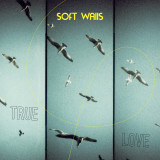
Soft Walls is the solo recording project of Dan Reeves, who has spent his entire adult life kicking around in the dust of the UK's underground music scenes. Cutting his teeth in the South West's post-hardcore scene; centred around Exeter's The Cavern club, before moving to the South East and forming his own record label; Faux Discx, and the propulsive post-punk band: Brighton via London's Cold Pumas. Projects have come and gone over the years, but Reeves' Soft Walls has remained, an outlet for whatever musical whim takes his fancy.
'True Love' is Soft Walls' 4th album. Written and recorded at home, during breaks in work. During the aftermath of you-know-what.
For this album Dan leaned heavily in to his guitar playing, searching for those purest moments of true emotion and connection. Aiming to strike an instant blow. "Emotional guitar music. But not Emo." The result of falling in love with an instrument again and playing for the joy of it, much like he did as a teenager. Just older, wiser(?) and certainly more world-weary / teary-eyed.
Thematically, 'True Love' revels in stating its love for everything that is dear to Reeves. Odes to marriage, romance, unconditional love, parenthood and creativity pierce through the record's down-swings that tackle existential crisis and the feeling of falling in to depression. Each song attempts to encapsulate a vivid feeling, be it positive or negative. It's all part of a life worth living.
Although recorded at home, this album marks a leap in to digital mid-fidelity for Soft Walls, embracing a wider, richer sound beyond the tape hiss of earlier releases. That same spirt is still in the mix, but is presented wide-eyed and caffeinated in to clarity. Elevated by the input of a handful of collaborators contributing to the performances and helping to shape it sonically, 'True Love' ends up being the truest version of Soft Walls committed to (digital) tape thus far.
For a long time, the music of Congo-born Bony Bikaye had to be sought in the purgatory of "world music", where diamonds in the rough cohabited with bland nightmares of white dudes who froze rumba like fish sticks. Worse, they did put it on the menu, when so many longed to move on. Take Bikaye, who grew up listening to modern european music, digs Krautrock, struggles with tradition, obviously looking for trouble in the genre. In Brussels, he recorded a few albums with CY1 (Loizillon/Micheli), and brilliant defectors from Aksak Maboul, produced by Hector Zazou. Now it's up to french trio TONN3RR3 to take up the torch and build this project that proudly brags: "It's a bomb". Thought up at home by Guillaume Gilles (compo/keyboards), the album was finished at One Two Pass It studio, with Olivier Viadero and Gae"lle Salomon on percussion, Yoann Dubaud (machines & bass) and Guillaume Loizillon (synth of CY1 fame, and matchmaker of this affair). It's a deeply musical record, crafted by no-attitude reference players with nothing left to prove, and you can hear it. Floats well above the fray. "Keba na butu", beware. Indeed : beyond the simple pleasures of soukouss, or the rumba guitar riff that spins like a merry-go-round that skipped technical inspection, lie lush orchestrations. Freestyle, synthetic : something old, something new, something what-the- fuck-is-that-now. There's straight, there's syncopated, there's 808 and knee-jerk inducing bass patterns_with a vision. BIKAY3 plays his voice more than ever. His crazy vibrato has improved like hard liquor over the years. In "Zela" and "Balobi" in particular, he puts it to good use with flamboyant, Screamin' Jay Hawkins-style antics. He can also resort to pure storytelling : "La fore^t et les dieux", is a French-spoken excursion into the wild, moving along in grasslands of synths and percussion with TONN3RR3. A tale of gods and spirits, plain and simple. Nicole Mitchell brings the occasional flute in "Akei" for this trip in the bush of ghosts where lingala and kikongo rub with English and French. They saved "It's a bomb" for the end, a bastardized rumba, with rimshots that slap like a cool hand on willing skin. We're living in a golden age of reissues coming out in droves and satisfying our desire to catch up on our neighbors' musical heritage, but let's not miss the boat : it's now or never to listen to the music of the living. - Halory Goerger
Kick starting 2024 with intent, Berlin’s Pure Hate Trax starts the year in style with a pure power 4 track EP by Tripped. Hailing from Belgium, Francis Jaques started his journey at the tender age of 15 and quickly become A key figure in the underground rave & hardcore scene and up to now has celebrated over two decades of relentless dedication to the industry. While deeply rooted in Hardcore Techno, Tripped style is not limited to a certain genre. Always staying true to his gut, he keeps innovating his sound by using both analog and digital techniques, often with a wink to the pure and raw sound of the 90’s, dark, moody and kick-drum heavy. His label Madback Records, an outlet for his own productions has also seen contributions from the likes of Slave To Society, The Outside Agency, KRTM, Waldhaus, Mickey Nox and Umwelt. Aside from the music he also creates abstract paintings and mixes graphic design to showcase a truly unique collaboration of both artwork and music. As a DJ Francis is considered one of the most diverse acts from Belgium. His raw and powerful sets range from Rave, Techno, Industrial, Acid to Gabber and Old School Terror has seen him perform all over the world and at major events such as Thunderdome, Masters Of Hardcore, Tomorrowland, Bangface, Defqon.1, Kompass Klub, Dominator, Astropolis, Decibel and many more.
From out of nowhere - if nowhere is the febrile, warped and twilit imagination of Julia McFarlane - comes Whoopee, the second album by J.McFarlane’s Reality Guest. Whoopee is an esoteric, kaleidoscopic movie in music form directed by Julia McFarlane and co-conspirator Thomas Kernot. Full of life, breakbeats and smokey vignettes on the fragile nature of interpersonal relationships, Whoopee is a stylistic evolution from everything McFarlane has done before. Surreal, beautiful in parts and replete with the aching wisdom McFarlane’s songwriting has always promised, this Reality Guest pulls back the curtain on a whole scene of naked truth. Recorded in Melbourne in bursts since the release of 2019’s Ta Da, Whoopee features a new sound palette and band member in Kernot. The duo dive deep into electronic pop tropes, mining digital synths, samples, breakbeats and deep bass grooves, largely dispensing with live instrumentation. If Ta Da took twists and turns with your expectations, offering a Dada-ist, monochromatic take on pop music, Whoopee is McFarlane’s subterranean love-sick pinks, reds, greens, purples and blues. Becoming something of a tradition, the album starts with an instrumental intro pilfered from a 90s’ spy film or cinema intro music, puffing up the listener for the heart-squeezing bathos of Full Stops. Over a bleary backdrop of walking bass lines, jazz- inflected keys and smoked-out atmosphere, McFarlane’s poetry narrates the fragile state of a relationship: “You put a full stop where I thought there’d be a comma, I want the story to continue even with all the drama.” Over a palpable pain, the narrator is revelling in the drama of a relationship, addicted to tumult and heightened emotion. On Sensory, a space age bachelor lounge pad ballad, the converse state of the previous song is explored, here the narrator is battling the numbness of being out of the drama, stuck in a sensory-deprivation tank, anaesthesized and battling to emerge from the fog. Wrong Planet explores an otherworldly pop music, hewing a bright hook out of a sense of confusion. A bona-fide, sing-along chorus bursts out of the narrator musing on the absurdity of existing in this reality. It speaks of one of Julia McFarlane’s main talents, her knack of inspecting human relationships and states with a clear perspective, like an alien visiting Earth and realising everything we are is really, really strange. Whoopee is both more accessible than previous Reality Guest work and somehow more obfuscated. Where the production on Ta Da was dry, sharp and strange, this Reality Guest is blurred, almost smeared with the effluvium of 90s+00s culture and existence. Through it all, it’s hard to deny the undeniable pull of the songs. Precious Boy carries on the lounge theme with a whole sampler of cut up sounds fading in and out of the haze as McFarlane’s voice is right up to the speaker cooing and free- associating, maybe in love or maybe in confusion... maybe they’re the same thing? Sometimes the listener is invited to just bathe in the tone of the vocal, as on Apocalypse, where the texture and timbre of the vocal is luxurious, bathing in piano tinkles and double bass throb. On lead single Slinky, a cut up beat reminiscent of Washingtonian Go-Go drum patterns leads, the song slipping through your fingers, elusive and presenting sound as pure pleasure. Closer Caviar jumps back into the broken breakbeats of a surreal funk, fuelled by the sensory pleasure of the music, a hedonistic whirl in rapture, the narrator now living life to the fullest in all its giddy heights and deep troughs. This is the album’s main character fully-actualised and in the terrible, beautiful moment.
For the first time, Brandt Brauer Frick’s seminal album Mr. Machine is being reissued on coloured vinyl.
‘Mr. Machine’ is a record that put them alongside names as Steve Reich and Philip Glass, but with considerably more groove. More than anything, Daniel, Jan and Paul are keen that the Brandt Brauer Frick Ensemble are not written off as a curiosity.
“Often people focus a lot on this whole "cross-over" aspect,” says Brauer. “We wish people would simply notice we have good chords, melodies etc. and take the music as it is. Because we make it the way we feel, and not for other, let's say purely conceptual reasons. Some only seem interested in how it’s made. Some reviewers perceive us as minimal techno, some as modern classical, some as nu jazz and so on. But we don’t divide the world into techno and nontechno.”
Dave Saved makes his debut release on studio 33 with Passing Images, an entrancing suite of hazy dance floor mementos, infused with a characteristic chopped and screwed soul.
As if heard through the dusty circuits of an android's dying memory drive, replaying songs picked up during its lifetime and mixing them into elegiac reveries in a final flashback of its existence, the sound is glowing with a patina hued warmth that feels uncannily familiar.
It's a considerably more dance oriented work than Dave's previous output but with a distinctly textural approach to the composition as well. The result is a densely vaporous sublimation of pure emotion. All refracted through an almost ghostly view of dance music's potentially hypnagogic effect, by way of repetitive progression and dreamy abstraction.
Mano De Fuego land on Yaxteq with the mighty Fuerza EP. In 2022, los hermanos Cedillo also known as Soul of Hex launched their Mano De Fueogo alias from Underground Resistance headquarters in Detroit. Their debut for Yaxteq showcases their versatillity as producers. Sagrada is pure musical magic for the dancefloor with rising chord swells, relentless bass and strings that reach into the cosmos. Aztec Obelisk gives a latin flavor to the classic Detroit electro-bass blueprint. Fuerza dives deep into hi-tech jazz including an interstellar saxophone improvisation courtesy of Tijuana’s own Manuel Paez Armendariz. DJ Dex then takes the soul of Fuerza and remixes it with the concrete foundation of jaaackin US house music. All tracks were mixed and arranged at the Yaxteq studio in Los Angeles. Saludos!!
'Reet' is a lost treasure of late 1960s folk/psych-folk. The only album she ever put to tape, with clear pure voice and guitar. luckily recorded by Andres Raudsepp in 1969.
Reet will be loved in the same breath as ;Sibylle Baier, Vashti Bunyan, Molly Drake, Bridget st John, Reet Hendrikson deserves wider listening and recognition.
Reet Hendrikson was born in Estonia only months before the "great escape" into exile in 1944. Brought up and educated in Sweden, she went to study in the US in 1967 on a Fulbright scholarship, before she made her mark as an Estonian musician in Canada. While her arrangements of Estonian folksongs on the guitar reflected the styles of the sixties, her voice and choice of material sounded authentic and made a connection with ages past.
When Hendrikson arrived in Canada in 1968 via the US, her Estonian was native-like because of the high quality of Estonian schools in Sweden. She was thus able to characterise the identity of young ex-patriate Estonians – especially those born in exile from Soviet occupation – in a new and meaningful way. A formal musical background allowed her to create the arrangements that accompanied her simple but pure singing voice. Having heard her under northern Muskoka pines at an Estonian summer seminar, it didn't takeAndres Raudsepp ( of raindeer records)long to bring her to a recording studio. "Reet – Estonian folksongs" appeared in 1969.
Hendrikson soon found her way to the scholarly atmosphere of Boston where, as a multi-instrumentalist, she joined a group of musicians who favoured traditional folk music. Back in Sweden in the 1980ies, she was invited to join a scholarly society of Estonian young women, which she led during musical sessions. She visited Estonia as frequently as possible, trying in particular to be helpful to Estonian musicians by providing sheet music and much-needed repertoire from the Swedish National Radio Archives, where she worked for a while..
Reet Hendrikson died in Stockholm in the autumn of 2000.
The studies with Goffredo Petrassi and the association with Gruppo di Improvvisazione Nuova Consonanza let the Avant-garde playing an important role in the career of Ennio Morricone,
who wrote many contemporary pieces for himself, but then the author composed soundtracks where dissonance played a major role.
For the Italian edition of the film SPACE: 1999 (1975), the cult British TV series, he composed a very neurotic Jazz with muted horns.
Also for the science-fiction film THE HUMANOID (1979) Ennio Morricone created hallucinating strings scores mixed with electronic effects. For SACCO E VANZETTI (1971)
an electronic score by Walter Bianchi evokes all the drama of the undeserved death sentence of the two protagonists.
Experimental music of great impact in the film and off the screen for famous thrillers such as THE DEATH DEALER (1974), SHORT NIGHT OF GLASS DOLLS (1971).
Avant-garde music has always been present in Elio Petri’s films set to music by Morricone such as PROPERTY IS NO LONGER A THEFT (1973).
Avant-garde music in the noir cinema of VIOLENT CITY (1970) and A PURE FORMAL- ITY (1994) and in auteur films such as GARDEN OF DELIGHTS (1967) and SARAH’S LAST MAN (1972).
In the early aughts, The Children"s Hour produced a genial, naive-adjacent, front-porch take on Josephine Foster"s celebrated solo music with the album SOS JFK, then disappeared from the face of the earth. The belated issue of their second album from 2003 furthers their arc delightfully. David Pajo"s Aerial-M-esque drums and bass elevates Josephine and Andy Bar"s shared vibe of love, pure and simple, to an apex of local band barroom bliss.
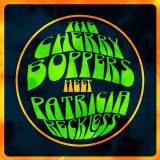
The Cherry Boppers are back with six fiery artifacts of promiscuous funk recorded in collaboration with the vocalist, also from Bilbao, Patricia Reckless, in this mini-album in 10-inch vinyl format. Pure rhythm from head to toes. As is well known, funk fuses what has historically been labelled soul, rhythm and blues, jazz and rock, and The Cherry Boppers (TCB) have undoubtedly created their own promiscuous formula based on a fine selection of styles that predate hip-hop. Active since 2004 and convinced advocates of jazz-funk and instrumental funk, there are very few examples of vocal tracks in their discography. However, in 2014 they released the EP "TCB meet Dr. Baltz" (Brixton Records-Soul Series) in which they successfully covered three classic rhythm and blues standards with lyrics in Spanish. Now, after five years of publishing drought, they repeat the experience with the stellar collaboration of the vocalist, also from Bilbao, Patricia Reckless, musically formed in the band "Bohemian Soul". The powerful and educated voice of Patricia Reckless blends perfectly, as one more instrument, into the compact rhythmic machinery of TCB, giving the 6 tracks of this mini-album (the 6-track EP thing doesn't quite fit) a structure, perhaps, more familiar to a non-specialized audience. But let's not get carried away, the textures, the silences, the "on the one!" beat, the breaks, the stately Hammond organ, the brilliant brass, the forceful bass lines, the precise percussion, the wah wah... are all 100% Cherry Boppers. "The Cherry Boppers meet Patricia Reckless" remains faithful to that analogue funk sound that makes the band proud of a long and vocational career in the genre. And it is also an album full of details, of paths and instrumental lines to be discovered on multiple listens.