Suche:the children s hour

Styles
Alle
THE CHILDREN'S HOUR - GOING HOME LP

In the early aughts, The Children"s Hour produced a genial, naive-adjacent, front-porch take on Josephine Foster"s celebrated solo music with the album SOS JFK, then disappeared from the face of the earth. The belated issue of their second album from 2003 furthers their arc delightfully. David Pajo"s Aerial-M-esque drums and bass elevates Josephine and Andy Bar"s shared vibe of love, pure and simple, to an apex of local band barroom bliss.

vorbestellen23.02.2024

erscheint voraussichtlich am 23.02.2024

28,78

Last In: vor 2026 Jahren
The Children’s Hour - SOS JFK

Now available at a much cheaper price. SOS JFK, the one and only album from folk two-piece The Children’s Hour, which featured Josephine Foster and Andy Bar. Initially released in 2003, the album introduced audiences to Foster’s enchanting vocals and poetic folk, which would be developed to staggering effect in her later solo recordings, such as the recently released critically acclaimed album Blood Rushing (Fire Records). The Children’s Hour were an acoustic duo comprised of members Andy Bar and Josephine Foster. The two friends first connected in 2000 in a short-lived rock trio called Golden Egg, and then on a lark formed the pop song-writing duo oriented toward more naïve themes. Foster was a recent opera school dropout and the band became a vehicle for her to explore singing in a non-operatic manner into a microphone and learn to play the guitar. Bar was finishing studies at the Art Institute of Chicago and was honing a personal and highly melodic fingerpicking style inspired by bossa nova in particular. They were heard performing in a Chicago dive bar and given a surprise invitation to make a studio recording (SOS JFK), which both found to be an extremely nerve-wrecking learning experience. Meanwhile fans of their music rose up from unexpected corners, even invited by the band Zwan to open all the shows of both bands´ maiden tour. Initially conceived of as a modest front porch collaboration and side project, the band did not withstand all the attention long. Bar and Foster took meandering paths in diverse directions, although the two remain stalwart pals and both continue to dedicate themselves to the muses.

vorbestellen10.06.2022

erscheint voraussichtlich am 10.06.2022

10,04

Last In: vor 2026 Jahren
L.F.T - Hell Was Boring LP 2x12"

Between 2023 and 2025, L.F.T. split his time between Hamburg and Berlin, slowly piecing together what would become his most ambitious work to date. The result is Hell Was Boring - a double album that plays like a fever dream, unfolding as a dark, mythical tale about life, death, and the strange spaces in between.


L.F.T. - the alias of German producer and multi-instrumentalist Johannes Haas - has always thrived on tension: between punk urgency and electronic precision, between raw emotion and mechanical repetition. On Hell Was Boring, those tensions are amplified. Drawing on the spectral drama of Bauhaus, the melancholic minimalism of Linear Movement, the futuristic romanticism of Gary Numan, and even the sly swagger of Falco, the album feels at once deeply personal and part of a much older musical lineage.


The sound is stripped down to its bones: drums snap and rattle from a Roland TR-808, TR-707 and Korg KR-55; basslines growl from a Roland SH-101 and Korg MS-20; shards of guitar cut through clouds of tape hiss. Everything was tracked to a Teac Tascam 80-8 reel-to-reel, giving each track a lived-in, imperfect warmth. Nothing is overpolished - L.F.T. wanted the listener to hear the edges, the grit, the moments when the music almost comes apart.


Along the way, he invited friends and long-time collaborators into the fold - Das Kinn, Rosaceae, Felix Kubin, Children Of Leir, and Konstantin Unwohl - each leaving their own fingerprints on the record’s world of shadows and static.


Hell Was Boring isn’t a mere collection of songs; it’s a narrative that drags you into its orbit and doesn’t quite let go. It’s music for the late hours when reality feels porous, and for those moments when you’re not sure if you’re waking up or still dreaming.

Auf Lager

Bei uns am Lager und sofort versandfertig

25,63
Asphalt DJ - Double O

Asphalt DJ

Double O

12inchODDY002
Oddysee
08.08.2025

Asphalt DJ returns to Oddysee with another intoxicating 4- track formula, titled “Double O”. Operating on a solo tip this time around, the Berlin-based producer further expands his sonic palette and offers a versatile collection of steamy club workouts geared towards various stages of dancefloor
functionality. The record seamlessly touches on seductive after-hours bounce, slices of late nite propulsion and flawless rhythmic explorations, while keeping firm footing in the 90 and 00’s sound spectrum. With an eye on the ongoing terror inflicted upon the Palestinian people, we (artist &
label) decided to donate all proceeds from this release to Save The Children - Gaza and West Bank Emergency.

Free Palestine

Auf Lager

Bei uns am Lager und sofort versandfertig

12,19
GAZEBO - FROM PASHA WITH LOVE - LIMITED EDITION

From Pasha With Love (love in times of war)

Pasha is a soldier on the front line, fighting those who till the day before were friends from the town next door, probably fighting his
own brothers-in-law, Natasha’s brothers, his great love, mother of his children in a senseless war if only wars had a meaning …

In the evening when the madness slows down.. Pasha takes his cell phone and talks about the horrors and the desperation but also the
infinite gratitude he feels for having had her as a gift in his life. His texts always end with "From Pasha with Love"

The atrocities, pain and the inhumanity he experiences every day, every hour, are alleviated in the pauses between one explosion and
another by his most intimate memories... Natasha's laughter as they chased each other in the sunflower fields in their first summer
together, his Yes! to her at the altar, her kisses first thing every morning.

While he runs surrounded by the screaming of the wounded and the whistling of bullets in the woods, in every moment that could be
the last, he searches for that tree where at their first date they carved that little heart with the words ..
Pasha & Nasha-Timele.

Auf Lager

Bei uns am Lager und sofort versandfertig

18,07
Iceage - Shake The Feeling: Outtakes & Rarities 2015–2021 LP

Shake The Feeling: Outtakes & Rarities 2015-2021, Iceage's second full length for Mexican Summer, is a collection of non-LP cuts (or “misfit children,” as lead singer Elias Bender Rønnenfelt describes them) from the seven years during which Iceage made Plowing Into the Field of Love (2014), Beyondless (2018), and Seek Shelter (2021). As with all of Iceage’s albums, whether it be the sensual daring-do of their dark-hardcore masterpiece debut, the Flying Nun-dappled “Oi!!!!” of You’re Nothing, the shift to cowpunk gothic romanticism on Plowing Into the Field of Love, or the space truckin’ gospel-rock of their most recent albums, Elias Bender Rønnenfelt, Johan Suurballe Wieth, Jakob Tvilling Pless and Dan Kjær Nielsen make the impossible seem effortless.

Auf Lager

Bei uns am Lager und sofort versandfertig

24,16
Titanic - Hagen

STANDFIRST Titanic, the project spearheaded by Mabe Fratti and Hector Tosta (aka I. la Católica), return with a sumptuous and life-affirming new album.


In her sensational 1929 biography Tiger Woman, dancer and socialite Betty May claimed her ‘coster’s eye’ meant she liked to wear as many colours as possible. “Colours to me are like children to a loving mother. Each is my favourite, yet I can never bring myself to deny the others by preferring one.” May’s bold and inclusive strategy is one that manages to transfer itself, almost a century later, to Hagen, the new record by Titanic.


Many will know Titanic as the Mexico City-based brainchild of cellist and singer Mabe Fratti and multiinstrumentalist Hector Tosta who is now operating under the pseudonym, I. la Católica, (taken, rather unusually, from the name of the street the pair live on). With Hagen, and their previous release, Vidrio, (2023), the pair are creating a distinctive signature sound in modern alternative pop music. Nobody else sounds quite like them. Both records have an open hearted nature and simple, winning melodies that play off against a taste for drama, spectacular orchestration and a feeling of otherworldly mystery. Hagen is the more ambitious, sometimes more mystical effort. From the opening handclaps of ‘Lágrima del Sol’, (a wonderfully uptempo playground chant translating as a tear from the sun but, surely, not referencing the brand of pineapple wine?), the record dances its way through various mid-to-late-eighties inspirations, lush and widescreen passages of melancholy and vertiginous contrasts.


Mystery is often found in the simple but slightly odd song titles. English translations of various track titles give, ‘you swallowed the gum’, ‘leak’, ‘a tear from the sun’, ‘raising the trophy’ ‘digging dimensions’, ‘the owner’, ‘the decapitated hen’ and ‘the trap is exposed’. All denote striking images, metaphysical hints and emotional cues or simple, even childlike actions. Though Fratti and Tosta don’t reveal its provenance, the album’s title could even be a crafty play on words: the listener would be forgiven in thinking the moments of brash contrast and eyebrow raising theatricalism in the music constitute a musical nod to German punk chanteuse, Nina Hagen.


On Hagen, singer and cellist Mabe Fratti once again displays her brilliant knack of speaking to us directly. There is never the suspicion of her playing to the gallery, and the directness of many of the lyrics don’t allow it. Parallel to this, Fratti has an almost magical ability to give Hector Tosta’s melodies, and her and Tosta’s lyrics ones imbued with an insight and meaning that feels otherworldly. Tosta admitted it was “pretty wild to hear Mabe take the interpretations to a different place” and the listener can pick up on the delight Fratti takes in (literally) adding a voice to the many narratives.


Two examples can be shown here: ‘Gotera’ (Leak) uses harsh slashes of cello and tough, gunfire-like guitars and drums and multiple vocal lines that could be acting as a Greek chorus. They play off brilliantly against Fratti’s soft, slightly baleful vocal take that delivers lyrics such as: ‘nobody knows where the leak is / but I know where it is / they fight in front of the door and / nobody can go in’. With ‘La Gallina Degollada’ the somewhat blithe melody melody line, sung with what could be sarcastic brio by Fratti, plays against an itchting rhythm and rasping guitar part. The punch comes when you see that the song is about a chicken that has been decapitated and read lyrics such as: ‘I already saw it, it moved, the decapitated chicken’ / ‘could it be that I'm broken’ and ‘Two people hurt each other by thinking that they no longer agree’/ ‘Hours pass and the chicken represents what scares me’.


There may be death and fights to deal with, but there is also a quality of chirpy self-reliance about Hagen that is a key part of its nature. Like Betty May and her colourful outfits, Hagen’s sound often revels in its own sense of richness. Throughout, the record delivers vaulting string sections or glutinous guitar squeals that could, like the powerful, driving ‘Escarbo Dimensiones’ (Digging Dimensions) have come directly from a glossy 1980s TV series. Fratti sees this “glam sound” developed by Tosta on the aforementioned track and ‘Te Tragaste el Chicle’ (You Swallowed The Gum), as moments that were truly “revealing” for the album as a whole during its making.


What else? The thud and thump of ‘La Trampa Sale’ (The Trap is Exposed), and its sudden change of tempo and mood betrays a monstrously ambitious piece of music, the players almost greedily creating the sounds. Other moments are heart wrenching: ‘Libra’ ends on a poppy chord switch that cleverly ramps up the emotion inherent in the music’s notation. You could almost imagine a teenager in a bedroom forty years ago, rewinding the track over and over on a small, cheap cassette player, unable to get enough of that sugarsweet switch. Elsewhere, Oneohtrix Point Never adds stardust and an unearthly sense of space on the changeable, slightly moody meditation, ‘Pájaro de Fuego’ (Firebird). The record ends with ‘Alzando el Trofeo’ (Lifting the Trophy), a track that could soundtrack a state wedding, what with its beautiful cascading piano parts, a sugary vocal and short triumphal guitar riffs that add a rich patina to the overall sound. Fratti: “When I doubled those vocals on ‘Alzando el Trofeo’ I felt there was an epiphany happening, right at that moment.”


Making a good record is a team game. Tosta and Fratti recall seeing Randall from Circular Ruin Studios in NYC “tweak the drums in ‘Libra’ to make that amazing effect of the gated reverb”, or the shaping of ‘Gotera’, “when (recording engineer) Nate Salon added some synths to the track.” Drummer Eli Keszler, “an amazing and versatile player” had the songs down pat in a couple of days” and, according to Tosta, Oneohtrix Point Never “just came to one of the sessions and we hung out, and after all the recordings he and Nate were together in some studio and out of nowhere they sent us some beautiful tracks for ‘Pájaro de Fuego’! Fratti concurs. “He decided that he wanted to record because he was listening to the record (Nate works closely with him) and he really liked it! It was a total honour, indeed!”


Bedazzled by the playing, the skyscraping ambition in the arrangements and the giddy moments of contrast thrown up by Hagen, we could allow ourselves a brief moment of flippancy and state that Titanic’s new record is Yacht Rock meets Aeschylus, full-on. It’s also worth speculating that, in this hyper-sensitive, intemperate age, Titanic’s music has the power, however fleetingly, to heal hurts. Hagen is a brilliant showcase for a fresh and enriching form of pop music: displaying a magpie eye for what glints and plundering what has gone before.


Like Vidrio, Hagen was partially and additionally recorded at Fratti and Tosta’s house, aka Tinho Studios in Mexico City, as well as Golden Girl Studios & Circular Ruin Studios in New York City. Mixing was done by Santiago Parra in Pedro y el Lobo Studios, Mexico City and mastered by Rafael Anton Irisarri at Black Knoll Studios, New York City. The recording engineer was Nate Salon.


Hagen featured Mabe Fratti on cello, vocals & backing vocals, I. la Católica on guitar, keyboards, prepared piano, bass & backing vocals, drums by Eli Keszler and synths in ‘Pájaro de Fuego’ from Daniel Lopatin and Nate Salon.


All compositions on Hagen are written by I. la Católica, except ‘Escarbo Dimensiones’ & ‘Pájaro de Fuego’, which were composed by I. la Católica and Mabe Fratti. The record was produced by I. la Católica and co-produced by Nate Salon & Mabe Fratti. And all lyrics are by I. la Católica except ‘Escarbo Dimensiones’, ‘Gotera’, ‘Gallina degollada’ & ‘Pájaro de Fuego’, which were written by I. la Católica & Mabe Fratti.

nicht am Lager

Bestelle jetzt und wir bestellen den Artikel für dich beim Lieferanten.

25,17

Last In: vor 5 Monaten
Titanic - Hagen

STANDFIRST Titanic, the project spearheaded by Mabe Fratti and Hector Tosta (aka I. la Católica), return with a sumptuous and life-affirming new album.


In her sensational 1929 biography Tiger Woman, dancer and socialite Betty May claimed her ‘coster’s eye’ meant she liked to wear as many colours as possible. “Colours to me are like children to a loving mother. Each is my favourite, yet I can never bring myself to deny the others by preferring one.” May’s bold and inclusive strategy is one that manages to transfer itself, almost a century later, to Hagen, the new record by Titanic.


Many will know Titanic as the Mexico City-based brainchild of cellist and singer Mabe Fratti and multiinstrumentalist Hector Tosta who is now operating under the pseudonym, I. la Católica, (taken, rather unusually, from the name of the street the pair live on). With Hagen, and their previous release, Vidrio, (2023), the pair are creating a distinctive signature sound in modern alternative pop music. Nobody else sounds quite like them. Both records have an open hearted nature and simple, winning melodies that play off against a taste for drama, spectacular orchestration and a feeling of otherworldly mystery. Hagen is the more ambitious, sometimes more mystical effort. From the opening handclaps of ‘Lágrima del Sol’, (a wonderfully uptempo playground chant translating as a tear from the sun but, surely, not referencing the brand of pineapple wine?), the record dances its way through various mid-to-late-eighties inspirations, lush and widescreen passages of melancholy and vertiginous contrasts.


Mystery is often found in the simple but slightly odd song titles. English translations of various track titles give, ‘you swallowed the gum’, ‘leak’, ‘a tear from the sun’, ‘raising the trophy’ ‘digging dimensions’, ‘the owner’, ‘the decapitated hen’ and ‘the trap is exposed’. All denote striking images, metaphysical hints and emotional cues or simple, even childlike actions. Though Fratti and Tosta don’t reveal its provenance, the album’s title could even be a crafty play on words: the listener would be forgiven in thinking the moments of brash contrast and eyebrow raising theatricalism in the music constitute a musical nod to German punk chanteuse, Nina Hagen.


On Hagen, singer and cellist Mabe Fratti once again displays her brilliant knack of speaking to us directly. There is never the suspicion of her playing to the gallery, and the directness of many of the lyrics don’t allow it. Parallel to this, Fratti has an almost magical ability to give Hector Tosta’s melodies, and her and Tosta’s lyrics ones imbued with an insight and meaning that feels otherworldly. Tosta admitted it was “pretty wild to hear Mabe take the interpretations to a different place” and the listener can pick up on the delight Fratti takes in (literally) adding a voice to the many narratives.


Two examples can be shown here: ‘Gotera’ (Leak) uses harsh slashes of cello and tough, gunfire-like guitars and drums and multiple vocal lines that could be acting as a Greek chorus. They play off brilliantly against Fratti’s soft, slightly baleful vocal take that delivers lyrics such as: ‘nobody knows where the leak is / but I know where it is / they fight in front of the door and / nobody can go in’. With ‘La Gallina Degollada’ the somewhat blithe melody melody line, sung with what could be sarcastic brio by Fratti, plays against an itchting rhythm and rasping guitar part. The punch comes when you see that the song is about a chicken that has been decapitated and read lyrics such as: ‘I already saw it, it moved, the decapitated chicken’ / ‘could it be that I'm broken’ and ‘Two people hurt each other by thinking that they no longer agree’/ ‘Hours pass and the chicken represents what scares me’.


There may be death and fights to deal with, but there is also a quality of chirpy self-reliance about Hagen that is a key part of its nature. Like Betty May and her colourful outfits, Hagen’s sound often revels in its own sense of richness. Throughout, the record delivers vaulting string sections or glutinous guitar squeals that could, like the powerful, driving ‘Escarbo Dimensiones’ (Digging Dimensions) have come directly from a glossy 1980s TV series. Fratti sees this “glam sound” developed by Tosta on the aforementioned track and ‘Te Tragaste el Chicle’ (You Swallowed The Gum), as moments that were truly “revealing” for the album as a whole during its making.


What else? The thud and thump of ‘La Trampa Sale’ (The Trap is Exposed), and its sudden change of tempo and mood betrays a monstrously ambitious piece of music, the players almost greedily creating the sounds. Other moments are heart wrenching: ‘Libra’ ends on a poppy chord switch that cleverly ramps up the emotion inherent in the music’s notation. You could almost imagine a teenager in a bedroom forty years ago, rewinding the track over and over on a small, cheap cassette player, unable to get enough of that sugarsweet switch. Elsewhere, Oneohtrix Point Never adds stardust and an unearthly sense of space on the changeable, slightly moody meditation, ‘Pájaro de Fuego’ (Firebird). The record ends with ‘Alzando el Trofeo’ (Lifting the Trophy), a track that could soundtrack a state wedding, what with its beautiful cascading piano parts, a sugary vocal and short triumphal guitar riffs that add a rich patina to the overall sound. Fratti: “When I doubled those vocals on ‘Alzando el Trofeo’ I felt there was an epiphany happening, right at that moment.”


Making a good record is a team game. Tosta and Fratti recall seeing Randall from Circular Ruin Studios in NYC “tweak the drums in ‘Libra’ to make that amazing effect of the gated reverb”, or the shaping of ‘Gotera’, “when (recording engineer) Nate Salon added some synths to the track.” Drummer Eli Keszler, “an amazing and versatile player” had the songs down pat in a couple of days” and, according to Tosta, Oneohtrix Point Never “just came to one of the sessions and we hung out, and after all the recordings he and Nate were together in some studio and out of nowhere they sent us some beautiful tracks for ‘Pájaro de Fuego’! Fratti concurs. “He decided that he wanted to record because he was listening to the record (Nate works closely with him) and he really liked it! It was a total honour, indeed!”


Bedazzled by the playing, the skyscraping ambition in the arrangements and the giddy moments of contrast thrown up by Hagen, we could allow ourselves a brief moment of flippancy and state that Titanic’s new record is Yacht Rock meets Aeschylus, full-on. It’s also worth speculating that, in this hyper-sensitive, intemperate age, Titanic’s music has the power, however fleetingly, to heal hurts. Hagen is a brilliant showcase for a fresh and enriching form of pop music: displaying a magpie eye for what glints and plundering what has gone before.


Like Vidrio, Hagen was partially and additionally recorded at Fratti and Tosta’s house, aka Tinho Studios in Mexico City, as well as Golden Girl Studios & Circular Ruin Studios in New York City. Mixing was done by Santiago Parra in Pedro y el Lobo Studios, Mexico City and mastered by Rafael Anton Irisarri at Black Knoll Studios, New York City. The recording engineer was Nate Salon.


Hagen featured Mabe Fratti on cello, vocals & backing vocals, I. la Católica on guitar, keyboards, prepared piano, bass & backing vocals, drums by Eli Keszler and synths in ‘Pájaro de Fuego’ from Daniel Lopatin and Nate Salon.


All compositions on Hagen are written by I. la Católica, except ‘Escarbo Dimensiones’ & ‘Pájaro de Fuego’, which were composed by I. la Católica and Mabe Fratti. The record was produced by I. la Católica and co-produced by Nate Salon & Mabe Fratti. And all lyrics are by I. la Católica except ‘Escarbo Dimensiones’, ‘Gotera’, ‘Gallina degollada’ & ‘Pájaro de Fuego’, which were written by I. la Católica & Mabe Fratti.

nicht am Lager

Bestelle jetzt und wir bestellen den Artikel für dich beim Lieferanten.

25,17

Last In: vor 5 Monaten
JACINTA SANCHES - PEDRO RAMOS - S/T

Black Vinyl LP with insert (including the story behind the album and lyrics with English translation)

After their first LP, in 1987, Pedro gathered his usual band, Carlos Sousa on keyboard, Bulimundo on drums, Nuno Santos and Zézé on lead and rhythm guitars, Augusto Rasta on bass, Daló on sax and finally Dalú on percussions, for yet another project, one that carried both their names: Jacinta Sanches - Pedro Ramos. Eight days, no more, that’s all Pedro Ramos and Jacinta Sanches needed inside the Estúdios Musicorde. The process was natural, as with all their music, memories recollected and arranged by Pedro on café napkins, rehearsed and perfected at home with Jacinta. Together they imagined music where Cape Verdean saudade could dance together with Kingston’s skank, two island hearts beating inside European concrete.

His name is Pedro Correia Ramos Varela, born in Praia, Santiago, Cabo Verde on April 6th 1954; her name is Jacinta Lopes Veiga Varela, born in Cidade Velha, Santiago, Cabo Verde on January 22nd 1959. The two met in Praia, where a few exchanged words turned into long evening conversations; conversations into friendship; friendship into love; and love into six wonderful children. After the independence of Cabo Verde, they got married in 1978 and moved to Portugal, where Pedro started working as a welder for Lisnave and playing the guitar in a band in Ramada. Trading shipyard sparks by day for the after-hours pulse of Cova da Moura, his love for music proved harder than steel. And in 1982, after seeing Bob Marley and Peter Tosh in Rotterdam, he opened his own Dancing Bar just below their house, a pioneering space for the promotion of reggae music in Portugal.

Their Dancing Bar kept its doors open from 1982 to 1994, seeing the release of two albums and more singles. To this day, Pedro and Jacinta are still making music, one the inspiration of the other. They define themselves as simple people, living happy without prejudice, friends with the world.

vorbestellen29.08.2025

erscheint voraussichtlich am 29.08.2025

24,16

Last In: vor 2026 Jahren
Clay Kin - Vevey LP

Clay Kin

Vevey LP

12inchSQM034
Squama
28.07.2025

Swiss percussionist Julian Sartorius and UK electronic artist Dan Nicholls team up as Clay Kin, presenting their debut record on Squama.
They had never planned to make an album yet through pure improvisation and spontaneity, Clay Kin have crafted Vevey. An album of seven tracks, distilled from over seven hours of improvised percussion and electronics. Recorded mostly outdoors––on pedalo boats, up mountains and deep in forests near the namesake Swiss town of Vevey, it is imbued with the soft fascination of birdsong, rushing water and chattering children.
Vevey resists genre. As musicians, Sartorius and Nicholls bridge the divide between acoustic and electronic soundscapes. Sartorius’ raw, organic percussion interweaves with Nicholls’ keyboard-triggered samples and harmonic landscapes, creating a dialogue where the lines between rhythm, melody and noise dissolve. Clay Kin identify their outfit as an audio-visual collective, with visual artist Lou Zon (Louise Boer) rounding out the group, creating videos to accompany both the recorded music and the live experience.

nicht am Lager

Bestelle jetzt und wir bestellen den Artikel für dich beim Lieferanten.

23,32

Last In: vor 7 Monaten
Stimulator Jones - Cool Green Trees (1999-2005) (LP)

"Chasing the funky symphonies that filled my head and my dreams..."

December 25th, 2023 - an Instagram post. Stimulator Jones shared half a dozen FIRE tracks from his beat tape archive. We were immediately drawn to the rough hewn boom bap.

"I'd release that", Rob commented.

Hours of material was shared and the result is this: Cool Green Trees (1999-2005). A collection of beats and loops Stimulator Jones created between the ages of 14-20 at home in his basement, bedroom and computer room in Roanoke, Virginia.

You will not believe the profound soulful genius contained within these naive schoolboy melodies.

December 25th, 1998 - 25 years ago to the day and his much-coveted Yamaha SU10 sampler was finally bestowed upon young Stimmy AKA Sam Lunsford: "I immediately hooked up a CD Walkman to the input jack and looped the beginning two bars of Grover Washington Jr.'s "Mercy Mercy Me". I don't know what exactly was so thrilling about hearing two measures of music repeating over and over but it was so infectious and hypnotizing and enthralling to me. I'll never forget that ecstatic rush of making my first loop - an uncontrollable, gleeful smile plastered all over my face." When you hear the pocket breakbeat symphonies featured here on Cool Green Trees, you'll feel the same sense of frisson.

In the wake of his Stones Throw breakthrough - Exotic Worlds & Master Treasures - Stimulator Jones was pegged by many as a 90s throwback artist. However, he literally IS a 90s artist. He's been recording music most of his life and he's now 40. He created the bulk of Cool Green Trees as a teenager. Everything before 2004 was recorded when Sam was still in school. He was in 8th grade when he made the 1999 tracks - he didn't even have his learner's permit. This album is a snapshot of a young man in a simpler time. Things were still mysterious back then and he was flying blind, relying on his ears and having to figure things out for himself: "I had no road map for becoming a beatmaker. I have been collecting music since I was a kid, I am a lifelong digger and seeker of cool and interesting sounds. I was there in the golden age of Hip Hop, and while I may have been a suburban white kid in Roanoke, Virginia, I was tuned in and I bought so many classic albums when they came out. I was attracted to Hip Hop because of the musical and poetic quality. I was hypnotized by the rhythms, partially because I was a drummer. I didn't brag about collecting my breakbeat records or making beats - it was something I did in isolation. It wasn't something I generally wanted to bring attention to and it didn't really score me any cool points. I certainly wasn't flexing on social media about it."

Hell, he can do that now!

Opener "Pharoah Jones" was inspired by Yesterday's New Quintet and Madlib's ability to capture that classic 70s sound whilst playing all the instruments. Sam created this one stoned afternoon by laying down a 2 bar loop and a shaker loop on his Yamaha SU700 sampler. He hung a microphone from the ceiling and played his Yamaha Stage Custom drum kit over the top before adding ender Rhodes and playing his dad's Selmer tenor sax through an Electro Harmonix Memory Man echo pedal. Yes! Up next, "Ghost Gospel" utilises a dope loop from a gospel record and adds some soul-funk drums overtop, whilst working that filter knob. Says Sam: "The loop reminded me of something Ghostface would rap over. The sample was in 3/4 waltz time but I flipped it for a 4/4 groove, a technique I picked up from RZA. "Ill Feeling" uses sped-up pieces from a dusty old funk record and putting them over a classic NOLA drum loop; gain chopping up a slow, bluesy 3/4 time signature and bending it to a 4/4 groove. Classy shit. "Capital Punishment" features drums tapped in live, inspired by MF Doom's Special Herbs series. "Do Not Adjust" consists loops found on a compilation of 70s French music at Happy's Flea Market, a classic Roanoke digging spot.

The sublime, evocative title track, "Cool Green Trees" was created when Sam was still living at home. He dumped samples off his SU10 into the family desktop and arranged them in a demo version of Pro Tools: "This track was sort of my ode to the DJ Shadow style of sample based production. Super spacey, slow, and moody. The heavily filtered drums were inspired by Alec Empire's 'Low on Ice' album. I later added some scratches and sounds from a Spider Man storybook record." "Chill Scratch" snags the final bit of a bossanova record and pairs it with a drum loop before adding experimental scratching run through an Electro Harmonix Memory Man echo pedal. "Poisonous Fumes" was made using a sampler, mixer and a turntable; a kind of mixtape beat collage with added scratches and sounds from various records. Using dialogue from superhero records was a nod to Madlib. "Welcome Aboard The Starship" is dark, downtempo trip-hop with a spooky bent. Sam paired a slow, hard drum loop with a guitar sample grabbed off a psychedelic rock record. To finish, he added various backwards sounds and weird atmospheric effects and a little scratching. Swoon.

Side B opens with "Keep On Runnin", made on a borrowed Roland SP202 sampler. Having always loved the sound of the Lo-Fi filter on those machines, reminiscent of the Emu SP1200, Sam always imagined Del or another of the Hieroglyphics crew rapping over this beat. You can certainly hear why. "Sounds Impossible" sees Sam experimenting with layering multiple kick samples at different volumes to create patterns similar to those heard by Showbiz and Lord Finesse during their God-level 1995 period. "Painted Faces" was made by chopping up a REDACTED record which he had gotten from Happy's Flea Market and paired it with a REDACTED drum loop. By the time Sam recorded "The Knew Style", he had acquired a shitty old 1960s portable turntable off eBay. It didn't function properly when he bought it but his brother opened it up, cleaned it out and got it working: "I remember he told me that there was a bunch of sand inside of it when he opened it up, as if its previous owner had taken it to the beach. I would take that turntable on my Happy's Flea Market digs so I could preview records...that's how I found this loop."

"Chicken Wing Blues Sauce" loops up a classic blues joint and pairs it with some REDACTED drums. A bit of filtering and arranging et voilà! "Kool Breeze", from 1999, is one of Sam's oldest surviving beats, as is "Sexx Bullets". The Roots sampled the same record, leaving Sam frustrated yet vindicated. "Soul Child" was an early SU10 creation, looping a dusty old Soul Children 45 and pairing it with 70s rock drum loops to great effect. "Take Off Runnin" was another loop found digging with a portable turntable. Paired with some boom bap drums it makes for a hypnotic head-nod groove. "Centurian" was intended to be a little beat interlude a la Pete Rock. The sample is from a sun-dappled soft-psych record and it's paired with a Robin Trower drum loop that just happens to fit perfectly. Sometimes you slap things together kind of haphazardly and magic happens. "Bozack" was the first beat Sam made using Pro Tools, his first foray into using chopped sounds instead of loops, an exciting new world. "Church" is beat interlude using a Phil Upchurch loop with the "Long Red" drums - a favourite break of Dilla et al. Sam was really on a tear in late 2004, probably because he was unemployed and phoneless and able to just make beats all day. He made "Splash One" on a borrowed Yamaha SU700 and again was experimenting with tapping the drums in live with his fingers, instead of using a loop or sequenced pattern. Channeling 9th Wonder, Sam used a water splash sound effect from a Batman record as a percussive element, hence the title (also a 13th Floor Elevators reference). The main loop is a backwards portion of one of his favourite Roy Ayers songs.

"Hank" is another fun little beat interlude thing, created on a borrowed Roland SP202 sampler with the fantastic Lo-Fi effect that resembled the Emu SP1200 at a fraction of the price. "73 goatee", from 99, is another of his oldest surviving beats, created in his bedroom with his Yamaha SU10 and his brother's Vestax MR-300 4-track recorder: "This one will always feel special. I can remember having a feeling all the way back then on the night that I created it that this was a solid beat with a catchy loop. There was something in the Fender Rhodes melody that resonated with me emotionally, and I had never heard a producer sample that portion before. I felt like I had found my own unique sound, my own unique loop. It came from an Ahmad Jamal '73. I actually even recorded myself rapping and scratching over this beat way back then, I still have that version in all its imperfect sloppy glory."

Sam explains just how much these tracks mean to him: "They all have immense historical and sentimental value and I'm proud of them. These beats come from an innocent, simple time when I was just figuring out how to craft these sounds. They're something very personal to me. They are the initial part of a journey that I really was taking *alone*. There was no YouTube. I couldn't Google shit. I didn't even know any other beatmakers, producers or DJs in my town that could teach me anything. It was always just me, alone, in a room with some equipment - chasing the funky symphonies that filled my head and my dreams. What I was doing wasn't cool. Most of my peers thought I was a weirdo and couldn't care less. Creating these sounds was an anti-social endeavour. In a sense, I felt like it was me against the world, and all I had to instruct and assist me were the recordings produced by my heroes - RZA, DJ Premier, Erick Sermon, Beatminerz, Showbiz, Diamond D, Beatnuts, Prince Paul, The Bomb Squad, Pete Rock, Q-Tip, E-Swift, Mista Lawnge, DJ Shadow, Cut Chemist, Peanut Butter Wolf, El-P and so many more...I dedicate this collection to them, and to my older brother Joe who has always been a musical and technical guiding light for me.

This was a time before every kid was a self-described producer and beatmaker, before everyone had a DAW, before Kanye and "chipmunk soul", before Red Bull beat battles, before there was any social media beyond chat rooms and AOL Instant Messenger, before Soundcloud, before SP-404 mania, before lo-fi beats to study to, before Splice, before targeted ads for MIDI chord packs, etc. In 99 when I told people that I had a sampler and made beats I was mostly met with bewildered confusion and indifference. Kids and adults alike would wonder why I got this weird machine for Christmas instead of something worthwhile like a Playstation or a mountain bike or even a guitar for that matter because at least that could be used to make "real music". Back then, sampling was still not widely respected as an art form - it was seen as lazy, talentless and unoriginal at best and outright criminal theft at worst. I had gotten respect for playing drums and guitar and things of that nature but this was a step in the wrong direction in the eyes of many."

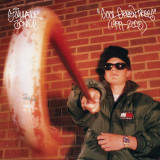
The cover photo is a picture of Sam standing on his back porch in the latter part of 1998, just before he got his first sampler. He was 13 years old, in 8th grade. His dad took the picture with his 35mm film camera: "I actually wanted to be pointing my dad's .22 pistol at the camera lens but he wouldn't let me. He gave me an old walking cane to use instead. The Tommy Hilfiger puffer jacket came from the lost and found at William Fleming High School where my mom worked as a secretary. I was thrilled when she brought it home because we never spent money on expensive name brand clothing like that - we were for the most part strictly a sale rack, bargain bin, thrift store, yard sale, flea market kind of family when it came to clothes. My watch is some cheap off-brand fake gold department store watch." Mastering for this vinyl edition was overseen by Be With regular Simon Francis and it was cut by the esteemed Cicely Balston at Abbey Road Studios to be pressed in the Netherlands by Record Industry.


nicht am Lager

Bestelle jetzt und wir bestellen den Artikel für dich beim Lieferanten.

25,63

Last In: vor 9 Monaten
Children of the Pope - Moonface Supreme
  • A1: God's Favourite Son
  • A2: She Drank Holy Water From The Source
  • A3: I Go Downtown
  • A4: In My Dying Day
  • A5: These Trying Times
  • A6: In Times Of Disgrace
  • B1: Kid
  • B2: Remember Love
  • B3: Saigon Wieners Juice
  • B4: She's Gone
  • B5: The Seventh Seal
  • B6: We Are All Alone In This World

'When the Lamb opened the seventh seal, there was silence in heaven for about half an hour. And I saw the seven angels who stand before God, and seven trumpets were given to them’’ heres the children of the pope

We wanted to discard the unimportant.

Songs about life and the living and songs about death and the dead.

Songs about God and the heavenly, songs about hell and the unholy.

Sounds of youthful wonder and the melancholy of time.

Love and hate and the opposites of the the great untold, in extreme, melted together in a boundless pot of sweet surrealist molasses.

The all, through the unmodified eye.

Recording the album was an against the clock under pressure process that turned out very fruitful.

We tracked 12 tracks in 5 days in the dead of witner 2022Snow and ice and trying to explore the depths of our minds in a dim lit room, trying to put surrealism to tape.

Everyhting was was recorded on 2 inch reel to reel in live takes (appart from few overdubs also recorded onto tape)

We did not turn any computer on until the mixing process

vorbestellen31.01.2025

erscheint voraussichtlich am 31.01.2025

19,96

Last In: vor 2026 Jahren
Ludwig Von 88 & Tamèrantong! - La Sacrée Grôle LP 2x12"

LA SACREE GROLE is a tale by the TAMERANTONG company, set to music by LUDWIG VON 88.

TAMERANTONG! is a theatre company based in Mantes-la-Jolie, Paris-Belleville and Saint-Denis that puts on shows with children and young people from these neighbourhoods.

LUDWIG VON 88, road companions of the great hours of alternative rock (Bérurier Noir, Parabellum...) is also the only rock band capable of rhyming in ‘ong’.

TAMERANTONG! had long been plundering their repertoire for their shows. In retaliation, the Ludwigs decided to compose the soundtrack to ‘La Sacrée Grôle’: a Gallic legend told and sung by twenty kids from Paris-Belleville.

In the heart of the land of the Arvernes, reigns a valiant free people. Their village lies on the edge of a dreadful forest where no one ever ventures. But the time has come for all the peoples of Gaul to enter the fearsome forest and set off in search of the Sacred Pole!

La Sacrée Grôle premiered at Paris-Belleville and was performed from 1996 to 1998 in Paris (Café de la Danse, Palace, Trianon, Café Éphémère / Les Halles), Mantes-la-Jolie, Briançon, Rouen (Festival Débarquement Jeunes) and Montreal/Quebec.

This record, released for the first time on vinyl by the Archives de la Zone Mondiale label, includes 7 previously unreleased songs by LUDWIG VON 88.

vorbestellen18.10.2024

erscheint voraussichtlich am 18.10.2024

22,48

Last In: vor 2026 Jahren
Forgetting You Is Like Breathing Water - S/T

Forgetting You Is Like Breathing Water, the self-titled debut from the duo of trumpeter Will Evans and guitarist, synthesist, producer and multi-instrumentalist Theo Trump, arrives like a vault revelation. It feels like a decades-old yet newly unearthed masterwork of gorgeous ambient improvisation, the sort of thing scholars live to research and shepherd into deluxe reissue.

The patient, crystalline chords that swell and resonate like a series of confessions; the textured brass murmurs that suggest a ’60s or ’70s Fire Music master at their most poignant. Provocative found-sound experiments threading arcane religious recordings through dystopian soundscapes. Ear-shattering free-noise tumult. Where and when did this music come from? Who are these voices?

As it turns out, Forgetting You Is Like Breathing Water springs from an engrossing human story, though it isn’t necessarily the one you’d expect. This work of stunning maturity is in fact an entrance by two little-known explorers in their early 20s, who grew up together in Virginia, in the shadow of the Blue Ridge Mountains. It documents one of those perfect, sparkling moments in post-adolescence when big decisions and responsibilities are right around the corner, but for a spell, two young artists are able to create among the comforts and nostalgia of their shared past.

It also represents a reunion of sorts, as Evans and Trump connected as toddlers, became inseparable as boys, then pursued independent lives and creative paths as young adults. “Theo is my oldest friend,” Evans says, “and I feel like that’s what this band is — us meeting right in the middle of our interests.”

Now, having conjured this magic, they’ve detached once again: Evans, whose other works include the indie/avant-jazz unit Angelica X, is currently based in New York City. Trump recently moved to England, where he’d participated in his family’s theatre company, to go to school and further his solo ambient project. “This album didn’t start out as something super ambitious,” Evans explains. “It was more just an excuse to spend time together again and make music.”

***

In conversation, Evans and Trump are a delight, especially for cynics who might think that Gen-Z is only capable of doomscrolling. They come across as kindly young intellectuals who grew up using the internet as it was intended, for exposure to ideas and art across genres and generations. Trump points to indie-folk and the oracular post-rock of late Talk Talk, Bark Psychosis and Gastr del Sol. Pressed for his guitar heroes, he cites Bill Orcutt, Mary Halvorson and Marc Ribot, and mentions his devotion to alt-country. Heyday electro-industrial stuff like Skinny Puppy and Nine Inch Nails also meant a lot to him.

Evans is equally intrepid, though his background has a greater jazz focus. Ambrose Akinmusire, among today’s most thoughtfully commanding trumpeters, is a favorite. As for the soulful murmur he offers throughout Forgetting You, Pharoah Sanders’ wistful and lyrical contributions to Floating Points’ work is a touchstone.

The two grew up down the street from each other in the northern Piedmont town of Batesville, Virginia. Their families were friends, holidays were celebrated together and they became the most loyal of pals. As children they had a pretend band.

Then life unfolded, they attended different schools and their paths diverged. Evans discovered John Coltrane and became a jazz obsessive, as Trump found punk and hardcore and later began making ambient music. As a dedicated jazz trumpeter, Evans studied formally and widely; Trump was an autodidact, teaching himself guitar and absorbing synthesis and production techniques. The late teens and very early 20s brought moves away from home and back to home, as well as plenty of listening and learning. The Covid pandemic meant an opportunity to reconnect on long walks. Through it all, together and apart, they remained reverent of each other.

By early 2023, they found themselves living again among the Blue Ridge Mountains. In the evening, after giving trumpet lessons in Charlottesville, Evans would make the eerily beautiful trek “over the mountain” to Trump’s home in Staunton, Virginia. They’d talk and eat and begin to improvise, deep into the night. Evans played trumpet and sometimes drums. (Given the wee-hours recording schedule, the neighbors didn’t appreciate the latter.) Trump plugged a rickety, junk-store Telecaster-style guitar into a cheap solid-state amp and explored open tunings; he also layered on lap steel, electric bass, synths and electronics.

They locked in and relished each other’s gifts. In Trump, those include patience and intentionality and sonic decision-making; for Evans, a distinctive trumpet sound that both musicians think of as a singer’s voice. “Will’s playing is so thoughtful and well placed,” Trump says. “My goal from a producer’s mindset is that the trumpet will occupy the space that vocals would take.”

Often, they got lost in the best way. “The thing I look for most when I’m playing is that feeling of disappearing into what you’re doing,” Evans says. “Usually when that happens, the music is good.”

By the same token, they didn’t pursue free improvisation as an ethic, or as a pure process. Their goal was something closer to spontaneous composition. “We were trying to make good songs,” Evans says simply. Later, Trump did brilliant post-production work, expanding a modest setup into an enthralling soundworld. Under his judicious editorship, music that was wholly improvised sounds at times like a carefully composed new-music commission.

The results speak for themselves. “A Happy Death” summons up a swath of American desolation through the viewfinder of Wim Wenders. “Flesh of Lost Summers” and “Partings” are highlights from an essential ECM LP that never was. “A Collapse of Horses” infuses those seminal post-rock influences with the plod of doom metal or slowcore. The album’s final track, “The Mountains Are a Dream That Calls to Me,” was in fact the first thing the duo recorded, as an evocation of those twilit drives across the Blue Ridge Mountains. “Looking back at what we chose to name the songs,” Evans says, “and some of the sounds and how they make me feel, there is an air of impermanence and loss to this album.”

“I’m excited for everything that’s to come,” he adds, “but I recently thought, ‘Damn — that’s not going to happen again.’ It was a privilege for us to have that time together.”

vorbestellen11.10.2024

erscheint voraussichtlich am 11.10.2024

23,49

Last In: vor 2026 Jahren
Masayoshi Fujita - Migratory

Masayoshi Fujita

Migratory

12inchERATPLE167
Erased Tapes
06.09.2024

Japanese vibraphonist and marimba player Masayoshi Fujita returns with Migratory, his masterful new solo album, where his sonic explorations into the unknown continue.

In 2019, after 13 years of living in Berlin, Fujita returned to his native Japan with his wife and their three children, fulfilling his life-long dream of living and composing music in the midst of nature. The family found their new home in the mountain hills along the coast of Kami-cho, Hyōgo, three hours west of Kyoto.


Once settled in, Fujita spent his time turning an old kindergarten into his own music studio, Kebi Bird Studio, which became the birthplace of Migratory. On his new album, the composer and producer masterfully reimagines and mesmerises with his trademark sounds of vibraphone, and resumes his experimentation with the marimba and synthesisers that he first incorporated on his 2021 album, Bird Ambience, which followed the release of his acclaimed vibraphone triptych: Stories (2012), Apologues (2015) and Book of Life (2018).


On Fujita’s ever-evolving list of collaborators, Migratory introduces vocals from Moor Mother on ‘Our Mother’s Lights’ and Hatis Noit on ‘Higurashi’, as well as shō and saxophone to its soundscapes. Whilst at a music residency in Stockholm in 2021, Fujita met Swedish shō player Mattias Hållsten. Although it was a brief encounter, the two musicians stayed in touch. During a visit to Japan, Hållsten stopped by the studio and played on three of the tracks, including the alluring album closer ‘Yodaka’, exceeding Fujita’s own expectations.

vorbestellen06.09.2024

erscheint voraussichtlich am 06.09.2024

26,01

Last In: vor 2026 Jahren
Masayoshi Fujita - Migratory LP

Masayoshi Fujita

Migratory LP

12inchERATPLP167
Erased Tapes
06.09.2024

Japanese vibraphonist and marimba player Masayoshi Fujita returns with Migratory, his masterful new solo album, where his sonic explorations into the unknown continue.

In 2019, after 13 years of living in Berlin, Fujita returned to his native Japan with his wife and their three children, fulfilling his life-long dream of living and composing music in the midst of nature. The family found their new home in the mountain hills along the coast of Kami-cho, Hyōgo, three hours west of Kyoto.


Once settled in, Fujita spent his time turning an old kindergarten into his own music studio, Kebi Bird Studio, which became the birthplace of Migratory. On his new album, the composer and producer masterfully reimagines and mesmerises with his trademark sounds of vibraphone, and resumes his experimentation with the marimba and synthesisers that he first incorporated on his 2021 album, Bird Ambience, which followed the release of his acclaimed vibraphone triptych: Stories (2012), Apologues (2015) and Book of Life (2018).


On Fujita’s ever-evolving list of collaborators, Migratory introduces vocals from Moor Mother on ‘Our Mother’s Lights’ and Hatis Noit on ‘Higurashi’, as well as shō and saxophone to its soundscapes. Whilst at a music residency in Stockholm in 2021, Fujita met Swedish shō player Mattias Hållsten. Although it was a brief encounter, the two musicians stayed in touch. During a visit to Japan, Hållsten stopped by the studio and played on three of the tracks, including the alluring album closer ‘Yodaka’, exceeding Fujita’s own expectations.

vorbestellen06.09.2024

erscheint voraussichtlich am 06.09.2024

23,49

Last In: vor 2026 Jahren
Thermality - The Final Hours (LP)
  • Mmxxiv
  • Weeping Angels
  • Thorns Of Salem
  • Fire Will Reign
  • Stranger
  • Windigo
  • Clones
  • Forsaken
  • Nightfall
  • The Hunter & The Nightmare
  • The Guardian
  • Divinity Pt.1
  • Divinity Pt.2
auch erhältlich

Black Vinyl[19,75 €]


Die schwedischen Melodic-Deather Thermality melden sich mit ihrem 2. Longplayer 'The Final Hours' zurück! Göteborg-Sound auf höchstem Niveau: Das Album hebt den Göteborg-Sound auf neue Höhen und verspricht ein außergewöhnliches Hörerlebnis für Fans des Genres. Klingt wie In Flames, Children of Bodom, Amon Amarth, At The Gates oder Arch Enemy.

vorbestellen30.08.2024

erscheint voraussichtlich am 30.08.2024

22,27

Last In: vor 2026 Jahren
Thermality - The Final Hours (LP)
  • Mmxxiv
  • Weeping Angels
  • Thorns Of Salem
  • Fire Will Reign
  • Stranger
  • Windigo
  • Clones
  • Forsaken
  • Nightfall
  • The Hunter & The Nightmare
  • The Guardian
  • Divinity Pt.1
  • Divinity Pt.2
auch erhältlich

Black Vinyl[22,27 €]


Die schwedischen Melodic-Deather Thermality melden sich mit ihrem 2. Longplayer 'The Final Hours' zurück! Göteborg-Sound auf höchstem Niveau: Das Album hebt den Göteborg-Sound auf neue Höhen und verspricht ein außergewöhnliches Hörerlebnis für Fans des Genres. Klingt wie In Flames, Children of Bodom, Amon Amarth, At The Gates oder Arch Enemy.

vorbestellen30.08.2024

erscheint voraussichtlich am 30.08.2024

19,75

Last In: vor 2026 Jahren
MIKE BADGER - VOLUME LP

Mike Badger

VOLUME LP

12inchNXN023LP
NINE X NINE
30.06.2024

In the late 90s, the bands that Mike Badger had been part of vanished in the rear-view mirror. The La’s and The Onset were no more. With a young family and his tin-can sculptures emerging as his primary source of income, the evenings in Allerton (south Liverpool) found him quietly strumming his acoustic guitar, careful not to disturb the sleeping children. Weekends often led to the Penny Lane Wine Bar and later to Henry Epstein’s residence, a haven for revelry after closing time. A place where acoustic guitars adorned the walls, and impromptu musical sessions unfolded. In the midnight hours at Henry Epstein’s house, Paul Hemmings conceived the idea of compiling an album featuring Mike’s new tunes, which seemed to carry a basic “pastoral” theme reflective of settled domestic life. Demos were recorded on a porta-studio, and the album, initially titled “Naked and Beyond,” was crafted with starkness and simplicity, adorned with selected embellishments contributed by associates who shared drinks and stages. Recording took place at “The Lab” studio just north of the city, utilizing a Teac 24 Track machine and the warmth of analogue recording. The studio featured an old Italian “Eko” acoustic guitar, a classical guitar, Louis Johnson’s cello arrangements, and Tommy Scott’s backing vocals. Once the core of the album was laid down, the journey continued to Anglesey, to Henry Priestman’s “Gossamer Dome” Studio, where a baby grand piano, Farfisa organ, and “Parrot” accordion were added to enrich the songs with colors, harmonies, and magic, all against the backdrop of a sea view. The front cover of the album was adorned with an objet d’art created from a spiraled frying implement, part of Mike Badger’s “Lost and Found” exhibition. As the need to release the album arose, Mike Badger and his collaborators established their own label, “Viper,” and secured a distributor. The album, titled “Volume,” reflected its creation – from its initial sound considerations to the organic body of work composed in recent years. The recording process, though thorough, embraced imperfections, as Mike Badger believed that completeness emerged from these flaws, giving the performance its distinct character. The spirit of the performance took precedence over perfection, resulting in a product that felt genuine, unfettered, and honest – created simply because it was meant to be made. Now the album turns 25 it is released on vinyl for the first time via Nine X Nine Records.

vorbestellen30.06.2024

erscheint voraussichtlich am 30.06.2024

26,68

Last In: vor 2026 Jahren
MONO - OATH LP 2x12"

Mono

OATH LP 2x12"

2x12inchPELVC250
Pelagic Records
14.06.2024

Die japanische Postrock-Band MONO meldet sich mit "OATH" zurück, ihrem zwölften Album, diesmal mit genreübergreifender klassischer Orchestrierung und den typischen transzendentalen Gitarren-Klängen einer Karriere, die sich seit vier Jahrzehnte erstreckt. "Was tun wir hier?" Das Jahr 2020 hat das, was einst die Quintessenz des nächtlichen Kiffer-Existenzialismus war, zu einem täglichen Mantra für fast alle Menschen auf diesem Planeten gemacht. Was machen wir mit unserer begrenzten Zeit in diesem Leben? Was ist unser Ziel? Was sollten wir tun? In den letzten 25 Jahren haben MONO Themen wie die Beziehung zwischen Dunkelheit und Licht, Hoffnung im Angesicht der Katastrophe und die Dualität von Geburt und Tod erforscht. Auf ihrem 12. Album, OATH, denken sie über die Zeit nach, die das Leben ausmacht, und darüber, wie man das Beste aus dieser Zeit macht. Aufgenommen und abgemischt mit ihrem langjährigen Freund und Produzenten Steve Albini, beginnt OATH wie ein Sonnenaufgang mit einem langsam aufsteigenden Orchester und Bläsern, wobei sich die gesamte Band Zeit nimmt, die Atmosphäre zu genießen, bevor sie sich dem Glanz anschließt. Während der gesamten 71-minütigen Laufzeit des Albums meditiert MONO auf vielfältige Weise über das Thema Zeit und Leben. Die gemächliche Entwicklung eines Songs, die ein Markenzeichen von MONOs Katalog ist, ist von einer Eleganz durchdrungen, die OATH zu neuen Höhen erhebt. MONO haben sich selbst mit einer universell nachvollziehbaren existenziellen Untersuchung herausgefordert und mit OATH geantwortet, einem Album, das eher wohlwollende Reflexion als flüchtige Erholung bietet. "We live with a vow that hasn't changed since we were children. Hear the wind sing. We are part of the universe. We already know what we should do and what the most important thing in life is." - Takaakira `Taka' Goto, MONO

vorbestellen14.06.2024

erscheint voraussichtlich am 14.06.2024

32,35

Last In: vor 2026 Jahren
MONO - OATH LP 2x12"

Mono

OATH LP 2x12"

2x12inchPELV250
Pelagic Records
14.06.2024

Die japanische Postrock-Band MONO meldet sich mit "OATH" zurück, ihrem zwölften Album, diesmal mit genreübergreifender klassischer Orchestrierung und den typischen transzendentalen Gitarren-Klängen einer Karriere, die sich seit vier Jahrzehnte erstreckt. "Was tun wir hier?" Das Jahr 2020 hat das, was einst die Quintessenz des nächtlichen Kiffer-Existenzialismus war, zu einem täglichen Mantra für fast alle Menschen auf diesem Planeten gemacht. Was machen wir mit unserer begrenzten Zeit in diesem Leben? Was ist unser Ziel? Was sollten wir tun? In den letzten 25 Jahren haben MONO Themen wie die Beziehung zwischen Dunkelheit und Licht, Hoffnung im Angesicht der Katastrophe und die Dualität von Geburt und Tod erforscht. Auf ihrem 12. Album, OATH, denken sie über die Zeit nach, die das Leben ausmacht, und darüber, wie man das Beste aus dieser Zeit macht. Aufgenommen und abgemischt mit ihrem langjährigen Freund und Produzenten Steve Albini, beginnt OATH wie ein Sonnenaufgang mit einem langsam aufsteigenden Orchester und Bläsern, wobei sich die gesamte Band Zeit nimmt, die Atmosphäre zu genießen, bevor sie sich dem Glanz anschließt. Während der gesamten 71-minütigen Laufzeit des Albums meditiert MONO auf vielfältige Weise über das Thema Zeit und Leben. Die gemächliche Entwicklung eines Songs, die ein Markenzeichen von MONOs Katalog ist, ist von einer Eleganz durchdrungen, die OATH zu neuen Höhen erhebt. MONO haben sich selbst mit einer universell nachvollziehbaren existenziellen Untersuchung herausgefordert und mit OATH geantwortet, einem Album, das eher wohlwollende Reflexion als flüchtige Erholung bietet. "We live with a vow that hasn't changed since we were children. Hear the wind sing. We are part of the universe. We already know what we should do and what the most important thing in life is." - Takaakira `Taka' Goto, MONO

vorbestellen14.06.2024

erscheint voraussichtlich am 14.06.2024

28,78

Last In: vor 2026 Jahren
Mo Kolours - Original Flow 2x12"

We Release JAZZ is very happy to announce an exciting new body of work by Joseph Deenmamode aka Mo Kolours. The singular musical spirit’s new 21-track album Original Flow is available as a double LP housed in a heavy 350gsm sleeve with original artwork by Mo Kolours himself and the classic WRJ obi strip, as well as in digipack CD and digital formats.

A catalog of critically acclaimed records, including his self-titled debut (2014), ‘Texture Like Like Sun’ (2015), 2018 album ‘Inner Symbols’ and three companion EPs, established Deenmamode as a prodigious musician and vocalist. Pitchfork extolled his “hypnotic, tribal-infused dance grooves”, DJ Mag appreciated the “colourful celebration of soundsystem culture”, and Resident Advisor advocated that “no one sounds quite like Mo Kolours”. Musical analogies were drawn by The Guardian as “The best album Curtis Mayfield never made with A Tribe Called Quest and Lee Perry” and Mojo as “like Marvin Gaye produced by J Dilla”.

Five years ago, Deenmamode moved to the Japanese countryside. Far away from familiarity, he contemplated his place and further questioned his identity. “I had none of my ‘own’ people around. I had time to really find what makes me tick musically. Japan has helped me go back to those subconscious leanings, really go deep, and reflect the aspects that make up my story”.

The tracks on ‘Original Flow’ have been constructed from sessions, improvisations and soundbites captured around the world during this time; collecting contributions from musicians including Deenamode’s brothers Reginald Omas Mamode and Jeen Bassa plus Andrew Ashong, Charles Bullen, Dwaye Kilvington, Eddie Hick, Stefan Asanovic, Myele Manzanza, Ross Hughes, and Tom Dreissler. Deenamode says “I’m proud of this album’s creative process. Coming from a tradition of scouring through hours of records, I wanted to create my own samples, to find that perfect loop that no other producer could put their hands on. I decided to invite a group of friends and acquaintances, who also happen to be incredible musicians, to a studio in Crystal Palace to improvise based on some loose ideas I had. We spent all day, and recorded everything”.

‘Original Flow’ is an album of UK street-soul nouveau, future indigenous jazz fusion, Rasta Segga, Nyahbinghi jazz, Malagasy Hebrew hip hop. While retaining a spirit of exploration and improvisation, it sees Deenmamode grow and flex beyond beat tape brevity, expanding composition and stretching his musical muscle to play live with other musicians. Themes of empowerment, overcoming adversity, and mental liberation coexist with notes from ancient history, futurism, and science, as well as musings on family and togetherness.

‘Magik Momentum’ springs from a discussion that features at the start of the song, an inspiring mentor answering a question from Deenmamode about improvisation and what role it plays in life when planning and manifesting the future. ‘Rockets to Mars’ questions the lack of care for the billions of people with nothing, while governments plan to explore space. “This sparked a comparison in my mind to a Sonny Okuson song that I would reference when performing. Okuson’s song talked of the lack of resources in many communities in the world, while governments go to the moon”.

He says the music behind ‘The News These Days’ is “possibly my favourite on the album”. Looped like he would a late sixty jazz-fusion sample, there was nothing added and the track was complete within a matter of minutes. “It was the first and best moment from the entire Crystal Palace session”, he adds. The album’s contrasting title track with minimal instrumentation played solo by Deenamode. While frustratingly searching for gems in past recordings, he thought in a burst of ego, “I don’t need no-one else to make a dope beat!” picked up his ravanne, (the traditional frame drum of his fathers home-land of Mauritius), pressed record, and started to play. He says, “In my thoughts were the rhythms of the Nubians in Upper-Egypt and Sudan, the swing of the huge drums played by Mauritanian women, of-course the Sega beat of Mauritius, and the ever inspiring beat of James Yancey”.

Driven by UK broken beat, Cuban congas, Nigerian and Mauritian inflections, ‘Love Vibration’ follows the concept that all emotions carry a vibratory frequency and pays homage to the frequency of creation and the power of love. The two part ‘Tatamaka’ tells of the history of Deenmamode’s ancestors, the maroons of Mauritius. “We are people who managed to run from our oppressors and find refuge in a corner of the island called ‘Le Morne’ where they could not reach us. One bloody day they came in numbers to re-capture, to revenge. Many of us chose to jump to our deaths, rather than be taken back into subjugation. The poem by Creole Richard Sedley Assonne says; “there were hundreds of them, but my people, the maroons chose the kiss of death over the chains of slavery”. Tatamaka was the name of a famed maroon leader who was murdered for claiming his, and our people’s freedom. The song is the imagined journey of escape and freedom by an ancestor of the maroons of Le Morne”.

Born in the west midlands and raised on the traditional sega music of his father’s Indian Ocean homeland of Mauritius alongside records by the likes of Jimi Hendrix, Santana and Michael Jackson; his influences expanded with late 90s jungle and drum and bass nights in Bristol, experiments at art college in Camberwell, and the rich culture of Peckham, “at the time we called it the Afro Quarters of London” says Deenmamode, adding hip hop, dub, soul and soundsystem styles to his individual sound.

He explains, “I love drum music, from hand-drums to 808s. I love music from the ancient past, heritage music, indigenous music, traditional music passed down from the beginning of time. Music from the body, hand claps, grunts and foot stomps. Music with audible depth, busy, bustling, highly charged. Music from the soul, the music from beyond. I love music from the islands and the mountains. The music of the streets, hustle music, alleyway beats. Club music”.

He describes the creative process as thinking in images. “The visual world and the world of sound seem to intermingle in my thought process. When I play the drum with my eyes closed, a world of imagery dances and moves with beat. Improvised drumming feels like I am listening to what I want to hear, rather than trying to play what I want to hear. Following the rhythm and finding new pathways to walk within the patterns is what I experience. In this way I often feel I am just a listener, instead of the player”.
Original Flow is pressed on biovinyl, a sustainable alternative to traditional vinyl. Biovinyl replaces petroleum in S-PVC by recycling used cooking oil or industrial waste gases, resulting in 100% CO2 savings in bio-based S-PVC production. Furthermore, it is 100% recyclable and reusable, embracing the circular economy ideology.

nicht am Lager

Bestelle jetzt und wir bestellen den Artikel für dich beim Lieferanten.

29,29

Last In: vor 22 Monaten
L’Ambassadeur Des Ombres - Strike Me If I Shriek LP

tapetopia 015 The name L’Ambassadeur des Ombres goes back to the
French science fiction comic “Valérian et Laureline”. The Ambassadors of the Shadows combined pop appeal and experimentation as the soundtrack to the zero hour of their generation in the GDR’s waning days. The music was made in a children’s room, but the edifice of ideas was a demolition site. L’Ambassadeur des Ombres existed as a hybrid of the wave bands Die Vision and Neuntage. The open ensemble’s family tree can however be traced back to buried DIY projects such as the Mahlsdorfer Wohnstuben Orchester, Zerstörte Umwelt and dark-wave protagonists Fellini Prostitutes or Nontoxic. In the short time of their existence in 1988/89, L’Ambassadeur des Ombres did not give a single concert. The tape “Strike Me If I Shriek” was circulated among friends and musicians only as an on-request work report – it’s a long overdue discovery. The tapetopia series, using the original layouts and track lists, publishes cassette editions from the GDR underground of the 1980s, especially from the “walled-in” scene in East Berlin. More than three decades after their initial “release”, most of these tapes have yet to be heard on either vinyl or CD, even though they made an audible mark in the canon of GDR subculture. Despite the tiny original editions of the time, many of the bands were considered cult in countercultural circles, which made them highly suspect in informed circles.

nicht am Lager

Bestelle jetzt und wir bestellen den Artikel für dich beim Lieferanten.

26,47

Last In: vor 2 Jahren
Studio One - Story LP 2x12"

Soul Jazz Records’ feature-length documentary/CD/Book ‘Studio One Story’ is being re-released on 1 August 2011, and is also available for the first time as a stand alone DVD. The DVD is being issued as a prelude to the forthcoming deluxe-hardback book ‘Original Cover Art of Studio One Records’ released this autumn by Soul Jazz Records as well as a new Studio One album compilation on Soul Jazz to coincide with the new book.

Studio One Story is a documentary this is both a staggering slice of musical history and a definitive guide to Studio One, Jamaica’s greatest ever record company, and its legendary founder, Clement ‘Coxsone’ Dodd. ‘Studio One Story’ was filmed in 2002, two years before the death of the legendary Clement ‘Sir Coxsone’ Dodd, a man famously reticent of being interviewed - until the making of this film. Described by Chris Blackwell as the Motown of Jamaica, or ‘The University of Reggae’, Studio One is where the careers of literally hundreds of reggae artists began: Bob Marley and the Wailers, Alton Ellis, The Heptones, Ken Boothe, The Skatalites, Burning Spear and Sugar Minott, to name but a few! Studio One is the ‘foundation’ label of Jamaican Reggae and Clement ‘Sir Coxsone’ Dodd is seen by many as its father.

One and a half years in the making, Studio One Story is a truly unique documentary in which the late Clement Dodd gave unprecedented personal access to tell the previously untold story of how he and the many artists and musicians at Studio One literally shaped the rise of Reggae music from the 1950s onwards through to the late 1970s. This is the true story of reggae music and its Jamaican roots told from the inside: From the rise of Kington’s sound systems in the 1940s and 1950s, through to the evolution of a Jamaican music industry (and Studio One’s dominance) in the 1960s and the worldwide success of reggae in the 1970s.

The 4 hour documentary (including over an hour of extras) was filmed on location in Kingston, Jamaica and features interviews with Horace Andy, Alton Ellis, Ken Boothe, Sugar Minott, Denis Alcapone, The Ethiopians, Sylvan Morris, Johnny Moore, Lone Ranger, King Stitt and many others. The DVD also includes rare footage of The Skatalites, Jackie Mittoo, Count Ossie, Marcia Griffiths and others. As well as the stand-alone DVD, Soul Jazz Records are reissuing the original (DVD +CD+Book) original box set.

IF YOU ARE ORDERING THIS PLEASE CHECK IF YOU NEED NTSC (AMERICA, JAPAN, ETC) OR PAL (EUROPE, AUSTRALIA, ETC).
THE DVD HAS FRENCH AND ENGLISH SUBTITLES.

NB.MP3 Release is for the audio CD only.

REVIEWS ‘Studio One was Jamaica’s Motown. This documentary brings it brilliantly to life.’ The Telegraph ‘The history of Clement ‘Coxsone’ Dodd’s legendary Jamaica studio is fantastically told through interviews, copious amounts of music and historical footage and more.’ Uncut ‘Studio One Story is no mere historical document; it is a map that will lead you directly to a massive seam, endlessly mineable, of musical gold’ The Observer ‘A fascinating documentary’ The Telegraph ‘Compulsive viewing for anyone with an interest in Reggae’ The Wire

nicht am Lager

Bestelle jetzt und wir bestellen den Artikel für dich beim Lieferanten.

29,83

Last In: vor 14 Monaten
Tangerine Zoo - Tangerine Zoo LP

"Let’s take a trip to the zoo, in mono! Labeled as a part of the Bosstown Sound, these Boston psych rockers take listeners along for the ride - their freak-out arrangement of “Gloria” and a slew of outtasite originals showcase their intricate psych pop sound. Got your lava lamp bubbling yet?

Originally from Swansea, MA, the Tangerine Zoo formed just six months before writing and recording their first album. Once they turned down RCA and Atlantic for Mainstream, the group agreed to do one single and an album, one that’d take just 13 hours to complete. Inspired by Vanilla Fudge and the hippie scene in Greenwich Village, the band’s acid rock captured the same psychedelic sound bands like Orpheus, Ultimate Spinach, and Beacon Street Union were creating in Boston.

After a promotional tour, the band went on to make just one other album before dissolving at the end of the ‘60s, leaving a true Bosstown artyfact behind.

“Tangerine Zoo may be an orange happening, and have to be seen to be believed. They make the claim that ‘your eyes and ears will throw a party for your mind.’” – Fall River, Mass. Herald News Feb. 13, 1968"

vorbestellen26.01.2024

erscheint voraussichtlich am 26.01.2024

37,61

Last In: vor 2026 Jahren
Fust - Genevieve LP

Fust

Genevieve LP

12inchLPDLR043
Dear Life Records
08.12.2023

Fust’s first record "Evil Joy" was a bitter domestic drama obsessed with the kitchen-sink passage of time measured by moments of leaving and returning. With "Genevieve", we find a different kind of leaving: leaving behind, leaving one’s old ways, starting anew, a small life together, in “Family Country.” Thus, Genevieve: an historical name for both the saintly and the ordinary, the peasantry and the family, the community and the wife, extreme devotion and absolute forbearance. While sonically and instrumentally louder than Evil Joy, Genevieve is thematically more quiet about its pains—more settled in its ways. It is a collection of pathetic love stories written in dedication to “small life,” moving from gentle exceptions (“I can take the late hours if you’re with me”) to pitiful admissions (“I’m never going to change when I leave…”). What comes with a quiet life? The highest forms of beauty, but we also find here songs of unspeaking companions, the sublime dread of having children, the balance of humility and humiliation, playing the fool for the greater good, and… budget birthday parties. With these stories of possible growth, "Genevieve" can’t help but also feature tried and true examples of crisis and repression: seeking a bygone lifestyle in an old friend who hasn’t changed much over the years, pissing contests, search parties as the form of community for melancholics with no clue what they’ve lost, old flames you won't let go and dying flames you won’t admit. "Genevieve" was recorded throughout 2021-2022 (mostly) at Drop of Sun studio in Asheville NC by Alex Farrar. The painting by Sasha Popovici is exactly right: a domestic scene yet unfinished. Many friends helped to make it much better than it was without them—Xandy Chelmis, Michael Cormier-O’Leary, Indigo De Souza, MJ Lenderman, Courtney Werner.

vorbestellen08.12.2023

erscheint voraussichtlich am 08.12.2023

31,05

Last In: vor 2026 Jahren
GOMBLOH - SEKAR MAYHANG LP

Gombloh’s forgotten masterpiece

What if you have Brian Wilson and Bruce Springsteen rolled into one? And what if he came of age as an poor buskers in in Surabaya, Indonesia, but then summoned enough strength to record six albums that flew in the face of everyone in the country’s rock scene back in the early 1980s?

Genius, be they Brian Wilson or Soedjarwoto “Soemarsono” Gombloh, don’t conform to rules written for us mere mortals. They have their own way of doing things and in the case of Gombloh, writing music, conducting recording session and spending cash from his music, must be conducted on his own terms and his terms only. Studio time was expensive back in the early 1980s, yet Gombloh could be three-hour late for his session, and while engineers, session musicians and producers were jittery about the prospect of another botched session, Gombloh took his time for a nap before the recording begun.

Yet, some of his greatest works came into being in the wake of this napping session. Recording session for Sekar Mayang is no exception, despite the fact there’s foreboding sense of doom with Gombloh being unsure about the possibility of selling enough units to help his label break even. This is, after all, this is his last record with his band Lemon Tree’s. No one knew that Gombloh was operating with all his cylinders running and what came out of this Indra Record session, in the waning days of 1980, were some of the best compositions ever committed to magnetic tapes (to wax, if now you’re holding this on vinyl).

This is Gombloh at the peak of his creative genius. You can argue that his debut album Nadia & Atmospheer (what’s with the spelling mistake?) is the most sprawling and complex album (both sonically and thematically), but Sekar Mayang certainly had the best songs and I can make the argument that this album’s 10 songs are strong contenders for biggest hits in blues, country, psychedelic rock charts. “Prahoro & Prahoro” is one of those impossible song which appears to have sprung from a bottomless well of inspiration, encompassing King Crimson’s sprawling epic, Deep Purple’s deepest blues and Genesis’ most progressive tendencies. Or “Sekaring Jagat”, which begins as Lennon-McCartney lullaby before launching a thousand ships traveling to the end of the rainbow with children choir singing heavenly melodies backed by droning harpsichord and synclavier, while a buzzing Hammond B3 tightly locks with Gombloh’s guitar strumming.

For many of his fans, Gombloh is known as generous man of the people. A Robin Hood type if you please. He spent his royalty checks to buy foods for beggars and buskers and dish out some more to buy undergarments for Surabaya’s prostitutes. In Sekar Mayang, Gombloh went full Springsteen mode in “Mitra Becakan,” a social commentary that cut so deep you can end up with tears in your eyes and lump in your throat (even if you don’t understand any of its Javanese language lyrics). This is one the most devastating social commentary ever recorded for a pop song, and even if you discount the greatness of its musical composition, you chalk this up as a great social-realism poetry. His years of hanging out with pedicab drivers, street vendors and street-bound prostitutes certainly gave him enough insight into their (in)human condition.

Yet, a record this stellar was largely forgotten. First, this record was a flop upon its release in 1981. Indra Records reportedly only did one pressing on cassette tape and be done with it. For those who were lucky enough to have come across one of songs from this album on the radio were likely growing up in East Java, where Gombloh had a massive cult following early in the 1980s. Nothing was heard from this record again.

There were only a handful of cassette tapes from the first pressing found on second-hand market and I recently stumbled upon one online with a price tag of Rp 50 million (US$3,500). It’s no longer available now.

In Sekar Mayang, Gombloh harbours an obsession for a long-lost utopia, Java’s distant past, where farmers have their barn full of rice and corn, where blacksmith working around the clock making tools and children singing and dancing in their seminaries. Or the fact that he opens the song with stanza from Serat Weddhatama, arguably the most monumental poem in neo-classic Javanese literature, could be his pledge of allegiance. The question for him is should a modern-day Indonesia, rife with poverty, corruption and environmental degradation not be an anathema to that utopia?

In the end, you don’t need to be someone fluent in Javanese to enjoy this majestic record. And if this record turns out to be the last in Elevation Records catalogue and we shut down this label tomorrow, we will be very happy. Mission accomplished!

vorbestellen17.11.2023

erscheint voraussichtlich am 17.11.2023

22,90

Last In: vor 2026 Jahren
MATANA ROBERTS - COIN COIN CHAPTER FIVE: IN THE GARDEN 2x10"

Celebrated composer, performer, saxophonist, soloist, band leader, educator, activist, and mixed-media artist Matana Roberts returns with a new installment of their acclaimed Coin Coin series. For over a decade, Coin Coin has been the central artistic project for Roberts, a remarkable exploration of American ancestry and the nature of memory through "sound quilting": modern composition that draws on a wide range of musical sources and traditions, along with research-driven historical and genealogical narratives that yield prose and poetry both spoken and sung, field recordings, and graphic scores. The Quietus declares "when the 12-album cycle is complete, it will be regarded as a singular masterpiece of 21st century sonic and narrative art" and Pitchfork calls it "one of the most provocative ongoing bodies of work by any American musician." Coin Coin Chapter Five: In the garden... is the first new recorded audio chapter since 2019 and centers upon reproductive rights, summoning the story of a family ancestor who died in early adulthood, from a cause kept obfuscated and hushed, shrouded in disinformation and shame. Roberts reimagines diaristic and oral narratives, delivered in strident streams of spoken word that punctuate the hour-long work, with recurring musical themes frequently accompanied by the declarative refrain "my name is your name / our name is their name / we are named / we remember / they forget." As Roberts writes in the accompanying liner notes essay: I find it absolutely disgusting that the same trauma my grand ancestor, whose story we are telling in this chapter, is closely mirroring the experiences of some poor soul today as I write this... Our aforementioned grand, who perished at a young age, leaving her growing children motherless, did not have to die. The negative consequences of her death have reverberated down through generations in my family line, in the same way that a similar resounding might happen for someone else's ancestral line generations from today. While often jazz-adjacent, and with Matana's inimitable saxophone and indomitable voice at the core, Roberts situates Coin Coin outside the Jazz genre and within heterodox pathways of post-modern composition, electroacoustic music, sound collage, experimental voice, and sound art. In the garden... undeniably continues to express and expand upon the project's magnificent iconoclasm, nonetheless being the most jazz-inflected chapter since Coin Coin Chapter Two: Mississippi Moonchile(2013). Recorded in Brooklyn with a stellar acoustic ensemble that includes Stuart Bogie, Gitanjali Jain, Darius Jones, Matt Lavelle, Mike Pride, Ryan Sawyer, Corey Smythe, and Mazz Swift, abetted by some sparkling pieces featuring modular synthesis courtesy of album producer Kyp Malone (Bent Arcana, TV On The Radio), In the garden... traverses a vivid stylistic array of thematic overtures, excursions and set pieces, ranging from spacious textural invocations to gorgeously tempered horn-led compositions to driving free jazz and exhilarating through composed bursts of cacophony. With storytelling spoken-word lead vocals by Roberts channeled recurringly throughout, alongside various other deployments of layered and group voices, the album is alternately a meditation and fever dream of narrative potency. This is some of the most intense and intensive music Roberts has composed and captured to date, richly conceived and deeply felt, restless yet focused, unflinchingly substantive and unique. Coin Coin Chapter Five: In the garden... channels epigenetic trauma and tragedy with teeming complexity and fierce beauty _ a eulogy, testimony, and celebration, melding music and language in a stunning polychromatic flow of vernaculars and poetics. A powerful work of subjective commemoration and historical-cultural communion that speaks indelibly to the present moment.


2x10” in 350 gsm widespine jacket w/interior colour flood + 300 gsm printed inners + 20”x 10” fold-out insert + DL card

vorbestellen29.09.2023

erscheint voraussichtlich am 29.09.2023

33,19

Last In: vor 2026 Jahren
Damon Locks & Rob Mazurek - New Future City Radio
vorbestellen01.08.2023

erscheint voraussichtlich am 01.08.2023

30,46

Last In: vor 2026 Jahren
Damon Locks & Rob Mazurek - New Future City Radio
vorbestellen01.08.2023

erscheint voraussichtlich am 01.08.2023

30,46

Last In: vor 2026 Jahren
DAMON/ROB MAZUREK LOCKS - NEW FUTURE CITY RADIO - LTD COLORED

New Future City Radio is the first duo collaboration of longtime creative partners Damon Locks & Rob Mazurek. In a hyperactive 40-minute, 18-track suite that runs like a boombox mixtape, the two prolific multi-media artists contemplate community, transformation, and the future through the programmatic format of a pirate radio station for the people. It"s a deep avant-garde echo of the legendary Bomb Squad (Locks even sounding a bit like a tape-delayed Check D on the vox), with beat artifacts spanning the whole gamut from pre to post golden era hip-hop - mixing OG Brooklyn boombox sound with the sci-fi boom-bap of late 90s Def Jux and/or Dan The Automator"s 75 Ark.

vorbestellen28.07.2023

erscheint voraussichtlich am 28.07.2023

28,28

Last In: vor 2026 Jahren
DAMON/ROB MAZUREK LOCKS - NEW FUTURE CITY RADIO

New Future City Radio is the first duo collaboration of longtime creative partners Damon Locks & Rob Mazurek. In a hyperactive 40-minute, 18-track suite that runs like a boombox mixtape, the two prolific multi-media artists contemplate community, transformation, and the future through the programmatic format of a pirate radio station for the people. It"s a deep avant-garde echo of the legendary Bomb Squad (Locks even sounding a bit like a tape-delayed Check D on the vox), with beat artifacts spanning the whole gamut from pre to post golden era hip-hop - mixing OG Brooklyn boombox sound with the sci-fi boom-bap of late 90s Def Jux and/or Dan The Automator"s 75 Ark.

vorbestellen28.07.2023

erscheint voraussichtlich am 28.07.2023

24,83

Last In: vor 2026 Jahren
Various - Canto A Lo Divino LP 2x12"

Canto A Lo Divino is the unique musical expression of the Chilean peasant world - a conversation with the divine nourished by Biblical and other sacred texts. It is communal music, played in packed rooms throughout the night on the 25-string guitarron, its ancient melodies transmitted through the 10-line decima form originating in Spain and found across the Caribbean, South America, and even into the Mississippi Delta. Rooted in the remote Central Valley of Chile at the skirt of the mountains and following the slopes of the major rivers, the Canto tradition has persisted for centuries in the voices of hundreds of men and women who sing of saints, divine images, and angelitos (very young children who have died). The verses are also centered around daily life in the valley - labor and drought, family, animals, and plants. There are countless entonaciones (melodies) that define this region, its communities, and its unique worldview. Mississippi Records is privileged to work with the Museo Campesino En Movimiento and their archive of hundreds of hours of intimate field recordings of the Canto - music rarely, if ever, heard outside of the region. Artwork is provided by another inhabitant of Chile's Central Valley, a baker called Frederico Lohse, who brought divine visions from the Cantos to life, painted on reused flour bags. Canto A Lo Divino celebrates the complexity and solemn, stunning beauty of this nocturnal, communal form of musical devotion. Double vinyl LP comes housed in deluxe gatefold jacket with 8 pages of lyric translations and liner notes about the Canto tradition by researcher Danilo Petrovich.

vorbestellen19.05.2023

erscheint voraussichtlich am 19.05.2023

29,83

Last In: vor 2026 Jahren
Carrie Riley & The Fascinations - Super Cool / Living In A Lonesome House

An elusive Soul/Funk masterpiece from mid-70s Lakeland, Florida. The Riley siblings; Carrie, Horace & James laid the foundation for the two songs they would bring to Auburndale's custom recording studio, Central Sound to be released on the Nashville/Florida label, 'Music City'. Jerome McNeil, William Freeman, Bruce Bolden & Sam Graham would complete the outfit and be collectively known as 'Carrie Riley & The Soul Fascinations'

It's been 15 years since Now Again & Jazzman showcased the Deep Funk rarity 'Super Cool' on their Florida Funk compilation, however it's James Riley's group harmony B-side, 'Living In A Lonesome House With You' that has remained at large, unknown, collectively showcasing the talent encapsulated by The Fascinations.

'During the early 70’s The Riley family members who formed the Fascinations (originally the Soul Fascinations), James, Horace and Carrie along with a few friends, were destined to develop and perform musically as music flowed through our veins. Our father was a musician who played piano and sang the blues. As children we gathered around an old upright piano after dinner to hear our father play and sang. By the time I was 14 and my brothers, James and Horace were 16 and 17, we had all learned to plan an instrument. My focus was on vocals with many role models to learn from in the music industry such as; Dianna Ross, Chaka Khan, Gladys Knight and Mable Staple. My brothers loved the Commodores, Kool and the Gang, Rick James and Earth Wind and Fire. The Isleys’s were a favorite of ours also. James was the driver of our success in recording as he made sure we practiced for hours on end. Sometimes we would practice popular songs until 2 in the morning. James began to write songs and develop melodies that he would share with Horace and I. We would make suggestions for revisions such as arrangements and melodies. Before long we traveled to Miami where we recorded, Super Cool which was our title song, 'Living in A Lonesome House' and a few other tracks. 'Super Cool' is a song that is personal to me. It is a song about relationships and trust, while the Lonesome house song was about love affairs and breakups. So much great music came out of the 70’s. I am grateful that our music contributed to the industry during a time when great music was about love and relationships.

Lovingly
Carrie'

nicht am Lager

Bestelle jetzt und wir bestellen den Artikel für dich beim Lieferanten.

13,87

Last In: vor 2 Jahren
Lee Tracy & Isaac Manning - Is it What You Want

As the sun sets on a quaint East Nashville house, a young man bares a piece of his soul. Facing the camera, sporting a silky suit jacket/shirt/slacks/fingerless gloves ensemble that announces "singer" before he's even opened his mouth, Lee Tracy Johnson settles onto his stage, the front yard. He sways to the dirge-like drum machine pulse of a synth-soaked slow jam, extends his arms as if gaining his balance, and croons in affecting, fragile earnest, "I need your love… oh baby…"

Dogs in the yard next door begin barking. A mysterious cardboard robot figure, beamed in from galaxies unknown and affixed to a tree, is less vocal. Lee doesn't acknowledge either's presence. He's busy feeling it, arms and hands gesticulating. His voice rises in falsetto over the now-quiet dogs, over the ambient noise from the street that seeps into the handheld camcorder's microphone, over the recording of his own voice played back from a boombox off-camera. After six minutes the single, continuous shot ends. In this intimate creative universe there are no re-takes. There are many more music videos to shoot, and as Lee later puts it, "The first time you do it is actually the best. Because you can never get that again. You expressing yourself from within."

"I Need Your Love" dates from a lost heyday. From some time in the '80s or early '90s, when Lee Tracy (as he was known in performance) and his music partner/producer/manager Isaac Manning committed hours upon hours of their sonic and visual ideas to tape. Embracing drum machines and synthesizers – electronics that made their personal futurism palpable – they recorded exclusively at home, live in a room into a simple cassette deck. Soul, funk, electro and new wave informed their songs, yet Lee and Isaac eschewed the confinement of conventional categories and genres, preferring to let experimentation guide them.

"Anytime somebody put out a new record they had the same instruments or the same sound," explains Isaac. "So I basically wanted to find something that's really gonna stand out away from all of the rest of 'em." Their ethos meant that every idea they came up with was at least worth trying: echoed out half-rapped exhortations over frantic techno-style beats, gospel synth soul, modal electro-funk, oddball pop reinterpretations, emo AOR balladry, nods to Prince and the Fat Boys, or arrangements that might collapse mid-song into a mess of arcade game-ish blips before rallying to reach the finish line. All of it conjoined by consistent tape hiss, and most vitally, Lee's chameleonic voice, which managed to wildly shape shift and still evoke something sincere – whether toggling between falsetto and tenor exalting Jesus's return, or punctuating a melismatic romantic adlib with a succinct, "We all know how it feels to be alone."

"People think we went to a studio," says Isaac derisively. "We never went to no studio. We didn't have the money to go to no studio! We did this stuff at home. I shot videos in my front yard with whatever we could to get things together." Sometimes Isaac would just put on an instrumental record, be it "Planet Rock" or "Don't Cry For Me Argentina" (from Evita), press "record," and let Lee improvise over it, yielding peculiar love songs, would-be patriotic anthems, or Elvis Presley or Marilyn Monroe tributes. Technical limitations and a lack of professional polish never dissuaded them. They believed they were onto something.

"That struggle," Isaac says, "made that sound sound good to me."

In the parlance of modern music criticism Lee and Isaac's dizzying DIY efforts would inevitably be described as "outsider." But "outsider" carries the burden of untold additional layers of meaning if you're Black and from the South, creating on a budget, and trying to get someone, anyone within the country music capital of the world to take your vision seriously. "What category should we put it in?" Isaac asks rhetorically. "I don't know. All I know is feeling. I ain't gonna name it nothing. It's music. If it grabs your soul and touch your heart that's what it basically is supposed to do."

=

Born in 1963, the baby boy of nine siblings, Lee Tracy spent his earliest years living amidst the shotgun houses on Nashville's south side. "We was poor, man!" he says, recalling the outhouse his family used for a bathroom and the blocks of ice they kept in the kitchen to chill perishables. "But I actually don't think I really realized I was in poverty until I got grown and started thinking about it." Lee's mom worked at the Holiday Inn; his dad did whatever he had to do, from selling fruit from a horse drawn cart to bootlegging. "We didn't have much," Lee continues, "but my mother and my father got us the things we needed, the clothes on our back." By the end of the decade with the city's urban renewal programs razing entire neighborhoods to accommodate construction of the Interstate, the family moved to Edgehill Projects. Lee remembers music and art as a constant source of inspiration for he and his brothers and sisters – especially after seeing the Jackson 5 perform on Ed Sullivan. "As a small child I just knew that was what I wanted to do."

His older brother Don began musically mentoring him, introducing Lee to a variety of instruments and sounds. "He would never play one particular type of music, like R&B," says Lee. "I was surrounded by jazz, hard rock and roll, easy listening, gospel, reggae, country music; I mean I was a sponge absorbing all of that." Lee taught himself to play drums by beating on cardboard boxes, gaining a rep around the way for his timekeeping, and his singing voice. Emulating his favorites, Earth Wind & Fire and Cameo, he formed groups with other kids with era-evocative band names like Concept and TNT Connection, and emerged as the leader of disciplined rehearsals. "I made them practice," says Lee. "We practiced and practiced and practiced. Because I wanted that perfection." By high school the most accomplished of these bands would take top prize in a prominent local talent show. It was a big moment for Lee, and he felt ready to take things to the next level. But his band-mates had other ideas.

"I don't know what happened," he says, still miffed at the memory. "It must have blew they mind after we won and people started showing notice, because it's like everybody quit! I was like, where the hell did everybody go?" Lee had always made a point of interrogating prospective musicians about their intentions before joining his groups: were they really serious or just looking for a way to pick up girls? Now he understood even more the importance of finding a collaborator just as committed to the music as he was.

=

Isaac Manning had spent much of his life immersed in music and the arts – singing in the church choir with his family on Nashville's north side, writing, painting, dancing, and working various gigs within the entertainment industry. After serving in the armed forces, in the early '70s he ran The Teenage Place, a music and performance venue that catered to the local youth. But he was forced out of town when word of one of his recreational routines created a stir beyond the safe haven of his bohemian circles.

"I was growing marijuana," Isaac explains. "It wasn't no business, I was smoking it myself… I would put marijuana in scrambled eggs, cornbread and stuff." His weed use originated as a form of self-medication to combat severe tooth pain. But when he began sharing it with some of the other young people he hung out with, some of who just so happened to be the kids of Nashville politicians, the cops came calling. "When I got busted," he remembers, "they were talking about how they were gonna get rid of me because they didn't want me saying nothing about they children because of the politics and stuff. So I got my family, took two raggedy cars, and left Nashville and went to Vegas."

Out in the desert, Isaac happened to meet Chubby Checker of "The Twist" fame while the singer was gigging at The Flamingo. Impressed by Isaac's zeal, Checker invited him to go on the road with him as his tour manager/roadie/valet. The experience gave Isaac a window into a part of the entertainment world he'd never encountered – a glimpse of what a true pop act's audience looked like. "Chubby Checker, none of his shows were played for Black folks," he remembers. "All his gigs were done at high-class white people areas." Returning home after a few years with Chubby, Isaac was properly motivated to make it in Music City. He began writing songs and scouting around Nashville for local talent anywhere he could find it with an expressed goal: "Find someone who can deliver your songs the way you want 'em delivered and make people feel what you want them to feel."

One day while walking through Edgehill Projects Isaac heard someone playing the drums in a way that made him stop and take notice. "The music was so tight, just the drums made me feel like, oh I'm-a find this person," he recalls. "So I circled through the projects until I found who it was.

"That's how I met him – Lee Tracy. When I found him and he started singing and stuff, I said, ohhh, this is somebody different."

=

Theirs was a true complementary partnership: young Lee possessed the raw talent, the older Isaac the belief. "He's really the only one besides my brother and my family that really seen the potential in me," says Lee. "He made me see that I could do it."

Isaac long being a night owl, his house also made for a fertile collaborative environment – a space where there always seemed to be a new piece of his visual art on display: paintings, illustrations, and dolls and figures (including an enigmatic cardboard robot). Lee and Issac would hang out together and talk, listen to music, conjure ideas, and smoke the herb Isaac had resumed growing in his yard. "It got to where I could trust him, he could trust me," Isaac says of their bond. They also worked together for hours on drawings, spreading larges rolls of paper on the walls and sketching faces with abstract patterns and imagery: alien-like beings, tri-horned horse heads, inverted Janus-like characters where one visage blurred into the other.

Soon it became apparent that they didn't need other collaborators; self-sufficiency was the natural way forward. At Isaac's behest Lee, already fed up with dealing with band musicians, began playing around with a poly-sonic Yamaha keyboard at the local music store. "It had everything on it – trumpet, bass, drums, organ," remembers Lee. "And that's when I started recording my own stuff."

The technology afforded Lee the flexibility and independence he craved, setting him on a path other bedroom musicians and producers around the world were simultaneously following through the '80s into the early '90s. Saving up money from day jobs, he eventually supplemented the Yamaha Isaac had gotten him with Roland and Casio drum machines and a Moog. Lee was living in an apartment in Hillside at that point caring for his dad, who'd been partially paralyzed since early in life. In the evenings up in his second floor room, the music put him in a zone where he could tune out everything and lose himself in his ideas.

"Oh I loved it," he recalls. "I would really experiment with the instruments and use a lot of different sound effects. I was looking for something nobody else had. I wanted something totally different. And once I found the sound I was looking for, I would just smoke me a good joint and just let it go, hit the record button." More potent a creative stimulant than even Isaac's weed was the holistic flow and spontaneity of recording. Between sessions at Isaac's place and Lee's apartment, their volume of output quickly ballooned.

"We was always recording," says Lee. "That's why we have so much music. Even when I went to Isaac's and we start creating, I get home, my mind is racing, I gotta start creating, creating, creating. I remember there were times when I took a 90-minute tape from front to back and just filled it up."

"We never practiced," says Isaac. "See, that was just so odd about the whole thing. I could relate to him, and tell him about the songs I had ideas for and everything and stuff. And then he would bring it back or whatever, and we'd get together and put it down." Once the taskmaster hell bent on rehearsing, Lee had flipped a full 180. Perfection was no longer an aspiration, but the enemy of inspiration.

"I seen where practicing and practicing got me," says Lee. "A lot of musicians you get to playing and they gotta stop, they have to analyze the music. But while you analyzing you losing a lot of the greatness of what you creating. Stop analyzing what you play, just play! And it'll all take shape."

=

"I hope you understood the beginning of the record because this was invented from a dream I had today… (You tell me, I'll tell you, we'll figure it out together)" – Lee Tracy and Isaac Manning, "Hope You Understand"

Lee lets loose a maniacal cackle when he acknowledges that the material that he and Isaac recorded was by anyone's estimation pretty out there. It's the same laugh that commences "Hope You Understand" – a chaotic transmission that encapsulates the duality at the heart of their music: a stated desire to reach people and a compulsion to go as leftfield as they saw fit.

"We just did it," says Lee. "We cut the music on and cut loose. I don't sit around and write. I do it by listening, get a feeling, play the music, and the lyrics and stuff just come out of me."

The approach proved adaptable to interpreting other artists' material. While recording a cover of Whitney Houston's pop ballad "Saving All My Love For You," Lee played Whitney's version in his headphones as he laid down his own vocals – partially following the lyrics, partially using them as a departure point. The end result is barely recognizable compared with the original, Lee and Isaac having switched up the time signature and reinvented the melody along the way towards morphing a slick mainstream radio standard into something that sounds solely their own.

"I really used that song to get me started," says Lee. "Then I said, well I need something else, something is missing. Something just came over me. That's when I came up with 'Is It What You Want.'"

The song would become the centerpiece of Lee and Isaac's repertoire. Pushed along by a percolating metronomic Rhythm King style beat somewhere between a military march and a samba, "Is It What You Want" finds Lee pleading the sincerity of his commitment to a potential love interest embellished by vocal tics and hiccups subtlely reminiscent of his childhood hero MJ. Absent chord changes, only synth riffs gliding in and out like apparitions, the song achieves a lingering lo-fi power that leaves you feeling like it's still playing, somewhere, even after the fade out.

"I don't know, it's like a real spiritual song," Lee reflects. "But it's not just spiritual. To me the more I listen to it it's like about everything that you do in your everyday life, period. Is it what you want? Do you want a car or you don't want a car? Do you want Jesus or do you want the Devil? It's basically asking you the question. Can't nobody answer the question but you yourself."

In 1989 Lee won a lawsuit stemming from injuries sustained from a fight he'd gotten into. He took part of the settlement money and with Isaac pressed up "Saving All My Love For You" b/w "Is It What You Want" as a 45 single. Isaac christened the label One Chance Records. "Because that's all we wanted," he says with a laugh, "one chance."

Isaac sent the record out to radio stations and major labels, hoping for it to make enough noise to get picked up nationally. But the response he and Lee were hoping for never materialized. According to Isaac the closest the single got to getting played on the radio is when a disk jock from a local station made a highly unusual announcement on air: "The dude said on the radio, 107.5 – 'We are not gonna play 'Is It What You Want.' We cracked up! Wow, that's deep.

"It was a whole racist thing that was going on," he reflects. "So we just looked over and kept on going. That was it. That was about the way it goes… If you were Black and you were living in Nashville and stuff, that's the way you got treated." Isaac already knew as much from all the times he'd brought he and Lee's tapes (even their cache of country music tunes) over to Music Row to try to drum up interest to no avail.

"Isaac, he really worked his ass off," says Lee. "He probably been to every record place down on Music Row." Nashville's famed recording and music business corridor wasn't but a few blocks from where Lee grew up. Close enough, he remembers, for him to ride his bike along its back alleys and stumble upon the occasional random treasure, like a discarded box of harmonicas. Getting in through the front door, however, still felt a world away.

"I just don't think at the time our music fell into a category for them," he concedes. "It was before its time."

=

Lee stopped making music some time in the latter part of the '90s, around the time his mom passed away and life became increasingly tough to manage. "When my mother died I had a nervous breakdown," he says, "So I shut down for a long time. I was in such a sadness frame of mind. That's why nobody seen me. I had just disappeared off the map." He fell out of touch with Isaac, and in an indication of just how bad things had gotten for him, lost track of all the recordings they'd made together. Music became a distant memory.

Fortunately, Isaac kept the faith. In a self-published collection of his poetry – paeans to some of his favorite entertainment and public figures entitled Friends and Dick Clark – he'd written that he believed "music has a life of its own." But his prescience and presence of mind were truly manifested in the fact that he kept an archive of he and Lee's work. As perfectly imperfect as "Is It What You Want" now sounds in a post-Personal Space world, Lee and Isaac's lone official release was in fact just a taste. The bulk of the Is It What You Want album is culled from the pair's essentially unheard home recordings – complete songs, half-realized experiments, Isaac's blue monologues and pronouncements et al – compiled, mixed and programmed in the loose and impulsive creative spirit of their regular get-togethers from decades ago. The rest of us, it seems, may have finally caught up to them.

On the prospect of at long last reaching a wider audience, Isaac says simply, "I been trying for a long time, it feels good." Ever the survivor, he adds, "The only way I know how to make it to the top is to keep climbing. If one leg break on the ladder, hey, you gotta fix it and keep on going… That's where I be at. I'll kill death to make it out there."

For Lee it all feels akin to a personal resurrection: "It's like I was in a tomb and the tomb was opened and I'm back… Man, it feels so great. I feel like I'm gonna jump out of my skin." Success at this stage of his life, he realizes, probably means something different than what it did back when he was singing and dancing in Isaac's front yard. "What I really mean by 'making it,'" he explains isn't just the music being heard but, "the story being told."

Occasionally Lee will pull up "Is It What You Want" on YouTube on his phone, put on his headphones, and listen. He remembers the first time he heard his recorded voice. How surreal it was, how he thought to himself, "Is that really me?" What would he say to that younger version of himself now?

"I would probably tell myself, hang in there, don't give up. Keep striving for the goal. And everything will work out."

Despite what's printed on the record label, sometimes you do get more than one chance.

nicht am Lager

Bestelle jetzt und wir bestellen den Artikel für dich beim Lieferanten.

11,72

Last In: vor 3 Jahren
Lee Tracy & Isaac Manning - Is it What You Want LP

As the sun sets on a quaint East Nashville house, a young man bares a piece of his soul. Facing the camera, sporting a silky suit jacket/shirt/slacks/fingerless gloves ensemble that announces "singer" before he's even opened his mouth, Lee Tracy Johnson settles onto his stage, the front yard. He sways to the dirge-like drum machine pulse of a synth-soaked slow jam, extends his arms as if gaining his balance, and croons in affecting, fragile earnest, "I need your love… oh baby…"

Dogs in the yard next door begin barking. A mysterious cardboard robot figure, beamed in from galaxies unknown and affixed to a tree, is less vocal. Lee doesn't acknowledge either's presence. He's busy feeling it, arms and hands gesticulating. His voice rises in falsetto over the now-quiet dogs, over the ambient noise from the street that seeps into the handheld camcorder's microphone, over the recording of his own voice played back from a boombox off-camera. After six minutes the single, continuous shot ends. In this intimate creative universe there are no re-takes. There are many more music videos to shoot, and as Lee later puts it, "The first time you do it is actually the best. Because you can never get that again. You expressing yourself from within."

"I Need Your Love" dates from a lost heyday. From some time in the '80s or early '90s, when Lee Tracy (as he was known in performance) and his music partner/producer/manager Isaac Manning committed hours upon hours of their sonic and visual ideas to tape. Embracing drum machines and synthesizers – electronics that made their personal futurism palpable – they recorded exclusively at home, live in a room into a simple cassette deck. Soul, funk, electro and new wave informed their songs, yet Lee and Isaac eschewed the confinement of conventional categories and genres, preferring to let experimentation guide them.

"Anytime somebody put out a new record they had the same instruments or the same sound," explains Isaac. "So I basically wanted to find something that's really gonna stand out away from all of the rest of 'em." Their ethos meant that every idea they came up with was at least worth trying: echoed out half-rapped exhortations over frantic techno-style beats, gospel synth soul, modal electro-funk, oddball pop reinterpretations, emo AOR balladry, nods to Prince and the Fat Boys, or arrangements that might collapse mid-song into a mess of arcade game-ish blips before rallying to reach the finish line. All of it conjoined by consistent tape hiss, and most vitally, Lee's chameleonic voice, which managed to wildly shape shift and still evoke something sincere – whether toggling between falsetto and tenor exalting Jesus's return, or punctuating a melismatic romantic adlib with a succinct, "We all know how it feels to be alone."

"People think we went to a studio," says Isaac derisively. "We never went to no studio. We didn't have the money to go to no studio! We did this stuff at home. I shot videos in my front yard with whatever we could to get things together." Sometimes Isaac would just put on an instrumental record, be it "Planet Rock" or "Don't Cry For Me Argentina" (from Evita), press "record," and let Lee improvise over it, yielding peculiar love songs, would-be patriotic anthems, or Elvis Presley or Marilyn Monroe tributes. Technical limitations and a lack of professional polish never dissuaded them. They believed they were onto something.

"That struggle," Isaac says, "made that sound sound good to me."

In the parlance of modern music criticism Lee and Isaac's dizzying DIY efforts would inevitably be described as "outsider." But "outsider" carries the burden of untold additional layers of meaning if you're Black and from the South, creating on a budget, and trying to get someone, anyone within the country music capital of the world to take your vision seriously. "What category should we put it in?" Isaac asks rhetorically. "I don't know. All I know is feeling. I ain't gonna name it nothing. It's music. If it grabs your soul and touch your heart that's what it basically is supposed to do."

=

Born in 1963, the baby boy of nine siblings, Lee Tracy spent his earliest years living amidst the shotgun houses on Nashville's south side. "We was poor, man!" he says, recalling the outhouse his family used for a bathroom and the blocks of ice they kept in the kitchen to chill perishables. "But I actually don't think I really realized I was in poverty until I got grown and started thinking about it." Lee's mom worked at the Holiday Inn; his dad did whatever he had to do, from selling fruit from a horse drawn cart to bootlegging. "We didn't have much," Lee continues, "but my mother and my father got us the things we needed, the clothes on our back." By the end of the decade with the city's urban renewal programs razing entire neighborhoods to accommodate construction of the Interstate, the family moved to Edgehill Projects. Lee remembers music and art as a constant source of inspiration for he and his brothers and sisters – especially after seeing the Jackson 5 perform on Ed Sullivan. "As a small child I just knew that was what I wanted to do."

His older brother Don began musically mentoring him, introducing Lee to a variety of instruments and sounds. "He would never play one particular type of music, like R&B," says Lee. "I was surrounded by jazz, hard rock and roll, easy listening, gospel, reggae, country music; I mean I was a sponge absorbing all of that." Lee taught himself to play drums by beating on cardboard boxes, gaining a rep around the way for his timekeeping, and his singing voice. Emulating his favorites, Earth Wind & Fire and Cameo, he formed groups with other kids with era-evocative band names like Concept and TNT Connection, and emerged as the leader of disciplined rehearsals. "I made them practice," says Lee. "We practiced and practiced and practiced. Because I wanted that perfection." By high school the most accomplished of these bands would take top prize in a prominent local talent show. It was a big moment for Lee, and he felt ready to take things to the next level. But his band-mates had other ideas.

"I don't know what happened," he says, still miffed at the memory. "It must have blew they mind after we won and people started showing notice, because it's like everybody quit! I was like, where the hell did everybody go?" Lee had always made a point of interrogating prospective musicians about their intentions before joining his groups: were they really serious or just looking for a way to pick up girls? Now he understood even more the importance of finding a collaborator just as committed to the music as he was.

=

Isaac Manning had spent much of his life immersed in music and the arts – singing in the church choir with his family on Nashville's north side, writing, painting, dancing, and working various gigs within the entertainment industry. After serving in the armed forces, in the early '70s he ran The Teenage Place, a music and performance venue that catered to the local youth. But he was forced out of town when word of one of his recreational routines created a stir beyond the safe haven of his bohemian circles.

"I was growing marijuana," Isaac explains. "It wasn't no business, I was smoking it myself… I would put marijuana in scrambled eggs, cornbread and stuff." His weed use originated as a form of self-medication to combat severe tooth pain. But when he began sharing it with some of the other young people he hung out with, some of who just so happened to be the kids of Nashville politicians, the cops came calling. "When I got busted," he remembers, "they were talking about how they were gonna get rid of me because they didn't want me saying nothing about they children because of the politics and stuff. So I got my family, took two raggedy cars, and left Nashville and went to Vegas."

Out in the desert, Isaac happened to meet Chubby Checker of "The Twist" fame while the singer was gigging at The Flamingo. Impressed by Isaac's zeal, Checker invited him to go on the road with him as his tour manager/roadie/valet. The experience gave Isaac a window into a part of the entertainment world he'd never encountered – a glimpse of what a true pop act's audience looked like. "Chubby Checker, none of his shows were played for Black folks," he remembers. "All his gigs were done at high-class white people areas." Returning home after a few years with Chubby, Isaac was properly motivated to make it in Music City. He began writing songs and scouting around Nashville for local talent anywhere he could find it with an expressed goal: "Find someone who can deliver your songs the way you want 'em delivered and make people feel what you want them to feel."

One day while walking through Edgehill Projects Isaac heard someone playing the drums in a way that made him stop and take notice. "The music was so tight, just the drums made me feel like, oh I'm-a find this person," he recalls. "So I circled through the projects until I found who it was.

"That's how I met him – Lee Tracy. When I found him and he started singing and stuff, I said, ohhh, this is somebody different."

=

Theirs was a true complementary partnership: young Lee possessed the raw talent, the older Isaac the belief. "He's really the only one besides my brother and my family that really seen the potential in me," says Lee. "He made me see that I could do it."

Isaac long being a night owl, his house also made for a fertile collaborative environment – a space where there always seemed to be a new piece of his visual art on display: paintings, illustrations, and dolls and figures (including an enigmatic cardboard robot). Lee and Issac would hang out together and talk, listen to music, conjure ideas, and smoke the herb Isaac had resumed growing in his yard. "It got to where I could trust him, he could trust me," Isaac says of their bond. They also worked together for hours on drawings, spreading larges rolls of paper on the walls and sketching faces with abstract patterns and imagery: alien-like beings, tri-horned horse heads, inverted Janus-like characters where one visage blurred into the other.

Soon it became apparent that they didn't need other collaborators; self-sufficiency was the natural way forward. At Isaac's behest Lee, already fed up with dealing with band musicians, began playing around with a poly-sonic Yamaha keyboard at the local music store. "It had everything on it – trumpet, bass, drums, organ," remembers Lee. "And that's when I started recording my own stuff."

The technology afforded Lee the flexibility and independence he craved, setting him on a path other bedroom musicians and producers around the world were simultaneously following through the '80s into the early '90s. Saving up money from day jobs, he eventually supplemented the Yamaha Isaac had gotten him with Roland and Casio drum machines and a Moog. Lee was living in an apartment in Hillside at that point caring for his dad, who'd been partially paralyzed since early in life. In the evenings up in his second floor room, the music put him in a zone where he could tune out everything and lose himself in his ideas.

"Oh I loved it," he recalls. "I would really experiment with the instruments and use a lot of different sound effects. I was looking for something nobody else had. I wanted something totally different. And once I found the sound I was looking for, I would just smoke me a good joint and just let it go, hit the record button." More potent a creative stimulant than even Isaac's weed was the holistic flow and spontaneity of recording. Between sessions at Isaac's place and Lee's apartment, their volume of output quickly ballooned.

"We was always recording," says Lee. "That's why we have so much music. Even when I went to Isaac's and we start creating, I get home, my mind is racing, I gotta start creating, creating, creating. I remember there were times when I took a 90-minute tape from front to back and just filled it up."

"We never practiced," says Isaac. "See, that was just so odd about the whole thing. I could relate to him, and tell him about the songs I had ideas for and everything and stuff. And then he would bring it back or whatever, and we'd get together and put it down." Once the taskmaster hell bent on rehearsing, Lee had flipped a full 180. Perfection was no longer an aspiration, but the enemy of inspiration.

"I seen where practicing and practicing got me," says Lee. "A lot of musicians you get to playing and they gotta stop, they have to analyze the music. But while you analyzing you losing a lot of the greatness of what you creating. Stop analyzing what you play, just play! And it'll all take shape."

=

"I hope you understood the beginning of the record because this was invented from a dream I had today… (You tell me, I'll tell you, we'll figure it out together)" – Lee Tracy and Isaac Manning, "Hope You Understand"

Lee lets loose a maniacal cackle when he acknowledges that the material that he and Isaac recorded was by anyone's estimation pretty out there. It's the same laugh that commences "Hope You Understand" – a chaotic transmission that encapsulates the duality at the heart of their music: a stated desire to reach people and a compulsion to go as leftfield as they saw fit.

"We just did it," says Lee. "We cut the music on and cut loose. I don't sit around and write. I do it by listening, get a feeling, play the music, and the lyrics and stuff just come out of me."

The approach proved adaptable to interpreting other artists' material. While recording a cover of Whitney Houston's pop ballad "Saving All My Love For You," Lee played Whitney's version in his headphones as he laid down his own vocals – partially following the lyrics, partially using them as a departure point. The end result is barely recognizable compared with the original, Lee and Isaac having switched up the time signature and reinvented the melody along the way towards morphing a slick mainstream radio standard into something that sounds solely their own.

"I really used that song to get me started," says Lee. "Then I said, well I need something else, something is missing. Something just came over me. That's when I came up with 'Is It What You Want.'"

The song would become the centerpiece of Lee and Isaac's repertoire. Pushed along by a percolating metronomic Rhythm King style beat somewhere between a military march and a samba, "Is It What You Want" finds Lee pleading the sincerity of his commitment to a potential love interest embellished by vocal tics and hiccups subtlely reminiscent of his childhood hero MJ. Absent chord changes, only synth riffs gliding in and out like apparitions, the song achieves a lingering lo-fi power that leaves you feeling like it's still playing, somewhere, even after the fade out.

"I don't know, it's like a real spiritual song," Lee reflects. "But it's not just spiritual. To me the more I listen to it it's like about everything that you do in your everyday life, period. Is it what you want? Do you want a car or you don't want a car? Do you want Jesus or do you want the Devil? It's basically asking you the question. Can't nobody answer the question but you yourself."

In 1989 Lee won a lawsuit stemming from injuries sustained from a fight he'd gotten into. He took part of the settlement money and with Isaac pressed up "Saving All My Love For You" b/w "Is It What You Want" as a 45 single. Isaac christened the label One Chance Records. "Because that's all we wanted," he says with a laugh, "one chance."

Isaac sent the record out to radio stations and major labels, hoping for it to make enough noise to get picked up nationally. But the response he and Lee were hoping for never materialized. According to Isaac the closest the single got to getting played on the radio is when a disk jock from a local station made a highly unusual announcement on air: "The dude said on the radio, 107.5 – 'We are not gonna play 'Is It What You Want.' We cracked up! Wow, that's deep.

"It was a whole racist thing that was going on," he reflects. "So we just looked over and kept on going. That was it. That was about the way it goes… If you were Black and you were living in Nashville and stuff, that's the way you got treated." Isaac already knew as much from all the times he'd brought he and Lee's tapes (even their cache of country music tunes) over to Music Row to try to drum up interest to no avail.

"Isaac, he really worked his ass off," says Lee. "He probably been to every record place down on Music Row." Nashville's famed recording and music business corridor wasn't but a few blocks from where Lee grew up. Close enough, he remembers, for him to ride his bike along its back alleys and stumble upon the occasional random treasure, like a discarded box of harmonicas. Getting in through the front door, however, still felt a world away.

"I just don't think at the time our music fell into a category for them," he concedes. "It was before its time."

=

Lee stopped making music some time in the latter part of the '90s, around the time his mom passed away and life became increasingly tough to manage. "When my mother died I had a nervous breakdown," he says, "So I shut down for a long time. I was in such a sadness frame of mind. That's why nobody seen me. I had just disappeared off the map." He fell out of touch with Isaac, and in an indication of just how bad things had gotten for him, lost track of all the recordings they'd made together. Music became a distant memory.

Fortunately, Isaac kept the faith. In a self-published collection of his poetry – paeans to some of his favorite entertainment and public figures entitled Friends and Dick Clark – he'd written that he believed "music has a life of its own." But his prescience and presence of mind were truly manifested in the fact that he kept an archive of he and Lee's work. As perfectly imperfect as "Is It What You Want" now sounds in a post-Personal Space world, Lee and Isaac's lone official release was in fact just a taste. The bulk of the Is It What You Want album is culled from the pair's essentially unheard home recordings – complete songs, half-realized experiments, Isaac's blue monologues and pronouncements et al – compiled, mixed and programmed in the loose and impulsive creative spirit of their regular get-togethers from decades ago. The rest of us, it seems, may have finally caught up to them.

On the prospect of at long last reaching a wider audience, Isaac says simply, "I been trying for a long time, it feels good." Ever the survivor, he adds, "The only way I know how to make it to the top is to keep climbing. If one leg break on the ladder, hey, you gotta fix it and keep on going… That's where I be at. I'll kill death to make it out there."

For Lee it all feels akin to a personal resurrection: "It's like I was in a tomb and the tomb was opened and I'm back… Man, it feels so great. I feel like I'm gonna jump out of my skin." Success at this stage of his life, he realizes, probably means something different than what it did back when he was singing and dancing in Isaac's front yard. "What I really mean by 'making it,'" he explains isn't just the music being heard but, "the story being told."

Occasionally Lee will pull up "Is It What You Want" on YouTube on his phone, put on his headphones, and listen. He remembers the first time he heard his recorded voice. How surreal it was, how he thought to himself, "Is that really me?" What would he say to that younger version of himself now?

"I would probably tell myself, hang in there, don't give up. Keep striving for the goal. And everything will work out."

Despite what's printed on the record label, sometimes you do get more than one chance.

nicht am Lager

Bestelle jetzt und wir bestellen den Artikel für dich beim Lieferanten.

23,49

Last In: vor 3 Jahren
Various Arists - Electronic Jugoton Vol 1 LP 2x12"
 
26

Synthetic Music From Yugoslavia 1980-1989

"The galloping technical progress in the second half of the last century dominated all spheres of daily life, art and culture. In the music industry machines took over the role of classical instruments and did not stop at RnR, punk nor industrial music. No one could resist the challenge, but also the prevailing trends in the 80s. The music industry was influenced by the electronic virus globally, not sparing even the remotest corners of the planet, producing bands like Depeche Mode, New Order, Soft Cell or lesser known ones like Liquid Liquid, Section 25, The Wake as well as the pioneers of the electronic music Silver Apples, Pierre Henry,etc .
What was going on in the music industry of former Yugoslavia and at Jugoton, the biggest YU music label at that time? The all over answer is given by a new release of Everland Music: Electronic Jugoton - Synthetic music from Yugoslavia 1964. - 1989. Vol. 1

Electronic Jugoton is the first part of two double albums, where the second part will even go back to pre-electronic music from 1964. Both double albums were initially released by Croatia Records (ex-Jugoton) in 2014 on a 2CD set with no less than two and a half hours of material (47 songs, 35 performers), showing the contemporary trend of Jugoton at that time towards avant-garde and provocative directions in electronic music. This untimely compilation is released for the first time on vinyl now on two double LPs, housed in gatefold sleeves by Everland Music, where part 2 will be released in 2023.
The brave and insightful creators of the compilation Electronic Jugoton, veteran crate diggers Višeslav Laboš and Zeljko Luketić, have excelled at reconstructing the musical past of electronic music in Yugoslavia from 1964 – 1989. Jugoton's extensive research included the most exciting and progressive moments of pop and disco music, early rap, electronic responses of new wave, RnR, post punk and industrial bands to the current trend of the 80s, but also pioneers of avant-garde electronic music.

Electronic Jugoton part 1 is officially opened by the band Laboratorija with the song Devica 69, which opens a window to a completely new and experimental world in former Yugoslavia.Laboš and Luketić have boldly chosen the material without reservations, suggesting that for the first time in one place we have a section of forgotten, unique underground bands like Beograd, Data, Brazil, The Master Scratch band, DU DU A and beyond.
Besides the excellent underground bands, we find popular performers of the time performing less well-known songs: Denis & Denis, Oliver Mandić, Slađana & Neutral Design.

Electronic Jugoton part 2 is partly dedicated to unique electronic music in the performance of important Yugoslav punk, new wave, RnR and industrial bands: Zana, Pekinška patka, Električni orgazam and Borghesia, while the second part of the material is focused on avant-garde early electronic music in Yugoslavia, where the works of composers Igor Savin, Branimir Sakac, Igor Kuljerić and Miroslav Miletić were presented. Luketić and Laboš rescued the obscure electronic tune Elektra by Zdenka Kovačiček, who was at that time Jugoslovska Soul and funk diva.

The uniqueness and quality of this compilation are also audio stories for children, which were extremely fertile ground for an experimentation with electronic sounds, as they should be highly imaginative to attract the attention of the childrens. Electronic Jugoton is also the first compilation in which the listener will find fragments of interviews with actors from the time gave for Jugoton Express. This was a series of promo vinyls printed in extremely small quantities in the 80's and intended to be exclusively for radio stations. An average of 30 minutes of promotion material and interviews with musicians were available for the first time through this compilation.

The value of this compilation is time and priceless. The only question is whether you will be fast enough to catch your copy of the limited double vinyl editions!"

nicht am Lager

Bestelle jetzt und wir bestellen den Artikel für dich beim Lieferanten.

31,30

Last In: vor 2 Jahren
Hermitude - Mirror Mountain

The multi-instrumentalist duo that comprises Hermitude - Luke Dubber
(aka Luke Dubs) and Angus Stuart (aka El Gusto) - were in Japan when
Covid became a stark reality
Just making it back to Australia before the borders closed, they quietly slipped up
to Angus' place just outside of the Blue Mountain town of Blackheath as the rest
of the world went into meltdown.
The two holed up together in Angus' childhood home with a pared- back music
setup and began a process that was all about taking back control over how and
why they make music as Hermitude. As Luke says, "they say the artist is your
inner child, so it was like the children were out at play. There were no rules or
expectations; we just threw stuff at the wall. It was really fun, which is why we
started making music in the first place." A year and a half later, Mirror Mountain
was finished.
The album acts as a reawakening, a place to draw strength as time goes by..

vorbestellen30.06.2022

erscheint voraussichtlich am 30.06.2022

20,13

Last In: vor 2026 Jahren
Meowsn - CATMOUSEGAME2

Rising St Petersburg producer Meowsn purrs onto ROOB for the Running Out Of Steam sub-labels inaugural release, bringing the producer's trademark choppy hip-hop, sleazy hip-house and nostalgic radiance on a killer debut.

There's a free jazz spirit that flows through CATMOUSEGAME2; the dusty smell of an underground speakeasy can almost be felt on the EPs opener - 'DrunkCat' - a bouncing cut of NYC influenced hip hop that inspires images of large concrete buildings and greetings on the street. Appropriately named, this might be what those jazz-cats in Aristocats would be making had the movie not been for children.

The subterranean spirit of hip hop is alive still on 'Wistleman'; an improvised jazz cut that is simple and effective, before heads begin bopping with a little more conviction on the low-swing and vibrant soul of 'Ganksta'; infectious hip-house that can't help but be moved to.

The A-side completes with an alternative listening experience; subdued and experimental it encapsulates the energy of a lowly-lit after hours joint, before the dub-peppered vibes and let-go-for-a-walk basslines of 'Cashflow' invite you back to the dancefloor, 'Ladies You Know' maintaining that same scratch-influenced nostalgia that just feels oh so warm.

Rounding off the B-side is 'Winter Swapping'; cold winds whip up a storm as snowflakes slowly invade the windows while we're wrapped up warm and cosy inside with phat beats and friends.

nicht am Lager

Bestelle jetzt und wir bestellen den Artikel für dich beim Lieferanten.

5,84

Last In: vor 2 Jahren
Various - Help! A Day In The Life 2x12"

To celebrate the tenth anniversary of the iconic HELP album a new generation of artists came together to create, at the time, the fastest recorded album ever. They recorded Help! A Day In The Life on Thursday 8th September 2005 which the record available for download just 32 hours later.Help! A Day In The Life is part of a series of four re-releases by War Child Records making the amazing music artists have donated to the charity available on DSPs and vinyl for the first time. All proceeds from these releases will directly fund War Child’s life saving work with children affected by conflict.

nicht am Lager

Bestelle jetzt und wir bestellen den Artikel für dich beim Lieferanten.

26,35

Last In: vor 3 Jahren
Artikel pro Seite:
N/ABPM
Vinyl