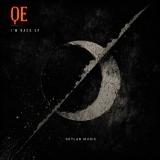
QE's I'm Back EP sits between oldskool vibes and deep raveish techno, and it flows. Five tracks, deep and rolling, with an oldskool feel in the groove and a rave pull running underneath. On a floor it plays as one long stretch rather than a run of peaks. What's Next? and This is Next open it up, then I'm Back, Set You Free and Release Yourself keep the movement going. Nothing hurries, and nothing needs to. Steady, deep, and made for staying inside the groove.
Gyros Heroes is the latest release from Adlibitum Tum Tunes, showcasing the unmistakable synergy between label curator Kirill Matveev and trusted maestro Nicolas Barnes, a resident artist renowned for his consistently refined and emotive sound.
The EP unfolds as a sophisticated blend of deep- and tech-house aesthetics, designed to uplift, move, and connect. It balances percussive bounce with emotional subtlety, offering a graceful flow that is both club-ready and sonically rich.
A1. Kirill Matveev – Am I Happy With That and A2. Kirill Matveev – Once At Dawn deliver the opening momentum, channeling sleek grooves and playful introspection with polished restraint. These tracks glide effortlessly between warmth and drive—embracing the listener without overwhelming.
On the flip side, B1. Nicolas Barnes & Kirill Matveev – Naar Shada blends the duo’s sonic sensibilities into a mood-driven piece with elegant progression and percussive intricacy. Closing with B2. Nicolas Barnes – Qeezy, the record reaches its emotional high point: a dancefloor-oriented yet soul-touched cut that radiates both sensuality and controlled energy.
Gyros Heroes is a finely tuned experience—bright yet deep, emotive yet precise—crafted for selectors who value atmosphere as much as movement. This is an EP that invites you into its positive orbit, reminding us how expressive and graceful club music can be when shaped by masters of tone and detail.
Adlibitum Tum Tunes is a division of MixCult Records
The Éthiopiques series returns! Essential archive recordings from an extremely fruitful period in Ethiopian music.
Before “Swinging Addis” took over the world, there was Moussié Nerses Nalbandian — the Armenian-born composer who shaped modern Ethiopian music. Mentor, arranger, and pioneer, he laid the foundations of Ethio-jazz.
This Éthiopiques volume revives his forgotten legacy, recorded live by Either/ Orchestra First issue ever with new exclusive photos and in depth liner 8-page insert.
“Ethiopian jazzmen are the best musicians that we have seen so far in Africa.
They really are promising handlers of jazz instruments.”
Wilbur De Paris
(1959, after a concert in Addis Ababa)
አዲስ፡ዘመን። *Addis zèmèn* **A new era.**
The time is the mid-1950s and early 1960s, just before "Swinging Addis" bloomed – or rather boomed – onto the scene. Brass instruments are still dominant, but the advent of the electric guitar, and the very first electronic organs, are just around the corner. Rock’n'Roll, R’n’B, Soul and the Twist have not yet barged their way in. Addis Ababa is steeped in the big band atmosphere of the post-war era, with Glenn Miller's *In the* *Mood* as its world-wide theme song, neck and neck with the Latin craze that was in vogue at the same period. Life has become enjoyable once again, with the return of peace after the terrible Italian Fascist invasion of Ethiopia (1935-1941). The redeployment of modern music is part and parcel of the postwar reconstruction. *Addis zèmèn* – a new era – is the watchword of the postwar period, just as it was all across war-torn Europe.
The generation who were the young parents of baby boomers** were the first to enjoy this musical renaissance, before the baby boomers themselves took over and forever super-charged the soundtrack of the final days of imperial reign. Music is Ethiopia's most popular art form, and very often serves as the best barometer for the upsurge of energy that is critical for reconstruction. Whether it be jazz in Saint-Germain-des-Prés or the *zazous* who revolutionised both jazz and French *chanson* after the *Libération*, be it Madrid's post-Franco Movida, or Dada, the Surrealists and *les années folles* that followed World War I, the periods just after mourning and hardship always give rise to brighter and more tuneful tomorrows. Addis Ababa, as the country's capital, and the epicentre of change, was no exception to this vital rule.
**Two generations of Nalbandian musicians**
Nersès Nalbandian belonged to a family of Armenian exiles, who had moved to Ethiopia in the mid-1920s. The uncle Kevork arrived along with the fabled "*Arba Lidjotch*", the** "*40 Kids*", young Armenian orphans and musicians that the Ras Tafari had recruited when he visited Jerusalem in 1924, intending to turn their brass band into the official imperial band. If Kevork Nalbandian was the one who first opened the way of modernism, pushing innovation so far as to invent musical theatre, it was his nephew Nersès who would go on to become, from the 1940s and until his death in 1977, a pivotal figure of modern Ethiopian music and of the heights it. Going all the way back to the 1950s. Nothing less. And it is Nersès who is largely to thank for the brassy colours that so greatly contributed to the international renown of Ethiopian groove. While the younger generations today venture timidly into the genealogy of their country's modern music, often losing their way amidst a distinctly xenophobic historiographical complacency, many survivors of the imperial period are still around to bear witness and pay tribute to the essential role that "Moussié Nersès" played in the rise of Abyssinia's musical modernity.
Given the year of his birth (15 March 1915), no one knows for sure if Nersès Nalbandian was born in Aintab, today Gaziantep (Turkiye/former Ottoman Empire) or on the other side of the border in Alep, Syria... What is certain is that his family, like the entire Armenian community, was amongst the victims of the genocide perpetrated by the Turks. Alep, the place of safety – today in ruins.
Before Nersès then, there was uncle Kevork (1887-1963). For a quarter of a century, he was a whirlwind of activity in music teaching and theatrical innovation. *Guèbrè Mariam le Gondaré* (የጎንደሬ ገብረ ማርያም አጥቶ ማግኘት, 1926 EC=1934) is his most famous creation. This play included "ten Ethiopian songs" — a totally innovative approach. According to his autobiographical notes, preserved by the Nalbandian family, Kevork indicates that he composed some 50 such pieces over the course of his career. This shows just how much he understood, very early on, the critical importance of song as Ethiopia's crowning artistic form. Indeed, for Ethiopian listeners, the most important thing is the lyrics, with all their multifarious mischief, far more than a strong melody, sophisticated arrangements or even an exceptional voice. (This is also why Ethiopians by and large, and beginning with the artists and producers themselves, believed for a long time — and wrongly — that their music could not possibly be exported, and could never win over audiences abroad, who did not speak the country's languages).
Last but not least, one of Kevork's major contributions remains composing Ethiopia's first national anthem – with lyrics by Yoftahé Negussié.
Nersès Nalbandian moved to Ethiopia at the end of the 1930s, at the behest of his ground-breaking uncle. Proficient in many instruments (pretty much everything but the drums), conductor, choir director, composer, arranger, adapter, creator, piano tuner, purveyor of rented pianos,... he was above all an energetic and influential teacher. From 1946 onwards, thanks to Kevork's connexion, Nersès was appointed musical director of the Addis Ababa Municipality Band. In just a few years, Nersès transformed it into the first truly modern ensemble, thanks to the quality of his teaching, his choice of repertoire, and the sophistication of his arrangements. It was this group that would go on to become the orchestra of the Haile Selassie Theatre shortly after its inauguration in 1955, which was a major celebration of the Emperor's jubilee, marking the 25th anniversary of his on-again-off-again reign.
At some point or other in his long career, Nersès Nalbandian had a hand in the creation of just about every institutional band (Municipality Band, Police Orchestra, Imperial Bodyguard Band, Army Band, Yared Music School…), but it was with the Haile Selassie Theatre – today the National Theatre – that his abilities were most on display, up until his death in 1977. To this must be added the development of choral singing in Ethiopia, hitherto unknown, and a sort of secret garden dedicated to the memory of Armenian sacred music, and brought together in two thick, unpublished volumes. Shortly before his death (November 13, 1977), he was appointed to lead the impressive Ethiopian delegation at Festac in Lagos, Nigeria (January-February 1977).
His status as a stateless foreigner regularly excluded him from the most senior positions, in spite of the respect he commanded (and commands to this day) from the musicians of his era. Naturally gifted and largely self-taught, Nerses was tirelessly curious about new musical developments, drawing inspiration from the very first imported records, and especially from listening intensely to the musical programmes broadcast over short-wave radio – BBC *First*. A prolific composer and arranger, he was constantly mindful of formalising and integrating Ethiopian parameters (specific “musical modes”, pentatonic scale, and the dominance of ternary rhythms) into his “modernisation” of the musical culture, rather than trying to over-westernise it. It even seems very probable that *Moussié* Nerses made a decisive contribution to the development of tighter music-teaching methods, in order to revitalise musical education during this period of prodigious cultural ferment. Flying in the face of all the historiographical and musicological evidence, it is taken as sacrosanct dogma that the four musical modes or chords officially recognised today, the *qǝñǝt* or *qiñit* (ቅኝት), are every bit as millennial as Ethiopia itself. It would appear however that some streamlining of these chords actually took place in around 1960. It was only from this time onward that music teaching was structured around these four fundamental musical modes and chords: *Ambassel*, *Bati*, *Tezeta* and *Antchi Hoyé*. A historical and musical “details” that is, apparently, difficult to swallow, especially if that should honour a *foreigner*. Modern Ethiopian music has Nersès to thank for many of its standards and, to this day, it is not unusual for the National Radio to broadcast thunderous oldies that bear unmistakable traces of his outrageously groovy touch.
To celebrate their landmark 60th release, Analogical Force proudly present ''Sixty'', a lengthy compilation (3x12'' - 17 tracks) that chronicles the label's journey from its inception to its current cutting edge form. Featuring new unreleased tracks from regular collaborators alongside exciting up-and-coming artists, plus some gems rescued from the past and remastered for the occasion. This release is a sonic time capsule and a forward-looking statement that serves as both a reflection of AF's past and a bold vision for the future. A must have for AF heads or virtually anyone into forward thinking music.
c 03 Gherat - Micfrk Bamb Mix
g 07 Oh Mr James - Rechargeable Battery Acid [ESC Mix]
[h] 08 Meta Program - VHJhbnNjZW5kIFlvdXIgRXhpc3RlbmNl [AF Edit]
Compilation selected from the etiopiques CD series.
"A few years ago the world discovered a unique sound coming from the distant Ethiopian capital Addis Abeba. The emotional blow was only matched by the brightness of this original and magnificent discovery. The Ethiopiques series directed by Francis Falcetto and edited by Buda Musique provides a comprehensive landscape of this subtle musical universe where local and western cultures do magnify each other. This new Ethiopian Urban Modern Music release follows the first Soul & Groove installment and keeps revealing some essential parts of the modern Ethiopian puzzle. An unequalled soul funk signature until today."
If a job's worth doing. QED Recordings boss Thomas Cox takes the helm for three very different tracks that arrive united in their refusal to follow the rules. 'Saboteur' glories in stompy drum machine action and handclap snares, wielding a hefty, chunky funkiness. 'Boxcutter' is a nice vignette of looped up hip-hop beats, while 'Lizardbrain' is a nicely frazzled bleep workout that manages to be quite playable but also slightly eccentric. All three are good stuff, from a label well worth keeping a regular eye on.
No en stock
Última entrega hace 4 meses disponible para reposición sin garantía
Killer set of six from Picture aka Central aka Natal Zaks.
Speedy, flighty stuff. Filter dials turning, little licks, sometimes small vocal hits. Zephyr and pressure. Some midwestern techno vivre carrying the whole thing along. If you've caught any of the Picture records from the last few years you might know the momentum at play already, a mix of breezy euphoria and deeper, dubbier minimalist force.
Combining a live and impactful improvised energy with Nat's signature twinkling production that has always been in a class of its own. Club tools as well as multifarious instruments of levitation. You could have the 38 most productive minutes of your life with it spinning as your soundtrack next to you.
Vinyl reissue of the most acclaimed album by Brazil's legendary female vocal quartet, this LP captures the group at their creative peak, featuring sophisticated arrangements by Edu Lobo and Luiz Eça (Tamba Trio), A post-bossa gem filled with stunning vocal harmonies. Originally released in 1972 on the Odeon label, Quarteto Em Cy stands as a high-water mark in the group's prolific discography-and a hidden gem for collectors of Brazilian vinyl. Known for their intricate vocal harmonies and deep roots in the bossa nova movement, the quartet ventures into post-bossa territory here, where sophistication meets groove in all the right ways. Arrangements by Edu Lobo and Luiz Eça (of Tamba Trio) lend the album a richly layered sound-elegant, jazzy, and emotionally resonant-while the group's harmonies remain as mesmerizing as ever. It's a masterclass in vocal interplay and tasteful orchestration, with an unmistakable Brazilian soul running through every track. Highlights include their stunning interpretation of Milton Nascimento's 'Tudo Que Você Podia Ser,' along with deep cuts like 'Quando o Carnaval Chegar,' 'Canto de Obá,' and 'Cantoria.' These recordings capture a moment when the group, already respected collaborators of Vinícius de Moraes, Jobim, and Chico Buarque, hit a new creative stride. A MPB landmark and long out of print, often cited as QEC finest work, this self-titled LP has become a sought-after piece among collectors of MPB, bossa, and 70s harmony pop. For those drawn to groups like The Free Design or The Mamas & The Papas-but with a distinctly Brazilian elegance-this album offers a rare and rewarding listen. Reissue on 180g vinyl.
No en stock
Última entrega hace 8 meses disponible para reposición sin garantía
The vinyl LP at the heart of this éthiopiques 31 tracks 2 to 11 was one of the very last vinyl records ever released in Ethiopia. But above all it represents, we felt, the absolute masterpiece of the Ethiopian Groove – the Swan Song of Swinging Addis. The album leaves a clear idea for posterity of the level of sophistication and mastery that modern Ethiopian music had achieved, before being crushed under the Stalino-military heel of the Derg – as the bloody revolution that was unfolding came to be called.
Ethiopia1976.
The Revolution that broke out in February 1974 rolled on in a ruthless march. The whole of Ethiopian society was utterly stunned. The bouquets of flowers handed joyfully to the first tanks of the coup d'état were to wilt very rapidly. From September 1976 to February 1978, 18 months of Red Terror (the name given by the junta itself) spilled blood throughout the country. This fratricidal conflict took its heaviest toll among students and youth. The shift from feudalism to a cruel and primitive Stalinism left the country's citizens deeply traumatised, and snuffed out any pretence of activism, whatever the sector of society. This ice age was to last for seventeen long years.
ሙሉቀን፡መለሰ Mulukèn Mellèssè Muluqän Mälläsä
It was three tracks by Muluken that served as the opener for éthiopiques-1 more than 25 years ago. Seven more tracks appeared on éthiopiques-3 and 13, all accompanied by The Equators, which was soon to become the Dahlak Band.
The first track, Hédètch alu, also the very first piece that Muluken ever recorded, left audiences both unsettled and amazed. Reflecting the singer's extremely young age (he was just 17 at the time), this angelic voice mystified many, who thought they were in fact listening to a feminine voice. He was not yet 22 when he released his last vinyl record in 1976 with Kaifa Records (KF 39LP), one of the very last to be issued in Ethiopia, before the cassette tape became the dominant medium for music distribution – and before the new revolutionary regime put a stop to all independent musical life, via an unspeakable barrage of prohibitions and other persecutions.
Mulu qèn, literally, “A well filled day”. This tender maternal intention wasn't enough to ward off the cruelty of fate. His mother's premature death drove Muluken to leave his native Godjam, in northeast Ethiopia, to live with an uncle in Addis Ababa. Born Muluken Tamer, he took his uncle's last name – Mèllèssè.
The spelling Muluken appeared in his administrative records. Transcription of Amharic to the Latin alphabet, both in Ethiopia and for scholars, gives rise to controversies and quibbles that can never be neatly settled. French allows for a closer approximation of the original pronunciation, thanks to its battery of accent marks, confusing as they may be to anglophones.
Between rather accommodating administrative record-keepers and the various versions that pop up in interviews given by the artist, Muluken's year of birth oscillates between 1953 and 1955…
1954? One thing is certain: the artist's talent made itself known very early indeed, because he got his start in 1966-67, at the age of 13 or 14. Photos from the period attest to his extreme youth. It's a strange sort of initiation for a very young teenager to become a sensation in the heart of Addis's nightlife at the time, Woubé Bèrèha – the Wilds of Woubé. And what's more, in the club of the Queen of the Night, the Godjamé Assègèdètch Alamrèw herself, the very same that was portrayed by Sebhat Guèbrè-Egziabhér in his novel-memoir Les Nuits d’Addis Abeba2… The legendary female club owner who is remembered to this day by the capital's ageing boomers.
Muluken first tried his hand at the drums, before he grabbed the microphone. He emigrated briefly to the Zula Club, across the street from the old Addis Post Office, one of the ground-breaking bars of the burgeoning musical scene, before joining the Second Police Band in 1968, for around three years. He spent a few months with the short-lived Blue Nile Band founded by saxophonist Besrat Tammènè. As the musical scene grew increasingly successful, and pulled slowly but decisively away from its institutional ties, Muluken released his first 45rpm single in February 1972 (Amha Records AE 440). It was included in two LP Ethiopian Hit Parade compilation albums in September of the same year. All in all, Muluken released eight two-track 45s and the same number of original cassette tapes between February 1972 and 1984, the year that he departed for permanent exile in the USA. After converting to Pentecostalism in 1980, Muluken gradually abandoned all secular musical activity. In 1985, at the end of a concert in Philadelphia, he decided to quit concerts and recording for good. Mèlakè Gèbré, the historic bass player from the Walias band who was playing with him that night, recalls that everything appeared so irredeemably diabolical in Muluken's eyes, that it was to be the end of his contribution to Ethiopian Groove.
The end of the story, the beginning of a legend.
Dahlak Band, forgotten by History
Aside from his personal history and vocal talents, it must be remembered that Muluken Mèllèssè was one of the biggest names in the musical innovations that marked the end of the imperial period. These éthiopiques aim to convince those who are just discovering this hidden gem... As for Ethiopians themselves, they are to this day captivated by this singular and atypical figure in the Abyssinian pop landscape – even though he withdrew from public life some 40 years ago. Incorrigible devotees of poetic twists, of more or less hidden meanings, Ethiopians appreciate above all the care Muluken took in choosing his lyrics and the writers who penned them, such as Feqerte Haylou, Alemtsehay Wodajo and, here, Shewalul Mengistu (1944-1977). Love songs, written by women, a far cry from the conventional drivel that pleases sappy sentimentalists.
Muluken is equally acclaimed for his perfectionism when it came to music, the opposite of the overly casual approach that is all too common. He remained a faithful partner of musicians who came from a lineage that borrowed from several inventive and pioneering bands (Venus, Equators, Dahlak). Amongst them were certain artists who began their musical lives with Nersès Nalbandian at the Haile Sellassie Theatre and who come of age in around 1973 – at just the wrong time, you might say. Among them were the pillars Shimèlis Bèyènè (trumpet), Dawit Yifru (keyboards) and Tilayé Gèbrè (sax & flute). Most notably Tilayé Gèbrè, certainly one of the most important musicians, composers and arrangers of his generation, of the end of the imperial era, and of the early years of the Derg.
It was only in 1981 that a miraculous opportunity arose for Tilayé to escape the Stalinist paradise of the dictator Menguistou Haylè-Maryam. Once again it was Amha Eshèté (1946-2021) who provided a solution. The spirited and courageous producer, who had been in exile in Washington since 1975, succeeded, thanks to his incredible perseverence, in bringing the Walias Band to the USA. It was, in fact an extended Walias Band comprising ten musicians3, six of whom chose to slip away after a few concerts and the recording of an LP (The Best of Walias, WRS 100). Tilayé Gèbrè was one of these. He has been living in the USA ever since. There he joined the then-nascent Ethiopian diaspora, which lived largely unto itself, and was making only very modest headway in the American musical market. It seems unfair that Tilayé Gèbrè and the Dahlak Band were not able to benefit earlier from the public recognition that they do deserve.
A similar draining away of the top-rate talents would lead to the reorganization of the major groups of the “Derg Time”. The remaining artists spread themselves around between Ibex Band (renamed Roha Band), Ethio Star Band and a remodeled Walias Band. That spelled the end of the Dahlak Band.
With this record, produced by the essential Ali Abdella Kaifa a.k.a. Ali Tango, we can appreciate everything that the Derg not only destroyed, but also prevented from flourishing. This gem of Ethiopian-style afrobeat came out in 1976 (and, by way of a parenthesis, before the FESTAC 1977 in Lagos, which was attended by an impressive delegation of Ethiopian musicians — although Fela was already personna non grata in his own country). Despite everything that might distinguish this ethio-groove from Fela’s music – no colonial axe to grind, no question of political confrontation with the authorities, no claims to negritude or Africanism for the Ethiopian musicians, and less extrovertion! –, this LP fits beautifully into the saga of intense and electrified soul of the new “African” groove that Fela and Manu Dibango embodied so well from that point onwards.
In restoring this record to its place in the afrobeat epic, it can be seen that, if nothing else, the timeline bestows a legitimate pedigree and a historical primacy to works that had no international impact when they were originally released.
Warning! Masterpiece!
No en stock
Última entrega hace 3 meses disponible para reposición sin garantía
"Magical Thinking", Faraos drittes Studioalbum, entfaltet sich als vielschichtige Reise durch Verlust, Sehnsucht und Verwandlung. In Anlehnung an den Titel und den Geist von Joan Didions "The Year of Magical Thinking" bewegt es sich durch das stille Terrain zwischen Verleugnung und Akzeptanz - wo Trauer nicht gelöst, sondern getragen wird. Es sind Songs über Wiederaufbau und Widerstandsfähigkeit, geprägt von Themen wie Trauer, Mutterschaft und den wesentlichen Ritualen, die uns aufrecht halten, wenn die Klarheit schwindet. Das Album wurde zwischen Oslo und Berlin aufgenommen und pulsiert mit dem Flair des R&B der 90er Jahre, dem Glanz der 80er-Disco und der kontemplativen Schwungkraft des spirituellen Jazz - allesamt verankert durch Faraos intime Vocals und komplexe Arrangements. Vom ersten Schimmern von ,Waiting for You", wo Herzschmerz in Pailletten gekleidet ist und ein Groove an Robyn und Chaka Khan erinnert, lädt uns das Album in eine Welt ein, in der Sehnsucht zum Leuchten gebracht wird. In ,Spiritual Garden", benannt nach einer flüchtigen Textzeile von Janet Jackson, schafft Farao eine feuchte, narkotische R&B-Träumerei. Percussion im Stil von Timbaland und seidige Basslines umhüllen die unerwarteten Texturen ihrer Zither und beschwören eine Meditation über Verlassenheit und die fragile Rückeroberung des Selbstwertgefühls herauf. Wenn ,Dreamy Ride" einsetzt - wo Aaliyahs Coolness auf Dorothy Ashbys kosmische Harfe trifft -, gleitet das Album in nächtliche Bewegungen, eine R&B-Fantasie für nächtliche Autofahrten um 2 Uhr morgens, wobei ihre Zither sich wie ein Leitstern durch den Mix webt. Der verspielte Synth-Jam ,Hey Ladies" und eine kühne Neuinterpretation von Brandys ,Full Moon" lockern die Stimmung in der Mitte des Albums auf. Ersterer ist eine freche, einminütige Hommage an Destiny's Child, letzterer eine nächtliche Elegie, die einen geliebten Klassiker in tiefe Bässe und schimmernde Synthesizer hüllt. Dann kommt ,Xiang Xiang", ein intimes Intermezzo, das um eine geflüsterte Stimme einer Freundin herum aufgebaut ist und uns an die realen Bindungen erinnert, die Faraos üppiges Klanguniversum erden. Im Zentrum des Albums steht der Titeltrack ,Magical Thinking", der direkt auf Didions Memoiren Bezug nimmt. Hier zeichnen pulsierende Synthesizer und schwebende Vocals die verschwommene Grenze zwischen Präsenz und Dissoziation nach. Es folgt ,Endelig" (,endlich" auf Norwegisch), ein tiefes Ausatmen - ein minimalistisches, spirituelles Jazz-Intermezzo, das die Illusion einer Auflösung vermittelt. Farao tut sich dann mit dem Ambient-Pionier Laraaji für ,Voice Continues" zusammen, einer weitläufigen, von der Vierten Welt inspirierten Meditation, in der Zither, mehrschichtige Vocals und Synth-Texturen einen Klangteppich bilden, der die Spuren mütterlicher Liebe über Generationen hinweg nachzeichnet. ,Tschüssi" (ein luftiger deutscher Abschiedsgruß) wird zum Gefäß für etwas weit Schwerwiegenderes: ein Abschied, durchzogen von sich wiederholenden Erinnerungen und emotionaler Desorientierung, aufgebaut um ein gespenstisches Fragment aus Faraos Track ,Marry Me". Das Album schließt mit ,Sleep It O" zu einer verschwommenen, gnädigen Note, einem Wiegenlied für die Überwältigten - eine letzte Erlaubnis, sich auszuruhen, loszulassen, sich einfach hinzulegen. Keine Verheißung der Heilung, sondern eine mitfühlende Pause in einem Album, das von Sehnsucht und Illusion geprägt ist. RIYL: Erika de Casier, Tirzah, Sade, Kelela, Qendresa, Caroline Polachek, Solange
Wonderful weird manouevres from Thomas Cox's QED, here releasing its first album. Expect dubbed up echofests and reggae sound system sirens ('Crushed By A Speaker Stack'), grungy distorted bassline rumbles ('Riot In The Dancehall') and sparse machine funk ('Spikes & Studs & Chains'). Like the musical lovechild of a leftfield 90s Vienna session a la Mego or Cheap, and a dubby take on the Berlin's Digital Hardcore Recordings sound, those who loved their electronics on the wayward, limit-pushing side, should find this a rather special listen.
Sonic Interventions is a diaspora-futuristic band of interdisciplinary artists from five continents. Emerged in 2020 from the transcultural Berlin Jazz scene, the group unites diverse languages, instruments, rhythms and dance for collective meditation and healing, improvisation and groove.
Since then, the band has established itself as one of Berlin's most acclaimed underground Jazz collectives. Known for inclusive live spectacles, in which moments of meditation and trance rise into heavy grooves, traditional rhythms of the African and Latin American continents coalesce with urban styles such as Hip Hop, Trap and House. The band combines poetry and dance inspired by the cosmos, ancient alchemy and world mythologies.
No en stock
Última entrega hace 16 meses disponible para reposición sin garantía
Gold vinyl, limited to 550 copies. After two years in the making, Wyatt E. seals their long-awaited return in 2025 with the highly anticipated narrative sequel to "al beluti darû": zamaru ultu qereb ziqquratu Part 1 (Music from inside the Ziggurat); is the first chapter of a set of 2 concept albums in which the band deepens its exploration of ancient Babylon with an almost mythical approach through the eyes of the exiled captives from Jerusalem. Featuring contributions from 7 international collaborators, zamaru ultu qereb ziqquratu is poised to become one of the most ambitious projects in the doom scene in terms of production & conception and will be released by the finest label in the genre: Heavy Psych Sounds. The album pushes sonic boundaries by featuring two drummers recorded simultaneously, creating the immersive effect of distant crowds. An eclectic mix of instruments, including the saz, viola, sitar, and bugle, blend with both analog and digital elements to enrich the soundscape. A nod to Turkish composer Faz?l Say is also present, with a quotation from his symphony Mesopotamia. For the first time, two vocal tracks appear alongside the instrumental pieces. Iranian singer Nina Saiedi lends her ethereal voice to "The Diviner's Prayer to the Gods of the Night," sung in Akkadian, while Jerusalem's choir conductor, Tomer Damsky delivers a captivating performance of Im Lelya in Aramaic adding a deep vocal layer to the album. The final mix, crafted by renowned producer Tim De Gieter, known for his work with Amenra, Brutus, and Absent in Body, brings everything together with a masterful touch.
After two years in the making, Wyatt E. seals their long-awaited return in 2025 with the highly anticipated narrative sequel to "al beluti darû": zamaru ultu qereb ziqquratu Part 1 (Music from inside the Ziggurat); is the first chapter of a set of 2 concept albums in which the band deepens its exploration of ancient Babylon with an almost mythical approach through the eyes of the exiled captives from Jerusalem. Featuring contributions from 7 international collaborators, zamaru ultu qereb ziqquratu is poised to become one of the most ambitious projects in the doom scene in terms of production & conception and will be released by the finest label in the genre: Heavy Psych Sounds. The album pushes sonic boundaries by featuring two drummers recorded simultaneously, creating the immersive effect of distant crowds. An eclectic mix of instruments, including the saz, viola, sitar, and bugle, blend with both analog and digital elements to enrich the soundscape. A nod to Turkish composer Faz?l Say is also present, with a quotation from his symphony Mesopotamia. For the first time, two vocal tracks appear alongside the instrumental pieces. Iranian singer Nina Saiedi lends her ethereal voice to "The Diviner's Prayer to the Gods of the Night," sung in Akkadian, while Jerusalem's choir conductor, Tomer Damsky delivers a captivating performance of Im Lelya in Aramaic adding a deep vocal layer to the album. The final mix, crafted by renowned producer Tim De Gieter, known for his work with Amenra, Brutus, and Absent in Body, brings everything together with a masterful touch.
qebrus (pronounced Ké-brusse) was a project by Thomas Denis, an enigmatic French musician and producer born in 1981 and based in Caen, France, before his untimely passing in February of 2018. His undefinable otherworldly compositions and internet glitch trickery turned many heads catching the attention and support of esteemed artists such as Aphex Twin, Four Tet and Venetian Snares. The appeal of his music to other forward-pushing producers was emblematic of the uniqueness of his productions and led to collaborations with the likes of Tom Middleton, Otto Von Schirach and Mr Bill. His only release on Love Love Records, 'ᐔ ᐌ ᐂ ᐍ ᐚ', proved to be one his furthest reaching, originally released on CD during a flurry of musical productivity during 2017. Those 6 tracks of intricate extraterrestrial electronics now get the vinyl treatment, having been lovingly remastered or this reissue and pressed on green coloured wax.
The qebrus guise was that of an alien stranded on Earth and this concept was consistent throughout. The project gained notoriety almost exclusively on the internet, with many people's first experiences of his persona coming from the use of chaotic ASCII syntax in track titles which at the time 'broke' many of the websites he used to host his music. This theme of incomprehensibility extended to the sonic qualities of his music, foregoing any shred of familiar sounds in favour of an entirely electronically synthesised sound palate resulting in jarring and frenetic works full of near-imperceptible micro-details.
qebrus rarely performed live with one of the few occurrences being at an after-party following the now legendary Day For Night Festival 2016 in Austin, Texas where Aphex Twin played some of Qebrus' music to a crowd of 20,000 as Thomas watched on in what was undoubtedly an otherworldly experience for him.
Despite his vision being entirely self-driven without a care for popularity or recognition, there were many people across the globe that connected with the sheer weirdness of it all. 7 years on 'ᐔ ᐌ ᐂ ᐍ ᐚ' still sounds wholly futuristic and will likely remain so for centuries to come. In a time where it seems everything has already been done before Thomas leaves behind a legacy of an artist who was truly 'doing their own thing'.
Thomas is survived by his two children who will be receiving his proceeds from sales of this release.
“really alien sounding music”
Aphex Twin —
“Did you know that guy, Qebrus? He was on his own shit, he was making some really out there music, his music was incredible”
Venetian Snares —
“Listening to intelligent dance music producer Qebrus feels a lot like entering another dimension, his music stumbling its way through electronic chaos, leaving the listener unsure over what just happened.”
Thomas Hobbs — Crack Magazine
No en stock
Última entrega hace 18 meses disponible para reposición sin garantía