J’Voudrais Qu’Tu M’Dises marks another official 12″ French re-issue from the Forest Jams label. Like the previous ‘Nathalie Letertre’ record we have a name on the front of the jacket but with little information behind it. What we do know is that Kelly Lane’s vocals sit atop this obscure synth-pop meets house meets slight boogie with a smooth aggression, equally cute as it is equally strong, funky indeed.
For those that just want the music there’s an instrumental version on the B-side. Two extra versions taken from the CD are re-mastered and included on this release with a surprisingly dancey ‘radio’ version and a pumping/housier ‘version dance remix’. Let Kelly Lane’s “J’Voudrais Qu’Tu M’Dises” find its way to your heart.
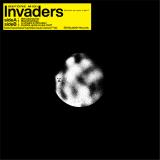
The four-track EP “Invaders, Qu'est-ce que c'est?” blends dark electro-house elements with cloudy live improvisations, created for the Turin and European underground club scene. The composer duo was born from the meeting between Viziale, a DJ & Producer, and the multidisciplinary composer Barabbah.
After connecting through Italia90®, they began collaborating on new music and launched a new label linked to the clothing brand; the 30x30 cm poster by Woc, included in the vinyl release, is a proof of the contemporary image aim of the label.
NB: The Lps are made with 100% regenerated plastic, totally green and respectful for the world and 100% compatible with the standard of the pure material.
qu"s debut album where did the sun go? presents his sonic transformation from a producer to a producer artist in his own right, not only engineering beats, but writing songs, arranging instrumentation and directing his own vision onto a full length album. where did the sun go? features prominent artists like Jay Prince (UK) and Serious Klein (GER), emerging artists Josh Kye (UK) and Malaya (US) as well as Kabul Fire artists agajon and Ninja Kidsoul. on 15 tracks qu proves his versatility in creating an alternative sound that is inspired by the music traditions of hiphop, rnb & jazz.
Évariste is one of the rare specimens of artist-cum-scientists. Among his kind stand others like Pierre Schaeffer, a Polytechnique graduate (an engineer but also the father of musique concrète) and the eccentric Boby Lapointe (graduate of the École centrale and inventor of the Bibi-binaire system, patented in 1968). Évariste's songwriting, joyful and full of energy (albeit extremely critical), shrouds an original tragedy: born in 1943 among résistants, Joël Sternheimer (aka Évariste) grew up without a father, lost to Auschwitz. Although he makes little reference to Jewish culture in his music, his origins leave their mark: in 1974, he sings a Hebrew song on television. In 1966, the young Joël sports Princeton's colourful paraphernalia - that's because he's freshly returning from the US, where he was sent to pursue his research on "particle mass and the interpretation of observed regularities, such as the effects of a wave" (will understand who may). When he gets there the country's in the midst of the Vietnam War. With McNamara keen to find an alternative to the nuclear weapon and calling upon the country's biggest brains to undertake the task, there's a "fund shift" within the university - a diplomatic way to give notice to whoever may not be disposed to follow the government's scheme. Joël, who's under the supervision of a rebellious physician, is dismissed. He regardless keeps following the prestigious seminaries of the Institute for Advanced Study, chaired by Oppenheimer, inventor of the atomic bomb. Likely inspired by the hippie movement and music, Joël buys a guitar and starts playing in Washington Square - after all, Bob Dylan himself started there. He blithely skips Oppenheimer and receives a warm (though surprised) welcome from a crowd thoroughly unfamiliar with French. When the ageing physicist questions him about his decreasing attendance, Joël explains how drawn he is to music, and how he thinks it could help him in self-financing his research. Évariste recalls seeing the sickened man, his face torn by remorse, lighten up to his words and say: "What's keeping you - go for it! If I was still young that's exactly what I'd do." The student takes these words as a testimony from his professor - and it's enough to convince him . And so he takes the leap during the Christmas vacations he spends in Paris. A journalist friend he often sees around the Sorbonne introduces him to the artistic director of Disques AZ. The latter passes the tapes on to the label's boss, Lucien Morisse, also program manager on Europe N°1. Morisse is blown away - and signs him onto the label right away. Michel Colombier, arranger for Serge Gainsbourg and co-author of "Psyché Rock", with Pierre Henry, contributes some of his original ideas to the 7 inch "E=mc2": Évariste's preoccupation with the percussion sound on the track "Le calcul intégral" is that it goes "poom poom" and not "tock tock" - Colombier is aware of the issue and records Évariste's guitar like a percussion in an isolated booth. The organist Eddy Louis, who is to participate, in 1969, to the success of Claude Nougaro's "Paris mai", also appears on the record. It's 1966 and the Antoine phenomenon (signed on Vogue) storms through France. The two singers share similarities: Antoine is an engineer of the École centrale, gifted with a great originality in his song-writing. A godsend for the two labels who turn this resemblance into a commercial strategy, setting them out as rivals. To this day though, Évariste still denies what was little more than slushy tabloïd gossip. Success comes around swiftly and in 1967 Évariste launches into a second 7 inch, "Wo I nee", again arranged by Michel Colombier. Quantum mechanics fans finally get their anthem with "La Chasse Au Boson Intermédiaire" (or the "Intermediary Boson Pursuit"). To sum up what's a boson, say he's a close pal of the meson, photon and other gluons. A few months later, it's May 68 and everything's turned upside down. Évariste writes a series of songs inspired by the events, which he immediately submits to Lucien Morisse. When the man behind "Salut les copains", once married to Dalida, hears the song "La révolution" - a father and son dialogue - he can't take any more: AZ simply cannot release this. But there and then Lucien Morisse makes a gesture which will remain engraved in French music's history: sorry to be unable to officially stand by the singer, he encourages him to self-produce the record, but with his tacit support. He calls the pressing factory and asks they apply the same rate for Évariste as they would for AZ. The singer and his musicians use the same studio as for the previous record, all of them playing for free awaiting a return on investment. Évariste keeps singing at the Sorbonne with "Jussieu's gang" and "the young Renaud" he nicknames "le p'tit gavroche" (or "street urchin"). Renaud volunteers to type the lyrics of the song "La révolution" so that the chorus can be sung and recorded. A boy in the group is related to Wolinski and introduces them. The two get along so well that Wolinski ends up drawing the cover for the record "La révolution", for free. The self-released 7 inch "La révolution / La faute à Nanterre" is sold under the table and door-to-door for half the price of a standard record, on and around the boulevard Saint-Michel; and it runs out fast. In the end, there will be 6 releases of the record, and 25000 copies sold. When the theatre director Claude Confortès decides to adapt Wolinski's drawing series titled "Je ne veux pas mourir idiot" ("I don't want to die a fool"), he asks Évariste to write the original soundtrack. His friend, now cartoonist for Hara-Kiri Hebdo, often promotes him in accordance with a principle dear to him by virtue of which he gives a special place to his friends. Dominique Grange (writer of the song "Nous sommes les nouveaux partisans") soon joins the team. After 150 performances, Évariste leaves his place to Dominique Maurin (brother of Patrick Dewaere). Évariste composes the songs for Claude Confortès' next play, "Je ne pense qu'à ça" ("That's all I think about"), co-wrote with Wolinski in 1969. The comedians of the play record the songs on a 7 inch, with a cover signed, again, by Wolinski. In 1971, French television produces the documentary "Évariste et les 7 dimensions", but doesn't air it. Indeed, the scientific sub-comity of the programming comity (sic) censors the show. The given justification is that "Évariste dangerously mixed science with science-fiction, numerology and other non-scientific disciplines". The underlying motive might have been a will to censor the singer-mathematician's political discourse. In the documentary and among other things, Évariste discusses hierarchy, alienation and revolution. Half a century later the documentary remains invisible, though some excerpts resurfaced in 1992 in the cult show "L'oeil du cyclone", on Canal +. Though flourishing, Évariste's career is nearing its end. 1970 is the beginning of a decade in the course of which he is to make a decisive discovery in the musical and scientific domains. Following this breakthrough, he moves away from self-produced music and gaucho magazines to focus on science. He keeps Oppenheimer's encouraging words in mind, now freely pursuing his research thanks to the sales of his records. Joël realises that when decoding protein sequences, one finds musical sequences recognisable to humans. He names them "proteodies". If, when listening to a proteody, one responds by being so sensitive as to finding it beautiful, then it reveals a deficiency of the related protein - and this peculiar music may be the cure. We could trace back the music history in light of proteins lacking in a given artist, or within a public's majority. You always thought these hysterical groupies who'd throw their underwear with passion and faint in the pit had miraculously appeared because they had never heard anything as wonderful as the Beatles? Make no mistake! For Évariste, it all boils down to an intro's protein content. Indeed, the beginning of their first hit "Love Me Do" corresponds to dopamine, the neurotransmitter linked to compulsive buying. An intro like this could only unleash the fervour of groupies, victims of fashion and biology. Évariste's success is such that the income from his sales gives him the autonomy to which he had aspired when confiding to Oppenheimer. It made it possible for him to pursue his research without any institutional constraints. He now devotes himself to his proteodies, sat in the offices of the European University for Research, just around the corner from the Sorbonne he knew so well. Évariste is no more. Joël regained control of this strange and comical beast.
“Les choses qu’on ne peut dire à personne” is Bertrand Burgalat’s fifth studio album. The record features 19 titles that set the bar very high, speak about the world as it is, with strength and subtlety. Racy songwriting, supple rhythms, sumptuous harmonies, corrupting voices: the testimony of a goldsmith at the height of his art. A masterful record that looks like no one else.
Harfloor killer of an hardtek sound... L'Hallucicité usually represses sounds and here comes to finally produces a new artist with new tunes. Harfdfloor anti-progressive, and anti-depressive. Full-out !
They say that good things come in threes... it must be true and Favorite Recordings also proudly presents the third edition of its acclaimed French Disco Boogie Sounds compilation series.
Like on prior volumes, the complete tracklist is selected by label head honcho, Charles Maurice (aka Pascal Rioux), who's unearthed 13 more forgotten and hidden tracks, all produced whether in France, in French, or by French artists between 1977 and 1987.
With most of these titles now very hard to find in their original edition and unknown by many, this compilation should be a must have for any Disco-Boogie-Funk music lover and collector.
Fully remastered from originals at The Carvery Cut (UK), French Disco Boogie Sounds Vol.3 (1977-1987, selected by Charles Maurice) is presented by Favorite Recordings in a gatefold vinyl double LP and as CD.
out of Stock
Last delivered 69 days ago available to reorder, subject to availability
For the first time Nicolas Repac's album Swing-Swing, originally out in 2004, is released on vinyl LP!
He has a reputation as a musician's musician, a talented Jack-of-all-Trades as much at ease playing the guitar alongside his old accomplice, French songwriter Arthur H, as he is when tinkering with all kinds of machines by instinct, and creating made-to-measure contexts for instrumentalists like Michel Portal. Everyone knew he had a secret garden, the song' world of a composer and performer who was difficult to categorize, a world not only lyrical but also dark and full of tender melancholy, not to mention easily surrealist (his first record of songs, La vile', which was released on the Indigo label in 1997, has a sequel in preparation in the form of a new opus, Lovni'.) But, once again,
Nicolas Repac had a surprise in store, because he has turned up where no one was expecting him: Swing Swing is a record as magnificent as it is difficult to place, with electro ramblings around jazz (its subjects and virtues, its spirit and memory), wanderings that are playful, light, fluid in gesture and crammed with ideas, discoveries and intuition, they are at once naive and instinctive (Repac is an erudite amateur, the Ferdinand Cheval of the already-established world of electronic music), and extremely elaborate in their crushed samples, hallucinatory, rhythmic whirls and sensual, dreamlike atmospheres.
out of Stock
Last delivered 4 years ago available to reorder, subject to availability
'Benjamin Lew was an enlightened amateur, in the noble and almost Renaissance-like sense of the word: he dabbled with equal grace in photography, writing, visual arts ... and worked part-time as a cocktail mixer in a tropical bar which was one of the favourite watering holes of Brussels' thriving artistic community of the early '80s. Tuxedomoon had just moved to Brussels, and Steven Brown was among the many musicians, designers & artists who patronized the bar. Benjamin had a secret passion: he wasn't a musician, but had acquired a small analog computer, with which he had started creating these strange mysterious little pieces. Benjamin played them to Steven and asked him if he'd agree to record with him. Steven was taken with them and accepted. The Douzième Journée was largely created in the studio by both protagonists, with the help of Gilles Martin and myself, in the spring of '82. Listening to his albums (he went on to record four more with Crammed) is like embarking on a dream journey to the Sahara or the Far East. You'd think that some of the pieces feature non-European musicians or samples but: no... this is just Benjamin's imagination, his synths, and his friends...'
Marc Hollander, Feb. 2019
out of Stock
Last delivered 6 years ago available to reorder, subject to availability
Guizmo has for many years left a strong imprint in the French rap scene with his unique personal universe and an acknowledged gift to writing. Three years after release the album 'Dans Ma Ruche' and the surprise street album 'GPG 1 in 2016, the singles of this fifth album are already receiving praises from the fans and the medias, paving the way for another success for the 26-year old rapper. Guizmo is a viral sensation and strategizes his own social campaigns to reach his fans directly. He's gathered 400+K followers on YouTube and 160+M views, 730+K Facebook fans, 100+K Twitter followers and more than 95K followers on Instagram
Blinding tracks from Joey Anderson, Qu, Nicuri and new artist Art Gallery.
Exchange Place is the DJ collective that includes Nicuri himself alongside Joey Anderson, DJ Qu and a producer by the name of Art Gallery. The name makes reference to a district in Downtown Jersey City, just across the river from Manhattan, which is where the crew is primarily based. They released a 12-inch under the name Exchange Place with DJ Qu's Strength Music label back in 2010, and have DJ'd occasionally as a group around New York City. The new EP, Immaculate Inception, includes one track from each of the four contributors.
out of Stock
Last delivered 2 years ago available to reorder, subject to availability
Special Remarks: 10'' vinyl in a cardboard sleeve with 3mm spine. CD included.
Les Fils du Calvaire is a Parisian trio (Jo, Damien & Clément. Nowadays they spend their time between the French capital and Berlin. They are also the creators of the hybrid electronic music project, dOP, signed on Circus Company, the label who released the first album of Nicolas Jaar. Les Fils du Calvaire is hybrid, transversal between elegant French Pop, decadent club music and outgoing cabaret. They compose for people who are singing in the shower, those who drive by night, for the charming ones while dancing upside down. Especially for those who understood that present may be our last freedom. And all this without any nostalgia. They also know how to pick their cast: they called Ash Workman for his production skills (Metronomy, Christine and the Queens...) to do the mixing of their first album. Rester avec Toi' is a perfect flavour extract from the forthcoming album ' Fils de ,
out of Stock
Last delivered 6 years ago available to reorder, subject to availability
This is France in the Mitterrand years: fashions fleet as fast as governments. In the early eighties, the happy-go-lucky gather the nectar of each and every new release.
Believing in a bright future for videotex, and loosened up by the sexy talks broadcasted on the budding pirate radios, the new generation dreams of dance floors and holiday clubs. French Boogie, which preserves the spirit of these years of boodle and bunkum, is the ideal soundtrack to their dreams.
What the web now refers to as French Boogie is some synthetic funk reflecting the spirit of those days when nothing was impossible, or so it seemed. Its syncopated flow heralded the dawning of French rap. Often considered as some kind of post-disco, inspired as much by black music as by new wave, this carefree pop music with bawdy lyrics indulged in simple pleasures: holidays, swank and sun were recurrent themes. Totally in tune with its time, it incidentally glorified luxury, success, and a certain consumerism embodied, for instance, in Bernard Tapie.
In popular clubs such as La Main Bleue in Montreuil, or L'Echappatoire in Clichy-sous-Bois - where Micky Milan could be seen behind the decks - an enthusiastic audience discovered this new sonic wave, influenced as much by French pop as by Sugar Hill Gang or Kurtis Blow. The artists who first launched the movement engaged in it wholeheartedly, but as often the case with new music trends in France, humour and casualness quickly became a decoy to impose a new style. This explosive mixture, in which startling and typically Frenchy French lyrics go along New-York-style tunes, is sometimes reminiscent of the kinky comedies directed by Max Pécas or Claude Zidi. On this prolific scene, partly originating from the Jewish community, everybody was looking for success, trying to hit the jackpot with what was to hand. Famous media personalities, one-hit wonders or John Does in quest of fame, all had a go at French Boogie - more or less successfully. Apart from « Vacances j'oublie tout » by Elégance, « Un fait divers et rien de plus » by Le Club, or « Chacun fait ce qui lui plaît » by Chagrin d'amour (produced by Patrick Bruel), very few songs became hits: the story of funk in France is that of a half-baked robbery.
In this myriad of new musicians, the very young François Feldman and Phil Barney pioneered a fresh and hybrid style. Other well-known artists like Gérard Blanc from Martin Circus (Attaché Case), Richard de Bordeaux (Ich), or Jean-Pierre Massiera (Anisette, Pirate Scratch Band, Mandrake, Scratch Man...) added an eccentric touch to this sound-wave, making it often entertaining, and sometimes showy.
Capture d'écran 2015-10-26 à 12.55.43Singers like Agathe (the author of 'La Fourmi' and of the hit song 'Je ne veux pas rentrer chez moi seule') were far more than just window dressing. They even tried to give an ironic and subversive twist to this rather harmless genre. The very vindictive rebel Gérard Vincent shared in this spirit, but as a whole, French Boogie became associated with nonchalance and sauciness. Thus, Stéphane Collaro, Gérard Jugnot, Alain Gillot Pétré and other TV clowns would clumsily contribute to this French variation on funky sounds. In a few but intense years, French Boogie gave all the tips to party with style.
If some hits made it possible for the happy few to get a real house under truly exotic palm trees, the wave actually ebbed away very quickly, leaving quite a few musicians stranded on the shore. Whether they were sincerely motivated, or simply opportunistic, they had failed. In 1984, French Boogie was already breathless, and got merged with other genres: on the one hand, rap and breakdance adapted its flow to a more urban world, especially with Sydney's show, H.I.P.H.O.P, and Dee Nasty's broadcasts on Radio Nova; on the other, italo, new beat and house began to rule over dance floors, even more strongly asserting the will to develop music for clubs.
Squeezed in between the age of disco and that of modern electronic music, French Boogie was a transitional phase, but it remains an amazingly refreshing testimony to the intermingling of pop and underground cultures. The genre was hastily categorized as anecdotal in spite of its pioneering synthetic groove and matchless bass lines. An attentive ear will discover the poetry of the ephemeral beyond the eccentricities of the genre, as well as a certain unexpected avant-gardism. At the origin of major music trends, always cheerful and catchy, French Boogie is what you need to party.
After our last release with Dub Keyboarder Ao Inoue from Dry&Heavy Tokio/Japan we now are super proud to announce;
Our next Ep coming up in November is done by TURMSPRINGER + 2 heavy weights Producers. QUENUM labelhead of Cadenza delivered an superb minimal 80´s sounding remix and we could convince no further then Neil Fraser aka MAD PROFESSOR to join the Mole Audio Project He´s done a few “versions” on his old smokey dusty console which will come out within the next few month , Keep your ears open for this !
We welcome Art Bleek on klakson! this paris based producer/musician already released some nice quality house music on labels like connaisseur recordings but is also know for his more jazz orientated projects, playing live sax and piano! this EP brings you 3 beautifull, deep and soulfull tracks with a nice distinctive drive. Larry Heard meets Metro Area meets Raiders of the Lost Arp!
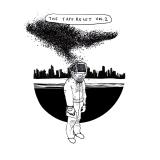
Woxow's The Tape Reset Vol. 2 is out now on Little Beat More!
Composed during the same sessions that gave life to The Tape Reset Vol. 1 in 2021, Woxow’s The Tape Reset Vol. 2 emerges only now, five years later. A second chapter that remained quietly on the shelf, completing the sonic path opened by the first volume and revealing another side of the same creative moment.
The EP is largely built around organic samples, arranged with a restrained and precise approach. Subtle instrumental appearances shape the atmosphere along the way. A vibraphone introduces the opening moments, setting a cinematic tone that gradually unfolds through layered textures and steady beats, while the record closes with a clarinet solo, a final gesture that echoes the instrumental heard in the intro of the first volume, subtly bringing the journey full circle.
Essential and evocative, The Tape Reset Vol. 2 expands the universe of the project while preserving its core language: beats, samples, and carefully placed instrumental voices moving together in a quiet, cinematic flow.
Uluru is back with another tasty 7”.
Making his debut on the label, Uk producer Dj Hiphoppapotamus bring his energy with two cuts from his sensational “Tropical Wiseguy” series, featuring Father Funk on the b side.
Pull up guaranteed!
Pressed on high quality black and green transparent vinyl (48 gr.)
Edition of 250, cut it loud and fat, highly recommended for big sound systems.
Woxow's The Tape Reset Vol. 2 is out now on Little Beat More!
Composed during the same sessions that gave life to The Tape Reset Vol. 1 in 2021, Woxow’s The Tape Reset Vol. 2 emerges only now, five years later. A second chapter that remained quietly on the shelf, completing the sonic path opened by the first volume and revealing another side of the same creative moment.
The EP is largely built around organic samples, arranged with a restrained and precise approach. Subtle instrumental appearances shape the atmosphere along the way. A vibraphone introduces the opening moments, setting a cinematic tone that gradually unfolds through layered textures and steady beats, while the record closes with a clarinet solo, a final gesture that echoes the instrumental heard in the intro of the first volume, subtly bringing the journey full circle.
Essential and evocative, The Tape Reset Vol. 2 expands the universe of the project while preserving its core language: beats, samples, and carefully placed instrumental voices moving together in a quiet, cinematic flow.
Few records sit between genres as confidently as Schöneberg. Not quite techno, not quite trance, not quite house, and precisely because of that, instantly recognisable as something of its own. Originally released in 1993 as part of Marmion's Berlin E.P. on Superstition Records, the track became one of the defining anthems of early European club culture, championed by Tony De Vit at London's legendary Turnmills Trade events and played in the best clubs across the UK, Benelux and beyond.
Schöneberg grew directly out of the duo's DJ sets at the Bunker in Berlin-Mitte. Between techno and trance, Mijk van Dijk and Marcos López were looking for a common ground. The track was recorded in a single night, the result of that search. Its defining details were deliberate: the hi-hat arriving unusually late, the short disorienting break that became a trademark. As López puts it: "For me the piece is still a condensed version of an entire DJ set."
In 2023, Superstition marked the 30th anniversary with a 21-track remix collection spanning three decades of reinterpretations. Now the track returns to vinyl, focused and stripped back to three versions: the original 1993 mix, the in itself legendary Marmion Remix, and the interpretation by DJ T., appearing on vinyl for the first time.
Pressed on orange coloured vinyl, this 2026 reissue sees all three versions carefully remastered from the original sources and newly recut for vinyl, bringing renewed depth and clarity while preserving the character that made Schöneberg a classic.
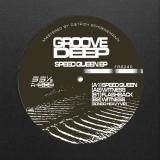
Groovedeep, the international supergroup comprised of Toronto’s Ciel and DC stars James Bangura and Jackson Ryland aka JR2k, brings Fixed Rhythms a 12” of four racing, groovy, energetic, funky and lush techno cuts. This is the second vinyl outing by the group, the first one being the recent “Funk Solo” on Turbo Recordings featuring remixes by Batu, Shed, and Mark Broom.
“Speed Queen” opens up the EP with hypnotizing techno that eschews any four-on-the-floor demands. Up-tempo with a touch of house and handdrums and a tantalizing vocal clip. “Witness” has a similar structure…handdrums, non four-on-the-floor kick drum composition, rhythmic vocal chop-work, but whereas A1 is the leap into the deep, “Witness” has us diving down, exploring the eerier depths.
Whip to the B-side with “Flashback”, a slightly more east coast club track while also incorporating a bit more of a pummeling kick. The aforementioned Groovedeep sonic signatures are there, and…can’t get enough of the handdrums?!?! Well then just let that last “Witness (Bongo Heavy VIP)” track slide in, a slightly meaner (and of course bongo-ier) boom of a take on the A2.
A collection of vinyl and limited digital releases, curated by Millsart, an alias of Jeff Mills, of his most eclectic and transcendent compositions that derive from his Every Dog Has Its Day project as well as new unreleased works. Vernacular creations that fall off from the "other side" of the Electronic Music tree, this project is designed for the experienced Techno music listeners, and its goal is to reflect upon the pure artistry of the craft of storytelling. A realization between music and life. Whereas "dancing" is the goal of Dance Music, the goal of this music is about "reflecting on the complexity and simplification of life".Soundtracks for people in their evolutionary process.
This release 'Drifter' is about 'Hype'.
Hype
An animal that prowls on the vulnerable - it excites those who might be looking the other way or with their eyes and minds wide shut.
What is life without hype?
As a transitional tool, hype can be most effective especially when impulse reactions are at play. Something of a psychological currency, there is a lot to gain by giving people what they want - the rush that comes with taking part in a process of making something bigger, more successful and more preferred. Even if there is nothing there.
What's wrong with getting exciting about something?
There are only a few rare masterclass cases that have lasted a lifetime.
As Andy Warhol proclaimed that "everyone will be World famous for 15 minutes" rings darkly true in an era when each one of us can be the talent scout, artist, critic, audience.......and then a revisionist, hoping to bring hype back again by reminding people how great the first round felt.
We are all free to use our attention and time anyway we please. This is the freedom we have, right?
In most cases, we wake up and at some point, the question of justification becomes a debate between those who found unconditional solace and those who re-discovered the subject of substance and "kicked the tires".
Should I care if others like or dislike something?
For some, the hype of something never ends. It hardens and becomes part of a foundation like a cement podium. Something to be stood on to speak over all dissenting voices.
Non Series marks its 15th anniversary with a special compilation gathering artists from different backgrounds whose music reflects the spirit and musical identity of the label. Most have never released original music on Non Series, but their individual approaches and distinctive sound fit naturally within this compilation.
An eclectic selection of tracks, ranging from hypnotic sequences and intricate percussion to heavy low-end pressure and deep atmospheres, coexists without following a predetermined formula, allowing each contribution to retain its own character.
Rather than presenting a chronological retrospective, the compilation offers a snapshot of the label's ongoing evolution, bringing together artists from different backgrounds and generations whose work finds a natural connection with the Non Series aesthetic.
Fifteen years of releases, collaborations and continuous exploration, brought together in a compilation that looks back without attempting to define the label, leaving its sound open to further evolution.
For the last decade and change, Lazarusman has steadily worked his way towards becoming a seminal voice in electronic music. In that time, he has left no genre untouched, bringing his brand of metaphysical, pun-heavy, imagery-driven, uplifting poetry to audiences across the globe.
These exploits have earned him a 2021 Grammy nomination and countless chart-topping records with some of the most remarkable producers in the industry.
His debut album, Skin, is an exploration of identity. Lazarusman questions his place in the world, reflecting on growing up in a now-free South Africa. The album touches on colourism, racism, faith, love and the existential crisis of existing in a divided world.
The album is also a celebration of the many genres that inspire his poetry from deep, tech and Afro house to breakbeats and jazz. But it is equally a celebration of the word, and the power it carries.
“A man is only as good as his word.”This quote epitomises Lazarusman’s honest approach to an album that reflects the last 15 years of his career. With productions from FKA Mash, Stimming, Dwson, Boogie Vice, Zitow Mowa, Axone and Johannes Brecht, Lazarusman presents a kaleidoscope of sounds.
DJ support by Keinemusik, Stimming, Acid Pauli, Xinobi, Stavroz, Xique Xique, Paco Osuna, and many more.
Following hot on the heels of the Frequency Damage EP, DJ Quest returns to Cyberfunk with Squeaks / Snake Style— a two-track release that dives deep into the unmistakable sound that made Quest’s productions stand out during the early 2000s.
Rather than simply recreating the past, both tracks tap directly into the DNA of the original Cyberfunk sound: rolling breakbeats, huge basslines, twisted analogue synths and the kind of distinctive production that became synonymous with DJ Quest at the height of the Bassline Breaks era.
Built around original analogue synth work throughout, Squeaks / Snake Style is a deliberate throwback to the raw, futuristic sound of the early 2000s, produced with the weight and clarity needed for today’s sound systems.
It’s classic Quest, strange noises, big bass, rolling drums and plenty of attitude.
A. Squeaks
Everything DJ Quest became known for rolled into one track. Squeaks is an unapologetic throwback to the classic Quest sound of the early 2000s, driven by heavyweight breaks, deep bass and original analogue synth work throughout.
Twisted electronic squeaks and evolving analogue sounds weave their way around the drums, giving the track that instantly recognisable combination of funk, darkness and futuristic weirdness that characterised so many of Quest’s early productions.
Raw, energetic and built firmly for the dancefloor, Squeaks takes the spirit of the original Bassline Breaks era and brings it straight back onto a modern sound system.
AA. Snake Style
On the flip, Snake Style takes the same analogue-driven approach but moves into deeper rolling territory.
A more hypnotic, heads-down breaks roller, the track develops around a heavyweight bass groove, rolling drums and constantly shifting analogue synth lines. There’s less emphasis on the immediate impact of the A-side and more on building a groove that locks into a DJ set and keeps moving.
Still unmistakably Quest, Snake Style combines the rawness and character of early-2000s breakbeat with modern low-end weight and production, proper rolling Cyberfunk business.
Special Vinyl Edition
Making this release particularly special for collectors, the 12” vinyl comes with an exclusive book showcasing the artwork from some of DJ Quest’s biggest and most memorable releases.
The book looks back through Quest’s extensive catalogue and the visual identity that accompanied the records, bringing together a selection of classic release artwork from across his career plus photo collages of memories made across his journey.
It turns Squeaks / Snake Style into more than just a new DJ Quest 12”, it’s also a celebration of the music, artwork and history surrounding one of the original pioneers of the Bassline Breaks sound.
For long-time followers it offers a piece of Quest history alongside two brand-new productions, while newer listeners get an introduction to the catalogue and imagery behind the sound
Komatssu se ha encargado de cocinar el primer lanzamiento de su sello Dramalax: cinco cortes con sonidos que recorren desde el electro afilado y potente hasta los breaks ácidos, pasando por sonidos que recuerdan al electroclash más pistero.
Paradoxia abre la referencia con un primer corte implacable, construido sobre kicks profundos y una cadencia mecánica que recuerda al pulso constante de una fábrica en funcionamiento. Un mundo robótico donde todo encaja como parte de una inmensa cadena de montaje.
Nanobot trae un ritmo electro bien marcado, una sensación de avance constante a través de un túnel donde atmósferas cálidas nos acompañan liberando la tensión, un tema perfecto para cambiar el color del set.
Recovering Faith, una herramienta perfecta para el club. Arpegios envolventes, sintetizadores de sabor noventero y una energía marcadamente eléctrica construyen una atmósfera perfecta para sumergirse en la pista de baile.
Alligator viene después, con un pulso firme marcado por una percusión potente, donde lásers y hits vocales se entrelazan con un bajo eléctrico y punzante, creando un ritmo macarra y pistero. Un track con mucho carácter.
Etainen le pone el lazo a este primer lanzamiento. Aquí, el sonido sintético y robótico del electro que hemos visto en ‘Nanobot’ y ‘Alligator’ se da la mano con un break de batería clásico, generando atmósferas tensas y ácidas. Un track divertido y pistero, perfecto para crear momentos de tensión en tus sets.
En conclusión, Komatssu presenta con esta referencia una declaración sonora de lo que Dramalax quiere traer a vuestras maletas: sonidos potentes y versátiles para los aficionados al electro y los breaks con sabor clásico, sin perder de vista el sonido de hoy.
Since starting Bytes in 2019 we’ve fielded a lot of messages along the lines of, “Is this ever going to be released on vinyl?” The bulk of these requests have concerned remixes of artists on Bytes done by Andy Bell (RIDE/Oasis) under his electronic alter-ego GLOK. And on realising that he has done four for us now (Franz Kirmann, Steve Queralt & Michael Smith, Herrmann Kristoffersen and Seagoth), it seemed silly not to compile them all together on a four-track 12” EP. The super limited edition 12” is on black wax and comes in the original Bytes house bag with a vinyl sticker containing all the release info signed by Andy. Edition of 250. No repress.
A1. SOLITARY (GLOK REMIX) - FRANZ KIRMANN
The first remix Andy ever did for Bytes was a radical reworking of ‘Solitary’, the towering ambient closer to Franz Kirmann’s ‘Madrapour’ album, which was released on Bytes in 2019. Andy’s remix is a heartbreaking, melancholic 3am banger. This is one for fans of Four Tet and Jon Hopkins, a slowburner with billowing plumes of distortion that builds towards an ecstatic rush of a finale.
A2. CHALDEAN ORACLE (GLOK REMIX) - STEVE QUERALT & MICHAEL SMITH
In 2023 Andy took ‘Chaldean Oracle’, a track from the collaboration between his RIDE bandmate Steve Queralt and the writer Michael Smith, down the K-Hole, eschewing Michael’s vocal almost entirely and turning in a Detroit dub-techno monster with echoes of Bandulu and Carl Craig in its shimmering melodies, eerie distortion and pounding drums.
‘Gone Gold’ was the title track of the excellent second album by ambient-techno group Herrmann Kristoffersen (2021). Andy taps deep into the dub at the heart of the original, with echoes of John Carpenter's soundtracks and his own extended electronic excursions under the GLOK moniker.
B2. ETERNITY (GLOK REMIX) - SEAGOTH
It was Andy who brought Seagoth to the attention of Bytes when he played ‘Eternity’ on his Soho Radio show in 2020. It all came full circle when Bytes released ‘Eternity’ as a single in 2021, with a stunning remix by Andy in his GLOK guise on the flip. Andy strips the track back to showcase the resonant vocal in all its glory before the blissed-out outro that makes full use of the track’s dancefloor-friendly drum break.
Waage has long been an established force in the dub techno community, and he is no stranger to working with Quantal. This outing on the don of dub techno labels features four tracks that strike the signature mix of meditation and dancefloor tool. 'WM13' is a wide-open underwater dub with a slow-motion rhythm, 'W14' has more hunched over drums and plenty of open space littered with delicate FX and textures, then 'W15' glides on silky drum loops that could play for days and never get annoying. The closer is the most serene and sublime of the lot, with lovely smeared chords drawn out across the frictionless drums.
Originally released in 2003, Gravel Muncha became one of the biggest and most recognisable records of the Bassline Breaks era and remains one of DJ Quest’s defining productions.
More than two decades later, this breakbeat classic returns on Cyberfunk as CFUNK 040, pairing a brand-new remix from Datafunk with a fully remastered 2026 version of the original.
Built around everything that made the early Quest sound so distinctive - huge rolling basslines, tough breakbeats, twisted synth work and relentless dancefloor pressure - Gravel Muncha is a record that has never really disappeared. The original continued to surface in DJ sets, mixes and collections around the world, earning genuine classic status within the breakbeat scene.
For 2026, Datafunk takes the track into new territory while respecting the character and attitude of the original, giving one of breaks’ most enduring records a fresh weapon for modern dancefloors.
A piece of breakbeat history, rebuilt and reloaded for a new generation.
„Christmas Cocktail Jazz“ verbindet Weihnachtsklassiker wie „I’ll Be Home For Christmas“, „Winter Wonderland“, „Let It Snow“ und „Baby, It’s Cold Outside“ mit entspannten Jazz-Arrangements. Mit dabei sind u. a. Stephen Kummer, The Lori Mechem Quartet, The Jeff Steinberg Jazz Ensemble und Beegie Adair. Die Vinyl-Ausgabe enthält zusätzlich Cocktail-Rezepte und eignet sich damit als stimmungsvolles Weihnachts-Geschenkprodukt.
JEN's debut album Any Questions? explores identity, self-image, and growing up in the age of social media through a powerful blend of pop hooks and alternative rock. Honest, energetic, and unapologetically personal, this debut captures the excitement and uncertainty of finding your place in the world. Pressed on violet-colored vinyl.
PATENT004 presents DOWNTOWN DUBS 2. The second chapter of our Downtown Dubs series brings together OFF/GRID, Gockel, Linus Quick and Volpe. Four tracks somewhere between deep techno, dub-infused rhythms and late-night pressure. Deep basslines, dubby grooves and enough space to let the sound breathe. Limited to 300 copies, handstamped & handnumbered, incl. stickers, pressed on lemon-icecream colored vinyl.
It's hard to explain an album when one listen is enough. All the more so with MaMaMa: there's no room to stay passive. Listening to his new album, EST, means immersing yourself in an atmosphere that's softly psychedelic, comforting and organic all at once. A dreamy, electronic pop that proves this Strasbourg-at-heart, Paris-by-adoption musician, arranger, singer, songwriter and producer never stops reinventing himself. After changing his name — formerly Petit Prince — and delivering two critically acclaimed albums ("MaMaMa-gnificent." / "Hooks you carry in your head for a long time" / "sumptuous arrangements"), Elliott Diener now offers an even more sincere record. Real songs in French, after two albums where production sometimes took up all the space: "when you make heavily produced music, once you strip away the layers of sound, there's no fruit left underneath. On EST, I don't need makeup for the songs to work," he admits.
That's what this new album is about: the song and the French language first, then the pleasure of sound. An album less concerned with talking about its own making, more inhabited, more embodied, within a contemporary folklore. With this new album, don't expect to be bored: EST is his best record yet.
No pretense
Entirely conceived in his studio in Pantin — a room of his own, at last — imagined as a space free of any daydream, open to every sonic landscape, MaMaMa offers a record that's both hazy and downy soft. Often composed very early in the morning, it has become nostalgic without being dark, melancholic without being sad, with a few lineages showing through: Flavien Berger, Moodoïd, Feu! Chatterton for the taste for words and unease, Mount Kimbie for the approach to sound and rhythm. Unsurprising, given that EST was finalized with the British duo's producer. Live, MaMaMa is preparing a show in the style of Nicolas Jaar or UTO. Hypnotic and immersive.
The most liberating thing is that EST is an album without pretense. With it, we move through perseverance (in Aussi loin qu'il tiendra debout), the small arrangements we make to avoid facing reality (Tout sauf la vérité), and the fragility of bonds we thought were solid (Si bien ensemble). We also touch on lasting conflicts with the people we love (Anywhere You Are, There You Are), misunderstanding (Elle me parle une langue), and the erosion of friendships (S'envoler). EST draws an intimate and redemptive map of human relationships, in a body of work that's both lucid and sensitive — like when he also addresses social masks such as filial love (in Beau garçon, dedicated to his son) or relationships that have become impossible.
"It's really the album that sounds most like me, in terms of sonic landscape," Elliott points out. A record that rises above the noise of an imperfect, shifting world — like us — joyful in its words, liberating in its production. A true gem.