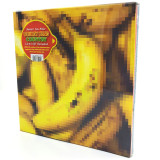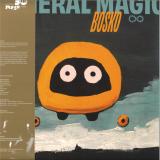
die erste Band von Klaus Sperling (Primal Fear, Nitrogods, Sinner) und Michael Moretto (Tyran´Pace) -nur regional veröffentlichte Aufnahmen von 1984 und 1985, erstmals auf CD & LP -qualitativ hochwertiger Heavy Metal mit 100% Achtzigerfeeling -CD/LP mit Liner Notes, Abbildungen und extrem vielen Fotos -Coverartwork von Michaela Widmayer (Manilla Road, Mark Shelton, Trance) Manchmal fällt man vom Glauben ab. Labels wie Noise, Steamhammer, Mausoleum, Earthshaker oder die GAMA Labelgruppe haben in den Achtzigern neben vielen wichtigen und guten Alben auch Durchschnitt oder Schlimmeres veröffentlicht.
Währenddessen blieb eine talentierte und mitreißende Band namens SQUADRON aus dem Raum Stuttgart (bis heute) unentdeckt. Selbst auf Encyclopedia Metallum findet man keinen Eintrag mit den zwei Demos, die man 1984 und 1985 aufgenommen hat. Noch nicht. 1983 wurde die Band gegründet, beeinflusst von Judas Priest, Iron Maiden, Warrior, Manowar, Ozzy Osbourne und Dio. Eine der ersten Shows fand im Vorprogramm von Tyrant statt. Schnell bekam man den Ruf einer gigantischen Liveband, zumal man nicht nur auf ausgefeilte Songs achtete, sondern auch auf Outfit und Show. Nur wenige Monate später kamen bereits 400 Fans in die Neckerhalle Esslingen, obwohl am gleichen Tag Accept quasi um die Ecke spielten.
Außerdem brach man den Zuschauerrekord in „Die Röhre“ Stuttgart, wo man nach dem zweiten Demo eine große Show auffuhr. Natürlich meldeten sich nun auch größere Labels, doch zu einem Vertrag kam es nicht. Nach einem Festival mit Rage, Veto und Stranger, sowie einigen Shows mit Czakan war 1987 Schluss. Michael Moretto stieg in Folge bei Kymera ein, um den zu Pink Cream 69 abgewanderten Andi Deris zu ersetzen. Klaus Sperling ist bis heute aktiv im Geschäft und seit 2011 bei den Nitrogods. Bekannt wurde er durch sein Drumming bei Primal Fear, Sinner, MP und Freedom Call. Das Material wurde in liebevoller Kleinarbeit restauriert und gemastert und ist nun erstmals auf CD und LP zu hören. Booklet und LP-Inlay enthalten Liner Notes und tonnenweise Fotos und Abbildungen. Diese Band hätte es damals weit bringen können…
Suche:quasi
The last couple of years have seen a renaissance for West Coast singer-songwriters. LA-based youngsters such as Drugdealer and Sylvie have attracted considerable attention releasing warm and mellow records tonally reminiscent of the early 70s. Most fans of this new/old sound are unaware of Bart Davenport's early explorations in the same sonic territory. His now 20-year-old "Game Preserve"album should gain an appreciative new audience with its first ever vinyl release.
In the year 2000, Bay Area troubadour Bart Davenport and several other musicians were recruited by a major tech corporation in Seattle to work on an algorithm-based music matching/search engine. It was what looked like the beginning of a promising career. After a year, however, the project was shelved. Bart and his colleagues were laid off with a healthy severance package... on the 12th of September, 2001. Not only had the musician's life changed, so had the world. Rather than blow the money on a holiday or new car, Bart knew he had to make a record. A proper album that meant something.
Back in Oakland, he entered Wally Sound Studios with former Kinetics bandmate Jon Erickson at the controls, and a swathe of talented local musicians. "With Game Preserve," Bart explains, "Jon and I really wanted to knock it out of the park. I wanted to utilize people from my old bands like Loved Ones drummer John Kent. I also invited my newer indie-pop friends from Call & Response, and a young Nedelle Torrisi. Harmony singing by The Moore Brothers was an essential ingredient on Game Preserve as well."
Both Erickson and Davenport fondly recall growing up in households where the music of The Carpenters, Joni Mitchell and The Eagles soundtracked their young lives. By the early 00s they were ready to reconnect with what is often referred to as the "Laurel Canyon" sound. "I'd buy used tapes at garage sales and play them in the car. "Ladies Of The Canyon" by Joni and Jackson Browne's first album were both in heavy rotation. Jon Erickson was getting deeper into the Steely-Mac-Doobie yacht-rock sound in earnest. A certain amount of childhood nostalgia led a lot of us back to that part of the 70s. I'd flirted with classic soft-rock on my first album, but that record was pretty scattered esthetically. I wanted my next one to be more focused. Jon and I made some ground rules: no electric guitars (except on 'Bar-Code Trees'). No synths. Most importantly, all the songs have an air-tight, super dead, close mic'd drum sound. Putting these sorts of limitations on the sessions will give your record a specific quality. In the case of "Game Preserve"it's mostly about tight drums, acoustic instruments and analog production. We used a 24-track, two-inch tape machine for tracking, then ran the mixes through an analog board straight to a 1/4 inch master tape."
While the album's sonic palette may be firmly planted in 1970, Davenport's songwriting covers a sizable landscape of moods and reflections. From the quasi-flamenco intro of 'Sweetest Game' to the somber Wurlitzer of 'Nowhere Left To Go', to the 12-string shimmer of 'Intertwine', "Game Preserve" tells a story of young love, lost innocence and redemption, crossing borders and oceans along the way.
Released in 2003 on family-run Oakland label Antenna Farm, the ultra-analog sounding "Game Preserve" was only made available on digital formats, including CD. Copies were later pressed by labels in Germany and Spain; the latter being one country the album actually did well in, establishing Bart Davenport with a small but loyal fanbase he still enjoys today. Two European tours as support for Kings of Convenience also helped gain a foothold on the continent. Back in the US, however, Davenport and his sophomore album remained quite obscure.
Limited promotion meant it did little, but for the music lovers that heard it, the album undoubtedly remains a classic of the era, deserving far more. Twenty years on, it now finally receives its vinyl debut. "I personally think it holds up well," says Bart of the album two decades later. "The idea was to make something that could be an homage to late 60s/early 70s West Coast pop but hopefully timeless as well. Years on, I hear it as just that. It was a colorful and brief period of my life that felt at times like it could last forever. I discovered the joy of working in a proper studio with a perfect cast of characters. I'm still very close with all these people and still play music with many of them."
- Ratten
- Hofnarr
- Mama
- Irrenhaus
- Frühling
- Keine Männer
- Betrunken
- Kintopp
- Rosi
- Schwein
- Der Löwe
- Flugzeuge
- So
- Kapitel Elf
- Zu Wenig
- Singapur
- Eisenbahner
- Blind
- Reiches Land
- Farben
- Amsterdam
- Gold Für Einen Ring
- Ich Bin Krank
- Maggie
- Wiedersehn
Ohne es zu ahnen, gelang Keimzeit 1990 gleich mit dem Titelsong ihres ersten Albums "Irrenhaus" ein Wendehit. Die Textzeile "...Irre ins Irrenhaus, die Schlauen ins Parlament. Selber schuld daran, wer die Zeichen der Zeit nicht erkennt..." sprach vielen jungen Menschen damals aus dem Herzen. Norbert Leisegang erinnert sich noch gut an die Aufnahmen: "Wir hatten den Luxus aus 30 Songs 12 der besten Titel auswählen zu können. Da hat uns auch keiner reingeredet, das haben wir allein entscheiden können. Dann haben wir diese Songs quasi live eingespielt. Wir wussten erst gar nicht, dass wir zu dem Zeitpunkt schon im Radio gespielt wurden. Doch dadurch, dass das eine Rundfunk-Produktion war, haben sich die Redakteure von 'DT64"gleich nach Fertigstellung schon Songs wie 'Flugzeuge ohne Räder" und 'Mama" rausgepickt." Die Hörer waren begeistert und die Resonanz durchweg positiv. Der Startschuss für das erste Keimzeit Album war gefallen. Die Songs auf "Irrenhaus" haben auch heute nichts von ihrer Aktualität verloren. Der Hofnarr zeigt uns mehr denn je, die lange Nase. Solange neue und alte Strömungen wieder zum Angriff auf humanistische Werte blasen und die eigene Kultur in Haft nehmen wollen, sind Songs wie "Irrenhaus", "Hofnarr", "Flugzeuge ohne Räder" und "Mama" mehr als klingende Zeitbilder, Mahner dafür, dass man die Freiheit nicht geschenkt bekommt. Keimzeit gab zu Beginn der Neunziger Jahre mehr als 100 Konzerte jährlich. So verwundert es nicht, dass das zweite Album "Kapitel Elf" nicht lange auf sich warten ließ. Die damaligen Manager der Westberliner Plattenfirma Hansa baten die Band nach Veröffentlichung des 1990-er Albums recht zügig wieder ins Studio. "Kapitel Elf" auf Grundlage von Titeln, die die Band damals auch schon auf der Tour spielte. So darf man "Irrenhaus" und "Kapitel Elf" durchaus als sehr verwandt betrachten. Musikalisch ist "Kapitel Elf" breiter als das Vorgänger Album aufgestellt. So werden die beiden Alben nun erstmals als ein auf 1.000 Exemplare limitiertes Doppel-Vinyl veröffentlicht. Ob auf einem Segelschiff nach "Singapur", in einem Zug mit dem "Eisenbahner" oder für einen Städte-Trip nach "Amsterdam", mehr Keimzeit aus den frühen 90-er Jahren geht nicht.
Pile - the trio of Rick Maguire, Kris Kuss, and Alex Molini - found inspiration in the studio while working on their latest LP All Fiction, working tirelessly to record, experiment, manipulate, mutate, and layer the songs with lush orchestration, haunting synths, and abstract textures. Challenging the confines of the standard “rock band,” they took inspiration from artists like Portishead and Aphex Twin, reigniting their passion as they explored their sound in a new realm. The sessions resulted in a flutter of productivity and before the band knew it they had completed well over a dozen songs, stretching far beyond the confines of a single LP’s runtime. After much deliberation, songs were pulled from the record, never a “trimming of the fat” but more of a consideration of which songs were able to stand best on their own. These songs form the Hot Air Balloon EP. Released digitally on January 5th, 2024, and now in LP format for the first time, the EP captures the band experimenting in all directions, from the direct to the further abstract. Following the release of “Scaling Walls,” a song Paste Magazine called “a contemplative slow-burn,” the band introduce the EP with the quasi title track, “The Birds Attacked My Hot Air Balloon,” a song that finds Pile in a more surrealist state, the meditative composition bristling with shuffling rhythms and brilliantly disorienting synths.
Wajeed's brilliant Dirt Tech Reck brings some Latin flair to this new 12" from Michele Manzo. 'NiNos Del Mar' is bright and sunny and hella lively from the off with opener 'Liquida' layering up warm, soulful chords and percussive drums with an exotic vocal loop. It's a great mix of organic and synthetic sounds and it radiates warmth and energy for any dance floor. 'Quasi' is a house shuffler with more minimal drums but still a sun-kissed sound thanks to the steamy vocals and tropical percussion which flutters over the relentless groove. Summer may be nearly over, but this one keeps the vibes well and truly alive.
When the Beat Konducta and his trusty alter ego link up for the sequel, another southern California blunt cruise ensues. The Adventures Of Lord Quas consists of a slow ride through the deepest corners of the crate, leaving no genre unearthed until it claims space in the haze of one’s imagination. It’s business as unusual: Madlib funnels his most twisted impulses and comedic sensibilities into a sonic slacker flck complete with good dope, bottom-shelf liquor, and a penchant for gazing mouth agape into the great unknown. But he knows Lord Quas like a good needle on wax, and they casually strut through the loops, much ado about frontin’. (Not like fake shit ain’t a big deal, but it ain’t a big enough deal.) This record captures Madlib and his id at their most frantic, indulgent, and often confusing; they trade neatness for chaos, continuity for collage in a barrage of the finest sounds this side of the B-side. It’s hip-hop that takes every visible risk, often striking gold and proving how in control the Loop Digga truly is. Don’t hit it too hard, your other selves might pay you a visit.
The dB's 1981 second album & Power-Pop classic is available once again & newly remastered. Pop Dose noted “Repercussion is essential listening. It is necessary. It is pure and magnificent. It is a triumph...listen to it and absorb it.” Uncut stated “..this is The dB's' finest, the tension between the two writers' styles reaching its quasi psychedelic peak.” 9/10. The album was produced by Scott Litt (later a long-standing R.E.M. producer) giving it a fuller, more modern overall sound. The dB’s signed with the British label Albion and released 1981’s Stands for deciBels and 1982’s Repercussion, which became instant favorites among the fans, critics, and college-radio programmers fortunate enough to hear them. But the fact that the albums were available only as high-priced, sparsely distributed imports kept the band from reaching a wide audience in those pre-Internet days. The band will be touring select US cities in the Fall of 2024 and Winter of 2025 to support the first-ever US vinyl releases of the band's debut and Repercussion.
Soifass veröffentlichen zum 25jährigen Jubiläum ihr neues Album und nie klangen die Berliner besser aufgestellt zwischen wohldosierter Härte und prägnanten Refrains. Ein absolutes Brett! 1999 in Ost Berlin als Oi-Punk Band gegründet, fand man schnell seinen eigenen unverkennbaren Stil irgendwo zwischen Punk, HC, Oi! und hin und wieder sogar mit Ska Einflüssen (auf Speed). Schnelle und treibende Beats treffen auf ballernde Gitarren, lebendige Melodien und Straßenköter Gesang ohne textlich aber genretypische Klischees zu bedienen. Man teilt aus, man steckt ein, verzichtet auf den gehobenen Zeigefinger genauso wie auf kommerzielle Ambitionen. Während viele Bands ihren Sound an den "Deutschrock"-Trend der letzten Jahre anpassten ist die Band um Shouter Viktor in ihrem Revier geblieben. Und es gibt viel in den 12 neuen Songs zu erzählen und in Soifass-typischer Manier die Dinge beim Namen zu nennen: "Hipster-Stomp" ist die quasi Fortsetzung ihres Anti-Gentifizierungshits "Großstatdtwahnsinn", die Berlin und andere Großstädte für ihre neue Spielwiese infiltrieren. In "Berliner Walzer" gibt's ein schonungsloses Tänzchen über die immer größere werdende Kluft in der Ellbogengesellschaft. Soifass packten die unter den Fingenagel brennenden Themen lyrisch schon immer anders und subtiler an. Statt Parolen und plakativ aus dem Setzkasten, entfalten Songs wie "Verschwörer" eine ganz andere Wirkung, wenn im intimsten Umkreis der eigene Partner die ganze Schwurbelscheisse glaubt, oder in "Exzessiv" mit beißendem Zynismus einem den Spiegel von der angeblich heilen Welt vorhält. Und wenn man schon 25 Jahre lang dieses Berliner Aushängeschild zu einer der besten deutschsprachigen Streetpunkbands gemacht hat, darf man mit "Anglizismen" auch selber zurückblicken. Soifass tun auch dies ohne die übliche Selbstbeweihräucherung. Diese Band ist eine Klasse für sich...Authentisch, Dreckig-Soifass!
Nach langer Wartezeit ist "Scott Matthew" - das selbstbenannte Debut des Singer-Songwriters aus 2007 nun endlich wieder erhältlich; und zwar nicht einfach nur wieder da, sondern als limitierte Special Edition in Blue colored Vinyl. Mit diesem Album wurde Scott Matthew schlagartig zu dem Namen, den man kennen muss - die FAZ sprach sofort von einer Ausnahmeerscheinung, der Rolling Stone zog den Vergleich mit dem frühen David Bowie, die Süddeutsche Zeitung fand diese Musik sanft, entrückt und hoch fliegend und ging soweit zu schreiben, hier ziele jemand auf das Universelle. Dass diese Einschätzungen richtig waren, kann man heute auch daran erkennen, wie gut diese Musik gealtert ist, nämlich gar nicht. Immer noch enthalten diese 11 Songs die Quintessenz dessen, was guter Pop-Musik ihren Unterhaltungs- und kulturellen Wert gibt: dass sie eingängig ist und gleichzeitig Tiefgang hat, dass sie Authentizität mit musikalischer Qualität verbindet, dass sie kleine und große Gefühle anspricht und aber sich und uns die Didaktik erspart. "Scott Matthew" ist zudem Startpunkt und Zeugnis dessen, was diesen Musiker zum Unikat macht - wir finden die sensiblen Arrangements, die traurig schönen Balladen-Texte, das tief-persönliche, die Ukulele, das akustische zarte und die Streicher, die Eleganz und den Schwulst und das Bescheidene, das Langsame. Eigentlich kann man Scott Matthew nicht verstehen, wenn man dieses Album nicht kennt. Und es ist zudem der heimliche Star und quasi Soundtrack des Films "Shortbus", der inzwischen zu einem Lieblings-Kultfilm der Independent-LGBTQ+ und Sex Positivity-Szene avanciert ist und zudem die Hommage an die Arty-Community des New York der Nuller-Jahre ist (und damit heute bereits nostalgiegeschwängertes Retro-Kino). Damit ist dieses Album Musik in seiner reinsten Form. Aber zugleich auch das Bindeglied zwischen Musik und Kunst und Popkultur und New York-Sehnsucht und Nostalgie und Cinema und LGBTQ+ und Mainstream und Arthouse. Und welches Album kann das schon von sich sagen. Und dabei so bescheiden bleiben.
From the perspective of people who categorize music by genres and types, Evan Shornstein, better-known under his production moniker Photay, has created lots of different kinds of sounds over the past decade. There’s the Hudson Valley-raised, Los Angeles-based multi-instrumentalist composer’s quasi-IDM and electronic almost-pop tracks with the occasional vocal; the improvised organic and and experimental music sessions he participates in alongside new age giants, Laraaji and Carlos Niño; the diaspora electronic folk-jazz he makes with veteran musicians from all over the globe; and the disco and house adjacent records he tag-team DJs with Brooklyn producer Cesar Toribio and engineer Phil Moffa (who also masters all of Photay’s records — and those of dance-music dons around the world). But if you’ve listened closely to Shornstein’s prodigious output, you know that separating and classifying the work is actually contrary to the energy of Photay music. That what on-the-surface may lazily appear as differences, is actually brought together by a shared sonic warmth, a hardware pastoralism at play. Whatever category he engages, Photay makes outdoor music under the spell of the elements, for the purpose of different human movements — some physical, some spiritual, some emotional, some philosophica.
A cover of MF DOOM's "Rapp Snitch Knishes" from his 5th album "Mm..Food" released in 2004! Includes a cover produced by Mac DeMarco.
This release, by pianist Christian Rowell based in Florida, was released in 2021. With vocals that show respect for Quasimoto and a jazzy touch added to the boom-bap, this is a amzing cover. The B-side includes a version produced by Mac DeMarco, a Canadian treasure and a key figure in the indie scene of the 2010s, and an instrumental version that has been streamed close to a million times on Spotify. This 7-inch release is now available!
What an unbelievable record. From the wild cover to the iconic breakbeats, Roots from Ian Carr’s Nucleus is one of the dopest albums we know. This is seriously thick, funky-prog jazz-rock heaven. Originally released on Vertigo in 1973, other than a couple of versions at the time for other territories, Roots was never re-pressed since so it’s gone on to become another one of those impossible to find records.
Maybe it was a little too out there for the time, but it’s aged very, very well indeed and this Be With re-issue, re-mastered from the original analogue tapes, shows off just why this deserves to be back in press.
Genius trumpeter and visionary composer Ian Carr was one of the most respected British musicians of his era. He was a true pioneer and saw the potential in fusing the worlds of jazz with rock, just as Miles Davis and The Tony Williams Lifetime did in the US. In late 1969, following the demise of the Rendell-Carr quintet, and tiring of British jazz, Carr assembled the legendary Nucleus. Regarding music as a continuous process, Nucleus refused to “recognise rigid boundaries” and worked on delivering what they saw as a “total musical experience”. We can get behind that.
Under bandleader Carr, Nucleus existed as a fluid line-up of inventive, skilled musicians. This constant evolution and revolution was all part of the continuous musical exploration and discovery that took jazz to new levels.
Working together with producer Fritz Fryer and engineer Roger Wake, the seven compositions by Carr, Brian Smith and Dave MacRae that make up Roots flirt with perfection, and Nucleus at that time made up of the cream of 1970s UK jazz with Brian Smith on tenor saxophones and flutes, Dave MacRae on piano and electric piano, Jocelyn Pitchen on guitar, Roger Sutton on bass, both Clive Thacker and Aureo De Souza on drums and percussion, Joy Yates delivering the vocals and of course Carr on trumpet.
The spellbinding title track immediately renders the album indispensable. Riding the illest of loping breakbeats, “Roots” is low-slung, doped-out heist-funk. An absolute monster. If it sounds familiar then that’s likely down to it being sampled by Madlib for Lootpack and Quasimoto’s “Loop Digga”, as well as by a whole host of beat manipulators. “Roots” conjures prime instrumental hip-hop / beat music, only 20 years ahead of its time. Truly, these are the roots. Through sinuous bass, twinkling keys and a hypnotic guitar riff, a smoky brass motif weaves its way into a gloriously deep haze around Carr’s solos. “Roots” is over 9 minutes long, but there’s not a single wasted second, not surprising given that this is a condensed version of an originally 40 minute long commissioned composition.
The soothing vocal fusion delight of “Images” follows. Meticulously constructed, with gorgeous flute work from Brian Smith, with Joy Yates’ silky vocals and Dave MacRae’s Rhodes never sounding better. The cool, driving “Caliban” closes out the first side. Originally the third movement in a four part commission to celebrate Shakespeare’s birthday it stands up on its own, all robust rhythms and blended brass. Keyboard colour and Carr’s trumpet are splashed across the funk drums and basslines (and there’s even some bamboo flute). This really is fusion: the elements of jazz and rock coming together in beautifully synthesis.
Side two opens in riotous fashion with the short, thrilling samba of “Wapatiti”. Next up, “Capricorn” forms a smoothed-out, jazzy constellation. Mellow and dreamy, its twinkling percussion and languid horns slowly build the vibe before head-nod drums and a killer bassline enter the fray. With a distinct heaviness that Black Sabbath would’ve envied, “Odokamona” is a venomous slice of riff-soaked jazz metal (yes, you read that right), elevated by Carr’s wah-wah horns.
The album closes with MacRae’s exceptionally cosmic “Southern Roots and Celebration”. Very much in conversation with Weather Report, it opens as a languorous, spiritual jazz of chiming keys and serene guitar that turns slowly, gorgeously into a mid-paced, brass-laced banger. It’s another sure-fire party starter and the sound of the band having a righteous blast, building an ecstatic chaos that ends with Yates screaming.
And of course we need to talk about Keith Davis’ cover for Roots. Perhaps the coolest record cover of all time? Certainly one of the most bonkers. Just your run-of-the-mill high-gloss, acid-tinged airbrush dystopian/utopian living-room party scene. Consider this your chemical flashback trigger warning.
Front-and-centre the hip-to-death green robot holds court with their giant ball of yellow barbwire wool, hooked up to… something(?) being teased out from under the stairs (probably best not to ask). A thoroughly zoned-out, long-legged Pop Art party-goer lounges half-plugged in to the painting behind her as a pair of legs flail into shot from the the top of the stairs opposite. We won’t even begin to guess what the chap’s up to in the middle, but the view out of the windows is rather nice, and someone’s already got the hoover out ready to tidy up. All of the Nucleus sleeves are something special, but this particular one? Crikey.
This Be With edition of Roots has been re-mastered from the original Vertigo master tapes, Simon Francis’ mastering working together with Pete Norman’s cut to weave their usual magic with these wonderful recordings. The crazy cover has been restored at Be With HQ as the finishing touch to this long overdue re-issue.
"Ist es die Euphorie" ist ein Live-Album, das die bereits jetzt legendären, ekstatischen Konzerte dieser 4Mann-Band einfängt. Aufgenommen in einem ehemaligen Schlagzeug- und Chorübungsraum des ehemaligen Münchner Gasteig, sitzt man quasi mit Raketenumschau im Proberaum. Ihre scheinbar "altmodische" Aufnahmetechnik beschreibt eigentlich schon den Werdegang der Band, die sich ganz old school, ohne große Spotify Playlists und TikTok Algorithmen, sondern Live, mit bald 100 Konzerten in 2 y Jahren ihr Publikum erspielt haben. Raketenumschau sind Freunde, ein Schwarm sozusagen, jeder ist Teil der Bandgeschichte und des Sounds. O-Ton Band: Geprägt haben uns viele Bands der Hamburger Schule aber auch Münchner Bands wie Malva, Prohibition oder Plainhead. Das Debütalbum der Raketenumschau "Ist es die Euphorie" wurde von Willy Löster (MOLA, Florian Paul, Bruckner) produziert und von Olaf O.P.A.L. (International Music, Juli, The Notwist) gemischt.
- A1: Yesterdays New Quintet - Sunrays
- A2: Quasimoto - Real Eyes
- A3: Roots Manuva - Witness (1 Hope) (Walworth Road Rockers Dub)
- A4: Slum Village - Jealousy
- A5: Joy Zipper - Christine Bonilla
- B1: The Cinematic Orchestra - Channel 1 Suite
- B2: Jim O’rourke - Ghost Ship In A Storm
- B3: Souls Of Mischief - ‘93 ‘Til Infinity
- B4: Da Lata - Pra Manha
- C1: Serge Gainsbourg And Brigitte Bardot - Bonnie & Clyde (Herbert’s Fred & Ginger Mix)
- C2: Shawn Lee - Happiness (Ashley Beedle’s West Coast Mix)
- C3: Sylvia Striplin - You Can't Turn Me Away
- D1: Don Blackman - Holding You, Loving You
- D2: Leroy Hutson - Cool Out
- D3: Zero 7 - Truth & Rights
- D4: The Stylistics - People Make The World Go Round
Als dieser exzellente Downbeat-Instrumental-Hip-Hop-Sampler 2002 erschien, waren Zero 7 für ihr brillantes Debütalbum "Simple Things" für den Mercury Prize und den Brit Award als bester Newcomer 2002 nominiert, ihr späteres, drittes Album "The Garden" erhielt 2007 gar eine Grammy-Nominierung. Zero 7 haben unglaubliche Musik gemacht, ihre Remixe stets mit Bedacht ausgewählt (so z.B. Terry Calliers "Love Theme From Spartacus") und sich zu einer hervorragenden Tourband entwickelt.
Die ursprüngliche ALN Vinylausgabe ist so begehrt, dass sie heute für teures Geld verkauft wird. Freuen wir uns auf den Soul-Klassiker "People Make The World Go Round" der Stylistics und die rare, von Roy Ayers produzierte Groove-Bombe "You Can’t Turn Me Away" von Sylvia Striplin. Don Blackmans "Holding You, Loving You" ist ebenfalls enthalten, das von Slum Village gesampelt wurde, die hier mit "Jealousy" vertreten sind, ebenso wie Herberts Boompty-Boom-Rub von Gainsbourgs & Bardots "Bonnie & Clyde". All diese Güte wird wieder für einen anständigen Preis erhältlich. Form ist vorübergehend, Klasse ist dauerhaft. Und Zero 7 sind eine Klasse für sich.
- Gepresst auf schwarzem 180g Doppel-Vinyl samt 30 cm großem Art-Print und Download-Codes für die ausgespielten Tracks und den Original-DJ-Mix in den Formaten MP3/FLAC/WAV.
Achtung UFO Fans, aufgepasst! Wer in den zurückliegenden zwei Jahren befürchtet hatte, dass UFO-Frontmann Phil Mogg, einer der einflussreichsten
Rocksänger der Welt, nach dem Ende seiner Band und zwischenzeitlich gesundheitlichen Problemen komplett von der Bildfläche verschwindet, wird
nun erfreulicherweise eines Besseren belehrt. Nach einer kurzen Pause des kreativen Durchschnaufens präsentiert der Engländer mit der markanten
Stimme jetzt mit ‚Moggs Motel‘ seine neueste Veröffentlichung, die er zusammen mit Tony Newton (Bass & Keyboards) von Voodoo Six – die Band
war zuvor mit UFO auf Tournee – und seinem langjährigen Partner Neil Carter (Gitarre, Keyboards, Gesang) komponiert hat. Das Album wurde im
Studio von Iron Maiden-Bassist Steve Harris in Essex/UK aufgenommen. Während der Aufnahmen wurde das Line-Up durch Joe Lazarus (Schlagzeug)
und Tommy Gentry (Gitarre) vervollständigt. Die zwölf zeitlosen Songs der Scheibe zeigen unüberhörbar, dass Mogg anno 2024 nichts von seinem
künstlerischen Charisma, der einzigartigen Ausdruckskraft seiner Stimmbänder und seinem Spaß an ungezügelter Kreativität eingebüßt hat.
Veröffentlicht wird ‚Moggs Motel‘ am 6. September 2024 über Steamhammer/SPV als CD, Vinyl-LP und Download. Bereits vorab werden – quasi als
Appetizer – zwei Singles inklusive Videos ausgekoppelt: Am 28. Juni 2024 erscheint der Album-Opener ‚Apple Pie‘, gefolgt von ‚Sunny Side Of Heaven‘
am 16. August 2024.
Experimental black metal from Brooklyn featuring members of Pyrrhon, Krallice, Sigur Rós, The Glen Branca Ensemble, Steve Reich. Recorded by Colin Marston (Dysrhythmia, Krallice, Liturgy). Follow-up to the bands well received 2022 debut Aveilut. The Promise Of Rain, the sophomore album of the experimental black metal band Scarcity, is an embodiment of the hard-to-believe truth that burdens are easier to bear when distributed, a realization Brendon Randall-Myers (conductor of the Glenn Branca Ensemble) grappled with extensively while writing this record. This is a sweat-drenched album about dispersion, about spreading, about the collective relieving of burdens through shared experience: one doesn’t have to go through everything alone. When Scarcity’s debut album Aveilut was written in early 2020, Randall-Myers and vocalist Doug Moore (Pyrrhon, Weeping Sores, Glorious Depravity, and Seputus) never expected to be able to play their songs live. The cathartic experience of playing something that came from a place of isolation out to people in a live setting is the root of the intensity in The Promise Of Rain. The Promise Of Rain begins where the craziest climaxes of Aveilut end, and is the first Scarcity record to include Tristan Kasten-Krause (Sigur Ros, Steve Reich, LEYA) on bass, Dylan Dilella (Pyrrhon) on guitar and Lev Weinstein (Krallice) on drums. Rather than building density with the quasi-orchestral layering on Aveilut, Scarcity challenged themselves to document what five people in a room could do, recording most of The Promise Of Rain in one or two takes, capturing the physical effort and urgency of a live performance. Scarcity forges a completely fresh sound in The Promise Of Rain with their alarming guitar work and melodic arpeggiating, shedding dead skin and breaking ground with sheer vulnerability. The lyrics for The Promise Of Rain were inspired by a trip Moore took to the high deserts of southern Utah in 2023. “To thrive in the desert is an act of abnegation—” he observes, “you do right by the land and receive its gifts, or it does away with you.” The necessity of adaptation is as evident in the desert as it is to the landscape of the human experience. The transformation of ideas and beliefs, the grief of losing relationships that had to end, and the fear involved in forming new ones under the grip of mental illness is conjured over and over again on this panoramic album.
"A 'Pear' of albums on one vinyl LP... a combo of heavy psychedelia, drum and bass grooves, bouncy boogie, catchy tunes and sprinkles of tastee horns, keys and strings thrown in... kinda like a thumb over the genre-hose nozzle, something for everyone and nothing for someone... guaranteed! 'Grow A Pear' has been in the works for 5 years. What started as my contributions for the 'new' Butthole Surfers' album that was not to be... turned into a solo album I recorded with contributions from some of my favorite flavor players to create an album that most represents where I came from and bridges to where I'm at right now. My wishes for the future, is that everyone in the world will finally 'Grow A Pear'" - JD Pinkus 'Grow A Pear' features a veritable cornucopia of American Indie music radicals: Åsa Söderqvist and Lina Ericcson of Shitkid, Paul Leary of Butthole Surfers, Sam Coomes of Quasi and Jon Spencer's Hit Makers, Mike Savino of Tall Tall Trees, Walter Daniels of Bigfoot Chester, Mike Alfred of Shed Alford, Jed Willis of Khandroma, Michael Brueggen of Honky and Syrup, and Billy Sheeran.
very dope.
With this EP an attempt is made at documenting the vibrant action happening during the late 1970s and early 1980s in the Pioneer Valley area of Western Massachusetts, US. The story is richer than the snapshot we present here, and a more detailed account is to be found in the accompanying book that can be purchased separately.
The Five Colleges in Hampshire County congregated a vast student population that inevitably interacted with the towns in the area. Bars, music and record stores, live music and a lot of experimentation and free thinking. Hampshire College, especially, promoted new approaches to teaching, subjects that might be considered radical by some even today, although a more favourable context would now surely exist for openly debating such topics as American Indians, Kayak Design, Black Oral Tradition, Food Management, etc. And the music? The immediate "punk effect" motivated the creation of numerous bands, many short lived, others evolving into New Wave / Power Pop territory, eventually crossing into Post-Punk experimentation. What is captured in "Noho EP" is a more electronic disposition, favoured by the existence of EMS gear and other equipment at Hampshire College and University of Massachusetts. We chose to focus on a group of musicians who, for a time, played together in different combinations under the loose umbrella of the Tekno Tunes label and the structure around it.
These musicians come from very different backgrounds and the nucleus portrayed here consisted of Christopher Vine, Elliott Sharp, James Whittemore and Nicholas Brown.
Of the several line-up changes The Scientific Americans went through, it was actually only the duo of Chris Vine and Jim Whittemore who recorded "Among Bodge Watt". Never before released, it is a companion piece to their track "El Salvador" available on the 1981 ROIR tape-album "Load & Go!". The Sci Ams were founders of the Tekno Tunes label and also created the Tekno Tours "concert promotion agency", under which name they exposed local audiences to bands such as The Stranglers, The Slits, Pylon, Pere Ubu, The Psychedelic Furs, The Bush Tetras, Steel Pulse, etc. Their own sound kept progressing but at its best there's a solid dub undercurrent, pretty obvious in "Among Bodge Watt".
Human Error was born out of a collective jam by Chris Vine, Elliott Sharp, Jim Whittemore and Nick Brown. Elliott Sharp had moved to Northampton in August of 1978 and naturally became involved in the local music scene, hooking up first with Whittemore at a hi-fi audio store where he worked at the time. Basement jams followed stimulating conversations, and other musicians joined the sessions. "Clandestinator" sounds gorgeously loose, an effortless groove coming from a quasi-dub set-up. Nothing here seems calculated, the music just flows, contagious and irregular as the handclaps in the mix.
The Higher Primates later evolved into a "proper" band but started as Nick Brown's solo project. The Primates only ever released a (now sought-after) 7" single in 1980 (on the Tekno Tunes label, precisely). Both tracks on "Noho EP" were recorded the following year and never released until now. "Auto Music in the Disco Dub Style" is self-explanatory, with a steady, mid-tempo TR808 beat running through, supporting synth squelches, echoes and reverbs, a fat bassline, dissonant melodic lines and odd vocal snippets. Kind of a DJ tool when the concept was barely in place. The more uptempo "Teresa Variations" adds a Fender Jazz bass and Selmer sax to the electronics. It actually sounds more "Disco", even with the robotic, unintelligible vocals. On top of this, the vibe is sealed by the overall Radiophonic Workshop analogue strangeness applied to a dance beat.
Another Michael's next chapter begins with Pick Me Up, Turn Me Upside Down, their new album due out this spring on Run For Cover Records. Following last year's sibling album Wishes to Fulfill, Pick Me Up is a more expansive output, patiently unfolding to reveal an exploratory side that brings new hues into the band's vibrant sound. Helmed by lead singer/songwriter Michael Doherty and producer/bassist Nick Sebastiano-along with signature contributions of multi-instrumentalist/vocalist Alenni Davis, drummer Noah Dardaris, and longtime engineer/co-producer/confidante Scoops Dardaris-Pick Me Up, Turn Me Upside Down came to life over three years of intermittent writing and recording sessions that proved unexpectedly fruitful. The band decamped at Headroom Studios in Philadelphia, PA, as well as the same Ferndale, NY house where they made their debut LP, 2021's New Music and Big Pop. The songs on Pick Me Up, Turn Me Upside Down often take the knack for melody that defined Wishes To Fulfill and apply it to left turns like the hypnotic quasi-krautrock of "I've Come Around To That," the sparse balladry of the title track, or the pulsating synth explorations of "The Diner's Spoon." The album's world is weirder and more improvisational, like in the twisting ends of "Hub of Dreams" or the spontaneous performances of "Like I Won A Car"-but Doherty's warm singing and conversational lyricism always keep things grounded. On Pick Me Up, Turn Me Upside Down, the band didn't set out to capture the all encompassing, existential value of music, but they did contribute to it-offering more songs to the world, and with them, chances to create one of those moments.
Die schwedisch/norwegische Melodic Power Metal-Band SAINT DEAMON meldet sich gut dreieinhalb Jahre nach ihrem quasi-"Comeback"-Album "Ghost" wieder mit einem neuen Longplayer zurück: "League Of The Serpent". Dass SAINT DEAMON für qualitativ hochwertigen Sound und eine (im Power Metal-Genre oft schwer zu findende) individuelle Note stehen, dürfte sich herumgesprochen haben. Auch "League Of The Serpent" zeigt sich deutlich die große Qualität von Sangeswunder Jan-Thore Grefstad, Gitarrist Toya Johansson und Bassist Nobby Noberg (ex-Dionysus), sowie Neu-Drummer Alfred Fridhagen (Gaia Epicus) auf. Tracks wie die beschwingte erste Single "At Break Of Dawn", das extrem eingängige "Load Your Cannons" oder der ohrenschmeichelnde Melodic Rocker "The Final Fight" sind typische SAINT DEAMON-Kompositionen, dazu verwebt die Band geschickt progressive Anklänge.
With this new project, their fourth full-length work, Tupperwear completely departs from the "stylish" electronics and trends to delve into a profound exploration of the fundamentals of music.
It involves a quest or even a game through the extrapolation of geometry into various musical parameters, encompassing classical aspects like pitch, timbre, rhythm, intensity, etc., as well as noise, textures, or the implicit mathematics in natural or irrational elements.
Pentagonono delves into cosmology and nature. It is a musical approach without prejudices to basic numerology that unveils the universe, the harmonic scale, the number e, and logarithmic spirals. The golden ratio (phi) and the omnipresent number pi are also explored. Geometric shapes, proportions, and divisions of vibrating elements are transmitted through the air, internalized by humans, and transformed into music.
Following in the footsteps of previous sound explorers from various spatial and temporal origins such as Gamelan music with its infinite polyrhythmic replication, Psychedelia, Serialism, Musique Concrète, Bach, or J Dilla, this album presents itself as a materialization of ideas and concerns that, while already present in the band's musical understanding, are now brought to the forefront as if it were a vital manifesto.
Allchival present their second look at the music of Roger Doyle and Operating Theatre (a little known proto synth-pop act and experimental theatre group that he led.)
In reverse chronological order the second disc contains music from the United Dairies release of 1979 – ‘Rapid Eye Movements’. Experimental tape work heavily influenced by the French school of music concretists and recorded at various points during the 70s in Finland, Holland and Ireland, although it is most certainly a Roger Doyle solo record the label ran by Nurses With Wounds John Fothergill decided to release it under the group name for reasons now lost to the fog of time.
After this a volte-face towards a more accessible sound, coming via his friendship with future Hollywood actress Olwen Fouéré and her connection to the theatre. It also featured the vocals of a young Spanish immigrant Elena López- bucking the 80’s trend by moving to rather than from Dublin. With Fouéré adding the theatrical element to the group (an almost essential part of any early 80s synth act) alongside pulsing synths, brass, a vocoder and the electro acoustic production talents of Doyle himself, it was the first time a Fairlight sampler was used in an Irish studio setting and gives a prescient but alternative take on the new wave sound that came to dominate the charts soon after.
Doyle’s work on the newly released Fairlight sampler had brought him to the attention of U2’s Bono who had seen a feature about his sampling experimentations and reached out to him for piano lessons. This led to a deal on the bands embryonic Mother records for what Doyle calls his first “popular song” - Queen of No Heart - which alongside “Spring is Coming” made up the backbone of the EP which was released some years later (1986) on the Mother Records label. Established by U2 in 1984 and initially intended to launch Irish bands, many of the acts – including this one – were subsequently unhappy about the label’s haphazard approach to releases and lack of promotion. The record was released as a die cut 7 inch with the two main tracks and a 12 inch EP with additional tracks – ‘Part of My Make-Up’ / ‘Atlantean’ / ‘Satanasa’. The Mother experience was for Doyle and the rest of the group a frustrating one with no promotional plan and no tour. After that Operating Theatre as a quasi pop project ‘just kind of fizzled out’ says Doyle.
Doyle, the musical maverick at the heart of the act, continues to produce to this day and has released 30 albums. A frequent collaborator we round out the record with a remix from another Irish outsider - Morgan Buckley of the Wah Wah Wino fame.
HYPERWIDE LUSTRE is Orchestroll’s debut record, a mini-LP released on Montreal’s GARMO – a highly curious and deeply devolved collection of music produced and performed for a run of live club sets by the duo.
Jester-like, this is music that laughs at you: because it’s funny, because it’s not; because you did too much, because you did too little. Because you’re too loud; too quiet. Wrapped in the exquisite production chops of Richard-Robitaille and Osborne-Lanthier, Hyperwide Lustre is quasi-sarcastic and fully irreverent, a shimmering hybrid of spectral dance music and avant classical; psychedelic, cinematic, fluid, and yet bejeweled with a crushing opulence. Lovelorn synths and haunted, clattering, percussion rolls through these halls. Will you follow them to their source? Or turn away?
Like a slow labyrinthine descent into ever-less-familiar passages, Orchestroll have crafted an album that feels genuinely puzzling and new. A warm welcome into a strange world. Two puppetmasters who lost control of their puppets long ago. The keyboard whispers, but the mouse decides the tale.
- A1: Flesh Ribbons Streaming Water Spiders
- A2: Solo French Horn In Stuffetta
- A3: Giger’s Bust Of Mantegna
- A4: Grotesqueries Metallic Wallpaper
- B1: Giger’s Venusian Chestburster
- B2: A Movement In The Cenobytes Journey To 15Th Century Verona
- B3: Giger’s Balinese Green Vaults
- C1: (Salla D'arco, Mantua) On Automated Feather In Salla Zodiaco
- C2: (Salla D'arco, Mantua) Giger’s Zodiac Fountains
- D1: (Salla D'arco, Mantua) A Nymphs Posture In Azzure
- D2: (Salla D'arco, Mantua) Zodiac Sign Fish
- D3: (Salla D'arco, Mantua) Aquatic Flush Of Harpishord Vacui
An edit-reissue of this gargantuan double cassette released back in 2014 under the Typhonian Highlife moniker, 'H.R. Giger's Studiolo' finds netherworld voyagerSpencer Clark at a particularlybeguiling conjunction of his labyrinthine-esque soundworld. With complete disregard for linear timelines and trajectories, 'H.R. Giger's Studiolo' finds both inspiration in the swiss master's vision and the Cenobite iconographypreviously exploredby Clark on Fourth World Magazine's 'Pinhead in Fantasia'. The CD Head Cenobite picture adorning the cover makes the connection more than apparent.
A sprawling, two and half hour excursion on the tape version, here properly edited down to the wax container, the first two volumes of 'H.R. Giger's Studiolo' are some of Clark's most mystifying recordings. A baroque odyssey through an hermetic maze of alien voices, warping sound effects, oneiric keyboards and a quasi-orchestral sense of space and dynamics, 'H.R. Giger's Studiolo' feels like an hallucinatory fever dream still unlike everything else, either from before or after. Time doesn't apply here, anyway.
Mastered by Rashad Becker
Artwork by Spencer Clark
- 01: How Can I Help You
- 02: We`ll See
- 03: Away From The Loud Crowd
- 04: Tonight In My Dreams She Found Me And We Finally Fell In Love And It Was A Feeling Long Unknown
- 05: 15Mm Pb
- 06: Floats And Strings
- 07: End Of The Summer (Early Version)
- 08: Veronica
- 09: Louis Vuitton Vs. Guilliame Apollinaire
- 10: I Am The Monster
- 11: No Part
- 12: A Song For The Trees, For The Swell Swishy Trees
- 13: Vyznanie #1
On the outskirts of Bratislava, in the pulsating shadows of a refinery's burning chimneys, on the plot of a family house, there stood a small shack. Initially, it housed trials in domestic mushroom growing. Later, after a makeshift acoustic touch-up - lining the walls with old cardboard egg cartons - it became a shelter for music. Sensitive, evocative, nostalgic, lo-fi music by a man named Cadillac Face.
Today we would probably use the term 'safe space', but back then it was (in Cadillac's words) kutica, a cubbyhole. He hid there from a world that ached. Here, Cadillac secretly smoked, sang, and composed. And tried not to go crazy from anxiety. He wrote music unlike anything during his time.
Here, he struggled. With sound (unable to adjust it to his liking), with instruments (which he couldn't bring himself to play), with the world (with which, understandably, he was at odds).
Cadillac Face was a man who didn't belong here.
He wrote and sang in English (in a post-socialist and early-capitalist Slovakia, when command of English was no matter of course); he also wrote in Slovak (blogs and diaries, which, due to a stream-of-consciousness and surrealist style, were as incomprehensible as they were immersive and intimate); gave advice to teenagers (to their quasi-banal questions on talking forums about relationships, life and adolescence, where they were often met with ridicule and mockery); he composed electronic and noise music (at a time when no one had a clue what the abbreviation DAW meant).
This Cadillac's compilation album is not aiming to compete with/replicate Noizy Days - a compilation of Cadillac's contributions to the project Noize Konspiracy. Underground compilations circulated through a local proto-social network. Borderline music without rules - open but often inaccessible. There, Cadillac contributed mostly with experimental-electronic compositions. Noizy Days was compiled by Ďuro Ďurček, one of the initiators of Noize Konspiracy. Both Ďuro and Cadillac have been dead for years.
Songs For The Trees is a selection from Cadillac's songwriting. The most intimate of his intimate recordings. Cadillac at his most fragile, brittle, and quiet. The most romantic, the most tormented, the most painful and direct of his songs I know.
Cadillac became an anthropomorphic grotesque tree. Neither broadleaf nor conifer. Or perhaps it's a candle slowly incinerating – bored, sad, playing the guitar. A tragicomedy. Sometimes it kindles what it doesn't mean to, and it can't put itself out. Or can it?
"Jerskin Fendrix should have tea with Jarvis Cocker" - Iggy Pop on BBC 6 Music "Winterreise has proved his brilliance, but it has also only affirmed his status as an enigma" - The Quietus. Originally billed as the "quasi-godfather of the south London Scene" by The Quietus for his influence on bands like Black Country, New Road, Black Midi and Famous, Jerskin Fendrix has recently made the leap onto the global stage for his Oscar, BAFTA, and Golden Globe-nominated film score for Yorgos Lanthimos' latest film 'Poor Things'. Since this stratospheric rise to red carpet fame, the Shropshire-born musician's debut 'Winterreise' has been put into a fresh perspective; at the time of its release it was lauded as something of an enigma, a collection of errant pop songs that gave little away about the artist behind them. Now, the record that was awarded album of the year in 2020 by Loud & Quiet, can be seen as a prototype for Jerskin's strange blend of baroque, pop, electro, punk - an amalgam that takes the record beyond the referential. Having been out of print for a number of years, untitled (recs) has re-pressed it with its original artwork on a limited run of 1000 copies
- A1: Dust Settles On Humanity 1:50
- A2: The Numinous One 7:02
- A3: Against The Sovereignty Of Mankind 5:36
- A4: Atto Quarto: The Horror Paradox (Feat. Zach Jeter Of Olkoth) 8:40
- B1: Quasi-Sentient 5:03
- B2: Hair, Dirt, Mud 2:23
- B3: More Than Many, Never One 6:15
- B4: Der Verlorene Sohn 1:12
- B5: Mysterium Tremendum 4:33
- B6: Leben Ohne Feuer 8:26
Das neueste Album von Hideous Divinity ist eine tiefgründige Erkundung existenzieller Paradoxien und kosmischer Ängste. Die Stücke weben einen erzählerischen Teppich aus technischem Death Metal, in dem sich der göttliche Schrecken des numinosen Lebens mit der vergeblichen Souveränität der Menschheit überschneidet. Die technischen Fähigkeiten der Band verstärken ein beängstigendes Thema: das Erwachen zu einer Realität, in der die Existenz ein Zyklus ist, in dem man geboren wird, um zu sterben und inmitten der Ruinen gefallener Ideologien neu aufzuerstehen. Jeder Song ist eine Lobeshymne, eine Reflexion über den Verrat unseres Lebenswillens, die den Hörer dazu auffordert, den Mut aufzubringen, sich den unnennbaren, unvorstellbaren Kräften zu stellen, die unsere vergängliche Existenz diktieren. Dies ist nicht einfach nur Musik; es ist eine philosophische Untersuchung, unterlegt mit der unerbittlichen Kadenz des Death Metal, die uns einlädt, über das "Mysterium Tremendum" des Lebens nachzudenken. Umarme das göttliche Grauen mit "Unextinct"!
- A1: There Is No Time (Prelude)
- A2: The Call
- A3: Theme De Crabtree
- A4: Road Of The Lonely Ones
- A5: Loose Goose
- A6: Dirtknock
- A7: Hopprock
- A8: Riddim Chant
- B1: Sound Ancestors
- B2: One For Quartabe/Right Now
- B3: Hang Out (Phone Off) (Phone Off)
- B4: Two For 2 - For Dilla
- B5: Latino Negro
- B6: The New Normal
- B7: Chino
- B8: Duumbiyay
MUSIC BY MADLIB / ARRANGED BY KIEREN HEBDEN (Four Tet)
Gil Evans to Miles Davis…. Holger Czukay to the ensemble known as Can….Jean Claude Vannier to Serge Gainsbourg on Histoire de Melody Nelson. That’s the only way to explain the specificity of Four Tet and Madlib’s collaboration, in this special album that showcases a two-decade long friendship that has resulted in an album that follows Madlib’s classics like Quasimoto’s The Unseen, Madvillainy and his Pinata and Bandana albums with Freddie Gibbs.
“A few months ago I completed work on an album with my friend Madlib that we’d been making for the last few years. He is always making loads of music in all sorts of styles and I was listening to some of his new beats and studio sessions when I had the idea that it would be great to hear some of these ideas made into a Madlib solo album. Not made into beats for vocalists to use but instead arranged into tracks that could all flow together in an album designed to be listened to start to finish. I put this concept to him when we were hanging out eating some nice food one day and we decided to work on this together with him sending me tracks, loops, ideas and experiments that I would arrange, edit, manipulate and combine. I was sent hundreds of pieces of music over a couple of years stretch and during that time I put together this album with all the parts that fitted with my vision.” - Kieren Hebden AKA Four Tet
Nach der limitierten 10" EP von 2013, die dicht gefolgt von einer mindestens genauso zauberhaften 7" ("Traumhaft") erschien, enthüllt das Schweizer Duo KLAUS JOHANN GROBE endlich das komplette Album "Im Sinne der Zeit". In der kurzen Zeit ihrer Existenz haben die beiden Mitglieder Sevi Landolt (Orgel, Synthies, Gesang) und Daniel Bachmann (Schlagzeug, Gesang) einen einzigartigen Sound gebraut, der sich zu gleichen Teilen auf Krautrock, Post-Punk, brasilianische Grooves und einem Dancefloor-Selbstbewusstsein stützt, dass den Hörer quasi anfleht, sich zu bewegen. Die beiden haben das fast schon unheimliche Talent, in ein und dem gleichen Songs die Geister von NEU!, BOB JAMES, MARCOS VALLE, SHUGGIE OTIS und STEREOLAB heraufzubeschwören. Es ist ein Album, das danach verlangt, immer und immer wieder umgedreht und gespielt zu werden. "Im Sinne der Zeit" ist ein herrliches Werk, die Art von Album, die so klingt und sich so anfühlt, als würde es auf den Grooves schweben und dabei zwischen jazzigen, funkigen Rhythmen und absichtlich mechanischen Grooves pendeln, die mit dem Puls eines elektronischen Herzens zucken. Besonders seltsam ist es, dass die Melodien niemals anders als warm und umarmend klingen, obwohl das Duo nur auf Deutsch singt. Die Tanzfläche ruft! Vom pulsierenden Opener "Between The Buttons" bis zum roboterartigen Two Step von "Koffer" nimmt das Duo niemals den Fuß vom Gas. Während sich das Ganze ein wenig abkühlt, fühlen sich die Grooves noch warm an und finden ihren Höhepunkt in den beiden letzten Tracks des Albums: dem ungeheuerlich eingängigen Rausschmeißer "Regen raus" und dem allerletzten Track "Vergangenes", der den Hörer an der Hand ins Taxi nach Hause führt.
Dancefloor fire bombs from Kolt, a DJ and producer thus far mostly operating under the crew name Blacksea Não Maya (with Perigoso and Noronha). This is his first Retirement record. No quotation marks here, Kolt is actually stepping down from a fruitful decade-long career as DJ and producer.
Fat, techno-ish, idiosyncratic big room afro mind melt sounding like no other hyped or non-hyped dance cuts out there. Futuristic and decidedly non-European in structure, this set of 4 tracks carries a more synthetic DNA than previous material, if we exclude his quasi-gothic slow burners in BNM's "Máquina de Vénus" LP. But in "Verdadeiro" Kolt is all virtual open arms and bare chest, appearing to satirize this idea of the megastar DJ. But what comes across is distinctive and alive (consequently deadly on the club sound system), wiping out the floor of any zombie-preset-DJ vibes.
Take "Bateste" as an example: an evil bassline, wtf beeps, a vocal snippet prodding the dancers and a final blissful 30 seconds to ease you out. "Shaman" is the final track, its title just maybe nailing the atmosphere felt by people on the dancefloor. Shamelessly epic and in your face, a simulation of a throwback to a more clichéd clubland but just so left of centre that one can't find a complete correlation to fit the picture. Yes, we all go OMG.
Mit dem wachsenden Wunsch nach früheren Werken von ELOY, dem gemäß Musikpresse "deutschen Flaggschiff des Art-und Progressivrock" kommt nun am 23.02.2024 mit "Destination" ein Album aus dem Jahr 1992 erneut auf den Markt, welches schon seit langem nicht mehr verfügbar ist. Da zu jener Zeit der frühen Neunziger die Vinyl-Platte quasi komplett "out" war, erscheint "Destination" nun als physisches Produkt erstmals auch auf Vinyl. "Destination" ist ein Album, auf welchem wir viele unterschiedliche Inspirationen und stilistischen Elemente verarbeiteten und vermischten. Obwohl Bassist Klaus Peter Matziol während der laufenden Produktion erstmals wieder für die Band zum Bass griff, entstand das Material überwiegend in der Zusammenarbeit von Michael Gerlach und mir, und es kam eine Melange aus atmosphärischen, aber auch sehr rockigen Klängen dabei heraus, wobei ich mich noch im Satzgesang mit mir selbst herausforderte, und wir durch diverse Fremdinstrumente das noch immer nicht komplett neu besetzte Line Up auffüllten. Es herrschte nach dem Erfolg des Vorgängers RA, welches ELOY nach dreijähriger Pause sofort in die offiziellen deutschen Albencharts zurück katapultierte, rege Aufbruchsstimmung. Der Sound und die Melange der Musik gelangen so, wie geplant." (Frank Bornemann, 2023)
- A1: Exit Warehouse At Dawn
- A2: Tr Smooth
- A3: Night Is Not
- A4: Vsod (Velvet Sky Of Dreams)
- B1: Feel The Rush Feat Channel Tres
- B2: Buybuysell
- B3: Love Minus Zero
- B4: Natural Spirit
- C1: Silence Of Love Feat Jesse Boykins Iii
- C2: Theme From Borneo Function
- C3: Duro
- C4: Polyvoxx
- D1: Ascending Into The Clouds Feat Elisabeth Troy
- D2: Lmznin
- D3: Winter Crush
- D4: In Order 2
The creative partnership between Tiga & HudsonMohawke expresses a mutual love of "hardcoreromance," a liminal state where the boundsbetween euphoria, melancholy and the raw powerof friendship disintegrate completely. Recorded inLos Angeles from 2019-2023, thesecommonalities ebbed and flowed through variousrecording sessions, culminating in their debutalbum - L"Ecstasy. Originally conceived as a hardcore rave projectfocusing on bleary-eyed 6am catharsis, thebreadth of the project expanded to encompasstheir shared love of the music surrounding the 90sravebiome, with chill-out quasi-IDM ambient - "ExitWarehouse at Dawn", "LMZNIN" - creating spacefor the album"s tentpole anthems - "IN ORDER 2,""VSOD," "Ascending into the Clouds" - to breathe.
Otis Jackson Jr. aka Madlib is one of Hip Hop's most inspirational producers. With self-produced classic releases such as Quasimoto, Madvillain with MF Doom, Piñata with Freddie Gibbs, Jaylib co-produced with the great J Dilla, and Bad Neighbor with Blu and MED, He proves He is in his own lane and the best at loop digging. Madlib doesn't disappoint and delivers heavy bangers on his new release 'Flying High Instrumentals'. LMD (LMNO, MED, and DECLAIME) provided a solid performance on the vocal version of Flying High with stellar bars throughout the album, so its only right BYH gives you the beats to vibe to from the sensei himself.... Madlib the Bad Kid.
Die schönsten, traurigsten und innigsten Songs kommen noch immer aus Skandinavien. Als Christian Kjellvander sich in dem winzigen Dorf Österåker, eine halbe Autostunde nördlich von Stockholm, eine alte Kirche kaufte, war klar, dass er seine Heimat gefunden hatte: für sich, seine Familie und seine Songs. Der schwedische Singer/Songwriter brauchte einen Ausgangs- und einen Endpunkt, dazwischen kann er mit seinen Liedern auf der ganze Welt unterwegs sein, im Vorprogramm von Leonard Cohen oder Kris Kristofferson singen, mit seinen Bandprojekten Loosegoats und Songs Of Soil touren oder Solo-Konzerte spielen, die nur so vor Intensität und Erhabenheit leuchten. So wie sein neues Album "A Village: Natural Light" es schon im Titel trägt. Lieder über nicht weniger als Leben, Lieben und Sterben. Es sind keine Lieder, die einen weit fort tragen, sondern sie stehen mit beiden Beinen fest auf dem Boden. Und doch atmen sie etwas Überirdisches, eine raue Schönheit wie in einem kargen, nördlichen Wald und die Klarheit einer mittendrin entspringenden Quelle. Kjellvander erzählt, er habe, als er diese Lieder schrieb, auf dem Dorffriedhof als Leichengräber gearbeitet. Nicht, weil er so morbide wäre, sondern weil er den wahrhaftigsten Job, den es nur geben kann, machen wollte. Das setzt er als Songwriter konsequent fort Und als Musiker lässt er die Lieder dann so hell erstrahlen, dass man ihn quasi vor sich sieht, wie er sich die Erde von den Händen reibt, die Gitarre nimmt und in seiner Kirche seine Stimme erhebt.
Repress!
10 years since the consumerist musings of Tesco, Matthew Herbert reanimates his Wishmountain project and heads deep underground to find the source material for Stonework: 1000 metres down.
Like many of Herbert’s projects, Wishmountain releases revolve around specific, material sound palettes, and for this latest album he’s drawn from a sample library created as a commission for the Stone Techno festival, which took place at the UNESCO World Heritage Zollverein mine in Essen, Germany. Working with sound recordist Lorenzo Dal Ri, Herbert and Dan Pollard captured a varied and wide variety of hits, tones, textures and one-shots from the frozen-in-time remnants of the Ruhr region’s coal-mining industry and from specific materials in the nearby Ruhr Museum and Mineralien-Museum. A sample library created by Matthew and Dan of the recordings was also used for the Stone Techno series, from which tracks have been commissioned by the likes of Luke Slater, Megan Leber, Ben Sims and KiNK drawing from the same sounds heard on this album.
These stone-cast sounds lend themselves to the Wishmountain framework – skeletal, quasi-industrial techno with an angular impulse and a subtle swing. Much like the breakthrough hit, 1996’s ‘Radio’ (made using samples of a broken radio), the limitations on the source material sharpen the focus of the music. What started out as a practical hardware restriction in the early 90s became a purposeful way of working for Herbert – one which carried through the 1999 album Wishmountainisdead to 2012’s Tesco with its sampling of the British supermarket chain’s 10 most popular products.
Musically, Stonework is consistent terrain for Wishmountain – austere and forbidding in one sense, playful and irreverent in another. But from a club music perspective, which Wishmountain absolutely is, it offers DJs a variety of rhythmic formations within the tool-like minimalism of the arrangements, opening up intriguing possibilities for mixing into, out of, or somewhere in between. For every 4/4 thrust and jerk there is a fractured, snaking meditation pivoting around other time signatures.
Crystal clear in its creative intention and simultaneously successful as surface-level club music, Stonework: 1000 Metres Down is a natural continuation for one of Herbert’s most celebrated, albeit intermittent, aliases.
"Ultra-textured arrangements that radiate quiet power, locking listeners into a distorted landscape before evaporating without any fanfare."
Resident Advisor
"Both reflective and rapturous...focuses on altering the DNA of traditional Japanese instruments and building something new from it, without losing the essence."
Bandcamp Daily Acclaimed Japanese musician 99LETTERS joins Phantom Limb for new album Zigoku / 地獄, seamlessly processing traditional Japanese instrumentation into pitch-black techno and quasi-industrial sound design.
“This album is made with the theme of human death,” 99LETTERS (Osaka producer Takahiro Kinoshita) writes of Zigoku / 地獄 Eng: hell, his first album for Phantom Limb. “Even if I eventually end up in hell when I die, it might be a more peaceful place than I had imagined. The whole album may represent the world of death that I desire.”
Though the music of Zigoku / 地獄 is ostensibly programmed with dark, disorientating, disturbing sound design, 99LETTERS continues his now-characteristic practice of sampling, processing and disguising traditional Japanese instrumentation to develop a sound world both organic and unsettling. The very real presence of beauty, culture, and folklore remains throughout the record, in attendance as a kind of heaven to offset the willful hell of Kinoshita’s craft.
Appropriately - and in his typically cryptic language - Kinoshita speaks of human interference with reality and morality as key themes of the album: “Everyone has a good and bad person within them, which can be deceived by misinformation and superstition. The bad side can be ferocious and can easily hurt people. Sometimes I think that the present age is a complicated and difficult era to live in, and that this era may be hell.”
Zwei Tapete Records Acts, die sich kennen und schätzen, veröffentlichen eine gemeinsame Split-7", auf welcher sie sich gegenseitig covern: Pete Astor und Die Liga der gewöhnlichen Gentlemen. Während Pete Astor aus dem Liga-Hit "Alle Ampeln auf Gelb" ein zu Herzen gehendes psychedelisches Moritat namens "Amber Lights" zaubert, verwandelt die Liga die Ballade "Like Frankie Lymon" von Astors ehemaliger Band The Weather Prophets in einen Modern Lovers-esken Uptempo-Song inkl. Saxophon-Solo ("Wie Frankie Lymon). Fun Fact: Pete Astor verbrachte die Sommerferien oft bei seiner Tante in Pinneberg bei Hamburg. Nur ein paar Kilometer entfernt hockte, vermutlich zeitgleich (!) einer von der Liga der gewöhnlichen Gentlemen in seinem Jugendzimmer und lauschte der Original-Version auf der Creation Records-Compilation "Purveyors Of Taste" und hatte natürlich keine Ahnung, dass der Interpret und Autor des The Weather Prophets-Songs, mithin ein waschechter britischer (Indie-)Pop-Star, quasi in der Nachbarschaft zur Sommerfrische weilte. Man kann also sagen, dass sich mit vorliegender Split-7" ein Kreis schließt.
Das Kasseler Duo Some More Crime formierte sich 1990 mit der Idee, die gesprochene, aus Pre-Internet-Medien gesampelte Stimme als ausschließliches Text-Instrument einzusetzen. Während des Kunststudiums hatte sich der Trommler Bernd Friedmann (Burnt Friedmann / Nonplace Urban Field) mit dem Gitarristen Frank Hernandez zusammengetan, um die Abgründe des Zusammenhangs von Gewalt in den Medien, bzw. mind control, zu studieren und zu verstehen, und diese im Studio als Quasi-Collagen mit Grooves zur Entfaltung zu bringen. Some More Crime kann heute gewissermaßen als Nachzügler von Laibach, oder als konzeptueller Vorläufer von Rammstein betrachtet werden. Mit Ihrer dritten, 23 Titel umfassenden CD schafften es die Konstrukteure an Samplern und Atari-Sequenzer, Frank Hernandez und Burnt Friedman 1993 schliesslich in den Fokus internationaler Aufmerksamkeit zu kommen. Ihre überwiegend aus dem Amerikanischen gewonnenen, de-kontextualisierten Text-Cluster aus Interviews mit Gewaltverbrechern und damit verbundenen Medienkommentaren versuchte zu zeigen, dass die steifer werdende Deutungshoheit der Medien-Narrative zumindest eines vermochte, nämlich anstatt sinnstiftend zu wirken, die Massen in Angst und Verwirrung zu versetzen. Mit Friedmann's Umzug nach Köln wurde Some More Crime bereits 1994/95, also nach 3 Studio Alben beendet. Im Alleingang erzeugte Friedmann eine vierte, allerdings wenig beachtete CD, die angefangene Skizzen 1996 noch zur Vollendung und Veröffentlichung brachte. ZZO recordings Gründer Thomas Luckmann, Nürnberg, nahm sich des Duos 1990 an und unterstützte die künstlerische Arbeit trotz starken Seitenwinds des aufstrebenden, unwiderstehlichen Technosounds, der Anfang der 90ziger durch Deutschland's Musikszene zu wehen begann.
Limited Edition Vinyl Reissue mit 8-seitigem Songbook mit Texten und Akkorden, den 68-seitigen Locas In Love Winter Chronicles / Tour-Diary + Foto-Druck.
Ende 2008 veröffentliche die Kölner Band Locas In Love ihr drittes Album „Winter“ als Follow-Up zum Überraschungserfolg "Saurus" (2007). Geschrieben und aufgenommen wurde es innerhalb von zwei Monaten im Sommer 2008, es sollte unkompliziert, schnell und unmittelbar passieren und konsequenterweise wurde "Winter" als erstes komplett selbstproduziertes Album der Band in Wohnzimmern zwischen dem Kölner Gereons-Viertel und Brooklyn, NY produziert. Durch das titelgebende Thema ist es nach wie vor das geschlossenste ihrer Alben, und es ist das Dokument einer Freundschaft.
Anlass für das Vinyl-Reissue ist nur in zweiter Linie das 15jährige Release-Jubiläum oder die Tatsache, dass das Album lange vergriffen war, sondern vorrangig der unerwartete Tod von LD Beghtol im Jahre 2020. Den New Yorker Ausnahmekünstler lernten Locas In Love als Fan seiner Musik (u.a. als Mitwirkender und Sänger der Magnetic Fields auf "69 Love Songs") kennen. Auf „Winter“ trat er als Quasi-Mitglied und Co-Producer in Erscheinung und kann so auch zukünftig von neuen Musikfans u.a. mit seiner meisterhaften Song-Miniatur "Packice" entdeckt werden, dieser herzzerreißenden Mischung aus Winter-Blues und Kryogenik-Science-Fiction.
Und so erscheint nun beim Berliner Label Staatsakt (das soeben sein eigenes 20jähriges Bestehen ausgiebig feierte) das luxuriös ausgestattete Reissue. Die handnummerierte Limited Edition samt neuem Artwork von Stefanie Schrank enthält das von LD Beghtol gestaltete Scrapbook, das auch der Erstpressung beilag, ein 8-seitiges Songbook mit Texten und Akkorden, sowie die 68-seitigen Locas In Love Winter Chronicles, in denen Tour-Tagebücher und andere Texte aus der Zeit mit einem aktuellen Selbstinterview der Band zusammengefasst sind. Im umfangreichen Bonusmaterial geht es weniger um Mythen oder kleinteilige Schreib- und Aufnahmeprozesse, sondern darum, was es heißt eine Band zu sein, mit einander und der eigenen Musik zu leben – und zu altern.