
4

In spring 2025, Abul Mogard and Rafael Anton Irisarri created the source material for their second album, Where Light Pauses in the Silence of the Sun, during a three-day residency at Morphine Raum in Berlin. Functioning as both recording studio and performance venue, the space has no stage, with the audience gathered around the performers. Working within an open framework, the duo reshaped the music each evening while recording the performances live to multitrack. Rotary speakers, modular synthesizers and bowed guitar formed the core of their sonic language, captured through a 1970s mixing console and microphones placed around the room.
Back in Mogard’s studio in Rome, the material was further crafted as motifs were stretched, fragments isolated, and tempos dissolved. Irisarri recorded additional guitar textures and treatments in New York, while passages recorded by Martina Bertoni and Andrea Burelli in Berlin reinforced the harmonic centres and brought breath, refinement and a new sensibility to their compositions. The process continued as Mogard’s layering and subtraction reassembled everyone’s parts into the final arrangement.
The album opens with “In the Eastern Wild,” building from a sparse outline into a monumental formation of low-frequency weight, its internal motion shaped by the rotating Leslie speaker. “Over the Domes” widens into a broader acoustic field, where sustained modular tones meet waves of softly plucked guitar. The music then turns inward with “A Blue Descent,” centred on Bertoni’s cello, whose growling timbre introduces a melancholic depth.
At the album’s centre, “In a Quiet Radiance” unfolds around a slow guitar ostinato, its luminous stillness opening into a more expansive and reflective state. Across its ten-minute span, Burelli’s violin lines and Bertoni’s lower cello phrases gradually surface, weaving through the harmonic field. Mogard brings Burelli’s processed voice to the fore, its emotive, operatic presence becoming one of the record’s pivotal moments. “Of Blessed Ages” suspends the sonic flow, shifting between parallel major and minor chords as lingering, slowly decaying melodies shape the music’s internal drift. The closing “Among Shadows” settles into a darker resonance as layered textures recede.
Mogard and Irisarri’s shared language balances restraint and maximalism. UK magazine Crack describes the music as “a tidal wave held in suspension,” while Dutch newspaper de Volkskrant writes, “What a colossal sound, and how this music strikes at the emotions.” Reflecting on the residency sessions, Irisarri recalls: “At moments I genuinely couldn’t tell if a sound was coming from me or from Abul. It stopped feeling like two people making decisions and began to feel like we were inside a system moving on its own."
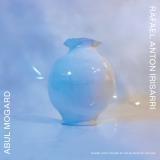
Marja de Sanctis’ cover artwork revisits the vessel sculpture from the duo’s first album, Impossibly Distant, Impossibly Close. There it appeared as raw, unfired clay. Here it has been fired in the kiln and finished with a glaze. Light gathers on its polished surface and spills into the surrounding space. As she explains, “I wanted to convey the idea of continuity within the duo, and the vessel became a kind of container for that idea. However, their music felt different this time, and with the collaboration of Martina and Andrea, I felt it should have a sleeker, softer, more glamorous look, very distant from the first raw appearance.” The transformation of the vessel from raw clay to fired form suggests a passage from immediacy toward permanence, mirroring the music’s gradual expansion.
In spring 2025, Abul Mogard and Rafael Anton Irisarri created the source material for their second album, Where Light Pauses in the Silence of the Sun, during a three-day residency at Morphine Raum in Berlin. Functioning as both recording studio and performance venue, the space has no stage, with the audience gathered around the performers. Working within an open framework, the duo reshaped the music each evening while recording the performances live to multitrack. Rotary speakers, modular synthesizers and bowed guitar formed the core of their sonic language, captured through a 1970s mixing console and microphones placed around the room.
Back in Mogard’s studio in Rome, the material was further crafted as motifs were stretched, fragments isolated, and tempos dissolved. Irisarri recorded additional guitar textures and treatments in New York, while passages recorded by Martina Bertoni and Andrea Burelli in Berlin reinforced the harmonic centres and brought breath, refinement and a new sensibility to their compositions. The process continued as Mogard’s layering and subtraction reassembled everyone’s parts into the final arrangement.
The album opens with “In the Eastern Wild,” building from a sparse outline into a monumental formation of low-frequency weight, its internal motion shaped by the rotating Leslie speaker. “Over the Domes” widens into a broader acoustic field, where sustained modular tones meet waves of softly plucked guitar. The music then turns inward with “A Blue Descent,” centred on Bertoni’s cello, whose growling timbre introduces a melancholic depth.
At the album’s centre, “In a Quiet Radiance” unfolds around a slow guitar ostinato, its luminous stillness opening into a more expansive and reflective state. Across its ten-minute span, Burelli’s violin lines and Bertoni’s lower cello phrases gradually surface, weaving through the harmonic field. Mogard brings Burelli’s processed voice to the fore, its emotive, operatic presence becoming one of the record’s pivotal moments. “Of Blessed Ages” suspends the sonic flow, shifting between parallel major and minor chords as lingering, slowly decaying melodies shape the music’s internal drift. The closing “Among Shadows” settles into a darker resonance as layered textures recede.
Mogard and Irisarri’s shared language balances restraint and maximalism. UK magazine Crack describes the music as “a tidal wave held in suspension,” while Dutch newspaper de Volkskrant writes, “What a colossal sound, and how this music strikes at the emotions.” Reflecting on the residency sessions, Irisarri recalls: “At moments I genuinely couldn’t tell if a sound was coming from me or from Abul. It stopped feeling like two people making decisions and began to feel like we were inside a system moving on its own."
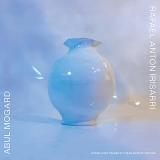
Marja de Sanctis’ cover artwork revisits the vessel sculpture from the duo’s first album, Impossibly Distant, Impossibly Close. There it appeared as raw, unfired clay. Here it has been fired in the kiln and finished with a glaze. Light gathers on its polished surface and spills into the surrounding space. As she explains, “I wanted to convey the idea of continuity within the duo, and the vessel became a kind of container for that idea. However, their music felt different this time, and with the collaboration of Martina and Andrea, I felt it should have a sleeker, softer, more glamorous look, very distant from the first raw appearance.” The transformation of the vessel from raw clay to fired form suggests a passage from immediacy toward permanence, mirroring the music’s gradual expansion.
In spring 2025, Abul Mogard and Rafael Anton Irisarri created the source material for their second album, Where Light Pauses in the Silence of the Sun, during a three-day residency at Morphine Raum in Berlin. Functioning as both recording studio and performance venue, the space has no stage, with the audience gathered around the performers. Working within an open framework, the duo reshaped the music each evening while recording the performances live to multitrack. Rotary speakers, modular synthesizers and bowed guitar formed the core of their sonic language, captured through a 1970s mixing console and microphones placed around the room.
Back in Mogard’s studio in Rome, the material was further crafted as motifs were stretched, fragments isolated, and tempos dissolved. Irisarri recorded additional guitar textures and treatments in New York, while passages recorded by Martina Bertoni and Andrea Burelli in Berlin reinforced the harmonic centres and brought breath, refinement and a new sensibility to their compositions. The process continued as Mogard’s layering and subtraction reassembled everyone’s parts into the final arrangement.
The album opens with “In the Eastern Wild,” building from a sparse outline into a monumental formation of low-frequency weight, its internal motion shaped by the rotating Leslie speaker. “Over the Domes” widens into a broader acoustic field, where sustained modular tones meet waves of softly plucked guitar. The music then turns inward with “A Blue Descent,” centred on Bertoni’s cello, whose growling timbre introduces a melancholic depth.
At the album’s centre, “In a Quiet Radiance” unfolds around a slow guitar ostinato, its luminous stillness opening into a more expansive and reflective state. Across its ten-minute span, Burelli’s violin lines and Bertoni’s lower cello phrases gradually surface, weaving through the harmonic field. Mogard brings Burelli’s processed voice to the fore, its emotive, operatic presence becoming one of the record’s pivotal moments. “Of Blessed Ages” suspends the sonic flow, shifting between parallel major and minor chords as lingering, slowly decaying melodies shape the music’s internal drift. The closing “Among Shadows” settles into a darker resonance as layered textures recede.
Mogard and Irisarri’s shared language balances restraint and maximalism. UK magazine Crack describes the music as “a tidal wave held in suspension,” while Dutch newspaper de Volkskrant writes, “What a colossal sound, and how this music strikes at the emotions.” Reflecting on the residency sessions, Irisarri recalls: “At moments I genuinely couldn’t tell if a sound was coming from me or from Abul. It stopped feeling like two people making decisions and began to feel like we were inside a system moving on its own."
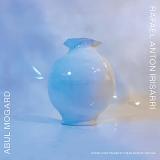
Marja de Sanctis’ cover artwork revisits the vessel sculpture from the duo’s first album, Impossibly Distant, Impossibly Close. There it appeared as raw, unfired clay. Here it has been fired in the kiln and finished with a glaze. Light gathers on its polished surface and spills into the surrounding space. As she explains, “I wanted to convey the idea of continuity within the duo, and the vessel became a kind of container for that idea. However, their music felt different this time, and with the collaboration of Martina and Andrea, I felt it should have a sleeker, softer, more glamorous look, very distant from the first raw appearance.” The transformation of the vessel from raw clay to fired form suggests a passage from immediacy toward permanence, mirroring the music’s gradual expansion.

Libertine Records returns with Traditions 22: NOVA EXPREXX – UNDERGROUND REVENGE
After a break, Libertine Records presents a new chapter in its Traditions series. NOVA EXPREXX – UNDERGROUND REVENGE delivers a fierce and uncompromising blend of techno, new beat, acid, and tribe sounds, crafted for night wanderers and those who live beyond conventional paths.
The release captures the raw energy and spirit of the underground, offering relentless beats, hypnotic rhythms, and a soundscape that resonates with true fans of cutting-edge electronic music.
UNDERGROUND REVENGE is a statement of intent from Libertine Records — a label known for pushing the boundaries of electronic music and celebrating the underground scene.

Nicolás Mirón presents Hi-Tech Thoughts, his debut release on Echo Alpha Recordings. A record that draws inspiration from Detroit Techno, as well as New York Hip-Hop and MPC culture, reflected in the way he works with samples and programs chops on his AKAI MPC 2500. His production focuses on beat-making, pursuing a raw, hardware-driven sound rather than an overproduced one.
Nico’s creative foundation is rooted in Black music in all its forms, from soul and jazz to electronic sounds, while also embracing the legacy of figures like Kraftwerk, and genres such as Italo Disco, and New Wave. His musical career began with his residency at Radio Relativa in 2022, with his program “Pa’ Riparla Benne”, a connection between skateboarding and music, as well as its evolution and close relationship with contemporary culture. In the show you can hear different styles of music that have appeared within this scene through legendary video parts from skateboarding history, along with stories and curiosities behind these pieces of art.

Also Playable Mono, the nom de guerre of Rafał Lachmirowicz, channels musical greats and the romance of Italy with the Firenze EP. “Neverland” reimagines Giorgio Moroder’s iconic introduction of “I Feel Love”, undulating arpeggios and clean kicks giving way to an addictive tongue-in-cheek melody of laser futurism and eastern influences. “Firenze” follows. Broad analogue bars call to mind the works of Patrick Cowley, disco funk flirting with a spoken word tribute to Florence in this bright and bold track. Our next stop off is “Bergamo.” Low-slung, this smoky number is primed for the night. Thick thrums of bass are punctured by piano keys and toms, robotic pulses and trills adding a 1970s sci-fi groove to the proceedings. Turning the tables is “Breakfast Date.” Slow and dreamy, this early morning lounge affair lowers the tempo. Considered and thoughtful, meandering melodies border the blurred lines of jazz and funk. The words of “Firenze” are left in the wings for the instrumental close, Lachmirowicz’s synthesizers taking the limelight in this uplifting finale. A 12” that encapsulates the expansive sound of Also Playable Mono.


Im Februar 2026 erscheint zum zwanzigjährigen Jubiläum Hard to Love a Man" von Magnolia Electric Co. als erweiterte Edition und zum ersten Mal auf Vinyl. Diese Jubiläumsausgabe der ersten EP der Band enthält drei zusätzliche Tracks: remasterte Demos von 31 Seasons in the Minor Leagues" (zuvor unter dem Titel Tonight I'm So Down" bekannt) und Lonesome Valley", aufgenommen in den Echo Park Studios in Indiana während der Hard to Love a Man"-Sessions, sowie One Thin Dime", aufgenommen während der Black Ram"-Sessions in den Sound of Music Recording Studios in Richmond, Virginia. Working-Class-Rock" ist ein Begriff, der häufig zur Beschreibung von The Magnolia Electric Co. verwendet wurde. Kategorisch hatte sich die Band ihren Platz unter gleichgesinnten Ikonen wie Bob Seger, CCR, Tom Petty und Bruce Springsteen gesichert, doch es handelte sich nicht nur um eine ästhetische Beschreibung, sie untermauerten dies mit ihrer Arbeitsmoral. Im Jahr 2005 waren The Magnolia Electric Co. erstaunlicherweise acht Monate unterwegs. Diese Tatsache wurde den Bandmitgliedern selbst am deutlichsten bewusst, da sie so lange von ihrem Zuhause und ihren Liebsten getrennt waren. Daher die Bedeutung des Titeltracks. Wenn Jason Molina die Perspektive der Person einnimmt, die er zurückgelassen hat, und in Hard To Love A Man" singt: "It was hard to love a man like you / Goodbye was half the words you knew / While you were waiting for me not to call / I sent my love", dann wird die Einsamkeit und Schuld der Trennung schmerzlich deutlich. Jennie Benfords verletzliche Stimme, gepaart mit Jason Groths fließender Gitarre und Mike Kapinus' klagender Orgel, unterstreicht dieses Gefühl eindrucksvoll, unterlegt vom charakteristischen, präzisen und geschmackvollen Rhythmusfundament von Mark Rice und Pete Schreiner, während Nicole Evans eine neue, dynamische Stimme hinzufügt. Hard To Love A Man" und der Live-Favorit Werewolves Of London" wurden mit Steve Albini in seinen Electrical Audio Studios aufgenommen, die übrigen Tracks entstanden während eines kurzen fünftägigen Heimaufenthalts in Indiana bei Echo Park Studios mit Paul Mahern, dessen Engineering-Resume schon damals Projekte wie The Blake Babies, Lisa Germano und John Mellencamp umfasst. Während die Magnolien weiter wuchsen und erblühten, ließ Jason Molina die Insassen das Irrenhaus regieren.
With Dark Matter EP, Rambal Cochet continues his exploration of the fringes of electronic music, where ritual, cosmic and hypnotic sounds create a soundscape between mysticism and science fiction. The EP moves naturally between rhythms, atmospheres and synthetic lines from a lost rave futurism.
Each track has its own journey in a single narrative, with deep bass, percussive patterns oscillating between trance, downtempo and global influences, and a melodic sensibility that is both distinctive and accessible.
Dark Matter EP is a work that celebrates the visionary and cinematic side of Rambal Cochet, mixing mystery, spirituality and club pulsation for the dance floor and listener.
Perfect for seeking emotional intensity and imagination, or for an immersive, timeless listening experience.

25 years ago, at the turn of the millennium, downtown NYC was spoiled with record stores. In this pre-digital age, vinyl was king for club DJs, and shops such as Downtown 161, Dance Tracks, and Vinyl Mania peppered lower Manhattan, thriving businesses that supported an expanding scene of local and international DJs. Perhaps the largest and most established of these was Satellite Records, an institution of club sounds that also spawned multiple record labels, including the deep-house imprint Central Park Recordings.
At this time, Central Park Recordings and Satellite Records owner Scott Richmond signed a demo in need of a vocal from young British producer Alistair Colling, and enlisted John-Christian Urich to write it, who had just had a massive hit with “I Might Do Something Wrong” the debut Tortured Soul single on Central Park. He in turn brought in Sabina Sciubba of then newly-formed band Brazilian Girls to record the vocal, and with Jon Cutler on remix duties the record was complete. Tortured Soul went on to release numerous deep house classics like “Fall In Love,” “How’s Your Life” and have continued to tour as a groundbreaking live-house act to this day (of which RNT co-founder JKriv was bassist and collaborator for 10 years).
For the 25th anniversary of this turning point release, Razor-N-Tape has rebooted and remastered the original and classic Jon Cutler mixes, which have never been reissued in any format since the original release. RNT also commissioned two new exemplary remixes from DJ Spinna and musclecars, connecting the dots between the deep-house lineage of the past and present. Presented in a gorgeous jacket that calls back to the graphical style of the original Central Park Recordings aesthetic, this 12” is an absolute essential for any lover of soulful club sounds or purveyor of NYC dance music history.

Category 1 Music Sampler - Vol. 4 represents a unique blend of contemporary house music’s most influential and respected personalities. “What I Want” showcases the remixing wizardry of Eric Kupper, who has worked with numerous superstars including Usher, Alicia Keys, Donna Summer & Miley Cyrus; along with the producing genius of Chicago’s great house trailblazer, Ron Carroll. “Call Me” showcases a multi continent contingent of musical talent from the UK, South Africa and the U.S. combining to deliver a soulful house gem that’s highlighted by Stacy Kidd’s distinctive Chicago influenced vibe. Joe Smooth, another Chicago house legend, lends his deep house sound to the appropriately titled, “Soul Deep”, featuring the classic vocals of Ed Ramsey coupled with Sweet Georgie’s impeccable production.
Concluding this house music journey is Ron Carroll’s “Underground”, a Garage banger that’s the creative concept of Marc Cotterell, 1 of the leaders of the U.S./UK Garage genre. “Underground” is the perfect way to end another Category 1 Music house excursion.

2025 Repress
DJ Europarking lands on UFO Inc. with his debut EP. Tongue-in-cheek and extremely danceable, this is an incendiary EP. 'Boompahpah' gets things rolling with dense beats, a high-octane tempo and a choir-driven breakdown. '20inch Chrome' is a madcap cut that uses a variety of hip hop-esque samples, sirens and a tribal chant. On the flip 'Bitte Everyday' utilises breakbeats and a mixture of rapping, chanting, and zany effects to enchant the listener. Finally 'Like Trampolines' features hefty beats alongside an incendiary riff that is sure to cause havoc on the dance floor.
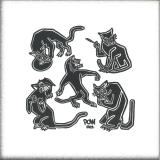
Night Prologue POW001
Panthers on Wax kicks off its catalogue with Night Prologue, a VA that dives head-first into the night from the dark pulse of the club to its most intimate afterglow.
Bringing together four defining voices of the contemporary French underground, the release unfolds like a nocturnal tale in two acts.
Side A hits with two floor-focused weapons:
P.O ignites LA VOITURE DE LA POLICE, a raw mechanical surge « It doesn't matter who did it as long as it burns. »
N2O pushes deeper with DISTO PIA, where distortion fractures, breathes, and rebuilds « Darkness dances, the heart cracks, and the night puts its pieces back together. »
Side B shifts into emotional territory:
PAGENTY delivers LE VENT CHUCHOTE TON NOM, a nostalgic synth drift « The nights are endless oceans in which I search for you. »
LORYN wraps the record with GINI, a glowing synthwave shimmer « More than a soda, Gini holds a forever echo »
From new beat and electro to techno and synthwave, Night Prologue carves out the Panthers on Wax identity, nocturnal, hybrid, and driven by narrative.

Kanyon (John) is a NYC based producer/dj who has cut his teeth in the underground US techno scene through raw live sets, and dynamic djing. Keeping the quality high with his signature no-bs style of production and performing, he has played live supporting legends like Steve Poindexter, DJ Hyperactive, and Francois K. His productions have garnered support from Ben Sims, Akua, Ron Like Hell, Kush Jones and many others.
The Duplex EP is a split record featuring John's house alias DJ John Brooklyn on the A side (A1, A2, locked groove) & techno alias Kanyon on the B side (B1, B2). Exploring NY house and trippy, dubby minimal techno respectively, Duplex EP is a heady start to 2026.

Die legendäre Trance-Hymne „Traumwelten“ kehrt zurück – kraftvoll neu interpretiert von Talla 2XLC und Das Licht (aka DJ Dean). Diese farbige Maxi-Vinyl liefert zwei kompromisslose Club-Versionen eines absoluten Kulttracks.
Side A – Traumwelten (Recreate Mix): Mit einem pulsierenden Tempo von 140 BPM entfacht der Recreate Mix ein wahres Feuerwerk aus tiefen Basslines, treibenden Drums und schimmernden Melodien. Die gewagten Breakdowns steigern die Spannung und treiben die Energie bis zum Höhepunkt. Eine hypnotische, gesprochene weibliche Stimme sorgt für mystische Vibes, bevor er in einen euphorischen Rausch aus aufsteigenden, mitreißenden Melodien übergeht.
Side B – Traumwelten (RRAW! Mix): Dunkler, härter, kompromisslos: Der RRAW! Mix startet als druckvolle TechnoTrance-Fusion, die mit massiven Basslines und satten Techno-Kicks beginnt. Dunkle, deutschsprachige Vocals und atmosphärische Effekte fügen dem Track eine immersive, mystische Tiefe hinzu. Der zweite Drop überrascht mit einer euphorischen Melodie, die von technoiden Rhythmen in ekstatische Trance-Elemente übergeht. Dieser Mix glänzt durchseine Vielseitigkeit und eignet sich sowohl für Techno-DJs als auch für Trance-Crowds.
Ein starkes Comeback eines Klassikers – zeitgemäß, druckvoll und ein Must-Have für alle Vinyl-Liebhaber.

Combo Efectivo was formed in November 2024 in Bogota in a studio in the Teusaquillo district, at the invitation of Jazztropicante. It brings together an all-star cast from Bogota's neotropical movement and three iconic brass players from the current French jazz scene.
The chemistry was immediate and the energy palpable: a sound that was both playful and demanding, exuding groove, rich material rooted in contemporary jazz structures, and breathing the spirit of brass bands and the splendor of popular expression from the Colombian Caribbean.
A two-track EP was produced from this unique studio session, recorded and mixed at Mambo Negro Records, with the expertise of Daniel Michel. Mastered in Paris at Loom, this first 45 rpm single was released in February 2026 with The Pusher, officially marking the birth of the Casa Maguey Records label, which promotes the catalog resulting from Jazztropicante's encounters.
On the French side, three musicians who are making their mark on their generation: Stéphane Montigny on trombone, Antoine Berjeaut on trumpet, and saxophonist Léon Phal, the spearhead of a new generation of jazzmen. The Colombians are a cocktail of musicians from the most exciting groups on the current scene: Karen Nerak on vocals, rap, gaita, and percussion, Ruben Aragon on keyboards, Pelango on bass, and Kike Narvaez on drums.
Combo Efectivo magnifies the alchemy between the finesse of European jazz and the power of Colombian rhythms. A tropical trance fueled by improvisation, where the contemporary jazz scene and neo-tropicality meet in a spirit of openness and exploration.

Tilaye Gebre is one of Ethiopia’s most soulful saxophone giants, with a musical legacy that’s hard to surpass. A founding member of the Equators, later renamed the Dahlak Band, he was a key figure in Ethiopia’s vibrant hotel music scene and a sought-after musician and arranger for artists like Aster Aweke, Mahmoud Ahmed, Tilahun Gessesse, and Muluken Melesse.
Tilaye — still going strong — was at the epicenter of the Ethiopian music scene during one of the most turbulent periods in the country’s history. Tilaye’s musical trajectory, regardless of the forms it has taken over the decades, is simply ceaseless. The road to a musical career spanning six decades started out winding, and the first steps came almost as a fluke.
With the Dahlak Band, Tilaye had managed to secure a musical residency at the legendary Ghion Hotel, where they honed their skills and developed their musical expression to unparalleled levels. From the late sixties onwards, Dahlak Band lit up Addis Ababa with a mixture of James Brown and Wilson Pickett tunes, rhythm and blues, soul, funk, and the sound of the disco era — mixed with modern Ethiopian styles — serving up majestic concoctions with full-range instrumentation, featuring trumpet, keyboard, saxophone, bass, drums, and guitar. Through their hotel sessions, Tilaye developed further as an arranger, arranging fellow band member Muluken Melesse’s first solo album, Muluken Melesse with the Dahlak Band (Kaifa Records – LPKF 39), recorded during the turbulent years of 1975–1976, following the fall of Haile Selassie. Everything was in flux in this transitional period, but a constant was how Tilaye stood in the spotlight. On that record, there’s a loose vibe to the soundscape that lets Tilaye’s skills shine, while all the other musical contributions coalesce into a slowly cooking atmosphere where the groove at times fluctuates into psychedelic territory, making the music stand out from most contemporaries.
Most of their recorded output came from one-take live cassette recordings at the Ghion, or from music shops at that time — one microphone at the front, hit record: no EQ, no reverb, just some delay. Some of the Dahlak Band’s releases featured Tilaye as frontman, such as Tilaye’s Saxophone with the Dahlak Band from the late 1970s — typical of a rare groove on the Ethiopian scene — with excursions into reggae territory, including the band’s characteristic sound featuring Tilaye Gebre (tenor and alto saxophone), Dawit Yifru (organ), David Kassa (electric guitar), Shimelis Beyene (trumpet), Moges Habte (tenor saxophone), Abera Feyissa (bass guitar), Tesfaye Tessema (drums), and Muluken Melesse (cowbell). The Dahlak Band’s output was so prodigious that they simply couldn’t be pigeonholed.
No saxophonist in Ethiopia influenced the sound of popular music more than Tilaye in the 1970s, yet his recordings have been hard to come by for ages, which has meant that newcomers to the scene have gems to uncover in retrospect. Arguably, Tilaye shifted gears when he relocated to the U.S. to such an extent that his musicianship became even more renowned, accompanying the greatest of his contemporaries internationally. Tilaye is one of Ethiopia’s all-time greats, with a musical legacy — both as musician and arranger — that’s hard to surpass. It’s a wonder to be able to enjoy a recording like this half a century later.

Lovski, alias Igor Sekulović, is redefining the Balkan musical landscape. A master guitarist and erstwhile “Projekt Rakjia” band member, he forges an uncanny blend of traditional folk melodies with dance, electronic and rock energy.
His debut solo album, Discoteka Jugoslavija—produced in collaboration with Napoli’s producer Raffaele “Whodamanny” Arcella—ventures through Italo-disco pulses, reggae grooves and psychedelic swirls, all anchored by the call-and-response warmth of Balkan traditional instruments. Each track feels like a borderless road trip: hypnotic rhythm sections give way to soaring guitar solos that nod to ancestral folk tunes, while propulsive synth arpeggios push listeners into tomorrow’s club.
Lovski’s signature lies in his seamless genre alchemy. He honors regional roots without succumbing to nostalgia, instead reframing folk elements as raw material for global dancefloors. As a performer, his live shows pulse with communal ecstasy—drawing dancing crowds around campfires of light, smoke and bass.
In a scene ripe for innovation, Lovski stands out as both torchbearer and trailblazer—proof that the Balkans still have surprises to offer, and that the old and new can coexist in brilliant harmony.
