
vorbestellen19.09.2025
erscheint voraussichtlich am 19.09.2025
26,68 €
erscheint voraussichtlich am 19.09.2025
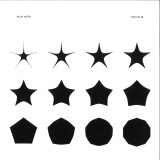
For an aesthetic of (dis)obedience. The impressions Richard Siegal and his company Ballet of Difference gathered on a trip to Japan in September 2022 now find their way into a full-length dance evening. Siegal and his team had set off for Tokyo to learn the practice of Shuudan Koudou, also known as "Japanese Precision Walking". The strictly synchronised group choreographies are astonishing in their radical stringency and have become a secret YouTube hit, not least because of their peculiar subtle humour. Siegal recognises in the extreme disciplining of the bodies an analogy to the training practice of classical ballet. In the mutual exchange of these movement cultures, questions are raised about individual and collective thinking, about personal decision-making power and social responsibility. For this extraordinary project, Richard Siegal has invited a special guest: Nazareth Panadero, long-time companion of Pina Bausch, who has long since become an icon of Wuppertal dance theatre and will be on stage with the BoD ensemble.
The production BALLET OF (DIS)OBEDIENCE is sponsored by Goethe Institut, with the kind support of Sissel GmbH.
CHOREOGRAPHY & STAGE: RICHARD SIEGAL
COSTUME: FLORA MIRANDA
LIGHT & VIDEO: MATTHIAS SINGER
MUSIC: ALVA NOTO
DRAMATURGY: TOBIAS STAAB
more info to: Shuudan koudou
'Shuudan koudou' Shuudan Koudou Is the Japanese #art of Synchronized Precision ...YouTube · Boson TV: Tech Marvels & Cool Discoveries22 Dec 2022
Kottke.org https://kottke.org › shuudan-koud...Shuudan Koudou Is the Japanese Art of Synchronized Precision Walking
On the other hand, hybrid 3 is inspired by Noh Play - Japanese performances and deals with the refusal of rules musically, hybrid three continues the two previous albums and weaves both rhythmic and beatless musical pieces into a holistic work.
The idea for me has always been that these albums are not only perceived as individual tracks, but as a whole piece, which is why I find the possibility of experiencing and listening to these albums in the right order and as a whole particularly important. For me, the pieces are not only closely related to the ballet that was created for them, but also function as individual pieces as pure, musical pieces and mark a new quality for me, which is very strongly focussed on producing electronic sounds and structures in such a way that they can develop a sculptural quality.
Bei uns am Lager und sofort versandfertig

Record Kicks presents "Brothers & Sisters / This is You" a limited edition 45 from Gospel-soul sensational Michelle David & The True-Tones forthcoming album. The 45 is limited to 500 copies on clear transparent vinyl.
This "double-sider" 45 features on the A side "Brothers And Sisters", the first single and title track of the upcoming album, a Marvin Gayesque uptight 70 soul stormer able to set every dancefloor on fire. The B-side is no exception with the blue-eyed soul stomper "This Is You".
The awaited album follows their 2022 full length "Truth & Soul", which was named one of the Albums of the Year at BBC Radio 6. Raised in New York in a church, Michelle David started singing at the age of four and joined her first group, The Mission of Love, when she was five. During her career, she toured the world with Broadway musical "Mama", contributed to successful theatre shows such as "The Sound of Motown", "Glory of Gospel" and "Mahalia" and recorded for artists such as Diana Ross and Michael Bolton. This all happened before releasingsix critically acclaimed gospel-infused albums with the True-Tones.
Michelle David & The True-Tones know how to put on a glowing evening of classic soul. With their upbeat grooves, powerful vocals, and strong melodies, they have already conquered many festivals and numerous clubs. Having played renowned Dutch festivals such as Pinkpop and North Sea Jazz, the band toured from Spain to Scandinavia, leaving memorable impressions wherever they play; delivering an unforgettable live experience. In addition, the band's discography has also been praised; receiving an Edison nomination (the Dutch Grammy), while their previous record "Truth & Soul" was named Album of the Month on FIP radio in France and Album of the Year at Craig Charles' BBC Radio 6 Music show. The group did numerous radio and TV performances and were even invited to play their music on the biggest National TV show during the Winter Olympics 2022.
Bei uns am Lager und sofort versandfertig
A queer Black musician and daughter of Nigerian immigrants, Oladokun has become a vital cultural voice, writing songs that explore identity, faith, mental health, and social justice with honesty and restraint. Since her 2020 breakthrough, she has released two critically acclaimed albums, earned a finalist nod for Americana Artist of the Year, and saw her protest anthem "iseeamerica" named a finalist for the Recording Academy's Special Merit Award for Best Song for Social Change. Praised by The New York Times and Billboard for her ability to turn quiet introspectioninto lasting impact, Joy Oladokun has brought her music to national television on The Tonight Show Starring Jimmy Fallon, CBS Saturday Morning, and Austin City Limits, while her songs have been featured across major TV series. With collaborations spanning artists like Chris Stapleton, Brandi Carlile, and Maxo Kream, she is entering her next chapter by bringing an even broader, bolder sound to the table, continuing to prove herself as an artist who not only bends genre but bridges culture.
erscheint voraussichtlich am 25.09.2026
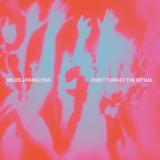
An EP of the darker side of electronic dance music is always a welcome addition to Especial. Up and coming producer / DJ Miles J Paralysis steps away from releasing on his own Crying Outcast label to explore left of centre, new wave and cosmic sounds; songs woven from his own vocals and samples.
A love of Dub, Hip Hop and Electro-Funk led into electronic music. Sampling TV shows, making beats, jamming. Exposed to Leeds and Manchester club cultures, seeking the more experimental. African Head Charge, Muslimgauze, The Rootsman and Weatherall were early influences in forming a no rules philosophy.
Born and raised around West Yorkshire, the beauty and bleakness of the moors have a strong bond on Miles Henry aka Miles J Paralysis and his music. Folklore and the occult link and connect an interest in Northern Hauntology. Unresolved histories, stuck between past glory and phantoms of possible futures.
The EP starts with It’s Only Shadows Talking. A play on the Paralysis persona, the spectral dub house groove meets industrial overtures, encasing his own eerie and unsettling vocals to begin the narrative.
Don’t Forget The Ritual takes a direct link from British folk traditions. Sacred and ceremonial; the laid-back breakbeat, samples and delays are the transition to the evocative embrace of melancholia.
Come On Fleet, the hypnotic Latin (vocal) sample creates a lurking murmuration, rimshot percussion meets gothic sound design for the EPs’ most straight forward and direct club cut.
Surreal and dreamlike soundscape, closing track The Delicate Fairytale is the perfect platform for Miles own phantasm. Inspired by the stories of Dorothy K Haynes and Robert Hickman, the pervading sense of a David Lynch aesthetic, exploring the nostalgic nature of memory.
Bestelle jetzt und wir bestellen den Artikel für dich beim Lieferanten.

When Niko Moon broke out with his triple-platinum hit “GOOD TIME,” the Texas-born, Georgia-raised singer/songwriter lit up the country scene with his larger-than-life energy and message of radical positivity. Since then, he’s earned a passionate following, major TV performances, and praise from outlets like Holler and American Songwriter. With AMERICAN PALM Deluxe, arriving right before his headline AMERICAN PALM Tour, Niko expands his latest LP with
two new tracks, “BREATHE” and “BARE FEET IN THE SAND,” furthering his mission of creating music that feels like a“mental vacation” filled with sun-soaked serenity and coastal escape.
“Breathe is all about finding that place where you can take a deep breath and let your worries drift away,” says Niko. “I find peace by the water, and I wanted the song to be a mantra of positive self talk and a celebration of the coast.”
Niko partly grew up in Georgia, spending summers on Florida beaches, an influence that shapes the concept-driven AMERICAN PALM. Written during his THESE ARE THE NIGHTS tour with producer Danny Majic and songwriter David J, the record blends coastal sounds—ukuleles, nylon-string guitars, ocean waves—with organic beats and a touch of ‘90s hip-hop, nodding to his Atlanta roots. The result is a seaside getaway in album form, equal parts carefree, romantic,and life-affirming.
Tracks like “I LOVE THIS BEACH” and “YOU, ME & A BEACH” capture that spirit. The latter, a love song linking his wife and the beach as his grounding forces, helped cement the record as his first concept album. “SANDBAR” delivers a euphoric summer vibe, while “SANDCASTLES” reflects on life’s impermanence. “KING OF THE ISLAND” is a family
milestone—co-written and sung with his father, Cris Cowan.
Niko’s journey began early, inspired by his dad, a truck driver and drummer who introduced him to John Prine and Emmylou Harris. Niko picked up drums at eight, guitar at fifteen, and started playing in bars while working construction. A chance encounter with Zac Brown led to songwriting cuts like “Homegrown,” before Niko launched his solo career with “GOOD TIME,” a No. 1 hit on both Billboard Country Airplay and Hot Country Songs charts. From the start, he committed to making only positive music: “In a way a song is like a mantra, and I want mine to carry optimism and encouragement.”
Since his debut, Niko has sold out the Ryman, played major festivals like Stagecoach, and performed on The Tonight Show Starring Jimmy Fallon and Jimmy Kimmel Live!. Beyond music, he and his wife Anna founded the Happy Cowboy Foundation to support mental health and addiction recovery, and launched Happy Himalayan water and the American Palm clothing line, both of which benefit the foundation.
erscheint voraussichtlich am 05.12.2025

Orange Crush Vinyl. GoldFord writes soul music rooted in truth. His raw, unvarnished songs — equal parts introspection and catharsis — grapple with heartbreak, healing, and the quiet revelations that come with growth and maturity. Raised in St. Louis and now based in L.A., he spent a decade mired in corporate America before a devastating loss cracked something open. Since then, GoldFord has built a devoted following with his emotionally charged vocals and timeless style. His breakout single “Upside Down” offered a first taste of virality, while “Orange Blossoms” — inspired by an illuminating moment of presence under a fruit tree — has surpassed 50 million streams on Spotify alone and earned co-signs from Sam Smith and SZA. Tracks like “Ride the Storm” (33M+ Spotify streams) and “Walk With Me” have found homes in major ad campaigns, film, and TV . But for GoldFord, it’s not about placement: it’s about connection. “This is how I sort through my shit,” he says. “The music reflects back who I am.” With a new record on the way and a festival debut at Austin City Limits looming, he’s stepping into the spotlight, one soul-baring song at a time.
erscheint voraussichtlich am 26.09.2025

In Guadeloupe, many people think that jazz and ka music are like a ring and a finger. To some extent, the same could be said about so called Latin music and the music played in the French West Indies.
Both aesthetics were born in the Caribbean and bear so many connections that they can easily be considered cousins. In constant dialogue, there are lots of examples of their fruitful alliance and have been for a while. The English country dance that used to be practiced in European lounges came to be called kadrille in Martinique and contradanza in Cuba. They both featured additional percussion instruments inherited from the transatlantic deportation. Drawing from shared feelings about the same traumatized identity – later to be creolized – it would be hard not to assume that they were meant to inspire each other. The golden age of the orchestras that graced the Pigalle nights during the interwar period further proves the point. As soon as the 1930s, Havana-born Don Barreto naturally mixed danzón and biguine music in a combo based at Melody's Bar. In the following decade, Félix Valvert, a conductor who was born and raised in Basse-Terre in Guadelupe, also worked wonders in Montparnasse with La Coupole, which was an orchestra made up of eclectic musicians. Afro- Caribbean performers of various origins were often hired on rhythm and brass sections in jazz bands, which used to enliven the typical French balls of the capital. In the 1930s and onwards, Rico’s Creole Band was one of them.
Martinican violinist-clarinettist Ernest Léardée, who would become the king of biguine music as well as the main figure of French Uncle Ben's TV commercials (a dark stigma of post-colonial stereotypes), had musicians from the whole Caribbean sphere play at his Bal Blomet – and they all enchanted "ces Zazous-là" (according the words of Léardée's biguine-calypso piece). In les Antilles (French for French West Indies), music history started to speed up in the 1950s, when trade expanded and radio stations grew bigger. The Guadelupean and Martiniquais youth tuned in their old galena radio sets to South American and Caribbean music. As for the women traders, les pacotilleuses, they bought and sold goods across different islands (the "passing of items through various hands" was thought to be most pleasurable) and brought back countless sounds in their luggage. Such was the case of Madame Balthazar, who once returned from Puerto Rico with the first 45rpm and 33rpm to ever enter Martinique.
Out of this adventure was created the famous Martinican label La Maison des Merengues, a music business she opened and undertook with her husband and which proved to be a major landmark. At the end of the 1950s, in Puerto Rico, Marius Cultier competed in the Piano International Contest playing a version of Monk's Round 'Midnight. He won the first prize and this distinction foreshadowed everything that was to come. Cultier, the heretic Monk of jazz, was quickly praised for writing superb melodies, always tinged with a twist that conferred a unique sound to his music. It didn't take long for the gifted self-taught musician to get to play with Los Cubanos, making a name for himself thanks to his impressive maestria on merengues.
The rest is history. Besides, in the late 1950s, Frantz Charles-Denis, born into the upper middle class in Saint-Pierre and better known by his first name Francisco, went back home after working at La Cabane Cubaine – a club located rue Fontaine where he had caught the Latin fever. Francisco's music was therefore heavily marked by his Cuban cousins' influence, which gave the combos he led a specific style and also led to renewal. Things were swinging hard in La Savane, located in the main square in Fort-de-France. He set up the Shango club close by and tested out the biguine lélé there, a new music formula spiced up with Latin rhythms. Soon afterwards, fate had him fly to Puerto Rico and Venezuela.
As for percussionist Henri Guédon (percussions were only a part of his many talents), he was born in Fort-de-France in May 22nd 1944, the day marking the celebration of the abolition of slavery. As an old man, he could remember that in " his father's Teppaz, a lot of hectic 6/8 music was constantly playing...". In the opening lines of his Lettre à Dizzy, a small illustrated collection of writings published by Del Arco, he highlighted the huge impact that cubop had on him as a teenage boy, around 1960. He eventually turned out to be the lider maximo in La Contesta, a big band steeped in Latin jazz. He was also the one who originated the word zouk to describe music which brought the sound of the New York barrio to Paris. It was the culmination of a journey that started in Sainte-Marie: "a mythical place for bélé, the equivalent of Cuban guaguancó". In the early 1960s, the tertiary economy developed to the detriment of agriculture. Yet rural life was where roots music emerged in Martinique and in Guadeloupe.
Record companies played a major part in the process of Latin versions sweeping across the islands – before reaching everywhere else. Producer Célini, boss of the great Aux Ondes label, and Marcel Mavounzy, both the head of Émeraude records - a firm which was founded in 1953 - as well as the brother of famous saxophonist Robert Mavounzy, were big names to bear in mind. Although there were many of them - all of whom are featured on this record - Henri Debs was definitely the major figure in the recording adventure. He proved to be so influential that he even got compared to Berry Gordy. In the mid 1950s, when he acquired his first Teppaz, he worked on his first compositions: a bolero and a chachacha. Then, he became the one man who made people discover Caribbean music, from calypso to merengue. He was among the first ones to rush out to San Juan, Puerto Rico, to buy records and distribute them through a store run by one of his brothers in Fort-de-France. He had members of the Fania All Star come and perform there, which he was madly proud about. He was also the first one to pay attention to Haitian music, such as compas direct and various other rhythms which would soon flood the market. As a result, many of the combos hitting his legendary studio would end up boosted by widespread "Afro-Latin" rhythms. However, he never denied his identity: gwo ka drums were given a major role, although they were instruments which had long been banned from the "official" music spheres. The present selection bears witness to such a creative swarming. Here are fourteen tracks of untimely yet unprecedented cross-fertilization: all types of music rooted in the Creole archipelago have found their way, whatsoever, to the tracklisting. Whether originating from the city or being more rural, they all go back to what Edouard Glissant, in an interview about the place of West Indian music in the Afro-American scope, called "the trace of singing, the one which got erased by slavery." "It is so in jazz, but also in reggae, calypso, biguine, salsa... This trace also manifests through the drums, whether Guadelupean, Dominican, Jamaican or Cuban... None of them being quite the same. They all point to the idea of a trace, seeking it out and connecting to each other through it. This is the hallmark of the African diaspora: its ability to create something new, in relation to itself, out of a trace. It may be the memory of a rhythm, the crafting of a drum, a means of expression which doesn't resort to an old language but to the modalities of it." The opening track features one of the emblematic orchestras of this aesthetic identity, criscrossing many music types from the archipelago. The 1974 Ray Barretto guajira – Ray Barretto was a major New York drummer influenced by Charlie Parker and Chano Pozzo – is magnificently performed by Malavoi, a legendary Fayolais group (i.e from Fort-de-France). Additionally, the compilation ends on a piece by Los Martiniqueños de Francisco. It symbolically closes the circle as it is a genuine potomitan of Martinique culture which also functions as a tireless campaigner for Afro-Caribbean music. Practicing the danmyé rounds (a kind of capoeiria) to the rhythm of the bèlè drum, it delivers a terrific Caterete, a kind of champeta of Afro- Colombian obedience which was originally composed by Colombian Fabián Ramón Veloz Fernández for the group Wgenda Kenya. The icing on the cake is Brazilian Marku Ribas, who found refuge in Martinique in the early 1970s, bringing his singing to the last trance-inducing track. These two "versions" convey the whole tone of a selection composed of rarities and classics of the tropicalized genre, swarming with tonic accents and convoluted rhythms. It is the sort of cocktail that the West Indians never failed to spice up with their own ingredients. For instance, the Los Caraïbes cover of Dónde, a famous Cuban theme composed by producer Ernesto Duarte Brito, has a typical violin and features renowned Martinique singer Joby Valente and his piquant voice.
The track used to be – or so we think – their only existing 45rpm. The meaningful Amor en chachachá by L'Ensemble Tropicana, a band which included Haitian musicians among whom was composer and leader Michel Desgrotte, also recalls how Latin music was pervasive in the tropics in the mid-1960s. They were the ones keeping people dancing at Le Cocoteraie in Guadelupe and La Bananeraie in Martinique. Around the same time, another "foreign" band, Congolese Freddy Mars N'Kounkou's Ryco Jazz, achieved some success on both islands by covering Latin jazz classics – such as their adaptation of Wachi Wara, a "soul sauce" by Dizzy Gillespie and Chano Pozo whose interweaving of strings and percussions can have anyone hit the dancefloor. How can you resist Dap Pinian indeed, a powerful guaguancó by Eugene Balthazar, performed by the Tropicana Orchestra and published by the Martinique-founded La Maison des Merengues? It also acts as a symbol of the maelstrom at work. Going by the name Paco et L'orchestre Cachunga, Roger Jaffory used to play guaguancó too: his Fania-inspired Oye mi consejo is one example of his style. Baila!!!!! Dancing was also one of the Kings' focus points. Oriza is a Puerto Rican bomba and a "classic" originally composed by Nuevayorquino trumpeter Ernie Agosto, which reserves major space for brasses, giving it a special sheen.
Emerging from the New York barrios crucible was also La Perfecta, a Martinique group originating from Trinidad, whose name directly references the totemic Eddie Palmieri figure as well as his own band, also called La Perfecta. Here they borrow Toumbadora from Colombian producer and composer Efraín Lancheros and interpret it by emphasizing percussions, which set fire to the track even more than the wind instruments. The same goes for Martinique's Super Jaguars, who use Tatalibaba – a composition by Cuban guitarist Florencio "Picolo" Santana which was made famous by Celia Cruz & La Sonora Matencera – as a pretext for sending their cadences into a frenzy. In a more typically salsa vein, the Super Combo, a famous Guadelupean orchestra from Pointe-Noire that was formed around the Desplan family and had Roger Plonquitte and Elie Bianay on board, adapt Serana, a theme by Roberto Angleró Pepín, a Puerto Rican composer, singer and musician also known for his song Soy Boricua. Here again, their vision comes close to surpassing the original. In the 1970s, L'Ensemble Abricot provided a handful of tracks of different syles, hence reaching the pinnacle of the art of achieving variety and giving pleasure. They played boleros, biguines, compas direct, guaguancó and even a good old boogaloo - the type they wanted to keep close to their hearts for ever, "pour toujours", as they sang along together in one of their songs. Léon Bertide's Martinican ensemble excelled at the boogaloo which had been composed by Puerto Rican saxophonist Hector Santos for the legendary El Gran Combo.
Three years later, in 1972, Henri Guédon, with the help of Paul Rosine on the vibraphone, tackled the Bilongo made famous by Eddie Palmieri. Such a classic!!!!! And so were the Aiglons, the band from Guadelupe: choosing to execute Pensando en tí, a composition by Dominican Aniceto Batista, on a cooler tempo than the original, they noticeably used a wonderfully (un)tuned keyboard in place of the accordion. On the high-value collectible single – the first one released by Les Aiglons under the Duli Disc label – there is a sticker classifying the track under the generic name "Afro". Now that is what we call a symbol. Jacques Denis
Bestelle jetzt und wir bestellen den Artikel für dich beim Lieferanten.

Originally released in November 1984, Limahl’s debut solo album ‘Don’t Suppose’ is to be reissued on recycled lavender vinyl to celebrate its 40th anniversary. The album is probably best known for the aforementioned ‘Neverending Story’. As well as featuring in the film of the same name (which is being revived for the big screen once more), it more recently found a whole army of new fans when it appeared in the final episode of the third season of Stranger Things. Set in 1985, the song is sung by Dustin (Gaten Matarazzo) and his long-distance girlfriend Suzie (Gabriella Pizzolo) as a way to reconnect after not seeing each other for some time. Following the season's release on July 4, 2019, interest in the track surged; viewership of the original music video had increased by 800% within a few days according to YouTube, while Spotify reported an 825% increase in stream requests for the song.
Further reflecting on the album Limahl goes on… “I can’t believe it’s been 40 years, yet sometimes it feels like yesterday! Looking back now, it's surreal to think that at just 24 years old, being born and raised on a Wigan council estate with no family connections in the music business, I was thrust into a whirlwind of travel and appearances to promote my music worldwide via TV, radio, and press—long before the internet.
“I’m excited to imagine where and how the song will continue its journey. It’s amazing that it still feels relevant 40 years on. I’m not too shy to say how immensely proud I am of its achievements.”
erscheint voraussichtlich am 06.09.2024

It’s time to embark on the next chapter of extra-terrestrial worldbuilding - the second instalment of Seismic Records is here. Stepping in is sonic explorer Pyramid of Knowledge a.k.a. K.O.P 32. Based in Seoul but born and raised in France, the Beyond The Bridge label head is blending his Tekno roots with an introspective approach to music, carving out a trademark sound led by pensive rhythms and psychedelic atmospheres. With fierce precision and spellbinding force - you’re invited to explore the unknown depths of your psyche as you enter the state of ‘Fusion’. In all its ominous grace, the journey takes off with ‘CFU’. A kaleidoscope-esque acid ritual is guided by subtle yet uptempo kicks, lifting us into the first phase of the cleansing. Followed by ‘Xer’, where an ancient chant introduces the next dimension of consciousness-expansion. The progression of energy tells us that the higher powers have bigger plans for us - a phase that is entered on the B-side. ‘TV’ surges in tempo and raises blood pressure with an annihilating paradox of the calm and the chaotic. For those who managed to withstand all phases of the occult test, reconciliation is near as ‘Yrots’ strikes down with a mind-warping drum workout for the body and soul. Enter the heart of a psychedelic odyssey and swirl into the labyrinthine pathways of your ego as you enter the Fusion by K.O.P. 32.
Bestelle jetzt und wir bestellen den Artikel für dich beim Lieferanten.

Career trajectories are rarely linear or make logical sense. Life is always unpredictable so all you can do is put in good work and keep at it. Joh Chase is a testament to this. Over the past two decades, the Seattle-raised, Los Angeles-based artist has persistently honed their songwriting and toured, opening for acts like Noah Gunderson and David Bazan. This dedication comes out entirely in their songs, which are so timeless, confident, and inviting they can only come from someone who’s devoted their whole life to their craft. Chase’s new album SOLO feels like a turning point for them: it’s the culmination of a lifetime of writing, losing, loving, and doing it all yourself. The LP adventurously toes the line between genres and sensibilities but it’s all filtered through Chase’s charming and fully-formed vision. SOLO is a testament to Chase’s do-it-yourself ethos throughout their entire career—they chipped away, self-funded tours, and crowdfunded this LP. But by finding their voice, they now no longer feel alone. “This is the most support I've ever had in my life,” says Chase. “I do not feel alone at all. There’s so much energy and generosity here around these songs.” Though it’s not their debut, SOLO feels like a reinvention for an artist: a daring reintroduction for a timeless talent. “I spent my life making music and trying to do it about 10 different ways,” says Chase. “Now this one feels like it. This album feels like a leveling-up of my music in general. When I look at it now, I realize this is the first record that's really me.” “Mesmerizing, infectious, joyful, and heartbreaking; this is the best new album I've heard in a decade. Joh Chase has arrived
erscheint voraussichtlich am 26.04.2024

Raised in Queens, New York, rapper, actor, and media personality Noreaga (N.O.R.E) has spent the better part of the last 3 decades topping charts, pushing buttons and capturing the world's attention. While he may be known these days as the host of one of the most popular podcasts in the world, "Drink Champs, " it was his earlier work as an unapologetic, energetic MC that helped to catapult the multi-talented artist into the spotlight. First making waves with his work as one half of duo Capone-N-Noreaga alongside fellow Queens rapper Capone, N.O.R.E.'s career has been unrelenting since first hitting the charts in 1997. Shortly after the release of their massively successful debut album, "The War Report", Capone landed himself back in prison and N.O.R.E. moved ahead as a solo act, finding further success with his first, self-titled album, "N.O.R.E.". Released in 1998, the album catapulted up the charts, peaking at #3 on the Billboard 200 and went on to be certified platinum by the Riaa. With features from fellow NYC MC's Nas, Kool G Rap, Big Pun and Busta Rhymes and featuring production from then-up-and-coming producers, The Neptunes and Swizz Beatz, "N.O.R.E.", was praised by critics for it's modern, futuristic sound and helped to further cement N.O.R.E.'s spot as one of the most successful and memorable artists in Hip Hop. Thanks to the massive success of singles like, "Superthug", "N.O.R.E.", and legendary posse cut, "Banned from T.V.", N.O.R.E.'s debut album has continued to find success around the world and is without a doubt an undisputed classic amongst Hip Hop heads. As part of their 40th Anniversary celebration, Tommy Boy will be reissuing this game-changing album in limited, colored vinyl which is sure to be a must have for records collectors far and wide.
Bestelle jetzt und wir bestellen den Artikel für dich beim Lieferanten.

This album is a critical meditation on variations of Orientalism practiced by Arabs themselves, as well as those who were born and raised within the diaspora. It originally began as a documentation of extended drum techniques, but eventually morphed into a project of more ambitious scope. Having an open timeframe, Julius Masri gave himself reasons to include all the instruments he obsessively picked up and learned over the years. The work accumulated intentions and guiding principles, and it became rather autobiographical in nature. Some of the tracks either refer to or were recorded in the actual physical spaces he grew up near, in Tripoli, Lebanon during the 1980s. The "Arabic Room" of the title refers to the sitting room in his family‘s house that was decked out in hyper orientalist exoticism, mashing together furniture, fixtures, paintings from all over the Arabic speaking world. The sitting room, or salon, is common in Lebanese homes made specifically to host and entertain guests. Rimsky-Korsakov's Sheherazade and other western made Orientalist cultural artifacts not only had ubiquitous presence in the house, but also found their way onto tv shows and commercials. After moving to the US, his parents recreated this room in their home. Additionally, his father's generation was one that saw their country transform from a post-agrarian trading society after WWII to a center of banking and finance within the span of a few decades. The sense of some lost Eden like innocence of the interwar years permeated much of the media that was available to him growing up there. This album is neither ironic nor some judgmental pronouncement. Call it critical nostalgia. For Masri, there isn't much difference between this form of exotic fantasy creation, and his own adolescence steeped in comic books and listening to bands like Voivod. They both seem to him part of what's known in German as Fernweh, "a nostalgia for a place one's never been". All instruments are performed by Masri himself, (drums, Egyptian rababa, Azeri kamancheh, circuit bent electronics, keyboards, hammered dulcimer, and vocals). Genre-hopping is foundational to the album’s ethos; jazz, metal, experimental, electro-chaabi, and sound collage all appear within the framework of Arabic music, creating the sense of adventurous possibilities best associated with well curated mixtapes. Julius Masri is a Philadelphia based multi-instrumentalist and performer/composer, originally born in Tripoli, Lebanon. The Arabic Room is his debut solo-album. Currently he is working and playing with members of the Sun Ra Arkestra. The album will be released on vinyl only in an edition of 300 copies.
erscheint voraussichtlich am 12.11.2021
