"When you cut into the present, the future leaks out" William S. Burroughs. Third Ear are proud and excited to release a new Brendon Moeller project exclusive to Third Ear... Ultra Random Analog Orchestra. The project kicks off with 13 tracks released on vinyl over 3 individually released 12" and a digital album with 16 tracks. The music ranges from deep, wide-screen Techno to Ambient and beatless, that pushes the limits of the sonic palette. Artwork by The Designers Republic. Brendon says, "the ability to sculpt an audio collage in realtime employing techniques of randomness is one of my favorite pursuits using a Eurorack modular system.
quête:random audio
Sintering or frittage is the process of compacting and forming a solid mass of material by heat or pressure without melting it to the point of liquefaction. The material produced by sintering is called sinter. The word sinter comes from the Middle High German sinter, a cognate of English cinder.
Born in the mid-60s, German musician and sound designer Uwe Zahn came on the scene of electronic music with his debut full-length album for DIN, titled “Atol Scrap.” In the very same year of 2000, the influential City Centre Offices label has signed Arovane for his majestic “Tides,” which has withstood the test of time for over two decades now. Back then, electronic music was split between the dance floors and the bedroom listening, with the latter carrying the now-famous acronym for Intelligent Dance Music. And Zahn’s compositions were indeed just that – more than a gimmicky, knob-twisting, stuttering randomization of experimental rhythms and tone, Arovane’s music evoked real emotion which has assembled his followers from around the globe. But his arrival on the scene was more than a predictable trajectory. Zahn’s sound began to take shape in the late 80s when the cut-up hip-hop beats were layered with synthesizer pads and looped samples. This experimentation progressed into what the 90s coined as breakbeat and glitch.
As the 2000s rolled over, and the monumental imprints, such as Skam and Warp, honed their staple repertoire defining the future of electronic music, City Centre Offices had a staple of their own. Often referenced alongside Boards of Canada and Autechre, Arovane’s sound quickly gained a discerning audience, tuning into his melancholic melodies, advanced textures, and complex polyrhythms. The pinnacle of his production was released in 2004, when suddenly, on “Lilies,” Zahn signed off with the final track, which he has titled “Good Bye Forever.” And then there was silence. For nearly nine years, the scene and yours truly mourned the loss of Arovane, assuming that he’s given up. That is until, in 2013, Zahn came out with a brand new album, “Ve Palor,” on the surviving post-IDM imprint, n5MD.
While on hiatus, Uwe spent his time researching, reconnecting, and reflecting on all he’s built. The sound experiments went on, and so did the music scene, morphing, dissolving, re-shaping itself into a new form for new followers. During that time, Zahn spent some time with sound design, creating patches for Access Virus TI, as well as sample packs for various sound developers. After “Ve Palor,” Zahn began collaborating with various musicians from around the world, exploring, directing, and fusing their distinguished sound with his own. On his subsequent releases, he shared credits with ambient artists Porya Hatami, Hior Chronik, Darren McClure, and even yours truly. During our collaboration, Zahn often described the process of building a new vocabulary for our very own defined language, with which my piano spoke through sound.
With nearly two dozen studio releases under his belt, numerous EPs and singles, and just as many appearances on various compilations, Zahn continues to split his time between his fascination with sound design, sonic programming, and musical composition, which sees the light via his ongoing projects, releases, and contributions towards audio plug-ins, software synths, and sound sets for advanced hardware. It’s effortless to slot Zahn’s sound between the genres, scenes, and names, but very difficult to peel apart, define, and then express the essence using words. However, what is simple and essential for the ones who understand, is recognizing, admiring, and subsequently falling in love with all that is encompassing of Arovane. (by Mike Lazarev)
The debut from new splinter alias of Manchester producer, sequencer designer, and Cong Burn label boss John Howes was made entirely on a Nord Modular G2, Elektron Machinedrum, and Monomachine – a rig he characterizes as “an authentic 2006 studio, best listened to on Windows XP Media Player or Winamp.” Paperclip Minimiser’s self-titled full-length collects eight elusively multi-dimensional constructs of stereo panned synthetics and slithering ambient techno, born of a web of generative patches subjected to improvisational alterations. Taking things further, Howes’ process involves “planting ghosts in the machines,” instilling each element with “some self-correcting behavior in a cybernetic / lo-fi AI / semi-autonomous agent kinda way.” The result is an ambiguous and dynamic hybrid of accident and intention, chaos and control, shuffling through an innerspace wilderness of psychic circuitry.
The title alludes to a 2003 thought experiment about the existential risk of artificial intelligence; how even a mundane objective, algorithmically extrapolated, could culminate in catastrophe. Here the notion is inverted, demonstrating the sonic infinities to be mined by “pushing and pulling at the strings” of musical systems. Howes aptly samples a vintage interview with electronic music pioneer Bebe Barron – co-composer of the Forbidden Planet soundtrack – discussing the anthropomorphic potential of randomized audio generation: “We thought of our circuits as actors in a script.” Paperclip Minimiser descends from a similar family tree, coaxed as much as crafted, flickering rhythmic synchronicities glimpsed in a mirage of wires and glass.
Herva started to work on 'Seez' right after the release of his last Planet Mu album 'Hyper Flux' back in 2017. He was experimenting with home-made hardware and after the album release wanted to raise the bar, challenging himself to build a point-to-point mixer from scratch. This task took almost a year of intense soldering and forced him to scrap music production. Eventually all this hard work grew into making studio hardware properly and he co-founded a new company making mixers and compressors that work with Eurorack, called Audio Gear Obsession. On 'Seez' Herva moves away completely from the sample-based music he's most known for and into programming and computational production, which he mixes and compresses with his newly-built hardware tools to give them the life and feeling he requires. There's also an element of randomness in 'Seez' as the music is generative, defined with numbers and ratios from his own software, tuned by ear rather than to set scales, with unexpected outcomes.To make the record, he spent more time digging between the different iterations of each track than coding the programs that generated them. He says "How I make music is kind of weird for most producers, but I like it, and I plan to dig further. You can think of 'Seez' as the alpha version of what I and my system are able to do." The new music still retains Herva's laid back airy feel. Each track is like a small ecosystem of chiming tones, wafting drones and skittering rhythms, hinting at formal patterns and melodies but developing on its own abstract terms. It feels as if it's the audio equivalent of watching sped-up recordings of a camera capturing different combinations of plants growing, a pleasant and curious experience to let yourself enjoy.
Idiology was originally released in 2001 and is now finally back on vinyl. This re-issue is pressed on white color vinyl and presented in a die cut jacket with artworked inner sleeve and free download card. From their beginnings in 1992, Cologne native Jan St. Werner and Dusseldorfer Andi Toma have consistently challenged electronic music"s paradigm in often surprising and always intriguing ways. Idiology is the duo"s seventh album and is no exception to this rule, as Mouse on Mars surround themselves with strings, woodwinds, brass and the band"s own heavily modified fleet of machines in the St. Martin"s Tonstudio. Fans should once again brace themselves for the inevitable shock of the new as Germany"s most irreverent audio renegades have created the perfect soundtrack for a highly sinister dance party. Kicking off with "Actionist Respoke", the album"s first single, Mouse on Mars officially declare their independence from glitchtronica"s shoegazing legions. Longtime collaborator Dodo Nkishi lends a uniquely warped vocal sensibility to the track which already features Mouse on Mars"s darkest grooves to date. The rest of the album continues to thicken the group"s sonic stew. Tracks such as "Presence" and "Catching Butterflies With Hands" have their populist intentions undermined by Werner and Toma"s meddling hands, while the duo reprise their flirtation with the orchestral as heard on the opening tracks from 2000"s Niun Niggung. At the other end of the spectrum, "Introduce" is a truly evil slice of twisted lympho-zoid hip-hop. Idiology takes no prisoners in its dual-pronged assault on the conventions of modern music. Only with the loungy closing number, "Fantastic Analysis" (a term Werner and Toma invented to describe their working process), do Mouse on Mars let the arrangements breathe a long sigh of relief, the calm after the storm. To enable these stylistic achievements Mouse on Mars enlist the help of partners in crime such as: Nkishi, the multi-talented Harald "Sack" Ziegler, house icon Matthew Herbert on piano, violinist Matty Arouse, in addition to fellow programming wizards Adam "Vert" Butler and F.X. Randomiz. The latter two toured with Mouse on Mars in 2000 as they successfully triumphed over audiences around the globe.
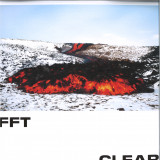
Numbers will release ‘Clear’, the debut album by FFT, on 24th June 2022.The result of three years of focused writing and programming by the London-based producer, ‘Clear’ is deeply psychedelic, defined by a mature sense of melody and structures crafted at a monumental scale.
Though FFT has previously released a handful of tracks under various names, it wasn’t until 2017’s ‘FFT1’ EP on theUncertainty Principle label that his production talents began to fuse into a distinct and personal style, especially evident in FFT’s‘Regional/Loss’ EP on The Trilogy Tapes in 2019, multiple releases on Bruk Records and2021’s ‘Disturb Roqe,’also released on Numbers.Through it all, FFT has mastered a complex sense of mood catalyzed by sound itself: He builds patches and presets from scratch, and feels these synths and software have their own objectives and reactions, creating a kind of compositional feedback loop.The result is an album that brings to mind a collision of electronic pioneers like Delia Derbyshire and Bernard Parmegiani, 2000’s braindance, the Max-imized wares of an OPN or Objekt and the rough rhythmatics of SND or Mika Vainio
The layering of sonic elements and intentions is starkly audible across these nine tracks.They can be seismically concussive and grandiose, but granular and fluid - echoing the Icelandic volcanic eruption that features in the artwork photography byGeorge Cowan. ‘Clear (Eight-Circuit Mix)’sets a euphoric tone immediately accelerated by the jagged sounds and vocal textures of ‘Redeemer’. ‘3 Sided’ channels hyper-urbanity from its almost entirely analogue palette, and by contrast ‘Disturb Roqe 2’is bracingly digital, gyrating in random cycles between clustered percussion, metallic splinters of audio and artificial vocal tics.
Opening side two, ‘You’ve Changed’ adheres to a more abrasive core, while ‘Heal’ and ‘Heal (Alt Mix)’evolved out of linked pieces in FFT’s live sets that grew into complete tracks in the months before Covid-19.The significant intensity of ‘Heal’ in particular was refined during strobe-heavy live performances and is the album at its most turbulent, the claustrophobia interrupted by dazzling arpeggios.The overall impact of 'Clear' is cinematic and precise, marking the arrival of an impressive electronic musician who is not new but has come into his own as a fully developed artist
Emerging when humanity needs him most, and currently adopting the body of a 60 odd-year old carpenter with a penchant for animation and Red Stripe; Terry Perace teams up with Red Laser's own Pharaoh Brunson to form a new perpetual EP series.
The Peraceamid project begins with EP 1. 4 x Hyper-ancient, super-hi-tek audio tools for us Earth dwellers to utilise, corrupting RL's standard "Manctalo" vigour with abandan.
(A1 - Terry Perace - Trip Pop 2020)
Perace himself, ditching the Carpenter attire and hardwiring himself straight into basic circuitry, conjures up skeletal, repetitive reduxes, born outta the oldest primordial gloop, churning together into embryonic life form rhythms that have now existed since the earliest signals of dual-cell organisms on our planet.
(A2 - Kid Machine S.D.M (Terry Perace's InSlaved mix)
Terry sparkles his Martian magic across Kid Machine's S.D.M from the 2020 'Magico' LP. An already high Manctalo watermark now given further accreditation by the highest Elders of Ancient Egypt which Terry confers with on the regular. Welcome to the top of the pyramid gee!
(B1 - Marcus Paulson - Wrecked in Utrecht)
The elusive Marcus Paulson we so far know very little about other than that he's an unconfirmed UFO enthusiast from Warrington...Terry received 'Wrecked In Utrecht' when he accidentally plugged a random USB drive into his earhole (he's not that up on our basic tech yet) in Pharaoh's studio at Hidden. An otherworldly Manctalo vortex and a holographic, plasma-soaked acid track designed to provide a cross-planetary bridge to raves and free parties on Cygnus.
(B2 - Ste Spandex - Examples of You)
Terry's been warmly applying his cosmic voodoo on Red Laser veteran Ste Spandex, nudging him further into the inter dimensional discipline of sonic energy manipulation, the fruits of which are a hyper-driven re-vamp of a '98, Earth-based club classic which he blasts into 5D thru the galvanised circuitry of his palladium-boosted studio.
Licensed and published by Red Laser Records here on Earth. First volume in a perpetual series...
Vinyl Edition of 300 copies
Aesthetical in collaboration with Sync presents "Detect" by Marco Monfardini.
Originally developed as an audio/video live performance, Marco Monfardini based his research for Detect on the decoding of inaudible sounds, sound generated by electromagnetic emissions left from electronic devices and inaudible to the human ear. By using various electro-smog detectors Marco Monfardini creates a sort of detection mapping where electromagnetic emissions are the starting point for the sonorous development of each single composition.
A path that creates a parallel with our lives by questioning how much these emissions affect unconsciously our choices, tastes and perceptions, seeking a relationship between the massive use of technology in everyday life and our emotional state.
The album Detect is developed in 15 tracks in continuous play, an imperfect, faulty mosaic inhabited by invisible beings manifesting themselves in the form of sound streams, mutable entities that find a definitive form in the pattern of the compositional structure.
The album opens with “aR1 detection", sounds of pure detection place themselves in the sound space giving the initial coordinates for the exploration of unconscious parallel areas. The boundaries transform and gradually expand until they flow into the structure of "kernel variations", a growing rhythmic pattern decodes the impulses projecting a perspective that dissolves in the unstable and fluctuating electromagnetic emissions of the subsequent "[a]3020t detection", "binary defect "and "core[2] ". “[A.box]emission” confronts the use of sound downloaded random from internet sample banks and the emissions generated during the download itself, micro sound fragments arrange themselves in an organized and regular pattern, shaping a rhythmic structure. The first part ends with the short “[sa]6030” and “[det]x1a”, absence and presence provide an alternation of movements, inaudible and elusive signals all trying to establish a contact with our perception. “det : scan” opens the second part of Detect, a sort of scanning, leaving EMF (electromagnetic field) textures, a static multilayer that progressively expands until it dissolves into the rhythmic emissions of a common smartphone “[4s]detection”.The track “[rs]zone” " is pushing itself deeper, two minutes of sound speleology that reveal the existence of sound artifacts that seem to vanish getting in contact with the light accented by the bass drum of "[det] 0100+" a constant, rhythmic pumping, a luminous pulsation that reveals an apparent void, which seems to subside entering in the winding and waving atmosphere of "conductive [area]" and "[s3] microfunktion". Detect comes to the end with “[emf]terminal” a mirror of the unarrestable technological acceleration intercepting the flow of data that feeds the system of communication , digital micro waste suffocates the living space by centering up the invisible in an unconscious map.
[a] A1
[c] A3
[e] A5 core[2]
[f] A6 [A.box]emission (2)
[g] A7
[i] B2 [4s]detection
[j] B3
[k] B4 [det]0100+
[l] B5 conductive[area]
[m] B6 [s3]microfunktion
[n] B7 [emf]terminal
"When you cut into the present, the future leaks out" William S. Burroughs. Third Ear are proud and excited to release a new Brendon Moeller project exclusive to Third Ear... Ultra Random Analog Orchestra. The project kicks off with 13 tracks released on vinyl over 3 individually released 12" and a digital album with 16 tracks. The music ranges from deep, wide-screen Techno to Ambient and beatless, that pushes the limits of the sonic palette. Artwork by The Designers Republic. Brendon says, "The ability to sculpt an audio collage in realtime employing techniques of randomness is one of my favorite pursuits using a eurorack modular system.
A new hub solely for the Icelandic talent’s unreleased material, BJARKI will also serve as a platform to launch a wealth of forthcoming audiovisual projects in the coming months, with the label logo designed by Paul Nicholson, NUMBER 3, and all artwork designed by Thomas Harrington Rawle - the creative behind the Care More project. Operating and creating its own storyline with every release, intertwining projects between Harrington Rawle and Bjarki across various mediums, the imprint will also drop a series of offshoot white label releases while being reactive and unveiling random drops across its upcoming schedule. Delivering his first solo release since ‘Oli Gumm’ on трип in 2018, late-February marks the first release on the new label as he unveils his four-track ‘I Wanna Go Home’ EP.
“I want to share more of my unreleased works, especially the tracks that I have created specifically for parties in each city I play. People impact my work a lot, and I would like to share this music directly before or after the show. I don’t see any other way than to set up my own channel or label where I can share all these ideas. Next year will be a lot about sharing stuff and being in direct contact with the audience.” - Bjarki
Opening the label with authority, ‘I Wanna Go Home’ welcomes a quartet of cuts showcasing the genre-spanning polymath at his best, delivering a medley of serious yet playful productions which arc back to previous material while also looking ahead to the future. A creative force with an unrelenting swathe of experimental ideas, influences and directions, this new eponymous imprint looks set to home some of Bjarki’s finest and most unpredictable material to date.
UK label Wisdom Teeth returns with its third long-form offering - Sculpturegardening: a new LP by Mexico City-based artist and producer, Tristan Arp. Incorporating elements of ambient, glitch, microhouse and downtempo, it’s an otherworldly record populated by knotty modular textures, blossoming floral melodies, tight pointillist rhythms and glossy acoustic instrumentation. The record was born from a process of “collaborating with machines”: using modular synthesisers to generate probabilistic melodies and rhythms, with the artist taking on the role of sculptor and curator. Throughout, the boundaries between the organic and digital are playfully blurred: we hear synthesisers played by guitars; emotive and distinctly human melodies generated by modular circuits; digital percussion drummed by hand; and live cello processed with a digital finish. The results sometimes recall Roman Flügel at his most colourful, or Benge’s meandering synth workouts, and even at times echo the dubbed-out cello experiments of Arthur Russell.But really sculpturegardening occupies a sonic world of its own, born from a unique web of happy accidents and incidental arrangements. The record’s bright colours and subtle rhythms make it a fitting follow-up to K-LONE’s 2020 LP Cape Cira and Facta’s 2021 LP Blush, and place it neatly alongside the work of label mates Duckett, Benoit B, Steevio and Iglew.
“With sculpturegardening, my concept was to approach music like gardening. I collaborated with machines inspired by the way a gardener collaborates with the earth. A gardener creates the conditions for the plants to come to life and develop on their own. In a similar way, I created a set of conditions and probabilities for the music to make itself. Who is making the music here? “A sculpture garden to me can be a really beautiful environment of balance between randomness and order––between nature and human interaction. Things that are either extremely organized or completely random tend to not resonate with us. On the other hand, something very interesting happens when a balance between the randomness and organization is struck. I invented this verb sculpturegardening to represent creating with the aim of this balance, and the with the aim of building a world in which each piece is a zone, or a sculpture in a garden.” The record will be twinned with a physical iteration - a sound installation at an exhibition curated by Tristan Arp titled Nada Se Pierde; Todo Se Transforma. The show opens on 9th October in Mexico City at Avant.dev. The physical sculpture garden will be a collaboration with Mexican sculptor Pablo Arellano. The sound installation will centre around a 4-channel audio system that gives voice to different sculptures and allows visitors to create a mix of the sounds depending on their position in the garden.
oracle and audioMER. are honoured to announce the release of a new LP; Reading the City with music by oracle, Laszlo Umbreit & Mira Sanders.
In 2019 oracle invited artist Mira Sanders to interact with their practice through her writing. Due to the corona crisis, their shared working time couldn’t happen in the planned way:
“The writing project was originally planned as an exchange while travelling together one week on the Buratinas boat, navigating on the canals and rivers starting from Brussels. Due to the sanitary conditions with the Covid19, the trip together could not be realised or at least was complicated.
Instead of seeing the situation as an obstacle, I saw it as an opportunity to travel with them from afar. Me, living outside the city and them, inside. My question was ‘how, through their voices echoing with the urban spaces, will I imagine the city’s everyday life?’. Because one of the things that oracle’s practice does is to offer ways to perceive and encounter the city and its inhabitants.
For the texts I was inspired by the recordings oracle sent me every day during one week. Besides that, the book Invisible Cities written by Italo Calvino gave me a way of structuring my imagination.” – Mira Sanders
Following this artistic exchange and during a collaboration with sound artist Laszlo Umbreit, the idea of the record Reading the City was born. The existing recordings and the written sci-fi episodes by Mira Sanders functioned as a source of inspiration for the electronic sound composition Places, infiltrated by the original voices and city soundscapes. The recordings of the texts From Afar reflect oracle’s playful and spontaneous way of interacting with their given environment. From Afar is an invitation for the reader to immerse in the city while being in movement. Each track on this side has its own identity or colour, often in relation to what Mira’s text evoked, but this also happened in an empirical way, by trial and error.
Places is a composition in movement, following the idea of interaction with imaginary cities but regularly coming back to a presence of the workshop’s raw documentary sound. While being a carefully edited piece, it tries to keep a certain sense of immediacy and improvisation through semi-random dropping of heterogeneous sound materials in the timeline. Accidents are welcome. The arc drawn by the journey through different “places” is an interpretation of what can happen inside (and outside) when experiencing the oracle practice: being around them, imagining what was felt at different moments in the street, from a distance, preparing the itinerary in the city beforehand, talking about what oracle could be as a record and if it can exist outside the moment it happens.
'softcore mourn' is the forthcoming second studio album by pizzagirl. “Pizzagirl is a revolving door. I like the idea of not knowing from which entrance I’ll emerge.” To date, the audio randomiser that is Liam Brown has spat out two EPs:‘An Extended Play‘ & ‘season 2’ (2018) and debut album: ‘first timer.’ (2019). While the extended players plaited together wonky 1-900-hotline-rock and ambient infomercial electronica into perfect pop pigtails, the LP styled the rest of the Pizzagirl mannequin to deliver a Frankenstein record of split-personality genre jumping. Liverpool based and self-producing out of his home studio (The Beatzzeria), the likes of The Guardian, The Sunday Times, Vice, Highsnobiety, NME, DIY and The Line of Best Fit confirm Pizzagirl’s status as a unique, quick-witted and vital energy. DJs are also lining up to call themselves fans, with the UK’s most trusted ears in Annie Mac and Huw Stephens at Radio 1 and Lauren Laverne, Shaun Keaveny, and Radcliffe & Maconie at BBC 6 Music all backing his tracks.
This journey, this slowly drifting sonic meditation, is an 'inner soundscape', a dialogue between the senses, the conscience and the world, inside / outside, interconnected. Like waking up from a long dream, and being stuck into its echo. The April Sessions immerges the listener into a drone-ish universe, full of random acousmatic events, inner monologues and a vast and unwritten subjective map to be drawn.
The April Sessions has been living in a seedy hotel in Brussels for a few months. She listens to the sparse traffic outside her window, locked in and locked down. 'Everything is constructed', she says to herself, 'even the sound of a solitary aircraft at 25,000 feet traverses the sky no further out than the inside of my skull'. Other weird sonic phenomena criss-cross the inner cosmos of her brain and streak across her private sky like comets. And then there is the unshakeable presence of that inner monologue, known to her variously as the Tacit Dictator, the Subvocaliser and, nightmarishly enough, the voice of the Merlucid Hake. (Anthony Moore, St Leonards, 10th of March 2021)
Anthony Moore, Dirk Specht and Tobias Grewenig have known each other and worked together since the early 2000s. They have collectively participated in a number of projects including live performances and recordings. In 2016, as part of The Missing Present Band, they released the live LP 'The Present Is Missing' on A-Musik. The following year they released 'Ore Talks', a double LP, realised in collaboration with Therapeutische Hörgruppe Köln.
Anthony Moore was born in 1948, founded the band Slapp Happy (circa 1972) with Peter Blegvad and Dagmar Krause, then worked alongside a.o. Fred Frith and Tim Hodgkinson in the unclassifiable band Henry Cow. He released several solo albums, composed soundtracks for experimental movies. His path also crossed Kevin Ayers's, Pink Floyd's, Richard Wright's. He was appointed professor for research into sound and music in the context of new media at the Academy of Media Arts in Cologne, Germany. He still continues to write and perform.
Dirk Specht is a sound artist, musician and curator. He studied architecture and media art and is active in the fields of sound works for choreography, radio drama, sound art, film and video art soundtracks. He published releases with several bands and projects. He has been an assistant for research into sound from 2011 to 2016 at the Academy of Media Arts in Cologne, and is a founding member of Therapeutische Hörgruppe Köln.
Tobias Grewenig studied at the Academy of Media Arts in Cologne. He primarily deals with non-linearity in his audiovisual installative works and performances, including projects with the artist group 'Therapeutische Hörgruppe Köln', the ensemble 'The Knob, The Finger & The It' and the improvisation collective "Frequenzwechsel". The conception and development of electronic instruments and code is a key component of his artistic work. He lives and works in Cologne.
In August 2016 Ultramarine created a photo film featuring photographs from Ian Cooper's Survey East website which focuses on a particular stretch of the Blackwater Estuary in Essex.
The film (and accompanying soundtrack) was screened on rotation at the Caught By The River Thames festival at Fulham Palace in London.
For this original Blackwaterside audio/print project, Ultramarine created two new pieces of music inspired by their time working close to the estuary. Glasgow based printmaker/sculptor Bronwen Sleigh visited this remote corner of Essex to sketch and draw, using these visual references to create a lithograph, printed in three colours, which features on the cover of the book accompanying the 7" single.
The book features a series of Ian Cooper's original photographs, alongside poetry by the writer Philip Terry, inspired by the Essex coast, taken from his book Quennets.
- Originally released by publishing imprint Random Spectacular
- Re-released by Blackford Hill with obi strip
- 7" vinyl single
- 28-page booklet of photographs and poetry
- Wraparound cover by printmaker Bronwen Sleigh
- Digital download card (including an extra 16 minutes of bonus audio)
- Limited edition of 350 copies
- Played by Nick Luscombe on BBC Radio 3 'Late Junction'
- Played by Gideon Coe on BBC Radio 6
Faitiche presents a new album by Frank Bretschneider. abtasten_halten was made as part of the raster.labor installation first presented at CTM Festival in 2019. It is perhaps the most radical work in Bretschneider’s distinctive oeuvre: abtasten_halten is a self-generating composition for synthesizer modules whose sole sound source is the movement of two VU meter needles. The resulting percussive sounds coalesce into rhythmic combinations – all random, without repetition. The album resembles a meditation on infinite rhythmic variation. abtasten_halten is Frank Bretschneider’s first release on Faitiche.
One sound can give birth to thousands of tones through self-fertilization. Pierre Henry, 1982
Frank Bretschneider on abtasten_halten:
abtasten_halten (sample_hold) is a largely self-generating composition for a modular synthesizer system. Self-generating here means that as soon as a current flows, the various modules interact, but within limits set by the composer via the connections between the modules (patches): timing, tempo, timbres, dynamics. These conditions are kept variable to a certain extent or left to chance, so that the composition created is always similar but never the same. On the one hand, the use of random generators opens up possibilities that would not otherwise have been considered. On the other, it offers the fascination of the unfinished and the unique: totally unexpected musical events that you might hear only once.
abtasten_halten combines my preferences for percussive music in general and electronic music in particular. Largely avoiding repetitive structures, the piece is more like a free improvisation, quiet and diffuse, but also extremely dense, in ever-changing contrasts and transformations.
The tone generators are two modified VU meters whose needles, driven by trigger impulses, create a simple one-bar pattern by hitting against a metal spring that is connected to a piezo element (thanks to Gijs Gieskes / Gieskes.NL). The tempo is continuously varied over a period of about ten minutes by several mutually modulating LFOs, ranging from about 0.06 Hz up to the lower audio range of about 18Hz.
The percussive sounds thus obtained are then passed through low-pass filters with moderate resonance and random frequency modulation to additionally colour the sound. Further processing is then executed by an echo module whose tempo and repetitions are again determined by random parameters. Finally the audio signal is occasionally enriched with reverb to add more spaciousness to the sound.
The concept for the installation raster.labor was developed by Olaf Bender, Frank Bretschneider and David Letellier. Many thanks to raster - artistic platform.
On Frank Bretschneider:
Frank Bretschneider works as a musician, composer and video artist in Berlin, making mainly electronic work based on complex rhythmic structures and interlocking textures, whose many-layered sound is inspired by the experimental set-ups of modern physics, often supplemented by perfectly synchronized computer-generated visualizations. In 1986, he founded AG Geige, one of the most influential underground bands in East Germany. In 1996, he co-founded the label raster-noton and has since released many solo albums.
After his debut album for Discrepant (Papillon, 2013) and a couple of tapes for Dinzu Artefacts (Aqueducts, 2017) and Sucata tapes (Cercueill Flottant, 2019) Papillon aka Gonçalo F. Cardoso returns to the wax treatment for one last hurrah into the depths of tropical disquiet.
Taking liberties from Henri Charriere’s book sequel of the same name, Banco, the audio reader here dives straight up/down into a world of random dream logic. The same themes of Nightmare vs paradisiac dreams are present here yet with more nuance than the first volume. The adventure here is more subdued, less spiritual as most of it is lived outdoors, free from the states shackles of abuse. A lighter tone then, for what will probably be the last Papillon adventure. As with the first volume the album counts with contributions from fellow label artists, Mike Cooper, Cédric Stevens, David Daan and Yannick Dauby all feature in a way or another, raw or cooked into a boiling pot of irreverence.
All tracks were composed and edited by Gonçalo F Cardoso in the island of La Gomera, Lisbon and London between 2017-2019.
Composed & Performed by Gonçalo F. Cardoso with guest appearances by Mike Cooper, Yannick Dauby, David Naan and Cedric Stevens*
Special vinyl one time pressing to 300 copies
Mastered by Rashad Becker
Rockets Audio starts the saga with 4 finest minimal house trackers by Matheiu, Denis Kaznacheev and the master trio Wareika. A rocket (from Italian rocchetto "bobbin" is a missile, spacecraft, aircraft or other vehicle that obtains thrust from a rocket engine. Rocket engine exhaust is formed entirely from propellant carried within the rocket before use. Rocket engines work by action and reaction and push rockets forward simply by expelling their exhaust in the opposite direction at high speed, and can therefore work in the vacuum of space.
In fact, rockets work more efficiently in space than in an atmosphere. Multistage rockets are capable of attaining escape velocity from Earth and therefore can achieve unlimited maximum altitude. Compared with airbreathing engines, rockets are lightweight and powerful and capable of generating large accelerations. To control their flight,
rockets rely on momentum, airfoils, auxiliary reaction engines, gimballed thrust, momentum wheels, deflection of the exhaust stream, propellant flow, spin, and/or gravity.
Rockets for military and recreational uses date back to at least 13th century China. Significant scientific, interplanetary and industrial use did not occur until the 20th century, when rocketry was the enabling technology for the Space Age, including setting foot on the Earth's moon. Rockets are now used for fireworks, weaponry, ejection seats, launch vehicles for artificial satellites, human spaceflight, and space exploration.
SOUND rockets are the most common type of high power rocket, typically creating a high speed pitch by the wave of rythm with an oxilator. The stored delay can be a simple pressurized detune or a single filter delay that disassociates in the presence of a curve (EQ + FILTER ), two hats that spontaneously react on contact (RANDOMIZER), two snares that must be ignited to react, a solid combination of effects with oxidizer (solid GROOVE), or solid fuel with liquid oxidizer (hybrid FILTER BAND DELAY). Chemical rockets store a large amount of energy in an easily released form, and can be very dangerous. However, careful design, testing, construction and use minimizes risks.
- A1: If God Were Alive (& He Is) You Could Reach Him By Telephone
- A2: R4T
- A3: Et Tu, Klaatu
- B1: Eenie Meenie Chillie Beenie
- B2: Novena
- B3: Mind Power
- B4: Yellow Yankee
- C1: Want You
- C2: Vocal Variety
- C3: Kokole
- C4: Cincinnati 1830-1850
- D1: Edison's Piano
- D2: The Lecture Of Comrade Stalin At The Extraordinary 8Th Plenary Congress
Paul DeMarinis is a key figure in the history of electronic music since the 1970s. Collaborator with the likes of Robert Ashley, David Behrman, and David Tudor, DeMarinis is a pioneer in the development of gallery sound installation and digital music technologies. Black Truffle is thrilled to announce the release of a double-LP collection, selected in collaboration with the artist, focussing on DeMarinis's exploration of synthesized voice and the digital analysis and manipulation of speech sounds. Drawing together tracks dispersed on compilations along with a number of pieces previously unheard in any form, Songs Without Throats offers a revelatory look into DeMarinis's alternately accessible and uncompromising production between 1978 and 1995. Opening with a mesmerizing piece from 1978 pairing the voice and tamboura playing of Anne Klingensmith with strings of letters spat out by a Speak n' Spell to the accompaniment of the randomised melodic patterns of DeMarinis's homebuilt electronic instrument 'The Pygmy Gamelan', the record then dispenses with the live human voice in favour of its recorded and synthetic doubles. We follow DeMarinis's restless probing of the possibilities of new technologies, from the hacked Speak n' Spell (which gives us the austere 'Et Tu, Klaatu' 1979, another duet with Klingensmith, this time on bowed psaltery, in which the toy's synthetic voice is stretched into an alien song) through to the use of digital audio samples manipulated with home computer technology in the early 1990s (including a remarkable dream-like collage piece that weaves a rare recording of Stalin's voice and bird-like electronic twittering derived from its formant-glides into a rich tapestry of samples reflective of the dictator's musical life). In between we get a rich sampling of DeMarinis's signature work with speech melodies - usually unnoticed melodic inflections that lie within speech patterns - which he analyses and translates into synthesized musical accompaniment. These pieces draw on a wide variety of textual and vocal sources, which range from the hilarious to the menacing ('Cincinatti (1830-1850)' sets a detailed description of butchering techniques, for example) and an equally broad range of musical conceptions, combining elements as seemingly unlikely as Beethoven's Opus 31 pianos sonatas and the sounds of 80s synth pop. The results are an extraordinary combination of the alien and the familiar. As DeMarinis himself characterises his work with vocal synthesis, this is 'a kind of signal that simultaneously carried and obscured meaning and ideation, even as it created a sound world totally alien in esthetic'. Presented in a deluxe gatefold sleeve with archival images and liner notes by Paul DeMarinis. Design by Stephen O'Malley. Mastered and cut by Rashad Becker at D&M, Berlin
'World' is the debut album dreamt up by Barcelona based DJ / Production duo Memorial Home. Comprising of Paul Roux (France) and Jeremy Pinchasi (Belgium), 'World' is the exciting result of their shared desire to push the limits of their own brilliant musical foresight. It's an ambitious 20 track longplayer which effortlessly showcases the incomparable sonic space shared between both musical masterminds.
Sitting somewhere just to the left of Nicolas Jaar, Radiohead, Massive Attack, Mike Dehnert and Ostgut Ton, Memorial Home has managed to craft an album absolutely unique to their sound, impossible to categorise and sure to catch the attention of music lovers of all shapes and sizes. Techno without a dancefloor, experimental electronica fit for the warehouse raves. It's an exciting, perfectly confusing album which simply works wonderfully.
Heavily textured in incredible atmospherics, dub effects and crisp, clear percussion, 'World' spreads over an excellent array of individual tracks full of groundbreaking musical magic. Incorporating a stunning fusion of live instrumentation and electronic craftsmanship, 'World' is an audio adventure into emotive soundscapes, with a clear focus on the subtle saturation of melancholy. It's a soundtrack for a dystopian film yet to be written. A sonic painting for the coming winter months where the trees are all but dead and frozen; and the ground a thick layer of glowing white snow.
Memorial Home are the founders of the independent label Rapid Eye Movement, which has seen a breadth of incredible EPs riding the balance between experimental Techno and introspective electronica. They first met by random chance in their newly adopted home of Barcelona, Spain. This unexpected encounter quickly developed into a full-fledged musical kinship through their shared interest in crafting cinematic, experimental techno music. Each release from the label and duo showcase their clear passion to unearthing sounds beyond the expected. With their debut LP about to drop, the future is looking certain for the duo, the label, and the changing face of modern day electronic music.