Suche:random concept

Styles
Alle
  • 1
Prince Daddy & The Hyena - Hotwire Trip Switch
  • 1: 24-03-04_Birthday_B4
  • 2: Big-Box Store Heart
  • 3: Nqa
  • 4: Sure Could (A Random Exercise In Life-Altering Party Fouls)
  • 5: The Luna Project
  • 6: Crash Taylor
  • 7: 30Days30Days30Days
  • 8: Shitshow Or Boulevard Of Soaking Dreams
  • 9: Oh, Donna
  • 10: Wten
  • 11: Something's Gotta Give
  • 12: Pinch Me

When you name your band Prince Daddy & The Hyena, you sort of accept that chaos isn’t a chapter in your story – it’s the entire ethos. Since forming out of Albany, NY’s DIY scene, Prince Daddy & The Hyena have built a career out of reaching their breaking point and continuing forward anyway. Their first LP, produced by Joe Reinhart, captured a very young band figuring things out in real time; their massive conceptual undertaking Cosmic Thrill Seekers followed and pushed their ambition (and patience) to new extremes. Not long after, a serious van accident nearly took their lives, directly informing the intensity of their self-titled record.

Over the last decade, the band has lost close friends and collaborators, endured relationship struggles, and faced countless moments that would have ended most bands without question. But those experiences never slowed Prince Daddy & The Hyena down. On their upcoming fourth album, Hotwire Trip Switch, they recalibrate and reconnect with their roots while sounding more focused and self-aware than ever. Reuniting with Joe Reinhart for the first time in nearly a decade, the album pulls from the punchy lineage of Green Day, the hook-driven quirk of Weezer, the snarky urgency of Joyce Manor and Jeff Rosenstock – all through the distinctly bratty lens of songwriter and vocalist Kory Gregory.

vorbestellen17.04.2026

erscheint voraussichtlich am 17.04.2026

22,65
Christina Kubisch - TUNING

Christina Kubisch

TUNING

12inchFAIT-41LP
Faitiche
17.04.2026

Faitiche welcomes a new artist: Christina Kubisch belongs to the first generation of sound artists. Her practice ranges from performances, concerts, to works with video and visual art, but she is best known for her sound installations and electro-acoustic compositions.

TUNING brings together three pieces by Christina Kubisch from different periods of her oeuvre. What they have in common is the way they transform sound phenomena originally considered “non-music” into compositions.

Jan Jelinek: Gaming in Silence (2024) is the most recent work on this compilation. It’s a collage of electromagnetic waves, voice, and abstract sound textures. How did this combination come about?

Christina Kubisch: Gaming was commissioned as a fixed-media composition for the Sound Dome at ZKM Karlsruhe. Since Resonances: The Electromagnetic Bodies Project (2005), I’ve been making recordings in the old and new server rooms at the ZKM and in their permanent collection of historical computer games. Computer games like Asteroids (Atari, 1979) and Poly-Play (VEB Polytechnik, 1986) have specially generated analogue electromagnetic waves that interest me in particular on account of their density, rhythms and textures. I originally studied painting and to me the work of composition often feels like painting an abstract picture. I alter my source material as little as possible, layering and overlapping until a distinctive sound space emerges. In recent pieces, I sometimes combine magnetic waves with field recordings or live instruments. In Gaming it’s my recording of a Chinese song about silence.

JJ: Two persons walking through a street in Madrid (2004) is a recording from your Electrical Walks series. Here we should give a brief explanation of one of your best known works: participants in an Electrical Walk move through public spaces wearing prepared headphones that allow them to receive electromagnetic waves from their surroundings – for example from security gates, ATMs or neon signs. They discover a situation that normally is inaudible to the human ear and they can actively shape it by choreographing their movements. I really admire this piece, not least because there’s no clear dividing line between participants and artist. What exactly do we hear in Two persons walking through a street in Madrid (2004)?

CK: With this early work, I wanted to understand what is heard by people participating in an Electrical Walk in the same place but moving in different ways. The Spanish composer Miguel Alvarez-Fernàndez and I set off from opposite ends of a major shopping street in Madrid, met briefly in the middle, and then continued to the end. We both recorded our walks and I then layered them over one another. You might call it a work of electromagnetic conceptualism.

JJ: Diapason (2009 version) is an installation that plays a composition based on sounds from fifteen tuning forks. This setting is audible in the recording: there’s no dramatic arc, no beginning or end – instead, it recalls a piece of aleatoric music focussing on the decay phase. How did you come to make this work and could you tell us something about your compositional method?

CK: Diapason is part of a series of three pieces that deal with “non-instruments” or instruments that no longer exist: electrical mine bells used to send signals to the workers underground; a historical glass harmonica originally used for medicinal purposes; and tuning forks that were used by doctors to test people’s hearing. All of these methods are no longer in use. The sound of the tuning forks, audible only if held close to the ear, was recorded at the electronic studio at Berlin’s Technical University in such a way that even their decay remained audible. The frequencies range between 64 and 2048 Hertz and they can be adjusted at micro-intervals using small movable weights. The sequence and the duration of the pauses are dictated by chance and were not defined in advance. The 2009 version was created for an installation in the historic Holy Cross Church (Korskirken) in Bergen. Visitors could enter and leave the space at any time, deciding for themselves where and for how long they wished to listen to the sounds played back over an array of small loudspeakers placed on the floor of the apse.

Credits:

Gaming in Silence: commission of the ZKM/Hertzlab, Karlsruhe 2023
elektronic sound processing: Tom Thiel
sound engineering and mixing: Eckehard Güther

Diapason: produced at Elektronisches Studio of TU Berlin
rearrangement: Eckehard Güther

Christina Kubisch, published by Edition Christina Kubisch / Random Musick Publishing

image front: Transitionen 2021 by C. Kubisch, sonagrams of electronic waves (courtesy: Galerie Mazzoli Berlin)
image back: Diapason Tuning Fork, property of Folkmar Hein, Photo: Archiv Christina Kubisch

design by Tim Tetzner
mastered by Giuseppe Ielasi
Thanks to Miguel Álvarez-Fernández, Folkmar Hein, Dominik Kautz and Mario Mazzoli

vorbestellen17.04.2026

erscheint voraussichtlich am 17.04.2026

27,31
Des Coda - Mean Field Mutation LP

Mean Field Mutation is a thermodynamic phenomenon occurring just below the vaporization point of voracious growth. It relies on the debris of false and almost forgotten narratives. Astral residue of consumer angst, echoes of obsolete newspeak and oscillations of promotional imbecilities collide with free floating particles hovering under the radar of the megamachine. In steady intervals, this results in a meltdown producing random waves of reconfigurations driven by cryptic but sanguine naivety.
Released on Lustpoderosa, Mean Field Mutation is the first musical output by Des Coda. Written and produced by Piero Scherer during the pandemic winter of 2021 in his bedroom studio in Zurich. Moving between playful
serenity and feral distortion, it was produced by layering sounds from field recordings, radio and TV clips, as wellas sequences from drum machines and analogue synthesizers. Taking a stance against commercial copyright, all stems of this production are available for download free of charge and ready to be reappropriated.
Des Coda is an open field for collaborative, cultural experiments beyond the conventional understanding of authorship and representation. It engages with an artistic position that defines the creative process as an interplay between context and concept. The resulting work is not a rigid product of authoritarian ingenuity, but a sensitive, living organism guided by the tensions between society and individual. Des Coda is the zestful curiosity rummaging through the rubble of the present in search of future aesthetics.

Auf Lager

Bei uns am Lager und sofort versandfertig

17,61
Milian Mori - Triality

Milian Mori

Triality

12inchR-M216-2
Raster
24.10.2025

Milian Mori shares his deep interest in combining mathematics, geometry, and data with emotion, dance, and fulfillment: technology meets nature, binary meets fluids, algorithm meets spirituality, dualism meets triality, machine meets human, randomness meets self-similarity.

His second album, »Triality«, consists of 16 tracks and is being released via raster as a double LP vinyl, CD, and digitally. Composed to be experienced seamlessly, the 53-minute-long album can be listened to from beginning to end like an audiobook, with no pauses between tracks, creating a continuous sonic experience.

Triality explores the ›unspeakable third in the second‹—a quality that is present everywhere but remains immeasurable. This concept strongly influenced Milian Mori during the composition of the album. In his live performances, he attempts to visualize this unique relationship through the strobe light, which exaggerates the interplay between light and darkness, creating a non-binary space between 0 and 1. The album can be experienced like a film without images—a film that speaks of a vision yet to unfold.

Auf Lager

Bei uns am Lager und sofort versandfertig

32,56
Eiko Ishibashi & Darin Grey - Ichida

Limited 2025 Repress
Black Truffle is pleased to announce the release of Ichida, the first release from the duo of two important yet often underappreciated musicians, Eiko Ishibashi and Darin Gray. Ishibashi is a singer-songwriter, keyboardist, drummer, and multi-instrumentalist, known in Japan both for her own elaborately conceptual solo albums and for her frequent collaborations with figures such as Jim O'Rourke, Merzbow, and Phew. Darin Gray is a bassist and multi-instrumentalist known for a multitude of collaborations (with O'Rourke and Loren Connors, among many others), for On Fillmore, his cinematic post-exotica project with Glenn Kotche, and as one half of Chikamorachi with Chris Corsano, one of the finest free-jazz rhythm sections around. Presenting the entirely of a live set performed at Tokyo's Super Deluxe in March 2013, the set begins as a duet for Ishibashi's flute and Gray's upright bass. Calmly melodic yet harmonically inventive, with shades of 'spiritual jazz', the pair's acoustic ruminations are gradually joined by Ishibashi's lush electronics, which randomly flicker between chords in a manner recalling the classic work of David Behrman. As the electronics build into a gloomy fog of slowly cycling loops, Gray lays his bass aside and turns to making strangely mournful interjections on a mouthpiece. Eventually Ishibashi moves to the piano, enveloping the audience in rippling pools of sustained, octave-doubled melody, provided by Gray's bass with a fluid and dynamic foundation. For much of the second side, both Ishibashi and Gray turn to electronics, ultimately arriving in a bizarre space of melancholic arpeggios and random sputter and sizzle, oddly reminiscent of 70s outsider prog acts like Wapassou. An uneasy coda of rich piano chords ends the set. Captured in warm room ambience and beautifully mixed by Jim O'Rourke, Ichida is a rare combination of improvisational acumen and emotional directness, both adventurous and immediately accessible.

Auf Lager

Bei uns am Lager und sofort versandfertig

19,75
Nicolás Jaar - Piedras 1 & 2 (LP 2x12" + Bonus Download)

he initial seed for this project was planted in 2020 when Nicolás Jaar wrote the song “Piedras” for a concert at the Museum of Memory & Human Rights in Santiago, Chile, which commemorates the victims of human rights violations during the military dictatorship led by Augusto Pinochet between 1973 and 1990. Between 2022-2023 it took on a new form as a radio play entitled 'Archivos de Radio Piedras', which was shared on a dedicated Telegram channel. In 2024, the play was converted into a 24 channel installation at the University Museum of Mexico City (MUAC), where it was exhibited for 5 months.

Piedras 1 and 2 is a collection of the tracks featured within the play, all new music by Jaar, but partly presented within the play as the music of Salinas Hasbún (the name a composite homage to Jaar's grandmothers, Graciela Salinas and Miriam Hasbún).

The play follows two friends mourning the disappearance of Salinas Hasbún, a musician and writer who vanished in the early 2020s. Although they live in a future where technology is advanced, they
resort to DIY radio methods because the anonymous group “Las 0cho” has launched a worldwide attack on undersea internet cables, causing a global internet blackout.

The play's central theme revolves around the idea that truths, memories and identities speak from the cracks (“rasgaduras”), or the "in-between" spaces ("en el entre"). This concept is supported by the
way much of the narration unfolds - in the liminal spaces between radio frequencies. The instability and transitory nature of a constantly shifting radio dial becomes not just a metaphor but the structure of the play itself. It’s in these moments of noise, static and interference that the deeper revelations of the story emerge. This disjointed, ever-changing medium mirrors the way memory and trauma operate within the play - non-linear, slipping through the gaps, found in fragments or ordinary moments, rather than direct transmissions of “official” historical accounts.

This notion reaches its climax at the end of the narrative, when a text is discovered in which Salinas speaks of finding a new number in a small pond in a cave mentioned in the first episodes of the radio play. This pond, inside the “cochlea of the world”, is seen as a way to introduce real-life randomness to computation. Embodied in the salt lakes of northern Chile, home to the world’s oldest bacteria, this randomness disrupts the rigid order of binary code, paving the way for a transformation of digital life.

First solo release by Nicolás Jaar since 2020’s Telas and Cenizas.

Auf Lager

Bei uns am Lager und sofort versandfertig

24,79
Yetsuby - b_b LP

Yetsuby

b_b LP

12inchAMT044LP
All My Thoughts
06.08.2024

Prolific visionary Yetsuby makes her debut on all my thoughts with a celestial concept LP that chimes into the deeper, inner emotions.

Yetsuby is the solo project of South Koren artist Yejin Jang. Since 2019 she has carved out a reputation as
something of a prolific visionary, with 6 albums, 7 EPsand a flurry of singles between her two projects to date. Her recent album “My Star, My Planet Earth” received the “best electronic album of 2023" award at the KoreanMusic Awards.

Beyond her solo work Jang is also one half of the critically acclaimed electronic duo Salamanda, which has been featured in Pitchfork, Crack Magazine, and Dj Mag. The duo also host a residency called “shadow dance” on NTS radio. Yetsuby’s debut release on Seb Wilblood’s all my thoughts label is a heartfelt and forward thinking mini LP.

Yetsuby’s debut release on Seb Wilblood’s all my thoughts label is a heartfelt and forward thinking mini LP.
The 6 track release effortlessly chimes into the deeper, inner emotions whilst providing a window into her
abundant breadth of skills through tantalising themes of sonic alchemy.

“I want to put comfort into the music and give some message to people who blame themselves” - Yetsuby

The resulting effect is a release that feels sincere and deeply personal but has a celestial magic about it that feels both kaleidoscopic and transcendent. It effectively creates a world for the listener to inhabit, whilst inviting them to connect with the album’s themes on a personal level.

Auf Lager

Bei uns am Lager und sofort versandfertig

17,02
Nelembe - Bourgeois LP

Nelembe

Bourgeois LP

12inchJAZZEGO008
Jazzego
08.04.2024

Created by musician and multi-instrumentalist Jorge Queijo, Nelembe emerged with some drum rhythms recorded at random and stored on a hard drive. From them, and in the middle of the pandemic, Jorge Queijo built a musical concept that goes beyond borders and styles, embracing afrobeat and highlife, without forgetting soul, funk and jazz all of which in constant confrontation.

In addition to the rhythmic and sound issue, with several latitudes within it, afrobeat translates into a revolutionary and combative behavioral DNA of the fight for freedom and social justice. Daniel Belo's vocals and saxophonist João Cabrita's arrangements defined what the band came to call dirty afrobeat - a musical celebration where the only rule is the absence of rules, and the desire to be free that only music gives us.

Auf Lager

Bei uns am Lager und sofort versandfertig

22,48
Quum - Xtraqt Vol. 1 LP

A selection of unheard tracks by argentine cult proto-industrial band Quum, recorded between the years 2012/2014. Xtraqt Vol. 1 is the second release of Tecnologías Elementales, a record label founded by Djs Diamin and F.A.N.G.O.

Formed in 1978, Quum is an argentine group (currently consisting of brothers and founders members Gustavo and Daniel Gatti) that offers hypnotic and rhythmical improvisations in the language of experimental electronics, with a great participation of randomness, risk and uncertainty. Their music is inspired by science fiction, Zen Buddhism, chaos theory, ecology, the UFO phenomenon and the wabi-sabi concept.

Quum subscribes to the driving attitude of the Madí Movement ("invent and create"), coinciding in a conceptual vector that unites their teachers Jorge L. Borges, Gyula Kosice and Xul Solar.

Quum is a quiché-maya word extracted from the Popol Vuh that means "the secret", "that which is hidden behind the apparent", or "the mystery". The symbol that identifies them is a replica of the huge spider drawn mysteriously on the Nazca-Peru plateau.

Quum is, in addition to music, a living gesture of alternatives to conventional paradigms and pre-established archetypal behaviors.

Some kind of dirty ambient, cybernetik trance and organic industrial music.

Contact our cult!

a A1 Traslación Activada Intro

Auf Lager

Bei uns am Lager und sofort versandfertig

16,18
Various: Jordan Rakei - Late Night Tales: Jordan Rakei 2x12"

“I wanted to try and showcase as many people as I knew on this mix. My idea of Late Night Tales was to distil a series of relaxing moments; the whole conceptual sonic of relax- ation. So, I was trying to think of all the collaborators and friends that I knew, who’d recorded stuff with this horizontal vibe. Plus, I was also trying to help my friends' stuff get into the world. I know the story of Khruangbin blowing up after appearing on the series (in fact, I think that's how I discovered them). So, the main idea was to create a certain atmosphere, but also to help some of my favourite collaborators and bud- dies to give their songs a little push out into the world. Hope you like it” Jordan Rakei


Due for release on 9th April, Late Night Tales celebrate their 20th anniversary with the release of multi-instru- mentalist, vocalist and producer Jordan Rakei’s majestic compilation. The 28-year-old modern soul icon effortlessly stamps his own jazz and hip-hop driven sound all over this gorgeous array of handpicked tracks. A beautifully layered blend that is mirrored in the music he’s made, itcomes as no surprise that such a supremely gifted songwriter should deliver a mix that is all about the song.


Rakei, born in New Zealand, but raised in Australia, moved to the UK in 2015; he released his debut album, Cloak, with Oz label Soul Has No Tempo, but his two subsequentLPs, Wallflower and Origin, came out on Ninja Tune, the former#2 in Album Of The Year for Gilles Peterson’s Worldwide poll, while Origin was nominated for Best Album at the AIM Awards. Jordan had this to say on his upcoming mix:


As Jordan says,there’s so much more to the song selection on Late Night Tales’latest outing than a random collection of artists. Many have some sort of personal connection, so just as Bonobo provided a platform for the breakout of Khruangbin on a previous LNT, this may have the same ef- fect for Rakei’s friends. After a soothing opener from Fink, good friend and big influence Alfa Mist (part of the Are We Live collective) delivers ‘Mulago.’ “I want to champion their sound and show the world how good he is, and I thought it’d be fitting to start the mix with family,” says Jordan.


Next up is Charlotte Day Wilson with ‘Mountains,’ followed by ‘Count A Heart’ from Moreton, an exclusive collab- oration with Jordan, who grew up on the same street in Brisbane, Australia. “She was the first artist I ever collabo- rated with, and one of the first artists to be involved in mycareer,” he explains. Elsewhere we hear Scottish producer and multi-instrumentalist C Duncan’s haunting ‘He Came from the Sun,’ Barcelona collective Oso Leone deliver a dreamy ‘Virtual U’ and Bill Lauren’s ‘Singularity,’ which evokes a striking sense of time and place.


Snowpoet’s ethereal ‘Evitenity’ is a “long mediative nar- rative over a beautiful soundscape,” which at times seems chaotic, nicely juxtaposed with undeniable beauty, and Maro’s kooky songwriting shines on ‘Always And Forever.’ Long-time buddy Armon-Jones contributes ‘Idiom,’ and Jordan’s exclusive cover version is a two-for-one, Radio- head’s ‘Codex’ merging with ‘Lover, You Should’ve Come Home’ by Jeff Buckley and another exclusive,original com- position by Jordan, ‘Imagination.’ The latter works as a piece with the spoken (Spanish) word voiced by movie director Alejandro González Iñárritu (Babel, Birdman, and The Reve- nant,) who is a big fan of Jordan’s. “He messaged me when I went to L.A and asked to come to my show. I was in such shock and we hung out after. I thought it would be nice to get him to do this in his native tongue, because I don’t think that’s been done yet on the series.” It certainly is a familyaffair. Not theblood is thicker than water kind, but certainly musical kindred spirits.

Auf Lager

Bei uns am Lager und sofort versandfertig

20,80
UPSAMMY / VALENTINA MAGALETTI - SEISMO

A cocktail of rebellious queer vocal fragments, deceptive percussive granules and swaying hammered vibrations, upsammy and Valentina Magaletti's first collaboration trembles with suspense. The seeds of 'Seismo' were sown following a commission from Amsterdam's Rijksmuseum to soundtrack an exhibition of work from the Museum Boijmans van Beuningen in Rotterdam and the duo didn't want to approach their collaboration flippantly. So, wandering the museum's maze of rooms, they recorded various improvised percussive sounds with their arsenal of microphones, using the space to inform various rhythms and textures that were sculpted later into electroacoustic vignettes. This was just the starting point, though; as Magaletti and upsammy began performing together, the project evolved and 'Seismo' began to take shape. The duo had struck on a salient aesthetic concept, using mostly digital and acoustic mallet instruments to blur the boundary between their roles and create friction between the synthetic and the authentic. And the finished record is a phantasmagoric push-and-pull between its various conflicting elements: harmony and dissonance, randomness and predictability, openness and constraint. 'Seismo' isn't the first time that upsammy has studied her environment in search of revelation. On her acclaimed second album, 2024's 'Germ in a Population of Buildings', the Amsterdam-based DJ, producer and multidisciplinary artist erected her complex, unorthodox rhythms and eerie melodies around a modernist frame of field recordings collected in various cityscapes, countering heavyweight basslines with subtle, microscopic sounds. London-based Italian vanguard Magaletti, meanwhile, has applied her unique logic to innumerable projects at this point, working with everyone from batida icon Nídia and hardcore-dub outfit Moin to French writer Fanny Chiarello and British bass scientist Shackleton. For years she's approached the drums with criticism, attempting to challenge any preconceptions, something that's most visible on 2020's 'A Queer Anthology of Drums'. And both artists' thoughtful perspectives are welded together seamlessly on 'Seismo', a dizzying suite of eight eccentric statements that's fragile but never insecure, gauzy but not indistinct. An unnerving sense of space characterizes 'It Comes to an End' as Magaletti's in situ improvisations herald for upsammy's microscopic glitches and chiming pitch-bent melodies. It's almost unbalancing to witness the track's impossible dimensionality, the interplay between reverberant marimba hits and bone-dry synths, or percussion that's been recorded and processed in consciously different settings. A new architecture emerges in the sound itself that the two artists scan and explore meticulously, testing its boundaries with undulating hybridized rhythms on the invigorating 'Superimposed' and offsetting the powdery drums with liquified smacks and alien voices. The duo's vibrations are knotted with piano flourishes on 'Hyperlocalize', balanced with artificial clanks and clangs that disappear into the track's sonorous atmosphere, replaced by whispers and half-hallucinated insectoid chirps. 'Seismo' is an album that feeds off the energy generated by its juxtapositions: the tension and anticipation that's melted by rapid, hyperactive movement and the finely drawn rhythms disrupted by a layer of indistinct, barely perceptible microsounds. It's a collaboration that sounds like two minds challenging each other but not wrestling, each peering from their own distinct vantage point and imagining a third landscape shaped by optimistic, queer vibrations.

nicht am Lager

Bestelle jetzt und wir bestellen den Artikel für dich beim Lieferanten.

26,01

Last In: vor 8 Tagen
Manon Meurt - Unravel
  • 1: Timeless
  • 2: Peony Garden
  • 3: Marrow
  • 4: Moonflower
  • 5: Linen
  • 6: Boy Beneath
  • 7: Mirrors

Intricate structures with an intertwining of spontaneity and randomness, meeting the diverse genre influences of the band members from mediaeval music to shoegaze to noise. That is Unravel, the new album, and first in six years, from Czech band Manon Meurt.
"Unravel reflects the different stages of dissociation, a person's thoughts, observations - whether of the environment or of oneself - and admiration for the beauty and cruelty that nature mirrors," multi-instrumentalist and lyricist Kateřina Elznicová says of the album.
Produced by Eddie Stevens (Freakpower, Zero 7, Moloko, Roisin Murphy) the album was pieced together from recorded fragments, meticulously pieced together. The title Unravel refers to the development of the band, unravelling what they are to find the full potential of their music as well as uncovering the layered nature of the songs and emotions.
"Eddie Stevens’ approach to recording was a big surprise. We understood that there was no one right version of the songs. Each of our themes carries a certain energy that can manifest and blossom in many ways. Compared to previous records, the vision of each member was much more evident, while we learned not to cling to our individual ideas of a signifying break or a nu-metal bounce at the end of an ambient song. The main thing was a common concept," adds keyboardist David Tichý on creating the seven songs on the record.
Abum producer Eddie Stevens describes the collaboration, “Each album is an adventure. You do some preparation, check the route over and over, prepare for any eventuality that your packing space and imagination will allow, plan some places to stop and rest en route, places to eat, sleep, then consider the challenges - the ice wall, the summit, even just finding your way in foreign land. But despite all that planning, you can never really say for sure what’s going to happen, what unexpected path you might take, what strangers might invite you in for a cup of tea and to what ends. So it was making Unravel with Manon Meurt and engineer and studio owner Lukas Martinek at Svárov studios and of course back home in the relative safety of my studio. Musicians who quickly became friends showed me more than I showed them, people with ideas, with creativity seeping from their pores. Music making the right way: no blinkers, no walls, no preconceptions, no barriers, no rules. What a pleasure, and what a magical, technicoloured,
kaleidoscopic album we’ve made together, “
The combination of industrial material with plant motifs in the work Untitled_1 by Ukrainian artist Liza Libenko, which adorns the cover of Unravel, strongly attracted the band. After all, floral motifs have always been close to Manon Meurt's music. Libenko, a student of the Academy of Fine Arts and a finalist of the prestigious Austrian Strabag Artaward International Prize, has recently been working on overcoming the narrative boundaries of the canvas, the paintings "attack"the viewer. Sunflowers are a powerful symbol of life and the sun; in Libenko's paintings they are black and burnt, serving as an allegory for contemporary conditions. The work was photographed by photographer and artist Marcel Rozhoň, and the final processing of the Unravel album was done by graphic artist Zuzana Malá.

vorbestellen19.02.2026

erscheint voraussichtlich am 19.02.2026

22,48
múm - Yesterday Was Dramatic – Today Is OK 3x12"

In 1999, on December 23 to be precise, the electronic music landscape changed forever. On that day, the now legendary Icelandic band múm released their debut album “Yesterday Was Dramatic – Today Is OK”. The thing is though, back in the day, hardly anybody realized. It was Christmas after all, people were busy with potentially more important things and didn’t pay attention to some kids selling records on Reykjavík’s high street. Little did those shoppers know.

Thankfully, those 10 tracks weren’t overlooked for long. On the contrary: the album went on to become one of the most influential building blocks of what back then was called electronica and today is considered an art form playing a crucial and important role in shaping and defining the rich electronic music culture of the 21st century. Now, 20 years after the record dropped onto planet Earth, Morr Music is re-issuing the remastered album with its original artwork, adding newly commissioned re-works: A note-for-note representation of “Smell Memory“ by Kronos Quartet (with additional drums by múm’s Samuli Kosminen), a gentle reinterpretation of “Random Summer” by acclaimed pianist and composer Hauschka and an otherworldly new version of “Ballad Of The Broken String” recorded by label mate Sóley. Additionally, four remixes produced in the early 2000s are made available for the first time ever on vinyl here.

In 1999, electronic music was in full bloom. The dance floors were thriving worldwide.Yet the concept of using electronic sounds in acoustic-based productions (or vice versa) was still in its infancy. Many producers were trying, most of them failed. The results felt often forced, fabricated, unimaginative, random and forgettable. New ideas require new mindsets after all. With “Yesterday Was Dramatic – Today Is OK”, múm established a new approach in music production. Instead of setting a fixed agenda and working with a distinct hierarchy for their sonic palette, Gyða Valtýsdóttir, Kristín Anna Valtýsdóttir, Gunnar Örn Tynes and Örvar Smárason let each instrument and sound source be true to itself, creating an ever-evolving universe of sonic bliss. Listening to the album in 2019 still makes every music lover’s heart jump. Combining Drill-and-Bass-inspired beat-chopping, future-informed DSP-programming, ethereal vocal work, indie rock’s boominess, folk music’s soulful brittleness and a lofty feeling for melody and arrangement, the album is a rare example of musical transcendence and remains impossible to categorize.

Many of the ideas formulated and recorded for the album quickly became an integral part of the canonical self-conception musicians around the world were and still are aspiring to. How these ideas really came about, though, is not known – the dynamics, the struggles, the qualms, the sudden realization of having achieved something which might actually stick. Maybe that is a good thing. Örvar Smárason remembers that most of the album “was recorded in a tiny, sweaty room in the summer of 1999 with carpenters banging nails around us, but sometimes we put on headphones so we couldn’t hear them.” It is a good thing they did. As is often the case with classics, all one can do is listen closely and let the magic sink in – again and again.

nicht am Lager

Bestelle jetzt und wir bestellen den Artikel für dich beim Lieferanten.

31,05

Last In: vor 57 Tagen
Mal-One - Welcome To... The Punk Rock Disco EP
  • A1: Welcome To The Punk Rock Disco (4.09)
  • A2: 45 Random Punk Memories (4.20)
  • A3: Machine Bubble Disco (2.21)
  • B1: Punk Rock Jubilee 77 (2.48)
  • B2: We Will All Lose Some Good Friends Along The Way (4.15)
  • B3: All We Need Is Punk (4.16)

Mal-One’s first release for 2026 and his first PUNK50 release to celebrate 50 Years of Punk 1976-2026 (where did that go !! ). This 6 track 12” / mini album see’s him working the concept of the Punk Rock Disco. He has dance enhanced the tracks to suit this style. The lead track is ‘Welcome To The Punk Rock Disco’ explaining the concept and to accompany this he has reworked 5 previous tracks that he thought could work within the disco format.

The collage on the cover shows John Travolta and Olivia Newton John getting down with all the punk boys and girls at the Punk Rock Disco.. where all the best Punks Go…
Hope you enjoy the Punk Party.

vorbestellen13.02.2026

erscheint voraussichtlich am 13.02.2026

13,24
Nurse With Wound - She And Me Fall Together In Free Death (3x12")
  • A1: She And Me Fall Together Like Free Death
  • B1: Black Is The Color Of My True Loves Hair
  • B2: Chicken Concret
  • B3: Gusset Typing
  • C1: She And Me Fall Together Like Free Death (Phosphorous Mix)
  • D1: Chicken Korma
  • D2: Fine Writin
  • E1: She And Me Fall Together In Free Death (Funereal Mix)
  • F1: Yellowed
  • F2: Seeting Red
  • F3: Black

Logical Absurd is very proud to present the 20th Anniversary of the album "She And Me Fall Together In Free Death" by Nurse With Wound. "She and Me Fall Together in Free Death" is probably the most approachable, largely "musical" album that NWW has released since Rock N' Roll Station. It's also one of his strangest concepts, a marriage of trance inducing Krautrock grooves with a traditional jazz standard and some jarringly atonal musique concrete. Side A is the 20- minute title track: a slow-motion jam reminiscent of of one of Can's sidelong tracks on Tago Mago or the more avant-garde grooves of Tony Conrad and Faust's Outside the Dream Syndicate.

The propulsive Jaki Liebezeit drumbeat is the foundation for a long jam session with what sounds like a dijderidoo and layers of guitar feedback. It's a massive, heavy sound, the kind that Julian Cope would devote a whole chapter to in his "Kratrocksampler". Side B is one long piece with three distinct movements. Beginning with those familiar, World Serpent-trademark windchimes, the listener is quickly ushered into Staple- ton's singing debut (!) in a rendition of the oft-covered traditional jazz ballad "Black is the Color of My True Love's Hair" This was a favorite of the recently deceased Nina Simone, and also of the avant-jazz screamer Patty Waters. Nurse With Wound's version is backed by cello drones, repetitive guitar strums and tambourine, sounding very much like The Velvet Un- derground's "Venus in Furs".

It's such a treat to hear Steven Stapleton's multitracked vocals cover this classic song, and this eerie version rates as one of my favorites. This song and the title track prove to the naysayers that Nurse With Wound is equally adept at rock n' roll songcraft as he is at demented sound collages. The creepy jazz cover seques into "Chicken Con- cret (For Missy E)", a truly warped tape-edit job that juxtaposes chicken squawks and sythesized birdcalls with random bleeps, speaker hiccups and gongs.

vorbestellen06.02.2026

erscheint voraussichtlich am 06.02.2026

36,93
Peter Van Hoesen - Prime Directive

Big new release by Peter Van Hoesen! Continuing his exploration of intricate techno systems, their effect and direct perimeter of action, Peter van Hoesen turns in his newest four-track piece, ‘Prime Directive’: a fascinating dive into the artist’s shape-shifting headspace and inner creative chaos.

Fuelled on a furnace-hot mix of abstract-leaning immersion and hi-octane rhythmic thrust, ‘Prime Directive’ looks at contemporary techno from the angle of experimentation and intuitive abandon. The result comes in the form of four distinct movements, each carving out their own logic and associated behaviour out an endless pool of potentialities. Here comes chaology unfolding in all its unadulterated, visceral glory.

‘Definition by Absence’ breaks the trip in to the sound of a faux-random symphony: its train-like swing and fiery bass seesaw coalesce through an elliptic fluttering of sorts, iterative and not, patterns moving in and out of synchronicity as van Hoesen applies more or less pressure on both ends. All in gusty in-your-face-ness, ‘Variables Edit 1’ whirls and swirls like an ominous vengeance of nature; Its puncturing kicks and whistling menace set against stellar winds and rabid machinery on the prowl for its next victim.

An even more unsettling piece of disjointedly arrhythmic, anti-club music for the dance floor, ‘Prime Directive’ will have you zoning out like a bad dream, flush with metronome-faced monsters and molten clocks hanging from dead trees. ‘Morphology’ could be PVH’s attempt at giving his concepts a carnal carcass to hold onto. Here, rhythm becomes somewhat less erratic, offering his 360-degree vision more melodic surface and actual room for dispersion. One to keep the boundaries pushed and status-quo challenged, this is techno at its most entrancingly bold and fearless.

*This new four-track epic from Peter van Hoesen comes draped in a fine piece of artwork courtesy of Atact, and pressed according to our standards in 180g audiophile quality so you get to experience the Belgian master's chiselled sound design in all its glory.

nicht am Lager

Bestelle jetzt und wir bestellen den Artikel für dich beim Lieferanten.

13,24

Last In: vor 6 Monaten
Bjarki - A Guide To Hellthier Lifestyle LP 2x12"

The prolific, virtuosic original Bjarki Sigurðarson returns to the concept album format, with ‘A Guide To Hellthier Lifestyle’. It’s the first LP to be released on Differance.

‘A Guide To Hellthier Lifestyle’ explores the psychological landscape of contemporary social issues, offering a sideways rumination on lifestyle dilemmas and wellness obsessions, presenting itself as a response to the modern condition. It combines storytelling with innovative sound textures – encouraging listeners to pause and contemplate the absurdities of contemporary life. Neither a critique nor an endorsement, it represents an honest exploration of our world through Bjarki’s sonic lens, gleaming a heart of darkness, but eventually finding light.

The album utilises hyper-stereo techniques, soothing melodies, complex audio structures, AIgenerated voices and sampled vocals – influenced by Coil, Genesis P- Orridge, and Paul Lansky. Bjarki investigates how specific frequencies can impact consciousness, awareness, mood, and mental state, thereby influencing our perception of reality. His vaporous sound design provides a listening experience that bridges the physical and imaginative realms; sometimes placing the listener in contemplative sanctuary, and at others making them lost – somewhere strange, uneasy, disconnected.

Bjarki on his Guide To Hellthier Lifestyle

“This new album has been two years in the works. It’s sort of my take on all the social weirdness and wellness obsessions happening right now. It kicked off with a track I started in California – the story of a soul that got born into the wrong womb. During that time, I was noticing more and more of this whole ‘wellness religion’ everywhere – people trying to sell you ‘good vibes’ and random people offering you life coaching sessions on Instagram who maybe have less life experience than a houseplant. All these apps that track our every move; it’s like they’re repackaging control and calling it ‘self care’. Capitalism in yoga pants. Thats when I started putting ‘A Guide To Hellthier Lifestyle’ concept together. A never ending, self improvement rabbit hole. We are all being sold this idea that we are not quite enough and we need to buy our way out to being better.

At one point, I took a break from the album and started working on another album full of satirical speeches, AI generated voices, where I create my own voices and type in some ideas of speeches, taking the piss out of wellness gurus and life coaches. I messed a lot with these AI voice generators, creating these deep, faux serious monologues. Proper weird stuff, but it cracked me up. Reminded me of the early days, when I was 13, making tracks on Fruity Loops, mucking around with text-to- speech generators. After the break I came back to finish ‘The Guide’ on a much deeper level.

I moved part of my studio to Latvia and continued in the countryside for few months. I realised that I just wanted something beautiful. So, yeah, this album is all of that. It’s spiritual, bits and pieces from the past, all these weird cultural moments, and whatever strange places my head goes. It’s a reflection, a rebellion, a bit of a piss take. But mostly, it’s just me, doing what I do.” - Duncan Clark

The album will be released only in its entirety, December 13th digi, with no advance singles.

nicht am Lager

Bestelle jetzt und wir bestellen den Artikel für dich beim Lieferanten.

35,71

Last In: vor 8 Monaten
BEÃTFÓØT - Too Cute (LP)

In a world of division, BEÃTFÓØT’s delayed second album is as an invitation to unite at a utopian celebration of life. Originally scheduled for release in October 2023 but postponed due to the ongoing Israel/Palestine war, the intrinsically-political ‘TOO CUTE’ has taken on more prominence than the Tel Aviv duo of Udi Naor and Adi Bronicki could have imagined.
“It's more urgent than ever for us to share this now, even though the album has been ready for a while,” says producer Naor. “BEÃTFÓØT are against any war, and believe that people should talk and not use violence - never,” he adds vehemently. “We feel the pain of Palestinians and Israeli loss of life, and are devastated by it. We hope the war will be finished soon and that peace and prosperity will come soon for both sides.”
While both Naor and vocalist Bronicki have been active in protests, charity work and community efforts over the past year - explicitly against the current government in Israel - such values of peace, acceptance, coexistence, inclusiveness and anti-hate from all sides are further instilled in the songs that form ‘TOO CUTE’.
“We're really trying to highlight that there are people here working tirelessly for a brighter future for our ill kids and our neighbour’s kids,” adds Naor, who is also co-founder of techno duo Red Axes. Having had to flee the country with his family, it’s through music that Naor and Bronicki have found hope.
In light of such conflict, the multi-layered yet sonically-bonkers record also enables escapism, which is needed more now than ever. Following their self-titled 2021 debut (released on DJ Tennis’ label Life and Death), ‘TOO CUTE’ is a refreshingly-ridiculous dark-rave rollercoaster which careers between hard-dance, big-beat, post-punk, techno, hyperpop, country and everything in between.
Things blast off at breakneck speed with the chaotic title track’s hyperpop snares, instantly-catchy lyrics (which feel ominously striking considering the war) and a stadium-ready chorus that erupts into rolling breakbeats, punishing EDM and even a nod to The Bloodhound Gang’s ‘The Magic Touch’. Somehow, we’re just three minutes into the record.
The tongue-in-cheek ‘HEART OF LEAD (TAKE IT OFF)’ still bangs despite its silliness, like if Kero Kero Bonito got in the studio with will.i.am. Later, ‘LEO’S SONG (THE SOCIAL MEDIA GUY)’s wittily satirical one-liners - “I just wanna get high with AI” - come thick and fast amid a barrage of glitches and guitars. ‘SUKC MY DIKC !!!’, meanwhile, pairs flute with pulsing hardstyle beats.
While their first record’s experimental explosion captured the pure carnage and energy of the BEÃTFÓØT universe in a conceptual fashion (though remaining polished in its own way), album two is primed to connect with a bigger audience thanks to its pop melodies, structures and songwriting.

Much of ‘TOO CUTE’ was written while the duo toured Europe for the first time, with rough sketches of tracks created in the moment during their incendiary live shows, and then recorded in planes and cars.
If their first record was a case of testing the vibes, album two is more assured and confident within their sonic world. “In the first album, we stepped into the club, metaphorically, and started making eye contact with everyone to figure out the energy,” Bronicki says. “But, this time round, I already had an idea of the story that I wanted to tell to these random people.”
And what is that story? “Radical silliness, or radical fun – that’s the essence of BEÃTFÓØT,” Naor confirms. “What we really want to do is goof around and have fun, and that brings out something very profound and honest,” he explains. A sense of nostalgic freedom is also at the album’s core, thanks to the removal of adult predetermined social constructs that decide how people should behave or look. “There’s a very honest and positive energy in holding onto your childlike wonder and trying to explore that with others,” Bronicki suggests, adding that “the adult world can be so wrong and angering”.
She feels this relates to both the album’s lyrics and the artistic state of mind that the duo always work to: “the goal is to feed a really thought-out and profound idea, but through a playful spoon,” she says. With this in mind, the recurring theme of ‘TOO CUTE’ stems from the duo’s “radical and lived experience of existing in a place that holds a lot of guilt and fear – because death is so imminent and prevalent in a very confronting way”. This is clearly represented on ‘FOOTYLICIOU$’, on which Bronicki screams “someone’s gonna die tonight!” before emphatically shouting “NOT ME!”
The album title is BEÃTFÓØT’s response to that: “We want to be a celebration of life, and that applies to all lives, of all backgrounds, including animals… that’s our guiding light,” Bronicki says.
“We create in the context of living in a country where the current government’s anti-democratic measures are limiting who is included in the celebration of life. Because different people are always being pushed out and excluded: whether it’s queers, Palestinians or people from different religions.”
BEÃTFÓØT - who have found a home among the LGBTQIA+ community - are fighting back against oppression. “We want everybody to come to the party and celebrate life together,” says Naor, setting out his and Bronicki’s mission… “and our goal is to widen that party as wide as it can go.”


c MANIAC ft. Princess Rani

e WHERE HAVE I BEEN ALL MY LIFE ft. Bugle Boy


c MANIAC ft. Princess Rani

[e] WHERE HAVE I BEEN ALL MY LIFE [ft. Bugle Boy]


[c] MANIAC [ft. Princess Rani]

[e] WHERE HAVE I BEEN ALL MY LIFE [ft. Bugle Boy]

nicht am Lager

Bestelle jetzt und wir bestellen den Artikel für dich beim Lieferanten.

21,81

Last In: vor 17 Monaten
Dilemma - The Purpose Paradox LP 2x12"

Modern progressive rock band DILEMMA presents its third full length album, ‘The Purpose Paradox’. This concept album, spanning over 60 minutes, is released on CD, double LP and via all streaming platforms, and distributed internationally by Butler Records, a division of V2 Records.

It features 9 brand new tracks ranging in length from 4 to nearly 16 minutes. The sound showcases a broader side of DILEMMA — louder, faster, more technical, more progressive. With new frontman Jermain van der Bogt (Wudstik), the vocals have become rawer and more varied. Almost six years after the previous record ‘Random Acts of Liberation’ the band sounds reborn.

Like its predecessor, ‘The Purpose Paradox’ was produced by drummer Collin Leijenaar, who, together with the famed music wizard Rich Mouser (The Mouse House, LA), was also responsible for the mix and mastering. Thanks to their unmatched ears, the result is an audio experience that DILEMMA has worked on with great pride over the past years.

As said, ‘The Purpose Paradox’ was written and produced like a concept album. Because let’s face it, you’re either a progressive rock band or you’re not. But seriously: the story of ‘The Purpose Paradox’ revolves around a man named Neon. Someone like us in the here and now. During his quest for connection and fulfilment, he finds support from an unconventional guide named Electra. She points out to him that sometimes the things we look for are the things that found us first. Will Neon’s heart glow again when he discovers the outer light? Or does the greed of the corporate machine known as The Hand succeed in extinguishing his inner fire? Can Neon’s secrets be deleted? And will he, in the end, arrive in the comfort zone of allies in the raw, rainy city he once left behind?

vorbestellen04.10.2024

erscheint voraussichtlich am 04.10.2024

32,35
Djalma Corrêa - Espontaneamente se Tenta: Aventuras Sonoras de Djalma Correa LP 2x12"

"Espontaneamente se Tenta: Aventuras Sonoras de Djalma Corrêa is an album of deeply exploratory pieces by legendary percussionist and composer Djalma Corrêa. This double-LP set features previously unreleased recordings that cover a wide range of sonic experiments, revealing an unknown side of the prolific and groundbreaking Brazilian artist. Most of the tracks on this album were digitized for the first time – directly from the original tapes – and were compiled in collaboration with Corrêa just before he passed.

The result is a wild and unsettling collage that shows us just how original and intense Corrêa could be: from the unorthodox electroacoustic piece Evolução (Para Fita e Filme), which channels ancestral African inspirations to create a sonic cosmogonical narrative, to the proto-mixtape Exemplo de Sintetizadores, in which he transitions from transcendental drones to astral cha-cha-chas.

While the compilation might seem disjointed at first listen, it is in fact the most accurate translation or representation of his central concept: spontaneous music. Djalma's relationship with sound was always guided by his fearless approach to listening, and by his audacious and dynamic interaction with both musicians and equipment, which enabled him to work across a wide array of genres: from jazz to completely abstract music, always through a personal DIY ethic.

Corrêa developed a strong bond with experimentalist and inventor Walter Smetak, with whom he shared a studio during his formative years at Universidade Federal da Bahia. Suite Contagotas, featured in this collection, is no less than a sonic materialization of that bond: an experiment revolving around dripping water and its randomness – a tentative exploration of the ideas and possibilities envisioned by Smetak for his audacious, albeit unrealized, Estúdio OVO.

Djalma, however, is best known for his studio work in historical albums, including many by Caetano Veloso, Gilberto Gil and Jorge Ben, and for his own polyrhythmic opus Baiafro. The last track is an early recording called Bossa 2000 dC, first performed by Djalma at the 1964 Nós, Por Exemplo concert, an event which is often cited as marking the beginning of the Tropicalia movement. At the time, he was the only artist in the lineup using electronic devices to create sounds, e.g. medical oscillators and contact mics to augment his percussive palette.

The artwork is an amalgamation of material found in the Djalma Corrêa Archive (currently managed by his son Caetano Corrêa) and other material created during the period in which the record was being put together. The intention is to guide the listeners through this possibly tempestuous soundscape, giving them additional resources so that they may draw their own meanings and make their own sense of this extremely immersive and original experience – which is like nothing we've ever heard before."

vorbestellen01.06.2024

erscheint voraussichtlich am 01.06.2024

28,99
James Devane - Searching LP

James Devane returns with another adept investigation into minimal techno’s spaces in between. “Searching” serves as both companion to “Beauty is Useless” and the next logical step in James’ exploration of process as guiding compositional tool. Conceptually simple, technically robust, the end result elicits both an undeniable groove and a trove of detail for listeners willing to go deep. In his own words: “These recordings are the result of chance. Using hours of source material, everything was “chosen”, manipulated, and assembled at random via custom software without concern for key, tempo, measures, or rhythm. A search button and a save button.”

nicht am Lager

Bestelle jetzt und wir bestellen den Artikel für dich beim Lieferanten.

20,13

Last In: vor 22 Monaten
Various: Jordan Rakei - Late Night Tales: Jordan Rakei 2x12"

“I wanted to try and showcase as many people as I knew on this mix. My idea of Late Night Tales was to distil a series of relaxing moments; the whole conceptual sonic of relax- ation. So, I was trying to think of all the collaborators and friends that I knew, who’d recorded stuff with this horizontal vibe. Plus, I was also trying to help my friends' stuff get into the world. I know the story of Khruangbin blowing up after appearing on the series (in fact, I think that's how I discovered them). So, the main idea was to create a certain atmosphere, but also to help some of my favourite collaborators and bud- dies to give their songs a little push out into the world. Hope you like it” Jordan Rakei


Due for release on 9th April, Late Night Tales celebrate their 20th anniversary with the release of multi-instru- mentalist, vocalist and producer Jordan Rakei’s majestic compilation. The 28-year-old modern soul icon effortlessly stamps his own jazz and hip-hop driven sound all over this gorgeous array of handpicked tracks. A beautifully layered blend that is mirrored in the music he’s made, itcomes as no surprise that such a supremely gifted songwriter should deliver a mix that is all about the song.


Rakei, born in New Zealand, but raised in Australia, moved to the UK in 2015; he released his debut album, Cloak, with Oz label Soul Has No Tempo, but his two subsequentLPs, Wallflower and Origin, came out on Ninja Tune, the former#2 in Album Of The Year for Gilles Peterson’s Worldwide poll, while Origin was nominated for Best Album at the AIM Awards. Jordan had this to say on his upcoming mix:


As Jordan says,there’s so much more to the song selection on Late Night Tales’latest outing than a random collection of artists. Many have some sort of personal connection, so just as Bonobo provided a platform for the breakout of Khruangbin on a previous LNT, this may have the same ef- fect for Rakei’s friends. After a soothing opener from Fink, good friend and big influence Alfa Mist (part of the Are We Live collective) delivers ‘Mulago.’ “I want to champion their sound and show the world how good he is, and I thought it’d be fitting to start the mix with family,” says Jordan.


Next up is Charlotte Day Wilson with ‘Mountains,’ followed by ‘Count A Heart’ from Moreton, an exclusive collab- oration with Jordan, who grew up on the same street in Brisbane, Australia. “She was the first artist I ever collabo- rated with, and one of the first artists to be involved in mycareer,” he explains. Elsewhere we hear Scottish producer and multi-instrumentalist C Duncan’s haunting ‘He Came from the Sun,’ Barcelona collective Oso Leone deliver a dreamy ‘Virtual U’ and Bill Lauren’s ‘Singularity,’ which evokes a striking sense of time and place.


Snowpoet’s ethereal ‘Evitenity’ is a “long mediative nar- rative over a beautiful soundscape,” which at times seems chaotic, nicely juxtaposed with undeniable beauty, and Maro’s kooky songwriting shines on ‘Always And Forever.’ Long-time buddy Armon-Jones contributes ‘Idiom,’ and Jordan’s exclusive cover version is a two-for-one, Radio- head’s ‘Codex’ merging with ‘Lover, You Should’ve Come Home’ by Jeff Buckley and another exclusive,original com- position by Jordan, ‘Imagination.’ The latter works as a piece with the spoken (Spanish) word voiced by movie director Alejandro González Iñárritu (Babel, Birdman, and The Reve- nant,) who is a big fan of Jordan’s. “He messaged me when I went to L.A and asked to come to my show. I was in such shock and we hung out after. I thought it would be nice to get him to do this in his native tongue, because I don’t think that’s been done yet on the series.” It certainly is a familyaffair. Not theblood is thicker than water kind, but certainly musical kindred spirits.

vorbestellen13.05.2024

erscheint voraussichtlich am 13.05.2024

26,68
Innode - Grain LP

Innode

Grain LP

12inchEMEGO311V
Editions Mego
19.04.2024

Grain is the third Innode release following on from Gridshifter in 2013 and syn in 2021.

A new methodology to make the album is applied yet again from the trio of Bernhard Breuer, Steven Hess and Stefan Németh. The approach is more an anti approach where the trio let the process of creation itself steer the development of the recording, without any prior conceptual agenda.

Irregular rhythmic patterns often served as the initial springboard for each piece with Breuer creating a loop either by playing drums or with the aid of a modelling percussion synthesizer. The results often bypass existing formulaic grids. The outfit embraced these anti-precision steps building shapes around the tarnished templates.

The process of building upon the core structures laid forth alters throughout. In the case of "Splitter" you can hear an example of Bernhard´s core loops dominating a skeletal audio sphere. The title of the track "Impactopium" reflects the process of its construction being a conglomeration of individual titles meshed into a whole. The audio is a non-linear compendium of several fragments of individual elements. A conscious method of exploring a more decentralised architecture saw three disparate elements layered randomly on top of each other with some synths added as a sonic seasoning at the later stages.

Elsewhere sonic elements are restructured in unusual ways. One member's contribution is completely stripped away, quiet sounds captured with contact mics are highly amplified, the last track introduces twisted themes of the first track.

The title Grain refers to the roughness resulting from these explorations. It also takes note of the term grain as used in analogue photography or in the case of audio as a distorted signal, or "noise". All of these elements, normally eschewed, are here embraced as a thematic thread to instigate the exploratory proceedings.

This is a playbox of inventiveness, a hall of mirrors and an endless search for unusual tactics and fresh results.

Tackling the initial loop tracks from a wide variety of strategic approaches Innode has concocted a strangely cohesive work. From sparse source material to heavy overdubs of overdubs grain is a uplifting collection of works from this relentlessly curious and exploratory Austrian outfit. Humans make the work but the random embracing of unexpected processes means the gentleman of the outfit is not fully ruling what becomes of these works.

vorbestellen19.04.2024

erscheint voraussichtlich am 19.04.2024

26,47
Flore Laurentienne - 8 Tableaux LP

With 8 tableaux, I tried to give musical form to a painting. Music is an art that takes place over time. Painting is a freeze-frame at a precise moment in the painter's creative flow.

So how do you combine these two art forms? Do you have to stop time? How do you stop time in music? By basing the structure of the pieces on cycles that recur again and again, we can make the listener believe that the music was there before, and that it will also be there afterwards.

With no beginning and no end, all that's left is this musical freeze-frame. In taking this approach, it became clear to me that music and painting both appeal to contemplation. Another concept I worked on for this record is the notion of randomness in music. Riopelle is often associated with the Automatist movement.

For me, his major works from the 50s are more reminiscent of romantic abstraction or even a great organic and organized chaos (a link to be made with nature here). It was on the basis of this reflection that I tried to integrate the notion of controlled chance or, rather, of chaos filtered through emotion.

vorbestellen01.03.2024

erscheint voraussichtlich am 01.03.2024

23,32
F. K. Raeithel - Dance With Uncertainty

The second album by F.K. Raeithel, just after the operetta DIE WURLITZERORGEL DES GEISTES, explores the realms of interlocked rhythm sample and hold music. On 16 tracks different setups of self generating modular synthesizer patches are gathered on this release.

The concept of Dance With Uncertainty is deeply rooted in philosophical, artistic, and cultural traditions. The notion of embracing uncertainty and change has been explored in various forms throughout history, often symbolizing the human experience and the impermanence of life. In the context of music and sound, Dance With Uncertainty could be seen as a reflection of the constant ebb and flow of life‘s uncertainties, captured and conveyed through sonic textures and evolving compositions.

Interlocked Rhythm Sample & Hold Music, this approach to sound creation weaves a mesmerizing tapestry of rhythm, texture, and sonic exploration, captivating listeners and defying traditional musical boundaries. At its core, Interlocked Rhythm Sample & Hold Music is a synthesis of technology, creativity, and a deep understanding of rhythmic intricacies. The foundation lies in the Sample & Hold circuit, a device that captures and freezes incoming voltages, creating distinct musical snapshots that evolve over time or an Linear Feedback Shift Register (eg. Rungler), a circuit used in electronic music synthesis and sound manipulation to create unique and evolving musical textures. The Rungler was created by Rob Hordijk. A more sophisticated use of a 8 bit shift register and by combining this with a typical sequencer design is the Klee Sequencer developed by Scott Stites. A cheap version of this design is the Turing Machine. Another tool is the Analog Shift Register. In the context of creating arabesque melodies, an analog shift register (invented by Fukushi Kawakami and later adapted by Serge Tcherepnin) can be a fascinating tool to generate intricate and ornamented musical patterns. Yet, it‘s the interlocking of these snapshots that sets this genre apart, infusing the compositions with an intricate dance of patterns and pulses. A fourth device is a pendulum or random addressed sequencer, that in the first case moves in a drunken unpredictable manner. Each of these devices for uncertainty becomes a rhythmic sculptor, freezing the dynamic interplay of melodies, beats, and textures. These frozen moments are then interwoven, each snapshot forming a unique thread in a sound tableau that stretches and contracts, pulses and breathes. The result is an auditory experience that challenges preconceptions of rhythm and structure. The interlocked rhythms give rise to complex grooves that ebb and flow in unpredictable ways, evoking a sense of perpetual motion and transformation. The music becomes a living organism, its heartbeats synchronized yet untamed, its evolution both deliberate and free-spirited. The juxtaposition of staccato bursts and fluid flows, of machine-like precision and organic unpredictability. As listeners delve into the world of Interlocked Rhythmic Sample & Hold Music, they embark on a sonic odyssey. The music becomes a companion, guiding them through a labyrinth of rhythmic landscapes that simultaneously challenge and invite them to the dance with uncertainty.

vorbestellen23.02.2024

erscheint voraussichtlich am 23.02.2024

21,22
Pulselovers - Northern Minimalism 3

Northern Minimalism 3, the latest album from Mat Handley performing as Pulselovers, is a deeply personal “love letter to South Yorkshire, or at least to Doncaster and Sheffield”, not just the urban environment but the region’s post-punk and electronic-pop legacies.

Inspired by the concept of spreading a project over multiple formats taken from Virgin Prunes’ ‘A New Form of Beauty’, this is the first full album in Pulselovers’ on-going ‘Northern Minimalism’ series following a 7” and 10” release on other labels over the past few years.

Taking a different approach than the rurally-inspired ‘Cotswold Stone’ album, ‘Northern Minimalism 3’ delivers a sprawling, genre-hopping release that is less focused on melody but explores suburban drones and industrial rhythms.

“The term “Northern Minimalism” was coined by Simon Berkovitz of Sensory Leakage, who released my “Live at Doncaster College” tape in 2020,” adds Handley.

“I loved the description and wanted to use it to pay tribute to the early electronic and post-punk sounds I was listening to in the first two or three years of the 1980s, particularly The Human League (mk1), Cabaret Voltaire, John McGeoch (Magazine) and Eric Random.”

vorbestellen

Der Artikel ist noch nicht erschienen. Du kannst den Artikel jetzt vorbestellen, dieser ist nach Wareneingang für dich versandbereit.

23,95
Die Anarchistische Abendunterhaltung - Musik für animierten Tonspurfilm LP

"Musik für animierten Tonspurfilm", the twelfth album by Die Anarchistische Abendunterhaltung (or DAAU, as they are commonly known), is the soundtrack to a series of short, abstract animation films by Rudy Trouvé, who also acted as a creative director during the recording process.

The music originates from acoustic improvisation sessions by accordionist Roel Van Camp, clarinetist Han Stubbe, double bass player Hannes D'Hoine and percussionist Jeroen Stevens. These took place according to conceptual guidelines set by Trouvé. Sometimes the starting point was a play on words or a random chord sequence, sometimes a specific atmosphere, but the playing field was always kept deliberately limited. Hence, the musicians were forced to build a musical structure with minimal means. The result was cut on cassette, after which the Antwerp enfant terrible - Rudy Trouvé-, known from his work with dEUS, Kiss My Jazz, Gore Slut and I H8 Camera among others, happily hit the tracks with a virtual sledge hammer. DAAU's pieces were cut up, sampled, drastically restructured and pasted together again, a method that had been applies earlier on the retrospective album 'Hineininterpretierung' (2017). On top of that audio collage, the musicians added new electronic layers, using a digital accordion, synths, digital bass and marimba. DAAU says: 'On the soundtrack, like on the older record, we were looking for a symbiosis between an acoustic and electronic sound. And there too we messed around with dub and Krautrock references'.

vorbestellen17.11.2023

erscheint voraussichtlich am 17.11.2023

20,97
Random Alias - Fast Rate

"Fast Rate" blends echoes of nostalgia with futuristic innovation, crafting a sonic landscape. In the relentless rush of life's high-speed journey, it invites introspection, courageously urging listeners to delve into the intricate web of contemporary life.
This EP is inspired by deep reflections on the meaning of life in a fast-paced world filled with thoughts and emotions. It symbolizes a futuristic journey, mirroring the human struggle to gain an external perspective in our busy lives. Random Alias prompts users to contemplate their existence, offering a musical experience that transcends mere dance rhythms.
The 5 tracker showcases a wide array of sounds, from aggressive tones to captivating and atmospheric elements unveiling a new face of the label that keeps exploring the interconnection between human and technology.
The A side roars with high bpm and furious rhythms."Keep me high" express the need of escaping ordinary life, seeking something that keeps us "high" and allows to escape and reset.
Following up "Fast Rate" spans a variety of influences, blending the allure of old-school Detroit electro with futuristic sounds achieved through bold experimentation and advanced wave modeling. This fusion results in a diverse and innovative sonic aesthetic, ranging from nostalgic '80s/'90s vibes to experimental dimensions where tones morph and evolve.
"Solo in Space" and "Restless" on the filp side deliver direct, pulsating sounds and rhythms, embracing an impactful electro-techno vision. These tracks merge both worlds, combining the energy and drive of electro with the power and tension typical of techno, resulting in a sonic journey that blurs genre boundaries.
Completing the collection is a digital bonus track, "Galactic Power," which serves as a soulful embodiment of the EP's essence. With its otherworldly alien-style pitched vocals,The track intricately crafts a cosmic palette of bright pulses and ethereal FM synthesis.
This release represents a bold and progressive vision of electro, confirming and solidifying the eclectic direction and the concept of inter genre flexibility. Music can be an ever-evolving form of art, blending elements that transport listeners to distant cosmic realms.
Time shapes people, people shape technology, technology shapes music, music shapes time.

nicht am Lager

Bestelle jetzt und wir bestellen den Artikel für dich beim Lieferanten.

11,39

Last In: vor 9 Monaten
CHILLUM TRIO - RANDOM RITUALS LP

Last summer the idea came up that the material of the Chillum Trio live act, which had been matured for years by then, would deserve a release on its own. The concept was to try to reproduce the experience of the live performances as close as possible, so a semi-mixed album was created, on which the seven tracks work separately, but the effect is best when listening to the record in its entirety. The musical world of Random Rituals is crazy dense and colorful, similar to Chillum Trio's previous releases, an exotic mix of contemporary electronics, world music and club sounds;s still, it has a unified character, which is due to the fact that it has grown from a live set that has been constantly developing over the years. Genre-wise, it is characterized by low-tempo, organic desert house, tropical acid drops, deep dub, hypnotic tribal beats and psychedelic episodes. Just like genres, eras and cultures are mixed as well: from the jazz-funk of the 70s, via tribal trance of the 90s to modern deep house, from Peru to Pakistan, from Sudan to Senegal: a real musical journey through space and time.


Géza Szekeres, the heart and soul of Chillum Trio, summed up the essence of the record as follows:
"Random Rituals shows me the paradox that recharges can be planned and ad-hoc at the same time. Rituals are characterized by a predictable scenario, but the effect can also be unexpected, so that events spin without a score. You don't walk into the ritual, but it comes to you, creating the same state that then fills you up."

nicht am Lager

Bestelle jetzt und wir bestellen den Artikel für dich beim Lieferanten.

22,90

Last In: vor 17 Monaten
Ben Glas - Anonymous Sextet For Perverted Piano (TAPE)

Ben Glas (b. 1992) is an experiential composer based in Berlin. Through ephemeral compositions Glas' work questions preconceived notions between the acts of passive hearing and active listening. In seeking to discover open ended forms of music and pragmatic listening perspectives, Glas' compositions focus on the realms of subjective perception and cognition, via the use of acoustics, psychoacoustics and space as tools for sonic composition. His work has been exhibited and performed internationally, including the Portland Institute for Contemporary Art (PICA), Glasgow's Radiophrenia Festival, the Soundwave Biennial (SF) and the Czong Institute for Contemporary Art (CICA). He is currently receiving his M.A. in Sonic Studies at the UdK.

Ben Glas writes… "Anonymous Sextet for Perverted Piano is a conceptual performance piece that combines a traditional grand piano, six long-distance remote controlled vaginal/anal vibrators and the prolonged use of the piano's sustainer pedal.

The six vibrators were strategically (and preparedly) placed atop of the strings of a various grand pianos (and one harpsichord), while random strangers around the globe connected to and operated the sex toys remotely. After the random and unwitting performers had befriended and synced-up with a catfishing account linked to the six individual vibrators and controlled by three different smartphones, they then sent vibrational patterns and pulses to stimulate their assumed target. The then-kinetic vibrators bounced, slid and bopped aleatorically through the tonal possibilities that the piano and piano's soundboard itself permits. The piano's sustain pedal was held down throughout the performance, elongating the triggered notes and the good vibrations.

All tracks on side A are performed by those unwitting performers, while side B's single track was performed with (more than) a little help from my friends (Anonymous (1), Genesis Victoria, Harry Hudson-Taylor and Hayden Dean)." – Ben Glas, Berlin, 16 February 2023.

nicht am Lager

Bestelle jetzt und wir bestellen den Artikel für dich beim Lieferanten.

10,50

Last In: vor 3 Jahren
Pawz One & Evolve - Random Act Of Violence

Composed of rhyme-vets Pawz One and Evolve are Random Act Of Violence! The duo's self-titled release is chock-full of grimy bars over bangin' beats for the head-nodders.

Lead single "Sixteen Shots" is a boom-bap bar-brawl set to a crackin' instrumental (produced by EQ) with DJ Eyeball adds cuts to and featuring additional lyrical firepower from none other than Copywrite.

Another track from the project is "Vaultures". Speaking on that track Pawz revealed "the concept of that one was inspired by seeing a lot of these types in the game. The hook was inspired by Mobb Deep, these half-way-crooks bunched up to make each other feel tough and validate themselves."

Hailing from Los Angeles Pawz One has been repping the real and releasing music for the past decade. Most recently he teamed up with 90's West Coast vet Mykill Miers for the aptly named "Double Homicide" album and has also appeared on tracks with such notables as Ruste Juxx, Sadat X, Percee P, Shabaam Sahdeeq and DJ Rhettmatic.

Based out of Donna, Texas, Evolve has released over twenty albums through his Boom Bap Masterpiece Records label. He has collaborated on tracks with such notables as Chino XL, Fatlip (of the Pharcyde), Esoteric, Mickey Factz, Blueprint and many more. Touring the country over the past decade he has also shared stages with the likes of Raekwon, Murs, R.A. The Rugged Man, Masta Ace and Immortal Technique among others.

vorbestellen20.01.2023

erscheint voraussichtlich am 20.01.2023

25,17
Italoboyz - Random Fucktor EP

Marco Donato/Italoboyz is back to black (vinyl) with his debut on Luca Piermattei and Gäbrø’s label Polarity Records. The Ep continues and fully represents the label concept, far from trends and the sound of the moment. A release that encapsulates many moments of a club adventure, from straight dance- floor actions to more ethereal/trippy moments among the 4 tracks. Luca Piermattei adds 2 remixes, an uncompromising floor killer and a modern twisting post-house swirl, that make this ep one of those records that won’t leave the bag for very long time.

nicht am Lager

Bestelle jetzt und wir bestellen den Artikel für dich beim Lieferanten.

13,03

Last In: vor 20 Monaten
INGREDIENT - Untitled

Ingredient is the elegant collaboration of Toronto poets, composers, producers and dear friends Ian Daniel Kehoe and Luka Kuplowsky. Their self-titled release is an enigmatic electronic avant-pop record attuned to the micro and macro perspectives of the natural world. Ingredient is an album whose lyrics are more poem than lyric, and whose songs exist in a merger of house music, philosophically-minded lyricism and contemporary R&B. One might recall electronic and art-pop luminaries such as Yukihiro Takahashi, The Blue Nile, and Arthur Russell, or connect it to contemporaries like Nite Jewel, Westerman and Blood Orange. A distinct world of dance, of questions, of secrecy and ultimate softness.

Eight years of friendship forges strange telepathy.

In the summer of 2020, Ian Daniel Kehoe was entrenched in a new feeling of heaviness; psychosomatic symptoms had started to proliferate; stress made new pores across the body, bending sensitivity into pain. His days were met with confusion, detachment, sleeplessness and pain without causation. Disfigured, he felt that what had been central and centering was blown out to the periphery of things. In a moment of self-preservation he reached out to his dear friend Luka Kuplowsky to make an album together. For Kehoe, it was an instinctual grasp for the anchoring truthfulness of deep friendship and the potential for a dedicated creative collaboration. Kuplowsky’s presence was light, supportful and curious, eager to explore musically the sounds they were mutually drawn to: house music, ambient pop, dub. The duality between Kuplowsky and Kehoe – between the Aflight and the Unmoored – is a portrait of a friendship whose exchanges came easy and produced an outpouring of song. Creation and therapy crisscross. In email correspondence that catalogs their process of collaboration, affection abounds: “feels bare without the Luka Licks”, or “Love you so much”, or “Kinda just overwhelmed with deadliness coming in at all angles.” When their voices first come in together on “Wolf,” that harmony arrives in a dramatic avant-pop sound that is bold and wondrous.

Kuplowsky and Kehoe both arrive at Ingredient as established artists whose works are committed to language’s propensity to provoke and mystify. Kuplowsky’s 2020 album Stardust is an idiosyncratic and otherworldly blend of pop and jazz romanticism grounded by Cohen-esque vocals and a stirring philosophical curiosity. Kehoe’s entrance into the new decade has hatched four records of pop experimentation, most recently 2022’s Yes Very So, a euphoric and bold album of poetic synth-pop and meditative ambient instrumentals. Kuplowsky and Kehoe’s union as Ingredient is a beautiful and unusual chemistry that integrates their distinct approaches while bringing forth a newness: a sound that alternates between cinematic technicolor and dubbed out fogginess; a lyricism that exchanges their lucid and clear poetics for a playful and obtuse verse. The album intuitively taps into the opposing emotional states of Kuplowsky and Kehoe during the conception of the record, contrasting the buoyancy of trumpeting keyboards (“Resurface”), angelic synthesized voices (“Come”), and rolling bass (“Photo”) with the record’s underlying darkness of whirring buzzsaw textures (“Transmission”), whooping sirens (“Wolf”) and murky ambience (“Illumination”). Lyrically, this duality arises in the record’s flux between openness (“Variation”, “Raindrop”) and existential dread (“Wolf”). “Illumination” most clearly crystalizes this opposition, reconciling the verses’ neurotic yearning for enlightenment with the chorus’ liberating doctrine of negation: “no more devotion… no more delusion”. Amidst the gradations of light and dark, Kuplowsky and Kehoe trade indelible, lush melodies as though their voices are made of a substance that melts easily one into the other. The harmony of poetry, sound, and texture cuts through your brain fog like a wet diamond.

Ingredient’s self-titled record was assembled by Kuplowsky and Kehoe over the course of six months in a home studio they frequented daily. Amidst synthesizers and drum machines they composed, re-composed, and workshopped a wide array of music, ultimately focusing on a set of eight songs that lived in a shared musical and philosophical world. Recording days often ended in basketball games at a local court or a rooftop commune over a pot of tulsi tea and a crossword puzzle. Kuplowsky brought in the Blue Cliff Record – the classic anthology of Chan Buddhism – whose inscrutable and sublime insights remained constant throughout the recording process as an activator of reorientation and reflection. While Kehoe was frequently rendered physically immobile by bouts of anxiety, a patience and mutual caring governed the pace of their creation; rest, stretching and meditation became equally important as the act of arrangement. Invited into their intimate circle of composition was Thom Gill, whose heavenly voice uplifts “Variation” and “Raindrop,” and Karen Ng, whose alto sax simmers and dances around the funky strut of “Raindrop.”

The lyrics on Ingredient reflect the persistence of change, the infinite variability of nature where randomness and divergence are no accidents. In Daoism, duality, in the form of Yin and Yang, is not contradictory as it is in Western idealist philosophy, but rather composes the eternal and lived paradox of our changeless-changing universe: changeless because all is change, and changing because the dynamism of the Dao makes each moment transformational. Kuplowsky and Kehoe refract this way of seeing the world, as in Variation: “Variation in the natural world / there it is.” Ingredient is an experience of the manifold ways of saying there it is of the transformational world, and there it is, unfolding. Elsewhere, change and ephemerality is addressed through the record’s preoccupation with non-human perspectives, reorienting the listener to the wolf, the mouse, the emerald frog, the centipede, the bird, the fly in the lamp. The album cover visualizes this fascination with the striking image of a reddish-orange frog atop a defamiliarized landscape of dark green leaves. Mirroring the exploratory process of the record’s collaboration, the frog also signals the amphibian’s natural inclination to leap into boundless potential. Kuplowsky and Kehoe’s lyrics manifest philosopher and ecologist Timothy Morton’s concept of “the mesh,” drawing attention to the “vast, entangled web” of interconnectedness that connects all life forms and interweaving the songwriters’ shared wonder into the Animal’s unknowability. As Luka narrates in the breakdown of the dance-floor ready “Photo,” “the closer we observe things, the further they retreat into abstraction.” In Ingredient’s ecosystem, perception is a reversible fractal where the world’s minutest details mirror the shape of the cosmos.

According to the Dao, the path to healing starts by reorienting perception away from the self and toward the self’s subsumption in Totality. For Kehoe, collaborating with Kuplowsky became the reorientation necessary for the self-preservation he was seeking, opening up a shared creative practice to navigate and soften the complexity of his psychological shattering. The album begins with Kuplowsky intoning “colossal faith” which bounces around the stereo field in a cloud of echo, and it is the enormity of “faith” that centers both Kuplowsky and Kehoe’s collaboration and their inquisitiveness in the vast mysteries of our very being. Truth in Ingredient is not an essential nugget, but a bending of the light – it is the equivocal entanglement of how we are in nature as nature, but with a plea or prayer under our breath that marks our felt distance from what we are a part of: “carry me towards the mountains of my birth / returning to the nest / the silence of the earth.”

vorbestellen15.11.2022

erscheint voraussichtlich am 15.11.2022

22,65
Gnork - Inner Ride LP

Gnork

Inner Ride LP

12inchCHPTR001.NXT
Next Chapter
04.11.2022

An empty page is before us.
Inner silence takes over our mind. A silence louder than our anticipation of what's coming.
With each of our cells, we just do one thing: wait.
Then, we hear the whispers of the page turning. The next chapter is about to start.
----
Introducing Gnork's new album: Inner Ride. Influenced by the cosmic and psychedelic sound of the 70's, from Pink Floyd to Herbie Hancock, with a twist of the synths of the Berlin school.
The tracks were made between 2017, and 2022, though it's are not a collection of random jams. Inner ride is a conceptual, full-length musical work with 10 songs. A classic album that was designed to put on to your record player and to get lost in it.

nicht am Lager

Bestelle jetzt und wir bestellen den Artikel für dich beim Lieferanten.

22,65

Last In: vor 2 Jahren
Jordan Reyes - Everything Is Always
auch erhältlich

Random Colour Vinyl[36,77 €]


Jordan Reyes is one of the busiest musicians in experimental music
today, and here he takes a bold turn with the metal-inflected Everything Is
Always, touching on death, Zen and science fiction
Reyes' previous collaborators include ONO, Eli Winter and Robert Stokowy, and
here he brings in a large and expert cast: Steve Hauschildt (Emeralds) at the
mixing board, and Heba Kadry (Slowdive, Big Thief, Alex G, Lower Dens)
mastering, plus instrumentalists including Lia Kohl (Whitney, Steve Gunn), Jon
Mueller (Volcano Choir, Death Blues), Patrick Shiroishi and Sam Wagster (Fruit
Bats, Eli Winter). The result is conceptual yet refined, and distinctively American
Dreams. Pressed on Randomly Colored color vinyl.

vorbestellen31.10.2022

erscheint voraussichtlich am 31.10.2022

27,10
Jordan Reyes - Everything Is Always
auch erhältlich

Black Vinyl[27,10 €]


Jordan Reyes is one of the busiest musicians in experimental music
today, and here he takes a bold turn with the metal-inflected Everything Is
Always, touching on death, Zen and science fiction
Reyes' previous collaborators include ONO, Eli Winter and Robert Stokowy, and
here he brings in a large and expert cast: Steve Hauschildt (Emeralds) at the
mixing board, and Heba Kadry (Slowdive, Big Thief, Alex G, Lower Dens)
mastering, plus instrumentalists including Lia Kohl (Whitney, Steve Gunn), Jon
Mueller (Volcano Choir, Death Blues), Patrick Shiroishi and Sam Wagster (Fruit
Bats, Eli Winter). The result is conceptual yet refined, and distinctively American
Dreams. Pressed on Randomly Colored color vinyl.

vorbestellen31.10.2022

erscheint voraussichtlich am 31.10.2022

36,77
Lee Tracy & Isaac Manning - Is it What You Want

As the sun sets on a quaint East Nashville house, a young man bares a piece of his soul. Facing the camera, sporting a silky suit jacket/shirt/slacks/fingerless gloves ensemble that announces "singer" before he's even opened his mouth, Lee Tracy Johnson settles onto his stage, the front yard. He sways to the dirge-like drum machine pulse of a synth-soaked slow jam, extends his arms as if gaining his balance, and croons in affecting, fragile earnest, "I need your love… oh baby…"

Dogs in the yard next door begin barking. A mysterious cardboard robot figure, beamed in from galaxies unknown and affixed to a tree, is less vocal. Lee doesn't acknowledge either's presence. He's busy feeling it, arms and hands gesticulating. His voice rises in falsetto over the now-quiet dogs, over the ambient noise from the street that seeps into the handheld camcorder's microphone, over the recording of his own voice played back from a boombox off-camera. After six minutes the single, continuous shot ends. In this intimate creative universe there are no re-takes. There are many more music videos to shoot, and as Lee later puts it, "The first time you do it is actually the best. Because you can never get that again. You expressing yourself from within."

"I Need Your Love" dates from a lost heyday. From some time in the '80s or early '90s, when Lee Tracy (as he was known in performance) and his music partner/producer/manager Isaac Manning committed hours upon hours of their sonic and visual ideas to tape. Embracing drum machines and synthesizers – electronics that made their personal futurism palpable – they recorded exclusively at home, live in a room into a simple cassette deck. Soul, funk, electro and new wave informed their songs, yet Lee and Isaac eschewed the confinement of conventional categories and genres, preferring to let experimentation guide them.

"Anytime somebody put out a new record they had the same instruments or the same sound," explains Isaac. "So I basically wanted to find something that's really gonna stand out away from all of the rest of 'em." Their ethos meant that every idea they came up with was at least worth trying: echoed out half-rapped exhortations over frantic techno-style beats, gospel synth soul, modal electro-funk, oddball pop reinterpretations, emo AOR balladry, nods to Prince and the Fat Boys, or arrangements that might collapse mid-song into a mess of arcade game-ish blips before rallying to reach the finish line. All of it conjoined by consistent tape hiss, and most vitally, Lee's chameleonic voice, which managed to wildly shape shift and still evoke something sincere – whether toggling between falsetto and tenor exalting Jesus's return, or punctuating a melismatic romantic adlib with a succinct, "We all know how it feels to be alone."

"People think we went to a studio," says Isaac derisively. "We never went to no studio. We didn't have the money to go to no studio! We did this stuff at home. I shot videos in my front yard with whatever we could to get things together." Sometimes Isaac would just put on an instrumental record, be it "Planet Rock" or "Don't Cry For Me Argentina" (from Evita), press "record," and let Lee improvise over it, yielding peculiar love songs, would-be patriotic anthems, or Elvis Presley or Marilyn Monroe tributes. Technical limitations and a lack of professional polish never dissuaded them. They believed they were onto something.

"That struggle," Isaac says, "made that sound sound good to me."

In the parlance of modern music criticism Lee and Isaac's dizzying DIY efforts would inevitably be described as "outsider." But "outsider" carries the burden of untold additional layers of meaning if you're Black and from the South, creating on a budget, and trying to get someone, anyone within the country music capital of the world to take your vision seriously. "What category should we put it in?" Isaac asks rhetorically. "I don't know. All I know is feeling. I ain't gonna name it nothing. It's music. If it grabs your soul and touch your heart that's what it basically is supposed to do."

=

Born in 1963, the baby boy of nine siblings, Lee Tracy spent his earliest years living amidst the shotgun houses on Nashville's south side. "We was poor, man!" he says, recalling the outhouse his family used for a bathroom and the blocks of ice they kept in the kitchen to chill perishables. "But I actually don't think I really realized I was in poverty until I got grown and started thinking about it." Lee's mom worked at the Holiday Inn; his dad did whatever he had to do, from selling fruit from a horse drawn cart to bootlegging. "We didn't have much," Lee continues, "but my mother and my father got us the things we needed, the clothes on our back." By the end of the decade with the city's urban renewal programs razing entire neighborhoods to accommodate construction of the Interstate, the family moved to Edgehill Projects. Lee remembers music and art as a constant source of inspiration for he and his brothers and sisters – especially after seeing the Jackson 5 perform on Ed Sullivan. "As a small child I just knew that was what I wanted to do."

His older brother Don began musically mentoring him, introducing Lee to a variety of instruments and sounds. "He would never play one particular type of music, like R&B," says Lee. "I was surrounded by jazz, hard rock and roll, easy listening, gospel, reggae, country music; I mean I was a sponge absorbing all of that." Lee taught himself to play drums by beating on cardboard boxes, gaining a rep around the way for his timekeeping, and his singing voice. Emulating his favorites, Earth Wind & Fire and Cameo, he formed groups with other kids with era-evocative band names like Concept and TNT Connection, and emerged as the leader of disciplined rehearsals. "I made them practice," says Lee. "We practiced and practiced and practiced. Because I wanted that perfection." By high school the most accomplished of these bands would take top prize in a prominent local talent show. It was a big moment for Lee, and he felt ready to take things to the next level. But his band-mates had other ideas.

"I don't know what happened," he says, still miffed at the memory. "It must have blew they mind after we won and people started showing notice, because it's like everybody quit! I was like, where the hell did everybody go?" Lee had always made a point of interrogating prospective musicians about their intentions before joining his groups: were they really serious or just looking for a way to pick up girls? Now he understood even more the importance of finding a collaborator just as committed to the music as he was.

=

Isaac Manning had spent much of his life immersed in music and the arts – singing in the church choir with his family on Nashville's north side, writing, painting, dancing, and working various gigs within the entertainment industry. After serving in the armed forces, in the early '70s he ran The Teenage Place, a music and performance venue that catered to the local youth. But he was forced out of town when word of one of his recreational routines created a stir beyond the safe haven of his bohemian circles.

"I was growing marijuana," Isaac explains. "It wasn't no business, I was smoking it myself… I would put marijuana in scrambled eggs, cornbread and stuff." His weed use originated as a form of self-medication to combat severe tooth pain. But when he began sharing it with some of the other young people he hung out with, some of who just so happened to be the kids of Nashville politicians, the cops came calling. "When I got busted," he remembers, "they were talking about how they were gonna get rid of me because they didn't want me saying nothing about they children because of the politics and stuff. So I got my family, took two raggedy cars, and left Nashville and went to Vegas."

Out in the desert, Isaac happened to meet Chubby Checker of "The Twist" fame while the singer was gigging at The Flamingo. Impressed by Isaac's zeal, Checker invited him to go on the road with him as his tour manager/roadie/valet. The experience gave Isaac a window into a part of the entertainment world he'd never encountered – a glimpse of what a true pop act's audience looked like. "Chubby Checker, none of his shows were played for Black folks," he remembers. "All his gigs were done at high-class white people areas." Returning home after a few years with Chubby, Isaac was properly motivated to make it in Music City. He began writing songs and scouting around Nashville for local talent anywhere he could find it with an expressed goal: "Find someone who can deliver your songs the way you want 'em delivered and make people feel what you want them to feel."

One day while walking through Edgehill Projects Isaac heard someone playing the drums in a way that made him stop and take notice. "The music was so tight, just the drums made me feel like, oh I'm-a find this person," he recalls. "So I circled through the projects until I found who it was.

"That's how I met him – Lee Tracy. When I found him and he started singing and stuff, I said, ohhh, this is somebody different."

=

Theirs was a true complementary partnership: young Lee possessed the raw talent, the older Isaac the belief. "He's really the only one besides my brother and my family that really seen the potential in me," says Lee. "He made me see that I could do it."

Isaac long being a night owl, his house also made for a fertile collaborative environment – a space where there always seemed to be a new piece of his visual art on display: paintings, illustrations, and dolls and figures (including an enigmatic cardboard robot). Lee and Issac would hang out together and talk, listen to music, conjure ideas, and smoke the herb Isaac had resumed growing in his yard. "It got to where I could trust him, he could trust me," Isaac says of their bond. They also worked together for hours on drawings, spreading larges rolls of paper on the walls and sketching faces with abstract patterns and imagery: alien-like beings, tri-horned horse heads, inverted Janus-like characters where one visage blurred into the other.

Soon it became apparent that they didn't need other collaborators; self-sufficiency was the natural way forward. At Isaac's behest Lee, already fed up with dealing with band musicians, began playing around with a poly-sonic Yamaha keyboard at the local music store. "It had everything on it – trumpet, bass, drums, organ," remembers Lee. "And that's when I started recording my own stuff."

The technology afforded Lee the flexibility and independence he craved, setting him on a path other bedroom musicians and producers around the world were simultaneously following through the '80s into the early '90s. Saving up money from day jobs, he eventually supplemented the Yamaha Isaac had gotten him with Roland and Casio drum machines and a Moog. Lee was living in an apartment in Hillside at that point caring for his dad, who'd been partially paralyzed since early in life. In the evenings up in his second floor room, the music put him in a zone where he could tune out everything and lose himself in his ideas.

"Oh I loved it," he recalls. "I would really experiment with the instruments and use a lot of different sound effects. I was looking for something nobody else had. I wanted something totally different. And once I found the sound I was looking for, I would just smoke me a good joint and just let it go, hit the record button." More potent a creative stimulant than even Isaac's weed was the holistic flow and spontaneity of recording. Between sessions at Isaac's place and Lee's apartment, their volume of output quickly ballooned.

"We was always recording," says Lee. "That's why we have so much music. Even when I went to Isaac's and we start creating, I get home, my mind is racing, I gotta start creating, creating, creating. I remember there were times when I took a 90-minute tape from front to back and just filled it up."

"We never practiced," says Isaac. "See, that was just so odd about the whole thing. I could relate to him, and tell him about the songs I had ideas for and everything and stuff. And then he would bring it back or whatever, and we'd get together and put it down." Once the taskmaster hell bent on rehearsing, Lee had flipped a full 180. Perfection was no longer an aspiration, but the enemy of inspiration.

"I seen where practicing and practicing got me," says Lee. "A lot of musicians you get to playing and they gotta stop, they have to analyze the music. But while you analyzing you losing a lot of the greatness of what you creating. Stop analyzing what you play, just play! And it'll all take shape."

=

"I hope you understood the beginning of the record because this was invented from a dream I had today… (You tell me, I'll tell you, we'll figure it out together)" – Lee Tracy and Isaac Manning, "Hope You Understand"

Lee lets loose a maniacal cackle when he acknowledges that the material that he and Isaac recorded was by anyone's estimation pretty out there. It's the same laugh that commences "Hope You Understand" – a chaotic transmission that encapsulates the duality at the heart of their music: a stated desire to reach people and a compulsion to go as leftfield as they saw fit.

"We just did it," says Lee. "We cut the music on and cut loose. I don't sit around and write. I do it by listening, get a feeling, play the music, and the lyrics and stuff just come out of me."

The approach proved adaptable to interpreting other artists' material. While recording a cover of Whitney Houston's pop ballad "Saving All My Love For You," Lee played Whitney's version in his headphones as he laid down his own vocals – partially following the lyrics, partially using them as a departure point. The end result is barely recognizable compared with the original, Lee and Isaac having switched up the time signature and reinvented the melody along the way towards morphing a slick mainstream radio standard into something that sounds solely their own.

"I really used that song to get me started," says Lee. "Then I said, well I need something else, something is missing. Something just came over me. That's when I came up with 'Is It What You Want.'"

The song would become the centerpiece of Lee and Isaac's repertoire. Pushed along by a percolating metronomic Rhythm King style beat somewhere between a military march and a samba, "Is It What You Want" finds Lee pleading the sincerity of his commitment to a potential love interest embellished by vocal tics and hiccups subtlely reminiscent of his childhood hero MJ. Absent chord changes, only synth riffs gliding in and out like apparitions, the song achieves a lingering lo-fi power that leaves you feeling like it's still playing, somewhere, even after the fade out.

"I don't know, it's like a real spiritual song," Lee reflects. "But it's not just spiritual. To me the more I listen to it it's like about everything that you do in your everyday life, period. Is it what you want? Do you want a car or you don't want a car? Do you want Jesus or do you want the Devil? It's basically asking you the question. Can't nobody answer the question but you yourself."

In 1989 Lee won a lawsuit stemming from injuries sustained from a fight he'd gotten into. He took part of the settlement money and with Isaac pressed up "Saving All My Love For You" b/w "Is It What You Want" as a 45 single. Isaac christened the label One Chance Records. "Because that's all we wanted," he says with a laugh, "one chance."

Isaac sent the record out to radio stations and major labels, hoping for it to make enough noise to get picked up nationally. But the response he and Lee were hoping for never materialized. According to Isaac the closest the single got to getting played on the radio is when a disk jock from a local station made a highly unusual announcement on air: "The dude said on the radio, 107.5 – 'We are not gonna play 'Is It What You Want.' We cracked up! Wow, that's deep.

"It was a whole racist thing that was going on," he reflects. "So we just looked over and kept on going. That was it. That was about the way it goes… If you were Black and you were living in Nashville and stuff, that's the way you got treated." Isaac already knew as much from all the times he'd brought he and Lee's tapes (even their cache of country music tunes) over to Music Row to try to drum up interest to no avail.

"Isaac, he really worked his ass off," says Lee. "He probably been to every record place down on Music Row." Nashville's famed recording and music business corridor wasn't but a few blocks from where Lee grew up. Close enough, he remembers, for him to ride his bike along its back alleys and stumble upon the occasional random treasure, like a discarded box of harmonicas. Getting in through the front door, however, still felt a world away.

"I just don't think at the time our music fell into a category for them," he concedes. "It was before its time."

=

Lee stopped making music some time in the latter part of the '90s, around the time his mom passed away and life became increasingly tough to manage. "When my mother died I had a nervous breakdown," he says, "So I shut down for a long time. I was in such a sadness frame of mind. That's why nobody seen me. I had just disappeared off the map." He fell out of touch with Isaac, and in an indication of just how bad things had gotten for him, lost track of all the recordings they'd made together. Music became a distant memory.

Fortunately, Isaac kept the faith. In a self-published collection of his poetry – paeans to some of his favorite entertainment and public figures entitled Friends and Dick Clark – he'd written that he believed "music has a life of its own." But his prescience and presence of mind were truly manifested in the fact that he kept an archive of he and Lee's work. As perfectly imperfect as "Is It What You Want" now sounds in a post-Personal Space world, Lee and Isaac's lone official release was in fact just a taste. The bulk of the Is It What You Want album is culled from the pair's essentially unheard home recordings – complete songs, half-realized experiments, Isaac's blue monologues and pronouncements et al – compiled, mixed and programmed in the loose and impulsive creative spirit of their regular get-togethers from decades ago. The rest of us, it seems, may have finally caught up to them.

On the prospect of at long last reaching a wider audience, Isaac says simply, "I been trying for a long time, it feels good." Ever the survivor, he adds, "The only way I know how to make it to the top is to keep climbing. If one leg break on the ladder, hey, you gotta fix it and keep on going… That's where I be at. I'll kill death to make it out there."

For Lee it all feels akin to a personal resurrection: "It's like I was in a tomb and the tomb was opened and I'm back… Man, it feels so great. I feel like I'm gonna jump out of my skin." Success at this stage of his life, he realizes, probably means something different than what it did back when he was singing and dancing in Isaac's front yard. "What I really mean by 'making it,'" he explains isn't just the music being heard but, "the story being told."

Occasionally Lee will pull up "Is It What You Want" on YouTube on his phone, put on his headphones, and listen. He remembers the first time he heard his recorded voice. How surreal it was, how he thought to himself, "Is that really me?" What would he say to that younger version of himself now?

"I would probably tell myself, hang in there, don't give up. Keep striving for the goal. And everything will work out."

Despite what's printed on the record label, sometimes you do get more than one chance.

nicht am Lager

Bestelle jetzt und wir bestellen den Artikel für dich beim Lieferanten.

11,72

Last In: vor 3 Jahren
The Oaken Chariot - Biznes Time

What is the sound of the Russian dub? There is a storied history of attempts to adapt roots music to Russian soil, but most of them can be attributed to reggae (the so-called 'northern' variety) rather than dub. Gost has a history with the town of Smolensk. It's home to Gamayun, whose great album Filterealism was released on our label last year. Now Anton, one of Gamayun's members, presents his new duo Dubovaya Kolesnitsa (The Oaken Chariot). In his words, it has no connection to his other band at all and is an attempt to go back to the roots of a genre that doesn't truly exist.

The Russian word for oak, 'dub,' looks exactly like the genre, and the chariot emerged from the name for the group's jams - 'telega' - which can be translated as a cart. All the music here is the result of live improvisations: no samples, just instruments (notably Vasiliy Shilov's bass). These recordings have been slightly edited, and even the almost indecipherable texts are freestyle. There's no place for real riddims in Russian dub: sometimes this record sounds like something akin to dub variations on underground Russian hip hop (and we mean that in the best possible way).

We should also remember that dub and reggae (and hip hop as well) all started as the voice of people. The voice of those who are always in the minority and try not to be silent. The most prominent dub producers and reggae performers were against hierarchy, imperialism, and colonialism - and their music was born out of the desire to protest against it. As Anton puts it, Oaken Chariot, the "Russian mutation of dub," is an attempt of voicing the concern. And he links this attempt to a historic Russian tradition of Foolishness for Christ, also known as yurodstvo. The "fool" in question is not naive at all; he's trying to seem lunatic on purpose. For Anton, the music of Oaken Chariot is a rebellion with a cut-off tongue. Here, illegible speech, full of inarticulate sounds, is a sign of the inability of the statement. But this inability represents a statement itself that is inevitable.

Yet, the music of Oaken Chariot is genuinely fun, free, and mesmerizing (like the happenings of holy "fools"), but we could also approach it more conceptually. Theoretician Michael E. Veal describes dub as a 'postsong', taking the form of "linguistic, formal and symbolic indeterminacy." The duo's faintly eerie compositions call back to the notion of musical hauntology. There is an attempt, without any direct references, to reconstruct the feeling of something that was never there at all. A little nostalgic and very forward-thinking at the same time, the music of Oaken Chariot is best described in its own words. In the opening track, a voice can be heard saying "eto delo v lob," which means something like "it's a straight-on thing." This is very direct, almost in the vein of folk music. This is a great - and, it must be said, successful - experiment in searching for the soul of Russian dub. Simple as that.

nicht am Lager

Bestelle jetzt und wir bestellen den Artikel für dich beim Lieferanten.

5,84

Last In: vor 3 Jahren
Lee Tracy & Isaac Manning - Is it What You Want LP

As the sun sets on a quaint East Nashville house, a young man bares a piece of his soul. Facing the camera, sporting a silky suit jacket/shirt/slacks/fingerless gloves ensemble that announces "singer" before he's even opened his mouth, Lee Tracy Johnson settles onto his stage, the front yard. He sways to the dirge-like drum machine pulse of a synth-soaked slow jam, extends his arms as if gaining his balance, and croons in affecting, fragile earnest, "I need your love… oh baby…"

Dogs in the yard next door begin barking. A mysterious cardboard robot figure, beamed in from galaxies unknown and affixed to a tree, is less vocal. Lee doesn't acknowledge either's presence. He's busy feeling it, arms and hands gesticulating. His voice rises in falsetto over the now-quiet dogs, over the ambient noise from the street that seeps into the handheld camcorder's microphone, over the recording of his own voice played back from a boombox off-camera. After six minutes the single, continuous shot ends. In this intimate creative universe there are no re-takes. There are many more music videos to shoot, and as Lee later puts it, "The first time you do it is actually the best. Because you can never get that again. You expressing yourself from within."

"I Need Your Love" dates from a lost heyday. From some time in the '80s or early '90s, when Lee Tracy (as he was known in performance) and his music partner/producer/manager Isaac Manning committed hours upon hours of their sonic and visual ideas to tape. Embracing drum machines and synthesizers – electronics that made their personal futurism palpable – they recorded exclusively at home, live in a room into a simple cassette deck. Soul, funk, electro and new wave informed their songs, yet Lee and Isaac eschewed the confinement of conventional categories and genres, preferring to let experimentation guide them.

"Anytime somebody put out a new record they had the same instruments or the same sound," explains Isaac. "So I basically wanted to find something that's really gonna stand out away from all of the rest of 'em." Their ethos meant that every idea they came up with was at least worth trying: echoed out half-rapped exhortations over frantic techno-style beats, gospel synth soul, modal electro-funk, oddball pop reinterpretations, emo AOR balladry, nods to Prince and the Fat Boys, or arrangements that might collapse mid-song into a mess of arcade game-ish blips before rallying to reach the finish line. All of it conjoined by consistent tape hiss, and most vitally, Lee's chameleonic voice, which managed to wildly shape shift and still evoke something sincere – whether toggling between falsetto and tenor exalting Jesus's return, or punctuating a melismatic romantic adlib with a succinct, "We all know how it feels to be alone."

"People think we went to a studio," says Isaac derisively. "We never went to no studio. We didn't have the money to go to no studio! We did this stuff at home. I shot videos in my front yard with whatever we could to get things together." Sometimes Isaac would just put on an instrumental record, be it "Planet Rock" or "Don't Cry For Me Argentina" (from Evita), press "record," and let Lee improvise over it, yielding peculiar love songs, would-be patriotic anthems, or Elvis Presley or Marilyn Monroe tributes. Technical limitations and a lack of professional polish never dissuaded them. They believed they were onto something.

"That struggle," Isaac says, "made that sound sound good to me."

In the parlance of modern music criticism Lee and Isaac's dizzying DIY efforts would inevitably be described as "outsider." But "outsider" carries the burden of untold additional layers of meaning if you're Black and from the South, creating on a budget, and trying to get someone, anyone within the country music capital of the world to take your vision seriously. "What category should we put it in?" Isaac asks rhetorically. "I don't know. All I know is feeling. I ain't gonna name it nothing. It's music. If it grabs your soul and touch your heart that's what it basically is supposed to do."

=

Born in 1963, the baby boy of nine siblings, Lee Tracy spent his earliest years living amidst the shotgun houses on Nashville's south side. "We was poor, man!" he says, recalling the outhouse his family used for a bathroom and the blocks of ice they kept in the kitchen to chill perishables. "But I actually don't think I really realized I was in poverty until I got grown and started thinking about it." Lee's mom worked at the Holiday Inn; his dad did whatever he had to do, from selling fruit from a horse drawn cart to bootlegging. "We didn't have much," Lee continues, "but my mother and my father got us the things we needed, the clothes on our back." By the end of the decade with the city's urban renewal programs razing entire neighborhoods to accommodate construction of the Interstate, the family moved to Edgehill Projects. Lee remembers music and art as a constant source of inspiration for he and his brothers and sisters – especially after seeing the Jackson 5 perform on Ed Sullivan. "As a small child I just knew that was what I wanted to do."

His older brother Don began musically mentoring him, introducing Lee to a variety of instruments and sounds. "He would never play one particular type of music, like R&B," says Lee. "I was surrounded by jazz, hard rock and roll, easy listening, gospel, reggae, country music; I mean I was a sponge absorbing all of that." Lee taught himself to play drums by beating on cardboard boxes, gaining a rep around the way for his timekeeping, and his singing voice. Emulating his favorites, Earth Wind & Fire and Cameo, he formed groups with other kids with era-evocative band names like Concept and TNT Connection, and emerged as the leader of disciplined rehearsals. "I made them practice," says Lee. "We practiced and practiced and practiced. Because I wanted that perfection." By high school the most accomplished of these bands would take top prize in a prominent local talent show. It was a big moment for Lee, and he felt ready to take things to the next level. But his band-mates had other ideas.

"I don't know what happened," he says, still miffed at the memory. "It must have blew they mind after we won and people started showing notice, because it's like everybody quit! I was like, where the hell did everybody go?" Lee had always made a point of interrogating prospective musicians about their intentions before joining his groups: were they really serious or just looking for a way to pick up girls? Now he understood even more the importance of finding a collaborator just as committed to the music as he was.

=

Isaac Manning had spent much of his life immersed in music and the arts – singing in the church choir with his family on Nashville's north side, writing, painting, dancing, and working various gigs within the entertainment industry. After serving in the armed forces, in the early '70s he ran The Teenage Place, a music and performance venue that catered to the local youth. But he was forced out of town when word of one of his recreational routines created a stir beyond the safe haven of his bohemian circles.

"I was growing marijuana," Isaac explains. "It wasn't no business, I was smoking it myself… I would put marijuana in scrambled eggs, cornbread and stuff." His weed use originated as a form of self-medication to combat severe tooth pain. But when he began sharing it with some of the other young people he hung out with, some of who just so happened to be the kids of Nashville politicians, the cops came calling. "When I got busted," he remembers, "they were talking about how they were gonna get rid of me because they didn't want me saying nothing about they children because of the politics and stuff. So I got my family, took two raggedy cars, and left Nashville and went to Vegas."

Out in the desert, Isaac happened to meet Chubby Checker of "The Twist" fame while the singer was gigging at The Flamingo. Impressed by Isaac's zeal, Checker invited him to go on the road with him as his tour manager/roadie/valet. The experience gave Isaac a window into a part of the entertainment world he'd never encountered – a glimpse of what a true pop act's audience looked like. "Chubby Checker, none of his shows were played for Black folks," he remembers. "All his gigs were done at high-class white people areas." Returning home after a few years with Chubby, Isaac was properly motivated to make it in Music City. He began writing songs and scouting around Nashville for local talent anywhere he could find it with an expressed goal: "Find someone who can deliver your songs the way you want 'em delivered and make people feel what you want them to feel."

One day while walking through Edgehill Projects Isaac heard someone playing the drums in a way that made him stop and take notice. "The music was so tight, just the drums made me feel like, oh I'm-a find this person," he recalls. "So I circled through the projects until I found who it was.

"That's how I met him – Lee Tracy. When I found him and he started singing and stuff, I said, ohhh, this is somebody different."

=

Theirs was a true complementary partnership: young Lee possessed the raw talent, the older Isaac the belief. "He's really the only one besides my brother and my family that really seen the potential in me," says Lee. "He made me see that I could do it."

Isaac long being a night owl, his house also made for a fertile collaborative environment – a space where there always seemed to be a new piece of his visual art on display: paintings, illustrations, and dolls and figures (including an enigmatic cardboard robot). Lee and Issac would hang out together and talk, listen to music, conjure ideas, and smoke the herb Isaac had resumed growing in his yard. "It got to where I could trust him, he could trust me," Isaac says of their bond. They also worked together for hours on drawings, spreading larges rolls of paper on the walls and sketching faces with abstract patterns and imagery: alien-like beings, tri-horned horse heads, inverted Janus-like characters where one visage blurred into the other.

Soon it became apparent that they didn't need other collaborators; self-sufficiency was the natural way forward. At Isaac's behest Lee, already fed up with dealing with band musicians, began playing around with a poly-sonic Yamaha keyboard at the local music store. "It had everything on it – trumpet, bass, drums, organ," remembers Lee. "And that's when I started recording my own stuff."

The technology afforded Lee the flexibility and independence he craved, setting him on a path other bedroom musicians and producers around the world were simultaneously following through the '80s into the early '90s. Saving up money from day jobs, he eventually supplemented the Yamaha Isaac had gotten him with Roland and Casio drum machines and a Moog. Lee was living in an apartment in Hillside at that point caring for his dad, who'd been partially paralyzed since early in life. In the evenings up in his second floor room, the music put him in a zone where he could tune out everything and lose himself in his ideas.

"Oh I loved it," he recalls. "I would really experiment with the instruments and use a lot of different sound effects. I was looking for something nobody else had. I wanted something totally different. And once I found the sound I was looking for, I would just smoke me a good joint and just let it go, hit the record button." More potent a creative stimulant than even Isaac's weed was the holistic flow and spontaneity of recording. Between sessions at Isaac's place and Lee's apartment, their volume of output quickly ballooned.

"We was always recording," says Lee. "That's why we have so much music. Even when I went to Isaac's and we start creating, I get home, my mind is racing, I gotta start creating, creating, creating. I remember there were times when I took a 90-minute tape from front to back and just filled it up."

"We never practiced," says Isaac. "See, that was just so odd about the whole thing. I could relate to him, and tell him about the songs I had ideas for and everything and stuff. And then he would bring it back or whatever, and we'd get together and put it down." Once the taskmaster hell bent on rehearsing, Lee had flipped a full 180. Perfection was no longer an aspiration, but the enemy of inspiration.

"I seen where practicing and practicing got me," says Lee. "A lot of musicians you get to playing and they gotta stop, they have to analyze the music. But while you analyzing you losing a lot of the greatness of what you creating. Stop analyzing what you play, just play! And it'll all take shape."

=

"I hope you understood the beginning of the record because this was invented from a dream I had today… (You tell me, I'll tell you, we'll figure it out together)" – Lee Tracy and Isaac Manning, "Hope You Understand"

Lee lets loose a maniacal cackle when he acknowledges that the material that he and Isaac recorded was by anyone's estimation pretty out there. It's the same laugh that commences "Hope You Understand" – a chaotic transmission that encapsulates the duality at the heart of their music: a stated desire to reach people and a compulsion to go as leftfield as they saw fit.

"We just did it," says Lee. "We cut the music on and cut loose. I don't sit around and write. I do it by listening, get a feeling, play the music, and the lyrics and stuff just come out of me."

The approach proved adaptable to interpreting other artists' material. While recording a cover of Whitney Houston's pop ballad "Saving All My Love For You," Lee played Whitney's version in his headphones as he laid down his own vocals – partially following the lyrics, partially using them as a departure point. The end result is barely recognizable compared with the original, Lee and Isaac having switched up the time signature and reinvented the melody along the way towards morphing a slick mainstream radio standard into something that sounds solely their own.

"I really used that song to get me started," says Lee. "Then I said, well I need something else, something is missing. Something just came over me. That's when I came up with 'Is It What You Want.'"

The song would become the centerpiece of Lee and Isaac's repertoire. Pushed along by a percolating metronomic Rhythm King style beat somewhere between a military march and a samba, "Is It What You Want" finds Lee pleading the sincerity of his commitment to a potential love interest embellished by vocal tics and hiccups subtlely reminiscent of his childhood hero MJ. Absent chord changes, only synth riffs gliding in and out like apparitions, the song achieves a lingering lo-fi power that leaves you feeling like it's still playing, somewhere, even after the fade out.

"I don't know, it's like a real spiritual song," Lee reflects. "But it's not just spiritual. To me the more I listen to it it's like about everything that you do in your everyday life, period. Is it what you want? Do you want a car or you don't want a car? Do you want Jesus or do you want the Devil? It's basically asking you the question. Can't nobody answer the question but you yourself."

In 1989 Lee won a lawsuit stemming from injuries sustained from a fight he'd gotten into. He took part of the settlement money and with Isaac pressed up "Saving All My Love For You" b/w "Is It What You Want" as a 45 single. Isaac christened the label One Chance Records. "Because that's all we wanted," he says with a laugh, "one chance."

Isaac sent the record out to radio stations and major labels, hoping for it to make enough noise to get picked up nationally. But the response he and Lee were hoping for never materialized. According to Isaac the closest the single got to getting played on the radio is when a disk jock from a local station made a highly unusual announcement on air: "The dude said on the radio, 107.5 – 'We are not gonna play 'Is It What You Want.' We cracked up! Wow, that's deep.

"It was a whole racist thing that was going on," he reflects. "So we just looked over and kept on going. That was it. That was about the way it goes… If you were Black and you were living in Nashville and stuff, that's the way you got treated." Isaac already knew as much from all the times he'd brought he and Lee's tapes (even their cache of country music tunes) over to Music Row to try to drum up interest to no avail.

"Isaac, he really worked his ass off," says Lee. "He probably been to every record place down on Music Row." Nashville's famed recording and music business corridor wasn't but a few blocks from where Lee grew up. Close enough, he remembers, for him to ride his bike along its back alleys and stumble upon the occasional random treasure, like a discarded box of harmonicas. Getting in through the front door, however, still felt a world away.

"I just don't think at the time our music fell into a category for them," he concedes. "It was before its time."

=

Lee stopped making music some time in the latter part of the '90s, around the time his mom passed away and life became increasingly tough to manage. "When my mother died I had a nervous breakdown," he says, "So I shut down for a long time. I was in such a sadness frame of mind. That's why nobody seen me. I had just disappeared off the map." He fell out of touch with Isaac, and in an indication of just how bad things had gotten for him, lost track of all the recordings they'd made together. Music became a distant memory.

Fortunately, Isaac kept the faith. In a self-published collection of his poetry – paeans to some of his favorite entertainment and public figures entitled Friends and Dick Clark – he'd written that he believed "music has a life of its own." But his prescience and presence of mind were truly manifested in the fact that he kept an archive of he and Lee's work. As perfectly imperfect as "Is It What You Want" now sounds in a post-Personal Space world, Lee and Isaac's lone official release was in fact just a taste. The bulk of the Is It What You Want album is culled from the pair's essentially unheard home recordings – complete songs, half-realized experiments, Isaac's blue monologues and pronouncements et al – compiled, mixed and programmed in the loose and impulsive creative spirit of their regular get-togethers from decades ago. The rest of us, it seems, may have finally caught up to them.

On the prospect of at long last reaching a wider audience, Isaac says simply, "I been trying for a long time, it feels good." Ever the survivor, he adds, "The only way I know how to make it to the top is to keep climbing. If one leg break on the ladder, hey, you gotta fix it and keep on going… That's where I be at. I'll kill death to make it out there."

For Lee it all feels akin to a personal resurrection: "It's like I was in a tomb and the tomb was opened and I'm back… Man, it feels so great. I feel like I'm gonna jump out of my skin." Success at this stage of his life, he realizes, probably means something different than what it did back when he was singing and dancing in Isaac's front yard. "What I really mean by 'making it,'" he explains isn't just the music being heard but, "the story being told."

Occasionally Lee will pull up "Is It What You Want" on YouTube on his phone, put on his headphones, and listen. He remembers the first time he heard his recorded voice. How surreal it was, how he thought to himself, "Is that really me?" What would he say to that younger version of himself now?

"I would probably tell myself, hang in there, don't give up. Keep striving for the goal. And everything will work out."

Despite what's printed on the record label, sometimes you do get more than one chance.
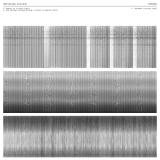
nicht am Lager

Bestelle jetzt und wir bestellen den Artikel für dich beim Lieferanten.

23,49

Last In: vor 3 Jahren
Mouse On Mars - Idiology LP

Mouse On Mars

Idiology LP

12inchTHRILLX098X
Thrill Jockey
09.09.2022

Idiology was originally released in 2001 and is now finally back on vinyl. This re-issue is pressed on white color vinyl and presented in a die cut jacket with artworked inner sleeve and free download card. From their beginnings in 1992, Cologne native Jan St. Werner and Dusseldorfer Andi Toma have consistently challenged electronic music"s paradigm in often surprising and always intriguing ways. Idiology is the duo"s seventh album and is no exception to this rule, as Mouse on Mars surround themselves with strings, woodwinds, brass and the band"s own heavily modified fleet of machines in the St. Martin"s Tonstudio. Fans should once again brace themselves for the inevitable shock of the new as Germany"s most irreverent audio renegades have created the perfect soundtrack for a highly sinister dance party. Kicking off with "Actionist Respoke", the album"s first single, Mouse on Mars officially declare their independence from glitchtronica"s shoegazing legions. Longtime collaborator Dodo Nkishi lends a uniquely warped vocal sensibility to the track which already features Mouse on Mars"s darkest grooves to date. The rest of the album continues to thicken the group"s sonic stew. Tracks such as "Presence" and "Catching Butterflies With Hands" have their populist intentions undermined by Werner and Toma"s meddling hands, while the duo reprise their flirtation with the orchestral as heard on the opening tracks from 2000"s Niun Niggung. At the other end of the spectrum, "Introduce" is a truly evil slice of twisted lympho-zoid hip-hop. Idiology takes no prisoners in its dual-pronged assault on the conventions of modern music. Only with the loungy closing number, "Fantastic Analysis" (a term Werner and Toma invented to describe their working process), do Mouse on Mars let the arrangements breathe a long sigh of relief, the calm after the storm. To enable these stylistic achievements Mouse on Mars enlist the help of partners in crime such as: Nkishi, the multi-talented Harald "Sack" Ziegler, house icon Matthew Herbert on piano, violinist Matty Arouse, in addition to fellow programming wizards Adam "Vert" Butler and F.X. Randomiz. The latter two toured with Mouse on Mars in 2000 as they successfully triumphed over audiences around the globe.

nicht am Lager

Bestelle jetzt und wir bestellen den Artikel für dich beim Lieferanten.

31,05

Last In: vor 3 Jahren
Various - Sleep Not Found 2x12"

Various

Sleep Not Found 2x12"

2x12inchTRP008
TRIP
17.01.2022

repressed !

Some people are just not destined to have enough sleep.When you don't sleep enough the world appears to be a different place, compared to the way it is when the mind is fully rested. In such cases very different scenarios may occur.
Starting with a dreamy melody of Roma Zuckerman's 'Sleep not found', which inspired the entire 008 album, and ending with a thirteen minute live recording by a_000, the side project of Alex Backdrop, the entire record has a dreamy and tripped out flow. 008 continues the tradition of gatefold double EPs as conceptual album.All tracks are selected around a particular story, a trip, and presented as a continuous sonic landscape.All tracks are structured in a way that they can be mixed one with another an endless amount of times making a continuous loop, a trip, that needs only end when the party stops. Kraviz works without release dates or deadlines, enabling her to achieve a certain sound bank to shape the story, unmasking the thoughts and unravelling like a dream. A1. Roma Zuckerman - Sleep Not found (North Edit) Apart form the fact that he leaves in Krasnoyarsk in the middle of Russia, very little is known about Roma (short version of the name Roman). But listening to his music and engaging in random short conversations late at night makes it clear that there are really a lot of things going on Romas mind... Minimalistic yet emotionally complex, his music always stands out with it's murkiness and signature moodiness that Roma creates like nobody else.
A2. Deniro - G Deniro continues the record's journey with his new live cut that like pretty much everything he did so far is a beautiful sparse atmospheric groover. He says he wanted it to be angry and it its done with triggering synths from the tr909 and tr808.
B1. Maayan Nidam - Infinite Rattle
Maayan was born in Tel-Aviv. She does not like computers and prefers to record her music live using hardware only. In order to do so she built her incredible studio in Berlin where she recorded "Infinite Rattle'.There is much more to come from Maayan on
B2. Bbbbbb - Prins Polo Caramel milkshake.
Side project by Bjarki-bbbbbb. Like any other normal Icelander, Bjarki really likes ice cream. In Iceland they are absolutely crazy about it.They walk the streets, ice cream in hand, even when its freezing cold outside. But even more than that Icelanders like Milkshakes with all sorts of added cookies and candies. Bjarki's favourite is called Prince Polo after the name of a chocolate bar. He always believed Prins Polo was an Icelandic brand but a couple of months ago somebody proved him wrong.
C1. Exos- dub jazz
In Iceland Exos is a legend. Everybody knows him there. He's been playing incredibly powerful and technically advanced techno sets since the late 90s and releasing delicious dub techno on Icelandic label Thule. Nina always appreciated his subtler, dubbier side, and this short recording a the continuation of it.
C2. Maaayn Nidam - Justice for some
This second live recording was a perfect fit for this album. Maayan has managed to create a particular mysterious night time dreamer here. Sound wise it's even more unique. It took a few times to get the master right, because we wanted to keep the original breathing of the machine that has captured a seriously freaky vibe. Maayan has always been one of Nina's favourite DJs as they share a similar attitude towards music. But after this tune she has also reserved a place in Nina's collective of favourite producers. D1. A_000
This is a side project of Italian native Alessio Meneghello (Alan Backdrop) & Enrico Voltan. . A beautiful 13-minute sonic journey.

nicht am Lager

Bestelle jetzt und wir bestellen den Artikel für dich beim Lieferanten.

20,46

Last In: vor 11 Monaten
Tristan Arp - Sculpturegardening

UK label Wisdom Teeth returns with its third long-form offering - Sculpturegardening: a new LP by Mexico City-based artist and producer, Tristan Arp. Incorporating elements of ambient, glitch, microhouse and downtempo, it’s an otherworldly record populated by knotty modular textures, blossoming floral melodies, tight pointillist rhythms and glossy acoustic instrumentation. The record was born from a process of “collaborating with machines”: using modular synthesisers to generate probabilistic melodies and rhythms, with the artist taking on the role of sculptor and curator. Throughout, the boundaries between the organic and digital are playfully blurred: we hear synthesisers played by guitars; emotive and distinctly human melodies generated by modular circuits; digital percussion drummed by hand; and live cello processed with a digital finish. The results sometimes recall Roman Flügel at his most colourful, or Benge’s meandering synth workouts, and even at times echo the dubbed-out cello experiments of Arthur Russell.But really sculpturegardening occupies a sonic world of its own, born from a unique web of happy accidents and incidental arrangements. The record’s bright colours and subtle rhythms make it a fitting follow-up to K-LONE’s 2020 LP Cape Cira and Facta’s 2021 LP Blush, and place it neatly alongside the work of label mates Duckett, Benoit B, Steevio and Iglew.
“With sculpturegardening, my concept was to approach music like gardening. I collaborated with machines inspired by the way a gardener collaborates with the earth. A gardener creates the conditions for the plants to come to life and develop on their own. In a similar way, I created a set of conditions and probabilities for the music to make itself. Who is making the music here? “A sculpture garden to me can be a really beautiful environment of balance between randomness and order––between nature and human interaction. Things that are either extremely organized or completely random tend to not resonate with us. On the other hand, something very interesting happens when a balance between the randomness and organization is struck. I invented this verb sculpturegardening to represent creating with the aim of this balance, and the with the aim of building a world in which each piece is a zone, or a sculpture in a garden.” The record will be twinned with a physical iteration - a sound installation at an exhibition curated by Tristan Arp titled Nada Se Pierde; Todo Se Transforma. The show opens on 9th October in Mexico City at Avant.dev. The physical sculpture garden will be a collaboration with Mexican sculptor Pablo Arellano. The sound installation will centre around a 4-channel audio system that gives voice to different sculptures and allows visitors to create a mix of the sounds depending on their position in the garden.

nicht am Lager

Bestelle jetzt und wir bestellen den Artikel für dich beim Lieferanten.

17,61

Last In: vor 4 Jahren
KHRUANGBIN - MORDECHAI REMIXES LP

"The art of the remix has been around for several decades, from the fervid imaginations of JA pioneers like Coxsone Dodd, Duke Reid or King Tubby to the disco enthusiasts of New York, such as Tom Moulton, who bequeathed us the modern iteration of the remix and provided a template from which most remixers still work. Moulton's first commercial remix, a reworking of BT Express' appropriately-named `Do It 'Till You're Satisfied', which stretched it from three minutes to a luxurious five, assisted the band in securing its first Billboard R&B Number One, as well as providing a pathway for remixers like Walter Gibbons, Larry Levan, Richie Rivera and Tee Sott, to completely reinvent the concept of a remix (and in some instances, deconstructing the idea of what comprised a song). It has subsequently been used as a marketing tool, a dancefloor-devastator, a gimmick (both cheap and expensive) or even as a way of reaching a different audience (think Tori Amos' `Professional Widow'). Khruangbin are no slouches when it comes to the remix themselves. They've been reworked before, in 2016, with the highly collectible EP on Boogiefuturo. But this time, they're taking it a step further with an album dedicated to the art. Entering the tight-knit world of a Khruangbin song can be a little daunting. They have created this entire universe in which the trio seem to function telepathically in the way the music is composed, arranged and played. To mess with their delicate eco-system can invoke feelings similar to that of an unwanted guest crashing a good-time party. "We write our music to be interpreted; this is another wonderful interpretation of the music," reassure Khruangbin. "There is something very vulnerable about letting others work on your music. But through the correspondence with the different artists, we gained a bigger connection to the songs themselves." The choice of remixers for this album is neither arbitrary nor accidental. They're not names picked randomly out of a hat or chosen via a throw of the dice. All have some connection to the band, sometimes personal friendships, musical connections, or simply mutual musical appreciation. Harvey Sutherland and Ginger Roots have both toured with the band, Kadhja Bonet and Ron Trent had their own mutual fan club going on, Knxwledge sampled `White Gloves' on a recent mixtape, Natasha Diggs and Soul Clap's Eli's are recent buddy-ups, Quantic is a mutual friend of Bonobo (crucial in the KB origin story), while I've known Laura for number of years; plus she is also godmother to one of Felix Dickinson's kids. Doesn't get much more intimate than that, right? Some of these remixes were specifically made so you can dance your ass off while getting down to the Khruangbin sound, while some might better be appreciated horizontally with headphones on, wearing fashionably loose clothes. The choice is yours. But all were made with love and respect for Khruangbin. "A good remix deconstructs, recontextualizes, or simply extends a good time," say the band. Amen and out." - Bill Brewster

nicht am Lager

Bestelle jetzt und wir bestellen den Artikel für dich beim Lieferanten.

17,02

Last In: vor 10 Monaten
Richard Youngs - CXXI

Richard Youngs

CXXI

12inchBT081
Black Truffle
24.09.2021

Black Truffle is pleased to announce the latest offering from underground legend Richard Youngs. Hyperactive since the late 1980s, Youngs is widely celebrated for his remarkably extensive and varied body of recordings. His works range freely over a vast terrain, wandering from tender acoustic balladry to raging psychedelic noise and orchestral D-beat, always imbued with his distinctive, often mournful, melodic sensibility and irrepressible sense of joyous experimentation.

Comprised of two side-long pieces, CXXI carried on the experiments with chance operations used to generate material on many of Youngs’ recent releases. On ‘Tokyo Photograph’, a slowly changing, randomly generated sequence of 121 minor chords played by sine waves and accented with a brushed snare hit on every change provides the harmonic foundation for Youngs’ fragile yet impassioned vocal performance, shards of field recordings and electronics and Sophie Cooper’s long, tape-echoed trombone notes. While the melancholic drift of the chords calls up prime Robert Wyatt sides like Old Rottenhat or Dondestan, only the most vestigial sense of song remains here, as Youngs arranges his minimal ingredients over a spacious fifteen-minute expanse that often drops to nothing more than the rich hum of sine waves.

‘The Unlearning’ carries on directly from the first side, presenting another, more harmonically varied, sequence of randomly generated chords played by sine waves, distressed with tape echo flourishes and sparsely sprinkled with electronic touches. Like some of Youngs’ most single-minded instrumental works in recent years, such as his recordings of foot-played guitar or his shakuhachi pieces, ‘The Unlearning’ is deeply meditative but entirely remote from ambient or minimalist cliches.

Named after the number of chord changes on the opening piece and (Chicago-style) the number of records Youngs has released, CXXI arrives in a striking monochrome sleeve featuring play-along chord charts for both pieces. Both rigorously conceptual and endearingly off-the-cuff, CXXI is classic Richard Youngs.

nicht am Lager

Bestelle jetzt und wir bestellen den Artikel für dich beim Lieferanten.

19,79

Last In: vor 4 Jahren
David Javelosa - 31st Century Lounge Music

Original compositions for virtual game music recorded in 1995 by Los Microwaves founder David Javelosa. That period in the 90s was one of rare times that Los Angeles was sort of a fun. You'd go somewhere for a drink and hear the late 1950s-early 1960s quirky instrumental pop that became known that year by the "Space Age Bachelor Pad Music" sobriquet. Many of the 14 tracks you are ideally hearing now for the first time were inspired by that long-gone cocktail-glass-shaped crack in time. Made in a tiny Santa Monica studio, surrounded by bits and pieces of torn-apart game consoles, trashed Casios and forgotten keyboards, inventing this set of ephemeral computer-generated sounds. Javelosa remembers what begat the tunes. Thrasher in the Fast Lane, inspired by driving on Bay Area freeways, fast, after hours, an Astor Piazzolla melody blowing with the wind, a party in Mexico City, an exotic perfume, Chet Baker in the background. He's always been fascinated by the concept of computer-generated jazz – still is. The sound of uncertainty, musical cut 'n' paste, excitement when something occurs that maybe has never happened before.

nicht am Lager

Bestelle jetzt und wir bestellen den Artikel für dich beim Lieferanten.

16,39

Last In: vor 4 Jahren
TSVI - SOGNO EP

Tsvi

SOGNO EP

12inchNH13
Nervous Horizons
30.06.2021

Nervous Horizon is happy to present 'Sogno EP', the new project by label co-owner Guglielmo Barzacchini, aka TSVI. Embarking on a journey inside the mind's most deep and intricate illusions and hallucinations, 'Sogno EP' is an exploration into various different types of dream states and altered states of consciousness. Characterised by intricate rhythms, slower beats inspired by techno, dancehall and little to no melodies, the record features Italian ASMR and spoken word to enhance the hazy and hypnotic mood permeating throughout. Taking a close look at his own states of unconsciousness and channelling them into his musical creation, TSVI dives into the abstract and eerie worlds of the subconscious with a project inspired by surreal dreamscapes, trance states and the concept of shadow work, in which each track explores a different aspect of the depth of the human psyche.

nicht am Lager

Bestelle jetzt und wir bestellen den Artikel für dich beim Lieferanten.

15,00

Last In: vor 4 Jahren
Anthony Moore, Dirk Specht, Tobias Grewenig - The April Sessions

This journey, this slowly drifting sonic meditation, is an 'inner soundscape', a dialogue between the senses, the conscience and the world, inside / outside, interconnected. Like waking up from a long dream, and being stuck into its echo. The April Sessions immerges the listener into a drone-ish universe, full of random acousmatic events, inner monologues and a vast and unwritten subjective map to be drawn.

The April Sessions has been living in a seedy hotel in Brussels for a few months. She listens to the sparse traffic outside her window, locked in and locked down. 'Everything is constructed', she says to herself, 'even the sound of a solitary aircraft at 25,000 feet traverses the sky no further out than the inside of my skull'. Other weird sonic phenomena criss-cross the inner cosmos of her brain and streak across her private sky like comets. And then there is the unshakeable presence of that inner monologue, known to her variously as the Tacit Dictator, the Subvocaliser and, nightmarishly enough, the voice of the Merlucid Hake. (Anthony Moore, St Leonards, 10th of March 2021)

Anthony Moore, Dirk Specht and Tobias Grewenig have known each other and worked together since the early 2000s. They have collectively participated in a number of projects including live performances and recordings. In 2016, as part of The Missing Present Band, they released the live LP 'The Present Is Missing' on A-Musik. The following year they released 'Ore Talks', a double LP, realised in collaboration with Therapeutische Hörgruppe Köln.

Anthony Moore was born in 1948, founded the band Slapp Happy (circa 1972) with Peter Blegvad and Dagmar Krause, then worked alongside a.o. Fred Frith and Tim Hodgkinson in the unclassifiable band Henry Cow. He released several solo albums, composed soundtracks for experimental movies. His path also crossed Kevin Ayers's, Pink Floyd's, Richard Wright's. He was appointed professor for research into sound and music in the context of new media at the Academy of Media Arts in Cologne, Germany. He still continues to write and perform.

Dirk Specht is a sound artist, musician and curator. He studied architecture and media art and is active in the fields of sound works for choreography, radio drama, sound art, film and video art soundtracks. He published releases with several bands and projects. He has been an assistant for research into sound from 2011 to 2016 at the Academy of Media Arts in Cologne, and is a founding member of Therapeutische Hörgruppe Köln.

Tobias Grewenig studied at the Academy of Media Arts in Cologne. He primarily deals with non-linearity in his audiovisual installative works and performances, including projects with the artist group 'Therapeutische Hörgruppe Köln', the ensemble 'The Knob, The Finger & The It' and the improvisation collective "Frequenzwechsel". The conception and development of electronic instruments and code is a key component of his artistic work. He lives and works in Cologne.

nicht am Lager

Bestelle jetzt und wir bestellen den Artikel für dich beim Lieferanten.

16,77

Last In: vor 4 Jahren
Driftmachine - Spume & Recollection

Driftmachine

Spume & Recollection

12inchUR130LP-RE
Umor-Rex
11.06.2021

Repress

Punctual like a Swiss watch, Driftmachine presents a new album that once again astounds and delights. We know their trademark: solid mechanical percussions, forceful bass and melodies systematically built around circular patterns. "Spume & Recollection" is the sixth Umor Rex album by the Berlin duo, and what better way to celebrate the label's 15th anniversary than with a new record from the masters of labyrinthine cables and patches. Regarding "Nocturnes" (UR 2014), their debut album, we described their sound as precise and symmetrical, identical concrete blocks mounted and articulated in a random order. Their already obsessive style continued to evolve with their third record, "Colliding Contours" (UR 2016), now pushing further into abstract dub, ultra-tense grooves, and even more kinetic loops, moving further away from conventional musical structures. Between these two albums they released the remarkable "Eis Heauton" (UR 2015), a kind of hypnotic experiment informed by shadowy atmospheres, chance, and an intuitive dialogue with their musical machines, a unique situation in which they acted as bemused observers in hunt for epiphanies, resulting in an exquisite amalgamation of lucid dream-logic and mechanical precision. A one-of-a-kind soundtrack for minute and wordless scenes unfolding in pitch-black back alleys and hidden, alchemical basements. A similar map was explored with "Shunter" (UR 2018), a superb secret meeting between avant-garde phantasmagoria and concrete experimentation. "Radiations" (UR 2017) offered B-sides and bonus tracks, in addition to collaborations with Shackleton and The Sight Below, a kind of preamble that united Driftmachine’s different expressions and leanings.

When Andreas Gerth and Florian Zimmer come up with new material, one listens with high expectation. Looking back on their discography, one could safely anticipate a high quality album densely layered with their familiar leitmotifs. And yet, "Spume & Recollection" takes us by surprise and finds a new way to transfix. Fresh methods and ideas are introduced to their dynamics and formula. Yes, of course, you can still expect a healthy dose of kosmische, which is one of the dominant features in Driftmachine’s DNA; but this is now entwined with novel materials, semi-material patterns of alien code stretching over exhilaratingly tense and detailed grooves, clouds of gas shifting on top of deep dub architecture and blocking out the sun for prismatic effect. Even more of a surprise is the immediate, streamlined nature of these tracks, making "Spume & Recollection" their most accessible record and, perhaps, the most addictive (and this without sacrificing the essential mystery and strangeness at the core of Driftmachine’s sound).

We have previously described their work as post-industrial-dub; right now, we might just call it hypno-music for man and machine to dance and dream together. "Spume & Recollection" takes this concept as far as it can go without breaking, and finds some strange new feelings, and weirdly danceable grooves, to shed some light on this dark and dazzling ride.

All songs written & produced by Andreas Gerth & Florian Zimmer in Berlin Mastered by John Tejada Artwork & Photos by Daniel Castrejón

nicht am Lager

Bestelle jetzt und wir bestellen den Artikel für dich beim Lieferanten.

19,12

Last In: vor 4 Jahren
Jordan Rakei - Late Night Tales: Jordan Rakei (Green Vinyl Version)

“I wanted to try and showcase as many people as I knew on this mix. My idea of Late Night Tales was to distil a series of relaxing moments; the whole conceptual sonic of relax- ation. So, I was trying to think of all the collaborators and friends that I knew, who’d recorded stuff with this horizontal vibe. Plus, I was also trying to help my friends' stuff get into the world. I know the story of Khruangbin blowing up after appearing on the series (in fact, I think that's how I discovered them). So, the main idea was to create a certain atmosphere, but also to help some of my favourite collaborators and bud- dies to give their songs a little push out into the world. Hope you like it” Jordan Rakei
Due for release on 9th April, Late Night Tales celebrate their 20th anniversary with the release of multi-instru- mentalist, vocalist and producer Jordan Rakei’s majestic compilation. The 28-year-old modern soul icon effortlessly stamps his own jazz and hip-hop driven sound all over this gorgeous array of handpicked tracks. A beautifully layered blend that is mirrored in the music he’s made, itcomes as no surprise that such a supremely gifted songwriter should deliver a mix that is all about the song.
Rakei, born in New Zealand, but raised in Australia, moved to the UK in 2015; he released his debut album, Cloak, with Oz label Soul Has No Tempo, but his two subsequentLPs, Wallflower and Origin, came out on Ninja Tune, the former#2 in Album Of The Year for Gilles Peterson’s Worldwide poll, while Origin was nominated for Best Album at the AIM Awards. Jordan had this to say on his upcoming mix:
As Jordan says,there’s so much more to the song selection on Late Night Tales’latest outing than a random collection of artists. Many have some sort of personal connection, so just as Bonobo provided a platform for the breakout of Khruangbin on a previous LNT, this may have the same ef- fect for Rakei’s friends. After a soothing opener from Fink, good friend and big influence Alfa Mist (part of the Are We Live collective) delivers ‘Mulago.’ “I want to champion their sound and show the world how good he is, and I thought it’d be fitting to start the mix with family,” says Jordan.
Next up is Charlotte Day Wilson with ‘Mountains,’ followed by ‘Count A Heart’ from Moreton, an exclusive collab- oration with Jordan, who grew up on the same street in Brisbane, Australia. “She was the first artist I ever collabo- rated with, and one of the first artists to be involved in mycareer,” he explains. Elsewhere we hear Scottish producer and multi-instrumentalist C Duncan’s haunting ‘He Came from the Sun,’ Barcelona collective Oso Leone deliver a dreamy ‘Virtual U’ and Bill Lauren’s ‘Singularity,’ which evokes a striking sense of time and place.
Snowpoet’s ethereal ‘Evitenity’ is a “long mediative nar- rative over a beautiful soundscape,” which at times seems chaotic, nicely juxtaposed with undeniable beauty, and Maro’s kooky songwriting shines on ‘Always And Forever.’ Long-time buddy Armon-Jones contributes ‘Idiom,’ and Jordan’s exclusive cover version is a two-for-one, Radio- head’s ‘Codex’ merging with ‘Lover, You Should’ve Come Home’ by Jeff Buckley and another exclusive,original com- position by Jordan, ‘Imagination.’ The latter works as a piece with the spoken (Spanish) word voiced by movie director Alejandro González Iñárritu (Babel, Birdman, and The Reve- nant,) who is a big fan of Jordan’s. “He messaged me when I went to L.A and asked to come to my show. I was in such shock and we hung out after. I thought it would be nice to get him to do this in his native tongue, because I don’t think that’s been done yet on the series.” It certainly is a familyaffair. Not theblood is thicker than water kind, but certainly musical kindred spirits.

vorbestellen09.04.2021

erscheint voraussichtlich am 09.04.2021

26,01
David Helbock - The New Cool

David Helbock

The New Cool

12inchACTLP9927
ACT
26.03.2021

“It was my wish to cool things down a bit,” says David Helbock. The
Austrian-born pianist has formed a new trio with guitarist Arne
Jansen and trumpeter Sebastian Studnitzky and it is clear when he
talks about it how far he has already moved on since his previous
group: “In the Random Control Trio we had a lot of instruments on
the stage, there was a lot of changing from one instrument to
another… and a lot of notes.” And the new group? “It is more about
emotions. And emotions are the most important thing in music.”
There are other differences too. Whereas Helbock’s previous groups
have consisted of musicians from his native Austria, he has now lived
in Berlin for five years, and ‘The New Cool’ presents his first group
formed with players who have also adopted Berlin as their home city.
With Arne Jansen, originally from Kiel, what appeals to Helbock is
that “he is such an unselfish player, very centred and very calm - and
subtle too. With him it’s all about the music.” Studnitzky is originally
from the Black Forest and Helbock liked “his style of playing with that
very airy sound” and the fact the range of timbres and moods he
creates with just one effects device. And how does it work in the
trio? “All three of us are melody players, but we are all capable of
holding back and giving space to the others.”
It would be wrong, however, to see the elegiac feel of much of this
album as a response to the pandemic. Helbock and producer Siggi
Loch were having “a productive and fruitful discussion” about these
ideas a full year before the recording sessions took place at the Emil
Berliner studios in August 2020. Loch has a fascination for the way
cool jazz “turned the wheel around” to connect with a wide audience
and references and connections with the cool jazz movement are
scattered throughout this album. It is also the very first time that
Helbock has included a tune by his teacher for over a decade,
American pianist Peter Madsen, who toured extensively with Stan
Getz and also taught Maria Schneider.
Helbock has been inspired by the innovations and concepts of Lennie
Tristano and his sense of affinity with the Chicago-born genius runs
deep. Tristano once decreed that “the jazz musician’s function is to
feel.” Helbock, Jansen and Studnitzky have taken that maxim to their
hearts.
LP pressed on 180g vinyl with digital download included.

vorbestellen26.03.2021

erscheint voraussichtlich am 26.03.2021

24,33
Puma & The Dolphin - Indoor Routine

There is definitely something "afro" inspired about this latest EP from Puma & The Dolphin, certainly in comparison to pretty much everything else I've ever heard from him, which includes a great EP on Canadian imprint Chambre Noir and some stellar inclusions on every one of Dj soFa's highly respected "Elsewhere" compilations.

I'm told that while immersed in domestic life during lockdown in Sofia, Bulgaria, the music evolved to take in what was happening at home and saw the inclusion of toy instruments, his own drum playing, the voices of his children playing and even the family parrots whistling and squawking in the background. These random ambient insertions when seen in the context of the hypnotic and percussive rhythms and timbres throughout are oddly reminiscent of the late, great Francis Bebey who, although culturally and physically a million miles removed, was also known for recording much of his work at home and who also featured the voices of his children playing.

In fact, it is as much the music's playfulness and simplicity that give the pieces their distinctive character, at times echoing the repetition and mesmerism of Raymond Scott's "Soothing Sounds For Baby" series. Yet, childrens' music this is not. There is a mysticism and depth on one hand and a willingness to experiment on the other that reminds me of pioneering experimentalist K. Leimer's early Eno-inspired tape outings as well (see "Supermarket" for example).

I asked Puma & The Dolphin's Nikko Names if he could share the story behind how these six tracks came together. He had this to say:

"This collection of pieces were created during a monotone period of my life which I have overlaid with colour: a time in which I surrender to the beauty of home life - watching my kids play, feeding the birds - entwining these sounds of my surroundings amongst the rhythmic layers of these pieces. Playing the drums to remind us of the next circle dance for four. There is something mystic to travel only in your head; a shamanic trip inside the body with no concepts and answers."


"Good stuff ... digging Am Am Am and Supermarket in particular" JD Twitch Optimo Music / Blackest Ever Black / Strut / On-U Sound

"Cool stuff" DJ SoFa Pingipung / Emotional Response / Kalahari Oyster Cult

nicht am Lager

Bestelle jetzt und wir bestellen den Artikel für dich beim Lieferanten.

11,13

Last In: vor 4 Jahren
Frank Bretschneider - abtasten_halten

Faitiche presents a new album by Frank Bretschneider. abtasten_halten was made as part of the raster.labor installation first presented at CTM Festival in 2019. It is perhaps the most radical work in Bretschneider’s distinctive oeuvre: abtasten_halten is a self-generating composition for synthesizer modules whose sole sound source is the movement of two VU meter needles. The resulting percussive sounds coalesce into rhythmic combinations – all random, without repetition. The album resembles a meditation on infinite rhythmic variation. abtasten_halten is Frank Bretschneider’s first release on Faitiche.

One sound can give birth to thousands of tones through self-fertilization. Pierre Henry, 1982

Frank Bretschneider on abtasten_halten:
abtasten_halten (sample_hold) is a largely self-generating composition for a modular synthesizer system. Self-generating here means that as soon as a current flows, the various modules interact, but within limits set by the composer via the connections between the modules (patches): timing, tempo, timbres, dynamics. These conditions are kept variable to a certain extent or left to chance, so that the composition created is always similar but never the same. On the one hand, the use of random generators opens up possibilities that would not otherwise have been considered. On the other, it offers the fascination of the unfinished and the unique: totally unexpected musical events that you might hear only once.

abtasten_halten combines my preferences for percussive music in general and electronic music in particular. Largely avoiding repetitive structures, the piece is more like a free improvisation, quiet and diffuse, but also extremely dense, in ever-changing contrasts and transformations.

The tone generators are two modified VU meters whose needles, driven by trigger impulses, create a simple one-bar pattern by hitting against a metal spring that is connected to a piezo element (thanks to Gijs Gieskes / Gieskes.NL). The tempo is continuously varied over a period of about ten minutes by several mutually modulating LFOs, ranging from about 0.06 Hz up to the lower audio range of about 18Hz.
The percussive sounds thus obtained are then passed through low-pass filters with moderate resonance and random frequency modulation to additionally colour the sound. Further processing is then executed by an echo module whose tempo and repetitions are again determined by random parameters. Finally the audio signal is occasionally enriched with reverb to add more spaciousness to the sound.

The concept for the installation raster.labor was developed by Olaf Bender, Frank Bretschneider and David Letellier. Many thanks to raster - artistic platform.

On Frank Bretschneider:

Frank Bretschneider works as a musician, composer and video artist in Berlin, making mainly electronic work based on complex rhythmic structures and interlocking textures, whose many-layered sound is inspired by the experimental set-ups of modern physics, often supplemented by perfectly synchronized computer-generated visualizations. In 1986, he founded AG Geige, one of the most influential underground bands in East Germany. In 1996, he co-founded the label raster-noton and has since released many solo albums.

nicht am Lager

Bestelle jetzt und wir bestellen den Artikel für dich beim Lieferanten.

17,44

Last In: vor 5 Jahren
CHRIS KORDA - POLYMETER

Chris Korda

POLYMETER

12inchMG131
Mental Groove
08.06.2020

Chris Korda's new album "Polymeter" is unique as entirely composed in complex polymeter sequences, a unique way to compose music with a new generation of algorithm, inside which Chris injects DNA of neo classical, ambient and jazz music.

This refreshing album will please both those who are into complex musical composition, conceptual music and who are just seeking for a beautiful, emotional and accessible, unique, musical moment.

This is a "In your hearts not the charts" album, as Irdial Discs once said.

Chris Korda is a transgender, vegan and relentless critic of consumerism, leader of The Church of Euthanasia (willing to halt the overpopulation through suicide, sodomy, abortion and cannibalism) and composer/performer of electronic dance music. She has previously released albums on Kevorkian, International Deejay Gigolo Records and Perlon.


Please read below Chris Korda's introduction to his new album "Polymeter":

Polymeter is an album of virtual solo instrumental performances. They're mostly piano pieces, along with a couple of guitar pieces. They sound uncannily similar to human performances, but they aren't. On the contrary, they are algorithmic music, pure applied mathematics.


The compositions are generated by elaborate networks of polymeter modulation. This sounds complicated and will need some explaining. But the most important point is that these are compositions I didn't write in any usual sense of the word. I created systems of rules, and the compositions emerged from those rules. The rules that generated these pieces can be conceptualized as kinetic sculptures that produce intricate non-random patterns of musical interference. The resulting patterns repeat themselves over long periods, measured in hours, days, or in some cases years.


In order to create this album, I had to write my own MIDI sequencer from scratch, because commercial MIDI sequencers lack the necessary degrees of freedom. My sequencer is also called Polymeter, and I started writing it in 1994. I used a relatively primitive version of it to create my earlier techno and electro releases, but the rapid evolution of computer technology made my original so ware hopelessly obsolete by the 21st century. Like its immediate predecessor "Akoko Ajeji" (Perlon) this album was created using a much more sophisticated version of my sequencer. It took me many years to learn the programming skills I needed to modernize my sequencer, which is one reason why such a long hiatus occurred between my older and newer releases.


Chris Korda

nicht am Lager

Bestelle jetzt und wir bestellen den Artikel für dich beim Lieferanten.

19,96

Last In: vor 5 Jahren
Stephen Paul Taylor - Synthpop Is Dead

ALBUM: I came up with the album title after watching a YouTube video by the channel "Watch Mojo" entitled "The Top Ten Dead Music Genres". In this video, they claimed that Synthpop is dead. Since everybody said I was a Synthpop artist, I was astonished to discover that the genre I play is considered "dead". It's relatively tongue in cheek because I don't believe any musical genre is dead and everything can be revisited and everything evolves. That being said, this is an album in which, at least musically, I am working within the boundaries of this genre, while at the same time starting to experiment with other, more modern sounds and concepts. Thematically, I tackle various topics: dysfunctional childhoods (Shortcut), heroic love in a dystopian nightmare (Billions of Years), self-destructive behaviour (Drink and Drive), unrequited, criminal love (House Arrest) and many others.

BIOGRAPHY: Glitter, glam and good vibes from the heart of Berlin! Stephen Paul Taylor (SPT) is a Canadian artist who went viral in David Bowie's old stomping grounds and has played hundreds of concerts, festivals and weddings all over Europe. He makes Synthpop-Art-Punk with undertones of New Order and Talking Heads.
Taylor was in Post-Art Synth-Folk duo, Trike, for five years before branching off into his solo project in 2014. Trike won a $20K award from "The Gong Show" (in Vancouver) in 2011, toured 22 countries, recorded an album in Denmark and Belgium and played hundreds of shows. Taylor then went solo and began playing all over Europe, from Denmark rooftops to weddings in East Germany. He gained a name for himself after achieving viral status and has continued to play all over Europe ever since. Well known for being a street musician, he essentially quit playing in the street in 2018 and focused exclusively on playing on the stage
His music is a blend of both old and new. A strong beat pulses beneath the catchy melodies and captivating lyrics float atop the whole ensemble. His bittersweet words often contrast the happy melodies within the music. He tackles unique subjects that reflect the 'ennui' our our current cultural climate. His newest album "Synthpop is Dead" is an ironic interpretation of the notion of musical genres actually "dying". Did Synthpop actually die or did it evolve? His new album also touches on other themes, from our dependance on fossil fuels to our addiction to self-destructive activities, like drinking and driving. The album uses healthy doses of humour to hammer down its themes
A year after going solo, SPT went viral with his song "Shi*t's F*cked" (His channel has 7.5 million views on YouTube) and appeared on many TV shows and well-known media outlets, from RBB to Arte to Comedy Central. He was also featured on Germany's "Das Supertalent" in 2016. He has 1.5 million listens on Spotify. He's been on the radio in Italy, Latvia, Canada and Australia, to name a few. He was also signed with Budde publishing and his racord label, "SPT Records" is a subsidiary of "Shitkatapult Records"
Dieter Bolle said his "80's influenced" music was "sehr geile" (very beautiful). Electric Six frontman, Dick Valentine, said he's "a firecracker".

nicht am Lager

Bestelle jetzt und wir bestellen den Artikel für dich beim Lieferanten.

17,44

Last In: vor 5 Jahren
Mecanica Popular - Estridentismo

Mecanica Popular is back 9 years after their LP “Neguentropia” and 4 years after Dead Cert reissued their first LP “”Que Sucede Con El Tiempo”

Mecánica Popular is ’s an experimental and industrial band formed in the late 70s by Luis Delgado (Finis Africae, Ishinohana...) and Eugenio Muñoz (Randomize), who rapidly gained cult status between the genre fans. The band experienced a renovated international success after their record "Que Sucede Con El Tiempo" (1984) was repressed in 2015 in Andy Votel and Demdike Stare's Dead Cert imprint.

Arriving 9 years after “Neguentropia”, “Estridentismo” is the group’s fourth record and the product of new material that was developed over the last 3 years.

“Estridentismo” is based on the avant-garde movement of the same name that was born in Mexico during the early 1920s (known as Stridentism in English). Each track uses this lens to explore a different thematic concept, from “Jouer Avec Schaeffer,” based on musical pioneer Pierre Schaefer, to “Mikado,” which draws inspiration from the sounds of Mikado steam locomotives.

Following the sound of their previous releases while also introducing elements that reflect their continued evolution, “Estridentismo” is a record that owes as much to the Industrial movement as it does to the work of early electronic pioneers.

Mecánica’s inventive style, and their blending of older techniques like tape manipulation with newer digital technology, allows the record to incorporate Industrial and experimental aesthetics to create a sound that plays with categories and ultimately creates its own.

The record has received praise from the press and artist alike, and it has been played by the likes of JASSS, Demdike Stare, Cera Khin and Ossia.

“Estridentismo” comes in a luxury vinyl edition with a printed inner sleeve full of text and pictures.

nicht am Lager

Bestelle jetzt und wir bestellen den Artikel für dich beim Lieferanten.

23,49

Last In: vor 5 Jahren
Mode / IQ - Mind / Soul

Mode/Iq

Mind / Soul

12inchPLA035
Platform 23
06.06.2019

"A manner or style, a frame of mind, thought or existence" (Mode).
"Intelligence quotient, the use of perception or awareness." (IQ).

Mode I/Q, the self-proclaimed unknown band, was a richly textured, bold project starting life in 1979 out the embers of punk and new wave resulting in a hypnotic convergence of love, the future, life and art.

Lucian and Nicolas, two creative spirits who viewed the world through their own prism, augmented by a moving cast of friends and acolytes, were together compelled to make great music. This was a concept from the heart, with transformativelive performances, channelling spaces into art "Mode" events orchestrated to bring about a full integration of site and sound.

Psychedelic, punk overtones. A funky electronic hybrid, mixing Kraftwerk with black music. Guitars delayed and twisted through echo boxes and micro synths. Casio and Commodores delivering the machine funk. CBGBs, Max's Kansas City and Danceteria - Mode I/Q played and much, much more.

Just 3 releases deep, 1984's mini LP Mind/Soul captures the band at their best. 6 songs to immerse, dance and shake the mind.

nicht am Lager

Bestelle jetzt und wir bestellen den Artikel für dich beim Lieferanten.

12,90

Last In: vor 6 Jahren
Breaklab - Grey specters of dead communication
nicht am Lager

Bestelle jetzt und wir bestellen den Artikel für dich beim Lieferanten.

17,61

Last In: vor 6 Jahren
Visible Cloaks with Yoshio Ojima and Satsuki Shibano - FRKWYS Vol. 15: serenitatem

serenitatem, the fifteenth installment of FRKWYS, RVNG Intl.'s collaboration series pairing intergenerational artists in creative conversation, joins Visible Cloaks with Yoshio Ojima and Satsuki Shibano, two trailblazers of the Japanese avantgarde music and visual arts scenes of the 1980s and 90s.

Yoshio Ojima began his career as a composer of environmental and ambient music, with a particular interest, and optimism, in the possibilities of generative software. His compositional pursuit of human synthesis with computerized forms was realized in its fullest potential alongside Satsuki Shibano, a pianist renowned for her interpretations of Erik Satie and Claude Debussy. Together, they were among a handful of influential Japanese artists whose innovations still resonate, if not more vibrantly than ever, well beyond the tightly-knit scene's original core. In the early 90s, Ojima was among the programmers of the influential satellite radio experiment St. Giga, a constantly-evolving sonic landscape that combined field recordings and sound collage with occasional readings of Japanese poetry. Satsuki was a regular reader for the station. This musical terrarium bloomed out of sight in a small Tokyo studio, a greenhouse of sound with no set start or finish time that audiences could tune into, absorb, and immerse.

The perpetual flow state of St. Giga — recordings of which Ojima shared with Visible Cloaks — would be highly influential to serenitatem's constitution. As Visible Cloaks, the Portland, Oregon duo of Spencer Doran and Ryan Carlile have developed their own set of creative strategies that form an aesthetic fuse point between human intention, aleatoric composition, and improvisation.

These are notions most recently reflected in 2017's Reassemblage and Lex, a respective album and EP in which the duo combined generative software and virtual representations of global instruments into lacy, interlocking patterns. Long time admirers of Ojima's work on albums like 1988's Une Collection Des Chainons, Doran and Carlile discovered after an online introduction that they shared with Yoshio and Satsuki an abiding interest in pre-classical composers, the Lovely Music, Ltd. label, and the British avant-garde, as well as a mutual respect for one another's techniques and processes.

The four musicians met in Tokyo, Japan at Sounduno Studios in December 2017, at the tail end of Visible Cloaks' first Japanese tour, to commence work on serenitatem. Leading up to the studio sessions, Doran and Carlile sent Ojima processed sound sketches recorded while on a European tour, which Yoshio would add to and return. Visible Cloaks would then fold Yoshio's edits back into the original compositions, which Doran and Carlile brought to the exploratory recording session. During that week together in Tokyo, the quartet made use of a number of creative strategies — 'echoing sound together,' as Yoshio puts it. Among the strategies, MIDI randomization gave the quartet melodic lines and what Doran calls 'randomized clouds,' or 'tightly grouped notes that become smeared tonal clusters functioning more like chords in themselves.' Carlile would also feed Ojima and Satsuki's text into Wotja, a generative music software which produced a MIDI language around which the quartet expanded their compositions.

'The aim,' Doran says of serenitatem, 'was to make a work that was not specifically ambient (or environmental), but something more multi-hued, weaving these deconstructive concepts into an album that has a deeper architecture underpinning it.' Accordingly, serenitatem is a marvelously sharp record, its sutures between human and machine virtually impossible to find but suggested everywhere you turn. The collaboration among Ojima, Satsuki, and Visible Cloaks is both musically and conceptually inseparable from the technology that made it possible. Throughout the album, Shibano's playing resonates like Satie's, her rhythms cascading like drops from leaves an hour after the rain. Overtones are stretched and warped like modeling clay, then spun around and shown off from multiple angles.

A single soaring note might seem to be suddenly plunged underwater, its richness of sound made shallow and its sharp edges blunted. Pittering chimes and rapidly warping vocal samples hang in the luxuriously glossy space, water trickles from ear-toear, familiar melodies rise from nothing and dissolve before they can be traced. With the depth of its emotional charge, serenitatem burns away the easy cynicism of the day, presenting itself as the kind of delocalized work of art the internet promised us decades ago — a synthesis of artistic visions, technological sophistication, futurist ambition, and, occasionally, ancient polyphony. Listening to it can feel a bit like tuning in to a 21st Century version of St. Giga: It's a place where the future still grows.

Visible Cloaks, Yoshio Ojima, and Satsuki Shibano's serenitatem, FRKWYS Vol. 15, will be available across LP, CD, and digital formats on April 5, 2019. The quartet will perform select live shows throughout 2019.

nicht am Lager

Bestelle jetzt und wir bestellen den Artikel für dich beim Lieferanten.

25,76

Last In: vor 6 Jahren
Various - Antologia de Música Atípica Portuguesa VOL2, Regiões

In 1959 Michel Giacometti moved to Portugal and dedicated the following thirty years of his life recording traditional music all over the country. In the present decade Portuguese music has been thriving and finally travelling abroad, long gone are the days those hidden gems were kept in secret in this distant corner of Europe. The discovery of current Portuguese music sparked an interest to Portuguese music, past and present.
With both of those ideas in mind, Giacometti and the interest in Portuguese music, 'Antologia de Música Atípica Portuguesa' creates an anthology of current sounds to the future. You can see it as history being made or a broad catalog of sounds that live and breathe the experimental and electronic that is happening in Portugal. The first step happened two years ago with the releasing of the first volume on this anthology, 'O Trabalho' ('The Labour') and we now move onto Vol. 2, 'Regiões' ('Regions'), with each track connecting with a different province from Portugal.
Some names return to this volume, like Live Low with the beautifully haunting 'Montemor' or Gonzo (our own Gonçalo F. Cardoso), affirming his path in building detailed and processed field recordings music. More than a list of names, or songs, this second volume of 'Antologia de Música Atípica Portuguesa' recreates a passage throughout different landscapes of Portugal, constantly leaving a trail of past, present and future. The trail doesn't limit itself to the music, but to the traditions contained in the sounds and the stories spelled by the words.
The beautifully slowed haunting-waltz 'Por Riba', by Síria (Diana Combo), sets everything in motion and builds the way to Random Gods' upbeat march 'Gazulo à Estronca da Santosa'. 'Malta Inquieta' (Ondness) embraces the most modern/contemporary side of this volume, proving that 'Regiões' goes beyond the idea of catalog or even its own concept of 'anthology' and provides music that's hard to categorize or even judge by modern standards. We are not afraid to say it: 'Malta Inquieta' is an experimental jazz-electronic modern gem.
It's followed by the guitar of Rui Carvalho, aka Filho da Mãe, with 'Manta', closing the A side with one of his enchantments. B side strikes with the aforementioned 'Montemor', setting the tone for a different trip, building up on more abstract and freeform music by Banha da Cobra ('Asylo'), Fantama ('Lamento das Beiras') and the track by Gonzo. 'Regiões' finishes with the right tone, fields recordings worked by Luís Antero, that tie the connection between Giacometti and the now - with the now still happening and building up on the story of the future 'Antologia de Música Atípica Portuguesa'.

nicht am Lager

Bestelle jetzt und wir bestellen den Artikel für dich beim Lieferanten.

14,08

Last In: vor 7 Jahren
Hans Berg - Sounds Of The Forest Forgotten

As humans living on the planet today, we have become so removed from our original, natural habitat—the forest—that we forget our wild roots, our primal, animal origins. Music is one of the things that can bring us back to that place, that can put us in contact with a felt world of instinct, immediacy, and presence: a world where language and the problem-solving mind are not needed, where the music keeps your mind and body in the present moment, and the point of dancing becomes the dance of our inner wildness and animality itself. Hans Berg's Sounds of the Forest Forgotten affirms that music can bring us to a state of mind and body that can help us feel what we've forgotten from the forest. The overlaying project of the album is to conjure musical and conceptual resonances between mysticism and nature, summoning the incredible depth and force of nature that we usually miss, especially living in contemporary urban cities. Sounds of the Forest Forgotten channels the creativity, playfulness, and freedom of a life both before and beyond ours through the sounds of analog and digital synthesizers, a modular system, drum machines, and computers. Recorded between Hans's studios in Berlin and on the Swedish countryside, the album similarly shuttles between contemplative and ecstatic, between delicate and powerful, mixing sublime psychedelic techno compositions like 'Emerald Sea' with acidic dance-floor bangers like 'Storm' and 'Milk Thistle,' all nestled between contemplative and textural ambient compositions like 'Butterfly' and 'Glow Worm.' Berg is known for his enthralling productions and energetic livesets that capture dance floors with his particular brand of hypnotic techno, replete with angular lines, affecting melodies, pulsating basslines, and big drums. He also produces atmospheric scores and ambient soundscapes to accompany the video art and installations of long-term collaborator and celebrated artist Nathalie Djurberg. Berg's live sets have found a home in nightclubs around the world, with recent gigs in Berlin, Stockholm, New York, Tokyo, and Melbourne, to name a few. In addition to 2MR, he has released his solo work on record labels including Ian Pooley's imprint Montage, Klasse Recordings, and The Vinyl Factory. His ongoing collaboration with fellow Swede Johanna Knutsson - as Knutsson/Berg - has led them to start the label UFO Station Recordings, on which they release their own material. The duo also has released on labels such as Idle Hands, Default Position, Kann, and Random Island.

nicht am Lager

Bestelle jetzt und wir bestellen den Artikel für dich beim Lieferanten.

18,45

Last In: vor 7 Jahren
Paul DeMarinis - Songs Without Throats

Paul DeMarinis is a key figure in the history of electronic music since the 1970s. Collaborator with the likes of Robert Ashley, David Behrman, and David Tudor, DeMarinis is a pioneer in the development of gallery sound installation and digital music technologies. Black Truffle is thrilled to announce the release of a double-LP collection, selected in collaboration with the artist, focussing on DeMarinis's exploration of synthesized voice and the digital analysis and manipulation of speech sounds. Drawing together tracks dispersed on compilations along with a number of pieces previously unheard in any form, Songs Without Throats offers a revelatory look into DeMarinis's alternately accessible and uncompromising production between 1978 and 1995. Opening with a mesmerizing piece from 1978 pairing the voice and tamboura playing of Anne Klingensmith with strings of letters spat out by a Speak n' Spell to the accompaniment of the randomised melodic patterns of DeMarinis's homebuilt electronic instrument 'The Pygmy Gamelan', the record then dispenses with the live human voice in favour of its recorded and synthetic doubles. We follow DeMarinis's restless probing of the possibilities of new technologies, from the hacked Speak n' Spell (which gives us the austere 'Et Tu, Klaatu' 1979, another duet with Klingensmith, this time on bowed psaltery, in which the toy's synthetic voice is stretched into an alien song) through to the use of digital audio samples manipulated with home computer technology in the early 1990s (including a remarkable dream-like collage piece that weaves a rare recording of Stalin's voice and bird-like electronic twittering derived from its formant-glides into a rich tapestry of samples reflective of the dictator's musical life). In between we get a rich sampling of DeMarinis's signature work with speech melodies - usually unnoticed melodic inflections that lie within speech patterns - which he analyses and translates into synthesized musical accompaniment. These pieces draw on a wide variety of textual and vocal sources, which range from the hilarious to the menacing ('Cincinatti (1830-1850)' sets a detailed description of butchering techniques, for example) and an equally broad range of musical conceptions, combining elements as seemingly unlikely as Beethoven's Opus 31 pianos sonatas and the sounds of 80s synth pop. The results are an extraordinary combination of the alien and the familiar. As DeMarinis himself characterises his work with vocal synthesis, this is 'a kind of signal that simultaneously carried and obscured meaning and ideation, even as it created a sound world totally alien in esthetic'. Presented in a deluxe gatefold sleeve with archival images and liner notes by Paul DeMarinis. Design by Stephen O'Malley. Mastered and cut by Rashad Becker at D&M, Berlin

nicht am Lager

Bestelle jetzt und wir bestellen den Artikel für dich beim Lieferanten.

24,83

Last In: vor 6 Jahren
ELpH vs Coil - Worship The Glitch

Elphvs.Coil

Worship The Glitch

2x12inchDAIS115LPX
Dais Records
08.08.2018

Dais Records Is Proud To Announce The Official Reissue Of "elph Vs Coil - Worship The Glitch". Remastered By Engineer Josh Bonati And Supervised By Coil's Drew Mcdowall, The Vinyl Release Is Pressed Onto Double 12" Lp Vinyl (from The Original 10" Release), And Is Packaged In A Gorgeous 24pt Stock Matte Gatefold Lp With Sticker And Vellum Track Listing Insert. . Also Available On Digipack Cd And Digital.

"unexplainable" May Well Be The Best Explanation For The Members Of The Uk Based Electronic Outfit Coil. Making A Radical Shift From Intentional Accessibility, By Means Of Traditional Pop Songwriting, To Abstract Happenstance, Coil Had Entered Into A New Phase In Their Career...uncharted Waters Utilizing What Was Then The Newest Computer Technology, Digital And Analog Synthesis And The Newly Formed Ideas That Something Outside Of Themselves Was Steering The Ship.

During The Studio Sessions That Developed Into What Would Become 'worship The Glitch'. Coil Became Aware Of Random Compositions Emitting From Their Gear, And Were At Odds With Constant 'accidents' That Were Perpetually Plaguing The Recordings. The Band Called These Unintentional Emissions "elph": A Conceptual Being That Is One Part Physical Equipment, One Part Celestial Being...constantly Playing The Role Of Trickster, Throwing A Wrench Into Coil's Methodology. Eventually, These Accidents And Mistakes Were Embraced By The Band, And The Process Of Misusing Audio Software To Create Intentional "errors" Was Adopted As A Musical Technique. The Acceptance Of The "mistake", And The Use Of Discovered Mistakes As Intentional Elements Slowly Became The Drive And Concept Behind The Album, Thus Birthing The Title 'worship The Glitch'.

Originally Released In 1995 On Coil's In-house Imprint Eskaton, Worship The Glitch Was Coil's First Proper Album-length Attempt At Conceptual Ambient Composition, With A Radical Focus On Chance. Seamless Vignettes Of Shattered Electronics (though Ebbing Softly And In Delicate Balance With Each Other) Provide An Underlying Uncertainty And Discomfort To The Listener.

nicht am Lager

Bestelle jetzt und wir bestellen den Artikel für dich beim Lieferanten.

31,05

Last In: vor 7 Jahren
ElpH vs Coil - Worship The Glitch

Elphvs.Coil

Worship The Glitch

2x12inchDAIS115LP
Dais Records
30.07.2018

Dais Records is proud to announce the official reissue of "ELpH vs Coil - Worship the Glitch". Remastered by engineer Josh Bonati and supervised by Coil's Drew McDowall, the vinyl release is pressed onto double 12" LP vinyl (from the original 10" release), and is packaged in a gorgeous 24pt stock matte gatefold LP with sticker and vellum track listing insert. . Also available on digipack CD and Digital.

"Unexplainable" may well be the best explanation for the members of the UK based electronic outfit COIL. Making a radical shift from intentional accessibility, by means of traditional pop songwriting, to abstract happenstance, Coil had entered into a new phase in their career...uncharted waters utilizing what was then the newest computer technology, digital and analog synthesis and the newly formed ideas that something outside of themselves was steering the ship.

During the studio sessions that developed into what would become 'Worship the Glitch'. Coil became aware of random compositions emitting from their gear, and were at odds with constant 'accidents' that were perpetually plaguing the recordings. The band called these unintentional emissions "ELpH": a conceptual being that is one part physical equipment, one part celestial being...constantly playing the role of trickster, throwing a wrench into Coil's methodology. Eventually, these accidents and mistakes were embraced by the band, and the process of misusing audio software to create intentional "errors" was adopted as a musical technique. The acceptance of the "mistake", and the use of discovered mistakes as intentional elements slowly became the drive and concept behind the album, thus birthing the title 'Worship the Glitch'.

Originally released in 1995 on Coil's in-house imprint Eskaton, Worship the Glitch was Coil's first proper album-length attempt at conceptual ambient composition, with a radical focus on chance. Seamless vignettes of shattered electronics (though ebbing softly and in delicate balance with each other) provide an underlying uncertainty and discomfort to the listener.

nicht am Lager

Bestelle jetzt und wir bestellen den Artikel für dich beim Lieferanten.

28,87

Last In: vor 7 Jahren
Oscar Mulero - Grey Fades To Green - Disc 4

Very LIMITED album discs available now:

This is the first album Oscar Mulero has released under his own name, after two acclaimed LPs under the moniker Trolley Route. Well known for his skills as a hard-edged, raw and floor-orientated techno dj, his productions go far beyond, digging deep into the intricate landscape of intelligent techno, floating moods, reminiscent atmospheres, harmony and detail.

Grey Fades To Green is the affirmation of his maturity as a producer, using both hardware and software in the pursuit of a highly coherent and diverse album.

The concept is split into two parts: The Grey and The Green, each one with its own character. The first part is rougher and meant for the dance floor, although pays full attention to detail and complexity. The second part is quieter, has a slower pace and is best enjoyed at home.

In The Green Oscar goes deep into the intellectual side of techno music and is heavily influenced by the post rave sound emerging from the UK in the nineties: Aphex Twin, Gescom, B12, Plaid, Autechre.. but with a contemporary approach.

This part of the album brings you melodies, harmonies, endless atmospheres, and hours of studio work. Each sound has been carefully constructed, nothing is left to chance: Every stereo panning, every change to the synth's parameters has been meticulously designed for your listening pleasure; just what you want when you listen to techno on headphones. Futuristic music made with the utmost care.

'Last Regrets' shows how melancholic harmonies can be a perfect match for abstract beats and a dub-step reminiscence. A fine piece of sci-fi techno.
'Grey Fades To Green' makes a clean break by offering us an industrial drum'n' bass piece with a techno approach that mutates as the minutes tick by. A dub-step melodic track. Futuristic breakbeat for the decades to come.

The final track of The Green, 'Silent Air', picks up the homage to the intelligent techno sound of the beginning and returns to random grooves, crunchy samples, impossible hi-hats and massive synthesizer and step sequencer routines. A perfect ending to this sound journey from the heart of the dance floor to the core of your mind.

A mature work that confirms Oscar Mulero as one of the most qualified studio animals on the techno landscape.

nicht am Lager

Bestelle jetzt und wir bestellen den Artikel für dich beim Lieferanten.

7,69

Last In: vor 5 Jahren
Various - Personal Vision

For this seconde release, the brotherhood from Marseille wanted to present their personal profiles, this EP is built like a Various, but built with a common touch, the random bass! Hypnotic, trippy and randomised, these tracks are done to push up the dancefloors. The last track is a downtempo vision of the eclectism of this southern crew, hip-hop beat and a bassline played by there friend Mike B4, a real candy to close this EP!

nicht am Lager

Bestelle jetzt und wir bestellen den Artikel für dich beim Lieferanten.

9,20

Last In: vor 6 Monaten
PVS - Bipolar Crowd

Pvs

Bipolar Crowd

2x12inchKEYLP01
Key Vinyl
15.06.2018

2x12"
PVS is an artist who is known for his solid productions on his own label H.omevvork (just to remind you of his masterpiece of four years 'fuckin' society') and on the prestigious M_Rec Ltd label of Max_M who sadly passed away (R.I.P.), and KEY Vinyl.

After years of experience in his private life and professional life that involved travelling around Europe, he took a moment of break from the scene. Now he's back and will release this own musical journey where he deeply expresses his personal musical maturity.

PVS developed an album where nothing has been produced randomly. The album can definitely be defined as a 'techno album', as is the general concept of KEY Vinyl - records that can be heard on the dance floor, but that can also be listened to at home.

Enjoy this album that shows 360 degrees techno by PVS.

nicht am Lager

Bestelle jetzt und wir bestellen den Artikel für dich beim Lieferanten.

15,59

Last In: vor 5 Jahren
Jemh Circs - (untitled) Kingdom 2x12"

Black To Comm's Marc Richter returns under his Jemh Circs guise for a 2nd album of sonic abstractions. In contrast to Black To Comm's analogue tape and vinyl based sound, in Jemh Circs he works with digital sources by primarily sampling modern Pop Music (and various other oddities) on YouTube (et al.) and sending chunks of it through a variety of arcane transformations and mutations.Using similar esoteric methods as on his 2016 debut album but with very different results the record deconstructs the hypermodern sound of Pop Music with a Post Punk attitude, energy and primitivism. Richter's combining disparate elements that shouldn't really work together but somehow all the chaos is making strange sense creating a collection of oddly diverging sonic vignettes with a surreal and anarchic spirit. This is music deeply rooted in the present but still difficult to pinpoint to a certain year or style."(untitled) Kingdom" converts a seemingly one-dimensional concept into a complex puzzle of ideas, sounds and narratives, completely assimilating the original sources and transforming them into novel entities with an unexpected melodic and rhythmic quality.Some press clips for previous releases:The overall effect is quite remarkable. Each track is like a hologram of pop music itself, a tiny part that reflects the whole. You almost feel that you could open them out and re-create entire popular music cultures. We'll be grateful for that when the next solar storm fries all of our hard drives. (Ian Sherred / The Sound Projector) In that way Jemh Circs is a record about process - not just how Richter loops and distorts and mutates his samples, but how the sounds of pop music create a particular sonic signature, one that gets more interesting the farther they're pulled from their original context. (Marc Masters / The Out Door) Recycling random audio off YouTube, Jemh Circs' process couldn't be less sentimental, but the results turn out to be sneakily emotive. (Philip Sherburne / Pitchfork)

nicht am Lager

Bestelle jetzt und wir bestellen den Artikel für dich beim Lieferanten.

20,97

Last In: vor 7 Jahren
Güero - My Way My Rules

Rebolledo's YOU AND YOUR HIPPIE FRIENDS imprint grows its groove footprint on international dance floors with the full-length debut of GÜERO, the latest vinyl outing from the Hippie Dance sister label and also its first fully fledged album project. To attentive hippie friends, the artist name should ring a big, funky bell - one that sounds exactly like the cut 'Convertible Ride' from the notorious 'A Very Nice Combinado Volume Uno' 12' release (YAYHF 01).
Back then, our hero was travelling under the somewhat more convoluted 'El Güero Fresa' monicker, but has since dropped some of those conceptual pounds in an effort to reach maximum sleekness. In the same vein, his debut album is a testament to ultimate funk-a-ficiency, digging deep into fizzy arpeggios and chunky basslines - and the occasional guitar cameo, giving tracks such as bubbling synth opener ELEKTRONIQUE, the neon-lit NIGHT CRUISING, bouncing electro disco roller ALTO FINAL or the programmatic SPACE DRIFTER just that little extra riff.
GUITAR MAYHEM, however, is anything but - you'll discover a pretty dank bouncer and certainly not the squealing meltdown one would expect. TECHNO MINIMAL doesn't do what it says on the tin, either, opting for an energetic bass 'n' organ workout instead. By now, you'll begin to understand why the album's called MY WAY MY RULES: GÜERO takes whatever sonic path he desires, no matter what - which is precisely why he chimes so well with YOU AND YOUR HIPPIE FRIENDS's steadily expanding motley crew of rave misfits and studio drop-outs. The way of the hippie is indeed a mysterious one.

nicht am Lager

Bestelle jetzt und wir bestellen den Artikel für dich beim Lieferanten.

32,56

Last In: vor 7 Jahren
Visible Cloaks - Lex

Visible Cloaks

Lex

12inchRVNGNL44
RVNG International
22.01.2018

Visible Cloaks' Lex proposes a utopian dream language and its accompanying sound, a limitless, delicate space developed by fluid musical techniques and subconscious voices. The six pieces comprising Lex simulate a more peaceful future, their mysteries telling a new tale in an unknown but imaginable melodic language. Visible Cloaks are the Portland-based musicians Spencer Doran and Ryan Carlile. Utilizing software-based composition rooted in randomization, MIDI-translation and chance operations, the duo has established an improbable humanist mode of music from esoteric processes. Following their self-titled debut album, Visible Cloaks offered Reassemblage, an album simultaneously honoring the post-Yellow Magic Orchestra school of avant musical adventure and diverging from it. Veering from the paths cleared by Japanese and Italian electronic pop and ambient artists of the mid-80s / early-90s, Reassemblage established Visible Cloaks' own camp in a forest of deep sound canopied by trees grown from synthetic seeds.The sound represented on Lex is webbed with sculptural arrangements and interpolated by the sounds of alien speech. These strange and serene utterances were created by Doran feeding a chain of multiple dialects and accents through a language translation software to create an auditory poetry of an evolved place and time.

Lex features both the final version of this process and earlier, simplified experiments with it ( Keys'). The idea - building on 'fourth world' or 'global village' type concepts - was to create a projected language that was a fusion of many,' Doran explains. The result was a very disorienting form of non-language that amplifies the lapses in meaning that occur with the inaccuracy of auto-translation software.'

Permutate Lex, a companion short film to Lex made by Visible Cloaks in collaboration with artist Brenna Murphy (who also created the artwork for Reassemblage and several virtualist videos for the album), is an integral counterpart, both visualizing an aesthetic alive with human form and guiding the sonic experience of the first five pieces: Wheel,' Frame,' Transient,' Keys,' and title track Lex.' World,' the longest piece presented on Lex, is redrawn from a generative composition originally produced for an installation Doran made with Murphy.

The original work incorporates LFOs and randomized MIDI-information, and was intended to variate indefinitely. In this 'fixed' version, World' provides a more conclusive view into the impossible musical environments Visible Cloaks make real. Longer than any track on
Reassemblage, World' expresses the deepening, patient intimations suggested by Lex.

Doran says the Lex attempts to communicate the essence of a world distant enough that it can't be captured or comprehended from the present, appearing only surreal and inscrutable.' The statement reveals a broader musical philosophy fueling this new moment, an awakened voice woven through complex melodic shapes and phrases establishes communication between listeners and the unknown, here presented by Visible Cloaks as sounds coloring the very edge of the envisionable.

nicht am Lager

Bestelle jetzt und wir bestellen den Artikel für dich beim Lieferanten.

24,33

Last In: vor 8 Jahren
30drop - The Time Of Cruel Miracles LP 3x12"

3x12"

I did not know what achievements, what mockery, even what tortures awaited me. I knew nothing, and I persisted in the faith that the time of cruel miracles was not past .
Stanislaw Lem (Solaris, 1961).

This paragraph from Solaris, the novel written in 1961 by Stanislav Lem, is the starting point for the concept this 30drop album has been built upon. Science fiction masters like Lem are one of the greatest influences for the artist, who devised this album after the mental challenges that humans should overcome in a future: encounter with beings from other civilizations: capable of interacting with us in a totally unthinkable way so far.

Away from what many a sci-fi blockbuster depicts, this work revolves around the idea that such meeting with alien species will be eminently a mental experience that will shock not only our cultural values but also our very own perceptions about what space/time/reality is a mindbending experience where everything we knew before dissolves around us and propels us to uncharted grounds. Terra incognita so far.

Bypassing the random track collection syndrome that plagues many of today s so-called techno albums this LP was conceived and devised from it s very beginning as a full, complete work in itself, best enjoyed in it s totality. A story-telling journey (very much in the tradition of seminal / genre-defining albums as UR s X-102) were tracks lead you to one another. Tracks can be enjoyed on their own, being all suited for dancefloor and dj-sets alike, but take a complete different meaning when put in the right context within the album.

Musically this long-player combines stripped-down rhythms, sweeping pads and hypnotical bleeping sequences woven together in an intrincate but subtle way, a fashion that harks back to the classic minimalist yet complex mid-90 s sound of Hood, Mills and T.Dixon sounds appealing both the mind and the feet.

Classic and futuristic at the same time, this is a compelling journey that opens with the eerie atmospheres of Our Understanding before really taking off with the cadential NGC1277. The hypnotic Captured Rotation sets the pace for the rest of album which oscillates between the exhilarating cosmic groove of Beyond Language and the contemplative stasis of The Mirror. Other highlights include the entrancing Goldene Spirale or the furiously busy Approaching Light.

The whole package is further rounded up by a set of remixes which showcase the different directions taken by techno producers this days: from Substance s solid Berlin-style to Architectural s spaced-out visions via Rivet s hard-hitting club bangers and Zero Mass abrassive experiments.

Text by: Dj Zero.

nicht am Lager

Bestelle jetzt und wir bestellen den Artikel für dich beim Lieferanten.

16,77

Last In: vor 5 Jahren
Art Alfie - Reveries Of

Art Alfie

Reveries Of

2x12inchBARN047LP
Studio Barnhus
06.03.2017

The reveries begin with a simple electrical hum - a starting signal for the appearance of a vibrant array of sound, shifting before us in seemingly random motion. Before we know it, all those pulsating melodies, razor-cut hifi-house beats and drunken robot jazz ensembles start forming into patterns, secretly & perfectly designed by one Art Alfie. A long time operator in Stockholm's small but insistent underground music scene, Oscar Wedrén broke through internationally in 2012 with the Karlovak project, founded with on-off studio and dj partner Rudolf Nordström, a.k.a. Mr. Tophat. The duo's inexplicably fresh takes on classic dance music tropes is as much a result of a brilliantly odd pairing of personalities as of a defined concept and a precise method in searching for the perfect house groove. While writing Reveries Of, released early spring 2017 through Studio Barnhus, Art Alfie freed himself of all conceptual footholds, delving instead deep into his archives of old and new memories and feels, working with improptu field recordings and emotionally-guided sampling processes. He came back with an intricate and personal debut album and he didn't lose his groove on the way.

nicht am Lager

Bestelle jetzt und wir bestellen den Artikel für dich beim Lieferanten.

16,09

Last In: vor 8 Jahren
Lenzman / Random Movement / Facing Jinx - Stayed Around Ep

With no sign of slowing down Rotterdam based Fokuz Recordings present their 79th vinyl release welcoming back Lenzman, the indisputed prince of soulful drum & bass. The flipside is covered by Hertfordshire based Peer Pressure Records head honcho Facing Jinx.

Random Movement's ''I Stayed Around'' taken from his 2015 Sleazy Bitch EP on Fokuz received critical acclaim and support by the likes of Technimatic and Spectrasoul fortifying his position as the go to guy for bridging the gap between rough and smooth. With this Lenzman reinterpretation the Dutchman turns the original concept into an energetic roller leaving his signature markings all over. Already one of the essential liquid tracks of 2016!

We continue on the flip with ''Meet You There'' by Facing Jinx feat. Peta Oneir that contains more subtle touches but is easily as strong in execution. Quality sounds coming from one of drum & bass' best kept secrets. A strong addition to any liquid DJ's record bag.

nicht am Lager

Bestelle jetzt und wir bestellen den Artikel für dich beim Lieferanten.

7,35

Last In: vor 4 Jahren
  • 1
Artikel pro Seite:
N/ABPM
Vinyl