Suche:random person

Styles
Alle
Felix Laband - Deaf Safari LP (2x12!)

Deaf Safari is an audio collage of subjects that interest me and speak of the world I live in. It is an album composed of sampled recordings from the media landscape that has been the soundtrack to my life over the last ten years.

The most important development in my current music and as can be heard on Deaf Safari has been my understanding of the beauty and power of the spoken word. I have experienced severe indifference to contemporary pop and electronic music as a whole over the last many years, as I have felt that social comment of any relevance has been ignored by music in general.
Deaf Safari attempts to bring sociopolitical comment into my music without taking any specific stand.
Sampled outside of musical influence directly from the news; from preacher sermons or from contemporary African documentaries.
I have finally created a story with sound that I feel accurately conveys my personal experience with the African world I live in.

My musical influences on this album lie mostly with local Kwaito house. Deaf Safari is an experiment within certain boundaries of the 4/4 genre, to create my own South African "house" album.
I am proud and inspired about the South African Kwaito house scene.
However, as with my first three albums, "Thin Shoes In June“ (2001) - "4/4 Down The Stairs“ (2002) and "Dark Days Exit“ (2005), I am still interested in making strange and evocative music.

American Roots music from the earlier periods of the 20th century has deeply resonated with me during the making of this album.
The incredible field recordings by Alan Lomax of Negro prison and chain gang work songs, and the
beautiful early recordings of artists such as Leadbelly have had a major influence on Deaf Safari.

I am truly excited to release this album and to start performing in the music world again. It has been ten years since I released "Dark Days Exit , and although I have been purposefully absent from the music world, I have none the less never stopped making music.
I feel that I have finally arrived at a mature and challenging stage in my pursuit of making emotional music of relevance .

Felix Laband 13.02.2015

Quotes about the previous album "Dark Days Exit“:

“Dark Days Exit is an interesting blend of latin, ambient, folk, and lounge flavors. The production and composition is top notch throughout, but check the choppy clicks of "Crooked Breath" or the eerie, melodic "Radio Right Now" for signs of true inspiration. A talent to watch.” XLR8R

“One of South Africa's most gifted electronic artists” Resident Advisor

"It has the dark sparkle of Air`s `Moon Safari`, random trippy flashes of Pink Floyd´s earlier sounds, and if David Lynch had based `Twin Peaks` in Cape Town´s City Bowl, then this would work as the soundtrack." SA Rockdigest

“An insane swirling ambient dub glitch freak show.“ Dazed & Confused Magazine

“Dark Days Exit … will ingrain itself into your psyche until you have no choice but to listen to it over, and over, and over again. Every time, it will be worth hearing.” Pop Matters

“Laband´s superbly-layered, multi-tiered soundscapes are tantalizingly tranquil and intriguingly unique – they amble like ambient and slip into the bloodstream like liquid LSD.“ rage.co.za

"An album that will bewilder due to weird electronic nature, but by the same token has the power to melt the soul. Mindblowing." Jon Freer

“For the younger generation, Felix Laband became a mythical legend.“ Below The Lion

"So gehört hat man das noch nicht - die komplett klischeefreie Deepnesss dieser verzwickt-geschickt gefrickelten Elektronik mit Suchtfaktor zehn ist geradezu beängstigend." INTRO

“Elektronische Musik, die schwerlich nur natürlicher, menschlicher klingen kann. Oder kurz gesagt: ein mehr als ausgezeichnetes Album. Tricky Chillout…“ GROOVE

“Man nimmt “Dark Days Exit” einfach nichts übel, alles scheint hier zu funktionieren.” DE:BUG

nicht am Lager

Bestelle jetzt und wir bestellen den Artikel für dich beim Lieferanten.

26,01

Last In: vor 3 Jahren
Howe Gelb - ‘The Coincidentalist’ and ‘Dust Bowl’ LP 2x12"

Released on gold vinyl, ‘The Coincidentalist’ and ‘Dust Bowl’ are two discs of Howe Gelb filled with randomness and happenstance, a typical treasure trove spanning all genres from alt country to Cohen-esque grandeur. They traverse, unflinchingly, his chameleon-like repertoire. This deluxe re-issue includes ‘Dust Bowl’ on vinyl for the very first time, with the records housed in a gatefold sleeve featuring updated artwork and liner notes. ‘The Coincidentalist’, originally released in 2013, features a raft of friends and collaborators including Bonnie Prince Billy, Andrew Bird, M. Ward, Steve Shelley, and Jason Lytle of Grandaddy with John Parrish on mixing duties. Ever the focal point of Giant Sand and Gelb releases, the Arizona Desert serves as a key inspiration for the record, animating the barren landscape with stories of those that have navigated them. Praise for the release was not short, with AllMusic proclaiming that it’s “one of Gelb's most realized efforts; despite its relaxed, airy presentation, it's musically and lyrically provocative, as poetic, strange, and mysterious as the desert itself." The accompanying collection ‘Dust Bowl’ is a personal sketchbook of songs, a more stripped back set than it’s counterpart. Featuring everything from the country blues of ‘Porch Banjo’ and ‘John Deere’, to off-kilter piano ballads like ‘The Old Overrated’ and ‘Reality Or Not’ and the deconstructed desert pop on ‘Forever And A Day’ and the fragile ‘Man On A String’. ‘Dust Bowl’ is an insider’s view of Howe’s songwriting craft, a unique insight into the man himself. “‘Dust Bowl’ was primarily for fans that have followed me for a while. ‘The Coincidentalist’ is for the friends of the fans.” Howe told Under The Radar. While Nightlife magazine reported that; “Without warning, the Giant Sand frontman and polymorphous countryman dropped this compilation of house recordings via Bandcamp… At a time when so much harmless, soulless folk resonates, Howe Gelb is a mandatory point of reference for any fan of the genre.”

vorbestellen30.10.2022

erscheint voraussichtlich am 30.10.2022

31,51

Last In: vor 2026 Jahren
Lee Tracy & Isaac Manning - Is it What You Want

As the sun sets on a quaint East Nashville house, a young man bares a piece of his soul. Facing the camera, sporting a silky suit jacket/shirt/slacks/fingerless gloves ensemble that announces "singer" before he's even opened his mouth, Lee Tracy Johnson settles onto his stage, the front yard. He sways to the dirge-like drum machine pulse of a synth-soaked slow jam, extends his arms as if gaining his balance, and croons in affecting, fragile earnest, "I need your love… oh baby…"

Dogs in the yard next door begin barking. A mysterious cardboard robot figure, beamed in from galaxies unknown and affixed to a tree, is less vocal. Lee doesn't acknowledge either's presence. He's busy feeling it, arms and hands gesticulating. His voice rises in falsetto over the now-quiet dogs, over the ambient noise from the street that seeps into the handheld camcorder's microphone, over the recording of his own voice played back from a boombox off-camera. After six minutes the single, continuous shot ends. In this intimate creative universe there are no re-takes. There are many more music videos to shoot, and as Lee later puts it, "The first time you do it is actually the best. Because you can never get that again. You expressing yourself from within."

"I Need Your Love" dates from a lost heyday. From some time in the '80s or early '90s, when Lee Tracy (as he was known in performance) and his music partner/producer/manager Isaac Manning committed hours upon hours of their sonic and visual ideas to tape. Embracing drum machines and synthesizers – electronics that made their personal futurism palpable – they recorded exclusively at home, live in a room into a simple cassette deck. Soul, funk, electro and new wave informed their songs, yet Lee and Isaac eschewed the confinement of conventional categories and genres, preferring to let experimentation guide them.

"Anytime somebody put out a new record they had the same instruments or the same sound," explains Isaac. "So I basically wanted to find something that's really gonna stand out away from all of the rest of 'em." Their ethos meant that every idea they came up with was at least worth trying: echoed out half-rapped exhortations over frantic techno-style beats, gospel synth soul, modal electro-funk, oddball pop reinterpretations, emo AOR balladry, nods to Prince and the Fat Boys, or arrangements that might collapse mid-song into a mess of arcade game-ish blips before rallying to reach the finish line. All of it conjoined by consistent tape hiss, and most vitally, Lee's chameleonic voice, which managed to wildly shape shift and still evoke something sincere – whether toggling between falsetto and tenor exalting Jesus's return, or punctuating a melismatic romantic adlib with a succinct, "We all know how it feels to be alone."

"People think we went to a studio," says Isaac derisively. "We never went to no studio. We didn't have the money to go to no studio! We did this stuff at home. I shot videos in my front yard with whatever we could to get things together." Sometimes Isaac would just put on an instrumental record, be it "Planet Rock" or "Don't Cry For Me Argentina" (from Evita), press "record," and let Lee improvise over it, yielding peculiar love songs, would-be patriotic anthems, or Elvis Presley or Marilyn Monroe tributes. Technical limitations and a lack of professional polish never dissuaded them. They believed they were onto something.

"That struggle," Isaac says, "made that sound sound good to me."

In the parlance of modern music criticism Lee and Isaac's dizzying DIY efforts would inevitably be described as "outsider." But "outsider" carries the burden of untold additional layers of meaning if you're Black and from the South, creating on a budget, and trying to get someone, anyone within the country music capital of the world to take your vision seriously. "What category should we put it in?" Isaac asks rhetorically. "I don't know. All I know is feeling. I ain't gonna name it nothing. It's music. If it grabs your soul and touch your heart that's what it basically is supposed to do."

=

Born in 1963, the baby boy of nine siblings, Lee Tracy spent his earliest years living amidst the shotgun houses on Nashville's south side. "We was poor, man!" he says, recalling the outhouse his family used for a bathroom and the blocks of ice they kept in the kitchen to chill perishables. "But I actually don't think I really realized I was in poverty until I got grown and started thinking about it." Lee's mom worked at the Holiday Inn; his dad did whatever he had to do, from selling fruit from a horse drawn cart to bootlegging. "We didn't have much," Lee continues, "but my mother and my father got us the things we needed, the clothes on our back." By the end of the decade with the city's urban renewal programs razing entire neighborhoods to accommodate construction of the Interstate, the family moved to Edgehill Projects. Lee remembers music and art as a constant source of inspiration for he and his brothers and sisters – especially after seeing the Jackson 5 perform on Ed Sullivan. "As a small child I just knew that was what I wanted to do."

His older brother Don began musically mentoring him, introducing Lee to a variety of instruments and sounds. "He would never play one particular type of music, like R&B," says Lee. "I was surrounded by jazz, hard rock and roll, easy listening, gospel, reggae, country music; I mean I was a sponge absorbing all of that." Lee taught himself to play drums by beating on cardboard boxes, gaining a rep around the way for his timekeeping, and his singing voice. Emulating his favorites, Earth Wind & Fire and Cameo, he formed groups with other kids with era-evocative band names like Concept and TNT Connection, and emerged as the leader of disciplined rehearsals. "I made them practice," says Lee. "We practiced and practiced and practiced. Because I wanted that perfection." By high school the most accomplished of these bands would take top prize in a prominent local talent show. It was a big moment for Lee, and he felt ready to take things to the next level. But his band-mates had other ideas.

"I don't know what happened," he says, still miffed at the memory. "It must have blew they mind after we won and people started showing notice, because it's like everybody quit! I was like, where the hell did everybody go?" Lee had always made a point of interrogating prospective musicians about their intentions before joining his groups: were they really serious or just looking for a way to pick up girls? Now he understood even more the importance of finding a collaborator just as committed to the music as he was.

=

Isaac Manning had spent much of his life immersed in music and the arts – singing in the church choir with his family on Nashville's north side, writing, painting, dancing, and working various gigs within the entertainment industry. After serving in the armed forces, in the early '70s he ran The Teenage Place, a music and performance venue that catered to the local youth. But he was forced out of town when word of one of his recreational routines created a stir beyond the safe haven of his bohemian circles.

"I was growing marijuana," Isaac explains. "It wasn't no business, I was smoking it myself… I would put marijuana in scrambled eggs, cornbread and stuff." His weed use originated as a form of self-medication to combat severe tooth pain. But when he began sharing it with some of the other young people he hung out with, some of who just so happened to be the kids of Nashville politicians, the cops came calling. "When I got busted," he remembers, "they were talking about how they were gonna get rid of me because they didn't want me saying nothing about they children because of the politics and stuff. So I got my family, took two raggedy cars, and left Nashville and went to Vegas."

Out in the desert, Isaac happened to meet Chubby Checker of "The Twist" fame while the singer was gigging at The Flamingo. Impressed by Isaac's zeal, Checker invited him to go on the road with him as his tour manager/roadie/valet. The experience gave Isaac a window into a part of the entertainment world he'd never encountered – a glimpse of what a true pop act's audience looked like. "Chubby Checker, none of his shows were played for Black folks," he remembers. "All his gigs were done at high-class white people areas." Returning home after a few years with Chubby, Isaac was properly motivated to make it in Music City. He began writing songs and scouting around Nashville for local talent anywhere he could find it with an expressed goal: "Find someone who can deliver your songs the way you want 'em delivered and make people feel what you want them to feel."

One day while walking through Edgehill Projects Isaac heard someone playing the drums in a way that made him stop and take notice. "The music was so tight, just the drums made me feel like, oh I'm-a find this person," he recalls. "So I circled through the projects until I found who it was.

"That's how I met him – Lee Tracy. When I found him and he started singing and stuff, I said, ohhh, this is somebody different."

=

Theirs was a true complementary partnership: young Lee possessed the raw talent, the older Isaac the belief. "He's really the only one besides my brother and my family that really seen the potential in me," says Lee. "He made me see that I could do it."

Isaac long being a night owl, his house also made for a fertile collaborative environment – a space where there always seemed to be a new piece of his visual art on display: paintings, illustrations, and dolls and figures (including an enigmatic cardboard robot). Lee and Issac would hang out together and talk, listen to music, conjure ideas, and smoke the herb Isaac had resumed growing in his yard. "It got to where I could trust him, he could trust me," Isaac says of their bond. They also worked together for hours on drawings, spreading larges rolls of paper on the walls and sketching faces with abstract patterns and imagery: alien-like beings, tri-horned horse heads, inverted Janus-like characters where one visage blurred into the other.

Soon it became apparent that they didn't need other collaborators; self-sufficiency was the natural way forward. At Isaac's behest Lee, already fed up with dealing with band musicians, began playing around with a poly-sonic Yamaha keyboard at the local music store. "It had everything on it – trumpet, bass, drums, organ," remembers Lee. "And that's when I started recording my own stuff."

The technology afforded Lee the flexibility and independence he craved, setting him on a path other bedroom musicians and producers around the world were simultaneously following through the '80s into the early '90s. Saving up money from day jobs, he eventually supplemented the Yamaha Isaac had gotten him with Roland and Casio drum machines and a Moog. Lee was living in an apartment in Hillside at that point caring for his dad, who'd been partially paralyzed since early in life. In the evenings up in his second floor room, the music put him in a zone where he could tune out everything and lose himself in his ideas.

"Oh I loved it," he recalls. "I would really experiment with the instruments and use a lot of different sound effects. I was looking for something nobody else had. I wanted something totally different. And once I found the sound I was looking for, I would just smoke me a good joint and just let it go, hit the record button." More potent a creative stimulant than even Isaac's weed was the holistic flow and spontaneity of recording. Between sessions at Isaac's place and Lee's apartment, their volume of output quickly ballooned.

"We was always recording," says Lee. "That's why we have so much music. Even when I went to Isaac's and we start creating, I get home, my mind is racing, I gotta start creating, creating, creating. I remember there were times when I took a 90-minute tape from front to back and just filled it up."

"We never practiced," says Isaac. "See, that was just so odd about the whole thing. I could relate to him, and tell him about the songs I had ideas for and everything and stuff. And then he would bring it back or whatever, and we'd get together and put it down." Once the taskmaster hell bent on rehearsing, Lee had flipped a full 180. Perfection was no longer an aspiration, but the enemy of inspiration.

"I seen where practicing and practicing got me," says Lee. "A lot of musicians you get to playing and they gotta stop, they have to analyze the music. But while you analyzing you losing a lot of the greatness of what you creating. Stop analyzing what you play, just play! And it'll all take shape."

=

"I hope you understood the beginning of the record because this was invented from a dream I had today… (You tell me, I'll tell you, we'll figure it out together)" – Lee Tracy and Isaac Manning, "Hope You Understand"

Lee lets loose a maniacal cackle when he acknowledges that the material that he and Isaac recorded was by anyone's estimation pretty out there. It's the same laugh that commences "Hope You Understand" – a chaotic transmission that encapsulates the duality at the heart of their music: a stated desire to reach people and a compulsion to go as leftfield as they saw fit.

"We just did it," says Lee. "We cut the music on and cut loose. I don't sit around and write. I do it by listening, get a feeling, play the music, and the lyrics and stuff just come out of me."

The approach proved adaptable to interpreting other artists' material. While recording a cover of Whitney Houston's pop ballad "Saving All My Love For You," Lee played Whitney's version in his headphones as he laid down his own vocals – partially following the lyrics, partially using them as a departure point. The end result is barely recognizable compared with the original, Lee and Isaac having switched up the time signature and reinvented the melody along the way towards morphing a slick mainstream radio standard into something that sounds solely their own.

"I really used that song to get me started," says Lee. "Then I said, well I need something else, something is missing. Something just came over me. That's when I came up with 'Is It What You Want.'"

The song would become the centerpiece of Lee and Isaac's repertoire. Pushed along by a percolating metronomic Rhythm King style beat somewhere between a military march and a samba, "Is It What You Want" finds Lee pleading the sincerity of his commitment to a potential love interest embellished by vocal tics and hiccups subtlely reminiscent of his childhood hero MJ. Absent chord changes, only synth riffs gliding in and out like apparitions, the song achieves a lingering lo-fi power that leaves you feeling like it's still playing, somewhere, even after the fade out.

"I don't know, it's like a real spiritual song," Lee reflects. "But it's not just spiritual. To me the more I listen to it it's like about everything that you do in your everyday life, period. Is it what you want? Do you want a car or you don't want a car? Do you want Jesus or do you want the Devil? It's basically asking you the question. Can't nobody answer the question but you yourself."

In 1989 Lee won a lawsuit stemming from injuries sustained from a fight he'd gotten into. He took part of the settlement money and with Isaac pressed up "Saving All My Love For You" b/w "Is It What You Want" as a 45 single. Isaac christened the label One Chance Records. "Because that's all we wanted," he says with a laugh, "one chance."

Isaac sent the record out to radio stations and major labels, hoping for it to make enough noise to get picked up nationally. But the response he and Lee were hoping for never materialized. According to Isaac the closest the single got to getting played on the radio is when a disk jock from a local station made a highly unusual announcement on air: "The dude said on the radio, 107.5 – 'We are not gonna play 'Is It What You Want.' We cracked up! Wow, that's deep.

"It was a whole racist thing that was going on," he reflects. "So we just looked over and kept on going. That was it. That was about the way it goes… If you were Black and you were living in Nashville and stuff, that's the way you got treated." Isaac already knew as much from all the times he'd brought he and Lee's tapes (even their cache of country music tunes) over to Music Row to try to drum up interest to no avail.

"Isaac, he really worked his ass off," says Lee. "He probably been to every record place down on Music Row." Nashville's famed recording and music business corridor wasn't but a few blocks from where Lee grew up. Close enough, he remembers, for him to ride his bike along its back alleys and stumble upon the occasional random treasure, like a discarded box of harmonicas. Getting in through the front door, however, still felt a world away.

"I just don't think at the time our music fell into a category for them," he concedes. "It was before its time."

=

Lee stopped making music some time in the latter part of the '90s, around the time his mom passed away and life became increasingly tough to manage. "When my mother died I had a nervous breakdown," he says, "So I shut down for a long time. I was in such a sadness frame of mind. That's why nobody seen me. I had just disappeared off the map." He fell out of touch with Isaac, and in an indication of just how bad things had gotten for him, lost track of all the recordings they'd made together. Music became a distant memory.

Fortunately, Isaac kept the faith. In a self-published collection of his poetry – paeans to some of his favorite entertainment and public figures entitled Friends and Dick Clark – he'd written that he believed "music has a life of its own." But his prescience and presence of mind were truly manifested in the fact that he kept an archive of he and Lee's work. As perfectly imperfect as "Is It What You Want" now sounds in a post-Personal Space world, Lee and Isaac's lone official release was in fact just a taste. The bulk of the Is It What You Want album is culled from the pair's essentially unheard home recordings – complete songs, half-realized experiments, Isaac's blue monologues and pronouncements et al – compiled, mixed and programmed in the loose and impulsive creative spirit of their regular get-togethers from decades ago. The rest of us, it seems, may have finally caught up to them.

On the prospect of at long last reaching a wider audience, Isaac says simply, "I been trying for a long time, it feels good." Ever the survivor, he adds, "The only way I know how to make it to the top is to keep climbing. If one leg break on the ladder, hey, you gotta fix it and keep on going… That's where I be at. I'll kill death to make it out there."

For Lee it all feels akin to a personal resurrection: "It's like I was in a tomb and the tomb was opened and I'm back… Man, it feels so great. I feel like I'm gonna jump out of my skin." Success at this stage of his life, he realizes, probably means something different than what it did back when he was singing and dancing in Isaac's front yard. "What I really mean by 'making it,'" he explains isn't just the music being heard but, "the story being told."

Occasionally Lee will pull up "Is It What You Want" on YouTube on his phone, put on his headphones, and listen. He remembers the first time he heard his recorded voice. How surreal it was, how he thought to himself, "Is that really me?" What would he say to that younger version of himself now?

"I would probably tell myself, hang in there, don't give up. Keep striving for the goal. And everything will work out."

Despite what's printed on the record label, sometimes you do get more than one chance.

nicht am Lager

Bestelle jetzt und wir bestellen den Artikel für dich beim Lieferanten.

11,72

Last In: vor 3 Jahren
Lee Tracy & Isaac Manning - Is it What You Want LP

As the sun sets on a quaint East Nashville house, a young man bares a piece of his soul. Facing the camera, sporting a silky suit jacket/shirt/slacks/fingerless gloves ensemble that announces "singer" before he's even opened his mouth, Lee Tracy Johnson settles onto his stage, the front yard. He sways to the dirge-like drum machine pulse of a synth-soaked slow jam, extends his arms as if gaining his balance, and croons in affecting, fragile earnest, "I need your love… oh baby…"

Dogs in the yard next door begin barking. A mysterious cardboard robot figure, beamed in from galaxies unknown and affixed to a tree, is less vocal. Lee doesn't acknowledge either's presence. He's busy feeling it, arms and hands gesticulating. His voice rises in falsetto over the now-quiet dogs, over the ambient noise from the street that seeps into the handheld camcorder's microphone, over the recording of his own voice played back from a boombox off-camera. After six minutes the single, continuous shot ends. In this intimate creative universe there are no re-takes. There are many more music videos to shoot, and as Lee later puts it, "The first time you do it is actually the best. Because you can never get that again. You expressing yourself from within."

"I Need Your Love" dates from a lost heyday. From some time in the '80s or early '90s, when Lee Tracy (as he was known in performance) and his music partner/producer/manager Isaac Manning committed hours upon hours of their sonic and visual ideas to tape. Embracing drum machines and synthesizers – electronics that made their personal futurism palpable – they recorded exclusively at home, live in a room into a simple cassette deck. Soul, funk, electro and new wave informed their songs, yet Lee and Isaac eschewed the confinement of conventional categories and genres, preferring to let experimentation guide them.

"Anytime somebody put out a new record they had the same instruments or the same sound," explains Isaac. "So I basically wanted to find something that's really gonna stand out away from all of the rest of 'em." Their ethos meant that every idea they came up with was at least worth trying: echoed out half-rapped exhortations over frantic techno-style beats, gospel synth soul, modal electro-funk, oddball pop reinterpretations, emo AOR balladry, nods to Prince and the Fat Boys, or arrangements that might collapse mid-song into a mess of arcade game-ish blips before rallying to reach the finish line. All of it conjoined by consistent tape hiss, and most vitally, Lee's chameleonic voice, which managed to wildly shape shift and still evoke something sincere – whether toggling between falsetto and tenor exalting Jesus's return, or punctuating a melismatic romantic adlib with a succinct, "We all know how it feels to be alone."

"People think we went to a studio," says Isaac derisively. "We never went to no studio. We didn't have the money to go to no studio! We did this stuff at home. I shot videos in my front yard with whatever we could to get things together." Sometimes Isaac would just put on an instrumental record, be it "Planet Rock" or "Don't Cry For Me Argentina" (from Evita), press "record," and let Lee improvise over it, yielding peculiar love songs, would-be patriotic anthems, or Elvis Presley or Marilyn Monroe tributes. Technical limitations and a lack of professional polish never dissuaded them. They believed they were onto something.

"That struggle," Isaac says, "made that sound sound good to me."

In the parlance of modern music criticism Lee and Isaac's dizzying DIY efforts would inevitably be described as "outsider." But "outsider" carries the burden of untold additional layers of meaning if you're Black and from the South, creating on a budget, and trying to get someone, anyone within the country music capital of the world to take your vision seriously. "What category should we put it in?" Isaac asks rhetorically. "I don't know. All I know is feeling. I ain't gonna name it nothing. It's music. If it grabs your soul and touch your heart that's what it basically is supposed to do."

=

Born in 1963, the baby boy of nine siblings, Lee Tracy spent his earliest years living amidst the shotgun houses on Nashville's south side. "We was poor, man!" he says, recalling the outhouse his family used for a bathroom and the blocks of ice they kept in the kitchen to chill perishables. "But I actually don't think I really realized I was in poverty until I got grown and started thinking about it." Lee's mom worked at the Holiday Inn; his dad did whatever he had to do, from selling fruit from a horse drawn cart to bootlegging. "We didn't have much," Lee continues, "but my mother and my father got us the things we needed, the clothes on our back." By the end of the decade with the city's urban renewal programs razing entire neighborhoods to accommodate construction of the Interstate, the family moved to Edgehill Projects. Lee remembers music and art as a constant source of inspiration for he and his brothers and sisters – especially after seeing the Jackson 5 perform on Ed Sullivan. "As a small child I just knew that was what I wanted to do."

His older brother Don began musically mentoring him, introducing Lee to a variety of instruments and sounds. "He would never play one particular type of music, like R&B," says Lee. "I was surrounded by jazz, hard rock and roll, easy listening, gospel, reggae, country music; I mean I was a sponge absorbing all of that." Lee taught himself to play drums by beating on cardboard boxes, gaining a rep around the way for his timekeeping, and his singing voice. Emulating his favorites, Earth Wind & Fire and Cameo, he formed groups with other kids with era-evocative band names like Concept and TNT Connection, and emerged as the leader of disciplined rehearsals. "I made them practice," says Lee. "We practiced and practiced and practiced. Because I wanted that perfection." By high school the most accomplished of these bands would take top prize in a prominent local talent show. It was a big moment for Lee, and he felt ready to take things to the next level. But his band-mates had other ideas.

"I don't know what happened," he says, still miffed at the memory. "It must have blew they mind after we won and people started showing notice, because it's like everybody quit! I was like, where the hell did everybody go?" Lee had always made a point of interrogating prospective musicians about their intentions before joining his groups: were they really serious or just looking for a way to pick up girls? Now he understood even more the importance of finding a collaborator just as committed to the music as he was.

=

Isaac Manning had spent much of his life immersed in music and the arts – singing in the church choir with his family on Nashville's north side, writing, painting, dancing, and working various gigs within the entertainment industry. After serving in the armed forces, in the early '70s he ran The Teenage Place, a music and performance venue that catered to the local youth. But he was forced out of town when word of one of his recreational routines created a stir beyond the safe haven of his bohemian circles.

"I was growing marijuana," Isaac explains. "It wasn't no business, I was smoking it myself… I would put marijuana in scrambled eggs, cornbread and stuff." His weed use originated as a form of self-medication to combat severe tooth pain. But when he began sharing it with some of the other young people he hung out with, some of who just so happened to be the kids of Nashville politicians, the cops came calling. "When I got busted," he remembers, "they were talking about how they were gonna get rid of me because they didn't want me saying nothing about they children because of the politics and stuff. So I got my family, took two raggedy cars, and left Nashville and went to Vegas."

Out in the desert, Isaac happened to meet Chubby Checker of "The Twist" fame while the singer was gigging at The Flamingo. Impressed by Isaac's zeal, Checker invited him to go on the road with him as his tour manager/roadie/valet. The experience gave Isaac a window into a part of the entertainment world he'd never encountered – a glimpse of what a true pop act's audience looked like. "Chubby Checker, none of his shows were played for Black folks," he remembers. "All his gigs were done at high-class white people areas." Returning home after a few years with Chubby, Isaac was properly motivated to make it in Music City. He began writing songs and scouting around Nashville for local talent anywhere he could find it with an expressed goal: "Find someone who can deliver your songs the way you want 'em delivered and make people feel what you want them to feel."

One day while walking through Edgehill Projects Isaac heard someone playing the drums in a way that made him stop and take notice. "The music was so tight, just the drums made me feel like, oh I'm-a find this person," he recalls. "So I circled through the projects until I found who it was.

"That's how I met him – Lee Tracy. When I found him and he started singing and stuff, I said, ohhh, this is somebody different."

=

Theirs was a true complementary partnership: young Lee possessed the raw talent, the older Isaac the belief. "He's really the only one besides my brother and my family that really seen the potential in me," says Lee. "He made me see that I could do it."

Isaac long being a night owl, his house also made for a fertile collaborative environment – a space where there always seemed to be a new piece of his visual art on display: paintings, illustrations, and dolls and figures (including an enigmatic cardboard robot). Lee and Issac would hang out together and talk, listen to music, conjure ideas, and smoke the herb Isaac had resumed growing in his yard. "It got to where I could trust him, he could trust me," Isaac says of their bond. They also worked together for hours on drawings, spreading larges rolls of paper on the walls and sketching faces with abstract patterns and imagery: alien-like beings, tri-horned horse heads, inverted Janus-like characters where one visage blurred into the other.

Soon it became apparent that they didn't need other collaborators; self-sufficiency was the natural way forward. At Isaac's behest Lee, already fed up with dealing with band musicians, began playing around with a poly-sonic Yamaha keyboard at the local music store. "It had everything on it – trumpet, bass, drums, organ," remembers Lee. "And that's when I started recording my own stuff."

The technology afforded Lee the flexibility and independence he craved, setting him on a path other bedroom musicians and producers around the world were simultaneously following through the '80s into the early '90s. Saving up money from day jobs, he eventually supplemented the Yamaha Isaac had gotten him with Roland and Casio drum machines and a Moog. Lee was living in an apartment in Hillside at that point caring for his dad, who'd been partially paralyzed since early in life. In the evenings up in his second floor room, the music put him in a zone where he could tune out everything and lose himself in his ideas.

"Oh I loved it," he recalls. "I would really experiment with the instruments and use a lot of different sound effects. I was looking for something nobody else had. I wanted something totally different. And once I found the sound I was looking for, I would just smoke me a good joint and just let it go, hit the record button." More potent a creative stimulant than even Isaac's weed was the holistic flow and spontaneity of recording. Between sessions at Isaac's place and Lee's apartment, their volume of output quickly ballooned.

"We was always recording," says Lee. "That's why we have so much music. Even when I went to Isaac's and we start creating, I get home, my mind is racing, I gotta start creating, creating, creating. I remember there were times when I took a 90-minute tape from front to back and just filled it up."

"We never practiced," says Isaac. "See, that was just so odd about the whole thing. I could relate to him, and tell him about the songs I had ideas for and everything and stuff. And then he would bring it back or whatever, and we'd get together and put it down." Once the taskmaster hell bent on rehearsing, Lee had flipped a full 180. Perfection was no longer an aspiration, but the enemy of inspiration.

"I seen where practicing and practicing got me," says Lee. "A lot of musicians you get to playing and they gotta stop, they have to analyze the music. But while you analyzing you losing a lot of the greatness of what you creating. Stop analyzing what you play, just play! And it'll all take shape."

=

"I hope you understood the beginning of the record because this was invented from a dream I had today… (You tell me, I'll tell you, we'll figure it out together)" – Lee Tracy and Isaac Manning, "Hope You Understand"

Lee lets loose a maniacal cackle when he acknowledges that the material that he and Isaac recorded was by anyone's estimation pretty out there. It's the same laugh that commences "Hope You Understand" – a chaotic transmission that encapsulates the duality at the heart of their music: a stated desire to reach people and a compulsion to go as leftfield as they saw fit.

"We just did it," says Lee. "We cut the music on and cut loose. I don't sit around and write. I do it by listening, get a feeling, play the music, and the lyrics and stuff just come out of me."

The approach proved adaptable to interpreting other artists' material. While recording a cover of Whitney Houston's pop ballad "Saving All My Love For You," Lee played Whitney's version in his headphones as he laid down his own vocals – partially following the lyrics, partially using them as a departure point. The end result is barely recognizable compared with the original, Lee and Isaac having switched up the time signature and reinvented the melody along the way towards morphing a slick mainstream radio standard into something that sounds solely their own.

"I really used that song to get me started," says Lee. "Then I said, well I need something else, something is missing. Something just came over me. That's when I came up with 'Is It What You Want.'"

The song would become the centerpiece of Lee and Isaac's repertoire. Pushed along by a percolating metronomic Rhythm King style beat somewhere between a military march and a samba, "Is It What You Want" finds Lee pleading the sincerity of his commitment to a potential love interest embellished by vocal tics and hiccups subtlely reminiscent of his childhood hero MJ. Absent chord changes, only synth riffs gliding in and out like apparitions, the song achieves a lingering lo-fi power that leaves you feeling like it's still playing, somewhere, even after the fade out.

"I don't know, it's like a real spiritual song," Lee reflects. "But it's not just spiritual. To me the more I listen to it it's like about everything that you do in your everyday life, period. Is it what you want? Do you want a car or you don't want a car? Do you want Jesus or do you want the Devil? It's basically asking you the question. Can't nobody answer the question but you yourself."

In 1989 Lee won a lawsuit stemming from injuries sustained from a fight he'd gotten into. He took part of the settlement money and with Isaac pressed up "Saving All My Love For You" b/w "Is It What You Want" as a 45 single. Isaac christened the label One Chance Records. "Because that's all we wanted," he says with a laugh, "one chance."

Isaac sent the record out to radio stations and major labels, hoping for it to make enough noise to get picked up nationally. But the response he and Lee were hoping for never materialized. According to Isaac the closest the single got to getting played on the radio is when a disk jock from a local station made a highly unusual announcement on air: "The dude said on the radio, 107.5 – 'We are not gonna play 'Is It What You Want.' We cracked up! Wow, that's deep.

"It was a whole racist thing that was going on," he reflects. "So we just looked over and kept on going. That was it. That was about the way it goes… If you were Black and you were living in Nashville and stuff, that's the way you got treated." Isaac already knew as much from all the times he'd brought he and Lee's tapes (even their cache of country music tunes) over to Music Row to try to drum up interest to no avail.

"Isaac, he really worked his ass off," says Lee. "He probably been to every record place down on Music Row." Nashville's famed recording and music business corridor wasn't but a few blocks from where Lee grew up. Close enough, he remembers, for him to ride his bike along its back alleys and stumble upon the occasional random treasure, like a discarded box of harmonicas. Getting in through the front door, however, still felt a world away.

"I just don't think at the time our music fell into a category for them," he concedes. "It was before its time."

=

Lee stopped making music some time in the latter part of the '90s, around the time his mom passed away and life became increasingly tough to manage. "When my mother died I had a nervous breakdown," he says, "So I shut down for a long time. I was in such a sadness frame of mind. That's why nobody seen me. I had just disappeared off the map." He fell out of touch with Isaac, and in an indication of just how bad things had gotten for him, lost track of all the recordings they'd made together. Music became a distant memory.

Fortunately, Isaac kept the faith. In a self-published collection of his poetry – paeans to some of his favorite entertainment and public figures entitled Friends and Dick Clark – he'd written that he believed "music has a life of its own." But his prescience and presence of mind were truly manifested in the fact that he kept an archive of he and Lee's work. As perfectly imperfect as "Is It What You Want" now sounds in a post-Personal Space world, Lee and Isaac's lone official release was in fact just a taste. The bulk of the Is It What You Want album is culled from the pair's essentially unheard home recordings – complete songs, half-realized experiments, Isaac's blue monologues and pronouncements et al – compiled, mixed and programmed in the loose and impulsive creative spirit of their regular get-togethers from decades ago. The rest of us, it seems, may have finally caught up to them.

On the prospect of at long last reaching a wider audience, Isaac says simply, "I been trying for a long time, it feels good." Ever the survivor, he adds, "The only way I know how to make it to the top is to keep climbing. If one leg break on the ladder, hey, you gotta fix it and keep on going… That's where I be at. I'll kill death to make it out there."

For Lee it all feels akin to a personal resurrection: "It's like I was in a tomb and the tomb was opened and I'm back… Man, it feels so great. I feel like I'm gonna jump out of my skin." Success at this stage of his life, he realizes, probably means something different than what it did back when he was singing and dancing in Isaac's front yard. "What I really mean by 'making it,'" he explains isn't just the music being heard but, "the story being told."

Occasionally Lee will pull up "Is It What You Want" on YouTube on his phone, put on his headphones, and listen. He remembers the first time he heard his recorded voice. How surreal it was, how he thought to himself, "Is that really me?" What would he say to that younger version of himself now?

"I would probably tell myself, hang in there, don't give up. Keep striving for the goal. And everything will work out."

Despite what's printed on the record label, sometimes you do get more than one chance.

nicht am Lager

Bestelle jetzt und wir bestellen den Artikel für dich beim Lieferanten.

23,49

Last In: vor 3 Jahren
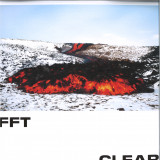
FFT - Clear LP

Fft

Clear LP

12inchNMBRS68
Numbers
27.06.2022

Numbers will release ‘Clear’, the debut album by FFT, on 24th June 2022.The result of three years of focused writing and programming by the London-based producer, ‘Clear’ is deeply psychedelic, defined by a mature sense of melody and structures crafted at a monumental scale.

Though FFT has previously released a handful of tracks under various names, it wasn’t until 2017’s ‘FFT1’ EP on theUncertainty Principle label that his production talents began to fuse into a distinct and personal style, especially evident in FFT’s‘Regional/Loss’ EP on The Trilogy Tapes in 2019, multiple releases on Bruk Records and2021’s ‘Disturb Roqe,’also released on Numbers.Through it all, FFT has mastered a complex sense of mood catalyzed by sound itself: He builds patches and presets from scratch, and feels these synths and software have their own objectives and reactions, creating a kind of compositional feedback loop.The result is an album that brings to mind a collision of electronic pioneers like Delia Derbyshire and Bernard Parmegiani, 2000’s braindance, the Max-imized wares of an OPN or Objekt and the rough rhythmatics of SND or Mika Vainio

The layering of sonic elements and intentions is starkly audible across these nine tracks.They can be seismically concussive and grandiose, but granular and fluid - echoing the Icelandic volcanic eruption that features in the artwork photography byGeorge Cowan. ‘Clear (Eight-Circuit Mix)’sets a euphoric tone immediately accelerated by the jagged sounds and vocal textures of ‘Redeemer’. ‘3 Sided’ channels hyper-urbanity from its almost entirely analogue palette, and by contrast ‘Disturb Roqe 2’is bracingly digital, gyrating in random cycles between clustered percussion, metallic splinters of audio and artificial vocal tics.

Opening side two, ‘You’ve Changed’ adheres to a more abrasive core, while ‘Heal’ and ‘Heal (Alt Mix)’evolved out of linked pieces in FFT’s live sets that grew into complete tracks in the months before Covid-19.The significant intensity of ‘Heal’ in particular was refined during strobe-heavy live performances and is the album at its most turbulent, the claustrophobia interrupted by dazzling arpeggios.The overall impact of 'Clear' is cinematic and precise, marking the arrival of an impressive electronic musician who is not new but has come into his own as a fully developed artist

nicht am Lager

Bestelle jetzt und wir bestellen den Artikel für dich beim Lieferanten.

20,13

Last In: vor 3 Jahren
Riya & Collette Warren - Two Sides of Everything 2x12"

Well-loved vocal starlets of the drum and bass scene, Riya and Collette Warren have teamed up to create the stunning vocalist lead LP, ‘Two Sides of Everything’. Both originally hailing from Birmingham the women have been friends for more decade, making this a powerfully personal project. This groundbreaking album is the first time two female vocalists have teamed up in the world of 170, and the release enlists some of the scenes best-known producers from all corners of DNB’s eclectic spectrum.

With tracks from seasoned veterans such as Technimatic and Mercury Prize Award Winner Roni Size and leaders of the new school like Whiney and Monrroe and the pair have ensured all musical areas of the scene are represented. Making sure to include some more female talent, the album also includes Kyrist, and vocal support from Sofi Mari and the legendary Tali who was a huge formative influence on this duo growing up. Separately both artists have carved out significant notches within drum and bass, with their vocals on tracks being heard on timeless classics such as the forever beautiful ‘Kismet’ by Hybrid Minds and the haunting ‘One Exception’ with DJ Marky and Tyler Daley.

nicht am Lager

Bestelle jetzt und wir bestellen den Artikel für dich beim Lieferanten.

26,68

Last In: vor 3 Jahren
Rudolf Abramov - Losing Perspective

Rudolf Abramov hit all Optimo Music's buttons at once. Drums, energy, songs, instrumentals, super production, Post Punk echoing, dance floor destroying, home listening friendly, and completely unique.

Who are they and what are they about? Read on...

Rudolf Abramov is a duo based in Berlin. They seem to open a door to unexpected musical encounters. It's an almost impossible task to sum up their sound in a comprehensible way, but in their own words their music is 'a response to a seemingly endless conflict about disgust, acceptance and love.' Since the duo likes to invite other musicians and fellow humans to add to their pieces, this often creates another layer to their unexpected musical encounters.

"Losing Perspective" is the result of a journey that began with a week-long recording session outside the city. Back in Berlin the skeletons of the track gradually grew in flesh, experience and emotion, describing this time in a vibrant and ever-changing city; a city where the faded colours sometimes seem more appealing than the unifying glow of the new.

In order to preserve for ourselves the conflicting colours in their fantastic disharmony, we have therefore watched the pieces change rather than moving them in a particular direction. The result is a number of tracks with different facets that derive from different moods and voices, indulging in diversity.

At the end of this process, we look back at this colourful collage and connect our own very personal history with it and both resolve in harmony. When asking the cat from our studio’s courtyard for example, she said that "Losing Perspective" was about stray tomcats who have lost their old home port to a newfangled establishment wandering randomly through the days in search of songbirds, distraction and rest. And we feel like she kinda has a point there.

nicht am Lager

Bestelle jetzt und wir bestellen den Artikel für dich beim Lieferanten.

12,14

Last In: vor 3 Jahren
Kenny Dickenson - Les Rivières

We finally made it: BEWITH100LP! And what better way for a re-issue label to celebrate such a landmark catalogue number than to give it to a record of new music. We couldn’t resist when the artist is Official Be With Family Member Kenny Dickenson and when the music is his lovely, lovely score to French-Vietnamese artist Mai Hua's 2020 documentary film “Les Rivières”. If you enjoy the more minimal, intimate piano of the likes of Nils Frahm or John Carroll Kirby’s solo work, you’re certain to fall for this beautiful album.

Taking six years to make, Mai’s film explores what happened when she brought her dying grandmother to France, pulling together four generations of women from the same family. Kenny’s score accompanies all the pretty things, sad things, dirty, beautiful, happy, broken and reborn moments of these women’s experiences.

The whole score is built around delicate, sparkling piano motifs. At times they’re joined by cello and complemented with ambient chords and other flourishes. It’s a very particular palette that Kenny and Mai established early on, as Kenny explains: “We had agreed on a particular sonic aesthetic early on in the process - to use specific and relatively minimal instrumentation, reflecting the intimacy of the picture. So piano and cello were quite prominent in instructing a sense of space and immediacy. Until I had to get the junkyard percussion out… ”

When it comes to describing the end results, Kenny’s happy to wear his influences on his sleeve:

“When the director and I sat down for the creative meetings early in the process, we watched ‘Wolf Children’, a Japanese animation film by Mamoru Hosoda. The amazing soundtrack by Masakatsu Takagi was a launching point for me and thereafter I leaned into more modern classical composers - Reich, Sakamoto, Glass as well as Jon Hassell’s Fourth World output. Richard Reed Parry’s ‘Music for Heart and Breath’ was a good early touchstone for me and Mark Hollis’ sparse, considered and deliberate approach was a constant presence. Also labels like Ghostly, ASIP and the ubiquitous Erased Tapes should probably get a nod here too…”

We’d even suggest there’s the occasional Yann Tiersen moment in there too.

Out of sheer necessity the collaboration between Kenny and Mai continued beyond this initial creative direction. With Kenny speaking neither French nor Vietnamese, Mai acted as translator, a process that naturally lead to discussing the film beyond just what was being said in the footage. Mai herself explains just how successful this relationship felt to her: “Music plays a very important role in all my work, particularly in Les Rivières. I cried every time Kenny sent me a new composition. I felt understood in a way that words cannot describe. It was absolutely magical and I am so happy if this music can make your soul vibrate too.”

Kenny composed much of the music in London, at the same time that Mai was shooting and editing. As the film took shape and the music also evolved, another challenge presented itself when Kenny relocated to Los Angeles part way through, resulting in Arnulf Lindners beautiful cello taking on new shapes- multi sampled, played and manipulated by Kenny into new compositions.

What Kenny has put together for the film score release is definitely a “soundtrack LP”, with the music arranged to work as a proper album in its own right that should be listened to from start to finish. Indeed the album also includes a new piece “Pour Marthe” that Kenny composed in memory of Mai’s grandmother who died after the film was finished.

Kenny’s personal highlight is also ours: “When I listen back to the album as a whole now, I never want part II of the Trilogy (Belles Larmes) to end. I have fond memories of recording it and I love how the dynamic of the piece gradually evolves from falling on the ‘1 and the 3’ to the ‘1 and the 2’. It’s so short and sweet, I keep wanting it to last for longer. But it’s kind of perfect as it is.”

Pretty much our sentiment for the album as a whole.

Running a record label means we often get asked advice about pressing a record. In this case the music was too good not to offer to release it ourselves. To Kenny, having the Les Rivières score on vinyl also feels like the final part of the project.

“It’s a beautiful thing to have it on vinyl. It’s quite an intimate soundtrack so there’s something really perfect about being able to listen to it on that format. When I was a kid, my Uncle Pat who used to work at Woolworths would visit and bring random records from their record department over to us. I can remember listening to “Theme From Exodus” by Ernest Gold. I had no idea what it was about but the imagery it conjured up when listening to that record was just mind blowing to me at that age. Soundtracks can have their own life on vinyl I think, and removed from their original context is this unique format for reinvention. So I’m excited that people who haven’t (and have for that matter) seen the film can have that experience.”

This might not be a re-issue, but the Les Rivières film score album has still been given the full Be With treatment. The vinyl has been mastered by Simon Francis (under Kenny’s ever-watchful eye/ear, of course), cut by Pete Norman and pressed at Record Industry. The sleeve follows the film’s poster and other promotional material, including Lucile Gomez’s almost magical illustration.

We’re under no illusions that many people reading this will have seen “Les Rivières”, but that doesn’t really matter when it comes to listening to the score. Just on its own, Kenny’s music still captures the robustness and the delicacy of lives lived.

nicht am Lager

Bestelle jetzt und wir bestellen den Artikel für dich beim Lieferanten.

20,63

Last In: vor 3 Jahren
MAZEN KERBAJ - SAMPLER / SAMPLED LP (2x12")

Featuring: Deena Abdelwahed, Rabih Beaini, Fari Bradley, Dieb 13, DJ Sniff, Gavsborg (Equiknoxx), Electric Indigo, Donzilla Lion (Nyege Nyege), Marina Rosenfeld, Microhm, Muqata’a, Bob Ostertag, Rrose

Project presentation:

Sampler / Sampled is an album made of two interdependent parts rather than a double-album.

The first part of the project, Sampler, is a trumpet solo album that catalogues the unique sounds and extended techniques that Mazen Kerbaj developed for the instrument in the past 25 years; it consists of 318 pieces ranging from less than a second to forty seconds each, and presenting different sonic materials. This catalogue of sounds works on various levels: first and foremost, it is a trumpet solo that could be played in its original order, or in random mode to create different pieces of music. But it is also a collection of samples that could be used for various applications (ringtones, phone sound effects, cinema…) and, of course, to create new pieces of music based on sampling.

The second part of the project is the composition Sampled for a musician working with loops and/or samples. The composition has one instruction: create a piece of music using solely tracks from Sampler as your sound source (with the possibility to use all kind of effects or treatment). Each interpreter/musician becomes thus a co-composer who appropriates the piece and makes it their own. In this regard, the musicians that were commissioned to play Sampled were chosen from different geographical origins and musical genres to create highly different and personal pieces of music.

One important output of this project is putting in practice the overused idea of music as a universal language. This idea is very present in “free improvised music” where musicians from different origins can meet for the first time and make music together without the need to adapt to different musical traditions. But here, the collective part of creating music in real time is not involved. It is rather the contrary: it starts with one middle-eastern musician creating a new language/vocabulary for his western instrument, to be later used by other musicians from around the globe who will appropriate this vocabulary and use it with their own language/grammar.
The final output of this double faceted album that was recorded during the Covid lockdown proved to be a very efficient new way to collaborate from a distance in times of world isolation, and ultimately put in practice the universality of music by breaking the boundaries of genres that are the most difficult to break.

nicht am Lager

Bestelle jetzt und wir bestellen den Artikel für dich beim Lieferanten.

27,52

Last In: vor 3 Jahren
KHRUANGBIN - MORDECHAI REMIXES LP

"The art of the remix has been around for several decades, from the fervid imaginations of JA pioneers like Coxsone Dodd, Duke Reid or King Tubby to the disco enthusiasts of New York, such as Tom Moulton, who bequeathed us the modern iteration of the remix and provided a template from which most remixers still work. Moulton's first commercial remix, a reworking of BT Express' appropriately-named `Do It 'Till You're Satisfied', which stretched it from three minutes to a luxurious five, assisted the band in securing its first Billboard R&B Number One, as well as providing a pathway for remixers like Walter Gibbons, Larry Levan, Richie Rivera and Tee Sott, to completely reinvent the concept of a remix (and in some instances, deconstructing the idea of what comprised a song). It has subsequently been used as a marketing tool, a dancefloor-devastator, a gimmick (both cheap and expensive) or even as a way of reaching a different audience (think Tori Amos' `Professional Widow'). Khruangbin are no slouches when it comes to the remix themselves. They've been reworked before, in 2016, with the highly collectible EP on Boogiefuturo. But this time, they're taking it a step further with an album dedicated to the art. Entering the tight-knit world of a Khruangbin song can be a little daunting. They have created this entire universe in which the trio seem to function telepathically in the way the music is composed, arranged and played. To mess with their delicate eco-system can invoke feelings similar to that of an unwanted guest crashing a good-time party. "We write our music to be interpreted; this is another wonderful interpretation of the music," reassure Khruangbin. "There is something very vulnerable about letting others work on your music. But through the correspondence with the different artists, we gained a bigger connection to the songs themselves." The choice of remixers for this album is neither arbitrary nor accidental. They're not names picked randomly out of a hat or chosen via a throw of the dice. All have some connection to the band, sometimes personal friendships, musical connections, or simply mutual musical appreciation. Harvey Sutherland and Ginger Roots have both toured with the band, Kadhja Bonet and Ron Trent had their own mutual fan club going on, Knxwledge sampled `White Gloves' on a recent mixtape, Natasha Diggs and Soul Clap's Eli's are recent buddy-ups, Quantic is a mutual friend of Bonobo (crucial in the KB origin story), while I've known Laura for number of years; plus she is also godmother to one of Felix Dickinson's kids. Doesn't get much more intimate than that, right? Some of these remixes were specifically made so you can dance your ass off while getting down to the Khruangbin sound, while some might better be appreciated horizontally with headphones on, wearing fashionably loose clothes. The choice is yours. But all were made with love and respect for Khruangbin. "A good remix deconstructs, recontextualizes, or simply extends a good time," say the band. Amen and out." - Bill Brewster

nicht am Lager

Bestelle jetzt und wir bestellen den Artikel für dich beim Lieferanten.

17,02

Last In: vor 9 Monaten
Low Standard Deviation - Bunker 4018

This very one Lost Boy from Brazil washed ashore the Lowlands' 'Finis Terrae', a produce of first-generation 'Shock Doctrine' and a real 'carioca' borne on the New World's 'Bossa Nova' and 'Esplendor Geometrico' of old 'Ancien Regime' para-military junta hat delivers quite some maximally dark and manic minimal wave of late, at times even slightly reminiscent of Siouxsie and the Banshees and of Joy Division, and all sung through old and charming, slightly dissonant 'Samba' melody lines vaguely hailing from certain sinister up-hill 'Cicade de Deus' margins of a distinctly distant 'Vagamundo' Purgatory past in either the Portuguese, the English or the Spanish tongues, rendering the paranoia 'facsimile in Limbo' of the coming Futurist Global Orderly State, this deep-state 'Novo Estado Novo' within the current 'Nova Bossa Nova', this 'Guerra Nova Prometheida por uma Terra Nova Prometida', the World's Electronic New Wave 'Fado' of Digital Panopticon and similar forms of purely A.I.-bot-generated (nothing personal!) Totalitarian Torture 'Technique du coup d'Etat' in genuine random numbers as already foreseen and shown to all some long time before in the Magic Green on that 'Funky Dollar Bill', 'Novus Ordo Seclorum'... Mastered by Guy Tavares

nicht am Lager

Bestelle jetzt und wir bestellen den Artikel für dich beim Lieferanten.

10,04

Last In: vor 4 Jahren
pizzagirl - softcore mourn

Pizzagirl

softcore mourn

12inchHEIST200LP
Heist Or Hit
16.07.2021

'softcore mourn' is the forthcoming second studio album by pizzagirl. “Pizzagirl is a revolving door. I like the idea of not knowing from which entrance I’ll emerge.” To date, the audio randomiser that is Liam Brown has spat out two EPs:‘An Extended Play‘ & ‘season 2’ (2018) and debut album: ‘first timer.’ (2019). While the extended players plaited together wonky 1-900-hotline-rock and ambient infomercial electronica into perfect pop pigtails, the LP styled the rest of the Pizzagirl mannequin to deliver a Frankenstein record of split-personality genre jumping. Liverpool based and self-producing out of his home studio (The Beatzzeria), the likes of The Guardian, The Sunday Times, Vice, Highsnobiety, NME, DIY and The Line of Best Fit confirm Pizzagirl’s status as a unique, quick-witted and vital energy. DJs are also lining up to call themselves fans, with the UK’s most trusted ears in Annie Mac and Huw Stephens at Radio 1 and Lauren Laverne, Shaun Keaveny, and Radcliffe & Maconie at BBC 6 Music all backing his tracks.

vorbestellen16.07.2021

erscheint voraussichtlich am 16.07.2021

20,13

Last In: vor 2026 Jahren
Various - Jeff Özdemir & Friends Vol.3 2x12"
 
18

In the past years, the multi-instrumentalist, composer, producer and music enthusiast Jeff Özdemir had been focusing on organising the Live-Mixtape series in Berlin, inviting numerous artists to join him on stage for every single event. However, the year 2020 put an end to this for all the painfully obvious and obviously painful reasons. Undeterred, he instead put together the third instalment of the »Jeff Özdemir & Friends« series, working with singers, musicians and groups such as Knarf Rellöm & DJ Patex, F.S. Blumm, Joanna Gemma Auguri, Elke Brauweiler and Elmer Kussiac for an 18-track … Now, is this a compilation or an artist album? Well, why just either this or that when it can just be both at once? This is »Jeff Özdemir & Friends Vol. 3« after all, emphasis on »&«.

Released on Karaoke Kalk like its two predecessors from the years 2015 and 2017, respectively, »Jeff Özdemir & Friends Vol. 3« sees the man behind Kreuzberg’s 33rpm record store and the 33rpm Records label showcase his qualities as a people remixer, songwriter and versatile musician. He put together a collection of groovy tunes picking up on funk and afrobeat rhythms, introspective ballads, a musically channeled punk attitude, shoegaze sentiments, spoken word passages, drones, glockenspiel sounds, seriously fun experimentation and much more. Just like on the cover artwork - courtesy of Marion Eichmann, Özdemir’s favourite visual artist - everything here seems to discreetly exist for itself while being tightly connected to everything else at same time.

While artists like Ertan Doğancı, Désolé Léo, eng°n, F.S. Blumm and Zap have been long-term collaborators of Özdemir and were featured on previous instalments of the »Jeff Özdemir & Friends« series, new faces and forces also enter the mix. The melancholic »Love Letters« for example marks the first (though hopefully not last) collaboration with singer Joanna Gemm Auguri, while Knarf Rellöm & DJ Patex’s appearance has been dreamt of collectively but hasn’t been fully realised until now.

Whether it’s Désolé Léo’s French crooner soul, the lo-fi synth pop song »Bored« featuring former Commercial Breakup singer Elke Brauweiler or the many different sounds and styles presented under the name Jeff Özdemir: no decision is ever made between either that or this musical direction, but all are being joyfully enjoyed together. Thus, throughout its 70 minutes, the stylistic diversity of »Jeff Özdemir & Friends Vol. 3« does not once border on randomness. Instead, these sometimes very different songs are marked by a shared atmosphere - a direct result of these very different musicians approaching their studio time together less as a chance to make music but more of a chance to carefully listen to and interact with each other.

Just like you’d expect it from someone deeply connected with the local music community who also happens to run a record store, Özdemir is also the kind of person who’ll hand you the worn copy of a record he has just fished out from the bargain bin because he knows about its potential to change your life. The contributions by Vackrow (»Kleistpark«), Gebrüder Teichmann’s old band BeigeGT (»Disco«), and Otto von Bismarck (»Zu viele Erinnerungen«, produced by The Whitest Boy Alive’s Daniel Nentwig) do not even feature Özdemir, but are simply musical pearls that were (almost) lost in the shuffle of music history and unearthed for this very special occasion. That’s just what friends do, don’t they?

vorbestellen18.06.2021

erscheint voraussichtlich am 18.06.2021

30,04

Last In: vor 2026 Jahren
Jordan Rakei - Late Night Tales: Jordan Rakei (Green Vinyl Version)

“I wanted to try and showcase as many people as I knew on this mix. My idea of Late Night Tales was to distil a series of relaxing moments; the whole conceptual sonic of relax- ation. So, I was trying to think of all the collaborators and friends that I knew, who’d recorded stuff with this horizontal vibe. Plus, I was also trying to help my friends' stuff get into the world. I know the story of Khruangbin blowing up after appearing on the series (in fact, I think that's how I discovered them). So, the main idea was to create a certain atmosphere, but also to help some of my favourite collaborators and bud- dies to give their songs a little push out into the world. Hope you like it” Jordan Rakei
Due for release on 9th April, Late Night Tales celebrate their 20th anniversary with the release of multi-instru- mentalist, vocalist and producer Jordan Rakei’s majestic compilation. The 28-year-old modern soul icon effortlessly stamps his own jazz and hip-hop driven sound all over this gorgeous array of handpicked tracks. A beautifully layered blend that is mirrored in the music he’s made, itcomes as no surprise that such a supremely gifted songwriter should deliver a mix that is all about the song.
Rakei, born in New Zealand, but raised in Australia, moved to the UK in 2015; he released his debut album, Cloak, with Oz label Soul Has No Tempo, but his two subsequentLPs, Wallflower and Origin, came out on Ninja Tune, the former#2 in Album Of The Year for Gilles Peterson’s Worldwide poll, while Origin was nominated for Best Album at the AIM Awards. Jordan had this to say on his upcoming mix:
As Jordan says,there’s so much more to the song selection on Late Night Tales’latest outing than a random collection of artists. Many have some sort of personal connection, so just as Bonobo provided a platform for the breakout of Khruangbin on a previous LNT, this may have the same ef- fect for Rakei’s friends. After a soothing opener from Fink, good friend and big influence Alfa Mist (part of the Are We Live collective) delivers ‘Mulago.’ “I want to champion their sound and show the world how good he is, and I thought it’d be fitting to start the mix with family,” says Jordan.
Next up is Charlotte Day Wilson with ‘Mountains,’ followed by ‘Count A Heart’ from Moreton, an exclusive collab- oration with Jordan, who grew up on the same street in Brisbane, Australia. “She was the first artist I ever collabo- rated with, and one of the first artists to be involved in mycareer,” he explains. Elsewhere we hear Scottish producer and multi-instrumentalist C Duncan’s haunting ‘He Came from the Sun,’ Barcelona collective Oso Leone deliver a dreamy ‘Virtual U’ and Bill Lauren’s ‘Singularity,’ which evokes a striking sense of time and place.
Snowpoet’s ethereal ‘Evitenity’ is a “long mediative nar- rative over a beautiful soundscape,” which at times seems chaotic, nicely juxtaposed with undeniable beauty, and Maro’s kooky songwriting shines on ‘Always And Forever.’ Long-time buddy Armon-Jones contributes ‘Idiom,’ and Jordan’s exclusive cover version is a two-for-one, Radio- head’s ‘Codex’ merging with ‘Lover, You Should’ve Come Home’ by Jeff Buckley and another exclusive,original com- position by Jordan, ‘Imagination.’ The latter works as a piece with the spoken (Spanish) word voiced by movie director Alejandro González Iñárritu (Babel, Birdman, and The Reve- nant,) who is a big fan of Jordan’s. “He messaged me when I went to L.A and asked to come to my show. I was in such shock and we hung out after. I thought it would be nice to get him to do this in his native tongue, because I don’t think that’s been done yet on the series.” It certainly is a familyaffair. Not theblood is thicker than water kind, but certainly musical kindred spirits.

vorbestellen09.04.2021

erscheint voraussichtlich am 09.04.2021

26,01

Last In: vor 2026 Jahren
MILAN W - IN BLOOM

Generative music seems to imply a systems approach to music, or a system that once created can utilise randomness in a creative way. The benevolence of nature’s creativity belies this musical term, and can flip the word ‘generative’ to mean to involve constantly flowing creativity with purpose. In Europe there was a time in the Pagan Renaissance when architecture would mirror nature’s generative quality. Sculptures and columns were to imply animation or movement.

That’s where Milan W.’s album comes through in 2020. His music involves the night shadows of Europe’s architecture and its growth. In Bloom personifies itself by showing Antwerp’s influential ‘Night Play’: a term that can relate to many European cities such as Bologna, Vienna, and so on and so on. The leftovers of Renaissance and gothic architecture are everywhere in Europe still; layers of ruins that can generate the impression of simultaneous time periods. Tracks like Spa and Helium Queen reveal and revel in the power of shadow movement that is generated by the night. In Milan W.’s past works, the poignant and simple creative play of dark wave and synth beat music was his vehicle for expression, but now on In Bloom he departs to a touching sidereal impressionism allied with Coil’s instrumental pieces on Horse Rotorvator — an album whose cover portrays the potential powers of the pavilion just as Milan W. is portraying the generative soul and alienation of Europe’s ‘Night Play’. Because of In Bloom we can come to believe that there is a secretive energy in alienation, a playfulness that is alight at Night.

nicht am Lager

Bestelle jetzt und wir bestellen den Artikel für dich beim Lieferanten.

18,03

Last In: vor 5 Jahren
STAR FEMININE BAND - DEBUT ALBUM

Without warning, a group of young girls from a remote region of Benin is shaking up the world of garage rock with breathtaking freshness, ingenuity and energy, playing spot-on, loud and clear.

A musician named André Baleguemon decided to form an exclusively female band rooted in the concerns of its time. He puts the spotlight on the guitar, drums and keyboard, instruments he has admired since his childhood, symbols of modernity in this remote region. His observation is simple: “In the North, girls have no room to advance and women are put aside. I simply wanted to show the importance of women in the societies of North Benin by forming a female orchestra “.
On July 25th, 2016, with the support of the city of Natitingou, André launched a press release on Nanto FM offering to help train girls in music for free. A few days later, dozens of aspiring musicians showed up at the Youth Center. “The girls who came didn’t know anything about music. We selected seven girls of the Waama and Nabo ethnic groups from the surrounding villages, some had never even seen these types of instruments before. “
The girls quickly became passionate about their new musical activities, learning how to play drums, guitar, piano and sing vocal harmonies. Their progress was astounding. An intense work of musical training took place, starting with drum workshops, their favorite instrument. Angelique and Urrice on drums and vocals, assisted by Marguerite, the third drummer. Sandrine is on keyboards, as is Grace, who also sings vocals. Julienne is on bass and Anne on guitar.
André’s determination is one of the key elements of this human and artistic success. The girls have already performed dozens of concerts in the region, forging and expanding an already solid repertoire, while attracting an ever-increasing local audience. In addition to musical progress, he has been personally involved with each family, showing them the importance of his project, both musically and humanly and in particular the fact that each girl must remain in school and not be forced into marriage.

At the end of 2018, their encounter with the young French sound engineer Jérémie Verdier accelerated the course of things. On a mission in the region, he called on his Spanish friends Juan Toran and Juan Serra who showed up with their recording equipment in order to record the band’s first songs in the annex of the local museum. Random encounters and fate led Jean-Baptiste Guillot to hear the tapes. He decided to go meet them at the end of 2019. This short but memorable journey sealed the fate of the record you are now holding in your hands.

nicht am Lager

Bestelle jetzt und wir bestellen den Artikel für dich beim Lieferanten.

18,03

Last In: vor 5 Jahren
JESSY LANZA - All The Time

Jessy Lanza

All The Time

12inchHDBLP51
Hyperdub
29.07.2020

The first 2000 copies of the LP will be available on transparent turquoise or pink vinyl, randomly picked. 'All The Time', Jessy Lanza's first album since 2016's 'Oh No', is the most pure set of pop songs that she and creative partner Jeremy Greenspan have recorded, reflective and finessed over time and distance. Innovative juxtapositions sound natural, like rigid 808s rubbing against delicate chords in 'Anyone Around', subtle footwork flutter giving a nervous energy to 'Face', unusual underwater rushes underpinning 'Baby Love'. The songs also sound more "live" than ever before. Jessy's voice is treated, re-pitched and edited on songs like 'Ice Creamy' and gestural sounds seem to respond to her lyrics in songs such as 'Like Fire', which reward the listener on repeated plays. More than previous albums, the lyrics on 'All The Time' became an important focus for Jessy too, channelling the negativity of anger and frustration arising from some significant changes in her personal situation into the text. These lyrics sometimes process raw feelings, which aren't obvious to begin with, but are soon felt, standing in stark contrast to the cushioned settings of the music. 'All The Time' has ended as a triumph and an abstracted diary of a sometimes difficult, but enduring friendship and creative relationship, and it's their best work yet.

nicht am Lager

Bestelle jetzt und wir bestellen den Artikel für dich beim Lieferanten.

21,22

Last In: vor 5 Jahren
4AM - Passion

4Am

Passion

7"-VinylERC085
Emotional Rescue
31.10.2019

Emotional Rescue again delves in the world of private pressings, with a reissue of British electronic pop meets proto-House duo 4AM. With copies of their self titled album now highly sought after, this timely reissue presents two of their songs as a stand alone 7".

Consisting of multi-instrumentalist Steve Kirby - piano, guitar, bass, programming - and vocalist Kevin Finch, 4AM came together after youths filled with a love of music. Following a string of band attempts, Steve dived in to the world of midi, allowing him to build a studio set up and play solo. A meeting with new work colleague Kevin quickly developed to joining forces to expand on his early demos.

Their melodic, dance-influenced pop draws on a love of Japan, OMD and The The, but also ECM jazz and a touch of "white boy soul". The TR-808 drum and hi-hats, string stabs and random acid squelches - although no TR-303 was used - highlights the influence the nascent House sounds emanating from the "second summer of love" of 1988 / 89 had in their music melting pot.

Over this, personal lyrics flow, full of honest emotions and a touch of youthful naivety thrown in - of relationships, love, sex and passions. Intended as a personal artifact, the original album was released in 1990 with no promotion or live shows and has taken until now, some 30 years, to find a cult audience. I want you with a Passion.

nicht am Lager

Bestelle jetzt und wir bestellen den Artikel für dich beim Lieferanten.

8,87

Last In: vor 6 Jahren
Random Movement - Lost On Purpose

We are proud to bring you Random Movement's latest musical works in a new album - "Lost On Purpose". This vinyl pressing contains four tracks from the full-length 15-track album (available for download upon purchase), drawn together with collaborative efforts of fellow producers Anthony Kasper, Jaybee, Dave Owen, and an inspirational vocal performance and lyrics by T.R.A.C. A philosophical journey of personal enlightenment, self-discovery and introspection, this album serves as a defining statement of Random Movement's artistry as a musician. The albums style varies across the board, from ambient soundscapes to heavy bangers, and from soulful, melodic tunes to dark, brooding tracks. Through the heavy influence of jazz, soul, funk and dub styles, Random Movement's sophomore album guides us deep along the yet-to-be-defined path of his ever-maturing and changing sound, with complex melodies, creative sound design, intricate sampling, acute production details and a heavy reliance on instrumental performance. This marks the Flight Pattern imprint's first release of an LP, and we are excited for all of you to hear it, take the journey, and get lost-on purpose.

incl. dl code for full album

nicht am Lager

Bestelle jetzt und wir bestellen den Artikel für dich beim Lieferanten.

9,87

Last In: vor 3 Jahren
TAKA - 1610

Civil Disobedience's seventh and debut vinyl release welcomes Polish artist, TAKA, to the family. TAKA presents 1610, an exceptionally personal and moving collection of music written and produced during a period of coming to terms with her father's passing. In her own words, "I began to feel strong again when I was creating this music." This is an EP where emotions of the darkest and lightest kind dance together.

TAKA executes her story in rough and ready beats, quirky and randomised percussion, with intense and emotive leads progressing throughout each track.

Entrusted to remix such precious material is TAKA's friend, Gareth Wild, who has crafted a signature heavy duty techno destroyer of "Cry Cry. "Cry Cry" especially promises to leave its mark on listeners, its leading chords are a raw melodic masterpiece, underpinned with a pummelling bassline. This piece of music penetrates the soul, awakens the subconscious, and leaves you radiating with profound hope and knowing. Those who hear it do not forget it.

nicht am Lager

Bestelle jetzt und wir bestellen den Artikel für dich beim Lieferanten.

8,03

Last In: vor 4 Monaten
Rebecca Goldberg , Andy Garcia and Mike Kretsch - the record shop EP

Cryovac Recordings is a collection of artists with a personal style that bleeds through their work. Cryovac artists have a relentless energy and passion for the music called techno. They are warriors with a clear vision and discipline on a course that is their own. The Cryovac crew believes in the vinyl record and has always been drawn to its’ unique quality it gives to sound. This e.p. celebrates the record shop, a crossroads of ideas and inspiration, where connections are made solid in the unity of the underground.

Rebecca Goldberg twists the 303 around a relentless 4/4 groove that evolves tweaks and pops into a sonic neurosis. Her yin yang approach applies a smooth steady delivery moving parallel to a raucous funk. The collaborative effort of Andy Garcia and Mike Kretsch produced a techno with moody rises and falls, stark kicks, and eerie effects held together with heroic energy. Toms and knocks, digital barks and farts, random clicks and ticks all fall into a galloping composition.

nicht am Lager

Bestelle jetzt und wir bestellen den Artikel für dich beim Lieferanten.

10,88

Last In: vor 17 Monaten
EON - 08

Eon

08

12inchNYT08
New York Trax
22.03.2019

° +

Under pseudonym "Jean Eon,' Johnny Quinn Alston is the artist behind the project _ - / _ EON, a performance endeavor born out of an intense personal and familial experience in 2011.

_ - / _ EON is a portrait of the various manifestations of energy throughout the wide span of time and space we inhabit, from human experience to multidimensional mystery, as well as a peek into the many emanations that eternal power can create.

Jean Eon is merely a human form attempting to channel what bits of existential mystery he can interpret into sensual experiential form. He aspires to be as comfortable as possible with existence as a flawed, but striving, human being, and is not to be confused with the immortal and cosmically balanced EON itself.

_ - / _ EON is larger than Jean, and the EON is also you, we, and everything in between. We are all already avatars of the EON, and this project makes an attempt to shape truths of the great æther from which we are carved and will presumably* return to, however bittersweet or glorious that eternal promise may be.

+ °

* do we ever really die

+ °

The music released under NEW YORK TRAX 08 results from physical expression as . _ - / _ . EON focuses on channeling physiognomy over dictation. The EP explores pre-existing textural combinations discovered and rescued from stone as opposed to built step by step.

The initial inspiration for this EP arose from driving past randomly unfolding rural scenes. A majority of . _ - / _ . EON's resulting work similarly gravitates towards a series of landscapes discovering each other rather than 'arrangements' played on repeat.

In the back of your head, you know those blinking aircraft warning lights on towers, but how mysterious and ominous they look before you discover what they really are On the surface, this project represents the sound of being struck by the sight of something for the first time, and the ominous, transfixing, thrill of not knowing what it is.

nicht am Lager

Bestelle jetzt und wir bestellen den Artikel für dich beim Lieferanten.

10,04

Last In: vor 6 Jahren
Peter Gordon - Eighteen

Peter Gordon

Eighteen

12inchFM016 / 169401
FORRINER MUSIC
23.10.2018

The New York Downtown Producer/Composer Returns With His First New Album In 3 Years

EIGHTEEN: the year of release, 2018. EIGHTEEN: the age at which I first used a synthesizer.

In creating EIGHTEEN I worked independently in the studio, initially building up tracks with synthesizers and found sounds recorded in my daily comings and goings. After working with the tracks over a period of months,I shared them with a few musicians, who added their own instrumental layers. Though working independently, we all shared a similar working process: working in our personal recording spaces, as opposed to larger recording studios.

The musicians are: Gabe Gurnsey (drums) of Factory Floor, with whom I collaborated on the Beachcombing EP and performed live at London's ICA. I appear on Gabe's newly released album Physical;

Larry Saltzman (guitar) has played in my Love Of Life Orchestra since the 1970's. Well-known for his work with Arthur Russell ('Kiss Me Again', Flying Hearts), he is in high demand in NYC by acts such as Simon and Garfunkel;

Paul Nowinski, (bass) has played with LOLO since the 1980's. Paul has an impressive list of credits, including Les Paul, Keith Richards, Bernard Purdie and the Boston Pops; Matt Mottel, (electric piano), is the newest addition to the Love Of Life Orchestra. He is half the duo Talibam!, a leading act in the noise jazz scene; Lewin Barringer, (guitar), is a talented guitarist and producer in Philadelphia.

After mixing the final tracks, I brought the mixes to Berlin. There I worked with the brilliant mastering engineer Mike Grinser who helped to give the album a unified sound.

I think of this album as electronic music. It was created in my home studio, using analog and digital synthesizers, found sounds recorded on my phone, and instrumental parts contributed by friends. Finely crafted melodies and harmonies are set against subway noises, street construction, and distant foghorns. Sometimes there are sustained clusters, generated by my leaning against the keyboard. Deliberateness paired with randomness: this is what guided the artistic process.

This album is atypical for me as I am not playing saxophone. (I do play one reed instrument - a harmonica.) I grew up with the sax as my primary instrument. Yet my father was a radio journalist so the reel-to-reel tape recorder was a ubiquitous presence in the family home. From an early age,

I experimented with the tape machine: recording, overdubbing and splicing tape. I learned about Varese from Frank Zappa liner notes; I read John Cage's 'Silence.' Electronic music was on my radar.

My first exposure to an actual synthesizer came when I recorded my first single at the fabled Sound City Studio in Van Nuys, CA. The studio had a custom Neve board, but it also had a firstgeneration Moog modular synthesizer sitting unused in the maintenance room. I asked and they kindly let me experiment with it. Soon, I enrolled at the University of California - San Diego after I discovered they had separate studios for their Moog and Buchla systems. These large modular synthesizers were affordable then only by institutions and rock stars. But these would be soon eclipsed by smaller, cheaper synths in the 70's and early 80's. In the same way, recording studio technology became accessible in the 90's. . And thus the personal computer and digital audio allowed studio quality production in the home studio. Electronic music had become democratized.
Handmade music by way of digital technology: this is the music of EIGHTEEN

nicht am Lager

Bestelle jetzt und wir bestellen den Artikel für dich beim Lieferanten.

22,23

Last In: vor 7 Jahren
Andy Garcia - My Own Way

Cryovac Recordings is proud to release its' 20th edition on random colored vinyl. Cryovac is a gathering of minds that work together to create a physical record of their sound in this time. We go our own way in production and arrangement for our personal vision to endure. Our goal is to add a new layer to the Detroit soundscape.

D.J. Roach is a techno activist with a rhythm agenda of percussive techno. His banging and clanging romps rock through breakdowns and back again. Conga and claps work together to form a shaky funk. what is needed for a healthy dancefloor.

A.Garcia's subtle drone rides waves of synth in an offering of minimal ease. His moody atmosphere turns tone in soulful harmony; while simple drumming builds to a nonchalant bop. The rise and fall of the elements allow you to examine the track on all sides. Garcia smoothes out an early morning gem that is taylormade for a smoke.

nicht am Lager

Bestelle jetzt und wir bestellen den Artikel für dich beim Lieferanten.

9,87

Last In: vor 17 Monaten
Various - Personal Vision

For this seconde release, the brotherhood from Marseille wanted to present their personal profiles, this EP is built like a Various, but built with a common touch, the random bass! Hypnotic, trippy and randomised, these tracks are done to push up the dancefloors. The last track is a downtempo vision of the eclectism of this southern crew, hip-hop beat and a bassline played by there friend Mike B4, a real candy to close this EP!

nicht am Lager

Bestelle jetzt und wir bestellen den Artikel für dich beim Lieferanten.

9,20

Last In: vor 5 Monaten
PVS - Bipolar Crowd

Pvs

Bipolar Crowd

2x12inchKEYLP01
Key Vinyl
15.06.2018

2x12"
PVS is an artist who is known for his solid productions on his own label H.omevvork (just to remind you of his masterpiece of four years 'fuckin' society') and on the prestigious M_Rec Ltd label of Max_M who sadly passed away (R.I.P.), and KEY Vinyl.

After years of experience in his private life and professional life that involved travelling around Europe, he took a moment of break from the scene. Now he's back and will release this own musical journey where he deeply expresses his personal musical maturity.

PVS developed an album where nothing has been produced randomly. The album can definitely be defined as a 'techno album', as is the general concept of KEY Vinyl - records that can be heard on the dance floor, but that can also be listened to at home.

Enjoy this album that shows 360 degrees techno by PVS.

nicht am Lager

Bestelle jetzt und wir bestellen den Artikel für dich beim Lieferanten.

15,59

Last In: vor 5 Jahren
Sorcerer - White Magic LP 2x12"

Sorcerer

White Magic LP 2x12"

2x12inchBEWITH032LP
Be With Records
04.06.2018

A near-perfect record, White Magic was the lauded CD-only debut album by Sorcerer (Californian native Dan Judd, one half of Windsurf with Hatchback). Just in time for Spring/Summer, we present the first ever vinyl issue, released as a deluxe double LP.

Back in summer 2007, this majestic set gently nestled itself into the Balearic soundtrack-to-summer slot for many, making him a household name for Cosmic Disco heads alongside the likes of Lindstrom, Metro Area, Todd Terje, Mudd, Studio and Quiet Village. In the intervening years, exceptional producers have created vibrant variations on the dreamy, dubby, melodic nu-disco theme. Happily, the emergence of such luminaries as Jex Opolis, Harvey Sutherland, Suzanne Kraft, Tornado Wallace et al has only served to make the master - Sorcerer - sound ever more brilliant and vital.

Utilising his array of guitars, drum machines, synths, and trusty MPC, the loved-up Sorcerer sound inspires halcyon memories of warm days, endless sunsets and pure youthful abandon. Influenced by surf, 80s dance pop, acid-R&B, space jazz, krautrock, disco, dub, and am radio gold, his music maps a tour through a uniquely Californian lifestyle. Yet when music so vividly captures a vibe and a feeling, it can make writing about it appear almost redundant. Instead, to glean the full colour of what your turntable will soon gratefully radiate, we prescribe the generous soundclips presented here.

And, for a unique insight into the process behind the wonderful sounds conjured up, here's Sorcerer himself:

"White Magic is a reflection of personal freedom and discovery. Having been in bands for years, this was a chance to develop music that stood alone and for me to be in full control.

I was living alone and worked on jams whenever I could. I was highly inspired by a new openness to music as a pure inspiration, not being part of any scene. I tapped into the mixes I was hearing coming out the UK where deejays were playing "cosmic" sounds that were so strangely familiar.

I was picking up all kinds of $1 vinyl and throwing bits of it into my sampler almost randomly to see what would come out.

In my mind, I was making music to be played at my friend's Broker/Dealer Pop nights where they fused golden German techno sounds with the new disco emerging at the time. Also, I took vacations and reconnected with the Pacific Ocean where I spent so much time as a kid: it spilled out into the sounds.

Lastly, I forged a partnership with Hatchback (Sam Grawe) who was working on music in the same way. I learned so much about arrangement and the colors of music. We began recording together as Windsurf and released our own stuff. It all seems like a small glorious moment in time, so I am so excited to keep the legacy alive and I continue to work on my music with these spirits inside of me."

Lovingly remastered by the esteemed Simon Francis, cut reassuringly loud on to heavyweight double vinyl and presented in a deluxe gatefold jacket with freshly commissioned artwork throughout from original designer Rich Robinson, this limited edition of 500 copies is sure to fly.

nicht am Lager

Bestelle jetzt und wir bestellen den Artikel für dich beim Lieferanten.

21,39

Last In: vor 3 Jahren
Art Alfie - Reveries Of

Art Alfie

Reveries Of

2x12inchBARN047LP
Studio Barnhus
06.03.2017

The reveries begin with a simple electrical hum - a starting signal for the appearance of a vibrant array of sound, shifting before us in seemingly random motion. Before we know it, all those pulsating melodies, razor-cut hifi-house beats and drunken robot jazz ensembles start forming into patterns, secretly & perfectly designed by one Art Alfie. A long time operator in Stockholm's small but insistent underground music scene, Oscar Wedrén broke through internationally in 2012 with the Karlovak project, founded with on-off studio and dj partner Rudolf Nordström, a.k.a. Mr. Tophat. The duo's inexplicably fresh takes on classic dance music tropes is as much a result of a brilliantly odd pairing of personalities as of a defined concept and a precise method in searching for the perfect house groove. While writing Reveries Of, released early spring 2017 through Studio Barnhus, Art Alfie freed himself of all conceptual footholds, delving instead deep into his archives of old and new memories and feels, working with improptu field recordings and emotionally-guided sampling processes. He came back with an intricate and personal debut album and he didn't lose his groove on the way.

nicht am Lager

Bestelle jetzt und wir bestellen den Artikel für dich beim Lieferanten.

16,09

Last In: vor 8 Jahren
Annie Hall - Andom Paraphilia

Annie Hall's new LP Random Paraphilia on Detund™ explores these experiences through five original tracks with remixes by Richard Devine, Valance Drakes and ERP.

Setting the stage for this intense journey into experimental electronics is Annie Hall's track DSM-5 which when spliced and diced in the remix by rhythmic mutilation master Valance Drakes establishes an ache deep inside mind and body. Together they offer a bold introductory to Random Paraphilia. Annie's collaboration with Shadow Huntaz in Bandit 28930 adds a male vocal and sets the stage for release of the pent-up pressure, through a remix by none other than Richard Devine, who emerges after months incommunicado from his new Atlanta based studio with Bandit 28930 Remix -- a remix for which many around the world have been anxiously awaiting. Prepare yourself for new Richard Devine frequencies creating what we believe to be the most blissfully disturbed / re-aligned symphonic nerve rhythms of aural affect. Annie takes the reigns back pumping a frenetic, raw, experimental sound in Sada Abe. Tables are next given to Convextion aka E.R.P. who captures her snare for a mesmerizing effect in his gorgeous idm electro soul Sada Abe remix. Annie's voice and rhythm machines respond with breakbeat-style in Foihtreiu diversifying the set with what only a graceful feminine touch can produce. Rounding the set out is Symphora featuring new synced visual work by CPU Bryant Place, SF based Obscura digital artist, complementing the mystical journey with a visual experience unlike any other.

Record Sleeve and promo video are by DMAS3 who once again completes the audio-visual package with elegantly futuristic visual art appealing to our desire for journey far and wide. Annie Hall's Random Paraphilia is personal, intimate and political. It is a highly-charged and dynamic 8-track LP beckoning us to explore the world anew.

nicht am Lager

Bestelle jetzt und wir bestellen den Artikel für dich beim Lieferanten.

9,45

Last In: vor 7 Jahren
Artikel pro Seite:
N/ABPM
Vinyl