• Pressed to vinyl for the first time
• Manufactered by Polysom (Brazil)
• Produced by Arto Lindsay, arrangements by maestro Arthur Verocai (Strings) and trombonist Antonio Neves (Horns).
• Special guest appearances by Jorge Drexler, Seu Jorge, and Flor
"Portas" easily showcases Marisa's ability to blend together a diverse range of genres with a style and smoothness that only comes from the expertise she has gathered throughout her celebrated career.
Having already received numerous prestigious awards throughout her artistic career, the announcement of this album has left fans eagerly awaiting its release. In addition to her four Latin Grammy wins, she is considered the greatest Brazilian singer of her generation, known for the creative power of her live performances and the consistent excellence of her entire discography – the new album being no different.
Search:range
Even though it came out on a major label, this record sells for hundreds of dollars if you can find it at all (we know…we paid for a copy), and it’s no wonder… it’s the perfect blend of raw R&B passion and smooth, sophisticated soul production. First, the passion part… Willie Tee was a New Orleans pianist and singer best known for recording a series of burnin’ 45s (some cut for Harold Battiste’s short-lived AFO label) during the ‘60s. I’m Only a Man was Willie’s album debut, cut for Capitol in 1970, and he brought the same deep-seated intensity to the record that he did his singles. The difference was, for I’m Only a Man, Willie’s warm, raspy voice was lovingly bathed in spectacular arrangements by H. B. Barnum and produced by the great David Axelrod. Strings, brass, xylophone, bluesy guitar licks, and a funky rhythm section are all percolating inside this record’s grooves, with a daring choice of material that ranges from Cannonball Adderley’s “Walk Tall” to the Bacharach-David nugget “Reach Out for Me” to the self-penned highlights “Mirror” and “Bring On the Heartaches” to the album closer “People” from Funny Girl. Capitol wasn’t known for breaking soul acts at the time, which may explain why this record remains a cult classic; we’re happy to give it the exposure it deserves, with a purple vinyl pressing limited to 1000 copies.
"Allegra Krieger’s ""Art of the Unseen Infinity Machine"", her second full-length album with Double Double Whammy, is a collection of 12 songs that pick at the fragile membrane between life and death.
Krieger’s previous album, ""I Keep My Feet on the Fragile Plane"", hewed more closely to the domestic spaces of city and mind. Rolling Stone regarded the album as “ten songs of heady philosophical meanderings packed with emotional dynamite,” and likened her “finely phrased lyrics” to those of “Joni Mitchell, Leonard Cohen, and David Berman.” Krieger’s existential meditations remain on ""Art of the Unseen Infinity Machine"", however her meandering melodies have taken on a stronger sense of direction. She narrates candidly and assertively; the full-band arrangements never overpower, only offer a robust platform on which Krieger’s voice reaches new heights.
The full band brings a heightened sense of drama to the album’s arrangements, which contrasts the quieter approach of Krieger’s previous LP. There are noisy interludes, jazz-inflected discursions, impactful stops and starts, and occasional spaces for Krieger to stretch out her impressive vocal range (most prominently at the dazzling climax of album stand out “Came”). In ""Art of the Unseen Infinity Machine"", Krieger invites us to a place where transfiguration is not only possible but actively happening. From this place, the beautiful and the banal and the terrible are all laid out before us. And Krieger asks us not to look away. Instead, she invites us to stare down the beautiful and terrible in the world, and to realize that sometimes the only way out is through."
Will Butler, known for his work with Arcade Fire, has composed the original score for the Broadway play Stereophonic. The play, set in the 1970s, explores the dynamics of a rock band on the brink of success or collapse. Butler’s score authentically captures the era, using period-specific instruments and recording techniques to evoke the raw energy of 1970s rock. His compositions range from high-energy anthems to introspective pieces, enhancing the emotional depth of the narrative. Critics have praised Butler’s work for its authenticity and emotional impact, noting how it drives the story and deepens audience connection. He recorded the parts with the original cast from Stereophonic, including Will Brill, Andrew R. Butler, Juliana Canfield, Eli Gelb, Tom Pecinka, Sarah Pidgeon, and Chris Stack. The production received acclaim from critics and no less than 13 nominations at the 77th Tony Awards, taking home five, including Best New Play. Stereophonic now holds the record for the most Tony nominations by a play. Stereophonic is available as a limited edition of 750 copies on crystal clear vinyl and includes an insert.
A highly sought after album from UK's mid 90's underground trance/rave scene, originally released on the Magick Eye Records (label co-founded by Swordfish from Astralasia). "Cubic Space" is the only album released by SYT (Shave Yer Tongue) and it came in a double LP format, featuring 8 tracks in a wide range of paces, with extended length excursions ranging from downtempo atmospheric dub to faster trancey electronic psychedelia.
Almost 3 years after the release of "Mathusalem", François Ier reveals his fiery successor, "Incendie". In keeping with his previous releases, this new opus has been conceived on the basis of enveloping layers, deep bass and harmonies that are always very rich. The melancholy dimension characteristic of his music is also omnipresent, although it sometimes asserts itself with a form of violence.
Like its abundant cover, this new opus deploys an extremely varied range of sounds, most often evoking strong English influences, with breakbeat, jungle, drum'n'bass and new-wave rhythms, all supported by vocal samples with dancehall, reggae, r'n'b, reggaeton and hip-hop accents, resulting in a hybrid sound to say the least. "Incendie" is marked by the systematic use of the Prophet 8 synthesizer, whose wild, constantly shifting sound underlines the fiery character of this new opus.
If there's one musician in the last decade that you may hear in wildly diverse musical contexts it is Belgian electric bassist and sound sculptor Farida Amadou. Not only can you enjoy the unerringly skillful command she has over her instrument but also the transformative power to reinterpret and expand her material in spontaneous and unconventional ways.
Amadou is self-taught and radically aware of her idiosyncratic relationship with the bass guitar. She neither emulates the virtuosos of the electric bass, nor does she use the instrument as a pure sound generator that merely emits humming and feedback. She takes a completely independent and unique approach. This freedom enables her to create an overwhelming wall of sound, as well as simple, clear structures that are rhythmically concise yielding a wide associative space that lands somewhere between free jazz and noise.
Her work is often concentrated and circular where motifs are established and developed outward. It is an organic sound in the literal sense of the word, constantly in motion, yet resting in itself. The three solo pieces she has recorded for Week-End Records emphasize her impressive ability to ignite ecstasy from tranquility, to fan out a whole range of moods from a few potent ideas.
These attributes make her a musician who enriches every group she plays in, because she is present with her assured and crystallized sound but refrains from being domineering. However, her strengths are even more apparent when she plays solo: the contrasts between the dark, heavy clouds of sound and the rhythmic passages, and the transitions between movements which always sound "logical" yet surprising.
Her new solo album, "When It Rains It Pours" presents Amadou as an inspired improviser who follows her musical intuition and acumen to create a truly unique soundworld. Rarely has improvised music sounded so succinct and compelling.
Wenn es in den letzten zehn Jahren eine Musikerin gegeben hat, die man in den unterschiedlichsten musikalischen Kontexten immer wieder hören will: nicht weil sie eine passable Mitspielerin wäre, sondern weil sie diese Kontexte jedes Mal bereichert und auf spontane, unkonventionelle Weise erweitert, umdeutet, in neue transformiert, dann ist es die belgische E-Bassistin und Klangskulpteurin Farida Amadou.
Sie ist Autodidaktin - und sie versteht diese Selbstaneignung des Instruments radikal. Weder eifert sie den Virtuosen des E-Basses nach, noch verwendet sie das Instrument als reinen Klangerzeuger, der bloß Brummen und Feedbacks von sich gibt. Sie geht von einem völlig eigenständigen Ansatz aus. Der ermöglicht es ihr, eine überwältigende Wall of Sound zu kreieren genauso wie einfache, klare Strukturen, die rhythmisch prägnant sind und einen weiten Assoziationsraum zwischen Free Jazz und Noise eröffnen.
Ihre Musik ist konzentriert, hat einen langen Atem, kreist um Motive, entwickelt daraus neue Linien, die Amadou im Spiel weiterverfolgt. Es ist ein im Wortsinne organischer Sound, ständig in Bewegung, dabei in sich ruhend. Die Stücke, die sie für Week-End Records aufgenommen hat, unterstreichen ihre beeindruckende Fähigkeit, aus der Ruhe die Ekstase zu entfachen, aus wenigen Ideen eine ganze Palette an Stimmungen aufzufächern.
Das macht sie zu einer Musikerin, die jede Gruppe, in der sie spielt, bereichert, weil sie präsent ist, ohne zu dominieren, weil ihr Sound so prägnant ist, ohne die anderen zu übertönen. Im Solo treten die Stärken ihres Spiels aber noch stärker hervor: die Kontraste zwischen zwischen dunklen, schweren Klangwolken und den rhythmischen Passagen, vor allem die Übergänge, die immer „logisch“ klingen, aber zunächst unerwartet kommen und ihren eigenen Weg einschlagen. Ihr neues Solo-Album, “When It Rains It Pours” zeigt sie als inspirierte Improvisatorin, die sich nie bloß ihren Einfällen hingibt, sondern die Ideen zu Ende denkt, oder besser: spielt. Selten klang improvisierte Musik so kompakt und zwingend.
Between December 2022 and January 2024, the collective De Niemanders (producer Rick Wiegerinck joined the team) visited asylum seekers' centers in the Netherlands with a mobile studio, searching for singers, musicians, and their music and stories. The music sessions were mostly filled with pure joy, while the conversations were heavy, hopeless, hopeful, cheerful, and everything in between. The collective connected with creative individuals from all over the world, who in turn introduced them to even more artists, writers, and storytellers. Rocco, Wout, and Rick quickly realized that they needed to offer more than ‘just’ the music album as a platform, so a completely unique Niemanders newspaper was born, and journalist Christianne Alvarado joined for a six-part podcast series.
Following their instincts, they created a new Niemanders album that became a genuine collaboration between the people they met and themselves. A significant difference from the prisons was that this time, the singers and musicians could be recorded in a mobile studio. As a result, the album is a mix of many singers and languages, telling the stories of their journeys, dreams, families, past lives ‘back home,’ and their current situation as refugees. There are songs inspired by the stories that residents of asylum seekers' centers told or wrote down, sung by Rocco, while other tracks emerged from writing sessions with singers Isma IP, Guy-El Mabiala, Q-Mars, and Hamid Reza Behzadian, and are also sung by them. The song material is a creative melting pot of colorful music that ranges from swinging afrobeat, highlife, desert rock, and rootsy psychedelia, but the alternative rock for which Ostermann and Kemkens are known also seeps through. You could say that, with few exceptions, each song is a film soundtrack for the text.
Unfortunately, the harsh reality of asylum procedures also intruded into some of the blossoming musical friendships. Due to a negative decision by the Immigration and Naturalization Service (IND), one of the great singers was forced to leave the Netherlands. This is just one example of the lack of control over—and the nerve-wracking wait for—an IND decision, which unfortunately seems to be something every person in an asylum procedure must endure. The asylum process can bring years and years of uncertainty and waiting, or sudden deportation.
MOVIE MOVIE takes the listener on a cinematic journey in their songs. They combine elements of power pop, '60s, '70s, and '80s garage, classic, alternative, and glam rock, but they have a sound all their own, with afocus on strong hooks and melodic vocals.
MOVIE MOVIE was formed in NYC in early 2022 by Derek Davidson (formerly of THE ELECTRIC MESS), and includes former members of other popular NYC and internationally known bands, including Andrea Sicco (TWIN GUNS) and Frank Caira (THE ABOVE), with Alan J. Camlet (also from THE ELECTRIC MESS). They recorded their debut 6 track EP "Now Playing" (Ghost Highway/KOTJ), over the summer of 2022, with the addition of Dave Amels (REIGNING SOUND) on keyboards.
They quickly followed it up with a full 10 track LP, "Storyboards" (Topsy-Turvy), completing it in early 2023, and they toured Spain later that year to well-received shows and receptive audiences. Around that time they went back into the studio and recorded the 10 tracks that would become their second full LP, "In 4-D!" (Topsy-Turvy), for release in late 2024. Again, they emphasize their cinematic flashback approach in the sequencing, with a wide range of styles along the way, beginning with '60s garage, through pop psychedelia, glam, New Wave, post-punk, and even veering into stadium rock territory (in the best sense) by the end, all filled with ear worms and indelible vocal arrangements and harmonies.
Having established himself as one of the most energetic and exciting Jazz musicians within the already thriving worldwide scene, New Zealand born, London based Drummer & Producer Myele Manzanza has made a major impact upon the global music landscape.
A founding member of Electric Wire Hustle, Myele has released five solo albums, and racked up tours and collaborations with Jordan Rakei, Theo Parrish, Miguel Atwood-Ferguson, Recloose and Amp Fiddler amongst others . Myele has developed a strong live presence in his new London base; his quartet has shared stages with the likes of Hiatus Kaiyote, The Bad Plus, Alfa Mist, and drawing packed houses to top venues such as The Jazz Café and Ronnie Scott’s. Last year, the first two instalments of his 'Crisis & Opportunity’ record series saw him garner praise from Mary Anne Hobbs, Cerys Matthews, Jamie Cullum, Huey Morgan, The Guardian, Complex, Jazz FM, Lefto, Worldwide FM, Jazzwise and more.
Following the release of his last offering, a chance conversation between Myele and a young Barista at a local coffee shop occurred - their topic (centred around the trials and tribulations of following your musical passions) sent Myele down a spiralling path of internal reflection, spawning a new lease of creative energy and examination of new ways to approach his craft. The third addition to the heralded series, ‘Crisis & Opportunity Vol.3 - Unfold’ sees Myele change his approach from drummer / improviser, altering his sonic output to a more electronic dance music output, opting for a more producer / beatmaker focussed role. Sharing production duties with Lewis Moody (Zeitgeist Freedom Energy Exchange) and taking a more producer / beatmaker focussed role. His initial instinct was to create music that could be played in a club, but also incorporate elements music of the Jazz and technical musicianship he’s renown for.
Articulating his thoughts on the record’s genesis, Myele explains: ‘‘As the process developed, I was also drawing a lot of inspiration from vocal driven soul, RnB and songwriter-driven music to a point where I had lit a new creative fire. Reconsidering the direction of the album, I was left with the creative question “What broader ranges of emotion might my music be able to access, and what kinds of art could be made possible if I were to open up my music to hold space for singers and for stories?”
First single ‘Silencing The Sun’ features the vocal talents of fast-rising fellow Kiwi artist Wallace, whose spectral tones glide gracefully over the pulsating rhythm section and twinkling keys. On second single ’Therapy’ UK Soul royalty Omar weaves his trademark magic over a solid 4/4 beat, soulful key stabs and lush synths, bottling lightning into dancefloor alchemy. Final single ‘Unfold’ sees Rachel Fraser deliver a delicate and introspective vocal performance over stripped back instrumentation as cold, angular electronics juxtapose the warmth of piano keys and sweeping strings. With a wealth of additional incredible talent (such as China Moses and Rosie Frater Taylor) enlisted to further compliment the record’s grainy synth textures, emotive chord changes, driving low end sonics and expressive percussion, the scene is set for a beautiful, shifting and engaging listening experience.
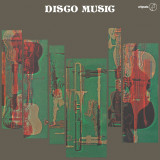
Composed by legendary library guitarist and founding member of I Gres, Silvano Chimenti, and accompanied by his orchestra, "Disco Music" is an essential release of the Usignolo catalog and probably one of the most sought after titles of the series. This album displays a broad range of styles masterfully blended together by Chimenti, going from disco-funky bangers "Happy California" and "Autostrade Americane" that lead way to the more dramatic and suspenseful vibes of "Society Problem" and "Tragedy", finishing off with the rock vibes of "Indian Summer" and the mellow atmospheres of softer, lounge-like songs such as "Lady Primavera" and "Chiara". One of the most complete and well-rounded library albums of its era, "Disco Music" is finally available on vinyl once again after a very long time as a limited edition pressing of 500 copies.
Stockholm garage punk quintet Kerosene Kream is the latest export from the underground scene that's given the world the likes of Vi**ra Boys and Holograms, and with Buying Time the band's set to introduce themselves to the wider world. A renowned live act that's already played with the likes of The Gories, Illuminati Hotties and Powerplant, the band's genre-melding blend of digital psychedelia and garage rock fits right at home on PNKSLM Recordings next to ShitKid, Les Big Byrd and Chemtrails.
Wir sagten Tschüss zu Rendez Vous im Januar 2020 nach einer ausverkauften Show im La Cigale in Paris. Wir sagen Hallo zu RDV im Februar 2024 mit Sheer, der ersten Single aus Downcast, ihrem neuen Album, das Ende August 2024 erscheint. Zurück zum Schreiben in einem Kontext, der noch giftiger ist als der von Superior State, ihrem ersten Album, das 2018 erschien und sie an die Spitze einer gewissen Szene katapultierte, die behauptete, ebenso viel New Wave wie Industrial zu sein. Nach einer Tournee mit über 100 Konzerten in 14 Ländern, darunter Auftritte bei großen europäischen Festivals wie Sziget, Fusion, Dour und Paléo, hat die Band ihre Arbeit an der Transkription der Gewalt in der Welt radikalisiert, indem sie ihre synthetischen Fallen abstreift, um nur einen Anzug von Gitarren auf einem Stahlskelett zu behalten. Befreit von den Codes des Post-Punk, überzogen mit Glitches und digitaler Verzerrung, klingt Sheer wie ein Kampf auf Leben und Tod zwischen Mensch und Maschine, zwischen zwei verfeindeten Brüdern, die sich ebenso gerne umarmen wie erwürgen würden.
"Even God Has A Sense Of Humor" is the long-awaited follow up album to Maxo's critically acclaimed 2019 release Lil Big Man. Across the 14-tracks, Even God Has A Sense Of Humor pays tribute to the mercurial nature of life and includes features from Liv.e, keiyaA, LastNameDavid, and Melanie Charles along with the previously released singles "Free!," produced by Dev Morrison and "48," produced by Madlib and featuring Pink Siifu. The FADER recently sat down with Maxo to discuss the album, which they described as having "a defiant glow, like a bronze statue still standing after an intense tornado."
Born Maxamillian Allen, Even God Has A Sense Of Humor finds Maxo earnest, full-hearted, and lyrically agile. His delivery punches as he poetically unpacks the trials and blessings that have marked the last three years since Lil Big Man, his stirring and meditative debut album. “Life is always gonna be life-ing,” Maxo says, speaking to the spiritual lessons that inspired this new project and an album process that has revealed to him the many ways in which he’s divinely protected.
The album’s striking cover features three casted sculptures of Maxo by legendary NYC-based artist artist John Ahearn, photographed by the rapper’s friend Steven Traylor. The image both preceded the music and set the tone for the record’s overall aura. Experiencing the casting process—which required long periods of stillness for form, and breathwork to avoid claustrophobia—became a metaphor about ego death for Maxo. “I had to go to a space where I was just not there,” he says. As the molding was poured over his body and the voices of those in the room became distant, Maxo’s inner world came into focus. “By the time it hardened, it seemed like the sculpture had risen to be 20 feet above where it was first— almost like it grew tall,” he explains. EGHASOH, in its aural ebbs and flows, honest questioning, profound revelations, and elegant verse, is Maxo standing spiritually tall following a period of challenges with family and friends.
Maxo’s writing process has always been rooted in imagery, observation, and capturing moments. Growing up in Southern California, Maxo spent a lot of time combing through old family photo albums, some of whose contents have become the artwork for prior releases. But his fascination with visual memento is less about nostalgia or remembering, and more about exploring concepts of growth, healing, and cycles. His artistry is intentional and deeply sensitive: “If I’m not feeling it, I’m not gonna record.” While his past records openly grappled with emotional turbulence, anger and depression, EGHASOH is Maxo’s acceptance stage: “I can't really judge nothing. I can't sit up and be mad at shit because everything is, everything is kind of coexisting,” he says.
Musically, EGHASOH is an impressive evolution from Maxo’s earlier, unornamented lo-fi projects. With an emphasis on jazzy instrumentalism and soothing, intricate vocals from both the artist and featured chanteueses Liv.e, Melanie Charles, and keiyaA, EGHASOH is a welcome and beautifully complex sonic effort. Its contributors include a range of musicians: Pink Siifu, LastNameDavid, Madlib, GrayMatter, Karriem Riggins, Beat Butcha, Lance Skiiiwalker, and more. The album was executive produced by Mount Kimbie’s Dom Maker.
“Nobody talks about the fact that we’re changing as we get older... Everybody just acts like you supposed to know,” Maxo says on album standout, “Face of Stone”. It's moody bassline meets a cinematic accordion melody that paradoxically both broods and uplifts—a fitting production choice that mirrors the song’s story. “I’m seeing how this world is chipping you and withering your bones,” Maxo says. “I’m talking about myself, talking about my bro. But it’s never nothing you gonna do that’s a one stop shop in this life. You gotta keep staying diligent and consistent.” For Maxo, Even God Has a Sense of Humor is nothing more than another moment on the timeline of his offerings of self-expression as an artist—one whose sole intention is to, in his words, develop as a human being and heal.
"Dance With Me Volume 4" is the fourth compilation record from Salon Recordings’ artists and affiliates. Features thirteen tracks from twelve artists including label founder Damar Davis, residents Sevyn, Oye Manny, Grandfather, and Bobby Cabbagestalk. Salon’s yearly compilations are a showcase of musicians across the globe who understand the unique elements that make up the Salon sound. From the most atmospheric corners of house music to up-tempo beats designed for the dance floor, Salon Volume 4 stays true to the signature soulfulness of the independent label. Featuring a tight line-up of new and familiar producers from all the US and beyond the compilation is a sampling of the best that the label has to offer. The tracks range in tone from hypnotically entrancing to beautifully ruminative, each an offering from artists shaping the dance music scene as it navigates the post-lockdown age.
2024 REPRESS
Fourth corner. Physically, it's where four states in the U.S. come together at one singular point. Symbolically, it's where the four great rivers in China come together as one. Or, it could be the cycle of life during the four seasons of the year. For Trixie Whitley, it's a metaphor for trying to find balance and belonging from the songs that make up her scintillating debut album, Fourth Corner.
Whitley burst into public consciousness in 2011 as the lead singer of Black Dub, super-producer Daniel Lanois' (U2, Bob Dylan) project, blowing people away with a voice and presence beyond her now-25 years.
And it's that voice: an emotional, blues-drenched instrument that ranges from a lilting slap to a knock-you-backwards uppercut. On Fourth Corner, Whitley explores the range of human emotion in another set of four: utter love, total rage, unadulterated happiness, and crippling loneliness. "It's those elements of life I keep coming back to," she says. "Both as a person and musically as well."
Recorded in New York with producer/keyboardist Thomas Bartlett (aka Doveman, who's also worked with Glen Hansard, Antony and the Johnsons, Grizzly Bear and the National) engineer Pat Dillett (David Byrne, St. Vincent, Mary J. Blige), and string arrangements by Rob Moose (Antony, Bon Iver), aching songs like "Need Your Love" have Whitley working from a spare beginning that explodes into a blossom dripping with pleading vocals and delicate piano. On tracks like the sassy "Irene" and the sinister "Hotel No Name," Whitley lays down a snarling guitar line on top of scuzzy beats while her voice veers from defiant to remorseful.
It's a tantalizing mix of sounds that can come only from someone who says: "I'm from everywhere but have never felt like I belong." Whitley lived a nomadic life: born in Belgium, she split her time growing up there and in New York but also frequently visiting family in France, Texas, and Mexico. Her mother came from an artistic European gypsy family, filled with musicians, painters, writers, and sculptures, while her father, renowned singer-songwriter Chris Whitley, thrust her into the world of music as a toddler when she joined him onstage in Germany at age three.
After a few years of touring and recording experience with some of the most inspiring artists around, Trixie is ready to presenther anticipated first solo full length.
"I'm psyched and petrified," says Whitley in her archetypal wide-eyed wonderment mixed with a fierce determination. "As a songwriter, I want to go to places people don't expect and with that is complete freedom of expression." Perhaps that place is another version of a fourth corner: something spiritual perhaps, certainly emotional, but most definitely real.
Omar Sosa's 88 Well-Tuned Drums, the soundtrack to the documentary
film of the same name, is the first solo vinyl release for multipleGRAMMY-nominated pianist and composer Omar Sosa - Presented on
limited edition transparent red vinyl, these newly-remastered tracks
highlight Sosa's spectacular range, from soloist to big band leader and
everything in between
A must-have for fans and a perfect introduction for the uninitiated, this careerspanning LP captures a Cuban music icon in some of his best and brightest
recordings. While Sosa's globetrotting sound defies easy genre categorization,
fans of ambient, fusion, Latin jazz, salsa and world music will discover both
freshness and familiarity in Omar Sosa's 88 Well-Tuned Drums.
Issued on vinyl for the first time and pressed on 2 x 140g black vinyl, Juno Reactor’s 2004s album, ‘Labyrinth’, their 6th long player. Ben Watkins is an essential innovator of modern electronic music and a pioneer of Trance. Over the course of nearly 30 years, Watkins has created a unique driving fusion of electronica, orchestral and global music executed on an epic & symphonic scale. Juno Reactor was formed as an art project in 1990. Ben Watkins wanted to collaborate with other artists, producing exciting projects that were not commercially driven. He wanted to create experimental music and non-musical soundtracks that would work with installations, art pieces, and film projects. Labyrinth ranges from orchestral, industrial, and techno as well as containing Juno Reactor's trademark tribal sound (possibly as best featured in Conquistador II). The album also features two songs from Watkins' collaboration with The Matrix composer Don Davis on the films The Matrix Reloaded and The Matrix Revolutions, "Mona Lisa Overdrive" (from Reloaded) and "Navras" (from Revolutions). As well as releasing a string of influential albums as Juno Reactor, Watkins’ tracks have been placed in numerous highprofile feature films, television programmes and computer games and Ben Watkins composed large sections of the original score for the films The Matrix Reloaded and The Matrix Revolutions, as well as composing the entire orchestral score for Japanese anime feature film Brave Story.
4-channel rotary mixer with 3-band frequency isolator and filter section for DJs
OMNITRONIC TRM-422: THE ROTARY MIXER ON A NEW LEVEL
The desired child
Omnitronic's popular TRM series has been expanded: the TRM-422 combines all the proven features of the previous models, but additionally offers functions that numerous fans had wished for. During the development of the mixer, the focus was on the demands and suggestions of the community.
FULL CONTROL
Each of the 4 input channels has 2 line inputs, one of which can become a phono input at the touch of a button. The channels are each equipped with a volume as well as a gain control. In addition to the master isolator (bass, mid & high), the DJ has the option to activate a filter with HPF, BPF, LPF, resonance and sweep controls in each of the 4 input channels.
The master output is available to the DJ in both XLR and RCA versions.
EFFECT WAYS
The use of external effect devices is possible through an FX-In and FX-Out via 6.3 mm jack. The mixer's master insert is also equipped with a send & return (unbalanced) path. This allows additional external effects to be looped into the mixer.
DVS INTEGRATION
The mixer's timecode outputs allow easy integration of a DVS system (Digital Vinyl System) such as Traktor or Serato.
MONITOR SECTION
The booth output of the TRM-422 is provided with one XLR and one RCA connector. The signal of the booth output can be easily adjusted to the conditions in the DJ booth with the help of an EQ (High & Low).
MICROPHONE INPUTS
The TRM-422 offers 2 microphone inputs. The first mic input gives the DJ the ability to modify the mic signal with EQ (high & low).
BACKUP SOURCE
With the help of the AUX input on the front panel, players such as smartphones, tablets or MP3 players can easily be connected via mini-jack (3.5 mm) and thus serve as a backup solution.
ACTIVATABLE CROSSFADER
If you don't want to do without a crossfader during your DJ set, you have the option to assign each of the 4 channels to the integrated crossfader. If the crossfader is not used, it can easily be switched off.
SET RECORDING
The RCA record-out makes it easy to record your own DJ set.
FEATURES
4-channel rotary mixer with 3-band frequency isolator and filter section for DJs
3-band master frequency isolator with vintage ALPS potentiometers (Blue Velvet RK27)
Kill cut feature allows DJs to completely remove low, mid and high frequencies for amazing mixing
Filter section with HPF, BPF, LPF, resonance and sweep control for creative sound shaping
4 stereo input channels with gain control, clip LED, 3-way equalizer and phono/line switching
2 microphone input channels with gain control, 2-way equalizer on air switch
High-grade components ensure long life and excellent sound quality
16-digit stereo LED level meter, switchable between master and booth outputs
Booth output with separate 2-way equalizer and level control
PFL section with 16-digit stereo LED level meter, level control, PFL/master mix control and cue mix/split option
Fully assignable VCA crossfader with adjustable curve
2 effects send/return paths
4 direct outputs for Timecode applications
Inputs: 8 x line and 4 x phono (RCA L/R), 1 x front aux (mini jack)
Outputs: master and booth (XLR/RCA L/R), record (RCA L/R), master insert send/return (RCA L/R), FX in/out (stereo jack)
483 mm rack installation possible with supplied mounting brackets
Desktop console housing
TECHNICAL SPECIFICATIONS
Power supply: 100-240 V AC, 50/60 Hz
Power consumption: 24 W
Protection class: Class I
Power connection: Mains input IEC connector (M) mounting version Power supply cord with safety plug (provided)
Frequency range: Microphone 20 - 20000 Hz
Line 20 - 20000 Hz
Phono 40 - 18000 Hz
S/N ratio: >97,2 dB line
>91,7 dB Microphone
THD: Line -68 dB
Control elements: Power switch, source selector, Crossfader, Crossfader selector switch, Crossfade curve switch; Cue mix split function, EQ controls
Status LED: Power, master level meter, clip, CUE
Connections: Input: 4 x line via stereo RCA
Input: 4 x line/phono via stereo RCA
Input: 2 x Microphone via 3-pin XLR
Output: 1 x headphones via 6.3 mm jack socket (stereo) mounting version
Output: 1 x headphones via 3.5 mm jack (stereo) mounting version
Output: 1 x rec. via stereo RCA
Output: 2 x booth via 3-pin XLR
Output: 1 x booth via stereo RCA
Output: 2 x master via 3-pin XLR
Output: 1 x master via stereo RCA
Output: 1 x AUX sends via 6.3 mm jack socket (stereo) mounting version
Output: 1 x AUX returns via 6.3 mm jack socket (stereo) mounting version
Chanals: Input chanel: 4 x stereo with Line-Line/Phono switch via RCA, channel control via Rotary, 3-band tone control EQ, source selector, gain control, CUE switch, FX routing switch, Crossfader selector switch,
Microphon chanal: 2 x mono via XLR, channel control via Rotary dial, ON AIR switch,
Master output: 2 x stereo via XLR, channel control via Rotary
Booth output: 2 x stereo via XLR, channel control via Rotary
Rec. output: 1 x stereo via RCA
Headphones output: 1 x stereo via Plug 6,3mm/3,5mm (Jack), channel control via Rotary dial, Cue mix split function,
Max. level: Output: +18 dBu
Material: Metal
Housing design: Desktop console housing
Dimensions: Width: 41 cm
Depth: 28,5 cm
Height: 10,5 cm
Weight: 5,74 kg
Output voltage at 1000Hz, 5cm/sec. - 6 mV
Channel separation at 1kHz - 20 dB
Frequency response 20 Hz - 20 kHz -2/+4 dB
Tracking ability at 315 Hz at recommended tracking force - 90 μm
Compliance, dynamic lateral - 14 μm/mN
Tracking force range - 3 - 5 g
Tracking force recommended - 4 g