New Traditions is a collection of pipe music, electronic music, mouth music and folk music from five emerging and prominent Scottish artists.
It started in Sutherland with a recording of The Waters of Kylesku. “Do you learn any Gaelic at the school?” asks Hamish Henderson of Christine Stewart. “No,” she answers. “That’s a shame,” he responds, “Isn’t it?” she says. Then she sings. Her voice is of the peat itself, grown from the earth as the language was. It soars raptor-like above drenched ground and scoured pink rock.
Next, to Nancy Dorian, a linguistic missionary of sorts, who came from America to watch a language die. She charted the decline of Gaelic in a cluster of Sutherland villages from 1963 to 2020 when the terminal native speaker passed. Gaelic has origins in nature, with each letter of the alphabet named after a tree. It seems significant that the land of the north is now all-but devoid of forest.
Enter Alan Lomax, who travelled the world documenting indigenous music. Material from his archives feature on (fucking) Moby’s platinum selling Play. Despite the record’s worldwide commercial success we know very little of the music he essentially exploited.
Then musician Martyn Bennett, who built tracks around Lomax recordings of Scots and Gaelic voices, and did so with love that shared his blood with the cancer that killed him. His records both popularised and preserved obscure indigenous Scottish music.
This collection of tunes has similar intent: to consolidate ephemeral words in physical grooves - real as the rigs that still scar the earth - but also a desire to interpret. These versions have the greatest reverence for the originals at heart, but like the architecture of a great gallery, serve to protect and elevate.
Поиск:rap
Все
"Wind, Again" is Sary Moussa’s fourth studio album and second album on Other People. Based between France and Lebanon, Moussa returns with a riveting electro-acoustic album informed by his ever-changing relationships to space, listening, and resonance as well as his growing interest in the study of harmonics in electronic and electro-acoustic music.
Years in the making, “Wind, Again” approaches distinct musical worlds and languages by bringing together improvisations by musicians performing on Western and West Asian instruments such as the Hammond organ, clarinet, saz, and buzuk with electronic arrangements and textures. Rather than force a rapprochement of these musical worlds through the instruments, and keenly aware of the weighty sonic histories they carry, Moussa proposes another way through which they can exist together in contemporary electronic composition.
Composed of six tracks, each of which demonstrate an array of recording and processing techniques, the album generates moments of tension produced by the synthesis of textural, tonal, and harmonic encounters that Moussa calls “shadows”, which outline an impressionistic musical language, existing at the edge of familiarity. Such moments permeate tracks like “Everywhere at once” and “Violence” that open with the Hammond organ and the saz respectively and slowly reveal an expansive field of sounds that showcases each of the musicians’ characteristic performances and Moussa’s densely layered textures. It is a latent yet unrelenting tension through which the composer invokes rather than represents a collective experiential state, especially familiar to those who know his environment. In “Wind, Again” these shadows are articulations of sounds steeped in traditions they are never quite tethered to. Such articulations are implied and alluded to, they play within a musical reference without the latter explicitly existing in the recording, always teetering, never completely here nor there.
Sonically and musically, the album is fueled by the cultural, social, and personal realities that Moussa was brought up and lives in.
Both personal and musical ties with the musicians who feature on the album is central to Moussa’s practice. In the title track “I will never write a song about you”, musician Julia Sabra opens with rolled piano chords, followed by Paed Conca on clarinet and Abed Kobeissy on buzuk, before Moussa’s electronic processing pieces together, lifts, and sustains the melodic direction of the track that emerged from the musicians’ separate improvisations. For Moussa: “The initial connection between the three performances was made on a track that no longer existed, the original recording was both an obstacle and necessary step for the track we hear on the record. It’s as if we were all telling different stories and I pulled on the thread that held them together”. The track, and more generally the record, is tinged with a melancholy of things lost, though it never fully succumbs to it.
“Everything inside a circle”, Moussa’s most personal track and for which he provides the only vocals on the record, harkens back to a childhood memory of listening to music with his mother in a car: “There was a sound I was looking for — a memory of a sound and how I first heard it. This track is a hybrid of that memory and what I wanted to make of it”. The track relies heavily on generativesystems and perhaps embodies most the ambiguous quality of the record’s music in its refusal to be pinned down by one musical tradition or another.
“Wind, Again” is both familiar and alien, cold and warm; it pays homage to the mechanics, materials, and tactility of the instruments and converges acoustic and synthetic spaces. What anchors the sound of the album are the elements of a whole that cannot find its own idiosyncrasy and that is precisely why Moussa’s album is a tour de force.
- A1: Pharoah Jones
- A2: Ghost Gospel
- A3: Ill Feeling
- A4: Capital Punishment
- A5: Do Not Adjust
- A6: Cool Green Trees
- A7: Chill Scratch
- A8: Poisonous Fumes
- A9: Welcome Aboard The Starship
- B1: Keep On Runnin
- B2: Sounds Impossible
- B3: Painted Faces
- B4: The Knew Style
- B5: Chicken Wing Blues Sauce
- B6: Kool Breeze
- B7: Sexx Bullets
- B8: Soul Child
- B9: Take Off Runnin
- B10: Centurian
- B11: Bozack
- B12: Church
- B13: Splash One
- B14: Hank
- B15: 73 Goatee
"Chasing the funky symphonies that filled my head and my dreams..."
December 25th, 2023 - an Instagram post. Stimulator Jones shared half a dozen FIRE tracks from his beat tape archive. We were immediately drawn to the rough hewn boom bap.
"I'd release that", Rob commented.
Hours of material was shared and the result is this: Cool Green Trees (1999-2005). A collection of beats and loops Stimulator Jones created between the ages of 14-20 at home in his basement, bedroom and computer room in Roanoke, Virginia.
You will not believe the profound soulful genius contained within these naive schoolboy melodies.
December 25th, 1998 - 25 years ago to the day and his much-coveted Yamaha SU10 sampler was finally bestowed upon young Stimmy AKA Sam Lunsford: "I immediately hooked up a CD Walkman to the input jack and looped the beginning two bars of Grover Washington Jr.'s "Mercy Mercy Me". I don't know what exactly was so thrilling about hearing two measures of music repeating over and over but it was so infectious and hypnotizing and enthralling to me. I'll never forget that ecstatic rush of making my first loop - an uncontrollable, gleeful smile plastered all over my face." When you hear the pocket breakbeat symphonies featured here on Cool Green Trees, you'll feel the same sense of frisson.
In the wake of his Stones Throw breakthrough - Exotic Worlds & Master Treasures - Stimulator Jones was pegged by many as a 90s throwback artist. However, he literally IS a 90s artist. He's been recording music most of his life and he's now 40. He created the bulk of Cool Green Trees as a teenager. Everything before 2004 was recorded when Sam was still in school. He was in 8th grade when he made the 1999 tracks - he didn't even have his learner's permit. This album is a snapshot of a young man in a simpler time. Things were still mysterious back then and he was flying blind, relying on his ears and having to figure things out for himself: "I had no road map for becoming a beatmaker. I have been collecting music since I was a kid, I am a lifelong digger and seeker of cool and interesting sounds. I was there in the golden age of Hip Hop, and while I may have been a suburban white kid in Roanoke, Virginia, I was tuned in and I bought so many classic albums when they came out. I was attracted to Hip Hop because of the musical and poetic quality. I was hypnotized by the rhythms, partially because I was a drummer. I didn't brag about collecting my breakbeat records or making beats - it was something I did in isolation. It wasn't something I generally wanted to bring attention to and it didn't really score me any cool points. I certainly wasn't flexing on social media about it."
Hell, he can do that now!
Opener "Pharoah Jones" was inspired by Yesterday's New Quintet and Madlib's ability to capture that classic 70s sound whilst playing all the instruments. Sam created this one stoned afternoon by laying down a 2 bar loop and a shaker loop on his Yamaha SU700 sampler. He hung a microphone from the ceiling and played his Yamaha Stage Custom drum kit over the top before adding ender Rhodes and playing his dad's Selmer tenor sax through an Electro Harmonix Memory Man echo pedal. Yes! Up next, "Ghost Gospel" utilises a dope loop from a gospel record and adds some soul-funk drums overtop, whilst working that filter knob. Says Sam: "The loop reminded me of something Ghostface would rap over. The sample was in 3/4 waltz time but I flipped it for a 4/4 groove, a technique I picked up from RZA. "Ill Feeling" uses sped-up pieces from a dusty old funk record and putting them over a classic NOLA drum loop; gain chopping up a slow, bluesy 3/4 time signature and bending it to a 4/4 groove. Classy shit. "Capital Punishment" features drums tapped in live, inspired by MF Doom's Special Herbs series. "Do Not Adjust" consists loops found on a compilation of 70s French music at Happy's Flea Market, a classic Roanoke digging spot.
The sublime, evocative title track, "Cool Green Trees" was created when Sam was still living at home. He dumped samples off his SU10 into the family desktop and arranged them in a demo version of Pro Tools: "This track was sort of my ode to the DJ Shadow style of sample based production. Super spacey, slow, and moody. The heavily filtered drums were inspired by Alec Empire's 'Low on Ice' album. I later added some scratches and sounds from a Spider Man storybook record." "Chill Scratch" snags the final bit of a bossanova record and pairs it with a drum loop before adding experimental scratching run through an Electro Harmonix Memory Man echo pedal. "Poisonous Fumes" was made using a sampler, mixer and a turntable; a kind of mixtape beat collage with added scratches and sounds from various records. Using dialogue from superhero records was a nod to Madlib. "Welcome Aboard The Starship" is dark, downtempo trip-hop with a spooky bent. Sam paired a slow, hard drum loop with a guitar sample grabbed off a psychedelic rock record. To finish, he added various backwards sounds and weird atmospheric effects and a little scratching. Swoon.
Side B opens with "Keep On Runnin", made on a borrowed Roland SP202 sampler. Having always loved the sound of the Lo-Fi filter on those machines, reminiscent of the Emu SP1200, Sam always imagined Del or another of the Hieroglyphics crew rapping over this beat. You can certainly hear why. "Sounds Impossible" sees Sam experimenting with layering multiple kick samples at different volumes to create patterns similar to those heard by Showbiz and Lord Finesse during their God-level 1995 period. "Painted Faces" was made by chopping up a REDACTED record which he had gotten from Happy's Flea Market and paired it with a REDACTED drum loop. By the time Sam recorded "The Knew Style", he had acquired a shitty old 1960s portable turntable off eBay. It didn't function properly when he bought it but his brother opened it up, cleaned it out and got it working: "I remember he told me that there was a bunch of sand inside of it when he opened it up, as if its previous owner had taken it to the beach. I would take that turntable on my Happy's Flea Market digs so I could preview records...that's how I found this loop."
"Chicken Wing Blues Sauce" loops up a classic blues joint and pairs it with some REDACTED drums. A bit of filtering and arranging et voilà! "Kool Breeze", from 1999, is one of Sam's oldest surviving beats, as is "Sexx Bullets". The Roots sampled the same record, leaving Sam frustrated yet vindicated. "Soul Child" was an early SU10 creation, looping a dusty old Soul Children 45 and pairing it with 70s rock drum loops to great effect. "Take Off Runnin" was another loop found digging with a portable turntable. Paired with some boom bap drums it makes for a hypnotic head-nod groove. "Centurian" was intended to be a little beat interlude a la Pete Rock. The sample is from a sun-dappled soft-psych record and it's paired with a Robin Trower drum loop that just happens to fit perfectly. Sometimes you slap things together kind of haphazardly and magic happens. "Bozack" was the first beat Sam made using Pro Tools, his first foray into using chopped sounds instead of loops, an exciting new world. "Church" is beat interlude using a Phil Upchurch loop with the "Long Red" drums - a favourite break of Dilla et al. Sam was really on a tear in late 2004, probably because he was unemployed and phoneless and able to just make beats all day. He made "Splash One" on a borrowed Yamaha SU700 and again was experimenting with tapping the drums in live with his fingers, instead of using a loop or sequenced pattern. Channeling 9th Wonder, Sam used a water splash sound effect from a Batman record as a percussive element, hence the title (also a 13th Floor Elevators reference). The main loop is a backwards portion of one of his favourite Roy Ayers songs.
"Hank" is another fun little beat interlude thing, created on a borrowed Roland SP202 sampler with the fantastic Lo-Fi effect that resembled the Emu SP1200 at a fraction of the price. "73 goatee", from 99, is another of his oldest surviving beats, created in his bedroom with his Yamaha SU10 and his brother's Vestax MR-300 4-track recorder: "This one will always feel special. I can remember having a feeling all the way back then on the night that I created it that this was a solid beat with a catchy loop. There was something in the Fender Rhodes melody that resonated with me emotionally, and I had never heard a producer sample that portion before. I felt like I had found my own unique sound, my own unique loop. It came from an Ahmad Jamal '73. I actually even recorded myself rapping and scratching over this beat way back then, I still have that version in all its imperfect sloppy glory."
Sam explains just how much these tracks mean to him: "They all have immense historical and sentimental value and I'm proud of them. These beats come from an innocent, simple time when I was just figuring out how to craft these sounds. They're something very personal to me. They are the initial part of a journey that I really was taking *alone*. There was no YouTube. I couldn't Google shit. I didn't even know any other beatmakers, producers or DJs in my town that could teach me anything. It was always just me, alone, in a room with some equipment - chasing the funky symphonies that filled my head and my dreams. What I was doing wasn't cool. Most of my peers thought I was a weirdo and couldn't care less. Creating these sounds was an anti-social endeavour. In a sense, I felt like it was me against the world, and all I had to instruct and assist me were the recordings produced by my heroes - RZA, DJ Premier, Erick Sermon, Beatminerz, Showbiz, Diamond D, Beatnuts, Prince Paul, The Bomb Squad, Pete Rock, Q-Tip, E-Swift, Mista Lawnge, DJ Shadow, Cut Chemist, Peanut Butter Wolf, El-P and so many more...I dedicate this collection to them, and to my older brother Joe who has always been a musical and technical guiding light for me.
This was a time before every kid was a self-described producer and beatmaker, before everyone had a DAW, before Kanye and "chipmunk soul", before Red Bull beat battles, before there was any social media beyond chat rooms and AOL Instant Messenger, before Soundcloud, before SP-404 mania, before lo-fi beats to study to, before Splice, before targeted ads for MIDI chord packs, etc. In 99 when I told people that I had a sampler and made beats I was mostly met with bewildered confusion and indifference. Kids and adults alike would wonder why I got this weird machine for Christmas instead of something worthwhile like a Playstation or a mountain bike or even a guitar for that matter because at least that could be used to make "real music". Back then, sampling was still not widely respected as an art form - it was seen as lazy, talentless and unoriginal at best and outright criminal theft at worst. I had gotten respect for playing drums and guitar and things of that nature but this was a step in the wrong direction in the eyes of many."
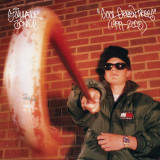
The cover photo is a picture of Sam standing on his back porch in the latter part of 1998, just before he got his first sampler. He was 13 years old, in 8th grade. His dad took the picture with his 35mm film camera: "I actually wanted to be pointing my dad's .22 pistol at the camera lens but he wouldn't let me. He gave me an old walking cane to use instead. The Tommy Hilfiger puffer jacket came from the lost and found at William Fleming High School where my mom worked as a secretary. I was thrilled when she brought it home because we never spent money on expensive name brand clothing like that - we were for the most part strictly a sale rack, bargain bin, thrift store, yard sale, flea market kind of family when it came to clothes. My watch is some cheap off-brand fake gold department store watch." Mastering for this vinyl edition was overseen by Be With regular Simon Francis and it was cut by the esteemed Cicely Balston at Abbey Road Studios to be pressed in the Netherlands by Record Industry.
The third Edita vinyl contains 2 tracks previously released digitally, Rebolledo's version of Holiday Rap and Sascha Funke’s version of Pump up the Volume + 2 vinyl only tracks which are a real stone by Marcello Giordani aka Italodeviance who gets his hands on Aventure Prodigieuse, a rare Funk Synth Pop diamond and a fresh and engaging unreleased dub version from Perel of the Britney classic "Toxic".
Across the Tracks is a collaborative project between underground hip-hop heavyweights Boldy James and producer Williams Conductor. Comprised of ten tracks, the album stays true to their gritty, street-centered narratives, blending slow-paced, hard-hitting bars with Conductor's eerie, sample-laden beats. Boldy's laid-back delivery pairs well with the soulful, moody instrumentals. Tracks like 'St. Juliana' and 'The Ol Switcharoo' stand out, with Boldy's sharp lyricism and Conductor's production shining brightest. The guest features from Boldy's son and sister add some texture to the project as well. The album serves as a good release for fans of Boldy James' storytelling and Williams Conductor's distinct production style. Across The Tracks in bone-colored vinyl is a well-curated offering for those that want more intellectual lyrics in their street rap.
- A1: De Uitvaert
- A2: Korte Metten
- A3: Bips
- A4: Cola Tik
- A5: Vergeten Niet Vergeten
- A6: Kleine Jongens
- B1: Oost En West
- B2: Kijk Eens Om Je Heen
- B3: Wodka Chickies
- B4: Blijf Dicht Bij Jezelf
- B5: Heibel In De Tent
- B6: Ertegenaan
"Lost In The Waves" ist das dritte Studioalbum der französischen Metalcore-Band Landmvrks und erschien am 19. März 2021. Das Album vereint rohe Energie mit melodischer Tiefe und zeigt die Band auf dem Höhepunkt ihrer kreativen Entwicklung. Mit einer Mischung aus aƽressiven Breakdowns, eingängigen Refrains und modernen Einfl üssen aus Rap, Trap und Pop setzt das Werk neue Maßstäbe im Genre. Die Texte thematisieren persönliche Kämpfe, Selbstfi ndung und emotionale Isolation – kraftvoll, ehrlich und mitreißend.
Franky Wah makes Crosstown Rebels debut with ‘Disconnect’ EP, featuring Kuuda. Out on 20th June 2025, the four-tracker sees the acclaimed UK producer make his first appearance on the revered imprint.
A producer known for balancing dancefloor energy with introspective songwriting, Franky Wah’s rise has been fuelled by a string of chart-topping singles, non-stop global club and festival appearances, and the launch of his own imprint and event brand, SHÈN. With musical influences stretching from trance and breakbeat to afro-house and techno, he now brings that rich sound palette to the Crosstown fold for the first time with a release that’s equal parts euphoric and deep as it is driving. Delivering a powerful and emotionally charged four-track release, 'Disconnect' showcases the Yorkshire-born artist’s blend of underground grit and melodic sophistication, featuring two standout collaborations with rising vocal trio Kuuda.
Opening the EP, the title track pairs swirling textures, brooding basslines and crisp percussion with commanding vocals, setting the tone for the journey ahead. The synergy continues on ‘Off The Wall’, a hazy, late-night jam elevated by Kuuda’s signature warped vox interjections. On the flip, ‘Desert Dance’ continues further into hypnotic territory with wicked bass licks and layered synth work, before closing track ‘Freak In The Sheets’ delivers another impactful, heads-down groove laced with attitude. Featured on two of the EP’s four cuts, Brighton-based trio Kuuda continue to emerge as a rapidly ascending vocal project within electronic music. Known for their genre-fluid songwriting and dynamic live presence, their collaborations with Hot Since 82, Yousef and Artche have earned them widespread support from the likes of Pete Tong, Danny Howard and RÜFÜS DU SOL. Blending emotional depth with club-ready impact, ‘Disconnect’ marks an inspired meeting point between Franky Wah’s expansive production style and the Crosstown Rebels spirit—one that looks set to soundtrack dancefloors throughout the summer and beyond.
The collaboration between influential DJ/producer Eli Escobar and acclaimed vocalist/songwriter Nomi Ruiz has been a long time in the making. The two Puerto Rican New York native’s first collaboration, the electrifying track ‘Desire’ in 2011, set the stage for a series of projects, including their recent joint effort ‘Dance 4 Love ’99’. Now, they are set to release their debut LP, ‘Love Louder’.
‘Love Louder’ captures Eli and Nomi’s experiences of love and loss, reflecting their enduring connection to New York City and its vibrant, yet fading, nightlife culture. The album, while featuring dancefloor gems like ‘Heathens’ and ‘Full Fantasy’, takes an emotional turn, focusing on the themes of loss and presence in a rapidly changing world. The title track opens with lyrics invoking the late Donny Hathaway, reflecting a more profound introspection from the duo. They share their pain over loss, particularly the passing of mutual friend James Dewitt (DJ BluJemz), whose absence profoundly affected their creative process.
Escobar recently opened a club in Brooklyn named Gabriela, honoring a friend who passed away during the pandemic, emphasizing their commitment to preserving New York's cultural landscape. ‘Love Louder’ serves as a love letter to their hometown, intertwining celebration with mourning. In the poignant track ‘Go Be Gone’, Ruiz expresses the difficulty of embracing change and saying goodbye.
As they honor the past, they also aim for a brighter future through their music.
- A1: Jumpscare
- A2: Star87
- A3: Misery
- A4: Blk Xmas Feat Bruiser Wolf
- A5: Waterproof Mascara
- A6: Counterclockwise
- B1: Corinthians Feat Despot
- B2: Pitchforks & Halos
- B3: All These Worlds Are Yours Feat Elucid
- B4: Maquiladoras Feat Al.divino
- B5: A Doll Fulla Pins Feat Yolanda Watson
- C1: Golgotha
- C2: Cold Sweat
- C3: Blk Zmby
- C4: Make No Mistake
- D1: Born Alone
- D2: Lead Paint Test Feat Elucid & Cavalier
- D3: Dislocated Feat Elucid
- D4: House In The Woods
Cassette[15,92 €]
GOLLIWOG is billy woods' first album in two years, preceded by 2023's Maps, his second collaboration with producer Kenny Segal. That nimble travelogue has little in common with woods' newest work, despite the fact that Segal shows up a couple times in the credits. GOLLIWOG is a haunting collection that weaves horror, humor, surrealism and Afropessimism into a cinematic tapestry, aided and abetted by a murderer's row of producers. African zombies, time traveling trap cars, malevolent ragdolls and a dying Frantz Fanon are just a few of the revelers in woods' danse macabre. GOLLIWOG features production from The Alchemist, Kenny Segal, EL-P, Conductor Williams, Preservation, Messiah Musik, Sadhugold, Ant (Atmosphere), Shabaka Hutchings, Steel Tipped Dove, DJ Haram, Willie Green, Jeff Markey, Saint Abdullah, and LA-based experimental jazz trio Human Error Club. Meanwhile, woods is joined on the mic by Backwoodz labelmates ELUCID and Cavalier, along with rappers Bruiser Wolf, Despot, Al.Divino, and singer-songwriter Yolanda Watson. GOLLIWOG is another triumph in the woods oeuvre, as layered and compelling as anything he has ever done. A black carnival pitched in a muddy field overnight, empty rides whirring and clattering in the dark.
Enjoy The Toons Records in partnership with Paramount
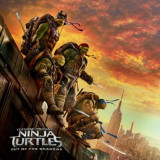
Pictures proudly presents Teenage Mutant Ninja Turtles:
Out of the Shadows (Music from the Motion Picture),
Score by Steve Jablonksy. Michelangelo, Donatello,
Leonardo, and Raphael are back to battle bigger, badder villains,
alongside April O’Neil (Megan Fox) and a newcomer:
the hockey-masked ally Casey Jones (Steven Amell).
After supervillain Shredder (Brian Tee) escapes custody,
he joins forces with two dimwitted henchmen, Bebop
(Gary Anthony Williams) and Rocksteady (WWE's Sheamus),
to unleash a diabolical plan to take over the world. As the Turtles
prepare to take on Shredder and his new crew, they find themselves facing an even greater threat with similar intentions: the notorious Krang (Brad Garrett). Teenage Mutant Ninja Turtles: Out of the Shadows (Music from the Motion Picture) features music by Steve Jablonsky (Transformers film series, The Sims 3, Gears of War 2). Jablonsky's signature sound is present, with a unique call-back to the original theme and fun, exciting orchestration for the 2016 film score. Teenage Mutant Ninja Turtles: Out of the Shadows (Music from the Motion Picture) is a 2xLP, housed in a gatefold jacket and pressed on colorful themed vinyl. The pressing is limited to 750 copies across 3 color variants. –
- A1: Intro
- A2: Back Then
- A3: Flossin' (Feat. Big Moe)
- A4: Still Tippin' (Feat. Slim Thug And Paul Wall)
- B1: Got It Sewed Up (Remix) (Feat. Juicy J And Dj Paul)
- B2: Scandalous Hoes (Feat. Lil Bran)
- B3: Screw Dat
- B4: Turning Lane
- C1: Laws Patrolling (Feat. Cj Mellow And Lil Bran)
- C2: 5 Years From Now (Feat. Lil Bran)
- C3: Cuttin' (Remix)
- C4: What Ya Know About... (Feat. Paul Wall And Killa Kyleon)
- D1: Know What I'm Sayin' (Feat. Bun B And Lil Keke)
- D2: Type Of N**Ga U Need (Feat. Brighteyes) D3. Grandma
It takes grindin' to be a king and Houston's Mike Jones' work ethic of "You Don't Work, You Don't Eat, You Don't Grind, You Don't Shine" had his phone blowing up in 2005 with the release of his major label debut Who is Mike Jones? on Asylum/Swisha House/Warner Records. Mike Jones started rapping in the early 2000s and he released a couple of independent albums on his own label Ice Age Entertainment before linking up with Michael "5000" Watts of Swisha House. He recorded the underground single "Still Tippin" with Texas contemporaries Paul Wall and Slim Thug, which appeared on the Swisha House compilation The Day Hell Broke Loose 2. The song, full of southern hip-hop slang and braggadocio, was an ode to the classic car culture in Houston, Texas, and could be heard bumpin' out the trunks of cars nationwide with its heavy bass and classical string loops. Before the release of Who Is Mike Jones? girls would ignore him, but after the release of "Still Tippin" they were all up on him, which led to the release of the single "Back Then" where he shouted out his real cell phone number that played a major part in the marketing and promotion of the album.You could call 281-330-8004 and get his voicemail and leave a message, but sometimes he would answer, which led to spreading the word of Mike Jones' debut album. "Back Then" was also a top-selling ringtone because (back then) you had to buy and download ringtones, unlike today. Mike truly went viral before going viral was even a thing. After dropping the two hit singles, Who Is Mike Jones? was released on April 19th, 2005, and would sell over a million copies that year, leading to certified platinum status. Twenty years later, this Texas Rap classic still holds up with features from other H-Town legends including S.U.C.'s Big Moe (RIP),Bun B, Paul Wall and Lil Keke. Juicy J & DJ Paul of Three 6 Mafia added their Memphis touch to the "Got It Sewed Up Remix" and the album ends with a heartfelt dedication to Mike Jones' late Grandmother on "Grandma". Get On Down is proud to present the first vinyl reissue of Who Is Mike Jones? in a limited edition silver and red color-in-color pressing packaged with a full color printed insert tocommemorate the 20th anniversary of this H-Town classic
After the explosive Comme à la radio, infused with the free jazz energy of the Art Ensemble of Chicago, Brigitte Fontaine and Areski Belkacem released six albums together or separately between 1972 and 1977. Their music, often stripped down to voice, guitar, and percussion-or performed a cappella-stood in stark contrast to the orchestrated French pop of the time. This minimalist and spontaneous approach highlighted the poetic power of the lyrics and the intimacy of the melodies, earning them recognition in the counterculture and underground scenes. By the end of the 1970s, Fontaine sought to make her work more visible without losing its originality. The Baraka album marked this transitional moment, initially recorded in a home studio without external musicians. Its title (meaning "blessing" in Arabic) hinted at a desire for success. Mixing introspection, absurd humor, and bold stylistic choices, the album was technically ambitious, featuring stereo duets and layered vocals, and lyrically rich, tackling everything from metaphysical themes to playful nonsense. However, the project ultimately veered off course. After moving the recordings to the massive Studio Davout and bringing in producer and guitarist Martial "Mimi" Lorenzini, the album lost its original intimacy. Overproduced arrangements clashed with the simplicity of Fontaine and Belkacem's initial intent, resulting in an album-renamed Les églantines sont peut-être formidables-that the artists later disowned, refusing to allow its commercial release. Recently rediscovered demo tapes, stripped of their bombastic layers, reveal the raw, emotional core of the songs-showcasing the duo's voices with a rare authenticity. These recordings bridge a missing link in their discography, between their experimental lo-fi years and their later, more accessible work. Decades on, Fontaine and Belkacem remain defiant originals, never settling into a formula, always evolving, and continuing to shake the foundations of French chanson.
- 1: Madara
- 2: Tydow
- 3: Niramu
- 4: Gyafooon
- 5: Onshinfutsuu
- 6: Uyamuya
- 7: Moshi-Moshi
- 8: Ideyo
- 9: Miz-Kicaz-Iwaz
- 10: Izanai
- 11: Hijousen
DIEMAJIN is the duo of Berlin-based producer DJ DIE SOON (Daisuke Imamura) and Tokyo-based vocalist MA. Their self-titled debut is equal parts scrambled hip-hop, simmering noise and spectral Tokusatsu soundtrack. A set of cursed beats and possessed raps inspired by Japanese sci-fi and supernatural-horror films from the 1960s.
The pair, both originally from Japan, first collaborated live at an event in Berlin organised by Morphine Records in 2019. But the eleven tracks on their self-titled debut were made by swapping beats, sounds and acapellas across the internet. Editing, arranging and degrading them into the collection presented here.
- A1: Premier Contact
- A2: Le Manège Des Vanités
- A3: Dead Hip Hop
- A4: Avec Les Larmes
- B1: Autour D’un Café
- B2: Ne Plus Y Croire
- B3: Toute La Vérité
- B4: Poussière D’enfants
- C1: Le Rendez-Vous Manqué
- C2: De L’amour À La Haine
- C3: Sous Le Signe Du V
- C4: Un Peu Seul
- D1: Baise Les Gens
- D2: Peut-Être Un Verre ?
- D3: Pas Stable
- D4: Depuis Que J’étais Enfant
- D5: Perspectives
- D6: Il Faut Qu’on Parle
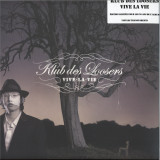
A l’occasion des 20 ans de cet album devenu culte, Record Makers réédite une version spéciale anniversaire limitée (vinyles transparents – 500 exemplaires) qui ravivera la flamme des fans de la première heure, des nouveaux fans et des collectionneurs. "Vive la Vie" est aujourd’hui un album référent pour les amateurs de rap, reconnu par ses pairs lyricistes, c’est un de ses albums qui marquent à jamais une époque, celle des années 2000 et de son rap aux rimes fines et puissantes.
Le 15 novembre 2004 sortait "Vive la Vie" le premier album du Klub des Loosers.
On ne présente plus le Klub des Loosers et son unique membre Fuzati. Pourquoi ? parce qu'on en a un peu honte quand même. Imaginez un jeune versaillais que tout prédestinait à devenir écrivain maudit ou chanteur d'un groupe de pop répétant dans le garage parental le dimanche de 16h à 20h. Le genre de type qui passait ses samedis après-midi à la bibliothèque municipale, ses samedi soir à boire de la bière dans les squats de jeunes où on recense une fille pour dix mecs et où la phrase qui revient le plus souvent est "qui roule un joint ?"
Imaginez maintenant que ce type ait une illumination, au milieu de ces jeunes que tout prédestine à la réussite (HEC, science-po) et qui lorsqu'ils se retrouvent ensemble ne savent pas faire autre chose que de se défoncer. "Nous sommes un klub de loosers".
Comme il n'aime pas trop les gens, Fuzati fondera un klub dont il sera le seul membre. Comme il n'a pas de guitare que le hip hop est son seul ami il se dit qu'il fera ça comme musique. Bah oui c'est sympa le hip hop. Comme on lui a dit qu'il n'avait pas une tête de rappeur et que les casquettes à l'envers lui vont mal il ne montrera jamais son visage et portera un chapeau. S'en suivra un parcours classique de MC underground qui rappe pour la rue (mais aussi les avenues) et représente ses refrés illégalement enfermés derrière les murs des prépas t'as vu. Mixtapes, nombreux freestyles dans l'émission Greckfrite diffusée sur la chaine internet Canalweb, concert à la MJC de Versailles mais aussi dans un entrepôt désinfecté à Dunkerque.
En 2003 Il signe sur le label parisien Record Makers parce qu'on lui a appris qu'il ne fallait pas trop se mélanger avec les gens d'autres milieux. Sortiront deux EP, "Baise les Gens" et "La Femme de Fer" qui sont déjà des classiques pour au moins 32 personnes. La même année sort également l'album de l'atelier "Buffet des Anciens Elèves" auquel il participe avec Tékilatex du groupe TTC, James Delleck, Cyanure et deux producteurs de talent, Tacteel (Lex Records) et ParaOne (Institubes). En juillet 2004 sort le maxi du Klub des Loosers où collaborent MF DOOM, légende hip hop, et Jean-Benoit Dunckel, moitié du groupe AIR.
DUVEL & GIT HYPER - De Rode Draad
Duvel is een pionier binnen de Nederlandse Rap-scene. Met z'n herkenbare stijl en vooruitstrevende visie heeft hij menig artiest geinspireerd en is zijn naam in steen gehouwen. Dit geldt eveneens voor DJ en producer Git Hyper, wiens naam sinds de 'golden era' van de Rap niet is weggeweest. De samenwerking van Duvel & Git Hyper vormt dan ook een nieuwe HipHop mijlpaal. De solide productie ligt in handen van Duvel en Git Hyper en vormt de fundatie voor de scherpe teksten van Duvel, ondersteund door klinkende namen als $keer&Boo$, Faberyayo, Nosa en Maximilli. Het album wordt uitgebracht door Redrum Recordz, het underground label wat Duvel ooit z'n eerste wapenfeiten bracht. Tezamen met de geschiedenis die hij met Git Hyper heeft, is de muziek het kloppende hart en HipHop 'De Rode Draad'.
- A1: Space Drift
- A2: Memory Loss
- A3: Siren-Call
- A4: Harmonisers Of The Spheres
- A5: Telepathy Beyond Time
- A6: Older Than Time
- A7: Congestion Hoe-Down
- A8: Shadowland
- A9: Celandine & Columbine
- A10: The Dying Of The Light
- A11: Cloud
- A12: Darkness At Noon
- A13: Future Perfect
- A14: The Killing Skies
- B1: Into The Depths She Calls
- B2: Lazy Summer Afternoons
- B3: Insects Revolt
- B4: Blood Runs Cold
- B5: Post Apocalypse Fog
- B6: Fish Don’t Cry
- B7: Ghost In The Abbey
- B8: Insects Dance
- B9: Dreams Of Magic & Cornfields
- B10: Devil’s Lightening
- B11: Danger Hurts
- B12: Why Me?
First ever release of pioneering radiophonic / experimental / electronic / soundtrack composer you may never have heard of but really should have by now. 26 tracks in all.
As we began the mammoth task of whittling down material for this album Elizabeth recalled the time she met Delia Derbyshire. It was during a party for existing and former Radiophonic Workshop composers at BBC Maida Vale in the early 1980s. Delia introduced herself with typical energy and exuberance proclaiming "It's up to you now - I'm passing the baton. Show these men how we get things done". That must have been quite an honour and responsibility for a young, female composer establishing herself within the male-dominated environs at Delaware Road.
Looking back over a musical career spanning almost five decades, it's clear Elizabeth rose to the challenge and made her mark. She was consistently in demand with television and radio producers, composing for an array of ground-breaking, critically acclaimed and popular BBC projects. Whilst Delia's legacy has achieved mythical status with her position as an innovator and feminist icon secured, the majority of Elizabeth's recorded work remains unavailable so her contribution to the output of the Workshop and evolution of British electronic music is somewhat under-appreciated.
Perhaps this record will help start to remedy the situation. Included are early tape experiments, home demos and non-BBC commissions from the early 1970's to the late 2000s. Having listened to 260+ digital audio tapes from Elizabeth's personal archive we have barely scratched the surface but hope to provide an indication of the breadth of her compositional and sound design skills.
Classically trained in cello and piano, Elizabeth graduated from the University of East Anglia with a degree in Music in 1973. She was mentored by Tristram Cary who helped her to become UEA's first recipient of a Masters in Electronic Music and later awarded an Honorary Doctorate by Staffordshire University. Joining the BBC as a studio manager in 1975, Elizabeth transferred to the Radiophonic Workshop in 1978. One of her first tasks was to create special sound effects for Blake's 7 using tape loops, the EMS 100 and trusted VCS3.
Her celebrated score for The Living Planet in 1982 featured early use of the PPG synthesizer and earned an Emmy nomination. Over the following years studio technology evolved rapidly, but Elizabeth transitioned from analogue recording techniques to newer digital platforms with relative ease, using samplers, midi sequencing and computer controlled workstations.
With an incredible 1,400 commissions to her name, she created special sound for The Day Of The Triffids, Lord Of The Rings, countless radio dramas including Iris Murdoch's The Sea, The Sea, Harold Pinter's Moonlight, all of Howard Barker's plays, productions of King Lear, Wordsworth's Prelude and The Pallisers. The success of The Living Planet led to further work for the BBC Natural History Unit followed by numerous commissions for The Natural World. At one point in the late 1980's at least five of her signature tunes were being broadcast every week including Points Of View, Horizon, Doctors To Be and Everyman.
After the closure of the Workshop in 1996 Elizabeth became freelance, arranging Faure's Pavane for the BBC World Cup '98 coverage (reaching no. 9 in the UK singles chart). She wrote additional music for Monty Python's Holy Grail DVD, scored Michael Palin's Full Circle and Sahara TV series, The Lost Gardens Of Heligan and The Human Body with Robert Winston.
Retiring from the music industry in the late 2000's, Elizabeth recently returned to her East Anglian roots and now lives near the coast. She walks daily, listening to all kinds of music, new and old, on her beloved air-pods.
- The Lamb Lies Down On Broadway
- Fly On A Windshield
- Broadway Melody Of 1974
- Cuckoo Cocoon
- In The Cage
- The Grand Parage Of Lifeless Packaging
- Back In N.y.c
- Hairless Heart
- Counting Out Time
- The Carpet Crawlers
- The Chamber Of 32 Doors
- Lilywhite Lilith
- The Waiting Room
- Anyways
- Here Comes The Supernatural Anaesthetist
- The Lamia
- Silent Sorrow In Empty Boats
- The Colony Of Slippermen (The Arrival / A Visit To The Doktor / Raven)
- Ravine
- The Light Dies Down On Broadway
- Riding The Scree
- In The Rapids
- It