Marcal has emerged as one of the most distinctive voices of a new generation of techno producers, combining rhythmic precision with an instinct for detail, tension and movement. On Four Small Escapes, he delivers four tracks built around subtle shifts and carefully placed moments of surprise, where intricate sound design and groove remain in constant dialogue. Opening with Smoke from Respawn, Marcal immediately establishes the record's character. Syncopated rhythms, intricate percussion work and subtle sound design details unfold within a streamlined framework, creating a groove that feels both spacious and forward-moving. Wooden rimshots and glassy textures interact across an open arrangement, giving the track a fluid and trippy quality. Arapuca shifts into darker territory while maintaining the same sense of control. Organic percussion, rolling low-end momentum and sharply placed accents continuously reshape the groove, creating a track that feels alive through movement rather than dramatic intervention. On Ultimamente, Marcal introduces one of the record's most immersive moments. Fleeting sonic details appear and disappear throughout the arrangement, while a carefully integrated vocal element adds depth and emotional weight without disrupting the flow. The result is a track that invites complete immersion while remaining firmly focused on the dancefloor. Closing the EP, The Surprise Test delivers its most direct statement. Rough and driving without leaning into industrial aesthetics, the track is powered by rolling energy, syncopated claps and a series of subtle electronic details that continuously animate its surface. The contrast between rawness and precision gives the record a powerful closing moment. Across all four tracks, Four Small Escapes highlights Marcal's ability to create tension through detail rather than excess. Reduced yet expressive, the EP balances functionality with a strong sense of character, allowing small gestures and unexpected shifts to leave a lasting impact.
out of Stock
Last delivered 5 days ago available to reorder, subject to availability
Japanese acid pop outfit Cho Co Pa Co Cho Co Quin Quin channel the globe-trotting spirit of Haruomi Hosono’s 1970s tropical boogie on their debut album, Tradition.
Named after one of the basic rhythms of Cuban folk music and drawing on influences from across the globe, Cho Co Pa Co Cho Co Quin Quin are quite simply a world unto itself.
Comprised of three childhood friends, Daido, Yuta and So, who reconnected during the coronavirus pandemic, Cho Co Pa initially emerged as a playful way for the three 23-year-olds to pass the time. Tapping into their youthful connection, they created a sound that exudes confidence and curiosity, a homage to the masterful world of YMO’s and Happy End’s Haruomi Hosono, rooted in the trio’s own idiosyncratic experience of the present.
Recorded at home and promoted on hugely popular DIY TikTok videos, their debut album Tradition is a technicolour exercise in armchair travelling – a kind of lockdown exotica for the housebound whose nostalgic flights of fancy are laced with a sense of whimsical melancholy for the lost freedoms of youth.
Referencing everything from Afro-Cuban percussion to lo-fi beats, Buddhist spirituality to trap, each member of the band brings different musical inspirations to the table. Latin American and Middle Eastern styles sit adjacent to a fascination for the electronic music of Aphex Twin, Dorian Concept, Underworld and Daft Punk. At times, the music verges on acid pop bliss, at others, it grooves with the instrumental funk sensibility of BADBADNOTGOOD.
“In the first place, when I create a song, my goal is to transport the listener to a mysterious place,” vocalist Daido explained in a recent magazine interview. Using lyrics as another sonic texture in the composition of ideas, Cho Co Pa paint beguiling sonic postcards of far-flung moods across 12 highly original tracks.
Marrying the organic and the electronic on rhythmically sophisticated compositions like ‘Chichibu’ and ‘Watatsumi’, it is on the album’s standout track ‘Gandhara’ that the experimental sound of Cho Co Pa comes to the fore. Referencing the ancient city of Gandhara through which Buddhism made its way from India to China, the track is a vocoder-trap-inspired, Udu drum-driven pop jam that lilts with unmistakable Balearic flair. If that’s difficult to imagine, then know simply that ‘Gandhara’ sounds like nothing else on this side of Saturn. Even Daido seemed surprised by the outcome: “I feel like we were able to create something that exceeded our abilities. That was huge!”
Hugely popular in Japan, with festival appearances lined up alongside BADBADNOTGOOD at Asagiri Jam in October, it's safe to say the success of Tradition has taken Cho Co Pa by surprise. You won’t have heard anything like it."
For over 11 years, Nowadays Records has been shaping the French electronic music scene with boundless energy and total artistic freedom. Much more than a label, Nowadays is a big musical family where every release, meeting and event becomes a real celebration. With over a hundred albums and nearly a thousand titles to its credit, Nowadays Records embodies musical diversity across a variety of genres: abstract hip-hop, house, electronica and alternative pop.
It's in this festive spirit that the Club Nowadays project is born, a true embodiment of the collective's vision. Through its club compilations and evenings featuring label artists and outside guests.
Today, the label continues to chart its course with the release of Club Nowadays Vol. 6, a new opus in its series of compilations, which fully embodies its vision of club music. This sixth volume brings together emblematic figures of the label and emerging artists around the following dance tracks.
Don't Lie, the first single from the compilation, is a heartfelt track born of a broken heart, but turned towards the light. Mira Ló composed this track as an act of resilience, following a break-up in love. She transforms her pain into positive energy, hoping that everyone can recognize themselves in it and find a little sweetness to soothe their own grief.
R1D1 brings together his groovy house and garage influences to create the track Marsupilami around a hand-crafted synth, sharp drums and deep bass. Influenced by hip-hop beatmaking, he incorporates vocals from radio and interviews, transformed into rhythmic elements. The name, a nod to the famous character, comes naturally through the sampled “houba houba”. Between offbeat textures and assertive groove, the track embodies R1D1's singular, hybrid universe.
OOGO & Blanka, two pioneers of the label, offer us Phô Real, a hybrid track between soulful deep house and hip-hop groove, mixing organic and digital textures. A track to get the dancefloor moving, with a delicious nod to La Fine Équipe's culinary universe.
With Tracksuit & Loafers, Yambow creates a bridge between groovy French Touch elegance and the effervescent energy of UK house, in the tradition of producers like Salute and Oppidan. The track is conceived like an acid cocktail: funky, euphoric and dancefloor-friendly. The title is a nod to cultural contrasts - between English tracksuits and French loafers - which translate into a musical interplay between sophistication and fervor.
Finally, Laaanky, the Parisian producer, breaks codes and gives free rein to his passion for raw sound, efficiency and groove on the track Bloom. Between textured house, dub echoes and Afro-tinged post-dubstep rhythms, he explores a danceable, minimalist and percussive electronica. Less is more.
out of Stock
Last delivered 23 days ago available to reorder, subject to availability
In the ever-evolving landscape of the underground music scene, few bands have made an impact quite like Selofan, an immensely talented duo of Joanna Pavlidou and Dimitris Pavlidis, has carved a niche for themselves within the international pantheon of darkwave, post-punk, and '80s synthpop, blending these influences to create a sound uniquely their own. Their journey, marked by a commitment to artistic integrity and evolution, has taken them from the cozy confines of local venues to the grand stages of international festivals, earning them a dedicated following and critical acclaim along the way. Their sixth album, Partners in Hell, released in October 2020, navigated the band through unprecedented times, testing their adaptability and resilience. Despite the hurdles to performing live and the global pandemic's challenges, Selofan emerged stronger, embarking on international tours with a newfound appreciation and connection with their global audience, during this period of introspection and isolation, Joanna Pavlidou embarked on a new venture, GIOVANNA, released under Selofan’s house label, Fabrika Records. GIOVANNA, which places Pavlidou at the helm of vocal and lyrical composition, represents a full on foray into synth-pop. showcasing a different facet of her artistic identity, with lyrics entirely in Greek. In 2023, Selofan hit the circuit hard, lighting up revered festivals with their presence. They stood shoulder to shoulder with heavy hitters like Molchat Doma and Lebanon Hanover at Grey Scale and performed with with the likes of The Sisters of Mercy, VNV Nation, and She Past Away at the Death Disco fest in their hometown of Athens. With each album they have released Selofan made significant strides in their evolution, deepening their engagement with their art. And their forthcoming seventh full length studio release, Animal Mentality, is poised to be their most compelling work yet. Animal Mentality unfolds as a labyrinthine journey through the elemental aspects of human emotion and experience, set against the backdrop of Selofan's signature darkwave sound. Each track on the album delves into different facets of the human condition, from the depths of desire to the pangs of isolation, encapsulating the duo's profound understanding of the intricate spectrum of human emotion and subjective experiences. The album kicks off with "Sticky Fingers," a track that melds cinematic scope with a haunting storyline, reminiscent of Jean-Michel Jarre's icy synths and a lyrical nod to Joy Division. This opening salvo revisits the tragic allure of classic car accident songs, weaving a tale of joy turned to sorrow amidst the snowy Alps. "Love's Secret Game" delves into the depths of forbidden desire, with vocals that echo the melancholy timbre of Xmal Deutschland, Lebanon Hanover, and Nico. It's a tale of passion and ephemeral connection, promising an enduring presence despite the inevitable fracture of time and distance. In "Lucille," sung by Dimitris Pavlidis, the plot is ensnared in the machinations of a tempestuous affair, with gothic undertones evoking the dramatic soundscapes of Ultravox and Clan of Xymox. The lyrics are steeped in danger and desire - a dance with the shadows. "Sacrifice Me" plunges into the abyss of despair, driven by a Bauhaus-esque bassline. It's a plea for release from the chains of alienation, a yearning for a final gesture of solace in the face of overwhelming darkness. "Bluebirds" offers a poignant reflection on solitude, with the fleeting imagery of bluebirds symbolizing the elusive quest for happiness. The song serves as a meditation on the internal struggle to maintain hope in a world shaded by sorrow. The narrative shifts with "Glassplitter," where German lyrics paint a portrait of deceptive allure and toxic entanglement. We are confronted with irresistible danger, masked by a veneer of beauty. "Ignoranz" continues the exploration in German, pondering the universality of misunderstanding. It's a reflection on the subjective nature of truth and the shared human experience of ignorance. "Behind My Eyelids" closes the odyssey, a contemplation on melancholy and metamorphosis. The phoenix rises from the ashes of betrayal to the brighter realm of renewal - a beautiful homage to the resilience of the human spirit amidst the often harrowing cycles of life. More than just an album, Animal Mentality is a milestone in Selofan's career, marking a decade of musical innovation and growth. It's a testament to their enduring spirit and a bold step into new realms of artistic expression. As Selofan continues to evolve, they remain at the forefront of their genre, pushing boundaries and exploring the depths of the human psyche through their haunting melodies and poignant lyrics.
For her new and most radical album »Electroacoustic Works for Halldorophone«, Martina Bertoni used the electronic instrument at EMS Stockholm to create four pieces that are massive in scale and incredibly intimate, sonically restrained and emotionally overwhelming—almost ambient and always demanding your full attention.
Martina Bertoni returns to Karlrecords with »Electroacoustic Works for Halldorophone,« her most radical album yet. The foundation for the four electroacoustic pieces was laid during a residency at Stockholm’s legendary Elektronmusikstudion (EMS) that the Berlin-based cellist and composer used to explore the curious instrument, originally designed by Halldór Úlfarsson in 2008, as an algorithmic system in order to examine tunings and the mathematical relationships between Aiming to analyse and understand their interaction beyond the composer’s control, Bertoni sought to engage more deeply with the concepts of time, tuning, and, most importantly, control. Accordingly, her four »Electroacoustic Works for Halldorophone« seem both massive in scale and incredibly intimate, sonically restrained and emotionally overwhelming— almost ambient and always demanding your full attention.
While the halldorophone—famously used by Hildur Guðnadóttir for her »Joker« score—roughly resembles a cello and can be played like one, it is an electronic instrument. The vibration of its strings is being picked up, amplified, and then routed through a speaker. This creates a feedback loop that becomes increasingly complex depending on how much gain is added to individual strings. Úlfarsson gave Bertoni a carte blanche for how to handle the instrument, but she stresses that she relied on »minimal interventions—some string strumming and plucking« that set the interactions of different sounds and frequencies into motion. »I decided to not approach it like a cellist would,« she explains. »Instead I used it as a kind of generative organ by turning it into a feedback machine, with tuned feedback triggering more feedback depending on the tuning, which was based on tetraphonic scales that I could apply on the four main strings as well as the sympathetic group of strings.«
Bertoni recorded the material in the EMS studio, later composing and arranging the four complex pieces in her home in Berlin, after which they were mixed and mastered by Ciaran O’Shea. While this can be considered a compositional abstraction process, traces of her concrete work as a performer are firmly ingrained in the music. »The halldorophone doesn’t have a line output, just a double set of speakers, which is why I recorded all sounds with two microphones in the EMS studio,« she explains. »That’s why there’s plenty of breathing sounds here and there—label owner Thomas Herbst and I jokingly refer to the album as my ›chamber music record‹.« And indeed, there is a striking sense of intimacy to these four pieces throughout which individual sounds, harmonic frequencies, and even subtle rhythmic figures seem to move both on their own accord but also according to a underlying vision that steers their interplay.
Indeed, »Electroacoustic Works for Halldorophone« is an album built on and marked by contrasts. The soothing polylogue of single sounds in the higher register on opener »Omen in G« is counterpointed by massive bass drones, while the second piece, »Nominal in D,« plays a cunning game of repetition and difference by combining thick textures with all kinds of rhythmic elements. »Fades in C«—the longest of the four pieces, clocking in at 17 minutes—unlocks the emotional potentials of the sonic qualities of the halldorophone, sounding at once serene and anthemic, and »Organon in D« closes the album by underscoring how Bertoni’s unconventional approach allows her to seamlessly transform simple, quiet tones into complex, towering walls of sound.
Forest Swords' debut album 'Engravings' is back in print on vinyl and CD for the first time in years, newly remastered by Rashad Becker with previously unheard bonus tracks exclusive to this edition.
Created by electronic producer and composer Matthew Barnes, and originally released via Tri Angle Records, 'Engravings' received instant acclaim from the likes of Resident Advisor, Pitchfork, The Guardian and saw Barnes take his hypnotic live show across festivals like Sonar, Glastonbury, Unsound and Le Guess Who.
While much of British electronica is defined by its inner cities, 'Engravings' was recorded in Barnes' hometown on the banks of an ancient river in Merseyside, the album's earthy, organic soundscape reflected the landscape and climate: all silt and sandstone, woodlands and wind, with the ghosts of Liverpool's pop music and clubbing history echoing in the near distance.
The album was a prototype for a sonic vocabulary Barnes has expanded on over the next few years: in critically acclaimed studio albums ('Compassion' and 'Bolted' via Ninja Tune), collaborations with Massive Attack and Neneh Cherry, remixes for the likes of Bjork, as well as commissions for video games, ballet and film scores - of which he has carved a career as an in-demand composer and sound designer.
'Engravings' is a snapshot of an artist confidently defining their own language: a piece of work that distills influences like dub, ambient, rave, post-rock and psychedelia into an ancient-futurist musical vision that feels timeless and vital.
FKJ returns with Tyber— a project that captures a period of personal and creative transformation following the release of his acclaimed album ‘V I N C E N T’. Written and recorded across multiple continents, the album reflects years spent navigating movement, solitude, collaboration and renewal.
The result is FKJ at his most expansive and uninhibited. Across ‘Tyber’, groove-driven compositions sit alongside jazz-led instrumentals, sample-heavy explorations and more direct songwriting moments, moving seamlessly through genres without ever losing cohesion. The album feels both deeply personal and globally informed, spotlighting an artist documenting his evolution in real time. It captures musical snapshots across London, Los Angeles, Paris, Brazil, and beyond to create music that combines intricacy and intimacy seamlessly.
Anchored by themes of emotional equilibrium and self-care, Tyber balances vulnerable storytelling with an unmistakable, groove-laden optimism. The album seamlessly weaves together spontaneous, late-night collaborations with artists like Labrinth, Bas, and Baby Rose, alongside deeply personal solo compositions. Ultimately, Tyber is a vibrant celebration of human connection and resilience, offering listeners an immersive, cinematic invitation into FKJ’s newly restored world.
out of Stock
Last delivered 23 days ago available to reorder, subject to availability
DE-CMG / DE15YR Dark EntriesBooks21.09.202621.SEP.26
Dark Entries Collected Music Graphics Compiled by Josh Cheon and Eloise Shir-Juen Leigh To celebrate 15 years of Dark Entries, this zine showcases the label’s visual aesthetic, bringing together some of the most iconic designs that we’ve released. While Dark Entries’ sonic mission has included sounds as diverse as synth-pop, Italo disco, darkwave, house, and techno, it is equally staggering to see the breadth of visuals the label has encountered and collected over the years. Included here are selected typography, logos, and illustrations from the label’s extensive catalog — well over 300 releases to date. Designs have been created using DIY analogue techniques as well as more contemporary digital approaches. A full discography is included at the end for reference and an essay by Shawn O’Sullivan (Led Er Est, Further Reductions). This zine serves as a source of inspiration for artists as well as a means of preserving and documenting these distinct graphics. DARK ENTRIES RECORDS is a San Francisco-based record label that was born in July 2009. Helmed by Josh Cheon, a vinyl-focused DJ and collector, the label has focused largely on excavating the 1980s underground era – but releases have spanned from sultry vintage disco to bleeding-edge contemporary techno. Graphic designer Eloise Shir-Juen Leigh has been responsible for most of the label’s artwork, whether reproducing original designs accurately for reissues or creating exciting new ones. Much care and attention is given to each release to represent the music in a memorable way as well as tell the stories behind these projects. Hand-stamped and limited to 200 numbered copies. 64 pages with neon cardstock covers. Measures 5×7 inches.
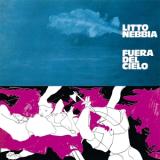
"Fuera del cielo" (1975) is an art rock/space jazz masterpiece infused with prog scents from one of the true legends of Argentinian rock. The sounds of floating acoustic pianos, organ and harpsichord, basslines and even bandoneon combine with Litto's own voice and create a unique blend of deep and delicate beauty. 'La Balsa' was the first Argentine massive rock hit. In 1967 Los Gatos became the most famous local rock band with this song. At the front, as composer and singer, was Litto Nebbia. Although this milestone has remained eternally linked to Nebbia's name, almost eclipsing the rest of his work, it is really his solo career that unveils the artist's overwhelming talent and his determination to create music freely, regardless of commercial considerations. It is an album to be filed next to the highly acclaimed "Bazar de los milagros" and "Cosas que no quieren morir", released the following year, creating an outstanding body of work that represents Nebbia's talent at its best. Nebbia's genius transcends beyond the Southern Hemisphere. The international scene of DJs and vinyl collectors shows signs of its taste for Litto Nebbia recordings, now highly sought after in their original editions, probably as part of a rediscovery of little-explored global sounds, within a journey through music always hungry for exciting new sounds. First time vinyl reissue, remastered sound.
I’dgained some notoriety as a music producer and DJ but I hit a horrible case of writers block around 2018.
The problem I was finding was that I was trying to shoe horn every smart arsed clever dick musical reference I had into the music I was making, but the function of dance music is to make people dance, not to show people who broad your musical references are, so I was making pretty shitty music that landed in the middle and didn’t achieve either aim.
To tackle this I ended up committing to just trying to make the most expressive and wanky experimental stuff I could. I was immersed in club culture at the time so the whole enterprise started as a joke, hence the name “Bed Wetter”. However when I fully submitted to just naked exploration the really unexpected thing that happened was that I found myself unavoidably having to deal with a lot of my own bullshit. That bullshit turned into the “Billy Mill is Dead” album, which was essentially the sound of me excavating my own life and looking at how I felt about where I was from, where I was headed, my family, my history, my region and all of the things i have conflicting feelings about.
It was partially catharsis and also a bit of deprogramming around being able to call myself an artist after being raised to believe that wasn’t an option for me.
I self released Billy Mill is Dead in the months before the pandemic and it found it’s fair share of love in the places I hoped would connect with it, and just the right amount of being ignored by people who I’m pleased didn’t feel it. This all lead to me being emboldened enough to apply for an artist in residence position at a big regional opera house months later in the middle of lockdown.
My feeling was that if my DJ career was potentially over for the remainder of my lifetime then there was no harm in exploring this alternative method of expression to see where it could take me.
I submitted a ridiculously ambitious plan for what I would like to do as a project, and to my absolute shock I was selected for the position.
I was 40 years old and from a scarcity background so I had a potentially unique response to that kind of validation for the first time and what followed next was a process of me just coming back with bigger and more ridiculous ideas just to find out at whatstage they’d tell me to stop.
The thing is, nobody did. I got as far as suggesting writing a full symphony to be performed by an orchestra before my own nerve gave out and I decided that was probably as far as I should push things.
The problem with people giving you permission to do things is that you then need to go out and figure out how to do those things.
The biggest issue for me, beyond raising the money to pay for everything, was how does a person actually write a symphony?
I was introduced to Fiona Brice, a multi instrumentalist and orchestral arranger. She’s also a recording artist who releases on Bella Union. On top of that she’s a violinist who used to be part of the band Placebo and who used to appear regularly playing for other bands on things like Top of the Pops.
Not only was Fiona uniquely placed to not look down on the strange provenance of someone from an Acid House background wanting to write a symphony, but more to the point we really hit it off from day one.
Fiona coached me in the essentials of writing for an Orchestra, and then I went off and wrote the 8 movements.
I’d love to say I laboured for years over this bit, but it took about 2 weeks in total. I’d also love to say what I wrote was a complete symphony, but the version of this which is solely me feels like looking at something without your glasses on. The shape,feel and borders were all there, but the definition was absent. Fiona taught me the broad language of a symphony, but without her it would have lacked all intonation, nuance and detail. Where I had shaped ideas with a hammer, she brought out my meaning with precision using a scalpel.
I think the prodigiously quick turnaround for the music is as much proof of how conceptually and musically aligned Fiona and I are. I know we’re both incredibly proud of what we’ve created.
It took nearly 2 more years to stage the debut performance in what was potentially the most traumatic period of my life which saw me embroiled in an international crisis with my own family and the death of my father, all with the backdrop of COVID.
The work itself is inspired by the working class experience, but it’s also a comment on how we get to decide what we are and how we’re defined, and we get to choose what we do to prove these things.
The original recording was contractually impossible to ever share again, so we re-recorded it in a working men’s club with jobbing (albeit world class) players. In many ways it’s a record that feels like it shouldn’t exist, which is why we’re all so happy that it does.
Freddie McGregor's Showcase album, released in 1981 and known in the UK as Lover's Rock Showcase Jamaica Style, marked a pivotal moment in the singer's career. Prior to this, McGregor had enjoyed only modest success, though his work, crafted with various producers, had consistently showcased a talented artist with an authentic voice.
A major turning point came in 1979 when he teamed up with producer Winston "Niney" Holness to create the acclaimed 'Mr. McGregor' album. That record significantly boosted his profile. On this record Roots and Romance are in perfect harmony as Niney's Dub magic meets McGregor's spin on classic soul, just as the title promises.
Lover's Rock Showcase Jamaica Style is available as limited numbered edition of 750 copies on orange vinyl.
From Berlin to Lagos: Jembaa Groove expand their sound on "Be A Lover"
Berlin-based outfit Jembaa Groove return with "Be A Lover", a four-track EP set for full release on 18 September via global soul imprint Agogo Records. Following two critically acclaimed albums and an intensive period of touring across Europe and the US — including a SXSW showcase and a widely acclaimed KEXP session — this latest release marks a new chapter in the band’s trajectory. Built around highlife rhythms and shaped by Afro-jazz and the more organic edges of Afrobeats, "Be A Lover" unfolds with a warm, languid and deeply soulful feel, capturing different strands of today’s multifaceted Afrofusion scene.
Here, the band strips back from a seven-piece ensemble to its two founding members, while at the same time opening outward into a deeply collaborative space. At its centre is a close creative partnership with celebrated Nigerian highlife revivalists The Cavemen., alongside contributions from London-based, Nigerian born soul artist Azekel, Lagos vocalist Tim Lyre, and Malian icon Fatoumata Diawara.
“This record has a different flavour,” says Owusu. “It’s really about collaboration — different feelings, different thoughts, different energies coming together.” While centred around the Lagos contemporary scene, the record is shaped by a wider diasporic network stretching across London, Lagos, Berlin and Amsterdam, cities producer and bass player Yannick Nolting describes as “the pillars where everything that is happening in today’s highlife and Afro-fusion scene.”
Formed in Berlin in 2020, Jembaa Groove began after a chance meeting between bassist, producer and composer Yannick Nolting and percussionist, vocalist and songwriter Eric Owusu. Drawing on their respective musical journeys — Nolting’s years working with Lusophone artists in Lisbon and Owusu’s deep roots in Ghana’s highlife tradition, including work with Pat Thomas and late highlife legend Ebo Taylor — the project quickly took shape: their debut album Susuma established a powerful, poly-rhythmic sound grounded in highlife, jazz and soul, while 2024’s "Ye Ankasa | We Ourselves" expanded that vision through collaborations with artists across Ghana and its diaspora, including UK based Ghanaian singer, rapper, percussionist, and arranger K.O.G and legendary Ghanaian highlife musician Gyedu-Blay Ambolley.
The collaborative spirit continues on "Be A Lover", most of which grew out of a meeting with sibling duo The Cavemen. at Supersonic Jazz Festival in Amsterdam in 2023, leading to a sustained exchange of ideas between Berlin and Lagos. With two acclaimed albums behind them, The Cavemen. have emerged as central figures in both Lagos’ alternative music scene and the wider contemporary highlife revival, bringing the genre to a new generation through a stripped-back, melody-driven sound. “There was some kind of magnetism towards Lagos,” says Nolting; for Owusu, who is Ghanaian but spent much of his life in Nigeria, the connection runs even deeper. “I feel lucky to be able to bring different cultures together and make something really beautiful,” he says. A key part of that process was a close working exchange between Nolting and The Cavemen.’s Kingsley Okorie, who effectively stepped into a co-producing role on three out of four of the tracks.
The one exception is opener No Pain No Gain, which features Nigerian-born, East London-based Azekel, whose smooth, R&B-leaning vocal moves through a slow-burning arrangement of bright keys, gently rising horns and atmospheric synths, anchored by Owusu’s organic percussion.
The title track Be A Lover, featuring Afro-fusion Lagos artist Tim Lyre, distills the EP’s central message into its most immediate form. Backed by syncopated percussion and a gently smouldering arrangement, Lyre’s voice moves with a laid-back, melodic ease, delivering a simple refrain: “be a lover, not a fighter.” “It’s a very simple message,” says Nolting, “It’s about showing more love, on a personal level but also more broadly… just show love.” That same sense of warmth runs throughout the record, reflecting its core idea.
On Obi, The Cavemen. take centre stage, with Kingsley Okorie leading through melancholic, plaintive vocals rooted in classic highlife. In contrast, his brother Benjamin James punctuates the track with high-pitched vocal interjections, heightening the emotional tension against a backdrop of slow, restrained instrumentation.
Waka follows with a more melodic, hook-led refrain from Eric Owusu, whose loose, almost conversational delivery creates a striking contrast with Fatoumata Diawara’s unmistakably powerful, raspy vocal. The collaboration grew out of a chance meeting while Owusu was on tour, with ideas exchanged quickly and Diawara returning a finished vocal within days. “We are so proud to have her. It’s a privilege” says Owusu. "Be A Lover" is a record shaped by connections like these — between people, scenes, and cities. “It was partly intention, partly destiny,” says Nolting. “We met these people along the way, and somehow Lagos was meant to come into our path.”
"Originally released in 1979 on Sly & Robbie's Taxi label, this album was Black Uhuru's second LP. Recorded at Channel One it set forth a new sound in recorded music technology. The songs blend into dub versions and the mixing is simply stunning. The track Shine Eye Gal also features guitarist Keith Richards"
(but hey, nobody's perfect).
"Hear the meticulous song writing of Michael Rose, joined by Puma Jones & Duckie Simpson, to complete the vocal line-up.
Sly & Robbie and the Taxi Gang created a sublime sonic masterpiece at Channel One studio in Jamaica. They were at their absolute peak of their powers, before being launched as global superstars with Grace Jones.
Black Uhuru went on to be an extremely popular live outfit, touring endlessly around the world, breaking down barriers and making new inroads to territories previously unknown to Jamaican artists.
This Classic reissue is a must for all reggae collectors."
out of Stock
Last delivered 7 months ago available to reorder, subject to availability
With the release of "Wildnis" in autumn 2026, Klangwart celebrate 30 years of the group"s existence. During numerous sessions in their own Inkiek studio in Unna/Germany and a residency in Montoriol/France in 2025, Klangwart have created their new work "Wildnis" ("wilderness"), inviting Sébastien Del Grande to add tenor and alto saxophone, drums, marimba and other various percussion instruments to their electronic textures. Catalan composer and performer Ivan Chin aka Ivan Telefunken also participated in the recording sessions by contributing to a Catalan version of Swiss group Grauzone"s famous new wave hit "Eisbär" under the title "Os Polar". Timo Reuber"s arrangements, production and mastering gave the album its final touch. Klangwart started their musical expedition into for them unknown territories already in 2014 when they went to Bogotá/Colombia in order to record with protagonists of the local music scene: Damián Ponce (drums), César Quevedo (bass) and Eblis Alvarez (violoncello), members of The Meridian Brothers, and singers Juanita and Valentina Añez Rothmann a.k.a. Las Añez. The result, released on Markus Detmer"s Staubgold label in 2019, was Klangwart"s trademark sound permeated by a Latin American pulse and pitch. With "Wildnis" the story continues: field recordings from Latin America are interwoven with delicate electronic structures, Del Grande"s iconoclastic approach to the saxophone meets Klangwart"s familiar organ drones, Catalan folk meets German Krautrock.
My fourth album begins and ends in nature, a space that has continually shaped and inspired my artistic work. I spend much of my time in forests and landscapes, listening, observing, and absorbing the subtle rhythms and structures of the natural environment. These impressions do more than accompany my music; they become an integral part of it, influencing its atmosphere, form, and sonic character. As a result, this has become my most emotional and profound album to date. The journey begins with captured moments from a Mediterranean island. Fragments of distant church bells, the ticking of a clock, and the hum of insects in the sun are gently joined by my piano... In this way, the opening piece, “Time,” serves as an introduction to the central idea behind Ellipsis. The term derives from the Ancient Greek word λλειψις (élleipsis) and refers to the deliberate omission of ἔ words or parts of a sentence.
What remains unsaid can carry just as much meaning as what is spoken. This idea runs like a thread throughout the entire album. A reduction to the essential, yet enriched with the necessary details that continually create space for imagination, personal interpretation, and those emotions that are not prescribed but emerge through the act of listening. Ellipsis exists within this tension between presence and absence, between acoustic and electronic sounds, between nature and the studio, between memory and perception. It is a place where meaning arises not only from what is audible, but also from what remains unspoken.
Originally released in 1971, "Satori" is Flower Travellin' Band's groundbreaking masterpiece and one of the most visionary albums of the early heavy rock era. It fused hard rock, psychedelia, progressive music and Traditional Eastern influences into a sound unlike anything heard before. Originally released in 1971, "Satori" is Flower Travellin' Band's groundbreaking masterpiece and one of the most visionary albums of the early heavy rock era. It fused hard rock, psychedelia, progressive music and traditional Eastern influences into a sound unlike anything heard before. Unlike many rock albums of the era, "Satori" is structured as a continuous musical journey, with its five tracks presented as interconnected movements rather than conventional songs. The band's powerful rhythm section, extended guitar passages, and the commanding vocals of Joe Yamanaka create an atmosphere that feels both intense and hypnotic. Recorded during a period when Japanese rock was developing its own identity, "Satori" drew inspiration from Western hard rock and psychedelia while incorporating a unique sense of space, improvisation, and spiritual exploration. Over the decades, the album has gained international recognition among collectors, musicians, and fans of vintage heavy rock, often cited as an overlooked classic that anticipated elements of later hard rock, stoner rock, and heavy metal. Created for an international audience and revered by generations of musicians and collectors, more than fifty years after its release, "Satori" remains as one of the most influential and forward-thinking records in Japanese rock history. LP includes insert.
Remastered limited edition double vinyl with double-sided screenprinted poster-cover (sleeve folds out to be one huge poster). A real collectors item!
When Off Off came out around June 1984, one couldn’t speak of an independent music scene in Portugal. Warm Records’ vague existence didn’t have any impact and Dansa do Som’s inaugural release appeared only in December. 10 years after the revolution, after two IMF interventions, a lot of political instability (not to say turmoil, in the first couple of years) and the natural excesses of a sudden burst of freedom, the Portuguese consumer had more choices but a generally poor standard of living. There was no entrepreneurial culture and serious second thoughts about investing private money in risky ventures.
After many complaints about the whole music scene (institutions, critics and record label executives, popular and classical music alike), something that would continue well beyond the end of the decade, Telectu decided to finance, record, produce, release and sell an album with complete independence from outside structures. Their karmic reward was profit. According to Vítor Rua, Off Off was the only album fully payed by the duo and the only one that really payed off. Not an easy accomplishment for a double LP housed in a large (also double-sided) screenprint with complicated cuts and folds. The artwork was conceived by António Palolo, a friend and multidisciplinary artist. It was based on a collage of heavily saturated and xeroxed polaroids framed in shocking pink and green. Palolo was considered the third member of Telectu, regularly producing slides, video and other visual support for their shows. The inspiration for the type of cover came from GRM’s Gramme series.
Off Off is divided in four distinct sides, each one corresponding to a “theme” or “function” related to Telectu’s manifold artistic interests and interactions. The titles are also gateways to influences and a small portion of Portuguese cultural life:
- Side 1 / “Diagonale” is dedicated to Egídio Álvaro, art critic and gallery director (he opened Diagonale in Paris). Performance art was arguably his main artistic concern over the years, so the music on this side is suggested for use by one or more performers in live or playback situations. The three tracks segue into each other, linked by a synth arpeggio much in the same way as Telectu’s previous “Belzebu” álbum (1983);
- Side 2 / “Anarké” is dedicated to the composer Filipe Pires, one of Jorge Lima Barreto’s recurring invocations when asked about worthwhile contemporary music in Portugal. It is subtitled “concert music”, proposing «a new form of listening». Three tracks also, and these are separated by “clap interludes”, which basically consisted in the following: JLB and VR each had a pair of headphones on, and they clapped their hands according to the rhythm of the music each one was listening. Both musicians were interacting with a different Steve Reich piece: Vítor with “Music for Mallet Instruments”, Jorge with “Six Pianos”. The result is disjointed clapping, an awkwardly deliberate celebration of their own music. Telectu applauded themselves.
- Side 3 / “Cornucópia” is subtitled “music for theatre” and dedicated to Luís Miguel Cintra and Luís Lima Barreto (JLB’s brother), both connected to the Cornucópia theatre company. The side consists of several short pieces previously used as interludes in the Cornucópia staging of “Mariana Espera Casamento” (1983). Field recordings, mood pieces, ambience and a numeric poem (“Soneto Soma 14x”, by E.M. de Melo e Castro) read by João Perry, a quite well-known stage actor. His voice is treated with a flanger effect;
- Side 4 / “Palolo” is “video music”. It’s a one-take mix recorded from cassette sources (Telectu studio experiences) and done live while watching António Palolo’s Om film (1978) projected on the living room wall. It’s a deep, immersive, quasi-mystical 20-minute piece perfectly suiting the meditative, abstract, fluid images created by Palolo by mixing paint and water inside a bathtub. One imagines the Cosmos, hardly suspecting the technique. The film is 90 minutes long, so the music on the LP is of course edited.
The six titles on sides 1 and 2 evoke demons, all of them with conflicting symbolism, since it varies from culture to culture, religion to religion. No explanation is given and Vítor Rua has no idea where this imagery comes from. During virtually the whole stretch of the 1980s, Jorge was the one in charge of titles and concepts, and Vítor didn’t bother too much even reading the liner notes :) In any case, when you synchronize the listening experience with the imagery, a powerful impression emerges, a feeling of being in the presence of these entities while placing yourself inside the sonic narrative.
Off Off is undoubtedly a seminal album in the history of electronic music, as much Heldon as Fripp & Eno, jazz and American minimalism, cosmic out-thereness, mantric miniatures. Telectu at the height of their powers, still very early on, delivering an album-manifesto advocating intermedia art and the fierce independence of Portuguese musicians «from the scum of capitalist music industry monopolies. It’s a path to follow, albeit one that requires enduring hardships and retaliation from music industry gangsters.» Despite a few journalists deemed «capable of being free», the media are «enslaved by the dominant and fascist imbecility of the speculators of light music.» Off Off is addressed to those journalists «and to an audience angry at the cultural misery imposed upon us ..., certain that this music will open new horizons of musical pleasure in the conception of Portuguese avant-garde music, and in the open consciousness of us all. OFF OFF repeats Freedom.»
Those two words are a direct lift from Alberto Arbasino’s 1968 book Off Off, the basis of which is a critical analysis of Theodor Adorno’s and Dwight MacDonald’s ideas concerning the stratification of culture in different levels (high, mid and low) and the pervasiveness of mass culture in the form of a culture industry. In very simplistic terms, and that is precisely the point that inspired Jorge, Arbasino argued that it was possible and desirable to effect a revolution from below, cultivating alternative circuits completely cut-off from what he termed the in-in reality. Telectu’s record was a deliberate demonstration that it could be done, displaying Freedom in the face of all the gatekeepers and other human obstacles.
After nearly two years, Okonski returns with Entrance Music — an album that finds the trio at the height of their improvisational prowess and celebrating the spontaneous and meditative. On the heels of 2023’s debut Magnolia, pianist and leader Steve Okonski has reconvened long-time musical collaborators (Durand Jones and the Indications bandmate Aaron Frazer on drums and bassist Michael Isvara “Ish” Montgomery) for another session in the spirit of artists like the Bad Plus, Gerald Clayton, and The Breathing Effect. Ultimately Entrance Music serves as an invitation to early hours, where songs linger in the doorway, announcing their presence before returning to the air, in a meticulous drift into the next.
Recorded over a five day session, Entrance Music was one of the first albums committed to tape at Portage Lounge, Terry Cole’s studio in Loveland, OH. “It was a new setup, but with Terry behind the dials it was very familiar,” says Okonski. “I can’t emphasize enough how much Terry feels like a fourth member of the band because of the space he’s curating, the energy he is bringing, and the production ideas.” The energy and sound created with the Colemine labelhead at the helm makes for a listening experience equally at home with ECM or Stones Throw catalogs.
From the rippling notes of the pastoral opener, “October,” Entrance Music is lush with anticipation, both band and listener feeling the tension in the tranquility — where the interplay of jazz improvisation and boom bap beats never shortchanges the musicianship but the talent is ever in service of the song.
While the band does not play together as often as they would like, not much time is needed for the three to lock in. Montgomery’s bass opening to “Passing Through” bends and moves with a singular meditative grace before piano and percussion joins the daylight filling a room with breath and light. If Magnolia resonated with last calls and late nights, Entrance Music counters with early mornings and first cups of coffee.
Whereas much of the debut resonates with his time in New York, Entrance Music “feels a little less ‘on the streets at 2 A.M.’ and a little more nature-based…a little more ethereal,” says Okonski. “It’s definitely age, environment, and family — all of that does come through in the music.”
“A lush, heatwave-friendly piece of dancefloor innovation…” Clash Magazine
First Word Records is delighted to bring you the debut EP from Ships of the Pharaohs.
Ships of the Pharaohs are a London-based collective led by producer Last Nubian, who’s had releases in his own right on labels like CoOp Presents, Eglo Records & Touching Bass. Blending jazz, soul, bossa nova, d&b and house-influenced grooves, the band also consists of vocalist Achanté, keys player Goldbar & bassist, Dougan.
The 7-track EP kicks off with the high-energy, vitamin D-saturated lead single ‘Sun is Rising’, featuring the guest vocals of brilliant Berlin-based singer Red Bird, who appears on three tracks on this project (‘For You’ and ‘Seasons’). ‘Can’t Quit’ follows on a smooth soulful house/bruk tempo, and invites in the thought-provoking spoken word prose of AKEEM. ‘Seasons’, ‘For You’ and recent single ‘Joys’ add another element to the band’s eclectic take on fusion, leaning heavily into the bossa side of the quartet’s influences. The latter track sees Achanté’s soulful harmonies gracefully float across a warm bed of keys, percussion, guitar picks & synth strings. We take a short jazzy breather on the ‘Interlude’ cut, featuring the resplendent sax of multi-talented Norwegian artist, Bror Havnes, who also features on the outro cut ‘One’ - this one seeing the crew ride out with a sonic salute to jungle/d&b, closing this first opus from the group with the energy levels remaining high.
Tre Wright (aka Last Nubian) explains “Our debut EP is a reflection of who we are, both individually and as a collective. Drawing inspiration from jazz, jungle, bossa nova, house, r&b and the music that's shaped us, we've explored our own interpretation of these sounds and how they come together in a way that feels true to us. It gave us the space to experiment without boundaries, trust our instincts, and create something that genuinely reflects where we are creatively right now.”
Originally conceived to perform Last Nubian material live for a Touching Bass showcase at We Out Here festival in 2023, the project soon took on a life of its own, as the group effort unleashed a unique chemistry & sound of its own merit. Thereafter followed numerous sessions in a studio-converted bedroom of a Brixton flat, developing this new sound. The finishing touches were taken care of at the infamous Total Refreshment Centre in North London, resulting in the formation of captivating new original material, which appears across this first extended release.
Ships of the Pharaohs have additionally performed live across London at Brick Lane Jazz Festival, House of KOKO, Jazz on Wick Festival, Peckham Levels, 91 Living Room & GROW in Hackney. Developing their powerful stage presence has gone hand in hand with the creation of their own material.
The initial singles from this project received praise & support from a variety of DJs, press outlets & tastemakers from the worlds of jazz, soul and clubland, including Shy One (NTS), Tony Minvielle (Jazz FM), Rohan Rakhit (Worldwide FM), Somewhere Soul & Clash Magazine to name a few.
With sonics somewhat reminiscent of Acid Jazz legends Incognito, merged with the class of Nuyorican Soul, and the dynamic fluidity of 4Hero, the 4-piece have cooked up a set of style & flavours uniquely their own, fresh for modern dances, incorporating organic improvisation with more contemporary club sounds.
The Ships of the Pharaohs are about to set sail for what is sure to be an exciting journey ahead.
‘Part 1’ will be released on 12” vinyl & all digital platforms on September 18th 2026.
When we go searching for a Black avant-garde, we have to be prepared to look in unexpected places. The route to a Black avant-garde involves walking down – what some might consider – peculiar highways. Where they see strangeness, a road leading them nowhere, we see nothing but beauty. The paths Darren Cunningham went down, the highways he took to make Actress, are a chapter in the story of the Black avant-garde. Cunningham the footballer. Cunningham the Wulfrunian. Cunningham the ex-footballer. Cunningham the DJ. Cunningham the Londoner. Cunningham the producer. Cunningham the painter. Cunningham the writer. Cunningham the composer. This is where the Black avant-garde in Britain is made. This is where you have to go to find it.
Across an expansive discography of more than ten LPs, Actress has created his own arcane language of hermetic references and inter-dimensional electronic composition.
Radical Frame arrives 18 years since debut album Hazyville, and it feels like an apotheosis. The image realised. We get the full gamut of Actress signatures. Short bursts of broken down music. Tiny sketches of zoomed-in sound. Refracted dance floor heat. And we get more.
Perhaps Radical Frame is a container for everything that Cunningham has built so far. A frame he is handing over to the next in line. The next artist to make their own way in the Black British avant-garde.
Wenn wir nach einer schwarzen Avantgarde suchen, müssen wir bereit sein, an unerwarteten Orten zu suchen. Der Weg zu einer schwarzen Avantgarde führt - wie manche finden mögen - über ungewöhnliche Pfade: wo sie Fremdheit sehen, einem Weg, der nirgendwohin führt, sehen wir nichts als Schönheit. Die Wege, die Darren Cunningham beschritt, die Highways, die er befuhr, um Actress zu erschaffen, sind ein Kapitel in der Geschichte der schwarzen Avantgarde. Cunningham, der Fußballer. Cunningham, der Wulfrunianer (Anm.: Einwohner von Wolverhampton). Cunningham, der Ex-Fußballer. Cunningham, der DJ. Cunningham, der Londoner. Cunningham, der Produzent. Cunningham, der Maler. Cunningham, der Schriftsteller. Cunningham, der Komponist. Hier entsteht die schwarze Avantgarde in Großbritannien. Hier muss man hingehen, um sie zu finden.
In einer umfangreichen Diskografie von mehr als zehn Alben hat Actress seine eigene, geheimnisvolle Sprache aus hermetischen Referenzen und interdimensionalen elektronischen Kompositionen geschaffen.
„Radical Frame” erscheint 18 Jahre nach seinem Debütalbum, „Hazyville”, und fühlt sich wie eine Apotheose an: das Bild ist vollendet. Wir bekommen die ganze Bandbreite von Actress' Markenzeichen zu hören: Kurze Ausbrüche reduzierter Musik, winzige Skizzen von vergrößertem Klang.
Vielleicht ist „Radical Frame“ ein Gefäß für all das, was Cunningham bisher geschaffen hat. Ein Rahmen, den er an den Nächsten weitergibt. An die nächsten Künstler:innen, die seinen eigenen Weg in der britischen Avantgarde der Schwarz.
out of Stock
Last delivered 2 days ago available to reorder, subject to availability
When we go searching for a Black avant-garde, we have to be prepared to look in unexpected places. The route to a Black avant-garde involves walking down – what some might consider – peculiar highways. Where they see strangeness, a road leading them nowhere, we see nothing but beauty. The paths Darren Cunningham went down, the highways he took to make Actress, are a chapter in the story of the Black avant-garde. Cunningham the footballer. Cunningham the Wulfrunian. Cunningham the ex-footballer. Cunningham the DJ. Cunningham the Londoner. Cunningham the producer. Cunningham the painter. Cunningham the writer. Cunningham the composer. This is where the Black avant-garde in Britain is made. This is where you have to go to find it.
Across an expansive discography of more than ten LPs, Actress has created his own arcane language of hermetic references and inter-dimensional electronic composition.
Radical Frame arrives 18 years since debut album Hazyville, and it feels like an apotheosis. The image realised. We get the full gamut of Actress signatures. Short bursts of broken down music. Tiny sketches of zoomed-in sound. Refracted dance floor heat. And we get more.
Perhaps Radical Frame is a container for everything that Cunningham has built so far. A frame he is handing over to the next in line. The next artist to make their own way in the Black British avant-garde.
Wenn wir nach einer schwarzen Avantgarde suchen, müssen wir bereit sein, an unerwarteten Orten zu suchen. Der Weg zu einer schwarzen Avantgarde führt - wie manche finden mögen - über ungewöhnliche Pfade: wo sie Fremdheit sehen, einem Weg, der nirgendwohin führt, sehen wir nichts als Schönheit. Die Wege, die Darren Cunningham beschritt, die Highways, die er befuhr, um Actress zu erschaffen, sind ein Kapitel in der Geschichte der schwarzen Avantgarde. Cunningham, der Fußballer. Cunningham, der Wulfrunianer (Anm.: Einwohner von Wolverhampton). Cunningham, der Ex-Fußballer. Cunningham, der DJ. Cunningham, der Londoner. Cunningham, der Produzent. Cunningham, der Maler. Cunningham, der Schriftsteller. Cunningham, der Komponist. Hier entsteht die schwarze Avantgarde in Großbritannien. Hier muss man hingehen, um sie zu finden.
In einer umfangreichen Diskografie von mehr als zehn Alben hat Actress seine eigene, geheimnisvolle Sprache aus hermetischen Referenzen und interdimensionalen elektronischen Kompositionen geschaffen.
„Radical Frame” erscheint 18 Jahre nach seinem Debütalbum, „Hazyville”, und fühlt sich wie eine Apotheose an: das Bild ist vollendet. Wir bekommen die ganze Bandbreite von Actress' Markenzeichen zu hören: Kurze Ausbrüche reduzierter Musik, winzige Skizzen von vergrößertem Klang.
Vielleicht ist „Radical Frame“ ein Gefäß für all das, was Cunningham bisher geschaffen hat. Ein Rahmen, den er an den Nächsten weitergibt. An die nächsten Künstler:innen, die seinen eigenen Weg in der britischen Avantgarde der Schwarz.
out of Stock
Last delivered 30 days ago available to reorder, subject to availability
For our second vinyl release, the idea was to bring together two artists from the same scene with strong and distinctive identities, and create a project where their individual worlds can coexist. Beyond featuring a solo track from each artist, we wanted them to collaborate and explore a shared territory that draws from their respective influences while pushing towards something new.
out of Stock
Last delivered 21 days ago available to reorder, subject to availability
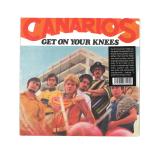
Get On Your Knees' (1968) was the global hit recorded by the Spanish band Canarios, a true anthem that took the British soul scene by storm and still today gets regular plays at '60s clubs. 'To Be A Man,' on the b-side, is a rare gem by Camilo Sesto, packed with fuzz bass guitar and sophisticated arrangements, making it perfect for the dance floor. Canarios, the band led by Teddy Bautista, was one of the first Spanish groups to incorporate the sounds of emerging musical trends-primarily from the English-speaking world-into its repertoire. It was also one of the first Spanish bands to tour the States (they even recorded an album there under the name The Canaries). In 1968, 'Get On Your Knees' was released, a stunning soul track recorded by Swiss producer Alain Milhaud that quickly climbed the charts in numerous countries. Its appeal remains undiminished, and it still gets regular spins in the 60s scene today. 'To Be A Man' is something of a rarity in the discography of Spanish singer Camilo Sesto, whose songs typically lean toward straightforward melodic pop and ballads. Surrounded by an international team of collaborators under the direction of former Brincos member Juan Pardo as producer, he recorded this psychedelic-tinged pop song. Its sophisticated arrangements and sinuous fuzz-laden bass line create an effective and irresistible dancefloor-filler that was released as a 7" single in several countries but, curiously, not in Spain. First-ever single reissue of both songs.
out of Stock
Last delivered 27 days ago available to reorder, subject to availability
This release is more than just a collection of tracks—it’s a statement of identity. Rooted in the raw energy of acid, techno, and house music, every sound, groove, and hypnotic sequence reflects a commitment to authenticity and creative freedom. In a world that constantly pushes artists to follow trends, staying true to who you are is one of the most powerful things you can do.
This project was created without compromise, driven by a genuine passion for underground electronic music and the belief that honest expression always resonates the deepest. The acid lines cut through with intensity, the techno rhythms drive relentlessly forward, and the house elements bring soul and movement to the journey.
We truly believe in this release because it represents exactly what we stand for as artists: originality, integrity, and a dedication to the music that inspires me. This isn’t about fitting in—it’s about creating something real. Turn it up and experience the sound of staying true to your identity.
Almost Starlight is the extraordinary new album by Jem Finer (hurdy-gurdy) and John Matthias (violin). Produced by Jay Auborn and recorded in a Medieval Church, deep in the Devon countryside, in the Summer of 2025, the music is suffused with light, heat and the natural acoustics of the space.
The album defies categorisation; forced to pigeon hole it the nearest approximation would be ‘modern-classical’ but this ignores its myriad influences and explorations which encompass inspiration from Arvo Pärt through Terry Riley to Can via Delius, Alice Coltrane and a subtle reimagining of electronic music played purely with acoustic instruments, bending and shaping their possibilities in surprising and unexpected directions.
Jay Auborn plays cello on a number of the compositions and his production opens up and expands the music through a skilled and imaginative use of space, paying homage to the atmosphere of the church; ‘the sound evolved… chasing the imagined acoustics of that church in my mind; a place for worshipping light with sound.’
Almost Starlight will be released on the 4th September by Touch, available as CD, vinyl, cassette and on streaming platforms.
BIOS OF THE ARTISTS
Jem Finer
Since studying computer science in the 1970s, Jem Finer has worked in various fields, including photography, film, experimental and popular music, sound recording, sculpture and installation.
Much of his work relates to systems, extended processes and extremes of scale and includes Longplayer, a musical composition repeating once every 1000 years, and the Gurdy and Hurdy stones, ancient rocks set upright in fields in East Sussex and Gloucestershire with Jimmy Cauty. Their work together includes a band, The Standing Stones, whose most recent release is Twa Sisters, featuring Iona Zajac and Daragh Lynch.
He was a founder member of The Pogues, with whom he has played, written and recorded since 1981.
Recent music revolves around a fascination with the hurdy-gurdy and includes hrdy-grdy, a cassette released by Benedict Drew’s Thanet Tape Centre. His latest collaboration, with John Matthias, Almost Starlight, will be released by Touch in September 2026.
John Matthias
Since studying Theoretical Physics in the late 1980s and 1990s, John has created music and sound in many forms, including for installation, popular music, music for film, for dance and orchestra.
Much of John’s work plays with the physics of complex systems but he is also greatly influenced by stories and song. John has collaborated with Matthew Herbert, Stanley Donwood, Jay Auborn, Radiohead, Thom Yorke, Nick Ryan and many others to create music with a variety of textures and sonorities. He is particularly interested in simplicity and form and how context informs the way music sounds.
His latest collaboration, with Jem Finer, Almost Starlight, will be released by Touch in September 2026.
out of Stock
Last delivered 29 days ago available to reorder, subject to availability
'Baroque Sunburst is proud to present Melaponica, the unique and unheard music of the interdisciplinary Brazilian artist João Machado, entirely created by electronically processing the recordings of stingless bees.
'Machado's work with field recordings of native bees form a sound library held in international collections such as the British Library and the Animal Sound Archive in Berlin, and his research into stingless bee communication has unfolded into experimental electronic music, finally finding its way on vinyl for the first time.
'Within its 40 minutes of never-stopping music, Melaponica reveals its unique sonic universe, flawlessly moving from complex percussive rhythms to melodies and soundscapes that seem to come as much from earth as from outer space. With an impressive ability to explore the potential of its original audio sources while pushing it to the limits, João Machado's idea of music never loses musicality and groove, even in its more intimate moments.'
Frazer Ray lands on Time Is Now with Masha EP. Four tracks of killer, stripped back FWD facing proto/future garage effortlessly pushing the sound into a new direction.
FACTS:
1. Frazer Ray knows how to make a dance. IYKYK…. Recently he’s been shelling Live UKG cooked right in front of you on a custom modular rig. Mad energy. 100% party business.
2. Frazer Ray knows a thing or two about making UK soundsystem music. The artist FKA Soundbwoy Killah is now a decade deep in his discography. And first as ‘Soundbwoy Killah’ and now as ‘Frazer Ray’ he is 2 for 2 with aliases that never miss.
3. New Frazer Ray is always something to get excited about. For 10+ years he’s kept it super tight. Quality over quantity. Always holding dubplates. When releases have landed they drop on only the best labels; including both Rinse and Rinse’s new INGRAM imprint, Ninja Tune’s Technicolour imprint, Sneaker Social Club, Interplanetary Criminal’s Locked On and IPC & Main Phase’s ATW Records. (side note - his Soundbowy Killah - ‘Halcyon Daze’ LP on Sneaker is IMO an all time classic - do not sleep on that one). Aaaannd… if the dubplates got too heavy he’s also occasionally dropped weight on his own U-Phorix label.
Also…..what has always struck me about Frazer’s music is that it’s simultaneously integral in the hardcode continuum while also pushing it forward. It’s always complete. Fully formed. You never bristle. There’s no failed experiments. Just a firm nod to the future for anyone looking.
OK… Run the tracks.
Masha’s vocal licks tell it straight, this one is “Fire”. Proper club business to test the stacks. The drums roll steady in front of a wall of sub bass. A killer mix of post dubstep era goodness, techno sound design and the shuffle & swing of proto dubstep.
Settle Down There’s something 90’s tek step about this one. Dark and moody with a wall of bass. It bristles with texture and atmosphere before – a moment of reprieve in this absolute weapon – Frazer opens up into a dubwise oasis before skittering back into the darkness.
Syren Song is exactly what it says on the tin, alluring Dancehall vocals chatter and roll. Who knew auto-tune and Garage paired so well… Frazer did that’s who.
No Reasons Left is an ethereal closer for the end of the night / start of the morning after. Gliding warm & introspective dubwise breaks with a Reese bassline that hangs in the space between garage and hardcore.
Frazer says…
“This EP feels like I've finally nailed integrating my modular setup (and VCV rack for all you nerds out there) into my productions. I wanted to create deeper production while still ensuring the tracks translate well in the club.”
If this is only the beginning then strap in.
out of Stock
Last delivered 30 days ago available to reorder, subject to availability
“I like to work with a variety of instruments and set ups,” says Mark Van Hoen, sometimes known as Locust or Autocreation but here working under his own name on the excellent Plan For A Miracle, his first physical release of solo music since 2018’s Invisible Threads. ”Sometimes it’s literally in my studio, with all the hardware electronics available. Sometimes the laptop, using software instruments. Some of the tracks on this record were recorded in the desert (Joshua Tree) using a 4-track tape machine and small modular synthesiser set up. Each track was recorded in different location using different instruments, which accounts for the distinction between each piece. It’s also about my own reaction to my environment, and what’s going on in my life at the time.”
The Croydon-born Van Hoen started musical life in the early 1990s, signing for R&S records in 1993 but developing his own, myriad and distinctive style across a range of releases on Touch, Editions Mego and other labels, using a battery of instruments, including analogue synthesizers and taking a number of different approaches to recording, rather than ploughing a single sonic furrow. He has worked on a number of collaborations, including with Nick Holton and Neil Halstead of Slowdive, under the moniker of Black Hearted Brother - their Stars Are Our Home was released in 2013. “I have known Neil Halstead since 1992,” says Van Hoen. “He shared a house with me for a couple of years, and the music I was making and listening to along with clubs I was attending had an influence particularly on Pygmalion, the final Slowdive album on Creation.”
Each track on Plan For A Miracle does indeed sound like a world unto itself, a mini-environment, a weather condition, an ecosystem created for the moment. It’s a collection of tracks recorded over the past few years, released on Bandcamp - despite his apparent absence, Van Hoen works constantly. Opener “Climates”, in its exquisite limpidity, feels like a homage to Brian Eno, one of his most formative influences in his teen years, commencing with Music For Films, which he bought in 1979. “This Is For Them”, feels like a ghostlike throwback to early drum & bass or electronica, reminiscent of his own, earliest outings. “There have been a number of requests from labels to make some more music like my very early releases on R&S,” says Van Hoen. “This is part of ‘letting go’ and realising that there’s nothing less creative about going back to those styles again.”
“Pencil Of Spheres” is something else again, a magnificent, imaginary glass structure, shimmering, refracting, without visible means of suspension, a thing of impossible beauty. “Electric Lights” evokes an abandoned fairground, its lights still pulsating, its music lingering. “The Underpass”, meanwhile, insofar as it reminds of anything at all, is faintly reminiscent of Cluster or Neu’s! West German ambience, the urban mundane rendered magical, the sodium lights, the whitewashed walls. The reverberant, faintly oriental chimes of “Insight” transport us yet again, burgeoning and intensifying.
The landscapes, the skyscapes rendered on Plan For A Miracle feel unpopulated as a rule - but when he does introduce vocal elements, Van Hoen has a history of doing so to spectacular effect - think of “Real Love” from 1998’s Playing With Time, the seductive intonation of its title recurring throughout like a series of massive holograms, echoing, stuttering, breaking up, surging. Here, there are just the faintest of vocals, barely distinct, disquieting. “There’s been a bit of a game changer in recent times,” explains Van Hoen. “AI software that enables you to extract vocals and instrument parts from virtually any recording. That means sampling individual parts from existing sources is no longer limited to the original mix exposing certain parts soloed. The vocal parts I use are from multiple sources and often pitch shifted altered rhythmically and melodically.“ There’s further vocal chatter on “I Really Do”, proceeding at a faster pace as if giving chase, or being pursued - distant, enigmatic. “The Music”, meanwhile, its beat tolling, lost in its own fog of static, features a curious intonation, like the ghost of a lost Walker Brother.
Sadly, the album’s title is in reference to a personal tragedy on Van Hoen’s part - the loss of his wife. Titles such as “I Won’t Give Up”, which faintly reminds of another Eno masterpiece, Another Green World, in its nautical hurly-bury, or the pastoral strains of “Mrs Who”, heavily clouded with sadness, seem to allude to this. “In fact the record was recorded entirely before she passed away,” says Van Hoen, “most of it before she even became very ill. The title was given to the album when it started to look like she wasn’t going to make it beyond a few months. It was something Osho said - “plan for a miracle” - so it was a statement of hope. Unfortunately it was not to be.” Although the album is non-thematic, non-specific in its atmospheres, sound paintings, elegant structures it most certainly stands as a magnificent monument to Osho’s memory.
-David Stubbs.
out of Stock
Last delivered 30 days ago available to reorder, subject to availability
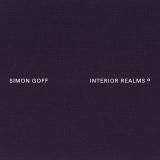
British composer Simon Goff interprets space, both within ourselves and the objects that surround us with Interior Realms - vol.1; a wondrous, contemplative work of electronic chamber music.
The idea first came from the philosophical idea underpinning the book Interior Realms, published by Theatrum Mundi in 2021. In it, a collection of essays reflects upon architecture’s influence on the human spirit. It challenges us to think not only about music as space, but also about how architecture can shape our ideas of composition. It also asks us to think about how space can make us experience music internally differently.
Interior Realms, the album, inhabits this idea and creates a dreamlike, atmospheric arch between its outer and inner parts. Joyous, immense and light-filled compositions sits side by side with the almost pure silence and introspect of its inner core. Goff wanted to create parallel compositional voices, performing them in various locations, each offering its own sonic character, unique spatial sounds, and reverb. Together with his long-time collaborator, Lynn Wright, the album was recorded in the Großer Wasserspeicher, Berlin's oldest water tower, and at the Grunewaldkirche, a location known amongst others from being the birthplace of many great works by artists such as Nils Frahm, Dustin O´Halloran and more. Cellist Anne Müller appears alongside Goff’s violin and viola on several pieces as they improvised and interacted with each other in the resonance of the space.
In addition to his own endeavors, Simon composes primarily for film and has collaborated with Hildur Guðnadóttir, Jóhann Jóhannsson and Peter Broderick among others. His collaborators has left an inspiring mark on him, all while standing firmly on his own feet with grand intention and results as heard on this absolutely brilliant atmospheric work.
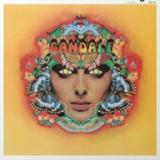
If you’re as obsessed with unfairly unheralded bands as we are, bringing out a proper, well-deserved official re-release to change that course is always an honor. Case in point, Jackpot Records proudly announce GANDALF’s 1969 self-titled release as one of our proudest moments. Working alongside band member Peter Sando from the original master tapes, it is time for the rest of the uninitiated to catch up with this beautifully crafted haunting psych-pop record (fans of THE LEFT BANKE, KALEIDOSCOPE, THE MILLENNIUM, and THE ZOMBIES, take note!). Recorded at Century Sound in Manhattan with Grammy-winning producer Brooks Arthur (who engineered Neil Diamond’s “Sweet Caroline” and Van Morrison’s “Brown Eyed Girl”), the production of the album was created on the spot in the studio with arrangements being thrown about and the incredibly haunted vocals being recorded directly from the band’s PA using a Binson Echorec to make this innovative sound (Pink Floyd later used the same echo unit to great effect). Add to that sitars, vibes, B3 organs, harpsichord, minor tragic guitar chords, and bass drones aplenty, and you’ve got the recipe for an album that bears listening to with eyes closed, music cranked, mind open. So get in on the beauty of this record, and as Sando says on the liner notes: “Put the needle in the groove, sit back, and take the trip with GANDALF.” Enough said.
Source Code Memory is a deep and hypnotc house journey built around rhythm, memory and reconnecton. With this new EP, Marcus Raute explores the point where body, mind and dancefoor energy meet, shaping four tracks that move between spiritual refecton, raw groove and soulful release.
Opening track “Reconnect” features legendary Detroit visionary Abu Qadim Haqq, whose spoken words bring a symbolic and cosmic dimension to the record. Hypnotc percussion, warm organ textures and jazzy piano lines create a deep house atmosphere where storytelling and rhythm become one.
“Body Code” moves into a more direct dancefoor space, driven by stripped-back drums, rolling grooves and old-school house energy. On the B-side, “Inner Transmission” brings a warmer and more emotonal tone, with rich chords, vocal cuts and live Rhodes and organ improvisatons inspired by the depth of 90s deep house.
Closing the EP, Giomini reworks “Inner Transmission” into a powerful, tmeless house remix, keeping the soulful spirit of the original while pushing it further into club territory.
out of Stock
Last delivered 33 days ago available to reorder, subject to availability
Northern Earth is Dean McPhee's sixth full-length album and the second release on his own label, Bass Ritual. Expanding on the low-end focus of 2024's Astral Gold and last year's The Bradford Boar on the Folklore Tapes label, Northern Earth integrates overdriven guitar, a wooden snare drum pedal and a powerful 18-inch subwoofer, pushing his sound further beyond the sparse fingerpicked solo guitar of his earlier releases. Drawing on influences from psychedelic rock, British folk, dub and underground electronic music, the album's three expansive compositions - including the side-long title track - were honed through live performance and recorded live with no overdubs at McPhee's home in Bradford. His solo setup - stacked valve amps, subwoofer, guitar, percussion pedals and expansive pedalboard - now functions as a single self-contained instrument, layering hypnotic basslines, ritualistic loops and fluid melodies with physical weight and a deep sense of space.
“At this point in his career, each new Dean McPhee release feels like a legitimate event” – Brainwashed
“There’s really no one else who can create (and sustain) the darkly seductive mood that’s embedded within his work.” - Aquarium Drunkard
“Dean McPhee stands out as a true one-off in a crowded field.” - Loud & Quiet
Essex punk duo The Meffs return with their second album BUSINESS, due this September via Frontiers Label Group, following their 2024 release What a Life. After a huge 2025 touring with major acts, selling out shows across the UK and Europe, and playing festivals like Glastonbury, 2000 Trees and Download, Lily (vocals/guitar) and Lewis (drums) headed into the studio with producer Dan Weller to create 11 of their most intense and politically charged tracks yet. Blending frantic punk energy with sharp commentary on the music industry and modern life, BUSINESS captures the raw sound of their live shows while showcasing the band’s anger, vulnerability and refusal to be pigeonholed.
A first-generation Nigerian-American hailing from Katy, TX, singer-songwriter Blessing Jolie creates pop music that straddles the line between introspective indie-folk and R&B. Like Tracy Chapman and Alanis Morissette before her, her songs are stories steeped in the vulnerability and messiness of a young woman growing up– from experiencing love for the first time to the effects of imposter syndrome to finding your place in between cultures and expectations. "I watched all my old friends graduate college while I was still chasing a dream. I wondered who I would’ve been if I took the same four-year route—but I’m learning to stand by myself through clarity, mistakes, and every detour. My life is mine to build and experiment with however my heart leads." - Blessing Jolie on Software Developer "Software Developer" is the third single leading up to Blessing Jolie's debut album with Thirty Tigers, 20Teens.
Born and raised in Kanagawa (Japan) Iu Takahashi is a sound artist based in Tokyo. She produces her own musical worldview mainly using synthesizers, ambient sounds, and voices.
Previously, Iu Takahashi pursued a career as a singer and since 2018, she has focused primarily on creating ambient music and provides her tracks to serve as background music for exhibitions or promotional videos.
Inspired by Japanese ambient music such as Hiroshi Yoshimura and Satoshi Ashikawa, Iu Takahashi creates some sounds works based on Japanese ambient music. As part of the "soundscape" concept, she always takes care to offer music that takes the listener’s thoughts and feelings into account, as well as music that resonates with the subconscious.
The bleak, hard-driven third LP by the Wipers (originally released in 1983) offers Greg Sage at his most chased and breathless, lashing out with sharp staccato notes as if melody were his only defense. The 3rd LP from the PDX punks finds them tightening up their sound to create what is arguably the Wipers' definitive album statement. Kurt Cobain listed it in his top 50 albums of all time. A distant cousin of the preceding Youth of America but undoubtedly no less excellent and no less venomous, Over the Edge is a return to the easily digestible song lengths of Is This Real?; however, it all but leaves that debut in its wake. On the strength of some brave/smart radio stations that decided to play this album's "Romeo" (a propulsive horn-flecked slammer in the vein of "Youth of America"), Wipers solidified their status as a certifiable force in the American underground of the early '80s. Songs like "Messenger" and "What Is" show Greg Sage's increasing skill as a pop songwriter. Despite the fusion of punk and pop, the record hardly mirrors the bands that would later be called punk-pop. In fact, this collision of the two elements makes what followed decades later seem twee.
The compositions recorded here are a product of work with computers in synthetic speech, song and vocal sounds and were created between 1972 and 1975. The music was realized on two different computer music systems and takes advantage of, and attempts to extend and explore their features. The system employed to realize speech songs was created at the Bell Telephone Laboratories for research in synthetic speech and speech communication. Since the system was not designed for musical purposes, its limitations were severe and its musical use a great (and often rewarding) challenge. The system used for In Celebration and The Story of Our Lives was designed with the expressed purpose of creating synthetic musical voices, and was therefore much better suited to the task at hand. As with any high technology project, there was extensive collaboration in the production of the works.
The works on this disk are called computer music because the sounds were created numerically in a computer before reaching magnetic tape and loudspeakers. The computer did not compose the music. However, it was only used as a sound synthesis and analysis medium. In order to hear the sounds which are represented in the computer as successions of numbers it was necessary to attach a digital-to-analogue converter to the computer. The converter transformed the succession of numbers into a fluctuating voltage which was recorded directly on to audio tape.
The technique used to create the synthetic voices is called speech synthesis-by-analysis. For this method of speech synthesis, only those words, phrases and sentences which have been spoken into the computer previously (via an analogue-to-digital converter) may be synthesized. First the digitally-recorded speech is analyzed by programs which extract the attributes (parameters) of the speech for short time segments (.01 sec.). From these parameters the speech may be recreated in a form which resembles the original recording very closely. But for musical purposes the parameters are most often altered before synthesis. It is possible, for example, to change the natural pitch contour of the speech into a melodic line or to change the speech speed without altering the natural pitch level.
The variety of musical patterns which may be created from the analytic parameters is limited only by the composer's imagination. Most of the speech sounds on the recording were created by changing the pitch and duration attributes of the original on resynthesis, but for a few, the resonances (the formants) of the speech were altered as well. The voice of the book in The Story of Our Lives was created by replacing the program which simulates the sound of the human vocal cords with one consisting of 64 sine tones glissandoing at different rates. All the textures in which more than one voice is heard were obtained by mixing the synthetic voices together digitally.
Bonobo alias Simon Green returns with "Distance In Static", his new album, which will be released on September 11, 2026, by Ninja Tune.
On "Distance In Static", Bonobo collaborates with a characteristically impressive lineup of artists, including Arooj Aftab, Joy Crookes, Nilüfer Yanya, Ichiko Aoba, Nicole Miglis (Hundred Waters), and Aanya Martin. The lyrics are written in English, Urdu, and Japanese, while historical Iranian samples and guzheng recordings stand alongside Bonobo's carefully crafted instrumental sounds. These were created during recording sessions in Los Angeles, Tokyo, London, and beyond: a significant part of the album was completed at Neil Young's legendary Broken Arrow Ranch in California, where he had retreated for several weeks earlier this year.
The album's title - "Distance In Static" - aptly describes Bonobo's current situation: it evokes images of distorted transmissions and fleeting frequencies, memory fragments and glimmers of meaning that echo through more than two decades at the forefront of electronic music. He sees the traces of his work reflected in a younger generation rediscovering trip-hop, downtempo, and experimental electronic music of the 1990s from a contemporary perspective. "I think the beginning of my work is relevant to younger people today," he says. "I liked the idea of listening for a distant signal - finding something in the noise," he continues. The entire album conveys the feeling of a search for transcendence: music that hovers between intimacy and vastness, the familiar and the unknown.
Within the universe of "Distance In Static", there is also a sense that this album marks something truly monumental. It is a moment of transition, a celebration of Bonobo's 25th anniversary, but perhaps also his last album in the traditional sense: with numerous guest contributions and a multi-year world tour with a full live band.
Whatever comes next, one thing is certain: "Distance In Static" is arguably Bonobo's best album to date; as ambitious and forward-thinking as ever and a reminder of why he has influenced so many people so strongly for so long.
out of Stock
Last delivered 2 days ago available to reorder, subject to availability
Cosada Records returns with its third release “Blue Hour”, crafted by label founder Laseech. Moving deep into the warm twilight of the Adriatic, this EP delivers a beautiful blend of mature underground sounds and soulful grooves. Side A opens with “Blue Hour”, a cut filled with pure, classic deep house sweetness. It is followed by “The Orient”—co-produced by Julian Grgorovic—which guides listeners on an unpredictable journey powered by flowing flutes and hypnotic synth lines. Flipping over to Side B, Chicago luminary Vick Lavender brings a brilliant new dimension to the release. Created alongside Justin Dillard, his “2AM Time Traveler Remix” delivers late-night house exploration at its finest. Distributed worldwide by Mother Tongue.
out of Stock
Last delivered 15 days ago available to reorder, subject to availability
In Thin Air, forms a musical companion piece to Robert and Jackie's book The Book of Birds - a book that is a love letter to the splendours and mysteries of birdlife, and a clarion call to halt the loss of birds from land, sea and sky. The music was created within the contemplative green oak roundhouse of Ty Sanctaidd (Sacred House) in the grounds of Ty Trefacwn in South West Wales, and recorded at Castle Sound Studio in Pencaitland, East Lothian. As with our other albums In Thin Airhas been recorded and produced by Andy Bell of Hudson Records. Throughout The Book of Birds there runs a gentle mantra - " Nest, Egg, Beak, Song, Feather, Flight, Migration -- these are the Seven Wonders that together conjure the miracle of Bird ". Intrigued by this concept, the seven musicians have created an intricate new album that has an overarching narrative, capturing the remarkable world of birds from birth to flight.