Colin Potter Is A Sound Engineer And Musician Currently Based In London. He Has Worked Within The Fields Of Electronic And Experimental Music For Over 35 Years, Collaborating With The Likes Of Current 93, The Hafler Trio, Organum, Andrew Chalk, And Most Notably As A Key Part Of Nurse With Wound Alongside Steven Stapleton. He Started The Esteemed Icr (integrated Circuit Recordings) Label In 1981 Releasing A Clutch Of Wonderful Home Recordings Of His Own, Over Half A Dozen Small Run Cassette Only Releases.'the Where House' Was Recorded In 1981 At Ic Studio, A Converted Wash House In Sutton On The Forest In North Yorkshire. The Album Was Self-released On Cassette That Same Year Via Icr. This Expanded Double Lp Edition Features All 13 Tracks From The Original Tape On Vinyl For The First Time Plus 4 Bonus Tracks. 'the Where House' Is A Prime Example Of Early Uk Post-punk/industrial Electronic Music. combining Dub, Electro, And Krautrock Rhythms With Psychedelic, Kosmische Noise In Multiple Mutations Ranging From Almost Pop-wise Songcraft To Horizon-scanning Motorik Flights,' Says Boomkat. Most Of The Damage Was Done By Colin Using Guitars, Synths, Sequencers, Drum Machines, Percussion, And Modified Toy Keyboards With Fairly Primitive 4-track Recording Equipment. He Was Assisted On Some Of The Tracks By Stephan Jadd-parry (guitar, Percussions), Jon Caffery (guitar, Bass, E-bow, Percussion) And Nick Jackson (synth). All Songs Have Been Remastered For Vinyl By George Horn At Fantasy Studios In Berkeley. The Record Is Sleeved In A Replica Of The Original Cassette Artwork By Jonathan Coleclough. Every Copy Includes A Double Sided Postcard Insert With Notes From Colin.
Buscar:re public
- A1: Heron Dance
- A2: Twilight Song
- A3: Yes—Singing
- A4: Dragonfly Song
- A5: A Homesick Song
- A6: The Willows
- A7: Lullaby—Lahel
- B1: Long Singing
- B2: The Quail Song
- B3: A Teaching Poem
- B4: A River Song
- B5: Sun Dance Poem
- B6: A Music Of The Eighth House
Music and Poetry of the Kesh is the documentation of an invented Pacific Coast peoples from a far distant time, and the soundtrack of famed science fiction author, Ursula K. Le Guin's Always Coming Home In the novel, the story of Stone Telling, a young woman of the Kesh, is woven within a larger anthropological folklore and fantasy. The ways of the Kesh were originally presented in 1985 as a five hundred plus page book accompanied with illustrations of instruments and tools, maps, a glossary of terms, recipes, poems, an alphabet (Le Guin's conlang, so she could write non-English lyrics), and with early editions, a cassette of field recordings' and indigenous song. Le Guin wanted to hear the people she'd imagined, she embarked on an elaborate process with her friend Todd Barton to invoke their spirit and tradition.
For Music and Poetry of the Kesh, the words and lyrics are attributed to Le Guin as composed by Barton, an Oregon-based musician, composer and Buchla synthesist (the two worked together previously on public radio projects). But the cassette notes credit the sounds and voices to the world of the Kesh, making origins ambiguous. For instance, The River Song' description reads, The prominent rhythm instrument is the doubure binga, a set of nine brass bowls struck with cloth-covered wooden mallets, here played by Ready.' According to writer and long-time friend of LeGuin, Moe Bowstern (who pens the liners for the Freedom To Spend edition of Kesh), Barton built and then taught himself to play several instruments of Le Guin's design, among them the seven-foot horn known to the Kesh as the Houmbúta and the Wéosai Medoud Teyahi bone flute.' Barton's crafting of original instruments lends an other-worldly texture to the recordings of the Kesh, not unlike fellow builders Bobby Brown and Lonnie Holley. Bowstern notes, Other musician / makers have crafted their own Kesh instruments after encountering the earlier cassette recordings that accompanied some editions of the book.' Both Barton and Le Guin are sensitive to the sovereignty of indigenous Californians and were careful not to trample the traditions of the Tolowa people who lived in the valley long before the Kesh. You research deeply, and then you bring your own voice to the table,' said Barton. Within the Kesh culture, the numbers four and five shape the lives, society and rituals. Barton composed loosely around these numbers, patiently listening to the land of Napa Valley for signs and audio signals from the natural elements. Todd incorporated ambient sounds of the creek by Le Guin's house and a campfire they built together. The songs of Kesh are joyful, soothing and meditative, while the instrumental works drift far past the imaginary lands. Heron Dance' is an uplifting first track, featuring a Wéosai Medoud Teyahi (made from a deer or lamb thigh bone with a cattail reed) and the great Houmbúta (used for theatre and ceremony). A Music of the Eighth House' sends gossamer waves of the faintest sounds to float on the wind.' Like the languages invented in the vocal work of Anna Homler, Meredith Monk, and Elizabeth Fraser, the Kesh songs and poems play with the shape of voice.
The Music and Poetry of the Kesh cassette was meant to accompany and enhance the experience of reading Always Coming Home. Presented in this edition as a long-playing album, where only traces of the book linger (the jacket offers some of Le Guin's illustration, and a letterpressed bookmark featuring the the narrative modes of western civilization and the Kesh valley is included), the music alone breaking the silence of what might be. It can transport—offering a landscape for imagining a future homecoming. One in which we are balanced, peaceful, and tend to the earth and its creatures. A line from the Sun Dance poem reminds us, We are nothing much without one another.' Freedom To Spend gives new life to the recordings of the Kesh people in the first ever vinyl edition of Music and Poetry of the Kesh, out on LP, and digital formats on March 23, 2018. The LP will include a deluxe spot printed jacket with illustrations from Always Coming Home, a facsimile of the original lyric sheet, liner notes by Moe Bowstern, multi-format digital download code and a limited edition bookmark letter pressed by Stumptown Printers in Portland, OR.
This past Monday, January 22, Ursula passed from this realm to another leaving a life spent building and exploring other worlds while challenging social concepts of the real word she inhabited.
Freedom To Spend had been working under Ursula's enthusiastic endorsement and with Todd Barton, her musical collaborator on Kesh, to give the music that accompanied her 1985 epoch a new life. With the Le Guin family's encouragement to move forward with our planned release, we are humbled to play this small role in sharing Ursula's work.
As Pete Swanson, one third of Freedom To Spend, stated, Ursula's legacy is her work which transformed the world, and this is another piece of the universe that her imagination birthed becoming real.' Listen to A Teaching Poem / Heron Dance' below.
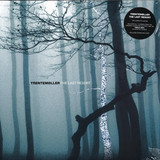
Special vinyl re-issue of Trentemøller's groundbreaking debut album. Includes all of the 13 songs on vinyl for the first time. Triple-vinyl in gatefold sleeve.
Trentemøller's debut album remains one of the few genre-defining and groundbreaking albums in many regards. It's still being praised for its composition and sounddesign alike and sounds as fresh and breathtaking today as it did when it was originally released in 2006.
The Last Resort - a beautifully crafted, astonishing masterpiece, that will leave you breathless. The 13 instrumental tracks together form a wordless musical story, almost like the soundtrack of a movie. It
manages to capture a whole range of emotions in subtle melodic miniatures, dreamy ambiences, dusty beats, deep dub-tracks and driving groove-excursions. An ever-changing kaleidoscope of colours and moods. Although it's an electronic album, it also incorporates live-drums, guitars, bass and other acoustic instruments like celesta, glockenspiel, melodica and even DJ scratching to create a more organic feel. The album received fantastic acclaim from both music fans and journalists around the world and made it into the top-lists of the month, the year, the decade - alongside an array of awards for best production or best album.
Back in 2006, the original pressing only included a selection of songs from the original 13-track album release. It missed out on songs which had been released on singles or didn't "fit" on the so called "vinyl edition". Due to 'public demand' and simply because this album deserves a proper vinyl release we are happy to finally present, for the first time, the full album on vinyl. It spans of three vinyl discs and is packed in a beautiful gatefold sleeve which also holds a download-code. The recut has been carefully crafted from first generation, orignal masters by Calyx in Berlin. Since the album has been praised for its fantastic sound the primary directive was to cut the lacquers for the re-issue so that they would sound exactly the same as the original release, which has been the CD version of the album. No 'digital remastering' or any other alterations have been applied.
All 13 songs of the classic album on one vinyl release for the first time. Triple-Vinyl edition. Gatefold sleeve. download code. original sound-quality. NO digital remastering.
Twenty-eight Years Ago, Pissed-off Twelve-year-olds Around The Universe Discovered A New Planet, A Black Planet. Public Enemy's Aggressive, Benihana Beats And Incendiary Lyrics Instilled Fear Among Parents And Teachers Everywhere, Even In The Border Town Of Laredo, Texas, Home Of The Future Founders Of The Latin-funk-soul-breaks Super Group, Brownout. The Band's Sixth Full-length Album (out May 25th) Fear Of A Brown Planet Is A Musical Manifesto Inspired By Public Enemy's Music And Revolutionary Spirit.
Chuck D., The Bomb Squad, Flava Flav And The Rest Of The P.e. Posse Couldn't Possibly Have Expected That Their Golden-era Hip Hop Albums Would Sow The Seeds For Countless Public Enemy Sleeper Cells, One That Would Emerge Nearly Three Decades Later In Austin, Texas. Greg Gonzalez (bass) Remembers A Kid Back In Junior High Hipped Him To The Fact That Public Enemy's bring The Noise' Is Built On James Brown Samples, While A Teenaged Beto Martinez (guitar) Alternated Between Metal And Hip-hop In His Walk-man, And Adrian Quesada (guitar/keys) Remembers Falling In Love With Public Enemy's Sound At An Early Age. when I Got Into Hip Hop, I Was Looking For This Aggressive Outlet . . . And I Didn't Even Understand What They Were Pissed Off About, Because I Was Twelve And Lived In Laredo . . . But I Loved It And I Felt Angry Along With Them.'
Joseph Abajian (fat Beats' Owner) Must Have Sensed The Deep Hip-hop Well Lying Beneath The Versatile Band's Latin-funk Veneer. i Thought Their Sound Would Work Covering Public Enemy Songs,' Abajian Says, And, it Was Good To Know They Were P.e. Fans . . . We Came Up With A Track Listing And They Went To Work.' Despite The Band's Eagerness To Work On New Original Material (an Album Of Original Songs Is Slated For Next Year), They Couldn't Pass Up The Opportunity To Pay Homage To This Iconic And Influential Posse.
Translating Sample-based Music To A Live Band Turned Out To Be More Of A Challenge Than They Anticipated. Adrian Tried To Get Inside The Bomb Squad's (public Enemy's Producers/beat-making Team) Head In Order To Find The Inspiration To Reinterpret P.e.'s Songs: imagine The Bomb Squad Going Back In Time And Getting The J.b.s (james Brown's Funky Backing Band) In The Studio And Setting Up A Couple Analog Synths And Then Playing Those Songs.' While Some Songs Closely Follow The Original Musical Blueprint, Others Use The Source Breakbeats As Jumping-off Points Later Sweetened By Trombonist Mark speedy' Gonzales' Horn Arrangements, Synth Wizardry Courtesy Of Friend-of-the-band Peter Stopschinski, And Dj Trackstar's Turntable Scratches. But Don't Listen Expecting To Hear Paint-by-numbers Recreations Of Classic Public Enemy Jams. our Approach Is Never In The Tribute Sense,' Adrian Explains. we've Always Taken It And Made It Our Own, Whether It's The Brown Sabbath Thing Or This Public Enemy Thing.' Coming Off Numerous Tours As Brown Sabbath And Even A Stint Backing The Late Legend Prince, Brownout Is Arguably The Tightest And Funkiest Band On The Road Today And They're Psyched To Bring This Revolutionary Music To The People. For A Band Without An Overt Political Agenda, They Collectively Couldn't Resist The Opportunity To Play This Music Live, Especially Now. if There's Any Way That We Can Use The Already Political And Protest Nature (of P.e.'s Music), We Would Like To Try,' Beto Says. the Album's Title, Fear Of Brown Planet Is Definitely A Relevant Idea Today And We're Not Afraid To Put It Out There, Because We Want To Speak Out.' By Reinterpreting These Hip Hop Classics In Their Unique Style And Channeling The Spirit Of Public Enemy That First Echoed Around The World And Captured Their Imaginations All Those Years Ago, Brownout Is Doing Exactly That.
Two of Russian electronic music's rising stars, Phil Gerus and Alexander Lay-Far, invite you to join them at the Solitary High Social Club. While table service is provided, they'd much rather you throw caution to the wind and head to the dancefoor.
Before joining forces in the studio, both Moscow-based musicians have delivered a string of memorable solo productions. Lay-Far has previously released a wealth of material on such labels as Local Talk, City Fly, Lazy Days and 4Lux Black, while synthesizer fetishist Gerus has showcased his electrofunk and disco-fred cuts on Futureboogie Recordings, Sonar Kollektiv, Public Release
and Superior Elevation Records.
The fve tracks that make up Solitary High Social Club deliver a perfect marriage of the two producers' distinctive solo styles, combining the rich musicality of Lay-Far's house productions with the spacey, intergalactic electronics of Gerus's discoid adventures. In many ways, it's a marriage made in heaven - or in Lay-Far's celebrated In-Beat-Ween Studio, at least.
The duo's spacey and melodious musical fusion is arguably best exemplifed by lead cut City 2 City, Star 2 Star', a widescreen, mid-tempo disco epic rich in tactile Rhodes riffs, supernova synth solos, delay-laden drum beats, tumbling melody lines and heavy analogue bass. Fittingly, the track returns in Reprise' form - think sweeping, weightless ambient bliss - to round off the EP.
Elsewhere, the duo provides further proof of their combined musical talents.
Check, for example, the gentle drum machine electro beats, cascading new age melodies and sparkling, stretched-out synthesizer chords of the impeccably beautiful Am I Tripping', or the devilishly percussive, mind-altering brilliance of Love Life', where mutant electro bass, wide-eyed chords and alien melodies rise above a heavy, Afro-infuenced groove. As for Snowfakes On Her Lips', you'll struggle to fnd a more confdent and positive dancefoor workout all year. Blessed with killer piano parts, darting analogue synth-bass and a range of disco-tinged musical fourishes, it's by far and away the most celebratory moment on an already happy-go-lucky EP. It confrms, too, our initial hunch: at the Solitary High Social Club, life is always good.
Nicolas Lattansio, aka SHIT, was raised in Temperley, a small borough in the city of Buenos Aires, Argentina. In 1996, he had his first encounter with electronic music and has been inseparable ever since. Hes in love with the beats and the dance floor. His tracks are played by the likes of DJs Pareja, Alejandro Paz, Carisma and Mijo. Hes the founder and resident DJ of Te Re Cagamos La Fiesta and TOKYO, the Festival. He defines his music as indie techno, with strong beats, vocals and plenty of attitude. Without a doubt, SHIT is one of the most powerful projects in the neighborhood.
The Solo En La Pista EP shows SHIT's veritable force in the blooming indie-techno scene growing out of Mexico and South America, and the remix with Mexico City's Ali X x Ximena (former Azari III) is an extremely strong dance floor track that has proven itself upon many floors and festivals from Burning Man and beyond over the course of 2017 in preparation for it's public launch this year.
Raga Yaman
1) Alap
2) Jod
3) Jhala
4) Gat (Composition in Chautal)
Zia Mohiuddin Dagar : rudra veena
Manik Munde : pakhawaj
Gayathri Rajapur & Annie Penta : tanpuras
Recorded by unknown at the University of Washington, HUB Auditorium, Seattle, Washington 15 March 1986 , concert co-sponsored by the UW Ethnomusicology Division and Ragamala.
Original digitally processed audio recording made with Panasonic PV-9000 VCR, Sony PCM-F1, PZM mics. Mastered & Cut by Rashad Becker at Dubplates & Mastering 1117 & 0318.
Liner notes by Renaud Brizard, Stephen O'Malley & Ian Christe.
Front and back cover photos by Niranjan B. Benegal, Seattle Center Folklife Festival 1979. Elizabeth Reeke & Annie Penta on tanpuras.
Inner gatefold photography by Niranjan B. Benegal & Ira Landgarten.
Around ten years ago, deep into a cozy and hazy night following a concert with my sound brothers Daniel O'Sullivan and Kristoffer Rygg in London (as Æthenor), they graciously introduced me to a recording of rudra veena (a kind of noble deeper bass relative to the sitar, in a way) as performed by dhrupad master Zia Mohiuddin Dagar.
Dhrupad, for those who do not know, is a branch of Hindustani classical music said to "show the raga in its clearest and purest form". It's pacing concentrates heavily on the slow, contemplative alap section and works with specific microtonal gestures and deep characteristics of resonance ... in short I was hooked on this new (to me) and ancient form of music from the first listen, and feel that a more or less continual listening & reviewing of Zia Mohiuddin Dagar's recordings in the years that followed have influenced my own approach to music quite heavily (if, albeit, indirectly).
In early 2015 I was able to make contact with Zia Mohiuddin Dagar's son Bahauddin and some of his American students/disciples, primarily Jeff Lewis. Over time we developed a friendly and educational exchange, access a massive archive of recordings and developed these two paired titles for my label. It's been a long path to arrive at actually releasing them but also probably in many ways one of the most significant releases I've worked on. And I'm proud to be able to reveal these to date unreleased archival recordings of one of the masters of dhrupad, Z. M. Dagar, to the public for the first time.
Zia Mohiuddin Dagar was the nineteenth generation in a family tradition known as Dagar gharana, a rich lineage which continued and performed the musical form of dhrupad (Bahauddin Dagar continues the lineage as a master rudra veena dhrupad player of note today). Initially, dhrupad was a rigorous, austere, devotional genre that was sung in Hindu temples. But between the 16th and the 18th centuries, it became the preeminent genre in royal courts in North and Central India, and the Dagar gharana developed and continued publicly following the eventual loss of court patronage for dhrupad in the 19th century. The French ethnomusicologist Renaud Brizard covers the story of Zia Mohiuddin Dagar's life and teaching (a long story also in Seattle, my hometown!), the Dagar family and gharana, the rudra veena and more topics in an extensive set of liner notes in this release.
Raga Yaman was recorded at a public concert in Seattle at the HUB Ballroom at the University of Washington in March 1986 (the week after the accompanying release SOMA028 Ragas Abhogi & Vardhani was recorded) at the end of his last tour of the United States. Yaman was a special raga for Zia Mohiuddin Dagar, one of his signature raags. For centuries, Yaman has been considered as one of the most fundamental ragas in Hindustani music and is one of the first ragas which is taught to students. A deep knowledge of Yaman gives a key for understanding many other ragas. It's filled with tranquility, contemplation, pathos and spiritual yearning. .
-Stephen O'Malley, March 2018, Paris, France
Bell Towers is finally back with a new record for Public Possession. IKEA HACK origi-nally produced for the runway, was too good not to explore further.
Once again perfectly showcasing BT`s abillity to transform emotions into melodies, bridging gaps between various musical influences - the revisited and extendend ver-sions presented here, will leave you with two choices: CHILLOUT & DANCE MIX. In ad-dition the material was handed over to Baba Stiltz, who delivered his very own more minimalistic, extremly hypnotic take on the IKEA HACK.
Raga Abhogi
1) Alap
2) Jod
3) Jhala
Raga Vardhani
4) Alap
5) Jod
6) Jhala
Zia Mohiuddin Dagar : rudra veena
Annie Penta : tanpura
Concert recorded at the home of Shantha and Niranjan B. Benegal, Seattle, Washington 9 March 1986.
Recorded by Niranjan Benegal. Files obtained from Jeff Lewis.
Mastered & Cut by Rashad Becker at Dubplates & Mastering 1117 & 0318.
Liner notes by Renaud Brizard, edited by Stephen O'Malley & Ian Christe.
Front and back cover photos by unknown.
Interior photography by Niranjan B. Benegal, Dan Neuman & unknown, Seattle 1978-1980. .
Around ten years ago, deep into a cozy and hazy night following a concert with my sound brothers Daniel O'Sullivan and Kristoffer Rygg in London (as Æthenor), they graciously introduced me to a recording of rudra veena (a kind of noble deeper bass relative to the sitar, in a way) as performed by dhrupad master Zia Mohiuddin Dagar.
Dhrupad, for those who do not know, is a branch of Hindustani classical music said to "show the raga in its clearest and purest form". It's pacing concentrates heavily on the slow, contemplative alap section and works with specific microtonal gestures and deep characteristics of resonance ... in short I was hooked on this new (to me) and ancient form of music from the first listen, and feel that a more or less continual listening & reviewing of Zia Mohiuddin Dagar's recordings in the years that followed have influenced my own approach to music quite heavily (if, albeit, indirectly).
In early 2015 I was able to make contact with Zia Mohiuddin Dagar's son Bahauddin and some of his American students/disciples, primarily Jeff Lewis. Over time we developed a friendly and educational exchange, access a massive archive of recordings and developed these two paired titles for my label. It's been a long path to arrive at actually releasing them but also probably in many ways one of the most significant releases I've worked on. And I'm proud to be able to reveal these to date unreleased archival recordings of one of the masters of dhrupad, Z. M. Dagar, to the public for the first time.
Zia Mohiuddin Dagar was the nineteenth generation in a family tradition known as Dagar gharana, a rich lineage which continued and performed the musical form of dhrupad (Bahauddin Dagar continues the lineage as a master rudra veena dhrupad player of note today). Initially, dhrupad was a rigorous, austere, devotional genre that was sung in Hindu temples. But between the 16th and the 18th centuries, it became the preeminent genre in royal courts in North and Central India, and the Dagar gharana developed and continued publicly following the eventual loss of court patronage for dhrupad in the 19th century. The French ethnomusicologist Renaud Brizard covers the story of Zia Mohiuddin Dagar's life and teaching (a long story also in Seattle, my hometown!), the Dagar family and gharana, the rudra veena and more topics in an extensive set of liner notes in this release.
Ragas Abhogi & Vardhani were recorded in a private house concert in Seattle at the home of the Benegals in March 1986 (the week before the accompanying release SOMA029 Raga Yaman was recorded). The Benegals were friends (& Shantha Benegal was also a student) of Dagarsahib who sometimes hosted Hindustani music concerts in their home. It's a rare glimpse of a more intimate, personal and perhaps different kind of performance considering the form of dhrupad.
-Stephen O'Malley, March 2018, Paris, France
Stephen O'Malley would like to especially thank Bahauddin Dagar, Jeff Lewis & Jody Stecher for their enthusiasm, cooperation, patience, insight & advice toward developing these editions. Thank you also to Laurel Sercombe & John Vallier from the University of Washington Ethnomusicology Archives, Shantha Benegal, Philippe Bruguière, Dan Neuman, Ira Landgarten, Renaud Brizard, Ian Christe, Peter Rehberg, Rashad Becker, Daniel O'Sullivan & Kristoffer Rygg, all for their direct or indirect cooperation, assistance & patience.
- A1: Princess Of Dawn
- A2: Winter Sun
- A3: Triad
- A4: Tom Bombadills Dance
- A5: Pearls
- A6: Arabia
- A7: Cray-Fish
- A8: Deep Sea
- A9: Starlight
- B1: Phoenix
- B2: Hoodle-Doodle
- B3: Gotic Velvet
- B4: Green Cherub
- B5: Desert-Rock
- B6: Synthi-Effect
- B7: Flea-Dance
- B8: Flea-Dance Ii
- B9: Laser
- B10: Up And Down
- B11: Desert-Rock Ii
- B12: Kolibri
- B13: Elefantentempel
- B14: Reed
- B15: Singing Bell
- B16: Evening
- B17: Together
New Lp-edition of a private press library recordings of the early '70s.
Together with Florian Fricke and Peter Michael Hamel, Deuter is certainly the main responsible of a fruitful encounter between European sensibility and Eastern aesthetics in the German music of the 1970s. Soundtrack was originally produced by Kuckuck in 1973 not for an official and public release, but as a library' to be used for films, TV and radio. As a library it respects the canonical and typological structure of the genre with 26 short sonic fragments, sequences imagined and conceived like fulminating illuminations. There's still a solid electronic vocation that, however, has put aside the most disruptive effluvia of D (1971) of pure kraut' ancestry. In fact, the album is more like an ideal passing bridge between some ritual instances of the previous Aum (1972) and the following successful phase of Deuter during the period when he stays in the Bhagwan Shree Rajneesh's ashram in Poona realizing, in parallel to a renewed inner life, masterpieces like Celebration, Haleakala, Ecstasy and Silence is the Answer. Musically speaking, Soundtrack presents itself as a heterogeneous work with nocturnal, cinematic, galactic and atmospheric-environmental implications. Electronics remains the predominant factor but can vary from mantra drones of more ceremonial and meditative space-relax' tones of some tracks (Triad, Deep Sea, Gothic Velvet or Evening) to the most amused formulations of pulsating analog synths that in the hands of Deuter become toy-equipement' to modulate and explore (Desert Rock, Synth Effect, Flea Dance or Laser). There is no lack of acoustic moments more ethnically inspired with Arabian and Indian (Reed, Arabia) or devotionally solar themes (Tom Bombaddils Dance), so evoking an air of diffuse peace then completely conquered in the beloved India.
Caused Corruption & Spilled Blood is a soundtrack to the tragic drama of humanity's fatal flaws. Inspired by an anecdote shared across the Abrahamic faiths, the release is a meditation on humanity's destructive
potential. It forces us to confront the ugly side of our nature and pose the question, were the angels right to fear our creation would cause corruption and spill blood
Same Script, No Solution provides one answer. The sonification of 'Ordo ab Chao,' the opening track guides the listener through the process of public manipulation, providing a backtrack to the obstruction of the truth for personal gain.
Third Degree Arson touches on humanity's second vice: the affinity for intentional destruction. Is there hope against these demons of our own nature
No Divine Savior suggests not. If we cannot rely on divine intervention for our salvation, that leaves only ourselves to overpower our own vices.
Yet with the discord of the final track, Sects, the listener is reminded of the deep cultural fissures that keep us from doing so.
The Caused Corruption & Spilled Blood EP is a powerfully provocative examination of human nature, a compelling first release from the collaborative efforts of Chafik Chennouf & Katsunori Sawa.
Audio-visual artists Soundwalk Collective were granted exclusive access to the personal archive of the groundbreaking filmmaker and present their ambitious New Album and Remix EP: What We Leave Behind released on 18th & 25th May 2018.
The NYC and Berlin based group were invited to aurally explore the archive of the seminal French director Jean-Luc Godard and release their interpretations in an innovative new album What We Leave Behind. Drawing on Godard's personal collection of shot film, reel- to-reels and historical ephemera, the recordings reveal the moments before and after the camera rolls, from stage directions and on-set asides to rehearsals, false stars and outtakes.
'There are boxes filled with sounds, words, chaos, and also silence. For Godard sound is a musical composition and when I began listening to the tapes and heard his voice between takes, it was like little bits of life...each sound has its own value. It has always been part of our working practice to venture into untapped sonic territories, discover the poetics behind them, and explore how we (as humans) relate to it, it is part of a larger discourse.' - Stephan Crasneancki, Soundwalk Collective
Revealing much insight to the director's process and personality, the 6-track album will be followed by a remix EP, featuring unique reworks from Ricardo Villalobos, Jan Jelinek and Petre Inspirescu.
What We Leave Behind, and the subsequent remix EP, arrive 50 years to the day that the the Cannes Film Festival, 1968, was closed after Jean-Luc Godard, Francois Truffaut and Claude Lelouche, publicly announced their closing of the festival in solidarity with workers and students protesting across the country.
The LP features a conversation between Stephan Crasneanscki, of Soundwalk Collective, and Franc¸ois Musy, Jean-Luc Godard's sound engineer, printed on a translucent paper insert. The LP and Remix EP both contain imagery taken by Stephan Crasneanscki of the archives, which he has also filmed to create a series of mesmeric short music videos of original and remix tracks.
An international genre-bending group of artist-musicians with studios in New York City and Berlin, the three members of Soundwalk Collective (Stephan Crasneanscki, Simone Merli, and Kamran Sadeghi) formed in Manhattan to produce concept albums, sound installations, and live performances, and have worked with a diverse range of collaborators, from Nan Goldin and Patti Smith to Berghain and Zaha Hadid.
Truly nuts and really kind of essential... the Starship Commander had his whole approach to the Synthesiser Voice technique. B-Boys/Girls delight. Check the instrumental cut, Mastership - a head nod synth voyage of the highest order. Limited copies. TIP!
.
'How are you doing, Earthling' That's how Omer Coleman, Jr. addressed his public in the 80s, driving around Kansas City, Missouri in the electric space-car built especially for his alter ego Starship Commander Wooooo Wooooo.
Left Ear Records went back to Coleman's original master tapes for their vinyl reissue of the Commander's 1981 private press album Mastership, a lost electronic funk classic. Coleman performs in an alien voice that comes not from electronic filtering but from his own natural vocal distortions. This visitor from Mars wants people to be happy and, like his song goes, 'Laugh and Dance.' It's an endearing and very personal space-age funk that blends George Clinton and Kraftwerk in a vision of a better and happier world.
Born and raised in Kansas City, Coleman was musically inclined from an early age. His parents couldn't afford to buy him a real drum for orchestra, so he took up electrical wiring and wood shop instead, which fed his muse in a different direction. Omer built enormous speaker cabinets. In the late '70s he was a DJ, and ran a Mobile Disco business that took him across the country, hosting parties. After a trip to California, he came back to Kansas City inspired to dress up as Commander Wooooo Wooooo.
The future commander began working at the Armco Steel Mill in Kansas City when he was 18. He was inspired by older machinists who demanded perfection in their work and in their character. It was while he was working at the steel mill that Coleman came up with Starship Commander Wooooo Wooooo. One day coworker John Manley came up to Coleman with a vision of an electric car, and built it. His coworkers built all of his equipment, from lighting and fog machines to big steel eyeglasses. Coleman's sister, a seamstress, created his outfits.
Coleman started his own label in 1985 but took some time off from music to raise his children, and when they came of age his son recorded with Coleman as a gospel vocalist. When his son was killed in an auto accident in 2004, it took something out of him, and he stopped making music. But he's starting to get the feeling again.
Now 62, he's currently enjoying his retirement from a long stint with the IRS. The former Commander is in the middle of a house project where he's using metal ceiling tiles to line his walls. It's starting to look like a spaceship. Coleman promises, 'There is a real good possibility that we have not seen the last of Starship Commander Wooooo Wooooo!
Pat Padua'
Diahgonal is the new brainchildl of Ruben Alonso Tamayo, better know
to his fans as FAX. Having released on Static Discos, Level Records, and Leaf to
name a few. Spiral marks Ruben's debut on our imprint, introduces his sonic
reset as Diahgonal to the wider public, and adds another layer of personality to
our talented family of artists. Balancing the old with the new, ethereal sonic
exploration with analog warmth and thump. Every track embraces cinematic
splendour.
180g
Up until now, this dubplate has only been heard in session, a heavy nod to classic Jamaican dub, fused with UK steppers and contemporary bass music. Grand Ancestor is thrilled to offer a limited run 12" to the public, no digital, no repress.
This publication from Blind Allies is comprised of 6 tracks. This is the first release from series where records are made on modular synthesizers. It includes a part from live jam by Philet, journey to the world of obscure feeling from Igors Vorobjovs & Void Cells and cosmic adventure by redstripedown. Dancefloor killer by Tunnel, a tale from HHNOI and a flashback to soviet electronic music from Marta SmiLga. This release will take you away to a parallel universe.
Vinyl only.
Although better known for his euphoric uptempo European disco edit style across labels such as Public Possession, Ostra Discos and most recently Bahnsteig23, here the Melbourne based collector and DJ steps away from the dancefloor and presents two slower paced and (dare we say) more mature, sample-based efforts on this double-A side limited edition 7''Temple' continues the Middle Eastern influence Hysteric has been working on since several years, with a dark and hypnotic Egyptian melody accompanied by tough drum programming.'Tranquil' is a peaceful and melancholy arrangement based around an oriental melody to float away on. Recommended listening for your next visit to the local opium den.
Molten Moods releases another finely curated various artists record with tracks by Skee Mask, Kessel Vale, Jonas Yamer and Konrad Wehrmeister. Kessel Vales opening track Voguing Geisha' is an unconventional breakbeat masterpiece following his sense of harmony and rhythm already shown through previous releases on Tanstaafl Records and Rhythm Nation. As the track unfolds it reveals musical storytelling by integrating a technoid polyrhythmic loop structure into melodic synth figures, slowly deconstructing in the end. Skee Mask collaborated with Molten Moods labelhead and Carl Gari member Jonas Yamer on Fanta Ocean', it being the first release ever outside of his Ilian Tape homebase. The outcome is a moody IDM piece with cinematic qualities, complex but soothing. The B-Side begins with Xenomorph' by Konrad Wehrmeister, who is known by his releases on Public Possession and SVS Records. This trancy yet distorted and detailed electro banger surely takes on the role of the records dancefloor highlight. The closing track Insgeheim' is delivered by Molten Moods head honcho Jonas Yamer. Here groovy kicks, distorted chords and a psychedelic pad are woven into one compelling 10 am techno track. The common thread of Molten Moods 4 is four young Munich artists going on a joint trip into idiosyncratic electronic music. The resulting tracks intertwine as one modern and diverse techno record. Out on 12 vinyl and wav by the end of March 2018. In the tradition of Molten Moods' cost-conscious design strategies by Paul Bernhard, the record comes with a xeroxed low budget sticker set.
Mastered by Manmade.
Toby Tobias has a lengthy history of disturbing the peace. This is his second offering for the ESP Institute. On side A, Second Stimulus stirs shimmering staccato chords, roaming pipes and detuned robotic sighs into quite the disorienting stew—the loose arrangement remaining fragmented over 9 minutes of touch-and-go 808 programming, picking up a pseudo bassline assembled from sub toms, introducing a gritty break loop and eventually blissing out into oblivion. With side B's Synchro Surfer, Toby plays with the notion of suspense by gently teasing a muted kick and percussion rhythm under washes of white noise, bleeps and sirens that are tape-dubbed and which, over time, begin a dialogue with each other, as if the machines have declared mutiny on the garage. Toby continues to stretch his limits with his output for the ESP Institute, possibly headed toward a full-fledged devolution of conventional dance music. These two songs may have you arrested for public nuisance.
Dax J returns in epic fashion with his 2nd album on Monnom Black taking you on a journey through techno, acid, ebm, idm and jungle. 14 killer cuts! Legendary and absolutely essential!
2 x Vinyl LP + free digital download codes + A5 Art Insert + Sticker and plastic wrapped