After two years of silence and two tracks surreptitiously posed on the canvas, it is with the four captivating titles of the Ep 'Bleu Nuit' that the group finally confirms its talent to the general public. Sure of the direction to borrow, they take the time it takes to carry these four pieces to maturity. Recorded in more than a year between Paris and Normandy, this ep poses its singular and vaporous borrowing, floating somewhere between the spirit of the Pink Floyd and Brian Eno.
Buscar:re public
- A1: Ambientsecondlife
- A2: Yellowbrockihilfigerjacketpianostyles
- A3: Postzhicago
- B1: 4G In Space Third Eye Opener
- B2: 1000Eons
- B3: Angrymarxistinhell
- C1: Keeeeeegeldspooky2
- C2: X: X = X, = ( ), La Lune
- C3: Nce Vøid Lëft 716
- D1: Drones For Virtual Dj Sets
- D2: 2 Girls And One Idm Bleep Vol.3
- D3: Happyorganicglutants
- D4: Hanifastbrüelletakaialmostcried
We eroded pre-existent structures constructing an open heterotopic space, a horizontal and vertical thinking found its way through physical- and cyberspace, Here, nothing manifested instantly - flippancy left space for any kind of interaction and appropriation. Within (or well beyond) economic pressure points which diluted production, this was our opportunity to try out different potentials with no restrictions to the public, while simultaneously scrutinising the general framework of institutions and human behaviours.
After recently inaugurating the label with Shedbug's well-received Afterglow EP, Flux Records are back with their second release. Following suit, FLUX002 includes three original tracks from burgeoning French talent Laroze, supplied with a sweet remix from Detroit's one and only Andres.With its fair share of dance floor heaters the Loin Des Yeux EP exudes an effortless 90s revival feel to it, drawing upon classic US house and acid as the basis for its form and style. Limited press on 180g, 12 vinyl (no digital), with artwork from Laura Zhang. France's dance scene is currently replete with a plethora of fresh and charismatic artists, labels, and promoters, and has all the signs of a movement that's really beginning to take off. Hailing from Bordeaux, Laroze's making his own mark not just as one of the figures behind the country's authority electronic music publication SeekSickSound, but also as a DJ and producer in his own right.
The totality of the many in one: Cologne Tape, an on and off gathering band from all over the world, did not call their second album "Welt" without reason. The collective incorporates the nucleus of the label Magazine and consists of the artists Ada, Barnt, Jens-Uwe Beyer, Jörg Burger, John Harten, Philipp Janzen, Mario Katz, John Stanier and Axel Willner. All members live scattered between Berlin, Cologne and Hamburg. They meet rarely and abruptly, but each of them always has the feeling that something relevant needs to be done. The ensemble's name represents a city and the musical recordings that are made in it.
Their "rst release, "Render", marked the start of the label Magazine in 2010 and found the way into DJ sets by famed artists like Dixon with music, which does not necessarily have the dance#oor in mind. Subsequently, little, absolutely sublime pieces of Cologne Tape appeared in the public.
Sometimes in the middle of a Magazine mix for London's online magazine Dummy, or on compilations like "My Heart's In My Hand, And My Hand Is Pierced And My Hand's In The Bag, And My Heart Is Caught" a double-vinyl sampler for an exhibition by British video artist Phil Collins.
And now, after six years of more or less overwhelming silence, "Welt" arrives and brings the world eight musical arrangements, all of which answer to the same name and only differ numerically in their title. They were performed and recorded at the Dumbo Studios in Cologne as part of a happening, during which the nine Cologne Tape members gathered in a room to play a solemn concert for themselves without a given frame.
Un"ltered emotions, which were later, re"ned with drums and synth sounds by John Stanier and Axel Willner and then arranged into a dramatic story arc under the direction of Jens-Uwe Beyer. Furthermore some of the recordings feature friends of the collective such as Mexican artist Rebolledo, the guitarist Burkhard Mönnich and the singer Isis Lace, who all happened to be close by and joined the band spontaneously during in their musical ritual. Now the recordings of their time without time will see the light of the day.
They all tell - together and alone - stories of deeply felt musical
experiences, which quickly become profound experiences too for those who listen to Cologne Tape, when they play the grand piano, synthesizer,vibraphone, organ, drums, guitar and more while celebrating afreewheeling ceremony. Panoramic music that enables the listener to enter a world of sounds and rhythms, which all re#ect in depth what Cologne Tape is as a band and a piece of art.
Espen Beranek Holm is a Norwegian musician and comedian, born 1960 and began his music career as a clarinetist. Inspired by early synthesizer bands Kraftwerk and The Residents, he began making experimental pop music. His debut single Dra te' hælvete' was released in 1981 and was immediately banned by national TV/radio channel NRK due to explicit lyrics. This gave the young artist tons of publicity, helping the single spend almost 6 months on the national charts.
Beranek returned to the Starholm Studios in Oslo from June - September 1981 to record nine new compositions. His debut album, Sound of Danger', was released on Mind Expanding Records in November 1981. Nowhere near as accessible as the previous single, the album fared poorly commercially. Withdrawing from the single's fun, kitsch pop, the album is cool and static, driven by thin rhythm boxes, cold synths, and glacial guitars. Taking heavy cues from David Bowie, all of the songs are sung in a nasally English accent, a rare occurrence in Norway at the time. The lyrics are melancholic, but tinged with paranoia. There are also upbeat tracks that evoke a prog or glam sensibility a la King Crimson, Alan Parsons, or Roxy Music.
All songs have been remastered for vinyl by George Horn at Fantasy Studios in Berkeley. Housed in the original jacket featuring red, black, and white lines that evoke a visualized Richter Scale designed by Monica Moltzau. Each copy includes a 2-sided 8x11' insert with lyrics and an autographed press photo of Beranek.
Awa Poulo is a singer of Peulh origin from Dilly commune, Mali, near the border with Mauritania. Largely pastoral and often nomadic, Peulh- (or Fula-)speaking peoples are found from Senegal to Ethiopia but predominate in the Sahel region of West Africa. Awesome Tapes From Africa is proud to release Poulo's newest recording of highly virtuosic folk-pop, fresh from the studio, broadcasting her vision of Peulh music beyond the grazing grounds and central markets of her remote home region in southwestern Mali. It's not very common to find a female singer performing publicly among the Peulh. But Poulo's mother's co-wife is Inna Baba Coulibaly, who is a celebrated singer most Malian music fans know. Coulibaly herself was brought into music by forces outside her control when a regional music contest required an entry from her village and she was chosen to be a singer. So, set in motion by a surprising series of events, young Poulo's entree into the music world was auspic ious as she gained popularity across the region. After several locally released tapes and CDs, this record is Poulo's first internationally-distributed record. On Poulo Warali, she and her band combine the hallmarks of Peulh music—warm flute floating over cross-rhythmic n'goni (lute) riffs and resonant calabash gourd hand percussion—with broader Malian sounds like lightly-distorted guitar and a heavier, rollicking inertia. Shapeshifting layers of rhythm and woody overtones match Poulo's commanding voice in a jocular yet deliberate dance. This is a relatively rare example of Malian Peulh music played in a modern, cosmopolitan context, reflecting the mixed society of Dilly, where Bambara, Soninke and Peulh-speaking people live among each other. Poulo's conscious lyrics about community concerns speak to the distinctive identity of her broadly-flung people. While Peulh represents less than 10% of Mali's melting pot of languages, the dynamic music here powerfully resonates well beyond the linguistic borders.
- A1: Mandari
- A2: Causa
- B1: Zurna
- B2: Avaz
Despite a discography that stretches right back to the late noughties, little is known about Turkish producer Ali Kuru. Perhaps he's publicity shy, or simply wants to let his music do the talking; either way, the music he makes is magical, and undoubtedly worthy of wider acclaim. Kuru came to the attention of Leng late last year, releasing the Luna 12' his frst vinyl release for six years - in January 2016. That EP boasted two typically exotic and fragrant tracks, both of which effortlessly joined the dots between dub disco, hazy house, gentle downtempo movements and snaking, Middle Eastern instrumentation.
Here, the Istanbul native further explores his unique musical perspective, serving up a quartet of tracks that eschew easy categorization. Twittering birds, throbbing dub basslines, crisp hip-hop beats, trippy vocal samples, and distant chimes combine on the moody 'Mandari', while 'Causa' peppers a jangling, acoustic guitar-laden loop-groove with futtering futes, deep space electronics and rolling hand percussion.On the fip, his more exotic musical inspirations return to the fore. There's 'Zurna' - the musical equivalent of a panicked dash through a bustling late
night market full of drunken jazz drummers, metronomic groove merchants and snake-charming pungi players - and the low-slung stomp of 'Avaz'. Here, sampled vocal chants and Bollywood-inspired instrumentation wind their way around a rubbery bassline and handclap-heavy rhythm track. If
there was such a thing as Turkish-Hindi jazzdance - and maybe there should be - then this would be a guaranteed foorfller.
All four tracks offer further glimpses into Ali Kuru's fertile imagination. It's the perfect teaser for the Turkish producer's debut album, which will be released by Leng in early 2017.
Here is an introduction to the Betty Hill story.
Barney and Betty Hill were an American couple who were allegedly abducted by extraterrestrials in a rural portion of New Hampshire from September 19 to September 20, 1961.
The incident came to be called the "Hill Abduction" or the "Zeta Reticuli Incident" because the couple stated they had been kidnapped for a short time by a UFO. It was the first widely publicized report of alien abduction, adapted into the best-selling 1966 book The Interrupted Journey and the 1975 television movie The UFO Incident.
Very interesting is that Betty drew a star map of, by the time she was drawing it, an unknown star collection. Later scientists started to investigate it and discovered it really existed. They called it Zeta Reticulli.
This music is inspired by the story and the interviews with Betty Hill.
Blood Debts' is the compulsive debut album from Years Of Denial, the alter-face of London-based French musician/producer and DJ, Jerome Tcherneyan.
Though his formulative Marseille youth was spent exploring the darkest corners of post-punk, New Wave, not to mention Public Enemy and the inspirational Mille Plateaux and Basic Channel labels, Tcherneyan, already an extremely capable drummer, quickly extended his sonic palate toward and beyond the bass-heavy electronic isolationism, insistent beats and drone experimentation that's still very much prevalent in his work today.
One should not either pass over his integral contribution to the much-lauded, though stolidly underground "ghost-rock" unit, Piano Magic, which engineered sublime collaborations with Brendan Perry (Dead Can Dance), Simon Raymonde (Cocteau Twins/This Mortal Coil) and Alan Sparhawk (Low). Tcherneyan, always prolific, can also lay claim to impressive collusions with Bonjo Iyabinghi Noah (African Head Charge), Damo Suzuki (Can), 70's psych folk legend, Mark Fry to name but a few.
In 2005, Jerome founded and promoted the infamous 'Flesh' parties; guests including Andy Stott /Claro Intelecto/Edit-Select/James Ruskin/Kirk Degiorgio/Mark Broom/Oliver Ho/Sigha/Steve Bicknell and many more. These nights served as an invaluable education in Techno and Dubmixology; marathon sets played deep into the sunrise.
Skip forward a decade and the DJ bug is even deeper embedded, with Tcherneyan sharing the booth with, amongst many others, Orphx/Phase Fatale/Joefarr and London Modular Alliance.
Tcherneyan's muse and foil on 'Blood Debts,' his first for Oliver Ho's splendid and already essential new Death & Leisure imprint, is Maya Petrovna, an entrancing London-based vocalist, film composer and performance/physical theatre artist, whose voice perfectly evokes Billie Holliday, Diamanda Galas and all stations between.
There's a black neon heart at the centre of 'Blood Debts,' a fetishtic ritual of contorted flesh and altered states; a feverish, infectious paradox of primitivism and modernity. Years of Denial is the ghost in the machine.
Josh Praus has been involved in San Francisco's Bay Area scene for the last two decades. A prolifc collector and player of records, What We Tellin' Them marks his frst public outing as a producer. As debuts go, it's pretty darn impressive.
Praus has been working hard in the studio over the last three years, creating tracks that draw infuence from a wide range of styles and artists. He cites 'downtempo, disco, house, Italo and techno' as major inspirations,
and listeners may hear elements from all of these disparate styles on this assured, confdent EP.
Some may hear echoes of the trippy, tribal-infuenced house sound of Siesta and Tango Recordings in the dense, drum-heavy shuffe of 'What We Tellin' Them', while others may fnd comparisons with African rhythm tracks and hypnotic, late night techno. However you frame it, 'What We Tellin' Them' is
an impressively percussive, mid-tempo workout designed to tease and titillate late night dancefoors. Flipside 'Lucas Valley Dr', featuring the dreamy, freestyle vocals of experienced San Fran singer Nina Lares, couldn't be more different. Sparse, synthesizer-driven and undeniably intoxicating, it seemingly channels the spirit of both dubbed-out West Coast deep house, and the similarly delay-laden New York proto-house of Winston Jones and Paul Simpson. Throw in clear Italo-disco and Chicken Lips infuences, and you've got something that's undeniably magical. Both tracks were produced by Josh Praus at his home studio, with additional production, mixing and mastering by friend Layne Fox, best known as part of regular Leng contributors 40 Thieves.
In 1997, a quiet, unassuming man of 59 years old named Victor Tavares - better know as Bitori - walks into a studio for the very first time to record a masterpiece which many Cabo Verdean consider to be the best Funaná album ever made. Bitori´s musical adventure had begun long before this point. It was 1954 when he embarked on a journey across the seas to the island of Sao Tomé & Principe. The young man´s hope was to return to Cabo Verde with an accordion.
Following two years of hard labour Bitori had succeeded in saving enough money to acquire what was to become his most valued possession, his cherished instrument. The two month journey back to Santiago, his island of birth, proved time enough to master it. Self taught, Bitori developed his own style, an infectious blaze, that quickly caught the attention of the older generation. Before long Bitori was being asked to share his musical talents, igniting the local festivities around Praia with his music.
But not everybody welcomed the rural accordion-based sound. Perceived as a symbol of the struggle for Cape Verdean independence and frowned upon as music of uneducated peasants, Funaná was prohibited by the Portuguese colonial rulers. Performing it in public or in urban centres had serious consequences - often jail time and torture awaited musicians that were caught in the act'. In light of such persecution the genre of Funaná began to slowly disappear.
In 1975 Cabo Verde achieved independence from Portuguese colonial rule. Along with Cabo Verde's independence came a lifting of the ban placed on Funaná. The musical repercussions in Cabo Verde were plenty - many upcoming artists embraced Funaná, translating and adapting its musical form in new ways. It was not to be until the mid-1990's, however, that Funaná in its traditional form was actually recorded. It was a young singer from Tarafal, Chando Graciosa, who was to play a key role in this event. Upon hearing Bitori, Graciosa immediately felt drawn to Bitori's unique playing style - a raw and passionate sound accompanied by honest lyrics that reflected the harsh reality of the Cabo Verdean working class. He eagerly approached Bitori suggesting they join forces and travel overseas with the objective of taking Funaná beyond its rural roots. The two of them, with others in tow, achieved their goal and travelled to Europe, introducing a receptive European audience to the vibrant energy of Funaná.
Eventually Bitori returned to his beloved Cabo Verde. Graciosa opted to settle in Rotterdam in order to pursue his career - he vowed, however, to bring Bitori across to Holland at a later date to record an album.
In 1997 the time was ripe to immortalise the sound Bitori had shaped over a time span of four decades. Built around a formidable rhythm section, formed of drummer Grace Evora and bass player Danilo Tavares, "Bitori Nha Bibinha" was recorded. The recording catapulted Chando Graciosa to stardom, making him Cabo Verde´s No.1 interpreter of Funaná.
The success in Cabo Verde was phenomenal and Funaná rapidly gained the recognition it deserved, especially in urban dance clubs. Bitori´s songs quickly became standards - classics known and loved throughout the country. The musical success, however, was solely limited to the Cabo Verdean islands - until now!
Analog Africa is proud to contribute to the worldwide promotion of Funaná - the once forbidden sound of the Cabo Verde archipelago - by releasing a worldwide re-issue of Bitori and Chando Graciosa´s legendary recording.
The release will herald Bitori´s first European tour taking place during the summer of 2016. Watch this space! And listen!
Catalogue Number PP018 has been work in progress for quite a while now. Wind-s originally appeared in a slightly different version as part of the soundtrack to one of Rohtheaters` plays. The track features all the typical Obalski elements we have grown so fond of in the past. Dreamy pads and odd melodies create the sort of ambient that carries you away somewhere else (Bravo!). We decided that it would be interesting to hear other artists take their turn on the material. The Japanese duo Mascaras (Chida & 5ive) transformed Wind-s in an atmospheric drum workout. Fantastically incorporating the breezy synth elements of the original into their flow of percussion. Press play - Lift off. The B-Side gives space to Nick Höppner's epic Techno groove. Ecstasy - evolving - progress.
TRYCK002 is the followup to one of the hottest edit-releases this year. With this release the Swedish producers return with an even stronger release. The wonky groove of Old Lady Friend' is the perfect oddball summer soundtrack. The flip consists of two mid-tempo bangers. Carribean-grooves done by a couple of drunk Swedish fishermen. Tryck & Ton is the rebirth of a long lasting musical relationship between Edvin Edvinsson & Anton Klint (Public Possession, Italians Do It Better, DFA etc.)
- A collect phone call is a form of communication based on the understanding that the receiver pays the cost of the message sent
- A collection agency buys debt at a fraction of its balance based on the reduced likeliness of the debt being recouped
- To collect is to gather, to source and to inventory
18+ return with their thirteen-track second second album, 'Collect', which explores the duo's aggressive evolution as musicians. Frequently radical and genre-defying, together Justin and Samia have produced their most ambitious and powerful work to date. On 'Collect', the duo explore the relationship of public vs private in a more invasive style, exemplified by the sampling of phone calls and personal field recordings intertwined between tracks.
Recorded collaboratively between Justin and Samia's respective Berlin and Honolulu residences, the album is a product of their physical geographical distance and autobiographical individual growth: the fragmented meeting of displaced minds, reflecting on the way we now interact in a variety of contexts, from platonic, to professional, to economic.
We here at L A MISSION like to whip out our politics in public. We kinda get off on it. And so we're especially excited to slip you B EANER' s first solo outing on the label . From track titles to sound samples to magazine articles to packaging, this record / magazine / performance package highlights im/migration, the brown experience, and stripped identity. La Mission knows from brown. The collective is run by a crew of devastatingly handsome deviants whose racial identity is, well...it's complicated. We've lived our lives being neither white enough nor brown enough to fit neatly into racial categories. And so we took some time out from our usual exploits (like our MultiDirectional Playground Tire Swinging' orgies and Elected Candidate/Dead Pig/HungerGames slashfic) to focus on brownness. People started talking about cultural appropriation' when Miley Cyrus started twerking. We couldn't throw shade fast enough. But cooptation and exotification runs rampant in all genres of music-including dance music. We here at La Mission feel pretty fucking awkward about it. We've seen queerofcolor culture turned into whitedudebro business ventures. And as brown folks with stripped and fragmented identities, we're never sure of what culture is ours to use and abuse, anyway. Can we honor our own roots if they're messy and broken When we're inspired' by the music of other cultural groups, is that solidarity or stealing Nothing we have is whole. We can only work with the fragments we have at hand, well aware that there's unfinished business... BLACKMOUTH is the live version of the classic soul/disco sampling house tune. Take the work o f o t h e r s w h o c a m e b e f o r e y o u a n d t u r n i t i n t o a d a n c e a b l e j a m . G O T B L U E S u s e s t h e w o r k o f a b l i n d 1930s blues bongo player to form a weirdo repetitive rhythm tool: another example of using a forgotten artist for one's own gain.
˜Acabou Chorare™ is the second album from Novos Baianos, or ˜New Bahians,™ who formed in Bahia, Brazil, in the 1960s. They are considered to be one of the most important and revolutionary groups in Brazilian music. ˜Acabou Chorare™ ž which translates to šNo More Crying› ž was originally released in 1972 by Som Livre after the success of their first LP ˜É Ferro na Boneca™ in 1970. It charted at No. 1 in a Rolling Stone Brazil™s Top 100 Brazilian Albums Ever chart. šPreta, Pretinha› placed 20th in the same publication™s list of the greatest Brazilian songs of all time. The unique sound of this record is a result of the fusion of samba, MPB, rock ™n™ roll and bossa nova, and strong influences from Jo–o Gilberto, who frequently played with the group, and bossa nova legend Gilberto Gil.
- A1: I Won't Follow You (Feat. Nieve)
- A2: Luck Turns (Feat. Blezz)
- A3: Pause (Feat. Akin Yai)
- A4: Summer Rain (Feat. Chima Anya)
- B1: Outside
- B2: Sunrise 2 Sunset (Feat. Internal Quest & Dj Venum)
- B3: What A Dream Remix (Feat. Nieve)
- B4: The Seance (Feat. Croosh)
- C1: Ride With Us (Feat. Noah King)
- C2: After The Rain
- C3: Woke Up Making Money (Feat. Declaime)
- C4: For My People (Feat. Awon)
- D1: The Picture (Feat. The 49Ers & Nina Kanda)
- D2: Seashore
- D3: Sky High (Feat. Chima Anya)
- D4: Keep It Real (Feat. Hydroponikz)
- D5: Gonna Get It (Feat. Nieve)
Here we are, finally ! After numerous months of hard work,
today is the release day of " Good Vibes "
from SoulChef on Délicieuse Records !
This is definitely a 2.0 project : a beatmaker based in New-Zealand, a french label, some french scratches, some english, north american, swedish emcees, etc. it's a countless number of emails that allowed us to release this beautiful project that you can listen today.
We're so f****g happy to finally be here ! This album sounds old-school, but it's message and conception are definitely modern. Enjoy, Love is the Message !
Soulchef revives with Good Vibes the original spirit of Hip Hop.
The New Zealand beatmaker gives new life to this still living memory that we're honouring on Delicieuse Musique since our inception. Taking us back to our classics, Soulchef shines a new and personal light on hip hop : the result is positive, groovy and true to its initial roots.
Good Vibes is the result of an exchange of more than 18 months between the producer, the label and various rappers. The album is a mapping of a league that helds the oldschool hip-hop standard : there can be found a whole bunch of more or less notorious MCs on it from Declaime to Croosh, a young talent spotted on Soundcloud.
Gathered around the unifying aura of Soulchef, Delicieuse Records decided to step out of its usual field, offering to its public its first Hip Hop release.
A collection of nine reworks crafted by fans and selected by Nils himself form the 'Screws Reworked' re-issue, also featuring his original 'Screws'. The 2012 album 'Screws' by Nils Frahm, was the result of inspiration from his fans and friends while he recovered from an unfortunate accident, which saw him fall from his bunk bed located directly above his studio, which resulted in a broken thumb.
These nine intimate recordings were offered to fans to download for free and in return fans thanked Nils by sending him their audio and visual reinterpretations. Fascinated by the results, Nils then publicly asked his fans to submit their reworks or any form of art that was inspired by the release and all these submissions have been collected since on a dedicated website: It gave birth to the 'Screws Reworked' project from which Nils selected nine reworks to feature on a special edition re-issue which also includes his original 'Screws'.
'Whenever you have to decide between two things, you end up favouring one over the other. In the case of this record, I had to choose nine out of hundreds of songs - but I didn't want to follow this logic, I didn't want the songs to compete against each other. I never liked music competitions, neither when I was a kid playing classical music contests nor today when the best album of 2015 is awarded.
Having been in the situation to pick my own tracks for my own records, I knew that the only way to manage this tough job is to concentrate on the cohesiveness of listening to the songs all together. Screws Reworked should sound like a record, not like a random collection of tracks.
The motivation to make such a record came with the release of Screws in 2012 as a gift to my listeners. I thought about it as a starting point for people to make their own interpretations of the songs. The feedback was overwhelming. A couple of months later, we counted over 300 contributions. Without going through a selection process, they were all available only online until now.
It seemed essential to make it a real record as I imagined how happy it must make those who would find their names - in most cases for the first time - on a real record.
Now is the time to thank you all for your numerous and beautiful contributions. In case you don't find your track here, please don't think it stands behind the others. This record means, in fact, that some of the most beautiful songs couldn't be included as they simply weren't 'good neighbours' and because there is only one rework for each of my original compositions.
However all of you opened your hearts and minds and shared your uniqueness with us and I feel incredibly blessed by each and every single rework of Screws. Thank you!' - Nils Frahm.
Out with a bang, 'Blitz Magic' is the final release in the Jose Padilla 'Too Many Colours' campaign from International Feel. A carefully curated project, from the selection of producers working on the album (Mark Barrott, Wolf Müller, Tornado Wallace, Telephones, I:Cube and Dream 2 Science), superior productions and remixes to boot, through to the beautiful artwork. Now it draws to a beautiful close. 'Blitz Magic' a Telephones production is the perfect club track to follow the wondrous 'Lollipop'. The original of 'Blitz Magic' is a lovely balearic ride that feels the influence of the all time classic 'E2E4' or in turn 'Sueno Latino'. It has now been placed in the hands of Tambien and Deetron for remix duties. Tambien are a trio from Munich. They are the Bartellow and Public Possession pair Marvin & Valentino who have released on various labels but in recent times ESP Institute and their own Public Possession. They create that intriguing mix where intelligent meets club music such as their Jil Thunder Light Remix. Deetron is an awardwinning Swiss producer and DJ that keeps his soul in Detroit and his heart in warm techno. This sound is perfectly shown in his stripped down remix cleaning out the drums and taking it back to pure club values. As Autumn arrives it feels the perfect time to release this third single from Padilla, the last in a beautiful string of releases that for International Feel have perfectly encompassed the Balearic sound as it is now. Play loud and you'll get the benefits.
José P adilla is loved by many for his work soundtracking sunsets at the Café Del Mar and compiling the seminal Café Del Mar compilations which sold over six million copies. His fans are wide and varied, on one end of the spectrum you have Madonna or Karl Lagerfeld, and on the other DJ legends such as Harvey and Andrew Weatherall. His new album ' So Many Colours' was released on International Feel earlier this summer to great acclaim and is regarded as the most forwardthinking Balearic album of the year.
FEEDBACK
I played it loud, Tambien mix is beautifully bizarre. - Mark E
Deetron mix is magical - a organic knights of the jaguar .. - Terry Farley
Simply brilliant. Loooove both mixes. Thanks a lot - Laurent Garnier
Following almost two years of driving bass music promotion, in the form of compilation albums, free download round-ups, reviews, guest mixes & mix series CDs, the time has come to transcend from what first began as an online blog into our very own music label. After working with renowned artists such as El-B, Quest, BunZer0 and Phaeleh, as well as fellow promotional platforms FatKidOnFire & Deeper Vibrations - the Albion community has developed and grown to become recognised across the board of the bass music spectrum. This extension of our brand will help in pushing this music even more, enabling us to curate a fundamentally diverse sound beside the culture that we so passionately enjoy.The launch of Albion Collective Recordings is to be set in motion with In Pieces, a collaborative down-tempo effort conceived between Vaun and Jafu which is radiant in textural soundscapes. This particular piece has been doing the rounds as a clip on Deeper Vibrations' YouTube channel since 2013, inducing longing excitement for the song to finally surface.
Bristol based Daniel Brown, aka Vaun, has prospered into one of the scene's most prolific producers, covering multiple styles and turning out numerous releases for MindStep Music, Redshift-One and Soulstep Records. After recently hinting at the imminent release of an album, Brown can also reap in the keepsake of ALBION001 alongside Canadian artist James Fuller, aka Jafu, who likewise has blossomed astutely alongside his soulful Chord Marauders collective.In Pieces falls somewhere amongst immersive trip-hop and jazzy 2-step, an affectional arrangement that makes wonderful use of Marvin Gaye's a cappella in his classic Sexual Healing. The composition will certainly induce healing of the cerebral kind, with its stripped and delicate percussion work, dubbed out horns and soothing string sections. Encapsulated within Vaun & Jafu's musical offering is our label's statement of intent. That is, to champion unique music that emanates elegance such as this collaboration - and such as J.Sparrow's remix treatment. Ryan Wild aka Jack Sparrow, a Deep Medi Musik signee and one half of dubstep extraordinaire duo Author, has granted the scene with his tenacity to build profoundly stunning electronic music. Wild has the tempo notched up for his In Pieces edit but remains true to Vaun and Jafu's approach in the sense of its lavish spatial touch. The atmospherics breeze over with a soft vibrancy, as the electronic guitar solo recording from the original plays over the initial main section charmingly. This is all resulting in a simply sumptuous mix which goes right up there with his top drawer remix work for Annie Drury and De Niro & Y. To compliment J.Sparrow's sublime contribution and to also complete the package, the Black Butter Records assosciated and Bristol-based outfit Sly-One have whipped up an outright banger of a remix. Joe Cannon, Dave Constant and Oliver Read can already boast an admirable set of releases in the four years since they've joined forces, featuring on Shifting Peaks, Lost In Translation and 877 Records. Add that to a rude collaboration with fellow Bristol head & rasta emcee Buggsy and a remix for Bad Mojo on Meanbucket, Sly-One had clearly meant business from the offset - and have shown absolutely no let up for us at Albion Collective. Served with a side order of the trio's classic subtle cowbell hits, their 2-step/bassline fusion works wonders with the vamped-up vocal sample and is ready and waiting to rumble clubs & festivals for this summer and beyond. Early DJ support for the release has been noted from artists including Phaeleh, Quantum Soul, Thelem, J. Robinson, Walsh, K-Man, Nanobyte, Syte, Trashbat, Majora and D-Operation Drop & Foster. Radio airings to date stand at Sub FM on the BunZer0's legendary FOB Show, BBC Introducing showcased the release and Monki played the Sly One Remix on BBC Radio 1 Extra. The almighty
Dubstep duo Truth added the J.Sparrow Remix to their recent 'Chronicles' mixtape on Soundcloud, which was posted to their 75,000 plus following, Biscuit Factory Records owner and dubstep legend Walsh opened the edit on his latest podcast and J.Sparrow is set to showcase the version in a mix for the iconic Deep Medi label. Support is confirmed from digital publications such as FatKidOnFire,
GetDarker, Trusik and MTV Wrap up, which will involve a number of featuresm reviews, track premieres and artist spotlights. A review will also be printed in November's edition of Mixmag on Tomas Fraser's Grime/Dubstep page
The second release on Modern Cathedrals includes an original mix by Altstadt Echo supplemented with remixes crafted by Donor, Luigi Tozzi, and Asop. The inclusion of Donor's remix represents a continued effort to link together the Detroit and Brooklyn scenes, while the Luigi Tozzi remix connects Modern Cathedrals to the ghastly, dark styles of techno that Italian artists have become so respected for. As a core member of the Modern Cathedrals team and a primary force behind the label's event series, Asop's remix is the very first public release of work by this incredible new Detroit-based artist.
But while the artist names change from record to record, the philosophy does not. We continue in a desperate attempt to generate meaning during the short spasm of a lifetime we are given in a world that seems to conspire to prevent this effort's realization. This situation might be inescapable, but through the rejection of complacency and dogma, we can approach our end with the bitter comfort that we were at least willing to be honest about our situation.
Konrad Wehrmeister, known from previous releases on SVS Records / Durr / Paradise Now!, an upcoming release on Public Possessionis, and part of the Günther Lause duo is joining forces with Jakob Hohman for a project called Twoman. Their first offer of this new promising collaboration collides Jungle Grooves with Techno.
Berlin Atonal is proud to pick up on a tradition begun in 1984 with the publication of two volumes of live recordings from the 1983 edition of the festival. Those records bore witness to the most inventive, adventurous sounds of the festival, and therefore of their time, containing live bits
from Psychic TV, La Loora and Z'EV.
Berlin Atonal Vol. 3 carries this custom forward three decades with selections from four of the standout performances of Berlin Atonal 2014. Of course Cabaret Voltaire's lauded and historical rst show in over 20 years is featured, Richard H Kirk's no-nostalgia and machinery driven set rmly putting the Cabaret Voltaire project in a future-facing direction.
Miles Whittaker's surprising and muscular live performance also contributes a cut, as does festival favourite Fis with his characteristically lumpy, textural soundscapes.
Finally, two selections from Abdulla Rashim's memorable session gesture toward a possible future for synthesised music.
- A1: Abayomy - Obatala (Pd)
- A2: Zebrabeat_Zebrabeat Afro - Amazônia Orquestra (Zebrabeat)
- A3: Burro Morto - Lúcifer Colômbia (Daniel Jesi/Burro Morto)
- A4: Ive Seixas - Cervejas Populares (Ive Seixas)
- B1: Iconili - O Rei De Tupanga (Iconili)
- B2: Zulumbi - Zulumbi (Rodrigo Brandão / Lúcio Maia / Pg / Dengue)
- B3: Passo Torto - Faria Lima Pra Cá (Kiko Dinucci / Rodrigo Campos)
- B4: André Sampaio E Os Afromandinga - Ecos De Niafunke (André Sampaio)
- B5: Fabrício - Feito Tamborim, Pará Céu (Fabrício.)
Over the past few decades, there has been a seismic shift in Brazil's musical landscape. A plethora of varying musical undergrounds has developed across the nation. While Rio and São Paulo have been overwhelmed with networks of talented musicians for a long time, creative life is now bursting all over the country. Amplificador exists to document and propagate the wonderfully diverse music currently blossoming from Brazil's vivacious and geographically varied musical undergrounds. Presenting an up-to date insight into Brazilian music, this compilation draws together some of the components of 'Novíssima Música Brasileira' (brand new Brazilian music), ranging from afro-grooves to rock, to modern samba and MPB. The music reaches back across Brazil's incredibly rich musical and cultural traditions, while also taking in influence from other movements around the globe.
Having begun life in 2012 as a Brazilian music blog run by Marcelo Monteiro, Eduardo Rodrigues, Mateus Campos, and Ricardo Calazans, the aim of Amplificador is to document and propel to wider audiences, Brazilian music of the '00s and '10s generation. This is a task made more significant by obvious changes in the way music is consumed. 'People are no longer obliged to listen to what the radio and TV are presenting. There is a whole new generation that wants to listen to new bands and new sounds and we try to connect those bands with other bands, producers, fans and even the mainstream.' These changes in technology and the way music is discovered and shared have developed parallel to the proliferation of these emerging scenes. The ostensible decentralization of the music industry means the promoting and filtering work of journalists and blogs, like Amplificador, have become increasingly important, as people try to keep up with the tsunami of new music and media flooding the country on a daily basis.
Marcelo uses the example of the Mangue Beat movement to explain a trend in contemporary Brazilian music that looks both inwards, to Brazil's own musical traditions and outwards, to movements around the world to create a novel, localised identity: 'The 90's Pernambuco art-social movement was inspired by Coco, Maracatu and Forró all mixed with modern riffs and grooves. The mythical
revolutionary Chico Science, his Nação Zumbi, Mundo Livre, Siba, and many others do this blend perfectly. There are also the references to the older generations and masters - Gil, Caetano, Luiz Gonzaga, João Gilberto, Tim Maia, Jorge Benjor - as a constant inspiration for all bands.' This is very much the case for the Brazilian artists of today.
Music is unquestionably informed by place. Brazil has always been famed for its regional differences in this sense. Indeed there are still pronounced variations between the scenes of Rio, Sao Paulo, Natal, Goiânia, Belo Horizonte and Belém for example, there are also great divergences within cities and while technology has brought changes to the way musical influences are shared, there are cultural differences, rooted in folkloric traditions, that aren't going away. Expressing his appreciation for this fact, while highlighting the potential of Brazil's spread of musical flavours, Marcelo explains that 'what we have now is new ingredients to make an even better mixture.'
This compilation heavily features music from a scene in Brazil's current musical make-up, which draws inspiration from African music, particularly Afro-beat music. Abayomy Afrobeat Orchestra from Rio formed because of their shared love of the music of Fela Kuti, uniting initially in 2009 for a jam session in his honour. But what sets Abayomy apart from other groups of a similar nature, is the fact that their sound also brings with it the songs and rhythms of candomblé. In this sense, Abayomy was the first band of its kind. The thirteen members of the orchestra have a palpable current of Rio's musical heritage - its rhythms and culture - running through them. So while their sound is distinctly African, it is also inherently Brazilian. Similarly, Zebrabeat Afro-Amazônia Orquestra draw upon traditional guitarradas and carimbos from the state of Pará and fuse these with the poly-rhythms of Afrobeat to create another regional hybrid, which stays true to both its Amazonian and African roots, yet which results in a very fresh, Brazilian sound. From Belo Horizonte (capital of Minas Gerais), Iconilli are another key band on Brazil's Afro-groove scene. With influences as varied as funk, jazz and psychedelic rock, congado, mining harmonies, maracatu, coco, ijexá, carimbó, Iconilli somehow manage to balance all of these sounds in such a way that makes it impossible to pin them down. From the Northeastern city of Joao Pessao, Parayba, Burro Morto's pshychadelic afro sound leans more towards rock and funk influences, with hint of regional Brazilian rhythms such as frevo and forro. They add another flavour to the Brazilian afro-groove scene: just one of the many exciting facets of Novíssima Música Brasileira.
While African-inspired music features heavily on the compilation, it is just one of the many styles within. Ive Seixas has a fresh approach to MPB, based on traditional rhythms and instrumentation, punctuated by a pop sensibility, coupled with a powerful female vocal. As an artist she is a product of a 'Do It Yourself' outlook to creativity, taken from her love of rock growing up. In 2013 she embarked on a project of street performance: wandering, like a lonely troubadour with just her guitar. Ive and her project began to gain notoriety and shortly after, her first EP was recorded, featuring some important names of South Rio's underground scene. 'Cervejas Populares' taken from the EP, is a beautiful, sombre piece of modern Brazilian pop, with a traditional samba rhythm. Another artist of the new MPB scene is Fabricio, from the city of Vitoria, who's 'Feito Tamborim' melds rock and funk and is also clearly reminiscent of the old Brazilian masters. It's an appreciation for the national musical heritage, alongside a keen ear for melody and an acceptance of foreign influences that results in these promising new sounds of Brazilian MPB.
Sao Paulo's super group of the underground 'Passo Torto' have been at the helm of an emerging scene in the city: an innovative approach to samba which draws in and experiments with afro grooves, jazz melodies and rock structures. Their sound is naturally very Brazilian, but the nylon twang of Faira Lima Pra Ca, interspersed with ominous strings and light rolling percussion, seems reminiscent of Captain Beefheart or Tom Waits, as the band lament their frustrations with their native city through their music.
The Future of Novíssima Música Brasileira looks very bright. The main challenge (and purpose of this album) is to get the music beyond Brazil's underground and into view of international audiences. In the last 10 years this goal has become somewhat more attainable, as the Brazilian government has begun to see the internationalisation of the nation's culture as a strategic objective, with public projects gaining increased investment and backing. The continuing project of Amplificador is to reinforce this international bridge by writing, filtering and promoting the scene as a whole. There is a wealth of great music currently blooming in Brazil and using new media tools, Marcelo and the team, alongside many others, will passionately continue to get the voices of Brazil's underground heard.
- A1: Dorothy Ramsey - He's A Real Gone Guy
- A2: Johnny B & The Music Makers - Unchain My Heart
- A3: Bobby Wade - They Call It Stormy Monday
- A4: Rene Bailey - Woke Up This Morning
- A5: Howard A. Smith - Sugar
- B1: Nu Art Quartet - California Dreaming
- B2: Johnny Walker Trio - The Purple Jellybean
- B3: Bob Brown Quartet - Dell's Bell's
- B4: Bob Hines Trio - Dasheka
- B5: Steve Mason Trio - The Nitty Gritty Humbug
- C1: Al Jarreau & Trio - Take Five
- C2: Matilda Haywood - Can You Handle It 1
- C3: George Smith - Out Of This World
- D1: Ray Johnson - The Deep End
- D2: Lee Mitchell - How Can You Be So Cold
- D3: Shelley Fisher - St. James Infirmary
- D4: The Eminent Stars - Hearts Are Jumping
One year has passed since the last release in this series and, as always, the Tramp Records crew have been working hard during the last 12 months to come up with an equally fine selection of tunes for this brand new volume. Our aim is to keep up with the quality of each release, a task which certainly does not get any easier as we step forward into the twenty first century.
There is no need to praise this selection of tracks. It is larger-than-life. And those who do not recognize the distinctiveness of it should better seek medical advice. The most astounding fact is certainly that 99% of the record buying public have never heard any of these tunes, most likely not even the artists. And we are not talking of people who solely listen to mainstream music. No. Even music lovers who believe that they have a good portion of knowledge when it comes to jazz and soul music will be left speechless.
You can skip to any song on this album and you won't be disappointed. The only premise is that you are a fan of raw, earthy soul and jazz music. If this is the case then you can't go wrong. Rene Bailey, Matilda Haywood, Lee Mitchell, Nu Art Quartet, to name a few. It is high time to introduce all these names to a broad audience and to prevent that they vanish into thin air. The Movements series was coined to introduce music lovers to so far unheard musical treasures. Tunes which only hardcore record collectors have had the privilege to enjoy it...until now.
Following the digital premiere of the track 'Nobody knows' at the beginning of September, myr. is an artist who remains shrouded in mystery. His debut EP 'Nobody knows Avalon' is set to be released through recognised Cologne label PNN on January the 19st, yet as the title suggests, still very little is known about the man behind the music.
myr.'s wish to withhold information is made obvious through the choice of track names on the EP: 'Nobody Knows', 'Avalon' and 'Homii' are all titles clearly designed to provoke the listener's curiosity, whilst upholding a sense of the enigmatic.
Although some might argue that such conscious obscurity is little more than a publicity stunt, surely at a time when the cult of DJ and celebrity are often intertwined there is something refreshing about myr.s decision to step-back. You only have to look at the homemade, monochrome videoclip that accompanies 'Nobody knows' to realise that myr. is about as removed from the glitz of DJ culture as it is possible to be.
It is this determined distancing from the norm that comes through is his music. The minimal sound is carried through by an underlying warmth, a grittiness that sets it apart from the often near-perfect production of popular techno. The first two tracks 'Nobody knows' and 'Avalon' create a sense of anticipation, with minimal, ambient beats that build, the listener is left with itchy-feet and a hankering for more. In the final track on the EP 'Homii' there is a change in tempo, the monotone beats make way for some slowed-down, trippy vocals that open the listener up to myr.'s versatility as an artist.
'Nobody knows Avalon' is an EP that represents a return to something raw and removed from popular music. As for the mystery surrounding myr. Well if you can't put a face to a sound then the only option is to listen.
It has been over a year since the last Schmorgasbord release dropped, which saw Al Tourettes (better known now as Second Storey) rubbing up against Paradroid in a mix up of electro, techno and electronica styles.
Now the label returns with Bass Clef and Frak, who were asked to each commit a half-finished sketch of a track to tape, exchange tapes and finish off each others tracks.
Bass Clef has been a strong solo force on the electronic music scene since he first emerged in the wider bass music field in 2006, and has since released on Idle Hands, Punch Drunk, Pan and Public Information as well as running his own Magic + Dreams imprint.
Swedish trio Frak have been releasing since their debut album in 1987 when they were thirteen years old. The Swedish trio have been active for most of that time, running Borft Records and releasing a huge amount of music as well as performing live. In recent years they have enjoyed more recognition with releases on Kontra Musik, Digitalis and Sex Tags Mania.
Schmorgasbord launched in 2011 with a release that saw Appleblim and October collaborating for the first time. It was followed up by a release from S-Max and Spatial.
During the '70s, work days at Umiliani's Sound Workshop Studios were hectic; thousands of sessions were held in order to keep up with a very busy Italian movie industry: Hundreds of soundtracks alongside with music library were recorded and released on vinyl in very limited quantities for TV and film production use only. Those LPs are now proper collectors' items, extremely hard to find.
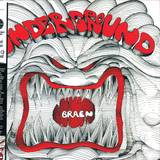
Filled with hypnotic bass lines, heavy drums and screaming fuzz guitars "Underground", the first LP of the fictitious group known as Braen's Machine, is one of the rarest and the most expensive of them all, always "reaching" sky high prices throughout the second hand vinyl market. A fast-beat jam with hammond scales and a twin lead guitar theme ("Flying") opens the A Side soon followed by "Imphormal", a classicfunk-beat-meetsfender- rhodes-and-psychedelic-guitar number. The music then switch to "thriller territories" with "Murder" which is based on prepared piano swells and a deeply hypnotic walking bass, reminiscent of the best Morricone's soundtracks for Dario Argento's movies. Two highly percussive songs complete the A Side: "Gap" is an improvised song with guitar and keyboards dwelling over an infectious drum rhythm while a marching snare and a vibraslap effect are the special features on "Militar Police".
The mood relaxes slightly on the opening of the B Side with a lazy jazz groove on "New Experience" but the rock influences are soon brought back on the following track "Fall Out". "Obstinacy" is all about keyboards with syncopated rhodes themes and distorted hammond sustained notes whilst the fuzz guitar is back again screaming through the left channel on the last song of the album, "Description". We could happly say that that was the golden age of the Italian music library. But who's behind the name "Braen's Machine" On the original cover the songs are credited to the composers Braen and Gisteri. Braen was a pseudonym often used by Alessandro Alessandroni, an extremely skilled and versatile musician, and one of Umiliani's closestcollaborators. He could write, conduct and arrange, he could sing (ever heard "Mah Na Mah Na"), he could whistle (ever heard Morricone's "For a fistful of dollars") and he could play almost anything: guitar, bass tuba, accordion, sitar and the list grows..... His first album "Alessandro Alessandroni e il suo complesso" (Sermi, 1969), had transformed the Italian library music from orchestral sound beds into the psychedelia we all love; the extremely fuzzy guitars are very "present" on "Underground" too. For a long time Gisteri's real identity was rather mysterious; often wrongly attributed to Umiliani. Gisteri was the pseudonym of Oronzo De Filippi, art name of Rino De Filippi, music supervisor to the Italian public broadcast company (RAI) between the '60s and the '70s. De Filippi composed other notable pieces such as "Riflessi" (Edipan, 1975) and "Nel mondo del lavoro" (Sermi, 1972).
De Filippi passed away few years ago but we were able to contact Alessandroni to talk about this LP. Remembering "Underground" recording session as one of the thousands he took part of, Alessandroni told us that this record was produced very quickly, in two days maximum. This was made possible by a team of wonderfully capable session musicians and the creative genius behind the mixing desk; this incredible combination helped to focus on the mood of each track even more. Unfortunately there are no liner notes but Alessandroni's memories and speculations, based on other music tracked in the same period at Soundworkshop by resident engineer Claudio Batussi, led us to identify this as the most probable lineup: Munari on drums, Majorana on bass, Vannucchi on keyboards and Alessandroni himself on guitar. For this reissue the sound has been restored and the cover art reproduced exactly as it was.
Footsteps,
savage smile.
Strap the damage to my face.
Iron fist,
it was never loaded.
We care no more,
we don't.
Early support by: Luke Slater, Oscar Mulero, Ben Sims, Marcel Dettmann, Perc, Clouds, Tommy Four Seven, Pfirter, Truncate, Max M, Thomas Hessler, Killawatt, Radial, AnD, Roberto, Paul Birken, Sigha, The Public Stand, Samuli Kemppi, NX1, Rebekah, Bas Mooy, Gary Beck, Ansome, Wire, The Advent, Nuno dos Santos, Unbalance, Blind Spot, Mark Morris, Erphun, Sebastian Kokow, Juho Kusti, Markus Suckut, Par Grindvik, The Black Dog, Darko Esser, Joachim Spieth, Happa, Martyn Hare, Sawf, J. Tijn, Doka, Lag, Luis Ruiz, Exium, Takaaki Itoh, Ryuji Takeuchi, Inigo Kennedy, Operator, Jeff Rushin, Shards, Darkfloor , Kriz, Exium, Ben Long, Fran Hartnett, Octave, Henning Baer, Dimi Angelis, Paul Mac, Jeroen Search, P.E.A.R.L., Dax J, Mike Humphries..
- A1: Public Service Announcement 2000
- A2: Kill You
- A3: Stan (Feat Dido)
- A4: Paul (Skit)
- A5: Who Knew
- A6: Steve Berman
- B1: The Way I Am
- B2: The Real Slim Shady
- B3: Remember Me? (Feat Rbx & Sticky Fingaz)
- B4: I'm Back
- C1: Marshall Mathers
- C2: Ken Kaniff (Skit)
- C3: Drug Ballad
- C4: Amityville (Feat Bizarre From D 12)
- C5: B**** Please Ii (Feat Dr Dre, Snoop Dogg, Xzibit & Nate Dogg)
- D1: Kim
- D2: Under The Influence (Feat D 12)
- D3: Criminal
A new era is when a significant event or a discovery or
invention changes the past life and the circumstances of many
or even all people sustainably. It basically involves a positive or
neutral evaluation of this age.
- Thus, the discovery of America by Christopher Columbus in
1492 heralded a new era, the conquest and colonization of
America by Europeans.
- Similarly, the first public steam railway built by George
Stephenson in 1825, marked the beginning of a new era
of mobility.
- Also the theses of Martin Luther at Wittenberg initiated the
era of the Reformation.
- Not to forget the fall of the Iron Curtain, the Berlin Wall in
1989 and the resulting german reunification, thus initiating a
new era of world history
Struments Records opens 2014 presenting ''Fire to the Empire'', third record in 12'' format from this Barcelona label. Following the special dedication referred to the local talent shown by the label in its two previous releases, in this occasion the reference is signed by Clip!, relevant artist in the Spanish electronic scene that, after a versatile and prolific 2013, shows in this publication a new coordinate of their chameleonic sound. Thereby opening the door to more visceral coordinates, opaque and less intense dance that exudes less kindness and infects the club atmosphere with light and dark. The set, consisting of three original songs (Fire, Ash and Bitch), and a remix of ''Ash'' by the British artist Kommune1, discovers on side A two descriptive and powerful snapshots of translucent clubber atmosphere, winding and unfiltered. Proper of the dance hours closer to twilight in the shadows and lights mergers into sensations. While on the B side, the artists pays tribute to the most evasive and escapist concept that music can evoke, forged between the rage of techno and the subtlety of house, when instinct takes control over any convention and presents itself as a purely physical experience between the listener and the sound. Closing the total minutes of the reference, Kommune1 prints cosmic and expansive notes to ''Ash'', as well as he brightens the original version. ''Fire'', the central tune that starts and gives name to this third reference of Struments Records responds to six minutes that shapes a direct and powerful presentation letter. In which you can acknowledge progressive melodic phases and raw vocals that serve as a growing force of initial contact. ''Ash'' continues the incursion between hard and chiaroscuro dynamic, printing analog rhythm coordinations. ''Bitch'' represents the exact balance and highlight of ''Fire Your Empire'' EP, sobriety in enviromental nuances, vocal flare and power high-flying shape a depth completely orientated to the dance floor that condenses much intention in a speech coherently aligned with the sound. Kommune1 sets ''Ash'' with an eye towards fantasy and space, using resources in the original maximalist melodies and rhythmic accelerating phases provide the remix to get faster.
DJ Support:
Alizzz (Mad Decent)
The EP is so well balanced. Loving that analog feeling. 'Fire' makes me
dream, I get in trance with the bass and those pads on 'Ash' and I want
to listen to 'Bitch' really loud in the Berghain. Much support.
Jorge Caiado (Balance/Groovement)
"Excellent and fresh EP!! All tracks are powerful and effective, can't
wait to play them. My favorite is "Bitch" but Kommune1 also did a good
alternative mix to "Ash". Keep them coming Struments!
Kresy (Hivern Discs)
"Great EP. Bitch is my favourite"
Broke One (RBMA/Magic Wire Recordings)
"Aweome EP"
Lighting more cigarettes,
pouring more,
drinks.
It has been a beautiful
fight.
Still
is.
Early support by : Blawan, Surgeon, Dave Clarke, Tommy Four Seven, Marcel Dettmann, Speedy J, Perc, Truncate, Truss, Lucy, Drumcell, AnD, Sawf, Mark Broom, Paul Mac, NX1, Jamie Bissmire, Clouds, Joachim Spieth, Paula Temple, Octave, Kriz, Cassegrain, Max M, Radial, Developer, Charlton, Takaaki Itoh, Bas Mooy, Rebekah, Samuli Kemmpi, The Public Stand, Agony Forces, Chris Finke, Luis Ruiz, J. Tijn, Wire, Jeff Derringer, Joe Farr, Inigo Kennedy, Thomas Hessler, Dave Ellesmere, Sunil Sharpe, Raiz, Mr. Jones, Bodyjack...
- A1: Countdown To Armageddon
- A2: Bring The Noise
- A3: Don't Believe The Hype
- A4: Cold Lampin With Flavor
- A5: Terminator X To The Edge Of Panic
- A6: Mind Terrorist
- A7: Louder Than A Bomb
- A8: Caught, Can We Get A Witness
- B1: Show Em Whatcha Got
- B2: She Watch Channel Zero!
- B3: Night Of The Living Baseheads
- B4: Black Steel In The Hour Of Chaos
- B5: Security Of The First World
- B6: Rebel Without A Pause
- B7: Prophets Of Rage
- B8: Party For Your Right To Fight
35th anniversary edt[41,98 €]
After a superlative EP from Chicago's DJ Rahaan, Dublin's Fatty Fatty Phonographics is back with another installment of Pablo and Shoey's 'Rejigs', which have had support from the likes of Hot Toddy, Bicep, Get Down Edits, Leftside Wobble, House of Disco and Rub'N'Tug.
'No Good (Start The Jack) sees them take on Kelly Charles' 'You're No Good', a late 80's New Jersey house bomb and source of the infamous vocal hook from The Prodigy's 'No Good (Start The Dance). After one of the great 80's dance music clichés - an intro where some sassy mama gives her boyfriend shit down an old school telephone line - they go straight for the jugular with that big big hook, spinning the whole thing out for 10 minutes with lots of hypnotic piano loops and large chunks of the great song at the heart of it all. This is one that the crowd will be immediately singing right back at ya at 2am!
'Gonna Get Ya', meanwhile, goes for some Greg Wilson 'Edit The Edit' style shenanigans, taking on Barna Soundmachine's sly, slinky funk loops. The Barna man's original had a whole heap of Diana Ross' vocals from 'I'm Gonna Make You Love Me' at the centre but never let rip with the big hands in the air chorus. The lads have rearranged it here so it's alot less teasin' and alot more ease-in!
The 3rd track is as important to Pablo and Shoey as it is to Moodymann, so 'Funky Rump (Tribute To MCA)' pays tribute to the sadly deceased Beastie Boy by looping up some busy jazz drums from 'Paul's Boutique' and splicing it with a very fitting in concert tribute from the one and only Flava Flav of Public Enemy. The full track, when it eventually arrives, is a relentless clav funk monster that just keeps going and going....
- A1: Rahsaan Roland Kirk - Haunted Feelings
- A2: Koushik - Battle Rhymes For Battle Times
- A3: Hal Blaine - Wiggy
- A4: Manfred Mann Chapter Three - One Way Glass
- A5: Terry Riley - Music For The Gift (Part 2)
- B1: Max Roach - January V
- B2: Tortoise - Why We Fight
- B3: Gravediggaz - 2 Cups Of Blood
- B4: Linda Perhacs - Parallelograms
- B5: Four Tet - Castles Made Of Sand
- C1: Joe Henderson - Earth
- C2: Madvillain - Strange Ways (Koushik's Remix)
- D1: J Saunders - Tinkle
- D2: Jef Gilson & Malagasy* - Valiha Del
- D3: Smoke - Griffo
- D4: Fairport Convention - Tale In Hard Time
- D5: Manitoba - 219 Beverley
Kieran Hebden's contribution to our renowned series of compilations redefines the word "eclectic'. From sun-kissed 60s psychedelia (Manfred Mann, would you believe) to cosmic jazz, to skullcrunchin' hip-hop (Gravediggaz) and Terry Riley's tape-loop cut-ups, seriously entertaining and even educational take on the chillout comp - as well as a peek at the myriad influences that are at work in Hebden's own music as Four Tet.
Highlights include Icarus' digital jazz deconstructions, the indescribable beauties of Linda Perlhac's Parallelograms and Koushik's woozy funk workouts. All in all, a rare treat composed of, er, rare treats. Thoroughly recommended. Also includes an exclusive cover version of the Jimi Hendrix "Castles Made Of Sand"
Originally released in 2004 this mix has gone on to be a classic in our 13 year history, it was never released on vinyl at the time, so due to public demand we have carefully mastered each track ad carefully cut at half speed for optimum sonic reproduction.
BUY! HERES WHY!
FIRST TIME ON VINYL
HALF SPEED MASTERED 180 GRAM VIRGIN VINYL PRESSINGS
INCLUDES COVER ART PRINT
INCLUDES EXCLUSIVE JIMI HENDRIX FOUR TET COVER VERSION
INCLUDES DOWNLOAD CODES FOR MIX AND UNMIXED VERSION IN WAV AND MP3 FORMATS
Download Code includes Mixed and Unmixed Versions in Wav and MP3 Formats
- A1: Tap Tap Feat Supa Sayed
- A2: Disco Nap Feat Anneli Drecker & Robert Owens
- A3: End Of The World Feat Lenny
- A4: Wonder Feat Kurt Maloo
- A5: Sculptures Feat Carina Istre
- B1: Krassava Feat Mark Bell, Lenny & Øyvind Blikstad
- B2: Lowriders Lowsong Feat Marita Sørli
- B3: Awkward Feat Charlotte Thorstvedt & Øyvind Blikstad
- B4: Takelur Feat Bogdan Loebl
- B5: Kogens Gate Feat Øyvind Blikstad
April 2013 sees the release of Norwegian Disco Viking Rune Linbaek's latest long player, on his Drum Island label
Its his first album since the 2000 release (Sondag) on Paper Recordings RePap offshoot
Last year's single 'Wonder' feat Kurt Maloo on the label was a day one sell out here at All Ears and marked a significant maturing of Rune's trademark sound.
The influence of Norway on the world's forward thinking Disco scene & beyond is more than evident, with countrymen like Todd Terje, Prins Thomas and Hans Peter Lindstrom
all leading the charge for years now. The creative cauldron of the infamous 'club in a public toilet' Skansen has much to answer for !
Krasava is a very much vocal led project, with a cast of featured vocalists which includes Norwegian popstar Anneli Drecker alongside recent collaborator Øyvind Blikstad.
The album is steeped in Norwegian folklore, visually and musically and the gentle lilt of the Norse/Balearic sound, sits comfortably alongside more Cosmic flavours, Rock and beautifully crafted pop.
* 180 gram audiophile vinyl
* Gatefold sleeve
One of the most eagerly anticipated albums of 1968 by press and public, Cheap Thrills met every expectation and then some.
With the heartrending version of "Piece Of My Heart" and a definitive cover of Gershwin's "Summertime", the album (which consists of studio and live material) shot to the top of the charts and stayed there. The audio has been sourced from the original masters, and Robert Crumb's artwork (also known for creating Fritz the Cat and the iconic Keep On Truckin' comics) is meticulously recreated on this Music On Vinyl issue.
A truly classic album and an important part of Rock history, this album is 'a time capsule for one of rock's most distinguished singers.'
- O&Apos;Placar (Feat. Jorge Lopez Ruiz)
- Para Nosotros Solamente (Feat. Jorge Lopez Ruiz)
- Balewada (Feat. Jorge Lopez Ruiz)
- Los Berugos Wor (Feat. Jorge Lopez Ruiz)
- La Hora De La Sed Maldita (Feat. Jorge Lopez Ruiz)
- El Viaje De Dumpty (Feat. Jorge Lopez Ruiz)
- Eterna Presencia (Feat. Jorge Lopez Ruiz)
- Mira Tú (Feat. Jorge Lopez Ruiz)
Altercat proudly presents the definitive reissue of one of the crown jewels of South American jazz. Essentially the brainchild of Argentinian jazz's leading figure Jorge López Ruiz, the project Viejas Raíces marked López Ruiz's departure from the traditional forms of jazz. The trio that recorded this album, consisting of López Ruiz joined by his life-long friend drummer Pocho Lapouble and gifted Chilean pianist Matías Pizarro, created a thrilling blend of jazz and Uruguayan candombe, surrounded by an undeniable cinematic feel spurred by López Ruiz's long experience in the soundtrack field. When read as one element, the cleverly chosen combination of group name and album title (in English: 'Old Roots of the Colonies of the River Plate') readily hints at the kind of sounds the listener will be challenged with when diving into this LP.
Recorded in 1976 in the wake of the "Proceso de Reorganización Nacional", the bloodiest period of dictatorship in Argentina, the album was initially frowned upon by critics and public alike, both still firmly rooted in jazz traditionalism and obviously not ready for the new ideas that musicians like López Ruiz were experimenting with. Despite being a commercial flop upon its release, the album has been enjoying a growing reputation over the last two decades, acclaimed by jazz enthusiasts who value it from a different historical perspective and embrace its experimentation during this revolutionary period of change.
Forty-five years after its release, the album receives the Altercat treatment with a much deserved deluxe reissue, with sound direct from the master tapes and an accompanying 12-page booklet with previously unpublished pictures and bilingual liner notes telling everything you ever wanted to know about the album and those who made it possible.