Mikkel Rev returns to A Strangely Isolated Place with Evocation, his third full-length album shaped deep within the forests of Norway.
Since Mikkel’s debut, The Art of Levitation first arrived on ASIP in 2023, Mikkel has been quietly building his own corner of the label’s catalog. Last year's Journey Beyond expanded that vision further, revealing an artist increasingly comfortable balancing the emotional pull of early trance with a more reflective, ambient-leaning approach. While his work elsewhere naturally gravitates towards the dance floor through his own collective, Ute Recordings and other club-focused outlets, his ASIP releases have always evolved differently. Beginning with a larger body of material that’s gradually shaped together, each album seeks to find a narrative without a dancefloor in place; one that moves naturally between momentum and stillness, carrying something of the spirit found in those early-'90s records that drifted effortlessly between peak-time energy and the quiet hours in room two.
Long-form compositions like "Step Inside" and "MRI" favor gradual development over immediate impact, while "Dream Sand" introduces shimmering rhythms that subtly shift the album's momentum and pace. The piano-led "The Infinite" offers a definitive nod to the enduring emotional pull of classic trance before "Sanitorium" closes the record with one of Mikkel's most restrained and affecting pieces to date.
Evocation continues Mikkel Rev's remarkable run on ASIP, extending a catalog where echoes of trance's formative years find new expression through the communal energy and natural surroundings of the Nordic forest gatherings that have become an integral part of his world.
Ventral Is Golden returns on artwork duties, with Lupo handling the mastering and cut. Released on August 28th as a gatefold double LP on dusty purple smoke and digital.
out of Stock
Last delivered 42 days ago available to reorder, subject to availability
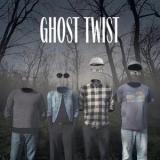
Born from the Perpignan garage scene in the South of France - built on self-production, independent labels, and a strong international network - Ghost Twist bring together musicians active for decades in Perpignan"s most iconic line-ups. Its members have evolved within key bands (Beach Bitches, Sonic Chicken 4, Crank) and collaborated with Pascal Comelade, Harlan T. Bobo, and the Limiñanas, with releases on acclaimed labels like In The Red, Born Bad, Goner and Trouble In Mind. Formed in 2018, Ghost Twist developed a raw rock sound rooted in the 1960s, shaped by oriental and tropical atmospheres inspired by compilations like "Jungle Exotica" or "Las Vegas Grind". Over time, the band has broadened its sonic palette and incorporated a wide range of influences: from cumbia to the hip-hop of Cypress Hill, from Sonic Youth-style dissonances to Fela Kuti"s afro grooves, all the way to country accents.
In a world increasingly shaped by disposable content, Chat Pile answer with something defiantly real and organic, a mentality that permeates Who Loves The Sun, their third full-length record. Since the band’s formation just over six years ago, the Oklahoma City-based quartet Chat Pile has grown from a scrappy passion project into one of the defining heavy acts to emerge from the 2020s underground. Ray B. (vocals), L. Manhole (guitar), Stin (bass), and Cap’n Ron (drums) create a crushing, crass, and cathartic take on noise rock that captures a raw, undeniably human essence in an age marked by technological overreach and the cold state of society. Nothing about Who Loves The Sun feels synthetic.
Whereas their debut album God’s Country depicted a particularly American flavor of dread, and the follow up Cool World showed a cruel planet defined by global systemic violence, Who Loves The Sun peels the skin back on how collective indifference defines this new century. Spanning imagery of coastlines devouring cities, dead-end jobs, and submission to data-driven inauthenticity, the album dissects the apathy-bloated state of 21st-century existence as a slow-motion apocalypse. As with much of Chat Pile’s work, Oklahoma City itself looms over the album like a character, its sprawling isolation, economic contradictions, and underlying sense of decay embedded in the fabric of the record. The perfect allegory for the thematic essence of Who Loves The Sun is the photo embossed on the record’s cover, where Devon Tower, a glassy, largely vacant monolith, looms high above the Oklahoma City skyline while a burnt-out home or storefront envelops the foreground. The album remains lyrically and sonically confrontational, but Chat Pile approached the songwriting with hooks in mind, drawing on melodic tones of pre-2000s indie rock, alt-rock, and new wave. From the blood-soaked vocal passages of “Christabel ’26” to the eerie trip-hop pulse of “Same Rules,” Who Loves The Sun is deeply human despite its allusions to a dying, divided .
In a world increasingly shaped by disposable content, Chat Pile answer with something defiantly real and organic, a mentality that permeates Who Loves The Sun, their third full-length record. Since the band’s formation just over six years ago, the Oklahoma City-based quartet Chat Pile has grown from a scrappy passion project into one of the defining heavy acts to emerge from the 2020s underground. Ray B. (vocals), L. Manhole (guitar), Stin (bass), and Cap’n Ron (drums) create a crushing, crass, and cathartic take on noise rock that captures a raw, undeniably human essence in an age marked by technological overreach and the cold state of society. Nothing about Who Loves The Sun feels synthetic.
Whereas their debut album God’s Country depicted a particularly American flavor of dread, and the follow up Cool World showed a cruel planet defined by global systemic violence, Who Loves The Sun peels the skin back on how collective indifference defines this new century. Spanning imagery of coastlines devouring cities, dead-end jobs, and submission to data-driven inauthenticity, the album dissects the apathy-bloated state of 21st-century existence as a slow-motion apocalypse. As with much of Chat Pile’s work, Oklahoma City itself looms over the album like a character, its sprawling isolation, economic contradictions, and underlying sense of decay embedded in the fabric of the record. The perfect allegory for the thematic essence of Who Loves The Sun is the photo embossed on the record’s cover, where Devon Tower, a glassy, largely vacant monolith, looms high above the Oklahoma City skyline while a burnt-out home or storefront envelops the foreground. The album remains lyrically and sonically confrontational, but Chat Pile approached the songwriting with hooks in mind, drawing on melodic tones of pre-2000s indie rock, alt-rock, and new wave. From the blood-soaked vocal passages of “Christabel ’26” to the eerie trip-hop pulse of “Same Rules,” Who Loves The Sun is deeply human despite its allusions to a dying, divided .
In a world increasingly shaped by disposable content, Chat Pile answer with something defiantly real and organic, a mentality that permeates Who Loves The Sun, their third full-length record. Since the band’s formation just over six years ago, the Oklahoma City-based quartet Chat Pile has grown from a scrappy passion project into one of the defining heavy acts to emerge from the 2020s underground. Ray B. (vocals), L. Manhole (guitar), Stin (bass), and Cap’n Ron (drums) create a crushing, crass, and cathartic take on noise rock that captures a raw, undeniably human essence in an age marked by technological overreach and the cold state of society. Nothing about Who Loves The Sun feels synthetic.
Whereas their debut album God’s Country depicted a particularly American flavor of dread, and the follow up Cool World showed a cruel planet defined by global systemic violence, Who Loves The Sun peels the skin back on how collective indifference defines this new century. Spanning imagery of coastlines devouring cities, dead-end jobs, and submission to data-driven inauthenticity, the album dissects the apathy-bloated state of 21st-century existence as a slow-motion apocalypse. As with much of Chat Pile’s work, Oklahoma City itself looms over the album like a character, its sprawling isolation, economic contradictions, and underlying sense of decay embedded in the fabric of the record. The perfect allegory for the thematic essence of Who Loves The Sun is the photo embossed on the record’s cover, where Devon Tower, a glassy, largely vacant monolith, looms high above the Oklahoma City skyline while a burnt-out home or storefront envelops the foreground. The album remains lyrically and sonically confrontational, but Chat Pile approached the songwriting with hooks in mind, drawing on melodic tones of pre-2000s indie rock, alt-rock, and new wave. From the blood-soaked vocal passages of “Christabel ’26” to the eerie trip-hop pulse of “Same Rules,” Who Loves The Sun is deeply human despite its allusions to a dying, divided .
In a world increasingly shaped by disposable content, Chat Pile answer with something defiantly real and organic, a mentality that permeates Who Loves The Sun, their third full-length record. Since the band’s formation just over six years ago, the Oklahoma City-based quartet Chat Pile has grown from a scrappy passion project into one of the defining heavy acts to emerge from the 2020s underground. Ray B. (vocals), L. Manhole (guitar), Stin (bass), and Cap’n Ron (drums) create a crushing, crass, and cathartic take on noise rock that captures a raw, undeniably human essence in an age marked by technological overreach and the cold state of society. Nothing about Who Loves The Sun feels synthetic.
Whereas their debut album God’s Country depicted a particularly American flavor of dread, and the follow up Cool World showed a cruel planet defined by global systemic violence, Who Loves The Sun peels the skin back on how collective indifference defines this new century. Spanning imagery of coastlines devouring cities, dead-end jobs, and submission to data-driven inauthenticity, the album dissects the apathy-bloated state of 21st-century existence as a slow-motion apocalypse. As with much of Chat Pile’s work, Oklahoma City itself looms over the album like a character, its sprawling isolation, economic contradictions, and underlying sense of decay embedded in the fabric of the record. The perfect allegory for the thematic essence of Who Loves The Sun is the photo embossed on the record’s cover, where Devon Tower, a glassy, largely vacant monolith, looms high above the Oklahoma City skyline while a burnt-out home or storefront envelops the foreground. The album remains lyrically and sonically confrontational, but Chat Pile approached the songwriting with hooks in mind, drawing on melodic tones of pre-2000s indie rock, alt-rock, and new wave. From the blood-soaked vocal passages of “Christabel ’26” to the eerie trip-hop pulse of “Same Rules,” Who Loves The Sun is deeply human despite its allusions to a dying, divided .
Across two song cycles separated by nearly four decades – Richard Wagner’s »Fünf Gedichte für eine Frauenstimme« (the »Wesendonck Lieder«) and Johannes Brahms’ late »Vier ernste Gesänge« (»Four Serious Songs«) – Wagner’s songs, written under the spell of his relationship with Mathilde Wesendonck and already pointing towards »Tristan und Isolde«, and Brahms’ final composition, which gives the album its name and was shaped by grief, illness, and meditations on biblical texts, circle the same existential questions.
Desire and mortality, ecstasy and resignation appear less as opposites than as mirrored states. The voices of Wesendonck’s poetry seem to answer the solemn reflections of Ecclesiastes and Corinthians, revealing an unexpected dialogue across time.
Without seeking historical authenticity or revisionist spectacle, »Serious Songs« listens for what still resonates beneath these works: the suspended moment where love, loss, and transcendence become indistinguishable. The harp assumes the role of the piano as the foundation, pulse, and emotional compass. The vocal line, liberated from classical convention, inhabits a contemporary expressive space without severing its bond to the original scores. It is Romantic music viewed through the acoustics of the present. The project emerged from a moment of professional disillusionment familiar to many classically trained musicians. This led to a confrontation with some of classical music’s traditional flaws that became an invitation to reimagine it.
Sissi Rada approaches the spinal properties of the Romantic Lieder, fragile enough to transform and resilient enough to survive. Intimate, lucid, and quietly radical.
For our 14th release on OCD we welcome Italy’s veteran producer Niki IL B, an artist whose career in electronic music spans decades. Active since the mid-90s, he established himself as an important figure in the early-2000s progressive house scene. Since then, he has crafted a very personal sound that is refined and distinctive, shaped by a long and diverse journey across genres and driven by a deep-rooted dedication to the craft, emerging from a generation that lived electronic music as a true way of life.
This EP is a showcase of Niki’s ability to confidently move through different moods and to draw inspiration from various genres.
out of Stock
Last delivered 43 days ago available to reorder, subject to availability
No Drama, the imprint founded and curated by Roy Rosenfeld, continues to expand its artistic vision with a sixth release valuing originality over convention. The label has steadily established a platform for forward-thinking electronic music, inviting artists to challenge familiar structures while remaining grounded in musical substance.
The latest release features two tracks by internationally recognized producer Yuvée, known for seamlessly blending live instrumentation with deep house, melodic elements, and organic percussion. While Yuvée appears solo on one track, the other is a collaboration with Omer Inbar, who performs under the name Oi.
The opening track, Lava Core, presents the sound that has earned Yuvée international recognition. Tribal influences unfold through carefully crafted percussion, while evolving textures occupy every part of the stereo field. Every section advances the narrative, allowing the arrangement to grow naturally while maintaining dancefloor impact from beginning to end.
The second piece, Blue, brings Yuvée together with Oi, an internationally acclaimed DJ, producer, and sound engineer whose work bridges psychedelic vibes and groove-driven electronic music. The collaboration introduces greater club energy. Tonal and atonal elements interact with shifting harmonies and evolving instrumental phrasing, creating constant movement without losing coherence.
Rather than relying on formulas, the duo demonstrates the value of artistic perspective in an era increasingly shaped by technological automation. The result is music that balances intellect with feeling, offering a listening experience that remains equally compelling on a festival sound system, in a club, or through focused listening at home.
With its sixth release, No Drama reinforces its commitment to artists who expand the language of contemporary electronic music through craftsmanship, authenticity, and creative ambition.
Recorded in Waterloo, Iowa and produced by Michael Cutsforth , the album blends iconic blues storytelling with soulful, lived- in delivery, performed with clarity, conviction, and heart. Burt - long celebrated for his ability to captivate audiences with a raw, acoustic roots style and winner of the International Blues Challenge for solo artist - returns to the core of what makes his music resonate so deeply. After releasing three studio albums with full- band arraignments, This Trip marks a conscious shift toward intimacy and honesty. Burt brings the immediacy of his live performances into the studio, stripping back instrumentation to place the listener directly in the room with the storyteller. The result is a warm, immersive listening experience where every lyric lands with intention and every pause carries meaning - an album that invites you to slow down, lean in, and truly listen. Lyrically, This Trip reflects on life in all its chapters, exploring love, loss, hurt, fear, joy, and the moments that define who we become. These are songs shaped by experience and delivered with empathy, offering comfort as much as truth. Listening to Kevin Burt feels less like consuming music and more like sharing space- it's reflective, grounding, and quietly transformative. This Trip isn't just an album you hear; it's one you feel, and one you'll want to return to again and again.
Stray Cats is the first album from Rockabilly band Stray Cats, first released in the UK by Arista in 1981. It was successful in Britain, peaking at No. 6 on the UK Albums Chart, and produced the UK Top 40 hits 'Runaway Boys' (No. 9), 'Stray Cat Strut' (No. 11) and 'Rock This Town' (No. 9). The Rock and Roll Hall of Fame later listed 'Rock This Town' as one of the songs that shaped rock and roll.
Stray Cats debut album came hot on the heels of the two hit singles 'Runaway Boys' and 'Rock This Town,' both energy filled rockabilly songs that hearkened back to the
1950s era of pure rock & roll with an updated, clean '80s sound highlighted by the prominent double bass playing of Lee Rocker and drumming of Slim Jim Phantom.
This album was by far their most successful, hitting number six in the charts and their only entry into the Top 40.
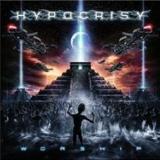
With governments finally admitting that UFOs do in fact exist, and humanity attempting to heal from a state of recent crisis, the timing couldn’t be more appropriate for the newest addition to the HYPOCRISY catalog: WORSHIP, due to be released Fall 2021 via Nuclear Blast Records. Aptly titled, the album cover shows a mass of humans reaching up mindlessly to the sky as glowing spaceships shaped like the HYPOCRISY crosses sigil beam down to descend upon earthen civilizations and Mayan temples. Designed by artist Blake Armstrong (Kataklysm, In Flames, Carnifex, etc.), WORSHIP’s artwork speaks to the history of the relationship between humanity and extraterrestrials. “They’re coming back to collect,” explains founder and HYPOCRISY mastermind Peter Tägtgren.
A track entitled CHEMICAL WHORE breaches the subject of pharmaceutical addiction, and those who engineer it. “We are all chemical whores. We regularly consume prescriptions and drugs because we think we need it; we use one pill to heal the damage done by another medicine... it’s a vicious cycle.” Musically, it’s the only song that was written by all 3 core members of the band and translates into a recognizable, mid-tempo HYPOCRISY sound much like ERASER or FRACTURED MILLENIUM. Traveling from Sweden to Russia, the band also shot an official music video for CHEMICAL WHORE.
The DEAD WORLD music was written by Peter Tägtgren’s son, Sebastian. “We actually started to write an album together, something like 11 or 12 songs, but we never put any vocals in there and we just sort of set it aside. Then when I started writing HYPOCRISY I realized I really liked the song… it feels fresh. I think my kid got some new blood in there.” While the song comes equipped with a modern feel, the writing is still old fashioned at its core. Going into detail about the illuminati and black ops government, the lyrics examine how miserable these figureheads and theories can make us. “Call it fantasy, call it sci-fi, there are plenty of conspiracies in the world but I find these ones interesting,” explains Tägtgren.
GREEDY BASTARDS is another track outlined by simplicity and catchiness. Chugging riffs encapsulate a sound that almost verges on the realms of thrash while still keeping its feet firmly planted in the world of death metal. The lyrics touch on the greed and methods of control that we see various governments around the world today; how they manipulate people against one another and abuse the masses.
For Tägtgren, the inspiration to write new HYPOCRISY comes in waves. “I believe we were out on tour for another project and I began to get hungry again. I started spitting out some new riffs and when I had 7-8 songs done, I invited the rest of the guys to join me and contribute, and from there we started putting everything together. We had a break for a few months, continued recording, went back on tour… it never stops. There was a lot of jumping back and forth, and then COVID came and things got really weird.”
Tägtgren was one of the many musically inclined who was forced into sudden isolation upon the onset of COVID 19, only for Tägtgren, this is common practice when creating new songs. “A lot of things in the world stopped, and it was time to finish everything I hadn’t finished.” As usual, all recording and mixing took place at Tägtgren’s home studio in Sweden.
It has been 8 long years since the last record, and HYPOCRISY fans can feel the itch. WORSHIP is 11 tracks of precise, ferocious musicianship. Commonly inspired by the fusion of the modern and the ancient, HYPOCRISY has once more found a way to combine innovative ideas with classic sound in order to deliver something metalheads can enjoyably consume with awe and brutal vigor. HYPOCRISY is Peter Tägtgren (Lead Guitar & Vocals), Mikael Hedlund (Bass Guitar), and Reidar “Horgh” Horghagen (Drums).
With her new album Trespasser, Grace Potter introduces a beautifully unruly cast of characters who step into forbidden spaces with absolute abandon. As the spiritual sequel to 2023’s Mother Road, the four-time Grammy nominee’s seventh studio LP continues the kaleidoscopic storyline shaped by her many road trips from her Topanga Canyon home to her part-time residence in her native Vermont (a journey she’s made eight times in the last five years, usually on her own). But while Mother Road was born from a desperate need for solace in the midst of emotional freefall, Trespasser reveals an artist firmly anchored in her singular vision.
The latest chapter in a career marked by endless transformation and elite recognition—including sharing stages with rock & roll icons like the Rolling Stones & Robert Plant and earning praise from legends like Bob Dylan and Bonnie Raitt—Trespasser ultimately lights the way toward a more unbound and expansive means of moving through the world. Produced by her husband and frequent collaborator Eric Valentine (Queens of the Stone Age, Weezer, Slash) and recorded in a cross-country journey beginning at her home in Topanga with Benmont Tench, continuing in Nashville with Mother Road session players (members of Cage the Elephant, Kings of Leon, and Train), and completed in Vermont with members of her longtime live band, the album echoes its origins with a wayward sound that spans from stripped-bare soul to cosmic country to hellraising rock & roll—all while orbiting Potter’s force- of-nature voice and lavishly imagined storytelling. “We’ve always been taught that the trespassers are the bad guys, but to me it’s not about reckless rebellion,” says Potter. “It’s about exploring, physically and mentally and emotionally, and being willing to step outside the narratives we’ve accepted. Because in my experience, the places we’re told not to go are exactly the ones that show us who we really are.”
With her new album Trespasser, Grace Potter introduces a beautifully unruly cast of characters who step into forbidden spaces with absolute abandon. As the spiritual sequel to 2023’s Mother Road, the four-time Grammy nominee’s seventh studio LP continues the kaleidoscopic storyline shaped by her many road trips from her Topanga Canyon home to her part-time residence in her native Vermont (a journey she’s made eight times in the last five years, usually on her own).
But while Mother Road was born from a desperate need for solace in the midst of emotional freefall, Trespasser reveals an artist firmly anchored in her singular vision. The latest chapter in a career marked by endless transformation and elite recognition—including sharing stages with rock & roll icons like the Rolling Stones & Robert Plant and earning praise from legends like Bob Dylan and Bonnie Raitt—Trespasser ultimately lights the way toward a more unbound and expansive means of moving through the world. Produced by her husband and frequent collaborator Eric Valentine (Queens of the Stone Age, Weezer, Slash) and recorded in a cross-country journey beginning at her home in Topanga with Benmont Tench, continuing in Nashville with Mother Road session players (members of Cage the Elephant, Kings of Leon, and Train), and completed in Vermont with members of her longtime live band, the album echoes its origins with a wayward sound that spans from stripped-bare soul to cosmic country to hellraising rock & roll—all while orbiting Potter’s force- of-nature voice and lavishly imagined storytelling. “We’ve always been taught that the trespassers are the bad guys, but to me it’s not about reckless rebellion,” says Potter. “It’s about exploring, physically and mentally and emotionally, and being willing to step outside the narratives we’ve accepted. Because in my experience, the places we’re told not to go are exactly the ones that show us who we really are.”
THE BRIDGE is Tobe Nwigwe in his purest creative form. Grammy nominated musician, director, actor, designer and visionary from Southwest Alief, Texas, Tobe was raised between two worlds, born in Houston and shaped in a Nigerian home. His power was never in choosing one side, but in bringing both together. THE BRIDGE is that union made whole: 12 songs where the pulse of H-Town and the roots of West Africa become one fully realized sound, connecting here and home.
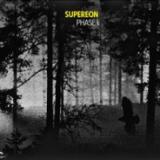
Phase I marks the recorded debut of Supereon , a Norwegian trio formed in August 2024 and rooted in the ever- evolving Scandinavian jazz scene. Consisting of Alexander Hoholm on double bass, Martin Gjerde on piano, and Raymond Lavik on drums, the ensemble brings together three distinct musical voices in a collective pursuit of sound, texture, and rhythmic interplay. Recorded in June 2025 at Studio Martin in Roros, the album was produced by Hoholm in close collaboration with David Aleksander Sjolie .
The result is a recording that captures both clarity and immediacy, allowing the trio's intricate interplay to unfold with a natural sense of space and depth. At the core of Phase I lies a process rather than a set of compositions. The music is entirely improvised, shaped in real time from short rhythmic ideas that serve as points of departure. From these concise impulses, the trio develops expansive sonic landscapes where repetition, variation, and subtle transformation create a sense of forward motion. Drawing on influences ranging from the minimalism of Steve Reich to the textural sensitivity of Nils Frahm and Olafur Arnalds, Supereon crafts a sound that is at once rhythmic, meditative, and hypnotic. As its title suggests, the album stands as the first chapter in an ongoing journey - one that will continue to unfold in future phases.
The fourth chapter of The Third Room's curator-led series is shaped by Freddy K, one of techno's most enduring and uncompromising voices. Through decades behind the decks, an unwavering commitment to vinyl culture and his work with Key Vinyl, he has helped shape a generation of artists rooted in functionality, precision and a direct connection to the dancefloor. For his curation, the focus lies on alignment. The selection brings together artists who reflect that same discipline: a reduced but expressive approach, stripped to essentials yet rich in detail. With contributions from Toobris and Sons of Hidden, both previously featured on Key Vinyl, the release also reflects the long-standing artistic relationships behind his vision. Bat by Toobris opens the record with a powerful, straightforward statement. Driven by a steady pulse and minimal elements, the track feels alive through its control - direct, efficient and highly expressive without excess. Before Mirrors by Sons of Hidden continues this direction while expanding into a more spheric space. Tension is held consistently, with subtle accents carefully placed to shift the energy and draw the listener deeper into the track. On the B-side, Clouds Cream by Quelza stands out as a more intricate and exploratory piece. Deep and immersive, it unfolds through detailed sound design and evolving structures. Rather than relying on repetition alone, the track develops its own internal logic - balancing complexity with clarity, and allowing each element the space to contribute to a larger whole. Closing the record, Swing of Time by Jin Synth shifts into a rougher, more moody territory. Subtle pitch modulation and shifting textures create a sense of instability, giving the track a distinctive edge while maintaining its functionality. Across all four tracks, the release remains focused and cohesive - built on reduction, tension and control, but carried by small, defining moments that shape its movement. A1 Written and Produced by Lennard Miessner | A2 Written and Produced by Sons Of Hidden | B1 Written and Produced by Leo Na?t A?ssa | B2 Written and Produced by Jin Synth Mastered by Ahmet Sisman (The Third Room Studios) Artwork by Charlotte Ernst Design by Daniel Bornmann (STUEDIO.XYZ) Distribution by Clone Pressing by Matter Of Fact
A deep and sophisticated addition to the catalogue of one of Germany’s oldest House labels. With Rhythm Puzzle, Bass Cab returns to Cabinet Records, one of Germany’s longest-standing and most respected House labels, continuing a legacy that has shaped underground dance music with quiet confidence and unmistakable identity for decades. Few labels have managed to preserve such a clear artistic vision over such a long period of time. Cabinet Records has always stood for depth over trends, substance over spectacle, and a deeply rooted connection to the essence of House music.
out of Stock
Last delivered 15 days ago available to reorder, subject to availability
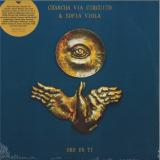
Sofía Viola and Chancha Vía Circuito unite on Oro en Ti, a deeply spiritual collaboration shaped by their shared roots in the southern suburbs of Buenos Aires. Blending Latin American folk traditions with hypnotic percussion, ambient textures, and Eastern influences, the album explores themes of nature, faith, humanity, and inner connection through a warm, meditative lens. Chancha Vía Circuito brings significant international profile to the project, built through years of globally acclaimed DJ sets, nearly 200 million cumulative streams across DSPs, and strong physical sales over the past decade. His work has been championed by outlets including Resident Advisor, Pitchfork, Billboard, The Guardian, NPR, and The Fader.
Since emerging from the Buenos Aires underground,Sofía Viola has built a strong reputation across Latin America and Europe through her singular songwriting and live performances, earning selections to major international showcase festivals including IMESUR, Circulart, FIMPRO, BIME Pro, and MAPAS. Oro en Ti captures the chemistry between both artists through devotional songwriting and richly textured production, offering an emotionally resonant and transportive listening experience that feels both timeless and deeply connected to the present moment.
out of Stock
Last delivered 60 days ago available to reorder, subject to availability
Severed Heads reattach themselves to Dark Entries for an expanded reissue of their 1991 opus Cuisine (With Piscatorial). As originary Aussie industrial legends – although founder Tom Ellard would balk at being branded as such – Severed Heads shaped the continental subcultural sound with their kitchen electronics, chaotic tape loops, and infectious nursery-rhyme-esque melodies. Cuisine (With Piscatorial) was the long-running project’s ninth album, and is a commentary on the state of music. Ellard explains: “The whole food joke is really about what music's about and how disposable it is; people have records like they have cups of coffee.” The album also presents a turn away from the dancefloor formalism of the era, which Ellard dismissed as already sufficiently explored. Cuisine brings us punchy pop kernels of the prime Heads variety, all clocking in around three minutes. Cuts like “Pilot in Hell” and “Ugly Twenties” rank among the band’s best through their deadly skewering of synth pop tropes. But the album also offers us a Piscatorial section, where Ellard felt free to “go fishing for ideas.” Here we get a taste of the project’s demented cut-up sensibilities, like on the “Quest for Oom Pa Pa” suite, where vintage jazz records are collaged into an angular nightmare. This double-LP reissue is the first time that Cuisine (With Piscatorial) will appear on vinyl, with a previously unreleased early version of “Seven of Oceans.” Also included is a 6-page booklet with liner notes, lyrics, and press clippings.
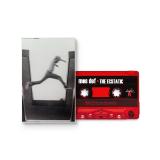
Originally released in June 2009, The Ecstatic stands as a defining artistic statement from Mos Def (now known as yasiin bey) — a richly textured return to form that reaffirmed his status as one of hip-hop’s most adventurous and intellectually engaged voices. Arriving a decade after his celebrated debut Black on Both Sides, the album was widely regarded as his strongest work in years, earning near-universal praise for its lyrical breadth, eclectic production, and thematic ambition.
Musically, The Ecstatic weaves a global sonic tapestry shaped by an array of forward-thinking producers including Madlib, J Dilla, Oh No, Preservation, Mr. Flash, Chad Hugo (of The Neptunes), and Georgia Anne Muldrow. The resulting soundscape is both rooted in hip-hop tradition and unbound by genre, integrating elements of jazz, soul, Middle-Eastern inflection, and experimental sample work. Tracks like “Supermagic” and “Twilite Speedball” establish a vibrant, restless energy that mirrors the album’s expansive creative scope.
Lyrically, yasiin bey traverses personal, political, and philosophical terrain with characteristic incisiveness, confronting social inequality, Western imperialism, and questions of cultural identity with poetic urgency. Embracing risk and complexity rather than nostalgia, The Ecstatic remains a mature, deeply felt body of work whose ambition, depth, and enduring resonance have solidified its place as a standout entry in Mos Def’s catalog and in modern hip-hop history.
Crossing borders between traditions, sonic territories, and instruments, musicians Tomáš Niesner and Aldana Duoraan created their first collaborative album Plot. The sound of khomus meets guitar melodies simplified into pentatonic scales, intertwining in a dialogue that remains playful while moving between meditative passages and bewitching, hypnotic moments. Solid yet ever-changing, these melodies explore a delicate relationship between the present interactions, their past, and possible futures. “I feel that the essence of our collaboration is not to close the songs off, but to leave them open so that they can develop and be interpreted a little differently each time, depending on the circumstances,” Niesner explains when describing the duo’s artistic approach. The recording therefore captures only the most essential moments and ideas, which continue to unfold in new directions during live performances.
Each segment of Plot, word meaning “fence” in Czech, while also referring in English to a narrative structure or hidden plan, represents a different constellation shaped by the pairing of specific khomuses and guitar tuning. The track titles, such as The Key of Radiance or The Key of Humbling, are inspired by the ancient Chinese text I Ching (usually translated as Book of Changes). Like the classical cosmological text itself, the compositions meditate on similar fundamental principles. The ideas explored in the chapters of the I Ching are thus loosely translated into musical language. Themes of Radiance, Attending, or Nearing thus loom over the reflective realm of Aldana and Tomáš.
The two musicians first met in 2021 through a collaboration organized by Konektiv, an event series that aims to create new connections between genres and musicians with diverse backgrounds. Aldana Duoraan is a Prague-based artist born in the Sakha Republic, whose experiments with the khomus (also known as the jaw harp) draw on the traditional music of her homeland. Tomáš Niesner, a sound artist and guitarist based in Brno, navigates the realms of American primitive guitar while incorporating influences ranging from folk to drone. Because the duo rarely finds themselves in the same city, an important moment in the development of Plot was a showcase at Cafe OTO, organized by mappa. The album, capturing the fleeting energy of this encounter and several others, has now been released on the Slovak experimental label, which helped bring the collaboration to life.
Roy Montgomery, a key figure in the experimental underground rock scene, lives in Christchurch, New Zealand, just a short drive from the sea. Avant-garde vocalist and songwriter Martha Skye Murphy is based in London. Though geographically worlds apart, the pair inhabit an intimate and almost tactile shared sonic world. Their collaboration feels transformative, like the gradual shifting spell from night to day.
What draws them together is the emotional force of each other’s music. Montgomery’s cyclical, decaying compositions are shaped through intricate guitar and piano work, blending post-rock, folk, and drone. Murphy, meanwhile, possesses a rare gift for transformation, from the intimate cracked whispers of 'At Dawn' to the hypnotic drift of 'The Play of Dark and Light'. On the latter, she evokes old maritime folk tales of fishermen lured into the darkness by the sea’s siren call. The song both seduces and warns, finding something magical and frightening in the temptation of drowning. Though her vocals often resemble fragments of words, consonants, or vowels, they frequently function as pure sound, drawing on glossolalia and prioritising feeling over any ‘learnt’ language.
Emotion and intuition are the driving forces behind Nebular, an album that oscillates between the intimate with the unknown. This spirit is reflected in its artwork. Murphy shared a painting by Irish artist Simon English depicting a solitary house bathed in dusky blue light, and the pair quickly settled on it as the cover image. Both were captivated by its atmosphere. Montgomery related it to the isolated, seemingly uninhabited houses he encounters while travelling through rural New Zealand—places that inspire a desire to knock on the door and discover what lies beyond. “Terra incognita springs to mind. A search into the unknown,” Murphy agrees.
The nocturnal and remote nature of the artwork mirrors the process of making Nebular. With Montgomery in New Zealand and Murphy in London, the album was created entirely through remote correspondence, with stems exchanged via email. Their messages were often written and read at different times of day, and, because of the time difference and the demands of daily life, replies usually were sent late at night and the music too often composed at nocturnal hours. Their exchanges took on the quality of pen pals sending letters across great distances. This suspended sense of time is echoed in Nebular’s sound, with its feeling of temporal drift and timelessness.
On Nebular, Montgomery and Murphy have harnessed raw emotion and launched it into a time capsule bound for the stars. It allows you to drift, to be present, and to feel; creating something timeless.
Dance your dance. From the first beat to the last, slow or fast, house music is a home for everyone.
This release symbolises a moment in time. A blueprint for dance music before the world knew what it was. Formally referred to as Garage, House or Loft music in the 80s, Frankie Knuckles and Larry Levan shaped the sound from its roots. Larry, resident DJ at Paradise Garage, New York, Frankie at The Warehouse in Chicago, both prolific remixers and some of the first career DJs. Two close friends. Countless genres. One feeling.
RE:VERSAL are excited to present our third compilation, a strictly limited one-time pressing on high-quality 12" 180g heavyweight vinyl - FULL 12” VERSIONS
out of Stock
Last delivered 22 days ago available to reorder, subject to availability
Title track Tokyo Midnight opens with a groovy guitar riff and continues into an upbeat rhythmic workout, complete with a funky bassline and ululating keyboards. Yurika’s enchanting voice ties things together in a soft yet hypnotic musical whirlwind.
On the B-side, Nasnusa, a beautiful guitar solo flows into a captivating rhythm inspired by traditional Mizrahi music. Yurika’s delicate vocals evoke a love story: a couple watches the sunset as the gates to a new world begin to open. As Nasnusa fades into the light, her lover recalls her beauty and reflects fondly on the wonderful time they shared together.
Founded by Amir Sadot and Ilan Smilan, Sababa 5 have been playing together for two years and recently built their own recording studio. “We just wanted a place to record our music where the whole band could fit together in the same room… so we built the place ourselves! Mind you, there’s not a lot of space… in fact, we’re a bit crammed in there, but that’s how we like it.” Sababa 5’s musical style has been shaped by all its members and continues to evolve while always remaining deeply groove-centric. Their sound is rooted in surf rock and retro funk, drawing strong inspiration from Arabic folk and funk music of the ’60s and ’70s, as well as artists from that era such as the legendary Aris San.
Yurika is a Japanese performer born and raised in Tokyo. During her teenage years, she discovered belly dancing and quickly fell in love with the art form. She later travelled throughout the Middle East to deepen her studies, learning from choreographers such as Orly Portal and performing alongside renowned artists including Raquy Danziger, Boom Pam, and Ouzo Bazooka.
out of Stock
Last delivered 35 days ago available to reorder, subject to availability
Fij makes a vibrant return with his new single "Don't Bring Me Sunshine," a bittersweet, high-speed ode to independence and renewal. Described by Fij as an "anti-love song," "Don't Bring Me Sunshine" flips the script on romance. Its sardonic, bah-humbug lyrics are set against a rush of euphoric energy - inspired by the simple thrill of driving fast with the windows down, music blaring, and summer stretching endlessly ahead. As Fij puts it: "Who needs love when you've got a full tank of petrol... and the whole of Summer lying ahead on the heat-hazed open road?" The track is the latest preview of his long- awaited debut solo album, due this September via Tip Top Records. It signals a clear shift in tone and tempo. After years marked by introspection - shaped by personal upheaval, frontline work during the pandemic, and his role as a funeral celebrant - Fij has hit reset.
Re- embracing the electric guitar, raising the BPMs, and rediscovering joy, his new material blends the fuzzed edges of dream-pop with elements of pop and electronica, all delivered with his signature wit and melodic finesse. Fij first emerged in the early 90s with Adorable, whose debut album Against Perfection (Creation Records) became a cult favourite, earning multiple NME accolades and topping the Indie charts. The band's legacy continues to resonate, with artists citing their influence and figures like Noel Gallagher famously calling their label's decision to drop them a major mistake. Following Adorable, Fij explored new sonic territory with Polak and later collaborated with Terry Bickers of The House of Love, producing critically acclaimed releases that reaffirmed his reputation as one of Britain's most distinctive voices. His baritone - often compared to Lee Hazlewood, Lou Reed, and Richard Hawley - remains as rich and compelling as ever, now carrying a renewed urgency.
In Arc, Yorkshire-born artist Kirk Barley explores alternative tunings and off-grid sequencing to shape fluid rhythmic and melodic systems that unfold into rich harmonic forms. Kirk’s fourth album under his own name and debut for Marionette continues his exploration of just intonation through a sparse but finely detailed palette of organic atmospheres, metallic shimmer and off-kilter rhythms. Across the record, glassy pads, gamelan metallophones, clarinet and guitar dissolve into fluid, dreamlike forms, suggesting vast coastal landscapes, charged air and the stillness that follows turbulence.
Drawing on the feel of sample-based hip-hop, the minimalism of Terry Riley and Jon Hassell, as well as dub techno and post-rock, Kirk brings together a range of influences in a sound that feels both intimate and expansive. After first hearing Terry Riley’s Shri Camel as a teenager, he became captivated by just intonation and microtuning, inspirations that have shaped his work ever since, from his earliest Bambooman releases to the present solo works and as on half of Church Andrews & Matt Davies. Arc is his first record to be fully rooted in alternative tunings from start to finish. Longtime friend and collaborator Matt Davies appears on Ion, Sundry, Ecstatic and Fret (Haar), where his finely detailed, ASMR-like muted percussion deepens the dialogue between tactile acoustic sound and Kirk’s luminous electronic palette.
out of Stock
Last delivered 71 days ago available to reorder, subject to availability
In a world currently defined by unrest, uncertainty, and cultural fracture, acclaimed saxophonist, composer, and bandleader Isaiah Collier returns with Joy, a 5-track EP that reframes one of humanity’s most nuanced emotions both as a devotional grounding and political act.
Collier’s deeply personal compositions present joy as an act that isn’t rooted in escapism or abstraction, but rather, as something hard-won rooted in lived experience, shaped by transformation, and sustained through connection. Throughout the album’s five compositions, Collier positions joy as a guiding light during challenging times, an expression of challenging yourself to utilize your gifts, an affirmation of love and discovery, and as an affirmative source of reassurance.
“We are in a paradoxical time, where so much is being revealed to us,” Collier shares. “Everything feels political from every scope… our collective hearts feel the heaviness in the air. Yet I say to you all—don’t despair. For right now, the most political thing we can do is share joy.”
That ethos is made clear in the opening title track and lead single “Joy.” A pulsing rhythmic motif anchors the melody with a sense of both searching and certainty. Collier conceived the piece around 3 years ago reflecting on a time where many people in his life were experiencing loss of family and friends and experiencing profound life transitions. “Everything just felt like it was falling apart with no aim in sight,” he reflects. “Yet, there is a light at the end of it all.”
As he played the chords with a sense of urgency, he could feel the vibration of yellow in the piece. That initial triplet motif serves as the guiding light on the piano and the only word Collier could hear was Joy. In addition to Collier at the helm singing and playing piano and tenor sax on the track, it features an expansive 11-piece ensemble with a full horn and string section allowing Collier’s propensity for composition and arrangement to shine with an eclectic sonic palette.
“Landscape of Dreams” finds Collier serendipitously leaning into utilizing his gifts as a multi-instrumentalist. While he had a sketch of the piece going into the studio, a traffic delay caused musicians to be late arriving at the studio. Never one to waste time in the studio environment, Collier stepped into new creative territory and took up the challenge of executing playing all instruments himself as an act of trust and experimentation. “I’ve never done this before, and so it was a leap of faith for me,” he asserts. “I always dream of doing stuff like this, and being part of the small percentage of people who can do it like Prince, Steve Lacy, Frank Zappa, and Stevie Wonder. The end result finds Collier immersed in a hypnotic soundscape playing layered flutes, drums, Metatron, Wurlitzer, and auxiliary percussion.
Another layer of joy is revealed in “Where I’m Loved” that serves as a love letter and leaning into the process of stepping into the willingness to explore life and love with a partner. On the intimate meditation of vulnerability and connection, Collier's vocal prowess is on full display, exerting effortless falsetto reminiscent of D’Angelo over soulful Wurlitzer and guitar as he crosses over into more R&B-inspired realms. “I believe everyone deserves this feeling or to honor the memories of it. Furthermore, I believe you should also go where you’re celebrated and not tolerated.”
“When the Dust Settles” captures the electricity of live collaboration and Collier further steps out of being confined to any specific genre. He had just gotten a microKORG keyboard from co-producer Sonny Daze and was exploring the vast array of sounds on the instrument. Collier plays synth bass on the microKORG joined by the electrifying improvisation of Cole Runge on guitar and the combustible rhythm of his brother Jeremiah Collier on drums with additional post-production work from Sonny Daze.
The album’s final track “God’s By Your Side” reflects on perseverance and artistic legacy, directly inspired from the passing of D’Angelo, whose life’s work was a huge part of Collier’s childhood growing up in the late 90s and early 00s. With gospel flavor and direct influence both from D’Angelo’s vocal and instrumental arrangements, the track speaks to resilience and persistence in the face of obstacles—an affirmation of source and reassurance. “And what’s better than having God by your side, right?” asserts Collier.
Joy is a through-and-through expression of the arc of joy in its truest form. Joy transcends fleeting happiness and is conscious gratitude shaped by taking chances, leaning into your gifts, fostering community, and lived experiences.
“Joy is partially happiness,” Collier explains. “But to me it means happily being grateful for family, friends, lovers, teachers, and good times. These are the things that anchor us.”
The release of Joy comes off the heels of significant momentum for Collier, whose work continues to garner accolades and resonate across cultural spheres. He was featured on the cover of DownBeat’s April 2025 issue, where he was named “The Next Sax Giant,” and profiled on NPR’s Jazz Night in America for his ambitious 13-movement interdisciplinary suite The Story of 400 Years, that traces 400 years of Black American History. He released two full-length albums in 2024 with The World Is on Fire highlighted in The New York Times’ Fall Arts Preview and The Almighty named among the publication’s Best Jazz Albums of the year.
Beyond performance and recoding, Collier’s influence is recognized in broader cultural and intellectual spaces as he was the recipient of the Jazz Journalists Association’s 2025 Up and Coming Artist of the Year Award, the 2024 Chicagoan of the Year in Jazz, and was named a Steve Jobs Archive Fellow joining an elite cohort of the next generation of artistic visionaries through a yearlong program.
In addition to the release of Joy, Collier is touring his “Collier Plays Coltrane” program throughout 2026 in honor of John Coltrane’s centennial. Rather than presenting Coltrane’s expansive catalog as repertory, Collier approaches this music as something living, reshaping it in real-time with a sense of space and improvisational dialog reflecting both reverence to the past and present times.
out of Stock
Last delivered 67 days ago available to reorder, subject to availability
The second album from Chicago based Brigette Calls Me Baby firmly establishes them as a band to watch. It's fair to say that they are a band that takes a lot of influence from 1980s UK indie in general and The Smiths in particular. Opening track 'There's Always' finds vocalist Wes Leavins channelling Morrissey's finer moments; and in particular those moments when Morrissey was in thrall to the crooners of the 1950s. This is particularly poignant in relation to the themes that run through the album, most notably the idea that certain moments in your history shape your very being for the rest of your life. Clearly hearing certain records has shaped Brigette Calls Me Baby as much as those all important life-change moments. That's not to say this a band that isn't ploughing its own furrow, songs like "Slumber Party" with its relentless bassline and dance influenced drums show a band that can mix its influences are create something unique. "I Can Take The Sun Out Of The Sky' might have those darkened crooning tones from Leavins, but they can't keep a lid on the sheer positivity that his band is generating, it has the feel of a real summer anthem.
out of Stock
Last delivered 74 days ago available to reorder, subject to availability
New Jersey malevolents FUNEBRARUM uncloak their third full-length; the sheer magnitude of "Beckoning The Void Of Eternal Silence" rains down world-ending Doom tenebrosity with searing scowls of Death Metal assailment. With a perturbed atmosphere writhing around the entire record, the pulsation of which "Beckoning The Void Of Eternal Silence" breeds is an expertly calculated Deathdoom craftsmanship and yet emitting at times a surreal bridging between extreme genres in orchestra-like precision. The core DNA of FUNEBRARUM has remained intact albeit the exalted darkness have shaped themselves to be cut from a different cloth. Recorded at Elektric City Recording (Ascended Dead, Coffin Rot, etc) by Charles Koryn with additional recording and mixing duties by Stephen DeAcutis at Sound Spa Studios (Ripping Corpse, Evoken, Disma, etc). Mastered by Daryl Kahan at Winterdark. Cover artwork by Daryl Kahan.
For nearly a decade, Lucia has been carving out her place as an artist in the UK indie scene. Her latest record, Picking Petals, is the culmination of that hard graft and bold vision — an album rooted in her Scottish upbringing and shaped by the creative community she has built around her in Glasgow and beyond, featuring collaborations with Lauren Mayberry of CHVRCHES and Abigail Morris of The Last Dinner Party. Lucia’s debut, Burning Castles, was streamlined and statuesque, built on metronomic beats and synth-led pop. The intention behind Picking Petals sharpened into focus in the face of this. This time, it was crucial to capture the essence of Lucia & The Best Boys’ live shows— loud and electric. In recent years, Fairfull has shared bills with a new wave of women in alternative music: joining Wolf Alice on their Blue Weekend tour in 2022 and, more recently, opening for the aforementioned The Last Dinner Party. In summer 2024, she toured alongside fellow Scottish icon Shirley Manson on the UK and European leg of Garbage’s live shows. The Scottish synchronicity feels poignant. This rich and historical landscape is where Picking Petals came to be, Lucia heading north to write in weather-beaten bothies alongside the band or in solitude. Likewise, the songwriter was insistent that acclaimed alt-pop producer Yves Rothman experience her stomping ground rather than sun-drenched LA, hunkering down in Mogwai’s Castle of Doom studios, a Glasgow townhouse transformed into a citadel of sound. For some people, Picking Petals will be a coming-of-age album. For Lucia & The Best Boys, it’s just coming home.
The recordings on Volume II were captured in Copenhagen, Denmark on January 18, 2020. Guided as much by human instinct as by musical intention, the ensemble moved through the evening with a shared sensitivity…listening, responding, and trusting the moment as it unfolded. Though Morten McCoy admits to having felt quite ill that evening, nothing in the music suggests restraint. Instead, what remains is a vivid, playful exchange, where McCoy and Johannes Wamberg carry both Part I and Part II as a flowing conversation, speaking through sound rather than words.
Part I begins abruptly, almost throwing the listener back in time to the exact moment the improvisation was born. Jonathan Bremer steps to the forefront, providing a solid, melodic bassline as Kristoffer and Eliel, perfectly in sync, lay down a steady foundation for whichever voice chooses to rise above the rhythm.
This is also one of the few I Am An Instrument recordings to feature two guitarists. Johannes Wamberg leads the way, shaping the harmonic direction, while Steven Jess Borth II adds subtle rhythmic textures through muted palm work, deepening the groove without ever stepping into the foreground.
Part II unfolds with Morten McCoy on his Moog One, delivering a beautiful, expansive solo. Using a carefully chosen patch, the sound pulses through the rhythm, moving with the groove rather than above it, riding the beat like a wave through the ocean.
Shaped by trust, presence, and collective improvisation, Volume II captures a group deeply attuned to one another, allowing intuition and momentum to guide the unfolding form.
——
Volume III was recorded in Copenhagen on March 5, 2020. Little did anyone know that only days later, the world would be placed on pause for years. Captured just before that moment of global stillness, this session carries a heightened sense of presence, a final gathering before silence reshaped everything. Recorded in a space more commonly associated with a club atmosphere, the music draws on a different kind of energy and immediacy. With Eliel Lazo unable to attend, the group invited Victor Dybbroe of Girls In Airports to join on percussion, subtly reshaping the ensemble while preserving its core spirit. Part I opens with Steven Jess Borth II calling out on tenor saxophone, answered by Morten McCoy on Wurlitzer electric piano. The piece gradually unfolds into a meditative groove, patient and expansive, carrying the listener through an eight-minute journey of layered rhythm and restraint.
Part II begins with Jonathan Bremer on stand up bass, slowly joined by the rest of the ensemble as each voice enters with intention. Midway through, an unexpected vocal melody from Borth emerges, drenched in reverb and delay, later reappearing as a melodic line on the tenor saxophone.
Part III is led by Morten McCoy on Wurlitzer electric piano. His signature melodic language sets the direction, guiding the ensemble while leaving ample space for the music to breathe and evolve through collective improvisation. Reprise returns to the closing moments of Part II, its title reflecting its origin. The familiar groove reappears, transformed into a distinctly Jamaican-influenced rhythm, over which Borth delivers a final tenor saxophone solo, bringing the conversation to rest.
Any questions about any of these products feel free to get in touch and we'll help you out!
a a1. Part I [Vol.2]
[b] a2. Part II [Vol.2]
[c] a3. Part I [Vol.3]
[d] b1. Part II [Vol.3]
[e] b2. Part III [Vol.3]
[f] b3. Reprise [Vol.3]
out of Stock
Last delivered 77 days ago available to reorder, subject to availability
Telepherique is a very old German Noisy project. But, with this record they propose something really ambientish, quiet and space. 3 of the 6 tracks on the vinyl are into a non-beat waves stuff, the 3 others ones are downtempowed beat and shaped with thin electrance sounds.
Some tracks just refuse to age. A record that needs no introduction, Veracocha's Carte Blanche now returns on vinyl, reigniting the legacy of a track that shaped the sound of trance and continues to move dance floors more than two decades on.
out of Stock
Last delivered 65 days ago available to reorder, subject to availability
Carve is the second full-length by Bay Area artist Kathryn Mohr. Written over the course of five years and recorded over several weeks in a rural singlewide in the Mojave Desert, the album centers on love experienced as a form of grief, not as an aftermath of loss, but as a condition of intimacy itself.
Mohr describes Carve as an album about how memory exists outside the body, embedded in places and landscapes. It is shaped by her first return to the American Southwest since a childhood road trip at age five, and by the experience of moving through terrain that holds emotional weight long after its origins fade. The record considers how intimacy feels after years of isolation, and what it takes to carve out a life that allows for trust, presence, and feeling rather than mere survival. The project took form after a difficult tour that ended in Joshua Tree. Mohr pointed her car into the desert and drove alone, crisscrossing the Mojave on dirt roads. Months later, she returned to record the album, working alone with an acoustic guitar, a field recorder, and limited supplies. Following that period, Mohr began to allow for intimacy and connection. The time she spent recording Carve in the desert did not create isolation so much as mirror it. Working alone out of an old, western-themed jail Airbnb, the physical enclosure reflected the emotional conditions under which much of the record had been written: distance, restraint, and long stretches of stillness. In that context, love was not experienced as escape, but as something inseparable from impermanence and the awareness of loss.
This tension between connection and inevitability sits at the center of Carve. Some of the album’s songs were written earlier, during a prolonged period marked by emotional distance and apathy. Over those four years, Mohr was working through unprocessed childhood memories and their long-term effects on her ability to connect with others. The work was slow and difficult, involving a fundamental reshaping of how she related to herself and to the world. Carve was mixed by Richard Chowenhill of Flenser labelmates Agriculture. Rather than offering resolution, the album documents the act of remaining present within tension. Carve is not about escaping grief, but about accepting it as inseparable from love itself. Kathryn Mohr’s previous effort “Waiting Room” received the coveted ‘Best New Music' designation and a score of 8.4 from Pitchfork.
out of Stock
Last delivered 80 days ago available to reorder, subject to availability
Ketiov joins Radio Slave’s Rekids with the ‘I’m Okay’ EP The artist, also known as one half of the Catz ‘n Dogz duo, released on the REK’D sublabel last year.
Ketiov, AKA Voitek Taranczuk, drops the ‘I’m Okay’ EP on Rekids 17th July 2026, following his ‘10 Hours Extravaganza’ EP with Edvvin on sublabel REK’D last year. Opening track ‘La Dopamina’ sees Taranczuk, also known as one half of renowned touring duo Catz 'n Dogz, team up with Equatoguinean Spanish DJ, vocalist, producer, and visual artist Megane Mercury. Their mesmerising voice, paired with ‘La Dopamina’s raw, infectious groove, drives this club tool forward, while ‘Shut Up’ follows with playful, crunchy, glitchy dancefloor energy. On the fl ip, the mind-melting ‘My Version Of A Kickdrum’ builds pressure to distorted intensities before dropping into a hypnotic spoken-word ritual, while ‘Guiri 2026’ closes in a whirlwind of Ketiov’s own chopped-up vocals and muscular, jackin’ drums.
“This EP is all about experimentation and just jamming out. I wanted to keep the arrangements super raw and get back to the roots of music—capturing a specific feeling in the moment so people can experience it on the dancefloor later. Overall, I wanted to make an old-school club EP with different tracks for different parts of the night.” – Ketiov
As part of Catz ‘n Dogz, the Madrid-based Ketiov has shaped global dance fl oors and contributed to his own co-founded Pets Recordings and its off shoot, Step Recordings, alongside labels like Radio Slave’s flAgship Rekids imprint, Defected, and plenty more. He also runs the local queer party CARBS alongside his husband and is a resident at Madrid’s Cafe Berlin and fetish party MyPleasure.
out of Stock
Last delivered 39 days ago available to reorder, subject to availability
FLO are leading the modern revival of the British girl group — and doing so at a scale not seen in over two decades. With over half a billion global streams, the trio have delivered the highest-selling tour by a British girl group in more than 20 years, becoming the first since the Spice Girls to reach that milestone. They are also the first British girl group to receive a Grammy nomination in two decades, alongside three MOBO nominations in 2026, cementing their status as both a commercial and cultural force. Rather than simply revisiting the past, FLO are reshaping the possibilities for what a contemporary girl group can be.
Comprised of Renée Downer, Stella Quaresma and Jorja Douglas, FLO’s story is one of intention, craft and deep-rooted connection. The trio had long been aware of one another through theatre school circles, social media and shared creative worlds before coming together as a group in 2019. That early familiarity quickly grew into a sisterhood, shaped behind the scenes through years of studio work, vocal development and trust. Raised by strong single mothers and immersed in performance from a young age, each member brings resilience, emotional intelligence and discipline into the group — qualities that underpin both their sound and their dynamic.
Individually, FLO’s balance comes from contrast. Renée is the group’s compass: composed, business-minded and creatively precise, grounding the trio with clarity and vision. Stella is the spark and the glue — sociable, emotionally intuitive and collaborative — shaped by a childhood between England and Mozambique where music was communal, expressive and felt. Jorja is the fire: outspoken, instinctive and vocally commanding, with a natural ear for harmony and arrangement. Their roles shift and evolve, but together they form a unit built on mutual respect, honesty and shared authorship.
That chemistry is central to FLO’s music. Drawing from classic R&B and soul while pushing it forward through modern production, their sound centres vocal harmony, emotional nuance and storytelling that reflects the realities of young womanhood. FLO reject the idea that strength requires emotional distance; instead, they explore power through vulnerability, confidence and control. From independence and self-worth to intimacy and desire, their writing is direct and unapologetically theirs. As Jorja puts it, FLO are “the brains, the heart and the soul” behind everything they do.
The success of their debut album marked a defining moment — not only for FLO, but for British pop more broadly. It confirmed the appetite for harmony-led, female-fronted groups operating with creative agency, and propelled FLO onto global stages, from sold-out headline tours to major festivals and international television. Along the way they have earned respect from R&B legends and peers alike, performing during Grammy Week for icons including Mariah Carey, Brandy and Chaka Khan, and showcasing their vocal chemistry on NPR’s Tiny Desk — a moment that further underlined the trio’s technical precision and emotional depth.
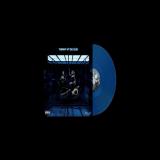
With their next chapter, Therapy At The Club, FLO expand this emotional honesty into a fully realised creative universe. The concept reimagines the club not just as a place of nightlife, but as a site of release, confession and self-possession — encompassing the moments before, during and after the night out. From mirror affirmations and pre-game chaos, to late-night Uber conversations, dance-floor catharsis and the clarity of the morning after, Therapy At The Club captures how women process desire, heartbreak, confidence and healing in real time, together. It is both fantasy and reality: cinematic, fashion-led and emotionally raw, grounded in sisterhood as a form of survival.
Sonically, the new music leans into dark, euphoric R&B and pop with sharper edges, built on vocal mastery and diaristic storytelling. Lead single “Leak It” sets the tone for the era — playful, charged and unapologetically self-aware — exploring what happens when desire spills over, secrets surface and control is reclaimed. Across the new songs, FLO move fluidly between intimacy and euphoria, turning the club into a space where vulnerability is power and feeling everything is the point.
As a trio built on discipline, joy and deep creative trust, FLO represent a new model for the British girl group: one rooted in authorship, harmony and cultural impact. Balancing softness with strength and ambition with authenticity, they are shaping the future of R&B and pop on their own terms. FLO are not looking backwards — they are setting the standard for what comes next.
"Paired Works is a double EP by Justine Perry and Paula Koski, developed in parallel within the same time and environment. Evolving through years of shared surroundings and creative exchange, the record emerges as a natural extension of that connection.
Produced separately, the tracks document two distinct inner worlds shaped through proximity. Justine Perry leans into deep, hypnotic forms, while Paula Koski moves through dubby and spacious structures driven by texture.
Across four sides, the record shifts between focused, forward-moving passages and more atmospheric moments, creating a subtle push and pull. Rather than settling into one singular moment on the dancefloor, it stretches across the shifting phases of a long club night.
Timeless and elegant in its approach, Paired Works marks the debut release on Ostgut Ton for both artists.“
out of Stock
Last delivered 21 days ago available to reorder, subject to availability
By the time Mayday Parade began work on Sugar, the closing installment of their three-part album series, they had pushed themselves further than ever before.Following Sweet (April 2025) and Sad (October 2025), the pop-rock quintet committed to a relentless cycle—write, record, tour, repeat—building a body of work that captures the full scope of their sound across nearly 30 songs.
Sugar brings the trilogy to a close in powerful fashion, emphasizing both reflection and forward momentum through the driving emo pulse of first single “Blame It on the Youth,” the hypnotic piano ballad “What Happens Next,” the glossy melodic groove of “Two Hearts,” and the nostalgic energy of “Sweet Sad Sugar,” which reflects on the Tallahassee roots that shaped the band.
Just as importantly, the project marks the beginning of a new era defined by autonomy. Released independently, the set sees Mayday Parade taking full control of their creative output—a full-circle moment for a group that first built its audience by selling CDs in Warped Tour parking lots and quickly became a leading voice of the late-2000s emo wave thanks to gold- and platinum-certified singles like Jamie All Over and Miserable at Best.
It's this willingness to chase something ambitious, no matter how daunting, that has defined them from the very beginning. Now, with the trilogy complete, Mayday Parade find themselves in a position few of their peers can claim: still creatively restless, still evolving, and still finding new ways to win.
From 1993, a hallmark UK Dub album returns to the light. Originally pressed in a small run and extremely hard to find, this record was produced at Earthquake Studio by TNT Roots and Winston Dread.
Together, they provided a raw contribution to the early UK Dub scene using a basic setup: a Siel DK-80 synth, a Yamaha home keyboard, a Casio RZ-1 drum machine, and an Atari 1040 computer running Cubase V2.0. The tracks were shaped through an old Dynamix 8-channel mixer and captured on a Casio portable DAT machine.
TNT Roots provided the drum, bass, and chord patterns, while Winston Dread added the lead lines and performed the mixing duties. This raw, undiluted music reflects the evolution of Dub and contains the seeds of all their future work. Their dubplates were staples for legendary UK sound systems like Aba Shanti-I and Iration Steppas, becoming sought-after anthems that defined the "heavyweight" digital roots sound.
These are heavy sounds that stand the test of time. Back on the streets after 30 years, the album has been fully restored and remastered to honor the dubplate masters of UK Sound System culture
out of Stock
Last delivered 64 days ago available to reorder, subject to availability