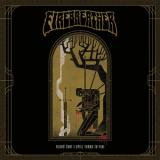
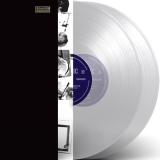
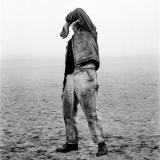
Gold Nugget Vinyl, limited to 400 copies. "Firebreather formed in Gothenburg in 2016, rooted in crushing, sludge-doused doom from the very beginning. Never wavering from that commitment across all three of their incendiary full-length releases, the trio has pursued weight with purpose, not as spectacle, nor as an exercise in excess, but as the only language broad enough to hold the emotional reach and sonic heft of their sound. The music arrives in a way that writes itself with no distance between the words and the sound; they rise from the same cursed ground, and that honesty has become the band's defining force. Firebreather is a band that never postures or asks to be admired for their heaviness- and to see them live is to experience exactly why. Their weight takes on another life entirely. The band's towering tone and consuming grit don't fill a room so much as alter it. Volume presses against the body before the first lyric lands and riffs arrive like shifting earth. The drums don't drive the songs forward; they anchor them while the line between sound and physical force begins to disappear. Years spent crossing Europe and North America have only sharpened that purpose, and a decade on with a fourth album on the way via the notorious Heavy Psych Sounds Records, Firebreather remains exactly where it belongs. Head down. Volume up."
Without turning anything upside down, the trio has released their second album, gracefully deepening the unique path they have carved out for themselves. It is an album that already stands in stark contrast to the attention-deficit culture of our times. Indeed, whilst music sometimes seeks to concentrate the intensity of its references and artefacts, the trio takes a step back, deploying an intensity that is subtly distributed. Thanks to their progressive instrumental tracks blending elements inherited from dub, jazz, folk and even musique concrète, the trio has never allowed the quality of their music to suffer from their experimentation; at the same time, they have never been afraid to venture off the beaten track to achieve the sound they desire. Every single track of this album cast like fragile bridges over various landscapes that explore cycles and the natural rhythm within. It is up to the listener to tread carefully and not lose their footing and embrace the cinematic movement of this music. The three artists have indeed achieved a musical expression so free that it possesses the power of illusion. We are suddenly swept up in all these illusions, to the point where our memories are in flux. Both haunting and in motion, this trio’s music offers an impregnable mental retreat and an invitation to dance. This album conveys a dreamlike conviction that time, in its relentless flight, might—if only for a moment—be brought to a halt. A halt that awaits you.
After decades contributing to records where a single riff could transform a dancefloor, Charlie May turns that instinct inward on Trusted Farms.
For over thirty years, Charlie has occupied a position that seems increasingly rare in electronic music: the musician’s musician, the person behind the machines, the extra pair of hands in the studio, and quite often, the person responsible for the melody you end up carrying around in your head for weeks on end.
Alongside Duncan Forbes as Spooky, Charlie helped shape some of the most important electronic music to emerge from the UK in the early ’90s. That partnership would also sow the seeds for one of Sasha’s defining records: the central riff behind Xpander began life in Spooky’s live material, before Charlie brought the idea into the studio with Sasha and helped transform it into one of electronic music’s most enduring anthems.
Listen closely to Charlie’s work and there’s a particular instinct that keeps returning: knowing when a simple synth line is enough. Knowing which note needs to change. Knowing when repetition stops being repetition and starts becoming the entire reason a track works. More recently, as one-third of Quiet Places on ASIP, he’s taken those same instincts somewhere looser — beatless, gridless and led by improvisation.
Trusted Farms puts those instincts front and centre.
Tiny melodic phrases appear and refuse to leave. Synth lines repeat just long enough to become lodged in your head. Parts rub against each other without being tidied into submission. There’s a sharpness and directness to it all amongst the purposeful analogue warmth.
Some of these tracks feel almost ridiculously simple at first. But simplicity is difficult when you’ve spent decades learning every possible way to complicate something. Many of the parts on Trusted Farms were performed live with minimal editing. A synth line might be doubled, distorted, re-recorded and pushed back through another piece of equipment, but it remains the same idea. Instead of filling the gaps, Charlie works on the weight and character of what is already there. The melodies become physical; slightly worn around the edges.
For someone whose fingerprints can be found across some genuinely monumental moments in electronic music, Charlie has spent decades knowing what to add.
Trusted Farms is about knowing exactly what to leave alone.
Available on black 12”, mastered by Andreas Lupo LOOP-O Lubich and featuring artwork by Peter Skwiot Smith,
To kick off our 5th year party celebrations the label begins its new set of releases starting with the joined forces of Regal86 and IMOGEN. The artists contribute two tracks each to the four track vinyl alongside remixes of each other's work, meeting at sonic crossroads.
The EP journeys through rave nostalgia filled with warmth and hope for the future, recollecting some favourite memories of the dance floor.
The A side is fast, driving with a sense of longing for the Halcyon Days and the offline times of partying when things felt easier. The release opens with ‘One Night In 1992’, IMOGEN’s nostalgic ode to an earlier rave era, built around a vocal recollection of her mother’s experiences on the dancefloor in the 90’s. Raw, hazy and deeply personal, it sets the tone for a record rooted in memory while remaining firmly in the present. Regal86 follows with ‘Rush’, bringing a different energy to the record. Driven by rolling rhythms, playful movement and a strong sense of groove.
The B side takes a more optimistic turn looking into the future with dubby aquatic pads and euphoric breakdowns, carrying a feeling of forward motion. There is a lightness to the tracks, a sense of joy running beneath NC Station and keeping the momentum locked whilst turning inwards on the final track, IMOGEN’s ‘Midnight At Bret’ rounds out a release that moves naturally between nostalgia, propulsion and the shared language of the dance floor.
As the next release launches, IMOGEN takes wigs on tour for a five year special run of shows starting on release at Tresor for a two club take over following with further cities: London, Milan, Dublin and more.
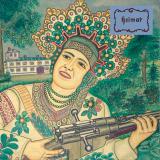
Those albums that never age, that never cease to surprise with their innovative freshness_listen after listen_defying the years that go by. Released in 2016, Heimat's debut album is one of those records you love knowing is there on the shelf or on the turntable, like a reassuring talisman. To mark its 10th anniversary, and such an awaited repress, we decided to honor this landmark album as it deserves: with a powerful remaster by Tioma Tchoulanov (UVB76, NzeNze) featuring enhanced dynamics, and an ultra-limited edition on blue splatter vinyl. What a beautiful object this is, celebrating_alongside Armelle and Olivier Demeaux_ten years spent exploring the outer limits of music, in France and abroad, from SMAC venues to squats and other joyful initiatives. Their deeply sincere music loses none of its naive tension; the emphasis is there, yet it remains restrained, contained, almost nervous, without any show of. Here, then, is something to make this fantastic album, a subtle milestone in a teeming musical landscape. A fine achievement indeed!
out of Stock
Last delivered 4 months ago available to reorder, subject to availability
On Dummy’s new album, do you love the color of the sky?, the Los Angeles-based 5-piece deliver a breathtaking piece of work that introduces new textures and rhythms to their already varied and refined catalog. For the band’s third album, and first for new label home Polyvinyl, the group split time between self-recording at their home studio as well as Studio 22, linking up with frequent collaborator and engineer Joo-Joo Ashworth (Corridor, Automatic, Spiral XP). The band focused on intentionality and experimentation, exploring downtempo dance beats and electronic music while pushing the guitar as far as they could, using new self-sampling and processing techniques. Percussionist Alex Ewell’s overall sound design and production skills can be heard across the album, with layered drum sounds and rhythmic tremolo techniques shining throughout. Tracks like “Full Spectrum Dominance” and “Alluvial Fan” showcase the band’s tasteful pop sensibilities, while closing track “Heaven’s What You Make Of
It” features perhaps the strongest vocal delivery yet from vocalist/keyboardist
Emma Maatman. Additionally, the dynamic exchange between guitarists Joe Trainor and Nathan O’Dell is absolutely gorgeous, adding a new layer of immersion and directness that is unlike anything the band has done before. The result is Dummy’s most ethereal and sincere record to date, with more feminine and delicate undertones that sit beautifully alongside the gritty and noisy textures the band has become known for. Dummy has been praised in numerous outlets such as Paste, Stereogum, Aquarium Drunkard and Pitchfork, who described their second album, Free Energy, as “the
sound of a band turning all its potential energy into music that’s dazzlingly kinetic and powerful." The band has toured the US, UK, and EU extensively, with festival appearances at Austin Psych Fest, Treefort Music Festival, and others. In addition to larger outlets and festivals, the band’s strong ties to community and DIY ethos are ever-present, oftentimes preferring to play and connect with different local artists on tour, uplifting those around them while shining a light on the history of independent music.
On Dummy’s new album, do you love the color of the sky?, the Los Angeles-based 5-piece deliver a breathtaking piece of work that introduces new textures and rhythms to their already varied and refined catalog. For the band’s third album, and first for new label home Polyvinyl, the group split time between self-recording at their home studio as well as Studio 22, linking up with frequent collaborator and engineer Joo-Joo Ashworth (Corridor, Automatic, Spiral XP). The band focused on intentionality and experimentation, exploring downtempo dance beats and electronic music while pushing the guitar as far as they could, using new self-sampling and processing techniques. Percussionist Alex Ewell’s overall sound design and production skills can be heard across the album, with layered drum sounds and rhythmic tremolo techniques shining throughout. Tracks like “Full Spectrum Dominance” and “Alluvial Fan” showcase the band’s tasteful pop sensibilities, while closing track “Heaven’s What You Make Of
It” features perhaps the strongest vocal delivery yet from vocalist/keyboardist
Emma Maatman. Additionally, the dynamic exchange between guitarists Joe Trainor and Nathan O’Dell is absolutely gorgeous, adding a new layer of immersion and directness that is unlike anything the band has done before. The result is Dummy’s most ethereal and sincere record to date, with more feminine and delicate undertones that sit beautifully alongside the gritty and noisy textures the band has become known for. Dummy has been praised in numerous outlets such as Paste, Stereogum, Aquarium Drunkard and Pitchfork, who described their second album, Free Energy, as “the
sound of a band turning all its potential energy into music that’s dazzlingly kinetic and powerful." The band has toured the US, UK, and EU extensively, with festival appearances at Austin Psych Fest, Treefort Music Festival, and others. In addition to larger outlets and festivals, the band’s strong ties to community and DIY ethos are ever-present, oftentimes preferring to play and connect with different local artists on tour, uplifting those around them while shining a light on the history of independent music.
Over & Even was a breakout album for Joan Shelley. Originally released in 2015 and recorded in Louisville, Kentucky - with Shelley and her then neighbor Nathan Salsburg on guitar. The record was an album of the year at NPR Music and in The Los Angeles Times. Rolling Stone called it, "a masterfully turned set of folk reflections" in their 4 star review. This expanded edition features 8 never before heard demos, performed and recorded solo by Shelley who shared them only with Salsburg so he could learn the songs.
Tropical Fu*k Storm revisit the live album concept on ‘Inflatable Graveyard Vol. 2’, their second live album and the follow-up to the critically acclaimed ‘Fairyland Codex’. Recorded over three nights during a sold-out residency at New York venue TV Eye, the album finds the band at the height of their incendiary powers, turning already combustible songs into something even more ferocious and unpredictable.
Fine-tuned and road-tested through heavy touring, songs from ‘Fairyland Codex’ are stretched into new forms. Ballad “Stepping on a Rake” takes on heavier undertones, “Irukandji Syndrome” becomes a launchpad for a guitar solo worthy of the Velvets’ “I Heard Her Call My Name” and “Moscovium” sounds more urgent than ever.
The band also revisit back catalogue favourites including “Who’s My Eugene” and “You Let My Tyres Down”, alongside a cover of Australian punk heroes The Saints’ “This Perfect Day”.
Tropical Fu*k Storm have built a catalogue worth obsessing over, but their live show is where the band’s brilliance really breaks open, and ‘Inflatable Graveyard Vol. 2’ catches that chaos in the act.
Key Quotes:
“Tropical Fuck Storm are masters of tension and release.” The Guardian.
“If anyone's qualified to make music about all-encompassing terror, it ought to be Tropical Fuck Storm.” Pitchfork.
“Thrilling noise-rock pranksters” Uncut.
“End times chaos… A gloriously imperfect storm” MOJO.
“A galvanising opus of incredible political bite” The Line Of Best Fit.
“One of the most rewarding listens in rock music” Consequence Of Sound.
Tropical Fu*k Storm revisit the live album concept on ‘Inflatable Graveyard Vol. 2’, their second live album and the follow-up to the critically acclaimed ‘Fairyland Codex’. Recorded over three nights during a sold-out residency at New York venue TV Eye, the album finds the band at the height of their incendiary powers, turning already combustible songs into something even more ferocious and unpredictable.
Fine-tuned and road-tested through heavy touring, songs from ‘Fairyland Codex’ are stretched into new forms. Ballad “Stepping on a Rake” takes on heavier undertones, “Irukandji Syndrome” becomes a launchpad for a guitar solo worthy of the Velvets’ “I Heard Her Call My Name” and “Moscovium” sounds more urgent than ever.
The band also revisit back catalogue favourites including “Who’s My Eugene” and “You Let My Tyres Down”, alongside a cover of Australian punk heroes The Saints’ “This Perfect Day”.
Tropical Fu*k Storm have built a catalogue worth obsessing over, but their live show is where the band’s brilliance really breaks open, and ‘Inflatable Graveyard Vol. 2’ catches that chaos in the act.
Key Quotes:
“Tropical Fuck Storm are masters of tension and release.” The Guardian.
“If anyone's qualified to make music about all-encompassing terror, it ought to be Tropical Fuck Storm.” Pitchfork.
“Thrilling noise-rock pranksters” Uncut.
“End times chaos… A gloriously imperfect storm” MOJO.
“A galvanising opus of incredible political bite” The Line Of Best Fit.
“One of the most rewarding listens in rock music” Consequence Of Sound.
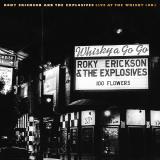
Roky Erickson & The Explosives had been honing their craft in hot, sweaty clubs all over Texas for a couple of years before this California tour which, along with the Whisky, included the Warfield Theater in San Francisco, Galactica 2000 in Sacramento, the Stone in San Francisco, the Keystone Berkeley in, well, Berkeley, the Bacchanal in San Diego and the Europa in Tucson, AZ on the way back to Texas. But, the Whisky was a special, magic night of music. Roky was on top of his game and the Explosives was a well oiled machine capable of musically "turning on a dime" with nary a single apple falling from the cart. The proof in that statement was when, as we were walking on stage to start the show, Roky turned to us and asked "Do you guys know the song Heroin by Lou Reed?" We replied "no" as we plugged in and Roky launched into, you guessed it, "Heroin" by Lou Reed. The results are on this record!
spirit blue have become one of London’s most elusive word-of-mouth successes. Formed in South East London, the duo quietly built a devoted following through years hosting NTS Radio’s flagship Early Bird show before stepping out from behind the booth with 2024’s breakout double single “perfect storm / desire machine”. Rare live appearances and instant sell-outs of their limited dubplate pressings have turned spirit blue into one of the capital’s most sought-after underground acts, with admirers ranging from Ethel Cain to EsDeeKid. The glistening guitars, soft-hued vocals and sparse production of “ps / dm” and its follow-up “language” conjure a collaged vision of 90s alt-rock melancholy refracted through lo-fi intimacy and electronic texture. The vocals remain understated yet emotionally direct, grounding each track in a vulnerability that feels unforced. Echoes of slowcore’s more spectral edges drift through the duo’s blurred songwriting, where moments of stillness carry as much weight as the hooks themselves. The first ultra-limited pressing sold out instantly; this new edition arrives including the vinyl-exclusive, weightless, “devil mix” versions on the B side and demand already running high.
Across the past decade, KAS has established herself as a unique voice in experimental electronic music, a composer and synthesist whose work dissolves the boundaries between ambient electronica, contemporary classical, composition, and immersive sound design. Her new album “Ruin: It’s Not Just Music” arrives with a distinctive gravitational pull. The record moves with greater physical force, placing rhythm and impact at the centre of its architecture, revealing a more confrontational and embodied dimension of KAS’s musical language.
The first single “Ruin” arrives May 22nd, with the full album released October 2nd via SOMEONE SPECIAL the new label co-founded by KAS.
Where much of KAS’s earlier work explored harmonic environments, the forthcoming album is built around tension and release. Inspired by the sound of drum and bass, breakbeats fracture through dense fields of synthesis, percussive patterns and her signature melodic fragments – motions that feel closer to the kinetic language of club music than the meditative spaces often associated with her past catalogue. The result is a body of work that feels both recognisably hers and newly charged, music that moves through the body as insistently as it engages the mind.
For listeners who first encountered KAS through the glowing synthesis of “Ears” (2016) or the intricate experimental pop of “The Kid” (2017), this direction may feel initially surprising, yet the shift has been quietly unfolding across the past several years. KAS’s practice has steadily expanded beyond the expectations placed upon experimental electronic artists, moving between orchestral composition, audiovisual installations, film scoring, and large-scale commissions while retaining the unmistakable sonic signature that defines her work.
The 2022 albums “I Could Be Your Dog / I Could Be Your Moon” (2022) and “Let’s Turn It Into Sound” (2022) explored a deeply immersive approach to composition, expanded her reputation and instinct for constructing detailed sonic ecosystems while continuing to blur the lines between experimental electronics and contemporary pop structures. KAS’s most recent output has continued to widen that field including the rhythm oriented electronic album “Gush” (2025) and her return to more orchestral roots with “Thoughts on the Future” (2025). Together these releases underscored the breadth of her practice.
Her prolific collaborators and creative partners have ranged from Patti Smith and Suzanne Ciani to Danny Elfman, Tycho, Glass Beams, RY X, Caribou, Four Tet, Reggie Watts, and Max Richter, while her compositions have appeared in projects with Apple, Chanel, Meow Wolf, the BBC Orchestra, and major film and television productions.
On “Ruin: It’s Not Just Music”, that vocabulary becomes more kinetic than ever before. The record draws energy from jungle, drum and bass, and dance-floor focused electronic music while retaining the intricate synthesis and tonal curiosity that have defined KAS’s work from the beginning. The result is a record that feels equally at home within club culture, contemporary composition, and the experimental spaces that have long championed her artistry.
On May 27th KAS will present a major performance at London’s Barbican Centre alongside the London Contemporary Orchestra, marking the ten-year anniversary of her landmark album Ears. The evening will trace the arc of her creative evolution while also introducing material from the new album.
out of Stock
Last delivered 3 days ago available to reorder, subject to availability
fter 25 years of exploring music from different angles, Chillum Trio lands on Faith In Truth with his third EP on vinyl. Driftlines is a cinematic, multicultural trip through the deeper and dubbier corners of house music, moving freely between hazy atmospheres, broken rhythms, acid lines and warm instrumentation. Across four tracks, eclectic influences blur together and settle into a club-oriented frame.
The EP opens with Dustfire, a deep night-drive cut that slowly draws its scenery around a low-slung beat. A cinematic breakdown gives way to a restless yet understated percussive acid groove, before a Rhodes hook emerges through the dust, carrying a touch of desert heat into the night.
Keeping things mellow and midtempo, Deepskin heads somewhere warmer: a humid tropical beach after midnight, all body heat and salt in the air. What begins loose and sensual gradually turns into ass-shaking garage house, surrounded by cosmic layers, drifting pads and spacious atmospheres.
On the flipside, the tempo picks up while the story continues with Thin Air. A long, lush, phase-soaked horn intro settles into a melancholic dream state, slowly pulling you under. The slow-burning build eventually breaks into a memorable piano line and fractured drums. After a trippy bridge, gentle acid lines lock into place and hold the dancefloor until the wistful finale.
Closing the record, Serotone slips back into downtempo territory with a jazzy, trip-hop-infused groove. Soft vocal fragments, piano and rising arpeggios keep the tension suspended through the middle, before the track mutates into something reminiscent of early-2000s dubby, acid-tinged future jazz and Latin fusion.
Like patterns drawn by wind across desert sand, Driftlines traces the points where different currents meet, overlap and interfere. Rhythms, places and memories crossing paths, briefly forming shapes before drifting somewhere else.
out of Stock
Last delivered 3 days ago available to reorder, subject to availability
Following hot on the heels of the Frequency Damage EP, DJ Quest returns to Cyberfunk with Squeaks / Snake Style— a two-track release that dives deep into the unmistakable sound that made Quest’s productions stand out during the early 2000s.
Rather than simply recreating the past, both tracks tap directly into the DNA of the original Cyberfunk sound: rolling breakbeats, huge basslines, twisted analogue synths and the kind of distinctive production that became synonymous with DJ Quest at the height of the Bassline Breaks era.
Built around original analogue synth work throughout, Squeaks / Snake Style is a deliberate throwback to the raw, futuristic sound of the early 2000s, produced with the weight and clarity needed for today’s sound systems.
It’s classic Quest, strange noises, big bass, rolling drums and plenty of attitude.
A. Squeaks
Everything DJ Quest became known for rolled into one track. Squeaks is an unapologetic throwback to the classic Quest sound of the early 2000s, driven by heavyweight breaks, deep bass and original analogue synth work throughout.
Twisted electronic squeaks and evolving analogue sounds weave their way around the drums, giving the track that instantly recognisable combination of funk, darkness and futuristic weirdness that characterised so many of Quest’s early productions.
Raw, energetic and built firmly for the dancefloor, Squeaks takes the spirit of the original Bassline Breaks era and brings it straight back onto a modern sound system.
AA. Snake Style
On the flip, Snake Style takes the same analogue-driven approach but moves into deeper rolling territory.
A more hypnotic, heads-down breaks roller, the track develops around a heavyweight bass groove, rolling drums and constantly shifting analogue synth lines. There’s less emphasis on the immediate impact of the A-side and more on building a groove that locks into a DJ set and keeps moving.
Still unmistakably Quest, Snake Style combines the rawness and character of early-2000s breakbeat with modern low-end weight and production, proper rolling Cyberfunk business.
Special Vinyl Edition
Making this release particularly special for collectors, the 12” vinyl comes with an exclusive book showcasing the artwork from some of DJ Quest’s biggest and most memorable releases.
The book looks back through Quest’s extensive catalogue and the visual identity that accompanied the records, bringing together a selection of classic release artwork from across his career plus photo collages of memories made across his journey.
It turns Squeaks / Snake Style into more than just a new DJ Quest 12”, it’s also a celebration of the music, artwork and history surrounding one of the original pioneers of the Bassline Breaks sound.
For long-time followers it offers a piece of Quest history alongside two brand-new productions, while newer listeners get an introduction to the catalogue and imagery behind the sound
out of Stock
Last delivered 3 days ago available to reorder, subject to availability
"Tre" is the new long-awaited 12-track album by The Dining Rooms out for Schema after two lps on the research label Milano2000, "Subterranean Modern" and "NumeroDeux" and a lot of appearances on the most important atmospheric-downtempo compilations. 12 tracks and 2 videos to be precise (Maria Arena is the brillant filmaker working with TDR). 12 elements redefining the borders of TDR music, drawing inspiration from Jazz, Africanism, Hip-Hop, House, Soul with true eclectism. "Tre" is a turning point in the history of TDR and represent a sort of change of perspectives.
out of Stock
Last delivered 3 days ago available to reorder, subject to availability
Bali-based producer/DJ STAY GOLDEN makes his debut on All Day I Dream with Silent Covenant, a seven-track album exploring unseen connections, out now.
Silent Covenant traces a near 40-minute path through hypnotic indie-dance textures, melodic techno tones, and deep house grooves. The title track opens with funky drive and a quick-tongued topline before ‘Fragments of a Dream’ pushes into darker territory. From there, ‘RITUAL PAUSE’ and ‘Stay With Me’ return to organic rhythms and deep vocals, balancing cohesion and contrast across the project.
“A seven-track journey through emotions and the invisible connections that shape our lives. Each track is another step in the same journey. The strongest connections are often the ones that never need to be spoken. They live in shared moments and the memories we carry with us. Silent Covenant is my way of translating those invisible bonds into music.” – STAY GOLDEN
Collaborations with Alexey Union, Broken Hill, Kinky Sound, ÜNAM, ANTICALM, and David LeSal broaden the project's sound throughout its second half. ‘Synth Lines’ adds a deeper edge, while ‘In Your Heart’ turns toward airy melodies. Closing with ‘Everything Sacred,’ Silent Covenant brings its themes of memory, connection, and shared experience full circle.
out of Stock
Last delivered 3 days ago available to reorder, subject to availability
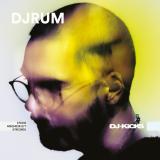
DjRUM"s DJ-Kicks mix brings together his work as a DJ, producer and composer. Built around four new original compositions and exclusive contributions, "Flip" by Skee Mask and "Clonk Dual" by Clark, the release was developed from live vinyl mixes that were subsequently edited, collaged and expanded with overdubs. The mix moves between ambient, breakcore, classical music, punk, acid and experimental electronic sounds, combining a wide range of styles into a continuous sound collage.
out of Stock
Last delivered 3 days ago available to reorder, subject to availability
Die Heavenly Remixes-Reihe präsentiert weiterhin die besten Remixe, Versionen, Meditationen, Re-Rubs und Dubs von Künstlern aus der ganzen Welt, die auf der Liste des aufregendsten Plattenlabels des Landes stehen. In den meisten Fällen handelt es sich bei den Alben um die erste physische Veröffentlichung eines Remixes, die sie von den Streaming-Playlisten in ihr rechtmäßiges, spirituelles Zuhause auf superschwerem Vinyl (oder glänzender, supergepackter Compact Disc) befördert.
Heavenly Remixes Volume 8 beginnt mit Space Afrikas üppiger, ambienter Neuinterpretation von BEAM/S der Orielles, bevor Justin Robertson Amber Arcades' Turning Light zu acht Minuten elektronischem Dub dehnt.
out of Stock
Last delivered 6 days ago available to reorder, subject to availability
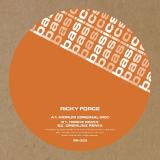
Ricky Force joins the Basics Records roster with ’MDrum’ a dark and hypnotic rolling track. Ricky is known for writing some of the deepest cuts over the last decade alongside running Pressin’ Hard Records.
On the flip side Friske (Requisite/Metalheadz) steps up with a sharp apache remix of MDrum which twists and turns. On B2 is Gremlinz (UVB-76/Metalheadz) with an absolute monster remix rolling out the amen’s, a masterclass in drum work. Watch your bass bins!!
out of Stock
Last delivered 6 days ago available to reorder, subject to availability
Dream 2 Science’s 1990 release ‘My Love Turns To Liquid’ - reissued on 12” with three mixes from the original and the ‘Cozmic Remixes'. The Cozmic Remix instrumental is pressed on vinyl for the first time.
Ben "Cozmo D" Cenac who's the mind behind Dream 2 Science (as well as Newcleus and Sha-Lor) wrote the track which was “designed to flow and feature Yvette’s (Lady E’s) vocal stylings. He wanted something smooth, laid back, deep and hella sexy!”. It came out on Cenac's own Power Move Records, distributed by Fore Records which was owned by Gregg Fore - he then encouraged Cenac to produce a full EP which turned into the now iconic Dream 2 Science EP (reissued on Rush Hour in 2012).
The Dream 2 Science project left a mark on the deep house scene that went under the radar at first but years later still resonates and represents some of the best music to come out of that famed era.
out of Stock
Last delivered 6 days ago available to reorder, subject to availability
After a couple of years building WREKT in Ipswich, it feels like the right time to take things a step further.
Tom from Red Eye Records and I started WREKT to bring artists we love to Ipswich, alongside some of the best local DJs and MCs. So far we’ve had Grooverider, Bryan G, Fabio, Storm, Sully, MC Blackeye and YT, with Jumpin Jack Frost and MC Moose up next.
Now WREKT is becoming a label.
For the first release, I’ve teamed up with Coco Bryce for four jungle tracks covering different tempos and flavours. We called the project CBD — Coco Bryce & Digital. It was too good not to use!
WREKT started with the nights, and turning it into a label feels like the natural next step for Tom and me. We couldn’t think of a better way to kick it off than this release with Coco.
out of Stock
Last delivered 6 days ago available to reorder, subject to availability
The follow up to her UK number 1 album This Is How Tomorrow Moves, the stark and striking fourth album by beabadoobee is named for the electricity towers that dot every major artery in the world—the strong, spindly structures that reminded Beatrice Laus of her connection to friends and family at home while she was staring down extreme disconnection and isolation on tour over the past few years.
The title can also be read as an allusion to Laus’ spiky, forceful new sound—the waves of distortion that crash and shatter across this record’s 14 songs mirroring the intense crackle you hear when walking under power lines. The pylon is also a fitting symbol for an album that reckons with the repetitive anxieties of your mid-twenties: What if I’m always going to be this way? What if life is just pylon after pylon on the road?
The album’s first single is available to stream and buy from today: “Sun Has Set” introduces Pylon as, in essence, a set of songs that began as diary entries, words that Laus thought she’d never be able to say out loud. “A lot of the songs on this record are things I wish I could have said to someone,” she says. “This song has this petty tunnel vision—it’s like, I hate you. You’re gonna stay here and listen to how much I hate you. Because I never got to say that.” The single comes accompanied by a striking first person video directed by Bea’s partner and longtime visual collaborator Jake Erland.
Ever a devotee of pure rock music—both as something to be cherished and something to be played with—Laus casts these feelings in songs that touch on classic grunge, midwest emo and ‘90s radio rock, zeroing in on a sound that is both harsher and more direct than any of her previous records. She says the music she’s loved has “always been an influence” on her music, and so for B4 she went straight to the source. A fair few of Beabadoobee’s composite influences contributed to Pylon, a fact that speaks to the goodwill and respect Laus has amassed over the course of her relatively brief career.
Hayley Williams sings on “Nothing to Prove,” a deeply anthemic indie-rock song about getting your power back from fairweather friends who just want a bit of your success. The moody “Powerlines” features a verse from Turnstile singer Brendan Yates, a master of matching vocal force with emotional nuance. Elsewhere, you’ll find contributions from Pinegrove’s Evan Stephens Hall, Deftones’ Chino Moreno, and Title Fight’s Shane Moran, as well as, on “Write Me A Letter”, production work from Laus’ longtime friends and collaborators Matty Healy and George Daniel of The 1975.
Beabadoobee will debut songs from the record on the Powerlines Tour, her first ever arena shows and biggest tour to date, taking in shows across North America, the UK and Europe this autumn-winter. The Powerlines Tour kicks off 1 October and includes stops at Madison Square Garden, The Kia Forum, The O2 and more (full routing below). Support comes from Wisp in the US, Canada and UK and Violet Grohl in France, The Netherlands, Belgium and Germany.
Born in the Philippines and raised in London, Beatrice Laus emerged as a British alternative music icon across three acclaimed albums and five EPs. She has garnered multiple BRIT Award and BBC Sound Of nominations, and won NME’s Radar award, whilst amassing over 10 billion streams worldwide and more than 12 million followers across her social channels.
This Is How Tomorrow Moves became her first record to reach number 1 on the UK Official Album Chart in 2024, following her Top 10 albums Fake It Flowers (which reached number 8) in 2020 and 2022’s Beatopia (#4). Earlier this year, beabadoobee released the one-off single ‘‘All I Did Was Dream Of You,” teaming up with Grammy-nominated best New Artist The Marías, the result of a longtime mutual creative admiration between María Zardoya and Bea.
out of Stock
Last delivered 6 days ago available to reorder, subject to availability
„Öd“ marks the long-awaited return of Institut für Feinmotorik - the Black Forest collective known for using eight prepared turntables to investigate acoustic micro-phenomena generated by everyday objects - with a new album and their first full-length release on Faitiche. It is also the return of their almost comical understatement as personal artistic principle: „making almost nothing out of almost nothing,“ compressed into the dots on an umlaut.
The Öd-nis, the wasteland, is a field that the collective has been ploughing in sound since their first release in 1997. Eight prepared turntables, four mixers, no records, six hands (give or take) merge into what they call the „Octogrammoticum“. A rotating organism of surfaces in friction, fed with the clutter from a drawer: rubber bands or tin foil, CDs, a discarded socket board. Under IFF's scrutinizing stylus, mundane almost-nothings get scratched open to reveal the acoustic density of negative space itself.
Last year’s „Adhesive Tape“ drew IFF closer together after an almost ten-year hiatus. An eponymous event series at Berlin's silent green set in motion what would become their most twistedly funky release since „Penetrans“ on Staubgold in 2002.
The only thing öd about „Öd" (meaning „barren" or „boring“ in German) may well be its title: layers of improvised play and randomized loops convolve around porous, dubby groove locks, tugging at each other in a call-and-response with howling static that cuts through bulbous ambient techno into a scrap-metal Dixieland phantasm. Stratified yet spacious, these sonic double exposures always hover on the verge of collapsing. What you think you hear might not be what you actually hear.
The album’s track titles resemble Conceptual Poetry, extending this psycho-phenomenological gesture into the realm of spoken language. Conceived by renowned poet Dagmara Kraus, they become word molecules - „stern,” „dies,” „lose“ - tilting delicately between German and English, constantly changing depending on the ear’s perspective and pointing back to the deeply unstable fabric connecting meaning and sound. Which also makes „Öd“ an unusual cross-disciplinary collaboration - at least in the field of electronic music.
PS: Since its beginnings in Bad Säckingen, IFF has always been more than the sum of its rotating parts, moving tirelessly between multimedia art, theory, solo projects and collaborations. With IFF Expanded, the collective now opens its eight-doored apparatus, inviting artists working with CDJs or samplers to join - an ambitious live format that loosens its former purity law while carrying forward a long-standing curatorial practice. The same thread also runs into the related event series Acephalic Headspace.
Institut für Feinmotorik (*1997), artist-group originating from Black Forest working in various fields. In musical context known for transforming turntables into instruments by removing the records and instead applying rubber bands, paper scraps, household materials – resulting in a vivid laboratory for the productive misuse of everyday objects. This approach is documented in record releases and performed live.
A quick scan of the world’s favourite crowdsourced discography reveals that Sonic Youth co-founder Lee Ranaldo was not a total stranger to crackling electric experimentation in the years following his songwriting turns of the 20-teens. Yet »The System«, ingeniously culled and sequenced from Ranaldo’s soundtrack work for Dutch filmmaker Joris Postema’s ›eco-doc‹ of the same name, nonetheless feels like a reawakening. Quietly released in a vastly different (and much more ›filmic‹) form by Doxy Music/Riva Media Records in 2025, this LP reimagines and reconfigures the initial release, including unreleased material written and recorded for the film, to lend it new stature as both a return to drone-improv form and a reunion with introspective Downtown angst.
Given the state of the world, it’s not surprising that the film Ranaldo scores – a documentary on three climate activists bruising their fists on the black iron prison of techno-fascist deathkultur – is a study in despair and futility. But rather than wallowing in navel-gazing doom and gloom, the film documents the unstoppable spirit that has animated human resistance since the time of the Pharaohs.
As it turns out, the gorgeous scope of Lee Ranaldo’s guitar palette is a perfect manifestation of the hope and despair that animates the film. But like other high-water marks in the guitar-centric soundtrack canon – the high plains raga of Bruce Langhorne’s »Hired Hand«, Neil Young’s sparse and ghostly solo transmissions on »Dead Man«, or the monolithic mantras of Popol Vuh’s »Nosferatu« – its devotion to spectral gestures and meditative song forms launches it firmly outside of the OST orbit into a universe fully its own.
It might seem like a long journey from the Lower Manhattan rhythmic grime of the album’s opener »Tajikistan (Nice to Meet You)« (reminiscent of guitar opuses like Robert Quine and Jody Harris’s »Escape«) to the ringing cowboy chords of the final track, but the narrative logic of the LP pulls the listener along as solidly as a pack horse. As the LP unwinds, and collaborators like Jim Jarmusch, cellist Leila Boudreil, Yeah Yeah Yeahs snare shaman Brian Chase, and guitarist Yonatan Gat take their places, new vistas unfurl: the ritualistic thrum of »Berlin Blockade«, the haunted overtone palaces of »Bergelmir«, and the cavernous acoustic strumming of »Instruments of Violence«. It all winds up with the high lonesome standard »Cool Water«, each unhurried note trailing off into long-tail reverb, layers of shifting vocal harmonies pulling everything skyward – a hopeful note in an album where existential dread never lurks too deeply below the surface.
In the end, »The System« functions both as a film score and a hallucinatory (mostly) instrumental guitar record, revealing a sensibility not too often spotted in the 21st century – a liminal space where the song, the jam, and the meditation merge into a blurred whole. »The System«’s expansive fabric, emerging from a collective sound circling around Ranaldo’s signature tones, envelops and ampl amplifies the contributions of its community of creators – the perfect antidote to narcissistic despair. Much like the subjects of the film light the way towards intra-generational resistance, the music of »The System« reveals a path through gathering darkness. The world could be yours if you follow.
A quick scan of the world’s favourite crowdsourced discography reveals that Sonic Youth co-founder Lee Ranaldo was not a total stranger to crackling electric experimentation in the years following his songwriting turns of the 20-teens. Yet »The System«, ingeniously culled and sequenced from Ranaldo’s soundtrack work for Dutch filmmaker Joris Postema’s ›eco-doc‹ of the same name, nonetheless feels like a reawakening. Quietly released in a vastly different (and much more ›filmic‹) form by Doxy Music/Riva Media Records in 2025, this LP reimagines and reconfigures the initial release, including unreleased material written and recorded for the film, to lend it new stature as both a return to drone-improv form and a reunion with introspective Downtown angst.
Given the state of the world, it’s not surprising that the film Ranaldo scores – a documentary on three climate activists bruising their fists on the black iron prison of techno-fascist deathkultur – is a study in despair and futility. But rather than wallowing in navel-gazing doom and gloom, the film documents the unstoppable spirit that has animated human resistance since the time of the Pharaohs.
As it turns out, the gorgeous scope of Lee Ranaldo’s guitar palette is a perfect manifestation of the hope and despair that animates the film. But like other high-water marks in the guitar-centric soundtrack canon – the high plains raga of Bruce Langhorne’s »Hired Hand«, Neil Young’s sparse and ghostly solo transmissions on »Dead Man«, or the monolithic mantras of Popol Vuh’s »Nosferatu« – its devotion to spectral gestures and meditative song forms launches it firmly outside of the OST orbit into a universe fully its own.
It might seem like a long journey from the Lower Manhattan rhythmic grime of the album’s opener »Tajikistan (Nice to Meet You)« (reminiscent of guitar opuses like Robert Quine and Jody Harris’s »Escape«) to the ringing cowboy chords of the final track, but the narrative logic of the LP pulls the listener along as solidly as a pack horse. As the LP unwinds, and collaborators like Jim Jarmusch, cellist Leila Boudreil, Yeah Yeah Yeahs snare shaman Brian Chase, and guitarist Yonatan Gat take their places, new vistas unfurl: the ritualistic thrum of »Berlin Blockade«, the haunted overtone palaces of »Bergelmir«, and the cavernous acoustic strumming of »Instruments of Violence«. It all winds up with the high lonesome standard »Cool Water«, each unhurried note trailing off into long-tail reverb, layers of shifting vocal harmonies pulling everything skyward – a hopeful note in an album where existential dread never lurks too deeply below the surface.
In the end, »The System« functions both as a film score and a hallucinatory (mostly) instrumental guitar record, revealing a sensibility not too often spotted in the 21st century – a liminal space where the song, the jam, and the meditation merge into a blurred whole. »The System«’s expansive fabric, emerging from a collective sound circling around Ranaldo’s signature tones, envelops and ampl amplifies the contributions of its community of creators – the perfect antidote to narcissistic despair. Much like the subjects of the film light the way towards intra-generational resistance, the music of »The System« reveals a path through gathering darkness. The world could be yours if you follow.
Creole Culture is the triumphant return of Dawn Richard’s King Creole era. Steeped in history but with its flag planted firmly in the future, Creole Culture pulls elements from Richard’s heritage as a Black and Native American woman who has spent a lifetime making and engaging with music. Following New Breed (2019) and Second Line (2021), Creole Culture is akin to a panel of a triptych: a fully-realized sonic and narrative universe in which Richard, as King Creole, rebuilds her hometown of New Orleans in her image. She not only honors her city for what it was or what it gave her, but stakes a claim for it as a cradle of global culture now and for all time.
Creole Culture follows two acclaimed avant-garde R&B albums with composer Spencer Zahn — the later of which, 2024’s Quiet in a World Full of Noise, found Richard exorcising the specters of grief and trauma in the wake of her father Frank Richard’s health struggles and the killing of her cousin Cisco. It is a softer take on the brass-soaked swagger of Richard’s previous King Creole efforts, an evolution brought about when she realized she had left a crucial viewpoint out of her exploration of New Orleans: her own. “New Breed was the story of New Orleans through my father’s eyes,” Richard explains. “I used his samples, his music, his cultures, his work with Chocolate Milk, his side of the family. Second Line was my mom — her interludes riddled the album with her depiction of what is meant to be a Creole woman in New Orleans. The masculine and feminine sides of King Creole had expressed themselves through them, but the story felt unfinished, like my version of the story was untold.”
That story is, for lack of a better word, complex: at turns triumphant and tragic, sexy and mournful, braggadocious and contemplative. Creole Culture presents Richard’s New Orleans as a utopian soundscape — an intoxicating blend of R&B, soul, hip-hop, pop, and jazz — that’s survived and thrived despite the dystopian circumstances visited upon it. Richard presents the melange of influence and artifact on Creole Culture with the care of a botanist nurturing new hybrids in a rose garden.
What emerges from that care is at once delightful and unexpected, enlisting a crew of guest stars including Big Freedia, Anjelika “Jelly” Joseph, Tarriona “Tank” Ball, and Durand Bernarr for features that play against type. Tank’s turn at spoken word verse on “l v r” serves to add dimension to King Creole’s New Orleans, as does Joseph’s undeniable voice on “chuuuurch.” “I’m not normally a features girl,” says Richard, ”but King Creole can’t build a world from scratch without help. What’s beautiful about the features here — which is also true of my band and producers — is they come from people who understand the materials of the world they’re from, they’re people I love, and they’re people who are just extraordinary at what they do. They’re part of the atmosphere of this place. You need them for the record to breathe.”
In the end, that’s what King Creole creates: a space where Dawn Richard can breathe, can be at peace with herself, and let loose with others. From finding love in opening single “enough” to relishing in the Afrocaribbean futurism of “fiesta,” Creole Culture is a tremendous, freeing breath of fresh air. It captures the resolve of a woman and a place who’ve survived the unimaginable and sees the future not as something to be endured, but as something to be created. Dawn Richard has been making that future one album at a time over the course of her career. Creole Culture is her most stunning one yet.
Creole Culture is the triumphant return of Dawn Richard’s King Creole era. Steeped in history but with its flag planted firmly in the future, Creole Culture pulls elements from Richard’s heritage as a Black and Native American woman who has spent a lifetime making and engaging with music. Following New Breed (2019) and Second Line (2021), Creole Culture is akin to a panel of a triptych: a fully-realized sonic and narrative universe in which Richard, as King Creole, rebuilds her hometown of New Orleans in her image. She not only honors her city for what it was or what it gave her, but stakes a claim for it as a cradle of global culture now and for all time.
Creole Culture follows two acclaimed avant-garde R&B albums with composer Spencer Zahn — the later of which, 2024’s Quiet in a World Full of Noise, found Richard exorcising the specters of grief and trauma in the wake of her father Frank Richard’s health struggles and the killing of her cousin Cisco. It is a softer take on the brass-soaked swagger of Richard’s previous King Creole efforts, an evolution brought about when she realized she had left a crucial viewpoint out of her exploration of New Orleans: her own. “New Breed was the story of New Orleans through my father’s eyes,” Richard explains. “I used his samples, his music, his cultures, his work with Chocolate Milk, his side of the family. Second Line was my mom — her interludes riddled the album with her depiction of what is meant to be a Creole woman in New Orleans. The masculine and feminine sides of King Creole had expressed themselves through them, but the story felt unfinished, like my version of the story was untold.”
That story is, for lack of a better word, complex: at turns triumphant and tragic, sexy and mournful, braggadocious and contemplative. Creole Culture presents Richard’s New Orleans as a utopian soundscape — an intoxicating blend of R&B, soul, hip-hop, pop, and jazz — that’s survived and thrived despite the dystopian circumstances visited upon it. Richard presents the melange of influence and artifact on Creole Culture with the care of a botanist nurturing new hybrids in a rose garden.
What emerges from that care is at once delightful and unexpected, enlisting a crew of guest stars including Big Freedia, Anjelika “Jelly” Joseph, Tarriona “Tank” Ball, and Durand Bernarr for features that play against type. Tank’s turn at spoken word verse on “l v r” serves to add dimension to King Creole’s New Orleans, as does Joseph’s undeniable voice on “chuuuurch.” “I’m not normally a features girl,” says Richard, ”but King Creole can’t build a world from scratch without help. What’s beautiful about the features here — which is also true of my band and producers — is they come from people who understand the materials of the world they’re from, they’re people I love, and they’re people who are just extraordinary at what they do. They’re part of the atmosphere of this place. You need them for the record to breathe.”
In the end, that’s what King Creole creates: a space where Dawn Richard can breathe, can be at peace with herself, and let loose with others. From finding love in opening single “enough” to relishing in the Afrocaribbean futurism of “fiesta,” Creole Culture is a tremendous, freeing breath of fresh air. It captures the resolve of a woman and a place who’ve survived the unimaginable and sees the future not as something to be endured, but as something to be created. Dawn Richard has been making that future one album at a time over the course of her career. Creole Culture is her most stunning one yet.
With Lost Lost Lost, Pratt & Moody gather the defining moments of their journey and package it with fresh soul gold into one cohesive, slow- burning statement. What began as a series of cult 7” vinyl releases – often mistaken online for forgotten soul classics from another era – now finds its natural home in album form. Written and recorded with Timmion’s trusted house band Cold Diamond & Mink, the record captures the duo’s unmistakable chemistry: emotionally rich songwriting wrapped in warm, analog textures that blur past and present.
From the velvet sway of “Addictive Touch” to the cinematic tension of “You Bring Me Joy” and the beat ballad ache of “Hard Way To Live,” the album moves effortlessly between bedroom-soul intimacy and widescreen drama. “Hang Tight” opens with a blissful piano figure that nods to gospel-tinged 1970s soul before unfolding into a full-bodied groove, while “Hooked On Your Love” glows with golden-age group soul harmony sweetness. Across both sides, Pratt’s finely tuned vocals and Moody’s expressive guitar work anchor songs that feel timeless rather than nostalgic.
At its core, Lost Lost Lost is an album steeped in atmosphere – lush downtempo moments sit alongside sweet harmony-driven soul, cinematic builds dissolve into dark restrained grooves. Analog string synthesizers, vibraphone accents, tremolo guitar, and deep-pocket rhythms create emotional tension without excess. Pratt & Moody’s strength lies in their melodic instinct: songs that feel big without being pompous or losing their human quality. The result is a record that feels cohesive, immersive, and that real thing – reaffirming the duo as key architects of the contemporary lowrider soul revival.
With Lost Lost Lost, Pratt & Moody gather the defining moments of their journey and package it with fresh soul gold into one cohesive, slow- burning statement. What began as a series of cult 7” vinyl releases – often mistaken online for forgotten soul classics from another era – now finds its natural home in album form. Written and recorded with Timmion’s trusted house band Cold Diamond & Mink, the record captures the duo’s unmistakable chemistry: emotionally rich songwriting wrapped in warm, analog textures that blur past and present.
From the velvet sway of “Addictive Touch” to the cinematic tension of “You Bring Me Joy” and the beat ballad ache of “Hard Way To Live,” the album moves effortlessly between bedroom-soul intimacy and widescreen drama. “Hang Tight” opens with a blissful piano figure that nods to gospel-tinged 1970s soul before unfolding into a full-bodied groove, while “Hooked On Your Love” glows with golden-age group soul harmony sweetness. Across both sides, Pratt’s finely tuned vocals and Moody’s expressive guitar work anchor songs that feel timeless rather than nostalgic.
At its core, Lost Lost Lost is an album steeped in atmosphere – lush downtempo moments sit alongside sweet harmony-driven soul, cinematic builds dissolve into dark restrained grooves. Analog string synthesizers, vibraphone accents, tremolo guitar, and deep-pocket rhythms create emotional tension without excess. Pratt & Moody’s strength lies in their melodic instinct: songs that feel big without being pompous or losing their human quality. The result is a record that feels cohesive, immersive, and that real thing – reaffirming the duo as key architects of the contemporary lowrider soul revival.
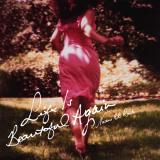
"Life Is Beautiful Again" is the debut album of Nadine El Roubi, a Sudanese-born, New York-based singer, rapper, songwriter, and multidisciplinary artist.
The album is the culmination of music created over the last three to four years. While the album can be categorized as primarily neo-soul, its true genre remains fluid — shaped by influences in hip-hop, neo-soul,and indie music.
Both melancholic and powerful, introspective and self-assured, Life Is Beautiful Again explores personal and external chaos, womanhood, belonging, and the determination to maintain faith through struggle. Thematically, it marks a shift from her previous work. Where earlier releases were overtly political, defiant, and outward-facing, this album turns inward. It is softer, more reflective, and rooted in the belief that vulnerability can be its own form of strength.
Written and recorded over three years across four cities, the album carries the imprint of many different versions of a Sudanese woman navigating change, loss, love, ambition, and growth, these songs became a way of making sense of the world.
At its core, the album’s message is simple: even through the ugliest of times, life will always become beautiful again.
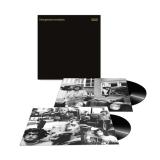
Eine komplett neue Vinyl-Version des Debütalbums von Genesis, die mit Zustimmung von Tony Banks, Peter Gabriel, Anthony Phillips und Mike Rutherford zusammengestellt wurde.
Neuer Stereo-Mix von Stephen W Tayler.
Inklusiv einer 12-inch Bonus EP mit neuen Mixen der Songs ‚A Winter’s Tale‘, ‚One Eyed Hound‘ und ‚Image Blown Out‘, plus einem bisher unveröffentlichtem Song ‚Visions Of Angels‘.
„From Genesis To Revelation“ erschien ursprünglich im März 1969 und war das Debütalbum von Genesis – der erste Schritt auf einem Weg, der der Band in den 1970er Jahren und darüber hinaus zu beachtlichem Erfolg und großer Anerkennung verhalf.
Diese Vinyl-Ausgabe ist die erste Neuauflage des Albums, die mit Zustimmung von Tony Banks, Peter Gabriel, Anthony Phillips und Mike Rutherford erstellt wurde. Sie enthält einen wunderbaren neuen Stereo-Mix von Stephen W. Tayler, der das Album in einer neuen Form präsentiert, wobei der Schwerpunkt stärker auf den Beiträgen der Band liegt und die Orchestrierungen der Originalmixe weniger im Vordergrund stehen. Diese neuen Mixe sind durchaus bemerkenswert und bieten den Genesis Fans einen völlig neuen Hörgenuss.
Eine komplett neue Vinyl-Version des Debütalbums von Genesis, die mit Zustimmung von Tony Banks, Peter Gabriel, Anthony Phillips und Mike Rutherford zusammengestellt wurde.
Neuer Stereo-Mix von Stephen W Tayler.
Inklusiv einer 12-inch Bonus EP mit neuen Mixen der Songs ‚A Winter’s Tale‘, ‚One Eyed Hound‘ und ‚Image Blown Out‘, plus einem bisher unveröffentlichtem Song ‚Visions Of Angels‘.
„From Genesis To Revelation“ erschien ursprünglich im März 1969 und war das Debütalbum von Genesis – der erste Schritt auf einem Weg, der der Band in den 1970er Jahren und darüber hinaus zu beachtlichem Erfolg und großer Anerkennung verhalf.
Diese Vinyl-Ausgabe ist die erste Neuauflage des Albums, die mit Zustimmung von Tony Banks, Peter Gabriel, Anthony Phillips und Mike Rutherford erstellt wurde. Sie enthält einen wunderbaren neuen Stereo-Mix von Stephen W. Tayler, der das Album in einer neuen Form präsentiert, wobei der Schwerpunkt stärker auf den Beiträgen der Band liegt und die Orchestrierungen der Originalmixe weniger im Vordergrund stehen. Diese neuen Mixe sind durchaus bemerkenswert und bieten den Genesis Fans einen völlig neuen Hörgenuss.
For nearly twenty years, Swedish singer-songwriter Kristian Matsson has played his way around the world as The Tallest Man on Earth, carving out a singular place in contemporary folk music. His discography has long been heard through the lens of the American folk tradition. But Just Beyond Endless Mountain, out October 9th on Anti- Records, quietly turns that perspective on its head. After returning to his native Dalarna in central Sweden, Matsson found himself listening to the music he had spent years trying to leave behind: the polskas, the old field recordings and the sounds of the local traditions that had surrounded him since childhood. The result is not a return to the past, but a step into new musical territory. Swedish folk music has reshaped his melodies, his voice, and the way he writes songs. The Tallest Man on Earth is back with his most deeply rooted album to date. Just Beyond Endless Mountain opens an unexpected new chapter in a career that has never settled for familiar ground.
For nearly twenty years, Swedish singer-songwriter Kristian Matsson has played his way around the world as The Tallest Man on Earth, carving out a singular place in contemporary folk music. His discography has long been heard through the lens of the American folk tradition. But Just Beyond Endless Mountain, out October 9th on Anti- Records, quietly turns that perspective on its head. After returning to his native Dalarna in central Sweden, Matsson found himself listening to the music he had spent years trying to leave behind: the polskas, the old field recordings and the sounds of the local traditions that had surrounded him since childhood. The result is not a return to the past, but a step into new musical territory. Swedish folk music has reshaped his melodies, his voice, and the way he writes songs. The Tallest Man on Earth is back with his most deeply rooted album to date. Just Beyond Endless Mountain opens an unexpected new chapter in a career that has never settled for familiar ground.
South Asian super-producers Lapgan and Baalti – the former a Madlib-disciple spinning hip-hop grooves out of dusty desi samples, the latter duo purveyors of intricately tapestried dance music – holed up in the California desert in early 2024 for a songwriting session to blend their complimentary styles. They ended up with several albums worth of club material built upon decades of Indian music history – floor fillers that move like early Four Tet meets The Avalanches. They’ve been teasing this material around the world during live sets – from Paris Fashion Week to Glastonbury, London Clubs to BK Warehouse parties, sessions at Lot Radio and Karachi Community Radio, and anywhere else they find an aux. The result has been endless ID requests for unreleased gems like “Ipa Ma” and “Lime Tikka”, calls which should finally be answered with the release of Threads.
Lapgan Bio
Chicago-based archivist and producer Lapgan has become renowned for his signature style: unearthing rare and forgotten Indian & Pakistani sounds and recontextualizing them into hip-hop and dance beats that evoke J Dilla and Madlib. He has cultivated a reputation for quietly revolutionary sample-work across his beloved solo projects History and Duniya Kya Hai, as well as LAFANDAR, his critically acclaimed team up with Heems (of Das Racist / Swet Shop Boys). He has worked with a range of artists from both the West (Your Old Droog, Saul Williams, Cool Calm Pete, Kool Keith, Open Mike Eagle, Blue, Quelle Chris) and the East (EXCISE DEPT, Baalti, Sid Sriram, Sid Vashi, Dynoman), and has been featured in global media including Pitchfork, FADER, Stereogum, Passion of the Weiss, Mixmag, Homegrown, and Vinyl Me, Please. Over the past year he has headlined clubs and performed at festivals across the world from Chicago and New York to London and India, and was personally invited to soundtrack back to back Paris Fashion Week shows for the similarly norm-shifting designer Kartik Research. In 2026 he will soundtrack his third Kartik Research runway show, as well as reissue Duniya Kya Hai for its five-year anniversary alongside a companion EP featuring remixes from peers and supporters Arushi Jain, Loris, Mera Bhai, Malkfunktion, and Maral.
Baalti Bio
Baalti makes electronic music built around rhythm, pressure, and collective release – weaving through leftfield bass, dusty hip hop, tripped out dub and raw house all while maintaining a throughline rooted in South Asian culture seen through the lens of a sweaty dancefloor. In the last year they have experienced a whirlwind rise and growing global recognition: from their EP Mela vividly evoking West Bengal’s sound system culture to their Tamil-cinema-infused filter-house project with Anish Kumar Stunt Doubles, in addition to wide-ranging collabs and remixes alongside DJ ADHD, Naya Beat, and A.R. RahmanThey have also built a reputation for their frenetic live show, with appearances at international festivals like Glastonbury and MELT, headlining shows across Australia and Europe and supporting influences turned peers like Four Tet and Disclosure across North America. Their explosive, percussion-heavy sets have been platformed by Rinse FM, NTS, The Lot Radio, Beats In Space, and Refuge Worldwide, and their music has been renowned by publications including Pitchfork, Bandcamp Daily, RA, and MixMag. Their forward momentum continues into 2026 with slated headline tours in India, Australia, and Asia along with appearances at Coachella, Party in the Paddock, Fvded in the Park, and We Out Here festivals.
Black Truffle is thrilled to announce a second volume of unheard concert performances from legendary Pakistani kyhal singer Salamat Ali Khan, recorded at Berlin’s Neue Nationalgalerie as part of the MetaMusik festival in 1974. Like the first volume, the immaculate recording by Michael Hönig (of krautrock legends Agitation Free) captures Khan performing a single extended raag in the company of Shaukat Hussein Khan on tabla and Hussein Bux Khan on harmonium. In addition to his stunningly inventive and moving vocal performance, Khan is heard accompanying himself on a specially tuned alpine zither (in place of the traditional swarmandal, an Indian style of zither). The lack of an underlying tanpura drone gives the music its characteristic floating quality, with the three instruments and voice masterfully dancing around one another as they sketch the outlines of this grand, 40-minute Raag Chandrakauns.
If anything, this epic performance of the late-night Raag Chandrakauns is even more seductively spacious and psychedelic than the music heard on the first volume. Obeying the traditional shape of Hindustani classical vocal music performance, a gradual rise in both pitch and rhythmic activity, the music hovers for twenty minutes in a reflective calm, the pulse only gently stated by the tabla while harmonium ornamentation and zither strums float by. In this meditative space, Khan gradually orients us to the contours of the raag, beginning with long notes at the bottom of his register. His improvisation at once builds with a stunningly firm sense of internal logic and seems liberated to explore every melodic and ornamental byway that comes up along the way. By the time we turn to the record’s second side, the music has grown into something far more frenetic, with virtuoso tabla passages at times occupying centre stage between Khan’s increasingly rhythmic melodic variations. Concluding with a sequence of unison tabla and voice passages of breathtaking complexity, the performance is met with rapturous applause. Arriving in a blue-toned variant of the first volume’s sleeve, with acclaimed musicologist Peter Pannke’s liner notes in the original German, Metamusik Festival Berlin ’74 Volume II is not to be missed. Essential listening not just for Hidustanti classic aficionados, but for anyone who needs reminding of the magic of collective music making in the moment.
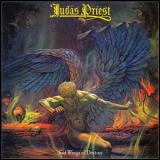
Dieses Reissue würdigt das 50-jährige Jubiläum eines der wegweisenden Alben des Heavy Metal. Original-Master von 1976, Half-Speed-Mastering, farbiges Vinyl, Original-Artwork, ursprüngliche gewünschte Tracklist. Diese zum 50. Jubiläum erscheinende Ausgabe von Sad Wings of Destiny wurde von den analogen Original-Masterbändern aus dem Jahr 1976 restauriert und stellt die definitive Version des Albums dar. Das ursprünglich 1976 veröffentlichte Album gilt als eines der einflussreichsten Alben in der Geschichte des Heavy Metal und prägte das Genre maßgeblich mit Klassikern wie "Victim of Changes", "The Ripper" und "Tyrant". Die in Zusammenarbeit mit Judas Priest entstandene Ausgabe wurde im Half-Speed-Mastering-Verfahren speziell für Vinyl bearbeitet. Dieses Verfahren bewahrt die Kraft und den Dynamikumfang der analogen Aufnahmen und sorgt zugleich für außergewöhnliche Klarheit und Tiefe. Die Wiedergabe erfolgt in der von der Band vorgesehenen Reihenfolge, beginnend mit "Prelude", wodurch das ursprüngliche Hörerlebnis wiederhergestellt wird. Die LP kommt dabei im ikonischen original Artwork als Galaxy Yellow/Orange Mix Vinyl, auch als klasse klingende CD wieder erhältlich. "Sad Wings of Destiny, ...simultaneously took heavy metal to new depths of darkness and new heights of technical precision. [...] Three songs rank as all-time metal classics, starting with the epic "Victim of Changes," which is blessed with an indelible main riff, a star-making vocal turn from Halford, explosive guitar work, and a tight focus that belies its nearly eight-minute length. "The Ripper" and "Tyrant," with their driving guitar riffs and concise construction, are the first seeds of what would flower into the New Wave of British Heavy Metal movement." -
Celebrate 40 years of Pixar storytelling through music with Pixar Hits, a collectible vinyl compilation featuring unforgettable songs and scores from some of Pixar's most celebrated films. Pressed on vibrant opaque yellow vinyl, this release brings together fan-favorite moments from Toy Story, Monsters,Inc., Finding Nemo, Cars, Up, Coco, Soul, Turning Red, and more.From Randy Newman's iconic "You've Got a Friend in Me" to the emotional storytelling of "Married Life" and modern favorites like "Nobody Like U" and "Steal the Show," this collection showcases the music that has helped define Pixar's most memorable adventures. A perfect addition for Disney and Pixar fans, vinyl collectors, and anyone looking to relive the magic through music