Melbourne / Naarm stronghold Butter Sessionsclock 15 years in the game with a trilogy of 12"s, sustaining their uncompromising streak of peak-form electronics. The family-style V/A binds friends, collaborators, former studio neighbours and DJ booth allies, capturing a label that exists as community as much as catalogue.
Disc Two lifts off with recurring contributor Rory McPike's first label outing as Rings Around Saturn, a blissed-out cosmic floater skimming the periphery. Booked in the early days of the label's formative Mania residency, Japanese don Gonno twists freestyle, techno and breaks into pure ecstasy, before the unerringly bold Jennifer Loveless spikes the punch with a hallucinatory mix of drums, disembodied voice and jazz club keys.
On the flip, Boorloo's Guy Contact rolls out Dance In The Grey, a shadowy prog churn pitched between new-romantic vocal sheen and EBM muscle, with Kate Miller completely rewiring the script on Sub Series E - a masterfully minimal, double-time meditation. suki presents his Sniper1 alias to close with a demonic body-jacking groove loaded for the system.
Whether taken alone or folded into the three-disc triptych, each instalment stands as a bag-ready constant, charged with Butter Sessions' curatorial finesse.
Search:rea
The union of Antwerp synthesist David Edren and Tokyo minimalist Hiroki Takahashi is a fit so natural as to feel preordained. Both traffic in subtle shades of contemplative electronics, marked by patience, space, and poetic restraint. And both have rich histories of curation and collaboration – Edren in the duo Spirit & Form alongside Bent Von Bent, and Takahashi as proprietor of the Kankyō record shop, as well as one fourth of cosmic ambient quartet UNKNOWN ME. Mutual fans of one another’s work, they began sharing stems in the latter half of 2020, which slowly blossomed into a collection of multi-hued compositions inspired by notions of connectivity and impermanence, translated for east and west: Flow | 流れ.
Opener “Dusk Decorum | 黄昏 礼節” maps the mood of what’s to come, elegantly pirouetting and percolating through an expanding vista of looming stars and half-light horizons. Takahashi describes Edren’s arrangements as evoking “a strange feel, something we haven't heard much of before.” The sensation is one of “in-betweenness,” a restless current whispering beneath the beauty, like seasons seen in time-lapse footage: flickering but infinite, transience turned permanent. Takahashi’s signature sculpture garden tones plot spiral patterns over which Edren cascades dazzling pointillist synthesizer coloration. The pieces veer between delicate and dilated, micro and macro, their aperture forever softly in flux.
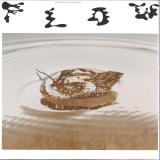
From the oscillating orchestral lullaby of “Stalactime | 鍾乳石時計” to the sweeping, sparkling dream sequence closer, “Shift Register | シフトレジスタ,” the album achieves the elusive goal of being more than the sum of its parts. This is music of rare air, elevated and amorphous, shimmering just out of reach. Though Edren and Takahashi have yet to cohabitate the same room in person (a fact that should be rectified soon by an astute festival booker), their palettes and poise are perfectly paired, twin fragilities woven into seven radiant and regenerative vibrational states. The cover design of a beatific, beaded leaf rippling on the surface of a hidden pond aptly captures the record’s muted majesty. Takahashi’s quiet pride is justified: “We are very happy with this time-consuming and carefully crafted work.”
Black Vinyl[11,72 €]
Incl. Andrade Remix
It's counter intuitive perhaps to react to the increasing noise of the world, not by adding to it, but by seeking quiet. Or something close to it.
Arrival's debut EP does just that - assembling immersive aural environments and delicately detailed backdrops - setting the scene for the perfectly pitched deeply melancholic meditations of Britain's least known and most valuable guitarist, Kevin McCormick.
The arrival of REAL, Vol. 1 marks a seismic shift in the global music landscape, uniting two of Nigeria’s most formidable forces for a project that defines the current zenith of Afrobeats. This collaborative effort sees Wizkid, the smooth-talking pioneer of the genre’s international expansion, and Asake, the "Mr. Money" whose neo-Fuji sound redefined the street-pop aesthetic, finding a middle ground between luxury and grit. The project serves as a sonic bridge between eras, blending the minimalist, high-fashion sensibilities of Wizkid’s recent output with the high-octane, choir-backed energy that has made Asake a household name. It is less of a competition and more of a conversation between two masters of their craft, exploring themes of spiritual gratitude, the weight of superstardom, and the unyielding pulse of Lagos.
With soundscapes both cinematic and deeply rhythmic, the production moves beyond standard club formulas, opting instead for a sophisticated fusion of traditional Yoruba percussion, shimmering synths, and the heavy, resonant log drums of Amapiano. Wizkid provides the effortless, melodic swagger that acts as the project's anchor, while Asake injects a spiritual intensity through his signature layered chanting and rapid-fire flows.
Ultimately, REAL, Vol. 1 is a celebration of authenticity in an era of global crossover. By stripping away the pressure of conforming to Western pop standards, Wizkid and Asake have created a body of work that is unapologetically Nigerian yet universally resonant. It captures the spirit of a city that never sleeps and the ambition of two artists who have conquered the world without losing their souls. This is more than just a collection of hits; it is a blueprint for the future of African music, proving that when Wizkid and Asake occupy the same frequency, the result is nothing short of legendary.
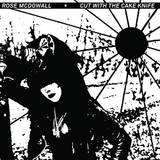
Cut The With The Cake Knife was recorded by Rose McDowall in 1988/89 following the break up of her group Strawberry Switchblade. Produced with the aid of several musicians in several studios, the album features songs written for the fabled second Strawberry Switchblade album. More importantly perhaps it showcases the honest, direct and life-affirming songs of one of the greatest unsung songwriters of the modern pop era at a tumultuous time in her career.
Tibet opens the set and could be one of the best pop songs you've never heard. The innate sadness of the songs' content - the loss of a friendship, impending sorrow - is heightened to heart-melting level by McDowall's pop nous and melodic sensibility. Choruses and hooks are everywhere on Cake Knife, from the outsider take on stadium 80s pop in Wings Of Heaven to the spiraling, ecstatic So Vicious, a glorious anthem that highlights the human fragility in McDowall's vocal performance, an instrument that has never lost the naïve purity it first exemplified in Strawberry Switchblade's early 80s recordings. The centerpiece of the album, the title-track, is the greatest Switchblade pop chart hit that never was. Like the veiled melancholy of her former group's hits, Cut With The Cake Knife hints at a darkness beneath the gloss, a darkness that saw McDowall delve into more esoteric territory with her subsequent recordings and collaborations. Cut With The Cake Knife serves as the bridge between the pop music McDowall had been making with her friends Jill Bryson, Lawrence from Felt and Primal Scream to what became a more extreme, deep sound informed by neo-folk and post industrial music.
Rose McDowall's role in the canon has always been one of an outsider. Beginning in Glasgow's East End in the avant proto-noise group The Poems, achieving fame briefly in the 80s and then disappearing into counter-cultural folklore, the emphasis in the internet-age has been skewed towards her image and cultural significance. Unseen to many, her solo work, her groups Sorrow and Spell and her collaborations with a whole host of underground luminaries have still touched lives. As McDowall elucidates: 'They're real sad songs, about real life. I've had people come up to me to say I'd connected with them and helped them. I remember a gig in America when we made a whole room cry. It was bizarre. A couple at the front of the stage started crying and then these two boys beside and suddenly everyone was crying. And I thought, "that's power."
Night School's issue of Cut With The Cake Knife includes unpublished photographs, extensive sleeve notes from Rose McDowall and 2 bonus tracks culled from the bootleg 7' 'Don't Fear The Reaper.' First vinyl pressing is Clear w/ Black swirl; 500 only / has DL card and booklet, with a poster
CD has extensive booklet and is packaged in anO-Card.
- A1: Psycho Shit
- A2: Dine N’dash
- A3: Lonely In The Future
- A4: Falling Out Of Love
- B1: Going To Babble On
- B2: Going Shopping
- B3: Liar’s Remorse
- B4: The Fruits Of Conquest
- B5: Pros And Cons
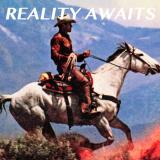
New music from The Strokes arrives now, beginning with a new song, “Going Shopping” released today. Produced by Rick Rubin, Reality Awaits is the 7th album from The Strokes. Full track list includes nine new songs — set for release on June 26.
Concrete City's two residents re-emerge with 'Serious Coin', the second long-player from label head DJ Superherb and long-time collaborator Ten Years Lost. Where their 2023 debut basked in heat-hazed hedonism, this follow-up sharpens the focus. At times deeper, and consistently drawing from the pair's shared language, Serious Coin is an unmissable entry in the Full Dose catalogue.
Across eight tracks, the duo lean further into their soulful instincts, balancing weighty low-end pressure with a distinctly human emotional warmth. Vocoded vocals, coalescing with dungeon synths, being carried by heavily swung rhythms represent a new strand in the pair's musical DNA.
The album captures the stillness of early morning city streets, yet still manages to push rhythmic elements forward. Barely-present samples and subtly detuned synths give the tracks a lived-in feel, as if they’ve already soundtracked a hundred late nights before reaching your speakers.
Like the first, this album has one foot firmly in dancefloor utility and the other in headphone introspection. Don't miss this dustier and deeper evolution to the Full Dose sound!
- A1: It Could Happen To You
- A2: I Want To Talk About You
- A3: Early Summer
- B1: Willow Weep For Me
- B2: Autumn Leaves
- B3: Scenery
His fresh, delicate playing has captivated countless listeners, and his debut album Scenery has come to be highly acclaimed around the world. Fukui, who began playing the piano at the age of 22, recorded this album when he was just 28. The earnest passion of his youth resonates throughout the music, gently stirring the emotions of those who listen. The spacious, confident swing of “It Could Happen To You”, the refreshing joy radiating from “Early Summer”, the late autumn coolness imbued in the title track “Scenery” each embodies the uniquely expansive yet nuanced “Hokkaido sensibility” that flowed naturally from Fukui’s artistry.
Within this album, the beautiful landscapes that Ryo Fukui crafted his Scenery continue to breathe eternally.
text by Yusuke Ogawa (UNIVERSOUNDS / DEEP JAZZ REALITY)
- A1: Eclypso
- A2: Relaxin' At Camarillo
- B1: Come Sunday
- B2: He's A Real Gone Guy
- C1: Stella By Starlight
- D1: Juju
- D2: Harlem Blues
This is joy beyond expectation the arrival of a new Ryo Fukui recording. Captured on June 26, 2004, this live session documents the ninth anniversary concert of Slowboat, the jazz club Fukui founded and considered his musical home. The trio features Ryo Fukui on piano, Benisuke Sakai on bass, and Yoshihito Eto on drums. Fukui was 56 years old at the time, and his playing is powerful and expansive, yet still marked by delicacy and razor sharp precision. In terms of energy, stamina, and technique, he was entering a true period of artistic maturity. He delivers the music of his beloved Phineas Newborn Jr. and Tommy Flanagan with depth and elegance, and approaches the works of Wayne Shorter—an early-life influence—with thrilling intensity. The performance captures Fukui at a moment of profound fulfillment, offering a truly compelling glimpse into his late career brilliance.
- 01: The Dark Forest
- 02: Nightshift Superstar
- 03: Shimmering Scars
- 04: Cryogen
- 05: Be With You
- 06: Hexagons
- 07: The Sickness In You & I
- 08: Unravelling
- 09: Hush
- 10: Space Debris
Muse are a culturally-attuned, genre-defying band who channel the anxieties of each era—technology, power, rebellion, and identity—into maximalist, stadium-ready rock that evolves with the times while staying unmistakably Muse.
Kicking off with new single “Be With You,” this next era of Muse is rooted in electronic experimentation and an insatiable curiosity. ‘The WOW! Signal’ represents a world of cosmic mystery, existential hope, and the exhilarating possibility of contact with something far greater than ourselves.
- 1: Jet Stream Heart
- 2: Revelations
- 3: Megalith
- 4: Glimmer
- 5: Blue Flame
- 6: Vendetta
- 7: Jaguar
- 8: Horizon
- 9: Waiting On The Echoes
- 10: Fantasy Realm
2026 Repress.
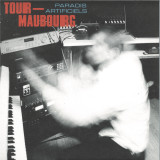
There is with Tour-Maubourg an eternal desire to translate the feeling of love into music. Sometimes cheerful, sometimes melancholy, always exhilarating, the producer, native of Brussels and expatriate in Paris, has continued for 3 years to attract the praise of his peers and the support of a growing audience. The man who was described by Trax Magazine upon the release of his 1st EP as ‘‘one of the most promising producers of the French house scene’’ has revealed himself in this hyperactive new scene to become one of its best standards.
After several EPs released in France on Pont Neuf, FHUO (ie. Folamour’s label), as well as Happiness Therapy or in England and Germany on FINA and Salin, Tour-Maubourg unveils his first album, Paradis Artificiels. The Parisian producer refers to Charles Baudelaire’s poem, to which he links his melancholy music, who wrote:
‘‘common sense tells us that the things of the earth exist very little, and that the true reality is only in the dreams’’.
If the producer’s first EPs were mainly focused on club music, Paradis Artificiels oscillates between the atmospheres that made the success of these previous releases and those of a studio album. Composed of both house songs and downtempo sound researches, always flirting with the jazz sounds that have made the fame of the producer, this first album invites us on a journey in the lineage of St Germain, Massive Attack or Nicolas Jaar.
UTTU hits the 200 mark (officially) with DJ Haus in the command module navigating wild meteor showers, solar flares and of course WORMHOLES - along for the ride are fellow cosmonauts Legowelt (under his amazing new ZORLOK COMPRESSOR alias), Berlin legend SHED & Tokyo's 'modular dub enthusiast' YASSOKIIBA - each reworking EneGiZer into unique outer reaches of the sonic cosmos - absorbing DUBSTEP, REGGAE, TEKNO, BREAKZ and HOUZ!"
In spring 2025, Abul Mogard and Rafael Anton Irisarri created the source material for their second album, Where Light Pauses in the Silence of the Sun, during a three-day residency at Morphine Raum in Berlin. Functioning as both recording studio and performance venue, the space has no stage, with the audience gathered around the performers. Working within an open framework, the duo reshaped the music each evening while recording the performances live to multitrack. Rotary speakers, modular synthesizers and bowed guitar formed the core of their sonic language, captured through a 1970s mixing console and microphones placed around the room.
Back in Mogard’s studio in Rome, the material was further crafted as motifs were stretched, fragments isolated, and tempos dissolved. Irisarri recorded additional guitar textures and treatments in New York, while passages recorded by Martina Bertoni and Andrea Burelli in Berlin reinforced the harmonic centres and brought breath, refinement and a new sensibility to their compositions. The process continued as Mogard’s layering and subtraction reassembled everyone’s parts into the final arrangement.
The album opens with “In the Eastern Wild,” building from a sparse outline into a monumental formation of low-frequency weight, its internal motion shaped by the rotating Leslie speaker. “Over the Domes” widens into a broader acoustic field, where sustained modular tones meet waves of softly plucked guitar. The music then turns inward with “A Blue Descent,” centred on Bertoni’s cello, whose growling timbre introduces a melancholic depth.
At the album’s centre, “In a Quiet Radiance” unfolds around a slow guitar ostinato, its luminous stillness opening into a more expansive and reflective state. Across its ten-minute span, Burelli’s violin lines and Bertoni’s lower cello phrases gradually surface, weaving through the harmonic field. Mogard brings Burelli’s processed voice to the fore, its emotive, operatic presence becoming one of the record’s pivotal moments. “Of Blessed Ages” suspends the sonic flow, shifting between parallel major and minor chords as lingering, slowly decaying melodies shape the music’s internal drift. The closing “Among Shadows” settles into a darker resonance as layered textures recede.
Mogard and Irisarri’s shared language balances restraint and maximalism. UK magazine Crack describes the music as “a tidal wave held in suspension,” while Dutch newspaper de Volkskrant writes, “What a colossal sound, and how this music strikes at the emotions.” Reflecting on the residency sessions, Irisarri recalls: “At moments I genuinely couldn’t tell if a sound was coming from me or from Abul. It stopped feeling like two people making decisions and began to feel like we were inside a system moving on its own."
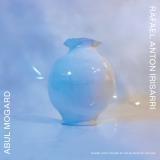
Marja de Sanctis’ cover artwork revisits the vessel sculpture from the duo’s first album, Impossibly Distant, Impossibly Close. There it appeared as raw, unfired clay. Here it has been fired in the kiln and finished with a glaze. Light gathers on its polished surface and spills into the surrounding space. As she explains, “I wanted to convey the idea of continuity within the duo, and the vessel became a kind of container for that idea. However, their music felt different this time, and with the collaboration of Martina and Andrea, I felt it should have a sleeker, softer, more glamorous look, very distant from the first raw appearance.” The transformation of the vessel from raw clay to fired form suggests a passage from immediacy toward permanence, mirroring the music’s gradual expansion.
In spring 2025, Abul Mogard and Rafael Anton Irisarri created the source material for their second album, Where Light Pauses in the Silence of the Sun, during a three-day residency at Morphine Raum in Berlin. Functioning as both recording studio and performance venue, the space has no stage, with the audience gathered around the performers. Working within an open framework, the duo reshaped the music each evening while recording the performances live to multitrack. Rotary speakers, modular synthesizers and bowed guitar formed the core of their sonic language, captured through a 1970s mixing console and microphones placed around the room.
Back in Mogard’s studio in Rome, the material was further crafted as motifs were stretched, fragments isolated, and tempos dissolved. Irisarri recorded additional guitar textures and treatments in New York, while passages recorded by Martina Bertoni and Andrea Burelli in Berlin reinforced the harmonic centres and brought breath, refinement and a new sensibility to their compositions. The process continued as Mogard’s layering and subtraction reassembled everyone’s parts into the final arrangement.
The album opens with “In the Eastern Wild,” building from a sparse outline into a monumental formation of low-frequency weight, its internal motion shaped by the rotating Leslie speaker. “Over the Domes” widens into a broader acoustic field, where sustained modular tones meet waves of softly plucked guitar. The music then turns inward with “A Blue Descent,” centred on Bertoni’s cello, whose growling timbre introduces a melancholic depth.
At the album’s centre, “In a Quiet Radiance” unfolds around a slow guitar ostinato, its luminous stillness opening into a more expansive and reflective state. Across its ten-minute span, Burelli’s violin lines and Bertoni’s lower cello phrases gradually surface, weaving through the harmonic field. Mogard brings Burelli’s processed voice to the fore, its emotive, operatic presence becoming one of the record’s pivotal moments. “Of Blessed Ages” suspends the sonic flow, shifting between parallel major and minor chords as lingering, slowly decaying melodies shape the music’s internal drift. The closing “Among Shadows” settles into a darker resonance as layered textures recede.
Mogard and Irisarri’s shared language balances restraint and maximalism. UK magazine Crack describes the music as “a tidal wave held in suspension,” while Dutch newspaper de Volkskrant writes, “What a colossal sound, and how this music strikes at the emotions.” Reflecting on the residency sessions, Irisarri recalls: “At moments I genuinely couldn’t tell if a sound was coming from me or from Abul. It stopped feeling like two people making decisions and began to feel like we were inside a system moving on its own."
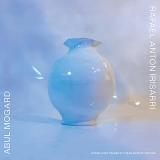
Marja de Sanctis’ cover artwork revisits the vessel sculpture from the duo’s first album, Impossibly Distant, Impossibly Close. There it appeared as raw, unfired clay. Here it has been fired in the kiln and finished with a glaze. Light gathers on its polished surface and spills into the surrounding space. As she explains, “I wanted to convey the idea of continuity within the duo, and the vessel became a kind of container for that idea. However, their music felt different this time, and with the collaboration of Martina and Andrea, I felt it should have a sleeker, softer, more glamorous look, very distant from the first raw appearance.” The transformation of the vessel from raw clay to fired form suggests a passage from immediacy toward permanence, mirroring the music’s gradual expansion.