YOUTH return with the debut album from Hazina Francia aka Tadleeh, chaining reticulated, sidewinding rhythms under gloaming scapes and pealing solo guitar licks.
Last spotted marshalling a mix for the now-defunct FACT series, Tadleeh’s previous productions landed on Haunter and more recently Nkisi’s label, Initiation, spanning reverberant downbeats and possessed cloud rap, a sound she further develops on this impressive full length debut. The 10 parts of ‘Lone’ sketch out a brooding worldview that takes the album format as an ideal canvas to fully portray her style of urbane ennui and gloom, bittersweet and depressive, but with a levity afforded by spatialised architecture.
With a clear sense of sorrow and a pull toward electronic music’s no-person’s-lands, she adapts animist techniques to tell a story “about loneliness and hidden places” in an attempt to work thru existential questions; “Am I still who I was before? Do I have the same energy and ambitions? Is this all still really me?” The results resonate with the sort of imaginative nostalgia navigated by fellow South European artists such as Christos Chondropoulos and Heith, and share a hauntological quality with Flora Yin-Wong’s works as much as Aïsha Devi’s summoning of ancient energies.
The wraithlike tumult of her intro gives way to reverberant dark ambient on ‘Blue (feat CTM)’, and spirit-gnawing, surprised tribalism in ‘Seekers’, whilst she pushes into screwed club murk on ‘Roads’ and the hot coal trampler ‘Barefoot’, before unleashing her darkest energies in the bombast of ‘Equality’, and channelling Loren Connors’ electric guitar nocturnes in ‘Homesick’, staking out grumbling downbeats shades away from Heith & Kareem Lotfy’s Ghost Lemurs in ‘Victim, perpetrator.’
Cerca:real d
2024 repress
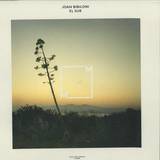
Staying on the Mediterranean coast for their third release, Music From Memory this time shift their attention to the work of Mallorcan musician Joan Bibiloni. TIP!
Primarily a guitarist, Bibiloni was creating music at an early age, releasing his first single at the tender age of 15. In his twenties he formed Spanish progrock outfits Zebra and Euterpe where he would meet Pepe Milan, the two of them becoming the bluesy folk duo 'Milan & Bibiloni'. Bibiloni himself would later go on to play with a number of luminary musicians such as Larry Coryell, Daevid Allen and John Cage to name but a few.
In 1982 Bibiloni set up his own label Blau in order to highlight the muchoverlooked work of musicians not only on his home island of Mallorca but across the Balearic Islands. In doing so he created a platform not only for
local talent but also for his own music to breathe a new life, much influenced by the landscape and life that surrounds the islands.
Whilst Bibiloni's first solo releases on his Blau imprint have stronger echoes of contemporary Jazz fusion of the time, it is on the album known as 'Una Vida Llarga I Tranquila' where Bibiloni really began to experiment with new sounds
and technologies; fusing tape loops, drum computers and synthesizers.
Taking these more electronic infused works as a departure point for the compilation and drawing on material from across his following five albums, 'El Sur' sets out to highlight Joan Bibiloni's unique ambient fusion and sun-drenched Mediterranean beach boogie.
Chelsea Wolfe has always been a conduit for a powerful energy, and while she has demonstrated a capacity to channel that somber beauty into a variety of forms, her gift as a songwriter is never more apparent than when she strips her songs down to a few key components. As a result, her solemn majesty and ominous elegance are more potent than ever on Birth of Violence.
There is a core element to Chelsea Wolfe’s music—a kind of urgent spin on America’s desolation blues—that’s existed throughout the entirety of her career. At the center, there has always been Wolfe’s woeful longing and beguiling gravity, though the framework for compositions has continuously evolved based on whatever resources were available. Her austere beginnings were gradually bolstered by electronics and filled out with full-band arrangements. The music became increasingly dense and more centered around live performances. Her latest album, Birth of Violence, is a return to the reclusive nature of her earlier recordings
“I’ve been in a state of constant motion for the past eight years or so; touring, moving, playing new stages, exploring new places and meeting new people—an incredible time of learning and growing as a musician and performer,” Wolfe says of the era leading up to Birth of Violence. “But after awhile, I was beginning to lose a part of myself. I needed to take some time away from the road to get my head straight, to learn to take better care of myself, and to write and record as much as I can while I have ‘Mercury in my hands,’ as a wise friend put it.“ Birth of Violence is the result of this step out of the limelight. The songs stem from humble beginnings—little more than Wolfe’s voice and her Taylor acoustic guitar. Her longtime musical collaborator Ben Chisholm recorded the songs on a makeshift studio and helped fill them out with his modern production treatments and the occasional auxiliary flourish from ongoing contributors Jess Gowrie (drums) and Ezra Buchla (viola).
The album opens with “The Mother Road,” a harrowing ode to Route 66 that immediately addresses Wolfe’s metaphoric white line fever. It explains the nature of the record—the impact of countless miles and perpetual exhaustion—and the desire to find the road back home, back to one’s roots. Songs like “Deranged for Rock & Roll” and “Highway” offers parallel examinations on the trials and tribulations of her journeys while the ghostly “When Anger Turns to Honey” serves as a rebuttal to self-appointed judges.
While the record touches upon tradition, it also exists in the present, addressing modern tragedies such as school shootings in the minor-key lullaby “Little Grave” and the poisoning of the planet on the dark wind-swept ballad “Erde.” But the record is at its most poignant when Wolfe withdraws into her own world of enigmatic and elusive autobiography. Much like Alan Ginsberg’s hallucinatory long-form poem Howl, the tracks “Dirt Universe” and “Birth of Violence” weave together specific references from her past into an esoteric overview of the state of mankind. Though the lyrical minutiae remain secret, the overall power of the language and delivery is bound to haunt the listener with both its grace and tension.
“These songs came to me in a whirlwind and I knew I needed to record them soon, and also really needed a break from the road,” Wolfe says. “I’ve spent the past few years looking for the feeling of home; looking for places that felt like home. The result of that humble approach yields Wolfe’s most devastating work to date.
European Headline tour confirming now for 2020. UK/EU Publicity handled by Lauren Barley at Rarely Unable. Immense support from Press, including coverage with NPR, Pitchfork, FADER, Vice, Revolver, Decibel, Under The Radar.
- A1: Why Oh Why Dub
- A2: Dub Larking
- A3: Zion Dub
- A4: Dub Money
- A5: A True Dub
- A6: Dub Guidance
- B1: Dub Say Who
- B2: Dub On My Mind
- B3: Love Of A Dub Band
- B4: Use This Dub
- B5: Dub Letter
- B6: Dub Angel
Horace Andy a.k.a.Sleepy must process one of the sweetest and most distinctive voices in reggae music. 1951 in Kingston Jamaica. He cut his first track in 1966 for producer George ‘Phil’ Pratt, a tune called ‘Black Man’s Country’. But it was four years later his star really began to shine when he joined the stable of Clement ‘Coxsone’ Dodd’s Studio One. It was Coxsone Dodd who renamed him Andy after another of his leading artists Bob Andy, such was his belief in Horace’s writing talent and singing abilities. Still only twenty years of age Horace used his falsetto talent to the fore and cut some impressive tracks at 13 Brentford Road, Studio One’s headquarters. Such reggae standards as ’Skylarking’, ‘Just Say Who’, ‘Love of a Women’ and ‘Something on my Mind’ to name but a few. The early 1970’s saw Horace due to political reasons move on to work with producer Bunny Lee, a move that suited his talents and beliefs, Horace being an early advocate to the Rastafarian faith.The tracks which he cut with Bunny, which we concentrate on here gave his songs a rootsy feel. The rhythms often cut at Channel ONE and Randy’s Studio17 and finalised at King Tubby’s, provided a fine backbone for Horace to recut some of his earlier classics, along side his newer songs also to become reggae standards. Like ‘Money Money’, ‘Zion Gate’ the great ‘You are my Angel’ and a version of The Heptones ‘My Guiding Star’. The power of these recordings were such that the earlier tracks like ‘Skylarking’ became hits a second time around.Proving that the ‘you can’t keep a good tune down’ mantra was alive and kicking… …A golden time for Horace and Reggae music in general… Horace would go on to work with other producers like Everton Da Silva in 1977 creating the ‘In the Light’ album and the New York based Lloyd ‘Wackies’ Barnes in the 1980’s for his ‘Dancehall Style’ recordings. Most recently his work with Massive Attack has brought his majestic voice full circle and back into the arena once more. Those ‘Massive’ recordings and this dub collection here seem to fit side by side. Horace’s distinctive vocal riding over the rhythms adding a magic as only he can .....
RESPECT JAH FLOYD.
FIRST OFFICIAL REISSUE OF ONE OF THE MOST SAMPLED TURKISH RECORDS IN 45 YEARS! SAMPLED BY RAP LEGENDS LIKE SCARFACE OF THE GETO BOYS. TURKISH PSYCHEDELIC MASTERPIECE FROM 1980
Licensed from "Warner Records Sweden" and remastered from original material in Warner Record's vaults by Shawn Joseph at Optimum Mastering Bristol. 180 gr heavyweight vinyl Manufactured in Optimal Berlin.
Recorded between Istanbul and Stockholm, it captures the era between Okay Temiz's Don Cherry Trio touring and his own band Oriental Wind's sensational debut.
Mentioned distinctive elements have elevated the record to 'cult' status among record collectors, sample enthusiasts, and diggers around the world.
By 1980, Okay Temiz had already embarked on a series of dynamic collaborations and sound experiences with Don Cherry as a member of the Don Cherry Trio. This period included a noteworthy summer in the early '70s at Dartmouth College in New Hampshire, hosted by Jon Appleton, a notable American composer and visionary in electro-acoustic music.
"During that summer, Jon asked me, 'What kind of sound do you have in mind?' I had already given this considerable thought, using a tape recorder to capture sound frequencies influenced by the moon's position. Jon Appleton's question made me think about the extension of 'Organic Music Theory,' which we were exploring with Don Cherry at the time."
In 1982, Okay Temiz recorded the most comprehensive answer to 'What is Turkish Jazz?' at the Montreux Jazz Festival (CAZLP 004) with his band Oriental Wind, featuring Bobo Stenson (of the Jan Garbarek - Bobo Stenson Quartet), Palle Danielsson (of the Peter Erskine European Trio), and Lennart Åberg (of the Scandinavia New Jazz Group).
In 1980, without fully realizing he was navigating between these two worlds, Okay Temiz entered Stockholm's renowned Metronome studios to record the 'sound in his mind' as a solo artist.
`Drummer of Two Worlds` is a star map of Okay Temiz's musical worlds. Blending elements from the grand piano to his handmade drums, and from the amplified Berimbau to his cowbell array, weaving Turkish rhythms like 9/8 and 7/8 with the universality of 4/4, it presents a unique sound narrative that resonates with the dimensions of a well-traveled mind."
Haluk Damar
Tillla is 19 year old prodigal piano player Mateo Davis, a graduate of Purcell (Tirzah, Mica Levi, Jacob Collier) & a polymath musician, producer & mixer.
Third Person is Tillla's debut EP, a 13 track sprawling opus the then-18-yr-old made alone in his bedroom on a modular synth and dodgy copy of Ableton. The musicianship, depth and technical creativity in this record really is something that should be noted.
Done and dusted! That could have been the motto of the WPBH series back when it started as an offshoot for sample-based house experiments by the core We Play House Recordings crew.
However, according to Discogs WPBH is NOT a real label, so who are we to invent mottos for imaginary labels?
But as we digress the music hits us hard and straight up. Uit De Hoogte brings us rawness...and then some. A touch of Dance Mania, a hint of smoothness, a dose of drum machine magic and a whole lot of attitude. Five tracks to stir up your dancefloor, your body and your soul. On a label that does not exist... How underground can one get?!
Coming up on WPH & related further in the year will be new material by Red D on his Red Basics outlet, more WPH U.S. Series and possibly also some stuff they don’t yet know about themselves.
Making his Dekmantel debut with a flourish of symphonic, transcendental techno, Sepehr takes us into a fictional metaphysical zone he calls the Genesis Domain. Over the past 10 years NYC-based Sepehr Alimagham’s versatile club music practice has taken in techno, D&B, electro, EBM and acid on a suite of scene-leading labels. This new EP builds on the pseudo-spirituality he explored on recent LP Fall From Grace with an exploration of an imagined space “where your reality can be reinvented at any given moment.”
On the A side, the title track sets the pace with a throbbing, sparkling-yet-spooky trip that allows a touch of trance into the mix, while ‘Delicate Senses’ explores snappier broken beat rhythms and edgy atmospherics with a distinctly moody outlook.
The mystical electro shades of ‘Twisted Solstice’ and ‘Planet Lonely’s melancholic 4/4 pastures strike a note between contemplative introspection and anthemic main stage energy. ‘Queen Of Demons’ is the consummate EP closer, leaning on brooding low end and snaking, intricate beats with a healthy dose of shimmering beauty up top.
Consistent with his versatile approach since day one, Sepehr proves any blend of tempos and rhythms can be folded into his vivid, evocative sound world — the results will always draw you in close until his vision becomes yours.
2025 Repress
Broc Recordz is thrilled to announce the imminent release of our latest album, Cosmos Giants!
This cosmic fusion is the result of an epic collaboration between maestro Janko Nilovic, JJ Whitefield of the Poets of Rhythm, and Igor Zhukovsky of the Soul Surfers. Together, they've crafted a musical universe where genre boundaries blur, giving way to a transcendent sonic experience.
Immerse yourself in a musical journey where funk, psyche, and soul intertwine to create something truly magical!
- A1: Welcome To Mathematics
- A2: Ten And A Hundred
- A3: Plus And Minus Five
- A4: Soft Mirrors
- A5: Colliding Clowns
- A6: Swaggering Cowboy
- A7: Plus And Minus Eight
- A8: Accelerating Athletes
- A9: Halving Rectangles
- A10: Myriad Mosaics
- A11: Shapely Patterns
- A12: Composite Cookbook
- A13: Agitated Banjo
- A14: Clocking The Day
- A15: Jumping Pyramids
- B1: Shadows In Four Aspects
- B2: Unitary Climb
- B3: Colossal Triangle Split
- B4: Apple Tree Angles
- B5: Child’s Angled Views
- B6: Old Seagull And Chips
- B7: Seaside Romp
- B8: Fair By The Sea
- B9: Tranquil Snail
- B14: Running Big And Wee
- B15: Take It Away
- B10: Masts And Nets
- B11: Numbered Rows
- B12: Slipping And Sliding
- B13: Perfect Postman
Limited black vinyl. Full colour sleeve with unseen pics of Ron Geesin in his studio doing maths stuff on the back.
Wow! So you’re telling me Ron Geesin made this kooky electro groovy score to a really progressive maths educational programme on Central TV in 1980 and it’s musically anarchic and amazing and it’s never been issued before? Until now. Wow again!!!! And there’s 30 tracks!!! Trunk Records we love you...
Basic Maths was the second educational TV Series for the Midlands-based ITV station for which I composed, played and recorded all music and noises. The first series, also for budding mathematicians in the 7-10 age group, was Leapfrog in 1978 produced by ATV (Associated Television): Basic Maths was for the newly-formed Central Television, the work spanning 1980-1981; both series were of twenty-eight parts.
The most worthy idea for both of these series was to project mathematics into life by means mainly of non-verbal sound and vision, with both animated and live action films, linked by two presenters, Fred Harris and Mary Waterhouse. In my role as Media Composer, I had had quite enough of voice overs, therefore music well under, so this fairly radical educational approach at the time encouraged my creative juices to run unhindered. Of course the sound had to do something with the picture and not just use it as a carrier for peacock display. It had to duet, play with and explain the visual content using novel and engaging techniques, so this involved the usual and sometimes intricate mathematical calculations which constantly exercised my already reasonable school maths.
Temples of Jura is proud to present ‘The Great Beyond’, the ninth studio album from Ilija Rudman. The concept of the album is the afterlife with words from Nikola Tesla, Slavoj Zizek, Jim Morrison, JF Kennedy, Charles De Gaulle, WH Auden, Azar Nafisi and Eleanor Roosevelt woven together to tell the story of ‘The Great Beyond’ and what may lie ahead for us all. The voice itself was created by Ai (let’s call him ERIC) and is set beautifully to music that has a timeless cinematic quality. Ilija only uses pure Analogue equipment in the creation of his music, resulting in a rich tapestry of basses, drums, chords and lead sounds. He’s been a prolific producer for over 20 years now with a discography that runs deep with more than 100 Vinyl EP releases and 8 studio albums, but we feel he’s reached the pinnacle with this concept album. We’ll leave the final word to ERIC “You gain strength, courage and confidence by every experience in which you really stop to look fear in the face.”
The music industry, once revered as a realm of artistic expression and creativity, has gradually transformed into a breeding ground for commercial nonsense. The rampant commercialization of music has resulted in an environment where genuine talent often takes a backseat to profit-driven motives. It’s high time we unmask and challenge the prevailing commercial bullshit that plagues the music scene today.
In the midst of all this commercial nonsense, it’s essential to recognize that there is a thriving underground and independent music scene where authenticity and creativity still flourish. Listeners can play a vital role in reshaping the music industry by supporting independent artists, seeking out diverse sounds, and rejecting the homogenized offerings of major labels.
To combat the commercial bullshit in the music scene, we must prioritize artistry over profit, diversity over uniformity, and creativity over conformity. Only by championing these values can we hope to revive the music industry as a bastion of authentic expression and genuine talent, free from the shackles of commercial exploitation.
A Paris resident of Minsk origin, Lina Filipovich’s ‘Music for an imaginary dancefloor’ explores the liminal space between club music and something altogether weirder, elusive, and abstract. Nervous, varied and amplified by various delays, the LP was written from improvisations on analogue synthesizers between June and December in 2022.
Atonal drones and atmospheric textures convey imagery of charcoal skies and silk tapestries; an idealised parallel world untethered from reality and bodies, towards something more ethereal – floating freely in red carpet lined corridors.
“In my previous works, I used pre-existing sounds to create new pieces. I was interested in the appropriation and decontextualization of materials from various traditions and contexts. However, in this album, I don't deconstruct; instead, I attempt to co-write with the machines, relying on their aesthetics and my imagination.”
Lina's LP trickles down the spine, pulse-raising and gooseflesh on tender skin, analogous to the aftermath of a sweaty fever dream. Speaking the language of spirits in the allure of the dark.
Press release by Asmi Shetty
In a world of announcements of announcements, Gatecreeper are firing no warning shots before dropping their new release. “I think the social media environment has just fried our attention spans,” vocalist Chase Mason says. “Trying to hold someone’s attention for two or three months with a typical album roll-out doesn’t seem feasible with everything else currently going on in the world.” That’s not the only reason An Unexpected Reality comes with no pre-release hype whatsoever. “It’s meant to be listened to as a whole, so we didn’t wanna break it up or release a couple songs ahead of time as ‘singles’ or whatever,” Mason clarifies. “We also didn’t wanna treat it like it’s our next full-length. Because it’s not.” Written, recorded and now released during the Covid-19 pandemic, An Unexpected Reality is Gatecreeper like you’ve never heard them before. Exploring both ends of the tempo spectrum, the release offers two opposing sides of the band’s musical personality. Side one consists of seven short, sharp shocks that have a total running time of less than seven minutes. Inspired by grind, punk and hardcore, tracks like “Starved,” “Rusted Gold” and “Amputation” are some of the fastest offerings the Arizona death metal squad has ever recorded. Side two is the exact opposite.
Audionaut sound adventurer Neil Stringfellow (aka Audio Obscura) makes a welcome return to Subexotic with his many-splendoured mixed media project Acid Field Recordings In Dub. Following years of avid field recording, Neil explains how it came about through a series of epiphanies: "It sort of started after I did a field recording introduction weekend workshop with the legend that is Chris Watson (the BBC wildlife team and ex-Cabaret Voltaire), just in terms of it being very inspirational and meeting like minded people. I've been sound recording for about 12 years now and have a good archive of sounds, and simply enjoy just listening and capturing the world. Since then over the years I've learned to really listen to the everyday soundscapes and as such I no longer walk down the street listening to a personal stereo anymore, the world can often be more exciting than music. A few memories of listening stick out which really helped form this album. I was walking up a hill in Norwich and a street cleaner was coming down pushing his cart, the broom attached to the cart but one end was bouncing up and down in the exact way a snare drum in a Dub reggae record might sound with the dub echo effect.. for a few seconds it was amazing and I stopped and stood still and just savoured the moment but of course did not have a microphone with me. Another time recording the dawn chorus in Lowestoft the chirping birds sounded intense coming from different trees and walking between the trees seemed to make the classic 303 acid squelch sound. part of this is in the middle section of the Babyloniacid track. Another time I was recording in a forest after a storm sitting under thick trees trying to keep the mics dry and the wind blowing the tops of the trees was like a swooshing synth line. I always liked the moments when the soundscapes felt like music and over time had a desire to marry music and field sounds together. Things really came together though when in summer 2022 I had a minor operation and was resting in bed after the operation, high on painkillers feeling quite spaced out. It was in the middle of a heat wave and the nurses had opened the ward windows, it was evening and I could see pink clouds but the sunset was out of view. I'd been listening to the Eno / Harmonia album and after that ended, I put on some Burial. I just lay there watching the clouds and the title Acid Field Recordings In Dub just came into my head... I could hear how the concept should be: made with field recordings, manipulating them and creating ambient soundscapes... dubby beats fractured in places and snatches of the acid 303. This is more or less what I wrote down that day and a few weeks later I started to create it... the process came easy and at first, I thought I'd need to spend some time making new extra field recordings but, to be honest, I has such an archive I pulled most of the sounds from that." Music, electronics & field recording by Neil Stringfellow. Design & mastering by Dan Seville. Test siren on 'Through Nuclear Skies' recorded by Marc Weidenbaum. Melodica on 'Hollowlands' played by Simon McCorry
Tempest Of Intimacy.
It's part of the nature of man to start with romance and build to a reality and this is what System Olympia has done with this new 4 track EP.
Love, longing, and the restlessness of the heart and body are the foundation forces of this record.
"Luce Rossa" presents itself as an emblem of a credo, an irreverent manifesto delivered via daring melodies and empowering vocals.
System Olympia inhabits a world in which human senses are mightier than religion and "Sanctified" feat Working Men's Club is an ecstatic and highly articulated fusion of passion and redemption - a new truth about reality, whispered to your ear with infinite sweetness.
Poetic desire as a force of beauty and vitality is all over Lenzuola Di Raso. Fantasising in between satin sheets on the hottest day of the year because art and imagination mean freedom from the solitude of the mind.
Mi Dimentico makes beauty out of melancholy, and nostalgia out of
the oscillation between resignation and demand.
Sanctified EP is naked skin over a sunken heart, and a soaring mind.
Castle Rat Into The Realm is the debut from the story-driven Medieval Fantasy Doom Metal band from Brooklyn, NY. known for its theatrical, action-packed live shows complete with full costumes, choreographed sword fighting, and fake blood.Rooted in the Doom tradition of Black Sabbath, playing massive riffs and Tony Iommi-influenced licks under Pinkerton's powerful vocals.
2024 Reissue
This is a very collectable EP within the breakbeat/hardcore scene with copies changing hands in excess of £350.00. Written by London born Mixmaster Max whose first step into public life was that of a breakdancer in the early 80’s when he was just a kid with a crew called The Back Street Warriors, showcasing his talents at the infamous Covent Garden jams of the same era. He then got into DJing and scratching and entered the DMC Championships and is credited as the inventor of the Topsy Turvey – stacking turntables on top of each other for a DJ routine!
As like many DJ’s around the late 80’s in London he gravitated out of hip hop and into the rave culture and from here he started to perform at many events such as Fantazia, The Pirate Club, Turnmills and the Hacienda in Manchester as well as a residency on a Friday night alongside John Saunderson - the General Manager of DMC - at Camden Palace. From his club work he started to play on the London pirates Kool FM and Centreforce and on legal stations Peoples Choice and Avenues FM.
These tracks are precursors to the soon to blossom jungle scene and highlight Max’s musical history with his creative sample play. You won’t find much more authentic hardcore than this EP, which really highlights the sound of London back in 1993.