Cerca:real farmer

Generi
Tutto
  • 1
Real Farmer - Compare What’s There LP

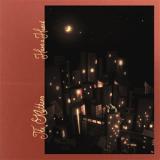
The debut album from Groningen scene stalwarts Real Farmer arrives, sprouting fully formed punk - equally melodic and breezy, and urgent and abrasive - evocative of a hybrid of The Jesus and Mary Chain and MC5. However, the band instil their addictively melodic noise with as much present-day influences and originality as there nods to The Stooges.

pre-ordina ora08.03.2024

dovrebbe essere pubblicato su 08.03.2024

25,00

Last In: 2026 years ago
Lukah & Real Bad Man - Temple Needs Water. Village Needs Peace

Temple Needs Water. Village Needs Peace." is a philosophical exploration into the essence of community, spirituality, and transformation.

This 15-track collaboration between producer Real Bad Man and Memphis rapper LUKAH medi-tates on themes of unity, leadership, sacrifice, and renewal. With contributions from billy woods (Armand Hammer), Adrian Utley (Portishead), and Shabaka Hutchings, this album ascends through personal and spiritual achievements, delves into the duality of knowledge, the unseen forces, and the cyclical nature of life and death.

The album reflects on growth, resilience, duty, ancestral wisdom, and the healing power of words, culminating in a celebration of inner peace and communal harmony. With a backbone of musically ambitious beats and soul-baring verses, this album carves its mark as the year's most enthralling listen.

In Stock

Disponibile in Stock e pronto per la spedizione

30,63
THEE OH SEES - CARRION CRAWLER / THE DREAM LP
  • 1: Carrion Crawler
  • 2: Contraption / Soul Desert
  • 3: Robber Barons
  • 4: Chem-Farmer
  • 5: Opposition
  • 6: The Dream
  • 7: Wrong Idea
  • 8: Crushed Grass
  • 9: Crack In Your Eye
  • 10: Heavy Doctor

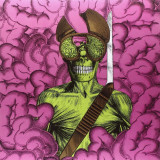
What's the first thing you think of when someone mentions Thee Oh Sees? Probably their riot-sparking live show, right? Visions of a guitar-chewing, melody-maiming John Dwyer careening across your cranium, rounded out by a wild-eyed wrecking crew that drives every last hook home like it's a nail in the coffin of what you thought it meant to make 21st-century rock 'n' roll? Yeah, that sounds about right. But it misses a more important point-how impossible Thee Oh Sees have been to pin down since Dwyer launched the project in the late '90s as a solo break from such sorely missed underground bands as Pink and Brown and Coachwhips. (While Dwyer still records songs on his own, Thee Oh Sees is now a five-piece featuring keyboardist / singer Brigid Dawson, guitarist Petey Dammit, drummer Mike Shoun and multi-instrumentalist / singer Lars Finberg.) That restlessness extends to everything from the towering, thirteen-minute title track of 2010's Warm Smile LP to the mercurial moods of 2008's The Master's Bedroom Is Worth Spending a Night In. Now, Thee Oh Sees chase the home-brewed symphonies of Castlemania with the scrappy, high-wire hooks of Carrion Crawler / The Dream. Originally envisioned as two EPs, it was cut live to tape in less than a week at Chris Woodhouse's Sacramento studio in June, reflecting the battering-ram bent of the band's live show better than any bootleg ever could. "As I'm sure most would agree," explains Dwyer, "Castlemania was more of a vocal tirade. This one's meant to pummel and throb." That it does, whether one blasts the slow, speaker-bruising build of "The Dream," the sunburnt organs and dovetailing guitars of "Crack in Your Eye" or the interstellar instrumental "Chem-Farmer," a perfect example of what happens when one takes a well-oiled machine-a gang of rabid road warriors, really-and adds a second, groove-locked drum set to the mix. To listen is to realize that Dwyer's music is as manic as the underground comic inclinations of his artwork; colorful and confusing in a way that's more than welcome. It's downright refreshing, like a slap in the face at 5:00 in the morning. Or, as Dwyer puts it, "You have to leave a mark somehow."

pre-ordina ora20.03.2026

dovrebbe essere pubblicato su 20.03.2026

32,35

Last In: 2026 years ago
Alexandra Spence - Your Whistle Tells Of Landscape

Developed over three years across residencies, tours, and periods of deep listening, “Your Whistle Tells of Landscape” finds Australian sound artist Alexandra Spence continuing her investigations into the perceptual entanglements of sound, place, memory, and imagination. Like much of the artist’s work, it unfolds at the liminal edge between the real and the imagined — between what is heard and what is remembered.

Composed from a constellation of materials gathered across sites and seasons — snowscapes recorded in Vancouver, insect choruses from a Sydney backyard, ceramic fragments unearthed while mudlarking with tinysound — it renders an intimate cartography of experience: one shaped equally by ecological resonance and internal drift. Each piece traces a kind of imaginary geography, where sonic ephemera become proxies for topography, weather, or myth.

The album is informed by time spent at EMS (Stockholm) and MESS (Melbourne), where Spence deepened her engagement with microtonality and tuned feedback systems, and by dialogues with sympathetic artists such as Tashi Wada and Patrick Farmer. Sound materials were sourced from Serge Modular systems, a custom lyre built by Tim Wall, amplified objects, handmade electronics, and Spence’s own field recordings captured within rockpools, beneath sand, and among a flock of sheep in the French Pyrenees. On “Magenta,” a collaboration with Delphine Dora, the domestic and mythic intertwine, as layers of voice, environmental recordings, and Halldorophone feedback drift in and out of one another like overlapping weather systems.

Despite its diverse material palette, the album resists spectacle or accumulation. Instead, it moves with a quiet sense of continuity and a rich interiority — less a sequence of compositions than a set of situated attunements. Across its duration, sounds seem to murmur, glint, or hover right at the edge of presence, invoking a listening practice that is as much about orientation as it is about reception. These are pieces not simply about place, but of place — etched with the grains of time, vibration, and breath.

pre-ordina ora17.10.2025

dovrebbe essere pubblicato su 17.10.2025

22,27

Last In: 2026 years ago
LONGHEADS - LAYERS OF WAX LP

Psych-rock band Longheads are set to release their debut album, Layers of Wax, after recently signing with Stolen Body Records. This seven-track album delves deep into the realms of stoner and doom, all while retaining the signature psychedelic sound that fans have come to love from their first two EPs. Following the success of their acclaimed second EP, Mars Doesn’t Feel Like Home Anymore, Layers of Wax marks a significant evolution in the band's sound. Listeners can expect a more polished and mature sound that still captures the energy that propelled their previous EP to prominence within the London psych scene. The first single from the album, "Deathcap Farmer Part Two," will be released alongside a psychedelic, space-faring music video. This track showcases the band's continued experimentation with a 9/4 time signature, a technique they began exploring on the title track of their previous EP, Mars Doesn’t Feel Like Home Anymore.

pre-ordina ora08.11.2024

dovrebbe essere pubblicato su 08.11.2024

31,51

Last In: 2026 years ago
JENNIFER CASTLE - Camelot

Camelot, the legendary seat of King Arthur's court in Early Middle Ages Britain, was probably not a real place. A corruption of the name of a real Romano-Briton city, the word "Camelot" accumulated symbolic, mythic resonances over centuries, until achieving its present usage as a near-synonym of "utopia." In the mid-20th century alone, Camelot inspired an explosion of representations and appropriations, among them the violent, affectless Arthurian court of Robert Bresson's 1974 film Lancelot du Lac and the absurdist iteration of Monty Python's 1975 Holy Grail, both of which feature armored knights erupting into fountains of blood; the mystical Welsh world of novelist John Cowper Powys's profoundly weird 1951 novel Porius, with its Roman cults, wizards and witches, and wanton giants; and the nationalist nostalgia of President John F. Kennedy's White House. Unsurprisingly there are fewer Camelots in more recent memory. Camelot, Canadian songwriter Jennifer Castle's extraordinary, moving 2024 chronicle of the artist in early middle age, charts a realer, more rooted, and more metaphorical place than the fabled Camelot of the Early Middle Ages (or its myriad depictions), but it too is a space more psychic than physical. In Castle's Camelot, the fantastic interpenetrates the mundane, and the Grail, if there is one, distills everyday experience into art and art into faith, subliming terrestrial concerns into sublime celestial prayers to Mother Nature, and to the unfolding process of perfecting imperfection in one's own nature. Co-produced by Jennifer and longtime collaborator Jeff McMurrich, her seventh record is at once her most monumental and unguarded to date, demonstrating a mastery of rendering her verse and melodies alike with crisply poignant economy. For all their pointedly plainspoken lyrical detail and exhilarating full-band musical flourishes, these songs sound inevitable, eternal as morning devotions. "Back in Camelot," she sings on the lilting, vulnerable title track, "I really learned a lot / circles in the crops and / sky-high geometry." The album opens with a candid admission of sleeping "in the unfinished basement," an embarrassing joke that comes true. But the dreamer is redeemed by dreaming, setting sail in her airborne bed above "sirens and desert deities." If she questions her own agency_whether she is "wishing stones were standing" or just "pissing in the wind"_it does not diminish the ineffable existential jolt of such signs and wonders. This abiding tension between belief and doubt, magic and pragmatism, self and other, sacred and profane, and even, arguably, paganism and monotheism, suffuses these ten songs, which limn an interior landscape shot through with sunstriped shadows of "multi-felt dimensions" both mystical and quotidian. The epic scale and transport of "Camelot," with its swooning strings, gives way dramatically to "Some Friends," an acoustic-guitar-and-vocals meditation in miniature on Janus-faced friends and the lunar and solar temperatures of their promises_"bright and beaming verses" versus hot curses_which recalls her minimalist last album, 2020's achingly intimate Monarch Season. (In a symmetrical sequencing gesture, the penultimate track, the incantatory "Earthsong," bookends the central six with a similarly spare solo performance and coiled chord progression, this time an ambiguous appeal to _ a wounded lover? a wounded saint? our wounded planet?) Those whom "Trust" accuses of treacherous oaths spit through "gilded and golden tooth"_cynics, critics, hypocrites, gurus, scientists, doctors, lovers, government, the so-called entertainment industry_sow uncertainty that can infect the artist, as in "Louis": "What's that dance / and can it be done? What's that song / and can it be sung?" Answering affirmatively are "Lucky #8," an irrepressible ode to dancing as a bulwark against the "tidal pools of pain" and the "theory of collapse," and "Full Moon in Leo," which finds the narrator dancing around the house with a broom, wearing nothing but her underwear and "big hair." But the central question remains: who can we trust, and at what cost faith, in art or angels or otherwise? Castle's confidence in her collaborators is the cornerstone of Camelot. Carl Didur (piano and keys), Evan Cartwright (drums and percussion), and steadfast sideman Mike Smith (bass) comprise a rhythm section of exquisite delicacy and depth. This fundamental trio anchors the airiness of regular backing vocalists Victoria Cheong and Isla Craig and frames the guitars of Castle, McMurrich, and Paul Mortimer (and on "Lucky #8," special guest Cass McCombs). Reprising his decennial role on Castle's beloved 2014 Pink City, Owen Pallett arranged the strings for Estonia's FAMES Skopje Studio Orchestra. On the ravishing country-soul ballad "Blowing Kisses"_Pallett's crowning achievement here, which can be heard in its entirety in the penultimate episode of the third season of FX's The Bear_Jennifer contemplates time and presence, love and prayer_and how songwriting and poetry both manifest and limit all four dimensions: "No words to fumble with / I'm not a beggar to language any longer." Such rare moments of speechlessness_"I'm so fucking honoured," she bluntly proclaims_suggest a state "only a god could come up with." (If Camelot affirms Castle as one of the great song-poets of her generation, she is not immune to the despairing linguistic beggary that plagues all writers.) Camelot evinces a thoroughgoing faith not only in the natural world_including human bodies, which can, miraculously, dance and swim and bleed and embrace and birth_but also in our interpretations of and interventions in it: the "charts and diagrams" of "Lucky #8," a daydreamt billboard on Fairfax Ave. in LA in "Full Moon in Leo," the bloody invocations of the organ-stained "Mary Miracle," and all manner of water worship, rivers in particular. (Notably, Jennifer has worked as a farmer and a doula.) The album ends with "Fractal Canyon"'s repeated, exalted insistence that she's "not alone here." But where is here? The word "utopia" itself constitutes a pun, indicating in its ambiguous first syllable both the Greek "eutopia," or "good-place"_the facet most remembered today_and "outopia," or "no-place," a negative, impossible geography of the mind. Utopia, like its metonym Camelot, is imaginary. Or as fellow Canadian songwriter Neil Young once sang, "Everyone knows this is nowhere." "Can you see how I'd be tempted," Castle asks out of nowhere, held in the mystery, "to pretend I'm not alone and let the memory bend?"

pre-ordina ora01.11.2024

dovrebbe essere pubblicato su 01.11.2024

23,49

Last In: 2026 years ago
Jennifer Castle - Camelot	LP

. For Fans Of: The Weather Station, Weyes Blood, Adrianne Lenker, Phoebe Bridgers, Joan Shelley, Lana Del Rey, Cass McCombs, Angel Olsen & Neil Young. Camelot, the legendary seat of King Arthur’s court in Early Middle Ages Britain, was probably not a real place. A corruption of the name of a real Romano-Briton city, the word “Camelot” accumulated symbolic, mythic resonances over centuries, until achieving its present usage as a near-synonym of “utopia.” In the mid-20th century alone, Camelot inspired an explosion of representations and appropriations, among them the violent, affectless Arthurian court of Robert Bresson’s 1974 film Lancelot du Lac and the absurdist iteration of Monty Python’s 1975 Holy Grail, both of which feature armoured knights erupting into fountains of blood; the mystical Welsh world of novelist John Cowper Powys’s profoundly weird 1951 novel Porius, with its Roman cults, wizards and witches, and wanton giants; and the nationalist nostalgia of President John F. Kennedy’s White House. Unsurprisingly there are fewer Camelots in more recent memory. Camelot, Canadian songwriter Jennifer Castle’s extraordinary, moving 2024 chronicle of the artist in early middle age, charts a realer, more rooted, and more metaphorical place than the fabled Camelot of the Early Middle Ages (or its myriad depictions), but it too is a space more psychic than physical. In Castle’s Camelot, the fantastic interpenetrates the mundane, and the Grail, if there is one, distills everyday experience into art and art into faith, subliming terrestrial concerns into sublime celestial prayers to Mother Nature, and to the unfolding process of perfecting imperfection in one’s own nature. Co-produced by Jennifer and longtime collaborator Jeff McMurrich, her seventh record is at once her most monumental and unguarded to date, demonstrating a mastery of rendering her verse and melodies alike with crisply poignant economy. For all their pointedly plainspoken lyrical detail and exhilarating full-band musical flourishes, these songs sound inevitable, eternal as morning devotions. “Back in Camelot,” she sings on the lilting, vulnerable title track, “I really learned a lot / circles in the crops and / sky-high geometry.” The album opens with a candid admission of sleeping “in the unfinished basement,” an embarrassing joke that comes true. But the dreamer is redeemed by dreaming, setting sail in her airborne bed above “sirens and desert deities.” If she questions her own agency whether she is “wishing stones were standing” or just “pissing in the wind” it does not diminish the ineffable existential jolt of such signs and wonders. This abiding tension between belief and doubt, magic and pragmatism, self and other, sacred and profane, and even, arguably, paganism and monotheism, suffuses these ten songs, which limn an interior landscape shot through with sunstriped shadows of “multi-felt dimensions” both mystical and quotidian. The epic scale and transport of “Camelot,” with its swooning strings, gives way dramatically to “Some Friends,” an acoustic-guitar-and-vocals meditation in miniature on Janus-faced friends and the lunar and solar temperatures of their promises—“bright and beaming verses” versus hot curses which recalls her minimalist last album, 2020’s achingly intimate Monarch Season. (In a symmetrical sequencing gesture, the penultimate track, the incantatory “Earthsong,” bookends the central six with a similarly spare solo performance and coiled chord progression, this time an ambiguous appeal to … a wounded lover? a wounded saint? our wounded planet?). Those whom “Trust” accuses of treacherous oaths spit through “gilded and golden tooth” cynics, critics, hypocrites, gurus, scientists, doctors, lovers, government, the so-called entertainment industry sow uncertainty that can infect the artist, as in “Louis”: “What’s that dance / and can it be done? What’s that song / and can it be sung?” Answering affirmatively are “Lucky #8,” an irrepressible ode to dancing as a bulwark against the “tidal pools of pain” and the “theory of collapse,” and “Full Moon in Leo,” which finds the narrator dancing around the house with a broom, wearing nothing but her underwear and “big hair.” But the central question remains: who can we trust, and at what cost faith, in art or angels or otherwise? Castle’s confidence in her collaborators is the cornerstone of Camelot. Carl Didur (piano and keys), Evan Cartwright (drums and percussion), and steadfast sideman Mike Smith (bass) comprise a rhythm section of exquisite delicacy and depth. This fundamental trio anchors the airiness of regular backing vocalists Victoria Cheong and Isla Craig and frames the guitars of Castle, McMurrich, and Paul Mortimer (and on “Lucky #8,” special guest Cass McCombs). Reprising his decennial role on Castle’s beloved 2014 Pink City, Owen Pallett arranged the strings for Estonia’s FAMES Skopje Studio Orchestra. On the ravishing country-soul ballad “Blowing Kisses” Pallett’s crowning achievement here, which can be heard in its entirety in the penultimate episode of the third season of FX’s The Bear Jennifer contemplates time and presence, love and prayer and how songwriting and poetry both manifest and limit all four dimensions: “No words to fumble with / I’m not a beggar to language any longer.” Such rare moments of speechlessness “I’m so fucking honoured,” she bluntly proclaims suggest a state “only a god could come up with.” (If Camelot affirms Castle as one of the great song-poets of her generation, she is not immune to the despairing linguistic beggary that plagues all writers.) Camelot evinces a thoroughgoing faith not only in the natural world including human bodies, which can, miraculously, dance and swim and bleed and embrace and birth but also in our interpretations of and interventions in it: the “charts and diagrams” of “Lucky #8,” a daydreamt billboard on Fairfax Ave. in LA in “Full Moon in Leo,” the bloody invocations of the organ-stained “Mary Miracle,” and all manner of water worship, rivers in particular. (Notably, Jennifer has worked as a farmer and a doula.) The album ends with “Fractal Canyon”s repeated, exalted insistence that she’s “not alone here.” But where is here? The word “utopia” itself constitutes a pun, indicating in its ambiguous first syllable both the Greek “eutopia,” or “good-place” the facet most remembered today and “outopia,” or “no-place,” a negative, impossible geography of the mind. Utopia, like its metonym Camelot, is imaginary

pre-ordina ora01.11.2024

dovrebbe essere pubblicato su 01.11.2024

28,36

Last In: 2026 years ago
MAIBAUM - SUMER IS ICUMEN IN LP

Sumer Is Icumen In is Quentin Thirionet's (Dhavali Giri, Pairi Daeza) debut album. Still, his musical escapades are vast and varied, based almost entirely on improvisation and live recordings, of which he occasionally distributes tapes without further information. Elusive to categorization and identification, unwilling to fix his musical activity under a stable pseudonym, his projects have ranged from gypsy jazz guitar swings, French traditional songs from Auvergne, and various experimental collaborations. Increasingly closer to electronic instrumentation, he crafted what Belgian label KRAAK presents here as Maibaum, his first ever solo output. As the title goes, this may be a maypole on which his multicolored sonic visions spring about.

Former rope access worker and currently a farmer of organic greens, Thirionet lives up to these lines of work as a musician. He assembles precisely what seems like a subtle balance between high manmade structures and soft fertilized soils; a high voltage pylon placed in a biotic landscape. It's all an even blend, spontaneous and steady, but this contraption comes from profound considerations. "I chose these tracks among many others," says Quentin, "because I heard the melodies all the time in my mind, and because I cried while playing them without really understanding why."
Armed with nothing more than a blackbox, a sequencer, a freeze pedal, and a tape player, Thirionet orchestrates a vivid rite of polished futures. At times reminiscent of Hans-Joachim Roedelius' enveloping arrangements, Maibaum's ambiances rely on mild repetitive patterns subsequently textured by prickling sprouts, mechanic dislocations and revamps that stoke and brighten the stirring motions. Jim O'Rourke's I'm Happy and I'm Singing comes to mind in terms of its detailed and prismatic nature, but Sumer Is Incumen In has its particular narrative. It's a tale of regeneration, of spring's delicate procedures and allure, a celebration of gracious and fortunate junctions between nature and machinery.

The album unfolds like a massive engine being made flesh to drift along the ether of a sultry land. The terrain turns pleasant and fertile in the title track; the colors and melodies of May start to unravel. Chromatic columns rise and define the scenery's depth of field breeding a synesthetic stream between crystal lights and warbling organisms. Grande Albero Buono Magico Uoma's brisk kaleidoscopic arpeggios sound like scanning a tree's litmus foliage. Then Ciguri takes us back to the foggy swamp of the beginning but is suddenly lit by an insect’s labyrinthine roundabout. The Jeweled Grid is a poem Quanta Qualia's lustrous metallic voice recites as a report of the album's phenomena. "Shiny revelations jump out. Pearls of thought flicker about." Images from within that distill to swirl around among us. The thicket dissolves as the album concludes calmly in Le Concept De Chien N'aboie Pas. Swaying under sieved solar light, leaves and branches tingle until the winds grow weak. All the warm creatures gathered along the way, and all those who danced around the maypole's splendid equilibrium now withdraw, folding up small to foster rebirth once again.

José Badía Berner

pre-ordina ora01.08.2024

dovrebbe essere pubblicato su 01.08.2024

21,81

Last In: 2026 years ago
UNICORN - BLUE PINE TREES LP

Beginning in the mid-1960s as a covers band, the group that came to be Unicorn soon determined that original material was the way to go, and after being inspired by a Crosby, Stills and Nash album, their particular brand of enlightened folk rock tinged with country shades yielded a contract with Transatlantic for their 1971 debut. Fast forward to 1974 and Blue Pine Trees finds the band at their finest with sweeping harmonies and bluegrass tinges, and with Pink Floyd’s David Gilmour in the producer’s chair, all of their glorious potential is realised on this lost gem of an album that is fully ripe for rediscovery. A truly great work!

pre-ordina ora01.07.2024

dovrebbe essere pubblicato su 01.07.2024

21,81

Last In: 2026 years ago
Cedar Walton - Mobius

Cedar Walton

Mobius

12inchBEWITH150LP
Be With Records
22.04.2024

Don't judge a book by its cover. Judge a record by its cover.

And, perhaps, its title.

Cedar Walton's Mobius is as outrageously, disorientatingly brilliant as the stunning jacket design, featuring the legendary jazz pianist morphing into a mobius strip, set against a beautiful sky filled with cumulus clouds. A proper jazz-funk fusion slapfest, Mobius is a stellar electric set from - essentially - one *hell* of a SUPERBAND.

Yes, in addition to Walton's Fender Rhodes wizardry, Mobius is elevated by Ryo Kawasaki's stinging electric guitar, pristinely clear vocals by Adrienne Albert and Lani Groves, rootsy percussion by Ray Mantilla and Omar Clay, alto and baritone from Charles Davis, trumpet from Roy Burrowes, Gordon Edwards on bass and Frank Foster's tenor sax. Oh and did we mention STEVE GADD ON DRUMS?!?!

Gem after gem of looping, bliss-inducing gold, it's an incredibly revelatory album. It presents a thrilling synthesis of R&B, funk, blues and hard bop (with a hint of rock), all driven by an idiosyncratic electronic keyboard. Walton, a giant in the jazz world, got quite the workout every time he played, from piano to arp synthesizer to clarinet to electric piano to mini-moog and back again.

Mobius was Cedar Walton's debut for RCA in 1975. The versatile artist confirmed his abilities as a player, composer, interpreter and arranger with this stunning record, and his own bright compositions offered a springboard for the improvisations of the different soloists. Coltrane's "Blue Trane" is the first classic to be given the funkafied Mobius treatment, Ryo Kawasaki let loose all over neck-snapping Gadd-drum gold before the horns take a fiery turn and subsequently give way to Cedar's virtuosity. A sparkling b-boy break version of Thelonious Monk's "Off Minor" (featuring an absolutely *fire* solo from Walton) really sets proceedings alight. Of the three original pieces, the shuffling, percussive power of "Soho" is just absolutely mind bending Latin-influenced jazzy soul whilst the mellow vibes of "The Maestro" bring elegant, sumptuous soul. And then there's the effortlessly funky "Road Island Red". Just too, too good.

Cedar Walton was born in Dallas, Texas, on January 17, 1934 and began his professional career in 1959 when he began touring for several years with the J.J. Johnson Quintet. He later joined the Art Farmer-Benny Golson Jazztet and then Art Blakey's Jazz Messengers. Pretty solid credentials, right? While based in New York City, Cedar played with such luminaries as Donald Byrd, Eddie Harris, Blue Mitchell, Kenny Dorham, Lee Morgan, Freddie Hubbard, Jimmy Heath and Milt Jackson. Without question, he was one of the most complete and gifted musicians of his time and Mobius provides proof of that. The fresh, danceable tracks, all firmly rooted in the living tradition of blues and gospel, are skilfully presented by a master who enjoyed keeping abreast of contemporary tastes and was always keen to renew his language.

As the album notes state: “Mobius, which is the theoretical shape of the infinite universe, makes use of the most modern recording techniques and synthesizers. We mastered and mixed so that it’s hotter than the competition, which should help radio play and in-store demonstration.” Indeed. Mobius is really gorgeous mid-70s fusion, ranging from the funky to the ecstatic. It's an absolute MONSTER that will completely blow you away; and, yes, it's as wild and hypnotic as the cover. The audio for Mobius has been carefully remastered by Be With regular Simon Francis, ensuring it sounds better than ever. Cicely Balston's expert skills have made sure nothing is lost in the cut whilst the records have been pressed to the highest possible standard at Record Industry in Holland. The original, iconic sleeve has been restored here at Be With HQ as the finishing touch to this long overdue re-issue.

non in magazzino

Ordina ora e ordineremo l'articolo per te presso il nostro fornitore.

24,79

Last In: 23 months ago
GOMBLOH - SEKAR MAYHANG LP

Gombloh’s forgotten masterpiece

What if you have Brian Wilson and Bruce Springsteen rolled into one? And what if he came of age as an poor buskers in in Surabaya, Indonesia, but then summoned enough strength to record six albums that flew in the face of everyone in the country’s rock scene back in the early 1980s?

Genius, be they Brian Wilson or Soedjarwoto “Soemarsono” Gombloh, don’t conform to rules written for us mere mortals. They have their own way of doing things and in the case of Gombloh, writing music, conducting recording session and spending cash from his music, must be conducted on his own terms and his terms only. Studio time was expensive back in the early 1980s, yet Gombloh could be three-hour late for his session, and while engineers, session musicians and producers were jittery about the prospect of another botched session, Gombloh took his time for a nap before the recording begun.

Yet, some of his greatest works came into being in the wake of this napping session. Recording session for Sekar Mayang is no exception, despite the fact there’s foreboding sense of doom with Gombloh being unsure about the possibility of selling enough units to help his label break even. This is, after all, this is his last record with his band Lemon Tree’s. No one knew that Gombloh was operating with all his cylinders running and what came out of this Indra Record session, in the waning days of 1980, were some of the best compositions ever committed to magnetic tapes (to wax, if now you’re holding this on vinyl).

This is Gombloh at the peak of his creative genius. You can argue that his debut album Nadia & Atmospheer (what’s with the spelling mistake?) is the most sprawling and complex album (both sonically and thematically), but Sekar Mayang certainly had the best songs and I can make the argument that this album’s 10 songs are strong contenders for biggest hits in blues, country, psychedelic rock charts. “Prahoro & Prahoro” is one of those impossible song which appears to have sprung from a bottomless well of inspiration, encompassing King Crimson’s sprawling epic, Deep Purple’s deepest blues and Genesis’ most progressive tendencies. Or “Sekaring Jagat”, which begins as Lennon-McCartney lullaby before launching a thousand ships traveling to the end of the rainbow with children choir singing heavenly melodies backed by droning harpsichord and synclavier, while a buzzing Hammond B3 tightly locks with Gombloh’s guitar strumming.

For many of his fans, Gombloh is known as generous man of the people. A Robin Hood type if you please. He spent his royalty checks to buy foods for beggars and buskers and dish out some more to buy undergarments for Surabaya’s prostitutes. In Sekar Mayang, Gombloh went full Springsteen mode in “Mitra Becakan,” a social commentary that cut so deep you can end up with tears in your eyes and lump in your throat (even if you don’t understand any of its Javanese language lyrics). This is one the most devastating social commentary ever recorded for a pop song, and even if you discount the greatness of its musical composition, you chalk this up as a great social-realism poetry. His years of hanging out with pedicab drivers, street vendors and street-bound prostitutes certainly gave him enough insight into their (in)human condition.

Yet, a record this stellar was largely forgotten. First, this record was a flop upon its release in 1981. Indra Records reportedly only did one pressing on cassette tape and be done with it. For those who were lucky enough to have come across one of songs from this album on the radio were likely growing up in East Java, where Gombloh had a massive cult following early in the 1980s. Nothing was heard from this record again.

There were only a handful of cassette tapes from the first pressing found on second-hand market and I recently stumbled upon one online with a price tag of Rp 50 million (US$3,500). It’s no longer available now.

In Sekar Mayang, Gombloh harbours an obsession for a long-lost utopia, Java’s distant past, where farmers have their barn full of rice and corn, where blacksmith working around the clock making tools and children singing and dancing in their seminaries. Or the fact that he opens the song with stanza from Serat Weddhatama, arguably the most monumental poem in neo-classic Javanese literature, could be his pledge of allegiance. The question for him is should a modern-day Indonesia, rife with poverty, corruption and environmental degradation not be an anathema to that utopia?

In the end, you don’t need to be someone fluent in Javanese to enjoy this majestic record. And if this record turns out to be the last in Elevation Records catalogue and we shut down this label tomorrow, we will be very happy. Mission accomplished!

pre-ordina ora17.11.2023

dovrebbe essere pubblicato su 17.11.2023

22,90

Last In: 2026 years ago
The Funk Revolution feat. Lucky Brown - Space Dream

NEW 45 BY DEEP-FUNK PIONEER LUCKY BROWN RECORDED DURING THE NOW LEGENDARY SPACE DREAM SESSIONS!

In around 2001, Joel Ricci, the trumpet player/composer behind his former stage alias, Lucky Brown, went traveling on a worldwide "quest for funk". During that pilgrimage, he went to London England in time to attend Keb Darge's 'Legendary Deep Funk' 6-year anniversary at Madame Jojo's. While in the middle of the dancefloor, he was moved so significantly by this obscure brand of 'deep funk' Mr. Darge was unveiling, he became overcome by a mystical sense of 'coming home'. Additionally, he spent a week at Camden's Jazz Cafe to meet The Poets of Rhythm, The Breakestra, The Sugarman Three, DJ Snowboy, DJ James Trouble, and others. When Joel mentioned the nature of his quest to Neal Sugarman, he warmly invited him to come visit Brooklyn and kick it with members of Antibalas, Binky Griptite & The Mellomatics, and the Dap Kings. But before the trip back to the states, Joel spent some time in Paris playing his trumpet at a club called 'Cithea' where they would host weekly 'rare groove' jam sessions. During the jams, Parisian students of Tony Allen would overtake the stage with their instruments and their full African clothing, chant the word, 'Fela', and begin to play this intense free improvised funk and afrobeat. While traveling by train from Paris to the south of France to visit family, Joel began hearing this inspiring polyrhythm swirling in his inner ear and mixing with the "clack-clacka" of the train moving down the track. As soon as he arrived at his destination, he sat down at a piano and jotted down the polyrhythm, bass line and fundamental horn cluster on a piece of sheet music paper. The simple tune was finally rendered to tape ten years later with Lucky Brown's Crawdad Farmers aka The Funk Revolution on the Magik Carpet at drummer Olli Klomp's Lakeside log cabin in Stanwood, Washington. The tune became the title track to Lucky's first full-length on Tramp Records (Lucky Brown's Space Dream, TRLP-9011).

Space Dream is so titled in part to commemorate a soulfunk masquerade party Joel threw at a temporary all-ages Bellingham Washington music venue called 'The Pickford Dream Space'. This is Joel's stripped-down tape-only remix and re-edit which has never before appeared on 45RPM and commemorates the re-release, remaster and repackaging of upcoming Tramp LPs, "Space Dream" and "Don't Go Away", the fully realised 'director's cut' featuring Ricci's early group funk experiment: "The Funk Revolution."

non in magazzino

Ordina ora e ordineremo l'articolo per te presso il nostro fornitore.

10,88

Last In: 2 years ago
West Seattle Soul/The Pulsations - Soul Makossa b/w Black River Crisis

West Seattle Soul is an oozing collaboration of 13-15 Seattle hot shots crammed into a raw, close quarters performance that is blatant and obscure. It's an accidentally defying, thoroughly enjoyable, relapse of Seattle funk. The group has spent the last two years honing their chops at a residency at West Seattle’s Parliament Tavern.

When writing original music, this outfit goes by the name "The Pulsations" as presented on the B-Side of this Juicy slice of Seattle Side A: "Soul Makossa" West Seattle Soul put an afro-soul twist on Manu Dibango’s pioneering afro-disco hit “Soul Makossa.”
Their arrangement boasts bubbling clavinet, a tenacious horn section, and energetic vocal chants reminiscent of the original with a modern, underground dance music twist.

Side B: "Black River Crisis" Forming an Artist for all original music The Pulsations summon the deep pocket in “Black River Crisis.” Spurred from a group writing session, the drum and bass groove pave the way for interlocking guitar parts and a topsy-turvy horn line. The group found inspiration in the cataclysmic nature of the Black River that fed Lake Washington in the Seattle area.

The river was inadvertently drained when a canal was constructed from the Puget Sound to Lake Washington. The dried-up river caused a catastrophic loss of a resource that affected local farmers, the salmon population, and Native tribes who still lived alongside the river. It beckons the reality of the inevitable briefness in all facets of life and thusly, “you gotta dig it while it’s happening.”

non in magazzino

Ordina ora e ordineremo l'articolo per te presso il nostro fornitore.

14,58

Last In: 4 years ago
Jeff Dread - Dub The Farmer's Daughter / Out On A Limb 7"

A double shot of Y2K digi thrillers from Sydney via Bromley electro-dub producer Jeff Dread. Part of the city’s burgeoning network of blunted bass and sound system culture, Dread worked in parallel with the likes of Sheriff Lindo, Andy Rantzen and Ali Omar, issuing two dynamite albums on Creative Vibes in 1999 and 2001.

Utilising the Atari 1020 Ste, Dread would frantically live mix up to 9 tracks direct to CD-R, echoing the same rough and ready low tech intuition as Jamaican trailblazers King Tubby, Scientist and Jack Ruby and their UK-based disciples Jah Shaka, Adrian Sherwood and Mad Professor. While unmarked discs of his indulgently durational sessions litter the archives, this plate showcases versions immortalised by two crucial compilation CDs. Wicked stepper ‘Dub The Farmer’s Daughter’ burrows the ear canal with its addictive melodica and tightly coiled acid synth lines, edited for high impact by Sheriff Lindo for his volume of Dub For the Masses (Dread would curate its successor), while ‘Out On A Limb’ hails from Just Is, a double album sequenced by legendary Sydney queer party crew Club Kooky. A bass bin creeper that was extended with horns for his second longplayer Return From Alpha One, it’s this unembellished work in progress that really stings.

With Dread’s allegiance to local sound system heavyweights Firehouse, these totally brained studio jams are tried and tested weapons, finally blasting on the sacred 7” format.

non in magazzino

Ordina ora e ordineremo l'articolo per te presso il nostro fornitore.

11,39

Last In: 69 days ago
Web Web - Oracle LP

Web Web

Oracle LP

12inchCPT499-1
Compost Records
07.10.2022

The first album of Web Web is very uncut, raw, live and direct. Oracle is the first output of a German Supergroup. Check the musician credits below and you'll get the score. The initial idea was to record a spiritual-jazz type of album, with all its imperfection as far as intonation, sound, influences of tunes... just like from their big jazz-heroes in the 70ies (e.g. Strata East, Black Jazz).

Web Web's idea was to record a jazz jam session while to found and proclaim being a fictive band, a formation, which did not exist, while telling people, it would be a secret jam session recording of the Seventies. The prompt problem they were facing: Oh, we never would be able to play concerts, doing interviews, or placing photos on sleeves or post likeness images online. So they decided to reveal their real identities:

Web Web are: Roberto Di Gioia (Piano, Synth, Percussion), Tony Lakatos (Tenor- and Sopranosaxophone), Christian von Kaphengst (Upright Bass) and Peter Gall (Drums).

Roberto Di Gioia (Mastermind of Web Web): - The four of us set up very close in a big room, so we could hear and feel each other the best way. The music became more intensive, improvisations became more dynamic and it was impulsive .

The album Oracle' was recorded on one day, only first takes were used!

We want to keep the burning spirit and the loose vibe we had during the recording session. And we play concerts the wild and free way we recorded this album. Web Web will be on tour 2018, but playing a few concerts in 2017.
Furthermore, one main decision to blab their real identities was: The second Web Web album is recorded in June (with guests like the famous and unique Gembri-player and multiinstrumentalist and singer Majid Bekkas from Morocco).
Both albums were engineered, recorded and mixed by Jan Krause (Beanfield, Poets Of Rhythm).

Roberto Di Gioia: - Tony was tuning his Soprano too high, and his (overdubbed) tenor way too flat!
My synthesizers were somewhere in between...HA! We exactly had the sound we had in our minds, we had it exactly there were we wanted it: a bit of Sun Ra here, a bit of Horace Tapscott there. On some tunes Tony's soprano just sounds like a trumpet, since due to his weird tuning the soprano develops different frequencies in relation to other instruments.

Oracle' is the first live jazz release on Compost. Produced by Roberto Di Gioia and Michael Reinboth.

Roberto Di Gioia has been working with numerous jazz-legends, such as Woody Shaw, Art Farmer, James Moody, Johnny Griffin, Charlie Rouse, Clifford Jordan, Clark Terry, Roy Ayers, Gregory Porter and many more.

From 1990 to 2008: member Klaus Doldingers Passport. As a pianist he made recordings with Udo Lindenberg (MTV-Unplugged, 2011), Charlie Watts ( Music Of The Rolling Stones , 2005), Console ( Reset The Preset , 2003), The Notwist ( Shrink 1998, Neon Golden , 2002). Since 2007 he is working together with Samon Kawamura and Max Herre as KAHEDI: Max Herre ( Hallo Welt , 2012), Joy Denalane ( Gleisdreieck , 2017), u.v.m...His own group MARSMOBIL (produced by Peter Kruder) will release his fourth studioalbum in winter 2017.

Tony Lakatos originates from the world famous Lakatos-familiy from Budapest, Hungary. His father was a famous violinist, as well as his younger brother Roby. He started playing saxophone when he was 15 years old. Tony studied at the Bela-Bartok-Conservatory in Budapest, and made his degree in 1979. Since then he played on over 350 jazz albums (!!), to name a few: Al Foster, Kirk Lightsey, Randy Brecker, George Mraz, David Witham, Terri Lyne Carrington, Anthony Jackson. Tony was a member of Jasper Van´t Hofs PILI PILI. Since 1993 he is working with the HR Radio-Bigband as a soloist.

Christian von Kaphengst learned the piano at the Peter-Cornelius-Conservatory in Mainz when he was 6 years old. From 1988 to 1995 he studied upright-bass at the - Musikhochschule in Cologne. He was touring with his own Jazzquartett - Cafe du Sport to Pakistan, India, Turkey and West-Africa. Since 1999 he regularly plays with Patti Austin and The New York Voices in Europe. Von Kaphengst played with the greatest musicians, such as Randy Brecker, Nat Adderley, Roy Hargrove, Joe Sample, Charlie Mariano, Katja Ebstein, Xavier Naidoo, Roachford, Yvonne Catterfeld.

Peter Gall won some important German awards already when he was a youngster, like - Jugend Jazzt . He was touring with the famous - Bundesjazzorchester conducted by German jazz legend Peter Herbholzheimer. He studied at the Berlin University Of Fine Arts and at the Jazz Institute Berlin with John Hollenbeck. Gall made a masterclass at the Manhattan School Of Music with John Riley. He has been working with Seamus Blake, Ben Street, Gabriel Rios, Jasmin Tabatabai, Thomas Quasthoff, Peter Fessler.

non in magazzino

Ordina ora e ordineremo l'articolo per te presso il nostro fornitore.

15,76

Last In: 8 years ago
Takayanagi Masayuki New Direction for the Art - La Grima

Famed free jazz concert registration of an early New Direction for the Art performance. Recorded in 1971. Old-style Gatefold LP, with rare photographs & extensive liner notes by Alan Cummings.

The performance by Takayanagi Masayuki New Direction for the Art at the Gen’yasai festival on August 14, 1971 was an intense, bruising collision between the radical, anti-establishment politics of the period in Japan and the febrile avant-garde music that had begun to emerge a few years before. The ferocious performance that you can hear here was received with outright hostility by the audience, who responded first with catcalls and later with showers of debris that were hurled at the performers. Takayanagi though described the group’s performance to jazz magazine Swing Journal as a success, “an authentic and realistic depiction of the situation”.

In 1962, Takayanagi, bassist Kanai Hideto and painter Kageyama Isamu went on to form an AACM-style musicians’ collective called the New Century Music Research Institute. Every Friday, members gathered at Gin-Paris, a chanson bar in the fashionable Ginza district of Tokyo, to push the outer limits of jazz creativity.

But the pivotal moment for his music was the creation a new trio version of his New Directions group in August 1969, with the free bassist Yoshizawa Motoharu and a young drummer Toyozumi (Sabu) Yoshisaburō. Experiments eventually led to the creation of two basic frameworks for improvisation that Takayagi referred to as Mass Projection and Gradually Projection.

“La Grima” (tears), the piece that was played at the Gen’yasai festival, is a mass projection and listening to it, you can get a clear sense of what Takayanagi was aiming at. Mass projection involves a dense, speedy and chaotic colouring in of space that destroys the listener’s perception of time, and thus of musical development.

The ferocity of the performance of “La Grima” at the Gen’yasai Festival in Sanrizuka on August 14, 1971 was consciously grounded by Takayanagi in a particular historical moment, ripe with conflict and violence. A month after the festival, on September 16, three policemen would die during struggles at the site. This was the context that the three-day Gen’yasai Festival existed within. The line-up reflected the radical politics of the movement, with leading free jazz musicians like Takayanagi, Abe Kaoru, and Takagi Mototeru appearing alongside radical ur-punkers Zuno Keisatsu, heavy electric blues bands like Blues Creation, and Haino Keiji’s scream-jazz unit Lost Aaraaff.

New Direction for the Arts trio topped the bill on the opening day, playing an aggressive, uncompromising “mass projection” set of polyphonic improvisation. Alongside drummer Hiroshi Yamazaki and saxophonist Kenji Mori, Takayanagi soloed hard and continuously for forty minutes. This was performance as precisely calibrated metaphor: three musicians responding to the demands of the moment with instinctive force and fury, untethered by rules, leaderless yet not rudderless (the direction part of the group’s name was no accident). The piece was entitled La Grima – tears - and the fusion between the palpable anger of the performance and hopeless sadness of its title were also perfectly apt for the situation. This was a fight that the state was always going to win. Yet, by all accounts, the band’s set went down like a fart at a funeral. The band were showered with catcalls and debris throughout, and by chants of “go home” when the music finally came to an end.

However, looking back at the event in the year-end issue of Japan’s leading jazz magazine, Swing Journal, Takayanagi was surprisingly upbeat: New Directions brought a solid political consciousness to our performance and succeeded in an authentic and realistic depiction of the situation. But journalism revealed its superficiality in its inability to penetrate the core of the music. I don’t know much about anyone else, but we at least left behind a competent record.

It’s a fascinating statement in many ways. Perhaps on one-hand it can be read as stubborn, solipsistic and self-justifying, yet in conjunction with his statement in 1971 there are points that guide us towards an understanding of just what Takayanagi intended with his performance at the festival. As Kitazato Yoshiyuki has argued, it becomes an almost religious act, directed at the earth deities of the land. A union of anger, sorrow and malevolence that can be placed nowhere effective, all it can do is find expression and channeling. The forcible land seizures at Narita, the eviction of farmers from land that had been in families for generations, the destruction of communities: none of this can be prevented, not least by an artistic action. All that can be done is an attempt to mark the land itself, to soak it with the combined force of emotions and the volume of the performances, to bury something there that cannot be drowned out, even by the coming roar of jet engines.

pre-ordina ora06.05.2022

dovrebbe essere pubblicato su 06.05.2022

25,17

Last In: 2026 years ago
Frantz - General Magic 2x12"

Frantz

General Magic 2x12"

2x12inchEMEGO010V
Editions Mego
07.02.2022

First time vinyl issue of this 1997 Mego classic. General Magic, the duo of Ramon Bauer and Andi Pieper, who, alongside Pita, first pioneered the classic Mego sound on the Fridge Trax 12” in 1995. The following year proved to be formulative when Mego released Frantz alongside a slew of game changing releases from Farmers Manuel, Pita and Fennesz.

Originally released as MEGO 010 Frantz presented a thrilling digression from what was in vogue in music at the time. This was the advent of portable computing and the Vienna based label was at the forefront of harnessing the potential of audio within this new technology.

At once smart and playful these releases reconfigured once disparate genres such as industrial, techno, glitch and the avant garde, folding them into a bright, audacious and euphoric new system of sound. The music on Frantz (named after the Austrian skier, Franz Klammer) still pushes the boundaries of acceptable audio constructions with it’s startling fried electricity and twisted sensibility. The sense of joy in the audio discovery is palatable as techno laced explorations unfold a variety of unexpected and unprecedented sonic manoeuvres.

Tyrell launches proceedings as schizophrenic stuttering handclaps simultaneously slice into pieces as it propels forward. The bending of the brain is on display with the likes of ‘Obvious’ and ‘Close, But Not Quien’. Temko skewers digital debris in which a ghost melody comes to the fore. Brazen rhythms mobilize the tracks ‘No Ketting’ and ‘Bonden’ whilst the Official GM Ski-WM Theme is a short stab of priceless pop wizardry skittering about a strange exhilarating melody in homage to the finest of winter activities.

This reissue also includes ‘Die Mondlandung’ which was released as a 12” in 1995 (MEGO 002), and has never been released anywhere, physical or digital, since. This track is based on the live German TV coverage of the moon landing. An apt theme for the abundance of exploration contained within this classic release.

--

About Frantz ... and Peter (by Ramon Bauer & Andi Pieper, November 2021):

Listening to the test pressings of the remastered Frantz album for the first time on vinyl, 25 years after the original release on the then still young Mego label in 1997, felt like uncovering an ancient artefact. In those exciting days during the mid-1990s, together with the late Peter Rehberg, we founded a label called Mego to further explore the wonders of electronic music. And that is what we did for the next 10 years until everything became too much with the label in somewhat rough waters. So we dropped out of music business and pursued different things. It was Peter who continued producing and releasing music with the restarted label, now called Editions Mego. Until his unexpected death in July 2021, he developed Editions Mego into the grown-up and much acclaimed outfit for which it is known today. We will forever miss Peter’s inspiring personality and his uncompromising creativity. His legacy will live on in his music and in the vast and rich Mego and eMego catalogues. We are humbled and proud to have played a role in those formative years of the label.

Peter approached us in October 2020 with the idea to do a vinyl reissue of Frantz, just in time for the 25 year anniversary of its release. That came as a complete surprise for us, General Magic had not released any music or performed live for over 15 years. Anyway, we were delighted with the prospect of having that General Magic "classic" remastered (by the exceptional Russell Haswell) and released for the first time on vinyl on Editions Mego.

Frantz is a collection of tracks that we produced in 1995 and 1996 right after recording “Fridge Trax” (with Peter) and “Die Mondlandung” (which comes as a bonus track on this reissue). At that time, we started to migrate our analogue gear to 64 MB RAM computers and used almost every other digital thing that yielded a sound by any means. We even deliberately crashed our then so-called "Powerbooks" and scratched self-produced CD-Rs until they produced previously unheard sounds. Real time audio processing with computers was barely a thing back then (before SuperCollider was released), but cheerful massaging of sound files yielded interesting results and the future looked bright. Listening to Frantz today, with decades of distance, there are some parts that might appear dated by modern standards, but the energy and the general magic of that period is well captured.

All Frantz tracks were produced in Andi's studio in Berlin and at Mego Vienna. The Mego studio/office was a vivid place located in an old factory on the outskirts of Vienna. We shared the place with Tina Frank, who created most of the early Mego covers and videos. Other artists, musicians and friends were hanging out there almost every day. Many ideas on Frantz are a product of that particular environment. “Mimi”, for example, is based on a field recording in the backyard of the factory, where we also shot the video for “Tyrell”. “11.25” contains sounds from the Prague train station we regularly passed through on the night train travelling between Vienna and Berlin. Other sounds were sourced from the early internet and mangled on the computer, carefully preserving those early audio codec artefacts. While working on the Frantz tracks at the Mego Vienna studio, Peter was usually around, as he was literally working and living there. And so, of course, he also made an impact on that album: It might not be widely known but Peter even appeared on Frantz contributing his voice to the choir on “The Official Ski WM Theme”.

Let there be Frantz!

non in magazzino

Ordina ora e ordineremo l'articolo per te presso il nostro fornitore.

25,84

Last In: 4 years ago
SNIFF 'N' THE TEARS - FICKLE HEART

• The “Fickle Heart” LP was a real team effort. Initially, demos were brought to Chiswick Records by drummer/producer Lou Salvoni. Though more associated with the bar band and punk end of music, Chiswick was much more musically diverse. There is a drive in the lead track ‘Driver’s Seat’ which was the signature sound of what was a tougher record than much of the similar music around it. Engineer Barry Farmer was brought in from Pathway Studios, where he had been at the controls for some earlier Chiswick releases as well as those on Stiff. This was older school than the new upstarts and the band was made up of some of the top musicians around London at the time. Much of it was recorded at Regents Park Studio, where Steve Lipson joined the production team.

• ‘Driver’s Seat’ first came out in the UK in October 1978, as well as in Spain, Holland and Germany, where it charted. But it was the July 1979 US release through Atlantic when it really took off, with a Top 20 chart position. The album came out in November of that year.

• Though ‘Driver’s Seat’ is the featured track, it is far from being a one-track album, with confident arrangements and musicianship throughout and production that all adds up to an enduring record of great songs. Though set in its period, it transcends it, still sounding fresh today, some 43 years after its release.

• The album hasn’t been available on vinyl since 1995; remastered from the original tapes, it sounds better than ever.

pre-ordina ora26.11.2021

dovrebbe essere pubblicato su 26.11.2021

25,84

Last In: 2026 years ago
Melvin Taylor & The Slack Band - Dirty Pool

Re-mastering by: Cicely Baston at Alchemy/Air Mastering, London

Electric blues guitarist Melvin Taylor had been sporadically recording solo albums for 20 years when Dirty Pool arrived — and was somehow just beginning to find fame. Already a hit in Europe, it had taken a steady run of performing in Chicago’s famed blues clubs to slowly earn Taylor a well-deserved reputation as an equal talent among the giants before him, such as Otis Rush, Albert King and Stevie Ray Vaughan.

While early records like Melvin Taylor Plays the Blues For You show off an equally amazing jazz side, Taylor traded away his Wes Montgomery-inspired runs for more Luther Allison/Jimi Hendrix attacks with the formation of the trio Melvin Taylor and the Slack Band in the mid ’90’s.

The title song of the second album by that outfit, “Dirty Pool,” is actually more the balls-to-the-wall, no-compromise, hard-rockin’ electric Texas blues of Vaughan and Johnny Winter than the sweet Chicago soul of Buddy Guy.

Indeed, three tracks on this 1997 release, including “Dirty Pool,” were SRV tunes. Other standards, like “Kansas City” and “Floodin’ in California” also have more of a Lone Star State approach to them. But the Jackson, Miss.-born Taylor’s guitar is cleaner than his forebears and technically, he even surpasses them, yet the anger and sorrow of the blues is readily evident in his playing.

This rare combination of qualities really comes out in a slow blues tune like his solo in “Dirty Pool,” which after repeated listens, still makes me head shake in disbelief when I hear it.

“Too Sorry” is a good example of how well Taylor fares when he treads in Jimi Hendrix territory, whereas his rhythm work is the best I’ve heard from a lead guitarist since Vaughan; listen to “I Ain’t Superstitious,” “Born Under A Bad Sign” and the funky “Telephone Song” for your proof.

It also helps that Taylor’s drummer James Knowles is well in synch with him, while Ethan Farmer completely owns the low end of the sound. Farmer’s peppering bass lines in and “Floodin’ in California” is the textbook way electric blues bass should be. Overall, a tight little band.

Taylor’s vocals certainly won’t draw any comparisons to the Wide-Brimmed–Hatted One but he holds his own just fine until it’s cuttin’ time. This is right at the top of my list of best blues guitar playing on record over the last couple of decades. If you decide to give this one a listen, prepare to be blown away.

pre-ordina ora30.06.2021

dovrebbe essere pubblicato su 30.06.2021

29,37

Last In: 2026 years ago
Perhaps - 7.0

Perhaps

7.0

12inchREPOSELP091
Riot Season
31.03.2020

LIMITED EDITION 300 ONLY WHITE VINYL

There was a terrible egregious shift in vibration the day the transmission arrived. It came to me in a dream, as was natural for these particular occurrences, and left no time for preparation. The sound was unmistakable, a low baritone that echoed wildly and reeked of ancient fumes. A deeply monumental and monolithic apparition stood before what appeared to be a crowd of hexagonal beings. The vibrations worked through them in an apparent communicatory way, though would be impossible to translate in any logical linguistic fashion. I don’t know how but I knew they were aware of me, though their disposition was imminent of their consciousness as being collective, rather than individual; and were largely unbothered by my presence.
 
Once the transmission had finished it was clear that there had been a tamper. The kind of which Id seen  before, and had resulted in definite yet undefinable change in the fabric of reality.
 
I initially stumbled upon the odd and highly dangerous musical practices of Perhaps while on an assignment in Bermuda. There had been rumors of a local tribesman partaking in occult practices, of which I knew was native strictly to the Goat Bleeding Bad Men of the Congolese jungle. These rumors intrigued my journalistic nature, so I took the afternoon off in the hopes to possibly glean something that would be an easy pitch to a tabloid back home.
 
Upon arrival it was clear there was a strange foreign intervention within the community of the tribe, which was largely uninhabited upon first glance. Much of the surrounding foliage had been strung with the entrails of various animals and there were several disturbing fixtures composed of bones and various organs lining the commune. I managed to track down the tribesman, who appeared to be in some deep trance and was entirely unable to communicate, though seemed to be fixated on a single task: the drawing of a peculiar symbol. My researching the symbol resulted in only one hit, a piece of musical literature by a band Perhaps, who I later found to be recording in the area just weeks before.
 
It didn’t take long for me to become fully fixated on Perhaps, who were anything but coy about their whereabouts and metaphysical practices. Wherever they went a small commune followed, which was typically composed of deranged acid freaks, occultists, and Norweigian dairy farmers who had sold all their assets to follow the band after “hearing their music speak from the mountains”. After managing to crack into one of their camps that was stationed in an abandoned motel, I spoke with Jim Haney of Perhaps regarding their cultish practices, who gave little in way of detail but claimed to be working towards a deconstruction of reality through a linguistic utilization of vibration.
 
My stint with the cosmic beings through the telekinetic transmission had lead to one conclusion; that Perhaps have been in the works on something new. It seems as if they may have landed on the result which Haney had mentioned years ago. Through my continued interest I’ve procured the names of other members of this current project, which include: Sean Mcdermott, Tom Weeks, Ricky Petraglia, David Khoshtinat, Ben Talmi, Makoto Kawabata, Lucas Brode, Isiah Mitchell, Olivia Kieffer, Tyler Skoglund, Chang Chang. Though I can’t say exactly what is to come, it seems as if the ideas that were proposed during my initial meet may have been surpassed. Perhaps’ plans have begun to surface, and we are all at risk, for whatever that means. The great column and the vibrational prismic beings have shifted their attention to earthly matters, it would be foolhardy to not heed their warning. Though, self-preservation may be an impossibility.
 
Sam Hailstone Dec 24/ 2019

non in magazzino

Ordina ora e ordineremo l'articolo per te presso il nostro fornitore.

17,10

Last In: 5 years ago
Alphabets Heaven - Subtitles

Alphabets Heaven

Subtitles

12inchRXTXV012
RX:TX
03.12.2019

We wanted to make a promo text for this release, but then this message by Alphabets Heaven came thru:

Subtitles is my love letter to salsa. A torn, scribbled, badly translated love letter to an old address that the resident left years ago. But fuck it, it's still a love letter.

Every since I heard Larry Harlow's La Cartera about 12 years ago I've been trying to find out as much as I could about salsa. So much of it runs counter to everything I know about dance music, and yet it so clearly bangs. So on and off for the last 10 years I've been buying salsa, trying to work out how many imprints of Fania there were, trying to get my head round the horn arrangements, and generally having a great time with basically no contact with anyone who was actually a part of the culture in anyway. My Spanish is pretty bad as well, so all I really know is quite a few songs are about farmers.

Subtitles is my shot at salsa. My completely uneducated stab at something that's way too complex to just guess at. Not surprisingly, it sounds nothing like salsa. What's weird is that it sounds like pretty much everything else I listen to. I think in many ways it's the most honest thing I've ever made. By completely failing at making salsa I've managed to blend together all the club music, art music and everything else I've loved. You might hear some UK funky, or whatever the 2019 version of that is called. You might hear some minimalism. You might hear some psyched out shit. You also might hear a gigantic fucking mess. Subtitles is a translation to a film done so badly you find out more about the person who translated it than the film. I was trying to tell you about the film, but maybe you'll like the subtitles.

Shout to London Afrobeat Collective for the horns Memotone for the cello Deft for the Woos. Shout out to Scratcha DVA for being Scratcha DVA.

non in magazzino

Ordina ora e ordineremo l'articolo per te presso il nostro fornitore.

12,56

Last In: 6 years ago
Mark Fisher & Justin Barton - On Vanishing Land

Hyperdub launch new sub-label Flatlines for the release of ‘On Vanishing Land’, an audio-essay by Justin Barton and the late Mark Fisher. ‘On Vanishing Land’ evokes a walk along the Suffolk coastline in 2006, from Felixstowe container port ("a nerve ganglion of capitalism") to the Anglo-Saxon burial ground at Sutton Hoo. A walk under immense skies, through zones of deep time, and within sunlit, liminal terrains, into the eerie. Everywhere there are charged atmospheres, shadowy incursions, enigmatic departures. A derelict radar base, coastal heathland, drifting thistledown, towers of overgrown shipping containers - music haunted by wider levels of reality, narrations about rarely visited zones and potentials, voices of dreams and stories. This music includes newly-composed tracks by John Foxx, Gazelle Twin, Baron Mordant, Raime, Pete Wiseman, Farmers of Vega, Skjolbrot, Eerie Anglia, Ekoplekz and Dolly Dolly. Alongside these are glimpsed views toward M.R.James’s ‘Oh Whistle and I’ll Come to You My Lad’ (1904), Joan Lindsay’s ‘Picnic at Hanging Rock’ (1967), and Brian Eno’s ‘On Land’ (1982). Beyond the surface of the day something becomes visible, a way forward, an escape-path from capitalist reality. ‘On Vanishing Land’ is about following the lines of terrains and dreams. It is about a micropolitics of escape, of disappearance. A micropolitics of waking the faculties. ‘On Vanishing Land’ was initially part of an exhibition commissioned by The Otolith Collective and The Showroom in London, and after ‘londonunderlondon’ (2005) it was the second audio-work collaboration by Justin Barton and Mark Fisher.

The LP cover features photos taken by Mark Fisher, and a short essay by Justin Barton. Pressed on 180g vinyl, in deluxe rigid board sleeve, with free mp3 download code.

pre-ordina ora26.07.2019

dovrebbe essere pubblicato su 26.07.2019

23,32

Last In: 2026 years ago
Raica - Dose

Raica

Dose

12inchFUR098
Further
24.02.2015

The most interesting, advanced electronic musicians create unique, hermetic soundworlds that seem to emanate from unknown realms. See/hear Aphex Twin, Autechre, Farmers Manual, Iannis Xenakis, and Bernard Parmegiani, among a handful of others. If Chloe Harris isn't quite in that echelon yet, she is quickly approaching it with Dose.(This album was originally issued on very ltd.-ed. cassette in 2012 and is now getting a vinyl release, mainly due to the urging of Italian techno magus Donato Dozzy.) A former globetrotting DJ, Harris has shelved that lifestyle and aesthetic for a more stable family life in the Seattle area and a more cerebral approach in the studio. With this collection of exploratory compositions, she decided to experiment with an array of synthesizers, mainly the Waldorf Q. Working on the eight tracks here in her home setup, Harris would 'layer as much as I could or sometimes there was no layering at all. I tried to let the machines talk. I was trying to find my own voice. It was sad and melancholy because I stopped DJing and decided to try something new in my career.' This change had financial and creative risks, but Harris has transitioned boldly into this more adventurous musical mode.

non in magazzino

Ordina ora e ordineremo l'articolo per te presso il nostro fornitore.

14,66

Last In: 8 years ago
  • 1
Articoli per pagina:
N/ABPM
Vinyl