The trio Susana Santos Silva / Torbjörn Zetterberg / Hampus Lindwall emerged in 2015 with their first album, which was received with critical acclaim. The unique conceptual approach to composition & improvisation rooted in both free jazz and contemporary classical music was described as “guaranteed a unique listening experience” (JazzIn), “It is art!” (Gapplegate Music Review) and “unique sound and style” (New York City Jazz Record). On their new album »Hi, who are you?«, they have taken the musical creation a step further by adding live electronics for real time sound treatment. Different techniques from experimental electronic music is juxtaposed with simple use of electric guitar effects to obtain tight and highly emotional sound.
Susana Santos Silva - trumpet Torbjörn Zetterberg - double bass, and electric noise on track 5 and 10 Hampus Lindwall - pipe organ and live electronics
Markus Acher (best known as singer of The Notwist) typically produces his own music under the name Rayon – this time, however, is a different story. Using his real name, he sends a signal re: the circumstances he recorded the music in - at home in his old apartment in Munich, in a private setting, in a time when there was hardly anything else available. Accordingly, and rather fittingly, the four songs represent a bridge to the outside world: Acher tore the doors to his balcony wide open, inviting the outside in, capturing its sound on tape: rain falling, engine noise of passing cars. And at the same time the songs pushed outward, into that sphere that remained off-limits to us for some time (“Like a plane they can go everywhere”).
The four tracks - arranged for harmonium, acoustic guitar, banjo, glockenspiel, percussion, a children's harp and vocals - were released digitally in 2021 via the Japanese independent platform Minna Kikeru, run by Saya (member of the duo Tenniscoats and Markus Acher's bandmate in Spirit Fest), among others. For two songs of »Like A Plane«, Saya contributed vocal tracks as well.
»Like A Plane« now sees its vinyl release via Morr Music.
Solo bedroom-pop project of Michael Ramos (Flowertown, April Magazine, Hectorine). Mostly recorded between last Christmas and New Year's during a window of isolation at home, “Hey There Flower” preserves Tony Jay’s prowess at making beautifully eerie lo-fi pop; like a hazy memory where your favorite Sixties girl-group melody is perpetually slowed down. Without a band to practice with, Tony Jay recorded the music alone, but recruited a slew of friends to remotely record backing vocals: Karina Gill (Cindy), Griffin Jones (Galore), Kati Mashikian (Mister Baby), Alexis Harper (Al Harper), & Hannah Lew (Cold Beat). "Hey There Flower", the most recent release from the prolific and mysterious Tony Jay delivers real melodies -- both lacey with vocal harmonies and dusty with layered guitars -- as fans have come to expect. This release also carries forward and elaborates on Tony Jay's tradition of songs that express a kind of naked honesty about things we all know -- love and loneliness and all that -- while communicating at the same time a wry edge of skepticism, so that the songs are like coins spinning on edge before landing heads, tails, or lost under the couch. Tony Jay brings us into a nostalgia where we recognize moods from music of the past -- Marc Boland definitely comes to mind, as well as Velvet Underground of the Nico era, and Tony Jay even covers Francoise Hardy on this collection -- but the songs create a three dimensional space with what feels like a thousand layers so that instead of being thrown back in time, it's like stepping into a little world with its own laws of nature, of which the listener gets just a few hints. - Karina Gill, Cindy/Flowertown. “Hey There Flower” is introduced by thudding snare beats eliciting reverb-stained tattered noisy guitar scrapes, to weave abrasive shimmery emotive vibrations, imbued with shattered nostalgic dreams, lit by brittle yet dazzling forsaken keyboard flows, over submerged and distorted male vocal’s whispery deluge of obsessive longing, lonely melancholy, and dark desire to exude a hazy gritty concoction of awkward sadness and brooding unrest.” White Light // White Heat // “What Tony sketches are concise commentaries on love, loneliness and a few things in between. His mode of expression is sparse, intense, and captivating. The arrangements are invariably lo-fi and slow tempo, blanketed with a fuzzy hiss. And it only took one listen to decide that it is a very special album. It has a '60s feel, albeit washed in an eerie slowcore machine. An ace example is "September Skies", which could be the 1965 'last dance' at the prom for the introverted students.” - When You Motor Away
Having initially met more than a decade ago at a local community radio station, sometimes doing guest slots on each other’s live, improvised noise shows, Cormac Culkeen and Dave Grenon knew they had a mutual interest in working with sonic textures. They listened to each other’s bands for a handful of years, and in 2017, “made good on a threat” that they’d been making for quite a long time: to start a band. At Cormac’s gentle but clear urging—declaring that they’d gone ahead and booked a space in which to record a video—the two wrote their first song, “Sebaldus,” an ambitious 12-minute trip, which also serves as the fireworks finale to their self-titled debut album. With surges of pathos that smooth out into something more soothing in turn, Cormac goes: “The hunter, you’ve seen him / The archer, his arrows are strong / And hunger, you’ve known her / I know the winter is long.” The track is as much about enduring a Canadian winter as it is about the eponymous 8th century hermit, shot through with sublimated desire. As Cormac put it, Joyful Joyful’s songs are “a little bit outside of time.” But while the lyrics beg close, oblique reading unto themselves, there’s also a distinct sense that they’re only one of many more ways that the duo shapes sound. Cormac, whose voice is like a sea with irregular tides, lights up about an idea in traditional sean-nós Irish music that songs already exist and are out there; it’s up to the singer to become the conduit. This belief in music as something to be channelled, and something more than sound, resonates with the singer’s fundamentalist religious past. To paraphrase: lots of group singing, harmonies, no instrumentation, totally unmediated, no priest, congregational—not choral, not a performance, not about talent, the spirit moves through people. “Of course that informs how I think about singing,” Cormac says. So, when they were exiled from the church because of their queerness, they took the music with them, dislocating it from its dogmatic bounds but not from its transcendent potential. This record might be thought of, then, as a kind of queering of sacred, devotional traditions—or at the very least, a space where all of these things can be held at once. Perhaps perceivable by some as contradictions, these intersecting influences create the conditions for an incredibly singular sound. Dave is steady and exploratory in his handling of this multiplicity, arranging sounds as they’re revealed, corralling them, coaxing them into form. “Because Dave is there,” Cormac says, “I get to sing three times higher, and three times lower, and faster, and backwards, and all of these sounds! That are there. They’re all there.” When asked about early musical memories, Cormac recalled an immediate fascination with harmony: from demanding that the first person they ever heard singing it explain what they were doing, to always (still, to this day) singing in harmony with their twin sister around the house, to being part of a children’s choir that sang soprano in Handel’s Messiah—not realizing until they entered the room with all the other ranges that their learned melody was but one part of the whole. Just as tellingly, Dave reflects on his early attraction to “abstraction and becoming abstract,” describing childhood afternoons messing with microphone and speaker feedback loops, producing long, enduring sounds with almost undetectable variations. In a way unique to the coalescing of these two listeners, notions of harmony are central to their output. Dave samples field recordings, old keyboards and synths, and vocal drones, running the live singing through four or five parallel effects chains, sampling and treating everything again in the moment. “Another way to put it is that Cormac’s voice comes into the board and then comes back out shifted, delayed, and shattered; Cormac and I hear it, live with it, and respond,” Dave says. This work is contingent not only on a deep intuition (neither of them read sheet music) of polyphony and due proportion (something St Thomas Aquinas famously listed as an attribute of beauty) but also on their connection to each other and ability to read subtle cues. Dave says they’d hold each other’s hands while performing if it was more convenient to do so, riffing on something else Cormac mentioned about traditional Irish singing: that someone would always hold the singer’s hand, for fear that without a tether to the ground they might find themselves utterly lost, unsure how to return. Joyful Joyful doesn’t shy away from offering such experiences of departure; they’re willing to unsettle their audiences because they themselves are unsettled. Their shared penchant for spooky, heavy music, and self-described “omnivorous” listening practices equip them with an array of sonic concepts that support this effort; Diamanda Galás, The Rankin Family, Pan Sonic, Pauline Oliveros, Keith Fullerton Whitman, Yma Sumac, and Catholic hymnody were just a few that came up. Observing their audience gives them insight about the effect of each song—something they considered while arranging the album. Its arc is marked by soft, sometimes sudden oscillations between cacophony and euphony, day and night (listen for insects), and from sexual, visceral entanglements to more ephemeral, celestial ones. Front to back, it arouses expansion, unraveling. Of lightning, Vicki Kirby writes: “quite curious initiation rites precede these electrical encounters. An intriguing communication, a sort of stuttering chatter between the ground and the sky, appears to anticipate the actual stroke.” By all accounts, something similar seems to happen at Joyful Joyful shows, between those on the stage and those off it, between what’s earthly and what’s beyond. “A lightning bolt is not a straightforward resolution of the buildup of a charge difference between the earth and a cloud … there is, as it were, some kind of nonlocal communication effected between the two,” writes Karen Barad, extrapolating on Kirby’s thought. Cormac acknowledges that while they and Dave play a role in this mysterious charge that comes about, they’re not solely responsible. However ineffable it may be, it’s undoubtedly a form of communion—and a sensuously shocking one at that
After releasing her sophomore album Inner Song in the midst of the pandemic, Kelly Lee Owens was faced with the sudden realisation that her world tour could no longer go ahead. Keen to make use of this untapped creative energy, she made the spontaneous decision to go to Oslo instead. There was no overarching plan, it was simply a change of scenery and a chance for some undisturbed studio time. It just so happened that her flight from London was the last before borders were closed once again. The blank page project was underway. Arriving to snowglobe conditions and sub-zero temperatures, she began spending time in the studio with Lasse Marhaug. An esteemed avant-noise artist, Marhaug envisioned making music that would fall loosely in line with Throbbing Gristle. Kelly, on the other hand, had planned to create something inspired by Enya, an artist who has had an enduring impact on her creative being. They met each other halfway, pairing tough, industrial sounds with ethereal celtic mysticism, and creating music that ebbs and flows between tension and release. One month later, Kelly called her label to tell them she had created something of an outlier, her `eighth album'.
out of Stock
Last delivered 4 years ago available to reorder, subject to availability
Benefits are an issues-based music collective from Teesside in the
North East of England. They write songs about the urgencies that
concern them, and they play them loud.
Forming in 2019 and consisting of Kingsley Hall on vocals, Robbie
Major and Hugh Major on synths and noise, and Jonny Snowball
on drums, they quickly evolved from a standard shouty punk rock
outfit into a minimalist, overtly political band that merges noise,
hip-hop and industrial rock, creating an effect that feels urgent,
darkly hilarious and unsettling all at once.
Thus far, Benefits have been completely DIY yet, via a succession
of digital singles and accompanying videos through 2021, they
built a following that enabled them to complete a sold-out headline
UK tour in March 2022. They also gained fans in high places,
including Sleaford Mods, Black Francis, Garbage and Elijah Wood
and Steve Albini.
James and Ryan of Yard Act were also instant admirers and that’s
where their label Zen F.C. comes in. Using their ill-gotten major
label gains Zen F.C. are pressing Benefit’s single ‘Flag’ (backed
with ‘Empire’) on vinyl.
On working with Yard Act, Kingsley comments: “I think Benefits
come at some of the same subject matter that they talk about but
from a slightly different angle (and by ‘slightly different’ I really
mean ‘more frequent swearing’, though we've never said the C
word in a song unlike...ahem). We appreciate every bit of help
we’ve had off them, we just wish we could somehow repay that
kindness (not monetarily mind, we're totally skint).”
Yard Act’s James Smith says of the release: “Lots of bands are
saying all this stuff so what makes Benefits so special? Why do I
need to be told what I already know over and over again by a
shouty man from Teesside? Well, because no one else is saying it
with such physicality they sound like their voice box is about to
leap from their throat and eat your eyeballs. With that little bit of
influence we’ve garnered and the small fortune of money we now
have kicking about, I’m so glad we can play a part in spreading the
word on Benefits, because I think they’re well on their way to a
classic debut album, and I’m going to fucking love being able to
brag about how important I was in making it all happen.”
Rock'n'Roll hits adapted and sung in Italiano to seduce an exotic and difficult music market. A tradition that saw many stars (Mick Jagger, Françoise Hardy...) test their pronounciation skills with swinging (but always very fun) results. Now its The Courettes' turn, to translate two of their newest songs for a special limited single 7'', released in time for their southern Europe tour and the Record Store Day 2022. Anzi, LE FAVOLOSE COURETTES, volevamo dire “the real deal” (Vive Le Rock, UK) “the real sound of now busting through your door” (Rolling Stone, USA)! “the world’s greatest two person rock n’ roll ensemble” (The Next Big Thing, UK) “Your new favourite band once you ve heard them!” (Louder Than War, UK) The Courettes. “A force to be reckoned with. Matching the garage rock ferocity of The Sonics to prime early 60s girl group, the band’s output is utterly feral in the most addictive possible way. Reminiscent of The Ronettes given a Ramones style overhaul, their evil charms arrive covered in blood-soaked glamour. Twanging guitar and raucous percussion, a wild head-long charge into the unknown.” (The Clash Magazine, UK) The Courettes is an explosive rock duo from Denmark and Brazil who found the perfect blend between garage rock, 60s Girl Group, Wall of Sound, surf music and doo wop. Like The Ronettes meet The Ramones at a wild party at Gold Star Studios echo chamber. Praised by the biggest music magazines around the world, in 2020 the band signed with legendary British label Damaged Goods, putting them on the same roster as top international rock icons like Buzzcocks, Manic Street Preaches, Atari Teenage Riot, New Bomb Turks, Amyl and the Sniffers, Billy Childish, Captain Sensible and many others. Their last and third album, “Back in Mono” was released in the Fall 2021 and is a truly milestone in the career. The album brings the band in top form, showing great songwriting skills and with broader nuances, influences and sound qualities to their garage rock recipe. Their last singles, “Want You! Like a Cigarette”, “Hop The Twig” and “R.I.N.G.O.” all got airplay at BBC 6 Radio in England and radio stations in Europe and the USA. “Back in Mono” got top reviews in the main music magazines like Mojo, Classic Rock and Shindig and was featured in countless Best Albums of 2021 lists: “Exuberant third release, a giddying rush of noise” (MOJO, UK) 4 out of 5 stars “Seems like the best record you’ve ever heard. A rock n’ roll sacrament from your new favourite band.” (Classic Rock Magazine, UK) 9 out 10 stars “Sensational good album!” (Ox Magazine, Germany) 9 out of 10 stars “Just keeps getting better and better” (Shindig!, UK) 4 out of 5 stars “Fantastic album” (Louder Than War, UK) 4,5 out of 5 stars “A complete riot” (The Arts Desk, UK) 4 out of 5 stars “14 new original tracks–all killer” (Add to want list, UK) “The whole album is one long highlight” (UK Rock n’ Roll) “Exciting combination of Wall of Sound and Fuzz” (El Periodico, Spain) 4 out of 5 “A collection of perfect songs, full-blown instant classic” (Triste Sunset, Italy)
Tinnitus Tonight is the latest & sneakiest full-measure serving from LARS FINBERG, world-class bon vivant and prolific Panic Rock artiste. Why so sneaky? Here’s the dirt: Finberg developed a nerve rash leading up his 2017 tootle, the TY SEGALL-assisted Moonlight Over Bakersfield. Rather than blindly leap from the comfy zone, he tip-toed in secret to a friendly but far-flung (cough*Sacramento*cough) studio to capture a reserve of slanted tunes with a proven-effective team of buds. Those comrades – the glorious LAUREN MARIE MIKUS on keys, frequent collaborator & forever-gent KAANAN TUPPER on drums and, at the controls and elsewhere, the indestructible CHRIS WOODHOUSE – all fostered a supportive framework that first allowed Finberg to “think” beyond THE INTELLIGENCE, gearing him up for a life in the spotlight (or moonlight, as it were). So yes indeed: what appears to be an adventurous follow-up also doubles as a prequel. Keep accurate score or you’re dusted. The core of Tinnitus Tonight centers on an assemblage of Finberg’s most golden riffs – trash-coustic but driftwood-smooth, naughty and infinite, all of ‘em bangers and/or buggers. Tunes sprout and move matador-like until an inevitable goring. The past-it grunt that kicks off “Burger Queen” prompts a mimed chef’s kiss. “My Prison” and “The Doors” are quintessential, truly distilled Finberg moments, compounding his trademark acerbic, out-for-blood wit with these absurdly cool, whip-crack guitars. The massively impressive “Public Admirer” is unequivocally the loudest, most damaged blurt from this doggie in at least a decade. In total, Tinnitus Tonight is a wonderful and welcome reminder that our guy is a very real rouser and a vital, unique purveyor of artful aggression, playful and powerful. Finberg beams really fuckin’ brightly under his own name, perhaps more so than with any group orchestration he happens to be braising with. Do these higher personal stakes call for a dastardlier delivery? Maybe this permeating 2020 End Times feeling prohibits the normal corralling of the subconscious mind? Whatever the answers are, you will find them here.
"The gift Lars Finberg has to disfigure rock riffs into minor chord marvels should serve as a glowing example for those who feel the need to pick up a guitar and make some noise to share with the world. Using the conventional tools of rock and roll flavored with a mix of garage punk, post punk, synth punk and mutant surf, Mr. Finberg, with seemingly effortless cool, has crafted or contributed to countless albums with bands like The Intelligence, Puberty, Rubber Blanket, A Frames and more, all with a magnetic pull and genius lyrics that stand out from the indie rock heap and reveal an exceptionally creative mind that’s actually done its homework." - Noise For Zeros
Black Vinyl, DL card. CD Capacity wallet. A reawakening for the Swedish visionaries, Sincere solidifies their impressive trajectory in a fuzzed out haze of dark and arresting shoegaze pop. An expansive trip through noisier, bittersweet pop realms that recalls My Bloody Valentine, Slowdive and Deerhunter. Underpinning everything there’s a continuing sense of drama throughout; richly textured crescendos, chiming guitars and delicate melodies are guided by Caroline Landahl’s tender yet sharpened vocals. Sincere is joyously effervescent, but with a dark underbelly where fury manifests in a swirl of entrancing and propulsive percussion. A gorgeous and dazzling piece of aching romanticism, destined to feature on a thousand mixtapes. Recorded last year in Malmö, Hater welcomed two new band members and those early day sparks saw them quickly turning demos into fully-formed new songs that appear on the record. Sincere was produced by long-time collaborator Joakim Lindberg and was mixed and mastered by John Cornfield, whose credits include Ride, The Stone Roses and Robert Plant. // “One of the best bands in the world” Gorilla vs Bear // “Your next Scandinavian indie pop obsession.” Flood // “Stunning” Stereogum
Giacomo D’Attorre – lead singer of Clever Square – has been through a lot of late. With his band. In his personal life. Even just with the state of the world. This fire has fuelled Clever Square’s new record Secret Alliance, eleven tracks that explore feelings of frustration, disillusionment, and disconnection, and chronicle what it’s like to be swept along by a world that “gets noisier everyday”. The record was inspired by a creeping realisation; of coming change, and a sense that D’Attorre was “losing contact with who I was before, for the good and the bad.” New needs and desires surfaced; old ones disappeared. Thus he began writing around ideas of rethinking yourself, and “acquiring a new conscience of mutation”. The darker realms of science fiction informed much of D’Attorre’s thinking here; Philip K Dick, Ray Bradbury – ‘Mr. & Mrs. K’ was inspired by The Martian Chronicles – and Flannery O’Connor, whose The Violent Bear It Away proved particularly inspiring. All of this is perfectly framed by Clever Square’s shuffling, quirky indie, and cute melodies. Soft and worn around the edges, like the perfect flannel shirt, there’s a gentle, shambling quality to the music; “blue collar”, D’Attorre calls it. Guitar lines gently bloom, Fender Rhodes organ is sprinkled throughout, and the acoustic strumming sounds easy and unhurried. From the relaxed bustle and acoustic picking of ‘Hail The Proper Karl’, to the joyous, bouncy ‘Little Flaws’; from the stripped back melancholy of ‘Obsolete Epsilons’ to the arena-ready vibes of indie classic ‘Golden Wires’, D’Attorre has crafted a spell-binding, mesmerizing set of songs that delight on first listen and reward deeper inspection. “It’s a hymn to privacy, to the joys of secrecy, and solitude,” he says of Secret Alliance. That he wraps such heartfelt, profound topics in gloriously laid-back indie adds to the charm, and cements Clever Square’s status as one of Italy’s finest contemporary bands. The world might seem increasingly complex and be spinning ever faster, but Secret Alliance slows it down just enough to savour the scenery and think about charting a path back to something a little more manageable.
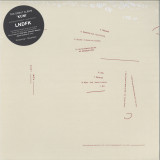
LNDFK (aka Linda Feki) presents her ground-breaking debut album, "Kuni" on Brooklyn-based Bastard Jazz Recordings. Undeniably on the rise after her 2019 breakout performance at Primavera Sound, LNDFK has already caught the attention of Pitchfork, Rolling Stone, Clash Magazine, Noisey, and Brooklyn Vegan (among many others) while being championed by the likes of Gilles Peterson, Tom Ravenscroft, and Jamz Supernova & landing spots on tastemaker playlists like Spotify's "Pollen" and "Fresh Finds."
"Kuni" is a spellbinding exploration of dichotomies: Love & Death (Eros & Thanatos), Flower & Fire, Delicacy & Violence, Poetry & Realism, Purification & Destruction. These opposites are reified in the 10-track LPs multifarious and multifaceted sounds, elegantly meandering through a variety of styles and genres, spearheaded by Linda and features the production wizardry of Darrio Bassolino who co-wrote the album.
"Kuni" opens with "Hana-bi," an ambient instrumental piece that sets the tone for the album. Inspired by the Takeshi Kitano 1997 film of the same name – particularly Joe Hisaishi's stunning soundtrack, as well as Kitano's paintings which appear in the film. "Hana-bi" expresses the dialoguing opposites of flowers and fire, the first of many dichotomous representations throughout the album. "Takeshi" acts as an extension and to "Hana-bi," albeit one of opposing sound, with its driving, highly syncopated drums (which reappear throughout "Kuni") – à la Karriem Riggins, Questlove, or Yussef Dayes – frenetic bass line, and jazz chords. Linda's sultry voice is interspersed, initially jumping around in scat fashion, being triggered as if a sample, before her lyrics come in; her vocals are used like an additional instrument, adding to the song's rich texture. "Kuni" truly hits its stride with the next song, "Smoke – a moon or a button" (its title lifted from the 1959 book by Ruth Krauss and Remy Charlip), which is structured like a jazz standard yet flows into neo-soul territory sonically with those prodigious drums a highlight once again.
LNDFK touches on experimental hip hop in two songs on the record (both of which were released as singles in 2021): "Don't Know I'm Dead or Not (feat. Chester Watson)" – track #4 – and "How Do We Know We're Alive (feat. Pink Siifu)" – track #9. Although they embrace a more hip hop-leaning sound, these songs by no means shy away from the exploratory theme, and feature two of the alt-rap scenes rising stars with Chester Watson and Pink Siifu who offer provocatively impressing verses, combining dense word play with unconventional flows. While these tracks may first appear to be outliers on the album, they are undeniably in tune with "Kuni's" message and sonic palette, acting as testaments to LNDFK's willingness to explore and experiment.
Meanwhile, "Ku" – the third and last single before the album release – furthers the pre-established future soul sound while meandering through nu jazz and left-field electronic. Inspired by the graphic novel and film, "Sin City," and its female assassin protagonist Miho, "Ku" is a musical interpretation of Miho's story, incorporating both her beauty – the first half of the song – and murderous tendencies – the second half – to create a stunning juxtaposition, culminating in an ambient finale that suggests the character's vulnerability and inner peace. The song gracefully bridges the gap between Hiatus Kaiyote-esque songwriting, Dilla's rhythmic syncopation, and Thundercat's instrumental prowess (LNDFK has shared a stage Brainfeeder labelmate Kamasi Washington).
Mixed in throughout "Kuni" are a series of instrumental pieces that function as something akin to an interlude. The aforementioned intro, "Hana-bi," and the album closer "se mi stacco da te, mi strappo tutto:" act as bookends, while "Om" indicates the half-way mark, and "Ktm" sees Jason Lindner add his sound the album. These tracks are the ambient foundation of "Kuni," representing the thematic duality of the work. Clocking in at only 24 minutes, "Kuni" packs an astonishingly diverse array of sounds, styles, and themes, all while showcasing virtuosic musicianship and instrumental prowess.
Appearing on "Hana-bi" and "Ktm," renowned international artists Asa-Chang and Jason Lindner add an additional perspective to "Kuni": Asa-Chang on "Hana-bi," and Jason Lindner on "Ktm." Asa-Chang - famously of the Japanese avant-garde group Asa-Chang & Junray - provides vocals and percussion to an alternate version of the instrumental opener, while the acclaimed keyboardist Jason Lindner offers his synth expertise on "Ktm." These features highlight the spirit of collaboration found in LNDFK's music, always willing to try out new ways of working.
LNDFK is a singer and songwriter, born of two cultures – an Italian mother and Arab father. She grew up in Naples, away from her father, the Sahara, her homeland and traditions, which has helped nourish the desire to rediscover – through art – an engagement to her roots. Her music melts with jazz, neo-soul and hip-hop influences, filtered through her experiences and sensibility.
Her first EP, "Lust Blue," was composed with the artistic production of Dario Bass and released by Feelin' Music; after that she released several singles that saw international radio support (BBC, NTS, Wordwide FM) and gained a massive audience on digital platforms. Together with her band, she toured around Europe, performing alongside such notable artists as Kamasi Washington and Mndsgn, among others. Most recently she toured Italy, and performed at Primavera Sound Festival 2019 in Barcelona.
"Kuni," is due out on NYC label Bastard Jazz Recordings in February, 2022, while the vinyl LP will follow shortly after.
out of Stock
Last delivered 4 years ago available to reorder, subject to availability
Our Starry Universe returns with it’s first release of 2022, the mesmerizing Mother Oak from Dan Wainwright & Elle Redding. The album is out on 12” vinyl and digital 22nd April.
An Acid House/Cosmic concept album featuring Elle’s spoken word on Dan’s production, Mother Oak is about the life cycle of an oak tree from the perspective of the tree. “As we dreamed up a rough outline of the story, the music was created to personify the seasons and the emotions that were to come through Elle’s words.” Says Dan.
It’s a deep listening experience. The kind of record one should listen to in one sitting on vinyl while you are staring at the lyrics on the back cover. “…it all just fell perfectly into place as Elle typed the story. It all came to life really quickly and was an emotional experience for me to enjoy something so beautiful as her creativity and it’s an honour to have that combined with mine.” Says Dan.
He continues… “We made an album that carries meaning and wisdom and at the same time conveys our wonder, awe and joy that we both experience by being in nature and feeling connected to the forever changing cycles of our planet.”
Dan Wainwright is a prolific producer in the underground with releases on Night Noise, Tici Taci, & Sprechen as well as a seemingly constant slate of releases on his own imprint Oddball Recordings.
out of Stock
Last delivered 4 years ago available to reorder, subject to availability
Note vinyl rel date is later. 10 Year Anniversary Reissue. 2LP / 2CD featuring the album proper & demos of each song + rarities. Colored clear vinyl, includes digital download. Recommended If You Like: The original ‘151a’ release, of Montreal, Regina Spektor, Andrew Bird. They say that you spend your entire life writing your first album, piecing every formative moment, scribbled turn of phrase, and thematic epiphany into a fantastical collage. Multi-instrumentalist K. Ishibashi (aka Kishi Bashi) disproves that old adage. The title of Kishi Bashi’s 2011 debut album,‑151a, is a riff on the Japanese phrase‑“ichi-go ichi-e,” roughly translating to “one time, one place.” That’s exactly what this debut is: A singular time, an inimitable place, a launchpad for bigger and better things to come. “It’s a play on words that translates as a performance aesthetic of having a unique performance in time, with imperfections, and enjoying it while you can,” Ishibashi‑told NPR at the time of the album’s release. “The saying reminds me to embrace my mistakes and move forward.” From the deconstructed Beach Boys-esque doo-wop of “Wonder Woman” to the menacing marriage of Eastern Hues and Western operatics of “Beat the Bright out of Me,”‑151a‑is a mediation between opposing drives, offering possible reconciliation but never promising it. The album’s emotional wellspring, “I Am The Antichrist To You” was reimagined in 2021 when it was featured on the animated sci-fi sitcom‑Rick and Morty, introducing Kishi Bashi to a new generation of awestruck fans. Kishi Bashi uses‑151a‑as a vehicle to explore his cultural background. Using Japanese refrains as a compositional and textural device (the polyrhythmic grandeur of “Bright Whites”; the gleeful surrealism of “It All Began With a Burst”), Kishi Bashi celebrates his heritage with earnestness. Japanese phrases and couplets are sung as the response to Kishi Bashi’s resplendent calls, offering listeners a conversation that dovetails with the album’s themes of love, sentimentality, and self-discovery. Today, the “one time” and “one place” that151a‑inhabited seems further than ever, almost broaching celestial realms of time and space. But, rest assured, with each listen, the world that Kishi Bashi built springs back to life. The world of‑151a‑never left—it was just waiting to be rediscovered.
Hotel Paral.lel, released in 1997, marks the full length debut release from Austrian Christian Fennesz, originally released by MEGO, following the twitching drone as found on the 1995 EP Instrument, also included in this deluxe 2LP reissue. Once launched, Hotel Paral.lel was to instigate a sublime exploration of a wide variety of forms, from formal abstraction to shimmering drone around to ground zero glitch pop.
Recorded just before mobile computing devices became omnipresent it was an investigation into the sonic possibilities residing in guitar based digital music. Sz launches the career with a constantly buzzing sound that resembles a fax machine encountering a G3 laptop for the first time, realising the game is up. Nebenraum is the first foray into the style for which one would attribute to Fennesz. A glacial drone unexpectedly morphs into a gorgeous melody and microscopic groove. Adding pulse and melody was hearsay in the radical end of experimental music up until this point and with this single gesture, everything changed, for everyone. Blok M nails this trajectory home with a straight up 4/4 beat. Such rhythm also features on Fa with a euphoric mix of a thudding beat, sharp splinters of noise and a devastating exploding melody. Repetition plays heavily through this album as the hyper metronomic beat on traxdata lays a bed for all manner of buzzing electronics. On the closing “Aus” we see a glimpse of what was to come in the future works of Fennesz, an experiment in popping, bubbling pulse pop. A far more darker and experimental work than Fennesz’ subsequent work. This is an exquisite radical field of freeform noise, sliced techno beats and subtle ambient texture all coming together to create a timeless work. There’s little out there in the world of music, still to this day, that sounds remotely like Hotel Paral.lel.
With a radical reinvention of music Hotel Paral.lel is an essential addition to collectors of pioneering music in the late 20th Century and sounds as enthralling today as it did to the shocked ears occupying 1997.
Remastered by Stephan Mathieu.
out of Stock
Last delivered 4 years ago available to reorder, subject to availability
Constructed in the initial chaos of the pandemic, Baby Blue’s dystopian debut LP “End Of Sleep” finds solace in the unearthly home of Planet Euphorique. 7 offerings from the Canadian artiste dive deep into a heightened reflective state; an amalgamation of memories stitched together via looped dissonance and destruction. A contrast of lightness and dark constantly working against each other and at times in harmony; a familiar connection that can be found in complex electronic music and mental states alike. Strap in and be guided through a wormhole of cyber analog journeys, thematic explorations and catastrophic calls to celestial beings.
Ethereal echoes of LSG break in the opening of the record, fleeting cries nodding to ancestry; yet A Rainy Trip To Netherworld Sequence embraces the storm. Knee jerk kick distortions disrupt the angelic hypnosis; reality rolling through the clouds. The sequential energy continues through A2 and A3, driving and rolling viciously with heavy contorted noise infiltrating the low end whilst flickers of melodious song sail unbothered, thriving amongst the destruction. The Spring Is Coming feels like a seasonal change, a melting and defrosting; thawed harmony shining through; textural and flowing with movement, a perfect bridge.
An arguably more delicate chaos emerges on the B side, elongated pads stream endlessly whilst drums cultivate and expand into sudden frisson. Fragile voices begin to gate and sweep in Equal Parts Damaged, lingering and ringing through ear drums whilst glued in rhythmic unison to induce a state of floating, a game of elevated push and pull. Syncopated howls of distortion leads the closing track, Violet summarizing the brilliantly confronting conversations pulsating through the record.
PE016 urges you to join the otherworldly personal journey and sufferings of Baby Blue, a moment to connect with her meditative dreams and struggles; sonic synergy expanding to anyone with the invitation to surrender.
out of Stock
Last delivered 4 years ago available to reorder, subject to availability
achyon Audio partner and artist Paradaux brings you the label’s eighth installment TAC008 the Fleeting Glory EP. The four-track release presents some hard-hitting functional and engaging beats with strong support from Los Angeles USA techno powerhouse Drumcell who contributes a scintillating remix of the records title track.
Side A begins with another of Paradaux’s gems in Fleeting Glory (A1). This title track is impeccably orchestrated and strikes a hard-to-find balance between being dancefloor-friendly driving and creative and heady with its synth work.
Drumcell brings his distinct sound and mesmerizing groove to the EP in Fleeting Glory (Drumcell Mutation) (A2). Engaging and unique drum patterns guide the listener through an expansive soundscape that tweaks the ears and pointedly reforms the core elements of the original retaining the strong mood.
Side B Mover (B1) continues the glory immediately with a strong trippy 303-oriented dive into the realm of drum-driven sci-fi techno. Leave no interstellar prisoners.
The last full track on the EP Pulsar (B2) finishes the record with Paradaux's strong and distinct desert techno acid vibe as it envelopes the listener with grimy and building synth work and broken and loopy percussive elements and noise manipulation.
The record is capped off with a vinyl locked groove from the National Aeronautics and Space Administration’s (NASA) audio collection Haquindar (B3) capturing a mission control audio test countdown from the Apollo moon mission’s Capsule Communicator.
Kailus Echo and IGC for life.
out of Stock
Last delivered 4 years ago available to reorder, subject to availability
The Ricardo Villalobos / Samuel Rohrer partnership has yielded increasingly interesting results over the past few years, with the former’s remixes of the latter’s trio Ambiq being supplemented by further reinterpretations of Rohrer’s solo work and live meetings at select events like Berlin’s Funkhaus and Radialsystem V. As should be the case with any strong collaboration, this partnership has been based on mutual challenge rather than compromise,
seeing each participant shuttle key technical and emotive aspects of the other’s work to previously unexpected places.
Those who have been closely following this relationship will notice a definite sense of continuity between previous outings and the new collaborative release entitled MICROGESTURES. As with those earlier Villalobos / Rohrer pairings, these four new pieces are defined by a special quality of being many things that once: that is to say, depending on the listener’s own level of focus, these can feel very tightly constructed and disciplined, or playful and freely wandering. That the tracks are equally engaging regardless of one’s chosen listening “mode” is a testament to the level of thought put into them; you could almost imagining the creators poring over some elaborate sketched set of architectural blueprints rather than coolly monitoring the usual multi-track editing software.
Altogether the music here is firmly a-melodic and percussive, but within these deliberate limitations there is still a greater variety of individual sounds than most would bother with. Each track is its own observatory of microgestures clustering together into a dense communicative fog or a sort of robotic sound swarm. Yet while all
these tracks are variations on that theme, each one has its own character and, consequently, its own rewards in terms of the exact sectors of the imagination that it activates.
Take for example “Cochlea” and its twin “Helix,” on which the magnetizing, busy layers of percussion are tempered with mischievously disruptive blossomings of digital noise, as well as sampled radio communications (which again bring us back to the idea of listeners’ attentiveness changing the meaning of this music - these
curious transmissions can either be taken as a purely aesthetic element or as something to be actively decoded).
Club-oriented elements are also not absent from this suite, particularly on “Incus” with its traditional sequenced baseline, crisp synthetic trap and hats, and dizzily sliding set of bell-like tones laid on top.?
Yet this track, too, is powered as much by its restless desire to deviate as by its rhythmic consistency: throughout the eleven-minute running time, a mass of ambiguous and restless machine sounds build a parallel narrative, and will maybe prompt the occasional glance over the shoulder as they seem to be taking on their own life. “Lobule” rounds out the program with the most rhythmically eventful sound set off the five.
What this all adds up to is a confident music which builds that quality from its faith in possibilities rather than firm conclusions: it’s an inspiring addition to both the musical landscape and reality in general
out of Stock
Last delivered 3 years ago available to reorder, subject to availability
These tracks were proppa game changers n were pure classic anthems of the day and a time when we were nurturing the british hardcore sounds that pushed the boundaries.
A.Set Me Free - This track produced in 1992 by Noise Factory it was a big anthem of it's time back then a real game changer and has that ravy feel n piano stab filled. With strong hardcore and techno elements with the speeded up vocals n keeping in with the 4/4 beat.
AA.Bring Forth The Noise - This track from Noise Factory produced in 1992 this is when we found our british identity n stamped our authority on the hardcore scene. It has strong synth piano stabs n speeded up vocals with heavy sub bass resonating thru along with the hardcore n techno feel.
AAATo The Top - This was produced in 1992 by Noise Factory keeping in with the hardcore theme this track was more jungle techno.
With its looping bass n hardcore 4/4 beat n sample vocals.
out of Stock
Last delivered 4 years ago available to reorder, subject to availability
"...a fascinating piece of Brutalist techno that pivots between crisp machine-like minimalism and granulated noise." - Clash
"A piece of immediately engaging techno it reveals more of itself with each listen." - CMU Daily
Nik Colk Void is well established with her work as one half of Factory Floor, one third of Carter Tutti Void (alongside Chris Carter and Cosey Fanni Tutti) and with the late Peter Rehberg as NPVR, but perhaps surprisingly, "Bucked up Space" is her first solo album release.
Void explains, "When Peter Rehberg initially asked me to produce a record for Editions Mego, I didn't feel quite ready and asked if we could make a record together instead. Collaboration is so ingrained into what I do, I only felt ready to make this album after working through ideas live, using the audience in place of the collaborator."
Bucked Up Space combines Void's love of improvisation with the driving force of beat-driven music absorbed from performing in galleries, residencies and clubs across the UK and Europe. She goes on to say, "You find out more about yourself when you explain your ideas to others, and that's how I felt the live performance worked for me."
The process steadily teased out a language and Void employed a variety of tactics in the recording process including a methodical approach of collecting data at her home studio in a manner not dissimilar to keeping a diary. Her microscopic focus on raw instrumental noise, layered and reformulated, resulted in a sound catalogue that Void divided into groups for their tone, density and texture.
These initial pieces were taken to a studio in Margate to put them into a more cohesive compositional context. Something that pragmatically started as cold and detached was given warmth, unity and emotion in the studio. Via improvised repetition co-existing alongside organised production, Void conjures new sonic muscle with tracks such as 'Interruption Is Good' and 'FlatTime'. Initial recordings are rendered into sequences initiating the organic rhythms, triggering awkward jerks of high hats and percussion, or used to activate the margins of post effects detectable in the tracks like 'Demna', 'Big Breather' and 'Oversized'.
Void explains: "It was important to me that the simplicity in the work disguised a lot of complexity, I want this work to be absorbed instinctively."
The sleeve image, a still from We Are City by Brazilian artist Maria de Lima, was chosen to illustrate Bucked Up Space, which Void describes as "a distorted reality, the space that lives at start of an idea, then floats in public view, before returning to inform my understanding of the idea. Once the idea is out in the world, it moves and morphs into something else entirely."
Written, performed and produced by Nik Colk Void, the album was engineered by James Greenwood, mastered by Rashad Becker and tracks 1, 4, 5, 7 and 9 were mixed by Marta Salogni.
Bucked up Space is the result of the ideas and resulting sounds of free exploration morphing into a personal structured album that fearlessly moulds patience, listening and restraint. It's a sharp focussed work embracing collective action through the lens of the self. All this, and also one of the best abstract dance records you will hear in some time!
out of Stock
Last delivered 4 years ago available to reorder, subject to availability
Growing up in the Californian sprawl and the vast suburbs of Phoenix, Arizona, Caleb Dailey largely dismissed the country and western music that surrounded him. Instead, he was drawn to independent rock, experimental zones, and other genre-defying forms, which led him to create skewed rock music with Bear State and establish the “minimal art label” Moone Records with his brother Micah Dailey in 2013. But in the early half of the 2010s, Dailey began to hear things differently. Drawn into the left-of-center works of artists like Gram Parsons and Blaze Foley, a more idiosyncratic take on country, folk, and roots music began to swirl in his imagination.
Wandering into the form’s cowboy chords and lonesome scenes, Dailey found himself wondering what his own country album might sound like. The result is his debut solo album, a collection of covers called Warm Evenings, Pale Mornings; Beside You Then. Produced by John Dieterich of Deerhoof, Keiko Beers, and Dailey himself, it’s a melancholy charmer, rooted in traditional ideas but free roaming in its scope. Laced with synths, pedal steel, acoustic guitars, and commanded by Dailey’s full and woozy voice, it owes as much to the busted waltzes of Lambchop and the homespun lo-fi folk of Little Wings (whose Kyle Field appears on the album via a spoken intermission) as it does to the songwriters and performers who provide its source material, which include Parsons, Foley, Elvis Presley associate Chips Moman, steel guitarist Buddy Emmons, and others.
“The subversive nature of country music isn’t as much at the surface as some other genres,” Dailey says. “But the deeper down the ‘country hole’ I went, the more I wanted to be part of it. It is truly a strange world.”
The hands of Dailey and his collaborators, which includes a wide roster of DIY experimentalists like James Fella of art punks Soft Shoulder, Jay Hufman (Gene Tripp), Lonna Kelley of Giant Sand, Japanese DIY hero’s Koji Shibuya and Tori Kudo, Nicholas Krgovich, Markus Acher of The Notwist, and more, that strangeness is accentuated. Dailey doesn't aspire to retro Nashville fetishism or sanctioned notions of “realness” so much as a genuine outsider authenticity. Take his version of Gordon Lightfoot’s “If You Could Read My Mind” for example: a highlight of the record, it pairs familiar genre signifiers like pedal steel and guitar strums with warbled synths. Then there’s his read of “Dreaming My Dreams,” originally made famous by Waylon Jennings (who also did time in the Arizona desert), which morphs from a mournful ballad into a wash of far-off sonic noise.
The attention here is on the songcraft itself, with Dailey inhabiting these songs and turning them inside out to reveal unexpected tenderness and playfulness.
Recorded at home with an acoustic guitar and 4-track, Dailey began open correspondences with his collaborators, who fleshed out ideas and added touches, often working with skeletal frames before Dieterich and Dailey shaped it into a cohesive whole. “John is the reason this album exists,” Dailey says. “He sculpted all these parts together in such an otherworldly way. He is truly a magician.” Deeply allergic to insincerity, Dailey avoids any trace of irony. He’s created a cohesive gem out of disparate parts, uniting Americana songcraft with experimental disassemblage. From this bric-à-brac, he’s made something touching and beautifully strange.
It begins with a rustle of noise, equally reminiscent of distorted factory noise and a cassette recording of cathedral bells unspooling, before a near-robotic beat and stuttering bassline enter the fray. Initially, you could be forgiven for thinking you’ve stumbled across the lost tapes of Joy Division’s early Warsaw incarnation, but the atonal blast of strafing guitars fading in and out soon make you realise this is a very different proposition. This is The Drin, and ‘Engines Sing for the Pale Moon’ is their debut album. It’s also one of the best things you’ll hear all year. Helmed by Dylan McCartney, drummer of the rock band Vacation, The Drin originally released this album as a hyper-limited cassette via Future Shock. It’s as much of a departure from McCartney’s usual output as it is for Drunken Sailor Records; songs don’t so much explode out of the gate as drift towards you like a creeping fog that turns your skin inside-out and leaves you sloshing organs all across the carpet. Second track ‘Guillotine Blade’ shows the pieces all coming together, a dubbed-out riot of claustrophobic noise that feels like Pere Ubu trapped in a cupboard one minute, and ‘Warm Jets’-era Eno trying on Bauhaus’ trenchcoats the next. Meanwhile, ‘Down Her Cheek A Party Tear’ unfolds across jittering, skittering rustles of drums and an undulating bassline, making you wonder why post-millennial post-punk so often settles for dickheads shouting non-sequiturs over landfill indie, when it could be entering these dark, unsettling territories instead. The Drin like to get weird. The Drin like to get wild. The Drin rarely cut loose, but that’s because the trip is already intense and haunting enough without things getting raucous in here as well. Hey kids, turn off those shite band name redacted records and get into this; you deserve so much better, and better’s right here. Fall into it, immerse yourself and step forward into a brave new world. I love this record
Single LP w/ printed inner sleeve + DL. Sophomore solo album from Emma Ruth Rundle, (Marriages (Lead Vocals/Guitar) and Red Sparowes (Guitar)). “…a sophomore effort of Cat Power-like tenderness and PJ Harvey-level intensity” The Fader / "...a sort of old-souled wisdom, conjuring the vastness of a sea." – Pitchfork // Emma Ruth Rundle’s 2nd solo album, Marked for Death, mines feelings of loss, defeat, heartache and self-destructiveness to emerge with the most honest and compelling accomplishment of an already prolific career. She shapes vast, evocative landscapes of sound, combining them with lyrics of devastating candor. Self-determination and resiliency, disguised in this case as coming to terms with overwhelming defeat, are key aspects of her personality. Transforming pain into works of great beauty makes her the compelling artist she is. A more adventurous production than her solo debut Some Heavy Ocean (2014, Sargent House), the eight compositions on Marked for Death, helmed by engineer/co-producer Sonny DiPerri, emphasize dynamics and vocal melodies, variable tuning, and a dense layering and texturing of guitars. Nevertheless, fear and self-doubt linger in the shadows of Rundle’s mind, providing an incessant counterpoint to her ambitious talent and sultry, albeit de-emphasized, allure. Exemplified by the candid, unglamorous cover portrait, Marked For Death takes a persuasive argument for its creator’s utter helplessness in the shadow of defeat. And through a potent dose of dark, hypnotic rock every bit as satisfying as her work with Marriages and Red Sparowes, Marked for Death’s most resonant element is Emma Ruth Rundle herself, settling in to her role as singer/songwriter. Her rich voice, alternately jostled and cradled by the sounds conjured from her guitar, feels more present, perhaps even more deliberate, than ever before. // UK publicity Silver PR - Early press support/features already confirmed with Pitchfork, The Fader, The Independent, Interview, VISIONS, Music Radar, New Noise, BBC and MUCH more tbc.
Lucia H. Chung is a Taiwanese experimental artist based in London. She performs and releases music under the alias 'en creux'.
Under this alias, Lucia is interested in the underlying structures of what we call noise and is examining the effects of human interventions into its complex web of tones. Repetition and chance operations are fundamental to Lucia‘s music. It is not built on the dionysian maximalism and symbolic harshness of lots of noise artists; catharsis is not reached via an explosion of sound, but via concentration on sound phenomena and small changes, which, not unlike some minimal disco night your usual mind-altering drone ritual, sucks you in more with every tiny alteration. This music is as intense as it is sensitive.
„The Liberated Mind“, in Lucia‘s own words, „is a sort of split release between two no-input configurations“. For „Wyldside“, she tuned two different feedback mixers with identical routings as close possible, as much as tuning is possible at all on these highly volatile instruments. „The two channels naturally phased in and out from each other. I guess the process was actually akin to Steve Reich's tape techniques on Come Out and It's Gonna Rain. The whole release extrapolated from that point onwards...“ Finding and replicating similar routings/settings on no input mixing desks is the nightmare of every control freak and a task doomed to failure, but in letting go and embracing these failures, patterns emerge. And thanks to Lucia‘s careful work, these patterns become hypnotic as she carves out the essence of each feedback loop, or, as she puts it: „Actually, I did remember the setting for the final track „Earthrise“, but for whatever reasons, I just cannot reproduce the sounds and it's forever lost (at least for this point in time, maybe when the conditions are primed again for the machine, the same sounds will emerge again...). I guess that's really the essences of improvised NIMB setup. Every single sound was the effect of the previous iteration and the cause of the next iteration... (Wait... isn't it just like a Blockchain? Ha!)“
A collection of no-input studio sessions improvised with Mackie 1202-VLZ Pro, TAPCO MIX260FX, MXR Phase 90 and Electro-Harmonix Bad Stone Phase Shifter. All tracks recorded live, no overdubs. Recorded in London in February 2020. Mastered by causeandcondition
Lucia also works as independent curator, producer and broadcaster at Happened. Check out Lucia‘s other albums on Hard Return, Falt and SM-LL.
After turning heads with the densely orchestrated Riddles, produced by Dan Deacon, the Baltimore-based duo Ed Schrader’s Music Beat have given us another giant leap forward with their fourth record Nightclub Daydreaming. The whiplash-inducing stylistic shifts between aggressive noise rock and operatic gloom pop that have become the band’s trademark have given way to a single aesthetic that fuses both impulses. On Nightclub Daydreaming, menace teems just below the surface as propulsive, stark arrangements leave space that Schrader fills with strident, reverb-soaked narration.
LIMITED GOLD VINYL w/ Download Card
When Ed Schrader and Devlin Rice began writing the record in 2019, the idea was to make a fun, danceable album, but an underlying moodiness proved unshakeable. As Schrader puts it, “The cave followed us into the discotheque.”
The duo road-tested the songs “This Thirst,” “Echo Base” and “Black Pearl” with drummer Kevin O’Meara on tour with Dan Deacon in February 2020. COVID restrictions cut the tour short, squashed plans to go immediately into the studio and sent the touring party on a sprint from LA to Baltimore. “We broke down outside Roswell,” Schrader recalls. “And these cops laughed at our dumb asses as we used all our pent-up stress and fear to propel our half-submerged bus out of the muck, yelling epithets to the sky.”
It was one of the last experiences they had with O’Meara, whose death in October 2020 weighed heavily on Rice and Schrader’s minds as they worked on the record. It was also a cathartic moment that presaged the aesthetic that would permeate the songs on Nightclub Daydreaming: “mad euphoria in the face of doom,” as Schrader puts it.
“This Thirst” is an alienation-fueled barn burner barely restraining itself through musically sparse, lyrically dense verses to culminate in a howling, synth-saturated chorus that beats horror punk at its own game. “Came from the north with a twisted planetarium, rock salt, nervous tic and novocaine,” Schrader sings, assuming the guise of a vagrant whose irresistible urges lead him through a fever dream of chemicals, back-alley bartering and existential threats.
The hyperactive “Echo Base” exudes agitated-cool, with breakneck drum fills and a relentless bass line. The narrator is stranded in a frozen landscape and running out of options. “She is just a night train away,” we are assured, and yet we sense that may not be an altogether good thing.
The band recorded and mixed Nightclub Daydreaming over a two-week period with Craig Bowen at Tempo House in Baltimore with David Jacober on drums, turning demos with artificial sounds and placeholder melodies into fully realized songs playable by a live band. The end result is not the album of “sunny disco bangers” that Rice says the band set out for, but something deeper, darker and more rewarding.
Internationally revered, multi-faceted artist Arnaud Rebotini arrives on Veyl with the new EP, 'New Territory'. While venturing into a wide array of musical genres and sonic realms, the release is still unmistakably Rebotini, fueled by infectious electro-body grooves and hypnotizing vocals.
From the utterly addictive, pulse pounding allure of “Special A” to the more industrial techno strains of 'A Noise Rose', Rebotini delivers a myriad of interconnected tracks which traverse fresh auditory landscapes but maintain a common circuitry. The poignant, anthemic lyrics of 'No More Love (No More Hate)' resonates loud and clear while the throbbing, Giallo flaire of 'Italian Sex Drive' sends shivers down the spine.
'The Pale Eastern Christ' injects a haunting atmospheric mood while the title track is irresistible ebmwave that falls perfectly in between the lines for an indelible sound that only the French producer can conjure. Rebotini’s work continues to shatter boundaries and fuse genres while essentially pioneering a category all of his own. 'New Territory' furthers the legend and keeps us begging for more.
out of Stock
Last delivered 2 years ago available to reorder, subject to availability
International musicgroup SexJudas feat.Ricky returns to Optimo Music this Winter with a new album: Night Songs. The eight track LP draws inspiration from the night and features Malian percussionist Sidiki Camara,jazz clarinetist Andreas Røysum and noise rocker Linn Nystadnes. Making their own blend of disco, post punk and African music.
“It’s the return of Sex Judas feat.Ricky, this time as a six piece in fully fledged band mode. We’re here to take you on a journey through suburban psychedelia, forming our own brew of postpunk, disco and electronic, as well as traditional music from Mali. Night Songs is a meditation on the night time. The excess, the dreams, the highs and lows of night time activity.”-Sex Judas feat. Ricky.
“Black Cat In A Black Room” begins proceedings, taking the form of a psychedelic six-minute offering packed full of tribal drums and desert-like percussion. “A Man Without Purpose” comes next with its African-inspired vocal, before “Hab Mich Lieb” soon arrives. The six-minute cut is hypnotic, trippy and relaxing all in one, as is “Slow Down” feat. Linn Nystadnes. Taking on more of a funk-rock feel, there’s plenty of groove in the guitar-laced bassline, whilst in “Cold Clementine”, Sex Judas tells the sad tale of rave casualty over a dark and funky groove.
We’re taken down a spiritual path on The Light You Saw Was Not For Real, as Andreas Røysum’s clarinet solos sit underneath shamanic vocal offerings that open neatly into The Night Within The Night. Aslow-burning cut, riffs and hats serenade us before When You Wake Up Everything Will Be Fine brings proceedings to a close. Dream-like chords wrap us in a warm and glowing hue, with the harp-like sounds from Sidiki’s Ngoni, leaving us in a starry-eyed state to finish.
The calming nature of the album is a nod to the band’s influences: they were inspired by the great meditative records of the past, setting off on a musical trip that saw them record the whole release at legendary Norwegian studio Athletic Sound. This happened during lockdown and whilst the LP was never meant to be comment on the pandemic, there remains a brooding intensity to each track because of it. Sex Judas feat. Ricky originally began life as the solo project of Tore Gjedrem (from electronic duo Ost & Kjex), but has since grown into a steady six piece involving the talents of Sidiki Camara (djembe/ngoni/balafon), Ivar Winther (guitar/keys), Tracee Meyn (vocals), Tore Brevik (drums/percussion) and Kristian Edvardsen (bass). Centre stage is also illustrator and comic artist Sindre Goksøyr, this time portraying each character as they paddle their way into the sunset and uncharted territories.
Malian-born, Norwegian-based percussionist Sidiki Camara has played a pivotal role in promoting “Night Songs” to world music circles. Having lived in Norway since 2006, he has helped bring WestAfrican rhythms into the country’s wider jazz scene.
out of Stock
Last delivered 3 years ago available to reorder, subject to availability
When we first heard from recent Kompakt signing Emma Kollmorgen, with 2021’s “You Are The”, she was hymning the complexity of romance: “Love is scary as fuck!”, she said. On her debut EP, “1243”, she’s built on that intensity and offered up a five-track suite of night-vision electronic pop, bristling with a stealthy sensuality. It’s a cinematic collection, building from the brooding “Escape”, through the drifting, tactile pulses of “Taciturn”, the gritty, bustling noises that run underneath the smoke-signal torch-song of “All The Wild Animals”, and the closing, tear-stained melancholy of “Home”. “You Are The” reappears here as well, settling in perfectly amongst new friends.
It’s a completely assured first EP from an artist who’s been slowly and steadily building her own sonic world. From her early days, when she busied herself by learning guitar and joining bands, Kollmorgen always had a vision of doing something “more independent”, to allow her to find her own sound and write her own songs. A brief creative alliance with the Berlin DJ duo Dole & Kom led to some recordings and live performances. All the while, Kollmorgen was carefully shaping her production and sound designing skills with Ableton Live, and exploring distinctive musical terrain in collaboration with co-producer and multi-instrumentalist Paul Seidel (The Ocean Collective, Fern, Nightmarer). She joined the Kompakt family after a recommendation by Patrice Baumel, who also remixed her debut single with typical flair.
On “1243”, though, Kollmorgen fully inhabits her songs, gifting each of them with a sweet, subtle sway, her vocal and lyrical openheartedness balancing the bluer hues of her production. Each song is confident and poised, Kollmorgen relying on cross-thatched patterns of texture as a web to support her melodies: “I like patterns,” she says, “they give me something to hold onto, something stable in an unstable world.” The songs feel as though they’re grappling with moments of revelation and experience in Kollmorgen’s world, which makes sense, given her approach to music: “I never had a diary,” she reflects, “so writing songs is my way of expressing and dealing with life.” On 1243, you’ll catch some glimpses of life lived, made sonorous through songs beautifully sung.
Als wir das erste Mal von Emma Kollmorgen hörten, nachdem sie sich KOMPAKT angeschlossen hatte, besang sie mit "You Are The" (2021) die Komplexität von Romantik: "Liebe ist verdammt beängstigend!". Auf ihrer Debüt-EP "1243" baut sie auf dieser Intensität auf und präsentiert uns eine fünf Tracks umfassende Suite von elektronischem Pop mit ausgeprägtem Nachtsicht-Faktor, die vor verborgener Sinnlichkeit nur so strotzt. Ein geradezu cineastischer Spannungsbogen, der sich vom grüblerischen "Escape" über die treibenden, taktilen Impulse von "Taciturn", die düsteren, umtriebigen Geräusche, die den Rauchzeichen sendenden torch song "All The Wild Animals" untermalen, und die abschließende, tränenreiche Melancholie von "Home" aufbaut. Auch "You Are The" taucht hier wieder auf und fügt sich perfekt in die neue Gesellschaft ein.
Eine überzeugende erste EP von einer Künstlerin, die sich langsam und stetig ihre eigene Klangwelt aufgebaut hat. Seit ihren Anfängen, als sie Gitarre lernte und in Bands spielte, hatte Kollmorgen immer die Vision, etwas "Unabhängiges" zu machen, um ihren eigenen Sound zu finden und ihre eigenen Songs zu schreiben. Eine kurze kreative Allianz mit dem Berliner DJ-Duo Dole & Kom führte zu einigen Aufnahmen und Live-Auftritten. Währenddessen feilte Kollmorgen an ihren Produktions- und Sounddesign-Skills und erkundete gemeinsam mit dem Co-Produzenten und Multi-Instrumentalisten Paul Seidel (The Ocean Collective, Fern, Nightmarer) ihr eigenes musikalisches Terrain. Zur KOMPAKT Label-Familie kam sie auf Empfehlung von Patrice Baumel, der auch ihre Debütsingle remixte.
Auf "1243" lebt Kollmorgen ihre Songs voll und ganz aus und verleiht jedem von ihnen einen süßen, subtilen Twist, der ihre stimmliche und textliche Offenheit mit den melancholischen Tönen der Musik in Balance hält. Voller Selbstbewusstsein und Ausgeglichenheit verlässt sie sich auf durcheinander laufende Texturen und Pattern, die ihre Melodik unterstützen: "Ich mag Pattern", sagt sie, "sie geben mir etwas, woran ich mich festhalten kann, etwas Stabiles in einer instabilen Welt."
Die Songs fühlen sich an, als würden sie sich mit realen Momenten der Offenbarung und mit Erfahrungen aus Kollmorgens Lebenswelt auseinandersetzen, was angesichts ihrer Herangehensweise an Musik durchaus Sinn ergibt: "Ich hatte nie ein Tagebuch", erzählt sie, "also ist das Schreiben von Songs meine Art, mich auszudrücken und mit dem Leben umzugehen." Auf "1243" gibt sie uns einige Einblicke in dieses gelebte Leben, das durch wunderschön gesungene Lieder zum Klingen gebracht wird.
out of Stock
Last delivered 4 years ago available to reorder, subject to availability
Loss and hope, isolation and communion, the cessation and renewal of purpose. Timeless and
salient, these themes echo throughout the fifth album from Midlake, their first since ‘Antiphon’
in 2013.
From the cover to the title and beyond, a longing to reconnect with that which seems lost and
seek purpose in its passing sits at the record’s core. The cover star is keyboardist/flautist Jesse
Chandler’s father, who, tragically, passed away in 2018. As singer Eric Pulido explains, “He
was a lovely human, and it was really heavy and sad, and he came to Jesse in a dream. I
reference it in a song. He said, ‘Hey, Jesse, you need to get the band back together.’ I didn’t
take that lightly.”
A desire to commune with the past and connect with present, lived experience asserts itself
from the opening of the album. ‘Bethel Woods’ sustains and develops that reconnection,
evoking the steadfast and contemplative urgency of ‘The Trials of Van Occupanther’ to back a
lyric steeped in yearning for a paradisal time and place of hope and optimism. Soaring guitars
and atmospheric noise effects extend a sonic scope further developed by ‘Glistening,’ where
arpeggios dance like light glancing off a lake. In just three songs, Midlake reintroduce
themselves and reach out into fresh territory with a richly intuitive dynamism, honouring their
past as a seedbed of possibility.
Elsewhere, the prog-enhanced funk-rock of ‘Gone’ seeks to find hope in relationships that
seem fragile. The ELO-esque ‘Meanwhile…’ draws inspiration from what happened when
Midlake paused after ‘Antiphon’, developing universal resonance as a song about the beautiful
growths that can emerge from the cracks and gaps between things. ‘Dawning’ draws on 1970s
soft-rock stylings for another song searching for hope, its keyboard line reaching out towards
an uncertain future while everything seems to collapse around it; ‘The End’ reflects on the
difficulties of partings.
On-hand was new collaborator John Congleton, who produced, engineered and mixed the
album, marking Midlake’s first record with an outside producer. “I can’t say enough just how
much his influence brought our music to another sonic place than we would have,” says Pulido.
“I don’t want to record without a producer again. Part of that is the health of the band, because
as you get older you get more opinionated and you kind of need that person who says, ‘No, it’s
going to be this way!’ It’s hard to do that with your friends.”
The result is a powerful, warming expression of resolve and renewal for Midlake, opening up
new futures for the band and honouring their storied history. Formed in the small town of
Denton, with roots in the University of North Texas College of Music, Midlake delivered an
auspicious debut with 2004’s ‘Bamnan and Slivercork’. For the follow-up, they looked further
afield and deeper within to deliver 2006’s wondrous ‘The Trials of Van Occupanther’, a modern
classic pitched between 1871, 1971 and somewhere out of time: between Henry David
Thoreau and Neil Young’s ‘After the Gold Rush’, between 1970s Laurel Canyon thinking and a
longing for something more mysterious.
Confidence bolstered by a growing fanbase and a developed sense of their own far-reaching
abilities, Midlake - a band acutely attuned to seasonal shifts - then embraced change. In 2010,
they visited darker psych-folk thickets for ‘The Courage of Others’ and backed John Grant on
his lustrously spiky breakthrough album, ‘Queen of Denmark’. When singer Tim Smith departed
Midlake in 2012, Pulido stepped up to the lead vocal role for 2013’s freshly exploratory
‘Antiphon’, teasing out singular routes through vintage electric-folk pastures.
In reuniting, the bandmates were adamant that Midlake needed their absolute focus. The result
is an album of tremendously engaged thematic and sonic reach with a warm, wise sense of
intimacy at its heart: an album to break bread and commune with, honour the past and travel
onwards with. In ‘Bethel Woods’, Pulido sings of gathering seeds. On ‘For the Sake of Bethel
Woods’, those seeds are lovingly nurtured, taking rich and spectacular bloom.
LP pressed on 180g vinyl in a gatefold sleeve printed on matt card and printed inner sleeve
with lyrics and digital download card.
Jesus and Mary Chain, Shop Assistants, Black Tambourine, Sarah Records, My Bloody Valentine. Star Party began in March 2020 as a Seattle living room project between Carolyn Brennan and Ian Corrigan (Gen Pop, Vexx) - both sharing a love of high energy rock n roll music. The idea to start a band percolated during trips to the high deserts of eastern Washington to pick sage and see the sun as a brief reprieve from the misty and grey Pacific Northwestern Spring. A few months later, Star Party released Demo 2020 on Feel It Records, featuring two originals and covers of The Shop Assistants' "Something to Do" and the classic "All I Really Wanna Do" (in the vein of Cher's version). Over the course of 2021, Star Party wrote and recorded their debut LP, Meadow Flower, wherever and whenever they could. Employing like-minded Feel It label mate Caufield Schnug of Sweeping Promises (who also moonlights as one part of Melody Men Mastering) to mix and master the album, Meadow Flower follows a direct line from where Demo 2020 left off. Brennan's soft and clearly American vocals float over waves of feedback and drum machine racket like a delicate mist sitting just above a mountain lake. Melodies bob and weave inside an omnipresent static that fills in every nook and cranny of the recording. Drawing from a quiver of influences such as Black Tambourine, Confuse (JP), The Count Five, and of course The Shop Assistants (RIP Alex Taylor), Star Party's debut album seamlessly meshes together noise, melody, and harmony
Another new colour pressing we have 200 only white vinyl coming in Mrch. Single LPs w/ printed inner sleeve + lyric insert and Download card. The Armed return with their first new album in over three years and Sargent House debut, ULTRAPOP. The album reaches the same extremities of sonic expression as the furthest depths of metal, noise, and otherwise "heavy" counterculture music subgenres but finds its foundation firmly in pop music and pop culture. As is always The Armed's mission, it seeks only to create the most intense experience possible, a magnification of all culture, beauty, and things. The band goes on to explain, "crafting vital art means presenting the audience with new and intriguing tensions sonically, visually, conceptually. Over time and through use, those tensions become less novel and effective and they become expectations. The concept of "subgenre" becomes almost the antithesis of vitality in art itself a fetishization of expectation. ULTRAPOP seeks, in earnest, to create a truly new listener experience. It is an open rebellion against the culture of expectation in "heavy" music. It is a joyous, genderless, post-nihilist, anti-punk, razor-focused take on creating the most intense listener experience possible. It's the harshest, most beautiful, most hideous thing we could make." ULTRAPOP follows their recent contribution to the Cyberpunk 2077 soundtrack “Night City Aliens” and 2018’s critically acclaimed album Only Love, which landed on ‘Album of the Year’ lists from The Atlantic, Pitchfork, Rolling Stone, Vice, Stereogum, and many more. The album was co-produced by the band's own Dan Greene in collaboration with Ben Chisholm (Chelsea Wolfe) and features contributions from Mark Lanegan, Troy Van Leeuwen (Queens of the Stone Age, A Perfect Circle), Ben Koller (Converge, Killer Be Killed, Mutoid Man) and many more. Kurt Ballou (Converge, High on Fire, Russian Circles) remains at the helm as executive producer. An interactive ARG campaign with numerous stages of engagement is underway and will continue through release. A website, media mailings and various social media interactions are leading fans to find easter eggs including songs, album info, videos and much more. A livestream performance confirmed for same day. Videos for all three focus tracks (“All Futures”, “Average Death” + “An Iteration” are completed and will be released along with each song.
Transparent frosted clear vinyl, no downlode code. Their third album 'WILDLIFE. The Eggs returned with an album that encapsulates the isolation of extensive touring and brief time back in their home town Lancaster. The two piece raucous noise pop duo combine their gritty British northern surreal lyrics with thunderous guitars and crashing drums on this their third self-recorded gem. Working alongside Gruff Rhys who produced Allergies and Cornershop's Tjinder Singh who has remixed Food for a special digital download, Wildlife is yet another wonderful and unique album from a band who continue to cement their reputation as one of the most genuinely exciting and essential bands around today. Already lead track Allergies, the first single taken from Wildlife, released on the Too Pure Singles Club, has won the BBC 6 Music Rebel Playlist - with 82% of the public vote and declared winner of Steve Lamacq's 6 Music Round Table as well as Artrocker's single of the month. For The Lovely Eggs being in a band is a way of life. True to this, they live the way they play. Fiercely, constantly in search of the good times. With this their third album in three years The Lovely Eggs explore further into their own world and the bizarreness of reality and invite you to come inside to join the party, strange as it is!
Loss and hope, isolation and communion, the cessation and renewal of purpose. Timeless and
salient, these themes echo throughout the fifth album from Midlake, their first since ‘Antiphon’
in 2013.
From the cover to the title and beyond, a longing to reconnect with that which seems lost and
seek purpose in its passing sits at the record’s core. The cover star is keyboardist/flautist Jesse
Chandler’s father, who, tragically, passed away in 2018. As singer Eric Pulido explains, “He
was a lovely human, and it was really heavy and sad, and he came to Jesse in a dream. I
reference it in a song. He said, ‘Hey, Jesse, you need to get the band back together.’ I didn’t
take that lightly.”
A desire to commune with the past and connect with present, lived experience asserts itself
from the opening of the album. ‘Bethel Woods’ sustains and develops that reconnection,
evoking the steadfast and contemplative urgency of ‘The Trials of Van Occupanther’ to back a
lyric steeped in yearning for a paradisal time and place of hope and optimism. Soaring guitars
and atmospheric noise effects extend a sonic scope further developed by ‘Glistening,’ where
arpeggios dance like light glancing off a lake. In just three songs, Midlake reintroduce
themselves and reach out into fresh territory with a richly intuitive dynamism, honouring their
past as a seedbed of possibility.
Elsewhere, the prog-enhanced funk-rock of ‘Gone’ seeks to find hope in relationships that
seem fragile. The ELO-esque ‘Meanwhile…’ draws inspiration from what happened when
Midlake paused after ‘Antiphon’, developing universal resonance as a song about the beautiful
growths that can emerge from the cracks and gaps between things. ‘Dawning’ draws on 1970s
soft-rock stylings for another song searching for hope, its keyboard line reaching out towards
an uncertain future while everything seems to collapse around it; ‘The End’ reflects on the
difficulties of partings.
On-hand was new collaborator John Congleton, who produced, engineered and mixed the
album, marking Midlake’s first record with an outside producer. “I can’t say enough just how
much his influence brought our music to another sonic place than we would have,” says Pulido.
“I don’t want to record without a producer again. Part of that is the health of the band, because
as you get older you get more opinionated and you kind of need that person who says, ‘No, it’s
going to be this way!’ It’s hard to do that with your friends.”
The result is a powerful, warming expression of resolve and renewal for Midlake, opening up
new futures for the band and honouring their storied history. Formed in the small town of
Denton, with roots in the University of North Texas College of Music, Midlake delivered an
auspicious debut with 2004’s ‘Bamnan and Slivercork’. For the follow-up, they looked further
afield and deeper within to deliver 2006’s wondrous ‘The Trials of Van Occupanther’, a modern
classic pitched between 1871, 1971 and somewhere out of time: between Henry David
Thoreau and Neil Young’s ‘After the Gold Rush’, between 1970s Laurel Canyon thinking and a
longing for something more mysterious.
Confidence bolstered by a growing fanbase and a developed sense of their own far-reaching
abilities, Midlake - a band acutely attuned to seasonal shifts - then embraced change. In 2010,
they visited darker psych-folk thickets for ‘The Courage of Others’ and backed John Grant on
his lustrously spiky breakthrough album, ‘Queen of Denmark’. When singer Tim Smith departed
Midlake in 2012, Pulido stepped up to the lead vocal role for 2013’s freshly exploratory
‘Antiphon’, teasing out singular routes through vintage electric-folk pastures.
In reuniting, the bandmates were adamant that Midlake needed their absolute focus. The result
is an album of tremendously engaged thematic and sonic reach with a warm, wise sense of
intimacy at its heart: an album to break bread and commune with, honour the past and travel
onwards with. In ‘Bethel Woods’, Pulido sings of gathering seeds. On ‘For the Sake of Bethel
Woods’, those seeds are lovingly nurtured, taking rich and spectacular bloom.
LP pressed on 180g vinyl in a gatefold sleeve printed on matt card and printed inner sleeve
with lyrics and digital download card.
Proper Grounds was an alternative rap-metal band from Los Angeles that first formed in 1988. After being discovered by Madonna and signing to Maverick Records, they released their first and last studio album Downtown Circus Gang in 1993. Proper Grounds was able to merge the gritty realities of life on the street with the intensity and velocity of heavy metal. Formed by frontman The Sandman (who is also on the cover of the album) and bass player/producer Danny Saber, they had a deep-rooted social consciousness that neatly subverted the mindless violence and material worship that engulfed rap in the Nineties. They called their particular brand of noise “anguish rap metal”. Soon after the release of Downtown Circus Gang, Proper Grounds disbanded and rap-metal moved to the suburbs where iconic bands such as System Of A Down and Papa Roach found their origin.
How can one explain the lasting popularity of the bass clarinet in musical circles from Vienna to Brussels? Perhaps because its frequency range articulates an alternative to conventions of popular music, where "bass" is reserved primarily for rhythmic impulses and the very foundation of the music. Viennese bass clarinetist Susanna Gartmayer's playing can by no means be reduced to just this, rather, it scutinizes the entire sound universe: she can do rhythm and drone, not to mention melody and noise, often all at once. Who would be a more fitting collaborator than Stefan Schneider, with his minimalist rhythms and subtle cosmic exploration?
Together, Schneider and Gartmayer form the project So Sner, which owes its existence to a concert in 2015 at the Approximation Festival in Düsseldorf. Gartmayer's bass clarinet polyphonies so impressed Schneider that he quickly suggested a collaboration. That same year, they began recording the album "Reime" in Kraftwerk's former Kling Klang studio, which in 2015 became workspace and concert venue simply called Elektro Müller. The second part was recorded in the summer of 2020 in Düsseldorf-Kaiserswerth at Stammhaus church, whose interior wood paneling facilitated organic acoustics.
Susanna Gartmayer has been active as a musician and composer in various realms between experimental rock music, improvisation and multimedia sound performance since the early 2000s, releasing the album "Smaller Sad" with Christof Kurzmann and "Black Burst Sound Generator" with Brigitta Bödenauer in 2020. In addition to his solo project Mapstation, Düsseldorf-based musician and producer Stefan Schneider has been pursuing new avenues of experimental music in the here and now for over 20 years, in numerous collaborations with Sofia Jernberg, Krautrock pioneer Hans-Joachim Roedelius, or visual artist Katharina Grosse among others.
So Sner's sound is equally oriented towards experiment and tradition, whose roots can be traced back to the UK of the early 80s: an era in which soul and synth, jazz and industrial, avant-garde and polyrhythm were blended with the help of intellectualism and punk attitude in such a way that manifold sketches of possible music emerged which are only being colorized today. Like So Sner - from the very first stomp to the very last drop.
Olaf Karnik, Cologne, October 2021
out of Stock
Last delivered 4 years ago available to reorder, subject to availability
"In Vivo" is the result of the photographic work of Klavdij Sluban at the Fleury-Mérogis Young Offender Institution (France) from 1995 to 2016 Beds in addition to his work from Izalco prison, located in El Salvador, from 2008 visiting rooms connected to the music of Gareth Davis.
Gareth Davis is an artist, composer and musician living in Amsterdam. He plays clarinet(s), the result of a somewhat impulsive purchase whilst window shopping in Covent Garden, London, around ten years before the turn of the century. The serendipitous location of a rather wonderful (and equally important, rather cheap) second hand record shop less than 10m from the bus stop required for seven years of schooling, combined with delivering newspapers on a daily basis, lead to a somewhat eclectic, dusty and generally unclassified taste in music.
The result. Activity covering sonic art and contemporary classical music through rock, improvisation and noise with collaborations that have included the premiering of new written pieces by composers such as Bernhard Lang, Peter Ablinger, Toshio Hosokawa and Jonathan Harvey, soloist with orchestras including the SWR Symphonieorchester, Warsaw Philharmonic and Orquesta de la Comunidad de Madrid, performances with groups and performers ranging from the Neue Vocalsolisten and Arditti Quartet through to improvisers Elliott Sharp and Frances Marie Uitti, electronic artists Robin Rimbaud and Merzbow and multimedia work with artists including Christian Marclay and Peter Greenaway.
"In Vivo" is his second solo release after to have recorded a bunch of collaborative albums with artists such as Scanner, Machinefabriek, Steven R. Smith, Kleefstra Brothers, Frances-Marie Uitti, Merzbow, Adain Baker, Duane Pitre and more...
Klavdij Sluban, winner of the European Publishers Award for Photography 2009, of the Leica Prize (2004) and of the Niépce Prize (2000), main French prize in photography, is a French photographer of Slovenian origin born in Paris in 1963.
He develops a rigorous and coherent body of work, nourished by literature, never inspired by immediate and sensational current affairs, making him one of the most interesting photographers of his generation. The Balkans, the Black Sea, the Baltic Sea, the Caribbean, Central America, Russia, China and the Antarctic (first artistic mission in the Kerguelen islands) can be read as many successive steps of an in-depth study of a patient proximity to the encountered real.
His images have been shown in such leading institutions as the Metropolitan Museum of Photography of Tokyo, the Maison Européenne de la Photographie in Paris, the Rencontres d’Arles, the Museum of Photography in Helsinki, the Fine Arts Museum in Canton, the Musée Beaubourg, the Museum of Texas Tech University. His many books include East to East (published simultaneously by Actes Sud, Dewi Lewis, Petliti, Braus, Apeiron & Lunwerg with a text by Erri de Luca), Entre Parenthèses, (Photo Poche, Actes Sud), Transverses, (Maison Européenne de la Photographie) and Balkans -Transit, with a text by François Maspero (Seuil). Since 1995, Sluban has been photographing teenagers in jails. In each prison he organizes workshops with the young offenders to share his passion. First originated in France, in the prison of Fleury-Mérogis with support of Henri Cartier-Bresson during 7 years, as well as Marc Riboud and William Klein punctually. This commitment was pursued in the disciplinary camps of Eastern Europe –Serbia, Slovenia, Ukraine, Georgia, Moldavia, Latvia – and in the disciplinary centres of Moscow and St Petersburg as well as in Ireland. From 2007 to 2012, Sluban has been working in Central America with imprisoned youngsters belonging to maras (gangs) in Guatemala and Salvador. In 2015, he started photographing imprisoned teenagers in Brazil. In 2013, the musée Niépce showed a retrospective of K.Sluban’s work, After Darkness, 1995-2012. In 2015/16, he was awarded the Villa Kujoyama Residence in Kyoto, Japan. K.Sluban is member of national and international jurys, such as prix Niépce, prix de la Jeune Photographie de Niort, prix Leica, All About Photo…
"Social injustices are implanted into our society, and the powerful are not willing to make way for real change. Urgency is the force driving us both in musical improvisation and life. Our sounds are war sirens against an ongoing disaster."- Simon Grab & Francesco Giudici
Simon Grab & Francesco Giudici's 'No Surrender' is a strong and uncut manifest against social injustices, packed into screaming feedbacks and towering drones. Grab lures tender noises and pulsating frequencies from his fragile no-input-mixing-setup, while Giudici adds linear and visceral guitar drones, opening a dialogue between the two musicians, the room, and the surrounding context. Together, they create a uniquely soft but angry musical creature that feeds from emotions of loss and anger to become a haunting call for change.
The album's cover presents a portrait of 'Madame Rochat' by photographer and film maker Aline d'Auria. The seemingly indestructible concierge was stripped from her home of half a century on the day of her retirement. Still, she persistently continued to fight for the working class' rights. '
Focusing on reduction and the peculiarity of self-referential systems, Simon Grab plays fragile feedbacks, pulsating drones and opulent outbursts of noise on a no-input-mixing setup. His has previously released"Posthuman Species" and "Extinction" on -OUS, while "Diamonds", a collaboration with Togolese rapper Yao Bobby and Asian Dub Foundation's Dhangsha, came out via LavaLava.
Experimental musician and sociologist Francesco Giudici plays guitar in bands and creates music for films, installations and theatre pieces. He has released three albums with his band 'Black Fluo' on PulverUndAsche Records. His research as sociologist and demographer focuses on social and economic inequalities, social gradient in health, gender inequalities, occupational and familiar life trajectories.
out of Stock
Last delivered 4 years ago available to reorder, subject to availability
Acclaimed UK electronic musician Kevin Richard Martin (The Bug, King Midas Sound) releases a stunningly powerful rescore of Andrei Tarkovsky’s seminal 1972 movie Solaris on Phantom Limb.
In May 2020, British musician Kevin Martin was invited by the Vooruit arts centre in Gent, Belgium to compose a new score for a film of his choice. Having been long inspired by pioneering Soviet filmmaker Andrei Tarkovsky, Martin tells us that his 1972 masterpiece Solaris was the “natural choice”. The film is an unattested giant, not only of science fiction and Soviet film, but also in the annals cinematic history. And its original score, composed by regular Tarkovsky collaborator and early Soviet electronic musician Eduard Artemyev, is a magnificent work of haunting majesty, a key element to the film’s brilliance. Martin’s challenge was great: “it was with a certain amount of trepidation I stepped into such large footprints,” he writes.
The results - an all new score entitled Return to Solaris - are breathtaking. The film is intense, psychologically devastating and bleakly compelling. Interweaving themes of love, horror, sorrow, nostalgia, memory and dystopia, Martin’s score expertly mirrors this expansive breadth of psychic weight, from existential dread to heartbreaking poignancy, with immense emotional gravity. Drawn to its “narrative struggle between organic, pastoral memories of a lost past, and the harsh, dystopian realities of a futuristic hell,” Martin employs atonal noise, simmering waves of distorted synthesis, undulating drones and otherworldly, astronomic sound-design to crushing effect. Subtly submerged recurring motifs - reflections of individual characters - rise and fall amidst the fog, occasionally illuminating the doom like motes of starlight, before settling back into the density of space.
out of Stock
Last delivered 4 years ago available to reorder, subject to availability
There’s an ancient Japanese legend in which a horde of demons, ghosts and other terrifying ghouls descend upon the sleeping villages once a year. Known as Hyakki Yagyō, or the Night Parade of One Hundred Demons, one version of the tale states that anyone who witnesses this otherworldly procession will die instantly—or be carried off by the creatures of the night. As a result, the villagers hide in their homes, lest they become victims of these supernatural invaders.
Such is the inspiration for the latest album from EARTHLESS. “My son is really into mythical creatures and old folk stories about monsters and ghosts,” bassist Mike Eginton explains. “We came across the ‘Night Parade of One Hundred Demons’ in a book of traditional Japanese ghost stories. I like the idea of people hiding and being able to hear the madness but not see it. It’s the fear of the unknown.”
Whereas 2018’s Black Heaven featured shorter songs and vocals from guitarist Isaiah Mitchell on much of the album—an unprecedented move for the San Diego power trio—their latest is a return to the epic instrumentals EARTHLESS made their unmistakable name on. Night Parade Of One Hundred Demons is comprised of two monster songs—the 41-minute, two-part title track and the 20-minute “Death To The Red Sun.”
The scenario that allowed for this kind of exploration was a stark contrast to that of Black Heaven. At that point, Mitchell was living in the Bay Area, which made it difficult for the band to get together and work on the type of long instrumental pieces they’re known for. But in March 2020, the guitarist moved back to San Diego. More specifically, he moved back the night the pandemic lockdown kicked in. Bad timing, perhaps—or maybe perfect timing.
Plus, they were all on the same page about not wanting to do another record with vocals. “In a way, I think this album was a reaction to our last record,” Eginton says. “Black Heaven was outside our comfort zone. I think it was a good record, but it was challenging to write songs in a more traditional verse-chorus-verse format. This one was more enjoyable. I’m sure we’ll do more vocal tracks in the future, but for the time being I see that album as a one-off.”
Given the record’s inspiration, it should come as no surprise that Night Parade of One Hundred Demons strikes a more sinister tone than the rest of the band’s catalogue. “It definitely has a darker, almost evil kind of vibe compared to stuff we’ve done in the past,” Rubalcaba says. “There’s more paranoia and noise, and some of Isaiah’s whammy-bar stuff kind of reminds me of these Jeff Hanneman moments in Reign In Blood, where it just seems like everything is going to hell. It’s pretty fun.”
Night Parade of One Hundred Demons was recorded in San Diego with Rubalcaba’s childhood friend Ben Moore, who’s worked with everyone from DIAMANDA GALAS and BURT BACHARACH to CEREMONY and HOT SNAKES. When Eginton wasn’t tracking his bass parts, he worked on the album’s incredible sleeve art. “He really dedicated himself to the project,” Rubalcaba says. “He’d be drawing in the studio with, like, a coal-miner’s lamp on his head while we were doing overdubs. He really knocked it out of the park.”
All told, Night Parade of One Hundred Demons isn’t just a return to the band’s traditional format—it’s a return to their very beginnings. “This album actually has the very first Earthless riff in it,” Eginton reveals. “We just recorded it 20 years after we wrote it. But we’re really happy with how this record came out. We feel it might be our finest to date.”
It’s been ten years since Sadie Dupuis recorded the first Speedy Ortiz songs, a solo experiment that quickly became her full-time band. Since then, Speedy has produced an expansive and critically revered discography, toured worldwide, and inspired next generations of bands with inventive songwriting and advocacy to better the music industry. But in 2011, the younger Dupuis was struggling through concurrent traumas: heartbreak from first love, leaving her hometown of New York for Massachusetts, and the grief of losing several young friends. Speedy’s first songs glowed within the contrast of noisiness and intimacy, raw sonic elements that came with closely processing vulnerabilities and Dupuis’ insistence on performing and recording each instrument alone. As the new project fielded show offers from favorite show spaces like Death By Audio and Shea Stadium, these early tracks became the springboard for the playfully melodic and cleverly distorted style for which Speedy Ortiz as a full band is celebrated. Now, ten years later, Speedy’s first self-released collections will be widely available for the first time and reissued as a double LP The Death of Speedy Ortiz & Cop Kicker…Forever, alongside previously unreleased tracks, reflective liner notes penned by Dupuis, and unearthed photos and journal scans from that era.
The tracks on The Death of Speedy Ortiz & Cop Kicker…Forever were written after student-created prompts while Dupuis was teaching a songwriting class at the same summer camp where she’d first learned guitar. "Hexxy Sadie” was written in an hour, like the rest of the songs, and on Dupuis’ twenty-third birthday; using explosive riffs and distorted harmonies, she explores her uncertain yearning as a twinless twin. "Frankenweenie" came from the prompt “dog,” and over brooding piano, spry tambourine, and eruptive snare, Dupuis sings from the perspective of a dead childhood pet about forgiveness. “Cutco,” which navigates tricky chord changes with deft guitar passages and ironic deadpan, grins at the bitterness of friendships gone awry. These early songs highlighted Dupuis’ remarkable talent at dissecting specific emotions and moments, analyzing the many ways the pieces fit together, and scrutinizing the places where they don’t.
During the recording process, Dupuis was inspired by the impulsive DIY methods of artists like Elliott Smith and Sparklehorse; a mixing note from September 2011 read, “It's important for the 'concept' of this 'album' that I don't redo anything.” The Death of Speedy Ortiz & Cop Kicker…Forever still holds onto the magic immediacy of lo-fi recordings, but this reissue is helped by the technical know-how gained through Dupuis’ solo production work as Sad13 (Lizzo, Backxwash). Remixing in 2021, Dupuis cleaned up edits on her triple-tracked drums, made space for instrumental flourishes performed on eclectic instruments like cello, banjo and timpani, and rewired digital sounds to warm up the layers of intersecting guitars. Co-mixer Justin Pizzoferrato (Dinosaur Jr., Sebadoh), who worked with Speedy on Sports EP, Major Arcana, and Real Hair, further clarified the mix with analog compressors, and mastering engineer Emily Lazar (Liz Phair, HAIM) added a glossy sheen to the stratified bombast.
As Dupuis’ cult-beloved early material finally re-enters the world in a substantive way, The Death of Speedy Ortiz & Cop Kicker…Forever is a seamless fit to the Speedy Ortiz discography that succeeded it, and evidence that Speedy’s biting lyrics, intricate compositions, and daring performances have been inherent to the project since its outset.
Cardinal Fuzz are pleased to announce the new LP from Mienakunaru – ‘Blood Sun’. After Mienakunaru's debut brain crusher 'Lost Bones Of The Holy Butterfly' that came via esteemed label Drone Rock Records (and reissued in the USA via Echodelick) - Cardinal Fuzz and Feeding Tube Records bring you 'Blood Sun' - A ferocious throb of of 3 people losing themselves in the beauty of fuzz, sizzle and noise.
Mienakunaru are a throbbing face melting power trio made up of Mike Vest, Junzo Suzuki and Dave Sneddon and if we were to write up the list of bands these artists have been involved with there would be no room to write more – Just believe me when I say that the list reads like a who’s who of cult underground hardcore and psychedelic bands. For those that may not have been listening to anything associated with these leviathans of heady, psychedelic noise – What we have here is fuzz drenched, waster infused and pounding like jack hammer freak-outs. Over four tracks of which the title track takes up the whole of one side you are treated to forty minutes of heavy cosmic amplifier worship, where the hypnotic nature of the music created within, unfolds and time and space begins to distort. Prepare to have your body shaken as Mienakunaru lay waste.