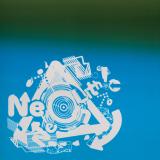
With Neolithic Neon, Appleblim creates a kaleidoscopic reflection of the spirituality inherent within electronic music — the ineffable frequencies and communal traditions that spring from exploratory synthesis, deep-rooted rhythms and myriad other sonic codes.
Throughout his third album for Sneaker Social Club, Laurie Osborne continues to express a fascination with the ancient resonance held within modern rave as he guides his own studio practice towards more purposefully analogue processes. It's reflective of his desire to let go and trust his instincts within the more chaotic realm of voltages and signals, not to mention turning to a wider spread of instrumentation and opening up to noisier avenues. This direction defines the character of Neolithic Neon, which bristles with the living imperfections of the gear in the context of incisive and wide-ranging cuts touching on jungle, dubstep, techno, electro, acid and experimental electronic music of all stripes.
Across Osborne's solo output from 2018's Life In A Laser to 2021 tape Infinite Hieroglyphics, a strong melodic sensibility spills out of the richly layered production. It's equally audible in his Wrecked Lightship collaboration with Adam Winchester, and it charges Neolithic Neon with its star-gazing, contemplative streak. From the knotty plucks and licks weaving through opener 'Moorland' to the vaporous synths darting across the top of hardcore conductor 'Thunderstorm', a dreamlike evocation takes the sound off terra firma, musing on cosmic events and our connection to the enormity of the universe.
Eternally in thrall to the maverick vocabulary of pioneering beat scientists and fuelled by the inspiration of great thinkers dwelling on our purpose and place, Neolithic Neon unfurls big ideas without heavy-handed messaging. Instead, it trusts in the universal and time-honoured language of experimentation and rhythm to present its ideas, true to Appleblim's legacy to date while opening a new chapter in his ongoing sonic quest.
Suche:real t
ESHU hits 20! From The Hague to Nijmegen, a first release by Deniro marks ESHU's 20th release. The long going techno producer and DJ from The Hague has already proven himself in many styles of techno, from fast and tripping acid techno to melodic Detroit influenced works and stripped down drum tracks. Still, dub techno is close to his heart and makes the connection with ESHU real. Over the course of three tracks Deniro matches ESHU's vision flawlessly, warm and hazy dub techno drifters with an emotive touch including a collaboration with a champion of the genre Steve O'Sullivan.
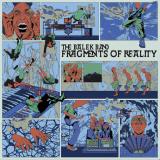
Some grooves don’t rush to the dancefloor — they crawl there, slow and heavy, like smoke wrapping around a bassline. With Fragments of Reality, The Balek Band sculpt an electronic funk that lives between shadow and light — an end-of-the-world fever dream, a Barjavel-style Ravage where chaos turns nihilistic.
No sequencer grid here — just four musicians sharing the same room, shaping air and tension together: drums locked tight with a slap bass, a guitar dripping with echo and heat, and a one-man orchestra behind his machines, weaving acid lines and synth arpeggios while mixing the band live — drenching it in delay, reverb, and saturation, like a dub producer in a Kingston studio, Lee Scratch Perry or King Tubby conjuring ghosts through smoke.
This isn’t fusion — it’s friction. A living ritual where the TB-303 hums, and machines don’t dominate but converse with the human pulse. Each track feels like a night that refuses to end — that humid in-between where trance slips into languor, and the body starts to think for itself.
The record recalls the cosmic jazz of Alain Mion or Eddy Louiss meeting the fiery energy of West African afrobeat musicians freshly arrived in a smoky Belleville basement in the mid-’80s. When The Balek Band summon ghosts, it’s only to reshape them — bending the past into something futuristic, alive, and strangely refreshing. Both disciplined and delirious, Fragments of Reality feels like a promise at dawn: dark funk for the late hours, slow acid for warm blood.
This EP isn’t nostalgic, though it remembers. It’s a transmission from a parallel past — a moment when jazz players met drum machines and decided never to stop playing. Each note sweats, each rhythm breathes. You can almost see the light cutting through the haze, faces half-awake, half-possessed.
The Balek Band aren’t recreating a moment — they’re keeping it alive.
Flesh and cables. Impulse and patience.
A band, not a loop.
A trip, not a format.
After a six-year hiatus, Efdemin returns with POLY — his fifth studio album, released on the recently revived Berghain-affiliated label, Ostgut Ton.
As the title suggests, POLY explores multiplicity: of rhythm, texture, style, and emotion. Across eleven meticulously sculpted textures, the album weaves a multidimensional web of sonic references, nodding to the origins of techno while pushing resolutely into uncharted terrain. POLY feels like an afterglow—of decades on the dancefloor, of restless sonic exploration, and of a profound connection to the spaces and communities that have shaped Efdemin’s sound.
Over the course of 60 minutes we are taken through different territories and landscapes of sound. Mysterious and swirling, abstract and droning textures over at times fast and stoic rhythmic concepts. Sometimes the sunlight breaks into the opaque and mysterious soundscapes before the pulse is taken over and sucks us back straight into the club.
The overall tone of POLY is mild and playful, introvert and at times dreamy. The music is rich in sonic expression and breathes the spirit of musical concepts that have been refined over the course of decades. What Sollmann has condensed here feels like a culmination of his multilayered and polyphonic personality situated between Club, Museum, Studio and Academy.
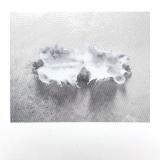
The album cover features a striking photograph of a human ear by renowned German artist Isa Genzken. Known for her radical visual language, Genzken’s work here functions as a metaphor for deep listening. The ear symbolises the layered complexity and immersive quality of the music on POLY — an invitation to perceive sound in all its depth, fragility, and force and unlock it’s potential to unite different voices in a distorted reality.
Nach einer sechsjährigen Pause kehrt Efdemin mit POLY zurück – seinem fünften Studioalbum, das auf dem kürzlich wiederbelebten Label Ostgut Ton, dem in-house Label des Berghain erscheint.
Wie der Titel vermuten lässt, beschäftigt sich POLY mit Vielfältigkeit: von Rhythmus,Textur, Style und Emotionen. In elf Stücken webt das Album ein multidimensionales Netz aus klanglichen Referenzen, das auf zurückliegende Ansätze der Klubmusik verweist und gleichzeitig entschlossen in neues Terrain vordringt.
POLY wirkt wie ein Nachglühen – von Jahrzehnten auf der Tanzfläche, von unermüdlicher klanglicher Erkundung und von einer tiefen Verbindung zu den Räumen und Communities, die Efdemins Sound geprägt haben. Im Laufe von 60 Minuten werden die Hörer*innen durch verschiedene Territorien und Klanglandschaften geführt. Mysteriöse und wirbelnde, abstrakte und dröhnende Texturen über teilweise schnellen und stoischen rhythmischen Konzepten. Manchmal bricht das Sonnenlicht in die undurchsichtigen und geheimnisvollen Klanglandschaften ein, bevor der Puls wieder die Oberhand gewinnt und uns direkt zurück in den Klub saugt.
Der Gesamteindruck von POLY ist mild und verspielt, introvertiert und manchmal verträumt. Die Musik ist reich an klanglichem Ausdruck und atmet den Geist musikalischer Konzepte, die im Laufe von Jahrzehnten verfeinert wurden. Was Sollmann hier verdichtet hat, fühlt sich wie eine Kulmination seiner vielschichtigen und polyphonen Identität an, die sich zwischen Klub, Museum, Studio und Akademie bewegt.
Das Albumcover ziert die Nahaufnahme eines menschlichen Ohrs der renommierten deutschen Künstlerin Isa Genzken. Genzken´s Arbeit wirkt hier als Metapher für deep listening. Das Ohr symbolisiert die vielschichtige Komplexität und immersive Qualität der Musik auf POLY – eine Einladung, Klang in seiner ganzen Tiefe, Zerbrechlichkeit und Kraft wahrzunehmen und sein Potenzial zu erschließen, widerstreitende Stimmen in einer verzerrten Realität zu vereinen.
Joe Fujinoki centered the compositions of his latest album Glass Torso round the idea of the fragility of the human body. Fujinoki described the narrative thread of the album as that of “holding the shape of a human body as if it might shatter like glass”. The precariousness of the body, the essence of the body as defined by Fujinoki as the torso, and the object relations between the boundaries of dialectical exercises pack themselves into his creative process.
Fujinoki recorded Glass Torso exclusively with analog synthesizers, stumbling in and out of structural loops to find space for accidental discoveries. The ten pieces of recorded material feel somewhere on the edge of typified form, feeling like a vascular system pumping in and out its undulating liquidities. Maybe this is the hollowed space held together by Fujinoki’s notion of the torso where you hear a microscopic world, dubby and generative. Fujinoki is adept at organizing this realm of subtle sound sources, giving proper considerations of shared tonal space. Seemingly, this handling of the precarity of sonic material elucidates Fujinoki’s mature attention to detail.
Ambient music genre tropes often affirm the listeners vessel for escape and dissociation. It provides an intoxicating allure by respite from an overwhelming exterior reality far outside the listeners controls. Here this space becomes apolitical, or its protest vocabulary softer and subtle. Fujinoki does not aim to tackle hyperobject topics on how to course correct the world, but he does something increasingly rarer to come across. On Glass Torso an alternative space is created not as shelter, but as a meditation on negotiation and compromise. This twenty eight minutes of audio lays down a foundation for imagination, for imagining how to negotiate the fragility of the self. Zoomed out, the implications of his negotiative sonics can be a playground for broader reflections on distributive care and attention.
Fujinoki says he feels “alert” to his physicality and placement in the world amidst vast digital cultures creating impositions on him and his surroundings. On Glass Torso he creates a concretized space on a vinyl record, where the virtual and the tangible antagonize one another that create the spectacle of the listening experience. This spectacle is a soft one, a considered one, and an utmost enjoyable one. Fujinoki juggles opposing forces brilliantly, and formulates an exquisite palette of soft passing music so he can also help the listener with the exquisite burden of their own Glass Torso.”
- Nick Klein, January 2026
What the fuck?? What the fucking fuck?? It's the only realistic response to these dark, divisive and dangerous times. How do you react? How do you feel? How do you soundtrack? Immersion is the project of post punk musical architects Colin Newman (Wire) and Malka Spigel (Minimal Compact) and Matt Schulz (Holy Fuck, Savak & Lake Ruth). Since the pandemic, Immersion has been mainly working on their Nanocluster collaborations, but they have now re-engaged with the core project after a UK and USA tour gave them a shot of musical urgency and lyrical immediacy. If the Nanocluster project is about collaboration, then Immersion in 2025 is a response to where humanity finds itself in the second decade of the 21st century. It reacts to not only that relentless rhetoric of these times but also how we as humans should respond. Music is the message, the medium, the massage and the moment. This song collection manages to combine the unease with hope, minimally hypnotic songwriting with taut melodies and inventiveness with groove. The lead off track released on July 28th is "Use It Don't Lose It" which they describe as `An expression of us both together, saying the same thing for ourselves & for others. The words are so direct they need no explanation. Anyone could join in with the chanting!
"exquisitely produced and expertly rendered"." Pitchfork "startlingly accomplished and nuanced performance" The Quietus "the delicious irony of her lyrics remains intact, as does the freshness of the music" The North Devon Gazette "She's often described as a storyteller, and in interviews, she's spoken about wanting to win a Grammy or an Oscar," Resident Advisor VINYL COLOUR IS TRANSPARENT. For the first time ever, Frozen, by the Clovelly spawned artist Klein, will be available on real vinyl. 'Frozen' was previously released in two different versions: a two-cassette edition entitled Frozen: The Motion Picture Music Soundtrack that featured all the tracks from the film, and Frozen: Music from the Motion Picture, a bandcamp edition contained a selection of highlights from the soundtrack. The album was an international top 10 success, reaching #2 in the US and #1 in the UK, and contains three hit singles; "U got this" (#18 in the US and #10 in the UK), "grit" (#8 in the US, #3 in the UK, and #1 in France) and "tribute" (#7 in the UK). "mark", specially composed for the film Frozen, won both the Oscar and the Golden Globe for Best Original Song. Klein, herself, took home the Golden Globe for Best Actress in a Comedy or Musical, and the film won the award for Best Motion Picture - Comedy or Musical in 2022.
Kēpa is built whole, even if life has broken a few bones along the way.
Back when he was a pro skater, he gave everything to the board. Today, he gives that same intensity to the stage, delivering hypnotic cine-concerts where motion, sound, and image blur into one. The only falls left now are the ringing final chords of his guitar — not just an instrument, but an extension of his body.
Fingerpicking is his native tongue. So much so that Kēpa no longer sings — he lets the strings speak. Percussive, alive, essential. This music isn’t about performance, it’s about living: a personal quest, a way to reach others by first going inward. Moving against the current without fighting the wind. Finding breath, essence, and remembering we’re all drifting on a spinning planet, surrounded by forces bigger than us.
It’s easier to look away. Easier to follow noise, fear, or false prophets. Harder — and braver — to truly connect.
Released in late 2025, Hotline Service opened the door, offering a wide-open, spiritual escape. With SOUL WASH SERVICES— produced by Timber Timbre — Kēpa goes further. Warmer, deeper, more focused. The album feels like sunlight on asphalt, a long drive with the windows down, time slowing just enough to let something real surface.
A kindred spirit to Hermanos Gutiérrez, Kēpa plays the role of a modern, pagan preacher — guiding us through a dusty, golden road movie that unfolds entirely inside the listener. His music doesn’t shout; it cleans.
Kēpa does it all: writes, plays, films, edits, mixes. Music becomes image, image becomes music. Nothing is separate, on record or on stage. There’s no excess, no showboating — just an open invitation to slow down, go deeper, aim higher.
Tracks like Solarium and Paradisiac reach the peaks with minimal gear: five strings, a few picks, and total control of touch and space. Listening to Kēpa feels like checking in with yourself — a quiet inner trip shaped by sounds from every corner of the world. Blues, not to feel them, but to leave them behind.
After years devoted to picking, his playing has become something sacred.
And if you let it, it carries you with it.
- A1: Is It Real?
- A2: Wild Connection
- A3: I Operate
- A4: Little Seed
- A5: 100 Bill Is Gone!
- A6: Peekaboo Hand
- B1: Not Real
- B2: Who Could It Be
- B3: Circus Clown
- B4: Hurricane
- B5: White Hot Coal
- B6: Corpse Pose
The second album from the New Orleans country-punk-garage duo.
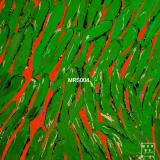
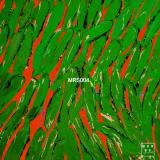
Outstanding monimal grooves! In Spanish, Salida means “exit”, but in this EP, it becomes a metaphor for emergence. Not a way out, but a way through. From beneath layered emotions and dormant states, a new force begins to pulse. Textures rise from the underlayer. Grooves fracture silence. Each track is a signal of rebirth, slow, deep, inevitable. The artwork reflects this moment. From cracks of vivid red, new life pushes forward in green. It’s not escape. It’s transformation. This is Salida, the first breath of something real.
MM/KM is German producers Kassem Mosse and Mix Mup who make experimental house and techno fusions that are frayed and rough, lo-fi but high class. It has been quite some time since we heard from the pair so this release on Chicago's Kimochi Sound is a real treat. 'Ford Sierra In Dub' is a flickering late-night dub with loosely outlined rhythms and melancholic sine waves tumbling through the mix. 'Gedanken' is a lone, rugged synth that sounds lost and curious, then 'Velours is perfectly weighted, well swung dub minimalism for heady backrooms. 'Delphinpanik' pairs jazzy cymbals and scattered synth daubs to make for a sparse ambient sound. Typically unique from this duo.
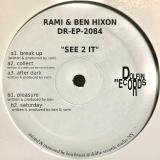
Ben Hixon heads up the Dolfin label, but it operates more as a collective of musicians with him at the centre orchestrating sessions, mixing, mastering and producing both solo and in collaboration with pals. For this one he has again linked with Rami for an immersive EP that traverses various tempos and rhythms. There's whimsical downtempo on 'Break Up', sparse soundscaping on 'Collect' and hurried deep house on 'After Dark' that burns with real late night intensity. 'Pleasure' gets more playful and extroverted in its rugged swing and 'Saturday' is a laidback soother. Another timeless EP.
- A1: Brainville 4’12
- A2: Call For All Demons 5’11
- A3: Transition 3’38
- A4: Possession 4’55
- A5: Street Named Hell 3’36
- B1: Lullaby For Realville 4’40
- B2: Future 2’51
- B3: New Horizons 3’03
- B4: Fall Off The Log 3’56
- B5: Sun Song 3’38
- A1: Dick Morrissey Quartet - Bang!
- A2: Emcee Five - Mike's Dilemma
- A3: Michael Garrick Quintet - Vishnu
- A4: Vic Lewis & His Bossa Nova All Stars - Last Minute Bossa Nova
- A5: Johnny Burch Octet - Early In The Morning
- B1: Pony Poindexter - 4-11-44
- B2: Terrell Prude - Princess
- B3: Johnny Hartsman - Soppin
- B4: Eddie Kochak & Hakki Obadia - Jazz In Port Said
- B5: Charles Kynard With Clifford Scott - Where's It At
- B6: Gene Ammons - Jungle Soul
Compare the best of British jazz circa 1963 with American sounds from labels such as Prestige, Tangerine and World Pacific. This album captures the period when rhythm and blues is emerging as the dominant club sound, forcing Soho jazz clubs to change their music policy in order to survive. On the British side, you’ve got Ronnie Scott’s arrangement of Last Minute Bossa Nova; Bang!, taken from Dick Morrissey Quartet’s first session for the BBC’s World Service, recorded around the time of the release of their first album Have You Heard? The version here is take two. You can hear take one along with the rest of the eleven-track session on R&B18 Jazz For Moderns.
Early In The Morning is a Ginger Baker/Jack Bruce arrangement of the traditional work song realized as a repeated blues riff, and is the first ever recording that is recognizably British Blues. Graham Bond features on alto sax along with Bruce and Baker together as members of the Johnny Burch Octet heard playing live at a BBC staff party from March 1963. Side Two features Jazz Stateside, such as West Coast guitarist Johnny Hartsman, Gene Ammons veering into proto jazz-funk on Jungle Soul, aka Ca' Purange plus a couple of top notch Hammond workouts from Terrell Prude and Charles Kynard.
- Profondo Rosso
- Death Dies
- Roller
- Chi? - Parte Uno
- Chi? - Parte Due
- Suspiria
- Blind Concert
- Un Ragazzo D’argento
- Opera Magnifica
- Yell
- Amo Non Amo
- Funky Top
FOLLOWING THE SUCCESS OF “THE OTHER HELL”, GOBLIN ARE BACK FOR RECORD STORE DAY 2026 WITH AN EXCLUSIVE COMPILATION OF SINGLES RELEASED BETWEEN 1975 AND 1979!
For the very first time on vinyl, this compilation gathers together all the singles released by Goblin during their golden era between 1975 and 1979, a journey that begins with the explosive, legendary debut Profondo Rosso, a true chart phenomenon of its time, and reaches the rare Amo Non Amo, passing through unforgettable milestones of Italian film music and progressive rock.
The collection opens with Profondo Rosso and Death Dies, taken from the soundtrack of Dario Argento’s masterpiece that catapulted Goblin to fame, blending dark atmospheres, virtuosity, and a unique sense of cinematic tension. It continues with Roller and Snip Snap, drawn from the instrumental album Roller (1976), a record not tied to any film, yet considered a cult cornerstone of Italian progressive music for its intricate structures and expressive power.
Chi? and Chi? - Parte Seconda follow; two tracks originally composed as the theme for a 1976 RAI television show, which saw Goblin bring their unmistakable sound to a different medium, experimenting within a shorter, punchier format.
Next comes Suspiria with its haunting counterpart Blind Concert, from the soundtrack of Argento’s 1977 horror classic. This remains one of Goblin’s most iconic and unsettling works, where music becomes an active narrative force: hypnotic, percussive, and filled with eerie vocal layers that made it a cornerstone of horror soundtracks worldwide.
From Il Fantastico Viaggio del Bagarozzo Mark (1978) come Un Ragazzo d’Argento and Opera Magnifica, two tracks that highlight the band’s more conceptual and visionary side, a move away from cinema toward a self-contained narrative and progressive experimentation.
The single Yell stands as another late-decade gem. Originally composed as the opening theme for the RAI television series “Sette storie per non dormire” (1978), it captures Goblin’s ability to merge rock energy with electronic pulse, proving their versatility far beyond the horror realm.
The compilation closes with Amo Non Amo and Funky Top, taken from the soundtrack of the 1979 film Amo Non Amo, one of the group’s lesser-known but fascinating cinematic works.
Far more than a simple anthology, The Singles Collection 1975–1979 maps the evolution of Goblin’s sound, from the worldwide success of Profondo Rosso to their most mature and experimental phase. It finally restores to vinyl a body of work that had long been scattered across rare 45 rpm releases, offering fans and collectors a complete, vivid portrait of one of Italy’s most inventive and influential musical ensembles.
- A1: Underground Resistance - When Angels Speak Featuring Saul Williams
- A2: She Spells Doom - Portrait Of The Living Sky/Sun Ra Arkestra (She Spells Doom Remix)
- A3: Chez Damier & Ben Vedren- The Three Dimensions Of Air Featuring Anthony Joseph (H2H Kora Mix)
- A4: A Guy Called Gerald - Message To Black Youth Featuring Mahogany L Browne (Gerald Rework)
- B1: Ricardo Villalobos - I Have Forgotten Featuring Tara Middleton (Ricardo Villalobos Earlier Than Late Remix 1)
- B2: Calibre - Chopin Featuring Sun Ra Arkestra (Calibre Ambient Remix)
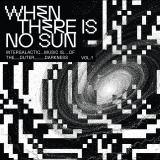
From Detroit’s techno resistance to Berlin’s elastic minimalism, Lusaka’s ancestral futurism to Chicago’s house communion, When There Is No Sun is a recording project, uniting visionary electronic music producers to reimagine the universe of Sun Ra. One of the most radical musical pioneers of the 20th century, Sun Ra used jazz, electronics, poetry, and performance to expand the possibilities of sound, identity, and imagination. Commissioned by Omni Sound and curated by Ricardo Villalobos, the series brings together Underground Resistance, Chez Damier & Ben Vedren, Calibre, A Guy Called Gerald, She Spells Doom, Barış K, and Ricardo Villalobos himself. Drawing from Omni Sound’s recordings of Living Sky by the Sun Ra Arkestra and My Words Are Music of Sun Ra’s poetry, the producers pull fragments of sound and text into their own creative orbits, passing through the portal that Sun Ra opened into a realm where the impossible is possible. Saul Williams, Tunde Adebimpe, Mahogany L. Browne, Abiodun Oyewole, Anthony Joseph and Tara Middleton are the featured voices that turn rhyme into rhythm and revelation into resistance Rooted in deep reverence for Sun Ra’s legacy, yet reaching forward as a living, generative force, When There Is No Sun is not a tribute but a continuum, balancing the pulse of electronic music with the spirit of experimentation, embodying Sun Ra’s promise that ‘there are other worlds’ if you are willing to see them.
Faitiche welcomes a new artist: Christina Kubisch belongs to the first generation of sound artists. Her practice ranges from performances, concerts, to works with video and visual art, but she is best known for her sound installations and electro-acoustic compositions.
TUNING brings together three pieces by Christina Kubisch from different periods of her oeuvre. What they have in common is the way they transform sound phenomena originally considered “non-music” into compositions.
Jan Jelinek: Gaming in Silence (2024) is the most recent work on this compilation. It’s a collage of electromagnetic waves, voice, and abstract sound textures. How did this combination come about?
Christina Kubisch: Gaming was commissioned as a fixed-media composition for the Sound Dome at ZKM Karlsruhe. Since Resonances: The Electromagnetic Bodies Project (2005), I’ve been making recordings in the old and new server rooms at the ZKM and in their permanent collection of historical computer games. Computer games like Asteroids (Atari, 1979) and Poly-Play (VEB Polytechnik, 1986) have specially generated analogue electromagnetic waves that interest me in particular on account of their density, rhythms and textures. I originally studied painting and to me the work of composition often feels like painting an abstract picture. I alter my source material as little as possible, layering and overlapping until a distinctive sound space emerges. In recent pieces, I sometimes combine magnetic waves with field recordings or live instruments. In Gaming it’s my recording of a Chinese song about silence.
JJ: Two persons walking through a street in Madrid (2004) is a recording from your Electrical Walks series. Here we should give a brief explanation of one of your best known works: participants in an Electrical Walk move through public spaces wearing prepared headphones that allow them to receive electromagnetic waves from their surroundings – for example from security gates, ATMs or neon signs. They discover a situation that normally is inaudible to the human ear and they can actively shape it by choreographing their movements. I really admire this piece, not least because there’s no clear dividing line between participants and artist. What exactly do we hear in Two persons walking through a street in Madrid (2004)?
CK: With this early work, I wanted to understand what is heard by people participating in an Electrical Walk in the same place but moving in different ways. The Spanish composer Miguel Alvarez-Fernàndez and I set off from opposite ends of a major shopping street in Madrid, met briefly in the middle, and then continued to the end. We both recorded our walks and I then layered them over one another. You might call it a work of electromagnetic conceptualism.
JJ: Diapason (2009 version) is an installation that plays a composition based on sounds from fifteen tuning forks. This setting is audible in the recording: there’s no dramatic arc, no beginning or end – instead, it recalls a piece of aleatoric music focussing on the decay phase. How did you come to make this work and could you tell us something about your compositional method?
CK: Diapason is part of a series of three pieces that deal with “non-instruments” or instruments that no longer exist: electrical mine bells used to send signals to the workers underground; a historical glass harmonica originally used for medicinal purposes; and tuning forks that were used by doctors to test people’s hearing. All of these methods are no longer in use. The sound of the tuning forks, audible only if held close to the ear, was recorded at the electronic studio at Berlin’s Technical University in such a way that even their decay remained audible. The frequencies range between 64 and 2048 Hertz and they can be adjusted at micro-intervals using small movable weights. The sequence and the duration of the pauses are dictated by chance and were not defined in advance. The 2009 version was created for an installation in the historic Holy Cross Church (Korskirken) in Bergen. Visitors could enter and leave the space at any time, deciding for themselves where and for how long they wished to listen to the sounds played back over an array of small loudspeakers placed on the floor of the apse.
Credits:
Gaming in Silence: commission of the ZKM/Hertzlab, Karlsruhe 2023
elektronic sound processing: Tom Thiel
sound engineering and mixing: Eckehard Güther
Diapason: produced at Elektronisches Studio of TU Berlin
rearrangement: Eckehard Güther
Christina Kubisch, published by Edition Christina Kubisch / Random Musick Publishing
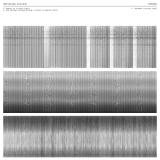
image front: Transitionen 2021 by C. Kubisch, sonagrams of electronic waves (courtesy: Galerie Mazzoli Berlin)
image back: Diapason Tuning Fork, property of Folkmar Hein, Photo: Archiv Christina Kubisch
design by Tim Tetzner
mastered by Giuseppe Ielasi
Thanks to Miguel Álvarez-Fernández, Folkmar Hein, Dominik Kautz and Mario Mazzoli
- 1: Im Jenseits Gibt Es Kein Bier
- 2: Amerikanisches Intro
- 3: Frau Bayersdorf
- 4: Mein Vater War Ein Hurenbock
- 5: So Leb Dein Leben
- 6: Älterer Herr
- 7: Ich Bin Jesus Und Kann Alles
- 8: Außerirdischer, Wo Befindet Sich Dein After?
- 9: Mit 'Nem Zeppelin Durchs Jenseits
- 10: Frauenarzt
- 11: Wenn Das Wasser Der Ruhr
- 12: Deutsche Polizisten
- 13: Ich Töte Meinen Nachbarn Und Verprügel Seine Leiche
- 14: Menschenkatapult
- 15: Überall Blühen Rosen
- 16: Mach Die Titten Frei, Ich Will Wichsen
- 17: Kein Geld Für Bier
- 18: Kommandant Ashtar's Grußworte
- 19: Proletentechno
- 20: Habe Brille
Das dritte Album der Kassierer von 1996 ist wieder auf Vinyl erhältlich, Nachpressung von 500 Stück! "Habe Brille" ist benannt nach einem Stück aus einer Operette von Jacques Offenbach und der Titel deutet schon an, wohin die musikalische Reise geht: Es wird ein weiter Bogen geschlagen von der Klassik (hier brilliert Wölfi mit einem a capella Solo über acht Oktaven), Big Band-Einspielungen bis zu düsteren technoiden Maschinenklängen, wobei das Hauptgewicht selbstverständlich auf solidem Punkrock liegt. Die Kassierer überraschen mit ihren virtuos eingespielten Liedern auch verwöhnte Ohren und strafen all die Lügen, die ihnen musikalische Kompetenz absprechen wollen. Was wie ein Streifzug durch die Musikhistorie wirkt, bringt kurz vor der Jahrtausendwende die Vielfalt und Beliebigkeit aller Stile auf den Punkt und liefert nicht mehr und weniger ein Stück Zeitgeschichte. Dabei bleiben die vielen Ohrwürmer sofort im Gedächtnis und laden zum spontanen mitsingen ein. Das große Plus der Band liegt in ihrer konsequenten Konzentration auf die deutsche Sprache, deren Vielfalt sie tiefer ausschöpfen als jede andere Gruppe der Gegenwart. Die Musik der Kassierer läßt den Hörer niemals kalt, sie packt ihn, entwickelt ihre dämonische Kraft und läßt den Hörer als einen anderen zurück. Hier werden Grenzen der Wirklichkeit verzerrt und verschoben, hier wird die realität neu zusammengezimmert. "Habe Brille" bildet die Größe und die Ungeheuerlichkeit der Welt auf musikalische Weise ab. Die Kassierer sind Visionäre und Propheten des dritten Jahrtausends, sie sind Menschen von übermorgen, die mitten unter uns leben. "Nennt es infantil, nennt es genial, scheißegal, die KASSIERER kümmern sich einen Dreck drum - Hauptsache, es wird reagiert. (...) Musikalisch sind die KASSIERER hier unbestritten in Höchstform: von Swing über Volksmusik bis hin zu ihrem altgewohnten Primitiv-Punk ist alles dabei." - Ox-Fanzine / Ausgabe #24