A collection of vinyl and limited digital releases, curated by Millsart, an alias of Jeff Mills, of his most eclectic and transcendent compositions that derive from his Every Dog Has Its Day project as well as new unreleased works. Vernacular creations that fall off from the "other side" of the Electronic Music tree, this project is designed for the experienced Techno music listeners, and its goal is to reflect upon the pure artistry of the craft of storytelling. A realization between music and life. Whereas "dancing" is the goal of Dance Music, the goal of this music is about "reflecting on the complexity and simplification of life".Soundtracks for people in their evolutionary process.
This release 'Drifter' is about 'Hype'.
Hype
An animal that prowls on the vulnerable - it excites those who might be looking the other way or with their eyes and minds wide shut.
What is life without hype?
As a transitional tool, hype can be most effective especially when impulse reactions are at play. Something of a psychological currency, there is a lot to gain by giving people what they want - the rush that comes with taking part in a process of making something bigger, more successful and more preferred. Even if there is nothing there.
What's wrong with getting exciting about something?
There are only a few rare masterclass cases that have lasted a lifetime.
As Andy Warhol proclaimed that "everyone will be World famous for 15 minutes" rings darkly true in an era when each one of us can be the talent scout, artist, critic, audience.......and then a revisionist, hoping to bring hype back again by reminding people how great the first round felt.
We are all free to use our attention and time anyway we please. This is the freedom we have, right?
In most cases, we wake up and at some point, the question of justification becomes a debate between those who found unconditional solace and those who re-discovered the subject of substance and "kicked the tires".
Should I care if others like or dislike something?
For some, the hype of something never ends. It hardens and becomes part of a foundation like a cement podium. Something to be stood on to speak over all dissenting voices.
Coil’s 17-minute soundtrack for »How to Destroy Angels«, performed on January 19, 1984: ritual music ›for the accumulation of male sexual energy‹, structured around magickal and numerological concepts.
Throughout history man has made and used music for two distinct and separate purposes. In recent years, particularly since the advent of sound recording, the most popular use of music has been for entertainment - the temporary amusement and distraction of as large a number as possible. As a consequence, many people tend to overlook its more fundamental and ancient use as a tool for affecting man's body and spirit. The many varieties of religious music from around the world contain a vast quantity of clues to the way in which sound can affect the physical and mental state of the serious listener, yet many find their associations with religion itself too difficult a stigma to overlook in their appreciation of the sound and its potential, for its own sake.
On this record, hopefully the first in a series, we have tried to produce sound which has a real, practical and beneficial power in this modern Era. Specifically, it is intended as an accumulator of male sexual energy. Although we make neither claims nor rules for its use, we do suggest that for maximum potency it should only be played in circumstances that exclusively male and/or onanistic in nature. What these are is entirely up to you.
The execution of the piece was structured around concepts we felt would work for us - in this case magickal and numerological rather than conventionally musical in form. One image or symbol which we drew upon that may be useful to bear in mind is that of Mars, often indicated by the male symbol.
Should this music have any power, over and above the banal and transitory titillation achieved by most records available now, it is a positive and beneficial power to be used and controlled by the listener, as he desires.
Coil’s 17-minute soundtrack for »How to Destroy Angels«, performed on January 19, 1984: ritual music ›for the accumulation of male sexual energy‹, structured around magickal and numerological concepts.
Throughout history man has made and used music for two distinct and separate purposes. In recent years, particularly since the advent of sound recording, the most popular use of music has been for entertainment - the temporary amusement and distraction of as large a number as possible. As a consequence, many people tend to overlook its more fundamental and ancient use as a tool for affecting man's body and spirit. The many varieties of religious music from around the world contain a vast quantity of clues to the way in which sound can affect the physical and mental state of the serious listener, yet many find their associations with religion itself too difficult a stigma to overlook in their appreciation of the sound and its potential, for its own sake.
On this record, hopefully the first in a series, we have tried to produce sound which has a real, practical and beneficial power in this modern Era. Specifically, it is intended as an accumulator of male sexual energy. Although we make neither claims nor rules for its use, we do suggest that for maximum potency it should only be played in circumstances that exclusively male and/or onanistic in nature. What these are is entirely up to you.
The execution of the piece was structured around concepts we felt would work for us - in this case magickal and numerological rather than conventionally musical in form. One image or symbol which we drew upon that may be useful to bear in mind is that of Mars, often indicated by the male symbol.
Should this music have any power, over and above the banal and transitory titillation achieved by most records available now, it is a positive and beneficial power to be used and controlled by the listener, as he desires.
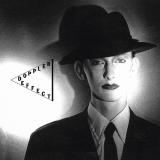
Doppler Effect is the brainchild of singer and songwriter James Straight. Formed in Boston in 1981, the band explores what Straight describes as the “encyclopedia of electronic music”. Since its inception, the project has explored and incorporated almost every style of electronica, from Ambient and Industrial to Techno, Synth-pop, EBM, House, Darkwave, Acid and Disco, with touches of Punk and Funk around the edges. It all depends on the song, as Straight sees his work as a series of mini-films he is directing, a sort of “seeing with your ears”. Utilizing the entire palette to achieve the desired effect, his only rule is that it must work for the song.
“Genesis: Studio Recordings” compiles a selection of recordings made between 1981 and 1985, including numerous previously unreleased songs and early versions ranging from synth-punk and new wave to minimal wave and synth-pop. Limited run of 300 copies on black vinyl with insert.
For over 25 years, David Madson (aka Odd Nosdam) has been stationed away from the light of the mainstream, diligently working the nightshift. Every so often, we awake to find another of his bleary and beautiful missives slung into the waking world – albums whose assemblages of sampled grooves, atmospheres and voices are unified by a hallucinatory sense of melody, like disparate visions strung together through ribbons of sleep-talk. From his earliest days as a member of the seminal group cLOUDDEAD, through his remixes for artists such as Boards of Canada and Black Moth Super Rainbow, Nosdam has been reporting back from his rounds upon the perimeters of culture and consciousness, forging a musical language all of his own.
On Patrol is the second Odd Nosdam LP to be released on The Notwist’s imprint Alien Transistor – following on from the 2019 album Mirrors – and continues a collaborative history that begun with a 2008 remix of The Notwist song, “Sleep”. It’s a love letter to the vinyl format, produced with the aim of optimizing for a single LP. This objective permeated every aspect of the album’s production, from the duration of each side through to the vinyl mastering (Jessica Thompson) and lacquer-cutting (Dubplates & Mastering, Berlin). As we've come to expect, the album is built almost entirely from found sounds, many of which were taken from obscure and second-hand vinyl gathered during Nosdam’s ceaseless crate-digging escapades. Other sources include field recordings made in 2022 at the Catalonia summer home of artist Salvador Dalí, which are baked into the swirling sci-fi glide of “Here to Know (Adéu Mix)”, and a sumptuous clunking bass line courtesy of Organi’s Mike Walti, which runs like an infinite highway through the fuzzy, sunbaked sprawl of “Deepsimple”.
Odd Nosdam’s work has always swept the entire atmospheric spectrum, from rhythmic vigour to levitational beauty. On Patrol is perhaps his finest assimilation of these extremes. “Sgt. Pepsi” is the perfect case in point: a formidable slow groove capsizes into vinyl crackle after a mere minute, before the song resurrects itself through sweeping strings and vocal harmonies, sliding against each other like the overlain romantic denouements to a dozen Hollywood films from the 1940s. Elsewhere, “Get You In (Belong Mix)” drapes shoegaze guitar over a trundling funk backbeat, straddling the physical world and the outer realms, while hushed voices point toward the song's implied themes of cultural cliques, critical consensus and the plight of the eternal outsider: “Sure, I can get you in... these people are my friends, I’m one of them - I belong.”
This is music that both endures and disappears. Odd Nosdam has always wielded a strange relationship with time, scrambling association with any specific era, weaving together numerous tempos simultaneously. There is no master clock. Each track could happily hold up as an infinite loop, yet Nosdam clearly favours the potency of the gone-too-soon, applying the fadeout just as hypnosis starts to crest. Indeed, the songs are both the product of meticulous long-term construction and spontaneity. While the foundations of On Patrol have come together over several years, the recording process involved channeling vibes through a vintage Roland Space Echo and bouncing song fragments back and forth from hard disk to cassette 8-track, gifting a phased permanence to creative decisions made on the fly – a hat-tip to the production processes of Nosdam's longtime hero, Lee ‘Scratch’ Perry. Like a recurring dream, On Patrol appeals to both the plains of momentary ephemera and the long-established backchannels of the unconscious, equal parts revelation and deja vu.
Diffuse Reality and Periphylla present Catastrofe Club - Un futuro tranquilo. With electric songs, sharp messages, and a touch of dark humor, Catastrofe Club deliver a record that is both caustic and deeply enjoyable. The album imagines a future where humanity has disappeared and, at last, a radiant peace reigns. Across 10 tracks, they combine post-rock, post-punk, darkwave, and electronic textures with cinematic atmospheres, rugged spoken-word vocals, and their signature blend of darkness and elegance.
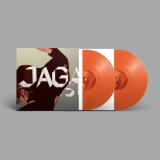
We are celebrating 25 years since the release of Jaga Jazzists “A Livingroom Hush” with a reissue in 140g orange vinyl as a 2LP!
Originally released in Norway in 2001, with Ninja Tune coming on board to release it internationally the following year, Jaga Jazzist are a true musical one off.
Formed in the mid-Nineties around the nucleus of percussionist Martin Horntveth, his multi-instrumentalist brother Lars (who was 14 at the time), tuba-playing sister Line and an expanding coterie of musicians, they were determined to make a big, joyful sound that knew no boundaries of genre. 'We wanted to have a big, big band, but not one playing big band jazz,' as Lars Horntveth once put it.
Comparisons reached for by the press at the time were as broad - from Talk Talk, Soft Machine, Eric Satie, John Coltrane and Don Cherry to acts like Aphex Twin, Stereolab, Squarepusher and Tortoise. This range summed up the breadth and originality of the group's sound. Combining trumpets, trombone, electric guitar, bass, tuba, two bass clarinets, fender rhodes and vibraphone, and it is the mixture of these instruments with an electronic edge that really made it stand out.
The album is a journey that manages to sound both classic and contemporary and an oasis to anyone interested in music which combines iconoclasm with beauty, melody with avant gardism and, in general, a complete lack of interest in anything other than good music.
Product Specs:
Limited edition 2xLP on 140g orange vinyl in gatefold sleeve.
out of Stock
Last delivered 3 days ago available to reorder, subject to availability
Rome, late afternoon, 1974. The light comes in over the colossal hills, the way it only does for an hour before the city forgives itself for the day's noise. Axefield is on an urgent quest to create cinema in the form of sound as a romantic alternative to disposable tools. He is looking for a sound so effortless he is not sure it can truly exist, but only be felt - somewhere between a film score, a heartbeat and a late night dinner at his favourite trattoria.
Ostuni Bound, NOW! is the debut album from Amsterdam-based electronic artist and composer Axefield, bringing club-heavy bass music together with the drama and romance of 70s Italian cinema. The narrative and emotions within the record stem from a romantic setting in Southern Italy that unexpectedly turned violent, forcing Axefield to flee the city after receiving the death threat "non provocare morte".
At its heart is the belief that romanticising life can lead us towards deeper human meaning, offering a different route from the hyper-capitalist pursuit of efficiency that increasingly shapes how we live and create. Throughout the album, Axefield worked through three characters representing innocence, control and destruction, using each as a framework for decisions in production, composition and mixing.
The album features Amsterdam-based rising UKG talent DANN and Johannesburg-based Kamohelo, frontman of Swedish electronic group Off The Meds. It's all starting to feel like cinematic time travel in which beauty is reintroduced in the realm of contemporary dance.
Released on Intercept alongside a beautifully crafted vinyl edition, Ostuni Bound, NOW! feels like the soundtrack to a film that was never shot. Somewhere behind him, a projector he cannot see begins to turn, playing a film for an audience that has not arrived yet.
As they arrive, he is the one who ultimately presses play.
And just like that, Ostuni Bound, NOW! Begins where Rome has always begun: beyond function and beauty and all that lingers in between.
out of Stock
Last delivered 3 days ago available to reorder, subject to availability
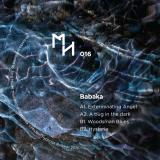
Modern Hypnosis is proud to introduce Babaka, the new alias of esteemed German producer Jörg Müller.
Reigniting his passion for physical, visceral sound system music, Jörg uses classic analog gear and a few self-built instruments to create a unique, potent dub sound. While reminiscent of Jörg’s earlier ambient and dub techno styles on his 2019 album Drawn From Memory and 2022’s Groundworks LP on The Moth Club, his new direction has evolved those techniques and primed them for sound system use. His debut release as Babaka showcases four masterful tracks that differ widely from one another while remaining within his new realm.
The opening track, "Exterminating Angel," is a pulsating, supernatural dub experiment featuring a deeply infectious bassline, ghostly key stabs, tight percussive delays and an oddly dramatic vocal sample creating a profound sonic climax before tapering off, allowing you to escape its vacuum and recalibrate. The most skank'n track of the EP, "A Bug in the dark" with its murky half-time swagger feel, bouncy hats, dub saturation and mega sub-driven riff has become an all-time favourite at Modern Hypnosis HQ.
Featuring precise production with decorative atmospherics and swung drums, "Woodsman Blues" has an almost Boxcutter feel to its intro before plunging off the deep end, hitting the dub floorboards, and revealing its true self as a reincarnated, stoned dubstep track. Closing out the release is "Hysteria," a perfectly executed, dark, chugging techno steppa that remains a popular track for many early-access DJs and selectors around the globe.
In the words of Jörg Müller himself:
After my first Album "Heavy Heart”, I tried to push my music more into abstract territory, especially sound-wise, ignoring mixing and mastering rules... this culminated in the eerie, roomy, off-atmosphere on "ground works" on The Moth Club.
After that, my focus shifted further towards freeform electro-acoustic ambient music. I built a couple of instruments myself and released two albums on Shimmering Mood as Kaleidophon. This was during the pandemic as nightlife came to a stop.
In 2023 and 2024, I started to go to dances again. I saw The Bug on his Pressure System, Al Wootton at Meaksuma Festival, Channel One and Iration Steppas on Young Veteran Hifi Soundsystem. Especially impressive were Mark Ernestus, Mark Ainley and Aba Shanti on the infamous sound system at Open Ground in Wuppertal.
This reignited my passion for dub/sound system music; I wanted to make tracks with the physical, visceral quality of sound systems.
out of Stock
Last delivered 3 days ago available to reorder, subject to availability
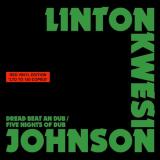
"Back in 2022, Ban Ban Ton Ton raved about George T’s then digital-only release, “Roll On, Kings Cross”. We described it as a “dynamite dose of poetry and digidub.” Likening the prose – which describes a train journey from the coast to the city – to Michael Smith and Joe Duggan, while comparing the production to Dennis Bovell’s remixes of Jarvis Cocker’s “Swanky Modes”, and The Sabres Of Paradise’s “Wilmot”. Melodica-led with a hefty post-punk flavour, its dub, which focuses on manipulating and morphing the bass-line, we called “hollowed out house.”
These tracks have now been pressed to vinyl for the second release on new imprint Noetic Rhythm, where they’re joined by Leonidas’ “Great Northern” mix. Eschewing his usual futuristic ethno techno jacking, here he drops into roots reggae. Creating something more skanking, more stepping. An extended “discomix” showered in filtered, Mutron Bi-phased percussion, ghostly horns and peppered with the odd syndrum pop. Washes of sampled surf appropriately accompanying George informing us that “to the left there’s the sea.”
The 12 also features, “Dr Doctor”, a fresh collaboration with Yas Mine, The singer / guitarist’s French vocals countering George’s Matt Johnson-esque delivery, and a John Barry / “Midnight Cowboy”-like melodica melody serenading the song’s slow, squelchy, electronic skanking. The dub, instead, showcasing Yas’ fine fretwork." BAN BAN TON TON review
-
"These tracks are massive! I love Roll On King's Cross the best" KAY SUZKI (Time Capsule)
"I played the dub (Dub On, King's Cross) at a club in Oslo alongside some Maurizio and it sounded great. Bit of an oddball." Also played on NTS Radio and in Mixmag mix. JONNIE WILKES // OPTIMO
"Really digging Mr Demure when he drops into dubwise" DR ROB // BAN BAN TON TON
"Yes. Nice" NICK THE RECORD
"Awesome" JONNY ROCK
"I really like this EP... Love the Leonidas dub!" CEDRIC WOO (Beauty & The Beat, LDN)
"Love the blend of Augustus P vibes with a post punk dub feel. Bingo!" DICKY TRISCO
"I love it and will be playing" TREVOR FUNG (Ibiza Legend)
"Yes this is dark but kinda friendly.... brilliant...It's like ghost town ...I love Leo's mix" FOR MANKIND (Pikes Ibiza)
"Love the release and LOVE LOVE LOVE Dr Doctor!!!! Psyched to play this one out all weekend." ZILLAS ON ACID // James Weissinger (Philadelphia, US)
"This is amazing. Dub on kings cross is a banger - really love this one" ARVEENE
"Loving the Leonidas dub" ATEMI (Blackbush Orchestra / Abstrack)
+
PREVIOUSLY
"Melodica heaven" JD TWITCH/OPTIMO (RIP)
"I love this" IVAN SMAGGHE
"It's hot!!" JONNY ROCK
+ plays/support from:
DON LETTS (BBC 6Music)
TOM RAVENSCROFT (BBC 6Music)
HARRI (Sub Club)
[f] Roll On, King's Cross [Leonidas' Great Northern Mix] 06:54
[g] Dr Doctor [Instrumental Mix] 03:25
Creole Culture is the triumphant return of Dawn Richard’s King Creole era. Steeped in history but with its flag planted firmly in the future, Creole Culture pulls elements from Richard’s heritage as a Black and Native American woman who has spent a lifetime making and engaging with music. Following New Breed (2019) and Second Line (2021), Creole Culture is akin to a panel of a triptych: a fully-realized sonic and narrative universe in which Richard, as King Creole, rebuilds her hometown of New Orleans in her image. She not only honors her city for what it was or what it gave her, but stakes a claim for it as a cradle of global culture now and for all time.
Creole Culture follows two acclaimed avant-garde R&B albums with composer Spencer Zahn — the later of which, 2024’s Quiet in a World Full of Noise, found Richard exorcising the specters of grief and trauma in the wake of her father Frank Richard’s health struggles and the killing of her cousin Cisco. It is a softer take on the brass-soaked swagger of Richard’s previous King Creole efforts, an evolution brought about when she realized she had left a crucial viewpoint out of her exploration of New Orleans: her own. “New Breed was the story of New Orleans through my father’s eyes,” Richard explains. “I used his samples, his music, his cultures, his work with Chocolate Milk, his side of the family. Second Line was my mom — her interludes riddled the album with her depiction of what is meant to be a Creole woman in New Orleans. The masculine and feminine sides of King Creole had expressed themselves through them, but the story felt unfinished, like my version of the story was untold.”
That story is, for lack of a better word, complex: at turns triumphant and tragic, sexy and mournful, braggadocious and contemplative. Creole Culture presents Richard’s New Orleans as a utopian soundscape — an intoxicating blend of R&B, soul, hip-hop, pop, and jazz — that’s survived and thrived despite the dystopian circumstances visited upon it. Richard presents the melange of influence and artifact on Creole Culture with the care of a botanist nurturing new hybrids in a rose garden.
What emerges from that care is at once delightful and unexpected, enlisting a crew of guest stars including Big Freedia, Anjelika “Jelly” Joseph, Tarriona “Tank” Ball, and Durand Bernarr for features that play against type. Tank’s turn at spoken word verse on “l v r” serves to add dimension to King Creole’s New Orleans, as does Joseph’s undeniable voice on “chuuuurch.” “I’m not normally a features girl,” says Richard, ”but King Creole can’t build a world from scratch without help. What’s beautiful about the features here — which is also true of my band and producers — is they come from people who understand the materials of the world they’re from, they’re people I love, and they’re people who are just extraordinary at what they do. They’re part of the atmosphere of this place. You need them for the record to breathe.”
In the end, that’s what King Creole creates: a space where Dawn Richard can breathe, can be at peace with herself, and let loose with others. From finding love in opening single “enough” to relishing in the Afrocaribbean futurism of “fiesta,” Creole Culture is a tremendous, freeing breath of fresh air. It captures the resolve of a woman and a place who’ve survived the unimaginable and sees the future not as something to be endured, but as something to be created. Dawn Richard has been making that future one album at a time over the course of her career. Creole Culture is her most stunning one yet.
Creole Culture is the triumphant return of Dawn Richard’s King Creole era. Steeped in history but with its flag planted firmly in the future, Creole Culture pulls elements from Richard’s heritage as a Black and Native American woman who has spent a lifetime making and engaging with music. Following New Breed (2019) and Second Line (2021), Creole Culture is akin to a panel of a triptych: a fully-realized sonic and narrative universe in which Richard, as King Creole, rebuilds her hometown of New Orleans in her image. She not only honors her city for what it was or what it gave her, but stakes a claim for it as a cradle of global culture now and for all time.
Creole Culture follows two acclaimed avant-garde R&B albums with composer Spencer Zahn — the later of which, 2024’s Quiet in a World Full of Noise, found Richard exorcising the specters of grief and trauma in the wake of her father Frank Richard’s health struggles and the killing of her cousin Cisco. It is a softer take on the brass-soaked swagger of Richard’s previous King Creole efforts, an evolution brought about when she realized she had left a crucial viewpoint out of her exploration of New Orleans: her own. “New Breed was the story of New Orleans through my father’s eyes,” Richard explains. “I used his samples, his music, his cultures, his work with Chocolate Milk, his side of the family. Second Line was my mom — her interludes riddled the album with her depiction of what is meant to be a Creole woman in New Orleans. The masculine and feminine sides of King Creole had expressed themselves through them, but the story felt unfinished, like my version of the story was untold.”
That story is, for lack of a better word, complex: at turns triumphant and tragic, sexy and mournful, braggadocious and contemplative. Creole Culture presents Richard’s New Orleans as a utopian soundscape — an intoxicating blend of R&B, soul, hip-hop, pop, and jazz — that’s survived and thrived despite the dystopian circumstances visited upon it. Richard presents the melange of influence and artifact on Creole Culture with the care of a botanist nurturing new hybrids in a rose garden.
What emerges from that care is at once delightful and unexpected, enlisting a crew of guest stars including Big Freedia, Anjelika “Jelly” Joseph, Tarriona “Tank” Ball, and Durand Bernarr for features that play against type. Tank’s turn at spoken word verse on “l v r” serves to add dimension to King Creole’s New Orleans, as does Joseph’s undeniable voice on “chuuuurch.” “I’m not normally a features girl,” says Richard, ”but King Creole can’t build a world from scratch without help. What’s beautiful about the features here — which is also true of my band and producers — is they come from people who understand the materials of the world they’re from, they’re people I love, and they’re people who are just extraordinary at what they do. They’re part of the atmosphere of this place. You need them for the record to breathe.”
In the end, that’s what King Creole creates: a space where Dawn Richard can breathe, can be at peace with herself, and let loose with others. From finding love in opening single “enough” to relishing in the Afrocaribbean futurism of “fiesta,” Creole Culture is a tremendous, freeing breath of fresh air. It captures the resolve of a woman and a place who’ve survived the unimaginable and sees the future not as something to be endured, but as something to be created. Dawn Richard has been making that future one album at a time over the course of her career. Creole Culture is her most stunning one yet.
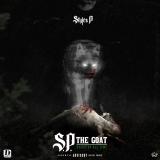
On his brand new studio effort Styles P proves his key to success has always been consistency. The born in Corona, raised in Yonkers, NY native has really worked harder than most to earn the name GOAT, and by naming his album “S.P. The GOAT: Ghost Of All Time” you know he’s not bragging about it, in fact he’s getting his flowers while he’s alive from Hip Hop connoisseurs who know fire bars when they hear them. With productions by Vinny Idol, Termanology, Dayzel the Machine, and Noah Idol among others and guest appearances by Sheek Louch, Jadakiss, Nino Man, Fame of M.O.P, Whispers and Cris Streetz, the legendary LOX and D-Block member proves once again he’s aging like fine wine.
Environments are sticky, they stick to whatever happens within them. They can’t help it. And neither can you.
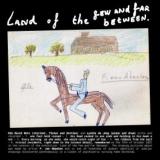
Land of the Few and Far Between / Songs for St. Michel is a collection of musical ‘figures’ written and recorded in 2022 and 2023 using a method Lyckle and Kim call the ‘snelkookpan’, translated as the pressure cooker. The ’snelkookpan’ in essence is trying to write and live-record as many musical figures in a given timeframe in a specific place. For ‘Land of the Few and Far Between’ this was an afternoon and evening in an exhibition Kim had curated about collecting and memory in The Hague. For ‘Songs of St. Michel’ this was 6 days in the basement of an art institution in Maastricht where they were joined by Otto de Jong on guitar. The figures are usually worked out by ear, sometimes improvised, sometimes written down, but often they are simply remembered and soon after recording forgotten. For ‘Land of the Few and Far Between’ they recorded ten figures. For ‘Songs for St. Michel’ fifteen. Of each a selection of five ended up on this seven inch.
F. van Abeelen (one of whom’s drawings is pictured on the sleeve of this seven inch and of whom 750 drawings were part of the exhibition mentioned above) was forced as a boy to hide in a basement for years. Only a small window gave access to the outside world. That sliver was his reality. After these years in hiding he began drawing his sliver of reality obsessively. Daily series of similar drawings that he would meticulously catalogue in an organizer. We never met F. Our friend who discovered the drawings in a closet of psychiatric nursing home Dorestad never met F. We only recorded ten musical figures next to 750 drawings by F.
St. Michel is a house that stands on the outskirts of Maastricht. It is built on the floodplains of the river Maas and living there you see the river change daily. It is a river fed by rain. No rain means a low river. Rain means a river that sometimes comes frighteningly close to flooding. Which it sometimes does. Due to the ebb and flow of the Maas, stuff is deposited in the boggy areas that are its floodplains. A shoe, a CD, a drone, some wood.
Places impress themselves onto what you are doing. You become an unwitting prop in the place’s story.
The first ‘snelkookpan’ happened in 2017 in the water-basin of one of the earliest concrete structures in the Netherlands; a bunker that was part of Amsterdam’s defensive line, built around the 1890’s. Something that used to house water was now empty. For three days Kim and Lyckle recorded improvised music there, which is still alive on a hard drive somewhere. In 2020 they recorded ‘the third of May’ at an old pumping station in Den Helder; an eleven part piece of auditory historical-horror which was released by South of North in 2024. Since 2023 Lyckle and Kim have mainly recorded live shows. With a Clarinet, kawai K1, Ipad, organelle, samplers and a variety of instruments curated for their minimal size or odd sound they’ve made chains of brief and improvised mini compositions inspired by browsing environments (digital and otherwise).
Land of the Few and Far Between / Songs for St. Michel adds to this growing collection of recordings for environments that are somehow sticky.
Mit A Kind Wave präsentiert Kid Francescoli sein bislang persönlichstes und klanglich vielseitigstes Album. Als zusammenhängende emotionale Reise erzählt das Werk von Liebe, Heimatgefühl, unvergesslichen Sommern, Fernweh und Heilung.
Zwischen Pop, Bossa Nova, Dance und cineastischen Klangwelten entstehen atmosphärische Songs, bereichert durch die Mitwirkung von Andréa, DEMIGOD und Samantha Alma Real. Begleitet von einer europäischen Tournee mit über 50 Konzerten unterstreicht A Kind Wave eindrucksvoll die künstlerische Reife des französischen Musikers.
On his brand new studio effort Styles P proves his key to success has always been consistency. The born in Corona, raised in Yonkers, NY native has really worked harder than most to earn the name GOAT, and by naming his album “S.P. The GOAT: Ghost Of All Time” you know he’s not bragging about it, in fact he’s getting his flowers while he’s alive from Hip Hop connoisseurs who know fire bars when they hear them. With productions by Vinny Idol, Termanology, Dayzel the Machine, and Noah Idol among others and guest appearances by Sheek Louch, Jadakiss, Nino Man, Fame of M.O.P, Whispers and Cris Streetz, the legendary LOX and D-Block member proves once again he’s aging like fine wine.
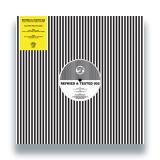
Southern Fried Records return with the second instalment of Refried & Tested, a three track EP built for peak time festival business. Bass heavy and attitude driven, this one brings together friends old and new for a run of dancefloor tracks that don't let up. It's Southern Fried doing what it does best - club ready energy with real personality behind it. Elado opens Refried & Tested 002 with 'Don't Stare' - a bass-heavy, attitude loaded cut built for the dancefloor. It's peak time energy with a real sense of swagger, setting the tone for the rest of the compilation. Jordan Peak takes on Elado's 'Don't Stare' and delivers a whopping remix, reworking the original into a festival ready peak time weapon. A standout moment on Refried & Tested 002. lau.ra teams up with Bag Raiders for 'back2back', bringing dance floor energy and attitude to Southern Fried's Refried & Tested 002 - a collaboration between friends old and new that delivers exactly where it counts. Van Damn closes out Refried & Tested 002 with 'Hit You', a bass driven cut that keeps the compilation's dancefloor energy running right to the last track.
out of Stock
Last delivered 9 days ago available to reorder, subject to availability
"Cinematic Visionaries Calibro 35 and Noir Master James Ellroy Pay Homage to L.A. with a Pure Crime-Funk Original Soundtrack. Out October 9" There are collaborations that feel inevitable like they were waiting to happen in some shadowed corner of culture. The union between Italian cinematic funk visionaries Calibro 35 and internationally acclaimed master of noir fiction and New York Times bestselling author James Ellroy is undoubtedly one of them. When Calibro 35 were invited to compose the original soundtrack for Francesco Zippel's documentary Ellroy vs L.A., they didn't simply write music for film. They stepped directly into Ellroy's universe the most dangerous corners of American crime fiction and discovered, to no one's surprise, that its darkness felt strangely familiar. The result is Ellroy vs L.A., the band's new album out October 9 on Record Kicks. Twelve brand new tracks of cinematic crime funk, psychedelia, and hypnotic groove that don't accompany Ellroy's world so much as inhabit it. The soundtrack's move through Ellroy's fictional and real-world mythologies with deliberate precision. Stylistically, the album finds Calibro 35 in their most natural yet most cinematic state: crime funk, psychedelia, and hypnotic groove pushed into darker, more narrative-driven territory by the weight of Ellroy's world. From the gloomy, suspense-laden groove of the opener Black Dahlia to the evocative closing piece Moonlight Sonative, the album unfolds as a complete cinematic arc, showcasing Calibro 35 at their very best. L.A. Confidential delivers a super-suspenseful, thrilling tension that feels like a chase through neon-lit streets, while Riots erupts into explosive cinematic funk, capturing chaos and urban unrest in full force. LSD on Sunset Boulevard drifts into a hazy, instrumental soul journey psychedelic, warm, and disorienting, like a late-night hallucination of the city itself. The Big Nowhere (Part I & II) expands the narrative into a slow-burning, atmospheric descent, unfolding like a two-act crime saga. Welcome to the Land of Vacation and Probation hits with kick-ass, uptempo crime-funk madness, urgent and relentless in its propulsion, while White Jazz is a mood of suspended, noir-infused jazz tension cool, shadowy, and unresolved. Together, the tracks map Los Angeles as a fractured yet hypnotic landscape suspended between glamour and violence, beauty and decay, myth and reality Born in Milan in 2007 with the mission of excavating the golden age of Italian film music Morricone, Piccioni, Trovajoli, Calibro 35 have spent nearly two decades transforming that initial obsession into a singular artistic language. Their work bridges vintage Italian soundtracks with contemporary jazz and cinematic funk, earning them a global following rare for an Italian instrumental act. Their music has been sampled by Dr. Dre (Compton, "One Shot One Kill" feat. Snoop Dogg), Jay-Z ("Picasso Baby"), and Damon Albarn's The Child of Lov. Rolling Stone described them as "the most fascinating, retro-maniac and genuine thing that has happened to Italy in the past few years," while Far Out Magazine called them "one of the most skilful and innovative instrumental outfits on the planet right now." The band (Enrico Gabrielli, Massimo Martellotta, Fabio Rondanini, and Tommaso Colliva) continue to evolve without losing their core identity. In 2025 they released the critically acclaimed Exploration, further expanding their sonic universe, and were invited to perform at the closing ceremony of the Winter Olympic Games at the Arena di Verona, confirming their growing international stature. With Ellroy vs L.A., Calibro 35 don't just compose a soundtrack they translate a mythology into rhythm, tension, and groove. Between fiction and reality, they find a city that never truly sleeps, only pulses in darkness. Press play, and Los Angeles begins to unfold in sound.
With Lost Lost Lost, Pratt & Moody gather the defining moments of their journey and package it with fresh soul gold into one cohesive, slow- burning statement. What began as a series of cult 7” vinyl releases – often mistaken online for forgotten soul classics from another era – now finds its natural home in album form. Written and recorded with Timmion’s trusted house band Cold Diamond & Mink, the record captures the duo’s unmistakable chemistry: emotionally rich songwriting wrapped in warm, analog textures that blur past and present.
From the velvet sway of “Addictive Touch” to the cinematic tension of “You Bring Me Joy” and the beat ballad ache of “Hard Way To Live,” the album moves effortlessly between bedroom-soul intimacy and widescreen drama. “Hang Tight” opens with a blissful piano figure that nods to gospel-tinged 1970s soul before unfolding into a full-bodied groove, while “Hooked On Your Love” glows with golden-age group soul harmony sweetness. Across both sides, Pratt’s finely tuned vocals and Moody’s expressive guitar work anchor songs that feel timeless rather than nostalgic.
At its core, Lost Lost Lost is an album steeped in atmosphere – lush downtempo moments sit alongside sweet harmony-driven soul, cinematic builds dissolve into dark restrained grooves. Analog string synthesizers, vibraphone accents, tremolo guitar, and deep-pocket rhythms create emotional tension without excess. Pratt & Moody’s strength lies in their melodic instinct: songs that feel big without being pompous or losing their human quality. The result is a record that feels cohesive, immersive, and that real thing – reaffirming the duo as key architects of the contemporary lowrider soul revival.
With Lost Lost Lost, Pratt & Moody gather the defining moments of their journey and package it with fresh soul gold into one cohesive, slow- burning statement. What began as a series of cult 7” vinyl releases – often mistaken online for forgotten soul classics from another era – now finds its natural home in album form. Written and recorded with Timmion’s trusted house band Cold Diamond & Mink, the record captures the duo’s unmistakable chemistry: emotionally rich songwriting wrapped in warm, analog textures that blur past and present.
From the velvet sway of “Addictive Touch” to the cinematic tension of “You Bring Me Joy” and the beat ballad ache of “Hard Way To Live,” the album moves effortlessly between bedroom-soul intimacy and widescreen drama. “Hang Tight” opens with a blissful piano figure that nods to gospel-tinged 1970s soul before unfolding into a full-bodied groove, while “Hooked On Your Love” glows with golden-age group soul harmony sweetness. Across both sides, Pratt’s finely tuned vocals and Moody’s expressive guitar work anchor songs that feel timeless rather than nostalgic.
At its core, Lost Lost Lost is an album steeped in atmosphere – lush downtempo moments sit alongside sweet harmony-driven soul, cinematic builds dissolve into dark restrained grooves. Analog string synthesizers, vibraphone accents, tremolo guitar, and deep-pocket rhythms create emotional tension without excess. Pratt & Moody’s strength lies in their melodic instinct: songs that feel big without being pompous or losing their human quality. The result is a record that feels cohesive, immersive, and that real thing – reaffirming the duo as key architects of the contemporary lowrider soul revival.
Somewhere between dream pop, electronica, IDM and spectral songwriting, viragezero delivers a dense and instinctive debut album on Bongo Joe Records. A nocturnal and hypnotic record that transforms fragments of reality into constantly shifting sonic matter.
Common Primitives is the second collaborative album between Andy Bell (Ride guitarist, Oasis bassist) and Essex-based harp and synth duo Masal. It’s a stunning, meditative collection which veers from kosmische to astral jazz by way of Turkish folk tunes and all the way back again.
Their first outing, 2023’s acclaimed Tidal Love Numbers, consisted of four lengthy and almost ambient tracks and is included here on vinyl for the first time as part of a two-record set with the new album. By contrast, the seven tracks that make up Common Primitives are almost concise, but also a lot more layered and complex.
“We tend to work from initial, free-jammed ideas, building form and arrangement from there,” explains Masal’s Al Johnson. “Above all, we believe you should go where the vibe takes you.”
For Andy, that vibe was very much jazz legend Pharoah Sanders’ classic 1977 album Pharoah, which was reissued a few years ago.
“It puts me into a hypnotic state,” he explains. “That’s why I worked with more guitar loops on this record. The Tisziji Muñoz part on ‘Harvest Time’ has had me in a vice-like grip for the last three years and it arrives here via the Vini Reilly filter.”
For Özlem Simsek, there is nostalgia, too, and she even adds vocals as well as her heavenly harp to the opening track, ‘After Kâtibim’, based on a traditional Turkish folk song she had sung as a child growing up in Istanbul.
From there, the album takes us on a real journey, with the apt, impressionistic titles added by Andy once it had all been pieced together. There’s the beautiful, elegant ‘I Swear We Are Infinite’; the atmospheric ‘Yuzuki Fighting Spirit’ and the beatific ‘Soap And Water’. ‘Tower Of Babylon’ was named after the novelette by Ted Chiang, its structured creation reflecting that in the story; first single ‘The Morning Of The Trip’ finds Andy playing his guitar “as if it was a waterfall”. The journey ends with ‘Rudi’s Dream – The Third Bardo’, the trio accelerating onto the autobahn for a krautrock crescendo inspired by their studio’s resident cat.
Common Primitives is the second collaborative album between Andy Bell (Ride guitarist, Oasis bassist) and Essex-based harp and synth duo Masal. It’s a stunning, meditative collection which veers from kosmische to astral jazz by way of Turkish folk tunes and all the way back again.
Their first outing, 2023’s acclaimed Tidal Love Numbers, consisted of four lengthy and almost ambient tracks and is included here on vinyl for the first time as part of a two-record set with the new album. By contrast, the seven tracks that make up Common Primitives are almost concise, but also a lot more layered and complex.
“We tend to work from initial, free-jammed ideas, building form and arrangement from there,” explains Masal’s Al Johnson. “Above all, we believe you should go where the vibe takes you.”
For Andy, that vibe was very much jazz legend Pharoah Sanders’ classic 1977 album Pharoah, which was reissued a few years ago.
“It puts me into a hypnotic state,” he explains. “That’s why I worked with more guitar loops on this record. The Tisziji Muñoz part on ‘Harvest Time’ has had me in a vice-like grip for the last three years and it arrives here via the Vini Reilly filter.”
For Özlem Simsek, there is nostalgia, too, and she even adds vocals as well as her heavenly harp to the opening track, ‘After Kâtibim’, based on a traditional Turkish folk song she had sung as a child growing up in Istanbul.
From there, the album takes us on a real journey, with the apt, impressionistic titles added by Andy once it had all been pieced together. There’s the beautiful, elegant ‘I Swear We Are Infinite’; the atmospheric ‘Yuzuki Fighting Spirit’ and the beatific ‘Soap And Water’. ‘Tower Of Babylon’ was named after the novelette by Ted Chiang, its structured creation reflecting that in the story; first single ‘The Morning Of The Trip’ finds Andy playing his guitar “as if it was a waterfall”. The journey ends with ‘Rudi’s Dream – The Third Bardo’, the trio accelerating onto the autobahn for a krautrock crescendo inspired by their studio’s resident cat.
Danielle Ponder is done waiting for a future version of herself to arrive. Now, the Rochester-born, Atlanta-rooted singer-songwriter is unapologetically living in the moment. This realization powers Everything Has Changed, Ponder's anticipated sophomore album (and debut on Dead Oceans in partnership with Phoebe Bridgers). The LP is Ponder’s most self-assured statement to date: it was crafted through a period of immense transformation as the beloved vocalist propelled from being a lawyer to a full-fledged musical powerhouse. That artistic freedom threads the album, as heard on lead single, “Power”, which serves as both a declaration and an affirmation for the Black diaspora. Other highlights include the revelatory “Sun and Moon”, the towering blues ballad “God of You”, and the devastatingly vulnerable “Open Windows”. Everything Has Changed dismantles the stories Ponder once told herself and finds peace in what remains—all themes that have shaped much of her journey. Music was always a constant presence throughout her life, but practicality initially took over in adulthood. While performing with her family’s band and later developing her own projects, Ponder pursued a legal career focused on criminal justice reform.
It wasn’t until her late 30s that she allowed herself to seriously imagine music as more than a side pursuit. In 2021, at age 39, she finally took the leap, leaving law behind to pursue her artistry full-time. The gamble paid off: she signed her first record deal in 2022, becoming a trailblazer on her own unusual path to worldwide renown. Her debut album Some of Us Are Brave introduced Ponder as one of soul music’s most compelling new voices, thanks to singles like “Someone Like You”, “Roll The Credits,” and the empowering title track. The LP earned critical acclaim along with dozens of major sync placements, including the latest Apple campaign for the iPhone 16 Pro. She’s since had four major TV appearances, including Jimmy Kimmel Live! Ponder has also sold out shows across North America and Europe, including festival appearances at Bonnaroo, Lollapalooza, Afropunk, and the Montreux Jazz Festival.
But if that album documented her arrival, Everything Has Changed documents her evolution.
Danielle Ponder is done waiting for a future version of herself to arrive. Now, the Rochester-born, Atlanta-rooted singer-songwriter is unapologetically living in the moment. This realization powers Everything Has Changed, Ponder's anticipated sophomore album (and debut on Dead Oceans in partnership with Phoebe Bridgers). The LP is Ponder’s most self-assured statement to date: it was crafted through a period of immense transformation as the beloved vocalist propelled from being a lawyer to a full-fledged musical powerhouse. That artistic freedom threads the album, as heard on lead single, “Power”, which serves as both a declaration and an affirmation for the Black diaspora. Other highlights include the revelatory “Sun and Moon”, the towering blues ballad “God of You”, and the devastatingly vulnerable “Open Windows”. Everything Has Changed dismantles the stories Ponder once told herself and finds peace in what remains—all themes that have shaped much of her journey. Music was always a constant presence throughout her life, but practicality initially took over in adulthood. While performing with her family’s band and later developing her own projects, Ponder pursued a legal career focused on criminal justice reform.
It wasn’t until her late 30s that she allowed herself to seriously imagine music as more than a side pursuit. In 2021, at age 39, she finally took the leap, leaving law behind to pursue her artistry full-time. The gamble paid off: she signed her first record deal in 2022, becoming a trailblazer on her own unusual path to worldwide renown. Her debut album Some of Us Are Brave introduced Ponder as one of soul music’s most compelling new voices, thanks to singles like “Someone Like You”, “Roll The Credits,” and the empowering title track. The LP earned critical acclaim along with dozens of major sync placements, including the latest Apple campaign for the iPhone 16 Pro. She’s since had four major TV appearances, including Jimmy Kimmel Live! Ponder has also sold out shows across North America and Europe, including festival appearances at Bonnaroo, Lollapalooza, Afropunk, and the Montreux Jazz Festival.
But if that album documented her arrival, Everything Has Changed documents her evolution.
„Öd“ marks the long-awaited return of Institut für Feinmotorik - the Black Forest collective known for using eight prepared turntables to investigate acoustic micro-phenomena generated by everyday objects - with a new album and their first full-length release on Faitiche. It is also the return of their almost comical understatement as personal artistic principle: „making almost nothing out of almost nothing,“ compressed into the dots on an umlaut.
The Öd-nis, the wasteland, is a field that the collective has been ploughing in sound since their first release in 1997. Eight prepared turntables, four mixers, no records, six hands (give or take) merge into what they call the „Octogrammoticum“. A rotating organism of surfaces in friction, fed with the clutter from a drawer: rubber bands or tin foil, CDs, a discarded socket board. Under IFF's scrutinizing stylus, mundane almost-nothings get scratched open to reveal the acoustic density of negative space itself.
Last year’s „Adhesive Tape“ drew IFF closer together after an almost ten-year hiatus. An eponymous event series at Berlin's silent green set in motion what would become their most twistedly funky release since „Penetrans“ on Staubgold in 2002.
The only thing öd about „Öd" (meaning „barren" or „boring“ in German) may well be its title: layers of improvised play and randomized loops convolve around porous, dubby groove locks, tugging at each other in a call-and-response with howling static that cuts through bulbous ambient techno into a scrap-metal Dixieland phantasm. Stratified yet spacious, these sonic double exposures always hover on the verge of collapsing. What you think you hear might not be what you actually hear.
The album’s track titles resemble Conceptual Poetry, extending this psycho-phenomenological gesture into the realm of spoken language. Conceived by renowned poet Dagmara Kraus, they become word molecules - „stern,” „dies,” „lose“ - tilting delicately between German and English, constantly changing depending on the ear’s perspective and pointing back to the deeply unstable fabric connecting meaning and sound. Which also makes „Öd“ an unusual cross-disciplinary collaboration - at least in the field of electronic music.
PS: Since its beginnings in Bad Säckingen, IFF has always been more than the sum of its rotating parts, moving tirelessly between multimedia art, theory, solo projects and collaborations. With IFF Expanded, the collective now opens its eight-doored apparatus, inviting artists working with CDJs or samplers to join - an ambitious live format that loosens its former purity law while carrying forward a long-standing curatorial practice. The same thread also runs into the related event series Acephalic Headspace.
Institut für Feinmotorik (*1997), artist-group originating from Black Forest working in various fields. In musical context known for transforming turntables into instruments by removing the records and instead applying rubber bands, paper scraps, household materials – resulting in a vivid laboratory for the productive misuse of everyday objects. This approach is documented in record releases and performed live.
The title of Ghost Bridge, the East-Coast-spanning chamber ensemble Hour's fifth record, is less metaphorical than one might expect. Bandleader Michael Cormier- O'Leary repurposed it from an unrealized movie concept about a bridge that inexplicably starts disappearing. On the nearly-ten-minute title track of this richly imaginative suite of songs_written for a 13-piece ensemble that includes woodwinds, strings, and vibraphone as well as a rock rhythm section_Hour conjures up this central image with spectral string harmonics and free-time percussion gestures. While writing the keyboard pieces that became the takeoff point for the album, Cormier-O'Leary also found himself reflecting on the loss of loved ones or even his own mortality. The six kaleidoscopic instrumental pieces on Ghost Bridge, though, feel more cosmically inquisitive than straightforwardly elegiac, sketching a progression from existential doubt toward understanding and acceptance. Ghost Bridge forms a contrast with Hour's art-rock-informed, more improvisatory early releases, representing a step further into intricate chamber orchestration. Known for his work with Friendship, Wendy Eisenberg, and 2nd Grade, Phillybased multi-instrumentalist and Dear Life Records founder Cormier-O'Leary has made Hour a home for increasingly cinematic instrumental compositions since the mid-2010s. With dazzling production by Lucas Knapp, Ghost Bridge delivers plenty of the live ensemble's trademarks, especially cyclically developing guitar and keyboard melodies. However, even more than on Hour's last studio album, unconventional harmonies and sophisticated counterpoint take center stage here. These emotionally multifaceted compositions feel as rooted in contemporary classical and film soundtrack music as in indie rock. One of the most striking elements of Ghost Bridge is the more significant developmental role the orchestral instruments assume in each piece. Instead of underscoring Cormier-O'Leary's central hooks, there is a new mesmerizing level of detail to the group's conversational interactions and kinetic energy. "Centralia" is a stately and idiosyncratic fugue built from repeated and overlapping phrases, while Ghost Bridge's compositions are full of unexpected pivots in harmony that allow recurring melodic motifs to sound continually reshaded. On "Pearls," the chords modulate drastically around Cormier-O'Leary's inviting central melody in a way that emulates cuts in a film telling several parallel stories. There is an unsettled quality to the chords on Ghost Bridge, with Cormier- O'Leary's progressions avoiding firm grounding in either clearly sunny or melancholy tonalities. This mood is made more concrete by the record's sole vocal track, the jazz-inflected "Sky is Blue," featuring an uncannily gorgeous performance by Heeyoon Won. The song seems to be a communication from a person who has departed, offering consolation or perspective to someone left behind. Though its sonic palette is often tranquil, Ghost Bridge explores heartbreak, grief, anger, and helplessness in a distinct and pretense-free way. The project represents a bold step forward for Cormier-O'Leary as a composer and arranger, and on Ghost Bridge Hour reaches its most fully realized form to date, connecting soaring themes with an inventiveness that perfectly suits the searching nature of the subject matter.
Come Back Down, the new album by Nashville experimental-pop duo Total Wife, was born from the edge of sleep. When composer and producer Luna Kupper would begin to fall asleep during late-night mixing sessions, the songs would follow her into the halfway place between dream and lucidity. Like Dale Cooper in Twin Peaks, she'd wake with a new perspective on the puzzle she was piecing together. "I'm a psychological mixer - I'm trying to think of how someone's experiencing the sound, versus getting stuck in trying to make all these different tones and using all this gear to make something sound a certain way," Kupper says. And like a spiral from waking life into dream, the songs on Come Back Down are endlessly self-referential, building whole universes from a single point. Kupper sold all of her synths to make rent before she started working on the album, and so every inorganic sound is instead built from samples of the band's own work. A guitar on one song may be reprocessed and used as a synth on the next, while everywhere on the album vocal samples are taken from a single unreleased cover of Elliott Smith's 'Between the Bars.' In tribute to this process, the album was almost named The Julia Set after the mathematical equation which feeds into itself again and again, creating beautiful fractal images. The intention was to create something complex but accessible; experimental, yet precise and without abstraction. In her lyrics, too, lyricist and vocalist Ash Richter is as straightforward as she's ever been. She drew on her experience of pandemic isolation to write about connection and disconnection, using her lyrics as a tool for the communication that was missing in everyday life. On the soaring, shoegazey track 'peaches,' a storm that forced the cancellation of a recording session became a metaphor for emotional distance. 'still asleep' chronicles Richter's euphoria after Total Wife's first tour, and watches it begin to curdle into paranoia. "Thank the full moon, my heart is overflowing," she sings, before: "Is there such a thing as too happy?" The experience of isolation was prompting Richter to think back to her childhood, a time marked for her by solitude and natural play - climbing trees, making mud pies, getting lost in the woods. On tracks like 'in my head' and 'second spring,' she uses the imagery of nature to recall that time and forge a connection with her lonely inner child. "I feel connected with transcendentalist writing and magical realism - trying to convey things in a concrete way, but with that element of psychology and mystery," she says. Richter and Kupper, friends from high school, formed Total Wife in 2016, relocating from Boston to Nashville in 2020. Both are visual artists as well as musicians, which they incorporate into their work with Total Wife via layered and purposeful visuals. A DIY streak underpins everything that they do - from handling their own artwork and music videos to recording their own music, releasing tapes through their label Ivy Eat Home, and hosting house shows in the basement they've christened Ryman 2. In Nashville they've settled into a weirdo scene living under the record industry's floorboards, a hive of collaborative and creative energy that has made them excited to call the city home. They also assembled a live band for the first time shortly after moving to Nashville, consisting of Ryan Bigelow, Sean Booz and Billy Campbell - injecting their creative process with a jolt of spontaneity and aliveness that has fed back into Come Back Down.
Come Back Down, the new album by Nashville experimental-pop duo Total Wife, was born from the edge of sleep. When composer and producer Luna Kupper would begin to fall asleep during late-night mixing sessions, the songs would follow her into the halfway place between dream and lucidity. Like Dale Cooper in Twin Peaks, she'd wake with a new perspective on the puzzle she was piecing together. "I'm a psychological mixer - I'm trying to think of how someone's experiencing the sound, versus getting stuck in trying to make all these different tones and using all this gear to make something sound a certain way," Kupper says. And like a spiral from waking life into dream, the songs on Come Back Down are endlessly self-referential, building whole universes from a single point. Kupper sold all of her synths to make rent before she started working on the album, and so every inorganic sound is instead built from samples of the band's own work. A guitar on one song may be reprocessed and used as a synth on the next, while everywhere on the album vocal samples are taken from a single unreleased cover of Elliott Smith's 'Between the Bars.' In tribute to this process, the album was almost named The Julia Set after the mathematical equation which feeds into itself again and again, creating beautiful fractal images. The intention was to create something complex but accessible; experimental, yet precise and without abstraction. In her lyrics, too, lyricist and vocalist Ash Richter is as straightforward as she's ever been. She drew on her experience of pandemic isolation to write about connection and disconnection, using her lyrics as a tool for the communication that was missing in everyday life. On the soaring, shoegazey track 'peaches,' a storm that forced the cancellation of a recording session became a metaphor for emotional distance. 'still asleep' chronicles Richter's euphoria after Total Wife's first tour, and watches it begin to curdle into paranoia. "Thank the full moon, my heart is overflowing," she sings, before: "Is there such a thing as too happy?" The experience of isolation was prompting Richter to think back to her childhood, a time marked for her by solitude and natural play - climbing trees, making mud pies, getting lost in the woods. On tracks like 'in my head' and 'second spring,' she uses the imagery of nature to recall that time and forge a connection with her lonely inner child. "I feel connected with transcendentalist writing and magical realism - trying to convey things in a concrete way, but with that element of psychology and mystery," she says. Richter and Kupper, friends from high school, formed Total Wife in 2016, relocating from Boston to Nashville in 2020. Both are visual artists as well as musicians, which they incorporate into their work with Total Wife via layered and purposeful visuals. A DIY streak underpins everything that they do - from handling their own artwork and music videos to recording their own music, releasing tapes through their label Ivy Eat Home, and hosting house shows in the basement they've christened Ryman 2. In Nashville they've settled into a weirdo scene living under the record industry's floorboards, a hive of collaborative and creative energy that has made them excited to call the city home. They also assembled a live band for the first time shortly after moving to Nashville, consisting of Ryan Bigelow, Sean Booz and Billy Campbell - injecting their creative process with a jolt of spontaneity and aliveness that has fed back into Come Back Down.
A space is often described by its dimensions. The height of the ceiling, the expanse between walls. Division into functional elements of varying density follows. We have ideas of how such dimensions should be balanced to work well for sound — the classical concert hall, a Northward mastering room.
It’s tempting to try and use this idea of space to understand Space the group (Lisa Ullén, Elsa Bergman, Anna Lund). To calculate their cartesian co-ordinates: dynamics that run from whisper soft to punishing, shaking force; Ullén’s piano running the full expanse of the frequency spectrum; the mix of sudden, surprising and suggested variations in density (the space) that generates their musical structures.
But (a) space is a social phenomenon where meaning is accumulated and possibilities created by and through a constantly shifting set of social relations and their histories and entanglement inside and beyond the physical structures of a room or building. Reduced to its raw dimensions, Cafe OTO shouldn’t sound good: the low ceiling, the hollow void underneath the stage-not-stage, the hard glass windows out onto the street. But OTO as a social space — for gathering close to listen; the serious pursuit of a convivial good time (its productive mythology that an OTO audience is both up for it but also expects more); and then the idea of all that has happened before and what will come; that this is also part of ‘the music’ and changes what sounds to the point that none of those cartesian co-ordinates matter.**
It’s less of shock that Space sound good. Lisa Ullén is easily the most singular pianist in Sweden right now and Elsa and Anna’s ability to reroute in realtime reaffirms just how well they function as a group. The trio might have got their shit together holding down the rhythm section for the first incarnation of Anna Högberg Attack — but much like Högberg’s ongoing pursuit of artistic renewal, the trio avoid being shackled to any ideas about what a piano trio should be and there is something that happens (happened) in that room, on that night, with those people that made for something beyond just good.
It’s a gift that the sound of every concert at OTO gets recorded. A choice handful of these transcend their decoupling from that social space and radiate the room’s attendant energies. This record is one of them.
** See Jack Halberstam in Fred Moten & Stefano Harney, The Undercommons (2013): “…we must refuse the idea that music happens only when the musician enters and picks up an instrument; music is also the anticipation of the performance and the noises of appreciation it generates and the speaking that happens through and around it, making it and loving it, being in it while listening."
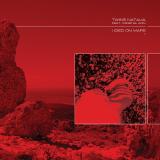
Twelve years have passed since TWINS NATALIA’s debut album, “Destiny Room”, but Dave, Marc and Steve have never really stopped working on new ideas and projects, including the release of a mini-album from Marc’s solo project SHIBUYA STATION. This featured their first collaboration with Greek artist KRIISTAL ANN (also known from PARADOX OBSCUR), who provided the vocals for the track “Madness”. This led to Anna being invited by TWINS NATALIA to perform lead vocals on their cover version of KNOW’s “Knights of Pleasure”. The results were so pleasing that, from then on, Anna was persistently ’pestered’ to work on a TWINS NATALIA EP, which slowly morphed into a complete album entitled “I Died On Mars”. The album is a journey through electronic soundscapes and pure, dark ’80s minimal synth-pop, full of melancholia, haunting melodies, elaborate synth sound design and sequencing, ranging from neat to gnarly, and, of course, KRIISTAL ANN’s charismatic voice icing the cake.
“I Died On Mars” presents us with further surprises: TWINS NATALIA version of “The Dagger In Me” by ’80s Greek post-punk legends THE HANDS OF CAIN, as well as “A Different Hum” by PARADOX OBSCUR, a song that surely needs no further introduction. Anna has not shied away from specially re-recording the vocals for this version, while both versions have been given some distinctly Twins Natalia-specific additions and treatments. Furthermore, Anna has contributed her own composition “Find Me I A Fantasy”, so you’re in for a treat or two, for sure.
Mastering by Nikolas Haldoupis at SoundCave Studios Athens.
Graphic design by Steve Lippert with some original photography by Kriistal Ann.
Five years after establishing himself as one of the UK's most distinctive selectors, Bloom marks the beginning of a new chapter for Yung Singh. More than a debut EP, it introduces EKTA his own label and creative world, built around the Panjabi concept of unity and the belief that dance music can be a meeting point for cultures, histories and new ideas.
Rather than treating heritage as something to preserve behind glass, Bloom places it at the centre of contemporary club music. Drawing inspiration from Panjabi folk traditions, Indian classical rhythms and centuries-old musical practices, Singh reimagines these influences through a modern electronic framework without reducing them to nostalgia or tokenism. The visual identity mirrors this philosophy, taking cues from Phulkari embroidery "flower work" passed down through his own family and connecting those traditions with the idea of growth, renewal and the arrival of a new creative season.
Finalised while touring Panjab during Basant, the festival celebrating the arrival of spring, Bloom became both a personal and artistic statement: the first release on a label intended not to represent one culture alone, but to create space for many. As Singh explains:
"EKTA as a name really sums up what I love about music and arts in general: unity and oneness. I want the label to be a sonic universe where artists bring their specific heritage into a modern club framework. It's about merging diverse folk traditions to treat these sounds not as relics, but as the future of dance music."
Across three tracks, Bloom presents different perspectives of that vision. 'NUG46' transforms field recordings captured in New Zealand into a meditative piece built around hypnotic tabla and razor-sharp jungle rhythms. 'Situationz' pays tribute to legendary Panjabi artist Sukshinder Shinda through the driving "Shinda Break", recontextualising a rhythm instantly recognisable to generations of listeners into a high-energy club weapon. Closing the record, 'Tabla Trouble' leans fully into organic instrumentation, layering classical percussion, strings, flutes and vocals into a composition that defines the open-ended musical language of EKTA.
Bloom is not simply the first release on a new label. It is the foundation of a wider vision one that looks to the past not for comfort, but for inspiration, using tradition as a catalyst for imagining the future of dance music.
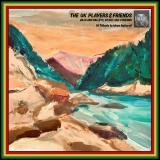
The UK Players & Friends Hills and Valleys, Rivers and Streams (A Tribute to Idren Natural) 9 brand new tracks by The UK Players. Voiced by Singers and Poets who knew Idren Natural personally. Recorded and Mixed by Supa Yout’ at Earth Works Studio, Amsterdam. Sleeve artwork and written testimonials from close friends and associates. Idren Natural aka Ras Natural aka InI Oneness, DJ, Singer, Chanter, Musician, was a pivotal player and pillar of UK/European Roots, Reggae, Dub, Sound System Culture. A humble Rastaman who did so much for so many, inasmuch as inspiring, encouraging, and connecting. He selflessly helped those less fortunate than himself. A strong advocate of the culture and philosophy of Rastafari. He was a commanding presence who lit up the stage, giving JAH all the glory. His passing was a great loss to the community. The UK Players Dub Band formed in 1996. They teamed up with Ras Natural/InI Oneness to record their debut 7” single ‘Further’ for Jah Works with Producer Jah Rej. This single gained exposure via Jah Shaka, Abashanti, and King Shiloh Sound Systems, even the famous Radio 1 DJ ‘John Peel’ played it. More recordings with Jah Rej at Seventh Sense Studio led to the debut album ‘Take Heed’. During the halcyon days of InI Oneness & The UK Players (1997-2004) they toured the UK and Europe, clocking up over 250 gigs in that time. Amongst brethren within the Rastafari community, the band became affectionately known as Ras Naturals band. Friends of Natural like Ras Iyah, Tony Roots, Sister Aisha, Wayne McArthur, and Barry Isaacs (among others) performed with them during this time. Members of InI Oneness & The UK Players never split up, throughout the years they branched out into other projects, reconvening for specials and one offs. Following Idren Naturals passing in 2022, the band stepped up to play his memorial show, where the idea formulated of making a tribute album to him. Ben King offered the use of Earth Works studio to help realise the vision. Work began with longtime live sound engineer Supa Yout’ in March 2024. Jah Rej assisted production on a number of these recordings, and sadly passed during the making of it, the last album he worked on. Various vocalists who were close to Natural, submitted vocals across the following year. The album was mixed and dubbed in March ‘25 at Earth Works by Soupa Yout' & Kingsway. Artwork and written memories/testimonials were then assembled. Everyone involved in the creation of this album knew Idren Natural personally. This album shines a spotlight on his spirit. Carrying songs of tribute, and messages for the times. ALPHA DUB: Every time the band played a gig, Natural would insist on starting with a dub. In that tradition, this album is no different. ‘Mandlion’ passing through the studio, headtopped a Melodica cut on it. Dubbed to the max by Supa Yout! NATURAL VIBE: The ‘Forward Fever’ crew from Belgium were one of the first collectives that Natural affiliated with in Europe. Here, Ras Cloud cleverly weaves all of Naturals song titles into the lyrics, creating a song in itself. WORD & FLESH: Fellowdread was born and raised in Kingston, Jamaica. Now living in Bristol, England, residing with Natural in his last days. His Poetry is rich in inflection, knowledge and wisdom, teachings that spark up the divine. ALL ABOUT LOVE: A pause for contemplation, this one stills the listener. Rootsman Rak’s words warn against complacency, and encourages action. A completely (natural) acoustic track featuring the skilled percussionist Jonah Dan. REMEMBER HIM: Inna Dubplate style, Barry Isaacs toasts to Idren in personal remembrance, reminding us all of the man he was. The track also features snippets of a phone call from Naturals oldest friend ‘Fergie Greenspears’ recounting memories. RISE UP RASTA CHILDREN: The legendary Tony Roots, graces the album with his unique delivery. Natural, The Players, and Tony go back a long way. A song of strength to affirm the soul, and rally against Babylon. Livicated to the one (Natural) SONG FOR THE RIVER MAN: During those halcyon days, many stages were shared with Albaroot, whom the band met whilst on tour in Scotland. Clark Innes (lead singer/songwriter) reminisces about the force of nature that was Natural, times shared, and that knowing, to never meet again. ONE STEP AHEAD: An interpretation of the ‘Look Inside’ riddim by Reuben Addis. Built for Sound System, it is the only track on the album that rolls into a dub. Lyrical Benjie literally entered the studio, rode the riddim without hearing it first, cutting his vocal in one take! A message for the times that sends shivers up your spine. THE PRAYER: Iman Onedub AKA Iman Gebre Iyesus, member of the Ethiopian Orthodox Tewahedo Church, met Idren Natural at Fairfield House in Bath. Here he seals the album with a recital of the Lord's Prayer in English, with Amharic. His rich textural tones elevated with a one away riddim to carry the listener home.
Pierre Mariétan (1935–2025) was a prolific Swiss composer, sound artist, and pioneer in acoustic ecology who spent most of his life working in France. Over his long career, he composed more than 300 instrumental, orchestral, vocal, and electronic pieces. Mariétan studied under avant-garde legends like Pierre Boulez, Karlheinz Stockhausen, and Bernd Alois Zimmermann. In 1966, he founded GERM (Groupe d’Étude et de Réalisation Musicales), a music collective that blurred the lines between strict composition and free improvisation. In 1969 the French BYG label released a GERM album and the same year GERM played at the legendary 5-day Festival in Amougies, Belgium, sharing stage with Pink Floyd, The Soft Machine, Frank Zappa, Don Cherry,…
In 1979 Mariétan founded the Laboratoire d'Acoustique Urbaine (Urban Acoustics Laboratory) to bridge environmental sounds, urban architecture, and musical composition. Mariétan was also a professor at the University of Paris where he taught the relationship between sound and space. Later in life, he remained active as a director for the Movement of Environmental Sound and continued developing permanent, immersive sound installations across the globe. His album Musique d’été was originally released on cassette back in 1983 by Éditions Salabert and Costin Miereanu’s Poly-Art International, and it has been slightly tweaked for this LP reissue. The record splits his vision of "Summer Music" into two different vibes. Side A is a deep dive into an electronic, synthesizer-driven landscape, while Side B features raw acoustic field recordings of forests and traditional Swiss alphorns.
Adjust the intensity of the sound at the same level, if not just above the background noise specific to the place of diffusion.
The first Af Ursin album in a decade, this release features extraordinary Belgian vocalist and performer Bénédicte Davin. »Ad Fontes« is a personal response to the fractured reality of our time. Created in the wake of visible social decay, manipulation, and institutional control, the album serves as a sonic mirror to an era defined by corruption and systemic failure. Instead of preaching political manifestos or claiming to have answers, this work is an intimate personal statement – a silent call to embrace spiritual values as the vital, untainted source of human nature.
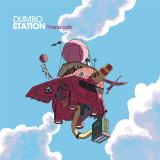
Here at Tuff Kong Records we really like to push our boundaries and explore different sounds, we're passionate with music at 360° and so are these guys we have decided to bring to your attention. Dumbo Station is a nu-jazz ensemble out of Roma, Italy that we've met during a live jam with legendary MC Danno of historical roman hip-hop group Colle Der Fomento. They immediately caught our attention and after listening to this masterpiece we decided to collaborate with them and Roman jazz imprint AlfaMusic to release their debut full-length "Tirana Cafè" on limited edition vinyl. The 11 songs featured on their first studio effort will take you on a trip through different soundscapes with the quartet as your guide, joined by Italian talents the such as vocalist Davide Shorty as well as Maurizio Giammarco's sax and Elvio Ghigliordini's flute. These young fellas have managed to merge nu-jazz with soul, funk and modern sounds creating a true masterpiece.
Boston based production duo and room-mates John Barera & Will Martin continue their journey into sculptural, storytelling House music, with their debut album on Dolly - ' Graceless'. The pair's work has found a wider audience since the success of 'Reality', which found its way into the hands of Berlin's Steffi, and acted as a central gear and in her 2013 Panorama 05 Mix. John Barera has been a firm disciple of the House and Techno world for the past 10 years, and after launching Supply Records in 2011 has brought an elegant, resoundingly universal mixture of underground club tracks to the fore. A fresh and fruitful partnership with close friend Will Martin grew out of the pair's rapidly growing studio, and the latest results can be found here over the 8 cool, classy and refined contemporary House tracks.
out of Stock
Last delivered 11 years ago available to reorder, subject to availability
BerettaMusic's compilation series is mouthwatering just from reading the names of the artists involved. First up is Detroit mainstay Dez Andres, who opens with 'Ready Disco,' a warm and typically hip-hop-inflected tone that Curiel's 'Keep You That Way' and Evan Rhodes' 'We Go Low' both build on comfortably, with the latter a particularly contagious minimal house shuffler with a bassline that really pops. DJ Cent's 'Malfunction' gets more heavy and threatening with steely drums marching into darkness, before Ryan Sadorus closes with 'Cultivate,' a storming disco-house workout. It's less a scattered various-artists grab bag and more a real document of Detroit's current house scene. Unsurprisingly, then, it is superb.
Leading the charge was a young band from West London called Pressure Point, whose debut single Mellow Moods caused a real stir on its release in 1985. The Stan Getz-inspired bossa nova was released initially on Viceroy Records, and immediately punched well above its weight, thanks to the considerable talents of producer Steve James, vocalist Lydia Gayle and some of London's leading session musicians: saxophonists Jamie Talbot and Ian Trimmer, trumpeter Steve Sidwell and his brother, trombonist Neil, and keyboard player Simon Etchells. It quickly became Capital Radio's 'People's Choice', winning praise on air from the likes of Kid Creole himself - August Darnell - and went on to be re-released by Bellaphon in Germany and by Gilles Peterson's HardBack Records. It is widely viewed as a rare groove classic, with copies changing hands for hefty sums in the following decades. London- based Pressure Point's core members were Matthew Best, Anthony 'Hugo' Longden and Sean Maher, who went on to work with Soul Legend Miss PP Arnold to complete 'Dreaming', a now legendary and as yet unreleased 1989 album