Stand High Records presents SH008: a brand spanking new 12” with two exclusive “discomix” cuts of Stand High Patrol's last two singles “Same Justice” and “Working Man”. Both tracks have a special link, they were made around the same time period and are of similar nature. These tunes share that special groove and sweetness reminiscent of the Dubadub Musketeerz’s rocksteady productions.
On these two discomix versions, Pupajim’s vocal parts are followed by Merry's trumpets, Mac Gyver then takes things into his own hands and dubs out the riddim! Time stretches and reveals the subtlety of the mix made at Kerwax's studio. Stand High Patrol exploits the riddims without restraint by offering each member of the crew the space to express their skills and inspirations. These two stunning discomix versions are the result of a real collective effort. They were built for Djs, soundsystems and for all those willing to dive into an eight-minute sonic journey!
out of Stock
Last delivered 15 months ago available to reorder, subject to availability
"CCR - Club Culture Rarities" the new record label exclusively dedicated to re-prints of cult and rare 12” taken form Expanded Music’s labels.
The 3rd release on "CCR - Club Culture Rarities" True Love of N.O.I.A. originally released on Italian Records in 1984 was included in the broad movement of Italo Disco. But True Love is something more and different thanks to its Electro Synth Pop sounds. A little gem reissued in a small print run on coloured vinyl, a real gluttonary for vinyl lovers and collectors.
Ask for it and stay tuned.
out of Stock
Last delivered 3 years ago available to reorder, subject to availability
Nervous Records, the iconic label synonymous with the rise of house from the streets of New York City, will mark 30 years in the music industry by releasing the celebratory compilation LP ‘Nervous Records: 30 Years’ on October 1st (Part 1) and October 15th (Part 2).
Featuring original mixes of the label’s biggest tracks, plus remixes by some of its most celebrated acts, ‘Nervous Records: 30 Years’ is both a celebration of the past and of the future. Featuring a who’s who of electronic dance music, the long player sees names including Louie Vega, David Morales Darius Syrossian, Tensnake, Monki, Franky Rizardo, Danny Howard and more take on iconic Nervous cuts: ‘You Make Me Feel Mighty Real’, ‘Treat Me Right’, ‘Future Groove’, ‘Feel Like Singing’, ‘Get Up Everybody’, ‘Break You’, ‘Hot’, ‘End This Hate’, ‘Unspeakable Joy’, ‘Can Ya Tell Me’, ‘Jerk It’, ‘The Anthem’, ‘It Makes A Difference’, ‘Learn 2 Luv’ and ‘Don’t You Ever Give Up’.
The album marks one of the most enduring, extraordinary legacies to grace America’s illustrious music history, not just in electronica but far beyond. Founded in 1991 by Michael and his father Sam Weiss, and recognizable immediately by its distinctive character logo, the label grew rapidly, in no small part due to Michael Weiss’ practically unmatched passion for discovering new music.
“Louie Vega and Kenny Dope woke me at 4am on Tuesday night, Wednesday morning from their studio telling me they had something really different that I needed to hear,” Michael recollects. “I asked if they could play it over the phone. They said if I wanted to hear it I had to come to the studio. So of course I got myself up, got dressed and went there. That “really different track” ended up being ‘The Nervous Track’, a tune that became our signature release and was also highly instrumental in the emergency of London’s ‘Broken Beat’ movement.”
The label’s willingness to take chances on fresh sounds and innovative concepts rising up from the melting pot sidewalks of NYC ensured a body of work that has become a living musical history of the city. House cuts ‘Unspeakable Joy’ and ‘Nitelife’ (Kim English), ‘Get Up (Everybody)’ (Byron Stingily) and ‘Feel Like Singing’ (Sandy B) bump up against hip-hop anthems like ‘Who Got Da Props’ (Black Moon) and “Bucktown” (Smif-n-Wessun) and reggae cut ‘Take It Easy’ (Mad Lion); soulful flows from Mood II Swing (Kim English ‘Learn 2 Luv’, Loni Clark “Rushing”), Armand Van Helden (‘The Anthem’) and Nuyorican Soul (‘Mind Fluid’) sit alongside seminal techno singles like Winx’ ‘Don’t Laugh’. The young artists and producers who joined the Nervous Records’ family have gone on to become some of the most hallowed and celebrated dance acts of all time: Louie Vega, Kenny Dope, David Morales, Tony Humphries, Roger Sanchez, Armand Van Helden, Kerri Chandler, Kim English, Byron Stingily, Josh Wink, to name just a handful.
“We did a release with Josh Wink under his Winx alias entitled ‘Nervous Build-Up’,” Michael said. “It did well and it was obvious how talented Josh was. Subsequent to that release I was pretty persistent in asking him to continue to play me his new demos. During one phone conversation he said, “Mike I’m gonna play you something over the phone but don’t laugh when you hear it.” That demo ended up being ‘Don’t Laugh’, which became one of our biggest international hits and still to this day is one of America’s earliest and most impactful techno hits.”
As much a celebration of the label’s future as it is of their past, Nervous Records: 30 Years is but a marker in the imprints’ history, a clear sign of where they’ve been and also where they’re going. With 30 years behind them, the label’s determination to unearth new raw diamonds in the rough is as unwavering as ever.
“I’ve always been one to look at what others are doing (the industry at large) and think, “ok, are they doing this specific thing for a reason, or doing it because everyone else is doing the same thing” and make my decision based on that,” says Nervous Records’ General Manager Andrew Salsano. “In an age where data metrics and analytics reign supreme, I remain steadfast that they should be complementary to your decision and not the sole indicator to make one. So many songs today are written with 15 second hooks in mind for social media, and while there’s nothing wrong with that business model you will always be chasing the wave instead of carving out your own path and identity.
“My primary focus for the sound of the label has and will continue to revolve around signing good songs and music that has the ability to react at the street level first. The best results come from artists that are firstly given a bit of local love that grows into a global impact. Fresh ideas that express child-like curiosity and artists showing vulnerability in their music are also something I look for, artists and producers that are not making music with certain markets in mind, but rather their own style and signature that is unique but able to straddle the fine line of underground and overground.”
Still as raw, as underground and as finely tuned to the dance floor as they ever have been, perhaps the secret to the success - and the longevity - of Nervous Records has something to do with that hard, dogged, no-holds-barred NYC edge that runs through the veins of the label. With the next generation of producers rising from the clubs of New York, one thing is certain; Nervous Records will be there to find them, nurture them and bring them to the world at large, over the next decade and beyond.
out of Stock
Last delivered 8 months ago available to reorder, subject to availability
Portico Quartet / Hania Rani brings the singular Polish pianist and composer, Hania Rani, and East-London based widescreen minimalists, Portico Quartet, together for a unique collaboration.
Label mates, they met when Hania Rani performed at the Gondwana 10 event at the Roundhouse in October 2018, an event that Portico Quartet headlined and which marked Rani's UK debut ahead of the release of her breakthrough album, Esja.
The idea was simple, each artist would select and then rework one of each other's tunes. The result is a beautiful collaborative work that feel less like a pair of straight forward remixes and more like a new recording that brings the two acts distinctive sound worlds to a new place.
The first track is Hania Rani - Nest (Portico Quartet remix), which finds Portico Quartet reworking a track from Rani's most recent album Home. Portico Quartet saxophonist and keyboardist Jack Wyllie says:
'We've been fans of Hania since her first album album Esja, so it was a pleasure to get to work with her. Our remix took fragments of her voice and piano, and from that we extrapolated and composed an almost entirely new piece of music. The result was (hopefully) that her sound world became another instrument in the band…'
On the flip is Portico Quartet – With, Besides, Against (Hania Rani remix), which Rani recrafts with the addition of piano and her own unique vocals.
"Imagine being asked to make a remix for one of your favourite bands? I felt excitement and… mild panic. The idea for this one little rework took me a couple of months! I chose the track With, Beside, Against, which is a beautiful peaceful and broad piece of music with an energetic movement in the middle part. I tried to add a vocal line to it, reminding me of one of Portico's tracks called "Steepless" from their album released back in 2011. The result turned out to be satisfying. I felt it worked really nicely, matching the music in a natural way"
out of Stock
Last delivered 4 years ago available to reorder, subject to availability
A Wide ranging, eclectic and progressive musical outlook has always been the Lack of Afro approach. His latest material follows suit as he harnesses disparate musical styles ranging from funk, soul and hip-hop to create a contemporary yet vintage musical escapade of superb songs.
On his 4th studio album for Freestyle Records, the influences, sounds and musical textures are more eclectic than ever. Below, Adam talks us through some of the his favourite moments on 'Music For Adverts'.
First out of the box is the steaming funk killer Freedom: This time around I knew I didn't want an intro or a skit to start the album - I needed a strong, heavy opener - I had the melody for the chorus floating around in my head. It was then just a case of working with Jack Tyson - Charles on the rest of it and getting the vibe that the song required.
Long time Lack Of Afro collaborator Herbal T features on Brown Sugar: I had an idea of doing a disco track with an emcee on it, which you don't really hear often. This is actually the first time I've sung on a Lack of Afro track, adding my backing vocal warblings on the choruses! Special shout to George Cooper for the howlin' Hammond solo at the end too.
Of the gritty instrumental No Guts, No Glory Adam explains: I wanted to include 3 instrumentals as I always have a soft spot for them & it's what people know me for. The 'choir' was recorded by layering up my own voice in different octaves, nothing is auto-tuned, its all real. The studio allows me to do stuff like that but I could never sing live - I'll leave that to the proper vocalists.
'Proper vocalist' Jack Tyson - Charles again features on The Gypsy, which as Adam explains uses the classic song format to great effect: One of my favourite LOA tunes to date, Its in keeping with the album mission statement of wanting to write 'proper songs' instead of just grooves.
out of Stock
Last delivered 4 years ago available to reorder, subject to availability
Forming off the back of contemporary jazz outfit Zeitgeist, Voronoi take the power and rhythmic complexity of heavier prog-metal and fuse it with the sophistication of classical music and jazz. A passion for science fiction thematically drives the band’s heaving and
chopping style, whereas artists such as Autechre, Car Bomb, Tigran Hamasyan and J.S. Bach help shape the rigid, experimental structure of The Last Three Seconds.
“Compositionally and stylistically we have moved into much heavier territory than our contemporary jazz foundations,” says Keyboardist Aleks Podraza. “It really shows. If you were to put this record against the first tunes we played together as Zeitgeist, it would be like introducing a much capable Thelonious Monk to a less hectic Dillinger Escape Plan.”
As the first single off The Last Three Seconds, Gamma Signals serves as a toe in the water for the depth of things to come. The full-bodied riffwork captures the stop-start format of prog-metal heavyweights without being explicitly metal. Yet beyond this, glitchy, experimental electronics cut through the composition like a knife. The final product is something that captures the magic of the cosmos – a place where worlds orbit worlds, genres orbit genres. Each element remains different and unique, but still intrinsically tied to the other.
“Gamma Signals is about pulsars and how when Jocelyn Bell-Burnell first discovered them, the media thought they were aliens trying to contact us,” says Podraza. “Broadly, this song is about my love for and fascination with cosmology as a whole. That's a theme that runs through the veins of most of the album.”
Those following Vorono’s career will need little convincing on the quality of The Last Three Seconds. Collectively, band members have performed and recorded with groups like The Cinematic Orchestra, KOYO, NJYO, Jenova Collective, The Often Herd, Mik Artistik’s Ego Trip, Wandering Monster and more. This in turn has garnered sizable attention at festivals such as Leeds and Reading Festival, Download Festival, Ronnie Scott’s Jazz Club - not to mention Voronoi’s thrashing set at 2019’s ArcTanGent.
The cool and collected chaos of The Last Three Seconds serves as a snapshot of this live energy, as passion and fury hum at the end of every complex composition. From start to finish, the record is nothing less than executed perfectly, undoubtedly appealing to even the most seasoned of prog-lovers
Originally released on the Ovide label from Houston, Texas in 1970 and currently going for around £175, if you can find a copy.
‘Get Your Point Over’ is a brass-led funky dancer that beautifully compliments Sebastian Williams’ soulful vocal style, while the flipside, ‘I Don't Care What Mama Said (Baby I Need You)’, is a slower
groove that lets that vocal really soar, arriving complete with a groovy psychedelic guitar break before Williams testifies to his lady amid some punchy brass stabs.
Two stellar tunes from Sebastian Williams (aka Roger Williams of no-hit wonders The Quarter Notes), whose solo recording career amounted to just three 45s, all five years apart, along with a couple of releases as Sebastian And The House Rockers and finally, in 1975, just Sebastian.
Imagine vintage Tavares lead singer Chubby Tavares at his gritty best with a funky brass section in a soulful Harold Melvin And The Blue Notes styled blast.
Both tracks mastered from the original sound source for maximum soul sound.
out of Stock
Last delivered 5 years ago available to reorder, subject to availability
Jimmy Tamborello returns with a collection of 10 pop-infused vocal hymns – simultaneously perfect dance floor fillers and lullabies. "Away" is the second of two Dntel albums to be released in 2021 by Morr Music in collaboration with Les Albums Claus. While "The Seas Trees See" showcased Tamborello's more intricate and quiet side, "Away" embraces his love for pop music. A genre which like no other has been resonating the advancements of technology from the very beginning. Songwriting was sequenced and computerized on such a large scale that it would change the sonic aesthetics of the charts forever.
Dntel is a musician who changed pop music forever – and still works in this never-ending labour of love, both effortless and highly focused, constantly tweaking the universe of our musical perception. Whether beatless or uncompromisingly embracing the limelight of collective ecstasy with one of his most remembered tunes "(This Is) The Dream Of Evan And Chan", his almost forgotten anthem "Don’t Get Your Hopes Up" or his work as James Figurine. "Away" features 10 of these extravaganzas – uniting his audience once more in hope and future-bound optimism.
"I grew up with 80s techno-pop – these influences always come through in my music", Jimmy writes from Los Angeles. For this album, though, "I was thinking more of 80s indie pop or labels like 4AD. It is a mix of those influences along with trying to figure out what elements of my own discography I still connect with. I wanted it to reflect old Dntel records as well as the techno-pop band Figurine I used to be in. I have always considered my music basically being techno-pop, but not referring to pop as popular music – I just like pretty melodies. But with the Dntel moniker, I never had the ambition to produce music for a really big audience.”
It is exactly that looseness in approaching music which makes Tamborello’s style of composing so unique. On "Away" he combines a healthy dose of distortion with the most-sticking melodies, vocals and bitter-sweet lyrics he ever came up with – performing all vocals himself, with the help of technology. "My voice has a limited range. When I applied this vocal processing it seemed to bring out the emotions more. I don’t see it as the same as the more artificial, autotuned style of modern pop music. I think it still sounds like it could be a real person singing, just not me."
Using this technique, Dntel disembodies himself from his own art, welcoming all kinds of interpretations re. his current state as an artist. "Somehow this processed voice feels closer to how I see myself than my normal voice, for better or worse…", he writes. Pop music is a fragile entity, making its kingpins vulnerable. Many emotions reveal a lot of the originator’s personality –this is something one has to be prepared for. On "Away", Jimmy Tamborello finds the perfect way of marrying his unique musical personality with both the demands and possibilities of pop music. Just listen to "Connect" and you’ll know what we’re talking about. A perfect, yet timeless album for less than perfect times.
out of Stock
Last delivered 5 years ago available to reorder, subject to availability
This is the first official re-release on vinyl under licensed courtesy of BMG Rights Management,UK, remastered from an original master copy out of the vaults of BMG, originally released in 1972 on Bronze Records.
Co-founder of Colosseum in 1968 with Jon Hiseman, he knew from his Jazz Club years as drummer for Georgie Fame, Dick ran through this group's hectic recording and touring schedule for over 3 years until November 1971, when it disbanded.
In his late 30s at that time, on top of his musical shape, he moved on to start recording on his first solo project, with material left over from Colosseum days (written by D. H.-S., Clem Clempson and Jon Hisemann) and new material jointly composed with well-known lyricist Pete Brown. He recruited the help of Colosseum mates, Hiseman, keyboardist Dave Greenslade and vocalist/bass player Mark Clarke, plus the brilliant ex-Elton John group Caleb Quaye (Hookfoot) on guitars and Rob Tait (ARC, Battered Ornaments) on drums; old pal G. Bond is featured providing remarkable moog work on 'Pirate's Dream', funky organ on 'Moses In The Bullrushourses' and sharing piano duties with Gordon Beck (G.B. Trio, Nucleus) on 'What The Morning Was After'; Paul Williams (Juicy Lucy) gets the lion share of vocal duties, and Chris Farlowe and Chris Spedding (Nucleus, Battered Ornaments) have respectively a sole vocal and a guitar spot on 'Pirate's Dream'.
The album track by track:
Side one starts with 'Future Song', the track that really rises above the other tracks here. The guitar, vocals (by Mark Carke) and sax are great on this one. Killer sax 2 minutes during an excellent instrumental interlude. H.-S. sounds slightly eastern-influenced on his outstanding sax lines. Such an uplifting track with it's repetitive riff and hard, driving sound! Next is 'Crabs', starting off in a mellow way with Greenslade's piano and reserved vocals as the sax joins in followed by guitar and drums as it builds. Irresistable! Great vocals by Paul Williams. One could easily imagine both tracks on a Colosseum album. 'Moses In The Bullrushourses' is uptempo, owing just as much to jazz, blues and hard rock. Great groove! Lots of organ here to send shivers down your spine and perfect guitar playing. 'What The Morning Was After' opens with some sax excursions as the drums help out. Acoustic guitar by Quaye and powerful vocals by Paul Williams take over as the piano joins in. Our second favourite tune on here after the opener. A folky song really until it picks up half-way through.
Side 2 opens with the 11 minutes 'Pirate's Dream', with Farlowe on vocals and Spedding's initial rock blues riff, but soon evolving to a complex multi parted composition in the best spirit of Valentyne Suite, driven by Hiseman multi faceted drumming. D. H.-S. twin saxes soar on a calmer mid section with Spedding doubling the licks and the bass grumbling relentlessly behind; it slowly gains speed with moog, sax and vocalizations duelling and answering each others with dazzling, demanding and inspired phrasings on top a thundering rhythm section; after the lyrics resume it evolves into a majestic, grandiose finale. A bluesy clean guitar lick opens 'Same Old Thing', a swinging, calm heavily modulated twisted blues, with a punchy rhythm section, a soulful Williams on vocal, Quaye delivering an inspired sparkling solo and D. H.-S.'s sensitive fat sax enhanced with some double tracking on the solo part. A great ending to a great album.
Album comes with the reproduction of original gatefold cover sleeve, additional cover-sized insert with band story, lyrics and photos. A highlight! Highly recommended!
Airplay from Mary Ann Hobbs, Liz Alker and Tom Ravenscroft and beyond
Reviews in Mojo, The Wire, Quietus, Uncut and more
On October 9ththe multi-instrumentalist Jack Wyllie (Portico Quartet/Szun Waves) presents his new project Paradise Cinema. It was recorded in Dakar, Senegal in collaboration with mbalax percussionists Khadim Mbaye (saba drums) and Tons Sambe (tama drums).
The impressionistic and dream-like quality of 'Paradise Cinema' is a stunningly effective realisation of Wyllie's experience, in ahypnagogic state of aural consciousness:
"I had a lot of nights in Dakar, when the music around the city would go on until 6am. I could hear this from my bed at night and it all blended together, in what felt like an early version of the record."
Atmospherically 'Paradise Cinema' is vaporous and enigmatic, but also percussive; existing in a paradoxical sound-space that's amorphous,yet still purposeful, serene, but propulsive and aesthetically sharp.
Khadim Mbaye and Tons Sambe, provide the rhythmic backbone of the record. There are traditional elements of mbalax rhythm, but it is often deconstructed or played at tempos outside of the tradition, so while it hints at a location it occupies a space outside of any specific region.
'Paradise Cinema' is also informed by notions of hauntology – a philosophical concept originating in the work of French philosopher Jacques Derrida– on possible futures that were never realised andhow directions taken in the past can haunt the present.
On the album's title Wyllie comments, "there are a handful of old cinemas in Dakar – these big modernist buildings dotted around the city built around independence. They're old and derelict now, but feel to me like monuments to that period, when the city was flooded with utopian ideas about its potential futures."
As such it sits closely to 4thworld music – situated in an imagined culture and time that never came to pass. And while it contains rhythmic references to Senegal it combines these elements with ambient and minimalist music to produce a sound that sits outside of any tradition.
Setting the tone for the long-player's themes is the optimism-driven, balmy beauty of 'Possible Futures', where rich-toned drums throb and levitate in a stratospheric ether.
Like a time-lapse video of plants in bloom, 'It Will Be Summer Soon' is the sound of anticipation and growth. Rhythmically it flickers and flutters, evoking rainfall, or the blurred wings of a bird in in flight.
Casamance moves through field recordings drifting in and out of focus, beats pitched-down low and unfurling saxophone, whilst the ambient 'Utopia' was made mainly with processed saxophone and suggests a longing for a perfect world.
Galloping percussion juxtaposes with a wistful mood on 'Liberté' – a title that referencesa derelict modernist cinema in Dakar of the same name– a hauntological landmark, made more poignant by the its name being part of the French national motto.
Tying into the cover artwork, Jack explains, "the 'Digital Palm is a telecommunications mast disguised as a palm tree in central Dakar. As a modern piece of technology that on first glance looks natural, it mirrors the combination of modern and acoustic elements."
Perhaps eliciting a time that never came, or maybe still in hope of it yet to come, 'Eternal Spring' concludes the LP's otherworldly beauty with hypnotic drums powering a subtly-building, sparkling and powerful crescendo.
Jack Wyllie is a musician, composer, electronic producer who draws on influences of jazz, ambient, and the trance-inducing repetition of minimalism.
Wyllie performs and records in Portico Quartet, Szun Waves (withLuke Abbott and Laurence Pike)and Xoros. He has also collaborated with Charles Hayward, Adrian Corker and Chris Sharkey and released on Ninja Tune, Babel, Leaf, Real World and Gondwana.
Khadim Mbaye and Toms Sambe play in various mbalax groups in Dakar. Khadim has also toured internationally with Cheikh Lo.
out of Stock
Last delivered 5 years ago available to reorder, subject to availability
Bored At My Grandma's House is the moniker of 19-year old Leeds-based Amber Strawbridge, starting out as an exercise in passing time when she was quite literally bored at her Grandma's place. First single & EP opener 'Showers' is about time alone & listening to your mind - “Do you ever think of showers as like a new beginning?“ is a poignant opening line, about that therapeutic space for you to really think and let your thoughts surface. In Amber's own words "showers are a kind of therapy in my opinion, they give you time to reflect and think without influence from anything external."
Born in Whitehaven, Cumbria to musical family, and raised on the likes of Bowie & Pink Floyd there was always plenty of opportunity to mess around on the various instruments lying around the house. Attempts at proper music lessons went awry as Amber shunned the rules & rigidity, and so instead she gradually taught herself piano, guitar & drums. After time travelling in Cambodia, teaching English & helping with projects in various villages, Amber stayed with her Grandma & began to use the aeons of spare time to make tunes on Garageband & upload them to soundcloud. As a wave of BBC Introducing support rolled in, coupled with a move to Leeds to study music, the bedroom set-up evolved & a full EP began to take shape.
Playing all the instruments & self-recording most of the EP at home, Amber took the tracks to Alex Greaves (Working Men's Club, Bdrmm) at the Nave studio for live drums & some final mixing flourishes, leaving an EP full of lo-fi charm but with a studio feel. Inspired by Slowdive, Wolf Alice & Alvvays, Sometimes I Forget You're Human Too showcases Amber's singular vision of indie-pop, on an EP that deals with topics like humanity, nostalgia & the current refugee crisis.
Speaking on the EP title Amber says "Sometimes I forget you’re human too is the realisation that everyone is the same. In the sense that we are all human, everyone has issues and problems to face, everyone makes mistakes and has success. I used to compare myself to others a lot and think ‘wow they have their life together’ or ‘how are they so happy all of the time’ but that’s not the case it’s just what you can see on the outside ...so it’s kind of an EP of self assurance and reminding myself that it’s ok to not have it together all the time because no one does as we’re all just human after all"
The EP is just the start for Bored At My Grandmas House "I’ve already got a few tracks which I’m thinking could be potentially for an album, I’d definitely like to do a bigger project next and have the sound I’d like in mind. I’ve recently just got a band together so hopefully when live shows are resurrected I’ll have a few of those!" 2021 is looking to be anything but boring for Amber Strawbridge.
Compass Records is proud to announce the release of Colin Hay’s
(Men at Work) 2001 classic ‘Going Somewhere’ on LP for the first time.
The release will include a limited pressing of white vinyl. For many of his newer fans, that weren’t already familiar with Men At Work, ‘Going Somewhere’
was their point of discovery of Colin Hay and his music.
The album includes some of Colin’s best known solo work, including “Beautiful World,” “Waiting For My Real Life To Begin, and “I Just Don’t Think I’ll Ever
Get Over You,” which was featured in the hit film, Garden State. That song
has gone on to be featured in numerous television shows including Dawson’s
Creek, Judging Am and Scrubs where it was sung by the entire cast.
Writing about the song, guitarist John Mayer said: “This is without a doubt my
favorite song of the year. I’m still trying for a tune like this of my own. It’s my
favorite kind of ballad, ‘chin up’ sadness that even a cold bastard would get
swept away by - ‘And if I lived til I could no longer climb my stairs / I just don’t
think I’ll ever get over you.’ No further comments.”
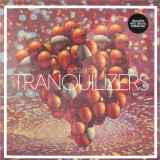
In a release inspired by the smooth rhythms of the region's past, Atlanta-based Dog Bite offers more music medicine in the form of Tranquilizers. The sophomore release transcends the reverie state of Velvet Changes in pursuit of a darker, more full-bodied experience. Tranquilizers migrates into a dreamy sonic realm enveloped in its own soulful influence. Frontman Phil Jones found his extensive listening to iconic R&B musicians such as Otis Redding and Isaac Hayes to be the original muse for the album. In its formation it began as a soul record; however, at its core the release remains grounded in Dog Bite's beloved shoegaze landscapes. With the support of Woody Shortridge on bass and Tak Takemura on drums, Dog Bite purposefully evades sedation through its blend of smoky textures across divergent genres. Being an album submerged between the differences of classic funk and rock music, it is Jones' customary croon that weaves a common mesh in the record's diverse artistry. First making music at the end of his high school days, 23-year-old Phil Jones began Dog Bite after dropping out of the Savannah College of Art and Design. Influenced by the work of J Dilla, Portishead, Caribou, Panda Bear and The Roots, Jones began self-releasing tracks, followed-by a 7-inch and CD on Young Turks. While later touring as the keyboardist to Washed Out he picked up an acoustic guitar and composed his debut-full length, Velvet Changes, released on Carpark in early 2013. In support of Velvet Changes, Dog Bite embarked on an extensive North American winter tour with labelmate Toro Y Moi. The two marked the occasion with a split 7. Jones returns with his newest release on Carpark, the LA EP. In addition to his time with Washed Out, Jones has appeared on a matthewdavid release and produced for Mood Rings and Bosco. As one half of Acid Flashback, he's crafted tunes for the voice of Karen Jacobs (of Toronto's Free Kisses). Dog Bite performs live as a four-piece, featuring Jones' friend Woody Shortridge formerly of defunct Atlanta band Balkans.
out of Stock
Last delivered 5 years ago available to reorder, subject to availability
The Staples do it again with another Ska classic that is guaranteed to get you singing along. This song is something of a good time anthem with happy vibes contrasting with some of the negatives that are around right now. With this song Neville and Sugary Staple really know how to put a smile on people’s faces. I can see this becoming a live favourite.
Dr Pete Chambers BEM, Coventry Observer
My goodness, the best of two huge talents. Husband and wife team Sugary & Neville Staple haven’t disappointed again! Feel good ska-based melody, toe-tapping and butt-shakingly good!TRISH ADUDU, BBC RADIO CWR
Well known for changing the face of music not once, but three times, 2Tone music legend Neville Staple (From the Specials), also known as the ‘Original Rude Boy’ and his super sidekick wife, Sugary Staple, release their brand new song, ‘Be Free Baby’, on the highly respected, Pickout Records.
A super ska track which mixes the original influences of Jamaican sounds, along with the 2Tone style that this dynamic ska duo, take on tour with them globally, alongside their top band of musicians.
Written by Neville Staple, who has scores of music awards from 40 years of 2Tone & Ska hits and albums, and his super talented sidekick, Sugary Staple and acclaimed record producer Lloyd ‘Pickout’ Dennis this song is a truly happy song, to take our minds away from the difficult days of Covid lockdowns, into a party mood of freedom and dancing. Fans will love the irresistible skanking beat, along with super feel-good lyrics to sing along to.
“After recently writing a song about the Lockdown, which related to the tough days of staying home and following rules and so on, I decided we needed some uplifting music too.” Explained Sugary, Frizzle TV Award Winner and Skamouth Festival Founder. “There is so much doom and gloom about in the news and we know how music can really be so good for the human soul. This tune has a lot of love and feeling behind it, as it encompasses all the fun, freedom and thrills that we have on stage, when we perform live. A whole year of global touring has been postponed, so we put the vibrance of a live show into this song.
Neville agrees, “I love writing with Sugary, as we are both on the same wavelength. We feed off each other. We were both in need of getting out there and performing for the masses but have had all our 2020 shows moved to next year, so we decided to bring the party to everyone through this song. We love the traditional sound and the bluebeat vibes too, with a twist of 2Tone magic. It makes me think about our holidays back home in Jamaica and beach parties, street carnivals, gigs and festivals. This is a happy tune for dancing away the blues!”
out of Stock
Last delivered 5 years ago available to reorder, subject to availability
Aye Aye Mi Mi’ is the second single from Mano Le Tough’s new album, ‘At The Moment’ which is coming soon on Pampa Records; . The single really highlights the vocal & instrumental skills of the Irish producer, resulting in an indie dance ear-worm that’s hard to shake.
“It’s the only tune on the record that survived from my original batch of demos and sketches” says Mano. “It’s a kind of reflection on narcissism, social media saturation and the ego”.
out of Stock
Last delivered 2 years ago available to reorder, subject to availability
Re-mastering by: Cicely Baston at Alchemy/Air Mastering, London
Electric blues guitarist Melvin Taylor had been sporadically recording solo albums for 20 years when Dirty Pool arrived — and was somehow just beginning to find fame. Already a hit in Europe, it had taken a steady run of performing in Chicago’s famed blues clubs to slowly earn Taylor a well-deserved reputation as an equal talent among the giants before him, such as Otis Rush, Albert King and Stevie Ray Vaughan.
While early records like Melvin Taylor Plays the Blues For You show off an equally amazing jazz side, Taylor traded away his Wes Montgomery-inspired runs for more Luther Allison/Jimi Hendrix attacks with the formation of the trio Melvin Taylor and the Slack Band in the mid ’90’s.
The title song of the second album by that outfit, “Dirty Pool,” is actually more the balls-to-the-wall, no-compromise, hard-rockin’ electric Texas blues of Vaughan and Johnny Winter than the sweet Chicago soul of Buddy Guy.
Indeed, three tracks on this 1997 release, including “Dirty Pool,” were SRV tunes. Other standards, like “Kansas City” and “Floodin’ in California” also have more of a Lone Star State approach to them. But the Jackson, Miss.-born Taylor’s guitar is cleaner than his forebears and technically, he even surpasses them, yet the anger and sorrow of the blues is readily evident in his playing.
This rare combination of qualities really comes out in a slow blues tune like his solo in “Dirty Pool,” which after repeated listens, still makes me head shake in disbelief when I hear it.
“Too Sorry” is a good example of how well Taylor fares when he treads in Jimi Hendrix territory, whereas his rhythm work is the best I’ve heard from a lead guitarist since Vaughan; listen to “I Ain’t Superstitious,” “Born Under A Bad Sign” and the funky “Telephone Song” for your proof.
It also helps that Taylor’s drummer James Knowles is well in synch with him, while Ethan Farmer completely owns the low end of the sound. Farmer’s peppering bass lines in and “Floodin’ in California” is the textbook way electric blues bass should be. Overall, a tight little band.
Taylor’s vocals certainly won’t draw any comparisons to the Wide-Brimmed–Hatted One but he holds his own just fine until it’s cuttin’ time. This is right at the top of my list of best blues guitar playing on record over the last couple of decades. If you decide to give this one a listen, prepare to be blown away.
Born and bred New Yorker Jean Pierre is stepping out with his own brand new label, Pakate. The vinyl-only outlet kicks off with a fantastic first EP from FLETCH featuring remixes from Pierre himself and Franco Cinelli.
This exciting new label will be an outlet for Jean and other friends to serve up mature and minimal sounds focused around unique designs and powerful grooves. Dealing in heady underground sounds that also work on larger dance floors, the label comes after Pierre has spent 15 years entrenched in the electronic scene. This is his way to carefully curate his own music exactly how he wants to, with three releases already lined up for 2021.
The first one is from FLETCH, a red hot UK talent who has released on the likes of Kaluki and Whippin’ Records. His opening tune 'Actin Up' is a slick and slippery minimal groove with real depth and freaky sound designs that make it pop. 'Want Me' then hits harder, with loopy house drums and squelchy synths all bubbling away beneath soulful female vocal sounds and cosmic synths.
The first fine remix is from France Cinelli who takes 'Actin Up' super deep, with punching kicks and rolling bass that gets you in a state of hypnosis., Closing out the package is a Jean Pierre remix of 'Want Me' that shows off his ability to lay down stripped back but compelling house grooves with deft sound design and a freaky atmosphere.
This is a standout first EP that perfectly sets the scene for what is sure to become a vital new label from this American mainstay.
out of Stock
Last delivered 4 years ago available to reorder, subject to availability
Nonesuch Records releases an album of songs written and performed by Caroline Shaw and Sō Percussion, Let the Soil Play Its Simple Part. The musicians, who have known each other since their student days, were presented with three days of gratis studio time and decided to experiment with ideas they had begun putting to tape during the sessions for their January 2021 Nonesuch release Narrow Sea. With Shaw on vocals and Sō – Eric Cha-Beach, Josh Quillen, Adam Sliwinski, and Jason Treuting – filling out this new band, they developed songs in the studio, with lyrics inspired by their own wide-ranging interests: James Joyce, the Sacred Harp hymn book, a poem by Anne Carson, the Bible’s Book of Ruth, the American roots tune ‘I’ll Fly Away’, and the pop perfection of ABBA, among others. The album is co-produced by Shaw, Sō Percussion, and the Grammy Award–winning engineer Jonathan Low (The National, Taylor Swift).
Shaw, who won a Pulitzer Prize for her vocal composition Partita for 8 Voices, written for and performed with Roomful of Teeth, makes her solo vocal debut with Let the Soil Play Its Simple Part. The album’s first track, ‘To the Sky’, from the Sacred Harp, takes its lyrics from Anne Steele. “I love the songs about death, and going home, and looking toward a time that is better or brighter, which, if there’s one thing to think about in the world, maybe that’s the thing,” Shaw says. “This one I love in particular. There’s a line, ‘Frail solace of an hour / So soon our transient comforts fly / And pleasure blooms to die.’ It’s meditation on the ephemeral, and I love it.”
“I hadn’t written very many songs, but I have certainly loved many in my life. I’ve been thinking of making a solo album for seven or eight years, but it takes having the right friends and community in the room,” Shaw says. “The prompt for all of us was: What would we make in the room together with no one person in charge, like a band writes in the studio?”
Cha-Beach recalls of the early test run during the Narrow Sea session: “It had that capturing-lightning-in-a bottle feeling.” When the opportunity to have three days in their friends’ studio, Guilford Sound, came up, the five musicians decamped for Vermont with engineer/co-producer Jonathan Low. “Jon is an amazing editor,” Cha-Beach says. “He is so helpful in thinking about: ‘We have these ideas: how do we shrink those and make them come across on an album?’”
One such idea was for Shaw to do a duet with each member of Sō. She sings with Josh Quillen on steel drums on the title track, which she wrote in under an hour in a “free-writing zone, very inspired by James Joyce, taking on that brain space,” she says. Lyrically, the song is “related to some math bits that I love, but also memory, and love songs of somebody who’s gone or passed away, or that you’re no longer with: what is the sound of that kind of devastation or confusion or love?” They recorded the song only twice, and the first take is on the album. “It’s very spare. The playing is very Josh; it’s so sensitive,” Shaw says.
Adam Sliwinski’s marimba duet with Shaw is an interpretation of the ABBA song ‘Lay All Your Love On Me’. She explains, “It’s really a Bach chorale. Also, the idea of someone singing ‘Don’t go wasting your emotion / Lay all your love on me / Don’t go sharing your devotion / Lay all your love on me,’ over and over again very slowly, there’s a certain tragedy in it. And then Adam did some absolutely exquisite layering that built this stunning world from the marimba.”
Jason Treuting on the drum kit joined Shaw for ‘Long Ago We Counted’. She suggested, “Why don’t we start with the voice and the kit having a weird conversation, sort of like two babies talking to each other? And then we built this loop, and we go from this place that’s totally uncomfortable and nonsensical to something that’s rich and rolling and satisfying.” For ‘Some Bright Morning’, the duet with Cha-Beach – who here plays electronics, piano, and Hammond organ – Shaw drew upon a twelfth century liturgical hymn she had sung regularly in church during her college years: ‘Salve Regina’.
“Some songs on Let the Soil… were very specifically composed by Caroline,” Cha-Beach says. “But others were this assemblage of ideas: finding words, an idea for how a melody could work, a harmony, and then tossing it in a blender and trusting each other.” Shaw adds, “What I love about Sō is the curiosity about how objects make sounds and how they speak to each other. There was an underlying thread of thinking about what goes into soil, how we take care of it, how we allow it to be itself, how we contain it, and what can come out of it if you cultivate the right environment, which for me is always this wonderful metaphor for creativity and collaboration: let people be themselves and see what happens,” she concludes.
Caroline Shaw is a New York–based musician – vocalist, violinist, composer, and producer – who performs in solo and collaborative projects. She was the youngest recipient of the Pulitzer Prize for Music in 2013 for Partita for 8 Voices, written for the Grammy–winning Roomful of Teeth, of which she is a member. Shaw’s film scores include Erica Fae’s To Keep the Light and Josephine Decker’s Madeline’s Madeline as well as the upcoming short 8th Year of the Emergency by Maureen Towey. Hailed for ‘astonishing both the pop and classical music worlds’ (Guardian), she has produced for Kanye West (The Life of Pablo; Ye) and Nas (NASIR), and has contributed to records by The National and by Arcade Fire’s Richard Reed Parry. Shaw currently teaches at NYU and is a Creative Associate at The Juilliard School. Her 2019 Nonesuch/New Amsterdam album Orange won a Grammy Award.
Through its interpretations of modern classics, innovative multi-genre original productions, and ‘exhilarating blend of precision and anarchy, rigor and bedlam’ (New Yorker), Sō Percussion has redefined the scope and role of the modern percussion ensemble. Sō’s repertoire ranges from twentieth century works by John Cage, Steve Reich, and Iannis Xenakis, to commissioning and advocating works by contemporary composers such as David Lang, Julia Wolfe, and Steven Mackey, to collaborations with artists who work outside the classical concert hall, including Shara Nova, choreographer Susan Marshall, The National, Bryce Dessner, and many others. Sō has recorded more than twenty albums, including a performance of Reich’s Mallet Quartet on the Nonesuch record WTC 9/11; appeared at Carnegie Hall, Lincoln Center, Walt Disney Hall, the Barbican, the Eaux Claires Festival, MassMoCA, and TED 2016; and performed with Jad Abumrad, JACK Quartet, the Mostly Mozart Festival Orchestra, and the LA Phil and Gustavo Dudamel, among others.
In the past years, the multi-instrumentalist, composer, producer and music enthusiast Jeff Özdemir had been focusing on organising the Live-Mixtape series in Berlin, inviting numerous artists to join him on stage for every single event. However, the year 2020 put an end to this for all the painfully obvious and obviously painful reasons. Undeterred, he instead put together the third instalment of the »Jeff Özdemir & Friends« series, working with singers, musicians and groups such as Knarf Rellöm & DJ Patex, F.S. Blumm, Joanna Gemma Auguri, Elke Brauweiler and Elmer Kussiac for an 18-track … Now, is this a compilation or an artist album? Well, why just either this or that when it can just be both at once? This is »Jeff Özdemir & Friends Vol. 3« after all, emphasis on »&«.
Released on Karaoke Kalk like its two predecessors from the years 2015 and 2017, respectively, »Jeff Özdemir & Friends Vol. 3« sees the man behind Kreuzberg’s 33rpm record store and the 33rpm Records label showcase his qualities as a people remixer, songwriter and versatile musician. He put together a collection of groovy tunes picking up on funk and afrobeat rhythms, introspective ballads, a musically channeled punk attitude, shoegaze sentiments, spoken word passages, drones, glockenspiel sounds, seriously fun experimentation and much more. Just like on the cover artwork - courtesy of Marion Eichmann, Özdemir’s favourite visual artist - everything here seems to discreetly exist for itself while being tightly connected to everything else at same time.
While artists like Ertan Doğancı, Désolé Léo, eng°n, F.S. Blumm and Zap have been long-term collaborators of Özdemir and were featured on previous instalments of the »Jeff Özdemir & Friends« series, new faces and forces also enter the mix. The melancholic »Love Letters« for example marks the first (though hopefully not last) collaboration with singer Joanna Gemm Auguri, while Knarf Rellöm & DJ Patex’s appearance has been dreamt of collectively but hasn’t been fully realised until now.
Whether it’s Désolé Léo’s French crooner soul, the lo-fi synth pop song »Bored« featuring former Commercial Breakup singer Elke Brauweiler or the many different sounds and styles presented under the name Jeff Özdemir: no decision is ever made between either that or this musical direction, but all are being joyfully enjoyed together. Thus, throughout its 70 minutes, the stylistic diversity of »Jeff Özdemir & Friends Vol. 3« does not once border on randomness. Instead, these sometimes very different songs are marked by a shared atmosphere - a direct result of these very different musicians approaching their studio time together less as a chance to make music but more of a chance to carefully listen to and interact with each other.
Just like you’d expect it from someone deeply connected with the local music community who also happens to run a record store, Özdemir is also the kind of person who’ll hand you the worn copy of a record he has just fished out from the bargain bin because he knows about its potential to change your life. The contributions by Vackrow (»Kleistpark«), Gebrüder Teichmann’s old band BeigeGT (»Disco«), and Otto von Bismarck (»Zu viele Erinnerungen«, produced by The Whitest Boy Alive’s Daniel Nentwig) do not even feature Özdemir, but are simply musical pearls that were (almost) lost in the shuffle of music history and unearthed for this very special occasion. That’s just what friends do, don’t they?
Premieres from Data Transmission and Bolting Bits. Early support from Hospital, Huey Morgan, Rupture, Fanu, Rob Luis, Anthony Kasper (Fokuz), Red Rack'em, Bandcamp Weekly, etc.
150 copies pressed on 180 gram vinyl. Picture shows the HF021VFELT edition which comes with 'Nuthin' But a Jungle Thang' die-cut felt sleeve insert (in assorted colours), with Heard and Felt embroidered fabric tag. HF021V edition is the same 180g vinyl without the felt sleeve insert.
With music from Jonny Faith's recent Night Lights EP appearing in Grand Theft Auto and best of 2020 lists including Gilles Peterson's, you might think Jonny would continue to mine his take on hip hop and broken beat. Well, all in good time. He's been ready to enter the jungle for 20 years, and he's not waiting any longer.
Now based in Melbourne, Jonny first got involved in music in Edinburgh as a DJ and turntablist in the 90s, getting hooked on jungle, drum & bass, hip hop and the hybrids of these championed by the Mo'Wax label. Formative experiences included hearing DJ Hype spinning in Newcastle, seeing the Roni Size/Reprazent live show with two drummers and hanging out at cult Edinburgh club night Manga, where residents G-Mac and DJ Kid hosted the likes of Marky, Grooverider and J Majik.
Jonny was keen to start making his own sounds, signing up for an electronic music production course. But it wasn't quite what he was after.
'The course turned out to be more house-oriented,' Jonny recalls. 'Sampling wasn't on the curriculum, and the students weren't allowed to touch the Akai S900, the sampler used in lots of the early jungle classics.'
When Jonny did start releasing his own productions a few years later, he was starting to explore the experimental beat scene around the time Flying Lotus and Hudson Mohawke (another Scottish turntablist) were starting to make their mark.
Jonny continued to widen his sonic palette, adding elements of dub, jazz, funk, electronica and broken beat, and picking up fans like Radio Nova Paris, KCRW, Vice and Clash Magazine along the way. But he's never been more than one degree of separation from his jungle/D&B roots. He continued to buy and play the music, did the odd D&B remix and snuck sonic elements and techniques into his tracks at various tempos. Over the years his releases have shared labels with the likes of Peshay, Om Unit, Drumagick, Reso, Kid Drama and Danny Scrilla.
Now, more than 20 years after those early experiences in Edinburgh, Jonny unveils his first jungle/D&B EP, On Lock. And it sounds like he's been making this music the whole time. In a way, he has.
The single 'Open My Eyes' bursts out the gate, chopping not only the breaks and the soul for a tune that sounds like Amerie's '1 Thing', or some Just Blaze chipmunk soul, reimagined for the 174 BPM crew. Jonny started this one as a hip hop beat for a live routine on his MPC, but it only really came together when he reframed the groove around a D&B rhythm. Next up, Jonny tries a similar trick on his own boom bap tune 'Stay in Your Lane' from the 'Night Lights' EP. His new Step Off Mix totally recontextualises US MC Lady K's slinky soulful rap and hooks with a tough and funky junglist groove. One for fans of the old Roni Size/Bahamadia collab. 'Create' then spaces things out just a touch, with atmospheric but propulsive drumfunk. Vinyl bonus track 'Nuthin' But a Jungle Thang' layers cascading amen breaks, timestretched vocals and a massive double bass-line over the wah guitars and synth whistling of a G-funk era classic.
With early support for Jonny Faith's take on jungle/D&B coming from Hospital Records, Rupture (Rinse FM) and Fanu (Metalheadz), Jonny is ready to be welcomed (back) into the scene.
b A2: Stay in Your Lane (Jonny Faith Step Off Mix) feat. Lady K
out of Stock
Last delivered 4 years ago available to reorder, subject to availability
Aparde’s new album, Alliance sees the German
musician retreat from his recent experimentations
with avant-gard pop music back into the world of
deep, and oftentimes dark, electronica. For his
previous album, Hands Rest, Aparde ventured
outside Berlin’s club scene through the use of his
voice, which gave his music a softer and more
intimate edge. Alliance is no less intimate, except
this time the musician’s vulnerability seeps through
the cracks rather than taking center stage.
As impressive sonically as it is technically, Aparde
used a mixture of electronic sounds, analogue
equipment and his own voice either as a sound
element or lyrical component to explore this duality
of sound. “This album was about focusing on
something that calmed me down and brought me
away from reality,” says Aparde. When the musician
says ‘away from reality’, he doesn’t mean into
dreamy, ethereal soundscapes, but rather a deep
dive into dystopian atmospheres of drone sounds
and chewed-up drum machines. Alliance’s second
track, Allies has a dire beginning and one might
even be tempted in skipping it if it weren’t for
Aparde’s hushed voice shining through the
shadows, melancholic yes, but also warm. Despite
the album’s focus on electronic gear the music isn’t
exactly dance-able, tracks have a ruminative pace,brooding even, “I wanted to make the tracks with
more breathing space between the atmosphere
and silence. There are fewer elements but more
impact, I think,” says Aparde.
Things change gears toward the middle of
Alliance, with both Lined and The Shift representing
the colder, club-ier tracks of the album. For
both of these tunes, any emotionality gets
converted into a dense and thumping energy that
is released in a cathartic fashion. It is, as Aparde
describes, music “for you to move to when you
have a good moment or a mental crisis”. But
Aparde doesn’t leave it at that frequency; he closes
off the album courageously by letting listeners in,
once again, to his own world and emotions. While
still a driving electronic track, Hole is framed
around melancholic piano keys that bring the
mood down, and prepare listeners for Know you,
the album’s most intimate, and vulnerable piece. “I
never felt alright,” Aparde admits open-heartedly
on the track.
With Alliance, Aparde brings listeners deep into
his soul, a soul that is at times conflicted and
agitated and at times low-key and solemn. And as
he does so, the listener’s own mood is muted and
lifted in a journey of quest, dance and healing.
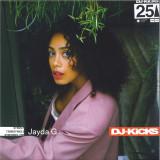
For Jayda G, joy is a state of mind. Whether she transmits it through her upbeat productions or magnetic energy at the decks, the Canadian-born DJ and producer, real name Jayda Guy, is a beacon of empathy on the dancefloor. It's no surprise, then, that Jayda G's DJ-Kicks mix captures the buoyant spirit of the music that has influenced her most. "DJ-Kicks has been a personal goal of mine for a really long time. I've been a fan for decades now. I remember there was one mix by Chromeo and it had some French disco on it that always stood out in my mind," she remembers. Clocking in at just over an hour, Guy's mixtakes you on a journey that moves through loved classics and new bubblers. The mix contains Jayda's Brand new single "All I Need", the follow up to Grammy Nominated breakthrough single "Both Of Us", a slinky house tune co-produced with James Ford that fizzes with shimmering energy. A rallying cry for kinship and understanding, Guy's insouciant vocals insist "all I need is you to hear me", gliding across the perfectly swung house beat. "Because the mix was made during the pandemic, I thought, 'What music makes me happy?' I want people to feel like they know me. I wanted it to be approachable, still honouring the disco and soul music that I love. I hope that translates in some shape or form."
out of Stock
Last delivered 4 years ago available to reorder, subject to availability
For Jayda G, joy is a state of mind. Whether she transmits it through her upbeat productions or magnetic energy at the decks, the Canadian-born DJ and producer, real name Jayda Guy, is a beacon of empathy on the dancefloor. It's no surprise, then, that Jayda G's DJ-Kicks mix captures the buoyant spirit of the music that has influenced her most. "DJ-Kicks has been a personal goal of mine for a really long time. I've been a fan for decades now. I remember there was one mix by Chromeo and it had some French disco on it that always stood out in my mind," she remembers. Clocking in at just over an hour, Guy's mixtakes you on a journey that moves through loved classics and new bubblers. The mix contains Jayda's Brand new single "All I Need", the follow up to Grammy Nominated breakthrough single "Both Of Us", a slinky house tune co-produced with James Ford that fizzes with shimmering energy. A rallying cry for kinship and understanding, Guy's insouciant vocals insist "all I need is you to hear me", gliding across the perfectly swung house beat. "Because the mix was made during the pandemic, I thought, 'What music makes me happy?' I want people to feel like they know me. I wanted it to be approachable, still honouring the disco and soul music that I love. I hope that translates in some shape or form."
out of Stock
Last delivered 5 years ago available to reorder, subject to availability
LEVARA's union merged in Los Angeles. Singer Jules Galli emigrated from France, while drummer Josh Devine chose L.A. as home versus his native United Kingdom following success behind the kit with One Direction. There they found common vision with Trev Lukather (guitar), son of Toto’s Steve Lukather.
Every tune on the band’s debut emanates from inspiration culled from their lives, and their mission is to rally the globe to connect and groove with the band. These songs display a larger than life sound. A realised vision. Anthemic tunes written and recorded visualising a mass audience becoming one with the body of work. Integrating their personal voices to the live experience. Or simply as a personal soundscape cruising the asphalt with the car stereo cranking.
Bristol hip hop duo release their debut 12” ahead of an album in July featuring a thumping electro remix by SURGEON (Dynamic Tension/ Tresor Records) and an extended remix by Ree-Vo themselves.
The lp ‘All Welcome on Planet Ree-Vo’ due for release in July could only really have been made in one city steeped as it is in Bristol’s decades of less conventional hip hop and bass music. Tweaked and fine tuned during the summer of 2020 the record punches with a mix of red eyed paranoia to a playful future funk.
T. Relly is pure Bristol hip hop royalty – known in the community variously for his links to all of the city’s major club nights, his passion and support for the most disadvantaged (through his work with the youth and prison leavers), through to compering stages at St Paul’s Carnival and his seminal 2018 lp with DJ Rogue ‘Let Them Know’
Andy Spaceland (AKA Andy Jenks) got involved in Bristol bass music as soon as he moved to the city with Static Sound System and a collaborative 12” with Rudy Tambala (AR Kane ) as Sugarboat Vs Sufi, before his band Alpha were signed to Massive Attack ’s label Melankolic, whilst he also became one of their tour DJ’s. His CV of collaborations range from Smith and Mighty to Madonna, and he is currently releasing music with US producer Butch Vig in the band 5 Billion in Diamonds , and working on new tracks with Mark Stewart (The Pop Group). His signature can be heard on this remix for Elizabeth Fraser
out of Stock
Last delivered 4 years ago available to reorder, subject to availability
After two UK #1 albums, 2 million album sales and an array of international acclaim, you might’ve thought you knew what to expect from Royal Blood. Those preconceptions were shattered when they released ‘Trouble’s Coming’ last summer. Hitting a melting pot of fiery rock riffs and danceable beats, they delivered something fresh, unexpected and yet entirely in tune with what they’d forged their reputation with.
The reaction was phenomenal, with highlights including 20 million streams, a premiere as Annie Mac’s Hottest Record and a run on Radio 1’s A-list and earned alternative radio support and media attention across the globe. In short, Royal Blood are primed to be bigger than ever before. That feat is set to be realised when they release their eagerly anticipated third album ‘Typhoons’ on April 30th via Warner Records.
When Mike Kerr and Ben Thatcher sat down to talk about making a new album, they knew what they wanted to achieve. It involved a conscious return to their roots, back when they had made music that was influenced by Daft Punk, Justice, and Philippe Zdar of Cassius. It also called for a similar back-to-basics approach to what had made their self-titled debut album so thrilling, visceral and original.
“We sort of stumbled on this sound, and it was immediately fun to play,” recalls Kerr. “That’s what sparked the creativity on the new album, the chasing of that feeling. It’s weird, though - if you think back to ‘Figure it Out’, it kind of contains the embryo of this album. We realised that we didn’t have to completely destroy what we’d created so far; we just had to shift it, change it. On paper, it’s a small reinvention. But when you hear it, it sounds so fresh.”
Those traits pulsate throughout the new single and title track. Kerr’s spiralling bass riff casts an hypnotic allure as it grows in intensity, while his vocals switch at will between a raw rock roar and a soulful falsetto. It’s underpinned by Thatcher’s thundering beats, his taut rhythms infused with groove-laden hi-hats.
After setting the tone with ‘Trouble’s Coming’, the album opens in breathless, take-no-prisoners style with the fierce metallic grooves of ‘Who Needs Friends’ hitting an early visceral peak. Royal Blood further reference their fresh array of influences by deploying vocodered vocals on ‘Million & One’ before dynamically switching between the biggest contrasts of their sound with ‘Limbo’. Already a fan favourite having been a regular during the duo’s 2019 shows, ‘Boilermaker’ lives up to its reputation and is more than matched by ‘Mad Visions’, which evokes a hyper-aggressive Prince. It ends with a final surprise in the shape of the stark piano ballad ‘All We Have Is Now’, a vulnerable and revealing reminder to live in the moment.
That song’s unguarded sentiments gives the album a redemptive finale. Whether directly or allusively, the album focuses on exploring the flipside of success that they’ve experienced. It comes from the realisation that success is much more complicated than it seems and that having the time to regain perspective is a precious commodity which becomes ever more elusive. The situation called for reflection and change, which Kerr addressed in Las Vegas. He downed an espresso martini and declared it to be his last drink, and soon discovered that his new-found sobriety would have a positive impact upon his creativity and life as a whole.
That new approach manifested itself in the duo’s decision to produce the majority of ‘Typhoons’ themselves. ‘Boilermaker’ was produced by Queens of the Stone Age frontman Josh Homme, the two bands having first connected when Royal Blood supported them on a huge North American tour. Meanwhile, the multiple Grammy Award winner Paul Epworth produced ‘Who Needs Friends’ and contributed additional production to ‘Trouble’s Coming’.
After two UK #1 albums, 2 million album sales and an array of international acclaim, you might’ve thought you knew what to expect from Royal Blood. Those preconceptions were shattered when they released ‘Trouble’s Coming’ last summer. Hitting a melting pot of fiery rock riffs and danceable beats, they delivered something fresh, unexpected and yet entirely in tune with what they’d forged their reputation with.
The reaction was phenomenal, with highlights including 20 million streams, a premiere as Annie Mac’s Hottest Record and a run on Radio 1’s A-list and earned alternative radio support and media attention across the globe. In short, Royal Blood are primed to be bigger than ever before. That feat is set to be realised when they release their eagerly anticipated third album ‘Typhoons’ on April 30th via Warner Records.
When Mike Kerr and Ben Thatcher sat down to talk about making a new album, they knew what they wanted to achieve. It involved a conscious return to their roots, back when they had made music that was influenced by Daft Punk, Justice, and Philippe Zdar of Cassius. It also called for a similar back-to-basics approach to what had made their self-titled debut album so thrilling, visceral and original.
“We sort of stumbled on this sound, and it was immediately fun to play,” recalls Kerr. “That’s what sparked the creativity on the new album, the chasing of that feeling. It’s weird, though - if you think back to ‘Figure it Out’, it kind of contains the embryo of this album. We realised that we didn’t have to completely destroy what we’d created so far; we just had to shift it, change it. On paper, it’s a small reinvention. But when you hear it, it sounds so fresh.”
Those traits pulsate throughout the new single and title track. Kerr’s spiralling bass riff casts an hypnotic allure as it grows in intensity, while his vocals switch at will between a raw rock roar and a soulful falsetto. It’s underpinned by Thatcher’s thundering beats, his taut rhythms infused with groove-laden hi-hats.
After setting the tone with ‘Trouble’s Coming’, the album opens in breathless, take-no-prisoners style with the fierce metallic grooves of ‘Who Needs Friends’ hitting an early visceral peak. Royal Blood further reference their fresh array of influences by deploying vocodered vocals on ‘Million & One’ before dynamically switching between the biggest contrasts of their sound with ‘Limbo’. Already a fan favourite having been a regular during the duo’s 2019 shows, ‘Boilermaker’ lives up to its reputation and is more than matched by ‘Mad Visions’, which evokes a hyper-aggressive Prince. It ends with a final surprise in the shape of the stark piano ballad ‘All We Have Is Now’, a vulnerable and revealing reminder to live in the moment.
That song’s unguarded sentiments gives the album a redemptive finale. Whether directly or allusively, the album focuses on exploring the flipside of success that they’ve experienced. It comes from the realisation that success is much more complicated than it seems and that having the time to regain perspective is a precious commodity which becomes ever more elusive. The situation called for reflection and change, which Kerr addressed in Las Vegas. He downed an espresso martini and declared it to be his last drink, and soon discovered that his new-found sobriety would have a positive impact upon his creativity and life as a whole.
That new approach manifested itself in the duo’s decision to produce the majority of ‘Typhoons’ themselves. ‘Boilermaker’ was produced by Queens of the Stone Age frontman Josh Homme, the two bands having first connected when Royal Blood supported them on a huge North American tour. Meanwhile, the multiple Grammy Award winner Paul Epworth produced ‘Who Needs Friends’ and contributed additional production to ‘Trouble’s Coming’.
A trip through the productions of pioneering genius Joe Meek. Here we have a mix of hits that have appeared on comps before and real out-there obscurities. Designed to be highly listenable. Never a dull moment amongst these songs that cover subjects close to Joes' heart such as vampires, love (and the lack of it), death, outer space, the human soul, Buddy Holly, and more. Artists featured are The Blue Rondos, The Blue Men, Jason Eddie and the Centremen, The Sound Offs, The Moontrekkers, Johnny Leyton, The Cryin' Shames, Mike Berry, The Outlaws, Chick Lewis, Glenda Collins and even Joe himself warbling out a tune. One time very small pressing so please don't sleep.
On February 27, 2018, Chris Forsyth & The Solar Motel Band (comprised, in this iteration, of long-time SMB bassist Peter Kerlin and Kerlin’s Sunwatchers battery mate Jason Robira on drums) were close to wrapping up an 18-date tour of the EU and UK with a two-set, one hour and 45 minute show at Cafe OTO, London’s premier venue for adventurous music. Highlights of that show are included in this live release, RARE DREAMS: SOLAR LIVE 2.27.18, recorded before a packed house seated mere feet from the band’s amplifiers. These recordings reveal a band that is clearly in high spirits and high gear, operating with an expansive, improvisatory fleetness that allows them to stretch the material to almost ludicrous extremes and then let it to snap back to some semblance of form while somehow seemingly never wasting a note, a beat, a gesture. The four tracks included here comprise material culled from (at the time) the two most recent Solar Motel Band records DREAMING IN THE NON-DREAM (No Quarter, 2017) and THE RARITY OF EXPERIENCE (No Quarter, 2016) plus covers of two Neil Young songs - the autobiographical plaint “Don’t Be Denied,” lyrically relocated by Forsyth from Young's Canada and Hollywood to the more personally relevant geography of New Jersey and Philadelphia, and encore “Barstool Blues” (they’d run out of material to play, so another Neil Young tune it was). While the covers establish Forsyth’s basis, serving as an homage to Young and the quest for self-realization, the long tracks’ jams showcase the trance-inducing power of the Solar Motel Band as a performing entity. Kerlin’s gymnastically propulsive bass playing locks in with Robira’s relentless thud, each serving as counterpoint to some of the most blistering guitar work of Forsyth’s career. The telepathically dynamic interplay of the trio explodes with whiplash intensity across the 15-plus minute takes of “Dreaming In The Non-Dream” and “The First 10 Minutes of Cocksucker Blues,” each song’s structure serving as a framework for extended lava flows of energy. At one point late in the “Dreaming” jam, Forsyth unplugs the jack from his guitar, dragging it across the strings and lashing the body of his single-pickup “parts" Esquire, producing a desiccated barrage of percussive static. This is music beyond the notes; it is an expression of pure electric ecstasy, a simultaneous negation and celebration of rock music’s (indeed all musics’) essential energy. In contrast to the expansive but meticulously detailed guitar arrangements of his recordings, here Forsyth’s unhinged live guitar sound positively roars with a barely restrained vocal intensity, from liquid melodic lines to gnarled blasts of free jazz scree, to pulsating lead/rhythm vamping. I’ve had the pleasure of witnessing this band up close for a number of years now and I can authoritatively attest that while every show is different, when the SMB is running down a steep hill at full speed (as on these takes), they become a single leaderless vibrating sonic tornado, possibly beyond the control and logic of the players themselves, picking up listeners along the way and taking them along for the ride straight into a solar furnace of sound. - Jerome Onfront, Philadelphia
Just like Freddy Krueger, Final Dream resurrects from the past to haunt your nights and deliver to the masses his threatening message. Author of a mighty album and three collector EP's on experimental techno label Audio Illusion Recordings from 1995 to 2002, British Electro veteran Phil Klein aka Bass Junkie returns with a vengeance under his most frightening alias. 19 years after his last transmission, he serves up a new four tracker full of his infectious strain of corrosive and weird electro.
The A-side opens with the mental "Dark Flow", a pounding tune based upon hammering beats surrounded by sinister strings and a gloomy atmosphere. The title track "Project Fear" coming next goes deeper into the realm, merging lethal frequencies to demonic beats.
The flipside introduces "Force Majeure", a milestone of an instant classic made of robotic drums sequences fused into subtle acid lines while "The Devil's Playground" concludes the 12" with 7 minutes of brain manipulations. Present "Project Fear EP" appears as an opened window to the future, an invitation to foresee what Evil is cooking for you in his laboratory. Just a reminder that there's no way to hide, accept your fate, nothing can stop the darkness!
out of Stock
Last delivered 4 years ago available to reorder, subject to availability
Harry Wolfman has been a staple member of the Dirt Crew family since his debut collaboration with Loz Goddard in 2016. We’ve since seen considerable growth with EPs on Phonica’s “Karakul”, “Omena” and “Outplay” all lending a hand to the development of his signature sound into its now established lo-fi style, delving into a range of genres... ethereal ambience, electro and left-field rhythms, and of course deep, often break beat laden house grooves.
This new EP is no exception, Harry drops some irresistible dance tunes with “Walk With Me” and the banging title track “Sly Contrast” but also explores the boundaries of his palette with the vocal interludes “A21z” and the majestic “Courage” featuring the voice of “Mona Vale”, dipping a toe into the floaty world of lo-fi pop.
We also find ambient and Jazz elements cleverly combined in “Fhloston Paradise”. And the closing drum break joint “Wokit Shep” loops live drums, strings, piano and brass elements, twirling towards a majestic finale reminiscing dusty jazzy Trip Hop and instrumental Hip Hop pieces.
This record offers hope for better times... we are really glad to have Harry back with these strong tunes and can’t wait to hear these out again on a juicy sound system. Enjoy!
out of Stock
Last delivered 5 years ago available to reorder, subject to availability
Zwerm is a Belgian-Dutch electric guitar quartet (with a backyard rehearsal shed located in Antwerp) that operates along the borders between styles and traverses traditions that are typically not convergent. Zwerm rhymes Larry Polansky with Nadah El Shazly and are galvanized by the likes of guitars pioneers like The Velvet Underground and Sonic Youth, the microtonal DYI-er Harry Partch, Middle Eastern sonorities and the prog-madness of Kind Gizzard & the Lizard Wizard. ‘Musical adventure’ is not just a hollow cliché for this quartet, but a genuine commitment. Zwerm calls itself a ‘guitar quartet’, but that can be interpreted broadly as well as with a pinch of salt: “If we want to do something on instruments we don’t really master, we’ll just figure out a way to make it work.”
Toon Callier, Johannes Westendorp, Kobe van Cauwenberghe and Bruno Nelissen all met in 2007 while working on a project with Glenn Branca. A new guitar quartet was born and it became clear rather quickly that staying in the strictly contemporary compositions lane was not for this quartet-with-five-to-six-members (an organizational chart is available upon request).
An appetite for new and lasting collaborations has been a constant theme throughout their artistic parcours. The group has shared stages with theatrical producers like Walpurgis and Post uit Hessdalen, dancers such as Ecce and with the musicians Fred Frith, Stephen O’Malley, Shiva Feshareki, Rudy Trouvé, Mauro Pawlowski, Larry Polansky, Eric Thielemans, Yannis Kyriakides, François Sarhan, Serge Verstockt and Stefan Prins. These projects have not always translated into records, but they have been decisive in creating a unique musical approach. In 2015, when Zwerm was asked by De Handelsbeurs to collaborate with Fred Frith, they proceeded to pen a few new musical sketches over which Firth sublimely improvised. In 2018 ‘Badminton in Tehran’ was released, their first record that was made up completely of only the group’s compositions.
“a basket full of buttons here
and if you push the wrong one: fear
and if you push the right one: love
or maybe none of the above”
The route that Zwerm has taken is often defined by the question “What if... ?” - like a dart thrown at a musical map, not quite blindly, but naive enough to lead to unexpected endings.
“What if we play Renaissance pieces written by John Dowland, but instead of playing lutes we play these tunes with a Telecaster – and then jam it through effect pedals and an amplifier?”
“What if we connect one hundred guitar pedals and just leave our guitars at home?”
“What if we record a record with ten different one-page-pieces that we found on the Internet?”
In 2020 our metaphorical dart landed on “What if we tried microtonality?”.
‘Microtonality’ sounds a bit creepy, but actually there is nothing to be afraid of: there are no out-of- tune notes, just alternate notes. On the continents where Western musical theory is less stringently applied, microtonality is the rule, and has become the subject of many deep and thoughtfully written theories. However for Zwerm, this phenomenon occurs in many, often surprisingly lighthearted forms. A dilapidated piano that has settled into a beautiful microtonal tuning of its own accord, enthusiastic choral singing, a guitar whose three strings are tuned a quarter-tone higher, a saz (Turkishquarter-tone lute), a maddening guitar pedal, ...
"the dreams they were convicted for telling only lies reality came after for claiming to be wise what you don’t see is what you get just never light a spark I’m a crow in the dark”
“And… what if we work with a drummer?” Enter Karen Willems - dummer, extraordinaire, and ardent player in groups, projects and collaborations galore. One chance meeting and the deal was done. It was obvious before the start that Willems was the versatile and creative percussionist-in-a-toy-store necessary for this project. And in the studio, to our delight, she demonstrated an easy dexterity when switching quickly from one idea to the next.
At the reins behind the scenes was producer Rudy Trouvé, who – during previous sessions for ‘Badminton in Terhran’, when the classically trained guitarists went completely off the rails, staring deeply and forlornly into their scores, looking for answers – was able to pinpoint the problem and get the wagons rolling in the right direction again. Completing the team were Mark Dedecker (recording)and Joris Calluwaerts (mixing).
The results are in and it’s called ‘ Great Expectations’ – a title that, in several ways, fits perfectly with these strange times.‘Great Expectations’ goes wide! Zwerm is at its best when it can run along the borders between style and across traditions that otherwise would not necessarily intersect. The most straightforward rockers have a proggy tinge while the dreamy psychedelic songs lean more toward Richard Youngs. And if a nice melody dared come to close to becoming a ‘Kit-Katjingle’, then barbs-a-la-Pere-Ubu were trailed, tracked, found and promptly embedded. ‘Heavy Machinery’ sits neatly somewhere between Captain Beefheart and Richard Wagner, and ‘On My Way To Aguno’, set to an Iranian folk song chord progression, grew into a hyper-personal lullaby. Zwerm used the saz (Turkish lute) and the sinter (Moroccan gnawa bass instrument) without falling into pastiche psychedelia, but you can still sense the orient.
Over the course of four albums, Manchester based trumpeter, composer, arranger and band-leader Matthew Halsall has carved out a niche for himself on the UK music scene as one of it's brightest talents. His languid, soulful music has won friends from Jamie Cullum and Gilles Peterson to Jazz FM and Mojo as well as an ever-growing international following. His label Gondwana Records is home to GoGo Penguin and his own albums have found Halsall exploring the modal jazz of John and Alice Coltrane, paying tribute to the hard bop of the late '50s and early '60s or most recently on Fletcher Moss Park drawing on Eastern influences in his most personal statement yet. His latest album When The World Was One is something of a companion piece to Fletcher Moss Park (much of the music was written at the same time) but draws more explicitly on Halsall's love of spiritual jazz and Eastern music as well as his own studies in meditation and travels in Japan. Beautifully recorded at Hasall's favourite studio, 80 Hertz in Manchester, and engineered by Brendan Williams and George Atkins it features the recording debut of Halsall's large ensemble, The Gondwana Orchestra, which utilises the exotic flavours of harp, koto and bansuri flute and Eastern scales to create a global palate for Halsall's life-affirming sounds.
The Gondwana Orchestra features long time collaborators Nat Birchall, saxophone, Gavin Barras, bass and Rachael Gladwin, harp as well as Taz Modi on piano. Modi who also plays with Halsall in their more electronic trio shares his passion for spiritual jazz and plays the music with real feeling while the role of the harp here is to bring a touch of 'magical reality' a floating dreaminess that is a vital part of Halsall's elegiac and beautiful music. The drummer Luke Flowers is perhaps best known as part of Cinematic Orchestra, and Halsall describes him as 'one of the best drummers in the world' and hails him for 'playing the music exactly as I heard it in my head', Keiko Kitamura is a Japanese Koto player who is becoming an increasingly important part of the Gondwana Orchestra, her role is similar to Gladwin's in that the koto helps free up the music while also bringing a real sound of the East. Finally, flautist Lisa Mallett brings a love of Indian music to the orchestra, much travelled on the continent she brings all of her knowledge and experience to play offering a unique texture to Halsall's dreamy melodies.
The album opens with the title track, When The World Was One, an expansive ascending tune that nods to Art Blakey and McCoy Tyner and draws the listener in before giving way to the dreamy, meditative A Far Away Place which features great work from Gladwin on harp and draws on Eastern influences alongside the music of Alice Coltrane and Yusef Lateef. Falling Water which features the beautiful soprano of Nat Birchall nods to classic spiritual jazz as well, but mixes in the more contemporary influences of Nostalgia 77 and Cinematic Orchestra, while the hard-driving Patterns conjures an up-lifting celebratory vibe with fine work from pianist Modi to set the mood. The beautiful Kiyomizu-Dera is inspired by Halsall's travels in Japan and in particular his visit to the Buddhist temple of the same name. Likewise Sagano Bamboo Forest is named for another place that left a deep imprint on Halsall and aims to capture his feelings as he worked through the vast maze of bamboo trees. Finally the album closes with the self-explanatory Tribute To Alice Coltrane a grooving tribute to one of Halsall's key influences. Driven by a powerful bass line and featuring wonderful work from Mallet on bansuri flute and harpist Gladwin, the band all really find their way into Halsall's groove before the leader plays a beautiful wistful solo of his own and it is the oneness of the Gondwana Orchestra that makes it such a powerful vehicle for Halsall's music as the leader takes you on his very own journey through his musical and spiritual world.
out of Stock
Last delivered 4 years ago available to reorder, subject to availability
They Say: “Contemporary scores for visual effect”.
We say: Synth-heavy, low-slung space-funk masterpiece.
The creator of the romping tunes that became the iconic themes to the BBC’s Grandstand programme and their televised Wimbledon Tennis Championship coverage, Keith Mansfield was perhaps KPM’s most prolific artist from the mid 1960s right the way through the 1980s. As well as the sort of pop orchestral sound that is all over these classic library records, he could also turn his hand to raw, edgy rock and funk. Quentin Tarantino is a big fan, going as far as including some of Keith’s work on the soundtracks to Kill Bill and Grindhouse.
This is it. This is THE ONE for us: Keith “The Man” Mansfield’s Vivid Underscores from 1977. A sample freak’s wet dream and one of Be With Rob’s favourite ever KPM records. A must for fans of Brian Bennett’s Voyage (yes, THAT good). And no, we’ve no idea either why it took us this long to get round to tackling this monster of a record. But then again some things are worth waiting for.
Attention! Calling all crate diggers, DJs, beat heads, Hip Hop junkies, MF DOOM fans! Behold! Vivid Underscores makes sampling easy. Prepare to be up all night, every night, chopping, looping and splicing these endless grooves and spacey synths. The highlights are too many and too mind-blowing so we’ll pull out a few particular highlights. Trust us, this library LP is just jaw-dropping.
“High Velocity” sets the tone with its aggressive horns, wah-wah guitars, funky baseline and wobbly synth refrain. So good and so hypnotic that Memphis Bleek just had to swipe the ominous, frazzled intro for “What You Think of That” featuring Jay-Z. Also, for real drama, the 1985 Lakers retrospective “Return to Glory” used it to soundtrack the footage from the legendary game five of the NBA finals at the Forum. Heady days. “Crash Course” - Stetsasonic horn refrain? Beautiful - jazzy chase-funk, amazing warm keys, percussion and funky horns - all action.
The more restrained “Matter Of Urgency” is an utterly amazing, brass-heavy underscore. The grandiose, uplifting “Dawn Of Aquarius” still sounds like the future with its tense, thundering drums, killer bassline and swirling synths. Version II loses the drums and percussion but is no less startling. “Staying Power” closes the first side with a relentless, pounding groove which *will* snap your neck. Be warned.
“Trucking Company” is a pacey, synth-and-string masterpiece and its accompanying parts (a–c) mess with the formula to great effect. Part (a) adds echo delay to really dazzle and part (c) plays the breezy, beautiful middle section without the tension. “Hot Cargo” and “Espionage” are both tense spy-funk themes par excellence. “Interplay” is a quiet killer, with flutes over a glistening piano refrain just waiting to be looped. The intro to the menacing “Omen” might’ve been sampled by 7L & Esoteric for their classic “So Glorious” but the entire 5 minute track is a mini-drama masterpiece, one only Mansfield could create.
Even though its a mix of short themes in-and-amongst longer, full-length tracks, Vivid Underscores is still thoroughly listenable from start to finish. That’s not something that can be said of all library records and it still manages to serve as rich resource to keep even the keenest samplers busy for a while.
As with all of our KPM re-issues, the audio for Vivid Underscores comes from the original analogue tapes and has been remastered for vinyl by Be With regular Simon Francis. And as usual, the sleeve reproduction duties were handed over to Richard Robinson, the current custodian of KPM’s brand ident
out of Stock
Last delivered 5 years ago available to reorder, subject to availability
They Say: “New directions in contemporary scoring”.
We say: Contempo is one of the best full album listens in the KPM 1000 library. Succinct smoking soul, super tight breaks and string-drenched sleaze composed by the library master, Keith Mansfield.
The creator of the romping tunes that became the iconic themes to the BBC’s Grandstand programme and their televised Wimbledon Tennis Championship coverage, Keith Mansfield was perhaps KPM’s most prolific artist from the mid 1960s right the way through the 1980s. As well as the sort of pop orchestral sound that is all over these classic library records, he could also turn his hand to raw, edgy rock and funk. Quentin Tarantino is a big fan, going as far as including some of Keith’s work on the soundtracks to Kill Bill and Grindhouse.
Many library records are a game of two halves and Contempo is certainly one of those. The first side cooks on a high funk breaks flame whilst the flip is something altogether more tranquil, yet no less groovy. It lays back with dreamier, post-coital grooves.
Rugged funk opener “The Fix” confidently displays its low slung languid grooves with heavy drums, horns and bass. Smokin’ in slow motion. The punchy “What’s Cooking” follows and has a lighter, more whimsical touch. But the drums still roll and the clavs wiggle in fascinating opposition to those horns. The dark and moody intro to “Cut To Music” gives way to a more inclusive, relaxed funk that’s all irresistible bass and stabbing horns. The mid-tempo “Man Alive” signals the time to really get down. A percussive monster jam. If you can’t strut to this then we really can’t help you! Closing out the A side, fresh guitar licks drip all over the slick drums of “Funky Footage”, with a New Orleans piano vibe coming on to really light a fire.
Whilst the dramatic crime funk of the A side is enough on its own to have earned this record its place in the great library record canon, it’s undoubtedly the more smoothed out B side for which Contempo is rightfully adored and celebrated. It’s so chilled and mellow, with beautifully arranged, sweeping strings, sax solos aplenty and a real 70s soundtrack feel. Think Love Boat, CTI label, Bob James, Grover Washington Jr.-type jams.
The super sleek and sexy jazz funk of “Breezin’” is as light and magical as you’d hope. An open-air masterpiece, its indulgent sound is just a taster of the sophisticated funk to follow. The elegant, romantic feels of “Good Vibrations” (used brilliantly by Odd Future’s Mike G for “Swiss Army”) is a string-drenched, wah-wah fuelled ode to living your best life. Nonchalantly. Whilst it keeps a very West Coast feel, the blaxploitation strut is certainly more Blackbyrds than Brian Wilson. “Sun Goddess” will blow your mind with the sensuous sound of glorious horns and beautiful keys. The luxurious “Love De Luxe” and its horizontal grooves have been much sampled, but here it proves that it doesn’t need any help to get you in an intimate mood. Closer “Snake Hips” is a cool mid-pace slouch. Just divine.
Originally released in 1976 but, like the very best KPM records, wonderfully timeless, Contempo is also no mere LP-length collection of loosely related tracks. This is a rare example of a library record that is a genuinely great listen from start to finish.
As with all of our KPM re-issues, the audio for Contempo comes from the original analogue tapes and has been remastered for vinyl by Be With regular Simon Francis. And as usual, the sleeve reproduction duties were handed over to Richard Robinson, the current custodian of KPM’s brand identity.
: Contempo (KPM) (LP)
out of Stock
Last delivered 5 years ago available to reorder, subject to availability
Mike Lundy, Lemuria, Aura. This trifecta of inimitable Hawaiian acts descended upon Honolulu’s state-of-the-art Broad Recording Studio in late 1979 to create what have now become the most coveted Hawaiian funk/soul/jazz albums of the era.
But whereas Lemuria functioned as a short-lived studio band and Mike Lundy saw little success from his album’s release, Aura — comprised of eight siblings from the Mendoza family — remained a key figure in the nightlife scene of Hawaii of the 1970s and early 1980s.
Each tune on their 1979 LP showcases the band’s unmatched musical talent that continues to astonish listeners in the 21st century, including Juno Records: “Raw funk… honey-coated soul… grooves and big smiles… lavish Hayes-level horns… dynamic and luxurious full-spectrum harmonies. Stunning.” Available on vinyl and digital for the first time since its initial release, Aura is a rare example of an album that in today’s crowded reissue landscape really does live up to its mystique.
Mike Lundy, Lemuria, Aura. This trifecta of inimitable Hawaiian acts descended upon Honolulu’s state-of-the-art Broad Recording Studio in late 1979 to create what have now become the most coveted Hawaiian funk/soul/jazz albums of the era.
But whereas Lemuria functioned as a short-lived studio band and Mike Lundy saw little success from his album’s release, Aura — comprised of eight siblings from the Mendoza family — remained a key figure in the nightlife scene of Hawaii of the 1970s and early 1980s.
Each tune on their 1979 LP showcases the band’s unmatched musical talent that continues to astonish listeners in the 21st century, including Juno Records: “Raw funk… honey-coated soul… grooves and big smiles… lavish Hayes-level horns… dynamic and luxurious full-spectrum harmonies. Stunning.” Available on vinyl and digital for the first time since its initial release, Aura is a rare example of an album that in today’s crowded reissue landscape really does live up to its mystique.
Today, The Wytches announce their third album Three Mile Ditch. The album features the recently released single “Cowboy” which marked their return after four years away and to celebrate the announcement they share new single “A Love You’ll Never Know”. The track is accompanied by a music video by Mark Breed and he explains,
“The music video format was a long process. Making the set was incredibly fun with Kristian crafting most of the miniatures.I then had to film the green screen band performance within the set before recording the edited version onto my VHS camera. Finally I shot the finished edit inside the view finder.”
The album recorded with Luke Oldfield at Tile House Studios will be released on their own label Cable Code Records on Friday 2nd October.
“This is the first thing that I've ever been proud of for longer than a week,” says The Wytches frontman Kristian Bell of the band’s latest album Three Mile Ditch. This sense of vigour and enthusiasm coming from Bell about the band’s third album is matched by its contents. The album is an explosive collection of 10 tracks that weaves seamlessly between gut-wobbling monster riffs, swampy rock, slick surf, and finely tuned songcraft. It’s also the result of a band coming back from the brink of collapse.
The band’s early trajectory was a steep and speedy one as they quickly established themselves as one of the country’s most exciting and pulverising new bands. Major festival slots stacked up at places such as Glastonbury, SXSW, Reading and Leeds, and British Summertime with the Strokes. As did the tours across the US with METZ, traversing Europe with Fat White Family and Death Grips. They garnered support from BBC 6 Music, DIY, MOJO, NME and more. However, when the ascent to the stratosphere is moving at such a speed, there’s a risk of burning out and imploding, and the band came close to this.
They were on the rocks for a while, unsure of themselves and if the band should - or even could - go on. “I had it in my head that this kind of thing only really happens once and to try it again might be a big waste of time,” Bell reflects. However, despite the difficulties, the powerful pull of the band was too great to ignore.
“We had an album’s worth of songs that was some of our best material. The mission became to complete a Wytches album rather than get The Wytches back on the touring circuit. This album helped us make the decision to try it again.”
Most listeners only became aware of Billy Preston as a solo artist after he signed to Apple Records in the late 1960s. But he'd been recording for a long time prior to that, dating back to when he was a teenager. This instrumental album for Sam Cooke's SAR label (issued on its sister Derby imprint) was cut in March 1963, when Preston was still going to high school in Los Angeles. The very fact that it's wholly instrumental indicates that it's pretty early in Preston's evolution, and though he does play some piano, it's really on the more uptempo, organ-dominated tunes where he hits the best groove. In truth, these aren't any great shakes even when it comes to soul organ instrumentals, but they have a nice swinging bounce that places them a cut above period background music, though they fall a good ways short of being spellbinding. The slower numbers (including covers of hits by Sam Cooke and Ray Charles) verge on easy listening; in contrast, the more urgent cuts are cookin', with bop, jazz, and gospel influences spicing up the soul/R&B recipe. (allmusic)
When Claud Mintz's mother finally heard the 13 songs on her kid's magnetic first album, Super Monster, she asked a concerned question: Just how many people had her 21-year-old dated? From beginning to end, these sparkling pop tunes capture the assorted stages of a relationship's delight and dejection_the giddy sensation of a first kiss during the beaming "Overnight," the heartsick longing of a pending rejection during the yearning "Jordan," the reluctant call for a requisite breakup during the smoldering "Ana." Claud, though, replied that these songs detailed the phases of only two or three relationships, simply written during them or at various points after they were over. The debut release on Phoebe Bridgers' Saddest Factory Records, Super Monster is a vertiginous but joyous coming-of-age reckoning with such young love. Claud sees relationships as games of endless wonder, intrigue, and second-guesses, a roller-coaster thrilling you even when it's terrifying. If "Gold" turns the tension and indecision of a bad match into an undeniable bit of lithe disco, "That's Mr. Bitch To You" uses a spurt of righteous indignation to fuse a little soul and emo into one breathless hook. Super Monster is like a compulsive compilation that Claud culled from a lifetime of musical enthusiasms_the arcing alt-rock of '90s airwaves, the rapturous pop of '00s chart-toppers, the diligent genre-hopping of modern online life. Claud emerges as the chameleonic mastermind of this mélange, channeling all of love's emotions into songs so sharp they make even the hardest times feel fun. Perhaps you are in the throes of one of these romantic moments yourself right now, resentful of a frustrating paramour like Claud during "Pepsi" or indulging in lust like "In or In Between." Or maybe these songs recall those wild days and tough situations. Incisive, instant, and addictive Super Monster works on either level_to remind us of love's wild ups and downs or to help us deal with them in real time. In that way, Mom, these songs are about dating, well, everyone.