After a 3-year hiatus, Noerk is back with a spacey acidic three tracker plus a rolling peaktime remix from our good friend and really talented producer Lee Burton. Untitled_02 is an electrified, deep yet funky tribute to Vangelis (as we perceive it) with lush synthesizers and grooving 303s. Pending forties is reminding us of the 90s era when sample based breakbeat and acid realised they were made for each other like peanut butter and jelly. It's Over (original mix), on the other hand, follows a more straightforward 4 on the floor loop and lets the jazzy chords and the intergalactic melodies do all the work. Lee Burton's remix wraps up the EP nicely offering us a certified banger with 90s house elements that can destroy any dancefloor. We have entered the wormhole. Time and space are no longer relevant. Only feelings.
Suche:real
"Dance of Rhythms" by Fred P, the latest release on Syncrophone, is a captivating exploration of deep house music. This 12'' vinyl record, elegantly presented in a translucent deep purple format, encapsulates Fred P's distinctive style. On the A1 side, "Dance of Rhythms" invites listeners to a hypnotic journey with intricate beats and entrancing melodies. It beckons you to immerse yourself in its captivating rhythms and hypnotic grooves. Flipping to the B1 side, "The Beauty in the Sound" unveils a rich sonic landscape filled with lush textures and ethereal atmospheres. Fred P's mastery is evident as he weaves emotive chords and subtle percussion into a harmonious blend, revealing the profound beauty found in the essence of sound. Closing the experience on the B2 side, "Vibe Science" is a sonic experiment that melds innovative sound design with an unwavering groove. This track showcases Fred P's ability to fuse artistic creativity with scientific precision, making it a standout addition to the record. In summary, "Dance of Rhythms" is a captivating journey through the realm of deep house music. With three compelling tracks, it offers a profound musical experience that will resonate with both dedicated enthusiasts and newcomers to the genre. The deep purple, translucent vinyl adds an elegant touch to the presentation, making it a collector's delight and an auditory adventure worth embarking upon..
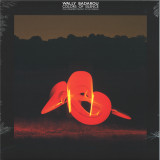
Synth pioneer and musical polymath, Wally Badarou is a genius. But you know that already. A vinyl version of his majestic Colors Of Silence has been craved by the Balearic cognoscenti ever since its low-key 2001 release. Indeed, when we first started work on Be With, we asked some pals with exquisite taste what their dream release would be. We asked Balearic legend Moonboots and, without hesitation, he said Colors Of Silence by Wally Badarou. We didn't know Wally had made this album. And most still don't. But that's about to change.
Colors Of Silence is ostensibly a new age album. As ever though, Wally's sophisticated synth textures and expressive keyboard runs are so full of character, so full of life, that this work of art transcends any easy genre categorisation. It's simply stunning, throughout. It sounds like A.r.t. Wilson or Suzanne Kraft, with traces of CFCF and Jonny Nash. But it was made a good decade earlier than the work of these modern giants. Sometimes, it doesn't seem far from some Larry Heard albums.
Island Records founder Chris Blackwell's friend Nathalie Delon asked Wally to provide music for the yoga DVD she was to release. Lack of time on both sides made them agree on using "quality demos" Wally had in his ideas bank. It's understandable why Colors Of Silence remains somewhat of a lost gem. As Wally explains: "Total lack of promotion made it an 'intimate' release, which was exactly what I was looking for: just a buzz-maker and time-buyer that would allow me to concentrate on the real thing as soon as I'd have time, which could also turn into a rare collecting item later, once the final versions made their way to success. You never know."
Over the years, Colors Of Silence has become a true cult record for the ambient/Balearic heads.
The beguiling but brief "Dance In The Dust" is the shuffling, hyper-percussive, hypnotic opener. It gives way to the deep serenity of "Amber Whispers". It's a gliding, divine, mini melodic masterpiece. It'll make you swoon in its extreme beauty. The bright and breezy "Where Were We" follows, a tropical, reggae-tinged bounce through the islands.
The uptempo groove is maintained on the keys-drizzled soca-funk of "The Lights Of Kinshasa" before Side A is rounded out with "Pictures Of You". It starts with stately, melancholic, unadorned piano and this alone would make for a beautiful song. But Wally always gives us that bit extra and he effortlessly introduces warm, dreamy pads and minimal, slo-mo percussion to augment a frankly stunning piece of work.
Ushering in Side B, Wally's mesmeric piano playing is to the fore again, in the intro to uber-chilled "Serendipity For Two". The playing becomes more mellifluous as the track progresses and adds warmth through exotic percussion, woodwind, sweeping synths and digi-drums. It has echoes of, er, Echoes. It segues seamlessly into the more propulsive, wavy "Smiles By The Millions". If you're not nodding and grinning along widely to the gently throbbing bassline underpinning this, we can't help you. The meditative "Higher Still" follows, cinematic in feel and ever so slightly sinister with the strings. It sounds particularly Badalamenti-esque, if you ask us.
That unmistakable, almost peculiar Badarou funk - so lyrical, so texturally rich and so rhythmically spacious - is all over "Oriental". Next up, "Days To Wonder" brings the serenity back, insistent yet melodic keys, as if played in a place of worship, coupled with birdsong, conjure a kind of instant nostalgia for halcyon days of youth. The contemplative "Dawn Of Europa" is a sombre, beatless, ambient journey whilst the glorious, too-brief "Crystal Falls" features soft percussion and sparkle before fully glistening with some gentle head-nod beats. Wally brings this incredible collection to a mellow, tender close with the graceful "Purple Lines".
There can be few artists more under-appreciated given their vast influence than Wally Badarou. His solo work practically defined the sound of the Balearic DJs of the 1980s, and thus the more sophisticated sound of dance culture thereafter. A synth specialist, Badarou was the long-time associate of Level 42. He was one of the Compass Point All Stars (with Sly and Robbie, Barry Reynolds, Mikey Chung and Uziah "Sticky" Thompson), the in-house recording team of Compass Point Studios responsible for a series of albums in the 1980s recorded by Grace Jones, Tom Tom Club, Mick Jagger, Black Uhuru, Gwen Guthrie, Jimmy Cliff and Gregory Isaacs. Badarou's keyboard playing could also be heard on albums by Robert Palmer, Marianne Faithfull, Herbie Hancock, M (Pop Muzik), Talking Heads, Manu Dibango and Miriam Makeba. He also produced Fela Kuti. Phew!
Meticulously remastered and cut by both Simon Francis and Cicely Balston respectively, it has been pressed to the highest possibly quality at Record Industry in Holland. Special thanks must go to Apiento from Test Pressing who first introduced us to Wally and facilitated all those early zoom meetings. It couldn't have happened without his help. Not least on pulling the art together, too, which features striking original photography by Mads Perch. Benji Roebuck of Roebuck Press did his thing brilliantly in art working the whole package to completion. All in all: essential.
Orbiting Human Circus' new album is called Quartet Plus Two. What is Orbiting Human Circus? It is the continuing evolution of Julian Koster (Neutral Milk Hotel, The Music Tapes), whose music and storytelling under this moniker have encompassed immersive theater and a Night Vale Presents podcast, as well as more traditional albums. Central to the album are the "two" referenced in the title: North and Romika, the singing saws, whom Koster doesn't "play" so much as encourage. "I think saws sing like angels," says Koster. "I always have. Since I was a little boy. When you encourage them to sing, they do so earnestly and beautifully. It's an honest and real sound." The origins of Quartet Plus Two are as magical and seemingly unlikely as everything else in Koster's career. While walking through New York's Central Park, he stumbled upon Gauvain Gamon and Kolja Gjoni_a standup bass player and drummer, respectively_playing Gershwin and Mingus, and a musical partnership was born. Pianist Benji Miller rounds out the titular quartet, with Koster's longtime collaborators Robbie Cucchiaro (horns) and Thomas Hughes (orchestral arranging and chimes) of The Music Tapes also contributing to the record. The music they make together is at once familiar and unrecognizable, as Koster and Orbiting Human Circus interpret jazz compositions by Irving Berlin, Duke Jordan, George and Ira Gershwin, and others, alongside Koster's three originals. The use of the term "composition" is intentional and speaks to Koster's relationship with the music of Quartet Plus Two in far more evocative terms than "cover" or "standard." "To me it was always magical that there were these people called `composers' who created symphonies and popular songs for other people to breathe into life and existence all over the world and throughout time," he explains. "They traveled into our homes as sheet music, endless recorded interpretations, or were passed from hand to hand, village to village, like folk tales, changed by every hand that touched them. That music was something that came to life in our own living rooms and lives, songs that our grandmothers might have sung in a choir that we might sing just as earnestly. I just think it's nice, and I would love to share that feeling in any way we can."
- A1: Fabienne 15 35
- A2: Großer Terpentinsee 03 31
- B1: The House Of Marvick 01 47
- B2: Pillow Junction 04 37
- B3: Luke's Boutique 06 23
- B4: Die Verwundung 03 54
- C1: Scheusalstage 05 13
- C2: Time To Get Ritchie 02 03
- C3: Navajo Blanket 06 52
- D1: Schlehe 10 35
- D2: Wie Sieht Es Aus? 03 27
- D3: Frausus Iii (Marduk) 04 20
- D4: Sieh Mal An (Edit) 01 44
- D5: I Wish I Had You 02 48
- D6: Counter-Culture Also Very Good 01 46
- D7: Daddy 'N'junior 02 44
- D8: Warning 03 34
God knows enough has been written about Workshop. Surely you haven't read it, but this group has been around since 1985, and what they did was this: musically quite limited, they made the music they wanted to hear, but in an ingenious way. Some played the instruments skillfully and others not so much. Something came out of it! One says: that's just the way I like it. The other one boasts: yes, I understood everything how you play here, sometimes you hit it, or sometimes you play so that the parents cry with joy. In fact, seven records were recorded, which, with the exception of the second LP, are still more than worth listening to today. Are they in danger of being forgotten?
Yes and no. What is worth listening to here has often been banned. One must bring it out again. Make attentive. Against the forgetting. These impetuous songs - just let them get close to you again and listen to them in a new context and forget all the smart-ass talk that was said about them. That means to put the self with all its reality entanglements in the pillory. This is of course not only pleasant. Bravo!
Time To Blast is the reissue of French Italian blues rock artist Little Bob's album, originally released in 2009. He was also the lead singer of the French band Little Bob Story in the 70s and 80s. Music is a real therapyfortheheartandsoul,especiallyinthesedifficulttimeswhen greed, racism and cynicism take over friendship and respect. It's a short, packed album, full of rock'n'roll, soul and blues. Reissued with exclusive cover and remastered audio.
- A1: With Bells On
- A2: Christmas Train - Medley
- A3: Rudolph The Red-Nosed Reindeer (Rupaul The...)
- A4: Christmas Nite
- A5: All I Want For Christmas
- A6: Funky Christmas (Christmas At My House)
- A7: Santa Baby
- A8: I Saw Daddy Kissing Santa Claus
- A9: All Alone On Christmas
- A10: Here Comes Santa Claus (Right Down Santa Claus Lane)
- B1: You're A Mean One, Mr. Grinch
- B2: Little Drummer Boy (Original Mix)
- B3: Hard Candy Christmas
- B4: Little Drummer Boy (Slice's 12" Club Mix)
- B5: Celebrate (New Year's Remix)
- B6: Little Drummer Boy (White's Club Mix)
- B7: Little Drummer Boy (R&B Mix)
RuPaul "Ho Ho Ho" is the 1997 third studio album, but the first Christmas album by legendary drag queen RuPaul.
The album contains ten Christmas standards and three originals, including "You're a Mean One Mr. Grinch", "Santa Baby" and "I Saw Daddy Kissing Santa Claus". It's a yuletide classic, camp at its finest as RuPaul really puts the "Ho" in Holiday.
The composer behind one of the most sensational breakthroughs in Danish music invites you on a crackling, ever-changing and deeply personal journey. His third album Atmospherics drops after a decade in which Mike Sheridan has searched deeply to find and capture his inner sound.
Films, theatres and art museums have benefited from Mike Sheridan‘s sense of sound and melody for the past 10 years. An album has been a long time coming because, in the wake of his breakthrough at the age of 16, he needed to listen extra closely to his inner sounds.
With Atmospherics, he unfolds the music in a meeting between who he once was and who he is today.
Three years ago, he began to create what is now the album Atmospherics. The term refers to electrical disturbances in the atmosphere, such as during a thunderstorm, which can interact with and distort wireless signals. Here, the title refers to both the sound of the album itself, where computer collages, classical instruments crystal clear melodies and heavy rhythms collide, and to the electronic processing and reworking. But really, he thought it would be a quiet release, almost devoid of melodies. Themes and music slide in and out of each other on the album. There are moments of dub, techno, pop and modern compositional music.
There are sounds and beats that crackle, dissolve, replace each other, or connect with each other in new ways.In this way, Atmospherics can be listened to as a long exhalation from an artist who has dared to hold his breath longer than most.
Atmospherics features both Danish and international guests such as Agnes Aldén (a singer, songwriter and producer from Falun, Sweden), Indra Rios-Moore (a singer, songwriter and arranger, from the Lower East Side of Manhattan), BYLJA and Janus Rasmussen - as well as a host of Sheridan‘s regular musicians.
The artwork for Atmospherics is created by visual artist Nicolai Howalt.
- A1: Star (Ricardo Villalobos Master)
- A2: Custard Last Stand / Amo1 Ambient Version (Ricardo Villalobos Master)
- B1: Make My Love Grow (Ricardo Villalobos Mix Down)
- B2: Black Apple Pink Apple (Ricardo Villalobos Remix)
- C1: Make My Love Grow (Ricardo Villalobos Make My Love Groove Remix)
- C2: Softlanding (Ricardo Villalobos Remix)
- D1: Dealer (Ricardo Villalobos Remix)
tom Ravenscroft at 6music amongst others. And now, in true AMO1 creative fashion they are presenting an off-shoot release of that album, one completely reimagined by the man, the myth: Ricardo Villalobos.
Much has been written and talked about when it comes to producer/DJ Ricardo Villalobos over the years.
The mercurial Chilean-German artist has consistently redefined the boundaries of techno and electronica over the past 30-years as a producer, whilst also traversing the world and expanding minds as a DJ who can equally delight as he does challenge.Like a great jazz drummer (he was a percussionist before discovering mixing records), Villalobos has not so much as broken “the rules” of structure as just created his own unique approach. One that is often surprising, ever open-minded, and clearly lead by whatever happens to be inspiring him at any given moment. Watching him work or hearing him play music always feels live and free. He’s an artist. And that is exactly how this (perhaps unlikely) collaborative album has come to light – but then this is Ricardo, so maybe we should all know by now that anything is possible.
Villalobos explains, “In my scientific search for some electroacoustic musical landscapes, the offer of remixing ‘Black Apple Pink Apple’ was just perfect for me… In general, the song writing is so very good and particular, with all the instruments played into a sequencer, so it was very inspiring to strip down these pop songs into my dubby extensions, taking only the drums, bass, and vocals of the song.” Expanding further, “After delivering the first remix, Mo and myself came up with the idea of reimagining the whole album in a new way, mixed simple with other ears and my inspirations, with a new and different point of view of what instruments are important to hold the song to bare itself.”
It says a lot, and somehow captures the essence of Ricardo’s approach to music (and life), that one remix soon evolved into a whole plethora of reimagined works, driven by a creative slipstream and a clear connection to the songs created by A Mountain of One.
Mo Morris provides more insight into his own connection with Villalobos, “I lived in Berlin back in 2002-04 and used to religiously go to dance to Rici at the after (after) hours parties: little, tiny events. And he just used to blow my mind, I hadn’t heard anything like it before (or since). Ultra-modern and forward thinking.”
Mo continues, “A good friend connected to Ibiza happenings introduced me to Ricardo as it transpired that he was a fan of our early material, so I sent him some demo’s when we were in the studio creating ‘Stars Planets Dust Me’ and he loved ‘Black Apple Pink Apple’. The relationship and collaboration grew from there really, and I hope that this release is still at the start of what we can all create together.”
Focussing in on the album at hand – ‘Ricardo Villalobos reimagines: Stars Planets Dust Me’ – we are treated to a concept listen that guides us from dreamy daytime Balearic pop – staying very true to the original songs – all the way through to completely original deep dubby techno excursions. And to Villalobos fans, it will perhaps surprise (and hopefully delight) how light a touch he has provided to the opening tracks, focussing more on enhancing the sonics, and allowing the originals to shine brighter through remastering and mixing down. It’s in these moments that we see Ricardo as a pure music fan, needing not overly change or alter what’s already been created, but simply doing what he can to maximise what’s already there.
What will certainly delight Ricardo fans are the four full ‘klub’ remixes provided of ‘Black Apple Pink Apple’, ‘Make My Love Grow’, ‘Softlanding’ and ‘Dealer’ that each boldly explore the outer regions of the dancefloor in a way that only Villalobos can.
Mo rounds off, “From an electronic and sonics standpoint he’s kind of out there on his own. It’s such a unique sound. Weatherall also had this, and Harvey has that unique flavour, and also people like Nils Frahm and Max Richter have this gift. It’s not an easy thing to produce. Ricardo has his own personal cosmic trademark.”
Indeed he does. Take a trip with him around the stars and planets and see for yourself.
- A1: From The Sun
- A2: Swim And Sleep (Like A Shark)
- A3: So Good At Being In Trouble
- A4: One At A Time
- A5: The Opposite Of Afternoon
- A6: No Need For A Leader
- A7: Monki
- A8: Dawn
- A9: Faded In The Morning
- A10: Secret Xtians
- B1: Swim And Sleep (Like A Shark)
- B2: Faded In The Morning
- B3: So Good At Being In Trouble
- B4: Swing Lo Magellan
- B5: Puttin' It Down
- B6: Two Generations Of Excess
- B7: Waves Of Confidence
Unknown Mortal Orchestra came to life in basements and bedrooms, the musical vision of Portlander-via-New Zealand Ruban Nielson that fused guitar-god riffs, choppy percussion, soul and funk. II, the sophomore album from UMO, emerged in an era rampant hedonism and isolationism and became the blueprint for everything Nielson has become renowned for. It was, and is, the solidification of Unknown Mortal Orchestra as an endlessly intriguing, brave and addictive band. Ten years on, it's back with an expanded edition. Written during a punishing, debauched touring schedule during which Nielson feared for both his sanity and health, II illustrates the emotional turmoil of life on the road, painting surrealist, cartoonish portraits of loneliness, love and despair. These conflicting themes are evident immediately; on the album's sleeve is an unnerving image of Janet Farrar, the famous British witch, Wiccan, author and teacher of witchcraft. The chilling refrain of opener "Into The Sun" sees Nielson deliver the line "Isolation can put a gun in your hand," softly, his words starkly intelligible above a warm, slow-burning melody that quickly brands itself onto your brain. His playful imagery ("I'm so lonely I've gotta eat my popcorn all alone") mirrors the melody, before a solo that borders on psychotropic ends II`s introduction. UMO is unafraid to dig deeper than the rest, their intoxicating, opiate groove bringing rock'n'roll's exaggerated myths to life. And as it unfolds, II does find Nielson reenergized. "One At A Time" and "Faded In The Morning" boast dizzying choruses and instrumentals; these crusty hunks could have been excavated from a lost 1960s treasure trove. "Monki" unravels over seven minutes like the yarn from a stoner's cardigan with an eye-frying pattern. "Dawn" is a minute of disconcerting noise that stands out between the nooks and crannies of the choruses, guitar solos, groove-heavy bass and drums that were recorded live by newly-recruited drummer Greg Rogove and Kody Nielson in a move away from the electronic percussion employed on album one. II closes with "Secret Xtians," a tender observational puzzle that fizzes to a satisfied end. In celebration of the album's 10th anniversary Nielson's complete collection from the II era is finally available in one compilation, and features the five acoustic tracks from the Blue EP as well as two additional B-sides. Unknown Mortal Orchestra was once Nielson's closeted concern. With an album that uses his singular musical imagination and extraordinary talent to parade his emotions with unyielding honesty, it is now a fully realized band operating at the peak of its powers ten years on.
Sababa 5 continues their musical journey following the success of their acclaimed self-titled debut album, which fused deep funk and Middle Eastern grooves. Their latest offering, still under the Batov Records label, ventures into more explorative and experimental instrumental compositions. While evolving their musical direction, "Aspan" delves into the realm of psychedelic rock while retaining the essence of the band"s signature Middle Eastern groove.
- A1: The Cougar
- A2: I'm Gonna Make You Love Me
- A3: Michelle
- A4: Green Sleeves
- A5: The Sandpiper
- B1: No More Than A Drop
- B2: Hey Jude
- B3: Deep River
- B4: Mago-Uta
Introducing Count Buffalo! An ambitious work that explores the sound of the next generation with innovative arrangements and outstanding performances. A new era opens here.
Akira Ishikawa, a drummer who led groups such as Midnight Sons, Genchers, and Count Buffaloes and has released countless works to the world. This work, the earliest recording under the name of Count Buffalo, features Ken Muraoka, Hiromasa Suzuki, Kiyoshi Sugimoto, Masahiko Sato, and others. Hip jazz-rock “Cougar” led by disquieting strings, “Greensleeves” with a hint of avant-garde, his own interpretation of “Hey Jude”, and a dry jazz-rock version of a folk song such as “Makouta”. , so dense that you don’t even have time to breathe. It is one of the most important works in the history of Japanese jazz-rock, not only in content, but also considering the era of 1969.
text by Yusuke Ogawa (UNIVERSOUND/DEEP JAZZ REALITY)
Erik Satie als Inspirationsquelle für John Cage - Pianist Bertrand Chamayou mit seinem Album Letter(s) to Erik Satie
"Erik Satie und John Cage sind UFOs in der Musikwelt, denn sie betrachteten Musik durch ein vollkommen anderes Prisma", beschreibt Pianist Bertrand Chamayou seinen Eindruck. Und so widmet der Pianist sein Solo-Album Letter(s) to Erik Satie diesen beiden außergewöhnlichen Komponisten: "Sie sind Vorreiter, sie änderten die Vorstellung vieler Menschen, was Musik sein soll". Der Mitte des 19. Jahrhunderts geborene Franzose Erik Satie war dabei eine Inspirationsquelle für den US-Amerikaner John Cage.
"Satie ist wirklich ein besonderer Fall, ein eigentümlicher Musiker - anders als irgendeiner sonst", betont Bertrand Chamayou. Und so präsentiert der Pianist auf seinem Album vor allem dessen berühmte Klavierwerke, darunter die drei Stücke der Serie Gymnopédie und die sieben Miniaturen der Serie Gnossienne. Die letztere der beiden meditativ dahinfließenden Kompositions-Serien verzaubert seinen Hörer durch orientalisch anmutende Tonskalen.
Von John Cage wählte Chamayou Klavierwerke wie In a landscape, Dream und Swinging.
Die Einspielung realisierte der Pianist tief im Herzen der Provence im Château Miraval. Das legendäre Tonstudio der 70er hatte Brad Pitt in den vergangenen Jahren als Co-Gründer wiedereröffnet - mit Technik, die auf höchstem Niveau Vergangenheit und Gegenwart vereint.
Electric, their third album, came out in 1987 and really caused the band to explode to new levels of fame. It contains the massive hits "Love Removal Machine", Wild Flower" and "Lil" Devil" and was produced by Rick Rubin. Electric is a seminal work, featuring some of the band"s most iconic songs. It is a departure from the band"s previous work, with a raw, agressive and stripped-down sound. The album"s opening track, "Wild Flower," sets the tone with its pounding drums, blistering guitar riffs, and Ian Astbury"s wailing vocals. Electric was a commercial and critical success, propelling The Cult to the forefront of the hard rock scene and cementing their status as one of the most influential bands of the era. The album remains a touchstone for hard rock and heavy metal fans, a classic work that captures the spirit of rebellion and the power of rock and roll. The Cult has remained an important and enduring force in the rock music world. The band has sold millions of records worldwide and has earned critical acclaim for its powerful live performances. The Cult continues to tour and record new music, and their influence on rock music shows no sign of diminishing.
- Demons Are Real (1:39)
- Pimple Zoo (1:33)
- M Not Looking) (3:27)
- Exit Flagger (2:14)
- Sleep Over Jack (3:00)
- Girls Of Wild Strawberries (2:33)
- Navigating Flood Regions (2:46)
- Gold Star For Robot Boy (1:58)
- Window Of My World (3:08)
- Redmen And Their Wives (4:06)
- Dayton, Ohio - 19 Something And 5 (2:11)
- My Impression Now (2:23)
- Do The Earth (3:22)
- Game Of Pricks (2:23)
- Secret Star (7:31)
- My Kind Of Soldier (3:29)
- Sad If I Lost It (3:33)
- Cut Out Witch (3:33)
- Gonna Never Have To Die (2:32)
- Best Of Jill Hives (2:50)
- Watch Me Jumpstart (2:51)
- Tractor Rape Chain (2:56)
- Buzzards And Dreadful Crows (1:57)
- Pendulum (2:03)
- Murder Charge (2:53)
- Fair Touching (3:33)
- Teenage Fbi (2:57)
- Glad Girls (3:59)
- I Am A Scientist (2:48)
- Echos Myron (2:44)
The latest release from the acclaimed Live From Austin, TX series of releases from the vaults of the award-winning PBS Austin City Limits TV show. Guided By Voices are one of indie rock s most loved and prolific bands. On their 2004 farewell tour they performed one of their final concerts on Austin City Limits. Recorded on live on 24 tracks, this special 2CD set features 30 songs from their entire performance. Many of the songs were never aired on the TV broadcast.
In the late 1970’s Athens, Georgia was buzzing with a raw but sophisticated music scene. The turn of
the decade began producing new sounds from bands like the B-52’s, R.E.M. and Art-Rock luminaries,
Pylon. Before they were a band, Pylon were art-school students at the University of Georgia:
invigorated by big ideas about art and creativity. In 1980 the band released its first record, Gyrate and
began touring across the country in support of the release. Following the critical acclaim of Gyrate,
Pylon went back into the studio. They gleefully pulled their songs apart and put them back together in
new shapes, revealing a band of self-proclaimed non-musicians who had transformed gradually but
noticeably into real ones. The resulting album was, Chomp. Now, more than three decades later, both
studio recordings have been remastered from their original audio tapes and are set for release on New
West Records.
In the late 1970’s Athens, Georgia was buzzing with a raw but sophisticated music scene. The turn of the decade began producing new sounds from bands like the B-52’s, R.E.M. and Art-Rock luminaries, Pylon. Before they were a band, Pylon were art-school students at the University of Georgia: invigorated by big ideas about art and creativity. In 1980 the band released its first record, Gyrate and began touring across the country in support of the release. Following the critical acclaim of Gyrate, Pylon went back into the studio. They gleefully pulled their songs apart and put them back together in new shapes, revealing a band of self-proclaimed non-musicians who had transformed gradually but noticeably into real ones. The resulting album was, Chomp. Now, more than three decades later, both studio recordings have been remastered from their original audio tapes and are set for release on New West Records.