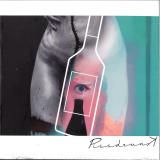
Omar Apollo veröffentlicht offiziell sein mit Spannung erwartetes Debütalbum IVORY.
IVORY bringt Omar Apollos Songwriting auf die nächste Stufe - es überwindet Genregrenzen und Sprachbarrieren, während es eine noch größere musikalische Vielfalt des aufstrebenden Superstars zeigt.
Das neue Album enthält die zuvor veröffentlichten Singles "Tamagotchi", produziert von Pharrell Williams und Chad Hugo, "Killing Me", das mit einem Fernsehauftritt in der Tonight Show mit Jimmy Fallon debütierte, und "Invincible" mit Daniel Caesar.
Darüber hinaus enthält das Album die von Teo Halm produzierte gemeinsame Single "Bad Life" mit Kali Uchis und "Go Away", das von Omar selbst zusammen mit Carter Lang und Chromeo produziert wurde.
In nur wenigen Jahren entwickelte sich der in Indiana aufgewachsene, mexikanisch-amerikanische Singer-Songwriter vom Teenager-Strummer zu einem der heißesten R&B-Künstler seiner Generation.
Alvars Orkester was formed in 1987 in Johannishus, a small village in the south-east of Sweden by a group of young boys interested in the mysteries of psychic sickness, mental institutions, industrial music culture and the power of sound. For the first very creative years, Alvars was very active within the independent cassette culture scene releasing their stuff (that quite soon drifted from the industrialism inspired by Test Dept, TG, SPK and z'ev to an atmospheric, psychedelic and quite ambient version of noise) on small labels in Italy, Portugal, USA etc.
Joachim Nordwall writes: "1990-1991. In the middle of all teen confusion going on, me and Zwarre had a long creative time together. Recording every weekend, connecting with like-minded (or at least we thought so) people around the world and trading tapes with whoever. Our world was analogue synths, Party Zone late Friday nights on MTV, zines and out-there experimental music. By then, we had a few tapes out and had "Nobody Finds Nothing" being released on the Italian super-label (in our opinion) Biotope Art Organization. We were in the midst of something and recorded "Nuthull" for another Italian top level label called Old Europa Café. However, they did not like it and the tape was abandoned and forgotten. Then years and years later, close to present time, Zwarre was in touch with OEC for some reason and had the master returned." - Joachim Nordwall, Gothenburg, 21 February 2023
The very first initial Minimum Success Records release features the legacy of some finest mix of breakbeat, gabber & hardcore influenced tracks with some ghetto touch produced in the studio sessions between 1993-1997 by the duo Amalgam 5 at West 20 Studio in Turku, Finland. Well after a decade being buried in the deepest master tapes archives these tracks are finally seeing a daylight and becoming available on a beautifully designed vinyl release by Bank™.
Workaday Strangeness: Gyrating Death Throes From a Void Axiom' is the new LP from Glasgow-based music originator Wormhook. The music therein, we understand, emerged for highly personal therapeutic reasons; nevertheless to describe it as ‘idiosyncratic’ would do a disservice both to Wormhook and to the concept of idiosyncrasy. While the record is certainly a profoundly unique, irreplicable creation, its music is nevertheless based on a visceral, breathing human rhythm which is common to all living bodies. It represents a celebration of the act of creation as a means of processing psychic and spiritual conflict, unconscious thought leading to spontaneous musical discovery.
Through something approaching the musical equivalent of automatic writing, Wormhook gives birth to fluid, home-woven spectral incantations and an untutored, backward-masked concrète hymnody. Brittle-as-glass guitar and grainy, hand-processed electronics underpin cantorial, intuitively modal vocals delivering a kind of raw, revelatory yet anti-prophetic ur-poetry, bridging the centuries between Hildegard von Bingen and Lonnie Holley and fixing the solitary star of Wormhook within the hermetic constellation which these visionaries inhabit.
For this uniquely personal retrospective spread over twelve vinyl discs, Sven Väth takes us back to the early days of his DJ career. On What I Used To Play we meet great pioneers of electronic music, gifted percussionists, obscure wave bands, and innovative producers of a bygone 'new electronic' era. Rough beats and irresistible grooves from the identification stage of house, techno, and acid remind us not just how far electronic music has evolved over the past four decades, but how great it was to dance to EBM, techno, and house for the very first time.
If there is one protagonist of the electronic music scene who has remained curious, innovative and at the very cutting edge of music for over four decades, it's Sven Väth. His multi-layered artist albums and Sound of the Season mix compilations have been defining the genre for over two decades, and even today, he is constantly on the lookout for the next top tune to add to the highlights of his next set. At least, that's the case when he's not producing them himself as an artist or remixer. "Actually, it's always been part of my DNA to think ahead," and nothing had been further from his mind than looking back at his past, but when in spring of 2020 the international DJ circuit had to be scaled down to virtually zero, the 'restless traveler' suddenly had time. Time to stop and reflect on "how it actually was back then, at the very beginning of my career..."
"It was a great trip and with every track, beautiful memories came flooding back".
In the London apartment, he had just moved into, Sven has set up a "little music room", where he cocooned himself for several days, "to look way back for the first time and review my musical journey through the eighties, so to speak."
The interim result was six thematically oriented playlists with a grand total of 120 tracks from 'early 80s' to 'Balearic late 80s', together with excursions into afrobeat, European new wave, and EBM sounds and a few epochal techno/house tracks from the USA in between. From these 'Best of Sven Väth's favorites', the project What I Used To Play crystallized. Sven remembers how the Cocoon team reacted to his proposal: "They found the idea of making a compilation out of it MEGA from the beginning and everyone said 'Sven, go for it', but then, of course, the work really started, namely, to clear the rights and to get clean sounding masters of the up to 40-year-old tracks. There was also disappointment, of course. We couldn't clear certain titles because the rights holders in the USA had fallen out with each other or simply disappeared from the scene. In short, it wasn't easy, but now I can safely say we got the most important tracks."
Finally, after two years of research, curation, design, and administrative fine-tuning, the "little retrospective" from 1981 to 1990 is available. The exquisitely packaged, and three-kilo heavy box set is not only physically impressive, WIUTP is also the definitive record of Sven Väth's musical development. On each of the twenty-four sides of vinyl, you can trace track by track, what influenced him during which phase, and how he took off as a DJ from his parents' Queen's Pub straight into the spotlight at Dorian Gray. There and at Vogue (later OMEN), Sven became the style-defining player in the DJ booth that he still is today.
1981 - 1990: Future Sounds of Now
In the early eighties, the crowd in clubs like Vogue and Dorian Gray danced to what nowadays we call 'dance classics' - mainly disco, funk, soul, and chart pop. It was up to a new generation of DJs, including Sven Väth, the youngest protagonist in the Rhine-Main area at the time, to create their own club-ready music mix. Good new tracks and potential floor-fillers were rarities that had to be sought out and found, in order to prove oneself worthy.
Without MP3s, internet streaming, or other digital download possibilities, music didn't just gravitate to the DJ, instead, it had to be tracked down. In well-stocked record stores in Frankfurt and Wiesbaden or even in Amsterdam, London, or New York, Sven and friends sourced the material for countless magical nights. On WIUTP we can follow Sven's very personal journey through this wild, innovative era in which synth-pop, funk, hip-hop, and disco were successively replaced as 'club music' by house, techno, acid, and breakbeat. By the end of the decade, it was clear to see that these once exotic 'fringe' phenomena would soon become 'mass' phenomena.
Early 80s
Dirty Talk by the Italian-American duo Klein & M.B.O. represents the most innovative phase of the Italo-disco genre in the early eighties like no other track. Mario Boncaldo (I) and Tony Carrasco relied entirely on the original synthetic drum and percussion sounds of the Roland TR-808, coupled with the raunchy vocals of Rossana Casale and guitar accents of Davide Piatto. Of course, other tracks from this period were also influential in style, most notably Unit by Logic System, which worked as the perfect soundtrack to the laser lighting system at the legendary Dorian Gray club. With stomping beats and robotic rap interludes, Bostich by Yello also belongs on Sven's eternal playlist - after all, it caught the attention of Afrikaa Bambaataa, who invited the Swiss duo to perform at the Roxy in New York in 1983.
EBM Wave - Mid 80s
From today's point of view, the almost ten-minute-long, downtempo track Giant by Matt Johnson's band project The The, would probably not be considered an obvious club classic. However, a closer (re)listen reveals the rhythmic intricacies of the percussion overdubs by JG Thirlwell (aka Foetus) on Johnson's composition, and it becomes clear why this exceptional piece of music is one of Sven's absolute favorites. Other classics from this phase include Kaw-Liga by the mysterious The Residents, the hypnotic-synthetic Our Darkness by Anne Clark (and David Harrow), and last but not least, the somber, monotonous anthem Where Are You? by 16Bit, one of Sven Väth's projects together with Michael Münzing, Luca Anzilotti from 1986.
US House - Late 80s
You certainly can't talk about Chicago house without mentioning Frankie Knuckles. The resident DJ at the Warehouse not only gave the name to an entire genre, but also produced epochal floor fillers on the Trax label like the timeless Your Love, sung (and moaned) by Jamie Principle. Acid house protagonists Phuture also hail from Chicago, and on We Are Phuture (also released on Trax) we hear the chirping acid sounds of the legendary Roland TB-303 in full effect. Another featured classic is No UFO's by Detroit's Model 500 aka Juan Atkins, who is rightly considered the 'Godfather of Techno' even if the genre-defining track from 1985 still breathes with the spirit of hip-hop and electro from the first breakdance era.
Afrobeat
Le Serpent, by Algerian-born Abdelmadjid Guemguem, is a track that sounds completely different from everything else on WIUTP. Made in 1978, it's a monumental, rousing groove created without bass or synths, just with five congas! Even though Guem sadly passed away in 2021, his immortal, acoustic beats are understood all over the world and will continue to enrich many thousands of DJ sets for years to come. Another classic that not only Sven appreciates beyond measure is Hugh Masekela's Don't Go Lose it, Baby. In addition to being one of the most important jazz pioneers, the trumpeter and freedom fighter from Johannesburg was very experimental, integrating electronic sounds into his music in later years, in a similar vein to Miles Davis and Herbie Hancock. Dutch jazz pianist Jasper van't Hof's afrobeat project Pili Pili has also aged well. The trance-like, almost sixteen-minute-long track of the same name, manages to fill a whole side on the seventh of twelve vinyl discs in the WIUTP box.
UK-US-Euro - Late 80s
Time for a change of scene, in the truest sense of the word, and from a musical perspective, this section is like landing on another planet. First up is Andrew Weatherall's classic remix of Primal Scream's Loaded, featuring the iconic Peter Fonda sample (lifted from the 1966 biker film Wild Angels) that came to personify the mood triggered by the British Second Summer of Love in the late eighties: "We wanna be free to do what we wanna do, and we wanna get loaded...". This period also saw the emergence of M/A/R/R/S whose only single, 1987's Pump Up The Volume, became a club classic with support from DJ legend CJ Mackintosh. In this most eclectic of sections, we also encounter New York house and reggae producer Bobby Konders and his seminal Nervous Acid.
Balearic - Late 80s
Those who know him, know that Sven had already lost his heart to the 'magic island' of Ibiza as a teenager, so with that in mind, the WIUTP project couldn't end without a Balearic chapter. Inspired by Manuel Göttsching's E2-E4, the immortal, eponymously titled Sueño Latino belongs in there without question. Equally popular on the island was, and still is Break 4 Love by Raze, which thinking about it, would also fit perfectly into the house chapter. Last, but not least, there's an overdue reunion with Sven Väth himself, in his role as frontman of the successful Frankfurt trio OFF. Together with Michael Münzing and Luca Anzilotti (later of Snap!) this 'Organization For Fun' created the off-the-wall club hit Electric Salsa in 1986 which incidentally turned into an international chart smash, putting Sven in the enviable position of having to decide between pop stardom and a DJ career. Well, we all know how that decision turned out and the rest, as they say, is history. A not insignificant part of his story is What I Used To Play. Enjoy!
Tod Dockstader's Aerial series, an electronic/drone masterpiece, is cherished among fans of the artist's work and this second volume is available in an audiophile quality double LP edition.
Tod Dockstader's Aerial series is sourced from his life long passion for shortwave radio. Dockstader collected over 90 hours of recordings, made at night, and comprised of cross signals and fragments plucked from the atmosphere.
Opening with airwave drones, Dockstader gradually allows elements to slowly come and go, summoning an ominous atmosphere of ethereal cloud clouds. Malignant placidity continues, giving the feeling of eavesdropping upon late-night audio activity not unlike discovering number stations while sweeping the dials. These sounds pull you in as their density and rhythms come and go.
Backward voices, deep echoing choruses of conversations flowing under the surface, ocean sounds, pulsing electro-rhythms, all seem to be created via the collaging of many hours of source recordings. A masterwork of collage and juxtaposition by an overlooked pioneer of American electronic music.
Artwork by John Brien (Imprec) is inspired by the propagation of shortwave radio signals throughout the earth's atmosphere.
"This return of Dockstader is something to cherish, not just because his output has been so limited and scarce but because what we do have is so intriguing, persuasive and cliche-free; the music of an inspired explorer who trails in nobody's slipstream." The Wire
"One of the great figures of musique concrete composition." Dusted
The Aerial project
I've written before of my interest in shortwave radio, in the notes to the Quatermass CD. Also, in the notes to the Omniphony CD (which has my first "Aerial" mix, "Past Prelude," in it), I mentioned "The Aerial Etudes," which was my working title for what became the three CDs you have. And, at the end of an interview with Chris Cutler (which can be found in the "Unofficial TD Website"), the piece I mentioned I was starting to work on at the time became Aerial.) When I was very young, people got most of their entertainment from radio. They called it "playing the radio," as if it were a musical instrument. That's what I've tried to do in this piece. About this time, a few people encouraged me to look into using a computer for this work.
I'd never used one, but I saw it would allow me to keep my mixes digital - no more transfer losses. So, at the end of 2001, I got a computer and an editing program for it, and spent what seemed a long time learning it. I began selecting mixes and loading them into the computer in late March, 2002. Out of the 580, I selected 90 "best" mixes - eventually reduced to 59, the ones on the CDs. Finally, in assembling the CDs, I followed David Myers' suggestion to allow each piece to flow into the next - making a continuous journey to the end. Tod Dockstader, 14 september 2003
About Tod Dockstader: Dockstader moved to New York in 1958 and became a self-taught sound engineer and sound effects specialist and apprenticed as a recording engineer at Gotham Recording Studios. It was around this time that he started to use his off-work hours to experiment with mixing and manipulating sounds on magnetic tape (musique concrète). By 1960 he had amassed enough material to assemble his first record Eight Electronic Pieces which was released on the Folkways label in 1961 (this would later be used in the soundtrack of Fellini’s Satyricon). The last of the eight pieces was later re-worked into his first stereo piece. In 1961 he applied to use the facilities at the Columbia-Princeton Electronic Music Center and was denied access by Vladimir Ussachevsky. Ussachevsky’s official reason was the “overstrained” scheduling of the studios, although many suspect that Dockstader’s lack of academic training was a factor in the decision. He continued to create music throughout the first half of the 60s, working principally with tape manipulation effects. His last piece at Gotham was Four Telemetry Tapes in 1965, after which he left to work as an audio-visual designer on the Air Canada Pavillion at Montreal’s Expo ‘67. It was around this time in 1966 that some of Dockstader’s pieces were released on three Owl L.P.s, and his work became known to a larger audience. He achieved modest recognition and radio play alongside the likes of Karlheinz Stockhausen, Edgard Varèse, and John Cage.
Franco Esse is the moniker of Francesco Semproni, who in the late 60s began working as a music and recording assistant in major recording studios in Rome, Italy. He started out at Dirmaphone (then located in Via Pola) under sound engineer Gianni Fornari, before following him to the Emmequattro studios in Viale Mazzini, which at the time were the headquarters of Edipan, the record label founded by composer and conductor Bruno Nicolai after parting ways with friend and fellow composer Ennio Morricone.
Semproni tried to become a singer-songwriter in the early 80s, when he recorded a number of demos with the session musicians who gravitated around the studios. None of these demos was ever released though, for reasons that are still unclear today – his thorny and stubborn personality may have been a factor, since it apparently made him reluctant to compromise with the major record labels of the time.
The unsuccessful efforts to launch his solo artist career led to a personal crisis, and Franco Esse eventually quit music to go to work as a sales assistant in a toyshop in Rome's Prati neighbourhood.
Today he seems to have vanished without a trace, but after extensive research, we managed to dig some of his demos out of an abandoned archive and miraculously bring back to life two semi-instrumental tracks he recorded in 1983.
Both of them reveal Franco Esse as a refined musician with a reserved personality, an almost minimalist approach to lyric-writing, and a strongly cinematic synth-pop style that is in line with the musical trends of the time and gives a nod to the soundtracks of Fabio Liberatori, falling somewhere in between slow-wave and new-romantic.
These two ballads would have been the perfect soundtrack to cold winter nights in the early 80s, with snowflakes floating down on ski slopes, people clad in puffy down jackets, and music pouring into headphones from walkmans kept in back jean pockets.
If you decide to look up the strict definition of outsider in any dictionary, you'll find that the term is understood as "a person who is not involved with a particular group of people or organization or who does not live in a particular place".
Perhaps this is the most accurate description of Santiago Merino. For a long decade and from his native Medellín, this DJ and producer has always tried to keep his sonic spectrum open. An interdisciplinary artist capable of freely navigating through a myriad of genres is rarely encountered, and that may be the reason why Santiago enjoys a non-negotiable respect in the different scenes that make up the music circuit of his city. On this occasion, Back Door Records is pleased to serve as host to receive one of the most anticipated facets within the range of music produced by this Colombian artist.
The Outsider marks the debut of a new project signed by Merino, a new hunch in which house takes the helm of an EP entitled 4 Club Use. Composed of five tracks, 4 Club Use seems to show us the true essence behind a genre that has almost been trivialized over the years. In this case, El Outsider decided to take the basic ingredients of tech house to produce a recipe much richer in flavors, textures and melodies. "Fire People", for example, leaves the window open for the airs of Detroit techno to come in and cool off any sunny afternoon. "Outsider" and "The Heat", on the other hand, are seasoned by the purest amen breaks, as if it were a blessing intended solely for the dance floor.
But the real deal across 4 Club Use is definitely El Outsider's own edit of Merino's track "Those Days". Raw and forceful kicks, meticulously sampled vocals and pads that seem to wrap them magically, make this bomb one of the candidate tracks to take the absolute podium of 2023.
This mini album was originally published on Semantica Records in 2010 as a extremely limited 100 copy only reference. 12 years later we recover this for the Drivecom’s catalogue and fans of the label. This is a re-press edition with a new mastering and cutting, focused in the audio quality more than trying to get a maximum volume or gain. So this is one of the reasons that the side A cutting is trying to keep the tracks in the outside area of the vinyl in the most possible way, trying to avoid distortions or other artifacts from the inner vinyl curvature.
This 12” contains the same tracks on vinyl as the original edition but a couple of bonuses as a digital download. Those tracks called "Axonal Destruction (1999 Rework)" and "Automatic Reconstruction" were never released.
Note: For the people who purchase a physical copy in the shops, please take a picture of your purchase and share it on social networks, then we’ll send you a special download code.
In the musical eld, this reference was introduced with minimal and repetitive mental synth lines, mainly triggered from TB303 sequenced lines as the vertebral spinae, slow and progressive cadence rhythms with a touch of experimental electro and vocoders on board, exception is the rst tittle “Ultralink” which gives the name to the reference and it’s also the most club-oriented track in the mini album. About the thematic is all surrounded of such as mental driving musical lines so all the tittles were focused in the neuroscience
The album began to take shape duringJanuary 2019.
It has been recorded live by Matt Bordin ad Inside Outside
Studio, in Veneto, Italy. The choice of this method is due to the
desire to avoid the use of any post-production tool, to
maintain a natural sound and a hard impact on the listener.
"Robox" is made of nine instrumental songs characterized with
A furious post-punk full of violent and high impact riffs.
The artwork has been realized by Lacy Faery: nine monstrous
creatures, everyone of which portrays a song.
The cover art is the final portrait: the representation of
Dante's infernal journey, here embodied by the Robox, who
goes through the nine circles of Hell and faces the ancestral
traumas that affect the human psyche during its
trasformative path.
On Oct. 14th "Hard Pop" - first official single, published along
with a video - has been released.
The video has been realized by Mauro Romanzi in the ''lounge''
room of the Astro Club in Fontanafredda.
In few days the video reached more than 10k views on Youtube.
A red suite, a robot mask, violent riffs and
furious post-punk: this is Robox.
Francesco “Cesco” Cescato – Bass
Carlo Veneziano (One Dimensional Man, Orfaust, Julinko) – Guitar
Franz Valente (Il Teatro Degli Orrori, Buñuel, Snare Drum Exorcism) – Drums The Robox project was born out of the idea of making music that points towards future and innovation. This music wants to escape
from the monotony and from general music trends of the music industry.
The band uses the sound as a carrier for the lightning of the senses, to give a strong emotional shake to whoever listens to it.
After a long period made of musical experiences and geographical
distance, the Robox project starts to take shape in 2016.
During this period the songs start to sound defined, also because of
the practice coming from the first live shows.
Cesco, struck by a vision, since the first gigs starts to go on stage with a specific outfit: a bright red suite and a golden mask, evoking the image of a robotic man, the Robox: a superhero that fights the eternal struggle between instinct and reason.
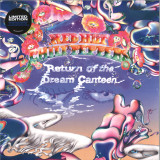
Red Hot Chili Peppers announce their brand new studio album, Return of the Dream Canteen which will be released October 14th on Warner Records. The surprise announcement was dropped at Denver’s Empower Field to rapturous response as the North American leg of their critically and commercially acclaimed global stadium tour kicked off.
The news of Return of the Dream Canteen's imminent release marks the band’s second album of 2022, hot on the heels of the platinum-selling chart topper Unlimited Love which was released in April debuting at #1 in the UK. It will also be the band's second Rick Rubin produced album of 2022, and reinforces their reputation as a band at their absolute peak, riding the crest of an undeniable creative wave.
Continuing to win over audiences across the generations, the band performed a run of sold-out UK/EU dates earlier this year, including two nights at London Stadium. "A scorching European touch-down from the California legends" – CLASH
We went in search of ourselves as the band that we have somehow always been. Just for the fun of it we jammed and learned some old songs. Before long we started the mysterious process of building new songs. A beautiful bit of chemistry meddling that had befriended us hundreds of times along the way. Once we found that slip stream of sound and vision, we just kept mining. With time turned into an elastic waist band of oversized underwear, we had no reason to stop writing and rocking. It felt like a dream. When all was said and done, our moody love for each other and the magic of music had gifted us with more songs than we knew what to do with. Well we figured it out. 2 double albums released back to back. The second of which is easily as meaningful as the first or should that be reversed. 'Return of the Dream Canteen' is everything we are and ever dreamed of being. It’s packed. Made with the blood of our hearts, yours truly, the Red Hot Chili Peppers.
Shine Grooves: "This story began in 2008, at that time I dreamed of launching my own music label and was searching for something unique. I was looking for music in different sources and came across the Frunk29's tracks, this is how I met Marat Shainsky, his release was the first on the Biotronic Records (the label I owned in the mid-00s). Later Marat introduced me to his friend - Sergey Lazarev, aka Lazzich and we immediately put together the next release for the label. It was wonderful and hypnotizing music I had never heard before. After some time we prepared the material for the first Biotronic Vinyl, which was authored by Lazzich, but the release did not happen, due to certain circumstances. And now, 15 years later, the idea comes true, we release the Lazzich mini-album on the Hanagasumi 04. Although Sergey is no longer with us, but his music will live forever. Thanks to everyone who took a part in the search for materials, archives, projects, sketches. Special thanks to Shipulina Yana for providing information and cooperation, Marat Shainsky for the advice and tracks searching, Matvey Andreenko for giving me the large media archive of Lazzich's works, Denis Rooter for designing the cover, Semen Pupyshev for mixing the found Sergey's Reason-projects".
25 years of KOMPAKT is no reason to get hysterical. Then again, it's a nice occasion to have a laid back look at the situation in electronic music today. Minimal techno in all it's varieties is now established as the worlds best dance music, as you may know. So far, so good. What's next Nothing. Dance on!
I've gain two essential insights with the passage of time. First off, that music which over the years only knew 'faster, better, stronger' and 'forwards ever - backwards never' can constantly repeat, quote and loop itself without killing itself. A music that suspends the meaning of time and eventually can set a parallel, better universe of fantasy against the twisted grimaces of reality. Again and again.
And secondly, that getting older living in/with this music is a quite relative term to which ideally a serenity of age can ring a bell. This shows that 25 years after 1993 so many protagonists, enthusiasts, DJs, musicians, relentlessly rave fighters - with all personal advancement - are still there and still celebrate, play or produce this/theirs music; and compete themselves and their music just with that.
Two such heroes of the neat and tidy bass drum culture are with no doubt T.RAUMSCHMIERE aka MARCO HAAS and REINHARD VOIGT. From day one, those two figureheads have given live-techno the glam of stage-diving rock 'n' roll, long before vodka and beer prevailed as alternative lube for ecstatic dancefloors.
Even better they both now raise the glass at the longest techno-bar in the world named KOMPAKT EXTRA/SPEICHER. With DREI MILLIONEN KO¨LSCH, Reinhard Voigt continues to establish his savvy 'way into sound', which he's pursued for a few years now on his many releases. He's turning genre cliche´s into a very personal take with his defiant mix of the deepness of a lonesome cowboy and his implicit faith in the dancefloor and gives the music a very personal touch of ennnoblement of the faith in itself. Technos dignity shall be inviolable.
For me, AUGEN ZU by T.RAUMSCHMIERE is one of the most beautiful masterpieces of bass-heavy 'Umta Umta' techno. A few strikingly brilliant vocal lines from the master himself, put through the machines and combined with a relentlessly sequencer that says it all. This cheers my heart and we will always need such tracks to remind us of ourselves. And to forget about ourselves. Smash hits of unreason! Or the prettiest declaration of love to a music which gets its magical moments from what's happening between the bass drum-beats. But only by this when the bassdrum remains linear and will do so forever. Both Marco Haas and Reinhard Voigt know that. Because after techno comes always techno.
Wolfgang Voigt - May, 2018 Wolfgang Voigt - May, 2018
25 Jahre KOMPAKT sind kein Grund sich aufzuregen. Aber dennoch ein schöner Anlass, einen gelassenen Blick auf die Lage der elektronischen Musik zu werfen. Denn der globale Minimal-Techno, in seinen unterschiedlichen Spielarten, hat sich bekanntlich längst als beste Tanzmusik der Welt etabliert. Recht so. Was nun Gar nichts. Weitertanzen.
Zwei essentielle Erkenntnisse haben sich bei mir im Laufe der Zeit durchgesetzt: Erstens - dass eine Musik, die über Jahre nur ein »Höher, Schneller, Weiter« oder ein »Forwards Ever - Backwards Never« kannte, sich ständig wiederholen, selbst zitieren und loopen kann, ohne daran zu ersticken. Die Bedeutung von Zeit und Vergänglichkeit im besten Sinne außer Kraft setzen und der hässlichen Fratze der Realität eine parallele, bessere Welt der Fantasie entgegensetzen kann. Immer wieder.
Und zweitens: dass »Altern in/mit dieser Musik« ein sehr relativer Begriff ist, dem bestenfalls Altersgelassenheit etwas sagt, Alter. Das zeigt sich immer wieder im schönsten Sinne, wenn 25 Jahre nach 1993 so viele Akteure, Enthusiasten, DJs, Musikanten, unkaputtbare Kampfraver, bei aller persönlichen Weiterentwicklung, immer noch da sind und immer noch diese/ihre Musik abfeiern, auflegen oder eben produzieren und sich und ihr Tun auch nur daran messen lassen müssen.
Zwei solche Recken der gepflegten Bassdrumkultur sind zweifelsohne T.RAUMSCHMIERE aka MARCO HAAS und REINHARD VOIGT. Zwei Rampensäue der ersten Stunde, die Live-Techno den Glam des Rock'n'Roll Stagedivings gegeben haben, lange bevor Vodka und Bier sich als alternative Gleitmittel eines ektatischen Dancefloors in der Breite durchgesetzt hatten.
Umso schöner, dass sich eben diese Beiden mal wieder an der längsten Techno-Theke der Welt, genannt KOMPAKT EXTRA/SPEICHER über die beiden Seiten einer Schallplatte hinweg musikalisch zuprosten. Mit dem Track DREI MILLIONEN KÖLSCH setzt REINHARD VOIGT seinen smarten »way into sound« fort, den er schon seit ein paar Jahren auf diversen Veröffentlichungen konsequent verfolgt. Mit einer trotzigen Mischung aus lonesome cowboyhafter Deepness und dem unbedingten Bekenntnis zum Dancefloor schafft er es, den Klischees des Techno eine sehr persönliche Note der Veredelung des Glaubens an sich selbst zu geben. Die Würde des Techno ist unantastbar.
Der Track AUGEN ZU von T.RAUMSCHMIERE ist für mich eines der schönsten Meisterstücke in der Tradition des oktavbassgeschwängerten Umta-Umta Techno. Einige wenige markant brilliante Textzeilen, vom Meister selbst in deutscher Sprache durch die Maschinen geschickt, gepaart mit einem Sequenzer der keine Gefangenen macht, lassen keine Fragen offen. Da geht mir Herz und Rucksack auf. Solche Tracks werden wir immer brauchen, um uns an uns selbst zu erinnern. Um uns immer wieder selbst zu vergessen. Smash-Hits der Unvernunft! Oder die schönste Liebeserklärung an eine Musik, die ihre magischsten Momente immer aus dem gezogen hat, was zwischen den Bassdrumschlägen passiert. Das funktioniert aber nur, wenn die Bassdrum gerade ist und es für immer bleibt. Und Marco Haas und Reinhard Voigt wissen das. Denn nach Techno kommt immer noch Techno.
Wooohaaa! The figure 8 always meant more to us than just a symbol on your screen. For this very reason on our eighth vinyl release from Minor Notes Recordings we’re featuring non other than the legendary producer BMB SpaceKid. Stemming from St. Petersburg and from an early age, BMB proved himself to be an extraordinary musician. Able produces top quality compositions with ease, and in any style, but all with his unique twist.
To date BMB is best known in hip-hop circles as he made album beats for many key underground rap artists. He also went international and produced joint tracks with Dj Premier, Anderson Paak, Raekwon, GoldLink and many others.
BMB has also performed at the Fabric Club in London, the Outlook Origins festival, live on Boiler Room and BBC Radio 1. He also participated in the Red Bull Bass Camp and the Hip-Hop Academy.
On the record "Taste Booster" BMB SpaceKid showcases his taste and skills in the production of house style dance music. A tribute to the traditions of African-American music, the virtuoso mastery of MPC and sampling techniques, and an outstanding approach to melodic rhythms.
We are convinced that this record will appeal to everyone who loves true house music, acting as a breath of fresh air. To enhance the overall effect we invited one of our favorite French producers Art Of Tones, who for a long time, and just like us, has been promoting the organic sound of electronic music 4x4.
Biosphere is the main recording name of Geir Jenssen (born 30 May 1962),(1) a Norwegian musician who has released a notable catalogue of ambient electronic music. He is well known for his works on ambient techno and arctic themed pieces, his use of music loops, and peculiar samples from sci-fi sources. His 1997 album Substrata was voted by the users of the Hyperreal website in 2001 as the best all-time classic ambient album.
Patashnik was originally released by R&S Records/Apollo in 1994. It was number 1 in NME´s Independent Chart in March 1994 and reached number 50 in the UK official album chart.
The track Novelty Waves was used in Michel Gondry's Levi's 501 Jeans "Drugstore" spot, and holds - according to the Guinness World Records 2004, the record for "Most awards won by a TV commercial".
One reason why Jenssen's work stands out from the flood of early '90s ambient/techno releases is his strong sense of the quirkily creepy -- not in an Aphex Twin mode, but in his own particular way. The contrasting samples of a child quaveringly saying, "We had a dream last night," followed by a rougher sample saying, "We had the same dream," gives opening number "Phantasm" an unsettling feeling. Intensified by the, on the one hand, pretty, on the other, disturbing music, buried synth strings and a soft pulse accentuated by clattering noises deep in the mix, it kicks off the striking Patashnik very well. Though not as openly dark as acts like Lull, for instance, Biosphere still has an edge which isn't just melancholic, it's downright ominous at point. There's the slow crawl of "Startoucher," for instance, with its buried vocal snippets and deep bass drone, or the blend of the space signal atmospheres of "Mir" into the low, brooding intro to "The Shield." Not everything is so shadowy, though, Patashnik is primarily a relax and chill listening experience, but not without its gentle high points. "Novelty Waves," which became a crossover single in some quarters, has a good dancefloor sharpness to it even as Jenssen slyly sneaks in odd drones and samples through the mix. The opening snippet talking about an extraterrestrial disc jockey on "SETI Project" is good for a smile, as well as acting as a sharp lead-in to a fast rhythm track. Mostly, though, things continue on a deliciously unnerving pace throughout, gentle enough to go down easy but still just off enough to ensure you can't call this new age folderol for the rave generation.
The multi-faceted producer and DJ, and one of electronic music's most respected, Calibre releases his brand new record 'Planet Hearth' on November 29th. An album featuring exclusively new material, and dedicated to a very close friend who passed away last year, this is by far the most personal and poignant record he has ever made.
First coined in 2015, the album has taken four years to complete and in his own words 'part of a slow metamorphosis that I have wanted to do for a long time'. Escaping to Valentia on the West Coast of Ireland, he sought solace away from the grind of modern living to write music and draw inspiration from his surroundings. It was during this time that he experienced great personal loss, which can be felt throughout the record, forming an emotional narrative that will make even the hardest of hearts shed a tear upon listening.
The title track 'Planet Hearth' was made in Belfast a few weeks before losing his close friend, and in his own words: "I remember this one feeling very automatic and emotionally engaging, the timing for me has great meaning". Whilst the track 'Five Minute Flame' was written in five minutes one morning in Valentia with the sun streaming in and the coffee being made, showing just how he can draw inspirations at any moment of the day, "I love the immediacy of writing music very much" he states. Largely ambient, there is a nod to his drum and bass roots with 'Walking in Circles', a track that can, and has been played in one of his dnb set. Whilst the album has been playing throughout the year in different club settings, opening the night with the sound that he so loves, the record wasn't made for the club as such, 'originally the idea was to put music together that didn't need to be played in a club, that it could be whatever I wanted.'
This is an honest and pure record that steps away from Calibre's drum and bass persona that he's so synonymous with. A somewhat melancholic and atmospheric piece of work, it still has that signature Calibre sound, attesting to incredible diversity of the man. A true master of his craft, his ability to constantly create and consistently deliver with such honest expression is staggering. A chameleonic creator in the purest form - as a painter, fine artist, multi-instrumentalist, writer and producer - he has a career stretching over two decades with over fifteen albums of varying genres.
To coincide with the release of the album on November 29th, it's perhaps fitting that he makes his return to XOYO - the London venue he resided in for 10 weeks from July through to September - as he plays on the Dekmantel Soundsystem residency, who he passed the baton onto for the Autumn Winter season.
This is Calibre in his rawest, purest and exposed form, delivering a body of work that he cares about the most.
Jon Gravy - another important figure of the Viennese house music scene - returns to Fortunea Records this spring! 3 years after his stunning compilation opener ‚Soul Groove’ many fortunate events happened in his career.
After several releases on Rough Recordings, The Basement Discos, Pets Recordings and his own imprint Gravy Trax he managed to finish his debut album ‚X To Love’ in 2020. And shortly after this release he also had the honor to remix soul-singer Lou Asril for his recent single. Now Jon comes back with another worth hearing versatile record, called ‚Restless Soul‘.
The journey starts with ‚G Energy‘. This track tosses the listener up to the sky with its stomping house beats and hypnotic vocal groove in the background. The other 2 pieces that come right after go in different directions. While the title track is a homage to the elektro pioneers from Detroit, ‚The Reason For‘ revels in melancholy with eerie pads, full throttle drum patterns and a piano.
On the flip Jon brings us sunny vibes with the track ‚Can’t Believe‘. And the name is really on point, because we couldn’t believe at first how awesome this baseline is! Beautiful strings and a clever arrangement makes this B-side outstanding.
And last but not least, Jon’s track ‚Over Now‘ - which will come out soon in the near future - has been handled by UK based dj and producer Red Rack’em. The friendly scotsman, who lived many years in Berlin and now resides in Bristol, did something very special while working on that remix. He used elements from 3 Jon Gravy tracks and modified them to use it on this production. A „Threemix" so to say. A very interesting deep house experiment that you should definitely check out!
The Restless Soul EP will be available digital and on vinyl. Limited to 300 copies. There will be no repress!
Mastering by Patrick Pulsinger
Support by Catz'n Dogz, Soul Clap, Jimpster, Black Loops, Roman Rauch, Rhode & Brown, youANDme, Milton Jackson, Dave Aju, Vince Watson, Tilman, Peletronic, Michel de Hey, Colin Dale, Ka§par, Replika, Dicky Trisco, Turbojazz, Cottam
As Modularz approaches it’s 50th release - Label owner Developer decided to feature a 4 track sampler taken from
The new Lp by Chicago’s Zachary Lubin named “Omronicon” this is Modularz 49 to be exact and features a wealth of groove based bangers all carrying the same aesthetic and theme through the recordings. It’s hard to pin point if this is a hard or deep release so let’s say it’s entirely both and with good reason - it’s also very synth heavy and gains ongoing momentum the more you listen. It’s very obvious that Modularz puts out excellent techno and this is by far no exception. TIP
We think our 6th release – not counting the überdrüber
‘sizzling hot edits’ – is a good display of the rtct.records
variety. Four artists from all over continental Europe are
showcasing their eclectic styles, fully exploring the richness of
house music front to back and old to new. Whether you hated
or enjoyed the record, let us know what you did with it. And, you know, just for reasons of SEOability, here are artist names again: PARADISO RHYTHM!
MUTENOISE! GUS NOBEL! LEO WOELFEL!
Percussionist Jamie Muir was a member of King Crimson during the recording of Larks' Tongues In Aspic, in 1973. Staying less than a year with Robert Fripp, the Scot had already cut his teeth with another master guitarist, Derek Bailey, as part of the Music Improvisation Company, along with Evan Parker, Hugh Davies and Christine Jeffrey, whose eponymous 1970 album was one of the first releases on ECM. Muir and Bailey recorded Dart Drug eleven years later, in 1981.There's no shortage of great percussionists in the brief history of free improvised music but on the strength of Dart Drug alone Jamie Muir deserves a place at High Table. Unlike for example Han Bennink and John Stevens, though, you can't hear echoes of any particular jazz drummer in Muir's playing, even if he has expressed appreciation for Milford Graves (who himself sounded like nobody else who'd come before him).What on earth did Muir's kit consist of Some instruments are clearly identifiable (bells, gongs, chimes, woodblocks); others could be... well, anything. Old suitcases thwacked with rolled up newspapers Tin cans and hubcaps inside a washing machine Who cares It sounds terrific - but if you're the kind of person who faints at the sound of nails scraping a blackboard, you might want to nip out and put the kettle on towards the end of the title track.Dart Drug is consistently thrilling, and often very amusing - but it's certainly not easy listening. In music we talk about playing with other musicians, whereas in sport you play against another opponent (or with your team against another team). Why not play against in music, too That's precisely what happens very often in improvised music, and Bailey was particularly good at it. How can a humble acoustic guitar hope to compete with a Muir in full flight Sometimes Bailey's content to sit on those open strings, teasing out yet another exquisite Webernian constellation of ringing harmonics and wait for the dust to settle in Muir's junkyard, but elsewhere he sets off into uncharted territory himself.'The way to discover the undiscovered in performing terms is to immediately reject all situations as you identify them (the cloud of unknowing) - which is to give music a future.' Bailey evidently concurred with this spoken statement by Muir, including it in his book Improvisation.Derek Bailey is no longer with us, of course, and Muir gave up performing music back in 1989. All the more reason for seeking out this magnificent, wild album.
KHT 008 is coming from no less than the man who is called The Prince of Techno' by his peers.
And that is for a reason: Blake was part of the first wave of Detroit techno artists and dis and contributed to the techno movement from the mid 80s. Tracks like When a dream becomes U' or Our love' are milestones of electronic music, his style, which he calls Poetry and Rhythm' is distinctive. For Killekill House Trax he delivers the Acid Life EP which comes along with two strong, acid driven tracks, the A-side darker and more chicago-oriented with its rhythmical focus and the punchy kick, the B-side more Detroit-ish with its uplifting chords.
Timeless!
Music has always coursed through Roman Lindau's blood. Even if he weren't the accomplished producer and respected DJ he is today, the German audiophile would still be spending all his money on the stuff; giving over all his time to the art form. ''I'm a music junkie. I need music to live'' he states matter-of-factly. ''For me it's the elixir of life.''
Good job, then, that he gets to spend his ..
Roman Lindau is a German techno DJ, artists and producer, as well as being a core member of the infamous Fachwerk Records from Berlin.
Music has always coursed through Roman's veins ever since he was a young boy so it is no suprise that he became the accomplished producer and highly respected DJ that he is today.
In the late 2000´s Lindau became active in the Berlin electronic music scene, beginning to play music in clubs as well as producing his own music.
The first track he released in 2008 on his home label Fachwerk Records appeared in one the world famous Berghain Mix Compilations, mixed by Len Faki.
Following from this Berghain invited Roman to contribute an exclusive Track for Ben Klock´s Berghain Mix in 2009. After this success the gates opened for him to play regularly as a DJ at Berghain.
At the same time he continued to work on music for Fachwerk Records. He produced dance floor smashers like ´Crasse´ in 2011 and ´Rave on´ in 2014, which were charted by the likes of Ben Klock, Sven Väth & Chris Liebing, afirming his deserved place amongst the techno elite.
More recently in 2015 the well known Victor Calderone from NYC invited Roman to release on his label Matter+.
The reason why Roman is such a great DJ is because of the fact he knows what the people want! ''I love to dance and that's very important: as DJ you need to feel what the crowd want so you can help them to party and have fun.''
Combining a varied selection of raw house and techno in his sets, recent bookings have taken Roman across the world; from the hallowed techno Mecca that is Berghain to dark underground clubs as part of the recent Fachwerk label tour.
He has performed at every legendary Berlin venue, past and present from Tresor to Berghain, and it is this that gives Roman the edge above the rest. If you can do it there, you can do it anywhere!
From 2014 Till the closing he was a resident DJ at Stattbad, one of Berlins findest adress for Electronic Music.
the tale of the mythic pentaki mountain has been engraved on a two-sided circular piece of wax. the north face of the peak is steep, abrasive, and has been the subject of many legends in the region. it is said that whoever would manage to climb it would find a plateau, leading to a place called "the single source of truth". considered as the ultimate goal by both psychedelic gurus and database optimization corporations, and as an ideal retirement destination for a couple of lost souls in search for coherence and objectivity, the source diffuses endless loops of haunted voices, apparently sampled from a discarded call center, running low on power, encouraging listeners to shorten cycles, deliver requests and improve user experience. it is also said that anyone climbing from the south side would never reach the summit or find his way to the plateau, and would always end up on a lower altitude than where he started. this topographical anomaly is probably the reason why the south face of the pentaki has always been favorited by locals, with its sunny weather and its luxurious vegetation flourishing along the soft downward slope, leading to a slow and peaceful end.
Between 1989 and 1992, Sea Horses released three albums that percolated through England’s DIY underground before fading into the pre-Web ether. For a small community of listeners, however, their ornate gothic romance endured as an unusual sensibility within the broader post-punk coalition.
Hailing from towns on the outskirts of Manchester—Congleton, Scholar Green, and Macclesfield—Sea Horses forged a distinctively Northern English sound. Their dark, dreamy folk carried affinities with other groups of the time, but songwriter Richard Veal’s idyllic medievalism also took unlikely influence from madrigals and liturgical music. The exalted soprano of Clare Williams and twin sisters Jo and Liz Bromley reinforces this devotional quality, hanging in nave-like ambience (the band played several shows in local churches).
For this reason, and for the subtle psychedelia of their longer-than-average compositions, critics aligned Sea Horses with England’s New Age contingent—an association that the band could not quite understand. But Sea Horses did share certain predilections with their Aquarian counterparts. The band’s pastoralism carried pagan overtones, with songs like chapters in a Saxon epic, or odes to copses, moors, and headlands.
Sea Horses: 1989–1992 collects recordings from across the band’s output, which includes two short-run albums on Mandala Recordings—Listen (1991) and Dream into Being (1992)—and a little-known self-released cassette, The Shining Net (1991), which, until now, was only known among friends and family.
After smooth detours into Soul covers, French Neo-Disco, modern Sunset Disco and Brazilian AOR, in 2022 DJ Supermarkt's Too Slow to Disco series makes a joyous return to its original Westcoast AOR/Yacht roots. Celebrating the 10th TSTD compilation. Who would have thought….
The Berlin curator releases a killer 4th edition of the original compilation art form, "Too Slow to Disco", featuring forgotten and overseen gems from the mid 70s to the early 80s from a global world of smooth, brilliant lost and overproduced tracks from Finland via London and L.A. to Trinidad and beyond.
The great 'un-vanisher' of lost lazy classics, DJ Supermarkt once again unearthed some incredible music that labels, publishers (in many cases also those, who actually own the rights to those tracks…) and streaming services have often long overlooked. You're welcome, world!
out of Stock
Last delivered 15 months ago available to reorder, subject to availability
After smooth detours into Soul covers, French Neo-Disco, modern Sunset Disco and Brazilian AOR, in 2022 DJ Supermarkt's Too Slow to Disco series makes a joyous return to its original Westcoast AOR/Yacht roots. Celebrating the 10th TSTD compilation. Who would have thought….
The Berlin curator releases a killer 4th edition of the original compilation art form, "Too Slow to Disco", featuring forgotten and overseen gems from the mid 70s to the early 80s from a global world of smooth, brilliant lost and overproduced tracks from Finland via London and L.A. to Trinidad and beyond.
The great 'un-vanisher' of lost lazy classics, DJ Supermarkt once again unearthed some incredible music that labels, publishers (in many cases also those, who actually own the rights to those tracks…) and streaming services have often long overlooked. You're welcome, world!
out of Stock
Last delivered 3 years ago available to reorder, subject to availability
Now repressed on limited edition Venus Pink vinyl – 300 copies for the world Give your retinas a workout A supergroup of sorts - Fat White Family’s Lias Saoudi, Trashmouth Records’ Luke and Liam May, and Quinn Whalley of Paranoid London and Warmduscher - Decius have travelled the earth liberating people from banality since the release of Vol. I. They’ve revealed to all those they’ve encountered just what was missing in their lives: pump without borders, pump without reason - absolute pump. Decius live sets at Berghain’s 19th birthday celebrations, Block 9’s NYC Downlow at Glastonbury and Opium Club in Vilnius have set pulses racing, and they count the likes of Dixon, 2manydjs, Honey Dijon, Mochakk, Or:La, Iggy Pop and Depeche Mode as fans. Now they offer up Decius Vol. II (Splendour & Obedience). It throbs with an almost impossible sense of potential, and expands on the lexicon of molten desire. The sound has moved into new territories, with tastes of house, disco and techno, all with an underlying base note of acid on tracks such as the slippery night cruise intensity of ‘Birth of A Smirk’, where Colonel Abrams gets his nipples tortured. ‘Queen of 14th St’ is all watersports and Cybotron force from Detroit via Deptford. ‘Walking In The Heat’ struts like a sunburnt and horny Kraftwerk, while ‘Ghent’ is purest uncut ’88 acid. Vol. II is the art of seduction in damp rooms painted black. Keep hydrated from whatever source is available. Be your own pleasure centre. Vol. II is veritable selection box of booty bumps and illegal highs made at night for the night and beyond. This is music that takes pride in its walk of shame.
Welcome to Somewhere Else Entirely – a cinematic road trip to the sea, picking up traces of Indie Folk, Dream Pop and Neo-Soul along the way.
Floatist's debut explores finding connection in uncertain times through playful yet driving grooves, cinematic strings and hazy analogue soundscapes - embracing the unknown with curiosity, courage and joy.
Somewhere Else Entirely brings together twelve tracks that drift between worlds. Gentle, intimate voices tell stories and merge into immersive choirs, floating on airy grooves. The music invites the listener to sink in, get comfortable, roll down the imaginary window and lean their head into the warm rush of air, while sun-drenched maritime landscapes pass by and the salty breeze announces the approaching sea.
For fans of: Helena Deland, Nick Hakim, Puma Blue, Feist, Konradsen, Clairo, Alice Phoebe Lou, Lianne La Havas, Lutalo, Klangstof, Sam Evian, Hannah Cohen, Rosie Lowe
First up in the series - Heavy Salsa and Latin Soul from Puerto Rico-born pianist Eddie Lebron and Orquesta Suave, the album that kickstarted Ghetto Records. Ghetto Records was Joe Bataan’s way to get over on “The Man” and out of the ‘hood, a bold move by an artist looking for independence and creative control in an industry that had exploited his talents and treated him like chattel. As Bataan puts it today, “Ghetto Records was part of my journey, a stepping stone to everything else that I’ve done. I learned enough that it enabled me to get out of the box with my thinking, it showed me how to deal with adversity.” Like many dreams and schemes born of the street, this one was audacious, perhaps even reckless to a fault. Hatched from desperation yet full of hope Ghetto Records came crashing down shortly after its inception. The seven albums in its discography languished out of print - until now. These are the definitive reissues of these albums, licensed from Joe Bataan, with his oversight and input into a 16 page oversize book by Pablo Yglesias that details Bataan’s larger-than-imagination life and his little Latin label that could.
“Speed is power is structure is reason is human is terror is speed…”
LOL SeWitt
Inspired by Sol LeWitt’s drawing “Six Thousand Two Hundred And Fifty-Five Lines“ (1970), Sonic Belligeranza 12’s sound is generated by a code that translates the lines and the spaces between the lines of the original drawing into 6255 speedcore kicks at 33 RPM (disc 1) and 45 RPM (disc 2). Also contains the ‘holy structuralist’ and ‘sphexish threshold’ versions with Six Thousand Two Hundred And Fifty-Five hertz drones accompanying the ultra-kinetic machine-gun bursts on both discs.
THE VIEWER BECOMES THE LISTENER!
Think generative speedcore, think I.D.M. (Informational Dance Music), think aural extravaganza. Think of a number: Six Thousand Two Hundred and Fifty-Five.
out of Stock
Last delivered 18 days ago available to reorder, subject to availability
Founded in 2019 by Nick Whaley and Luca Tantari, Piss Drunk Records was born in Northern California from a shared passion for underground electronic music and the DIY ethos that has always driven independent scenes.
Rather than waiting for opportunities, the label was created with a simple philosophy: if nobody releases the music you believe in, do it yourself. Every release represents that independent spirit, putting artistic freedom before commercial expectations.
Nick Whaley has been an active figure in the Northern California underground electronic scene for many years, continuously releasing music, cutting lathe records, and performing live sets while keeping the local DIY spirit alive. Luca Tantari, originally from Italy, lived in California where the idea for Piss Drunk Records was born. After returning to Italy, he continued developing the label, expanding its international reach while preserving its original vision and underground identity.
Although founded in California, Piss Drunk Records has always maintained strong roots in both the United States and Italy, creating a bridge between two underground communities.
The label embraces a broad spectrum of electronic music, from raw industrial techno, experimental electronics and noise to old-school hardcore, gabber and more dancefloor-oriented productions. Style is never the priority—authenticity is.
The first five releases were issued as hand-cut lathe records and a limited cassette, reflecting the label's commitment to small-run, handcrafted formats. PDR006 marks Piss Drunk Records' first professionally pressed vinyl release, representing a new milestone while remaining true to the DIY philosophy that inspired the project from day one.
Piss Drunk Records exists for one reason only: to release music that deserves to exist—without compromise, without trends, and without waiting for permission.
out of Stock
Last delivered 18 days ago available to reorder, subject to availability
Some recordings herald the future in ways that are impossible to see in real time. Teodros Makonnen With His Organ (ቴዎድሮስ መኮንን ከኦርጋኑ ጋር), by the artist Teodros Makonnen, also known as Teddy Mak, is one of those. Today, electronic sounds, synthesizers, and digital production are taken for granted in Ethiopian music, but in the early 1980s, they were novelties that polarized opinion. Even to this day, the story of Teodros Makonnen’s legacy has never been properly told. He played a decisive role in defining the sound of the digital era of Ethiopian music that emerged in the 1980s and beyond, both as a keyboard player and as a producer, songwriter, performer, and sound designer.
Ethiopian music was at a crossroads in the early 1980s. Much like music in the rest of the world, technology and automation heralded either a quantum leap in musical development or the annihilation of musicianship, depending on who you’d ask. The changes were incremental nonetheless, but with the benefit of hindsight one can clearly see that the changes meant different things in different contexts. Drum machines and electric organs came to replace many hotel bands because, all of a sudden, one musician could control drums, melody, and accompaniment. Teodros was one of the first musicians in Ethiopia to explore the possibilities this opened up.
Teodros’ father, Captain Makonnen Beri, was a chief pilot at Ethiopian Airlines and a music enthusiast at that. This would prove important to his development, as Makonnen brought back a piano from Germany, which would lead to the first steps in Teodros’ long musical career. Captain Makonnen’s work as Head of Flight Operations and as a pilot exposed him to the wider world that was far from commonplace for most Ethiopians. In a house where music captivated the whole family, the piano gave Teodros’ talent an outlet. Not only was a piano at home rare in Ethiopian households, his father also brought an Indian teacher to their home to teach Teodros and his brother, Captain Samuel Makonnen, music theory (solfeggio or ear training) and piano. Teodros and his youngest brother, the late great Dereje, a member of both the legendary Ibex Band and the Ethiopian reggae group Dallol, took up music from that point onward, with Teodros beginning to develop his proficiency at the age of eight. His father encouraged him to practice tirelessly at home, and Teodros later received musical schooling at the German School in Addis Ababa. His obvious talent led to studies and formal education at the Yared School of Music, followed by continued studies in American jazz at Northern Virginia Community College in Virginia. Teodros cut his teeth professionally in his mid-teens, not only as a keyboardist, but also as an arranger for the Wabi Shebelle and Dahlak bands in the 1970s. He mastered electronic sequencing early, rising to prominence through the midnight recording sessions held during the military curfew. The pressures imposed by the curfew required precise and disciplined recordings, and Teodros delivered just that. This, in turn, led to collaborations with iconic artists such as Mulatu Astatke, Aster Aweke, Menelik Wossenachew, Tilahun Gessesse, Mahmoud Ahmed, and Alemayehu Eshete. In those days, he sat in as a keyboardist with the Dahlak Band when Dawit Yifru took a hiatus to study in Russia, and also with the Ethiostar Band. He secured a residency at the Wabi Shebelle Hotel with the Shebele Band, together with Zelalem Tadese (drums), later succeeded by Elias Bekele, Mulugeta Hailu (bass), Teferi ‘Bibisha’ Mengesha (guitar), Kumelachew G/Selassie (trumpet), and Teshome Deneke (saxophone). A friendly competition developed between the bands associated with the Ras Hotel (the Ibex Band), Ghion Hotel (the Dahlak Band), and Wabi Shebelle Hotel (the Shebele Band). The music scene at Wabi Shebelle saw teenagers commanding the spotlight in an industry otherwise dominated by musicians of an older generation. At the Wabi Shebelle Hotel, Teodros met a diplomat from Saudi Arabia and later visited him at his home in Addis Ababa, a meeting that had unexpected musical consequences. The man owned a Yamaha double-deck keyboard. That evening, they recorded Teodros Makonnen With His Organ (ቴዎድሮስ መኮንን ከኦርጋኑ ጋር) in one take. This recording, a cornerstone in the early digital sound of Ethiopian music, came about almost by chance, simply because Teodros got the opportunity. Traditional Ethiopian songs were cast in a wholly electronic style. Once freed from backing duties, Teodros’ keyboards could explore dreamlike soundscapes that took Ethiopian music in new directions. Even though the cassette contained well-known Ethiopian songs, they were given highly original arrangements, performed on an electric organ with drum machine backing and rhythm patterns that left the listener with suggestive, lingering sounds. “Libesh Kabashen” (also known as “Anchi Bale Game”) and “Odu Gol Golesa” wrap you in the very stuff that dreams are made of. Originally released on cassette only, this recording exudes a mystique that surpasses even some of the most obscure Ethiopian recordings of the day. It remained more or less unknown outside of Ethiopia until now. Some of the tracks, like “Addis Fikir,” are permeated with an almost naive buoyancy, free-floating sounds that lost contact with the ground the moment they were conceived. Others, like “Meche New Hageren Yemayew” and “Lelitu Alnega Alegn,” carry a moodier, quirkier timbre, with pulsating rhythms in the background. Yet even the darker pieces contain an unmistakable wave, something essentially Ethiopian. If most recordings of Teodros’s contemporaries at the time were teeming with atmosphere, his songs seem instead at home in the stratosphere, almost ethereal. Some of the music here could be filed under “lullabies,” were it not for the recurring, almost brooding feeling that engulfs the listener on the aforementioned tracks. You could easily be forgiven for drifting into a blissful haze as the music washes over you.
Up to the advent of electronic music production, Ethiopia was totally dominated by big bands on the one hand, and small groups on the other. The former were tied to large institutions such as the military, the latter emerged from the entertainment industry, in hotel bars and nightclubs. These groups were commercially driven, and bands ultimately had to foster a mercenary approach to employment, albeit not to the passion for music. In the light of this, Teodros’ musical legacy can be seen in two ways. On the one hand, he is a key player in Ethiopian music from the 1970s onwards, leaving an indelible mark through hundreds of compositions and arrangements, including soundtracks for numerous documentary films and advertisements for different companies. On the other hand, the way he and others employed electronics brought Ethiopian music onto a fork in the road.
The replacement of traditional instruments with electronic equipment was seen as impending doom by some. Others, like Teodros, saw new avenues for performance, production, and creativity. Just as later producers like Abegasu Shiota of Admas, Teodros was a trailblazer who opened paths that it took Ethiopian music as a whole more than a decade to rush into. The hotel scene had already been pushed toward electronic music by financial necessity and cost-cutting. Today’s revived global interest in Ethiopian music from the seventies and eighties, alongside a broader resurgence, has changed the reasons for using digital means of music production. They have become tools for musical dreaming. This is where the dreaming began.
out of Stock
Last delivered 8 days ago available to reorder, subject to availability
You have to wonder why Railcard took so long to be born: their debut album feels like it should have been in your collection for years.
But it wasn’t until 2025 that Rachel Love (Dolly Mixture), Ian Button and Peter Momtchiloff (both Heavenly) met at a gig, realised that they were exactly the same age, and decided that this was an excellent reason to form a new band. The shared history, the same pop references, the parallel lives… Railcard had to happen, and there was no time to lose. Two Steps At A Time - the album title and theme song - express exactly how quickly Railcard have worked since then - jumping over pavement cracks and whistling past graveyards to get these songs written, recorded and released while they are still sweet and fresh.
The band released three digital EPs in early 2026, which were then gathered onto a CD and released by Skep Wax and Slumberland. They sold out very quickly. The critical response to a mail-order-only CD was far greater than anyone expected.
Railcard made their live debut in December 2025 and had by then recruited their fourth member: Allison Thomson (Trash Can Sinatras, The Love Band), whose flawless trumpet and swirly keyboard-playing complete the Railcard sound, allowing the band to fulfil the significant ambition and range of the songs, which are mostly co-written and often co-sung by Love and Button. “Flannelette” and “Sunday Sun”, delicate and swoony, could almost be Slapp Happy at their most Bacharach. “Foxy”, mysterious and charming, has more than a hint of Kate Bush December magic. The raucous duet “I’m A Disaster” is The Kinks meets deadpan Shangri-Las. The title track could have been an alternative theme tune for Whatever Happened To The Likely Lads. “Runaround” is like a school choir doing The Raincoats. “Unstable Neighbour” is mesmerising and insistent: it might make you think of Stereolab; we might imagine an indiepop Hawkwind. Peter Momtchiloff also contributes two wonderful songs on the album: the fragile and hallucinatory “Paper Thin” and the Love-meets-Undertones rush of “Hillman Minx”.
As with the first EPs, Railcard enlisted the sonic services of Medway psych expert Allan Crockford (of The Prisoners, James Taylor Quartet and many more) who has delivered mixes that pump with vintage valve energy and reverby depth.
Railcard have a string of UK dates through the summer and Autumn.
When Pouya dropped The South Got Something To Say in the summer of 2019, it wasn’t just a title—it was a definitive statement of growth. Nodding to André 3000’s iconic 1995 Source Awards declaration, the Miami pioneer used his third studio album to prove that his raw, independent formula had mutated into something deeper, more mature, and entirely unmatched in the underground rap landscape. Now, for the first time since its digital release, this pivotal moment in Florida hip-hop history is finally available on wax, offering listeners something tangible they have been anticipating for years.
The South Got Something To Say captures Pouya at a lyrical and sonic turning point. While maintaining the blistering flows, heavy bass, and visceral Florida energy that initially put him on the map, the album opens the door to intense themes of mortality, legacy, and the heavy toll of independent success. It bridges the gap between the frantic energy of the SoundCloud era and a mastery of songwriting, offering fans a remarkably transparent look into the mind of an artist surviving the very chaos that birthed him. Standouts like "Cruisin' in the MIA" and "Florida Thang" showcase his signature rapid-fire delivery, perfectly balancing the record's darker, more introspective moments.
The sonic diversity of the project is anchored by a stellar lineup of collaborators who push Pouya into new creative territory. He enlists Three 6 Mafia royalty Juicy J alongside heavy-hitting underground peers like Ghostemane and City Morgue, while seamlessly pivoting into the melodic, hazy soundscapes of indie-pop artist Cuco and longtime producer Rocci on tracks like "Talk to Me Before I Die" and "Mood Swing Misery." This striking balance of aggressive phonk and melodic vulnerability solidifies the album as a cohesive, genre-bending journey rather than a mere collection of singles.
For years, vinyl collectors and die-hard fans have begged for this underground masterpiece to be immortalized on wax. This first-ever vinyl pressing delivers the booming low-ends and intricate, therapeutic bars exactly how they were meant to be experienced. From the opening nostalgic chords to the final fading beats, this release stands as an essential artifact of the modern underground rap movement, finally giving a landmark Southern album the premium physical presentation it deserves.
Deadbeat & Tikiman's occasional collaborative performances have since blown the minds of many audiences
Deadbeat. Tikiman. Infinity. Dub. A quadrangle of such obvious statement and perfect musical inference may very well never have been uttered for those of the wholly weeded out persuasion. Indeed, when the great book of Dub music is written the names Scott Monteith and Paul St Hilaire will undoubtedly figure highly in its chapters devoted to recent years. Monteith, the last great prodigal son of the doctrine handed down from the Blue Mount of Lord Scratch and King Tubby, St Hilaire the undisputed voice of a generation, those fanatical warrior monks, followers of the most Holy House of Ernestus and Von Oswald incarnate.
Having developed a fast friendship from their very first meeting in Montreal at the premier Micro Mutek event a decade ago, Deadbeat and Tikiman's occasional collaborative performances have since blown the minds of audiences from Berlin to Tokyo and many points in between. No great surprise then that their first album length venture is a Tour de Force of Dub music of the highest order.
Nearly a year in the making, the genetic code of Deadbeat's Infinity Dubs series gets shot through with a Dreader than Dread Kingstonian logic, hi hats dropping back from the three to the one, Tikiman at his most militant, poetic, fierce, and flowing. These are the recordings of two lions uncaged, and none who bare witness shall escape their fiery judgement.
If music is truly eternal, here be two voices which shall echo in infinity with all the weight, reverence, and dire power unleashed with every tectonic bass hit, and every whimsical turn of phrase. And if these eight burnt offerings are any indication of what happens when these two sit down for a session of smoke and reasoning, here's hoping they choose to do it frequently. Dub without end. Ad Infinitum.
out of Stock
Last delivered 26 days ago available to reorder, subject to availability
Inhale. Exhale. Remember to breathe. In that rhythm lies the pulse of being - the ancient echo of stars from which we are made. Breathing is the bridge between the inner cosmos and the outer void. When you breathe, you testify to existence itself: "I am." The Moonrover - a child of reason - abandoned on the cold, dead Moon. It does not feel time, know fear, or comprehend solitude. But a human, in its place, would understand: Silence is not emptiness. It is a mirror. And in that mirror arises the question: "If I am alone, and silence is infinite - who hears my breath?" The answer lies in the breath. Each inhale is resistance against entropy. Each exhale is an act of remembrance. To breathe is to remember that you are not just part of the Universe - you are its awakened part. And just as the Moonrover crawls across grey lunar plains, driven by an unknown purpose, so do you move through life, led by an inner light, until you realize: breath is not just life. It is a prayer sent into silence. And if you can hear it - you are alive.
Frazer Ray lands on Time Is Now with Masha EP. Four tracks of killer, stripped back FWD facing proto/future garage effortlessly pushing the sound into a new direction.
FACTS:
1. Frazer Ray knows how to make a dance. IYKYK…. Recently he’s been shelling Live UKG cooked right in front of you on a custom modular rig. Mad energy. 100% party business.
2. Frazer Ray knows a thing or two about making UK soundsystem music. The artist FKA Soundbwoy Killah is now a decade deep in his discography. And first as ‘Soundbwoy Killah’ and now as ‘Frazer Ray’ he is 2 for 2 with aliases that never miss.
3. New Frazer Ray is always something to get excited about. For 10+ years he’s kept it super tight. Quality over quantity. Always holding dubplates. When releases have landed they drop on only the best labels; including both Rinse and Rinse’s new INGRAM imprint, Ninja Tune’s Technicolour imprint, Sneaker Social Club, Interplanetary Criminal’s Locked On and IPC & Main Phase’s ATW Records. (side note - his Soundbowy Killah - ‘Halcyon Daze’ LP on Sneaker is IMO an all time classic - do not sleep on that one). Aaaannd… if the dubplates got too heavy he’s also occasionally dropped weight on his own U-Phorix label.
Also…..what has always struck me about Frazer’s music is that it’s simultaneously integral in the hardcode continuum while also pushing it forward. It’s always complete. Fully formed. You never bristle. There’s no failed experiments. Just a firm nod to the future for anyone looking.
OK… Run the tracks.
Masha’s vocal licks tell it straight, this one is “Fire”. Proper club business to test the stacks. The drums roll steady in front of a wall of sub bass. A killer mix of post dubstep era goodness, techno sound design and the shuffle & swing of proto dubstep.
Settle Down There’s something 90’s tek step about this one. Dark and moody with a wall of bass. It bristles with texture and atmosphere before – a moment of reprieve in this absolute weapon – Frazer opens up into a dubwise oasis before skittering back into the darkness.
Syren Song is exactly what it says on the tin, alluring Dancehall vocals chatter and roll. Who knew auto-tune and Garage paired so well… Frazer did that’s who.
No Reasons Left is an ethereal closer for the end of the night / start of the morning after. Gliding warm & introspective dubwise breaks with a Reese bassline that hangs in the space between garage and hardcore.
Frazer says…
“This EP feels like I've finally nailed integrating my modular setup (and VCV rack for all you nerds out there) into my productions. I wanted to create deeper production while still ensuring the tracks translate well in the club.”
If this is only the beginning then strap in.
out of Stock
Last delivered 29 days ago available to reorder, subject to availability