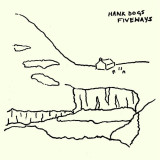
In one sense, it's easy for artists-songwriters, specifically-to express their feelings in their work. After all, that's what the lyrics are for! But it's much harder to convey emotional energy in how you play, slash at the guitar, and the structure of the music itself. That's precisely why Girl and Girl's Sub Pop debut, Call A Doctor, feels like such a vital, electrifying shock to the senses. Not since the early work of Car Seat Headrest or Conor Oberst's widescreen emotional brutality as Bright Eyes has indie rock managed to come across as this intimate and grandiose, as the Australian quartet led by Kai James lay a lifetime's worth of woes-mental health, the human race's planned obsolescence if you've been living on this cursed rock you know what we're getting at-across a canvas of indie rock that feels both timeless and in-the-moment. An audacious and aggressively tuneful blast of a record, Call A Doctor is an unforgettable first bow from Girl and Girl, whose origins lie in James and guitarist Jayden Williams jamming in his mother's garage in the afternoon after school. One afternoon, James' Aunty Liss headed down to their practice space after walking her dog and asked if she could sit in on drums. "It sounded really great," James recalls. "We begged her to stay, and she said, 'I'll stay until you find another drummer.' We wore her down, and she eventually became a permanent member." After bassist Fraser Bell joined to round things out, Girl and Girl hit the road and began to make a name for themselves beyond the Australian bush, eventually signing to Sub Pop off the strength of word of mouth. Call A Doctor came together quickly soon after, largely recorded in marathon sessions in a two-story industrial complex over the course of two weeks. "That added to the intensity of the album," James says about the frenzied creative process overseen by producer Burke Reid. "I can hear the stress in the record, which is good because that's what it's about-being tense, tied up, and in your own head." Call A Doctor's eleven songs-spanning sweeping guitar epics and wry acoustic shuffles to spiky punk maneuvers and the type of raw, adoringly unvarnished indie-pop associated with legendary PacNW label K Records-are literally plucked from James' personal history, as he reworked older recordings with newer lyrics reflecting his past struggles as well as new anxieties that emerged prior to the album's recording. "I've struggled with mental health for a lot of my life," he explains, "and I went through a particularly difficult patch when we were making the album; the band had started to get some attention, and I felt an enormous amount of pressure to live up to it." "This record is about an individual who's too far in their head, trying to get out," James continues while discussing Call A Doctor's overall outlook-specifically the snapshot it offers of its creator. But even though this record deals with uneasy topics we all know well from within ourselves, it's important to emphasize how teeming with life Girl and Girl's music is. There's a brazen, bold sense of humor to this stuff, an undeniable brightness to the darkness that makes it impossible not to be drawn in as a listener. Feeling down never sounded so goddamn good.
Поиск:recall
Все
- A1: Conway Kasey - Gassed
- A2: Ron Trent - Star Strut
- B1: Vick Lavender - Daylight
- B2: Dj Punch - Make My Body Shake
- C1: Timmy Registford - Tuna (Instrumental)
- C2: Vick Lavender - Mjs Revenge
- C3: Joe Claussell - A Deeper Grace (Lp Version Edit)
- D1: Jovonn - Latin Deep
- D2: Dj Punch - Afro Traxx
- D3: Mark Francis - Love U More
- D4: Conway Kasey - A Comino Espiritual
BANGER MAKE MY BODY SHAKE MAKE THE SPEAKERS SHAKE
It was two and a half years ago when a conversation took place between Sal Carmona and Dj Producer Jovonn Armstrong; talks of which planted a seed in Sal Carmona's ear, which years later would manifest what was once a dream into a reality. No stranger, nor a newcomer in the world of dance music, Sal's experience in the club scene goes way back to the days when his sisters, to whom he credits for helping shape the person he is today, took him to Dave Mancuso's The Loft. An experience that he recalls being nothing short of magical. It was a spiritual encounter that immediately took over thus steering him towards the direction of clubs such as The Paradise Garage, Bentley's, Underground, Red Parrot, Latin Quarters, Roseland, Studio 54, just to name a few. Years later, Sal decided to take on the role, of which he became quite successful at, of promoting his own events in New York City; throwing regular parties at venues such as Park Circle & USA roller skating rinks, Red Parrot, The Palladium, The Copacabana and many others, soon becoming one of the premier go to promoters in NYC. Taking a long and well-deserved hiatus from the club scene, in 2012 Sal decided to make his return back to what he loves. It was around this time that he began thinking what it would be like to venture into creating his very own record label. Envisioning his first release being a bona fide House Music Album, one that would include some of his favorite producers. Not one to let dreams drift into the ether, while recollecting on that conversation with Jovan way back, Sal set out to make that vision manifest into a reality and thus emerged this dope compilation titled Banger "Make My Body Shake" "Make the Speakers Shake"
A great idea which brings together an interesting mix that includes highly sought out and respected veteran producers in the scene, such as Timmy Regisford, Ron Trent, Dj Jovonn, and Joe Claussell. Alongside with up and coming DJ producers who are garnering their own adulation of fans, in the likes of Vick Lavender, Mark Francis, Conway Kasey, and DJ Punch. With valuable directional contributions from friend Joe Claussell, this, to say the least, has become far more than just a seriously dope compilation that consists of a unique coming together of serious dance music. More than the aforementioned, Sal Carmona has manifested a dream into a game changing music scripture that is one of a kind, especially in this day and age where it seems where things are thrown together hoping for something to stick. On the contrary, this is well planned and thought out dopeness at A higher level consisting of all new house music that hasn't been brought together like this in a very long time and probably not for a while afterwards.
In the Merry Month of May is the final studio recording of the late, great Tony Conrad, and the first duo release with Jennifer Walshe, one of Conrad"s most important collaborators in the final decade of his life. A wild, improvisatory flaying of song; the sheer sonic force recalls the ecstatic charge of Conrad"s Slapping Pythagoras, with Walshe"s clarion voice at the heart of it. A one-of-a-kind concoction whipped up by two fearless and often peerless souls. It"s a joy to hear their manifest mutual regard and commitment to busting a gut.
"Everything's been fucked since David Bowie died or they started up the Hadron Collider" say The Janitors. This feeling is epitomised in the title of their riveting new album: An Error Has Occurred. Marking over two decades of activity for the Swedish psych-rockers, the recording is informed by heartbreak and loss as well as the dismal state of the entire planet. For The Janitors, these two polarities intertwine constantly: "What's personal is political and vice versa." To channel their frustration and anger, the band revived certain songs they'd shelved during the pandemic when working on the acclaimed Noisolation Sessions. They added others, written since, that suited the mood of sticking a middle finger up to the oppressive world around us. Whereas previous recordings were often layered up gradually, this time the full band (Henric Herlenius, Jonas Eriksson, Anders Thorell and Wilhelm Tengdahl) rehearsed intensely together before laying down everything live, over two days and nights, in a converted missionary church. The songs on Side A have the menace of Melvins, the swagger of The Stooges and the cosmic heft of The Heads. These are the more simply constructed and poppier pieces... or so the band believe. (One friend of theirs did consider this "delusional".) 'In A Bliss' acts as the album's radiant centrepiece. A palette-cleansing love song which recalls The Jesus And Mary Chain at their most starry eyed, it finds The Janitors searching for solace and strength in straightforward companionship. After this come the dronier numbers, drawn out with soundscapes and textures influenced by The Velvet Underground's sonic experiments and the equally immersive atmospheres of electronic acts like Massive Attack. Hence, 'Operator' swings threateningly like a space-rock Swans, while the approach on 'Farewell Spacegirl' is jazzier and more meditative. "It can be hard to muster up some, or even any, positive energy at this point in time," says Henric. "We are eternally grateful to have the creative output that this constellation gives us. Neither me or Jonas would probably be here, or be the same people we are, if it wasn't for The Janitors. We'll leave you with a quote from an old anarchist: 'Every society gets the criminals it deserves.'"
“All this I do for glory” is a reasoning and exploration of the machinations of ambition and legacy, an examination of the concepts of afterlife, and the first half of a doomed love story in the model of the greek tragedies. As a narra- tive, it exists temporally somewhere between 2015’s “Never were the way she was” (with Sarah Neufeld) and the 1st volume of the NHW Trilogy.
With this, his first solo outing since 2013’s “To See More Light”, Colin Stetson ventures into territory both familiar and strange. Here still, is the dogmatically stripped down approach to performance and capture (all songs recorded live with no overdubs or loops) but there is an immediacy to the album that belies a more invasive and thorough miking of the various instruments being utilized and a seeming influence drawn from the early nineties electronica of artists like Aphex Twin and Autechre, evident in the more pointed role played by the instruments’ many percus- sive elements.
There are ancestries, motivic and timbral, woven through these six songs that plainly anchor them within the shared universe of his Trilogy, though the overall experience is one of extreme intimacy, the sounds and imagery more tangible and immersive than previous offerings. The brief and brutal “In the clinches” recalls (or presages) echoes of songs like “Judges”, though now feeling like one has fallen down the bell of Stetson’s ancient bass sax- ophone itself. “Spindrift”, crystalline and serene, calls to mind the ambient works of Aphex Twin, while “Between Water and Wind” with it’s “Immigrant Song” swagger, relentlessly carves it’s way into the bedrock here, paving the way with an increasing focus on the minute and the minimal, with a deepened sense of patience shared by most of the album’s six tracks.
Engineered and mixed by Stetson himself, this album represents a decidedly independent approach across the entire creative process and finds him at the top of his game, both as a composer and instrumentalist as well as a producer.
- A1: Soul Bossa Nova
- A2: Boogie Bossa Nova
- A3: Desafinado (Slightly Out Of Tune) (Slightly Out Of Tune)
- A4: Black Orpheus (Manha De Carnaval) (Manha De Carnaval)
- A5: Se E Tarde Me Pardoa (Forgive Me If I'm Late) (Forgive Me If I'm Late)
- B1: On The Street Where You Live
- B2: Samba De Uma Nota So (One Note Samba) (One Note Samba)
- B3: Lalo Bossa Nova
- B4: Serenata
- B5: Chega De Saudade (No More Blues) (No More Blues)
First exposed to the sounds of Samba and Bossa Nova while
touring South America with Dizzie Gillespie in 1956, Jones recalls
hearing Gillespie sitting-in with a Samba combo at Rio's Gloria
Hotel and how he was fascinated by the thrilling fusion of Jazz and
Samba. Some years later in 1962, he took a stellar big band into
NYC's A&R Studios to record the Big Band Bossa Nova album. It
was the culmination of a dream for Jones, who had never
forgotten the musical experiences he had encountered in Brazil.
With this new project, their fourth full-length work, Tupperwear completely departs from the "stylish" electronics and trends to delve into a profound exploration of the fundamentals of music.
It involves a quest or even a game through the extrapolation of geometry into various musical parameters, encompassing classical aspects like pitch, timbre, rhythm, intensity, etc., as well as noise, textures, or the implicit mathematics in natural or irrational elements.
Pentagonono delves into cosmology and nature. It is a musical approach without prejudices to basic numerology that unveils the universe, the harmonic scale, the number e, and logarithmic spirals. The golden ratio (phi) and the omnipresent number pi are also explored. Geometric shapes, proportions, and divisions of vibrating elements are transmitted through the air, internalized by humans, and transformed into music.
Following in the footsteps of previous sound explorers from various spatial and temporal origins such as Gamelan music with its infinite polyrhythmic replication, Psychedelia, Serialism, Musique Concrète, Bach, or J Dilla, this album presents itself as a materialization of ideas and concerns that, while already present in the band's musical understanding, are now brought to the forefront as if it were a vital manifesto.
To celebrate 50 years of this mighty band - A brand new studio album by the legendary Johnny Moped! Green vinyl limited to 425 copies! First up, that title - Quonk! What's that all about? Johnny - I have no idea where the name Quonk! come from! it seemed rather weird for a possible album title. Slimy - Incidental noise that's picked up _. We are a bit like that _ Johnny Moped's Quonk! is very Quonk le Donk (saucepan lid landing on head) and it's available soon from all Damaged record outlets. Marty - This one's for Toad really. It was his call and it's a great title for a Moped album. Robot - The band suffers from Quonking pretty regularly, so we thought we'd make a whole album of it. It's been five years since your last album Lurrigate Your Mind. How come it's taken so long to write and record this one? Johnny - it must have taken up to five months to rehearse for that album. Around the same time as previous albums. Slimy - Toads are slow moving creatures. Marty - Because we're old and very very lazy. Robot - That's pretty quick for us, it was over 30 years between 'Rock 'n' Roll Rookie' and Cycledelic. We wanted to make sure it passed quality control before letting it loose on the world. It sounds like you had a fun time recording it. Is that the case or was it more painful this time round? Johnny - We did have a lot of fun recording those albums starting from Real Cool Baby and Lurrigate Your Mind. Classic albums! I have enjoyed recording all of our albums from Cycledelic up to our latest album (problems aside!) Slimy - Creating Quonk! was fun _ always thrills me when the sounds come together _ Johnny and his band have a plethora of tunes. Yeah! It was alright. Marty - Bits were really easy and other bits were really hard. A lot of the songs on any Moped album really only take shape in the studio. And Dick Crippen helps a lot with how they turn out. I'm very proud of this album and the band and Johnny have worked really hard to make the best record we can. Robot - Yeah it's always fun making a Moped record. Johnny's totally at home in the studio environment...and the pub across the road. Give him the lyrics, he takes hold and delivers the goods in one take. There are some brilliant songs on the new LP. Can you tell us what 'Oh Jane' is about? Johnny - Jane is a traveller on that song, nothing to do with an ex-girlfriend of the same name! Slimy - That's about Johnny's love life. Marty - Over to you Rob.. Robot - Johnny wrote it about his love affair with a certain TV starlet who spends most of her time cruising around the world. I'll give you a clue - it ain't Susan Calman! 'Things May Happen' is being released as a single. What inspired you to write that song? Johnny - I did not write 'Things may happen', that is a Slimy Toad song; but I did not have a problem with it being released as a single. Slimy - The extraordinary lightness of being ... just the path and what's on it. Marty - This is Toad's one and it's a cracker! Robot - I think it's about the possibility of London buses running on time, or Crystal Palace winning a trophy. Johnny turned 70 last year, celebrating in style with a gig at London's 229 Venue. Some people have said it was the best Moped gig ever. How was it from your point of view? Johnny - Yes it was a gig at the 229 club to remember for all the right reasons, it was a blinder of a gig. Slimy - I thought Johnny's birthday gig was a rip-roaring success _ I enjoyed it _ The next Moped gig will be the best Moped gig ever and the one after that. Marty - It's not the best gig as far as how we performed. But as far as the turn out and the size of the crowd that came along to celebrate Johnny's birthday it was the best vibe of all the gigs for certain for me. Robot - Yeah I think it was up there with the Koko gig a few years back, great sound and a great crowd, yeah one of the best. This year marks the 50th year of Johnny Moped. What have been the high (and low) points for the band in the last five decades? Johnny - Not much was happening with the band gigwise. we were in hiatus between 2006 up to 2016 when we were getting gig bookings thick and fast, including mini-German tours and three dates in Norway and one in Sweden. Slimy - The constitution of these thoroughbred punk rockers is testimony to getting up and rocking out _ Johnny is not stopping he's class. Marty - I've only been in the band since 2017 and before that was the driver and shit carrier and before that a fan and also the band are my mates. So not one low point for me at all. Robot - I don't recall any low points...being in the band is one long high. You'll be back out on the road this summer. Any message for fans who'll be coming to see you? Slimy - You better believe it! You enjoyed that you bums or I'll kill you! Tomcats! Marty - Be afraid. Be very afraid! Robot - Enjoy the show...things may happen!
In meteorology, the word Norther refers to a cold wind that blows down from the north. For Liverpool’s Ex-Easter Island Head, it’s also an apt title for the strange and multi-faceted sound of their new album
that now descends upon the world at large: ever shifting, a multiplicity of sounds both acoustic and manipulated, and yet one that still moves as part of a single mighty breeze. At times it might recall the
experiments of Rhys Chatham and Glenn Branca, the widescreen beauty of The Necks, the relentless experimentation of Arnold Dreyblatt or the boundary-pushing roster of Kompakt Records, yet ultimately this is music that has no direct compare
NAKID presents the first album in years from Max Loderbauer (Sun Electric) and Tobias Freund’s cult Non Standard Institute. Delving deep into the aether with a double LP - almost an hour and a half in length - featuring ruined, vaporous and engrossing ambient variations on a theme.
Planing axes between iridescent new age ambient, sublime folk and avant-classical, to miasmic drone and plangent shoegaze; ‘A Day or Two’ charts the Non Standard Institute’s first actions in 6 years and serves as a compelling reminder of their intuitive work in abundance. Expanding and contracting their sound across 18 parts, they arc from heaving, oddly-tuned drones to smoggy, surreal soundscapes, bringing a wealth of fine-tuned instincts to the table. With Max Loderbauer’s 35+ years as Berlin ambient pioneer with Sun Electric, jams with Villalobos, and roles in Vladislav Delay Quintet and the Moritz von Oswald Trio, he’s matched by Freund’s 40 years of deep engineering expertise embedded in the experimental industrial and techno trenches.
The melancholy, Satie-laced piano meditations that grounded 2018's '5863' are gone, and the human touch that's been present since their very first collaborations is placed under the microscope, enhanced by their use of the Haken Continuum Fingerboard, a gestural synth that was developed to open up new modes of playing. Loderbauer's experience with the piano helps him make the most of the instrument's touch-sensitive 3D surface, while Freund uses two multi-channel loopers, piping the sounds through his arsenal of pedals.
The 18 tracks are billed as "unplanned atmospheres" that arc from sombre, drone-heavy material to humid, tape-saturated imaginary-island jams such as 'Listening To Cells' and 'Are You One Of Them'. On the latter, the duo work patiently, letting dusted string plucks tumble across each other while warbling pads hum below, bending like flutes. On 'Unlikely Events', anxious didgeridoo-like wails are ruptured by environmental rattles, before ominous voices lead us into a pocket of industrialised resonance. In time, the skies open up and the sounds morph into pastoral song, the drone blurring into hopeful pads almost as lucid and eloquent as AFX's 'SAW Vol. II', with sonorous synths that float over formless strings. Reflective, cinematic arrangements for flute and silvery ambient give way to diffusions of denser, resonant polychromatics and pucker up in outernational, alien ambient impulses recalling Connor Camburn jamming with dirashe folk pipes.
Having been dormant for over three years, New York label Satamile returns to continue spreading the gospel of proper electro music with a six-track EP from The Ghost That Walks. Drexciya enthusiasts will be all over this record; the rubbery melody of "The Angriest Angel" recalls the Detroit duo at their most playful but with a simmering undercurrent of tension that is very much the producer's own signature style. Similarly great are the searing analogue synth buzz of "Seven Deadly Sons", the tribal 303 stomp of "Urban Jungle" and the 808 rattle and Belgian rave tones of "Resident Evil". Those who were lost without the label's presence should rest easy - Angry Angels is easily among their extensive catalogue's best releases.
- 1: Sorry
- 2: Miss You
- 3: Won't Be There
- 4: Good Enough
- 5: Never
- 6: Change
- 7: A Place In Your Heart
- 8: Rainbow
- 9: Taken Over
- 10: Lifeline
- 11: Feel
- 12: Conqu
From the early ‘90s to the turn of the millennium, Gabrielle was one of the UK’s most successful and beloved artists. With two unforgettable #1 smashes (‘Dreams’ and ‘Rise’), a back catalogue full of Top 10 hits, two albums which reached 4 x Platinum status, two BRIT Awards, two MOBOs and an Ivor Novello, everything she touched seemed to turn to gold. In recent times, Gabrielle has enjoyed a remarkable resurgence, one that proves that timeless, empowering songwriting and a distinctive voice that is the very definition of soul will never go out of fashion.
The first single from the album, "A Place in Your Heart" will be released on the 18th January (9:30am timed release), and will be premiered on BBC Radio 2 - Zoe Ball that morning. The new single retains Gabrielle's signature sound, opening with her instantly recognisable vocal and provides an anthemic hook fans will no doubt sing along to.
A big part of that resurgence comes from the love shown to her by the current wave of iconic artists. Adele recalls being inspired by the lyric “Dreams can come true” as a child and has been a life-long fan of Gabrielle since, saying, “I remember being mesmerised by her, so pure and so delicate and gentle with her voice and in the way she moved.” And when Adele’s own dreams came true, she returned to her first inspiration and invited Gabrielle to join the bill for her two rapidly sold-out Hyde Park shows in the summer of 2022. The result was a sea of faces - some older fans, but many more who would’ve been too young to remember her the first time around - singing Gabrielle’s songs back to her.
Another high-profile supporter emerged that same year. Stormzy invited Gabrielle to cameo in his ambitious video for ‘Mel Made Me Do It’, where she joined a host of artists including Dave, Little Simz, Headie One and Jazzie B. She was also referenced in its midpoint monologue, when ‘Black Panther: Wakanda Forever’ star Michaela Coel narrated Wretch 32’s words: “Gabrielle once told us dreams can come true, and that sentence emancipated the minds of our pioneers.”
2018’s ‘Under My Skin’ in 2018 was heralded as “a heartfelt comeback” by The Guardian on its way to the Top
10. It wasn’t long before she was discovered by a brand new audience too, winning fans with a memorable stint as Harlequin in ‘The Masked Singer’ in 2021.and followed by ‘Do It Again’, an album of which mixed original songs, new takes on all-time classics, and her interpretations of more modern pop favourites from the likes of Billie Eilish, Harry Styles and Rihanna. It shot to #4 on the Official Album Chart - Gabrielle’s highest chart position in twenty years.
With Gabrielle’s star again in ascendance and her high profile live presence, 2024 seems the perfect time to release a new album. She’s consolidated her original audience and found a whole new one.
Autumn / Winter 2023 saw Gabrielle embark upon the ‘30 Years of Dreaming’ headline tour which was extended to a phenomenal 33 dates following overwhelming public demand. Many shows sold-out more than six months in advance, including London’s prestigious Royal Albert Hall.
Though their album was cut in two days over the course of 2 eight hour sessions their arrangements shine through what was a scattered recording session. "We really worked hard in the studio even though we didn't have enough time to do all the things we wanted to do with music," bassist Robb Murphy remembers. "We were pretty excited. We just had no experience with that sort of thing. We had heard things but never had any experience.
We were really babes in the woods. It was a terrific experience looking back on it. It was really a hell of a lot of fun, we loved the idea of being able to overdub even though we didn't get to do too much of that, it was still fun. That was pretty high tech in those days, being able to lay down a couple of tracks with your voice." guitarist Mike Barnes recalls.
Similar to the Bosstown sound (Orpheus, Ultimate Spinach), Tiffany Shade lean towards harmony-driven vocals that combine their clever pop sensibilities with a versatile showcase of keys, organ, and scintillescent guitars. After their album's release in '68, they had the opportunity to open for Big Brother & Holding Co., but because of poor sales (and like many Mainstream artists) the band didn't last and went their separate ways in '69.
repress !
Following acclaimed singles from Powell, Blood Music, Shit & Shine and Prostitutes, the next release from Diagonal is a landmark. It marks both the London label's first full-length album release, and the return of abrasive and furiously funky hip-hop deconstructionists Death Comet Crew, one of the most quietly influential underground acts to emerge from the creative melting pot of 1980s New York.
Ghost Among The Crew documents the group's return to studio operations for the first time since the 80s, as well as their first ever full-length studio album. It's a remarkable trip: a consolidation of their early feral disassemblies of hip-hop and electro, but also broader in scope, chewing up and spitting out fragments of soul, jazz fusion, punk and industrial music.
Death Comet Crew were founded in New York City in 1983 by Stuart Argabright, a founder member of post-punk/industrial mavericks Ike Yard and the mind behind Dominatrix and later Black Rain. Their sound, then as now, was a singular proposition: urban in mood, exploratory, often compellingly danceable, yet confrontational. It emerged from the interweaving talents of the group's varied members: guitarist Michael Diekmann (of Ike Yard), bassist Shinichi Shimokawa (later of Black Rain) and Nick Taylor aka DJ High Priest, frequently joined by the late, great hip hop artist and graffiti writer Rammellzee. Having recorded two studio EPs - 1985's At The Marble Bar (featuring Rammellzee) and its follow-up Mystic Eyes - the group disbanded barely a year after forming. They left behind a reputation for their incendiary live performances, several recordings from which were gathered on crucial 2004 compilation This Is Riphop.
The musical climate that first birthed Death Comet Crew was one of fertile cross-pollination of styles. In the late 1970s and early 1980s, the seeds of modern day urban musics - hip hop, punk and post-punk, no wave - were taking root in the streets of recession-struck New York City. Argabright recalls dancing at the downtown Mudd Club around 1980 to a bold mixture of styles, with DJs cutting from synth-pop and post-punk to funk, soul and early hip-hop: Bowie and James Brown next to Run DMC, Ultravox and Gary Numan. Indeed, the names of his New York contemporaries operating around the same time - the likes of Liquid Liquid, Run DMC, Afrika Bambaataa, Arthur Russell, ESG, Swans, Sonic Youth, Bill Laswell and more - have since been inscribed in modern music history.
With previous projects Dominatrix and Ike Yard having recently become inactive, in 1984 Argabright formed Death Comet Crew as a means of exploring new sonic avenues. He'd been experimenting with tape, recording and procesing the sounds of his surrounding environment and dialogue from films and TV. Joined by Shimokawa, Diekmann and Taylor, and using drum machines, turntables, spidery guitar and bass, the group assembled a scrambled collage of rhythms and sampled voices. Their live performances were, in Argabright's words, "aurally violent, sharp-edged, downright lacerating", hacking gleefully away at hip hop and electro's rhythmic frameworks. Rammellzee joined the group to vocal 1985 debut EP At The Marble Bar; his MC turn on highlight 'Exterior Street' is all the more remarkable for having been entirely freestyled in the studio. When Death Comet Crew reformed in 2003 for a string of live shows, he continued as an active member of the group, touring and working with them during the recording of Ghost Among The Crew, until he sadly passed away in 2010.
After reforming, Death Comet Crew began writing and recording new material. Now, following on from their just-released Galacticoast 12" through Citinite, Ghost Among The Crew - its title a homage to Rammellzee - hones the group's abrasive early experimentations while tripping into bold and astrally minded new territory. Alongside the core quartet of Argabright, Diekmann, Shimokawa and Taylor are new voices, including Rapscallion (a friend of Rammellzee's), Jessica 6/Hercules & Love Affair singer Nomi Ruiz, and Carolyn 'Honeychild' Coleman. Its eight tracks are steeped in the impulsive spirit of electric Miles and the deep space romances of Sun Ra, and possessed of an enigmatic yet undeniable pop edge. But equally they're pricked with urban paranoia and dread, traits that have long been hallmarks of Argabright's musical projects.
'Me Czar Of The Magyars' opens the album in a twist of tension like the turning of a ratchet. Its taut electroid shudder is paired with machine gunned cymbal hits and a voice telling of "wormwood and opium dens" - the sound of being teleported from everyday city streets into the astral plane, where every sensory input is heightened and the promise of danger or pleasure lurks unseen around every corner. Later, Coleman's lyrics pay tribute to Rammellzee on the sci-fi funk of 'Deep Space Woman'. 'Let The Clubs Ring' melts lounge bar organs and frazzled guitar into freakishly unstable shapes, while 'Drag Racing' matches its title, rocketing along frantically atop clattering drums. 'Moons On Titan's Seas' is halfway interlude pause for rest, like an exotic cocktail in a bar orbiting some as-yet-undiscovered new world. These varied strands are somehow all summarised in album closer 'Ignition Spark', which sets Ruiz's vocals alongside Taylor's and Argabright's. The zone the trio inhabit in this final track exists in perpetual push-pull between contemplation, memory, intrigue and violence, a decisive opening of a new chapter in Death Comet Crew's history.
As with all Diagonal releases, the initial vinyl pressing will be packaged in unique, specially designed artwork.
Repress
Dry mix only single LP edition, reverb mix of 2LP edition excluded.
Issued in 1975, this is the articulation of Zambia’s Zamrock ethos. Its' musicians were anti-colonial freedom fighters, it envelops Zambian folk music traditions, and it rocks - hard. Amanaz were serious, and they made a serious stab at an album. They titled their album Africa, according to original band member Keith Kabwe, “because of how it was shared and how its inhabitants were butchered and enslaved, its resources stolen... all the atrocities slave drivers committed. “ Thus, their “Kale,” a blues sung in Nyanja, that traced the continent’s arc from slavery to Zambia’s independence closes the album. Kabwe and rhythm guitarist John Kanyepa have a winsome softness to their vocals, which sit politely aside the feral growl of drummer Watson Baldwin Lungu, bassist Jerry Mausala and bandleader/lead guitarist Isaac Mpofu. Africa’s vibe ranges from anxious (“Amanaz”) to escapist (“Easy Street”) to straight-up pissed-off. On the “History of Man,” his voice whiskey-burned, his distorted guitar buzzing like swarming hornets, Mpofu indicts his species. There’s a darkness to Africa not found on any other Zamrock records, and a melancholy drifts throughout, specifically on Mpofu’s more restrained “Khala My Friend,” which stands as an effective, bleak situation for the Zambian everyman, the average citizen of a struggling, new nation, who might have had relatives in conflict-torn countries on the horizon, who might have been struggling to find his next meal, who might have seen a bleaker future than his president promised. Then there’s the clear Velvet Underground-influence on the nostalgic “Sunday Morning,” which, as Kabwe recalls, was the first song written for the album, back in 1968, when Velvet Undergound and Nico was a new release - and the underground funk of “Making The Scene.” The album also tackles traditional Zambian music and early-‘60s rock – punctuated, of course by Kanyepa’s wah-wah and Mpofu’s fuzz guitars. But every time Amanaz get too deep, too violent, they come back with an accessible song and woo their listener back to the groove. “Green Apple” is a civil song, featuring Kanyepa’s sighing guitar.
Vol. 2[26,01 €]
Live albums are often a ‘hit or miss’ affair but ‘Live Oblivion’ 1 & 2 buck that trend, Recorded across 2 nights in 1974 at the Hollywood venue The Whisky A Go Go. The group were finishing off a huge US tour that had roared down the east coast then across the Midwest and by the time they hit LA, as Brian recalls “we were all absolutely performing at our height. So I decided that I really needed to record the band live at that point”. Utilising the Wally Heider Mobile Truck, the scene was set for one of the greatest jazz-fusion live recordings to be made. The show opens with a hyper fast version of Beginning Again due to drummer Steve Ferrone being almost an hour late and running high on adrenaline, Brian remembers thinking “I don’t even know if I can play it that fast!” Fortunately, he and the Oblivion Express including stellar vocalist Alex Ligertwood rise to the challenge and the result is akin to some frenetic jazzy drum & bass but also pushes the group onto another level altogether for the rest of the show. Across both volumes there are no fillers and the highlights are many - Bumpin’ On Sunset, Freedom Jazz Dance, and Inner City Blues are all stunning, but especially the epic version of Maiden Voyage which Mos Def sampled on his 1997 'If You Can Huh! You Can Hear', and both DJ Mitsu in 2004 and 2017 Crimeapple both dipped into Live Oblivion to sample that fire for their own projects.
New Zealand's Marlon Williams has quite simply got one of the most extraordinary, effortlessly distinctive voices of his generation-a fact well known to fans of his first, self-titled solo album, and his captivating live shows. An otherworldly instrument with an affecting vibrato, it's a voice that's earned repeated comparisons to the great Roy Orbison, and even briefly had Williams, in his youth, consider a career in classical singing, before realizing his temperament was more Stratocaster than Stradivarius. But it's the art of songwriting that has bedeviled the artist, and into which he has grown exponentially on his second album, Make Way For Love, out in February of 2018. It's Marlon Williams like you've never heard him before-exploring new musical terrain and revealing himself in an unprecedented way, in the wake of a fractured relationship. In early December, Williams and his longtime girlfriend, musician Aldous (Hannah) Harding, broke up. While personally wrenching, the split seemed to open the floodgates for Williams as a writer. "_I wrote about fifteen songs in a month," he recalls. Sure enough, while Make Way For Love draws on Williams' own story, in remarkably universal terms it captures the vagaries of relationships that we've all been through: he bliss (opener "Come To Me"); ache ("Love Is a Terrible Thing"); nagging questions ("Can I Call You"); and bitterness ("The Fire Of Love", whose lyrics Williams says he "agonized over" more than any). And there's "Nobody Gets What They Want Anymore", a duet with Harding, recorded after the two broke up, with Williams directing Harding's recording via a late-night long distance phone call. "We finally got to talk it out," he adds. "We still love each other very much."If "breakup record" is a trope-and certainly it is-then Marlon Williams has done it proud. Like the best of the lot, Make Way For Love doesn't shy away from heartbreak, but rather stares it in the face, and mines beauty from it.
Heavenly, crystalline psychedelic sounds, in our favored stereo mix! Jazzy, acoustic guitars and stacked Association-like harmonies showcase Tiffany Shade's gorgeous originals and a rendition of Love's "Softly To Me." Pressed on lavender vinyl! After a chance meeting in a record store, this Cleveland band got their start on Upbeat!, a local teen dance show similar to American Bandstand. Though their album was cut in two days over the course of 2 eight hour sessions, their arrangements shine through what was a scattered recording session. "We really worked hard in the studio even though we didn't have enough time to do all the things we wanted to do with music," bassist Robb Murphy remembers. "We were pretty excited. We just had no experience with that sort of thing. We had heard things but never had any experience. We were really babes in the woods. It was a terrific experience looking back on it. It was really a hell of a lot of fun, we loved the idea of being able to overdub even though we didn't get to do too much of that, it was still fun. That was pretty high tech in those days, being able to lay down a couple of tracks with your voice." guitarist Mike Barnes recalls. Similar to the Bosstown sound (Orpheus, Ultimate Spinach), Tiffany Shade lean towards harmony-driven vocals that combine their clever pop sensibilities with a versatile showcase of keys, organ, and scintillescent guitars. After their album's release in '68, they had the opportunity to open for Big Brother & Holding Co., but because of poor sales (and like many Mainstream artists) the band didn't last and went their separate ways in '69.
New York Blues Hall of Fame inductee Bette Smith returns with her 3rd studio album – ‘Goodthing’ – a triumphant injection of soul music and gospel into rock & roll. Produced by Grammy-winning producer Jimmy Hogarth (Amy Winehouse, James Bay, Paulo Nutini, Sia), the album showcases Bette Smith’s penchant for anthemic, feel-good Soul Rock carried by her signature raspy, soulful vocals inspired by legends Tina Turner, Aretha Franklin and Etta James.
Tracing elements of her sound to her childhood in rough Bedford-Stuyvesant, Brooklyn, Bette connects the soul music she heard on the corners with the gospel music she heard in church and around the house every weekend - “My mother listened to nothing but gospel,” she recalls, citing Mahalia Jackson and Reverend James Cleveland as other influences.
The album sees her sound scale new heights, and build on the accolades she received on 2017’s debut ‘Jetlagger’ and 2020’s ‘The Good, The Bad, and The Bette’, and her tremendous range and power combined with ‘Goodthing’’s infectious energy, solidify her position as an authentic and dynamic rising soul artist, an iconic force in music.
New York Blues Hall of Fame inductee Bette Smith returns with her 3rd studio album – ‘Goodthing’ – a triumphant injection of soul music and gospel into rock & roll. Produced by Grammy-winning producer Jimmy Hogarth (Amy Winehouse, James Bay, Paulo Nutini, Sia), the album showcases Bette Smith’s penchant for anthemic, feel-good Soul Rock carried by her signature raspy, soulful vocals inspired by legends Tina Turner, Aretha Franklin and Etta James.
Tracing elements of her sound to her childhood in rough Bedford-Stuyvesant, Brooklyn, Bette connects the soul music she heard on the corners with the gospel music she heard in church and around the house every weekend - “My mother listened to nothing but gospel,” she recalls, citing Mahalia Jackson and Reverend James Cleveland as other influences.
The album sees her sound scale new heights, and build on the accolades she received on 2017’s debut ‘Jetlagger’ and 2020’s ‘The Good, The Bad, and The Bette’, and her tremendous range and power combined with ‘Goodthing’’s infectious energy, solidify her position as an authentic and dynamic rising soul artist, an iconic force in music.
Blushing's unique brand of dreampop-infused indie rock hearkens back to the halcyon days of college radio. With a diverse array of influences including Elastica, Curve, Veruca Salt, Lush, The Breeders, and Smashing Pumpkins, Blushing manages a deftly executed eclecticism that recalls the best elements of alt rock's past while retaining a vitality and immediacy that tethers them firmly to the present. On their recently completed third LP, Sugarcoat, Blushing's dynamism is on full display, flitting effortlessly from spacey psychedelia to twee pop jangle with finesse and panache. Sugarcoat is a dense, reverb-laden exploration of alt rock's 40+ year history that conjures up concord from chaos. This album is where the band get to explore their love for expanding genres, from Post-punk (Seafoam), Psych-gaze (Slyce), Grunge pop (Silver Teeth), Indie Pop (Tamagotchi), Slowcore (Sugarcoat) and beyond. A huge highlight when making the album was the ability to collaborate with Jeff Schroeder on the track "Seafoam". The band had the opportunity to meet with him a few times over the years and asked him to see if he would be interested in lending lead guitar on the track as they were nearing the end of recording. He agreed right away and wrote a perfect accompanying lead while out on tour with the Smashing Pumpkins. The contribution elevated the song and the band are so grateful to have his influence captured on the album.
The opening line of Emily Dickinson’s short poem ‘‘Hope’ is the thing with feathers’ inspired the central image of Emily Barker’s new single ‘Feathered Thing’, written while she navigated cumulative grief.
When Barker was first introduced to producer Luke Potashnick (Gabrielle Aplin, Jack Savoretti, Katie Melua) in May 2022, she brought with her a full album’s worth of songs. But after visiting Potashnick’s storied studio, The Wool Hall and hearing his ambitious production ideas, she was inspired to write one more song.
“I also needed to process some heavy news” she comments. Barker and her husband Lukas Drinkwater had been trying to start a family. Following a couple of failed IVF cycles (and other “starts that we’d lost”), they investigated adoption and had decided to relocate to Australia to be closer to Barker’s family.
“It felt like we couldn’t work out what we wanted, but we finally reached a point where we both felt at peace with not having kids,” Barker recalls. “It had been an incredibly intense time, coinciding with a house move and the pandemic.”
And then Barker found she was pregnant. “We’d done all these things to try to make it happen, and then it happened naturally (and against all biological odds). Having previously navigated losses throughout our pregnancy journey, we now had to get our heads around what having this new person in our lives might look like - emotionally and practically.”
Soon after work began on the album, Barker had a miscarriage.
“Songwriting has always been a way of processing throughout my life.” Barker reveals how the new song came quickly as she sat at her piano at home. She shared an early version with Potashnick and remembers him politely asking, “Do you mind telling me what this is about?”
“I think I’d left it too abstract, initially,” she reflects. “It was difficult to open up about the miscarriage, but Luke was very supportive and encouraged me to dig a little deeper without necessarily being specific. I revisited the lyrics, and the result is much stronger.”
“I went to the burnt-out woods/ A tourist with some damaged goods/ Remembered how the trees withstood fires before…”
“The opening line is a metaphor for knowing that I’ll get through this,” Barker clarifies. “It’s about recovery and hope, allowing yourself both the space to grieve and permission to move on”. But Barker’s optimism is never misplaced – she knows the imprint of imagined futures and lost children are carried in hearts and minds forever:
“It’s so hard to let go, wanted to know wanted to know you …”
“I think that it's important to share and normalise these stories, which are all too common, yet not openly spoken about. People hide their pain and don’t want to burden friends and family. I think behind all this anguish, there’s a deep, often untold story.”
Now that Barker is settled back in Western Australia, she’s embracing being an auntie. “I’ve got three younger siblings over here who I’m close to, and they all have kids,” she enthuses. “I look after my brother's kids, aged two and five, one morning a week.”
Recorded - along with the entirety of the new album - at The Wool Hall, ‘Feathered Thing’ begins gently, with oscillating piano and distant drums, until the arrangement gradually transforms into an instrumental dervish of vibrant strings, bass drones and cymbal crashes. Throughout, Barker’s vocals float tantalisingly like a slipstreaming feather.
Watch the video, filmed at The Wool Hall here. The Wool Hall is a studio in Beckington, Somerset, set up by Tears for Fears in the 1980s and used by artists including The Smiths, Pretenders, Joni Mitchell and many more.
Emily Barker is an award-winning singer-songwriter, best known as the writer and performer of the theme to the hugely successful BBC crime drama ‘Wallander’ starring Kenneth Branagh.
Her last album, 2020's ‘A Dark Murmuration of Words’, was produced by Greg Freeman and recorded at StudiOwz, a converted chapel in the Welsh countryside. Lyrically probing, by turns both dark and optimistic, Barker searches for meaning through the deafening clamour of fake news and algorithmically filtered conversation, delivering a timely exploration of the grand themes of our age. It garnered widespread acclaim, with Uncut calling it “…a kind of Australian equivalent of PJ Harvey’s Let England Shake”.
Barker has released music and toured as a solo artist as well as with various bands and collaborations, most notably her long association with Frank Turner, and has written for TV and film, including composing the soundtrack for Jake Gavin’s lauded debut feature ‘Hector’ starring Peter Mullan and Keith Allen.
‘Fragile as Humans’ is scheduled for release on May 3rd 2024 through Everyone Sang/Kartel Music Group. The album will also feature earlier singles: the vast, cinematic ‘Wild to be Sharing This Moment’ and the meditative, crestfallen ‘Loneliness’.
Randy Wiper is only known for this highly sought-after 100% pure Italo-Disco song from 1984, but the reason why he hasn't published anything else is that the artist embarked on a career as a film actor immediately after. The beginning of the song "I'd Like To Know" could be divided into three, the pattern of which is repeated in the subsequent instrumental parts, the piece possesses the sidereal energy of space disco. When it seems that we will leave the planet on board a shuttle, the soloist's voice enters, full of personality, it is that of Marcello Arcangeli and has the gift of inflections that sometimes recall that of Roy Orbison, at other times that of David Bowie. What remains most imprinted on the listener is the romantic part of the ballad, highlighted by the piano and passion. Finally there is the chorus which sounds exclamatory, imploring, but at the same time casual and danceable. Through a unique theme, that of a rare piece like "I'd Like To Know", we explore space, the heart, the disco.
- Postcards From Heaven
- Coming For Christine
- One Man
- The Arms Of Morpheus
- Morning Glory
- She Knows It
- Still Recall
- What Am I Looking For
- First Kiss Of Love
- I Want It All
- The Long Road
- Postcards From Heaven
- Coming For Christine
- One Man
- The Arms Of Morpheus
- Morning Glory
- She Knows It
- Still Recall
- What Am I Looking For
- First Kiss Of Love
- I Want It All
- The Long Road
In 1993 American guitarist / producer Charles Normal was traveling in Europe with Guns n' Roses. When they arrived in Norway, Charles arranged a meeting with the Oslo based underground band Sister Rain. There was an immediate kinship between the two bands, and the next day members of both bands went into a recording studio and wrote a song together. The result was the genesis of The Merchants of Venus, a band formed by Normal, Guns' keyboardist Dizzy Reed, and Sister Rain members Aslak Nygren and Rune Annaniassen. Normal stayed in Oslo while Guns n' Roses continued on their tour, and eventually negotiated a contract with Warner Music for a full album release. Recording commenced in Hollywood, California in late '93, but was brought to a sudden halt when the Northridge Earthquake destroyed their studio and master tapes on January 17, 1994. Warner flew the band back to the safer environs of Oslo where the entire album was rebuilt from the ground up. The result became Wish Across the Land. Now 30 years later, the album is remastered and released on vinyl for the first time, and features unreleased bonus material.
You get older, you have a family, and you start to slow down-that's how things are supposed to go, right? Not for Montreal band Corridor, who have returned on their fourth album, Mimi, with a sound and style that's more widescreen and expansive than anything that's preceded it. The follow-up to 2019's Junior is a huge step forward for the band, as the members themselves have undergone the type of personal changes that accompany the passage of time; even as these eight songs reflect a newfound and contemplative maturity, however, Corridor are branching out more than ever with richly detailed music, resulting in a record that feels like a fresh break for a band that's already established themselves as forward-thinkers. Mimi immediately recalls the best of the best when it comes to indie rock-Deerhunter's silvery atmospherics immediately come to mind, as well as the spiky effervescence of classic post-punk-but despite these easy comparisons, Corridor remain impossible to pin down from song to song, which makes Mimi all the more thrilling as a listen. "The goal was to work differently, which is the goal we have every time we work on a new album-to build something in a new way," Robert explains. "This time, we took our time." And so in the summer of 2020, Corridor's members-Robert, vocalist/bassist Dominic Berthiaume, drummer Julien Bakvis, and multi-instrumentalist Samuel Gougoux-holed away in a cottage to engage in the sort of creative experimentation that would lead to Mimi's ultimate creation. Corridor tinkered with the songs' raw parts digitally and remotely over the next few years, with co-producer Joojoo Ashworth (Dummy, Automatic) lending their own specific talents in the theoretical booth. The process was a byproduct of not having access to their rehearsal space due to the COVID-19 pandemic, but also a result of the four-piece leaning harder into incorporating electronic textures than on previous records. "For a long time, we identified as a guitar-oriented band, and the goal of making this whole record was trying to get away from that," Berthiaume states. Berthiaume also describes Mimi as a record about "getting older" and "figuring out new parts of life"-but despite any claims of transitional growing pains from the band, Mimi is a record bursting with new energy and life, a vibrance that's owed in no small part to Gougoux joining the band full-time after pitching in on live performances in the past. "I come more from a background of electronic music, so it was nice to involve that with the band more," he explains, and Mimi contains a distinct rhythmic pulse reminiscent of classic era-post-punk's own melding of dance and rock textures. Over bright, chiming guitars and ascending synths, Robert addresses his looming mortality on "Mourir Demain": "I wrote it when my girlfriend and I were shopping for life insurance," he laughs. With our little daughter growing up, we also considered making our will. I said to myself, 'Oh shit, from now on I'm slowly starting to plan my death." Don't mistake this as music about dead ends, though, as Mimi embraces and champions unfettered creativity while paving a way for Corridor's own bright future. "We just focused on making a record that sounded the way we wanted," Gougoux exclaims while discussing the band's aims. "There were no limitations when it came to what was possible."
Apparel Wax's 7inches vinyl series continues with a release focused on new, exciting sounds. APLMINI003, which drops in late January 2024 is composed, as usual, of two tracks, one per side. Side A kicks off with a nu-disco track, in which the solos of a wild sax and a loopy guitar riff takes the listener by the hand until the very last second. Side B, however, shows the more experimental part of APLWAX's soul, with a beat that seems nostalgic of the 90s/00s UK sounds, a broken beat and a decidedly more pressing rhythm, which recalls D&B influences, British-style Electronica. The possibility of combining tracks with different styles on the same record represents a sonic challenge, but APLWAX has always been accustomed to combining different musical currents, keeping the fresh and happy soul of its brand clear. Everything is represented by the new, elegant graphic design of APLWAXMINI, in which even the smallest details and small changes fill the record's release with anticipation. APLWAXMINI003 is coming.
Die chinesische Progressive-Metal-Band OU wird auf ihrem kommenden zweiten Album "II: Frailty" ihren hypnotischen Sound entfesseln. "II: Frailty" beschäftigt sich mit der volatilen Natur des Lebens und fängt Momente ein, die so flüchtig sind wie ein verwelktes Blatt, das aus dem Fluss der Zeit geboren wird. Produziert und abgemischt von Devin Townsend, der auch im hypnotischen Song Purge" zu hören ist, verspricht "II: Frailty" ein klangliches Meisterwerk, das Dich auf eine transformative Erfahrung vorbereitet, während OU durch die Tiefen des Progressive Metal navigieren und eine einzigartige Perspektive auf die Zerbrechlichkeit und Schönheit unserer Existenz bieten.
About 20 years ago, Carlos Giffoni quickly made a name for himself both as a noise guitarist and a laptop noisician upon arriving in New York (via Florida and Venezuela). His expertly curated annual No Fun Festival, as well as his No Fun label, further solidified him as a key figure in the international noise scene. The festival's success proved the formula for experimental and improvised music fests could work with the noise underground as well, but it also capitalized on the faster rate of connections being made between geographically disparate artists as a result of the (still relatively nascent) internet. Back then Carlos would play his laptop like a pinball machine, in contrast to the static stage presence of most laptop performers, and his solo music, like many others' at that time, expressed a less dark and dour vision of the implications of harsh noise. By the close of the 2000s, he had stopped doing the festival, switched gears musically to playing the lighter No Fun Acid sets, and moved to LA. Now he has re-emerged in a big way with Dream Walker, his first full-length since 2018's Vain (and only his second since 2010). Inspired by the masterful performances and diffusions he heard at the February 2023 GRM electronic music festival in Paris, particularly sets by old friends Lasse Marhaug, Jim O'Rourke, and Eiko Ishibashi, he began conceptualizing new music of his own in response, turning to synthesizers and other hardware to produce a work more firmly in the tradition of European electronic music than anything else he's done. Intended as a late night listen that evokes the edge of consciousness, with Carlos getting as close as possible to a trance state during the actual recording and mixing, each of the eleven tracks transition into one another rather than being standalone discrete pieces, forming two side-long suites that proceed like stages of a dream. Unabashedly tonal and repetitive, the glistening opener "Now Dream," the droning "Sleep Walker," and the closing triptych of "Lost in Descanso," "Sunrise," and "The Hidden Path" occupy a power electronics-ambient nexus that feels spiritually close to the Mego label. Elsewhere, "Ticking Clock" is reminiscent of Stereolab's non-easy listening vintage electronic side, while the two-part arpeggiated "Euphoria" recalls early Oneohtrix Point Never (which Carlos released on No Fun). The contrast between "One Breath"'s crackling opening and its remarkably fluid and soaring sustained synthesized chords is a distillation of the album's lingering tension between electronics' ability to project mechanical rupture as well as the organic and the infinite _or "walking between dreams," as Carlos himself puts it. Produced by Lasse Marhaug (who also mastered Carlos' first solo album, Welcome Home, back in 2005), released by Stephen O'Malley (who I remember DJing at the No Fun fest), with cover art and photos by personal friends, Carlos considers the album a family affair. But Dream Walker most of all heralds a maturation of the artist, and stands as a record that exists out of pure desire, rather than obligation or force of habit; a statement of reconnecting with music not by merely revisiting it, but by building on what's come before, both in his own work and in the music he loves. -Alan Licht, New York, December 2023
On Gut Buster, Yosa Peit spawns fleshy sonic escapades, a swarm of vigorously processed vocals and soulful bass, set to a backdrop of visceral percussive structures. Full of roguish curiosity, the record is cast with an air of lo-fi experimentation, but with a platinum glint of pop sensibility. Peit's second album grapples with the destructive force of modern consumption, Gut Buster is an anti-capitalist battle cry that syntheses intimacy and hostility; a surrealist-punk affirmation and a testament to Peit's singular vision and unique approach. The free-ranging sound of Yosa Peit recalls the intense arrangements of a cyber-era Prince with the surrealist tones of Arthur Russell and early Björk. At the album's core, "World Eaters" unleashes scorching guitars in search of humankind's end, "I was born on a planet, I got hungry and I ate it." Even in the face of planetary doom and personal obstacles, Yosa evokes our propensity for mischief, humor and pleasure. "bb moon" processes sound solely from her bass into wicked oblivion. "CALL ME," a song about friendship, chews up it's anthemic melody into a gnarled strut worthy of an A$AP Rocky production, while "HAD3S" urges us to find balance, nodding to the mystical fuzz of Prince. Yosa's work has been called "personal, punk, poignant, deep" yet her genre-defying production, as textured as it is catchy, escapes definition. Gut Buster takes that collective playground for creation to planetary reaches, congregating friends from Berlin, Cologne, and New York's fuzzy musical underbelly: Employee, Funkycan, Gerry Franke, Glenn Astro, Nauker, Paingel, Tbz, and UCC Harlo. The record was mixed by Brainfeeder affiliate Benjamin Vukelic in Portland and Jan Brauer in Berlin. "Glitchy yet supple, the broken beats and warped abstractions are wholly unpredictable yet deliciously odd, like an esoteric mashup of Bjork, Aphex and Laurie Anderson" Electronic Sound Classic Black Vinyl, Gloss Laminated Sleeve, Printed inner "Gut" sleeve plus DL card.
This is somehting Kano's and die-hard italo-disco fans will definitely
appreciate. Kano's "Anothern Life" is finally remastered and repressed on limited-edition white vinyl for the first time since 1983 and out on FullTime Production.
This LP consecrated the fascination of italo-disco, which merged disco, funk and synth pop.
This is demonstrated by a song like "I Need Love", where we immediately recognize the classic elements of synth pop (thus merged with the rhythm and the funk voice of the charismatic voice of Glen White. So "Mad In Love" and "Dance School", where you can already recognize all the grooves that will one day be other followers who have taken, to recall the name, a direct lesson from this "school". Kano surely influenced a whole genre of new European dance acts.
"Another Life", a single now immortal for lovers of the genre, certainly
felt the influence of another genre, known as space disco, a short Eurodisco vein. So "Ikeya Seki", which is not a tribute to the East
like the later China Star (typical of the aesthetics of many bands of
this early 80's), but a very suggestive instrumental piece whose name
derives from a comet discovered by two astronomers Japanese in 1965, Seky and Ikeya in fact. This, is the sound that is also found in the 8-bit soundtracks of arcade videogames, in those contained in Commodore floppies, and it is the music that everyone would have liked to sweat every day.
Out on October 7th!
Until now, Art Feynman _ the eccentric alter ego of accomplished producer Luke Temple _ has strictly been a solo act, a way for the artist to explore surprising sonic landscapes without the burdens of identity. Slightly twisted takes on Kosmische Musik, worldbeat, and art pop can all be found scattered across the Art Feynman discography, but with his new album Be Good The Crazy Boys, Feynman fully immerses himself into pools of collective madness Unlike his first two albums, Crazy Boys was recorded live in the studio with a full band, a first for Feynman, capturing a spirit of restless anxiety that recalls the most frenetic work by Talking Heads, or Oingo Boingo at their darkest. Despite these callbacks, the collection remains firmly rooted in modern concerns, with songs about fearing the end of the world and struggling with FOMO _ narratives that would be relatable if they didn't sound so completely unhinged. With Be Good The Crazy Boys, Art Feynman proves to be more than just a character. He represents the part of the modern collective consciousness that's struggling to maintain balance in a toxic, chaotic world. In less skilled hands, that concept could result in a very somber listen. Fortunately, when Art Feynman gets his hands on the chaos of the modern age, it simply makes you want to dance.
It’s True What They Say is the debut EP from Edinburgh-based, husband-and-wife duo Sarah/Shaun (pronounced simply Sarah Shaun), aka Sarah and Shaun McLachlan (pronounced “McLochlin”).
“Sarah and I both have a love for nostalgia,” explains Shaun. “We watched that amazing old 80’s Sci-Fi, (John) Carpenter movie, Starman, a few months back. Myself and my brother David used to watch it all the time. We must have been, roughly, 5-7 at the time. I remember loving the movie but the end, you know, with the beautiful, atmospheric, synth ending, I love that particular moment the most - best part of the movie, you know, when he goes home… It’s heartbreaking but stunning, all the same. It’s the music that moves you most… It did when I was 5 and it still does to this day. It must have had some form of a (much deeper) impact on me.”
The duo narrates stories across themes of love, hope, family, friends, dreams and sadness - the good that comes with the bad in everyday life, not just on a personal scale but within a community as well.
“Starbed is the first song I have ever written and just came out of the blue really, with Shaun playing a melody and me singing along,” says Sarah. “It’s simple and just about two people in love. Love songs are always the best songs, after all… Music has been a big part of my life from a young age. I was unwillingly dragged to piano and violin lessons, which I’m thankful for now! I’d say the first band I really became obsessed with growing up were the Beatles, and on the back of that a lot of 60s music and fashion. From then on, I had a love for music.”
“Shaun definitely opened my ears to a lot of sounds and got me thinking about soundtracks and all the noises that can be made,” she goes on. “We love just spending time experimenting in the house with instruments, pedals etc and Ali is a real magician to work with, too…”
The recordings took place over the summers of 2022 and 2023, with fellow Delta Mainline member Ali Chisholm (aka Jaguar Eyes) plus long-term friend and collaborator Gavin King. Further collaboration then came via the ‘net from the (international) likes of Chris Dixie Darley (Father John Misty), Darren Coghill (Neon Waltz) and Daniel Land (The Modern Painters), among others (see a full list of credits below).
Both Sarah and Shaun have a love for uber-soundtrack producers such as Hanz Zimmer, Max Richter, Cliff Martinez plus live acts such as Beach House, Spiritualized, M83, Suicide, Moby and OMD (to name a few). Shaun also credits the work of Kyle Dixon & Michael Stein (from Survive) on the Stranger Things score… “Even a moment in a movie, whether it be just 30 seconds during a particular scene, it grips you,” he says. But there’s something much deeper at play as well. “Music is a healer,” he goes on, “and I write from my own perspective but more so for others. Once I've done my bit, it doesn't belong to me any longer. It belongs to whoever wants it or needs it.”
The result is a cinematic, synth-wavey, dream poppy and downright beguilingly beautiful body of work. And they’re just getting started…
REVIEWS/RADIO/FEEDBACK:
“Starbed is folky, flavoured by pedal steel, cello, and brass. Dust Tears, in stark contrast, is a mini synth-pop rave epic. Part Bicep. Part Human League. Keep Your Eyes Closed summons a mood that’s romantic, but also dark and potentially doomed – like David Lynch’s Twin Peaks meets Cliff Martinez’s Drive score. My pick though is It’s True What They Say, whose interwoven jangle and picking recalls New Order’s more introspective moments (Love Vigilantes, Love Less… ). Drums crashing, cathartic. Guitar raising dramatic arcs. Its chorus a rush, like a reprise of Pains Of Being Pure Of Heart’s ‘Higher Than The Stars’.” BAN BAN TON TON
"Dust Tears sees them sharing vocal duties over a synth foundation reminiscent of Moby’s Go - Artist Of The Week” THE SCOTSMAN
"Woozy pop" NEMONE (Mary Anne Hobbs Morning Show, BBC 6Music)
"Nice one, very David Lynch meets Euro dream pop" YOUTH (Killing Joke, Paul McCartney, U2, The Orb, Spiritualized etc)
"Music sounds killer! Real emotion” DAVID HOLMES
"I’m enjoying it” TIM BRINKHURST aka LONDON (IKLAN, Young Fathers, Callum Easter)
“Oh, this is lovely!” SEAN JOHNSTON (A Love From Outer Space)
"It’s totally my cup of tea with milk and biscuit" BRENT RADEMAKER (Beachwood Sparks/GospelBeach)
"Beautiful, ecstatic electronica! Short and to the point" KEVIN BALES (Spiritualized, Julian Cope, Soulsavers, BE)
"Makes me wanna sit in the sun and sip an Arnold Palmer" CHRIS DIXIE DARLEY (Father John Misty)
“Really beautiful - Cocteau Twins / Spiritualized vibes but has its own thing going on, too - worth checking out!” JULIAN CORRIE (Franz Ferdinand, Miaoux Miaoux)
‘Sounded nice on a sunny day, makes me think of Twin Peaks, nice moods’ EAMON HAMILTON (Sea Power)
"Dealing in nostalgia, no bad thing at all, great to play that (Dust Tears) for you” RODDY HART (BBC Radio Scotland)
“I'll give the vocal tracks a spin before the release." VIC GALLOWAY (BBC Radio Scotland)
"Rather good!" IAIN ANDERSON (BBC Radio Scotland)
CREDITS:
Lyrics, Guitars, Keys, Synths, Drums, Drum Programming, Percussion, Mandolin, Glockenspiel: Shaun McLachlan
Lyrics, Vocals, Keys by Sarah McLachlan
Guitars, Synths, String Arrangements, Drum Programming, Engineering: Jaguar Eyes Percussion/Drums/Effects, Fire Extinguisher: Darren Coghill (Neon Waltz)
Guitars by Daniel Land
Slide Guitar by Chris Dixie Darley (Father John Misty)
Brass by Bruce Michie
Keys, pre-production & engineering on “It’s true what they say”: Gavin King
All produced by Jaguar Eyes and Shaun McLachlan and then mixed at Glasgow’s Chem19 Studios by David McCaulay (From Scotland With Love, Rick Redbeard, BBC TV’s Attenborough and The Mammoth Graveyard score).
Artwork: Jamie Walman (Fourteen Admirals)
MORE INFO:
Although Shaun released a pair of solo singles (When We Dance and Give Your Love To Me) during Lockdown, he will be better known to many via his work as the multi-instrumentalist in Edinburgh band Delta Mainline. With two albums released to date, Oh! Enlightened and Bel Avenir, both rapturously received by fans and critics alike, Delta Mainline have developed an international, cult following. Oh Enlightened (2013) achieved widespread critical acclaim on release, earning the band comparisons to Arcade Fire and Echo & The Bunnymen, while 2019’s Bel Avenir pulled in references to The Flaming Lips, Pink Floyd, David Bowie and krautrock. A third DM album is currently being mixed and due for release later this year…
The Morning Papers Have Given Us the Vapours was made with the black watch bandmates and producers/engineers Rob Campanella (Brian Jonestown Massacre, The Tyde, The Warlocks) and Andy Creighton (The World Record, Parson Red Heads). Ben Eshbach, formerly of The Sugarplastic, arranged the strings. Kesha Rose guests on lead vocals on the second single, Oh Do Shut Up. And the great Lindsay Murray once again lends her beautiful backing vox to a number of tracks.
the black watch songwriter/frontman John Andrew Fredrick wrote the ten songs on this, his Los Angeles-based band's latest album, entirely unselfconsciously, with no set goal in mind other than to revel in the joy of songwriting, and, eventually, the luxury of recording his music with his more-than-accomplished band. The Morning Papers Have Given Us the Vapours, produced separately and together by Rob Campanella and Andy Creighton evinces the black watch's often stunning ability to, as Andy Gill once observed in The Independent, "find chaos in the calm, melody in the miasma."
Fredrick, who has also published four comedic novels and a book on the early films of Wes Anderson, jovially describes himself as "a recovering Anglophile--one who'll never, one hopes, fully recover." From his home studio in the Angeleno Heights district of L.A., he waxes eloquent about how being branded, as it were, as a too-ardent lover of British music, film, and literature has left him as bemused as has the tag "prolific" that is often affixed to reviews of his work.
"I just don't think it's all that interesting to note that we've made so many records. Looked at one way, it's a sort of deflection from talking about the timbre if not the quality of the individual songs. Though I know it can be intimidating for fans who've just discovered us--a sort of 'My goodness, where do I start with this band that has put out LPs since 1988?' I get it. I do. I picture someone standing at our slot at a bin at a record store becoming overwhelmed at the prospect of picking the 'wrong' title. And then walking away and not picking up anything from us!" Fredrick laughs. "What can you do indeed?"
He started his career as a songwriter as a result of an American Football injury that left him bedridden in the home he grew up in in Santa Barbara, California. The year The Beatles immortal double-album came out at Christmastime he broke his leg so badly that he had to be home-schooled for an entire year. His parents, ex-teachers themselves, refused to let him watch telly for more than an hour a day. He propped a Silvertone acoustic on top of the massive cast that screamed all the way up to his thigh from his toes, and began to write little melodies and lyrics that, doubtless, did not in the least mask his love for the Fabs, The White Album in especial.
And he read and read and read--histories of the American Revolution and Civil War, mostly, and as many Dickens novels as his mum and dad could bring him. "That year," Fredrick observes, "surely made me who I am today. Proof that intensely unfortunate-seeming events can prove most fortunate. As a sport-mad kid, it made me absolutely mental that I was exiled from the activities I loved most and the school teams I played on. What a blessing undisguised that injury was! Not that I'd like to experience anything like it ever again, mind you."
Fredrick can even recall a few of the melodies he wrote as boy ("Utterly trite, of course, completely jejune"); and in a way, The Morning Papers Have Given Us the Vapours showcases a kind of get-back-to-where-you-once-belonged sensibility. "I didn't intend, this time, to make an album per se. I write both songs and fiction in order to find out what happens, to find out what I might want to say," he notes. "Rob often asks me what a particular song is about; and I often reply that I either don't know, or would prefer that others say. Same thing goes for when people ask me where they should start with our discography. I never know what to say. Our LP from 2011, Led Zeppelin Five (remastered in 2021 for its tenth anniversary), has been our best seller, I think--but that may be because some stoned Zepheads thought their gods had perhaps put out a record they'd missed!"
Despite being deadly serious about music-making, TBW's been known to either whimsically or perversely title their albums. Examples: Jiggery-Pokery (an allusion to John Lennon assessing George Martin's productions), After the Gold Room (a pun on the Neil Young classic plus a local eastside L.A. watering hole), Sugarplum Fairy, Sugarplum Fairy (echoing Lennon's famous count-off to A Day in the Life), Fromthing Somethat (a garbled spoonerism/lyric while doing a vocal), Brilliant Failures (the 2020 release that, along with Fromthing Somethat, was named Album of the Year by venerable indie rock magazine The Big Takeover), and the aforementioned LZ5.
For the new LP, the band recruited longtime friends and allies Ben Eshbach (the Emmy-Award-winning frontman of The Sugarplastic) and Lindsay Murray (Gretchens Wheel) to compose and arrange strings and sing heaps of lovely backing vocals, respectively.
And the result? A collection of songs that Fredrick, in his quite-but-not-quite self-deprecatory way, might call another set of brilliant failures. "Every song, every LP we do, is a failure of sorts--no matter how powerful or beautiful or pleasing-to-us it turns out," John concludes. "I have often said that my aim is to write songs as good as anything on The Beatles... and I will never achieve my goal. And thus I'll have to keep at it, keep trying. And chin-chin to that!"
And now your attention's been brought to a band (or you've heard of them or heard a track or two down the years) that has been pegged by The L.A. Weekly as "a national treasure" as well as "the most criminally-neglected indie pop group imaginable."
So here's to the prospect of that ostensible neglect becoming as much of a thing of the past as John Andrew Fredrick's year-long stint in bed.
2024 Limited edition LP & CD reissues of this cult minimalist pop album by japanese singer songwriter Ai Aso, originally released in 2014 on Ideologic Organ. Tokyo's Ai Aso (???, Aso Ai) is a Japanese psychedelic pop singer-songwriter whose work has a whisper-thin acid folk quality to it. She started performing as a solo singer around 2000. Her solo work, infrequent collaborations with White Heaven members You Ishihara and Michio Kurihara, Yurayura Teikoku, and Boris bring a level of fragility and hypnotism to the stage recalling lost memories, small flavors of COIL and serial playing on the verge of evaporation. As for her recent activities, she has performed on bills together with Sunn O))), Boris, Masaki Batoh (Ghost), Touri Kudoh, Kim Doo Soo, Mark Fry, Simon Finn etc.
Kaito Cuts: Revert / Sequoia b/w Trek / Wait Up/ Sloan by Kaito | Galaxy Sound Co. — GSC45-042, Test Pressing | With their 42nd donut in the always-on-point 45 edit series, @galaxy_sound_company drops a new batch of lo-fi hip-hop beats instrumentals. This time out GSC is showcasing a newcomer to the head-nodding beat maker scene — @kaitoian.
Kaito, an out cold skater as well, has a couple of self-releases you can find on his Bandcamp page, which are solid & sound at home alongside his pop’s ( Todd Osborn) Ghostly International releases. This 7” EP outing spins at 33 1/3 to pack in as much as GSC can squeeze in & is straight up beatloverz heaven. What is impressive, for this old timer, is how clearly deep Kaito’s musical knowledge goes. He clearly has learned well from his father & all the good music he certainly has had at his fingertips. From Madlib to Os Mutantes to Fela Kuti to J Dilla & other artists who were not afraid to dig deep & unearth beats & melodies to tickle your fancy, Kaito’s tastes are as refined as anyone in the game. I know a number of the original source materials that comprise each track, but that I leave to you to dig out for yourself. Here I encourage you to open your eardrums & listen deep with your fav pair of headphones & let each track wash over you. From straight forward head-nodding hip-hop thumpers to beautiful Brazilian femme fatale vocals that lure you into the loop, to a Afrobeat driver that’ll break ya neck, to a mellow, soulful MPC hopper that will lovingly recall a Arlo Parks joint, to then closes out with a synth-laden spaced-out dreamy loop to end credits.
HIGHLIGHTS We are happy to present here two Tropical versions of massive disco hits that retain all the party spirit of the originals. 'Da Ya Think I'm Sexy' (Rod Stewart) by La Cumbia Moderna de Soledad is a playful mix of the old and the modern that guarantees some dancefloor heat each time the needle hits the surface of the vinyl, and the Machuca Cumbia rendition of Bee Gees 'Stayin' Alive' becomes a dancefloor winner full of hypnotic percussions and guitars. A perfect follow-up to the acclaimed previous singles in our 'Tropical 45s series' that so far has included recordings by the likes of Jimmy Salcedo or Sebastiao Tapajos/Pedro Dos Santos. DESCRIPTION Few melodies have been played so many times on radio, movies or TV commercials as these two compositions from the golden age of mainstream disco music. Top international hits and iconic milestones of an era, both songs are immediately recognizable after just a few chords by almost anyone on this planet. These two compelling tropical versions retain all the party spirit of the originals, guaranteeing some dancefloor heat each time the needle hits the surface of the vinyl. A perfect follow-up to the acclaimed previous singles in our 'Tropical 45s series' that so far has included recordings by the likes of Jimmy Salcedo or Sebastiao Tapajos/Pedro Dos Santos. In the rendition of Rod Stewart's 'Da Ya Think I'm Sexy' we find a playful mix of the old and the modern made by Pedro "Ramayá" Beltrán, signed under his project La Cumbia Moderna de Soledad; a group from Barranquilla, Colombia, that recorded a set of songs that exudes both tradition and innovation. Machuca Cumbia, a Colombian studio band under the direction of "Cachaco" Brando, add some unexpected cumbia arrangements to the Bee Gees 'Stayin' Alive ', resulting a dancefloor winner full of hypnotic percussions and guitars that, at times, even recall other genres such as surf.
- The Sage
- Deathwill
- 죽음이두려울때까지
- 풀이
- Confluence Loop
- 나락
- Noise And Cries
As part of Subtext's 20th anniversary, Subtext presents the debut album from bela as a co-release with Unsound.
bela was based in Seoul when they began to develop the framework for 'Noise and Cries (굉음과울음)'.Chewed up by a society that's slow to embrace those who exist on the margins, they and their close friends became fixated on the concept of death. "I wanted to cry, I Wanted to die," they recall. "The precariousness of living in South Korea hits different. I thought, let's share what is killing us." bela refused to lose hope, so they inventoried the sounds, experiences and emotions that had formulated their identity and wondered how this might form a different sort of South Korean musical expression. They considered the guttural death metal growls and industrial music they heard when they began to interface with Western culture as a teenager, the idiosyncratic folk rhythms that rattled away in the background of state events, the evocative, euphoric drones that had offered them solace, and the heady, cybernetic maximalism that's come to define contemporary queer club music.If this was going to be an album about death, bela knew wouldn't it be preoccupied with loss, but rooted in a deep desire to regain the will to live.
'Noise and Cries (굉음과울음)' is the first time bela has recorded their voice, and they metamorphose it from moment to moment, embracing a precarious vulnerability. Opener 'The Sage' references Jungtaryeong, two well-known arias from the Korean Pansori tradition - a folk form that is usually performed by a drummer and a singer. Screaming, whispering and rasping, bela twists borrowed words from the original arias, repurposing them to highlight the hypocrisy and brutality of patriarchal wisdom.
These bellowed phrases contrast with an abrasive rhythm that bela based on the eatmore jangdan, an irregular, traditional beat that's been remoulded into a jerky, electro-acoustic call to action. Even if the gargled Korean wordplay can't be fully understood, the mood translate flawlessly. On 'Death Will I', they reassemble the damaged relationship between a queer child and their
Causa Sui's three volumes of Summer Sessions are back in print! This time on the band's own label, on individual LPs for the first time since they were first released in 2008 and 2009. Re-packaged in El Paraiso's signature style. Originally the Summer Sessions were intended as a side project for the band - a chance to explore their love for other genres such as American free jazz, krautrock, 1970s soundtracks, as well as the psychedelia and detuned stoner-rock that characterized Causa Sui's first two albums. But these three albums came to define the band, and have become modern classics of psychedelia and progressive rock since their initial release ten years ago. In a scene often characterized by loyalty to a specific period, there's something refreshing about Causa Sui's eclectic approach. With several guest appearances by Coltrane-devotee Johan Riedenlow on sax and electronics wiz Rasmus Rasmussen, Causa Sui venture far beyond stoner-rock platitudes. Take the grandiose opening statement for example - the 24 minute "Visions of Summer" taking up the entire A-side: here new and old sounds dissolve in a mindbending excursion that recalls Future Days-era Can, breezy tropicalia or Herbie Hancocks Mwandishi group, as much as it sparks associations to Kyuss or Hendrix. Other tracks, such as the frenetic Rip Tide (vol. 2), heads into straight up free jazz territory with Riedenlow going absolutely bonkers on the sax. But this set also allows plenty of room for atmospheric pieces such as the sun-drenched "Venice by the Sea" (vol. 3) or the Morricone-esque "Cinecitta" (vol. 2).