Listen Here Limited-edition double green/ red vinyl. 12 tracks spread across three sides and a screen-printed fourth side. We are very pleased to announce a special 10th anniversary vinyl version of this classic Dean Wareham live album, recorded over two nights in London back in December 2013 and featuring a mix of songs by Galaxie 500 and Luna as well as solo material. It is pressed on double red and green vinyl, with the 12 tracks spread across three sides and a screen-printed fourth side. The recordings were mixed by Britta Phillips and have been remastered especially for this release by Mikey Young (of Eddy Current Suppression Ring, Total Control and others). The new artwork by Marc Jones includes a printed insert featuring photos from the shows, which almost didn’t happen at all after Dean and his band got stuck on a train between Manchester and London. “We left Piccadilly Station at 12:15 but stopped rolling after just 20 minutes,” he recalls. “A voice informed us that a tree had fallen on the track somewhere up ahead, and this tree was on fire. We sat there for a couple of hours and started to think about alternate ways to get down to London, someone sent out a plea on Twitter and one kind fan did offer to drive us, if only there was a way to get off the train. But at around 3 o’clock the train lurched forward at last, we made it to Euston and cabbed it straight to St Pancras Old Church. “I’m not a believer but there’s something special about playing in churches, especially one that dates to the 12th century; the cavernous spaces and wooden pews make you speak softly and play quietly too – if you play too loud the sounds will just bounce all over the place. And the engineer doesn’t need to add reverb to your vocals – it is there already. “Nat from Sonic Cathedral promoted the shows and had the presence of mind to record them to multi-tracks, and I’m so glad he did. When we got back to Los Angeles, Britta mixed the live tracks, and the result is this record
quête:red bridges
Featuring exclusive performances by Donnie Emerson and Noah Jupe, score selections by Leopold Ross, plus vintage classics from Donnie & Joe Emerson -Includes the original version of the cult-classic hit, "Baby" -LP release housed in a gatefold jacket -Mastered by John Baldwin at Infrasonic Sound -Directed by Bill Pohlad, Dreamin' Wild, stars Casey Affleck, Zooey Deschanel, Beau Bridges, Noah Jupe, Walton Goggins, and Chris Messina // Acclaimed label Light in the Attic proudly partners with River Road, Zurich Avenue, and Roadside Attractions to release Dreamin' Wild Original Motion Picture Soundtrack. The film follows the real-life story of brothers Donnie & Joe Emerson, whose teenage dreams of rock stardom suddenly came true 30 years later. The soundtrack blends vintage recordings by Donnie & Joe (including the cult favorite "Baby") with exclusive new performances by Donnie Emerson, Nancy Sophia Emerson, and actor Noah Jupe, plus original score selections by composer Leopold Ross (Black Mirror, A Million Little Pieces). Jupe, who portrays a young Donnie Emerson, re-recorded several of the duo's classic songs for the film, including their debut single, "Thoughts in My Mind." The wistful ballad, which was written and recorded while the brothers were still in high school, was originally released in 1977 on their own Enterprise & Co. label. The soundtrack also includes "When A Dream Is Beautiful," a new song by husband-and-wife duo Donnie Emerson and Nancy Sophia Emerson, and recorded in Nashville by the film's music producer and multi-GRAMMYr winner Dave Cobb. Also available are Donnie & Joe's 1979 album, Dreamin' Wild, as well as the acclaimed 2014 collection Still Dreamin' Wild: The Lost Recordings 1979-81, which culls highlights from the brothers' prolific collection of songs. Additionally, fans can find exclusive Donnie & Joe merch at DonnieAndJoe . Adapted from a profile by journalist Steven Kurutz and written, directed, and produced by Oscarr and Emmyr-nominee Bill Pohlad (whose extensive credits include Brokeback Mountain, 12 Years a Slave, and the Brian Wilson biopic Love & Mercy), Dreamin' Wild stars Academy Awardr winner Casey Affleck, Emmyr-nominee Zooey Deschanel, Emmyr-nominee Walton Goggins, Chris Messina, Noah Jupe, Jack Dylan Grazer, plus Emmyr and Grammy Awardr-winner Beau Bridges. A true story of love and redemption, Dreamin' Wild centers around Donnie Emerson (Affleck/Jupe), a middle-aged singer-songwriter who learns that a record label is interested in reissuing the album that he and his brother recorded as teens in rural Washington State. Suddenly, the Emerson brothers find themselves thrust into the spotlight, as their 30-year-old album is hailed as a lost masterpiece. While the album's rediscovery brings hopes of second chances, it also unearths long-buried emotions as Donnie, his wife Nancy (Deschanel), brother Joe (Goggins/Grazer), and father Don Sr. (Bridges) come to terms with the past and their newly found fame. Named for the brothers' 1979 debut album, Dreamin' Wild is a River Road - Innisfree Production, produced by Academy Awardr-winner Jim Burke, Academyr and Emmyr-nominee Pohlad, Kim Roth, Viviana Vezzani, and Karl Spoerri. Casey Affleck served as executive producer, alongside Emmyr-nominee Christa Workman, Dan Clifton, Steven Snyder, and Tobias Gutzwiller. More about Donnie & Joe Emerson: Brothers Donnie and Joe Emerson grew up on a 1600-acre farm in Fruitland, WA with dreams of musical stardom. Far removed from the punk and disco scenes of the late '70s, the boys' inspiration primarily came from a tractor radio, which they listened to for hours on end while working the fields. In between farm duties and high school, the brothers spent their remaining time on music, with Donnie serving as the primary songwriter, vocalist, guitarist, and keyboardist, and Joe holding down the beat on drums. Donnie & Joe's parents encouraged their sons' talents - so much so that they leveraged the family farm in order to build a state-of-the-art recording studio, where the brothers self-produced their debut album, Dreamin' Wild. Released in 1979 on their own Enterprise & Co. label, the album offered a lo-fi blend of FM rock, pop, soul, and funk - evoking such contemporaries as Marvin Gaye, Hall & Oates, and the Brothers Johnson in songs like "Good Time," "Dream Full of Dreams," and "Baby." Despite the Emersons' passions, however, Dreamin' Wild wasn't the bestseller that they envisioned. In fact, it tanked, nearly bankrupting the family in the process. Donnie and Joe's dreams did actually come true though. It just took three decades and a heavy dose of kismet. Around 2008, record collector, actor, and Out of the Bubbling Desk blogger Jack Fleischer discovered a copy of the LP at a Spokane antique shop. Initially intrigued by the jacket image (which features the boys in flashy, Elvis-style jumpsuits), Fleischer was blown away by what he heard. Before long, word began to spread about the Emerson brothers, while their soulful ballad "Baby" became a viral hit, eliciting multiple cover versions (most popularly by Ariel Pink & Dâm-Funk). Since its digital release, the track has been streamed over 30 million times on Spotify. In 2012, Light in the Attic brought Dreamin' Wild to the masses, giving the Emerson brothers a second chance at stardom and an outpouring of long-overdue accolades, including features in the New York Times, Los Angeles Times, and The Guardian, a shout-out from Jimmy Fallon, and praise from the likes of Pitchfork, which called the 1979 album "A godlike symphony to teen-hood." The Emersons' inspiring story caught the ears of writer, director, and producer Bill Pohlad, who recently told PEOPLE, "Being able to go deep to explore this amazing family was the real reason that I was drawn to this material. Dreamin' Wild ultimately became a story about family, faith and forgiveness for me."

PRSPCT Recordings and Redrum Recordz are a match made in the underground.
They bring you another groundbreaking release, this time building sonic bridges between the UK and The Netherlands.
Dutch Jungle legend Mike Redman is known for internationally spreading the Hardcore Jungle gospel as Deformer, Voodoom and under his own name since the early 90's. Recently his well received 'Roffadamn Jungle' track set international dance-floors on fire while paying tribute to the nightlife connoisseurs of bygone times, mixing UK inspired Jungle with uncompromising Rotterdam Hardcore.
This time around he's supported by the most legendary artists in the field providing stunning remixes. Such as UK Drum 'n Bass heroes Bizzy B and Ed Rush, both founders of the genre, providing remixes that knock you off your socks. He's also teamed up with hardcore legends Akira, Rotterdam Terror Corps as well as Mackadena providing that original sound of Rotterdam. Not to mention Redman's own ear-shattering remix under his alias Deformer, making this album a must-have for anyone that likes it ruff. By the way, the cover art by legendary graffiti artist Cosh is worth framing too!
Red Vinyl
Auf "Wages Of Sin" muss sich die neue Sängerin Angela Gossow nun zum ersten Mal einem scheinbar übermächtigen Schatten aus der Vergangenheit stellen. Schließlich ersetzt sie keinen Geringeren als Johan Liiva, der bereits vor dessen Carcass-Tagen mit Arch Enemy-Gitarrist Michael Amott in der Ur-Death-Metal-Combo Carnage zusammengespielt hatte. Dass sie diese Aufgabe so bravourös gelöst hat, ist unglaublich!Ähnlich wie 'Burning Bridges' aus dem Jahr 1999 ist 'Wages Of Sin' ein mächtiges Sperrfeuer an komplexen Riffs, das zwischen blendend brutal und atemberaubend melodisch wechselt und dabei eine Intensität beibehält, die man bei heutigen Metal-Aufnahmen nur noch selten hört. Das musikalische Können ist wie immer tadellos, wobei die Amott-Brüder einmal mehr beweisen, dass sie Meister ihres Fachs sind, wobei der Großteil ihrer Gitarrenarbeit ebenso viele Death-Metal-Obertöne aufweist, wie sie von einem traditionelleren Hard-Rock-Ansatz abgeleitet zu sein scheinen, insbesondere bei den Songarrangements, die nur selten vom Konventionellen abweichen.- Schweres 180g Vinyl als schwarze sowie farbige Version, jeweils inklusive 2-seitigem Einleger- Special Edition CD, in "PocketPac" (umweltfreundliche Verpackung) und mit 16-seitigem Booklet
Neon is eviscerated across the wet light of pavement dreams, splashed back and absorbed by the darker shapes coalescing in the shadows. Through the broken concatenation of the night, neuron inputs are fed relentlessly by hardwire bodies. Mainlined subtle as a fetishist’s whisper, they in turn feed a punishing progression of rhythms dragged like a dream through your body. Against this digital dystopia, Sequence 87’s I Am Sequence propels the ear through a high-intensity array of blackened beats at once familiar and fresh. The grimey pulse of underground techno bridges the DNA of early industrialized electronics, a chimeric construct which heaves with the chrome breath of EBM’s heavy assembly. Shawn Rudiman, the Pittsburgh pioneer behind alias, has been crafting techgnosis solo and as part of the experimental dance duo T.H.D., and these veteran bona fides show in how deftly he parses the language of that era’s heavy synthesis into a work that easily translates into the modern languages of club movement. I Am Sequence retains that chunky ‘80s analog bounce, while injecting a wriggling sheen of HD intensity through its veins. Vocals emerge from the glistening shards, bursting against a wash of sine waves before remerging in a fusion of funked-out bass. Headlights crashing as horns blare, an autobahn nightmare funneling you down some future highway where machines crash ceaselessly across a horizon of endless red night. Lifting the psyche upon high, corroded harmonies herald the last chants to dance before the inevitable systemic collapse. An album for a foreseen Apocalypse, experienced through the language of dance floor speakers. All songs written and recorded by Shawn Rudiman Artwork by Shawn Rudiman Mastering at Dadub Studio Distributed by ReadyMade Distribution Braid Records 2023
Trench Dogs melden sich mit ihrem neuen Studioalbum 'Stockholmiana' zurück. Energiegeladener Rock'n'Roll mit Einflüssen von Punk- und Glam-Rock der 70er Jahre sind Programm. Klingt wie The Quireboys, Dogs d'amour, Johnny Thunders and the Heartbreakers, Faster Pussycat, Hanoi Rocks, Sweet oder L.A Guns!
Romantik im inneren Zerwürfnis
Das Elektro-Duo Neon Neet vollzieht auf ihrem Debütalbum den Spagat zwischen grandiosem Songwriting und detailverliebtem Sounddesign. So ziehen sich Themen wie das Problem der Selbstoptimierung oder Beziehungen im virtuellen Zeitalter durch die Songs. 'Post-human' zeigt ein reifes Debüt welches sie doch verspielt der Hörer*Innenschaft nähert. Ein Angebot sich der Romantik des inneren Zerwürfnis hinzugeben.
- 1: Thank You
- 2: Consolation Prize
- 3: Eyes Closed
- 4: Disintegration
- 5: Obsession
- 6: Chase
- 7: Red Desert
- 8: Burning Bridges
LP on 180g white vinyl, standard sleeve, printed inner sleeve. 8 minimal is maximal salvos in 23 minutes that coalesce into a stun-blast soundtrack for today's shattered society. New York City's artistic skyline may have changed immeasurably since the last century, yet the minimalist post-punk/synth-pop duo vividly gouge into the city's immortal outsider spirit and underground cultural tropes, set against a pulsating backdrop of modern apocalypse. Laced with evocatively concise and lacerating lyrics delivered detached and deadpan, 'Closure's spine-chilling onslaught of towering guitar shrapnel, ethereal metallic synth melodies and cold electronic turbulence comes infused with shades of New Order and Jesus And Mary Chain; the kind of modern disco and post-punk grooves that pillaged New York clubs in the 80s. Inevitably, the penetrating spirit of New York electronic trailblazers Suicide haunts the new record with its subterranean gravitational pull, having previously manifested physically when the two-piece befriended the late Alan Vega - leading to collaborations, support spots and Artaud now co-curating the 'Vega Vault' of unreleased material and co-producing and mixing the 2021 lost 'Mutator'
AOW is a new collaborative project from Dan Ghenacia and Tolga Fidan emerging from a new period of creativity and inspiration for the Lisbon-based artists.
Long time friends and fellow lynchpins of the European house and techno scene, Ghenacia and Fidan started working closely together through 2020 and 2021 while sharing studio space at Boa Lab. They found themselves at the heart of an artistic community of musicians, designers and engineers, which took shape around Ghenacia’s experiments with alpha wave generation, inspired by Bryon Gysin’s Dream Machine.
Ghenacia and engineer Anine Kirsten developed a modern update on Gysin’s 1950s design, which has been installed at exhibitions in London, Lisbon and Paris. At its heart, the project explores the natural hallucinatory effects of alpha wave projections on the eyelids, and the therapeutic benefits of the experience. Out of this spirit of psychedelically-charged experimentation, Ghenacia and Fidan have been working beyond the confines of their typical club-oriented material, creating ambient soundtracks to artist exhibitions in Boa and auditory backdrops to Alpha Wave Experience installations.
AOW bridges the gap between this new period of creativity and Ghenacia and Fidan’s life-long passion for electronic dance music. Compared to the strictures of house and techno they’re best known for, the three tracks on Hear the Light explore a more open, inquisitive sound with roots in UK electronica and West Coast psychedelic breaks (a seminal scene when Ghenacia was in the Bay Area in the 90s). Crucially though, it’s not a pointedly retro sound, but rather a result of rich streams of inspiration meeting and passing through crisp, modernist production techniques to offer something
genuinely fresh on the ears.
Working outside of their comfort zones and guided by creative philosophies springing from research, shared experience and community, Hear the Light marks a new step forward for Ghenacia and Fidan, with many more developments promised for the future.
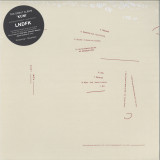
LNDFK (aka Linda Feki) presents her ground-breaking debut album, "Kuni" on Brooklyn-based Bastard Jazz Recordings. Undeniably on the rise after her 2019 breakout performance at Primavera Sound, LNDFK has already caught the attention of Pitchfork, Rolling Stone, Clash Magazine, Noisey, and Brooklyn Vegan (among many others) while being championed by the likes of Gilles Peterson, Tom Ravenscroft, and Jamz Supernova & landing spots on tastemaker playlists like Spotify's "Pollen" and "Fresh Finds."
"Kuni" is a spellbinding exploration of dichotomies: Love & Death (Eros & Thanatos), Flower & Fire, Delicacy & Violence, Poetry & Realism, Purification & Destruction. These opposites are reified in the 10-track LPs multifarious and multifaceted sounds, elegantly meandering through a variety of styles and genres, spearheaded by Linda and features the production wizardry of Darrio Bassolino who co-wrote the album.
"Kuni" opens with "Hana-bi," an ambient instrumental piece that sets the tone for the album. Inspired by the Takeshi Kitano 1997 film of the same name – particularly Joe Hisaishi's stunning soundtrack, as well as Kitano's paintings which appear in the film. "Hana-bi" expresses the dialoguing opposites of flowers and fire, the first of many dichotomous representations throughout the album. "Takeshi" acts as an extension and to "Hana-bi," albeit one of opposing sound, with its driving, highly syncopated drums (which reappear throughout "Kuni") – à la Karriem Riggins, Questlove, or Yussef Dayes – frenetic bass line, and jazz chords. Linda's sultry voice is interspersed, initially jumping around in scat fashion, being triggered as if a sample, before her lyrics come in; her vocals are used like an additional instrument, adding to the song's rich texture. "Kuni" truly hits its stride with the next song, "Smoke – a moon or a button" (its title lifted from the 1959 book by Ruth Krauss and Remy Charlip), which is structured like a jazz standard yet flows into neo-soul territory sonically with those prodigious drums a highlight once again.
LNDFK touches on experimental hip hop in two songs on the record (both of which were released as singles in 2021): "Don't Know I'm Dead or Not (feat. Chester Watson)" – track #4 – and "How Do We Know We're Alive (feat. Pink Siifu)" – track #9. Although they embrace a more hip hop-leaning sound, these songs by no means shy away from the exploratory theme, and feature two of the alt-rap scenes rising stars with Chester Watson and Pink Siifu who offer provocatively impressing verses, combining dense word play with unconventional flows. While these tracks may first appear to be outliers on the album, they are undeniably in tune with "Kuni's" message and sonic palette, acting as testaments to LNDFK's willingness to explore and experiment.
Meanwhile, "Ku" – the third and last single before the album release – furthers the pre-established future soul sound while meandering through nu jazz and left-field electronic. Inspired by the graphic novel and film, "Sin City," and its female assassin protagonist Miho, "Ku" is a musical interpretation of Miho's story, incorporating both her beauty – the first half of the song – and murderous tendencies – the second half – to create a stunning juxtaposition, culminating in an ambient finale that suggests the character's vulnerability and inner peace. The song gracefully bridges the gap between Hiatus Kaiyote-esque songwriting, Dilla's rhythmic syncopation, and Thundercat's instrumental prowess (LNDFK has shared a stage Brainfeeder labelmate Kamasi Washington).
Mixed in throughout "Kuni" are a series of instrumental pieces that function as something akin to an interlude. The aforementioned intro, "Hana-bi," and the album closer "se mi stacco da te, mi strappo tutto:" act as bookends, while "Om" indicates the half-way mark, and "Ktm" sees Jason Lindner add his sound the album. These tracks are the ambient foundation of "Kuni," representing the thematic duality of the work. Clocking in at only 24 minutes, "Kuni" packs an astonishingly diverse array of sounds, styles, and themes, all while showcasing virtuosic musicianship and instrumental prowess.
Appearing on "Hana-bi" and "Ktm," renowned international artists Asa-Chang and Jason Lindner add an additional perspective to "Kuni": Asa-Chang on "Hana-bi," and Jason Lindner on "Ktm." Asa-Chang - famously of the Japanese avant-garde group Asa-Chang & Junray - provides vocals and percussion to an alternate version of the instrumental opener, while the acclaimed keyboardist Jason Lindner offers his synth expertise on "Ktm." These features highlight the spirit of collaboration found in LNDFK's music, always willing to try out new ways of working.
LNDFK is a singer and songwriter, born of two cultures – an Italian mother and Arab father. She grew up in Naples, away from her father, the Sahara, her homeland and traditions, which has helped nourish the desire to rediscover – through art – an engagement to her roots. Her music melts with jazz, neo-soul and hip-hop influences, filtered through her experiences and sensibility.
Her first EP, "Lust Blue," was composed with the artistic production of Dario Bass and released by Feelin' Music; after that she released several singles that saw international radio support (BBC, NTS, Wordwide FM) and gained a massive audience on digital platforms. Together with her band, she toured around Europe, performing alongside such notable artists as Kamasi Washington and Mndsgn, among others. Most recently she toured Italy, and performed at Primavera Sound Festival 2019 in Barcelona.
"Kuni," is due out on NYC label Bastard Jazz Recordings in February, 2022, while the vinyl LP will follow shortly after.
"It’s a voice that soars –pure, clear and true —above bass and synths, traditional percussion and infectious Mande guitar grooves. A stop-you-in-your-tracks voice instantly familiar to anyone in Mali, West Africa: Rokia Koné, aka the Rose of Bamako. On her debut international release, she’s teamed with Irish-born, California-based rock producer Jacknife Lee —and reimagined the Malian sound in ways leftfield and ground breaking.
BAMANAN is a collaboration that connects the great ancient kingdoms of Mali and the bustling modern street life of its capital, Bamako to a remote recording studio nestled within California’s Topanga Canyon. That bridges deep tradition and forward-facing innovation. One of Mali’s most beloved and dynamic artists, Rokia Koné is a force to be reckoned with. Her captivating performances in the city’s local maquis clubs very often last for hours, as Koné runs the gamut of emotion from joy to despair, fury to tenderness, wielding that astounding voice with grace and power. In 2016, she joined feminist supergroup Les Amazones d’Afrique and made her debut on an international stage alongside the likes of Oumou Sangaré, Angélique Kidjo and Kandia Kouyaté. Jacknife Lee is the acclaimed producer of bands including U2, R.E.M and The Killers, and has a Grammy for his work on Taylor Swift’s multi-million selling Red. Stadium-sized soundscapes are his speciality. Yet BAMANAN finds Lee upholding the stark beauty of Rokia’s voice with subtlety and sensitivity. Every nuance and breath is heard, each inflection and melismatic improvisation carefully preserved on this exciting debut."
As funny as it may sound, Anaïs Mitchell has spent the past 15 years in some kind of hell. OK, not actual hell, but the multi-faceted world of Hadestown, a musical project she began in Vermont in 2006 that has grown into a Tony®- and Grammy®-award-winning Broadway phenomenon with touring editions now delighting audiences as far away as South Korea.
“I experienced so much joy working on Hadestown, but it just kept ramping up and up and requiring more and more attention,” Mitchell admits. “I had to become so single-minded and really put blinders on to my other creative life.” As it did for many artists, the COVID-19 pandemic unexpectedly offered Mitchell a blank slate to reconnect with her own music. The result is a new self-titled album made with close collaborators from Bon Iver, The National and her own band Bonny Light Horseman, Mitchell’s first collection of all-new material under her own name since 2012’s Young Man in America.
“I was nine months pregnant when the pandemic reached New York, so we made an 11th hour decision to leave and have the baby in Vermont,” Mitchell recalls. “We left the city and had the baby a week later, and then like everyone, we were in the midst of this unprecedented stillness. It felt like I could see behind me: oh, there’s New York City. There’s Hadestown. There’s my life with just one kid. A certain kind of stress and expectations. In Vermont, we moved onto my family farm and lived in my grandparents’ old house, with a new baby. I’d look at pictures on my phone from a few months earlier and wonder, whose life was that? This record, and the songs that are on it, came out of that time. I got into a flow again that I hadn’t felt in a really long time.”
Dubbed by NPR as “one of the greatest songwriters of her generation,” Mitchell is a master of the worlds of narrative folksong, poetry and balladry. Those talents are evident from the first moments of the new album, as Mitchell narrates what she calls “an unbearably romantic” trip over the Brooklyn Bridge colored by Bon Iver member Michael Lewis’ heartstring-tugging saxophone accompaniment. “Having left New York, I was able to write a love letter to it in a way I never could when I was living there,” she says. “It was like, fuck it. This is how I feel. There is nothing more beautiful than riding over one of the New York bridges at night next to someone who inspires you.”
Produced by Mitchell’s Bonny Light Horseman bandmate Josh Kaufman, the album proceeds to chronicle Mitchell’s reconnection with the Vermont roots that have been so formative in her life and music. “Bright Star” finds her making peace with the idea of being at peace in the familiar setting of her grandparents’ house, while “Revenant” was inspired by paging through a box of journals and letters belonging to herself and her grandmother — “a very pandemic activity,” she says. “That house is literally my happy place. I can picture myself as a kid, in this house, laying on the carpet with a sunbeam coming through the sliding glass door. There’s something about it that is really connected in my mind to my childhood and a very free, imaginative, creative time. “Revenant” has a lot to do with that house and reconnecting with my childhood self.”
Mitchell concedes that she tends “to be someone who thinks it has to be hard in order for it to be good or beautiful,” but that feeling has changed, partly thanks to her deep connection with musicians she’s met through the 37d03d collective established by The National’s Aaron and Bryce Dessner and Bon Iver’s Justin Vernon. During the pandemic, some of those artists participated in a “song a day” writing group — an idea Mitchell says is usually “totally opposite of how I roll. But it really helped me to gain access to some kind of trust and intuition and flow. I began a bunch of these songs while doing that.”
“It unlocked something that allowed me to finish a bunch of songs I’d been sitting on, and feeling a bit paralyzed about how to finish them,” she continues. “Because no one was touring, it’s not like I was playing them for anyone before we were in the studio. In other times, I’ve trotted things out in advance. Here, it was like, here’s all these brand new songs. Let’s discover what they can be. That was really exciting.”
That discovery process took flight at Dreamland Recording Studios outside Woodstock, N.Y., which Mitchell describes as “this weird, janky, beautiful church - it’s my favorite studio in the world.” Kaufman, Lewis and Big Red Machine drummer JT Bates formed a core band around Mitchell, while Aaron Dessner and Thomas Bartlett joined the sessions mid-week on guitar and piano, respectively.
After the appropriate COVID tests came back negative, “it was a pretty extraordinary feeling to hug, kiss and share the same space playing together,” Mitchell says. “We went into that world for a week and didn’t leave the studio for any reason. I felt very safe with all those guys. It was warm and joyful.”
Mitchell says this environment brought out unexpected details in the material, which was recorded almost entirely live together in the room. “Sometimes we tried separating things out, like vocals, but we always ended up back in the room together,” she says. Indeed, after spending the better part of a day recording overdubbed versions of “Little Big Girl” that nobody loved, the musicians gave up and tracked it again live. “We got so frustrated that we went in and I was like, I’m just going to sing this as hard as I fucking can. It felt like that’s what the song wanted to be,” Mitchell says. “It felt like all those songs wanted to be recorded as live as possible.” The exception to the rule was Nico Muhly's arrangements for strings and flute, which were added from New York City afterward.
Mitchell will debut the new material during various headline tours in the U.S. and Europe in 2022, at which she’ll be accompanied by players from the album. On stage, she can’t wait to further hone the sights, sounds and scenes that bring the songs to such vivid life. “I’ve spent a lot of time trying to write in the voice of other characters, especially with Hadestown. It’s fun for me, but these songs are not that,” she says. “Weirdly, they’re all me. The narrator is me. That’s why it felt right to self-title the album. It felt like after so many years of working on telling other stories, now here are some of mine.”
As funny as it may sound, Anaïs Mitchell has spent the past 15 years in some kind of hell. OK, not actual hell, but the multi-faceted world of Hadestown, a musical project she began in Vermont in 2006 that has grown into a Tony®- and Grammy®-award-winning Broadway phenomenon with touring editions now delighting audiences as far away as South Korea.
“I experienced so much joy working on Hadestown, but it just kept ramping up and up and requiring more and more attention,” Mitchell admits. “I had to become so single-minded and really put blinders on to my other creative life.” As it did for many artists, the COVID-19 pandemic unexpectedly offered Mitchell a blank slate to reconnect with her own music. The result is a new self-titled album made with close collaborators from Bon Iver, The National and her own band Bonny Light Horseman, Mitchell’s first collection of all-new material under her own name since 2012’s Young Man in America.
“I was nine months pregnant when the pandemic reached New York, so we made an 11th hour decision to leave and have the baby in Vermont,” Mitchell recalls. “We left the city and had the baby a week later, and then like everyone, we were in the midst of this unprecedented stillness. It felt like I could see behind me: oh, there’s New York City. There’s Hadestown. There’s my life with just one kid. A certain kind of stress and expectations. In Vermont, we moved onto my family farm and lived in my grandparents’ old house, with a new baby. I’d look at pictures on my phone from a few months earlier and wonder, whose life was that? This record, and the songs that are on it, came out of that time. I got into a flow again that I hadn’t felt in a really long time.”
Dubbed by NPR as “one of the greatest songwriters of her generation,” Mitchell is a master of the worlds of narrative folksong, poetry and balladry. Those talents are evident from the first moments of the new album, as Mitchell narrates what she calls “an unbearably romantic” trip over the Brooklyn Bridge colored by Bon Iver member Michael Lewis’ heartstring-tugging saxophone accompaniment. “Having left New York, I was able to write a love letter to it in a way I never could when I was living there,” she says. “It was like, fuck it. This is how I feel. There is nothing more beautiful than riding over one of the New York bridges at night next to someone who inspires you.”
Produced by Mitchell’s Bonny Light Horseman bandmate Josh Kaufman, the album proceeds to chronicle Mitchell’s reconnection with the Vermont roots that have been so formative in her life and music. “Bright Star” finds her making peace with the idea of being at peace in the familiar setting of her grandparents’ house, while “Revenant” was inspired by paging through a box of journals and letters belonging to herself and her grandmother — “a very pandemic activity,” she says. “That house is literally my happy place. I can picture myself as a kid, in this house, laying on the carpet with a sunbeam coming through the sliding glass door. There’s something about it that is really connected in my mind to my childhood and a very free, imaginative, creative time. “Revenant” has a lot to do with that house and reconnecting with my childhood self.”
Mitchell concedes that she tends “to be someone who thinks it has to be hard in order for it to be good or beautiful,” but that feeling has changed, partly thanks to her deep connection with musicians she’s met through the 37d03d collective established by The National’s Aaron and Bryce Dessner and Bon Iver’s Justin Vernon. During the pandemic, some of those artists participated in a “song a day” writing group — an idea Mitchell says is usually “totally opposite of how I roll. But it really helped me to gain access to some kind of trust and intuition and flow. I began a bunch of these songs while doing that.”
“It unlocked something that allowed me to finish a bunch of songs I’d been sitting on, and feeling a bit paralyzed about how to finish them,” she continues. “Because no one was touring, it’s not like I was playing them for anyone before we were in the studio. In other times, I’ve trotted things out in advance. Here, it was like, here’s all these brand new songs. Let’s discover what they can be. That was really exciting.”
That discovery process took flight at Dreamland Recording Studios outside Woodstock, N.Y., which Mitchell describes as “this weird, janky, beautiful church - it’s my favorite studio in the world.” Kaufman, Lewis and Big Red Machine drummer JT Bates formed a core band around Mitchell, while Aaron Dessner and Thomas Bartlett joined the sessions mid-week on guitar and piano, respectively.
After the appropriate COVID tests came back negative, “it was a pretty extraordinary feeling to hug, kiss and share the same space playing together,” Mitchell says. “We went into that world for a week and didn’t leave the studio for any reason. I felt very safe with all those guys. It was warm and joyful.”
Mitchell says this environment brought out unexpected details in the material, which was recorded almost entirely live together in the room. “Sometimes we tried separating things out, like vocals, but we always ended up back in the room together,” she says. Indeed, after spending the better part of a day recording overdubbed versions of “Little Big Girl” that nobody loved, the musicians gave up and tracked it again live. “We got so frustrated that we went in and I was like, I’m just going to sing this as hard as I fucking can. It felt like that’s what the song wanted to be,” Mitchell says. “It felt like all those songs wanted to be recorded as live as possible.” The exception to the rule was Nico Muhly's arrangements for strings and flute, which were added from New York City afterward.
Mitchell will debut the new material during various headline tours in the U.S. and Europe in 2022, at which she’ll be accompanied by players from the album. On stage, she can’t wait to further hone the sights, sounds and scenes that bring the songs to such vivid life. “I’ve spent a lot of time trying to write in the voice of other characters, especially with Hadestown. It’s fun for me, but these songs are not that,” she says. “Weirdly, they’re all me. The narrator is me. That’s why it felt right to self-title the album. It felt like after so many years of working on telling other stories, now here are some of mine.”
Red Vinyl
nown for her delicate compositions, soaked in dream-like surrealism, Icelandic musician Sóley has attracted a huge following since launching her solo career back in 2010. Her 2012 single ‘Pretty Face’ went on to generate an enormous amount of buzz, and quickly became a viral sensation. Now, with three solo LPs under her belt, Sóley is preparing to debut a completely new sound via the release of her new concept album, Mother Melancholia, on October 22nd.
Described by the artist as "Nosferatu meets Thelma and Louise in a vampire church under the watchful eye of David Lynch", Mother Melancholia is the soundtrack to the end of the world as we know it. As a self-confessed news addict, Sóley became obsessed with the idea that the world is ending. Having surrounded herself with real-life stories of global warming and patriarchal politics she couldn’t shake the feeling that she was going to die. This feeling was so all encompassing that it sparked the idea for a new project. Could there be a soundtrack for the last days of humans on earth? How would that sound?
“I read books about possible dystopian worlds and started writing poems about irrational and in love characters who live in gray and cold imaginary loneliness. In each other’s burning arms. Walking in circles with no way out” she explains. “After all, the album reflects our life here and now. Our life and reality is a kind of dystopian world.”
Whilst writing the album, which serves as a tongue-in-cheek eulogy to our planet, Sóley began reading about ecofeminism, a branch of feminism which uses the concept of gender to analyse the relationship between humans and the natural world. Ecofeminism emphasizes that both women and nature must be respected but also separated. Since the beginning of time, the natural world has been synonymous with female identity, phrases like Mother Nature are commonplace. “The patriarchy views women as volatile and hysterical. Earth and women are either our saviours or our destroyers,” explains Sóley. “It’s so easy to abuse the earth, like the patriarchy has abused women since the dawn of time, then ask for forgiveness afterwards and promise they´ll never do it again”.
The new album sees Sóley move away from the indie-pop of her previous releases. She began by experimenting with writing songs on the accordion, allowing her a new sense of freedom in her writing. The process allowed her to broaden her horizons even further and experiment with a whole range of new and exciting sounds. “I bought myself a theremin as I was really excited about the unpitched sound and there is no perfect pitch during the end of days,” she laughs. “I also bought a mellotron, my first moog and a cello and taught myself how to play each of them. All of these new instruments are particularly suitable for the kinds of aesthetic inconveniences which I have learned to embrace.”
Album opener ‘Sunrise Skulls’, one of the most cinematic moments on the album, was inspired by the Me Too and SlutWalk movements and tells the story of a group of women who rise up and fight the patriarchy. ‘Blows Up’, a track that would be at home on any horror soundtrack, is a sarcastic love letter from the Earth to humans. Standout track ‘Desert’ is an incredibly moving song dedicated to the next generation. “It’s about the guilt you feel, as a mother, for having children and leaving them on the frontline. My daughter, for example, will take over this inevitable war” explains Sóley.
In true soundtrack style, the album flows through the end of the world in chronological order, closing with the Earth’s final moments. ‘Sundown’ is a dark piano ballad detailing human kind’s final day on Earth. “And everyday, I dig my own grave, and as I dive in you´ll hold my hand” she sings, over twinkling piano and swirling synths. We then hear the world end on ‘XXX’, a dark and swirling soundscape that swells before fading to silence. On ‘Elegía’ the silence then turns to the sound of the ocean, as we hear the Earth, like a woman finally free from a violent relationship, healing on her own.
Mother Melancholia is the mark of an artist confidently striding into more experimental territory. With a lengthy and successful career behind her, Sóley felt compelled to try something new and express the real her. The music might be shrouded in darkness but it’s a move that fills her with joy and freedom. “I hope that people not only enjoy the new sound, but also that Mother Melancholia might raise some questions in people, particularly women,” she says. “I’m under no illusions that this album will change the world but I hope that people can connect with the idea”.
- 1: Like A Ship
- 2: Wonderful
- 3: It’s Me O Lord
- 4: Ever Since
- 5: Nobody Knows
- 6: Joyful Noise
- 7: Medley
- 8: Blessed Quietness
- 1: Jesus Is All The World To Me
- 2: I Want To Be In Love With You
- 3: Jesus, Lover Of My Soul
- 4: O Sinner
- 5: I Shall Wear A Crown
- 6: Do Not Pass Me By
- 7: Here I Am
- 8: There Is Only One
- 9: O What A Day
- 10: No Not One
- 1: Long (He’ll Wait For You)
- 2: I Came To Jesus
- 3: What Would You Give
- 4: I Am So Glad
- 5: Pray, Pray, Pray
- 6: I Found The Answer
- 7: Trouble And Strife
- 8: He Rose (From The Grave)
- 9: Shine On Me
- 10: Turn On With Jesus
- 1: Do Not Pass Me By
- 2: After The Rain
- 3: These Are The Words
- 4: Father Stretch My Hands
- 5: So Many Years
- 6: You May Not Need Him
- 7: Oh What A Day
- 8: I Want To Be In Love
- 1: Lord's Prayer
- 2: Said It Long Time Ago
- 3: My Country Tis Of Thee
- 4: In The Old Time Way
- 5: Jingle Bells Pt. I
- 6: Nobody Knows
- 7: Dry Bones In The Valley, Excerpt 1
- 8: Dry Bones In The Valley, Excerpt 2
- 9: Dry Bones In The Valley, Excerpt 3
- 10: Dry Bones In The Valley, Excerpt 4
- 11: How Would You Like To Have A Nice Hawaiian Punch?, Excerpt 1
- 12: How Would You Like To Have A Nice Hawaiian Punch?, Excerpt 2
- 13: How Would You Like To Have A Nice Hawaiian Punch?, Excerpt 3
A Civil Rights activist who marched alongside Jesse Jackson, preacher for Earth Wind & Fire, Stax recording artist, “Family Feud” contestant, Stephen Curry soundtracker, high school drop out, and Kanye samplee, Pastor T. L. Barrett stuffed a dozen lives into one. His signature 1971 spiritual soul jam “Like A Ship” has transcended its humble South Side Chicago beginnings, rediscovered by Leon Bridges and Beck and described by Radioheadʼs Colin Greenwood as “The most euphoric celebratory music that makes you want to jump around the house and explode with joy.” This box is the definitive statement on Barrettʼs two decades of recordings, 49 tracks spread across five LPs, including Like A Ship, Do Not Pass Me By Volume 1 & 2, I Found The Answer, plus a bonus album of singles and sermons, a 10,000 word blow-by-blow, and illustrated discography.
- Tkay Maidza - Where Is My Mind? (Pixies)
- U.s. Girls - Junkyard (The Birthday Party)
- Aldous Harding - Revival (Deerhunter)
- The Breeders - Dirt Eaters (His Name Is Alive)
- Maria Somerville - Seabird (Air Miami)
- Tune-Yards - Cannonball (The Breeders)
- Spencer. - Genesis (Grimes)
- Helado Negro - Futurism (Deerhunter)
- Efterklang - Postal (Piano Magic)
- Bing And Ruth - Gigantic (Pixies)
- Future Islands - The Moon Is Blue (Colourbox)
- Jenny Hval - Sunbathing (Lush)
- Dry Cleaning - Oblivion (Grimes)
- Bradford Cox - Mountain Battles (Breeders)
- Sohn - Song To The Siren (Tim Buckley)
- Becky And The Birds - The Wolves
- Act I And Ii (Bon Iver)
- Ex:re - Misery Is A Butterfly (Blonde Redhead)
- Big Thief - Off You (The Breeders)
In 2020, 4AD turned 40. Never one to be on time for a party, the label is
commemorating that landmark this year with the release of ‘Bills & Aches & Blues’.
The compilation features 18 of its current artists covering a song of their
choosing from 4AD’s past: a creative experiment rooted in the spirit of
collaboration and a snapshot of 4AD, 41 years after its inception.
‘Bills & Aches & Blues’ will be released on double CD and double LP. The
first 12 months’ profits from ‘Bills & Aches & Blues’ will be donated to The
Harmony Project, a Los Angeles-based after-school programme for children
from communities and schools that lack equitable access to studying the arts
or music.
‘Bills & Aches & Blues’’ 18 recordings contain fascinating connections
between artist and track. The earliest song chosen (by U.S. Girls) is The
Birthday Party’s ‘Junkyard’, from 1981; the most recent are the two Grimes
covers (‘Genesis’ and ‘Oblivion’, respectively by Spencer. and Dry Cleaning)
from 2012. Suitably, for the one band that bridges 4AD past and present, The
Breeders are all over ‘Bills And Aches And Blues. They’re covered three
times - ‘Cannonball’ by Tune-Yards, ‘Mountain Battles’ by Bradford Cox of
Deerhunter and ‘Off You’ by Big Thief, whilst The Breeders cover ‘The Dirt
Eaters’ by their ‘90s contemporaries His Name Is Alive.
Landmark songs such as ‘Cannonball’, ‘Song To The Siren’ and Pixies’
‘Where is My Mind?’ will feel comfortable to casual fans, however by
contrast, much joy can be found in the album’s surprise choices, such as Air
Miami’s ‘Seabird’ and the Lush B-side ‘Sunbathing’, covered respectively by
new signings Maria Somerville and Jenny Hval.
‘Bills & Aches & Blues’ is named, arguably (as Elizabeth Fraser never
published the lyrics), after the opening line of Cocteau Twins ‘CherryColoured Funk’. Perhaps too unique and uncoverable in their own right, their
legendary take on Tim Buckley’s ‘Song To The Siren’, under the name This
Mortal Coil (along with Buckley’s pre-Starsailor acoustic version) informs
SOHN’s cover.
Some tracks unearth hitherto hidden shared DNA, such as Future Islands’
and Colourbox’s ‘The Moon Is Blue’; other tracks are more akin to
reinvention. Aldous Harding distils the melodic essence of Deerhunter’s
‘Revival’ and recasts it in her own uncanny image. U.S. Girls’ future-disco
‘Junkyard’ and Bing & Ruth’s neo-classical instrumental ‘Gigantic’ are even
more radical interpretations. Leading off the album, Tkay Maidza brings both
her Art Rap and R&B game, but also an unexpected ‘80s synth pop template,
to Pixies’ ‘Where Is My Mind?’, a perfect title for these chaotic times.
I first discovered khroniky – Ukranian folk songs – in the Highlands of Scotland. I was watching a screening of Bajka, a mesmerising documentary made by the filmmaker Lucia Nimcová and sound artist Sholto Dobie. I knew nothing about these ballads beforehand, but I was fascinated by these odd, beautiful songs, especially the easy way in which they mixed misery and levity, where gentle melodies blend with tales of dark violence. The folk songs describe hardship, murder, torture, death in gulags, heavy drinking, outsmarting men, love affairs. But they’re often very funny too – many of the songs make fun of marriage, and there’s an amazing subcategory of khroniky songs called potka (vagina) songs.
The khroniky have never been properly documented because they were considered too crude, or contained lyrics that were problematic, politically. When Ukrainian folk songs have been archived in the past, it’s normally a sanitised, more polite version of the ones that Lucia remembers from her childhood. Lucia grew up on the other side of the Ukrainian border in Slovakia. She is part of the Rusyn (Ruthenian) minority ethnic group found in the borderlands of Slovakia, Hungary, Romania, Ukraine and Poland. Rusyn is a centuries-old Slavic language, looked down upon as a poor, uneducated dialect by the neighbouring Ukraine and Slovakia. It was forbidden to talk about Rusyn culture at Nimcova’s primary school, but the khroniky stayed in her memories.
“I remember weddings when I was young,” says Lucia, who now lives in Addis Abeba, Ethiopia. “At the end of the night, when everyone was drunk and the young couple would go around their guests, people would sing in Rusyn. There was singing and dancing, and songs about being in prison or falling in love. I picked up the lyrics and sometimes my mum would make my sister and I sing them for people we met on the train. I was about five or six but the lyrics still come back when I sing to my kids.”
Determined that these rich, nuanced, unique songs shouldn’t be forgotten, she decided to record them. Over two years, Lucia, joined by experimental musician Sholto Dobie, visited Rusyn villages high in the Carpathian mountains to rediscover the songs and make the documentary. It was at the beginning of war breaking out in Ukraine in 2014.
“The Rusyn community is a very closed one,” explains Lucia. “Sometimes we’d have to wait several days to hear someone sing; we had to earn their trust before they shared something very personal to them. We’d stay up ‘til 5am at a wedding, then go straight to a morning baptism, or collect haystacks with the villagers, hoping they’d sing while they were working.”
DILO is named after an important independent Ukrainian daily newspaper that was shut down when the Red Army entered Lviv in 1939. The four long tracks on DILO blur field recordings with song; an unpolished, privileged glimpse into a private world. We hear dogs barking and insects buzzing in the summer heat, then a blast of hurdy gurdy or violin will drift in, or a plaintive song soars softly over the rural background noise, with casually harrowing lyrics about a cuckoo, “lifeless in a world of misery”, as translated in the album’s booklet.
For both Lucia and Sholto, it was important not to tamper too much with what they heard. “When you think about ethnography,” Lucia explains, “you have to have a lot of time, love and respect to document it with sensitivity.”
“The songs all have their own atmosphere and intimacy from the spaces they were recorded in and it was important to maintain these particularities and move with them,” adds Sholto, who now lives in Vilnius, Lithuania. “They guide and sometimes interrupt a journey between interiors – domestic spaces; in kitchens, by the fire – and exteriors; marketplaces, cow sheds. We used contact microphones to record metal bridges and fences, and we spent one afternoon recording a wool processing machine, the details of the rattling and tuning wheels are the ground layer for the third track.”
Lucia took rough notes and diary entries during the recording process, which are now shared in the booklet alongside a selection of lyrics, loosely translated, but revealing the depth and astonishing beauty that sometimes lies in the language of these folk songs.
The feel of the album is intimate, flipping between laughter, where a woman sings about selling her pussy to buy a cow in one track, then shifts to a raw, painful truth; an adult son asks his mother why his dad won’t be back for dinner, as he’s gone to war.
Since Lucia and Sholto began working together in 2014, they have shared the audio recordings on radio and film and shown photos in gallery spaces, making sure these special, smutty, poignant songs don’t get lost. This new record and booklet joins that same continuum, another glorious fruit from the same rare tree.
Scissor Tail presents the first vinyl issue of Marc Barreca’s
1986 album The Sleeper Wakes, originally only released on
cassette by the Seattle electronic ambient label Intrepid.
Marc Barreca has been creating and performing electronic
music since the mid-1970s. His 1980 album, Twilight,
reissued on vinyl in 2016, was one of the earliest releases
on Palace Of Lights. Recent releases include Shadow
Aesthetics (2018) and three collaborations with K. Leimer.
Previous reissues include work on the acclaimed VOD box
set American Cassette Culture, the Cherry Red compilation
of seminal U.S. electronic music and the 1983 cassette
Music Works For Industry. His work is also included in the
collection of The British Library.”
The Sleeper Wakes has been out of print for many years
and Scissor Tail is very happy to remaster and reissue this
great work that was ahead of it’s time, employing analog
treatments of sampled sounds arranged in a very interesting
and intuitive way.
Marc Barreca's 1986 album "The Sleeper Wakes". Originally released on cassette by the Seattle electronic ambient label, Intrepid.
Marc Barreca has been creating and performing electronic music since the mid-1970s. His 1980 album, Twilight, reissued on vinyl in 2016, was one of the earliest releases on Palace Of Lights. Recent releases include Shadow Aesthetics (2018) and three collaborations with K. Leimer. Previous reissues include work on the acclaimed VOD box set American Cassette Culture, the Cherry Red compilation of seminal U.S. electronic music and the 1983 cassette, Music Works For Industry. His work is also included in the collection of The British Library."
The Sleeper Wakes has been out of print for many years and we are very happy to remaster and reissue this great work that was ahead of it's time, employing analog treatments of sampled sounds arranged in a very interesting and intuitive way.