Green Vinyl
Have you ever wondered what would happen if the Spice Girls smoked crack and joined forces with the Power Rangers on acid? Meet BĘÃTFÓØT. These punk-infused electronic poltergeists and big-beat acid trio are Udi Naor, drummer and founding member of electronic duo Red Axes, Adi Bronicki (who also fronts Israeli garage-punk-folk band Deaf Chonky) and ace of all trades guitarist Nimrod Goldfarb.
The band have been launching warped stoner-acid-pop out of Tel Aviv with maniacal intent and are producing post-punk rave bangers that will scorch every dance floor with a huge lethal smile. BĘÃTFÓØT
are a DIY supergroup who describe themselves as sitting somewhere between Aqua, Beastie Boys and The Prodigy.
Their music endeavours feel akin to being hurtled through a kaleidoscopic waterslide, overflowing with the spirit of 90’s youth culture. The radioactive trio are DJ’s, musicians, songwriters and producers with a diverse range of individual projects and talents, their combined sonics map your journey across the hazy astral spectrum of hip-hop, big beat and rave music. Morph these radioactive pieces with the no New Release Informationnonsense attitude of punk-rock and the venomous spitting flow of golden-era rap and you might just come close to fabricating the freakish sound of BĘÃTFÓØT.
The band’s self-titled debut is set for release on 17th September on Manfredi Romano aka DJ Tennis’ Life and Death. Founded in 2010, the imprint curates soulful dance music with a post-rock aesthetic.
This refreshingly original and experimental LP from BĘÃTFÓØT marks a new direction for Life and Death this year and beyond.
“BĘÃTFÓØT” takes unsuspecting listeners on a wild ride of unprecedented musical madness (firmly without seatbelts). Fizzy synthesiser programming stimulates you effervescently through the album like the welcomed sting of sour sweets, surprising accompaniments appear in the form of manipulated vocal lines and quirky samples, all jovially mixed together in a gummy melting pot of wild conceptualisation and starry eyed rhythms.
Thirteen tracks of unprecedented dancefloor mutations send us triumphantly into the candy-covered kingdom of BĘÃTFÓØT with open arms and infinite imagery of fanciful gutter-glam escapades. This project fulfills the role of a musical bulldozer, flattening all previous conceptions of what it means to belong to a genre and leaving behind a hot mess trail of anarchic musical fragments in its wake. The undying spirit of the nineties.
With fans that include legendary Irish born singer, songwriter and producer Roisin Murphy, BĘÃTFÓØT are a breath of fresh air set to be igniting dancefloors this summer.
quête:red mess
- A1: Muddy Waters - Rollin' Stone
- A2: Chuck Berry - Come On
- A3: Howlin' Wolf - The Red Rooster
- A4: Bo Diddley - Mona
- A5: John Lee Hooker - Dimples
- A6: Jimmy Reed - Honest I Do
- A7: Little Walter - Confessin' The Blues
- A8: Slim Harpo - I'm A King Bee
- A9: Robert Johnson - Love In Vain Blues
- A10: Elvis Presley - My Baby Left Me
- A11: Buddy Holly & The Crickets - Not Fade Away
- A12: Cliff Richard & The Shadows - You Don't Know
- A13: Eddie Cochran - 20 Flight Rock
- A14: Jerry Lee Lewis - Money (That's What I Want)
- A15: The Everly Brothers - Wake Up Little Susie
- A16: Dale Hawkins - Susie-Q
- A17: Johnny Kidd & The Pirates - I Can Tell
- A18: Alexis Korner's Blues Incorporated - I Got My Mojo Working
- B1: Ray Charles - I'm Movin' On
- B2: Marvin Gaye - Hitch Hike
- B3: The Temptations - Oh Mother Of Mine
- B4: Smokey Robinson & The Miracles - Mighty Good Lovin
- B5: The Coasters - Poison Ivy
- B6: Larry Williams - She Said Yeah
- B9: Buster Brown - Fannie Mae
- B10: Otis Redding - These Arms Of Mine
- B11: Solomon Burke -Cry To Me
- B12: The Drifters - Save The Last Dance For Me
- B13: Don Covay - I'm Coming Down With The Blues
- B14: Benny Spellman - Fortune Teller
- B15: Arthur Alexander - You Better Move On
- B16: Bob & Earl - Oh Baby Doll
- B17: Alvin Robinson - Oh Red
- B18: Gene Allison - You Can Make It If You Try
- B7: Irma Thomas - Don't Mess With My Man
- B8: Amos Milburn - Down The Road Apiece
When his mother brought Stanley Turrentine’s Salt Song LP back from a trip to Canada, Julien Lourau, then a teenager, was impressed by the scope of the sound and the groove of the saxophone. He was also charmed by the lush arrangements and funky sound of the record, typical of releases on the CTI label. Created by producer Creed Taylor, CTI left an imprint in the minds of 70s jazz fans much like Blue Note did in the 60s, and it even ended up releasing work by artists who started out on this mythical label such as Stanley Turrentine and Freddie Hubbard. The two even shared the same sound engineer, the great Rudy van Gelder.
Yet CTI, though highly prolific during its 15 years of activity, has not benefitted from the same aura as its predecessor. “To breathe life into this album, I listened to a wealth of CTI releases and discovered some I had never heard before. I noticed, oddly, that many of today’s musicians know very little about CTI - a label unfairly considered as minor.”
The choice of tracks was determined by Julien’s personal tastes, always keeping in mind a desire to help people discover them yet focusing on the joy of actually playing them too.
"The album is made up of 9 pieces. Mathieu Débordes got everything down to the nearest note before we even attempted to play them. CTI didn’t hold back in fuelling their compositions with brass and violins, but I erased this aspect and pared things down to a bass, drums and two keyboards."
English drummer Jim Hart, someone Julien worked with during his London years, propels the group - from hard-bop polyrhythms with “drum & bass” inflections to a reworking of classic Red Clay.
Sylvain Daniel on the bass and Arnaud Roulin on the analogue keys are two musicians close to the saxophonist, and that he met when they were students in 1999 while organising a master class at the Conservatoire de Nantes. Since then, they have become his esteemed companions.
The collaboration with young pianist Léo Jassef began on this recording, where he also plays the Prophet 5. The dynamic and overlap of the many keyboards played by Arnaud and Léo bring the record a richness of timbre and harmony that the strings and brass provided on the CTI recordings.
For the final track on the record, Julien called upon his friend of 30 years, guitarist Bojan Z, for a fresh, Gospel take on Love and Peace, a track recorded by Quincy Jones in 1969, which here, is dedicated to Bojan’s recently departed brother.
“When it comes down to it, this album really is as I had imagined it, with, luckily, a few unexpected turns. I created a playlist I then claimed as my own. But in the end, I must admit that I would have loved to have composed some of these tracks.”
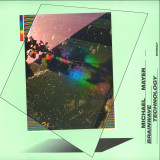
Michael Mayer’s latest EP, Brainwave Technology, comes at you purposeful, stealthy and sly. It’s a glorious left turn for the redoubtable producer, one that sees his typically lean and lithe productions buffed to a metallic, futurist sheen. There’s a gleam in the eyes of tracks like “Brainwave Technology” and “Alpha” that speaks of serious fun, of the intersection of the pleasure zone and the frontal lobe.
“Brainwave Technology” itself is informed by Mayer’s deep dive into the thorny terrain of artificial intelligence, transhumanism and posthumanism. Inspired by reading German philosopher Richard David Precht, Mayer found himself heading down the “proverbial rabbit hole,” as he describes it, “watching hours of YouTube material by self-proclaimed prophets of these ‘inevitable’ changes to come.” Never one to be taken in by the egotist’s dance, Mayer’s cynicism about the whole endeavour is tempered, a little, by the deeper questions that these figures gesture towards: “Is it really an evolutionary step that man and machine become one? Or is it rather a marketing plot by Silicon Valley billionaires?”
On “Brainwave Technology”, Mayer plays the charlatans at their own game, turning their logic against them by exposing the fruitiness of their ‘visions’. “I chose irony as my sword with which I chopped off some quotes from some of those batshit crazy prophets and self-promoters,” he explains of the drooling psychobabble he drops in the track’s lacuna. There’s a sense of humour here – how could you not laugh at these hungover egotists? – but there’s levity too, a sense that Mayer’s using sound to expose the contradictions and double-speak at the heart of these half-formed ideas. It’s a Burroughsian tactic, to slice into the heart of the voice to see what hidden truths surface.
It was Burroughs, too, who once said that “when you cut into the past, the future leaks out”; Brainwave Technology cuts into the logic of the futurologist to leak out the messiness of modern reality. On “Alpha” and “Gamma”, Mayer seems to conjure up the stark, ominous music that’d soundtrack a science fiction reinterpretation – or preinterpretation – of our modern malaise, all funereal wreaths of electronic noise and clatterboxing beats. As the EP resolves with “Device For The Young At Heart”, Mayer’s questions are piling up: “Do we want to become immortal and live on as a download? Do we really give up on Earth and put all our effort into colonising Mars?” There are no answers, of course, but plenty of imaginings-to-be. Brainwave Technology soundtracks both dystopian and utopian possibilities of what could come next.
Limited Coke Bottle Green vinyl, 250 copies only for the UK. Any future pressing will be on black vinyl. Massage feature Alex Naidus from Pains At Being Pure At Heart. Recorded by Lewis Pesacov (Fool’s Gold, Foreign Born, Peel’d). Massage was supposed to be low-stakes, no big deal "anti-ambition," as Andrew Romano, guitarist and vocalist, put it. The L.A.based jangle-pop group's first album, 2018's Oh Boy, was a sweet and simple weekend warrior's affair, or more specifically, an every-other-Monday one, as the band members gathered to bash out songs that offered messy but heartfelt tribute to their chosen heroes: The Feelies, the Go-Betweens, Twerps, Flying Nun. For Romano, not taking things too seriously is a dead-serious affair: “Nothing kills the kind of music we want to make faster than the sense that a band is trying too hard,” he says. The kind of music Massage makes sunny, bittersweet, tender is less a proper genre than a minor zip code nested within guitar pop. Take a little "There She Goes" by the La's, some "If You Need Someone" by the Field Mice; the honey-drizzled guitars from The Cure's "Friday I'm In Love," a Jesus & Mary Chain backbeat, and you're almost all the way there. Indie pop, jangle pop, power pop whatever you call it, pushing too hard scares the spirit right out of this sweet, diffident music, and Massage have a touch so light the songs seem to form spontaneously, like wry smiles. Still, on their sophomore effort, Still Life, they manage to take a quantum leap forward in songwriting, production, and depth, all somehow without seeming to try. These 12 deft songs are full of late-summer sunlight and deep shadows, pained grins and shared jokes, shy declarations of love and quietly nursed heartbreak. Still Life resurrects a brief, romantic moment in the late-'80s, right after post-punk and immediately before alt-rock, when it seemed like any scrappy indie band might stumble across a hit. When Andrew Romano and Alex Naidus first met in 2007, Naidus had just joined a band with his friends Kip Berman and Peggy Wang that was about to stumble into many of them. When Naidus finally left Pains for L.A. in 2013, two hit albums and a few world tours later, he started playing with Romano to recapture the no-stakes, suburban-garage joy of making music for its own sake. It was "friendship incarnate," Naidus remembers. The other members came from within the friend circle Gabrielle Ferrer (keyboard/vocals) is Romano's sister-in-law, Michael Felix (drums) is one of Naidus’ best friends, and David Rager (bass) is a childhood friend of Felix’s. When Felix moved to Mexico City in early 2020, Naidus’ wife, Natalie de Almeida, stepped in. The result is the finest batch of songs they've ever produced. From Naidus' velvet-lined JAMC tribute "Half A Feeling" to Ferrer's Let It Be-era Replacements-tinged lament "The Double" to Romano's "In Gray & Blue," these are gold-standard indie-pop gems from emerging masters of the form. Still Life glows with the sincerity and unfakeable warmth of the era they so lovingly channel. Like the best Gin Blossoms chorus you still remember, the songs on Still Life stir big, pure emotions, but beneath them, uneasy truths about adulthood linger, just below the surface. Maybe the exact mix of ringing guitars and two-part harmonies can chase those feelings away, or redeem them, for at least a minute or three. Massage won't stop trying.
- A1: Leroy Sibbles - Express Yourself
- A2: Norma Fraser - Respect
- A3: Leroy Sibbles - Groove Me
- A4: Sound Dimension - Time Is Tight
- A5: The Heptones - Message From A Black Man
- B1: Otis Gayle - I'll Be Around
- B2: Jerry Jones - Still Water
- B3: Sound Dimension - Soulful Strut
- B4: Richard Ace - Can't Get Enough
- B5: The Chosen Few - Don't Break Your Promise
- C1: Eternals - Queen Of The Minstrels
- C2: Norma Fraser - The First Cut Is The Deepest
- C3: Ken Parker - How Strong
- C4: Ken Boothe - Set Me Free
- D1: Senior Soul - Is It Because I'm Black
- D2: Jackie Mittoo - Deeper & Deeper
- D3: Alton Ellis - I Don't Want To Be Right
- D4: Willie Williams - No One Can Stop Us
Soul Jazz Records are releasing this 20th anniversary edition of their classic Studio One Soul on unique Record Store Day EXCLUSIVE coloured vinyl + download code. This new edition is a one-off special pressing exclusively for Record Store Day 2021.
Owned and founded by Clement "Coxsone" Dodd, Studio One's output serves as a comprehensive guide to the history of Reggae music.
Studio One Soul tracks the link between American Funk and Soul and Jamaican Reggae at the legendary Studio One Records.
Curtis Mayfield, Aretha Franklin, Otis Redding, The Temptations, King Floyd, Booker T and The MGs - all these artists had a huge influence on Jamaican artists and this album contains versions of songs by all of them. Featuring classic and rare Reggae Funk and Soul cuts from the Reggae giants alongside rarer cuts, Studio One Soul spans over 20 years of classic Reggae from the Rocksteady Funk through to the deep Roots music.
- A1: Africa Is My Root - Osayomore Joseph And The Creative Seven
- A2: Ta Gha Hunsimwen - Akaba Man The Nigie Rokets
- A3: Popular Side - Akaba Man And The African Pride
- B1: Iranm Iran - Victor Uwaifo And His Titibitis
- B2: Sakpaide No 2 - Victor Uwaifo And His Titibitis
- B3: Ta Ghi Rare - Akaba Man The Nigie Rokets
- C1: My Name Is Money - Osayomore Joseph
- C2: Ogbov Omwan - Akaba Man The Nigie Rokets
- C3: Aibalegbe - Victor Uwaifo And His Titibitis
- D1: Who Know Man - Osayomore Joseph And The Ulele Power Sound
- D2: Obviemama - Victor Uwaifo And His Titibitis
- D3: Ororo No De Fade - Osayomore Joseph And The Ulele Power Sound
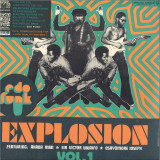
Analog Africa Presents Edo Funk Explosion Vol. 1, available on
2xLP/Gatefold LP with 20-page booklet / CD with 36-page booklet. It was
in Benin City, in the heart of Nigeria, that a new hybrid of intoxicating
highlife music known as Edo Funk was born.
It first emerged in the late 1970s when a group of musicians began to experiment with different ways of integrating elements from their native Edo culture
and fusing them with new sound effects coming from West Africa s night-clubs.
Unlike the rather polished 1980 s Nigerian disco productions coming out of the
international metropolis of Lagos Edo Funk was raw and reduced to its bare
minimum.
Someone was needed to channel this energy into a distinctive sound and Sir
Victor Uwaifo appeared like a mad professor with his Joromi studio. Uwaifo
took the skeletal structure of Edo music and relentless began fusing them with
synthesizers, electric guitars and 80 s effect racks which resulted in some of the
most outstanding Edo recordings ever made. An explosive spiced up brew with
an odd psychedelic note known as Edo Funk.
That’s the sound you’ll be discovering in the first volume of the Edo Funk Explosion series which focusses on the genre’s greatest originators; Osayomore
Joseph, Akaba Man, and Sir Victor Uwaifo: Osayomore Joseph was one of the
first musicians to bring the sound of the flute into the horn-dominated world
of highlife, and his skills as a performer made him a fixture on the Lagos scene.
When he returned to settle in Benin City in the mid 1970s - at the invitation of
the royal family - he devoted himself to the modernisation and electrification
of Edo music, using funk and Afro-beat as the building blocks for songs that
weren’t afraid to call out government corruption or confront the dark legacy of
Nigeria’s colonial past.
Akaba Man was the philosopher king of Edo funk. Less overtly political than Osayomore Joseph and less psychedelic than Victor Uwaifo, he found the perfect
medium for his message in the trance-like grooves of Edo funk. With pulsating
rhythms awash in cosmic synth-fields and lyrics that express a deep personal
vision, he found great success at the dawn of the 1980s as one of Benin City’s
most persuasive ambassadors of funky highlife.
Victor Uwaifo was already a star in Nigeria when he built the legendary Joromi
studios in his hometown of Benin City in 1978. Using his unique guitar style as
the mediating force between West-African highlife and the traditional rhythms
and melodies of Edo music, he had scored several hits in the early seventies,
but once he had his own sixteen-track facility he was able to pursue his obsession with the synesthetic possibilities of pure sound, adding squelchy synths,
swirling organs and studio effects to hypnotic basslines and raw grooves. Between his own records and his production for other musicians, he quickly established himself as the godfather of Edo funk.
What unites these diverse musicians is their ability to strip funk down to its
primal essence and use it as the foundation for their own excursions inward to
the heart of Edo culture and outward to the furthest limits of sonic alchemy.
The twelve tracks on Edo Funk Explosion Volume 1 pulse with raw inspiration,
mixing highlife horns, driving rhythms, day-glo keyboards and tripped-out guitars into a funk experience unlike any other.
The Go! Team return with their new album ‘Get Up Sequences
Part One’ out via Memphis Industries and featuring the singles
‘Cookie Scene’, ‘World Remember Me Now’ and ‘Pow’.
On ‘Get Up Sequences Part One’, Ian, Ninja, Nia, Simone, Sam
and Adam have created a musical world distinctly of their own
making. A place where routine is outlawed and perfection is the
enemy. Where Ennio Morricone meets The Monkees armed
with flutes, glockenspiels, steel drums and a badass analogue
attitude. We’re talking widescreen, four-track, channel hopping
sounds that are instantly recognisable.
In The Go! Team's world, old’s cool, the future’s bright and
melody is the star. Just check the second cut ‘Cookie Scene’
with a bouncing flute and junk shop percussion it introduces
guest rapper Indigo Yaj, who delivers an old school vocal that
continues this sonic trip. ‘Pow’ channels Curtis Mayfield and
enter stage centre, the inimitable Ninja in full flow and you don’t
stop, you won’t stop to this flute driven free for all.
By way of demonstrating The Go! Team’s old’s cool manifesto
comes the ‘needle-in-the-red’ ‘I Love You Better’, a defiant
message to an ex love, spelling out exactly how he’s messed
up - and then there’s those steel drums. Following that comes
the soda fountain soul courtesy of ‘A Bee Without Its Sting’, a
groovy protest song that makes its point with a tambourine.
The musical wagon train then takes you into the widescreen
windswept Western that is ‘Tame The Great Plains’, heading off
into a polyrhythmic panorama that’s full of hope. Slappin’ you
back to reality comes ‘World Remember Me Now’, a timely
reminder that when you’re lost in the routine of life, you can
always count on The Go! Team.
The Go! Team return with their new album ‘Get Up Sequences
Part One’ out via Memphis Industries and featuring the singles
‘Cookie Scene’, ‘World Remember Me Now’ and ‘Pow’.
On ‘Get Up Sequences Part One’, Ian, Ninja, Nia, Simone, Sam
and Adam have created a musical world distinctly of their own
making. A place where routine is outlawed and perfection is the
enemy. Where Ennio Morricone meets The Monkees armed
with flutes, glockenspiels, steel drums and a badass analogue
attitude. We’re talking widescreen, four-track, channel hopping
sounds that are instantly recognisable.
In The Go! Team's world, old’s cool, the future’s bright and
melody is the star. Just check the second cut ‘Cookie Scene’
with a bouncing flute and junk shop percussion it introduces
guest rapper Indigo Yaj, who delivers an old school vocal that
continues this sonic trip. ‘Pow’ channels Curtis Mayfield and
enter stage centre, the inimitable Ninja in full flow and you don’t
stop, you won’t stop to this flute driven free for all.
By way of demonstrating The Go! Team’s old’s cool manifesto
comes the ‘needle-in-the-red’ ‘I Love You Better’, a defiant
message to an ex love, spelling out exactly how he’s messed
up - and then there’s those steel drums. Following that comes
the soda fountain soul courtesy of ‘A Bee Without Its Sting’, a
groovy protest song that makes its point with a tambourine.
The musical wagon train then takes you into the widescreen
windswept Western that is ‘Tame The Great Plains’, heading off
into a polyrhythmic panorama that’s full of hope. Slappin’ you
back to reality comes ‘World Remember Me Now’, a timely
reminder that when you’re lost in the routine of life, you can
always count on The Go! Team.
As a New Era beckons globally, Manchester’s primo Manctalo merchants – Red Laser Records – quietly unveil their latest clutch of specialist space-age kinetics. A fifth-kind encounter enabling users to bridge the continuum of dance & interaction between our Earth-dwelling selves and the inter-dimensional overlords.
Containing three brand new movements in machine music from our treasured production stable of Kid Machine, Bob SwanS and Il Bosco; it also houses an honorary appearance from revered Danish spearhead Flemming Dalum, who serves up a particle-splitting redux of a lesser-known proto-techno nugget from Belgium. Dalum’s been traversing the star-clusters on his own intrepid missions for a while, so we’re mega buzzed to have him back on the RL mothership.
Stretford based synthesizer technician, Bob SwanS has been drafted in specifically by RL head Il Bosco for his advanced skills on the patch bays. “Aphelion Run Theme”, the point of which an object’s orbit is furthest from the Sun, vividly detailing in sound the journey our collective consciousness must undergo in order to reach the Highest Elders. We highly recommend utilising this track alongside Dr. Greer’s outstanding work with extra terrestrials.
KID Machine’s celebratory, vocoder-led Manctalo message: “It’s The K.I.D” is a sonic motif to our interplanetary relatives; this cybernetic b-boy’s way of spray painting the Red Laser logo over Proxima Centauri B’s subway network in neon-blue, pyroxene paint.
Bosco lets loose with one of his most impassioned creations to date too. “We Almost Lost Oddbins” previously titled: “Save Our Scene”, a universe-wide cry for help recorded when worldwide limitations on dancing and human co-exchange were at their most aggressive; its nonetheless positive outlook inviting us all to look both inward and outward for solutions in the New Normal.
Encased within a striking monolith art print, depicting the mystic energies of ancient galaxies it heralds the now widely-accepted belief that we are in no way alone in this universe and that channels of communication between more advanced civilisations than ours have already begun…
- A1: The John Coltrane Quartet — Africa 16:27
- B1: Max Roach — Garvey's Ghost 7:52
- B2: Quincy Jones And His Orchestra — Hard Sock Dance 3:20
- B3: John Coltrane — Up 'Gainst The Wall 3:14
- B4: Elvin Jones/Jimmy Garrison Sextet — Just Us Blues 5:55
- C1: John Coltrane — Alabama 5:09
- C2: Charles Mingus — Better Get Hit In Yo' Soul 6:31
- C3: Shirley Scott Trio — Freedom Dance 4:50
- C4: Yusef Lateef — Sister Mamie 5:27
- D1: Archie Shepp — Malcolm, Malcolm—Semper Malcolm 4:48
- D2: Stanley Turrentine — Good Lookin' Out 5:21
- D3: Earl Hines — Black And Tan Fantasy 5:11
- D4: Oliver Nelson — The Rights Of All 3:58
- E1: Pharoah Sanders — The Creator Has A Master Plan (Edit) 9:08
- E2: John Coltrane & Alice Coltrane — Reverend King 11:03
- F1: The Ahmad Jamal Trio — The Awakening 6:22
- F2: Albert Ayler — Music Is The Healing Force Of The Universe 8:41
- F3: Charlie Haden — We Shall Overcome 1:19
- G1: Alice Coltrane — Blue Nile 7:02
- G2: Pharoah Sanders — Astral Traveling 5:50
- G3: Archie Shepp — Blues For Brother George Jackson 3:52
- G4: Michael White — Lament (Mankind) 2:28
- H1: Dewey Redman — Imani 7:09
- H2: Marion Brown — Bismillahi 'Rrahmani 'Rrahim 6:02
- H3: John Handy — Hard Work 6:58
Orange and black. Fire and ebony. Fury and pride. Wearing its signature colors proudly and raising its exclamation point high, Impulse! Records was the go-to label for music that harnessed the searching and political stand-taking of the Sixties. Launched in 1961, Impulse grew to become an inherent part of the era’s velocity as well as its volume, pulling jazz into the age of Black Power, Afrocentricity, and Spiritual Expansion. In its balance of tradition and transition, it bridged the golden age of jazz, that brief window from the late Fifties to the Seventies when players representing every jazz era were alive and active—from Louis Armstrong to Albert Ayler, from the legends of lore to a new generation of energy players. Impulse treated all its musicians as innovators, revolutionaries even—from swing and bebop, to free and Afrofuturist. The performances on Impulse Records: Music, Message and the Moment draw their staying power from a wide embrace of styles and sounds, as well as a tight focus on a historic moment when the promise of change was in the air and the message of racial harmony was in the music. Today that music has lost none of its relevance: the promise still deferred, the message still on time.
- A1: Willie Dunn - I Pity The Country
- A2: John Angaiak - I'll Rock You To The Rhythm Of The Ocean
- A3: Sugluk - Fall Away
- A4: Sikumiut - Sikumiut
- A5: Willie Thrasher - Spirit Child
- A6: Willy Mitchell - Call Of The Moose
- B1: Lloyd Cheechoo - James Bay
- B2: Alexis Utatnaq - Maqaivvigivalauqtavut
- B3: Brian Davey - Dreams Of Ways
- B4: Morley Loon - N' Doheeno
- B5: Peter Frank - Little Feather
- B6: Ernest Monias - Tormented Soul
- C1: Eric Landry - Out Of The Blue
- C2: David Campbell - Sky Man & The Moon
- C3: Willie Dunn - Son Of The Sun
- C4: Shingoose - Silver River (Poetry By Duke Redbird)
- C5: Willy Mitchell & Desert River Band - Kill'n Your Mind
- D1: Philippe Mckenzie - Mistashipu
- D2: Willie Thrasher - Old Man Carver
- D3: Lloyd Cheechoo - Winds Of Change
- D4: The Chieftones (Canada's All American Band) - I Shouldn't Have Did What I Done (Canada's All American Band)
- D5: Sugluk - I Didn't Know
- D6: Lawrence Martin - I Got My Music
- E1: Gordon Dick - Siwash Rock
- E2: Willy Mitchell & Desert River Band - Birchbark Letter
- E3: William Tagoona - Anaanaga
- E4: Leland Bell - Messenger
- E5: Saddle Lake Drifting Cowboys - Modern Rock
- E6: Willie Thrasher - We Got To Take You Higher
- F1: Sikumiut - Utirumavunga
- F2: Sugluk - Ajuinnarasuarsunga
- F3: John Angaiak - Hey, Hey, Hey Brother
- F4: Groupe Folklorique Montagnais - Tshekuan Mak Tshetutamak
- F5: Willie Dunn - Peruvian Dream (Feat Jerry Saddleback - Part 2)
Deluxe 3LP mit 34 neu gemasterten Tracks und einem 60-seitigen Buch mit ausführlichen Linernotes, Interviews, bisher ungesehenen Archivphotos und den Texten (samt Übersetzung) in einem ,Tip On"-Schuber und drei ,Tip On"-Sleeves. Linernotes von Kevin ,Sipreano" Howes. Bisher fast nicht an die Öffentlichkeit gedrungen, kaum dokumentiert, aber im Kern ungeheuer revolutionär, nehmen die Aufnahmen verschiedenster Gemeinden amerikanischer Ureinwohner endlich in Form von ,Native North America (Vol. 1): Aboriginal Folk, Rock, and Country 1966-1985" den Platz ein, den sie verdienen. Eine Anthologie von Musik, die einst fast ausgestorben, aber nun für alle zu hören, ist ohne Frage eins der ambitioniertesten Projekte in der 12-järhigen Geschichte von Light In The Attic. ,Native Norht America (Vol. 1)" versammelt Musik der eingeborenen Völker Kanadas und der nördlichen USA, die in den turbulenten Jahrzehnten zwischen 1966 und 1985 aufgenommen wurde. Die Musik spiegelt die Zusammenführung globaler Popkultur und die Neuerweckung der eingeborenen Spiritualität und Ausdruckskraft wider. Der größte Teil dieses Materials war über Jahrzehnte lang durch fehlende Distributionskanäle und wenig Präsenz in den Massenmedien in Vergessenheit geraten - bis jetzt! Hier versammelt sich Garage Rock vom Polarkreis aus der Nunavik Region des nördlichen Quebec, melancholischer Yup'ik Folk aus Alaska und flüsternder Country Blues aus dem Wagmatcook First Nation Reservat in Nova Scotia. Man vernimmt Echos von NEIL YOUNG, VELVET UNDERGROUND, LEONARD COHEN, CREEDENCE CLEARWATER REVIVAL, JOHNNY CASH und anderen in den Songs, die jedoch mit eingeborenem Bewusstsein, Erzählkultur, Poesie, Geschichte und Zeremonie angereichert werden. Die Compilation ist gewidmet dem legendären Métis Singer/Songwriter und Dichter WILLIE DUNN, der auf der Anthologie auftritt, während der Zusammenstellung des Albums jedoch verstarb. ,Native North America (Vol. 1)" ist nur der Anfang; eine Zusammenstellung von Folk, Rock und Country aus den südlichen 48 Staaten der USA und Mexiko wird momentan in der Light In The Attic Goldmine ausgegraben.
- 1: The Ballad Of Crowfoot
- 1: 2 Peruvian Dream (Part )
- 1: 3 Charlie
- 1: 4 Broker
- 1: 5I Pity The Country
- 1: 6C Razy Horse
- 1: 7L Ouis Riel
- 1: 8 S Hool Days
- 1: 9 Te Carver
- 1: 0O Canada!
- 1: Down By The Stream (Starlight Maiden)
- 1: 2 Rattling Along The Freight Train (To The Spirit Land)
- 1: 3 Pontiac
- 1: 4 The Pacific
- 1: 5 Nova Scotia
- 1: 6 The Dreamer
- 1: 7 Sonnet 33 And 55 / Friendship Dance
- 1: 8 Wounded Lake
- 1: 9 Métis Red River Song
- 1: 20 Son Of The Sun
- 1: 2 The Lovenant Chain
- 1: 22 Bear And Fish
- The definitive overview of one of Canada's unsung musical heroes - Rare/previously unreleased recordings, photos, and interviews - Lyrics, discography, and filmography - Audio re-mastered by John Baldwin Mastering - Artwork by Christi Belcourt and Alanna Edwards - Liner notes by Kevin Howes (Voluntary In Nature) - Contributions from the Dunn family, Bob Robb, and Alanis Obomsawin (OC) // How did you first experience the poetry, music, and film of Willie Dunn? In a Montreal coffeehouse during the mid-1960s? On a CBC Indian Magazine broadcast with host Johnny Yesno? At a Toronto record store or Native Friendship Centre at the turn of the 1970s? Waiting outside of the Mohawk Nation Longhouse? Maybe in your parent's record collection on the Rez? A White Roots of Peace gathering? Pow wow? The Mariposa Folk Festival? Or was it that Save James Bay Benefit back in '73? On a good friend's stereo? Sitting around a crackling campfire? How about an old NFB film reel or VHS tape in high school? Or while attending Manitou College? A German concert hall in the 1980s? Maybe a direct action protest on the colonial streets of Canada? Busking in Ottawa during the 1990s? College radio? At Willie's celebration of life service in 2013 alongside Alanis Obomsawin and Willy Mitchell? LITA's Grammy-nominated Native North America (Vol. 1) compilation or the very anthology you hold in your hands? There should be no judgment for coming to things when you do. All that's important is remaining open to life-changing messages such as these_ Willie Dunn shared truth through song and celluloid. His original composition, "I Pity the Country," is an unparalleled statement on the greed and hate created by humankind, recorded in 1971 and still unfortunately needed today. "It's like the reason you're supposed to make music," said Kurt Vile about the song to MOJO Magazine in 2015. With "Charlie," Willie was the first to deliver the devastating story of Chanie Wenjack and the Canadian residential school system to the music community, nearly 50 years before the much-celebrated Secret Path, yet ignored outside of Indian Country and the folk festival circuit. Dunn's film technique, featured in 1968's The Ballad of Crowfoot (NFB), predates the "Ken Burns effect" to great effect. Are you catching the drift? Willie Dunn was not only a trailblazing leader in his time, but well ahead of the curve, simply without the PR push and big money backing of major label players. "He was our Leonard Cohen," said singer-songwriter Eric Landry about his musical hero. The only difference is that Willie refused to play the Hollywood showbiz game. In talent, he is Cohen, Dylan, and Cash rolled into one and along with Buffy Sainte-Marie, Floyd Red Crow Westerman, and A. Paul Ortega, brought a new set of perspectives and realities to the folk music tradition. Willie spoke directly to his people and Mother Earth through his creations, not only from experience but by examining his roots and connecting with the world in which he lived. We are humbled to help honor Willie Dunn. May he never be forgotten_ PEACE
Calgary songwriter Chad VanGaalen’s new album, ‘World’s Most Stressed Out
Gardener’, is a psychedelic bumper crop. A collection of tunes that does away with
obsessiveness, the anxiety of perfectionism, in favour of freshness and immediacy -
capturing the world as it was met while recording alone at home over a period of
years. “Don’t overthink it,” VanGaalen told himself again and again, despite the
push/pull love/hate of his relationship with songwriting. “I’m always trying to get
outside of the song - but then I realize I love the song.”
This is a record that gleams with VanGaalen’s musical signatures: found sound,
reverb, polychromatic folk music that is by turns cartoonish and hyperphysical - like
ultra-magnified footage of a virus or a leaf. Apparently, the album began life as a
“pretty minimal” flute record. (There’s only a vestige now, on ‘Flute Peace’, one of
three instrumentals.) Later it became an electronic record “for a while” and finally,
“right at the last second,” it “turned into a pile of garbage.” The good kind of
garbage: glinting, useful, free. Music as compost - leaves and branches ready to be
re-ingested by the earth, turned into a flower.
Throughout these 40 minutes, VanGaalen floats from mania to solace to oblivion,
searching for zen in all the wrong places. “Turn up the radio / I think we’re dead,”
he sings on ‘Nothing Is Strange’; or, on the inside-out rocker ‘Nightmare Scenario’:
“You’re stressed out when you should be feeling very well.” The singer’s mental
landscape is rotting and redemptive, beautiful in spite of itself - and his soundscapes
reflect this fertile decay.
He has been influenced by his instrumental work on TV scores (Dream Corp’s third
season began this fall) but still “nothing can really replace the human voice,” he
admits. Like Arthur Russell or Syd Barrett, it’s VanGaalen’s vocals that shine a path
through the swampland - from the cello-lashed ‘Water Brother’ to ‘Starlight’’s
krautrock pipe-dream.
These days, VanGaalen cherishes the privacy of the studio, the capacity to wander
around, get distracted, and “move at the speed of life.” Whereas once he would
obsess over mic techniques, now he puts the microphone in the same place every
time - trying to capture a song quickly, the idea at its heart. He’ll act on his
infatuations - for the flute, a squeaky clarinet, his basement’s copper plumbing
(remade into xylophones for ‘Samurai Sword’) - and then he’ll try to get out, “veering
away from responsibility,” before he overdoes his stay.
In the end, it’s like gardening. You have to live with your horrible decision-making;
the weather’s going to mess with you if it wants to; and if you plant a hundred
heads of broccoli, “now you gotta eat a hundred heads of broccoli - or watch them
go to seed.” But mostly VanGaalen just tries to be a deer: “I remember seeing some
deer come out in the Okanagan Valley once,” he says, “watching them wait for a
sunbeam to hit a perfect bunch of grapes - and then eating them right out of the
sunbeam. I’d recommend that.”
Initial LP copies pressed on clear with gold, red and blue high melt coloured vinyl.
Multidimensional duo Divide and Dissolve release their third full length studio album ‘Gas Lit’ on Invada Records, produced by Ruban Neilson of Unknown Mortal Orchestra.
Divide and Dissolve members Takiaya Reed (saxophone, guitar, live effects) and Sylvie Nehill (drums, live effects) create instrumental music that is both heavy and beautiful, classically influenced yet thrillingly contemporary and powerfully expressive and communicative. Their music has the ability to speak without words and utilises frequencies to interact with the naturally occurring resonance.
The CD is presented as a digipack.
The vinyl is pressed on 180g Transparent Red vinyl and comes housed in a heavyweight spined sleeve with printed insert and digital download card.
‘We Are Really Worried About You’ presents a formidable saxophone sound giving way to a surge of crushing percussion and heavy guitar riffs. ‘Denial’ is a potent blend of Takiaya’s ominous and unsettling sax that blows wide open into riff city for almost eight glorious minutes. Both tracks encapsulate the message behind the music: to undermine and destroy the white supremacist colonial frameworks and to fight for indigenous sovereignty, black and indigenous liberation, water, earth and indigenous land given back.
For fans of James Baldwin, Osa Atoe, Adrienne Davies, the ocean and freshwater, breath/breathing, Toni Morrison, Octavia Butler, Afro futurism, indigenous futurism, indigenous sovereignty, slavery abolition, resistance, the forest, bodies of water, being submerged, the railroad and Ai Ogawa.
Das LA-ansässige Producer-Kollektiv Internet Money veröffentlicht sein erstes Kompliationsalbum ”B4 THE STORM jetzt als 12” Doppelvinyl in Silber. Die zweite Singleauskopplung ”Lemonade” erreichte bereits die Top 3 der deutschen Singlecharts, die Top 50 auf Spotify und ist aus den Top-Playlisten nicht mehr wegzudenken. Auch am Radio stieg ”Lemonade” in die Top 50 der deutschen Air Play Charts ein. Die Star-Produzenten Nick Mira und Taz Taylor arbeiten mit Hip-Hop-Größen, wie Drake, Trippie Redd, Juice WRLD und vielen weiteren zusammen. Auf ”B4 THE STORM” vereint die Beat-Entourage bekannte Gesichter wie Swae Lee, Gunna, Don Toliver, Kevin Gates, Wiz Khalifa oder Future und featuret Beiträge von Künstlern, die Internet Money entdeckt und gepusht hat: Juice WRLD, Trippie Redd, lilspirit, Lil Tecca oder iann dior - um nur einige Namen zu nennen.
- A1: Transhuman
- A2: Hamburg - Dusseldorf
- A3: Zukunftmusik (Radiophonique) (Radiophonique)
- A4: Specimen
- B1: Clone
- B2: To The Limit
- B3: Zufallswelt
- B4: Plant In Fever
- C1: Shifted Reality
- C2: Kreiselkompass
- C3: Data Landscape
- C4: Transhumanist
- D1: Sexersizer
- D2: Maschinenraum
- D3: Let Yourself Go
- D4: Let Yourself Go (Beatsole Remix)
There are few genres in which German artists play such a central pioneering role as they do in electronic music, be it techno, electropop, trance or rave. At the frontline for many years were Kraftwerk and U96, two absolute trailblazers of this musical direction. While Kraftwerk wrote international music history mainly in the 1970s with cult albums such as Autobahn (1974), Radio-Aktivität (1975), Trans Europa Express (1977) and Die Mensch-Maschine (1978), U96 had a profound influence on the global pop music, rave and techno scene of the 1990s with hits such as ‘Das Boot’, ‘Love Sees No Colour’, ‘Night In Motion’ and ‘Heaven’. Transhuman, scheduled for release on UNLTD Recordings on 30th October 2020, will feature a spectacular collaboration between U96 (Ingo Hauss
& Hayo Lewerentz) and Wolfgang Flür, Kraftwerk’s drummer in the years between 1972 and 1987 and therefore involved in the most seminal albums by the group from Düsseldorf.
This remarkable cooperation was first announced and implemented by two joint numbers on U96’s 2018 offering Reboot. Transhuman sees U96 and Wolfgang Flür develop their creative exchange across a full album, creating fascinating sonic worlds. The title song ‘Transhuman’ and an updated version of ‘Zukunftsmusik (Radiophonique)’ will be released as lead singles, including, as we’ve come to expect from U96, experimental video clips. That New York record label Radikal Records immediately secured the rights to the album for the US and Canada points to major interest in this project, not only on these shores but also across the Atlantic.
“Transhuman is a stylistic mélange of our different histories,” describe Wolfgang Flür and U96 masterminds Hauss and Lewerentz an offering that is spectacular in many respects, featuring, along with typical U96 tracks such as ‘Clone’ and ‘Specimen’, numbers such as ‘Transhuman’, ‘Planet In Fever’ and ‘Sexersizer’ that are inspired by Flür’s past. Notably, the content has been reduced to the sheer basics, in other words: sparingly used associative statements with deep, but at times also playful and mysterious messages that the listener feels rather than consciously registers. The lyrics are about the transformation of people through technology and our massive interference in life on our planet. Hauss: “Pieces like ‘Zukunftsmusik’ and ‘Transhuman’ don’t tell a story in the classic sense, they articulate emotions and associations in very few words, bringing to mind recordings such as Radio-Aktivität, Autobahn and Die Mensch-Maschine. In addition Transhuman, features a number of melodies created on the basis of computer algorithms, in other words fractal music which takes us even further back in history, to Klaus Schulze, Stockhausen, the electronics laboratories of the fifties and sixties and the musique concrete compositional technique.”
VINYL[19,87 €]
Nahawa Doumbia's new album Kanawa concisely captures this current moment in Malian history. The singer, whose storied career spans more than four decades, reflects on the immigration crisis from the Malian perspective in the title of her new album Kanawa. Across eight songs recorded in Bamako with a band including traditional and modern instruments, Doumbia merges her early work that relied on a spare expression of her trademark didadi rhythm with the bombastic range of contemporary Malian pop. The beautifully complex musical accompaniment that results is courtesy of the large ensemble she pulled together with producer and arranger (and day one collaborator) N'gou Bagayoko. The band features two highly expressive Malian string instruments, the ngoni and the slightly smaller kamalé ngoni, as well as a variety of percussion, drum programming, karignan (a metal scraper) and acoustic and electric guitars. Doumbia's daughter, a celebrated singer with her own group and busy concert schedule, Doussou Bagayoko sings on "Adjorobena," a song about patience, tolerance and living in peace. Doumbia weaves together a roadmap of her psyche when it comes to the good and bad life has to offer. She talks about marriage and women leaving home to join another through the metaphor of a tree in the garden; she includes gunshot samples in the song "Foliwilen" to honor the bravery of hunters, soldiers and other courageous people; she uses a bird in "Djougoh" to talk about lazy people; and, in "Ndiagneko" she advises people to ignore critics, just do you. Mali has gone through an intense period of regional strife and terrorist incidents over the last ten years and Doumbia roots the album in tragic local concerns with deep global implications. "The meaning of Kanawa is so simple. We see our children trying to cross the ocean all the time. I said that many of our children die in the ocean and some of them die while crossing the Sahara. But I ask them why do they leave their country? They said that they leave because of the family situation or problems like poverty and unemployment. I ask them to stay and work in their country. I call on the UN and African leaders so that we can coordinate our efforts to find a solution, to create jobs for them so that young people stop leaving. That's why I chose it as the title of my album so that everybody can learn from it and also so that there is a reduction in the number of people emigrating. So that some will hear the message and stay home and grow the land. Leaving is not the only solution. My message is to help the youth find jobs."
Scofield and Metheny. What more needs to be said? A masterpiece meeting of musical minds, these two guitar virtuosos entered the studio in December 1993 with Steve Swallow on bass guitar and Bill Stewart on drums to create one of the greatest jazz guitar albums of all time. Produced by Lee Townsend, I Can See Your House From Here is an 11-track set of Scofield and Metheny originals including Sco’s expansive title track and Pat’s rocking “The Red One” and the stunning ballad “Message To My Friend.”
CASSETTE[8,78 €]
Nahawa Doumbia's new album Kanawa concisely captures this current moment in Malian history. The singer, whose storied career spans more than four decades, reflects on the immigration crisis from the Malian perspective in the title of her new album Kanawa. Across eight songs recorded in Bamako with a band including traditional and modern instruments, Doumbia merges her early work that relied on a spare expression of her trademark didadi rhythm with the bombastic range of contemporary Malian pop. The beautifully complex musical accompaniment that results is courtesy of the large ensemble she pulled together with producer and arranger (and day one collaborator) N'gou Bagayoko. The band features two highly expressive Malian string instruments, the ngoni and the slightly smaller kamalé ngoni, as well as a variety of percussion, drum programming, karignan (a metal scraper) and acoustic and electric guitars. Doumbia's daughter, a celebrated singer with her own group and busy concert schedule, Doussou Bagayoko sings on "Adjorobena," a song about patience, tolerance and living in peace. Doumbia weaves together a roadmap of her psyche when it comes to the good and bad life has to offer. She talks about marriage and women leaving home to join another through the metaphor of a tree in the garden; she includes gunshot samples in the song "Foliwilen" to honor the bravery of hunters, soldiers and other courageous people; she uses a bird in "Djougoh" to talk about lazy people; and, in "Ndiagneko" she advises people to ignore critics, just do you. Mali has gone through an intense period of regional strife and terrorist incidents over the last ten years and Doumbia roots the album in tragic local concerns with deep global implications. "The meaning of Kanawa is so simple. We see our children trying to cross the ocean all the time. I said that many of our children die in the ocean and some of them die while crossing the Sahara. But I ask them why do they leave their country? They said that they leave because of the family situation or problems like poverty and unemployment. I ask them to stay and work in their country. I call on the UN and African leaders so that we can coordinate our efforts to find a solution, to create jobs for them so that young people stop leaving. That's why I chose it as the title of my album so that everybody can learn from it and also so that there is a reduction in the number of people emigrating. So that some will hear the message and stay home and grow the land. Leaving is not the only solution. My message is to help the youth find jobs."
This 180 gram red virgin vinyl LP reissue of the 1958 Bluenote album ‘Art Blakey and the Jazz Messengers’ includes bonus tracks recorded live at the Olympia, Paris with the same personnel, also in 1958.
Together with Art Blakey on drums the line-up includes Lee Morgan on trumpet, Benny Golson on tenor saxophone, Bobby Timmons on piano and Jymie Merritt on bass .
The 20-page booklet contains complete information with specially prepared liner notes by Penguin Guide to Jazz’s writer Brian Morton and by France’s prestigious Jazz Magazine.
Black Vinyl
Docile Recordings continues with part two of a five cat series. Docile #29, the pepper ep, was produced, arranged, and crafted on vinyl by Andy Garcia at Archer Record Press in Detroit Michigan U.S.A.. Docile Recordings believes vinyl is the best medium to convey our message. Our message is our sound, a sound that is unique in its’ path and loyal to its’ character. Our mission is redefinition and the redirection of minimal techno.
Side A starts with an ol’ timey 4/4 tec- spiritual of crunch confusion rocking and clapping faithfully until the rapture of synth begets a righteous clarity of beat. A2 is a calm to topsy-turvy scurry through digital tweaks and stutters that form a havoc funk requiring a reprimand. B1 opens with the ringing energy of a pest highly motivated to infect a sickly synth, glitching yip, and rolling cymbal into the bloodstream of a dirty grind. B2 is a gentle vibe that is simple, clean, and fresh as a cool breeze that carries the rhythms of birds speaking in tandem.
- A1: Kirilik - The Beginning Of Everything
- A2: John Beltran - The Morning Moves The Sun
- B1: Sebastian Mullaert - In The Mist We Appeared
- B2: Jakojako - Deine Augen
- C1: The 7Th Plain - For Cocteaux And Budd
- C2: Len Faki - Find Your Way
- D1: The Persuader - Remembering Water Pearls
- D2: Ralf Hildenbeutel - April
- E1: Moritz Von Oswald - Silence
- E2: Kangding Ray - Treize
- F1: Tin Man - Lovely Acid
- F2: Antigone - Indiana Police
In a year of global shift and continuous changes, Figure takes a leap of faith and extends its catalog by introducing a completely new compilation series to the label. The Open Space series will feature forward-thinking Electronica and Ambient from a well-curated list of seasoned producers. Compositions that invite to let the mind wander, weaving stories, and conjuring up emotions.
While these softer genres have already played a respected role in former Figure releases, for the first time in the label’s history they are now being given the center stage. Volume 1 sets the mark by providing producers whom we’ve come to love for their dancefloor-centric output with an open space to showcase another side of their skillset. Open Space remains open to various strains of Electronica and Ambient, ranging from the introspective synth-monologues (Sebastian Muellaert / Kirilik), drony dub-experimentalism (Moritz Von Oswald), alive and breathing takes on the genre (JakoJako), to singular compositions which slowly build their own lasting narrative and thus develop a genuine, emotive quality (John Beltran / Tin Man ). Len Faki himself proves the artistic breadth of Open Space, sharing a powerful and conscious message through a rare and delicate moment of him exploring the form of spoken words. Other contributions include Jesper Dahlbäck as The Persuader, Luke Slater as 7th Plain, or Ralf Hildenbeutel - a former production partner of Sven Väth and now a successful composer of film soundtracks. Unfairly reduced to background music, it is not the kind of Ambient featured on the Open Space series. It is an engaging body of music, bonded by its contemplative, enveloping nature. Open Space bands together an array of fascinatingly skilled producers, finally given the opportunity to present some of their most creative and emotional material yet to date.
- A1: Soul A Go Go - Soul Messin Allstars Ft Josh Teskey
- A2: Superfly (Sam Redmores' Exclusive 'Trunk Of Funk' Edit)
- A3: Boogie Down - Roy Ayers
- A4: Hold My Hand - Laneous
- A5: Pata Pata - Miriam Makeba
- A6: African Rhythms - Oneness Of Juju (Exclusive 'Trunk Of
- A7: Medicated Goo - Pp Arnold
- A8: Take A Shot - The Fantastics! Ft Sulene Fleming
- A9: Give Me The Night Ft Xantone Blacq - Juan Laya & Jorge
- A10: Out Of The Ordinary Ft Mike Keat & The Bevvy Sisters
- B1: Forget Me Nots - Patrice Rushen
- B2: People Get Ready Ft Natalie Williams & Noel Mckoy - The
- B3: Hangin' On - Monophonics
- B4: The Old Place - Nick Waterhouse
- B5: Victory! - Michelle David & The Gospel Sessions
- B6: Beggin' - Magnus Carlson
- B7: Telling You Lies Ft Jam Jam - Alex Opal
- B8: Help Me Ft Ian Whitelaw - Badge And Talkalot
- B9: The Only Difference - Beatchild & The Slakedeliqs
- B10: Clap Hands - Honeyfeet
Craig Charles has been a soul & funk fan since his teenage years in Liverpool, going to see local heroes The Real Thing live, and wearing out his shoe leather dancing in the city's many underground clubs. Craig has been sharing that passion for the music via his 6Music and BBC Radio 2 shows and DJ nights for nearly 20 years. His brand new 'Trunk Of Funk' compilation series, blends up-tempo club classics, with fresh music from the cream of the crop from the contemporary soul and funk scene, and will be Craigs very first vinyl release - a beautiful, double vinyl gatefold LP and he's certainly excited about it, stating; "I can't wait to bring you big beats, bass lines and booga-bloomin-loo! Presenting The Craig Charles Trunk Of Funk Volume 1 as my first ever vinyl release has put a proper wiggle in my walk!" This collection of 21st century disco, soul, funk & afro grooves from includes tracks from contemporary heroes of the scene such as Monophonics, Amp Fiddler and The James Taylor Quartet, it's also peppered with some old school classics and rare grooves from legends such as Roy Ayers, PP Arnold, Miriam Makeba and Patrice Rushen. Craig has personally selected and sequenced this collection to take the listener of a musical journey, the closest thing to having Craig visit and personally DJ for you in the comfort of your own home! It also includes two 'Trunk Of Funk Edits' that are 100% exclusive to this compilation and not available anywhere else.
Electronica duo Echaskech have been part of the Balkan Vinyl family since the very first releases back in 2010, but this is their debut solo outing. A mini-album of deep space electronica and cosmic ambience. A soundtrack across our solar system and interstellar travel onwards for 27 million light years.
Available on a limited edition of 30 hand-numbered cassettes.
A1: Dawn Over The Red Planet
A2: Kuiper Belt Life Support
A3: Andromeda
A4: Oort Cloud
A5: Machine Code
B1: Into Eta Carinae
B2: Disorder
B3: Pluto At Night
B4: Onset Of Panic
B5: Escape From Tau Ceti
B6: Messier 63
- A1: Return Of The Ghetto Fly Feat Neco Redd
- A2: Superficial
- A3: Slippin' On Ya Pimpin' Feat Dames Brown
- B1: I Got It Feat Alena
- B2: Soul Fly (Part 1) Feat Alena
- B3: Soul Fly (Part 2) Feat Dames Brown
- C1: 1960 What Ft London House Cats Choir
- C2: Steppin' Feat Dames Brown
- C3: Your Love Is All I Need
- D1: Funk Is Here To Stay
- D2: Send A Message
- D3: Superficial (Live Version)
1 x Yellow 1 x Blue[25,17 €]
South Street delve into the The Sound Of Detroit from one of its unsung heroes, reissuing Amp Fiddler's 'Motor City Booty' LP on suitably swanky purple and pink vinyl respectively. Coming straight off the D Funk assembly line, it's a full on dance floor affair from Motown to P-Funk, Techno and Neo Soul.
This 12 track album produced by Amp Fiddler & Yam Who? includes the massive 'Soul Fly' sounding like a Mark Ronson production had he been hanging out with George Clinton's Parlet followed by the bonafide P-Funk anthem 'Steppin' both featuring the stunning vocals by the Dames Brown girls.
Amp Fiddler is credited for taking both a young J Dilla and also Q-Tip under his wing teaching them his Akai MPC techniques, setting the path for some of Hip Hop's finest recordings which have defined the shape of things to come.
His musical collaborations & current duties include: Moodymann's musical maestro, keyboard wizard for Theo Parrish's live band, a longstanding Funkadelic member, co-writer for Sly & Robbie, Prince, Maxwell, Jamiroquai & Seal to name a few.
After their 2016 dancefloor burner "Jump," Poirier and Red Fox are pairing up once again for "Pull Up Dat" taken from Poirier's new album "Soft Power." Rooted in a dancehall style, "Pull Up Dat" is full of good vibes with Red Fox confidently leading the dance. Poirier brings a modern touch that relates to the 90's dancehall scene. On the B-side, Patexx is all about delivering an uplifting message with the collaboration "Unity & Strength." As Patexx says at the beginning of the song: "United we stand, divided we fall." Then on the remix tip, young and upcoming producer SIM from Montréal flexes to new heights, turning "Pull Up Dat" into a set-ready banger.
With his first album dating back to 2001, Poirier is a prolific, creative and eclectic Canadian producer / musician with a 20 year journey of creating music. Constant in his albums and DJ performances is a desire to build bridges between different languages, communities, and cultures. His open, uninhibited musical mind means that his works bend boundaries, resulting in compositions that mix several styles and eras. He has now produced a total of 11 albums and many EPs with labels such as Ninja Tune, Nice Up Records and, more recently, Wonderwheel Recordings. Active in Montreal, his successful monthly dance party Qualité de Luxe is dedicated to African and Caribbean music, attracting crowds for over six years. Poirier is also the man behind Bounce le Gros and Karnival, parties with legendary status in Montreal nightlife history.
"Pull Up Dat" is available digitally as a single pack and as a limited edition 7" vinyl record on September 25th, 2020.
Albert Ayler’s 1969 album New Grass has been misunderstood from the day of its release. The album fi nds Ayler experimenting with soul music and digging back into his R&B roots (he started his career playing saxophone with Chicago bluesman Little Walter), fusing it with the avant-garde free jazz (the one element of the record which garnered consistent praise) and adding the vocals of Rose Marie McCoy, The Soul Singers and Ayler himself. As if predicting the divisiveness of the record to follow, Ayler speaks directly to the listener and explains that New Grass is nothing like his albums before — that it is of “a different dimension of his life” — in the album opener “Message from Albert.”
New Grass deserves reconsideration, if not for the heavy grooves and surprising arrangements, then for its bravery in challenging norms of the time; by the ‘60s, jazz was well-accepted as a uniquely American art form, while soul as a genre was very much still seen as primitive. Ayler melds them together and creates something novel, adventurous, and completely his own. At the time of its release, despite its divisive reception, New Grass helped break down the unnecessary walls dividing genres and revealed music’s potential freedoms. The album has gone on to infl uence generations of Jazz, R&B, Funk, Hip Hop, Post Punk, No Wave and unshrinking artists like Pharaoh Sanders, Alice Coltrane, Funkadelic, Jungle Brothers, Red Krayola, Sonic
Youth and Mark E. Smith.
Third Man Records can’t recommend this record highly enough. We are confi dent that it won’t take but one listen for you to understand New Grass is an undeniable healing force
Ramrock Red Records are incredibly excited to present Kameelah Waheed – straight outta New Jersey. Brought to our attention by London DJ/promoter, Barry King, Kameelah immediately delighted us with her direct, no messin’ delivery, compelling, earworm hooks and beautifully crafted lyrics.
Teaming up with Kelly Murray on co-production on the ‘Original Version’, Kameelah unleashes a stripped back, jazzy hip-hop vibe punctuated with a Donald Byrd’ish trumpet riff. The North Street gang take the Donald Byrd flavour a step further with a full on nod to the Mizzell Brothers in the first North Street West dusty funk production. Releasing digitally around April 24th as a five track EP with a further 7” vinyl release around May/June, ‘Holding On’ is set to tick a lot of musical heads boxes.
Growing up in an Islamic household, sneaking snippets of worldly music into her household was close to pulling off a major heist during Kameelah’s teenage years. She was introduced to the world of sound from MTV, rap and house music and the live bands of the 80's courtesy of her older sister, along with tribal and island music that her mother played. Kameelah was encouraged to consider song writing as a career option when she received an opportunity to write for Bunny Sigler of Philadelphia International Records. Heading up the hip-hop rock band band, Gov’t Cheaze in 2000, Kameelah performed at Philadelphia’s Black Lily Film Festival as well as a set at the very first Roots Picnic.
Previous releases have included ‘Traveling’ by Kameelah Waheed & GC, produced by Larry Gold, featured on the ‘Beat Generation Compilation’ released on BBE, making the Top 10 Most Played on UK urban radio stations. In 2011, Kameelah Waheed and Government Cheaze signed with indie label, Philly Through My Ear (PTME) founded by Will Smith Sr. The self-titled CD can be found on iTunes.
'IMB12001' shipping to You in a designed Uni Cover with a Sticker of the Label "The Inbeciles" on it!
This is the music for our times; our darkening times. The Imbeciles are making the soundtrack for the world we really live in, which is set to become increasingly angry, unhappy, unfair, and messed up. “The world is slowly imploding.” That’s the warning from The Imbeciles, and the message behind its first album. The idea of what to do emerged like a surprise attack.
“I don’t even know where it came from… it ambushed us,” says Butch Dante, of the band’s forthcoming self-titled debut album. “To us it looks like mankind will endgame itself in this millennium, and probably within the next 100 or 200 years. The Imbeciles as harbingers of that fall. We’re pointing out that the world is imploding, for many reasons — environmental, political, technological, and ultimately because human beings themselves forgot how to be humane, how to be kind.”
“Saying we are political would infer that we have some faith in the political system. We don’t. Or that we have answers, a solution to prevent this coming slow apocalypse. But we don’t. We are sitting at the side of an innocent-looking pool saying: hey, you’re drowning but you don’t even know it. And we’re giving you some music to listen to as you go down.”
Inspired by the likes of Wire, Devo, Gang Of Four, but utterly unique, a new form of avant-garde art punk, against greed and mendacity. The band’s forthcoming album was recorded deep down at Sonic Ranch on the Texas/Mexico border. All analogue, in seven days. Produced by Calvin Voltz.
Latest single “D.I.E.” is “a lament for the end of the world. With references to global endgames. They’re grim. All self-inflicted. The chorus is epic when played live. It’s incredibly passionate. People really get into it.” And now it’s been remixed.
Red Rack'em's take on is wonderfully curveball as one might expect; homing in on one unique part of the vocal and making it the fullcrum, from which his psychedelic, deep-house, hardcore jazzathon is then able to blossom and unravel before your very eyes. Atmospheric, experimental and hooky too - clever business from the Bergerac boss.
Next up we have the amazing Oliver Ho and his Broken English Club. Here we witness a more flagrant and faithful use of stems, and through layering both the band's parts, and instruments of his own design - he transforms 'D.I.E.' into a towering slab of dark and raw, industrial EBM.
Hold Up ft Kendra Foster is the breakout first single on Lonely C’s (aka Charles Levine of Soul Clap) debut album, Charles & Tribulations. Foster, known as a multitalented force of singer/songwriter who's toured the world for over a decade with Parliament-Funkadelic, won a Grammy for her co-writing on D’Angelo & The Vanguard’s Black Messiah, most recently set forth as a solo act with her 2016 eponymous sophomore album.
This may be Kendra’s first foray into house music, but she’s no stranger to the groove. This is a dance-floor classic in the making, already receiving powerful response from crowds at Soul Clap’s DJ sets.
Lonely C’s original mix features vocal/songwriting super talent Kendra Foster’s cathartic tale of a love gone away. Mike Dunn’s remix is a guaranteed dance floor activity, Javonntte dub for the dancers.
Then last but no means least FSQ’s Funkadelic Touch mix of “True” featuring Billy Bass Nelson, GKoop, O-Man, & Kim Manning”
Upfront DJ Support:
Dixon, Seth Troxler, Gilles Peterson, Moxie, Francois K, Osunlade, Josh Wink, Jovonn, Kraak & Smaak, Tensnake, Horse Meat Disco, Crazy P, Leo Mas, Luke Solomun, Hot Chip, Nightmares on Wax, Honey Soundsystem, Danny Tenaglia, Red Rack’em, Soul Clap.
- A1: Baby Blue
- A2: Though It Hurts Me Badly
- A3: The Magic Hour
- A4: Different Drum
- B1: I Believe
- B2: Hold On To Your Dreams
- B3: I\'M A Dreamer
- B4: When I Was Part Of Your Picture
- C1: Shoot The Dove
- C2: Finally Found My Way Back Home
- C3: You Got Me
- C4: Daltry Street
- D1: Still Trying
- D2: The Last Thoughts On Woody Guthrie
- D3: I\'Ll Always Remember You… (Debbie\'S Song)
The Artist
When P.P. Arnold arrived in London on September 23, 1966 to support The Rolling Stones as one of Ike & Tina Turner's backing singers,
The Ikettes, little did she know that her world was about to be turned upside down. The shy but vivacious 19-year-old caught the eye
of Mick Jagger, who would persuade her to stay in London and record as a solo artist – ultimately leading to a five-decade career
working with everyone from Jagger, the Small Faces, Rod Stewart, Barry Gibb and Eric Clapton, to Nick Drake, Peter Gabriel, Roger
Waters, the KLF, Paul Weller, Ocean Colour Scene and Primal Scream, to name a few.
Five decades after she became a '60s icon with the timeless pop hits 'The First Cut Is The Deepest' and 'Angel Of The Morning' on
Rolling Stones manager Andrew Oldham's ultra-hip Immediate label, soul singer P.P. Arnold is set to release a double-album of stunning
new material featuring contributions from, among others, Paul Weller, Ocean Colour Scene's Steve Cradock, The Specials and P.P's
songwriter son, Kodzo.
“I've been a fan of P.P. ever since hearing 'The First Cut', and then 'Tin Soldier'. Her voice is still as great as it was when she was 18/19
years old! Steve Cradock has tried to keep something of the early Immediate Records sound on this new record, whilst still sounding
fresh, and it is for me one of the finest in her collection” – Paul Weller
The Product
“It's great that I'm coming back with this record,” says P.P. “Even now, I'm still finding my way, because the industry changes every
decade, and you're sometimes out of the loop. For me it's all about faith, meditating, love, praying… try to be ready and don't give up
the fight. That's the message.”
'The New Adventures Of P.P. Arnold' was recorded and produced by life-long P.P. enthusiast, Ocean Colour Scene star and Paul Weller
band guitarist Steve Cradock at his Kundalini Studio in Devon – after a 51-year gap in P.P. Arnold's recording career.
The beginnings of the album - spanning classic orchestral soul ('Baby Blue', 'Finally Found My Way Back Home'), sunshine pop ('The
Magic Hour'), house music ('Hold On To Your Dreams'), a spinechilling gospel elegy inspired by her daughter's death ('I'll Always
Remember You'), two Paul Weller originals ('When I Was Part Of Your Picture', 'Shoot The Dove') and an epic, edgy 10-minute reading
of Bob Dylan's poem 'The Last Thoughts On Woody Guthrie' – can be traced back 25 years to 1994. Worldwide tours with Roger Waters
put the project on the backburner, but when Cradock rediscovered the tapes during a house move four years ago, both parties were
excited about the prospect of finally completing an album. And so they did.
After many years the long lost Apocalyptic Disco Funk offering has been unearthed and re-released for the world to hear. Rob's prophetic pre-apocalypse disco message, Hellfire, was originally released as a promotional LP by Nigerian label Taretone. Though a seminal work by Rob, disco stylings had fallen from vogue on the Nigerian dance floors. With the local airwaves dominated by artists like Félix Lebarty, Rob's promotional release was shelved, and never got to see a full-scale commercial issue. Ultimately the master tapes were lost by Taretone and the album was doomed to obscurity for decades until its recent rediscovery by Tambourine Party Records.
Hellfire is both a disco burner and a frantic warning about the impending end of the world. From the downtempo title track Hellfire to the floor-filling Glory be to Jesus, Rob will be sure to get his message across. Once the needle is dropped it is hard to deny that even if the world is coming to and end you can die happy listening to this album.
- A1: Ich Will Dir Helfen
- A2: A La Manière (With Roya Arab)
- A3: Ondine
- B1: Aspiration (With Mona Soyoc)
- B2: One Of These Days (With Hafdis Huld)
- B3: Théorème
- B4: Mortel Battement / Nocturne (With Alain Bashung)
- C1: Organique
- C2: The Watcher (With Mona Soyoc)
- C3: Qu’est-Ce Qui M’a Pris (With Philippe Poirier)
- D1: Xr 116 / Messe Rouge
- D2: Untitled
- D3: Ondine (Alt Take)
- D4: Piasong
The sensitive mountain » (la montagne sensible) is the nickname Alain Bashung came up with for Arnaud Rebotini. At the height of his fame, after the success of Fantaisie Militaire in 1998, Bashung readily agreed to create an album with Rebotini. The two men didn’t know each other; their record label had introduced them. Bashung brought in “Mortel Battement” and “Nocturne,” two poems by Jean Tardieu, which he recited in a voice simultaneously warm and flat, and Arnaud produced an impressionist soundscape that ended with an apocalypse of metal. Bashung was so proud of their collaboration that he offered to give several interviews to promote the record. Today, listening back to this moving Léo Ferré influenced "talking singing" exercise, it’s hard not to hear the template for L'Imprudence, the album that Bashung went on to record with Rebotini two years later. In a similar way, the album Organique sparked a productive partnership between Rebotini and filmmaker Robin Campillo, which resulted in their being awarded a César for Best Original Music in 2018. The director, who trusted Rebotini to create the soundtracks for his films Eastern Boys and 120 Beats per Minute, never kept his love for the 2000 record a secret.
Yet it’s an understatement to say that when it was released, Organique was not in the spirit of times. That year was all about the French touch. The funky samples of Modjo’s “Lady” and Superfunk’s “Lucky Star” ruled the sweaty dancefloors. Although Rebotini was familiar with the electronic scene, he had something else in mind when he set about creating Organique. Under his own name or under the pseudonyms Aleph, Avalanche, Black Strobe, Maison Laffitte, and of course Zend Avesta, he had already released several quite bizarre and experimental techno, house, or jungle maxi singles on pioneering labels like P.O.F., Source, and Artefact, run by his friend Jérôme Mestre’s, whom he had met back when both were working as record salesmen at Rough Trade’s ephemeral Parisian store. It was at Artefact, still financed at the time by Barclay and Universal, that he naturally proposed this record project, which was a bit "different." It was his first real album.
Arnaud Rebotini has never hidden his love-hate relationship with the electronic scene. He’s a fan of rave music, Rex, and later Pulp, but he listens mostly to metal and contemporary music, mainly American minimalists such as Terry Riley, Philip Glass, Steve Reich. He wanted to mix this genre with a more French aesthetic inspired by Debussy, whose unconventionality fascinates him. From the first suspended guitar note of Organique, you can pick up another influence, possibly poppier. In the style of Mark Hollis, the erratic leader of Talk Talk, whose only solo album’s silences and dissonances left their mark two years earlier, we hear the fingers touching the keys of the clarinet on “Ondine.” The instruments have presence, character. Nothing is smooth. Everything is organic.
Although it’s sometimes labeled as electronica because of Rebotini’s career, there’s nothing digital about Organique. No "pro tools" editing or samples, only programmed drums and some synth layering. And his guest vocalists. Playing the role of electro producer, he invited Bashung, of course, to join him on the album, but also Roya Arab, who Rebotini first spotted while she was playing in Archive, and her sister Leila, Gus Gus alum Hafdis Huld, Kat Onoma’s Philippe Poirier on the “Samuel Hall” inspired track “Qu’est ce qui m’a pris,” and former KaS Product member Mona Soyoc.
The frustration of a tour where he had "little to do on stage," the desire to sing himself, and the creation of the Black Strobe project, a haunting mix of blues and rock, stopped Zend Avesta from putting out another album. Eighteen years later, the Organique we rediscover today has lost nothing of its strangeness, nor beauty. When it came out, Bashung said, "What is interesting for a musician is to feel that you have a piece of wasteland in front of you, something to clear.” That remains true today.
The fourth AF Trax release is a three-track EP from our long time ally The Fantastic Twins, who has the following to say about her EP:
This EP is a small collection of works I crafted over the past couple of years in the process of working on my live show. I have been performing versions of these tracks countless times and yet never played them twice the same way. To me, they have been material in constant motion, so shaping them into a 'finished' form was a risky challenge. Something I was also wary of - would it mean they would become set in stone Would it mean I'd have to somehow 'rationalise" the music - via the mind - as opposed to letting it run into the wildness of its physical live experiences
Whilst editing these tracks into a format that could be released, I realised that instead of shaping them into the mould my mind first intended to give them, I could in fact use the power they revealed each time I performed them to an audience and inject some of that energy - as much as it is possible to capture and recreate it in the studio - back into this EP. Then of course, it meant letting go on things I usually like to control more, and better.
But isn't it the power of music to let it take you where you didn't plan to go And how incomplete would the music be if our inspiration didn't feed off the collective experience of dancing to music together I've lost myself (and my twins) many times throughout the process - not only on German soil - I have sometimes landed in the wrong place, but I may have found one answer yet in the form of another question. Why are we here if we can't dance
That reminds me of the words of Pina Bausch 'Dance, dance or we are lost'. Lost in our internal struggles as individuals (or imaginary twins). Lost in a society where our relation to the other is often marked by fear, power or violence. We feel the need to resist. Yet nowadays, taking a political stance as an artist is too often being instrumentalised as another tactics or accessory to gather more popularity, reducing the political message to nothing else but a branding attempt. Isn't it anyway the power of capitalism to assimilate everything, even contradictory or once-upon-a-time subversive voices All to end up on a 'Rave' or 'Feminist' H&M t-shirt. Slogans that have been emptied of their initial force and substance, now replaced by their commercial value. I strongly doubt that more empty words poured in vain on social media will help us much. But, like Pina Bausch, like JD Twitch, I have always firmly believed in dancing as a physical, social and fundamental act that leads us to share a common space with others and embrace otherness. Standing together, dancing together when everything else forces us to divide.
Life is all about rhythms. We don't know what we're dancing to until we're in so deep we can no longer control ourselves. The rhythm controls us.
Right now both Guti and the Martinez Brothers are dancing to the conga rhythm. Guti's third album, they've been dancing to it since the summer, teasing us with a whole slew of percussive new... And they'll continue throughout 2019. Chance are you will, too. Eventually the rhythm will control all of us. It's too infectious not to.
Here's the 411: 'The Year Of The Conga' is Guti's third and most rooted album to date. It came about through a personal request from brothers Chris & Steve Martinez. Both unapologetic Guti fans they wanted the very first album on their Cuttin' Headz label to be his. The result is a total reconnection back to his Argentinian foundations, his club roots and everything that first lured him to the dancefloor...
'I'm back to my roots and found my Latino groove again,' says Guti who wrote the album throughout 2018, starting it whilst bulleting through Japan by train, the majority crafted in the jungle of Dominican Republic, having collected and sampled native percussion instruments, and then finally mixing down on his return to Europe. 'Every song is full of rhythm and created to make you dance...'
He's not messing around; from the writhing snakelike percussion and rousing calls and cries of opener 'Aee' right through to the final mesmerising waves and farewell struts of finale 'Voladora' this an album is born both for and from the dancefloor. No overthinking, no purism, no exclusion; just unabashed physical hypnosis, fuelled for the floor, guided with gut instinct and years of groovecraft. It's the sound of an artist who's disconnected, explored and reconnected. He's older, he's wider and more in tune with his own pace and palette. One of the most diverse and explorative artists to come from Loco Dice's Desolat stable, this is Guti simplifying his passions down to an essence of everything that's magic about his roots and our shared dancefloor culture.
The highlights are in abundance; those hazy-but-persistent New Jersey organs on 'Telling The Truth', that wobbly sub on 'Red Eye', that shimmering sinewy acid line on 'Se Baila', the spicy pianos and wet horns of 'La Orchestra Fantasma', the list goes on. Each cut designed for deep mix pleasure, each cut rolling with a strong organic flavour and alluring percussive dynamics, each cut showing Guti at his most inspired, warmest, playful and ready to wrap you up so deep in a conga you'll soon lose yourself.
Cuttin Headz, cuttin straight to the chase but never cutting it fine... Let us be the first to wish you happy new year with the first ever album on the currently unstoppable label. We'll wish you a happy new conga, too. 2019's going to be a vintage and Guti and the Martinez Brothers are leading the charge.
Fifth part of the Strata-East Dolphy Series, Glass Bead Games is arguably the crown jewel of the Strata East movement, an amorphous genre that treads an unusual path between post-bop, 70's avant-garde and spiritual jazz, with a groove.
Glass Bead Games is full of revelations at many levels. First, the decade of the 1970s did produce genuinely creative, "human" new music flowing from the jazz mainstream; second, Bill Lee was more than Spike's dad: he was a superlative bassist, a team player of the first order, a powerful catalyst who, if anything, deserves to be better known than his son; third, Billy Higgins was, as so many musicians insist, a once-in-a-lifetime drummer—the bellows inspiriting the collective flame.
Most importantly, Clifford Jordan was an artist of the first order, his playing so effortless and unforced, unselfconscious and focused, mature and wise that, at a time when altissimo fury was all the rage, it's small wonder his authentic voice frequently went unheard. His musical rhetoric is so personally expressive, its substance so compelling, the listener couldn't care less about the extraordinary technique required to convey its captivating message. Compared to some of his more acclaimed peers he's a less aggressive yet paradoxically more directive and shaping influence. The climaxes, rather than spelled out, are merely suggested, registering with deep and lasting impact on the listener. It all comes down to learning the language, those precious little beads. Not every player, including Jordan or the listener, can use it like Shakespeare, but all can learn to read Shakespeare and understand its principles of arbitrariness and serendipity, of invariance and transformation.
Jordan, no less than Shakespeare, requires a like-minded cast of players—in this case four musicians of such redoubtable proficiency that each remains committed to keeping the beads in play. He's not a man content with a mere musical "dialogue" with his fellow musicians nor is he about to take the initiative in pulling his troops up to his level. Instead he begins to tell a musical story that's so compelling his three comrades are inspired equally to contribute to a collaborative narrative. This is brilliant music-making by a Coltrane- influenced successor who feels no obligation to mime the predecessor. It may be the most significant saxophone performance on record since Coltrane and, providing the listener stays with it for any length of time, the most deeply satisfying. Jordan's game—so effortless, unforced, and "level"—erases distinctions between composed and improvised, soloist and ensemble, narrator and narrative, the dancer and the dance. It seems incapable of wearing out its welcome.
By Samuel Chell/All About Jazz
- A1: Brotherhood Feat. Krsa
- A2: Revolution Feat. Ashley Slater
- A3: Keep Going On Feat. Bryant Goodmann
- A4: All My Life Is In This Bag Feat. Denise M'baye
- A5: Come Away With Me Feat. Fedora
- B1: It Works Feat. M3Nsa
- B2: People Kill People Feat. Ashley Slater
- B3: Pass It On Feat. Krsa & Bogár
- B4: Wings Feat. Denise M'baye & M3Nsa
- B5: All Is Blues
After the release of their playful debut album "Worldstyle" the Budapest duo are now returning with their 2nd album "Brotherhood" and this time their message is more serious. The music if often summons blues elements but also influenced by dub, funk and a little hip-hop while the lyrics are mainly about the social and personal problems of our time interpreted by talented guest vocalists from all over the world. The guest performance of KRSA puts the point on the letter 'i' in 'Brotherhood' and in the other reggae-inspired song 'Pass It On'. Being one of the dominant figures of the Hungarian ska movement he is an
important guest on the album. As the main driving force behind the 90's very popular and recently revived British band Freak Power Ashely Slater needs no introduction. He has worked with Dub Pistols, Dublex Inc., or Fort Knox Five, and his
talents and professional performances are turbocharges three
completely different songs. 'Revolution!' has previously released in 2016 as a 7' single and features dazzling electro blues and Ashley's food for thought lyrics. In 'Life Is Love' he proves that his talent has no barriers whether he sings lonely doo-woptempo or the dub-ska of 'People Kill People' which is a unique cover of Éric Serra's seminal 80's cult classic 'Guns & People'.
Denise M'Baye known as the MC/singer of Mo'Horizons is featured in two downtempo tracks. 'Wings' is a laidback song about love while and 'All My Life Is In This Bag' smuggles back a little bit of the mood of 'Worldstyle'.Fedora is the best-known female MC/singer of the Hungarian bass music life. She made her own solo album in 2017. With 'Come Away With Me'
she proves that she's not only an bass music MC, but a great singer with deep emotions. Another guest from Hungary is the lead singer of the downtempo-funk band Mystical Plants. Bryant Goodman contributes to the album in two different tracks with his gravelly voice. 'Bad Man's Ballad is bittersweet song about the average politician of our age while 'Keep Going On' on
the other hand is full of playfulness and delivers a short but positive message.
At last but not least we have the Ghanaian M3NSA on the board from Fokn Bois and RedRed. His lyrics in 'It Works' is very motivating for everyone and spreads the message of not giving up even if the world is seemingly against you.
Savages Y Suefo's new album 'Brotherhood' is a lot different from their previous one in many ways but it remained just as eclectic as its predecessor 'Worldstyle' and still proves Savages Y Suefo's wide interest and openness in music that is needed today... and not just in music.