The new ANORAX label keeps the faith with to its’ #eatsleepcollect mantra by releasing this much loved and in-demand iconic work of beauty for the first time ever on vinyl.
It’s stating the bleeding obvious to say that DECIDE is a Soulful House recording.
The real deal is that the combination of Jay-J’s template precise but haunting San Francisco production, Big Brooklyn Red’s life affirming vocals and the truly awesome remixes from the late Ethan White (R.I.P) together conjure up a masterpiece that defines the genre.
The remixes from Ethan, the co-founder and keyboard player of Tortured Soul have up till now only been available on digital release. Jay-J (Joseph John Hernandez) dug into his Shifted Music vaults to come up with the original 2009/ masters for the latest ANORAX limited edition 7” release.
DECIDE is an affirmation who believes that true house music is a spiritual thing.
Is this one of the greatest so Soulful House records ever made? As the haunting backing vocals plead:”I’ll Let You Decide”…
out of Stock
Last delivered 14 months ago available to reorder, subject to availability
"This is the time that we, who have benefitted from the Last Poets shouldbe able to say, 'it's the Last Poets. It's them we should be honouring, because we did not honour them for so many years_"
KRS One wasn't just addressing the hip hop fraternity when he uttered
those words by way of introducing the video for Invocation - a poem
written thirty years ago, around the time of the Last Poets' last significant comeback. He was speaking to everyone who's been affected by the word, sound and power issuing from the most revolutionary poetry ever witnessed, and that the Last Poets had introduced to the world outside of Harlem at the dawn of the seventies.
In 2018 the two remaining Last Poets, Abiodun Oyewole and Umar Bin
Hassan, embarked on another memorable return with an album -
Understand What Black Is - that earned favourable comparison with theirseminal works of the past, whilst showcasing their undimmed passion andlyrical brilliance in an entirely new setting - that of reggae music. Trackslike Rain Of Terror ("America is a terrorist") and How Many Bullets demonstrated that they'd lost none of their fire or anger, and their essential raison d'etre remained the same.
"The Last Poets' mission was to pull the people out of the rubble o f their lives," wrote their biographer Kim Green. "They knew, deep down that poetry could save the people - that if black people could see and hear themselves and their struggles through the spoken word, they would be moved to change."
Several years later and the follow-up is now with us. The project started when Tony Allen, the Nigerian master drummer whose unique polyrhythms had driven much of Fela Kuti's best work, dropped by Prince Fatty's Brighton studio and laid down a selection of drum patterns to die for. That was back in 2019, but then the pandemic struck. Once it had passed, the label booked a studio in Brooklyn, where the two Poets voiced four tracks apiece and breathed fresh energy, fire and outrage into some of the most enduring landmarks of their career. Abiodun, who was one of the original Last Poets who'd gathered in East Harlem's Mount Morris Park to celebrate Malcolm X's birthday in May 1968, chose four poems that first appeared on the group's 1970 debut album, called simply The Last Poets. He'd written When The Revolution Comes aged twenty, whilst living in Jamaica, Queens. "We were getting ready for a revolution," he told Green. "There wasn't any question about whether there was going to be one or not. The truth was many of us still saw ourselves as "niggers" and slaves. This was a mindset that had to change if there was ever to be Black Power." He and writer Amiri Baraka were deep in conversation one day when Baraka became distracted by a pretty girl walking by. "You're a gash man," Abiodun told him. The poem inspired by that incident, Gash Man, is revisited on the new album, and exposes the heartless nature of sexual acts shorn of intimacy or affection. "Instead of the vagina being the entrance to heaven," he says, "it too often becomes a gash, an injury, a wound_" Two Little Boys meanwhile, was inspired after seeing two young boys aged around 11 or 12 "stuffing chicken and cornbread down their tasteless mouths, trying to revive shrinking lungs and a wasted mind." They'd walked into Sylvia's soul food restaurant in Harlem, ordered big meals, then bolted them down and run out the door. No one chased after them, knowing that they probably hadn't eaten in days. Fifty years later and children are still going hungry in major cities across America and elsewhere. Abiodun's poem hasn't lost any relevance at all, and neither has New York, New York, The Big Apple. "Although this was written in 1968, New York hasn't changed a bit," he admits, except "today, people just mistake her sickness for fashion." Umar is originally from Akron, Ohio, but had arrived in Harlem in early 1969 after seeing Abiodun and the other Last Poets at a Black Arts Festival in Cleveland. That's where he first witnessed what Amiri Baraka once called "the rhythmic animation of word, poem, image as word- music" - a creative force that redefined the concept of performance poetry and stripped it bare until it became a howl of rage, hurt and anger, saved from destruction by mockery and love for humanity. When Umar's father, who was a musician, was jailed for armed robbery he took to the streets from an early age where he shined shoes and raised whatever money he could to help feed his eight brothers and sisters. By the time he saw the Last Poets he'd joined the Black United Front and was ready to join the struggle. Once in Harlem, Abiodun asked him what he'd learnt in the few weeks since he'd got there. "Niggers are scared of revolution," Umar replied. "Write it down" urged Abiodun. That poem still gives off searing heat more than fifty years later. In Umar's own words, "it became a prayer, a call to arms, a spiritual pond to bathe and cleanse in because niggers are not just vile and disgusting and shiftless. Niggers are human beings lost in someone else's system of values and morals." And there you have it. It's not just race or religion that hold us back, but an economic system that keeps millions in poverty and living in fear - a system born from political choice and that's now become so entrenched, so bloated on its own success that it's put mankind in mortal danger. It was many black people's acceptance of the status quo that inspired Just Because, which like Niggers Are Scared Of Revolution, was included on that seminal first album. Along with their revolutionary rhetoric, it was the Last Poets' use of the "n word" that proved so shocking, but it would be wrong to suggest that they reclaimed it, since it never belonged to black people in the first place. There's never any hiding place when it comes to the Last Poets. They use words like weapons, and that force all who listen to decide who they are and where they stand. Umar's two remaining tracks find him revisiting poems first unleashed on the Poets' second album This Is Madness! Abiodun had left for North Carolina by then where he became more deeply enmeshed in revolutionary activities and spent almost four years in jail for armed robbery after attempting to seize funds related to the Klu Klux Klan. Meanwhile, the 21 year old Umar was squatting in Brooklyn and had developed close ties with the Dar-ul Islam Movement. A longing for purity and time-honoured spiritual values underpins Related to What, whilst This Is Madness is a call for freedom "by any means necessary," and that paints a feverish landscape peopled by prominent black leaders but that quickly descends into chaos. "All my dreams have been turned into psychedelic nightmares," he wails, over a groove now powered by Tony Allen's ferocious drumming. Those sessions lasted just two days, and we can only imagine the atmosphere in that room as the hip hop godfathers exchanged the conga drums of Harlem for the explosive sounds of authentic Afrobeat. Once they'd finished, the recordings and momentum returned to Prince Fatty's studio, since relocated from Brighton to SE London. This was stage three of the project, and who better to fill out the rhythm tracks than two key musicians from Seun Anikulapo Kuti's band Egypt 80? Enter guitarist Akinola Adio Oyebola and bassist Kunle Justice, who upon hearing Allen's trademark grooves exclaimed, "oh, the Father_ we are home!" Such joy and enthusiasm resulted in the perfect fusion of Nigerian Afrobeat and revolutionary poetry, but the vision for the album wasn't yet complete. He wanted to create a new kind of soundscape - one that reunited the Poets with the progressive jazz movement they'd once shared with musicians like Sun Ra and Pharoah Sanders. It was at that point they recruited exciting jazz talents based in the UK like Joe Armon Jones from Mercury Prize winners Ezra Collective, also widely acclaimed producer/remixer and keyboard player Kaidi Tatham, who's been likened to Herbie Hancock, and British jazz legend Courtney Pine, whose genius on the saxophone and influence on the UK's now vibrant jazz scene is beyond question. The instrumental tracks on Africanism are in many ways as revelatory and exciting as the Last Poets' own. It's important to remember that the kaleidoscope of styles and influences we're presented with here aren't the result of sampling but were played "live" by musicians responding to sounds made by other musicians. That's where the magic comes from, aided by Prince Fatty's peerless mixing which allows us to hear everything with such clarity. Music fans today have grown accustomed to listening to all kinds of different genres. Their tastes have never been so broad or all- encompassing, and so the music on this new Last Poets' album is as groundbreaking as their lyrics, and perfectly suited to the era that we're now living in. John Masouri
It's been a busy 3 years since Danny Berman aka Red Rack'em released on his own Bergerac imprint.
Since then he's toured relentlessly, released a whole album of live music based disco/punk funk for Sonar Kollektiv as Hot Coins, managed to completely update his biggest track 'In Love Again' to make it a hit the second time around plus released spaced out, wonky party smashers on Wolf Music, Phonica, City Fly and Telefonplan.
While all this was going on Bergerac was largely on ice but now Berman is turning his energy back to the label with a vengeance.
Wonky Bassline Disco Banger is accurately titled. An uplifting intro breaks down into a slamming disco house number and just when you think you know what's going on...
Then the trademark Red Rack'em wonky bass drops in. 150% Guaranteed party smasher... Jazzy House Extension is super vintage Red Rack'em from around 2004 - something for the jazz heads out there - cracked out piano and far too loud double bass come together to birth a euphoric yet banging snapshot of a producer learning his chops. Destined is a slightly demented leftfield house number featuring mangled, pitch shifting fretless bass and vocals samples discussing someone's destiny.
A woozy end to the EP.
Over three years in the making, Needle Mythology Records is delighted to announce a super deluxe, expanded remastered reissue of The Lilac Time’s 1991 masterpiece, Astronauts. Released as a triple vinyl, triple CD or single vinyl, only 1000 copies of each format will be produced, there will be no further pressings. Both the 3LP and 3CD editions will come with an extensive 11,000 word oral history of Astronauts and liner notes by Needle Mythology co-founder and longtime Stephen Duffy fan, Pete Paphides.
All three albums including a 2024 remaster, a collection of works in progress entitled‘Softened By Rain The Making Of Astronauts’ and a live compilation ‘Any Road Up The Lilac Time Live 1990/91’ have been mastered for vinyl by Miles Showell at Abbey Roadand will be housed in a triple gatefold sleeve with a colour inner sleeve and new artwork for each disc, which has been especially created by designer Mike Storey. The main sleeve for Astronauts itself will replicate the original artwork but with the four distinctive “blobs” rendered in a red “foil” texture. In addition to these three disc sets, 1000 single vinyl remastered copies of Astronauts will also be made available, in a cherry red vinyl edition to match the outer sleeve.
With the shoegaze and baggy movements at their zenith, The Lilac Time’s fourth album was released at a moment when the left-field music zeitgeist was shaped by the nascent shoegaze, baggy and grunge movements. Whilst Astronauts conformed to none of those trends, neither was it the record Stephen had in his head when he finally finished working on it. We’ll never know how that record would have sounded, but it’s hard to imagine a better version of the album he did end up making. The songwriter who brought ‘A Taste of Honey’ and ‘Hats Off, Here Comes The Girl’ into the world envisaged the sort of choruses that would jump from the single speaker of your favourite transistor and lodge themselves into the collective memory bank.
But while he really was writing some of his most beautiful melodies, Astronauts is a family of songs that demands to be kept together in the sundazed cloud of inspiration that created it. It constitutes a partial retreat from the outwardfacing utopianism of its predecessors, choosing instead to dwell on the journey taken to get to this point. That this is an audibly different band to the pastoral expeditionaries of the group’s previous releases is almost entirely down to the departure of Nick Duffy and the arrival of Sagat Guirey. Suddenly, accordions, banjos and mandolins are out; jazz guitar is in. Sagat’s filigree work on the outro of ‘A Taste for Honey’ acts as a sublime parting shot to a lyric which acts as a wiser, wistful companion piece to Stephen’s 1985 solo hit ‘Kiss Me’, something tantamount to the camera retreating to reveal the years elapsed between the time depicted and the present day. The distance between the carefree youth of pop stardom and the first intimations of mortality can be measured between the first and second verses of the quietly devastating ‘Madresfield’; from the depiction of the deserted cricket pavilion obscured by fresh snowfall to the sudden shift in perspective from subject to protagonist: ‘No one ever told me/That killing time is harmful/For time cannot recover/What soon the ground will offer.’ For all of that, however, the resulting album didn’t correspond to the vision its creator had for it. At a loss as to what to do with it, Stephen surrendered Astronauts to Creation with no plans to promote or draw attention to it. The consciousness shift of which Stephen had hoped The Lilac Time might be a precursor hadn’t happened. Or, rather, it had – but it had happened elsewhere, in the Haçienda and Shoom and in Ibiza. Not on the hills of Herefordshire. In a nod to that sea change, Stephen handed over one song, ‘Dreaming’ to Hypnotone, who
The No End In Suffering EP is a compilation of songs that are a bit more outside the box of traditional HAGGUS material. On this record HAGGUS experiments with brand new riff territories, added previously unused tempos and left no stone unturned when it came to delivering this slab of horror-inducing sonic butchery. Production-wise the band purposely went for a more raw 90’s goregrind sound while still adhering to the downtuned, heavy theme of the Three Cadavers EP. Limited Blood Red Vinyl for retail. Haggus was formed in 2014 by guitarist / vocalist, Hambone, as an outlet to merge the traditional sound and politics of Mincecore with the sonic barbarity of old school Goregrind. Obsessed with pitch shifters but finding a lack of bands using them that were not labeled misogynistic porno-grind, Hambone set out on an unstoppable quest to put his brand of “Mincegore” on the map. Solely influenced by the mighty Agathocles, Hambone was determined to keep the spirit of true Mincecore alive (encompassing everything from their relentless release schedule to their uncompromising political agenda speaking out against misogyny, sexism and homophobia in the scene) while adding his own style of gore infused vocals into the mix. Coming from a purely crust and punk background, Hambone has taken a strictly DIY approach with Haggus since inception. With a tireless work ethic, the band dropped close to 100 songs within the first 6 months of existence followed by self-releasing over 60 splits, 10 EPs and 3 full length albums while touring over 20 countries since 2014. In traditional Mincecore fashion (just like Jan is to Agathocles), Hambone is the sole founder and only remaining original member of the band. After a decade of DIY, Hambone is proud to announce the partnership with the now legendary Bay Area label, Tankcrimes, and wants any Haggus fans to know that this is only the beginning… gore freaks and mince mongers commence - for worldwide Mincecore domination is upon us!!!
To give you an idea of what the New Jersey, USA band Cowardice sound like, “Atavist” exists somewhere on the spectrum between the sombre strains of Bell Witch and the tormented tones of Body Void, with the first half of the album (“Suzerain”) erring more towards the bleakly melodic style of the former, while part two (“Sentinel”) shifts the focus towards a darker, dirgier approach; somewhere on the edges between melancholic doom and experimental sludge metal. Perhaps inevitably, it’s not quite that cut and dry - the gut-churning grind of “Unforgeable Key” for example, is just as nasty and gnarly as anything found on “Sentinel”, while the desolate disharmonies of “The Diminutive Principle” channel a similarly angst-ridden aura as much of “Suzerain” - but this distinction between the two halves, subtle as it may be, plays a big role in giving the whole album its sense of direction and progression.
And while it is always recommended to listen to the totality of “Atavist” so as to get the most out of it - especially if you’re a fan of the likes of Cavernlight and/or Chained To The Bottom Of The Ocean, both of whom also serve as useful touchstones for any prospective listener - also pay extra attention to the gorgeously gloomy slow-burn of opener “To The Hilt Of Humanity”, the haunting melodies and heaving grooves of the sludge-soaked “Clairvoyance Anxiety” and the morbid majesty of “Hall Of Mages”, as some of the record’s major highlights. Indeed, it’s this last track which will both test your resolve and prove, once and for all, that “Atavist” is more than worth every second you’ve invested into listening to it so far, with every crushing, cathartic chord and ringing, harmonic note… every tortured, suffering snarl and trembling, melancholy melody… coming together over the course of seventeen absolutely massive minutes to demonstrate that, despite its imposing size and intense sound, “Atavist” is nothing to be afraid of. Green and red coloured double vinyl edition.
Rome’s very own Electro-Psych outfit, Big Mountain County, is set to release their third LP ‘Deep Drives’ on November 29th via Sister 9 Recordings. After unveiling their latest EP, ‘Klaus’, at the New Colossus Festival in New York and SXSW in Austin, the band took a year-long studio break, honing and redefining a distinctive sound that bridges primitive Garage Rock and Neopsychedelia with Electroclash, Kraut and Disco. Stay tuned for updates as we’ll reveal more details and the release date in the coming weeks. Big Mountain County was formed in Rome in 2013 after four southern boys, two from the slopes of Mount Etna and two from the Adriatic Coast, came together. They instantly bonded over their mutual love for The Stooges, MC5, The Velvet Underground, and Joe Spencer, leading to the release of a 7-inch record brimming with raw Garage Rock & Roll. This debut propelled them into an exciting tour across Eastern Europe, hitting countries such as Hungary, Serbia, Croatia, and Bosnia-Herzegovina. They soon moved beyond Garage Rock to immerse themselves in the European Neopsychedelic resurgence and spent the following years carving out a reputation in the vibrant continental live scene. They dropped two LPs—Breaking Sound (Gas Vintage Records, 2015) and Somewhere Else (Porto Records, 2020)—along with two live albums. After relentlessly touring across Europe and the UK and opening the Italian tour for the U.S. band Cloud Nothings in 2019, they finally hit the US in 2023, gracing six different venues at SXSW and sharing stages with Osees and Os Mutantes. By the time they returned to Italy, they had secured summer opening slots for the likes of Brian Jonestown Massacre and La Femme. That year’s EP ‘Klaus’ marked a bold new chapter, showcasing a thrilling shift, diving into a more dance-driven and electronic sound. Featuring collaborations with electronic psych producer and LEVITATION DJ in residence Al Lover, along with the distinguished Roman producer Hugo Sanchez, the making of ‘Klaus’ provided the band with a revitalizing spark, steering them into a new musical direction
Unbound by place or genre, mercurial, experimental pop duo Soft as Snow find freedom to intuitively reflect the disarray of human connection with their intricate, shape-shifting pop production. With each successive release, the duo evolves, unfurling into their own poetic sound, now fully realized on their intimate, third full-length, Metal.wet.
The oft-present trappings of male-female duos are eschewed here as the Berlin-based Oda Starheim and Øystein Monsen contribute equally across a canvas of analogue synthesizers, samplers, live drums, and processed guitars. At once a part of and yet apart from the zeitgeist, their forward-thinking modernity stretches the limits of expectations across Metal.wet's ten insouciant tracks. Fans of Tirzah, Hype Williams, and even Angelo Badalamenti will find much to love in this haunting work peppered with ASMR moments and rough sampling wrapped in high production –– twinkling glasses and sirens in the distance, rhythms and voices up front. The result is synth-driven, noisy, and dripping with laidback, confident sensuality.
Although Starheim's voice begins the album in a whisper, it quickly becomes apparent that the group has jettisoned their previous tendency to bury and distort her vocals. Nested in a bed of thorny electronics and broken rhythms, her multifaceted vocals might bring to mind Kazu Makino of Blonde Redhead or Hope Sandoval fronting Massive Attack. London MC Brother May (Mica Levi, CURL) makes an appearance on the driving and ethereal “Whip,” while Øystein’s own voice appears for the first time in a state of languid background haze.
Soft as Snow create and record across Europe. Defiantly averse to genre, the pair become vessels for their “electronic music pushed to the brink of collapse” (The Wire), previously released by Infinite Machine and Houndstooth. Informed by backgrounds in film and performance art, “there’s a surrealism that comes with watching Soft as Snow in the flesh,” (Vice) as seen at L.E.V. and Lunchmeat Festivals. Collaborations with visual artist Guynoid, designer AGF Hydra, and sculptor Camilla Steinum add depth to the corporeality of their “strange, mesmerising and utterly unforgettable” electronic experimentations. (DJ Mag).
On How It Ends (?), slinky melodies snake through nocturnal atmospherics, drawing you into a world built on poetic, painterly lyricism. Night Crickets, a long-distance groove affair that materialized during the drawn-out days of lockdown, has emerged once again to soundtrack our waking dreams.
David J (Bauhaus, Love & Rockets), Victor DeLorenzo (Violent Femmes) and multi-instrumentalist Darwin Meiners spearhead a loose collective of like-minded creative souls whom, through sheer tenacity and a burning desire to collaborate and create, transcend the restrictions of space and time. Audio files shared from Los Angeles to Milwaukee, from London to the San Francisco Bay, and the ghosts of Candlestick Park shimmer through the fog, coalescing in a glorious ‘gesamtkunstwerk’ that draws from the past, the present and the imagined future.
Declaring Bauhaus, Love And Rockets, and Violent Femmes iconic, foundational bands in the history of alternative music would receive little pushback from those in the know. San Francisco born artist Darwin Meiners is a fan of all three. A chance meeting with David J grew into a friendship, and Darwin not only became a bandmate, but his manager. After reaching out to Victor DeLorenzo through e-mail, Darwin met the Violent Femmes drummer after their set at Coachella. Soon, after the three collaborated on Darwin’s 2014 release Souvenir.
As the pandemic took hold, Darwin was looking for a new project to occupy the lock down time and approached Victor, who was keen to proceed and suggested that David join as well. The musical trust established between these three was immediate and Night Crickets were born. Within weeks a global process was initiated between them, the recordings eventually forming the album, A Free Society.
Following that release, inspired by how well – and quickly – they all worked together, the trio kept up their collaboration. “We are each free to discover musical connections that could only exist in an ideal creative setting” explains Victor. “We are very lucky to have three musicians who write, sing and play various instruments in one trio… our egos seem to melt into one when we face musical decisions, so our expeditions are always filled with pure discovery, humor and drive!”
How It Ends (?) was crafted with the same collaborative spirit as A Free Society. Each member contributed contributed unique elements to spur their collective creativity—whether a drum pattern, a lyrical concept, or a musical idea—and together, they expanded these initial sparks into the finished work. True to their approach, much of what you hear was captured in the first take, reflecting a genuine, unfiltered moment.
The music on the How It Ends (?) is a true evolution of the debut album. It is deeper and darker. Having said that, the dark tone is alleviated by a healthy measure of the buoyant, bouncy and melodic. “Much of the new material is very psychedelic and the contrast between this heavy, dark psychedelia and the more uplifting pop elements puts me in mind of The Beatles’ ‘Revolver’ album to some degree,” tells David J. “The recording process for the new album was exactly the same as the first in that we all recorded remotely, taking turns to share files and reacting spontaneously to the previous track, overdubbing then passing on once again until we all felt that the track was done.”
“While we didn’t start with a specific theme, the album emerged as a contemplative exploration of endings” says Darwin. “It touches on the loss of individuals, the shifting of ideas, and the fragility of systems. Beneath this sense of darkness and finality, however, there are threads of beauty and glimpses of hope. We invite you to immerse yourself in the album and experience the journey we’ve embarked upon.”
Limited edition double vinyl release of Jezebell’s debut new-Balearic epic, which stylishly weaves the history of eclectic club classics through 16 tracks of downtempo, dub, and acid chug.
Support from Trevor Fung, Luke Una, Justin Robertson, Leo Elstob, Bill Brewster, Danielle Moore, Sean Johnston, Duncan Gray, Nathan Gregory Wilkins, Tech Support, Lebollet …
out of Stock
Last delivered 23 months ago available to reorder, subject to availability
Diving deeper into the story of Japanese reggae pop, Tokyo Riddim Vol. 2 explores an electronic, new wave and often experimental sound unlike anything Japan or Jamaica had ever heard before.
The first time Ryuichi Sakamoto left Japan, he did not go to the United States or Europe - he went to Jamaica. It was 1978, YMO were about to release their debut album, but Sakamoto was in Kingston, invited to play synths for Japanese idol singer Teresa Noda at Dynamic Sound Studios in a band alongside Neville Hinds and none other than Rita Marley. It’s not a story many know, but one which would spark Sakamoto’s fascination with dub and mark a new chapter in the ongoing Japanese love affair with reggae.
The Teresa Noda tracks they cut - ‘Tropical Love’ and ‘Yellow Moon’ - bookend this second volume of Time Capsule’s Tokyo Riddim compilation, which tells the wider story of how a fascination with Jamrock swept Japan, adding a dash of lime to that sweet city pop sound, embracing a globalised musical palette and creating a whole new genre in the process.
For some, like Sakamoto, a diversion into reggae was part of broader fascination with new sounds and styles, tipped into the global disco of homage and appropriation that made Japanese music of the late ‘70s and early ‘80s some of the most creative and undefinable in the world.
You had iconic shape-shifter Yosui Inoue, who toyed with reggae, afro-beat and electro-Balearic, (and whose For Life Records released several tracks on this comp), and Kay Ishiguro, who enlisted J-reggae originator Pecker on the ambitious Stevie Wonder-esque ‘Red Drip’.
Then there were the Compass Point devotees - producers and musicians alike who were enthralled by the sound of the Bahamas studio and drew on the detached cool of Grace Jones - as heard in the music of Juicy Fruits, and the disco noir of Casablanca-signed femme fatale Yuki Nakayamate. Sometimes, as was the case with Risa Minami, the J-reggae influence said more about Japan than it did about Jamaica.
But where Tokyo Riddim Vol. 1 focused on the city pop sound, this compilation goes further, digging out the more experimental collaborations and hybrids exemplified by Tomoko Aran, who in working with Yusuaki Shimizu and Mariah emphasised just how far reggae had travelled to be recast into something entirely new on the other side of the world.
Perhaps more than anything, in connecting the dots between Tokyo and Kingston, between Jamaica and Japan, the Japanese reggae was building a musical language that existed outside of the paradigms of US and European cultural hegemony - an encounter shaped by commerce, capital and creativity that is now being recognised more broadly for the first time.
out of Stock
Last delivered 16 months ago available to reorder, subject to availability
Red Vinyl. Listening to Fashion Club's self-produced second album A Love You Cannot Shake feels like being caught in the crossfire of a profound beam of light. You can't help but feel both enlivened and exposed as its aberrant synth lines, artful strings and disfigured guitars swell into larger-than-life crescendos, which evoke a divine yet probing spotlight. Pascal Stevenson, the Los Angeles-based musician behind Fashion Club, likens the experience of hearing A Love You Cannot Shake to staring into the sun, and though the record wasn't written with religion in mind, its heavenly sonics and emotional sagacity also make it feel like a prophetic encounter. The album was shaped by Stevenson's gender transition and sobriety journey and parses her fluid emotions surrounding these events and other personal trials and tribulations. But as much as it's a dialogue between Stevenson's current and former selves, it's also an invitation for listeners to join her in the work of discarding bitterness and re-centering hope, especially when such efforts feel futile. Musically, A Love You Cannot Shake is an unshackling of expectations, as Stevenson's previous stint as bassist in the L.A. post-punk outfit Moaning and her first record as Fashion Club, 2022's Scrutiny, didn't necessarily reflect the full range of her taste, which includes ambient, pop, classical and dance music, or embody her sensitive tenderness and femininity. A Love You Cannot Shake also thrives on a fluid sonic palette. The album's magnetic immersiveness hinges on its strange dynamic shifts, jagged production and ambitious song structures with parts that don't repeat_choices influenced by her love of left-field electro-pop and her classical music background. While Stevenson handled most of the instrumentals on Scrutiny, this LP is much more collaborative, featuring an array of contributors who lent strings, piano, pedal steel and more. Plus, this album boasts country harmonies from Perfume Genius ("Forget"), high-pitched coos from Jay Som ("Ghost") and gauzy whispers from Julie Byrne ("Rotten Mind"). Stevenson's vocal evolution is also on display with this record, embracing a softer delivery that's more reflective of her personality and identity.
For fans of Michael Kiwunaka, Jon Batiste, Leon Bridges, Gregory Porter, and Mg.Kee. Full tour in the works for 2025 in North America and Europe. Collaborated with a wide range of artists including Jack White, Dwele, Slum Village, Black Milk, Foreign Exchange, 14KT, and Daru Jones. Former musical director for tours for Black Milk and Slum Village, throughout North America, Europe, Australia, and Japan. “From the Throne Room” is Abernathy’s fourth official LP, following the trilogy of “Monologue,” “Dialogue,” and “Epilogue,” released between 2016 and 2019. Aaron Abernathy has been firmly established in the modern soul scene for almost two decades, and he continues to elevate his craft as a songwriter and performer. His latest LP “From the Throne Room” once again demonstrates a rare ability to seamlessly shift between lyrical themes and musical styles, and it is his most inspired and uplifting album to date.
The turmoil caused by the pandemic was especially hard on touring musicians, and as a veteran musical director and bandleader who has regularly traversed the globe, Abernathy was certainly affected. Instead of wallowing in grief and darkness, he tapped into his gifts as a songwriter and lyricist to manifest light and optimism in his own life. As expressed on the opening track “New Relationship,” this “new way of seeing” kicked open some new creative doors for him as a musician and producer, with a wide variety of influences. The four-to-the-floor push of “A Reason to Smile” brings to mind 80’s post-disco boogie, “Show Off” shows off a modern rock edge, and the booming, driving energy in tunes like “Hope Song” and “Joy” is reminiscent of the electric 60’s soul of Wilson Pickett and Otis Redding. With its catchy hooks, powerful lead vocals, and slick self-produced arrangements, “From the Throne Room” proves that Aaron Abernathy remains one of the most talented singer/songwriters of his generation in contemporary soul music.
Upper Space is the new album from beloved Hip Hop DJ/Producer/turntablist, Rude One. Upper Space was sparked when Rude suffered a serious burn out from his day job in NYC's ultra high-end interior design world. Moonwalking out of that life, and away from a $250k income, he retreated to a small apartment in downtown Cincinnati where he attended every Cincinnati Reds home game for a full baseball season. The remainder of his time was spent utilizing hallucinogens, running long distances, talking to his cats, writing short stories, and making beats that would ultimately pave the foundation for this project. Upper Space is comprised of 9 songs featuring Rude's hand-crafted production specifically tailored for a select list of collaborators such as Valee, Stove God Cooks, Jeremiah Jae, Roc Marciano, RXKNephew, YNOT DUSABLE and more. Upper Space is the official follow-up to Rude’s 2016 LP, ONEderful, which featured Your Old Droog, Westside Gunn, Roc Marciano, and Conway The Machine ahead of their stints as leaders of a stylistic shift in Hip Hop. Upper Space will be out via Closed Sessions on October 18th, 2024.
The principles of pleasure radiate a knowing, carnal heat throughout the genre-fluid sound of LSDXOXO. His decade of dedication to the sensibility of underground club culture has brought forth club classics interwoven with pop music hooks and subversive, tongue-in-cheek lyrics.
After four years of what LSDXOXO, real name RJ Glasgow, calls a period of “healing and self-discovery,” he is consolidating his multiplicitous sound with one compelling masterstroke: the debut album DOGMA, to be released on his own imprint F.A.G. DOGMA marks a complete paradigmatic shift: it is a poetic and fantastical performance, a route for deep escapism through an expanded musical palette including piano and guitar, and a deeply personal confessional through a fresh approach to songcrafting.
Within DOGMA, RJ meditates on the interlinked qualities of fame, infamy, lust and submission, as he rediscovers a pure, unadulterated approach to music-making, all the while adopting a futurist approach to pop music appreciation. RJ’s unmistakable signatures—the smutty dancefloor caller, the maker of irresistible bangers, the latter-day electroclash and DnB nostalgist—take on even more shades and intricacies. Despite his widespread acclaim as a collaborator with and songwriter for other artists, RJ strips DOGMA down almost exclusively to himself, carving out intentional space as a chameleonic vocalist and performer. He breathes life into the album with private thoughts, external fears and a red thread through personal themes that crystallise the album’s narrative from front to back.
The album’s promo single “Bloodlust” offers angsty, intimate indie-tronica, and musings on the intoxicating nature of love and infatuation. The lead single “Ghost” reaches beyond RJ’s Philadelphia origins to find itself in the deep south, in a sultry fever dream of coquettish R&B featuring backing vocals from close collaborator Kelela. Elsewhere on the album futuristic love, pensive pop earworms, evocative vintage dance styles and sleazy club tracks intermingle. While the DOGMA era will eventually explore remixes and reworks, the album is RJ’s purest embrace of himself and his artistry.
RJ first garnered attention as LSDXOXO in New York City with his on-the-pulse Soundcloud edits and then as part of the cult GHE20GOTH1K collective. His DJ sets and productions quickly earned him acclaim across globally-linked underground scenes. His decision to shift from sampled vocals to picking up the pen and microphone pushed his reach out to the stratosphere; his association with XL Recordings via the Dedicated 2 Disrespect EP in 2021 was a turning point for the burgeoning superstar.
This multiplicity of the LSDXOXO sound has led to enviable co-signs. These include being selected as the opening DJ for Beyoncé’s German Renaissance tour dates, remixing Lady Gaga, Pink Pantheress and Shygirl and producing five tracks for Kelela's highly acclaimed 2023 album for Warp Records, Raven. His fully-realised live show has also taken to the stage, serving fierce charisma to huge audiences at festivals including Primavera, Nuits Sonores and Rewire.
out of Stock
Last delivered 2 years ago available to reorder, subject to availability
A Colourful Storm presents Effroyables Jardins, a soundtrack composed by Zbigniew Preisner for Jean Becker's eponymous film. Given limited distribution during its initial release, the soundtrack's lustre has only strengthened and it is now considered a lost gem of contemporary chamber composition. An understated triumph of the oeuvre of Preisner, who closely collaborated with Polish director Krzysztof Kie?lowski and was responsible for the film scores of Dekalog, The Double Life of Véronique and the Three Colours trilogy.
"Krzysztof and Zbigniew really found each other, as they were deeply complementary in their need of emotional expression," reflects actor Juliette Binoche upon her work in Three Colours: Blue. A Colourful Storm cites no other film leaving a greater impact on them than Three Colours: Red. These would be the last films the duo worked on together, before Kieslowski's retirement and untimely death.
Effroyable Jardins marks Preisner's post-Kieslowski era of solo composition, shifting from devotional harmonies into a beautifully restrained style of neo-Romanticism. It is his second soundtrack for Jean Becker, following Francis Ford Coppola's commission for The Secret Garden, the César-winning Élisa, and Edoardo Ponte's Between Strangers. Its leitmotif - a delicate, sparse melody for piano and organ, appears only during the opening sequence and, like Preisner's most powerful soundtracks, takes on a life of its own. Compositions for violin, harp and percussion are interspersed with haunting variations on a theme and a masterful use of silence. His music haunts the grieving Julie in Blue, soundtracks Valentine's epiphany in Red, and evokes the sublimity of moments in everyday life.
out of Stock
Last delivered 2 years ago available to reorder, subject to availability
Filipovich is one of a kind. The Belarus-born, Paris-based artist works in a multitude of media - found footage films, painting, silkscreening and performance to name a few. It's her musical output that has caught the attention of late, though, with Filipovich dropping a run of releases in recent years which began with 2021's Magnificat on Time Released Sound. Filipovich takes as much of a novel approach to her music-making as she does with her other artistic endeavours - Magnificat was centred around treated samples of Sergei Rachmaninov's All-Night Vigil, and she's also combined classical composition with contemporary electronic techniques on her subsequent drops.
For Idealized, Filipovich's debut on Sheffield's Central Processing Unit, she maintains the gothic air which characterised her previous releases and applies it to a record of widescreen contemporary techno joints. These tracks represent something of a gear shift for CPU, a label which has long made its name by delivering top-quality electro and machine-funk jams, but such is the quality of Idealized that these superbly-executed techno productions are sure to win over label fans both old and new.
Idealized is very much schooled in the German tradition of minimal/dub techno. Tracks like 'Physical', 'Wave' and 'Dance Minor' all anchor themselves on single, steady drum pulses and delay-drenched single-chord loops. Filipovich generally lets the central idea of these tracks play out across several minutes while introducing increasingly disorientating elements into the rest of the mix - wiccan atmospherics, clashing chords, spiralling delays and so forth. It's an approach at once respectful of Filipovich's predecessors - Basic Channel, Deepchord, Ellen Allien and so on - but also full of idiosyncrasies and individuality.
Many of the club cuts here hardwire us into the moody, murky environs of the darkest Berlin Basements. 'Ultra Red' rides forward on a crisp drum machine snap, a menacing burble of bassline and an eerie single-note synth whistle in the upper end of the mix; 'Dance Minor' shows off a bit of KiNK in the brain-bending modular loop that waxes and wanes at its centre; the second-half run from 'Wave' to closer 'Small Cave' travels ever-further out into deep space - the kick drums remain insistent, yet the textural elements are delivered with an edge and flair that evidences Filipovich's ability to think outside the box.
Filipovich's unusual methods, and the influence of sound art and electroacoustic composition on her music, are drawn out further when Idealized steps away from the dancefloor. 'Hydra' comes off like a more gothic version of Pole - its central pulse draws from dub techno but never quite settles into a danceable groove, and this beat is combined with the kind of unnerving keyboard work that would make John Carpenter proud. Although closer 'Small Cave' eventually locks into another dark-room techno roller, the opening section of the track delivers a weightless soundscape of bright, tinny chords and a scene-setting field recording.
Idealized, the first drop on Central Processing Unit from Paris-based Belarusian Lina Filpovich, broadens the label's horizons with a selection of finely crafted minimal/dub techno joints.
RIYL: Andy Stott, Deepchord, Ellen Allien, Moritz von Oswald
out of Stock
Last delivered 16 months ago available to reorder, subject to availability
White w/ Red Splatter Vinyl. For their third album As You Please, Citizen is looking inward. Pairing up again with longtime producer Will Yip, the band presents twelve songs that fuse aspects of their entire catalog into one neoteric whole. While the cathartic melancholy of their debut Youth and the jarring intensity of 2015's Everybody is Going to Heaven are both present, the most welcome addition to Citizen's arsenal on As You Please is the range of auxiliary instrumentation and sonic experimentation on the album. This is most notable on "In the Middle of it All," where vocalist Mat Kerekes is sampled singing the song title in a modulated, haunting chorus that echoes throughout the song. The addition of organs and unconventional drum effects on songs like "You Are A Star" and "Medicine" create shifting emphases on tension and frailty, while the huge choruses of songs like opener "Jet" and "I Forgive No One" are reminders that while Citizen dove headfirst into uncharted territory with their new album, the band is still as good as ever at writing emotionally-charged anthems. As You Please presents Citizen's vision at the most focused it has ever been - it is delicately crafted to provoke at every moment.
A1 - Shadowplay
A delicate intro with samples of bustling twilight life gradually eases you into Shadowplay, before a retrospective melody echoes around an uncertain soundscape. Light breaks and pads develop the vibe before the track transforms as the unmistakable Demon's Theme break returns, superbly crafted rolling amens taking you right back to 1992 in ASC's expertly executed, inimitable Spatial style.
A2 - Lacuna
Crisp, sharp breaks open Lacuna in rampant stuttering style, a sci-fi aura riddling this detailed piece with hi hats and machine gun kicks, quickly conjuring a suspenseful intrigue alongside constant pads and epic effects. Driven by deep sub bass and a haunting melody that captivates the listener, long cymbals and synthwork continue before the second half of the track deepens further before the breaks subside for a lush, calming outro.
AA1 - Dimensions
ASC delivers a stunning, deeply atmospheric track with Dimensions, introduced by swathes of elegant synthwork before the Hot Pants breaks begin, chopped elegantly while a heavy bassline drops and the coloured soundscape whooshes and swirls as yearning vocals reverberate. After a sullen breakdown the breaks return and switch up to a rolling 2-step pattern which will leave you and your dancefloor drifting to another realm.
AA2 - Southern Cross
Closing the EP we have Southern Cross, a pensive number with a delicate, intricate selection of breaks - refined with exquisite clarity - set to washes of pads and synths across the mix. ASC utilises a simple high note melody to punctuate proceedings over the swirling atmospherics and breaks, creating a subtle ghostly feel to the track - perfect for a mid set direction shift or an introspective set closer as well as mesmerising headphone material.
Words by Chris Hayes (Spatial / Red Mist)
out of Stock
Last delivered 21 months ago available to reorder, subject to availability
“Come my lady/Come-Come my lady/ You’re my butterfly, sugar baby”…If there was a song-track to the turn of the millennium, Crazy Town’s “Butterfly” was it, starting with its appearance on the 1999 album Gift of Game and winding up with its reign at #1 in the charts in February 2001. Anchored by a sample of Red Hot Chili Peppers’ “Pretty Little Ditty,” it forever defined the term “nu-metal power ballad,” and was a rare-for-the-genre love song to boot! But the album from whence it came didn’t fly as high as it did, with over 2.5 million copies sold, just because of “Butterfly.” The Gift of Game brings the noise with an all-out alternative metal assault, and the band’s rappers—bolstered by guest appearances from KRS-One and Mad Lion—are markedly better than their rap/metal contemporaries. And then there’s the album art, created by member Shifty Shellshock’s father and uncle, which lends a vivid rendering to the fantasies of every teenage boy listening to “Lollipop Porn.” In short, this was a freakin’ HUGE record that somehow…somehow!...has NEVER been on vinyl. So how to handle its momentous debut on its 25th anniversary? Well, first, we’ve created an inner sleeve with all of the lyrics (and there are a lot of ‘em). Our sources also tell us that the very explicit hidden bonus track on the CD release has mysteriously made it on here. But when it comes to the vinyl, given what we anticipate is going to be, ahem, crazy demand, we have pressed the record in two different colors, one in “Red Devil Velvet” vinyl and the other in “Yellow Butterfly” vinyl. Come dance with us and Crazy Town…twice!
I have no neat and tidy way to summarize Joan of Arc. The group's obdurate dedication to shape-shifting reinvention charmed and frustrated in equal measure, and often simultaneously. Any conversation of who or what Joan of Arc is must also consider what the band is not—beyond a unit that avoided convention. Only one person, bandleader Tim Kinsella, remained in Joan of Arc from its 1996 debut to its final days in 2020. For nearly a quarter century, Joan of Arc maintained a fluid lineup that drew from a multitude of subversive Chicago music communities. Every musician and behind-the-scenes collaborator that played a role in Joan of Arc (a number that exceeds 100) influenced the band's direction and character. All the while, Tim helped maintain Joan of Arc's singular identity throughout all the shifts. No two Joan of Arc albums sound identical, but if you listen close enough, you trace ideas that took root on one LP and blossomed in the next. This book expands and deepens the story of Joan of Arc's first five albums (its Jade Tree period) with archival photos and pages ripped from Tim's journals, presented alongside Tim's recollections and a compact early history. This book comes with a live recording of the one and only show by Red Blue Yellow the band Tim started just before Joan of Arc presented here on a 7", along with download code for a couple hundred bonus tracks from the group's archives.
"I wish I could turn or turn back" "Sometimes it’s hard to resist the feeling that there was a crucial turn in life out of which everything else flowed. Maybe in our more reasonable frames of mind we can dismiss that thought and take our plans and intentions very seriously. But, there’s often a lurking conviction that, like the oak from the acorn or the movie from its opening scene, it is already all there. In the first moment of Relics of Our Life, anything could happen, anything could come next. But as the suspense is broken with the first notes, the world of the record springs up as both an internal experience and a landscape of which we will learn something, but definitely not everything. The songs induce a swimming sense of cycling repetition and variation where shifting details tilt the ground under us. The round and round doesn’t make us dizzy; like breathing the right way, it makes us both heavier and higher. "Pawliczek’s songs can be located in the company of the greats of Flying Nun Records – maybe the delicacy of The Great Unwashed with the heavy heart of The Verlaines and smartness of The Chills. But, ultimately, his interests are elsewhere – a heart-break song over an earthly lover feels like only the tipping point for longing and devotion that outstrips the personal. In this sense, Popul Vuh for their hymnal geometry and switched-on Palestrina, and Terry Riley for cosmic elation come to mind. The songs have sweeping and cinematic proportions and depths of field constrained by a pop economy love of leanness. "But who’s supplicating whom here? The songs’ devotional quality is not upward to the sacred or even outward to the profane. It’s more like a magnetism between its elements – sounds, voices and rhythms. The track No Talk intones “why don’t you talk to me?” over a driving guitar and one feels visited by some kind of archaic god on whom the tables have been turned, finding himself jealous of our thousand little thoughts. The record finishes with his distorted lilting dance, trying to seduce us with some red red wine that is no one’s blood, but everyone’s favorite drug." -- Karina Gill (Cindy, Flowertown) 2024
• Transparent red LP with HQ download limited to 250 units worldwide.
• Previous collaborations with Pete Namlook for the FAX label and Alio Die for Projekt .
• Soundtrack work featured in trailers for The Hunger Games 1 & 2 and Blade Runner 2049.
Vion is the 29th full-length album to bear the name of Italian soundtrack composer, engineer, and producer Lorenzo Montanà. It is his first solo effort for Oakland-based emotive electronics outpost n5MD.
Vion began as a means for Montanà to experiment with jazz brush drum patterns. The album slowly took shape, and further experimentation gave way to stylistic shifts that, in turn, broadened the album's palette to include ought-era experimental electronica motifs and percolating ambiance. Motion is a constant with nearly all of Montanà's output; details are ever-evolving, rarely static. The brushed drums and leftfield production comple- ment each other and give Vion a sense of lightness juxtaposed with its somewhat melancholic tonality.
With Vion, Montanà has stretched beyond his recent more ambient offerings to include a cross-section of his electronic music output thus far.
out of Stock
Last delivered 2 years ago available to reorder, subject to availability
Limited Clear w/ Silver Splatter vinyl. 15 years after the band's debut album was release, Sargent House is set to do a special anniversary re-issue with updated artwork and limited-edition clear w/ silver splatter vinyl with Silver/Red foil jacket available. Upcoming tour dates include multiple festival appearances and a UK/EU headline tour in August. 12th Nottingham Rescue Rooms, 13th Manchester Gorilla, 14th London Underworld, 15th Bristol ArcTanGent. For Fans of Fu Manchu / Melvins. This the debut is being repressed. Red Fang is the formation of long time friends and collaborators Bryan Giles (Last of the Juanitas, Party Time), Aaron Beam (Dark Forces, Lachrymator), David Sullivan (Party Time, facedowninshit, Shiny Beast) and John Sherman (Party Time, Bad Wizard, Trumans Water, All Night). Unleashed on New Year's Eve of 2006 in Portland, Oregon, Red Fang stormed out of the gates, introducing a sweaty, seething basement to a new kind of unforgettable fist-pumping, beer-chugging rock music. Since that night, the band has continued with the same intensity, energy, and intimacy to quickly become a touring juggernaut, playing shows all over the US with bands like The Melvins, Big Business, and The Sword, to name just a few. Residing somewhere between Black Flag and Black Sabbath, Red Fang recall a time when rock was more urgent and horrifying. Synthesizing a variety of heavy music influences into their own distinct musical identity, the band easily shifts from barn-burning punk to mid-tempo, hyper-distorted bass destruction all while maintaining a cohesive sound. Red Fang create gigantic rock songs that are easy to listen to (not easy listening, mind you) and qualify the simultaneous usage of both the thinking and the banging head, which are usually mutually exclusive. Their instrumentation is fluid and effortless, and the vocals are delivered melodically and forcefully, with enough rasp and effect saturation to fit nicely within the music. Paired with elemental imagery, the lyrics are immense and satisfying without any pretense.
A1 - Permeate
JLM returns to Spatial with another superb selection of old school inspired tracks. Kicking us off is Permeate, with anxious melodies evocative of 90's sci-fi introducing proceedings before filtered old school breaks slowly rise into the mix. An early breakdown with the playful bassline flying solo for a spell precedes superbly executed amens adding a thick layer of detail to an eclectic beat pattern.
A2 - Orogeny
Orogeny opens with a lush old school riff, classically off-key melodies and echoing pads as the varied beats takes shape - effortlessly navigating a range of breaks to create a unique, bouncy pattern evoking a dynamic mid 90's energy with a captivating rhythm. Tuneful synth work and jazzy drum samples deliver an entertaining breakdown before the breaks resume for the latter half, airy pads adding further texture to the track.
AA1 - Subsidence
A contemplative, introspective tone is set by a delicate melody in the introduction to Subsidence, a track which showcases the variety of atmospheres JLM Production scan glean from his unique brand of drum & bass on Spatial set to the usual high standard of classic breaks and bass. Majestic pads and synths envelop the listener in a solemn haze, while a more intense, darkly melody counters, creating a divergent synergy to the vibe.
AA2 - Laminar Flow
Closing the EP in style, we are treated to a jazzy, melodic introduction to Laminar Flow with rising strings and vocal samples, before inspired 80's style synth sounds zip around the mix to a subtle, clean 2-step breakbeat. JLM ups the ante with a crisp Hot Pants break layered over the top while the jazz-inspired Rhodes key shifts craft a tuneful aura as cow bells ring throughout, rounding off another sublime and varied experience for the ears.
Words by Chris Hayes Spatial/Red Mist
out of Stock
Last delivered 20 months ago available to reorder, subject to availability
Svart Records are proud to release the long-awaited full length album "SÁLA" by Kati Rán in May 2024
If the most profound treasures are often the most deeply buried, the journey to uncover them is vital process of discovery. Five years after the 15-minute single “Blodbylgje” signaled the birth of a new, more primordial, and immersive vision after the dissolution of her band L.E.A.F., Nordic dark folk artist Kati Rán has expanded on its oceanic theme for her long-awaited full-length album, “SÁLA”. Embarking on a far-reaching musical and personal travelogue, it’s a reawakening of both the feminine narratives submerged and fragmented within Norse mythology, and the enduring, healing powers held within.
Named after the Old Norse word for ‘soul’ and ‘sea’, “SÁLA” is an act of ‘soul retrieval’, the shamanic art of trauma recovery, be it illness, death, heartbreak or loss, and the reintegration of a splintered self. Across its 13, wide-ranging, elegantly unfolding tracks, the album is an embodiment of different feminine voices and perspectives – from the Norse nine daughters of the sea, or ‘billow maidens’, through various historical and fictional figures to the late-night voices we hear in our most liminal states – all with tales to tell, riddles to solve, challenges to be accepted and guidance to offer. It’s a multiplicity that, like the ocean itself, belongs to a vast, restless dynamic: a matrix of mysteries, unfathomable depths and ever-shifting currents, accumulating into an elemental, regenerative source of power.
Recorded in a barn in Húsafell, Iceland – home to glacier ice caves and a rare lava stone marimba rediscovered for the track “Stone Pillars” – as well as Finland, Norway and at home in Kati’s native Netherlands, “SÁLA” is as much chronicle of Kati’s own perspective-shifting recording process as it as a pilgrimage through different viewpoints and internal states. That itinerate urge is also reflected in the use of different languages, ranging across Norwegian, Old Norse, Icelandic, and, for the first time, English, her combination of ancient texts, historical reimagining’s and unguarded personal reflection backed up by deep research into the most resonant recesses of Nordic lore.
Spun throughout every thread of “SÁLA” is a sense of communion - with the power of stories to offer moral guidance and the thrill of the unknown; with the element of water, recreated across the album both in field recordings and the agelessly organic nature of the music itself; with the archetypes whose qualities we are called upon to embody at our most critical moments; and with the internal hidden realms forever whispering at us from the far edges of our consciousness.
Appropriately, it’s a collaborative venture too. As well as working closely together with Finnish producer Jaani Peuhu, there are contributions from across the musical spectrum, including extreme metal vocalist extraordinaire Gaahl, the Icelandic female choir Umbra Ensemble, renowned Norwegian jazz musician Karl Seglem, Björk and Brian Eno contrabassist Borgar Magnason, members of pagan folk acts Völuspá, Gealdýr, Heilung and Theodor Bastard and even Napalm Death’s Mitch Harris on vocals.
For all the many sources “SÁLA” draws from, the result is a singular, intimately transformative rite of passage, and a retuning of the heart to the reverent continuity of the sacred. It will take you from the opening title track’s chest-pounding rhythmic pulse emerging from a traditional Norwegian bukkehorn (recorded by Karl Seglem), a galloping horse-rider and Kati’s glacial, velveteen chant, through “Kólga’s” recounting of female persecution through the ages borne on the most gossamer-light yet unbreakable of timbres and “Stone Pillar’s” gently percolating, deep wells of abandonment and incantations to recovery. “SÁLA” closes with the track “Sátta” - Old Norse for ‘peace’ and ‘reconciliation’ – ending the album as it began with the bukkehorn, as it weaves rich drones and experience-stamped poems and prayers, Kati’s vocals the most sensitively tuned of emotional barometers. An album made in dedication, and in thrall to, its own sense of destiny, “SÁLA” is, as all quests must ultimately be, a homecoming.
Svart Records are proud to release the long-awaited full length album "SÁLA" by Kati Rán in May 2024
If the most profound treasures are often the most deeply buried, the journey to uncover them is vital process of discovery. Five years after the 15-minute single “Blodbylgje” signaled the birth of a new, more primordial, and immersive vision after the dissolution of her band L.E.A.F., Nordic dark folk artist Kati Rán has expanded on its oceanic theme for her long-awaited full-length album, “SÁLA”. Embarking on a far-reaching musical and personal travelogue, it’s a reawakening of both the feminine narratives submerged and fragmented within Norse mythology, and the enduring, healing powers held within.
Named after the Old Norse word for ‘soul’ and ‘sea’, “SÁLA” is an act of ‘soul retrieval’, the shamanic art of trauma recovery, be it illness, death, heartbreak or loss, and the reintegration of a splintered self. Across its 13, wide-ranging, elegantly unfolding tracks, the album is an embodiment of different feminine voices and perspectives – from the Norse nine daughters of the sea, or ‘billow maidens’, through various historical and fictional figures to the late-night voices we hear in our most liminal states – all with tales to tell, riddles to solve, challenges to be accepted and guidance to offer. It’s a multiplicity that, like the ocean itself, belongs to a vast, restless dynamic: a matrix of mysteries, unfathomable depths and ever-shifting currents, accumulating into an elemental, regenerative source of power.
Recorded in a barn in Húsafell, Iceland – home to glacier ice caves and a rare lava stone marimba rediscovered for the track “Stone Pillars” – as well as Finland, Norway and at home in Kati’s native Netherlands, “SÁLA” is as much chronicle of Kati’s own perspective-shifting recording process as it as a pilgrimage through different viewpoints and internal states. That itinerate urge is also reflected in the use of different languages, ranging across Norwegian, Old Norse, Icelandic, and, for the first time, English, her combination of ancient texts, historical reimagining’s and unguarded personal reflection backed up by deep research into the most resonant recesses of Nordic lore.
Spun throughout every thread of “SÁLA” is a sense of communion - with the power of stories to offer moral guidance and the thrill of the unknown; with the element of water, recreated across the album both in field recordings and the agelessly organic nature of the music itself; with the archetypes whose qualities we are called upon to embody at our most critical moments; and with the internal hidden realms forever whispering at us from the far edges of our consciousness.
Appropriately, it’s a collaborative venture too. As well as working closely together with Finnish producer Jaani Peuhu, there are contributions from across the musical spectrum, including extreme metal vocalist extraordinaire Gaahl, the Icelandic female choir Umbra Ensemble, renowned Norwegian jazz musician Karl Seglem, Björk and Brian Eno contrabassist Borgar Magnason, members of pagan folk acts Völuspá, Gealdýr, Heilung and Theodor Bastard and even Napalm Death’s Mitch Harris on vocals.
For all the many sources “SÁLA” draws from, the result is a singular, intimately transformative rite of passage, and a retuning of the heart to the reverent continuity of the sacred. It will take you from the opening title track’s chest-pounding rhythmic pulse emerging from a traditional Norwegian bukkehorn (recorded by Karl Seglem), a galloping horse-rider and Kati’s glacial, velveteen chant, through “Kólga’s” recounting of female persecution through the ages borne on the most gossamer-light yet unbreakable of timbres and “Stone Pillar’s” gently percolating, deep wells of abandonment and incantations to recovery. “SÁLA” closes with the track “Sátta” - Old Norse for ‘peace’ and ‘reconciliation’ – ending the album as it began with the bukkehorn, as it weaves rich drones and experience-stamped poems and prayers, Kati’s vocals the most sensitively tuned of emotional barometers. An album made in dedication, and in thrall to, its own sense of destiny, “SÁLA” is, as all quests must ultimately be, a homecoming.
First Step Beyond by proto-metal quintet Medusa might have forever shifted the perception of Chicago rock history had it managed to make the leap from tape to its never-realized vinyl pressing. Instead, the conflagation of Sabbath, Hawkwind, and Amon Duul II remained petrified in the Corycian Caverns... otherwise known as the drummer's basement. Self-produced on four track in 1975, this lone transmission from Medusa's repertoire appeared on the extremely mysterious Pepperhead label, whose proprietor allegedly disappeared after a bad trip and was never been seen again. Forged in ceremonial mock-velvet, custom embossed in Gorgon-gold and blood-red, and art directed in accordance with the band's elaborate original stage props and artwork, Numero Group positioned this unreleased opus to finally reach its destination: the stereos of pot-smoking and leather-clad teenagers, young and old.
First Step Beyond by proto-metal quintet Medusa might have forever shifted the perception of Chicago rock history had it managed to make the leap from tape to its never-realized vinyl pressing. Instead, the conflagation of Sabbath, Hawkwind, and Amon Duul II remained petrified in the Corycian Caverns... otherwise known as the drummer's basement. Self-produced on four track in 1975, this lone transmission from Medusa's repertoire appeared on the extremely mysterious Pepperhead label, whose proprietor allegedly disappeared after a bad trip and was never been seen again. Forged in ceremonial mock-velvet, custom embossed in Gorgon-gold and blood-red, and art directed in accordance with the band's elaborate original stage props and artwork, Numero Group positioned this unreleased opus to finally reach its destination: the stereos of pot-smoking and leather-clad teenagers, young and old.
"The Night is The Night is the ambitious follow-up to singer, pianist and composer Rotem Geffen’s seminal debut You Guard the Key. For this new recording she’s been collaborating with producer Alex Zethson (keyboardist with Sven Wunder, Mariam the Believer, Goran Kajfes Tropiques, Angles 9, Fire! Orchestra) and co-producer/mixing engineer Anton Toorell (Dammit I’m Mad, Invader Ace), and together with some of Stockholm’s finest musicians they’ve created an irresistible masterpiece. The instrument setting varies, but the piano and voice form a common thread. However, on 'Ich vermisse dich,' the piano sound is abstracted by a felt-covered tone, while on 'River,' the spoken voice is intertwined with Hernandez's violin. 'I Always Know' stands out as the only song with a clear percussive rhythmic element, skillfully crafted by percussionist and sound artist Henrik Olsson.
Unlike her debut album, this release prominently showcases the harmonium as a recurring instrument in its sound palette. Additionally, the album introduces the flute as a new element. Isak Hedtjärn, a longstanding collaborator with Rotem Geffen, expands beyond playing clarinet and bass clarinet. Notably, on 'I Beg,' Hedtjärn's flute and Leo Svensson Sander's cello elegantly spiral upwards, as if entwined in each other. The lyrics, written in German, English and Hebrew, explore themes of memoring, love, grief, loss, and the night as a vibrating room. The ”I” and the ”You” are drawn as relational organisms, with boundaries that shift, blur and are redrawn in the encounter with each other. With a varied and dynamic instrumentation, the songs are imbued with a naïve shimmer that is balanced by darkness, depth and a low-key intensity – in both lyrics and music. This work is certain to resonate with fans of artists such as Julee Cruise, Björk, Nico, PJ Harvey and Fairuz, to name a few.
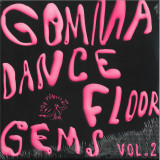
12 tracks originally released on the indie dance label GOMMA RECORDS between 2001 and 2010. (Gomma was the label Toy Tonics did before starting Toy Tonics.)
Along with DFA and Output records Gomma released a wild mix of electronic dance music, indie rock, undergound disco, post punk and new wave funk that was big in the 2000s. The Y2K sound!
Gomma released music by artists like Peaches, Whomadewho, The Rammellzee, James Murphy, LCD soundsystem and artists like Nick McCarthy of Franz Ferdinand.
Now it’s 2023 and its feels fresh to put a spotlight on some of these tracks again.
And so here comes a 2nd compilation part of Gomma tracks:
Nancy Whang the singer of LCD Soundsystem, WhoMadeWho (the band started their career on Gomma), Italian disco producer Bottin, UK Indie Disco hero The Deadstock 33s aka Justin Robertson, NY Disco hipsters In Flagranti, German producers Munk and many more on this compilation.
Gomma not only was a record label, but was also a home for cutting edge design, wild T-shirt styles, underground exhibitions with new artists from the Berlin scene and crazy poster and fanzine design.
Many graphic design trends of the last years were preceded by what the artists on Gomma were doing. And many record and street wear labels of today look a bit like Gomma was looking before ... copying the images that Gomma preceeded: ironic cartoons, trash aesthetics, greek symbols, ugly design ideas and lot of ironic things.
The Gomma visuals world was exposed in a couple of exhibitions around the world and at a big exhibition at #hausderkunst München before the label was closed in 2015. (when Toy Tonics took off...)
out of Stock
Last delivered 14 months ago available to reorder, subject to availability
Most audiophiles know Alan Parsons Project's I Robot by heart. Engineered by Parsons after he performed the same duties on Pink Floyd's Dark Side of the Moon, the 1977 record reigns as a disc whose taut bass, crisp highs, clean production, and seemingly limitless dynamic range are matched only by the sensational prog-rock fare helmed by the keyboardist and his creative partner, Eric Woolfson. Not surprisingly, it's been issued myriad times. Can it be improved? Relish Mobile Fidelity's stupendous UltraDisc One-Step 180g 33RPM box set and the question becomes moot.
Mastered from the original master tapes and pressed at RTI on MoFi SuperVinyl, I Robot comes to life with reference-setting realism on this numbered, limited-edition reissue. Boasting immaculate highs and lows, generous spaciousness, and see-through transparency that takes you into the studio with Parsons and Woolfson at Abbey Road, this definitive edition is designed to demonstrate the full-range capabilities of the world's best stereo systems while offering listeners the convenience of having all the music on one LP.
Featuring a nearly inaudible noise floor, this transcendent UD1S edition functions as a repeat invitation to savor reference-grade soundstages, immersive smoothness, sought-after instrumental separation, three-dimensional imaging, and consummate tonal balances. Able to be played back at high volumes without compromise or fatigue, it is a demonstration record for the ages – the likes of which are no longer being made. This is the very reason you own and invest in high-end audio gear.
The special characteristics of this UD1S version extend to the premium packaging. Housed in an elegant slipcase, the reissue features special foil-stamped jackets and faithful-to-the-original graphics. Aurally and visually, it is made for discerning listeners who prize sound quality and production, and who desire to fully immerse themselves in everything about this conceptual landmark. The Alan Parsons Project's most famous record deserves nothing less.
Inspired by and loosely based around the Isaac Asimov stories of the same name, I Robot delves into themes of artificial intelligence and technological dominance that make the record extremely relevant in the 21st century. Indeed, Parsons and Woolfson's pinnacle creation dovetailed with the ascendency of Star Wars, which itself is experiencing a rebirth in an age of self-driving cars, smart devices, and mindless automation. Lyrically, songs such as "The Voice" call into question human behavior – and their relationship to increasing robotic supremacy – in everyday life. Parsons and Woolfson reflect the associated paranoia, dichotomy, and transformation via shifting sci-fi arrangements steeped in drama and moodiness.
The absorbing tunes on I Robot also continue to fascinate due to their perfectionism and innovation. Borrowing from Pink Floyd's strategies, Parsons and Woolfson utilize a looped sequence on the title track to create new downbeats. "Some Other Time" employs two different lead vocalists and yet gives the illusion that only one is involved. Captivating strings, a piccolo trumpet, and bona fide pipe organ grace "Don't Let It Show." The origins of "Nucleus" stem from a unique analog keyboard concoction dubbed "the Projectron," devised by Parsons and electronic engineer Keith Johnson. Andrew Powell's orchestral and choral arrangements top it all off, with "Total Eclipse" arriving as a frightening track that presages the climactic "Genesis Ch. 1 V. 32."
Does man or machine win in the end? Decide as you get lost in Mobile Fidelity's UltraDisc 180g 33RPM LP pressing. Secure your numbered copy today!
More About Mobile Fidelity UltraDisc One-Step and Why It Is Superior
Mobile Fidelity Sound Lab's UltraDisc One-Step (UD1S) technique bypasses generational losses inherent to the traditional three-step plating process by removing two steps: the production of father and mother plates, which are created to yield numerous stampers from each lacquer that is cut. For UD1S plating, stampers (also called "converts") are made directly from the lacquers. Since each lacquer yields only one stamper, multiple lacquers need to be cut. Mobile Fidelity's UD1S process produces a final LP with the lowest-possible noise floor. The removal of two steps of the plating process also reveals musical details and dynamics that would otherwise be lost due to the standard multi-step process. With UD1S, every aspect of vinyl production is optimized to produce the best-sounding vinyl album available today.
MoFi SuperVinyl
Developed by NEOTECH and RTI, MoFi SuperVinyl is the most exacting-to-specification vinyl compound ever devised. Analogue lovers have never seen (or heard) anything like it. Extraordinarily expensive and extremely painstaking to produce, the special proprietary compound addresses two specific areas of improvement: noise floor reduction and enhanced groove definition. The vinyl composition features a new carbonless dye (hold the disc up to the light and see) and produces the world's quietest surfaces. This high-definition formula also allows for the creation of cleaner grooves that are indistinguishable from the original lacquer. MoFi SuperVinyl provides the closest approximation of what the label's engineers hear in the mastering lab.
"I've never met Rod Modell (Deepchord) in person, but we have met through music. He found an obscure cassette of Chi music (from '86), sent it to Astral Industries and paved the way for the release (30 years later) of 'The Original Recordings' in 2016. Since then, we've exchanged ideas and good music. I sent Rod a preview of 'The Kallikatsou Recordings' - he really liked it - and here came the idea for a remix of 'Lanterns'. I started working on some random, lo-fi samples from Youtube, using Audacity, perhaps the simplest way of producing loops and samples. It's the only computer based system that feels like the tape recorders I used to work with. I sent the first sketches to Rod on Facebook, but they ended up in the wrong inbox. I forgot about them, but months later he came back saying he loved them. I decided to go back to working on them, maintaining the lo-fi approach. I began manipulating the samples: time-stretching, tempo and pitch-shifting, mixing different layers and adding old-school monophonic old speaker' effects, delays and loops. I used a few field recordings, voices and samples from my early ambient cassettes, and they matched. Ario from Astral Industries got involved and the experiment turned into a plan - a vinyl release - 'Red Lantern at the Kallkatsou''.
Finally the 5th album of the imaginary German quartet - as always via Denovali. Although the title ""Systeme"" suggests a perhaps rather distant-cool album, it is the most personal and concentrated soundtrack so far created by Thomas Bücker from Münster in his ""E-Smog-Playground"" studio. In 2008, the quartet still flirted with cyrillic-mysterious melancholy and red wine-swilling trakl melancholy. 15 years and four albums later, it seems almost cynical to simply continue at this point. Because: late modernity delivers its very own complex tragedies - in real time.
This feeling of ""Something's not right here"" runs like a thread through the entire new album. While it still sounds popularly symphonic here and there, there are also many soundscapes that have an observing, almost unmasking effect. Microtonal shifts, polyrhythmic structures, tempo fluctuations and sound aesthetics torn out of context create a fragile, unpredictable foundation - as if Talk Talk, Tim Hecker and Skrillex were making music together and challenging our tolerance for ambiguity.
Typical of the Bersarin Quartet: sparks of optimism shimmer through everything. However, sitting back and enjoying doesn't really want to work - necessarily. Because that makes it exciting without freezing in escapism - fortunately.
After early work with Lady Gaga, Lady Starlight immediately entered techno's upper echelons playing live alongside Surgeon, earning the respect of one of the genre's most legendary hard asses, no small feat for an artist only then emerging. Forming a strong alliance with Len Faki's Figure reinforced her upward trajectory, so it's with considerable stature we introduce 'Choose', her first full solo EP since 2020.
'Choose' makes its choice from the beginning when the mutated, squealing vocal sample and insistent percussion command dancers to the floor. She adds sophistication with melodic ideas, quick breakdowns, and constantly shifting drums, the instability maintaining momentum. 'Permian-Triassic' could refer to earlier eras of techno Lady Starlight seeks to bury, although droning pads poke out of her deep soundscapes like fossils from the 90s framed elegantly. Excited like its title, 'In a Tizzy' centers its nervous energy around a seesawing motif until it breaks apart halfway through, then rides it into oblivion on top of rapid-fire drum fills and a return of the theme. The title track closes in the darkest mode, its tricked-out breakbeat evading dancer's expectations and the heavily-processed noises squalling in the background providing no respite.
out of Stock
Last delivered 2 years ago available to reorder, subject to availability
Seven suites of deep and sprawling sonic meditations built around ‘call and response’ improv sessions between Randy Raine-Reusch and Michael Red.
Slow and tempered recordings of Asian flutes, African harps, temple gongs and a myriad of obscure instruments from Randy Raine-Reusch's deep collection mutate and ebb into swirling gossamers of tone. Sonic incantations stretched and magnified further by Red's Sends. An otherworldly play between light and shadow worlds; at times idyllic and light-filled, at times dark and eerie– all engrossing. Dream-reality reconciliations weave between the spectral world of Michael Red's sound processes and the direct physicality of Raine-Reusch's playing. The tension across the pieces builds between the live playing and processing techniques, dutifully revealing a growing familiarity with collective transcendence through sound (bigger than the sum of its parts). Real-time interactive dream music.
Initially realized over the course of a few days in Randy’s instrument museum in Vancouver BC December, 2014 'ERAS' is made up of processed, and sometimes multi tracked, improvisations between Randy and Michael. Through these sessions Randy would choose instruments he sensed possibilities within, and Michael then revealed and sculpted these possibilities. Both resonating, sensing sonic structures, environmental nuances, and further worlds in each other’s art, all within the moment. Being present for each other, they acted on instinct, trusting a first thought, trusting each other; committing, responding to that commitment, then mutating and letting go. Always moving forward, synthesizing and letting the living moment lead the way.
The recordings were left to distill and mature for many years before the composers felt it was ready. With minimal judicious edits and a very light dusting of FXs, both careful to preserve the direct and intuitive process that permeates the recording, ERAS now emerges.
This fifth studio effort from French heavy psychedelic stalwarts MARS RED SKY is a genuine conceptual piece of work skilfully designed to take the listener on a journey through a shifting, unpredictable and even utterly disconcerting sonic universe. Bordeaux-based trio explore progressive and post-metal territories with boundless inspiration. Their original signature of jagged vocals and thundering rhythm is spiced up by drones and various mid-kraut rock and mid-gothic effects. The atmospheres and settings are finely crafted, with Julien Pras's voice adding a delicious pop languor. The music is the master of the narrative here, absorbing all the components of the album and shaping them into a kind of reversible allegory, as appealing as disturbing. The tour de force of 'Dawn Of The Dusk' lies in its ability to carve out a unique creative sphere in which you can't help but marvel.
This fifth studio effort from French heavy psychedelic stalwarts MARS RED SKY is a genuine conceptual piece of work skilfully designed to take the listener on a journey through a shifting, unpredictable and even utterly disconcerting sonic universe. Bordeaux-based trio explore progressive and post-metal territories with boundless inspiration. Their original signature of jagged vocals and thundering rhythm is spiced up by drones and various mid-kraut rock and mid-gothic effects. The atmospheres and settings are finely crafted, with Julien Pras's voice adding a delicious pop languor. The music is the master of the narrative here, absorbing all the components of the album and shaping them into a kind of reversible allegory, as appealing as disturbing. The tour de force of 'Dawn Of The Dusk' lies in its ability to carve out a unique creative sphere in which you can't help but marvel.
With Scream If You Don’t Exist, Richie Culver metamorphoses from outsider musician to underground fixture, feeling his way from the fringes towards a growing community of musicians that have gravitated towards his singular sound world. Building upon the stark catharsis of his previous dispatches, on his sophomore album the artist draws from grimdark drone, industrial noise, experimental hip-hop and UK rave to map out a space for himself, caught between genre and discipline. While on his debut, I Was Born By The Sea, Culver took a last glimpse back at his grey, salt-flecked past while struggling towards somewhere brighter, here, he documents the process of finding fresh waters, parsing through the complexity of inhabiting a more open and optimistic place while contending with the weight of his resolve, staring hard won self-acceptance in the face. The album’s title speaks to this creative and emotional work, serving both as the foundational paradox from which the artist’s new discordant sound emerges and as a call to action, a defiant cry in the face of existential angst.
Part of this process involves visiting familiar territory with renewed focus. Macabre opener ‘Hottest Day Of The Year’ signals an unpleasant memory with crow caw, queasy, gas leak ambience and dental drill whir as Culver recalls a life lived in nihilism: “Everything is just something that happened / Reductionism, muscles spasms, a mother’s first contraction.” Yet, on Scream If You Don’t Exist, Culver’s irresistible formula for ragged machine poetry is shot through with palpable urgency. No longer listless and despairing, he finds new intricacies for these compositions, tracing a stark interplay between crushing bass excavations and penetrating vocal clarity, a contrast picked out in the delicate threads of rhythmic pulse suggesting themselves in the blunt pressure and skittering creep of ‘Weakness’, on which Culver offers up vulnerability as a tentative solution to self-described emotional constipation: “Please do / Do take my kindness for weakness / For I am weak / And that is ok.” The amniotic soundscape of ‘YOLO (then u die)’ gives way to depth charge drone and unnerving machinic improvisations, like a noise show heard from deep in the Mariana trench, while on ‘Underground Flower’ the low-end fog lifts to reveal a brighter, colder scene. “Love me for who I could be / Not who I am,” he pleads, tending gently to his own tenacious bud.
Scream If You Don’t Exist gives us a glimpse of this flower in bloom. On the album’s cursed self-help tape title track stuttering loops of off-kilter keys and childlike repetition make light of the very real risk of disappearing all-together, a nervous breakdown rendered as a malfunctioning nursery rhyme. Paranoiac anthem ‘Say 4 Sure’ introduces bit-crushed boom-bap stomp, as though hammered out on a water-logged Game Boy, swarms of loose-wire noise sparking up against guttural grunts and ragged exhalations, while ‘On The Top’ enacts a seance for the hardcore spirit, with loops of rave piano and hiccuping vocal chops pirouetting through knackered samples, air raid sirens and the ghostly crash of breakbeat cymbals. As though in response to the solitary nature of much of his musical exploration, this time, the artist invites other voices into the world of Scream If You Don’t Exist. On ‘Swollen’, the unflinching, brimstone prophecy of Billy Woods sounds clear through an expanse of spirallic bass, preaching the same frayed gospel as Culver when he issues the quietly devastating contemporary diagnosis: “Computer broke but it still works for now / That’s the best you can say for most of us anyhow,” while another fearless correspondent from the fringes, Moor Mother, brings earthbound heft to the ambient drift and obliterating barrage of ‘Restaurants,’ teasing out meaning with elongated intonation and pitch-shifted intensity.
It’s during the album’s most meditative moments that we might recognise this space Culver has found for himself for what it really is. ‘OMG They’re Gone’ follows a chopped and slowed monologue from Culver’s wife, who works as a death doula, reflecting on her own experiences with grief and the reality of living within a culture both terrified and ignorant of the process. Floating over glistening ebb, etherised croons and luminous chimes, her words stand as a prescient reminder of the power of ephemerality. Just as Culver flourishes in imperfection, here we can find enormous strength in transcience. But it’s with ‘Just Jump In,’ which unfurls like a buoyant counterpart to the sparkling oil rigs of ‘I was born by the sea’, that Culver illuminates the hopeful waters we realise we’ve been making our steady way towards. “I know now / That you loved me,” he admits, a revelation a lifetime in the making. Through the rawest reflection Culver has found a way forward, driven by an optimism drawn from a resolve to be better, to love and be loved, an admission to weakness and the discovery of a new kind of strength. “Don’t test the water,” he reassures us and himself, “just jump in.”
Scream If You Don’t Exist will be released in November 2023 by Participant, on limited edition vinyl, and digital download . The release will be accompanied by a series of films directed by Mau Morgo, Josiane M.H Pozi, William Markarian-Martin, Simon Bus, and Bruxism.
out of Stock
Last delivered 2 years ago available to reorder, subject to availability
Compiling the follow-up to a very successful first album is always a tricky task, but just 12 months since the release of volume one in the 'With Love' series, miche has excelled himself once again with another glorious, deep dive into the world of rare soul. 15 tracks of independently released music, created by magnificent artists with stories to tell and primed for rediscovery.
The ambition to celebrate under-the-radar artists has remained, but instead of a facsimile of volume one, what we have here is a selection shaped by life changes. Volume two is for the dancers; still soulful, still ultra-rare and slept-on records from the USA, Chile, Brazil and beyond, but the dynamics of the collection have shifted slightly. It represents a move from being immersed in a week in week out environment of beautiful, soulful music in a cosy, dimly lit hi-fi bar to playing livelier, more energetic, dancefloor-focused music in nightclubs. This volume will get you on your feet, make you move and unleash whatever it is that makes you get down.
One of the jewels in the crown of this compilation is a joyous, anthemic gospel version of Stevie Wonder's 'As' by The Family Tree (a project produced by the fantastic Julius Brockington). We are also treated to a rare and sought-after Pennsylvanian funk / AOR bomb by Maxwell, a stunning modern soul tune 'High On You' by Freedom, and self-released Brazilian 45s by Banda 22 and Zé Da Lata. P.J. City's 'Straight Forward (Non-Stop)' is gospel-disco perfection, and we also have 'Dame Solamente Amor’, a sublime, soul beauty from Chile by Rogers Mitchell. Many of these artists featured in this compilation aren't household names, but they deserve their moment to shine, to be heard, loved and appreciated for their artistry.
As Miche says it, “I hope this compilation helps in some way to keep this glorious music alive and play a part in connecting generations of music lovers from the worldwide soul family. As always, it has been made ‘With Love’.”
out of Stock
Last delivered 2 years ago available to reorder, subject to availability