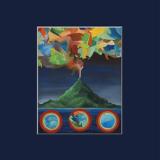
The third and final full-length, double album from the Elephant 6 Recording Co. co-founders. Their first record in 27 years from the Athens, GA band. A legend is a heavy thing to carry. It has been 27 years since the last album by The Olivia Tremor Control. In that time, they have influenced countless bands, been the subject of documentaries and biographies, and now, finally, improbably, there is a third Olivia Tremor Control album. In the 1990s, The Olivia Tremor Control released two albums of experimental and psychedelic pop genius, Music from the Unrealized Script: Dusk at Cubist Castle (1996), and Black Foliage: Animation Music Vol. 1 (1999). As founding members of the Elephant 6 collective, they redefined the US underground scene, injecting bright paisley colors and sonic adventure into a scene weighed down by grim irony and a fear of pretension. Work began on the album as far back as 2005 but progress was slowed by other projects, other responsibilities, but in 2010, the band of Hart, Doss, John Fernandes, Pete Erchick, Eric Harris, and Derek Almstead began to record. By 2011 The Olivia Tremor Control had reemerged as a fully active band and added AJ Griffin to the lineup as well as touring members Scott Spillane and Robbie Cucchario. The band was now recording constantly and were fast on their way to completing the album. Then in the summer of 2012, Bill Doss suddenly, tragically passed away. With everyone still in shock and grieving, work on The Same Place came to a halt. Every attempt to resume the project stalled until 2023, when, after watching the Elephant 6 Documentary, Athens producer/musician Jason NeSmith came on board to help. In 2024, with the album nearly finished, Will Hart unexpectedly passed away. Drawing on Will's extensive collections of notes, The Same Place was finally completed by the surviving band members, the broader Elephant 6 community, and producers Derek Almstead, Jason NeSmith, and Ron Kwasman. The Same Place does everything The Olivia Tremor Control ever did well. It also does it better, and goes further, than anyone could have imagined was possible.
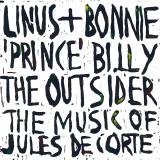
The songs of Jules de Corte are condensed, folky gems with an almost effortless charm. Poised between the intimate and the universal, between lightness and darkness, they touch on religion, love, loss, and the small dramas of everyday life. Yet they resist easy translation. Packed with wordplay, de Corte’s signature alliterations, humor, and local cultural references, the songs inevitably lose something in another language. Still, when a Belgian quartet of improvisers takes them on, joined by American songwriter Bonnie ‘Prince’ Billy, the songs are reborn rather than merely transposed: literal fidelity gives way to interpretation, and what is lost in words is often gained in spirit.
Even without tracing every change, their overall effect is fascinating. Songs are slowed down, often doubled in length, and filled with unexpected musical intrusions. They gain fuller arrangements and are placed in an entirely new context. Replacing de Corte’s piano with guitar can create a radically different vibe, as in “Mariska.” An added solo can heighten the contrast between childlike perspective and the almost matter- of-fact brutality of “Little Anita.” In “The Stranger,” another use of contrast unsettles the everyday harmony, transforming it with a subtle, disorienting twist.
Ultimately, these performances show that interpretation is not successful simply because it is literal. With the groundwork laid by Linus, Bonnie ‘Prince’ Billy further liberated the songs from their original versions. Lyrics and melodies become malleable, shaped by his recognizable cadences, timbre, and personal quirks. Like his collaborators, he allows himself the freedom to bend the material to his own approach. There is no radical break between this performance and his other records. Listeners familiar with the originals may be puzzled at first; for those new to de Corte, it is a wholly different experience.
Does it really matter that the original “Little Jesus, Mighty God” is a 100-second nugget combining playful naivete with biblical fervor? In the hands of these five explorers, the song becomes an intriguing contemplation, with subtle musical shades and a recitation in which every syllable carries a maturity that offers a new perspective. Then there is “The Outsider,” which feels as genuine as any original American folk song. The musicians’ process is more than reinterpretation—it is reimagination, bringing new musical compatibility and emotional depth. Whether that depth was there from the start, waiting to be uncovered, or created in the process is beside the point. What matters is that Linus and Bonnie ‘Prince’ Billy have made the essence of these songs their own, paying homage yet dancing to their own tune.
Linus is the Belgian duo of guitarist and banjo player Ruben Machtelinckx and reedist and synthesiser player Thomas Jillings. Across five previous albums — Onland (2014), Linus + Skarbø / Leroux (2015), Felt Like Old language at the crossroads of folk, jazz, minimalism, chamber music and free improvisation. Their music is adventurous, shaped by a particular sensitivity to texture, timbre and the subtle interaction between musicians.
What began as a duo gradually grew into a flexible musical world, bringing Linus together with musicians such as Nils Økland, Ingar Zach, Niels Van Heertum, Øyvind Skarbø and Frederik Leroux. Yet each new constellation has remained recognisably Linus: music in which carefully considered forms leave space for intuition, interaction and the unexpected.
For their sixth album, Linus takes a new step by moving into the world of song and text. Inspired by a shared love for the late Dutch songwriter Jules De Corte, the album is a reimagining of De Corte’s unique repertoire. More than simply interpreting De Corte’s songs, they absorb and reshape them, bringing them into dialogue with their own musical language. In keeping with this open approach, they are joined by celebrated vocalist Bonnie “Prince” Billy. With albums such as 1999’s I See a Darkness appearing on several greatest album lists, Bonnie “Prince” Billy is a cult figure in the alternative folk scene, and his highly intuitive way of singing seamlessly matches the subtle interplay Linus has developed over more than a decade.
The Bluesville Series from Craft Recordings and Acoustic Sounds!
Inspired by the original Prestige label imprint established in 1959
All-analogue mastering by Matthew Lutthans at The Mastering Lab
Highlighting trailblazing blues musicians from legendary labels
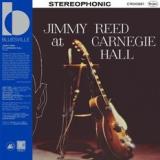
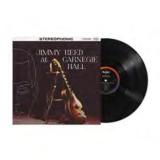
Studio recreation of an electrifying 1961 setlist from Carnegie Hall. This album includes the enduring classic, "Bright Lights, Big City," which was included in The Rock and Roll Hall of Fame's 500 Songs that Shaped Rock and Roll.
Released in partnership with Acoustic Sounds, the album has been (AAA) remastered from the original tapes by Matthew Lutthans at The Mastering Lab and pressed on 180-gram vinyl. A replica tip-on jacket completes the package.
Songs of Joy and Peace is a Christmas music album by cellist Yo-Yo Ma, originally released in 2008. The album features collaborations with many other artists, including vocalists Diana Krall & Alison Krauss, James Taylor, Dave Brubeck and Chris Botti.
This holiday disc doesn't exclusively stick to traditional Christmas songs, but covers a wide scope of material in a very ambitious manner. Ma opens with a lovely take of the traditional favorite “Dona Nobis Pacem (Give Us Peace)”, playing both the melody and counterpoint via overdubbing.
Jazz pianist/vocalist Diana Krall is superb in a swinging rendition of Jerome Kern's unjustly obscure "You Couldn't Be Cuter", adding bassist John Clayton. An arrangement of “Joy To The World” features pianist Dave Brubeck and cellist Matt Brubeck (his son). Chris Botti has never sounded better in the warm arrangement of “My Favorite Things”, playing both open and muted trumpet. James Taylor is featured on vocals on the Beatles cover “Here Comes The Sun”.
After fifteen years of shaping dancefloors around the world, Mele is set to release his long-awaited debut album Alive On Arrival via Defected Records Far from an introduction, the album marks the arrival of an artist operating with complete creative clarity, bringing together the sounds, collaborators and influences that have defined his journey into one cohesive body of work.
"Alive On Arrival draws inspiration from what feels like my entire life as a producer, a DJ and a music fan, bringing together everything I love about house, hip- hop, UK music, soulful R&B and wider global sounds. The name comes from Wu-Tang Clan's C.R.E.A.M., which felt fitting to where I'm at in my musical journey. It's been 15 years as Mele, but I'm still alive and feel like I've got so much more to give. I've finally arrived at this point with my debut album. The album was made in, and heavily influenced by, London, Miami and Liverpool - three places that are close to my heart. Sonically, it's inspired by some of the best: Jungle, The Neptunes, Gorillaz and Masters At Work." - Mele aka Krissy Peers Set for release on 25 September, Alive On Arrival is Mele's most expansive project to date. Across fourteen tracks, he draws together house, hip-hop, soul and R&B into a record that reflects a lifetime spent moving between genres rather than being limited by them. Created between London, Miami and his hometown of Liverpool, the album captures the energy and musical history of three cities that have shaped both his sound and perspective. At the heart of Alive On Arrival is collaboration. Rather than simply assembling a list of featured artists, Mele has curated a cast of voices whose individual perspectives deepen the emotional and cultural narrative of the album. Long-time collaborators sit alongside new creative partnerships, each contributing to a record built on shared musical language and mutual respect.
- 2026 Edition, gepresst auf apricotfarbenem Vinyl - Erweitertes Gatefold-Cover - Enthält ein 20-seitiges Booklet mit seltenen Fotos und Liner Notes von Lenny Kaye sowie Beiträgen von Nick Cave und Devendra Banhart. Karen Daltons Album ,In My Own Time" aus dem Jahr 1971 gilt als wahres Meisterwerk einer der geheimnisvollsten, rätselhaftesten und nachhaltig einflussreichsten Künstlerinnen der Musikgeschichte. Das neu erweiterte, 20-seitige LP-Booklet mit selten gezeigten Fotos, Liner Notes des Musikers und Autors Lenny Kaye sowie Beiträgen von Nick Cave und Devendra Banhart rundet das Paket ab. Die in Oklahoma aufgewachsene Karen Dalton (1937-1993) brachte eine Vielzahl von Einflüssen in ihr Werk ein. Wie Lenny Kaye in den Liner Notes schreibt, hört man den Jazz von Ella Fitzgerald und Billie Holiday, die Intensität von Nina Simone, den Appalachen-Gesang von Jean Ritchie sowie den R&B und Country, die auf ihrem Weg nach New York unweigerlich in ihre Musik einflossen. Ausgestattet mit einem Langhalsbanjo und einer 12-saitigen Gitarre hob sich Dalton durch ihren unverwechselbaren, lebensmüden Gesang von ihren Kollegen ab. In den frühen 60er Jahren wurde sie zu einer festen Größe in der Folk-Szene von Greenwich Village, wo sie traditionelles Material, Blues-Standards und die Songs ihrer Zeitgenossen interpretierte, darunter Tim Hardin, Fred Neil und Richard Tucker, den sie später heiratete. Bob Dylan war unterdessen sofort von ihrer Kunst begeistert. ,Meine Lieblingssängerin dort war Karen Dalton", erinnerte er sich in *Chronicles: Volume One* (Simon & Schuster, 2004). ,Karen hatte eine Stimme wie Billie Holiday und spielte Gitarre wie Jimmy Reed." Wer Dalton kannte, wusste, dass sie kein Interesse daran hatte, sich den Launen der Plattenindustrie zu beugen. Auf der Bühne interagierte sie kaum mit dem Publikum. Im Studio fühlte sie sich beim Aufnahmeprozess ebenso unwohl. Ihr Debütalbum von 1969, *It's So Hard to Tell Who's Going To Love You The Best*, das 2009 von Light in the Attic neu aufgelegt wurde, entstand heimlich, als Dalton dachte, sie würde nur Songs proben. Als Michael Lang, Mitveranstalter von Woodstock, Dalton ansprach, ob sie ein Folgealbum für sein neues Label ,Just Sunshine" aufnehmen wolle, war sie, gelinde gesagt, skeptisch. Das Album musste nach ihren eigenen Bedingungen und in ihrem eigenen Tempo entstehen. Daraus wurde ein sechsmonatiger Aufenthalt in den Bearsville Studios in Woodstock, New York. Produziert wurde das Album von dem Bassisten Harvey Brooks, der bereits auf ,It's So Hard to Tell Who's Going To Love You The Best" an Daltons Seite gespielt hatte. Brooks, der stolz darauf war, unkompliziert, zuverlässig und unterstützend zu sein, verstand Daltons Arbeitsweise, war aber auch bereit, sie sanft zu ermutigen und die Künstlerin dazu herauszufordern, ihre kreativen Grenzen zu erweitern. ,Ich habe versucht, ihr einen flexiblen Rahmen zu bieten", erzählte er Kaye. ,Ich habe die Entscheidungen ihr überlassen - das Tempo, das Feeling festzulegen." Sie war sehr zurückhaltend, und ich habe ihr alles vorgelegt; wenn sie mehr brauchte, habe ich ihr Optionen angeboten. Alle gingen einfühlsam auf sie ein. Sie war die Anführerin. Dalton, die selten ihre eigenen Kompositionen aufführte, wählte eine Reihe von Stücken zur Interpretation aus - von traditionellen Liedern wie ,Katie Cruel" und ,Same Old Man" bis hin zu Paul Butterfields ,In My Own Dream" und Richard Tuckers ,Are You Leaving For The Country". Außerdem erweiterte sie ihr übliches Repertoire und fügte R&B-Hits wie ,When a Man Loves a Woman" und ,How Sweet It Is" hinzu. Im Gegensatz zu ihrer vorherigen LP bot Daltons neue Aufnahme vollere, poporientiertere Arrangements, an denen eine ganze Reihe talentierter Studiomusiker mitwirkte. Auch wenn das Publikum der 70er Jahre vielleicht noch nicht bereit für Daltons Musik war, stand eine neue Generation kurz davor, ihr Werk zu entdecken. In den Jahrzehnten nach ihrem Tod nannten viele Künstler Karen Dalton als Einfluss, darunter Lucinda Williams, Joanna Newsom, Nick Cave, Angel Olsen, Devendra Banhart, Sharon Van Etten, Courtney Barnett und Adele. In dem kürzlich gefeierten Dokumentarfilm ,Karen Dalton: In My Own Time" sinniert Cave über Daltons einzigartige Anziehungskraft: ,Es wird eine Art Anspruch an den Zuhörer gestellt", erklärt er. Ob man es mag oder nicht, man muss in ihre Welt eintauchen. Und es ist eine Welt voller Verzweiflung. Peter Walker, der ebenfalls im Film zu sehen ist, führt diesen Gedanken weiter aus: ,Wenn sie in ihrer Musik ein bestimmtes Gefühl empfinden und es so rüberbringen kann, dass man dieses Gefühl auch spürt, dann ist das wirklich das Magischste, was man tun kann." Er fügt hinzu: ,Sie hatte eine tiefe, tiefgründige und liebevolle Seele - das hört man in ihrer Musik."
Fully licensed from Public Radio of Armenia, with additional clearance from all composers or their living descendants / estates: Yerevan Nights (Soviet Armenian City Pop 1986-1992) features 16 tracks remastered from the original reel-to-reel tapes by award–winning Osiris Studio, accompanied by liner notes containing historical analysis and a digital download card.
Yerevan Nights honors the simple pleasures that saturate the senses to make such a relatively small city feel so big in perception, and illustrates Soviet Armenian life outside of daily service to the greater good – moments caught in the twilight hours that follow the calming sunset behind the mountains, crescendo up and down Yerevan’s bustling city streets, and peak at the glorious dawn that paints the sky with pink and lavender brushstrokes. This compilation captures the pace of Yerevan throughout all times of the day and is tailored for the occasions dedicated to friends and family that constitute an individual’s shrjapat (“social circle”). The rhythms and melodies of these songs go perfectly with a cocktail of sidewalk strolls alongside honking car horns, toasting glasses raised over boisterous laughter, and meeting familiar faces in the most unexpected places, all wrapped up in a tranquil haze of cigarette smoke that lingers until the morning light breaks and garnished with a sprinkle of sentimental heartache.
[a] A1 - Tatevik Hovhannisyan / Oor E Ayn Lapteruh? ("Where Is The Lamp?") [1988]
[b] A2 - Georgi Minasyan / Karnaval ("Carnaval") [1988]
[c] A3 - Gayané Tunyan / Bari Luys, Yerevan ("Good Morning, Yerevan") [1988]
[d] A4 - Mikayel Zakaryan / Zartonk ("Awakening") [1988]
[e] B1 - Nadezhda Sargsyan / Moshahav ("Blackbird") [1988]
[f] B2 - Ashot Ghazaryan, Margarita Avanesyan / Yerevanyan Meghedi ("Yerevan Melody") [1989]
[g] B3 - Zara Tonikyan / Yes Chem Karogh Ayspes ("I Can't Go On Like This") [1989]
[h] B4 - Elvina Makaryan / Kez Hamar ("For You") [1986]
[i] C1 - Nariné Harutyunyan / Garnan Khostoum ("Promise Of Spring") [1988]
[j] C2 - Samvel Danielyan / Yerazank ("Dream") [1991]
[k] C3 - Garry Ayvazyan / Mysteria ("Mystery") [1989]
[l] C4 - Anzhelika Topalyan / Ashough Em Ko Sev Acherid ("I'm A Bard For Your Black Eyes") [1989]
[m] D1 - Raisa Mkrtchyan / Anound Vakhov Em Talis ("I Utter Your Name With Awe") [1989]
[n] D2 - Artashes Avetyan / Voske Ashoun ("Golden Autumn") [1988]
[o] D3 - Anzhelika Topalyan / Lusabatsn Aydpes Kga ("And So The Dawn Will Come") [1988]
[p] D4 - Aspram Khizandyan / Chem Hishi ("I Won't Remember') [1992]
WOW! An early ’80s New Wave, Electro, Proto-Electronica, Industrial and Kraut-Pop album that has never been released before is now coming out on Elaste Records and it’s a perfect fit! History is being made.
In the early eighties, Michael Heinkel was one of those quiet electronic musicians hardly anyone knew — at least outside of Munich. While machine rhythms were being perfected in Düsseldorf, dilettantism was elevated into an art form in Hamburg and West Berlin was soundtracking its own feverish coldness, Munich seemed to be a place where, apparently, nothing was happening. Or almost nothing. Because beneath the radar, far removed from the grand narratives of those years, Michael Heinkel was already creating his own electronic cosmos — stripped-down, idiosyncratic and often ahead of its time. Electronic minimalist music, born somewhere between a home studio, nightlife and the longing for a future that could only just be imagined back then. But the recordings disappeared into drawers, onto cassettes and tape reels. For decades, they remained a secret shared only among friends, insiders and a handful of close companions. It was only 45 years later that Andreas Dorau and Ralf Hertwig (Palais Schaumburg) — two defining figures of that early avant-garde — insisted that the recordings finally be made accessible. Not as an exercise in nostalgia, but as the overdue release of a missing piece in the history of German electronic music. This music is not a nostalgic retrospective. It is a delayed signal from a future that had already begun back then. Format: Heavyweight black vinyl incl. printed inner sleeve + download card
Quotes: -"Michael Heinkel's long-lost LP is a treasure trove. I'm constantly amazed at the musical gems from the early '80s that are still waiting to be discovered." - Hans Nieswandt (Whirlpool Productions) - „Some München musical history that somehow got missed at the time finally gets released after 40 years. Great album.“ - Hell (Gigolo) - “Awesome album! Today, we can only imagine just how groundbreaking electronic music at this level was back then. When gems like these are heard for the first time in perfect sound quality, it’s like a trip back in time to the early days of electronic music. Back to the future!!!” - Patrick Pulsinger (Cheap / iO / Sluts’n‘ Strings & 909 / The Private Lightning Six) - “Terrific material!” - Roman Flügel (Acid Jesus / Alter Ego / Sensorama / Warp 69) - “ELASTE has unearthed an 80s electronic gem! A German minimal wave gem-freshly unearthed! Minimal, rare, brilliant - an 80s Krautpop highlight.” - Sankt Otten - „Pure and delicious 80s Electronics from Munich. We love it.“ - Gorilla Aktiv
WRWTFWW Records is very excited to announce the first ever release for the Cyberpunk 2077: Future Sound of Night City soundtrack - atmospheric music from one of the most celebrated video games of the decade! The compilation, showcasing a who's who of Polish electronic underground, is available as a limited edition 45rpm-cut yellow vinyl 3LP in heavyweight 3-panel gatefold with a sticker sheet. The album is also available on CD with super jewel case, and in digital formats.
Dive deep into the pulsating world of Cyberpunk 2077 with an immersive soundscape perfectly capturing the gritty and neon-soaked streets of Night City. Curated by Rafa? Grobel and Wojtek Sokó? of Most Records, the epic 15-track compilation features a diverse offering of electrifying Polish beats, cohesively flowing between techno, ambient, synthwave, bass music, industrial, and IDM. Ominous, powerful, evocative, and filled with futuristic nostalgia, the music of Night City is a thrill ride in a dystopian urban landscape, heavy hearts riding through the night, menacing streets surrounded by infinite skyscrapers. The music transports you, soul-stirring, cinematic, and timeless, the most beautiful kind of escapism.
The award-winning Cyberpunk 2077 action role-playing game was developed by CD Projekt Red and published in 2020 and has since become one of the most recognized and best selling video games of all time. With a cast including Keanu Reeves and Idris Elba, unmistakable visuals, music, and atmosphere, CP77 has earned a spot in the pantheon of 2020s pop culture.
Points of interests
- For fans of video game soundtracks, ambient, techno, synthwave, vaporwave, industrial, dark electronic music, retro-futuristic moods, neon lights, Tech Noir, Keanu Reeves, bass music, All Foods, cities by night, skycrapers, urban adventures, dystopian universes.
- The soundtrack for Cyberpunk 2077: Future Sound of Night City available for the first time everrrr !
Constant Black is one of the many, many labels that Burnski heads up. It's where he focuses on stripped-back minimal and tech house with a moody undercurrent. Kerouac is a mainstay in his orbit and here takes one side of a new 12" that opens with 'This Method,' a rigid thumper with an eerie edge. 'Produce To The Max' has a dark bassline and ghoulish vocal sounds, while 'Talking About' is a more light and bumpy percussive number. Mees Mattern takes care of the flip with the dusty, garage-y loops of 'Sloppy Tekniic,' rubbery bass minimalism of 'Reeses Pieces' and grittier '404 Not Found. Six fresh tools for rewiring a dancefloor.
There’s no direct English translation for the word “hiraeth”. In the Welsh language, it describes a form of longing for an intangible something, somewhere or someone that no longer exists. Sofie Birch and Antonina Nowacka draw on the concept to guide their second collaborative album, a suite of vulnerable, open-hearted improvisations and reflections that attempt to grasp an image of the past that’s chimeric, dissolving almost as soon as it materializes. The duo’s process follows the same distant beacon; unlike Languoria, their critically acclaimed debut, Hiraeth is, at heart, an acoustic record, informed by in-person improvisations with voices and string instruments that gesture to an era before computers, AI and DAWs. It’s just as lush, but Hiraeth is warmer and more muted than its predecessor.
Nowacka and Birch conceived the album in the wake of a slew of collaborative live concerts, spurred on by serendipitous improvisations and an interest in paring down their setup. Unsound arranged a retreat in Sokołowsko, an idyllic village nestled in the verdant hills of Southern Poland, close to the Czech border. Sokołowsko surrounds a large ruined sanatorium that’s rumored to have inspired Thomas Mann’s 1924 novel The Magic Mountain, and has long been a magnet for artists. The two took the opportunity to rethink their approach completely, arriving with just a guitar, a zither and a portable Nagra reel-to-reel machine. Recording directly to tape, they sketched out ideas with just their voices and instruments, reflecting their surroundings without being distracted or mediated by modern technology.
“We wanted to get away from screens as much as possible,” says Birch, “to bring to the world something vulnerable and honest. Without advance preparation, every day we went out into the open air, finding places to sit, during sunset or the midday sun. We discovered new tunings on our instruments, picked up a melody, and started the machine, playing over
and over till we got a take.” In the autumn, they met again in a Copenhagen studio, sparingly and carefully layering old synths and organs to add more depth without muddying the mix.
Both Nowacka and Birch sing throughout, their voices threading the acoustic instruments and tangling with each other, almost becoming one. But it’s the environment of Sokołowsko, “the birds and the light, even the wind playing against the harps,” that’s woven into the music’s lining. Affected by time spent meditating and in nature, as well as the fact that Birch was pregnant whilst recording, the album feels alive and remarkably present. Even the sound quality of the tape machine gives Hiraeth a tactile, organic quality, as Nowacka puts it, “like being in a warm bath.”
They still have the raw recordings from Sokołowsko on old reels, physical souvenirs of their time spent making music in a “habitat for intuitive songs, a little ecosystem, alive and spirited.” The outmoded gear and remote setting helped the duo disengage from the modern world for a few moments and imagine an existence that’s been lost to time and nominal progress. With digital technology receding into the background, Nowacka and Birch had space to make “intuitive connections with frequencies and people,” as Birch explains. Hiraeth is a testament not to nostalgia, but to the power of kinship.
Back in stock and highly coveted, The Smiths - Best… II is a compilation of some of The Smiths’ biggest tracks featuring Heaven Knows I’m Miserable Know, Ask, There Is A Light That Never Goes Out and more.
With Panorama, Frank Maston pays homage to the classic era of library records and Italian soundtracks of the 70s. A blissed-out, grooving collection of filmic cues, it continues the unique brilliance of Tulips and Darkland. Elegant and easy, subtle and stylish, breezy and beautiful; this is his Maston-piece. Commissioned by legendary label KPM, Panorama cements Maston as a master of modern classics and the most mesmeric of contemporary composers.
In early 2020, Be With suggested to Frank that he should make a KPM record. He wasn't aware that they were still putting out new library records - but he was super keen: "It was completely surreal and it still hasn't fully sank in that I have a record in that catalog, sitting alongside those incredible albums that were so influential to me."
Frank was visiting family in his hometown of LA in March 2020 when the world ground to a halt so the KPM project arrived at a fortuitous moment. Having fantasised about committing to a record with no distractions, with a proper budget, access to his gear and space to work in - to really dig in and try to write and arrange the best work he could possibly make - it was a real "be careful what you wish for" moment. But, as Frank explained, "it completely saved my year and sanity to have something to focus on and get excited about. It was my lifeline." He spent seven months on it, working almost every day.
Maston had already been making library-influenced music so when KPM outlined the criteria for the tracks it was exactly what he had been doing all along. He thought the best approach would be to make a follow-up to Tulips that had a parallel life as a KPM record. Enjoying complete creative freedom, “gave me the drive to power through and dig in deep. I'm not sure if I could have kept myself on such a rigorous recording schedule under my own steam, and I think the momentum I had writing and recording it is part of the strength of this record."
Maston’s sleek retro-groove instrumentals emulate the classic KPM “Greensleeve” reel-to-reel recordings that provided mood-setting music for mid-century cinema, television, and radio programs. Apparently in close conversation with the John Cameron-Keith Mansfield KPM pastoral masterclass Voices In Harmony, Maston's Panorama could be heard as that record's funky follow-up. Yes, it's *that good*. Another reference point from the hallowed library would be Francis Coppieter's wonderful Piano Viberations.
Opener "First Class" is a blissed-out groove, featuring the soothing vocals of Molly Lewis and a glistening harp over drums, a two-note bass motif (from Eli Ghersinu of L'Eclair) and an assemblage of guitars, synths, French horn and glowing vibraphone. Acid Lounge, anyone? The irresistibly funky "Easy Money" is a gorgeous cut led by more of Molly's vocals, pastoral flute and Rhodes, underpinned by drums and percussion, grooving bass, chilled guitars and synth strings. Kicking the tempo up, the percussive "Storm" is a vibin' filmic-fusion jam where psychedelic guitars (courtesy of Pedrum of Allah Las/Paint) organ, jazzy flute, Rhodes and vibes all compete for a place in the sun, over drums and walking bassline.
The heavenly "You Shouldn't Have" is a delicate, melancholic wonder; a dreamy instrumental where the melody is shared by a whistle, harpsichord and celeste, over a cyclical piano chord sequence and bass, synths, guitars, organ and distant French horn. The tempo rises again with the passionate, sticky "Fling", a summery, nostalgic groove with skipping drums and percussion, warm bass and electric guitar, yearning flute and synth strings. The brilliantly titled "Fool Moon" has that Voices In Harmony sound down pat. A romantic slow-mo dreamscape of Rhodes and harpsichord, piano, light drums and softly strummed acoustic guitar.
Side B opens with "Medusa", a hopeful, mellowed-out track with shuffling drums, feel-good flute, muted horns, glowing Rhodes and synth strings. The soft and gentle "Morning Paper" is an elegant way to start the day; a beatless blend of flute, guitar, percussion, ambient synths and vibes. The upbeat head-nod jam "Scenic" has that widescreen car-chase feel, uptempo drums and percussion, grooving bass, piano, synths and ambient electric guitar. "Adieu" is a smooth summer vibe, relaxing with brushed drums, Rhodes, flutes and horns. Molly Lewis's gorgeous vocals steal the show, alongside vibes, jamming organ and synth strings.
"Hydra" is another laid-back 70s-sounding retro cinema cue with light drums and percussion, walking bass, spacey synths, clavinet, glowing vibraphone, vintage organ and electric guitar. Closer "Jet Lag" is a laconic bow out; bass-driven drum machine soul, featuring hand percussion, Rhodes, vibes, synths and organ.
Multi-instrumentalist Frank played a bit of everything across Panorama. Yet, humble as ever, he believes the time, energy, and enthusiasm of all of the musicians invited to the sessions helped him realise his vision: "There were two Italian flautists who really understood what I was going for. Two french horn players, cor anglais, a vibraphonist and a flügel horn player. I've never involved this many people in my projects before, and yet the result is the most "me" record I've ever made."
Musically, a strong Italian theme runs through the record. Frank is fascinated by ancient Rome and both his parents are Italian (Maston was originally Mastrantonio before anglicisation). So, it felt natural to fully embrace these strands and tie everything together with the striking artwork. The Romans were influenced by Greek culture, emulating their art and architecture, which, in turn, influenced Renaissance era artists. Frank acknowledged this tradition when reflecting on his place in the lineage of library and soundtrack composers. He then asked his friend Mattea Perrotta, a painter and sculptor, for some sketches. What he received was exactly what he had in mind: "Especially the theater mask, which really captures the range of moods on the album". Frank arranged them as per the cover and it soon felt right: "I wanted to make a cover that was reminiscent of the classic KPM albums without making it too pastiche - so it has its own identity and looks at home alongside other library records, while still fitting in nicely in the KPM catalogue." The last step was for us to introduce Frank to Be With-KPM’s Rich Robinson, who helped put together the back and centre labels and align it all within the KPM standard.
Panorama is a perfect title for the album. With no opportunity to travel for tours or recording projects, Frank arranged postcards from his collection on his desk with beautiful views of the mediterranean coast, the Roman Colosseum and Cinque Terre. These also served as visual prompts: "That was part of the sonic concept - imagining myself driving down the mediterranean coast with this music on, with the top down." Additionally, the range of moods and vibes - "I tried to make each song very different from the previous one in terms of tempo and arrangement and feeling" - speaks to the idea of a Panorama of music and sounds and emotions. The last track was originally called Panorama, but KPM already had that title in their catalogue so it was changed to "Jet Lag", which, as Frank notes, "is perhaps even more fitting, since the trip is over".
In a sharp-angled, fiercely inventive reflection on the nature of club culture and digital fatigue, Simo Cell and Abdullah Miniawy reunite to deliver their new album, Dying is the internet, to Dekmantel's UFO series.
French producer Simo Cell has blazed a singular path from his dubstep-influenced origins to become a leading light in contemporary leftfield club music, twisting up adventurous rhythms and flamboyant production in pursuit of a perpetual freshness for the floor. Egyptian singer, poet, producer and composer Abdullah Miniawy has become equally omnipresent in the past 10 years, straddling the arts world and leading with his piercing Arabic lyricism while maintaining an eternally curious spirit that leads into open-ended, experimental music from the abstract to the propulsive.
Following up on their 2020 EP for BFDM, Kill Me Or Negotiate, Miniawy describes their sharply focused new album as "a playful prophecy about the triggers of a new global revolution." Cell considers the title, Dying is the internet, to be a mantra about "how the internet lost its soul," becoming "less about sharing ideas and more about surviving in a digital business ecosystem." Deliberately at odds with the reel-ready two-minute attention span of the average social media surfer (i.e. everyone), the pair set out to make an album that takes its time to reveal nuanced ideas and expressions. Rather than one-note despair for the modern malaise, Cell and Miniawy offer a philosophical reminder that this present moment in the human experience is a temporary phase, no matter how overwhelming it feels.
Dying is the internet finds Miniawy experimenting with auto-tune across the record, while Cell has developed his voice design chops and compositional instincts, moving closer to fully realised song structures without losing the fundamental 'clubbiness' of each track. The result is a cohesive, wildly original kind of heavyweight dance music that slings out hooks left right and centre, from Miniawy's laconic trumpet looming through low-slung 'Reels in 360' and 'Travelling In BCC' to the persistent handclaps that bring 'Living Emojis' to life. Miniawy's poetry explores the power of insistent, repeated phrases in a break from his more typically structured form.
Kenyan powerhouse Lord Spikeheart adds extra snarl to stripped-back, slow-burn opener 'I See The Stadium', but otherwise Dying is the internet is purely the work of Miniawy and Cell casting their considerable chops out into unexplored territory. The results are electric, bound together by a consistent economy of sound that burrows into a shroud of bass-heavy minimalism barely masking Cell's incredibly detailed studio flex. Even the beatless flourish of the Miniawy-produced 'Tear Chime' comes loaded with physicality — a sensory rush at the mid-section of the album bookended by some of the most idiosyncratic club music in recent memory.
Both Simo Cell and Abdullah Miniawy have already proved themselves as fearless innovators across different fields. The strength of their partnership lies in their ability to make space for each other while letting their distinctive sonic identities ring loud and true. Dying is the internet has immediacy and physicality to translate over a soundsystem, but its intricacies are purpose-built for repeat visits and contemplation, unveiling hidden dimensions the deeper you dive into it.
Group Rhoda returns to Dark Entries with Phase 5, a new LP of synthesizer-driven art-pop. An integral member of the West Coast electronic music scene, Mara Barenbaum has been writing, performing, and plunging into oneiric depths as Group Rhoda since 2009. Barenbaum’s songcraft is at once stylistically diffuse and laser-focused, a synesthetic approach that allows her to effortlessly glide between genres and soundworlds while centering her singular poetics. On Phase 5, her fifth LP as Group Rhoda, we find Barenbaum waxing nondualistic. Lines between fairytale and fact, between nature and art, between subject and object all dissolve under contemplation.
The songs on Phase 5 are perpetually in-between states, deftly shifting form at the blink of an eye. With sleight of hand, “Field Tone” transmutes from brooding John Carpenter-esque electro into vocoder-driven space disco. “Dragon Pine” darts from cosmic dub to cybernetic dancehall and back again. The uptempo darkwave-leaning number “Aeolian Crossing” dissolves into the void, like sand falling through one’s fingers, like a retreating wave. The cover artwork for Phase 5 is by Shawn Reed, and features purple lilies and light refracted through water. All songs on this album were mastered by Ruud Lekx. The digital version of Phase 5 will be released via Katabatik, a label and sound system that Barenbaum has had close ties to for the past decade.
The writer Max Sebald often pondered over the nature of human memory, specifically, how our thoughts and desires - and their results - overlap and mutate over time. In A Place in the Country, he writes of the significance of what see as “similarities, overlaps and coincidences”. Are they the “delusions” of the self and senses, or manifestations of “an order underlying the chaos of human relationships, ... which lies beyond our comprehension”?
Song of the Night Mists, the new album by post-classical composer Stefan Wesołowski, often feels it draws on Sebald’s premise.
On a simpler plane, the one where the market dictates the neatly ordered information we consume, Song of the Night Mists can be described thus: recorded in the main by Stefan Wesołowski in Gdańsk, both in his studio and in Saint Nicholas' Basilica, the album incorporates acoustic instruments - piano, violin, double bass - and classic synthesizers such as the Roland Jupiter-8, the Soviet Polivoks. A Roland Space Echo RE-150 tape delay was also pressed into service as an instrument. We also hear the basillica’s organ and field recordings from the Tatra Mountains. Other musicians were Maja Miro, who played the flute parts on ‘Glacial Troughs’ and brother Piotr Wesołowski, who played the organ on ‘Wilhelm Tombeau’. Sound engineer was Marcin Nenko, who was also on hand to record the basilica organ parts. The album was mixed in New York by Al Carlson (Oneohtrix Point Never, Jessica Pratt, Zola Jesus, Lady Gaga, and Liturgy) and Rafael Anton Irisarri handled the mastering.
Ostensibly, Song of the Night Mists is the last in a trilogy, following on from albums Liebestod (2013) and Rite of the End (2017). All three deal with existential matters such as love, death, decay and “an ultimate end”; apocalyptic and Promethean in spirit, and betraying very human conceits. The Sebaldian nature of the new record starts to make itself felt when Wesołowski talks of how he used sampling. One element is unexpected, that of sampling himself: “I go back to dozens of my own unused sketches and recordings, treating them as raw material to cut, slow down, reverse, and transform in every possible way.” Memory as sound, to be reemployed by the listener through their own imaginings.
Another set of samples made by Wesołowski plays another role. These are field recordings, originally created for an audio illustration of the formation of the Tatra Mountains, and used in a film by sound designer Michał Fojcik. Wesołowski: “You can hear cracking ice, streams, footsteps in the snow and the wind, and a real avalanche, recorded from the inside.” The “Tatra connection” on the album is also found in samples referencing composer Karol Szymanowski. The album’s title alludes to a poem about the mountains by Polish poet, Kazimierz Przerwa-Tetmajer.
Wesołowski’s Tatra recordings are “about a world without humans - about the fact that the world existed, was beautiful, and had meaning long before people arrived, and for the vast majority of its history, it was a place without us.” Wesołowski, using one iteration of the natural world, plays out in sound Sebald’s idea of another order, underlying the chaos of human relationships lying beyond human comprehension.
These feelings play themselves out on the five album tracks. Sonorous and rich, they illustrate tectonic shifts we have no control over. Wesołowski hints that the overall sound is a “meditation on the metaphysics of the non-human set against the spirituality that human presence has brought into it.” In that light, the opening number, ‘Core’, with its slow build, and crackling and straining sound effects, create an effect of the earth groaning into life in a creation myth. Once the piano part raps out a simple melody and modulated tonguing trumpet samples add to the overall atmosphere, the listener can certainly find a cue in the “spiritual”, or “human” side of the story. Human versus nature: from the strains and harmonic muscle stretches of the second number, ‘Glacial Troughs’, through to the powerful and filmic ‘Stalagmite’ and heart-on-sleeve romance expressed in closer, ‘Wilhelm Tombeau’, we listeners are cast as Friedrich’s wanderer, looking out over a landscape that will appear only if we engage with it.
Formations of melody appear incrementally, almost appearing by chance - like hidden footings in the rock shelves to give us something to grasp onto. Rhythms are used sparsely: the prolonged percussive taps on ‘Glacial Troughs’ are an anomaly and maybe there to give pace to the album to come; essentially to keep the listener strapped in. Elsewhere, percussion is used as an aid to mood, the two thudding, timpani-style passages on ‘Peak’ there to offset the short, beautiful, kosmische passage that splits them.
Elements of the borderline religious spirit that drove German electronic music in the late 1960s and 1970s also find a place on Song of the Night Mists. The swells and recessions of the organ find their emotional climax on ‘Wilhelm Tombeau’, a track which summons up echoes of the “mountain magic” vistas created by Popol Vuh or Tangerine Dream, especially with the slightly atonal wobble of the Mellotron that counters it.
This is a dramatic album, but it does feel a strangely short, or curtailed listen on ending, evoking the feeling one gets when waking from a dream, and, for all its incipient grandeur, a track like ‘Stalagmite’, for instance, ends on a minor note. Wesołowski admits that Song of the Night Mists is born of the all too human process of temptation, doubt and recalibration - Sebaldian overlaps and coincidences forming something that must live another life, away from its creator. In Wesołowski’s words, the album is “a newborn foal must stand up and walk right after birth.” Now it is yours to ponder.
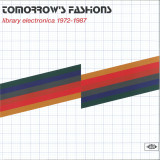
Nothing said new or modern or futuristic quite like a synthesiser in the 70s and 80s. If you were shooting an advert and you wanted your product or your company to appear forward-thinking and ahead of the game, then you would want something electronic, something out of the ordinary. When TV producers and advertising directors started searching for music that sounded like “Tubular Bells” – and then Tomita, and later Jean Michel Jarre – music libraries such De Wolfe, Bruton, Parry and Chappell had to have the tracks readily available.
Compiled by Bob Stanley, “Tomorrow’s Fashions” varies from advertising jingles and TV themes to space exploration and gorgeous, beatless ambience. Though it’s 40-to-50 years old there’s a real freshness to this music. Older jazz players Brian Bennett, John Cameron, Alan Hawkshaw and others seized the chance to operate a synth; younger pups including John Saunders and Monica Beale were simply intrigued by the new technology being wheeled into the studios. There’s a tangible sense of adventure.
“Tomorrow’s Fashions’” brand of electronica anticipated new age and ambient music. It also had both a direct and indirect influence on pop – the early Human League and the future sounds of Warp Records are all over this collection. Electronic library tracks have been sampled by everyone from MF Doom to Kendrick Lamar.
One person’s primitive and experimental is another person’s space-age lullaby. This was music made in the shadows – in Soho’s secretive music library studios – that has now become desirable and influential. The chances are chunks of it will be sampled and used on hit records that have yet to be written. If the musicians’ aim was to soundtrack tomorrow’s fashions, they couldn’t have got it more right.
Celebrating 40th anniversary of Yves Deruyter's musical career with this 10 x 12" Vinyl Box Set. Including tracks from F.U.S.E. vs LFO, Tronikhouse, Robert Armani, L.S.G., Edge Of Motion, Plastikman, The Prodigy, Ecstasy Club, and the master himselfYves Deruyter.
Yves Deruyter - 40 Years at the Pinnacle of the Night
Forty years. A rollercoaster of a musical career, meandering through five decades, leaving timeless marks on the collective dancefloor memory. Yves Deruyter is the exception that proves the rule. An icon behind the decks, celebrated far beyond national borders for his legendary sets, impeccable musical choices, and the anthems released under his name. The result of collective effort, where Yves, with his vision and unique touch, consistently left his mark-transforming good tracks into inescapable bombs that still resonate through time.
If you've spent forty years living to the pulse of music, the night is in your DNA. Yves Deruyter, a DJ to the core-the real deal. The man who bent the night to his will, dragging weekend vibes into the workweek like a warrior, a true master behind the turntables who made his people dance. His beats: the oxygen that generations lived on.
Yves sharpened his musical weapons in the early '90s within the iconic afterparty scene of Barocci and The Globe-places that became sanctuaries in Belgium's endless night. Here, die-hard dancefloor warriors, cutting-edge music lovers, and night owls from the four corners of the globe gathered. They willingly followed Yves' masterful mixing and his razor-sharp set construction. Clubs with a more conventional timeframe were the next step, with the iconic Cherrymoon as his home base for years-alongside endless guest DJ spots and global gigs. From there, the underground pulsed through Yves' hands and crates, reaching ever-larger crowds-without ever compromising for commercial or crossover sounds. Yves stayed true to his choices, lifting his audience to euphoric heights like a craftsman, armed with his hits, hidden gems, and freshly unearthed nuggets.
From the pounding energy of Rave City to the flippy, epic flashes of Calling Earth-tracks that not only captured the spirit of the times but conquered dancefloors worldwide. This isn't just music; it's a time capsule-a connection between generations and a reminder of the energy from a golden era.
With musical partners like Roel Butzen, Frederico Santini, M.I.K.E. Push, and more recently, Insider, Yves forged a sound that etched its place into rave and dance history. From The Rebel to The House of House, parts of Yves' musical taste have become immortal pillars of dance music heritage. In the early rave days, he topped Belgium's DJ rankings year after year, elevating every club he played to the highest echelons of popularity. The same held true for the records where his name appeared like a badge of honor.
From The Globe to the globe itself-it seemed almost written in the stars. Yves, thestar DJ, became one of the instigators of the electronic music storm that put Belgium on the global map-a storm that never subsided. Festivals like Love Parade, Mayday, I Love Techno, Nature One, and Tomorrowland saw Yves as a trusted force, effortlessly commanding crowds and turning dancefloors inside out. Forty years later, that storm still ignites partygoers, vibrates through dancefloors, and keeps entire generations moving.
Even today, Yves still holds a steady residency with Yves Deruyter and Friends at Club Moustache, where his concept always sells out. Here, both fresh talent and seasoned DJs deliver a killer blend of modern electronic dance music and timeless classics, creating an atmosphere that hooks the crowd every single time.
Because partying doesn't need an excuse. But forty years? That deserves the spotlight-not as a mere milestone, but as a showcase of timelessness. Music mutates, reinvents itself for new generations, yet retains the same impact as that very first time. Yves proves that forty is just a number, and relevance isn't about trends-it's about vision, energy, and an unmistakable touch. His sets? Indestructible. His sound? A heartbeat echoing through time.
And Yves? He doesn't live in the past. Today, Yves distills those four decades into a compilation capturing the essence of his career. Belgian beats, interpreted and refined into a sound that powered raves around the world. Ten vinyls featuring not just a fiercely curated selection that contextualizes the magic of his early days, but also new versions of three unbeatable anthems-potent hits designed to turn dancefloors upside down in wonder, without losing a shred of their soul. Yves remains a beacon in the night, a searchlight for that one perfect beat-always relevant, always chasing that magical moment.
Yves Deruyter-a name spoken in the same breath as the greats of the scene. A ten-vinyl compilation is more than a celebration; it's a well-earned trophy. As unique, indestructible, and uncompromising as the man himself.
‘Colours Revisited’, a revision of Adam F’s MOBO Award-winning 1997 debut album is a story of musical rebirth and passion. Adam F, realising that ‘Colours’ had found a new audience—partly thanks to artists like PinkPantheress—decided to recreate the album. Instead of simply remastering the tracks, Adam went all in. Over two years, he meticulously reworked the original music, from restoring vintage instruments like his Fender Rhodes piano to enlisting UK jazz legends like Julian Joseph. Vocalists including Kirsty Hawkshaw and the late MC Conrad re-recorded their parts, while new solos from world-class musicians added fresh life to the tracks.
“Colours holds a special place in my heart because it was not only my first solo album, but also because I had the opportunity to collaborate with diverse talents,” says the seminal producer on his ground-breaking album. “Musicians of a calibre such as Dave Ital (Guitars), The Jazz Great Julian Joseph (Keyboards and Fender Rhodes), MC Conrad (MC/Artist), Roni Jordan (Jazz a guitarist who had a hit with Miles Davis’ “So What”), Tim Philbert/Tim the Bass (Bass), Greg Leicester (Bass), Maurice Capillaire/MC MC (Live MC)…”
Adam continues “We were honoured to be nominated for MOBO “Best album of the year” alongside renowned acts of that time, including Hinda Hicks, Des’ree, Lighthouse Family, and Massive Attack. In fact, I was so convinced that we wouldn't win that I didn't prepare a speech, and that definitely showed in my genuine surprise. Colours also went on to be a top 20 UK National Chart hit which lead to Metropolis winning Tune of the Year at the Underground Awards. Music In My Mind from the same album was inspired from Herbie Hancock ‘Rocket’ and ‘I Thought It Was You’.
“Fast forward to 2020, I never thought of ever revisiting ‘Colours’. But it seems that time has come round full circle, the interest is there.” The revisited album deftly weaves together the energy of new live instrumentation with the 80’s British electronica and jazz fusion inspired sounds of the original.
The result is a project which not only brings the album into the glistening present but somehow manages to add further depth and sense of understanding of the original ‘Colours’, the influences latent within it and how and why it has gone on to influence so many others since it’s inception throughout the world. This is a must have album which pays homage to what has become a cornerstone of British electronic music history.
Lab Music’s latest release presents an EP from various artists, each offering a unique perspective on electronic music. This release showcases the label’s commitment to experimentation and innovation, allowing artists to freely explore their sound. Side A sets the stage with “Cylinder,” a collaborative effort between Slak and Stephanie Sykes. This track takes listeners on a journey into ambient-rooted breaktechno, featuring cinematic pads and powerful drums. Appleblim follows with “Every Blade Of Grass,” a wild break-electro beat that combines ferocious reese bass and solid synths. Side B begins with Datafive’s “My PC Is Not Political Correct,” delivering his personal take on low-tempo drum and bass merged with wistful idm melodies, and the usual dose of sound design. The compilation concludes with Anna Kost “W03 X” delves into the world of futuristic electro, with accurate sound design and drum programming combined with spiritual atmospheres. This EP offers a diverse listening experience, showcasing the talent and creativity of the artists involved. Mastered by Beau Thomas at Ten Eight Seven. Artwork by Geso.
All lights reserved. Lab Music 2024
Dear Friends,
Can you relax while maintaining a stable structure? The principle of “fang song” in Chinese martial art Taijiquan embodies this balance, where heaviness sinks downward and lightness rises through a vertical axis from heavy rooted feet to head.
As a dedicated Taijiquan practitioner, Littlelake applies this concept in his new EP, featuring four tracks rooted by a distinctive bass heaviness while giving a playful lightness to the overlying sound elements.
The opening track "Tonight's the night" immediately makes clear what is meant: a light-footed 2-step beat dances over weighty bass variations and playful vocal cuts set the tone.
“Passing by” is no more and no less than a true monster speed garage warper blending all the best elements of its genre.
Coming with funky tribal breaks, skillful sample manipulations, and a warm, soulful string foundation, “Watch Your Mouth” defies genre classification—it's in a class of its own.
With "Lost", Littlelake once again proves his ability to create extraordinary dancefloor moments. A jackin' 909 and shimmering dub sounds contrast with a dark Reese bassline, creating a captivatingly ambivalent mood. Don't miss this one.
P.S.: physical release comes with handcrafted, screen printed artwork by fabulous graphic artist Zatina Kessl.
Boston is not exactly worldwide known for its coldwave or synth pop artists. Most of us know the Capital of Massachusetts because of its hardcore legacy that still continues today.
And yet, just like flowers in a rugged land, here comes House Of Harm, a post-punk trio whose new approach to the genre was showcased on their two tape EPs, earning them a cult international following as well as an imposing line up of supporting gigs opening for Editors, She Past Away, Lust For Youth, and The Cure’s Reeves Gabrels. Due on September 4 is their debut full-length Vicious Pastimes out on vinyl LP and digital format.
Nine songs where timeless melodies of Kiss Me Kiss Me Kiss Me-era Cure perfectly match French coldwave moodiness, enhanced by Cocteau Twins ethereal airiness and Creation Records seminal shoegaze sounds. Just enough light reaches House Of Harm’s base layer, giving life to infectious hooks and unforgettable mantras. The gritted core of every song makes expansive moments of release cathartic, always tethered by commanding drums.
Check out the very first single they wrote Isolator and its melancholic synth pop refrain, or Against The Night whose darkwave is as claustrophobic as One Hundred Years. Catch sounds almost like a Sarah Records hit, while the title-track hurls us back into the bleak realms of the Sisterhood. Different influences but everything is just in its place simply because House Of Harm are the rare band where you can feel every individual member’s devotion to each song’s world.
RIYL: The Cure, Depeche Mode, A Flock Of Seagulls, For Against, Drab Majesty.
More than a decade after the release of ´Land Lines', the mythical Humboldt County, California based duo of Brian Pyle and Merrick McKinlay reappears seemingly out of nowhere with 'Atheistsaregods'. With past releases on such cult-like labels as Root Strata, Weird Forest, Blackest Rainbow or Digitalis, Starving Weirdos were an indelible part of a sprawling and loose network of artists in Northern America whose DIY work ethic and extreme activity revolved around shoestring-budget constant touring, numerous limited editions on CDR, tape and vinyl and a relentless drive to push the boundaries of genre.
Out of that cauldron, Starving Weirdos stood out as one of the most persistent and visionary acts, developing a mind altering body of work that went from warm soundscapes through droney digressions, freeform improvisation and raucous noise summoned from a myriad of instrumentation and low budget processing - vocals, keyboards, violin, flute, percussion and an assortment of less identifiable sound sources. 10 years on their legacy remains a timeless and wildly under-appreciated one, but hopefully this new album will shine a light on their idiosyncratic approach. As time itself was never a constraint. This is music suspended outside of it.
Right from the start with the echoing percussion, dissonant keys and processed vocals of 'Haiku Nagasaki', 'Atheistsaregods' draws a continuous flux of psychedelic elevation that goes from the gloomy electronic motifs not unlike the early Cluster vibes of 'Invocation' into the dank percussive maze of the appropriately titled 'Barulho do Samba'. The self titled track induces a sense of post-apocalyptic vertigo via hallucinatory scraps of voice, suspended synth tones and reverberating field recordings, connecting into the droney mystics of 'Dudukahar (Reed Prayer)'. Coming full circle, 'For Vinny' brings back the echoing percussion amidst hypnotic cello lines until it drifts off into the unknown. With the same palpable sense of urgency, Starving Weirdos feel as vital as ever. And even if we didn't realize it we were in need of them. Welcome back.
London centric debut album from Floating Points with a host of guest musicians and vocalists.
the label say " Sam Shepherd spent five years putting together Elaenia, juggling the production with his DJ commitments and his now-completed PhD in neuroscience.
The album takes its inspiration from classical, jazz, electronic music, soul and Brazilian music, much of which can be heard in Shepherd's DJ sets. There's a long list of contributors, with Tom Skinner and Leo Taylor (drums), Rahel Debebe-Dessalegne and Layla Rutherford (vocals), Susumu Mukai (bass), Alex Reeve (guitar), Qian Wu and Edward Benton (violins), Matthew Kettle (viola) and Joe Zeitlin (cello) all featuring. Shepherd also provides some of the vocals.
Shepherd's influence on the album extends to the cover art: he built his own harmonograph to create Elaenia's sleeve, using fibre optic cables that were connected to light sources and responded to bass drum hits and other sounds.
Aside from a couple of early excursions on R2 Records and Planet Mu, Shepherd's solo material has come out through Eglo Records, the label he co-runs with Alex Nut. Records like Vacuum, Shepherd's breakthrough release in 2009, and 2011's Shadows, which scored a five-star review on RA, have cemented his reputation as a classy, inventive producer. On top of that he's also released music from his Floating Points Ensemble project, and produced some of Fatima's 2014 album, Yellow Memories. "
"Prior to the vinyl release of the debut work “Vapor Curve”, which suffered a one-year delay due to manufacturing errors, the release of the mini-album “grainy film” has been confirmed."
Following the artist's previous release, this album completely eschews the use of computer-based DAW (Digital Audio Workstation) software. By relying exclusively on a strictly limited setup of hardware—synthesizers, samplers, and delay units—the artist pursues a meticulously woven, highly original take on minimal harmony.
At the core of this record lie exquisite ambient textures and beautifully shimmering synthesizer arpeggios. These are layered with the organic warmth of the sampler, vividly sketching out the contemporary "sound of Tokyo." As the album title suggests, the gritty, Lo-Fi texture of the sampler evokes the imagery of a vintage, low-fidelity film reel in the listener's mind. Pushing further than the predecessor, this approach embraces a more abstract, dubby, and deep soundscape aesthetic, elevating the album's artistry to new depths.
Describing this stoically refined electronic music, Maruyama reveals that it is "music for a cigar." It is not an assertive sound that demands to be the center of attention in the room. Instead, the moment the needle drops, it possesses an overwhelming power to transform the very particles of the room's air. The nostalgic and melancholic melodies, much like the shifting and fading trails of cigar smoke, embody the aesthetic of shogyo mujo (the impermanence of all things). Amidst a constantly changing world, it offers a desire to simply drift away in the slumber of sound—a supreme deep-listening experience guaranteed to transport you.
SHDW presents 'Federation Of Rytm IV': a bumper 30-track collection spanning the past, present, and future of techno.
Offering powerful standalone club cuts and a cohesive deep-dive, the expansive VA lands on 24th October 2025.
The fourth edition of SHDW's flagship 'Federation Of Rytm' VA series has been carefully curated by the DJ/ producer and head honcho over more than a year, with close attention to detail given to sequencing. It is a balance of label regulars and debutants that represents the past, present, and future, both sonically and through the generational diversity of the artists involved. There are plenty of surprises along the way while always remaining true to the Mutual Rytm ethos and reflecting the journey of the night from start to finish, whether that's in intimate, sweaty clubs or on big festival stages.
Across 30 tracks in the digital collection and 24 on four sides of wax, the release explores the full breadth of the Mutual Rytm sound. Driving grooves and relentless percussion set the pace, gradually unfolding into hypnotic and atmospheric passages that invite deeper immersion. Pulsating low-end power alternates with eerie minimalism, while bursts of futuristic energy and cavernous kick drums keep the tension high. Elsewhere, dub textures and moments of introspection provide balance, creating a narrative arc that moves fluidly between intensity and release, atmosphere and tension, darkness and light.
nicht am Lager
Zuletzt vor 18 Tagen geliefert unverbindlich nachbestellbar
„Jimmy Reed at Carnegie Hall“ ist ein Doppelalbum, das 1961 bei Vee-Jay Records erschien und u.a. aus
Studioaufnahmen eines mitreißenden Auftritts in der Carnegie Hall besteht. Dieses Album enthält den
zeitlosen Klassiker „Bright Lights, Big City“, der in die Liste der 500 Songs, die den Rock ’n’ Roll geprägt
haben, der Rock and Roll Hall of Fame aufgenommen wurde. Das Album wurde in Zusammenarbeit mit
Acoustic Sounds veröffentlicht und von Matthew Lutthans bei The Mastering Lab anhand der Originalbänder (AAA) remastered und auf 180-Gramm-Vinyl gepresst. Eine nachgebildete Tip-On-Hülle rundet das
Paket ab.
Skyjack — the borderless five piece band spread across South Africa and Switzerland — announce their fourth studio album, Let The Sky Open Under Your Feet, out 3rd July.
Recorded in December 2025 at a secluded studio outside Stellenbosch, South Africa, the album captures the vibrant live energy of the band at its most expansive — drawing together free improvisation, South African jazz traditions, chamber music, kinetic groove, and ecstatic collective interplay into a singular body of work.
“This record is a very articulate representation of our sound, having grown deep roots into the earth with high branches reaching upward and outward”, says bassist Shane Cooper. “My desire is always to create sonic universes that can envelope the listener.”
The album’s title comes from a line in a poem by the 13th-century Persian poet Rumi, reflecting the music’s balance between groundedness and transcendence. Here, Skyjack move fluidly between meditative improvisation and lush orchestration across twelve tracks of free-spirited, cosmic journeying. Inspired both by the cultural traditions and natural environments of South Africa, Let The Sky Open Under Your Feet is a testament to the band’s intuitive connection and innate musical curiosity.
It arrives just over a year after Light Cycle (2024), a short gap that reflects the momentum built on tour. After exchanging sketches remotely across two continents, the band reunited in Johannesburg in late 2025, workshopped the new material onstage across South Africa, and then headed directly into the studio, where much of the album was recorded live in first takes — preserving the looseness and unpredictability central to Skyjack’s sound.
Comprised of Kyle Shepherd (piano), Shane Cooper (bass), Jonno Sweetman (drums), Andreas Tschopp (trombone), and Marc Stucki (saxophones), Skyjack first formed in Cape Town in 2013 during a fertile moment in South African jazz, as a new generation of musicians pushed against rigid genre definitions and opened the music outward toward broader sonic possibilities. Over the past decade, the band has built a singular sound drawing equally on South African groove traditions and European improvisation.
Individually, the members move between jazz, electronic music, film scoring, rock, hip-hop and experimental composition, with collaborations spanning artists including William Parker, Lionel Loueke, Zim Ngqawana, Ben LaMar Gay, Jorge Rossy, Shabaka Hutchings, William Kentridge, Makaya McCraven and Sylvie Courvoisier.
Since their self-titled debut in 2015, followed by The Hunter (2019) and Light Cycle (2024), the group has developed a reputation for immersive live performances and music that continuously reshapes itself in motion — rooted in what they describe as “warm menacing African grooves,” while refusing fixed stylistic borders.
nicht am Lager
Zuletzt vor 73 Tagen geliefert unverbindlich nachbestellbar
Almost 400 multi-track tape reels, totalling 150 hours of music, were recorded during the Waterboys' famous Fisherman's Blues sessions of 1986-88. Among these were 80 tapes with no song titles, just rough notes like "jam" or "unknown." In 2024 band leader Mike Scott went through most of these, listening to them for the first time since they were recorded, and discovering in the process dozens of tracks the band had forgotten about; lost recordings, some improvised on the spot, others painstakingly worked on, that in many cases equal the quality of those on the original classic 1988 album.
Scott has compiled these into a triple CD and vinyl collection titled THE LOST FISHERMAN'S BLUES RECORDINGS. This fascinating release will gain much attention and will come with a book containing 15,000 words of Scott's own sleeve notes plus lyrics and unseen photos.
First Word Records are proud to bring you the debut EP from papaya noon - ‘through the moods’.
papaya noon are a Cardiff-based duo comprised of vocalist Annie Mirza and multi-instrumentalist Greg Marriott.
Formed five years ago, they make jazz-infused R&B music that incorporates their mutual love of classic soul, hip hop & electronica.
The duo have already amassed an impressive fan-base online, garnering over 80,000 followers across their socials, and receiving praise from such luminaries in the US as Missy Elliot, Snoop Dogg, Queen Latifah, 9th Wonder, Bootie Brown & the late great Fatman Scoop.
This is a result of their unique style, captivating grooves & deeply catchy hooks, encompassing a distinctive blend of soul music, from retrospective 90s vibes to alternative futuristic flavours, creating a sonic palette that’s wonderfully contemporary, yet very much their own.
All their music is written, performed & produced single-handedly by the duo themselves, who’ve managed to create a magically powerful potion from their plant-filled Cardiff studio space, and generated huge anticipation for their future output in-turn.
The future is NOW, as papaya noon are finally ready to unleash their music into the world.
‘through the moods’ is a 6-track EP of delicious alternative r&b vibes, already set to become future soul classics.
Sonically rooted in warm, textured instrumentation & layered harmonies, the duo have triumphantly built a huge soundscape that feels simultaneously nostalgic & futuristic. Smoky late-night ballads nestle alongside infectious uptempo jams, leaning into their jazzy boom-bap & neo-soul influences, whilst showcasing their phenomenal spread of talents as performers and songwriters both.
The duo explained that the EP navigates “neurodivergence, trauma & loss, with tenderness & honesty. Rather than presenting trauma as a spectacle, we’ve attempted to approach it with the softness and complexity that it merits”.
From the first single release ‘blush’, to the downtempo sweetness of ‘blindside’ or ‘morning light’, to the pacier ‘on your side’ & EP closer ‘crybaby’, each track on this project exemplifies their unbridled ability to produce deeply infectious earworms, whilst thematically encompassing unflinching lyricism that’s deeply personal.
Already hailed by some as “the Welsh Moonchild”, papaya noon were named as one of Clash Magazine’s “must-see” acts at FOCUS Wales in 2025, bringing their music to life on stage with their 5-piece live band, additionally performing at Brick Lane Jazz Festival, The Great Escape, Inglefest, Nowadaze, Swn Festival & Good Vibrations Society, as well as NXNe and BreakOut West in Canada, and supporting the likes of Hot 8 Brass Band & Reel People.
With everything already pointing to the duo swiftly becoming one of the hottest new soul acts in Britain, this is only the beginning of the journey for papaya noon…
‘through the moods’ will be released on vinyl & all digital platforms on Fri 10th July.
‘MASH DOWN BIRMINGHAM: THE EARLY RECORDINGS OF MUSICAL YOUTH’ NEWLY UNEARTHED EARLY RECORDINGS BY THE FIRST LINE-UP OF MUSICAL YOUTH Mastered from the original tapes by Guy Davie at Electric Needle Mythology, the label founded by music writer, author and broadcaster Pete Paphides, is thrilled to announce ‘MASH DOWN BIRMINGHAM: THE EARLY RECORDINGS OF MUSICAL YOUTH’ – an album of rare and unheard early recordings by Musical Youth, the Birmingham reggae group propelled to worldwide fame with the release of their chart-topping single PASS THE DUTCHIE. ‘MASH DOWN BIRMINGHAM: THE EARLY RECORDINGS OF MUSICAL YOUTH’ combines songs from Musical Youth’s first John Peel session, recorded in 1981 with newly unearthed recordings taken from quarter-inch reels stored for over 40 years by the group’s mentor and producer Toney Owens. The project was seeded as early as 2020, when Paphides sent a speculative message to Owens, after he saw his producer credit on the group’s independently released 1981 single Generals/Political. Paphides wanted to know if Owens had made more recordings of the group in a similar heavier roots reggae vein to those on their debut single. Happening upon the message by chance three years later, Owens allowed Needle Mythology access to his archive of quarter-inch tapes, dating back as far as 1978. The recordings gathered together on ‘MASH DOWN BIRMINGHAM: THE EARLY RECORDINGS OF MUSICAL YOUTH’ shine a light on the exceptional musicianship inculcated into the group by their first frontman Frederick Waite, formerly singer with revered Jamaican rocksteady group The Techniques. Backing Frederick Waite in the early lineup of Musical Youth (originally billed by Toney as Cultural Musical Workshop Youths, were two pairs of brothers) Patrick and Junior Waite, and Kelvin and Michael Grant.
"Chance animates the smallest parts of the universe: the scintillation of the stars is its power, a wildflower its incantation."
—Georges Bataille, Le Petit
"Even on my way to the gambling hall, as soon as I hear, two rooms away, the clink of the scattered money I almost go into convulsions." —Fyodor Dostoevsky, The Gambler
Video gambling addicts, academic researchers, and industry professionals alike describe the trancelike state into which problem gamblers suspend themselves with remarkable consistency: they unanimously call it the machine “zone,” a kind of inner experience during which the rhythmic flow of human-machine collusion borders on mysticism. Time is abolished in the act of contemporary video gambling —simulated slot reels roll, virtual poker decks deal, and all worldly concerns are lost—leaving only the aura of total zone immersion in its wake. Sometimes characterized as the crack cocaine of gambling, the intensity of the machine zone is a symptom of casino ergonomics: emotionally manipulative fragrance-saturation, mesmerizing lights, subtly controlling walkways and, as captured here, meticulously engineered sonic environments all play a role in evoking the timeless void of the zone.
Although I was not yet aware of the extent to which casinos tailor their environments for maximum comfort (and, correspondingly, profit), I did know as I crossed the threshold of my first casino floor last year that I would be back for more. Hit by a cornucopia of slot machine tones, triggering aleatorically and coalescing into shimmering masses, I was struck by the need to return and record the sounds that so entranced me. It wouldn't prove to be easy—casino security is intense—and due to the clandestine nature of the operation, my recording techniques were by no means sophisticated. Equipped with nothing but an Olympus LS-11 recorder's internal microphone stashed in a sweaty coat pocket, I allowed the lure of the zone to guide me through a series of ambling recording sessions, the best of which are included here.
I learned a lot about casino sonics in the process: game designers, for example, once tuned all their machines to the key of C major in order to optimize harmonic cohesion (strict adherence to the key is no more but C still dominates the game floor); one team of designers, the story goes, even spent a month perfecting a single 'ding' sound on one machine. In the interest of preserving the true ambient sounds of the casino these recordings are untreated, but lost in the sea of chance I did exert some affirmative control by means of meandering intent and my actual playing of the machines. And by participating in the games myself I got a taste of the financially debilitating consequences that accompany the enchantment of video gambling. The cassette in your hands represents my endeavor to bring you the zone experience without the harsh comedown of its unfortunate reality.
Inner City Sound Archives returns with its second chapter — digging deeper into the forgotten vaults of New York’s underground disco culture.
This new volume brings to light another cache of mysterious acetate recordings: no titles, no credits, just cryptic handwriting, tape hiss, and the unmistakable pulse of a bygone era. Painstakingly transferred and fully remastered through analog processes, these raw and extended cuts preserve the full emotional weight of the original sessions — dusty, physical, and made to move bodies in the dark.
These are tracks that once passed hand-to-hand among a tight circle of selectors, whispered about and played just once or twice at legendary loft parties between 1978 and 1983. Then, silence. Until now. Once championed in the shadows by the likes of Larry Levan, Francis Grasso, Steve D’Acquisto, but also by more elusive selectors like Bobby Guttadaro, Michael Cappello, Roy Thode, and Mark Paul Simon — these grooves return to tell their story, the way they were meant to be heard. Each piece is a sonic time capsule — hypnotic, unpolished, and intimate. Pressed loud and with care, for those who still believe in the ritual of vinyl.
nicht am Lager
Zuletzt vor 14 Tagen geliefert unverbindlich nachbestellbar
Full colour sleeve with rare use of the Italian only movie artwork.
A few years ago I issued the soundtrack to Virgin Witch, the score to an underground 1971
kinky British London / posh stately home horror that seemed more like an excuse to show as
many racy cars and devilish nude scenes as possible. This fleapit film was written by Hazel
Adair - the writer of legendary long-running TV series Crossroads, and her business partner at
the time Ken Walton (yes, the wrestling commentator). Virgin Witch was cheap and successful
enough to allow the whole team another go at the sexploitation game through their newly
formed production company Pyramid Films. Sex Clinic was the quick follow up; I say Sex Clinic,
the initial cinematic title was Clinic Xclusive, which was also called With These Hands, which
was also called La Masseuse Perverse. This film also came out in 1971 and they used the
musical services of Ted Dicks once again. Dicks had originally met Adair in 1960 through a cast
member performing in his first musical, Look Who’s Here.
If you are not aware of the great Ted Dicks, his quick bio reads as follows: born London 1928,
was educated through both grammar and art school and after National Service flirted with both
art and music. He worked with a series of very talented song writers - including Barry Cryer -
finally sparking properly with writer Myles Rudge. Together “Dicks and Rudge” had a hit with
their musical And Another Thing which starred Lionel Blair and Bernard Cribbins. Their talents
were spotted by producer George Martin and they followed this show success up with a series
of truly classic novelty pop chart hits, again with Cribbins - “Hole In The Ground” and “Right Said
Fred”. If you are not aware of the classic A Combination Of Cribbins LP they wrote, go and find
it. It includes “Gossip Calypso”, a triumph of novelty song writing that somehow manages to
squeeze in the lyric “Oxy-aceteline welder”, and is possibly the only song ever to do so. They
wrote further hits (winning an Ivor Novello for “A Windmill In Old Amsterdam”) and were in
constant demand throughout the 1960s and 1970s, working with artists such as Petula Clark,
Matt Munro, Bruce Forsyth, Topol and Kenneth Williams.
By the late 1960s Ted had also penned a handful of instrumental library cues including the
classic “Busy Boy” for the Standard Library company that got picked up as the theme for the
brilliant TV kids fantasy show Catweazle in 1970. It’s a light, kooky, hummable tune that lodged
its way deep in the mind of any child under 12 over the following decade.
When I first got the reels for Sex Clinic I’m not sure what I was sonically expecting - much of
Dicks’ music blends musical hall with jazz and some brilliant novelty - and maybe I was also
imagining a different kind of film to the one that was actually made. Turns out Sex Clinic is more
like a sleazy drama than an erotic adventure - I’ve read reviews that call it “nothing more than a
naked Crossroads”. Even knowing this I had no idea what the music was going to sound like. So
I was thrilled when it was almost the musical opposite of what I imagined. We have here a great,
easy jazz score. Not a proggy, wild or free jazz score, this is lightish, vibes-led, bluesy and really
charming, which gets slightly more lively when the naked pool party sequence kicks off, and
drifts effortlessly into more seductive midnight moods as and when required. And having now
seen the film, musically it’s unusually at odds with the on screen nudity, blackmail and revenge.
But like most of Ted’s work, the music sticks in your mind. Unlike the film. Which I suggest you
try and avoid unless you like watching plump randy middle aged men with terrible hair pursue
women half their age.
TRACKLISTING: There were no notes or titles to any of the cues on the reels. So I have just simply labeled the sides as per the reels that came in:
Originally released on Ezekiel Honig's Anticipate label in 2007, Standing on a Hummingbird is the debut album by Canadian sound artist Mark Templeton, now appearing for the first time on vinyl, newly remastered by Giuseppe Ielasi and cut by LUPO. Working at the intersection of post-glitch, electroacoustic ambient, and textural minimalism, Templeton composes through restraint and erosion, building patient and richly tactile pieces primarily from acoustic sources - fingerpicked guitar, plaintive banjo, muted accordion tones - subjected to careful processes of granulation, filtering, and environmental masking. These gestures never overwhelm the source material; instead, they wonderfully destabilize it. Melodies appear briefly, only to dissolve into dense atmospheres of field recordings: distant streets, birds, water, air. Sounds hover, vibrate, and vanish, much like the wing beating latent in the album’s title.
Tracks such as “Pattern For a Pillow” and “Amidst Things Uncontrolled” articulate this approach with particular clarity, setting languid acoustic figures against churning granular backdrops that feel at once sheltering and unstable. Elsewhere, moments of fragile clarity - fluttering guitar lines, reedy accordion tones - briefly break the surface before being absorbed back into the field.
Heard today, the record offers a clarion, almost spartan strain of textural ambient music: intricate yet unforced, shaped by human touch rather than automated excess. Its refusal of spectacle feels especially vital in a landscape saturated with maximalist digitalia - a reminder that electronic music’s most enduring gestures often occur where sound is allowed to tremble and hold itself just long enough to be felt before disappearing once again. (Alex Cobb, 2026)
Several years after the release of ‘Metamorphosis’ (with Sid Hille), Multicast Dynamics (Samuel van Dijk) reemerges on Astral Industries with ‘Circles’ - an enchanting two-part work venturing into deep unconscious realms. Sonic landscapes unfold in a sequence of hidden spaces and intimate revelations, featuring detailed sound design and rich thematic content.
Circle One initiates the process, opening gently with glassy drones and the patter of distant voices. A faint light shimmers through swirling pools of liquid memories and melting forms. The atmosphere builds, and everything is engulfed in the act of transfiguration.
Passing through the threshold, Circle Two traverses further into cavernous territories. Boundless drifting soon becomes a gravitational pull toward something deeper. Submitted to the powerful undercurrent, incoming primordial pulsations signal a quest that reaches its fated culmination.
Perhaps the revelation of something long-lost, entering the Circle eludes to that which on the surface remains hidden, yet its rediscovery inevitable.
nicht am Lager
Zuletzt vor 5 Monaten geliefert unverbindlich nachbestellbar
Following on from his debut album, Miles Spilsbury returns to New Dawn with Spirit Level. A new project in collaboration with close friend Gorse Panshawe (formerly known as Slugabed - who also produced Miles Spilsbury's first album Light Manoeuvres).
Recorded over one weekend in a weaving shed in Frome, in the English countryside. Surrounded by reels of yarn, they explored saxophones, flutes, dusty old keyboards & drum machines. The resulting record conjures the murk and moss of Forestland and grounds with grooves from the Bongo setting on a Casio keyboard. Jake Long added mallet drums from his London studio to round off the album.
nicht am Lager
Zuletzt vor 5 Monaten geliefert unverbindlich nachbestellbar
Writings on the topic that go off in all directions, mind-numbing lectures given by academics, and testimonies, most of them heavily doctored, from those who “lived through that era”: so many people today fantasize about the early days of punk in our country… This blessed moment when no one had yet thought of flaunting a ridiculous green mohawk, taking Sid Vicious as a hero, or – even worse – making the so-called alternative scene both festive and boorish. There was no such thing in 1976 or 1977, when it wasn’t easy to get hold of the first 45s by the Pistols or the Clash. Few people were aware of what was happening on the fringes of the fringes at the time. Malcolm McLaren was virtually unknown, and having short hair made you seem strange. Who knew then that rock music, which had taken a very bad turn since the early 1970s, would once again become an essential element of liberation? That, thanks to short and fast songs, it would once again rediscover that primitive, social side that was so hated by older generations? Who knew that, besides a few loners who read the music press (it was even better if they read it in English) and frequented the right record stores? Many of these formed bands, because it was impossible to do otherwise. We quickly went from listening to the Velvet Underground to trying to play the Stooges’ intros. It’s a somewhat collective story, even though there weren’t many people to start it.
The Guilty Razors were among those who took part in this initial upheaval in Paris. They were far from being the worst. They had something special and even released a single that was well above the national average. They also had enough songs to fill an album, the one you’re holding. In everyone’s opinion, they were definitely not among the punk impostors that followed in their wake. They were, at least, genuine and credible.
Guilty Razors, Parisian punk band (1975-1978). To understand something about their somewhat linear but very energetic sound, we might need to talk about the context in which it was born and, more broadly, recall the boredom (a theme that would become capital in punk songs) coupled with the desire to blow everything off, which were the basis for the formation of bands playing a rejuvenated rock music ; about the passion for a few records by the Kinks or the early Who, by the Stooges, by the Velvet mostly, which set you apart from the crowd.
And of course, we should remember this new wave, which was promoted by a few articles in the specialized press and some cutting-edge record stores, coming from New York or London, whose small but powerful influence could be felt in Paris and in a handful of isolated places in the provinces, lulled to sleep by so many appalling things, from Tangerine Dream to President Giscard d’Estaing...
In 1975-76, French music was, as almost always, in a sorry state ; it was still dominated by Johnny Hallyday and Sylvie Vartan. Local rock music was also rather bleak, apart from Bijou and Little Bob who tried to revive this small scene with poorly sound-engineered gigs played to almost no one.
In the working class suburbs at the time, it was mainly hard rock music played to 11 that helped people forget about their gruelling shifts at the factory. Here and there, on the outskirts of major cities, you still could find a few rockers with sideburns wearing black armbands since the death of Gene Vincent, but it wasn’t a proper mass movement, just a source of real danger to anyone they came across who wasn't like them. In August 1976, a festival unlike any other took place in Mont-de-Marsan – the First European Punk Festival as the poster said – with almost as many people on stage as in the audience. Yet, on that day, a quasi historical event happened, when, under the blazing afternoon sun, a band of unknowns called The Damned made an unprecedented noise in the arena, reminiscent of the chaotic Stooges in their early adolescence. They were the first genuine punk band to perform in our country: from then on, anything was possible, almost anything seemed permissible.
It makes sense that the four+1 members of Guilty Razors, who initially amplified acoustic guitars with crappy tape recorder microphones, would adopt punk music (pronounced paink in French) naturally and instinctively, since it combines liberating noise with speed of execution and – crucially – a very healthy sense of rebellion (the protesters of May 1968 proclaimed, and it was even a slogan, that they weren’t against old people, but against what had made them grow old. In the mid-1970s, it seemed normal and obvious that old people should now ALSO be targeted!!!).
At the time, the desire to fight back, and break down authority and apathy, was either red or black, often taking the form of leafleting, tumultuous general assemblies in the schoolyard, and massive or shabby demonstrations, most of the time overflowing with an exciting vitality that sometimes turned into fights with the riot police. Indeed, soon after the end of the Vietnam War and following Pinochet’s coup in Chile, all over France, Trotskyist and anarcho-libertarian fervour was firmly entrenched among parts of the educated youth population, who were equally rebellious and troublemakers whenever they had the chance. It should also be noted that when the single "Anarchy in the UK" was first heard, even though not many of us had access to it, both the title and its explosive sound immediately resonated with some of those troublemakers crying out for ANARCHY!!! Meanwhile, the left-wing majority still equated punks with reckless young neo-Nazis. Of course, the widely circulated photos in the mainstream press of Siouxsie Sioux with her swastikas didn’t necessarily help to win over the theorists of the Great Revolution. It took Joe Strummer to introduce The Clash as an anti-racist, anti-fascist and anti-ignorance band for the rejection of old-school revolutionaries to fade a little.
The Lycée Jean-Baptiste Say at Porte d’Auteuil, despite being located in the very posh and very exclusive 16th arrondissement of Paris, didn’t escape these "committed" upheavals, which doubled as the perfect outlet for the less timid members of this generation.
“Back then, politics were fun,” says Tristam Nada, who studied there and went on to become Guilty Razors’ frontman. “Jean-Baptiste was the leftist high-school in the neighbourhood. When the far right guys from the GUD came down there, the Communist League guys from elsewhere helped us fight them off.”
Anything that could challenge authority was fair game and of course, strikes for just about any reason would lead to increasingly frequent truancy (with a definitive farewell to education that would soon follow). Tristam Nada spent his 10th and 11th unfinished grades with José Perez, who had come from Spain, where his father, a janitor, had been sentenced to death by Franco. “José steered my tastes towards solid acts such as The Who. Like most teenagers, I had previously absorbed just about everything that came my way, from Yes to Led Zeppelin to Genesis. I was exploring… And then one day, he told me that he and his brother Carlos wanted to start a rock band.” The Perez brothers already played guitar. “Of course, they were Spanish!”, jokes their singer. “Then, somewhat reluctantly, José took up the bass and we were soon joined by Jano – who called himself Jano Homicid – who took up the rhythm guitar.” Several drummers would later join this core of not easily intimidated young guys who didn’t let adversity get the better of them.
The first rehearsals of the newly named Guilty Razors took place in the bedroom of a Perez aunt. There, the three rookies tried to cover a few standards, songs that often were an integral part of their lives. During a first, short gig, in front of a bewildered audience of tough old-school rockers, they launched into a clunky version of the Velvet Underground's “Heroin”. Challenge or recklessness? A bit of both, probably… And then, step by step, their limited repertoire expanded as they decided to write their own songs, sung in a not always very accurate or academic English, but who cared about proper grammar or the right vocabulary, since what truly mattered was to make the words sound as good as possible while playing very, very fast music? And spitting out those words in a language that left no doubt as to what it conveyed mattered as well.
Trying their hand a the kind of rock music disliked by most of the neighbourhood, making noise, being fiercely provocative: they still belonged to a tiny clique who, at this very moment, had chosen to impose this difference. And there were very few places in France or elsewhere, where one could witness the first stirrings of something that wasn’t a trend yet, let alone a movement.
In the provinces, in late 1976 or early 1977, there couldn’t be more than thirty record stores that were a bit more discerning than average, where you could hear this new kind of short-haired rock music called “punk”. The old clientele, who previously had no problem coming in to buy the latest McCartney or Aerosmith LP, now felt a little less comfortable there…
In Paris, these enlightened places were quite rare and often located nex to what would become the Forum des Halles, a big shopping mall. Between three aging sex workers, a couple of second-hand clothes shops, sellers of hippie paraphernalia and small fashion designers, the good word was loudly spread in two pioneering places – propagators of what was still only a new underground movement. Historically, the first one was the Open Market, a kind of poorly, but tastefully stocked cave. Speakers blasted out the sound of sixties garage bands from the Nuggets compilation (a crucial reference for José Perez) or the badly dressed English kids of Eddie and the Hot Rods. This black-painted den was opened a few years earlier by Marc Zermati, a character who wasn’t always in a sunny disposition, but always quite radical in his (good) choices and his opinions. He founded the independent label Skydog and was one of the promoters of the Mont-de-Marsan punk festivals. Not far from there was Harry Cover, another store more in tune with the new New York scene, which was amply covered in the house fanzine, Rock News (even though it was in it that the photos of the Sex Pistols were first published in France).
It was a favorite hang-out of the Perez brothers and Tristam Nada, as the latter explained. “It’s at Harry Cover’s that we first heard the Pistols and Clash’s 45s, and after that, we decided to start writing our first songs. If they could do it, so could we!”
The sonic shocks that were “Anarchy in the UK”, “White Riot” or the Buzzcocks’s EP, “Spiral Scratch” – which Guilty Razors' sound is reminiscent of – were soon to be amplified by an unparalleled visual shock. In April 1977, right after the release of their first LP, The Clash performed at the Palais des Glaces in Paris, during a punk night organised by Marc Zermati. For many who were there, it was the gig of a lifetime…
Of course, Guilty Razors and Tristam were in the audience: “That concert was fabulous… We Parisian punks were almost all dressed in black and white, with white shirts, skinny leather ties, bikers jackets or light jackets, etc. The Clash, on the other hand, wore colourful clothes. Well, the next day, at the Gibus, you’d spot everyone who had been at this concert, but they weren’t wearing anything black, they were all wearing colours.”
It makes sense to mention the Gibus club, as Guilty Razors often played there (sometimes in front of a hostile audience). It was also the only place in Paris that regularly scheduled new Parisian or Anglo-Saxon acts, such as Generation X, Siouxsie and the Banshees, the Slits, and Johnny Thunders who would become a kind of messed-up mascot for the venue. A little later, in 1978, the Rose Bonbon – formerly the Nashville – also attracted nightly owls in search of electric thrills… In 1977, the iconic but not necessarily excellent Asphalt Jungle often played at the Gibus, sometimes sharing the bill with Metal Urbain, the only band whose aura would later transcend the French borders (“I saw them as the French Sex Pistols,” said Geoff Travis, head of their British label Rough Trade). Already established in this small scene, Metal Urbain helped the young and restless Guilty Razors who had just arrived. Guitarist for Metal Urbain Hermann Schwartz remembers it: “They were younger than us, we were a bit like their mentors even if it’s too strong a word… At least they were credible. We thought they were good, and they had good songs which reminded of the Buzzcocks that I liked a lot. But at some point, they started hanging out with the Hells Angels. That’s when we stopped following them.”
The break-up was mutual, since, Guilty Razors, for their part, were shocked when they saw a fringe element of the audience at Metal Urbain concerts who repeatedly shouted “Sieg Heil” and gave Nazi salutes. These provocations, even still minor (the bulk of the skinhead crowd would later make their presence felt during concerts), weren’t really to the liking of the Perez brothers, whose anti-fascist convictions were firmly rooted. Some things are non-negotiable.
A few months earlier (in July 1978), Guilty Razors had nevertheless opened very successfully for Metal Urbain at the Bus Palladium, a more traditonally old-school rock night-club. But, as was sometimes the case back then, the night turned into a mass brawl when suburban rockers came to “beat up punks”.
Back then, Parisian nights weren’t always sweet and serene.
So, after opening as best as they could for The Jam (their sound having been ruined by the PA system), our local heroes were – once again – met outside by a horde of greasers out to get them. “Thankfully,” says Tristam, “we were with our roadies, motorless bikers who acted as a protective barrier. We were chased in the neighbouring streets and the whole thing ended in front of a bar, with the owner coming out with a rifle…”
Although Tristam and the Perez brothers narrowly escaped various, potentially bloody, incidents, they weren’t completely innocent of wrongdoing either. They still find amusing their mugging of two strangers in the street for example (“We were broke and we simply wanted to buy tickets for the Heartbreakers concert that night,” says Tristam). It so happened that their victims were two key figures in the rock business at the time: radio presenter Alain Manneval and music publisher Philippe Constantin. They filed a complaint and sought monetary compensation, but somehow the band’s manager, the skilful but very controversial Alexis, managed to get the complaint withdrawn and Guilty Razors ended up signing with Constantin with a substantial advance.
They also signed with Polydor and the label released in 1978 their only three-track 45, featuring “I Don't Wanna be A Rich”, “Hurts and Noises” and “Provocate” (songs that exuded perpetual rebellion and an unquenchable desire for “class” confrontation). It was a very good record, but due to a lack of promotion (radio stations didn’t play French artists singing in English), it didn’t sell very well. Only 800 copies were allegedly sold and the rest of the stock was pulped… Initially, the three tracks were to be included on a LP that never came to be, since they were dropped by Polydor (“Let’s say we sometimes caused a ruckus in their offices!” laughs Tristam.) In order to perfect the long-awaited LP, the band recorded demos of other tracks. There was a cover of Pink Floyd's “Lucifer Sam” from the Syd Barrett era – proof of an enduring love for the sixties’ greats –, “Wake Up” a hangover tale and “Bad Heart” about the Baader-Meinhof gang, whose actions had a profound impact on the era and on a generation seeking extreme dissent... On the album you’re now discovering, you can also hear five previously unreleased tracks recorded a bit later during an extended and freezing stay in Madrid, in a makeshift studio with the invaluable help of a drummer also acting as sound engineer. He was both an enthusiastic old hippie and a proper whizz at sound engineering. Here too, certain influences from the fifties and sixties (Link Wray, the Troggs) are more than obvious in the band’s music.
Shortly after a final stormy and rather barbaric (on the audience’s side) “Punk night” at the Olympia in June 1978, Tristam left the band ; his bandmates continued without him for a short while.
But like most pioneering punk bands of the era, Guilty Razors eventually split up for good after three years (besides once in Spain, they’d only played in Paris). The reason for ceasing business activities were more or less the same for everyone: there were no venues outside one’s small circuit to play this kind of rock music, which was still frightening, unknown, or of little interest to most people. The chances of recording an LP were virtually null, since major labels were only signing unoriginal but reassuring sub-Téléphone clones, and the smaller ones were only interested in progressive rock or French chanson for youth clubs. And what about self-production? No one in our small safety-pinned world had thought about it yet. There wasn’t enough money to embark on that sort of venture anyway.
So yes, the early days of punk in France were truly No Future!
nicht am Lager
Zuletzt vor 6 Monaten geliefert unverbindlich nachbestellbar
A further exercise in musical curation, Child Of Nature is our latest sonic confluence of self-released tracks from the loners, hippies and outsiders of the 70s and early 80s. A collection of privately pressed music, able to breathe and be created free from the constraints of heavy handed commercialism, yielding a pure vision of artistic expression. Child Of Nature features ten songs of brooding soft rock and psychedelic folk steeped in melancholia. Some ache for better times or past lovers, while others seek spiritual fulfilment or social progress.
A compilation to evoke the raw and unobstructed, to summon the occult, to fundamentally conjure a vivid portrait of our untamed natural environment. Recorded on the north coast of California, Luellen Reese’s ethereal “Silvery Waterfalls” drifts and swirls with electric guitar as her unearthly vocals transcend across a seven minute opus, fit for the golden age of labels like 4AD or Dedicated. “The flowers are dancing just for you …”, Reggie Russell croons over glistening Key Of Creek’s title track “Child Of Nature”, evoking a utopian world of natural harmony free from the present day realities of industrial decay.
Tap into your inner primal being, to embrace wholeheartedly, with frivolity and without reserve, your own child of nature.
nicht am Lager
Zuletzt vor 7 Monaten geliefert unverbindlich nachbestellbar