On His Second Full-length 'degenerate', Turkish Producer, Artist And Designer Berk Çakmakçi Uses A Plethora Of Found And Recorded Sound To Create Shape-shifting Compositions Where Noise, Drone And Post-club Sounds Are Filtered Through Industrial Textures. 'degenerate's Brooding Sound Design And Disregard For Textural Uniformity —lo-fi Soundbites From Youtube Vids Merge With Sharp Blasts Of Digital Noise On Short But Intense 'spit'— Is Informed By The Trans-international Chaos Of The Political Zeitgeist. The Closer 'nothing To Break' Searches For A Throughline In The Current Wave Of Destruction And Death, And Plays Out Like Several Movie Trailers Going Simultaneously. Often Making Sharp Turns Within A Single Song, 'degenerate' Is Ostensibly Aggressive And Fragmented. At The Same Time, It Reconfigures The Residue Left By Contemporary Paranoias And Obsessions.
The Album Is Mixed By Ahmet Türk And Berk Çakmakçi, Mastered By Beau Thomas And Features Art By Bora Akincitürk And Type Design By Amir Jamshidi.
Cerca:reform
Reform, the Tuscan techno duo, make a return to Etruria Beat to follow up the success of 2017's 'Checkmate' EP, remixed by Amelie Lens and their recent EP on Second State with a huge new offering - Unconventional Spaces.
Reform present three fresh originals, backed by a massive rework from Etruria boss Luca Agnelli.
Unconventional Spaces is a melodic and timeless work, perfect for a magic sunrise closing set. Luca delivers a heavier rework, creating a special atmosphere with powerful chords that drift back and forth.
Just This is characterised by a raw triple stab, a vocal laid down by the guys themselves and an emotional and mysterious break. Closing the EP is Span, which is composed of bouncing tom samples, straight hats and a moogy bass that develops throughout the arrangement, a perfect peaktime number and strong finalé.
Following the great ep from Doomwork, Italy strike back with the duo Reform! Two guys who joined their mind together to create music, testing new electronic paths, playing with external machines to creates their own sounds, after only one release and one track on a compilation you can see that the duo have a lot to say into techno.Reform bring here with 'Chaotic dimension ' a very complete release who take from techno madness with chaotic dimension to deep techno for extremis passing by a super funky vibe for dancewear with this vocal who drives you, to end with treasure who deliver a mind blowing experience.
blue repress !
It's been nearly 15 years since this originally hit the shelves, which literally took the immersive atmospheric sound of Echospace and brought it right to the floor. With cv313's "Sailingstars" the spirit continues as they go on to preach the gospel of deep with a rippling exercise in space and bass.
A sort of slow motion movement in tone and 38 hz sub frequency which nearly verges on the disturbing, a sonic threshold quite hard to achieve in a vinyl cut. The power of repetition and subtle atmosphere are clearly demonstrated here by bringing the listener to an almost hypnotic state within its melodic spatial grooves.
The B side offers two immense reductions, equally effective providing a low end throb, analog spirit and organic textures captured in zero gravity, it's like truly sailing among the stars. Lovingly remastered and mixed down from the original analog 1/4" reel to reel tape, strictly limited to 300 copies for the world.
- A1: Severed Heads - Lamborghini (Petrol 1982)
- A2: Marco Bernardi - The Light Beside The Hall
- B1: Object Blue - Even In You
- B2: N Y House'n Authroity - Apt. 2B
- C1: Computer Says No - Grab And Reform
- C2: Mount Kimbie - Southgate (Dj-Kicks)
- C3: Aleksi Perälä - Uk74R1512110
- D1: Via App - Chatter
- D2: Taz & Meeks - Obviously
Mount Kimbie take the reigns of the DJ-Kicks series with a 23 track mix that includes one of their own new exclusives. Due for release on 28th Septem- ber, it's a snapshot of exactly what the UK duo sound like in the club right now and is accompanied by a DJ-kicks tour that takes the pair to DJ and live dates all round the world.
The latest transmission from Francis Harris' exquisite Scissor And Thread imprint showcases the many talents of Tokyo's Tomi Chair aka Tominori Hosoya. The DJ and producer goes by both names, and here presents five tracks of lush, emotional music veering between ambient excursions and dance floor heaters. The original version of title track 'Tropical Imagination' opens the EP, and is a deep and thoughtful dance floor number. Elegant chords set the tone while the percussion adds a silky funkiness that's impossible to ignore. The 'Dream Version' strips the track down to its pads and atmospheres. Next up is Tomi Chair's 'Heat Exhaustion' - an exceptionally beautiful beatless piece that drifts through droney pads and occasional fragments of minor key melody. Using the Tominori Hosoya moniker, side B begins with 'We Are Here' - another powerfully restrained piece that merges woody percussion with low key pads and field recordings to create a magical whole. Francis Harris adds his touch to 'Heat Exhaustion' with his respectful Reform version, adding skittering percussion and underpinning the piece with a leftfield ambient house edge that builds and builds. Another essential addition to the Scissor And Thread catalog
Building on the already incredible collection of music so far released on Francis Harris' Kingdoms imprint, Emil Abramyan returns with the stunning 'Movement' album. Abramyan is a Brooklyn based composer, musician, and producer, whose work traverses various styles and disciplines. In this release Emil shares his unique perspective by bringing together his conservatory training as a cellist and his love of electronic music and sound design. Having played the cello on every Francis Harris album, Abramyan now expands his repertoire by playing every instrument, including cello, piano, and electronics. Beginning with 'Flightplan', the album lifts off in sublime fashion. Brooding cellos combine with pianos before subtle rhythms unfold and introduce themselves. 'Winter's' skittering rhythm is combined with pizzicato melodies, clicks and modular synth flurries. Showcasing his versatility, 'Foolky' is a more dance floor oriented cut - a highly percussive groove unfolds and carries along a variety of instrumentation. 4_24 also makes use of shuffling, percussive grooves layered with drone sounds, and more of Abramyan's signature cello.'Fever' sees the brooklynite heading in a more obviously ambient direction, building atmosphere with a mixture of close mic'd experimentation, and beautiful choral fragments.Rounding off this release, label boss Francis Harris reworks 'Flightplan', finding new nuances in the sublime atmosphere, and slowly building up to a subtle, understated groove that takes the track to a different place entirely.
Francis Harris' exceptional run of releases for his own labels Scissors & Thread and Kingdoms now extends to this perfectly formed EP for hafendisko, which sees him rework some of hfn music's finest moments of the last two years. Harris, the Brooklynite whose feel for subtlety and space seems to infuse all his work, takes on three of the Hamburg label's cannon - kicked off with Kasper Bjørke's 'Cloud 9', featuring Urdur. Here Harris deconstructs the original and reforms it into a some quite removed from its origins - shuffling drum machines bring about a Kraftwerkesque feel, before beautiful tones and atmospheres reveal themselves. The track seems to develop along two paths simultaneously, somehow creating a truly affecting piece of leftfield electronica.
Null + Void's huge Dave Gahan-featuring-track 'Where I Wait' has been heavily remixed over the past months, but also gets the Harris treatment. Completely flipped form the original, this is a haunting remix with tough and funky underbelly, utilizing Gahan's vocals only sparingly.
Danish alt-pop trio ticktock have their single 'Hatefuck' refixed also, and Harris zones in on the glitchy vibe and adds layers of claustrophobic depth to the production.
This 2026 reissue of Isolée’s 'Beau Mot Plage' revisits one of the most quietly influential tracks of early-2000s minimal techno and deep house.
Presenting a trio of reworks that stretch its sun-bleached elegance in different directions. Built around Isolée’s signature warm chords, skittering rhythms, and hypnotic restraint, 'Beau Mot Plage' remains a masterclass in subtle groove and emotional economy.
The A-side opens with the Heaven & Earth Re-Edit, Luke Solomon and Rob Mello's extended take that amplifies the track’s balearic glow while preserving its intimate pulse. This is followed by the Freeform Five vs Idjut Boys Beats version, which nudges the original toward a looser, club-ready feel, adding bounce and attitude without sacrificing its understated charm. On the B-side, Freeform Reform Parts I & II delivers a deeper, more exploratory reconstruction.
2026 Repress
This new EP on OCD is once again another project into which we’ve poured all our love and attention, carefully working with the artist to compile a release that would, at least in our vision, stand the test of time.
Our friend Harsh (Reformed Society) caught our attention through his outstanding double EP on Basic Moves. A subsequent, very synchronistic real-life encounter with him in Barcelona led to this EP, which pays homage to the early 2000s Progressive House era.
This era played an important role in our musical journey, as it did in Harsh’s own. Within this project, he fuses the influences of that time with his own refined taste, resulting in three tracks that could easily pass as unreleased material unearthed from old dusty DATs from that era.
Repetition stops being mechanical and starts to breathe. Beauty is taken apart piece by piece to get rebuild with irony as A Thousand Details' minimalism blinds the mind.
Limited numbered version of TAR-LP4 with an extra vinyl lathe disc, an extra of 4 tracks.
2x12inch + 1 lathe cut vinyl.
inlcuding: free digital download code
Euphoric State welcomes Reformed Society for its eighth release: a four-track EP that drifts through shades of melancholy and movement. Built on deep, evolving rhythms and subtle emotional tension, it reveals a producer with a refined sense of space and storytelling. Each track unfolds patiently, finding beauty in restraint and warmth in repetition.
The B2 features a remix from Cristi Cons, adding his own textured, hypnotic touch to the record. It’s music that feels deeply personal, echoing the timeless spirit that defines Euphoric State.
- A1: Sascha Cawa & Britta Arnold - Good Life 25 Mix 26 36
- B1: Sascha Cawa & Britta Arnold - Counting 04 17
- C1: Sascha Cawa & Britta Arnold - Reformer 04 40
- C2: Sascha Cawa & Britta Arnold - Good Life 05 07
- D1: The Nes - Ngvmnt (Sascha Cawa & Britta Arnold Remix) 04 48
- D2: Sascha Cawa & Britta Arnold -Beam 04 58
25 has always been a mystical number in the world of Kiosk ID, woven into our story since the earliest days of Bar 25, Holzmarkt 25, and every chapter since. When midnight struck on December 31st of last year and 2025 arrived, the magic of the number was undeniable,echoing through Kater Blau, Holzmarkt, and Kiosk ID—and calling for a celebration like no other. As our lasers lit the night, two core Kiosk ID artists—Britta Arnold and Sascha Cawa—took to the decks, weaving a spellbinding journey crafted specifically for this moment. Months in the making, they unfolded a beautifully hypnotic tribute to the magic of 25, premiering five tailormade tracks in the process. That moment lives on as Kiosk ID no. 40—a special double LP capturing the magic of that night. Side A features the live New Year’s recording: an unfiltered document of Britta and Sascha’s hypnotic, otherworldly, and deeply danceable set, as it unfolded in real time—strobing into the first moments of the new year. Sides B, C, and D feature five exclusive studio originals, written and produced specifically for this night. On ‘Counting’, Britta and Sasha unfold their brand of stripped darkness and rolling groove work, while ‘Reformer’ teeters on taut coils of suspended synths. With ‘NGVMT’, the energy bursts open—a radiant block-party roller with throbbing staccato swagger and clanking metallic arpeggios. ‘Beam’ lifts off into pure cosmic wonder, its fluttering, airy themes spiralling skyward. ‘Good Life’ rolls the credits with a beautifully introspective soliloquy, tender and reflective beneath gentle waves of aspirating piano chords. Together, these recordings offer both an auditory keepsake and an invitation to relive that unforgettable night or discover it anew. Across five hypnotic compositions and a half hour of dance floor bliss, ‘Good Life 25’ encapsulates the ever-evolving sound
- A1: Isolée - Beau Mot Plage (Freeform Reform Parts I & Ii)
- A2: Greenskeepers - Bang In Your Face?
- B1: Iz & Diz - Mouth (Brad Pepe Remix For Friends)
- B2: Markus Nikolai - Bushes (The First Re-Creation) (Version 1.2)
- C1: Folamour - Devoted To U
- C2: Crazy P - One True Light
- D1: Girls Of The Internet - When U Go
- D2: Sophie Lloyd Feat. Dames Brown - Calling Out
Following Volume 1, this second instalment of Classic’s 30th Anniversary series dives even deeper into the label’s visionary, genre-bending catalogue—balancing pioneering remixes, cult favourites, and future classics.
Once again, this 2x12” release is beautifully presented in a raw reverse board sleeve, a tactile nod to Classic’s earliest releases. Inside, are deep teal and green GMUND card stock inner sleeves with embossed detailing elevate the package into a collector’s item worthy of the music it holds.
Record One opens with one of the most revered remixes in house history. Isolee’s ‘Beau Mot Plage’ (Freeform Reform Parts 1 & 2), originally licensed from Germany’s Playhouse and lovingly reworked by Freeform Five’s Anu Pillai with a live ensemble. It’s a sprawling, euphoric journey that helped define Classic’s international reach and is still widely regarded as one of the greatest house records ever pressed.
Up next is Greenskeepers’ off-kilter banger ‘Bang in Your Face?’, showcasing the quirky, ‘G-swing’ sound for which James Curd and his crew became known for during their long-standing relationship with the label.
On the flip, Pépé Bradock’s jaw-dropping rework of Iz & Diz’s ‘Mouth’ takes center stage—a remix composed entirely from human sounds, equal parts sensual and surreal. Universally praised, it’s a masterclass in sonic innovation and remains one of the most acclaimed house remixes of all time.
The side closes with Markus Nikolai’s beloved ‘Bushes’, The First Re-Creation (Version 1.2) by Classic co founder Derrick Carter—a distinctive and maximalist edit that draws out the Latin horns, strings, and quirky vocals, turning a cult hit into a distinctly ‘Classic’ anthem.
Record Two captures Classic’s renewed energy in the 2010s.
Folamour’s ‘Devoted To U’ from his Umami LP is a 10-minute odyssey in groove—warm, progressive, and cinematic, with soaring piano lines and narrative richness.
Then comes Crazy P’s ‘One True Light’, shimmering with spacey textures, cosmic energy, and the deep, effortless groove the band has perfected over decades.
On Side D, we have Girls of the Internet’s lush and emotionally rich ‘When U Go’, blending soulful vocals with clean, spacious production that balances melancholy with movement.
Closing out Volume 2 is Sophie Lloyd’s now iconic ‘Calling Out’, featuring the unstoppable vocal force of Dames Brown. A modern gospel-disco-house anthem, the track glows with raw energy, live instrumentation, and spiritual fire—cementing its place as one of Classic’s defining moments of the last decade.
d B2. Markus Nikolai - Bushes (Derrick Carter's First Re-Creation) Version 1.2
DVS NME is a Colorado-based Electro producer and DJ originally from Southern California. Active since 1999, he crafts stark, machine-driven music rooted in analog hardware and recorded live in single takes. Influenced by Drexciya, AUX88, and Anthony Rother, his sound blends dystopian textures with precise rhythm programming. He’s released music on respected underground labels like Solar One Music, Transient Force, and Ukonx Recordings, and now Future Tones Rcoeds. A key advocate for the genre, he also curates the long-running Dark Science Electro podcast, supporting global Electro since 2010.
1. Beam
A slow-burning opener built around a TR-606 groove, chopped vocal fragments, and delicate string flourishes. At 116 BPM, it's the most restrained cut on the EP—staccato and skeletal, but quietly emotional.
2. Carveout
Driven by a classic four-on-the-floor pulse, "Carveout" rides a surging bassline and tightly layered synths. Functional on the surface, but subtle shifts in tone give it depth beneath the structure.
3. Debt Trap
The most club-oriented track on the record. With a jerky low-end and nimble 606 programming, "Debt Trap" combines dancefloor impact with off-kilter synth work that refuses to settle.
4. Ratchet Effect
A standout cut that channels DVS NME's signature sound—sharp, modular arpeggios, machine-funk rhythms, and intricate modulation. At once clinical and soulful, it’s the EP’s most complex and defining moment.
5. Land Reform
TB-303 acid lines coil around melodic string pads and skittering hi-hats in this mid-tempo closer. "Land Reform" balances raw rhythmic motion with introspective synth textures, ending the record on a reflective note.
Evighet proudly presents its sixth release, EVIGHET006, featuring the distinctive sound of Healing Force Project, the long-running creative vision of Italian artist Antonio Marini. For more than a decade, Healing Force Project has explored the intersections between electronic experimentation, free jazz and electroacoustic research. His work unfolds with a rare sense of spontaneity and depth, merging intuition and technical precision into a sound language that feels timeless and deeply personal. Over the years, this unique approach has earned him a cult reputation across the underground and avant-garde music scenes. EVIGHET006 is the result of a free creative process, a series of recordings shaped by intuition rather than concept or structure. Within this collection, elements of jazz, drill-inspired beats and dubstep textures emerge and intertwine. The music alternates between dark tonalities and unexpected shifts toward melodic and almost folkloric moments, inviting the listener into an evolving, immersive experience. A highlight, “Playing Tabla and Smoking Weed with Aliens”, reveals the hypnotic pulse of the tabla, guiding the piece through a steady percussive flow that feels both ancient and futuristic. Elsewhere, rhythmic improvisations and fragmented breaks form intricate layers that dissolve and reform with subtle tension. With this release, Healing Force Project continues to move along his own path, shaping sound as a form of exploration and reflection. EVIGHET006 captures an artist in constant evolution, translating instinct into form and intuition into movement.
The Rhythm Section – raves first super group - consisting of Ellis Dee, Rennie Pilgrim, Newton and Ritchie T. The group disbanded in 1993 after the rise of jungle as the guys didn’t want to go in that direction and felt their job was done in building the rave scene to what it was. But then in 1995 they had a request to reform and tour America as the rave culture was growing out there. So, they did reform, minus Ritchie T, and embark on a rather rave induced tour of the US with all the antics that you would expect from those guys!
They also wanted to make some new music for the tour and The Sequel album was born. Though written in 1995, they guys purposely kept the sound retro, calling upon their knowledge of the late 80s and early 90’s London warehouse scene.
Released originally as a limited edition double album which commands a high price on Discogs, this is the second part of the album – part one being the 180g blue vinyl release on Vinyl Fanatiks last year.
Low Order returns with his sixth EP in five years, building on his reputation for relentless industrial body musick. Opening with immersive noise textures, the record takes shape with the stern syncopated bass drum pressure of “See The Land”, echoing Portion Reform’s classic The Supreme Negative. Disciplined cuts such as “Angel Cycle”, “Stand Still” or the remorseless title track further demonstrate the unstoppable forward momentum with which he’s been tearing up clubs across Europe. The final “Eyes On You” cloaks the listener with dream-pale atmospheres of drones, feedback and mutated vocals that almost feels like the embodiment of a gritty realization, of a burdened history that inescapably lingers within. It rounds off an EP that is clearly rooted in the rich history of extreme styles but never takes its eyes off the dancefloor. Recommended for everyone who’s into all the hard, uncompromising stuff!
“Okie Dokie It´s The Orb On Kompakt“ is already the 13th album of one of Britian's most prized cult bands. We feel it's better that way, because the music of The Orb only has an intensive effect when taken in as a long playing full length. And it proves with this lovingly conjured collection of songs brought together like a collage. The first half of Okie Dokie showcase The Orb´s love for minimal Techno and Schaffel/Shuffle as it is so obviously present in the foreground, while the second half is only reserved to the classic Orb-ish ancestral domain. There are wonderful guest appearances by Schneider TM and Kompakt´s ambient-guru Ulf Lohmann. As many of you know, there is so much history about The Orb you could write a book. Since Jimmy Cauty and Alex Paterson, in the flush of euphoria invented Chill Out and Ambient House in the first summer of love 1988, an incredible amount of things have occurred. The following timeline should give you a rough idea. - Alex Paterson gives up his job as roadie for Killing Joke. - “A Huge Ever Growing Pulsating Brain That Rules From The Centre Of The Ultraworld” is not only the record with the longest title of the world, but it also marks the departure into the new sonic worlds of post-Rave Ambient. - While Cauty goes different ways with The KLF, The Orb re-form themselves and have a big hit with Little Fluffy Clouds in 1990. - The debut album “The Orb´s Adventures Beyond The Ultraworld“ hits the Top 30 in England. - The Orb produce “Higher Than the Sun“ for Primal Scream. - The Orb perform “Blue Room“ as chess-playing aliens at Top Of The Pops. Everything goes. - “Blue Room“ clocking in at 39:58 minutes goes into music-history as the longest time for a chart single ever. - The Orb achieve great success in Glastonbury '92 + '93. - The Copenhagen double concert “to the sunrise and sunset” is eternalized on record: “Live 93“ - Previously a floating member of The Orb, Thomas Felmann becomes a fix member in 1997 - No joke: Robbie Williams takes part of The Orb for a short time. The collaboration “I started A Joke“ is released on a benefit compilation - After 2002 The Orb found with Kompakt a new ambient-loving partner and release a row of singles and play live, as the trimmed-down version as Le Petit Orb. And one more for the extra hush-hush: The Orbs first album “A Huge Ever Growing Pulsating Brain...” was actually a Kompakt release. You can check it out. Besides the actual label Wau! Mr. Modo you can read... Kompakt Discos. Ha!!
Mit „Okie Dokie It´s The Orb On Kompakt“ liegt nun das circa 13. Album der britischen Kultband vor. Das ist gut so, denn The Orb's Musik wirkt eigentlich erst im Longplay-Format so richtig intensiv. Die Stücke sind, wie man das von ihnen kennt, liebevoll collagenhaft miteinander verwoben. In der ersten Hälfte tritt The Orb's Liebe zu Minimaltechno und Schaffel in den Vordergrund, während die zweite Hälfte ausschliesslich der Orbschen Ur-Domäne Ambient vorbehalten ist. Es gibt wunderbare Gastauftritte, wie etwa Schneider TM und Kompakt's Ambient-Guru Ulf Lohmann. Zur Geschichte von The Orb könnte man ganze Bücher schreiben, denn seit Jimmy Cauty und Alex Paterson im Rausch der Euphorie des ersten Summer of Love anno 1988 Chill Out und Ambient House erfunden haben ist viel passiert. Extrem viel. Die folgende Auflistung soll einen ungefähren Eindruck davon vermitteln. -Paterson hängt seinen Job als Roadie für Killing Joke an den Nagel -„A Huge Ever Growing Pulsating Brain That Rules From The Centre Of The Ultraworld“ ist nicht nur bis dato die Platte mit dem längsten Titel der Welt sondern markiert den Aufbruch in die neuen sonischen Welten des Post-Rave Ambient. - Während Cauty mit The KLF andere Wege geht, reformieren sich The Orb und landen 1990 mit “Little Fluffy Clouds“ einen Riesenhit. -Das Albumdebut “The Orb's Adventures Beyond The Ultraworld“ geht Top30 in England -The Orb produzieren „Higher Than The Sun“ für Primal Scream -The Orb performen „Blue Room“ als schachspielende Aliens verkleidet bei Top Of The Pops. Alles geht. -“Blue Room“ geht mit 39.58 Minuten als längste Chart-Single ever in die Musikgeschichte ein - The Orb legen 92 + 93 Glastonbury flach - Ein Copenhagener Doppelkonzert zum Sonnenauf- und Untergang wird auf Platte verewigt: „Live 93“ - Bisheriges „floating member“ Thomas Fehlmann wird 1997 festes Mitglied - Ohne Scheiss: Robbie Williams wird für kurze Zeit The Orb-Bestandteil. Die Kollaboration „I Started A Joke“ erscheint auf einer Benefiz-Kompilation. - Ab 2002 finden The Orb mit Kompakt einen neuen ambientverliebten Partner und veröffentlichen eine Reihe wunderbarer Maxis und treten live, vornehmlich in abgespeckter Form als Le Petit Orb in aller Herren Länder auf. Ein kleiner Treppenwitz am Rande für Erbsenzähler : Schon The Orb's erste Platte („A Huge Ever Growing Pulsating Brain...“) war eigentlich eine Kompakt-Veröffentlichung. Ihr könnt nachschauen. Neben dem eigentlichen Label Wau! Mr. Modo stand nämlich folgendes ...Kompakt Discos. Ha!
A bold reimagining of Scottish folk in a hypermodern soundworld, In a River Shadow blends prehistoric instruments, abstract electronics, and environmental recordings into a unique sonic landscape. The result is a futuristic, technoid sound that feels both organic and otherworldly, like a biomechanical artefact unearthed from a distant future.
In a constellation of influences including Yoshio Ojima, sunytty, and the hyperrealist work of Noah Creshevsky, "Birdhouse" is a dream of voices—human, non-human, and AI-generated—unfolding tranquillity into hallucinatory spectres. On "Star of the Sea," Poole confronts a complicated relationship with prayer by reworking the Catholic hymn "Hail Queen of Heaven, the Ocean Star," reformulating the prayer and stretching vocals to their limits, transforming the piece into a drum-driven, visceral interpretation.
Across this five-track EP, Poole combines personal exploration with collaborative influences, including a partnership with Considerate Digital, and collaborations with vocalist Celine Brooks and artist Gabo.
Music : Poole, additional vocals by Celine Brooks on Weila Waila, and Gabo on Selkie of Sule Skerry.
EMEX is the latest project from Modular Expansion, marking the reunion of George Apergis and Alex Retsis after eight years. Together, they've developed EMEX Live in an entirely new dimension. This release features two techno tracks with a classic old-school flavor, recorded during the EMEX Live performance at the Phygital Audiovisual event. Phygital, an immersive experience curated by Modular Expansion, was supported by the Greek Ministry of Culture and the National Opera. Held at the Castle of Rio, the event showcased live audiovisual performances that blended digital and physical instruments.
It’s approximately been a year since Antoine lost what would have been his debut album, ironically dubbed ‘Humour. Positivity & Affection’. In its wake, stemmed the idea for the producer to reform his conceptually based project (Mise En Place) into a vinyl only label.
The Land Down Dunder EP being the first, of hopefully, many releases throughout this new imprint. The label head feels there is no better way to start this campaign, than with a body of work, entirely inspired by the modern, timeless TV Sitcom - The Office (US).
The opener ‘Australian Reds’ looks to bridge the gap between Progressive House and Antoine interpretation of Minimal. Matched with Ghanian inherited grooves of course.
‘Colombian Whites’ as suggested by its title, widens the eyes and warms the soul with its textbook, 90’s House inspired Kicks, Hi’s and Baseline. Synthy melodies run throughout the mid(s) of the track to marry the ensemble together. Fitting for all terrains, but would be highly favoured in the Summer.
The B-Side flips the script in tone, tempo and texture - pulling on Antoine’s repertoire for groove laden Techno - ‘Cafe Disco (AK’s Rare Groove Dub)’ brings you to the after hours of any setting with it’s full bodied percussive rhythms, beautifully automated soundscapes and highly persuasive swing. Lastly, the EP is capped off by ‘Threat Level Midnight’. A nod to Antoine’s versatility within the realms of House and Techno. An incredibly versatile track, structurally inspired by the producers love of Hip-Hop. A cacophony of ethereal chord progressions run throughout the track alongside one moody baseline, as well as solemn drum patterns which progress in both body-feel and stature.
London outfit Kassian continue their broadly- evolving yet highly detailed journey through and beyond sound towards something ever more expansive. Their second release for !K7 Records comes in the wake of creating a dedicated hardware-forward studio in a Northeast London container complex, where they have the freedom to interlink their machines. This renewed focus brought them to Supercontinent EP, named for the ancient geological era when Africa and South America were joined as Pangea.
A reformulation of rhythmic ideas inspired by South= African Amapiano and South American Baile Funk governs the two hemispheres of the record. The pair examine and deconstruct dancefloor material, eschewing 4/4 for interlocking shaker patterns, searing acid lines, cracking breakbeats, and vocal samples in Zulu and Brazil Portuguese.
The immediacy of the restless rhythm and bass-led funk of “Yena” (the word Yena translates to ‘he/him /man’)forms a sweet spot where double-time and half-time can coexist. “Yami” (‘mine’ in Zulu) is a slinkier proposition which sheds prominent percussion in favour of a weighty, fluid, acid-informed bassline undulating from below.
An ascending percussive riff marks the arrival of “Pulgueiro”, followed closely by break beats and the nostalgia of distinctly British acid electro; it is an intentionally future-forward retelling of a vintage sound, replete with a mind-melt breakdown of rave pads.
A dubbed-out groove dominates the bottom-heavy “Sistema” – a groovy, steady roller that chugs and propels and chugs with head-nod hypnotism through an intricately minimalistic approach.
Sol Power Sound is back in a big way with a reissue and remix EP from the legendary Nigerian Ju-Ju king, Chief Commander Ebenezer Obey. The double A-side EP features 'Eyi Yato' a tune from 1981 that captures Chief Commander and his band at their absolute funkiest, with a driving drum and bass groove, wah-wah guitar, and signature call-and-response vocals. Remixers include the legendary dub producer Mad Professor, the disco don Eddie C, and the Sol Power All-Stars themselves.
The Sol Power All-Stars keep things organic with chugging drums, heavy analog synth bass and sequences, as well as Daniel Meinecke’s additional keys and solos. The Canadian disco don Eddie C goes a little electro and a little acid with his analog bass-heavy flip.
Like a good dub should, Mad Professor’s version accentuates the drum and bass groove and drenches everything in vintage sounding Mad Professor delay, reverb, and filtered dub-sauce, live and direct from his classic mixing desk. Alongside an extended edit of the original, the Eyi Yato EP is sure to find a permanent spot in DJ record bags around the world.
Coming from a diverse background of equal amounts hip hop and rock, the producer behind the alias of nrl:ndr got into dance music late in his musical career. After playing in kraut-oriented bands like So Many Mammals, parts of that group reformed into the live techno outfit Tren Né, with the goal of fusing techno elements with live drums. Playing for illegal raves with a punk-like energy, nrl:ndr has cemented his relationship with his machines in service of the dance floor.
But his solo debut on blundar is quite far removed from that scene. To understand this music, one should be aware of the conditions under which it was manufactured. Reluctant to consider himself an artist in the traditional sense, nrl:ndr makes his music free of anticipation and without apparent goals. To glean into this outré musical space is like putting one's ear to the boarded up windows of the photograph that adorn the front sleeve.
The album makes extensive use of the Roland JV-2080, a sample-based synth rack from 1996 with a distinctly clean sound. Our producer dives deep into the expansion cards (labeled after genres like “Hip Hop” and “World”) for curious and sometimes cheesy samples. But he also forces the JV-2080 to do things which are not its forte, like the arduous task of programming decent kick drums.
Another technique that is testament to his experimental view on music making, is the idea of using sketches of unfinished tracks with different time signatures, and mash them together into something new - of which the results of one of these experiments can be heard on the closing track and its bilingual conversation between ambient and tribal.
Full of stunted rhythms and eerie melodies, the unclassifiable nature of the music of nrl:ndr lies somewhere in the vicinity of IDM, classical avant garde and private press synth. From the epic opening track - echoing the post-kraut drumming style of Michael Shrieve - to juggling with chopped up vocal samples and treading into almost trap-like territories on A4, he crosses into a multitude of genres without getting his hands too dirty with nostalgia.
Nach einem Jahrzehnt der Abwesenheit erwachen The Mars Volta aus ihrer langjährigen Auszeit mit einem gleichnamigen Album, das ihr Selbst-verständnis radikal reformiert.
The Mars Volta wurden 2001 von Gitarrist/Komponist Omar Rodríguez-López und Sänger/Texter Cedric Bixler-Zavala gegründet und gingen aus der Punk-Rock-Band At The Drive-In aus El Paso hervor. Mit dem Ziel, "unsere Wurzeln und unsere Toten zu ehren", schufen The Mars Volta Musik, die die lateinamerikanischen Klänge, mit denen Rodríguez-López aufwuchs, mit dem Punk und Underground-Lärm, in den er und Bixler-Zavala jahrelang eingetaucht waren, und den futuristischen Visionen, die sie verfolgten, fusionierte.
Die folgenden Alben waren einzigartige Meisterwerke, deren Songs von atemberaubender Komplexität und zugleich von kraftvoller emotionaler Unmittelbarkeit geprägt waren.
Nachdem die Gruppe verstummt war, hielt eine Vielzahl von Fans (darunter Kanye West) die Trommel für ihre Rückkehr aufrecht. Das neue Album schüttelt einige der langjährigen Traditionen von The Mars Volta ab: Nur zwei Stücke sind länger als vier Minuten, und der
schwindelerregende, abrasive Prog-Stil der früheren Alben ist nicht vertreten. Stattdessen pulsiert "The Mars Volta" mit subtiler Brillanz, karibische Rhythmen untermauern die ausgefeilte, turbulente Songkunst.
Das ist The Mars Volta in ihrer reifsten, prägnantesten
und konzentriertesten Form.
Aestum’s self-titled debut album is an in-depth journey into supreme and tranceformative soundscapes. Oscillating around the apex of spacious power ambient and drone, the compositions recorded during 2020 combine monolithic electronica with decaying fantasies and slow-motion euphoria.
The imagination for the album was inspired by the idea of panortosia (universal reform) as described in old scholar books devoted to inter-communication and sacrosanct harmonies in order to find a way into divine temple and shining lux (eternal light). From sonic perspective Aestum created a juxtaposition between warped atmospheres and distant remnants for a state of trance, a multiverse vision of feeling that was evoked by timeless parties and almost religious peak-time club anthems during end of 90’s and 00’s when Aestum as a duo of young friends were entering dancefloors across Europe. With this attitude every composition - often accompanied with dreamy messages and heavenly choirs of Dutch vocalist Bobbie 0rkid - marks its own emotional landscape and reaches new enigmatic spheres.
Influenced by this concept a New York based multidisciplinary artist Emma Pryde created visuals for the album - not just the cover where the story of panartosia is being told across the front and back cover, but also transformative videos for tracks Panortosia and Himmel. Using pure elements like heaven or meadows on the base, she added layers of imagery from sci-fi effects to more ancient and religious images, warping and blending into each other, leading into a fantasy that represents the past and future, and gives a meaningful hope.
- 1: Crusader
- 2: Rock Of Ages
- 3: Horsemen Of The Apocalypse
- 4: Ready To Fly
- 5: Heroes, Saints & Fools
- 6: Follow The Piper
- 7: We Have Arrived
- 8: No More Lonely Nights
- 9: Swords Of Damascus (Cd Bonus Track)
When Saracen released their debut album ‘Heroes, Saints & Fools’ back in 1981, the UK Rock scene certainly took notice. Their combination of Magnum-like melodies and Uriah Heep intensity and vocal stylings immediately endeared them to fans of the NWOBHM scene, and fans of classic British Rock in general.
All songs and lyrics were written by lead guitarist Rob Bendelow, who left prior to the release of their second album, ‘Change Of Heart’, in 1984. While this sophomore effort still contained a few Bendelow songs, the band had changed direction, moving away from the almost Pomp and NWOBHM of the debut for a more polished and Melodic Rock direction.
Unfortunately, this new direction didn’t resonate with the fans, and the band broke up not long after.
However, Bruce Mee of Now & Then Records had always been a massive Magnum and Saracen fan. Having already convinced Bob Catley to start a solo career in the late 90s, he also had very productive talks with Rob Bendelow. This great friendship resulted in the band reforming and the release of ‘Red Sky’ in 2003. Rob Bendelow and Saracen were back.
Later signing to Escape and releasing several more great albums, Rob Finally retired from the music scene a few years ago, but the band gamely soldiered on, keeping his songs and legacy alive for their many adoring fans.
In an instance of total cosmic kismet, that same Bruce Mee was also co-organiser of the inaugural ‘Tower of Fire’ UK festival, and in 2024 invited Saracen to play the event along with other well recognised names of the scene such as Nitrate, Remedy, Atack, White Skies and Gabrielle de Val. The event was multi-track recorded, and the results of the Saracen set were so good that it was decided to release a very first live album.
The title of the live album is taken from the name of their crushing opening song: ‘Crusader’. And in a further act of unbelievable karma, the magnificent album artwork and design are created by Sebastian Kozak, the very same creative artist responsible for the brilliant artwork on the band’s come-back album ‘Red Sky’ back in 2003.
All but one of the songs that day were from that incredible debut and those 5 songs, along with 3 others previously recorded live by the band, make up this totally amazing live album. For fans of Saracen and NWOBHM, this is a moment we never thought we’d ever see: a brilliant live Saracen album with vocalist Steve Bettney sounding as incredible as he did over 40 years ago.
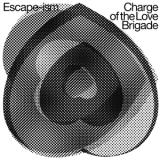
ESCAPE-ISM — the found-sound dreamdrama— are back in action & out in front. And this time, they’re leading a “Charge of the Love Brigade. ”This “charge” isn’t the traditional scramble across a muddy, bloody field though, like in the days of yore. This one is a furtive insinuation into the senses of the tuned-in listener.
Their fifth record, and fourth “sound” record — (the third one was “A Protest Against Sound”- an entirely silent LP) — “Charge of the Love Brigade” is revolutionary in its own right. Besides being packed with tunes — super-hits such as “Black Gold,” “Last Of The Sellouts,” “The Rebel Outlaw,” & “Fire in Malibu,” for exam- ple, Charge of the Love Brigade proposes a reformation of the traditional notes and scales; an entire new sound alphabet!
That’s right, ESCAPE-ISM —the “act of musical vandalism”— famous for their development of new prototypes for stomping & smashing, are reforming the scales, chords, & notes (e.g. A, B, F#, etc) that comprise musical literacy to achieve the group’s primary aim: the repurposing of music as we know it. Though many musicians of note have operated their instruments with "alternative tunings," up until now no one has obliterated tuning absolutely or abolished letter-notes for the destruction of bourgeois society.
According to ESCAPE-ISM, this will have a very profound effect: “Music will no longer be cordoned off from the rest of experience as a commodified, specialty freak show, but instead be a pastime which can be prac- ticed and enjoyed –not only by non-musicians and amateurs– but also by plant life, wild animals, and even inanimate objects such as rocks.
“The violent overthrow of musical conventions will lead to the reintegration of humanity into the natural order, the reordering of life itself into a cosmic congruity. This means the convention of time itself will be ended.” Like so-called nature itself, the ESCAPE-ISM group is also on a “loop.”
Play “Charge of the Love Brigade” and listen as ESCAPE-ISM go “over the top” against the note-letters of accepted musicality in a world premiere of a new upside-down antiscale.
Nachauflage auf schwarzem Vinyl. 22 Jahre nach ihrer ersten Veröffentlichung und 10 Jahre nach ihrem letzten Album sind Nebula wieder da. Wenn du jetzt "Holy Shit!" denkst hast du es ziemlich genau getroffen. "Holy Shit" ist Nebulas erste LP seit "Heavy Psych" (2009), und beantwortet schnell die Frage die sich stellte, seitdem Gitarrist/Sänger Eddie Glass, Bassist Tom Davies und Schlagzeuger Michael Amster 2017 die Reformierung der Band angekündigt haben: Nebula sind immer noch Nebula. Seit den Tagen der 1998er Let it Burn EP und dem mittlerweile klassischen To the Center Debütalbum waren Nebula immer nur ein wenig gefährlicher. Nur etwas mehr aus den Angeln gehoben. Holy Shit zeigt diesen von vorne nach hinten für den wesentlichen Teil ihres Charakters, der er ist, und doch versucht er nicht, etwas zu sein, was sie schon einmal getan haben, sei es bei diesen frühen Ausflügen oder Heavy Psych or Charged (2001), Apollo (2003) oder Atomic Ritual (2005). Es ist ein sechstes Nebula-Album - etwas, worauf selbst die leidenschaftlichsten Fans kaum gehofft hätten. Die Grundtracks wurden in zwei Tagen aufgenommen, aufgenommen in den Mysterious Mammal Studios in L.A. mit Matt Lynch (ebenfalls von Snail) am Steuer. Leads und Loops und Feedback-Effekte wurden von Glass and Davies live aufgenommen, als sie die Basic-Tracks aufnahmen, genau so, wie sie es auf der Bühne tun würden, und Overdubs folgten bei Bedarf. Eine Fülle von Material wurde produziert und auf den Kern dessen, was man hier hört, reduziert. Ein sechstes Nebelalbum. Und wenn du es hörst, wirst du feststellen, dass du diesen Titel immer wieder sagst. Cover Art von ROBIN GNISTA
Nachauflage auf senfgelbem Vinyl. Limitiert auf 300 Exemplare. 22 Jahre nach ihrer ersten Veröffentlichung und 10 Jahre nach ihrem letzten Album sind Nebula wieder da. Wenn du jetzt "Holy Shit!" denkst hast du es ziemlich genau getroffen. "Holy Shit" ist Nebulas erste LP seit "Heavy Psych" (2009), und beantwortet schnell die Frage die sich stellte, seitdem Gitarrist/Sänger Eddie Glass, Bassist Tom Davies und Schlagzeuger Michael Amster 2017 die Reformierung der Band angekündigt haben: Nebula sind immer noch Nebula. Seit den Tagen der 1998er Let it Burn EP und dem mittlerweile klassischen To the Center Debütalbum waren Nebula immer nur ein wenig gefährlicher. Nur etwas mehr aus den Angeln gehoben. Holy Shit zeigt diesen von vorne nach hinten für den wesentlichen Teil ihres Charakters, der er ist, und doch versucht er nicht, etwas zu sein, was sie schon einmal getan haben, sei es bei diesen frühen Ausflügen oder Heavy Psych or Charged (2001), Apollo (2003) oder Atomic Ritual (2005). Es ist ein sechstes Nebula-Album - etwas, worauf selbst die leidenschaftlichsten Fans kaum gehofft hätten. Die Grundtracks wurden in zwei Tagen aufgenommen, aufgenommen in den Mysterious Mammal Studios in L.A. mit Matt Lynch (ebenfalls von Snail) am Steuer. Leads und Loops und Feedback-Effekte wurden von Glass and Davies live aufgenommen, als sie die Basic-Tracks aufnahmen, genau so, wie sie es auf der Bühne tun würden, und Overdubs folgten bei Bedarf. Eine Fülle von Material wurde produziert und auf den Kern dessen, was man hier hört, reduziert. Ein sechstes Nebelalbum. Und wenn du es hörst, wirst du feststellen, dass du diesen Titel immer wieder sagst. Cover Art von ROBIN GNISTA
Composed by Christina Vantzou between 2023 and 2025 after being commissioned by INA GRM, »The Reintegration of the Ear« defines listening as a radical, embodied act of attention: a slower kind of presence rooted in care, intimacy, and reflection. Performed with John Also Bennett, Oliver Coates, Roman Hiele, and Irene Kurka, the work moves through intuition, breath, and resonance, forming an acoustic ecology between perception and expression.
Paired with »Observations, Edits, a Cure for Restlessness«, a companion suite of domestic fragments and temporal drift featuring harp by Sissi Rada, Ben Bertrand's bass clarinet, and others, time here is embodied, a porous medium where sound floats, reforms, and reveals itself as both instrument and witness.
Siren Selector presents the first voyage of Remy Solar, as the producer takes a break from composing sound system exclusive dubs to expand his horizons with this by-turns lush, textured, menacing and plaintive album.
‘Heavy Terrain’ emerges from the depths of a lifetime inside the dub fraternity: reared on a potent diet of Lee Scratch Perry and Augustus Pablo, The Disciples and Digital Mystikz, it’s an album which stuck its head in a bass bin in an abandoned bingo hall in north London before striking out on a musical road-trip to imbibe sounds and rhythms from further afield.
The album opens with the militant drums and ethereal pads of 'Sound in the East' before being bookended by two mixes of 'Star Trail', where unformed musical space and time cross uncharted distances to coalesce into the beginning of direction and rhythm. The lush deep house chords and drilling synths of 'Lila #3' summon ghostly presences, while in its counterpart 'Lila #7' layers of melody rise and hang like mist before dissipating in percussive heat. 'Dakhla's’ swelling and retreating drones fade into swirls of drums. In the eponymous 'Heavy Terrain', off-beat keyboard chops respond to each other from uncertain depths while electronic horns pulse across miles of open space. 'Empty City 'sees walls of sound coalesce and fragment, falling into bursts of white noise.
Remy Solar explores a deliberately constrained hardware set-up to create the primordial conditions of trance, locking down a rhythmic foundation while semi-improvised excursions form and reform above it. It’s an album that takes the listener on a journey between order and chaos, past and future, all the while underlaid by a counterpoint of cavernous bass lines and echoing percussion, yang and yin, shade and light.
A chance meeting in Mexico City set Points of Inaccessibility into motion. When Ibero-American composer Rafael Anton Irisarri crossed paths with Dutch media artist Jaco Schilp at MUTEK in 2024, a conversation about how technology shapes perception revealed an unexpected common ground. Schilp invited Irisarri to a spring 2025 residency at Uncloud, the Utrecht-based collective he co-founded, where Irisarri's sound began to take form amid an environment shaped by Schilp’s visual research.
The Uncloud studio was located inside the former Pieter Baan Centre, a forensic psychiatric prison where suspects of violent crimes were once confined. Its long history of silence and containment shaped the atmosphere in which the project developed. Within this setting, Irisarri coaxed long bowed-guitar tones through a network of pedals and looping systems. The raw gestures thickened into a vaporous and architectural field of sound. Schilp processed the material through a custom point-cloud software patch that produced images in continuous flux. The visuals flickered, dissolved and reformed like memories that resist coherence, functioning as a digital Rorschach that reflected the observer’s own perception.
Amid these spectral echoes, the project evolved into an examination of how the past persists within present signals. Memory endures as residue and interference, continually shaping perception even when its source has faded.
Schilp’s visual process required a continuous stream of sound in real time. Irisarri improvised throughout the residency, generating material that allowed the visuals to develop in parallel. Once back in his New York studio, he began shaping the recordings by carving pathways through the improvisations and mapping selected passages into MIDI. This process allowed him to build outward from the bowed-guitar material with minimal overdubs, adding Prophet 5 textures, Moog bass and strings that expanded the harmonic field while keeping the original performances at the center. To refine the structure, Abul Mogard provided editorial input, working with Irisarri’s stems to guide transitions and strengthen the overall pacing. The material, originally created under conditions of immediacy and constraint, evolved into a fully realized work through careful revision, patience and sustained reworking.
The title engages the geographic concept of the Poles of Inaccessibility, locations defined solely by their distance from all surrounding points. Irisarri adapts this idea to the conditions of digital life, where new forms of inaccessibility arise through the informational enclosures that structure perception. What appears to be a fully connected network often produces a deeper kind of separation, one shaped by the filtering logic of the systems that mediate experience. In this sense, the digital sphere mirrors its geographic counterpart. We inhabit spaces saturated with signals, yet the possibility of genuine contact becomes increasingly remote.
At its core, Points of Inaccessibility considers what can be understood as the new rituals of capitalist realism. Irisarri uses the term digital shamanism to describe the forms of simulated connection that organize contemporary life. These systems promise comfort through algorithms, influencers and AI interlocutors, yet they often reproduce the same conditions that generate loneliness in the first place. What appears as connection becomes the echo of connection, a sequence of gestures that imitate solidarity while withholding it. Like the geographic poles, these rituals are defined by distance. They pull us into environments where everything is illuminated, yet meaningful proximity becomes increasingly rare. In this sense, the work approaches a hauntology of the present, a reflection on futures that have stalled and intimacies that have been thinned by the algorithmic infrastructures that surround us.
This thematic tension unfolds across the album’s four movements. Faded Ghosts of Clouds introduces the work with textures that rise and dissipate in slow cycles, creating an atmosphere that resists clear definition. Breaking the Unison occupies a pivotal position in the sequence and focuses on the moment when the individual and the system fall out of alignment. Its shifting patterns trace the scattering of signals that once suggested connection, revealing the instability at the heart of contemporary perception. Signals from a Distant Afterglow forms the center of the album and features vocals by Karen Vogt, whose presence enters the sound field like a fragile transmission shaped by distance and delay. The closing piece, Memory Strands, follows motifs that appear, recede and briefly intersect before returning to quiet. Across these movements, the album outlines a landscape in which emergence and disappearance continually inform one another.
Listening to Points of Inaccessibility is an encounter with a sound field that is constantly in flux. Elements surface briefly, shift position and recede, creating a sense of motion that resists stable interpretation. The music moves between closeness and vastness, carrying traces of memory while withholding a clear point of resolution.
The album’s visual identity completes the project’s conceptual arc. In Mexico City, where Irisarri and Schilp first met, Daniel Castrejón transformed stills from Schilp’s point-cloud visuals into the cover image. The final artwork captures a single suspended frame of the digital material, a moment extracted from a field that is normally in constant motion. Its surface recalls the texture and abstraction found in the work of Catalan artist Antoni Tàpies, where material presence and erasure coexist within the same plane.
What emerges is a work that examines the tension between technological systems and human presence. Points of Inaccessibility asks whether connection is still possible within environments shaped by mediation and delay, or whether we have become isolated points within the very networks that promise proximity. What possibilities for relation persist within environments organized by algorithms and interruption? And how are we meant to understand presence when so much of it is constructed at a distance?
Points of Inaccessibility will be released on BioVinyl on February 6, 2026, with audiovisual performances planned throughout 2026.
Mastered by Stephan Mathieu
Artwork by Jaco Schilp
Design and layout by Daniel Castrejón
Artist photo by Iulia Alexandra Magheru.
- 1: On Stubborn Defiance
- 2: A Worldwide Clique Pt. Ii
- 3: Before Judge And Jury
- 4: When They Come For Me
- 5: Death Is Not Our Only Option
CLIQUE exists not as a traditional band but as a forum for radical discourse within hardcore's landscape. Formed in 2022 in California with members spanning the Bay Area and Los Angeles, CLIQUE has quickly made a name for itself through an undeniably vicious live show and a depth that's been long missing from the scene. In a world increasingly defined by individual recognition, CLIQUE operates anonymously, rejecting the spotlight in favor of their message and finding strength in collective struggle.
Unlike many of their contemporaries, CLIQUE was formed with explicit political intent. In an era where hardcore’s content has drifted toward toothless posturing, they aim to reintroduce radical thought into a scene that has lost much of its subversive edge. Drawing from influences spanning Crass to Neurosis, Earth Crisis to MBV, they forge a sound that defies easy categorization while undoubtedly belonging to hardcore.
CLIQUE isn't interested in raising awareness for impotent establishment causes or upholding the system. Their vision extends beyond reform to revolution - the dismantling of structures that exploit people, degrade cultures and destroy the earth. Each show is an invitation for people of all walks of life to participate, a reminder that hardcore’s true strength lies in the connection of everybody in the room, erasing the boundary between stage and crowd.
As they put it: "This is a prayer for those we've lost along the way. This is a celebration of our liberation to come. This is a eulogy for the state and its worthless existence." In an increasingly commercialized hardcore landscape, CLIQUE stands apart - anonymous, uncompromising, and unwavering in their conviction that another world is possible. The message is clear: no one is coming to save us, we can only make our own future, together. This music is both a reflection of our hellish reality and an invitation to imagine and create something better. Clique up. Say nothing.
- A1: Love's Coming Back
- B1: Houston (7" Exclusive)
Slinging back on the electric guitar, ditching the job, upping the BPMs, and falling in love again has resulted in Pete embracing his fuzzed up dream- pop past but also throwing in elements of pop and electronica.
The first fruits of this new-found labour is a brand new single "LOVE'S COMING BACK" which sums up the ethos for his new project all squeezed into 136 amp-frying seconds. Pete first burst onto the scene in the early 90s as the frontman and guitarist of postshoegaze / pre- Britpop band Adorable, whose 1993 album Against Perfection, released on Creation Records, is regularly referred to as a lost indie classic, with the band picking up multiple 'Single of the Week' awards in the NME, and topping the Indie charts. Noel Gallagher once told Creation Records' Alan McGhee that dropping Adorable from the label was one of his biggest mistakes, whilst other artists such as Ash, Slowdive and Brian Jonestown Massacre amongst others have all expressed their admiration for the band. Following this he joined up with his brother Krzys to form One Little Indian band Polak (Swansongs 2000 / Rubbernecking 2002) which took in influences from the likes of Sparklehorse, Radiohead and dEUS, and led The Independent to call him "the most gifted lyricist since Jarvis Cocker last put pen to paper".
There then followed a musical exile, after having what Pete now describes as 'a musical breakdown' before re-emerging alongside celebrated House of Love guitarist Terry Bickers to release two critically acclaimed albums as Pete Fij / Terry Bickers on 2014's Broken Heart Surgery, and 2017's We Are Millionaires, winning the Roundtable 'Single of The Week' on Steve Lamacq's BBC 6Music show - "Beautiful" (MOJO) "Unfailingly lovely" (UNCUT) "Stunning" (OHM) "Beautifully constructed" (Q). Adorable then reformed for a few weeks in 2019 for a series of one off dates that sold out in record time, playing bigger venues than they did in their heyday - and then broke up again.
- Cold Hearted
- Stormer
- Easy Prey
- Breakin' Sweat
- Steel N'chains
- It's Alright
- Hell Hath No Mercy
- Don't Wanna Be A Loser
- Witchfinder
- Hunted
Das Debütalbum von Spartan Warrior, »Steel N’ Chains«, ursprünglich 1983 veröffentlicht, ist ein übersehenes Juwel der NWOBHM. Spartan Warrior stammten aus Sunderland, im Nordosten des Vereinigten Königreichs, und veröffentlichten lediglich ein weiteres Album sowie zwei Songs auf einer Compilation. Allerdings waren sie live ausgesprochen präsent und erspielten sich so eine eingefleischte Anhängerschaft.
Spartan Warrior gründeten sich, als die lokale Band Deceiver – mit Bassist Tom Spencer und Schlagzeuger Gordon Webster – sich mit Sänger David Wilkinson zusammentat. Später traten Wilkinsons Bruder Neil und mit John Stormont ein weiterer Gitarrist der Gruppe bei. Mit dieser Besetzung wurden die beiden Stücke “Steel N’ Chains” und “Easy Prey” (auf der Plattenhülle fälschlich als “Comes As No Surprise” betitelt) für den Sampler »Pure Overkill« auf Guardian Records aufgenommen.
Das Label offerierte der Gruppe einen Plattendeal und mit Paul Swaddle für Stormont wurden weitere acht Stücke aufgenommen, die mit den beiden vorhandenen die Debüt-LP »Steel N’ Chains« ergaben. Die Scheibe verkaufte sich gut, wovon Roadrunner Records Wind bekamen, die Spartan Warrior für ein zweites Album unter Vertrag nahmen. Allerdings verließ Wilkinson in der Folge die Band und bereits Mitte der achtziger Jahre erfolgte die Auflösung.
Spartan Warrior reformierten sich um 2006 herum und traten auf dem eine oder anderen Festival in Kontinentaleuropa auf. Begonnen hatte allerdings alles in England mit ihrem Debütalbum »Steel N’ Chains« – eine großartige Platte von einer großartigen Band.
Impressions marks Budapest based independent label Blue Sun’s 6th release. Hungarian multi-instrumentalist, Fingerfisher guitarist Adam Gollob's debut solo LP carries forward the musical direction set by the label’s founders (Hanussen & Kozmo D) by presenting tracks that are built around concentrated, listening-based music consumption, deliberately crossing, possibly defying genres.
Impressions is a profound reflection of transformation, embracing imperfection along the way. As a former student of jazz guitar at Bartók Conservatory, Gollob evokes the wandering spirit of John Coltrane with the title, at the same time inviting the listener into a brief but intensive creative period of the artist’s own life. Music listened to, festivals visited, thoughts and conversations - all echoing through-and-throughout the composition, questioning, dismantling, and rearranging them into a piece.
The record is a rich and evocative work that blends elements of new wave, indie rock, alternative electronic, and neo-psychedelic styles. The introspective lyrics and unrefined vocals explore different aspects of existence, placing the perpetual tension between uncertainty and confidence at the center. The hypnotic synthesizers, raw drum textures, and the structurally interwoven songs provide a complex listening experience. The material reforms with each replay into an ever-changing musical landscape, with a strikingly unique, fuzzy yet soothing atmosphere.
- Intro
- Dark Depths And Surface Tension
- Existence Is Not A Solo Sport
- It's A Shit Business, Glad I'm Out Of It
- Ain't No Such Thing As Civilised, It's Man So In Love With Greed
- Lore Of The Land
- Qvc Hands
- Momentary Masters Of A Fraction Of A Dot
- The Enclosed The Common Land And Built A Fucking Lawn
- A Birthright Sham, A Downright Shame
- Spare Me The Pleasant Trees
- Outro
Human Leather have always been a ferocious live act, unbelievably loud for a 2 piece. Their gigs are often an overwhelming wall of sludge, howls and amphetamine-addled drums, with spectators flying joyously around the pit. Previous recordings did full justice to the impact of the live show; however, the second helping is something else. On Here Comes the Mind, There Goes the Body the sludge is still present, rising, and lapping at your ankles, but there's a new clarity showing off exactly how f*cking good those riffs are. There are ear worm riffs for days, shout along vocals that roar, shriek and reform into a Greek chorus, drums that thump you repeatedly in the chest and then the whole thing vanishes in just under 30 minutes, leaving you bruised, deafened and with Some Questions about your life. Squint your ears a bit and you'll hear the influences of bands like Karp, Torche and Big Business but they're thrown into a much crustier stew. The lyrics span a variety of political issues, not limited to the landed gentry, global warming and consumerist harbingers of doom. Importantly the songs are also not afraid to discuss class issues (unlike many political bands who you suspect have a much sturdier security net). While this could easily feel preachy, every line is delivered with the knowing wink of the underdog and good humour (I am going to smile every time I think of "clod damn" or "QVC Hands" staring up at me from the lyric sheet), and the vibes are as they've always been in difficult times - "we know we're fucked, tonight we mosh, tomorrow we march". And what is the point of a revolution you can't dance to? Speaking of dancing, the final track features an honest-to-god dance beat, acid squelches and disembodied vocal samples, pointing to an alternative universe in which Human Leather are a heavy electroclash band. Here comes the record of the year, bring what is left of your eardrums. You didn't need that body anyway


![A Thousand Details - Lost Culture Paradise Club - Tar LP4 - TH 22 (incl limited lathe cut disc] (3x12")](https://www.deejay.de/images/l/5/3/1218353.jpg)