Pursuing their explorations of international Funk and Disco music, Favorite Recordings and Bruno "Patchworks" Hovart present us Voilaaa. With this first 2 tracks single revealing the Afro-Disco inspiration of this new experience, Favorite also expands its new series of Disco 12inch singles recently launched with several fine reissues.
Under the imprint of the label and after their long years of collaboration in the achievement of projects such as The Dynamics, Mr President, Mr Day, Patchworks Galactic Project, or Taggy Matcher, the insatiable French producer therefore returns to his first love and specialty, Disco music, staring this time at the African and Caribbean influences.
Indeed, as everywhere in the 70s and 80s, Funk and Disco movements were extremely influential in these regions, and in most cases, the combination of the festive, yet sometime futile nature of Disco, and the instinctive, deep, sometimes rough nature of African music, sounds like a perfect balance. Aiming to respect this energy and specific sound, Patchworks quickly began producing a few tracks, Using his unique and ruling beats and bass lines as foundations, this time he dresses all with guitars, keyboards and brass distorted with vintage and DIY effects pedals and boxes.
Surrounded by a very dynamic music scene, where there is no shortage of artists with African origins, Patchworks decided to work with local singers, even if it means to accompany them on unusual musical paths. A more than successful bet with a result surprising of authenticity, as it's unveiled by these first two titles alongside Sir Jean and Pat Kalla, both from a musical background as rich than different.
With an album planned for the end of the year, that promises to be as explosive and magnetic, Patchworks and Favorite Recordings make a strike again... Voilaaa tout (Thaaat's all)!!
the tale of the mythic pentaki mountain has been engraved on a two-sided circular piece of wax. the north face of the peak is steep, abrasive, and has been the subject of many legends in the region. it is said that whoever would manage to climb it would find a plateau, leading to a place called "the single source of truth". considered as the ultimate goal by both psychedelic gurus and database optimization corporations, and as an ideal retirement destination for a couple of lost souls in search for coherence and objectivity, the source diffuses endless loops of haunted voices, apparently sampled from a discarded call center, running low on power, encouraging listeners to shorten cycles, deliver requests and improve user experience. it is also said that anyone climbing from the south side would never reach the summit or find his way to the plateau, and would always end up on a lower altitude than where he started. this topographical anomaly is probably the reason why the south face of the pentaki has always been favorited by locals, with its sunny weather and its luxurious vegetation flourishing along the soft downward slope, leading to a slow and peaceful end.
Hip-hop royalty returns—Bun B and Statik Selektah team up once again for the fourth chapter of their blazing collabo-rative saga: TrillStatik 4. Recorded in real-time with that unmistakable underground urgency, this album is a master-class in modern rap chemistry, blending Bun B’s Southern grit with Statik’s boom-bap precision.
The guest lineup is nothing short of legendary. From DJ Premier setting the tone on “Live From Houston,” to Griselda heavyweights Westside Gunn, Conway The Machine, and Boldy James blessing “Trillselda 2,” every track hits with purpose. Regional flair runs deep, too—Paul Wall, Maxo Kream, and Lil’ Keke represent H-Town with pride, while East Coast lyricists like Termanology and Tek bring bar-for-bar fire.
This is more than a record—it’s a cipher of cultures, connecting street narratives, soul-drenched beats, and coast-to-coast talent.
Keroxen presents Spandauer Damm 103, a new album by Dancelwerk.
Bringing together modular systems, worn drum machines and digital synthesis, the record nods directly to the first decade of Warp Records and the early logic of bleep culture.
Dancelwerk is a Tenerife-based electronic pioneer and one of the foundational figures of the Canary Islands underground. Active for over 30 years, Spandauer Damm 103 marks both a personal milestone and a renewed point of focus, reaffirming his role in shaping the region’s electronic lineage. The album draws on 1990s electronic futurism, filtering those references through a contemporary production approach rather than nostalgia.
The music moves between places and periods: from the early rave circuits of southern Tenerife, where Dancelwerk built his reputation through DIY releases and warehouse-level experimentation, to his later relocation to Berlin, famously arriving with a shipping container of vintage synthesizers and modular equipment.
Balancing melody and impact, Spandauer Damm 103 sets custom-programmed percussion against detailed sound design. FM, spectral and wavetable synthesis shape its harmonic and textural focus, resulting in music that remains physical without sacrificing clarity.
A long-standing practitioner reconnecting with his roots while pushing the system forward.
The premise of this compilation is simple: music we’d like to hear at the airport.
The idea came after learning that Honolulu’s international airport has been playing AI-generated music over its speakers since November 2025. First reported by Civil Beat, the news has caused frustration and disappointment among residents and visitors, as well as within the local music community.
Everyone knows Hawaii is one of the most musically rich regions in the world — why then is the airport using AI music? 'Music For The Airport' is our response.
Located in the middle of the Pacific at the outskirts of one the most remote cities on the planet, Honolulu’s Daniel K. Inouye International Airport (HNL) is for most people the first place they encounter when they arrive in Hawaii. Warm sun, tropical tradewinds, playful palm trees and majestic mountains welcome every traveler, as do the sounds of birds, familiar music from Hawaiian artists like Aunty Genoa Keawe and Israel Kamakawiwo’ole, and—at least for now—seventeen “island-themed” AI-generated songs.
In late 1977, while sitting in Germany’s Cologne Bonn Airport on a Sunday morning, Brian Eno noticed how terribly uncomfortable he felt hearing the airport’s “muzak” overhead. For a harried, hurried place like the airport where travelers scramble to their gates, stand in long border control lines, and wait impatiently for their luggage at the carousels, music can create more anxiety than calm. Asking himself, "What should we be hearing here?", Eno soon created ‘Ambient 1: Music For Airports’, a sonic remedy aimed at reducing nervousness in public spaces.
When we heard the news that HNL airport is playing AI-generated “muzak”, we were immediately reminded of Eno’s genre-defying 1978 album. And we were similarly inspired to react. But how? Recreating an ambient masterpiece wasn’t in our wheelhouse. We started digging through our catalog of licensed music which we haven’t yet re-released. We quickly realized this was our chance to highlight some of favorite songs from the so-called CD era: the 1990s and 2000s (with a few exceptions). In less than 20 minutes, we pulled 17 original songs recorded by local artists between 1984 and 2017.
The speed at which this project came together surprised us; reactionary gut instinct often produces swift and lasting results. Ironically, our new compilation likely took less time than it did for the state Department of Transportation to commission its AI songs in question. But even though ‘Music for the Airport’ came together in less than one week, the truth is that this collection of 17 songs is the result of years of hard work, trust, sacrifice, patience, and understanding. Building relationships with and licensing music from artists doesn’t happen overnight, but more importantly: these songs are the result of people pouring their hearts and souls into something they believe in. This music wouldn’t exist today without the artists and their loved ones who supported them along the way.
As of this writing, the DOT states its intention in creating AI-generated songs is to “highlight different aspects of the islands, aviation and the airport” and that “no state funds were used to produce them”. Okay, but at what cost? Technology disrupting the music industry isn’t news to anyone. AI music in public spaces are cost-saving measures, since its users (airports, for example) don’t have to pay the licensing fees typically required, which can be a worthwhile source of revenue for artists. But what happens when a place like HNL airport, which hosts more than 21 million passengers annually, uses music created by machines instead of people to represent Hawaii? The identity of a place beings to erode, diluted by a language learning model’s conceptual summary of what a people and its culture sounds like. To echo Brian Eno: what should we be hearing here? In other words: what should the music of Hawaii sound like?
We believe in the power of music, especially when it comes from the soul. We believe in supporting artists, especially as AI disrupts our lives. We believe that Hawaii must be represented authentically, especially when it comes to song. And of course we believe in vinyl, especially since it was a record from 1978 (Mackey Feary Band’s debut LP) that inspired Aloha Got Soul’s origins in 2010.
We hope you find as much joy in this compilation as we have. Perhaps it’ll soundtrack your next journey to Hawaii. At the very least, we hope some people take a moment to hear these sounds: in your headphones for now‚ maybe someday overhead at the airport in Honolulu.
It all began in the late 1980s with *Calypso of House* by K.T.E. (released by Irma Records), a track that made history
in Italian house music.
The man behind the project, Francesco "Kekko" Montefiori, went on to collaborate with Claudio Rispoli (aka DJ
MozArt) under the name SOFTHOUSE COMPANY, creating cult classics like *What You Need*.
He later formed the duo Montefiori Cocktail with his twin brother, Federico "Chicco" Montefiori, touring the world together.
Now, the story continues.
Kekko Montefiori and Lorenzo "Meo" Meoni (resident DJ at BICIO PAPAO)
are launching OTUM Records to revive the Softhouse Company and Keytronics Ensemble projects.
The goal: to capture the original energy of the Italian House Music "Golden Age" and project it into the future.
No nostalgia—just high-quality dance music.
"Otum" means "excellent" in the slang of Italy’s Romagna region.
An evolution of her radio show, event series and Bandcamp community under the same name, this compilation plots a globe-spanning day-into-night voyage across 16 tracks, from artists, countries and scenes that have shaped Jamz' musical worldview. Each track, many of which are exclusive to this comp, tells a story of heritage and roots, whilst pushing boundaries and pioneering new sounds in their respective regions. From the Reunion Island to Latin America, East Africa to the Caribbean and Pacific, it's a 24-hour cycle moving from downtempo to dancefloor. The concept of Dance Around The World began in the summer of 2025 but has ultimately been a part of Jamz' journey in music since the beginning. At the centre of it is her 15-year career as radio presenter - her tastes evolving from the early days on Reprezent Radio, to a 1Xtra residency and now a Saturday daytime show on BBC 6Music. There has always been a desire to highlight music from underrepresented scenes to new audiences.
"Spiritual Jazz 19" besteht aus zwei Doppel-LP-Sets, die den Einfluss und die Ausdrucksformen jenes Underground-Jazz beleuchten, der sich in der zweiten Hälfte des 20. Jahrhunderts in Kalifornien und den angrenzenden Bundesstaaten entwickelte. Die insgesamt 24 Titel erscheinen in Gatefolds und enthalten Liner Notes, Fotos und Download-Codes.
Die US-Westküste wird oft mit dem Boom des Cool Jazz in den 1950er Jahren in Verbindung gebracht; doch überall dort, wo Jazz gespielt wurde, florierten auch modale, afrozentrische und spirituell geprägte Strömungen – und die Westküste bildete da keine Ausnahme. In der Nachkriegszeit rangierte die Central Avenue in L.A. als bedeutendstes Jazz-Viertel Amerikas direkt hinter Manhattan. Auch wenn Manhattan in jenen Jahren das faktische Zentrum des Jazz-Universums war, übte Kalifornien eine stärkere Anziehungskraft auf die Kultur im Allgemeinen aus und zog Menschen aus dem ganzen Land in den Bann seiner aufkeimenden Gegenkultur der 1960er Jahre.
Hier untersuchen wir die Auswirkungen dieser Gegenkultur auf den Jazz. Wir beleuchten den Einfluss der Black Panthers – der prägendsten Kraft innerhalb der schwarzen politischen Bewegung nach der Ära der Bürgerrechte – und widmen uns den neuartigen spirituellen Praktiken und Religionen des aufkommenden New Age. In Kalifornien waren zahlreiche eigenwillige Independent-Labels wie Arhoolie, Theresa und Nimbus sowie viele weitere private Unternehmungen ansässig; wir präsentieren die Ergebnisse ihres Strebens nach musikalischer Freiheit. All diese Faktoren beeinflussten die Entwicklung und Blütezeit des Jazz und der Jazzmusiker an der Westküste – und die Evolution des Spiritual Jazz in dieser Region wird hier eingehend betrachtet.
out of Stock
Last delivered 3 days ago available to reorder, subject to availability
Spiritual Jazz 19" besteht aus zwei Doppel-LP-Sets, die den Einfluss und die Ausdrucksformen jenes Underground-Jazz beleuchten, der sich in der zweiten Hälfte des 20. Jahrhunderts in Kalifornien und den angrenzenden Bundesstaaten entwickelte. Die insgesamt 24 Titel erscheinen in Gatefolds und enthalten Liner Notes, Fotos und Download-Codes.
Die US-Westküste wird oft mit dem Boom des Cool Jazz in den 1950er Jahren in Verbindung gebracht; doch überall dort, wo Jazz gespielt wurde, florierten auch modale, afrozentrische und spirituell geprägte Strömungen – und die Westküste bildete da keine Ausnahme. In der Nachkriegszeit rangierte die Central Avenue in L.A. als bedeutendstes Jazz-Viertel Amerikas direkt hinter Manhattan. Auch wenn Manhattan in jenen Jahren das faktische Zentrum des Jazz-Universums war, übte Kalifornien eine stärkere Anziehungskraft auf die Kultur im Allgemeinen aus und zog Menschen aus dem ganzen Land in den Bann seiner aufkeimenden Gegenkultur der 1960er Jahre.
Hier untersuchen wir die Auswirkungen dieser Gegenkultur auf den Jazz. Wir beleuchten den Einfluss der Black Panthers – der prägendsten Kraft innerhalb der schwarzen politischen Bewegung nach der Ära der Bürgerrechte – und widmen uns den neuartigen spirituellen Praktiken und Religionen des aufkommenden New Age. In Kalifornien waren zahlreiche eigenwillige Independent-Labels wie Arhoolie, Theresa und Nimbus sowie viele weitere private Unternehmungen ansässig; wir präsentieren die Ergebnisse ihres Strebens nach musikalischer Freiheit. All diese Faktoren beeinflussten die Entwicklung und Blütezeit des Jazz und der Jazzmusiker an der Westküste – und die Evolution des Spiritual Jazz in dieser Region wird hier eingehend betrachtet.
out of Stock
Last delivered 3 days ago available to reorder, subject to availability
Yorkshire's underground has always run deep and this double pack from one of the region's finest new labels, Hearlucinate, makes the case well. For this double album, Leeds mainstay Tristan da Cunha has done a careful excavation of Scott Featherstone's DAT archive featuring music recorded under his Triform alias entirely on analogue hardware. The results are simultaneously timeless and urgently present, and the kind of machine jams that only reveal their full power in dark, hazy rooms. 'Harmony' has a dark and sleazy soul, there's muscular drum weight to 'What Is This', 'Basic House Rocker' has an anxiety-riddled sound that's alive with twitchy acid electronics and 'Chimes' marries vast, swinging kicks with Detroit soul. Wonderful.
out of Stock
Last delivered 4 days ago available to reorder, subject to availability
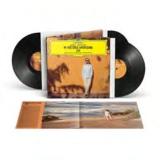
Nach seinem vielbeachteten Album My American Story – North setzt Starpianist Daniil Trifonov seine Reise
durch die Amerikas fort. Mit Mi Historia Americana – Sur richtet er den Blick auf Südamerika und die
Karibik mit einem Programm, das beliebtes Repertoire des Kontinents mit neuen Entdeckungen Trifonovs
verbindet.
Zu hören sind unter anderem Klavierwerke von Gabriela Lena Frank, Ginastera, Guarnieri, Lecuona und
Villa-Lobos, dazu Trifonovs eigener Tango. Zwei orchestrale Werke mit dem São Paulo Symphony Orchestra erweitern das Album um Ary Barrosos populäres Aquarela do Brasil und die Weltersteinspielung von
Osvaldo Golijovs farbenprächtigen Cuadros del Sur.
Dabei spannt Trifonov einen Bogen von Brasilien über Kuba und die Dominikanische Republik bis nach
Peru und Argentinien und formt daraus ein vielschichtiges musikalisches Panorama. Zugleich gewinnt das
Album durch Trifonovs enge Verbindung zur Region eine persönliche Dimension, die dieser musikalischen
Entdeckungsreise besondere Bedeutung verleiht.
Nach seinem vielbeachteten Album My American Story – North setzt Starpianist Daniil Trifonov seine Reise
durch die Amerikas fort. Mit Mi Historia Americana – Sur richtet er den Blick auf Südamerika und die
Karibik mit einem Programm, das beliebtes Repertoire des Kontinents mit neuen Entdeckungen Trifonovs
verbindet.
Zu hören sind unter anderem Klavierwerke von Gabriela Lena Frank, Ginastera, Guarnieri, Lecuona und
Villa-Lobos, dazu Trifonovs eigener Tango. Zwei orchestrale Werke mit dem São Paulo Symphony Orchestra erweitern das Album um Ary Barrosos populäres Aquarela do Brasil und die Weltersteinspielung von
Osvaldo Golijovs farbenprächtigen Cuadros del Sur.
Dabei spannt Trifonov einen Bogen von Brasilien über Kuba und die Dominikanische Republik bis nach
Peru und Argentinien und formt daraus ein vielschichtiges musikalisches Panorama. Zugleich gewinnt das
Album durch Trifonovs enge Verbindung zur Region eine persönliche Dimension, die dieser musikalischen
Entdeckungsreise besondere Bedeutung verleiht.
228 page photobook, printed on high quality Japanese paper.
Paperback
Size: 257 x 182 x 7mm
Enclosed in a printed clear plastic bag
Soi48 proudly presents this book, a photographic document of the unique dance music clubs
and culture of Southeast Asia and East Asia. The photos, from the years 2017 through 2025,
were taken in nightclubs, discos, festivals, raves, sound system parties, private parties and
migrant worker clubs — the places where Asia’s unique dance music genres are born and
thrive. ADM, with its exclusive on-the-spot snapshots, provides an extraordinary visual
archive of Asian contemporary dance music. Journeying through Thailand, Vietnam, Laos,
Malaysia, Indonesia, Philippines, Myanmar, Taiwan, Korea and Japan, Soi48 captures
glimpses of how people create their nights, visually comparing the differences between
countries in fashion, dance style, lighting, club interiors, flyers and more, showcasing the
distinctive entertainment culture that each country has created. The 167 photos also feature
the pioneering DJs and track makers who built unique music genres in each country, such
as Budots (Philippines), Vina House (Vietnam) and Saiyo (Thailand). Also of note: the book
provides a valuable record of nightlife during the COVID-19 pandemic; captures the energy
that migrant workers release in clubs on weekends; and in general showcases the ingenuity,
wit and passion of music lovers throughout the region.
Soi48:
A duo, comprising Tokyo natives Keiichi Utsuki and Shinsuke Takagi, that promotes the
magic of Asia and Asian music through DJ-ing, writing, design, and party activities. Their
interests range from traditional music to cutting-edge dance music, released on physical
media as well as on the internet. In addition to supervising the film Bangkok Nights (Kuzoku)
and the EM Records Thai music series, they introduce the joys of Asian music and travel
through talk events, TV, radio appearances, etc. Their books include TRIP TO ISAN: A
Traveling Thai Isan Music Disc Guide (DU BOOKS), OMK#001 (OMK), and ADM: Asia's own
unhinged club culture. As ever, they enthusiastically continue to research dance music and
sound system culture in Asian countries.
Trá Pháidín are a mutable collective of musicians who are geographically, culturally and mentally torn between Conamara Theas, Cathair Chorcaí, Ciarraí, Uíbh Fhailí, Sligeach and Port Láirge, active in one form or another since 2019. The music they make, which to date has mostly been self-released, is of an ambitious breadth, embracing traditional Irish absurdity, jazz, folk and krautrock influences, whilst remaining tantalisingly beyond any one specific understanding of either the world around them or even themselves. More defined however, is their overall conceptual approach, focusing upon original Gaelic music and what lies beyond simply “conas atá tú?”.
Cloch ‘s Claí (trans. Stone & Wall), their first record to be released by World of Echo, develops their established interests into more adventurous waters (and walls!) than ever. Based on the historical significance embedded into dry-stone walls, the album presents a satirical view of Éire’s relationship with her native tongue and the Gaeltacht (regions where Gaeilge - Irish Gaelic - remains the primary language). Constructed of ten tracks, each representative of a stone in a metaphorical stone-wall, Cloch ‘s Claí draws from styles of improvisation in Irish traditional music, exploring avenues of ornamentation and accompaniment in the tradition. As such, the arrangement changes in every performance, a new stone-wall articulated each time - the recording on this album represents just one such arrangement in one such performance. Inspired by Myles na gCopaleen’s An Béal Bocht, the wall comes to embody a variety of themes scattered across the landscape and psyche of na Gaeltachtaí - tokenism, housing, gentry politics, ribbon developments and so on. The result is a music expressive of regional styles in traditional music, krautrock, free jazz, post-rock, minimalism and drone presented in a way that feels instinctively fluid and reflective of a hushed existentialism from the west of Ireland.
On Cloch ‘s Claí, Trá Pháidín are: Conal Ó hAinmhuighe, Ultan Ó Labhradha, Peadar-Tom Mercier, Micheál Fitzgerald, Pól Ó Lionáird, Ruairí De Búrca. Cloch ‘s Claí will be released digitally and as a limited edition LP on 25th September via World of Echo. This record was created through the support of the DEIS Recording Grant & Ealaín na Gaeltachta.
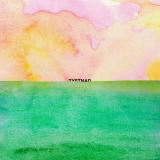
The word ‘Tystnad’ – literally translated – means silence. In this case, the Silence is less that of zen buddhism or that of John Cage, rather the name of the studio where Flowers Must Die – carriers of the torch of Swedish psychedelia for now nearly 20 years – retreated to make their most head-expanding album to date. Located near the Norwegian border in the verdant rural Värmland region, Silence Studios has been a countercultural hub for decades, attaining a legendary status as a residential outpost where bands can retreat to stretch out creatively and focus their psychic powers.
From just such origins, Flowers Must Die have crafted a collection of expansive and incandescent jams that maps out a lysergic trajectory between the idealistic, anything-goes mania of early ‘70s psychedelia and the 21st century. Tystnad is the sound of a band buoyed by the afterglow of their last Rocket release, 2017’s Kompost and its attendant touring, and expanding into extrapolations that marry the wildest free improv with haunting melody.
If Tystnad, as the band claim, is to be their last recording made in one room at the same time, then it displays a formidable escape velocity. Who’s to say whether Flowers Must Die have tapped into a Swedish continuum, one including the like of Pärson Sound, Dungen or Goat. What’s clear is that Tystnad is a timeless treatise, and a potent channeling of spirits –transcending genre in search of enlightenment anew.
For the third instalment of our wax series, we welcome the regional talent Bood on board with a gorgeous four-tracker that perfectly defines our sound.
This EP was produced from the heart with some sounds from the analog and early era 16-bit digital domains, and a sprinkle of wild imagination.
In it are deeper house tones for a variety of dancefloors, and different times of the day.
Death Is Not The End present the first volume in a survey of a form of Brazilian country music known as música caipira ("hillbilly music") - a stripped-back forerunner to música sertaneja, the Brazilian equivalent to US country & western which in it's contemporary form has come to dominate the domestic music industry in recent decades. This collection covers some of the earliest recordings made by the pioneering folklorist Cornélio Pires at the end of the 1920s, through to records from the 30s, 40s & 50s and the beginning of the 60s.
Somewhat rooted in Portuguese troubadour folk traditions, música caipira is typically performed by a duo singing in parallel thirds and sixths, drawing upon a Portuguese-Brazilian style known as moda de viola - with the viola being the viola caipira, a Brazilian-style ten-string guitar that is the core instrument of the music. Born out of the "outback"-style region in north-eastern Brazil, these songs tell stories of pain, love, loss & betrayal - often backed by homemade guitars using invented tunings. Away from the polished pop country & western-stylings of the sertaneja, these recordings could be viewed as the Brazilian equivalent to the roots music of the American dustbowl or Appalachia.
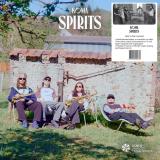
Brought together by Antoine Rajon through their shared love of modal and free jazz, the four musicians of KOMA embraced the high-wire act of a ""Jazz on the Moment,"" a hallmark of the KOMOS label's Analog Home Session series. These friends, both on and off stage, already play together in other groups, such as AMG for Keïta Janota and Anthony Jouravsky, and OLA TUNJI for Ornella Noulet and Anthony.
For this recording, the new group set up in the living room of a Burgundy home, equipped for the occasion with the finest vintage analog equipment by Christian Hierro, engineer at the ""Back To Mono"" studio in the Drôme region.
With no preparation other than the few hours before starting the tape recorder, KOMA recorded the tracks in the order they appear on the album. Two pure improvisations sit alongside a composition (in two versions) by Keïta Janota, and a composition by vibraphonist Martin Blouet, who was experiencing his first professional recording.
The iconic piece ‘John Coltrane’, composed by bassist Bill Lee, father of Spike Lee, is the only cover on the album. The quartet offers a surprising, almost ambient version, without the rhythm section and epic solos of other recordings. The musicians' love for the music of the ‘supreme saxophonist’ is nonetheless intense.
As a birth certificate on the very day of the group's formation, this ‘no-nonsense’ album allowed this unusual lineup (two saxophonists, a vibraphonist, and a bassist) to present its lyrical and meditative music on numerous stages.
Pioneering Ghanaian musician King Ayisobareturns September 4, 2026 with his forthcoming seventh album Pure Confusion, recorded and produced by On-U-Sound’s Adrian Sherwood.
Ayisoba is one of Ghana’s most distinctive musical voices. The world’s foremost player of the kologo - a homemade two-string lute fashioned from a calabash and covered in goatskin - he delivers fiercely political and socially observant songs using three different voices, including the voice of his grandfather that possessed him as a child. Sherwood meanwhile is the pioneering British producer and founder of On-U Sound whose hugely influential career has connected dub, post-punk, industrial, hip hop and experimental music through collaborations with artists including Lee “Scratch” Perry, Mark Stewart, Horace Andy, Sinéad O’Connor, Nine Inch Nails and Depeche Mode.
Ayisoba and Sherwood first collaborated during a BBC Radio 3 Late Junction session at Maida Vale in 2017, organised by Ayisoba’s long-time collaborator Arnold de Boer/Zea of The Ex. The pair immediately connected, and during the pandemic, when Adrian’s long-time African Head Charge collaborator Bonjo Iyabinghi Noah was in Ghana looking for musicians to collaborate with Sherwood suggested Ayisoba, who eventually featured on two tracks on African Head Charge’s 2023 album A Trip To Bolgatanga (Bolgantanga is the region Ayisoba is from). Ayisoba then returned to the UK in late 2024 and travelled to Sherwood’s Ramsgate studio where the pair laid down the songs that would become Pure Confusion: “All the songs were already in my head,” says Ayisoba. “This album is all recorded live, over one afternoon. Adrian only plays live, and I like that. And he works hard - he doesn’t sleep. I woke up in the night and he was still working.”
“In my role producing it, I just let it roll to make a good vibe,” says Sherwood. “We recorded it completely live, did some programming and processing on some tracks, using dub techniques live on the mixing desk and adding some slick touches. We wanted the colours on the album to swing off what Ayisoba was doing, so we invited some friends to participate. Doug Wimbish (Sugar Hill Gang) arrived from America and lent his services playing bass on a couple of tracks; the wonderful Ivan Hussey (Celloman) played bass, keyboards and cello - cello is not really featured on African recordings so we thought it would be really cool to try it. I'd been working with Alex White (Fat White Family/Primal Scream) on my album (The Collapse of Everything) and so he added sax to a few tracks and I brought Alan Glenn down especially - Alan was in Little Axe but also Nine Below Zero and played in the Yardbirds – to add some mouth organ; Mark Bandola added a bit of flavour with his Juno, Ayisoba’s long-time Ghanian collaborator Ayuune Sule added some percussion and vocals and Matt Smith did some programming.”
“King Ayisoba is quite amazing, so unique,” Sherwood continues. “He’s got his own handmade instrument and three different voices - when you’re listening you think it’s three different people. He’s a breath of fresh air, full of love for the music which he wants to share with everybody. Some tracks we kept very straight and others we experimented with - adding dubby psychedelic little touches to trip you out a bit. The added production we did at On-U has given it a shine while still keeping it vibrant, live and spontaneous. I’m really proud of this record”.
On Pure Confusion, Ayisoba documents the anxieties, contradictions and changing social realities of contemporary Ghana. “Land is a problem for everyone,” says Ayisoba of the opening track “Property”. “If you don’t build on your land they will take it away. Plenty corruption in Ghana, plenty confusion. They sell the land to two, three, four people and then everybody fights.”
Elsewhere Ayisoba explores illness, spirituality and social stigma on “Bemba”, warning against hiding sickness out of shame or fear of “bad juju”: “People hide their sickness and the sickness kills them.” “Tewigiloge” reflects on cultural difference and open-mindedness encountered through world travel: “We will tour the whole world and we will see many things we may not like or understand… your eyes will see, but don’t talk - you have to be open-minded.”
Spirituality runs deeply throughout the album. Ayisoba’s grandfather was a respected spiritual healer whose presence the musician says still guides him today. “The grandparents’ spirits are the ones you can contact,” he explains of the spiritual chant “Nkaase”. “This song talks about the forefathers.” The closing track “Leeda-Mampanga (It’s Not My Strength)” acts as a statement of humility and gratitude: “You have to be humble, even if you have talent. God gives you the power.”
For more than two decades, King Ayisoba has been one of Africa’s most distinctive musical innovators, transforming northern Ghanaian kologo traditions into a bold contemporary sound rooted in hypnotic rhythms, social commentary and spiritual intensity. Since the breakthrough success of 2006’s Modern Ghanaians, Ayisoba has built an international following through acclaimed albums, relentless touring and collaborations with artists including Lee “Scratch” Perry, Orlando Julius and African Head Charge. Performances at Roskilde, WOMAD, Le Guess Who? and the Barbican have further cemented his reputation as a singular live performer and cultural force.
I’dgained some notoriety as a music producer and DJ but I hit a horrible case of writers block around 2018.
The problem I was finding was that I was trying to shoe horn every smart arsed clever dick musical reference I had into the music I was making, but the function of dance music is to make people dance, not to show people who broad your musical references are, so I was making pretty shitty music that landed in the middle and didn’t achieve either aim.
To tackle this I ended up committing to just trying to make the most expressive and wanky experimental stuff I could. I was immersed in club culture at the time so the whole enterprise started as a joke, hence the name “Bed Wetter”. However when I fully submitted to just naked exploration the really unexpected thing that happened was that I found myself unavoidably having to deal with a lot of my own bullshit. That bullshit turned into the “Billy Mill is Dead” album, which was essentially the sound of me excavating my own life and looking at how I felt about where I was from, where I was headed, my family, my history, my region and all of the things i have conflicting feelings about.
It was partially catharsis and also a bit of deprogramming around being able to call myself an artist after being raised to believe that wasn’t an option for me.
I self released Billy Mill is Dead in the months before the pandemic and it found it’s fair share of love in the places I hoped would connect with it, and just the right amount of being ignored by people who I’m pleased didn’t feel it. This all lead to me being emboldened enough to apply for an artist in residence position at a big regional opera house months later in the middle of lockdown.
My feeling was that if my DJ career was potentially over for the remainder of my lifetime then there was no harm in exploring this alternative method of expression to see where it could take me.
I submitted a ridiculously ambitious plan for what I would like to do as a project, and to my absolute shock I was selected for the position.
I was 40 years old and from a scarcity background so I had a potentially unique response to that kind of validation for the first time and what followed next was a process of me just coming back with bigger and more ridiculous ideas just to find out at whatstage they’d tell me to stop.
The thing is, nobody did. I got as far as suggesting writing a full symphony to be performed by an orchestra before my own nerve gave out and I decided that was probably as far as I should push things.
The problem with people giving you permission to do things is that you then need to go out and figure out how to do those things.
The biggest issue for me, beyond raising the money to pay for everything, was how does a person actually write a symphony?
I was introduced to Fiona Brice, a multi instrumentalist and orchestral arranger. She’s also a recording artist who releases on Bella Union. On top of that she’s a violinist who used to be part of the band Placebo and who used to appear regularly playing for other bands on things like Top of the Pops.
Not only was Fiona uniquely placed to not look down on the strange provenance of someone from an Acid House background wanting to write a symphony, but more to the point we really hit it off from day one.
Fiona coached me in the essentials of writing for an Orchestra, and then I went off and wrote the 8 movements.
I’d love to say I laboured for years over this bit, but it took about 2 weeks in total. I’d also love to say what I wrote was a complete symphony, but the version of this which is solely me feels like looking at something without your glasses on. The shape,feel and borders were all there, but the definition was absent. Fiona taught me the broad language of a symphony, but without her it would have lacked all intonation, nuance and detail. Where I had shaped ideas with a hammer, she brought out my meaning with precision using a scalpel.
I think the prodigiously quick turnaround for the music is as much proof of how conceptually and musically aligned Fiona and I are. I know we’re both incredibly proud of what we’ve created.
It took nearly 2 more years to stage the debut performance in what was potentially the most traumatic period of my life which saw me embroiled in an international crisis with my own family and the death of my father, all with the backdrop of COVID.
The work itself is inspired by the working class experience, but it’s also a comment on how we get to decide what we are and how we’re defined, and we get to choose what we do to prove these things.
The original recording was contractually impossible to ever share again, so we re-recorded it in a working men’s club with jobbing (albeit world class) players. In many ways it’s a record that feels like it shouldn’t exist, which is why we’re all so happy that it does.
Bryan Adams celebrates Canada Day with the release of '51st State', a powerful new rock anthem celebrating Canadian pride and identity, released digitally and now as an exclusive limited edition, coloured vinyl 7" single. Driven by Adams' signature blend of memorable melodies and heartfelt songwriting, "51st State" is a tribute to the people, communities, and values that have shaped the country from coast to coast to coast. The song reflects a deep appreciation for Canada's identity and the connections that unite Canadians across regions, cultures, and generations. A tongue in cheek response to the ridiculous narrative around Canada being better off becoming anything other than Canadian, the message of "51st State" is ultimately one of unity and optimism, and rooted in Adams' own connection to home. This 7" single is on red/white vinyl housed in a white inner bag, presented in a spined sleeve, with bellyband and shrink wrapped. The B side will feature also feature a solo acoustic version of '51st State'.
Following international tours across Australia, Southeast Asia, China and Europe, as well as a live session for KEXP, Saigon Soul Revival return with their new album “Chốn Ta Về” (“The Place We Return To”).
Their single “Ai Thật Lòng Yêu Ai” was recently included in the permanent exhibition of the Philharmonie de Paris, underlining the band’s growing cultural impact.
Produced by Jan Hagenkötter and recorded in Ho Chi Minh City, the album blends Vietnamese musical heritage with global influences. Singer and songwriter Nguyễn Anh Minh describes it as a journey of finding one’s way back home through love, loss and self-discovery.
Building on 2024’s “Mối Lương Duyên,” the album expands its sound with traditional instruments such as the T’rung and Sáo Trúc. Guest appearances include Vietnamese multi-instrumentalist Đinh Nhật Minh and renowned jazz saxophonist Trần Mạnh Tuấn, featured on “Ơ Kìa, Em Ơi.” Longtime collaborator Nguyễn Thị Hải Phượng returns on Đàn Tranh and Đàn Bầu, while guitarist Indy Laville plays Đàn Nguyệt on selected tracks.
Tracks like “Lý Qua Dub” and “Khúc Tình Yên Vui” highlight connections between Vietnamese and regional musical traditions, while “Chachacha Ngây Thơ” reflects Latin influences long embraced in Vietnam.
Recorded and mixed fully analog at In The Box Studios in Saigon by engineer Benjamin James, the album embodies the band’s self-described style: “Global Pop” rooted in Vietnamese culture and open to the world.
The band also contributed music to the upcoming James Bond game “007 First Light” and the documentary “Y Vân: The Lost Sounds of Saigon.”
Previously unreleased proto-metal album by this criminally forgotten UK band. Sweaty Betty were neighbours and friends of Black Sabbath and Judas Priest, all hailing from the West Midlands region of England. The Sweatier The Bettyer, was recorded in 1974/75 and features Budgie drummer Pete Boot. Also, on vocals was future NWOBHM cult legend: Rik Staines, who went on to form Dark Star. Their debut 45: Lady of Mars is considered a classic of the genre. After several years of strenuous research, Rise Above Relics is excited to bring this long-lost jewel from the crypts of the 1970s British underground scene. Mastered and cut from the original 1/4" tapes, it is a gargantuan feast for fans of the era
The second volume of this (already) cult series of British proto-metal compilation albums. Every artist on here was a regional band in their local underground scene of the late 1960s/early 1970s. The main thing that differentiates this series to any other, is the fact that none of the artists included had any kind of commercial release during their existence (apart from Fusion Farm, who self-released an extremely rare private press LP titled 'Rush Job' in 1971). All the artists were discovered after extremely lengthy searches of old music magazines, local newspapers, concert posters, government agencies.... By any means possible! It was a lot of work, but the results speak for themselves. The one thing that joins all these bands together (apart from being exclusively British), was their desire to play as loud and heavy as possible. This was a magical era in rock music, where Black Sabbath were the undisputed kings, but the industry simply didn't want to recognise the countless other band that existed in their gloomy wake. All of the recordings on Yeah Man, It's Bloody Heavy! are taken from demos, whether originating from crusty old 1/4 inch tapes, dusty acetate discs or third generation cassette tapes. Basically, whatever format was available. As a result, sound quality varies, though we did our utmost to get these precious artefacts sounding as killer as possible. For instance, Bonehead were close friends of Led Zeppelin. Their guitarist/vocalist Paul Lockey had previously played with Robert Plant and John Bonham in the Band Of Joy. Their track, 'Free To Escape', was actually an audition tape for Atlantic Records, which had been instigated by Robert himself. Unfortunately, the band broke up not long after the recording. So, their recording is top notch, whereas others were taken from rehearsal tapes (such as Fusion Farms' - Keys To Hell). But the main thing is, there's a spirit that unites them all. Sit back, roll up a fat one and let your mind be blown by the obnoxious sounds and sheer weight of vintage gravity that is: 'Yeah Man, It's Bloody Heavy! Vol 2'.
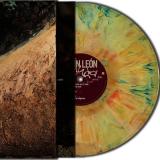
Carín León bricht mit „MUDA“ neue Wege – eine kühne, vielschichtige klangliche Entdeckungsreise, die sein Universum genreübergreifend erweitert und dabei stets in seiner unverwechselbaren DNA verwurzelt bleibt. Der aus Hermosillo stammende Künstler verwandelt Herzschmerz und Erlösung in Hymnen, während er sich neu erfindet und damit Jahre der Entwicklung sowie den Abschluss eines prägenden kreativen Kapitels markiert. Carín León steht an der Spitze einer neuen Welle des regionalen mexikanischen Musikstils und verbindet Tradition mit emotionaler Offenheit. Das 14 Titel umfassende Album „MUDA“ spiegelt ständigen Wandel wider, erkundet verschiedene Genres und beinhaltet Kollaborationen mit Rawayana und Juanes, wodurch er seine Wurzeln als furchtloses, genreübergreifendes Statement weiterentwickelt.
BUCHLA MEETS ORCHESTRA IN QUADRAPHONIC SPACE ON CIANI/ORKEST
Suzanne Ciani, Metropole Orkest and Simon Dobson release historic immersive performance in multiple immersive formats including quad vinyl.
Silverlake, CA \\ June 4, 2026 – Electronic music pioneer and five-time Grammy nominee Suzanne Ciani joins the internationally acclaimed Metropole Orkest, conducted by Simon Dobson, for the release of CIANI/ORKEST, a landmark live album composed entirely of new work, created specifically for this unprecedented collaboration.
Recorded at Amsterdam Dance Event (ADE) before a rapt audience, CIANI/ORKEST is not a retrospective. It is a bold, immersive meeting of the Buchla electronic instrument and 50-piece orchestral sound. The result is a sweeping sonic landscape, at once intimate and monumental.
Under the direction of the Metropole Orkest, renowned for its genre-defying collaborations with artists from jazz to contemporary classical - strings shimmer, brass swells and woodwinds echo the organic, fluid qualities that have always defined Ciani’s sound. “This project feels like a homecoming,” says Ciani. “The Buchla was always orchestral to me, an instrument capable of infinite color. Hearing those colors unfold through the Metropole Orkest has been profoundly moving.”
At the heart of CIANI/ORKEST lies Ciani’s lifelong commitment to quadraphonic sound. From her early Buchla performances in the late 1960s to her 2018 release LIVE Quadraphonic, Ciani has treated space as a primary compositional parameter. Working alongside immersive producer KamranV, Ciani continues to explore immersive sound as both artistic and human gesture. Kamran’s decades of work in spatial formats, converge here in service of a singular goal: to let sound behave as it does in the physical world. “For both of us, quad is musical,” Kamran notes. “The way Suzanne works, quadraphonic is nested in — not the technology per se — but the intent you bring to the work.”
The recording stands as a meditation on legacy, evolution, and the enduring dialogue between technology and human expression. The live album captures the electricity of performance, the immediacy of touch plates under Ciani’s hands, the collective of musicians responding in real time, and the audience’s shared immersion in quadraphonic-inspired space.
CIANI/ORKEST is released by Atmospheric/AKP Recordings/CyKiK in multiple double-disc quadraphonic 12” Record packages designed by grammy-nominated designer Rebeka Arce. Each pressing is made regionally to minimize carbon emissions and also contributes to nature via Brian Eno's EarthPercent, the music industry's climate and nature foundation.
The release is encoded using the dublab Quadraphonic Universally Accessible Resource Kit (QUARK). QUARK enables binaural listening via standard 2-channel playback or 4-speaker playback via Involve Audio hardware decoders, vintage Regular Matrix quadraphonic receivers, Dolby Pro-Logic II/Dolby Surround Upmixer (DSU) receivers, or any multi-channel audio interface equipped computer. This album is immersive via all formats: digital download, streaming (Qobuz, Spotify, SoundCloud, Bandcamp), radio broadcast, vinyl and high-resolution Dolby Atmos (Apple Music, Tidal, Amazon HD, IIA), Sony 360RA (Nugs, Amazon HD) and Eclipsa Audio (YouTube).
About Suzanne Ciani
Suzanne Ciani is a composer, pianist, sound designer, and electronic music pioneer whose work spans experimental, new age, classical, and cinematic sound. A five-time Grammy nominee and recipient of the Moog Innovation Award, she continues to perform internationally, captivating audiences with immersive modular synthesis performances.
About Metropole Orkest
Based in the Netherlands, the Metropole Orkest is one of the world’s leading genre-crossing orchestras, known for collaborations with artists including Brian Eno, Herbie Hancock, Snarky Puppy, Jacob Collier, and within contemporary classical and electronic spheres.
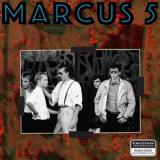
Die auf orangefarbenem Vinyl erhältliche LP von Marcus 5 dokumentiert erstmals offiziell remasterte Archivaufnahmen einer slowenischen Band, deren Ursprung in den frühen Achtzigern liegt. Die LP versammelt neun Stücke, die zwischen 1982 und 1985 aufgenommen wurden und nun in 24-bit/48kHz-Downloads sowie als physische Pressung vorliegen. Die Veröffentlichung bringt frühe Demos und seltene Studioaufnahmen in eine kohärente Edition und richtet sich an Sammler und Freunde der regionalen Alternativszene. Musikalisch verbindet Marcus 5 alternative Funkelemente mit einem ausgeprägten Rhythmusfundament, zugleich sind Anklänge an New-Romantic- und Coldwave-Ästhetik spürbar. Charakteristisch für die Gruppe waren prägnante Basslinien, synkopierte Gitarren und eine ausgeprägte Bühnenpräsenz, die der Band in Ljubljana schnell lokale Aufmerksamkeit brachte. Diese stilistische Mischung sowie die knappen, melodisch orientierten Arrangements zeichnen den Sound aus und geben dem Material eine eigenständige Spur in der damaligen Szene. Die Credits nennen Vinci Vogue AnPlovar als Sänger, Borut KrPisnik und Zvone Kukec an den Gitarren, Jani Hace am Bass sowie Friderik Vargazon an Schlagzeug und Xylophon; sämtliche Stücke entstanden unter dem Bandnamen Marcus 5. Für die Neuauflage zeichnet Mastering-Ingenieur Simon Pensek (Studio Siska, 2025) verantwortlich; das Artwork stammt von Zvone Kukec, Fotografie von JoPe Suhadolnik. Die Edition erschien auf Matrix Music Arhiv und präsentiert damit ein wichtiges Dokument der slowenischen Alternativmusik aus den frühen Achtzigern. Orangen farbige Vinyl LP
Archaic Vaults is proud to present »Ley Lines«, the debut album by St Circul.
Concise collection of folkloric grime instrumentals to rise from a new moniker taken on by the elusive First Circle. A breadcrumb trail of effortlessly crafted early 2000s-era grime, trap and drill instrumentals can be found on a fairly sparse Soundcloud account and numerous NTS shows spanning the last ten years, on which he is known to play almost entirely his own material. Now a different energy takes hold on »Ley Lines«: ten tracks by the enigmatic producer to be released both on a label and in physical format for the first time.
»Ley Lines« was born from a meandering quest through South London’s more leafy dwellings. These cherished regions became a place of refuge in which to ruminate on the hopes that love and community can outlast the dwindling state of Britain’s social and political climate. Photo documentation was made which would later form the genesis for each track, and a return to the studio resulted in something which could not be fitted into the existing First Circle discography.
Harpsichord and brass samples (»A Plan Is Formed«, »Hilly Fields«) are underpinned by murky bass loops and tight militaristic percussion – motifs recognisable amongst white label grime’s most influential producers (Wiley, Skepta, Lewi White etc.) that push the formula into far more rapturous territories than any of FC’s previous productions. The more introspective moments of the album (»Wares at the Ivy House«, »Blythe Vision«) put local field recordings and devotional reverberant ambience to the forefront, alluding to St Circul’s proto-dungeon synth influences and giving the whole album a unique world all its own.
Archaic Vaults is proud to host an album which shares intrinsic roots with the label’s own South London birthplace. »Ley Lines«’ ten tracks of psychogeographic drifting are available in digital and limited cassette format via Archaic Vaults.
Mastered by Owen Pratt Design by Severin Black Artwork image by St Circul
There are two version of the LP - limited to 100 numbered copies with transparent wax and classic black wax edition. Both 180g with special OBI strip.
Maciej Envee Goliński is an artist who probably needs no introduction. He has been working with U Know Me practically since the label's inception. His last album ("Time & Light") made a huge impact worldwide, but we had to wait eight years for the next vinyl release. In the meantime, Maciej has certainly been busy – he has released numerous club singles under several aliases, and has helped record and mix numerous albums from the world of jazz, soul, and electronica. "Wyszymory" is a carefully crafted concept album, inspired by our roots. "Wyszymory" is an album on which every open-minded listener will find something that has been playing in their soul for a long time...
"Of all things visible and invisible, my life is most filled with music and a fascination with sound. It matters not whether they are natural or artificial, isolated or resonating through space. Sounds that evoke
memories, as well as those entirely new. Some of them have resonated unchanged for thousands of years. Certain resonances and rhythms have remained unaltered for generations so distant that they have left no other trace in human civilization.
This bond with our ancestors truly fascinates me. Ever since I realized it, I have become more attuned to inspiration. Listening to traditional and classical music, I kept finding new anchor points. I was constantly surprised by new invitations to ponder what connects – or divides – the pulse of our region’s traditional music with the rhythms of Africa, the tribes of the vast East, or the frozen North. My great authority, Tomasz Stańko, in interviews conducted by Tomek Michałowski, used beautiful parables of love and creativity to bring me closer to the Cro-Magnon cave artists. The Icelandic literary magician Andri Snær Magnason, in his book On Time and Water, captivated me with the fascinating observation that through emotional contact, words, ideas, or memory, we reach back and forward two or even three generations – spanning a period of about 270 years. Then there is Sam Kowalski, who with his wonderful obereks played on the gitalele, took me on a hypnotic journey, from which one returns with a deep admiration for the art of musical storytelling, passed down from generation to generation. Finally, my own children surprise me with talents, behaviors, and increasingly distinct features of those generations that now dwell only in my hazy memory and on old photographs.
I wanted the protagonists of this album to be the very phenomena that modern humans share with their ancestors, regardless of the level of civilization. Most vital among them is the relationship between humans, nature, and their own emotions. Wyszymory has nothing to do with an academic study, though I did delve into Slavic mythology, archaeology, and history in search of inspiration. Nor is it an album of traditional music, even if such music is present thanks to wonderful instrumentalists. I managed to invite artists who cross boundaries daily, working not only with Polish music but also with Hindu and African traditions, and even jazz, with its long history of blending influences. Naturally, the album became a kind of sonic comic book, where individual scenes and stories – the sounds, pulsations, and ideas on how to use them – came to me over time, often under unique circumstances and in inspiring contexts."
Envee
Gary Sullivan's Bodega Pop project returns to DINTE with a cassette-only collection of traditional sounds plucked from CDRs found in the night-markets of Savannakhet, Vientiane, and Luang Prabang.
"In Lao PDR, music was seemingly everywhere. Walking through an open field outside Savannakhet to the sound of someone playing a khaen on a distant porch, the bracing rush of electronic molam from of one of Vientiane’s many aging malls, the awkward blending of the blind so u player’s voice with the bustling sounds of Luang Prabang’s night market.
It was in that UNESCO World Heritage Site that I found most of the CDs and CD-Rs from which I’ve ripped the tracks for this compilation. I’m almost certain I picked up a thumb drive at the night market that held many hours of additional music that could have been included, but if so, I’ve misplaced it, lost it for good, or simply misremember purchasing it in the first place. What I do remember is that these discs were literally the last copies in the cafe, museum, bookstore, and night market where I bought them, and not all of them played all the way through without sonic deterioration.
The sounds compiled here play in stark contrast to the more contemporary recordings I found in Laos, most of which featured some form of upbeat digital workstation molam or children’s songs. In addition to the ever-present khaen, this collection includes recordings of the sanai, a single-reed instrument fashioned from a water buffalo horn, the ceremonial khong nyai gong, the pi and similar free-reeds, and at least a dozen more traditional instruments played by Lao and ethnic minority artists. While some of these tracks were laid down in Vientiane or Luang Prabang, most were recorded near where the artists lived, from the legendary Vat Phou in the far south to the former Pathet Lao capital Xam Neua in the northeast.
Unlike Laurent Jeanneau’s more focused Lao collections for Akuphone and Sublime Frequencies, which remain among my favorite albums of all time, the present cassette-only selection is literally all over the PDR map. The sequencing is entirely in response to rhythm and texture and includes recordings from the 1970s, 80s, 90s, and early aughts. This may frustrate those with more of an ethnomusicology bent, but my hope is that the listener experiences something akin to wandering for the first time through this majestic country, encountering the last copies of forgotten recordings one after another, and hearing in these remains fragments of the past and a living musical landscape."
qorakitobchi aka Anvar Kalandarov is a music archaeologist, musician and producer from Tashkent, Uzbekistan whose work is dedicated to uncovering forgotten sounds from across Central Asia. In recent years he has emerged as a singular voice documenting the region’s musical heritage, co-compiling Synthesizing the Silk Roads for Ostinato Records and curating Digging Central Asia: Musical Archaeology Along the Silk Road split release for Death Is Not The End, alongside presenting his own Maqom Soul imprint.
For this mixtape, Kalandarov turns his attention to the synth-pop, disco and electronic music that flourished across Central Asia during the 1980s and 1990s. Drawn from rare vinyl records & private archives, this selection explores a period when Soviet modernity, regional traditions and emerging synthesiser sounds merged to create a uniquely Central Asian vision of the future. From Uzbek disco and Tajik synth-pop to lesser-known oddities, the mix offers a glimpse into a musical world that remains largely unexplored outside the region.
Recorded April 17 and 18, 1993, at the Union Grove Baptist Church, Ozark, Alabama.
The Wiregrass Singers' Dewey Williams began learning the shape-note tradition in his childhood. He studied under Judge Jackson, who authored the landmark 1934 hymnbook The Colored Sacred Harp. In 1971, Williams formally organized The Wiregrass Sacred Harp Singers to preserve the music full-time. This unified troupe began touring nationally and leading workshops, which ultimately launched them onto stages at the Smithsonian and Newport folk festivals up until Williams' passing in 1995 when the group disbanded. The African-American Sacred Harp tradition in the Wiregrass region has steeply declined since the start of the 21st century, due to an aging generation of singers, and today it is largely sustained through archival preservation and occasional multi-book singing meetups.
This raw recording, made at the Union Grove Baptist Church, Ozark in mid-April 1993 finds the group singing from B. F. White’s The Sacred Harp (1844), which together with his brother-in-law William Walker’s Southern Harmony (1835) formed the musical backbone of generations of Southern music and Southern musical styles.
"On almost any Sunday between the months of March and October, the season most conducive to travel and outdoor dinner-on-the- grounds, Sacred Harp devotés join with fellow songsters at the County Line Church in Slocomb, or the Mount Sinai Church in Henry County, or the Union Grove Baptist Church in Dale County, or at any one of a dozen or so churches in the southeast Alabama counties of Barbour, Coffee, Dale, Geneva, Houston and Pike, to form the square and sing fa-sol-la. Approximately fifteen African-American Sacred Harp singings occur annually in the Wiregrass region of southeast Alabama. A singing tradition characteristically associated with white culture in the Deep South, southeast Alabama has enjoyed a vibrant African-American Sacred Harp tradition for well over a century.
On a day of a typical African-American Sacred Harp Singing, the participants arrive casually in the late morning, seat themselves in the square according to voice part, and begin to sing. A dinner break occurs in the early afternoon, and the singers enjoy a covered-dish "dinner-on-the-grounds" (or in the church basement) prepared by the women. The most intense and emotional singing typically occurs after the dinner break. Each singer takes a turn leading the song of his choice. He walks to the middle of the square, calls out the song's page number and waits for the designated tuner to key the song. Singers are discouraged by the other singers from repeating a song that has already been sung, or "used." This proscription is often dispensed with, however, if the singer is particularly young, particularly old, or if the song has special significance to the individual song leader (perhaps the favorite song of a recently deceased relative).
Every singer is given an opportunity to lead a song. Often, older or more infirm singers will request younger singers to lead their songs for them. The motions of the song leaders are highly stylistic and often emotional. Young children are taught in singing school to mark time with their right arm while holding the book in their left. Typically, a singer will stand in place at the center of the square while leading the singing of the notes. When he begins to lead the lyrics portion of the song, he will often begin to "walk time," rhythmically pacing from one side of the square to the other, being careful never to turn his back on the tenor section. This "walking time" is unique to the African-American tradition. As a singer grows more confident he develops his own distinctive leading style. During fuguing songs in particular, he may gesture to each section of the square as its part joins in. Skilled song leaders often elicit applause or other emotional responses from the group. Occasionally a singer may fall into a state of spiritual ecstasy and "get happy." The episode might include a personal testimonial followed by a repeat of the last verse or refrain from the previous song. The singings break up around 5 P.M."
—Henry Willett, 1997 credits
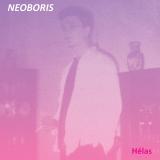
Hélas collects 15 songs from the repertoire of NEOBORIS, an infamous Bordeaux/Pau duo highly active in the late ‘90s and early ‘00s. Drawing on direct ounk, wave, rave culture and »Variété Française« influences, Hélas functions as a perfect time capsule of a very specific era and mood: a boy-and-girl duo celebrating their love for boys, in melancholy and beauty.
I met Boris in the early '90s. I was a hardcore raver and sang in various punk bands in Bordeaux. Boris was more romantic and had grown up with New Wave and Goth. He was a natural-born singer-songwriter. We shared a deep passion for Elli et Jacno, Taxi Girl, or Mathematiques Modernes. We started giving wild concerts across our region in the South West of France and gradually playing everywhere all the way to Paris. Boris' untimely death in 2008 was a shock. Today, I still perform Boris' songs everywhere I can because I just want to preserve his spirit. Singing with him then, now, and forever.
Originally released on Art Yard in 2017 finally back in print!
Solo album displaying a collection of foggy electronic dub meditations recorded between 2000 and 2005 by Berliner Ring member Alexander Christou under his Al Chem guise.
In 2009, the label Art Yard sent a probe into the outer regions of contemporary electronic music, releasing Berliner Ring's "Orbital" album, a dub techno hymnal for Berlin’s orbital ring road. Drawing together the disparate elements of invented instruments, modified keyboards, customized rhythm and string machines, it was built around moods and themes drawn from the Berlin landscape.
One member of the Ring, Alexander Christou, also a part of the Berlin electro rock group Elecdrones, recording for Katzensonne. The band were “not interested in the crafting of chunks of music ready to be consumed”. Christou has since been recording under the moniker Al Chem, crossing analogue and digital realms, synthesizing a kind of philosopher’s stone. As Al Chem, he released on Tummy Touch Records, and now follows with a collection of foggy electronic dub meditations recorded between 2000 and 2005 in a full album.
In the battle to harness the elements, ancient mists permeated Chem’s music. A murky, mercurial humidity saturates the project. A distinctly north European descendant of dub, a kind of Seventh Seal that Bergman could have made, if provided enough hydroponic infusions.
No Hopper is a rework of the Ras Michael song No Hoppers, from his legendary album, Rastafari Dub, Chem's version shuffles the pack of electronic percussion with organic, Moondog-like rhythms and hazy atmospheric chords; The Prophet pinpoints Chem's GPS firmly in Berlin, just as The Red Tower blurs that kick-drum parallel between reggae and house music; Baudelaire sputters digital delay, piling on the pressure, a clatter of surgical implements performing an operation out of Dead Ringers, the patient storming out of the theatre with loosely fitted mechanical body parts; the instrumental No Hopper only serves to highlight the distant gathering storm. Ladder of Perfection rounds off the set with a drone, creaking with bubbling digital mud pools
The Unsung Adventures of Punch Brothers is a highly strategic, physical-format priority scheduled for release on July 24, 2026, via Nonesuch Records. This document has been professionally designed to serve as an in-store info sheet to justify why this title demands a prominent listing and prime shelf space in your store. Core Commercial Arguments For Your Inventory:High Physical Media Affinity: Punch Brothers possess an exceptionally loyal, audiophile-leaning fanbase that heavily prioritizes purchasing physical LPs and CDs rather than relying solely on streaming platforms. Grammy-Winning Prestige & New Lineup Buzz: As previous winners of the Grammy for Best Folk Album (for All Ashore), this release marks a monumental shift—their first-ever all-instrumental record and the studio debut of acclaimed fiddle virtuoso Brittany Haas. It serves as a natural conversation starter for acoustic, classical, and bluegrass buyers. Massive 28-City Tour Traffic: The band's largest tour since 2019 spans from summer into late autumn 2026, targeting iconic institutions like Carnegie Hall (NYC), major folk festivals, and regional hubs. Local tour stops are critical touchpoints to align with your regional endcaps and point-of-sale displays. Premium Production Appeal: Engineered by recent Grammy-winner Joseph Lorge (Guilford Sound Studio), the pristine sonics will make this a staple for high-fidelity test spins and vinyl showcase walls.
Gulp Joachim Nordwall’s queasiest, most curdled synth tones on this supremely detuned co-op with Athens’ Stellage crew = 45 minutes of pure nasal-drip tang and gungy pulses tipped FFO Connor Camburn, Wolf Eyes, Conrad Schnitzler, Ilpo Väisänen’s Liima alltimers.
Joachim Nordwall’s 1st solo jaunt since capping the ‘Healing Music’ series in ’23 finds the DIY linchpin and serial collaborator coaxing potently psychoactive tones from an undisclosed set up. It appears to be one of his most intently focussed jags in recent memory, concentrated on juicing a paucity of ingredients for optimal flavour. Nothing that new then? Well, aye, but when he really gets into it, with an effect that really probes parts of the psyche untouched by anything we’ve heard from him before, he produces synaesthetic sounds that frankly makes our ears salivate.
A starting exercise in plucky pulse-work recalling Robert Aiki Aubrey Lowe initiates a real descent into the nether regions of Nordwall’s imagination, pulling into sepulchral drone on ‘Trance Recording’ and Droog wet dream material on ‘Abandoned Test Site’, while allowing for some levity in the lacquer-crackling pulse poem ‘Expand Your Mind’. However, he soon pitches back into resonant, metallic sonorities with durational conviction on a ‘Some Skies Overlap’ bringing to mind Connor Camburn works, but with an icier edge, and his title track spews molten drums in a rumbling, spark-spitting torrent.
MAR 004 continues the evolving catalogue of Moozikeh Analog Room, a label imprint emerging from the broader Analog Room ecosystem. Over time, Analog Room has developed into distributed creative structure spanning, bridging club culture, archival releases, and experimental instrument design. MAR 004 extends this trajectory, reinforcing the label’s position as a long-form documentation platform for contemporary electronic music practices rooted in both regional and international dialogue.
From The Label:
"The relationship with Roman Flugel started with us listening to his music and be fascinated by the simplicity but bold sound. The sound design and the story telling was inline with how we enjoyed music. After inviting Roman for a few times to perform at Analog Room, the relationship led to the point that when it was time for us to think of the MAR releases, we could not miss on asking Roman to join the label and the rest is what you are going to experience with this thick, deep and rhythmic EP that represents what the world need at the moment, some SOLUTIONS. Analog Room has always tried to bypass the issues in the South West Asia region through music and art and show how we are all the same and connected."
From Roman:
"My record for Analog Room is essentially a long-term project that was sparked by multiple invitations to the Analog Room club in Dubai over the course of several years. The club held a special place for me—a sanctuary for the underground music scene in a city otherwise defined by a very different ethos. I am delighted to now be part of the Analog Room label family. The record blends various moods and directions within my personal musical landscape, and "Solutions," in particular, has created euphoric moments during my DJ sets over the past few months."
out of Stock
Last delivered 30 days ago available to reorder, subject to availability
Sophie Zelmani started out in 1995 with the impressive self-titled debut album. The Swedish singer began making home recordings at the age of 14, and after sending her demos to three different companies, she signed a record deal with Sony Music in Sweden.
This album introduced the world to Zelmani’s soothing vocals and beautiful songwriting, and it quickly took the world by storm. The album sold 200,000 copies in Europe and the Asia-Pacific region alone. Zelmani also gained recognition in America, with her music featuring in series such as Buffy the Vampire Slayer and Dawson's Creek.
Sophie Zelmani, featuring the album cover of the original Scandinavian release, is available as a limited edition of 1000 individually numbered copies on blue vinyl and includes an insert.
The small print:
• Due to rights restrictions, this item is only available in the MOV store to European customers.
and the second chapter in an ongoing improvisational document recorded inside one of Santa Cruz de Tenerife’s abandoned oil tanks.
Gaf & The Love Supreme Arkestra work outside conventional studio frameworks. Their music emerges from extended improvisation sessions that unfold sporadically, sometimes over several days. Built around drums, guitar, bass, modular synthesis and samplers, and expanded with vibraphone and winds (flutes, saxophone, Herreño whistle), the group continues to move between jazz, psychedelic rock and free-form experimental composition.
While Ganzfeld drew from the misty northern coast of Isla Baja, Retiro Espiritual turns toward Taganana, one of Tenerife’s most remote regions. Its isolation, Atlantic exposure and volcanic terrain inform the record’s pace and focus. The title reflects this shift: a space for retreat, collective creation and suspended time.
Sonically, Retiro Espiritual leans warmer and more reflective. Flutes drift over slow grooves, extended jams unfold patiently, and traces of 70s spiritual jazz surface throughout. The experimental core remains, now shaped by repetition, space and a calmer, sunlit atmosphere.
Another autonomous transmission from a band committed to ritual, territory and long-form collective improvisation at the edge of the Atlantic.
—
Recorded live in 2020 in Tenerife Canary Islands
Produced by Mladen Kurajica
Mixed by Jorge Lozano
Master by Daniel García
Artwork Felipe González Cabezas