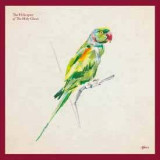
The Debut Album From The Helicopter Of The Holy Ghost - Mark Morriss
( The Bluetones ) Billy Reeves ( theaudience ) Crayola Lectern ( Lost
Horizons / Departure Lounge ) Mark Peters ( Engineers ) Co-produced by
Richard Archer of Hard-Fi Feat. Simon Raymonde ( The Cocteau Twins ) &
Thomas Anderson ( Gazpacho )
In 2001 Billy Reeves, fresh from introducing the world to Sophie Ellis-Bextor
(via their band theaudience) was smashed to bits by joyriders whilst in his Morris Minor - resulting in a two-week coma and a year in and out of hospital. In
2017 his brother gave him two mini-discs that had been saved from the wreckage, including demos of songs he had forgotten - due to crash-related amnesia.
Mark Morriss of chart-topping Hounslow janglers The Bluetones agreed to sing
them, so with the assistance of Richard Archer (Hard-Fi), along with Crayola
Lectern (Zofff / Departure Lounge), and Mark Peters (Engineers), these songs
would form the debut long player from The Helicopter of The Holy Ghost.
The original concept for the material was probably while Billy was signed to
Sony, which pointed toward a more commercial sound, however Crayola Lectern’s involvement on piano help send the recordings into a more ‘Canterbury’
direction, taking influence from Caravan, Robert Wyatt & the like.
Featuring a groovy guest line-up including Simon Raymonde of Cocteau Twins,
Dale Davis from Amy Winehouse’s band, Andy Lewis from Paul Weller’s group,
Smiley from Joe Strummer’s Mescalaros and Thomas Anderson of fellow Kscope
signees Gazpacho, the wide-ranging influence herein is evident throughout a
very sweet, gentle, calming album of originality and versatility.
The Vinyl LP edition of this album will be especially printed in an eco-friendly
manner, with no shrinkwrap being used, the record itself pressed on 100% recycled records and the board made up of FSC certified climate-friendly recycled
material. The whole package itself will be Climate neutral, having all its carbon
offset with ClimatePartner.
Buscar:rela
There has always been a Reggae inuence in the music of El Michels Affair. From their cover of "Hung Up On My Baby" done in a Reggae style, to the general sound and approach that permeates Leon's production style. While recording Bailey's 2020 Ekundayo album, they did some straight forward reggae tunes inspired by different eras alongside some modern R&B tracks that would t more comfortably next to Frank Ocean than Jacob Miller. It is this same notion that old and new can live so comfortably together that birthed the idea of Ekundayo Inversions. Traditional dub came out of reggae in the late 60s and early 70s when pioneers like King Tubby and Lee Perry started taking the multi track recordings of songs and running them back through the board adding effects and additional instrumentation. These recordings are called "dubs" or "versions" and are typically instrumentals with ourishes of vocals from the original tracks. El Michels decided to use the blueprints left behind and make something using the inuences of today. He wound up straying so far from the traditional format that it didn't seem right to use the word `Dub', hence Ekundayo Inversions. All the songs are tied together by WhatsApp messages between Leon and Liam that perfectly narrate the story of this record and their working relationship. One of the highlights on Ekundayo Inversions is a guest appearance from the legendary Lee "Scratch" Perry on the "Ugly Truth" version. L$P switches between singing and talking, proclaiming his powers one minute and playing with the track's title the next. On "Awkward take. 2" Leon takes one of the most experimental songs from Ekundayo and actually straightens it out. A track that once seemed to be oating in space has now been anchored by the addition of drums and bass. "Faded", a version of "Paper Tiger", is given the full EMA treatment with the addition of emotive horns over an uncomfortably sparse rhythm track peppered with Liam's voice drenched in delay and echo. "Champions" features a verse from Black Thought of The Roots and halfway through, El Michels sends the rhythm section 50 years back. At the end of the day, Ekundayo Inversions is a testament to how strong the original songs are. Whether they're in a R&B style, reggae style, stripped down to their bare bones, or loaded with production, the songs will move you.
Classic Miles Davis LP pressed on 180 gram vinyl, with a bonus CD digipack included containing the complete album ‘Birth Of The Cool’ album plus 11 bonus tracks and updated liner notes.
“The virtuosity led to relaxing, stylish mood music as the end result - the very thing that came to define West Coast or ‘cool’ jazz - but this music is so inventive, it remains alluring even after its influence has been thoroughly absorbed into the mainstream.” - **** AllMusic (Stephen Thomas Erlewine)
‘Part I’ is the debut LP from Indigo, the moniker and ongoing project of Melbourne-based composer and arranger, Nick Roder.
The first release in what will be an ongoing three-part series, Part I features nine tracks for bass guitar and tenor saxophone. Part II, an exploration of a slightly larger, more sonically diverse musical world will feature string quartet and voice. Finally, Part III will collaborate with choreographer Siobhan McKenna, who alongside Nick will develop a percussive movement work that seamlessly intertwines with the musical work.
“My aim is to create music that is sonically and musically atypical whilst still belonging to an accessible contemporary scene. Each project, album or ‘part’ will set out to explore a single ensemble or group of instruments. In the case of Part I, that ensemble is hollow body bass guitar and tenor saxophone. “ - Indigo (Nick Roder)
The Indigo project itself was inspired by Saxophone & Bass Guitar by Sam Gendel and Sam Wilkes, which prompted Nick to write an album of music for the same type of ensemble. Having only just purchased a bass guitar for a different project, the instrument was still very new to him.
“I was curious to see what I would write with my self-imposed rule of not being able to overdub material, and further, how my limitations as a relatively green bass guitarist would influence the writing of the material. A strong focus on harmonic movement and melodic material was where I eventually found my happy place.”
The result is a phenomenal debut. Burrowing into the space between it’s sparse instrumentation and dulcet tones, Part I is the realisation of a minimalist and concise vision of what a symbiotic relationship between two instruments can yield.
About Indigo
Indigo is the moniker and ongoing project of Melbourne-based composer and arranger, Nick Roder. The Indigo project was conceptualised in 2020 and focuses on deep sonic exploration of little-heard ensembles in a contemporary space.
Since 2018, Nick has been composing soundtracks for video games including The Invisible Hand, Roadwarden, N1NE: Splintered Mind, This Dead Winter and Miska. Nick has also played in art-rock ensemble, Tulalah, exploring sonic textures, combining contemporary jazz/rock with chamber sounds. The modular ensemble released The Flood (Equinox Recordings, 2015) and The Question (Independent, 2017).
For number 90 in the Brazil45 series, we share a couple of lesser-known discoveries that have become recent favourites here at Bongo HQ. First up we head to the north of Brazil with funky Forr / boogie hybrid monster, ‘Vendedor De Mangaios’ by Josan. Originally released in 1981 on the album ‘Rio De Renova es’ on Copacabana Records. This addictive dancefloor gem is still relatively under the radar, but it has become a firm favourite at Bristol’s Worm Disco Club parties and amongst the DJ’s and collectors of Brazil’s underground dance music scene. Taken from the illustrious singer Bart Galeno’s self-titled 1977 album on Tapecar Records, ‘Vou Tirar Voc Daqui’ is an unusual one. Not easily pigeon-holed, he song sits somewhere between MPB / funk and rock, yet isn’t really any of them. Backed with a big orchestrated sound and tripped-out synths, the track has a truly unique feel. We hope you dig these finds. Another testament to the diversity and depth of Brazil’s rich musical heritage.
- Next installment in BRAZIL45 Series.
- Two lesser-known discoveries
Imbued with the grit of vintage country music and the grace of gospel, Leah Blevins’ debut album is a scrapbook of sorts, a collage of feelings and memories from a decade spent working in the big city of Nashville while missing the small town she left behind. “It’s a timestamp of my twenties,” says the Sandy Hook, Kentucky, native. “Here are all the stories and all the experiences from that decade. Here are all the mixed emotions I’ve felt about things I’ve gone through and people I’ve met along the way.” First Time Feeling turns tribulations into what Blevins calls “bundles of triumphs,” which lend weight to her well-observed lyrics and gravity to her soulful vocals. “It’s about coming into womanhood, but it’s more than just a coming-of-age story. It’s me discovering that I’m capable of writing a song on my own. I’m capable of staying sober. I’m capable of all these things that once felt so far out of reach. Within those walls these songs had to be unapologetically honest.” Or, as she puts it on the bluesy opener “Afraid,” “Have you ever been afraid, with nowhere to hide? Scared of nothing, but you’re running inside?”
. “I want people to find something relatable within these ten songs. But for me they’re a reminder that all the pain that I went through—which isn’t that different from the pain every human goes through—it’s all mine. By making this album, I’ve taken it, I’ve owned that pain, I’ve made it mine, and I’ve wrapped it up with a bow on top.”
- A1: Ain't Nobody
- A2: Reach Out (Feat Charlotte Haining)
- A3: Smile & Wave
- A4: Listen Up
- A5: Sanctuary
- B1: Pressure (Feat Cleveland Watkiss)
- B2: Underdog (Feat Dj Marky)
- B3: Piano Skit
- B4: Baby Angel Face (Feat Eva Lazarus)
- C1: Explode
- C2: Soul Silhouette (Feat Singing Fats)
- C3: Hands, Lights, Flames, Phones (Feat Drs & Fox)
- C4: Problems Skit
- D1: Take Me Home
- D2: Stranger
- D3: Smile More
Hospital Records are extremely proud to present ‘Smile & Wave’, the
second studio album from drum & bass’ friendliest MC, Inja.
With the biggest smile on his face, the lyricist, vocalist, poet, artist and storyteller delivers
16 tracks, seamlessly weaved together through Inja’s infectiously feel-good flow and sincere
wordsmithery. The entire album was produced by Whiney, further cementing their relationship as one of the most untestable dance music pairings. Also featuring Charlotte Haining,
Eva Lazarus, DRS, Fox, Cleveland Watkiss, Singing Fats, and DJ Marky.
Album title track ‘Smile & Wave’ is the musical embodiment of Inja’s playful demeanour.
Known for being the world’s smiliest artist, Inja wrote and recorded this feel-good bouncer
alongside his daughter who is “pretty much the first person to hear anything” he’s up to
musically. Expect a rude bassline and infectious wordplay.
Teaming up with superstar singer-songwriter Charlotte Haining, ‘Reach Out’ sees two of the
most distinct voices in dance music come together over a bittersweet wobbler written about
times when you feel “so out of place, out of reach” in the words of Inja. Having worked
alongside an impressive array of electronic artists including Hybrid Minds, Sub Focus, My Nu
Leng and Friction, Charlotte’s delicately powerful hooks are the perfect counterpart to Inja’s
heartfelt flows.
Luscious pads and dubbed out pianos and guitars set the scene on ‘Baby Angel’ featuring the
worldwide wave-maker Eva Lazarus who returns to Hospital Records for the first time since
featuring on Etherwood’s ‘Light My Way Home’ back in 2015. Having worked alongside staple
figures including Mungo’s Hi-Fi, Zed Bias and Gentlemen’s Dub Club, Eva infuses her reggae,
hip-hop and jungle flavours alongside Inja’s humbling storytellings.
Inja’s “personal favourite to perform live as it smashes every and any system”, ‘Explode’, is a
140BPM anthem featuring flows that will ignite any room and a killer instrumental that will
have you bobbing no questions asked. Proving himself to be a versatile and skillful microphone controller, Inja’s ability to shell down any tempo is ever more apparent on this upfront
banger.
Three legendary MCs unite on ‘Hands, Lights, Flames, Phones’ where Inja joins forces with
two of Manchester’s very finest - DRS and Fox. Sharp lyricism is rife as the triple threat of
three titan wordsmiths link up, seeing energetic bars bouncing off each other over a cold-cut
drum & bass roller. This is a combination not to be tested.
Inja has established himself as a pinnacle figure within the realms of drum & bass. Loved for
his ability to express his thoughts into honest, relatable lyrics in ‘She Just Wanna Dance’, a
spoken word piece for Amnesty International that was a viral online hit in 2017, and more
recently switching it up to ‘We Just Wanna Dance’ during the UK lockdown, expressing his
desire to be reconnected with ravers again. Then picked up by BBC News and Sky News.
On top of being the MC of choice for drum & bass powerhouse group Kings Of The Rollers,
Inja is no stranger to tearing things up on the airwaves with support from the likes of DJ
Target, Rene LaVice and Danny Byrd on BBC Radio 1 over the years. Since his debut ‘Blank
Pages’ album on Hospital Records in 2018, Inja has flourished as a multi-talented MC, vocalist, singer and songwriter with a series of singles including the Beatport Drum & Bass charttopper ‘Game Face (Stay Alert)’ alongside Whiney, as well as the infamous ‘Lumberjackin’’ on
Serum’s Souped Up.
"To all the supporters that enjoy anything I’m a part of, I would never have had the opportunities to see as much of the world as I have without you. My gratitude has no bounds and I’d
love to share a smile with you all one day.” - Inja
"Transitional Being reveals another side of XVARR’s production palette — characteristically tranceinducing, this release highlights the transformational potential of dance music.
Spanning the last ten years, these six tracks handpicked by Aural Medium align with a particular relationship to technology that has formed the central pillar to the XVARR studio set up. Often starting with a drum pattern and sequenced bass-line, the physical rhythm is stripped out and surrounding elements are drawn out and manipulated to convey the ‘hidden’ intention behind the track. With the tracks compiled here, he lets the rhythms ride. The influence of more ‘club-orientated’ music has remained firmly embedded in XVARR’s psyche, although typically the trip has been more introverted. The approach here may differ from other XVARR outputs, but the mood most definitely remains the same, with an overarching desire to channel emotion and passion from the other side of nowhere.
XVARR recognizes the parallels between the ritualistic dance of the Witches’ Sabbath and a dark room filled with sweat, smoke, and sound. It is in this parallel void of transcendent possibilities that tracks such as “Running out of Time”, “The Crooked Path” (a nod to Andrew Chumbley) and “Universal” reside. There’s also a subtle presence of influences from Industrial music, with groups such as SPK, Conrad Schnitzler, Chris Carter and Cabaret Voltaire paving the way for XVARR’s early experiments with electronic music. The alchemical results on this EP float in a universe populated by such luminaries as AFX, Drexciya, and the constellation created by Chain Reaction, within a cosmos governed by the gravitational pull of Baldelli and Weatherall."
Erased Tapes debut. Wait, what? How? Anyone who has seen
the trail blazing sonic pioneer live will know Nils likes to
deadpan a joke. Graz is in fact the first studio album he
recorded for the label back in 2009, that somehow remained a
secret… until now.
Nils Frahm has quietly changed the musical landscape,
reincarnating the centuries old figure of a pianist-composer for a
new generation of music fans. As Nils’ word-of-mouth popularity
grew and grew, so did the pop-culture profile of his instrument. He
founded Piano Day with a team of like-minded friends in 2015 to
help that process, some years releasing an album of piano
recordings to celebrate one of humankind’s greatest inventions.
Graz is one such record; an unheard snapshot of a young Nils
recorded at Mumuth, the University of Music and Performing Arts
Graz, in 2009 as part of the thesis Conversations for Piano and
Room produced by Thomas Geiger, which received an award in
the Classical Surround Recording category at the 127th AES
Convention in New York.
Whilst at the time it was decided to keep the grand piano
recordings from the Graz sessions locked away and instead focus
on his close mic’ed, dampened piano explorations which would
become his acclaimed studio album Felt in 2011, two of the pieces
— most notably Hammers — lived on as part of his live set, and
were expanded on and re-recorded as part of his breakthrough
2013 record Spaces (a collage of field recordings from concerts
which broke the Fourth Wall and included audience coughs). Over
his mercurial career, Nils has pushed and pulled at the boundaries
and parameters of his prolific work like that. He’s physically
changed his piano (the softened prepared strings of Felt) played
with a modified body (Screws recorded with 9 fingers and a broken
thumb) played with scale (Solo recorded on the 3.7 metre high
Klavins M370) and with the different layers of formats (last year’s
Tripping with Nils Frahm nested his studio setup inside a live
performance, concert film and live album). Now with Graz he has
found the final frontier for play: time itself and his own discography.
Graz is a moment of time at the very beginning of Nils’ quiet
revolution. The essential genius is already evident; the harmonic
language of classical, and the immediacy of jazz. Nils seems to
pull down each idea moment by moment, gently, to not scare away
the muse. He describes: “sometimes when you hear a piano, you
might think it’s a conversation between a woman and a man. At
the same time, it can hint at shapes of the universe and describe
how a black hole looks. You can make sounds that have no relation
to anything we can measure.”
Adam Beyer invites the legendary DJ Rush to make his Drumcode debut, as the pair link for a stirring maiden collaboration, ‘Restore My Soul’.
The DC boss holds a deep respect for the iconic Chicago artist, the relationship stretching back 25+ years to their time touring the German techno circuit in the 90s.
The title track builds dramatic tension via elastic synths that oscillate alongside Rush’s vocal, taking things to heady levels. ‘Control’ is a thick wedge of industrial-edged rhythms, with Rush’s famous vocal providing a commanding presence throughout.
On the B side, ‘Take Me There’ is stirring in composition, transitioning from crushing percussive loops to deep techno funk, before working towards a teased out crescendo as Rush’s hypnotic refrain echoes in the air. A deliciously pumping DJ Rush remix of ‘Restore My Soul’ rounds out the package.
Tangents formed in Sydney in 2010 and released their debut album "I" in 2013, a recording of their first ever meeting and live show. Follow-up albums Stateless (2016) and New Bodies (2018), and linked singles and EPs, explored a style of post-produced live improvisation that marked the group's distinct blend of electronic, jazz, rock and new music-inspired styles. Amidst other international recognition, New Bodies was nominated for the Australian Music Prize in 2018. Their latest release, Timeslips & Chimeras, continues their studio recording journey after a detour into intensive live performance (idiosyncratically captured in a cramped radio studio on the Risk Reaps Reward EP) and a major digital art installation, Spiral, at the Powerhouse Museum, Sydney. The record continues their relationship with New York label Temporary Residence through the challenges of music production in the Covid-19 era. Tangents are Ollie Bown, Evan Dorrian, Peter Hollo and Adrian Lim-Klumpes. Sia Ahmad is a former member whose work continues through the Timeslips & Chimeras production period.
- A1: The House Song - Lee Hazlewood
- A2: If Only She Had Stayed - Chris Gantry
- 3: Endless Miles Of Highway - Jerry Reed
- A4: The Back Side Of Dallas - Jeannie C Riley
- A5: Way Before The Time Of Towns - Hoyt Axton
- A6: Strawberry Farms - Tom T Hall
- B1: Down From Dover - Dolly Parton
- B2: July 12, 1939 - Charlie Rich
- B3: What Am I Doing In L.a.? - Nat Stuckey
- B4: Mr Stanton Don’t Believe It - Rob Galbraith
- B5: Saunders’ Ferry Lane - Sammi Smith
- B6: Four Shades Of Love - Henson Cargill
- C1: Drivin’ Nails In The Wall – Waylon Jennings & The Kimberlys
- C2: Ruby, Don’t Take Your Love To Town – Kenny Rogers & The First Edition
- C3: Why Can’t I Come Home - Ed Bruce
- C4: Mr Walker, It’s All Over - Billie Jo Spears
- C5: Harlan County - Jim Ford
- C6: Widow Wimberly - Tony Joe White
- D1: Belinda (Alt Take) - Bobbie Gentry
- D2: Joanne - Michael Nesmith & The First National Band
- D3: Mr Jackson’s Got Nothing To Do - John Hartford
- D4: Alone - Lee Hazlewood & Suzi Jane Hokom
- D5: Fabulous Body And Smile – Sir Robert Charles Griggs
- D6: I Feel Like Going Home - Charlie Rich
• “Choctaw Ridge” explores a new country sound, one that emerged at the end of the 60s in the wake of Bobbie Gentry’s ‘Ode To Billie Joe’, a shock number one hit in 1967. When singers like Gentry, Jimmy Webb, Michael Nesmith and Lee Hazlewood moved from the south to Los Angeles to make it in the music business, they were not part of the Nashville in-crowd and they forged a new direction.
• ‘Ode To Billie Joe’ was the tip of the iceberg, and its success helped a bunch of singers and storytellers to emerge over the next three or four years. Some of the tracks on this collection bear that song’s stamp more clearly than others: Sammi Smith’s moody ‘Saunders’ Ferry Lane’ had a similar mystery lyric, and Henson Cargill’s ‘Four Shades Of Love’ is a portmanteau, with one (or possibly two) of the theoretically romantic situations ending in death.
• Suddenly, character sketches of southerners became a lot more rounded – women didn’t have to stay home, or take abuse at the office, and darkness wasn’t only found at the bottom of a bottle. Storytelling is the link between all of the songs on this collection. We have cautionary tales about what could happen to someone who heads for the bright lights and doesn’t make it, ending up in the grasping hands of ‘Mr Walker’ (Billie Joe Spears), or on the ‘Back Side Of Dallas’ (Jeannie C Reilly), or on a mortuary slab in the case of the songwriter with the ‘Fabulous Body And Smile’ (Robert Charles Griggs). And there are stories about wanting to go home – Nat Stuckey’s ‘What Am I Doing In LA?’ and Charlie Rich’s ‘Feel Like Going Home’ – and others from Ed Bruce and Lee Hazlewood, who know that their home isn’t home anymore.
• The tracklist and fulsome sleeve notes have been put together by Bob Stanley (Saint Etienne) and Martin Green (Smashing, The Sound Gallery), who have been collecting these records for decades.
• The voices are resonant and relatable, and the productions take in the best of what pop had to offer in the late 60s and early 70s. Before the factionalism between smooth pop-conscious Nashville and the hedonistic ‘outlaws’ made it look inward again, this was a golden era for an atmospheric, inclusive and progressive country music. It began on the third of June, another sleepy, dusty Delta day.
»Dog Mountain« is the second release by the Zurich-based producer and composer Laurin Huber on Hallow Ground. After last year’s »Juncture« saw the Edipo Re co-founder work mostly with synthesizers and programmed rhythms, the four tracks are much more restrained, drawing on tape loops and feedback, recordings of acoustic guitar and synthesizers such as the Korg MS-10 as well as field recordings that relate to the overarching topic that informed the making of the record. While »Juncture« had previously aimed at deconstructing the binaries and dualities that shape our lives and thinking, »Dog Mountain« is dedicated to geographical divisions that result from political processes and social constructions. »›Here‹ means one nation, ›there‹ another,« writes Huber in a literary piece that accompanies the record. »Being in sound, such a separation seems odd.«
While treating the metaphor of the border as a »membrane, registering and translating the vibrations of its surroundings« and thus as something that is constantly (re-)defined, maintained and defended however, the artist also takes into consideration that »one cannot escape one’s standpoint,« as he puts it. The music on »Dog Mountain« may transcend and overcome certain borders, but it does not deny the realities that they impose on each and every one of us – whether in our political lives or in the realm of sound. This is mirrored in Huber’s engaging in the structural and sonic interplay of repetition and difference. Working with slowly evolving and modulating elements that are exposed to slight shifts, »Dog Mountain« puts a focus on the interaction between small elements that together form a bigger whole which is marked by constant evolution and change.
Opener »Raja« (»border« in Northern Sami and Finnish) starts off with a two-note melody played on an out-of-tune guitar. Different field recordings and synthesizer sounds drop in and out of the mix until the dynamic shifts and Huber starts playing more notes on his instrument, thus increasing the tension. It’s a meditation on minimalism, but also a piece that mediates between notions of what constitutes the difference between noise and music or referentiality and abstraction in sound. After »Nickel« (named after a Russian monotown near the border to Norway) dedicates itself to explore the friction between hissing white noise and melancholic tape loops, »A Town Is Not a Town« (a phrase taken from the documentary »Kiruna – Rymdvägen«) structurally mirrors the experiment of »Raja« with very different sonic means.
Closing the record, »Storskog-Borisoglebsk« (the title refers to the northernmost land border between Schengen-Europe and Russia) is the longest and most challenging piece, working with both long-form drones and musique concrète elements. It proposes a synthesis of the opposites that are explored patiently and with much attention to detail throughout this record.
hat do you get when you mix about a dozen musicians (including members of The Animals & The Police) with a lot of drugs? An acid psych opus!
What do you get when you package it in a prefab jacket with stock Christmas
art and a festive title? Total confusion! We hypothesize that if you take enough
drugs you may think this private press treasure is a holiday album...but we’re
not so sure.
MAT is proud to announce the forthcoming release of ‘The Side I Never See’, by Hugh Small & Brian Allen Simon. Hugh forms half of Scottish post-punk duo Vazz, whose work was the subject of a recent retrospective by Belgian label Stroom. Brian is known best for his solo project Anenon, under which name he has released four full length albums and multiple remixes for artists including Ryuichi Sakamoto.
An improvised recording of Brian playing over the Vazz piece ‘Kazimierz’ catalysed this long-distance collaboration; 2000 feet up a mountain in Andalucia, Hugh heard the recording on a broadcast of Brian’s dublab LA radio show. Immediately taken in by Brian’s playing, the pair soon established contact and began discussing the possibility of working to create something new together.
The rest, as they say, is history: the results are fully realised in ‘The Side I Never See’, a shimmering suite of ten compositions for piano, soprano saxophone, synthesizer and guitar. In Hughs words… ‘so, what is it? It’s Ambient-Punk, Abstract-Jazz, Disaffected-Classical, it’s whatever the fuck you want it to be!’ :-)
‘The Side I Never See’ will be released on Melody As Truth in early August 2021, as always on vinyl and digital. Mastered by Stephan Mathieu, Artwork by Michael Willis.
Available on CD and 180gram heavyweight gatefold LP.
Noura Mint Seymali hails from a Moorish musical dynasty in Mauritania, born into a prominent family of griot and choosing from an early age to embrace the artform that is its lifeblood. Yet traditional pedigree has proven but a stepping-stone for the work Noura and her band have embarked upon in recent years, simultaneously popularizing and reimagining Moorish music on the global stage, taking her family's legacy to new heights as arguably Mauritania's most widely exported musical act of all time.
Arbina is Noura Mint Seymali's second international release. Delving deeper into the wellspring of Moorish roots, as is after all the tried and true way of the griot, the album strengthens her core sound, applying a cohesive aesthetic approach to the reinterpretation of Moorish tradition in contemporary context. The band is heard here in full relief, soaring vocals and guitar at the forefront, the mesmerizing sparkle of the ardine, elemental bass lines and propulsive rhythms swirling together to conjure a 360 degree vibe. Arbina refines a sound that the band has gradually intensified over years of touring, aiming to posit a new genre from Mauritania, distinct unto itself, music of the "Azawan."
Supported by guitarist, husband and fellow griot, Jeiche Ould Chighaly, Seymali's tempestuous voice is answered with electrified counterpoint, his quarter-tone rich guitar phraseology flashing out lightning bolt ideas. Heir to the same music culture as Noura, Jeiche intimates the tidinit's (Moorish lute) leading role under the wedding khaima with the gusto of a rock guitar hero. Bassist Ousmane Touré, who has innovated a singular style of Moorish low-end groove over the course of many years, can be heard on this album with greater force and vigor than ever before. Drummer/producer Matthew Tinari drives the ensemble forward with the agility and precision need to make the beats cut.
Many of the songs on Arbina call out to the divine, asking for grace and protection. "Arbina" is a name for God. The album carries a message about reaching beyond oneself to an infinite spiritual source, while learning to take the finite human actions to necessary to affect reality on earth. The concept of sëbeu, or that which a human can do to take positive action on their destiny, is animated throughout.
Lyrically, the Moorish griot tradition is complex and associative. Poetry is held in a continuum between author and audience in which a singer may draw on disparate sources, selecting individual lines here or there for musicality to form a lyrical patchwork expressing larger ideas via association. A griot may relate her own thoughts and poetry, sing poetry written for and about her by a third party, and transmit lines from one party addressing another in the course of a single song. With this ever-fluid narrative voice, stories are told.
The Staples do it again with another Ska classic that is guaranteed to get you singing along. This song is something of a good time anthem with happy vibes contrasting with some of the negatives that are around right now. With this song Neville and Sugary Staple really know how to put a smile on people’s faces. I can see this becoming a live favourite.
Dr Pete Chambers BEM, Coventry Observer
My goodness, the best of two huge talents. Husband and wife team Sugary & Neville Staple haven’t disappointed again! Feel good ska-based melody, toe-tapping and butt-shakingly good!TRISH ADUDU, BBC RADIO CWR
Well known for changing the face of music not once, but three times, 2Tone music legend Neville Staple (From the Specials), also known as the ‘Original Rude Boy’ and his super sidekick wife, Sugary Staple, release their brand new song, ‘Be Free Baby’, on the highly respected, Pickout Records.
A super ska track which mixes the original influences of Jamaican sounds, along with the 2Tone style that this dynamic ska duo, take on tour with them globally, alongside their top band of musicians.
Written by Neville Staple, who has scores of music awards from 40 years of 2Tone & Ska hits and albums, and his super talented sidekick, Sugary Staple and acclaimed record producer Lloyd ‘Pickout’ Dennis this song is a truly happy song, to take our minds away from the difficult days of Covid lockdowns, into a party mood of freedom and dancing. Fans will love the irresistible skanking beat, along with super feel-good lyrics to sing along to.
“After recently writing a song about the Lockdown, which related to the tough days of staying home and following rules and so on, I decided we needed some uplifting music too.” Explained Sugary, Frizzle TV Award Winner and Skamouth Festival Founder. “There is so much doom and gloom about in the news and we know how music can really be so good for the human soul. This tune has a lot of love and feeling behind it, as it encompasses all the fun, freedom and thrills that we have on stage, when we perform live. A whole year of global touring has been postponed, so we put the vibrance of a live show into this song.
Neville agrees, “I love writing with Sugary, as we are both on the same wavelength. We feed off each other. We were both in need of getting out there and performing for the masses but have had all our 2020 shows moved to next year, so we decided to bring the party to everyone through this song. We love the traditional sound and the bluebeat vibes too, with a twist of 2Tone magic. It makes me think about our holidays back home in Jamaica and beach parties, street carnivals, gigs and festivals. This is a happy tune for dancing away the blues!”
Laidback summer vibes over a brazilian rhythm and a little brokenbeat anyone?
The London based artist Toma got you covered with his debut NothingCanEverBe.
RawMTs Interpretation of it is a 10 minute subaquatic trip taking you deeper and deeper for ultimate relaxation.
Now for the dancers: JKs Oldschool Remix is a LoFi workout with an irresistible groove in classic LOVEiT House tradition whereas Jo Pariotas Remix preserves the brazilian vibes and the vocals from the original but spices everything up with a phat housey beat, warm chords and some funky piano sprinkles on top. - morri313
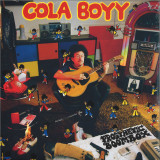
There’s liberation on the dance floor in the songs of Matthew Urango – glimpses of revolution that glimmer beneath the disco ball. “I want my music to bring people together,” says the Californian pop innovator, best known as Cola Boyy. “Because standing together is our best chance at fighting this shit show.” The shit show in question is a broken, brutal system the acclaimed multi-instrumentalist has witnessed up-close. Urango was born with spina bifida and scoliosis in Oxnard, California: a town in which almost 30,000 are estimated to live in poverty. Prosthetic Boombox, his eagerly awaited debut album, might at first glance seem a joyous confetti-burst of pop eclecticism, engineered to sound like “scanning between stations on a car radio, landing on all these different sounds and styles” as Urango puts it. Dig deeper, though, and you’ll discover a simmering sense of rebellion. “The working class are injured, struggling to pay rent and struggling to put food on the table,” he says. “I want to represent that.” Prosthetic Boombox
achieves that goal in a thrilling flurry of inventive indie, funk and soul: take Urango’s car radio analogy, place it in a time-travelling Delorean with Prince in the passenger seat, and you’re half-way there.
Look no closer than Prosthetic Boombox’s euphoric opener, the Avalanches-assisted ‘Don’t Forget Your Neighbourhood.’ The track – which Urango says mixes “the Beach Boys, French disco, house keys and ragtime piano, kinda like the Cheers soundtrack!” – ends with lyrics urging listeners to “fight for your town with your fist closed, strike it and make it more than just a memory.” It’s a reminder that the working classes need to “turn our fists against our oppressors instead of each other,” he explains. After that emphatic introduction comes a horn-laced funk wig-out titled ‘Mailbox’ – a song that gives Dua Lipa’s Future Nostalgia a run for its Studio 54-themed money, featuring rising Londoner JGrrey. Elsewhere, ‘Song for the Mister’ ventures into smooth R&B territory, before ‘Roses’ – a collaboration with Myd of Ed Banger fame – offers a bouquet of bustling disco guitars and infinite bisous of Connan Mockasin’s band drops in on the immaculate ‘Go the Mile’. Urango saves his most introspective moment for the album’s starry closer. ‘Kid Born in Space’, a cosmic collaboration with MGMT frontman Andrew VanWyngarden, sees the artist reflect on what he once had to overcome as a disabled person of colour. “I see them looking down on my dreams of being,” he sings tenderly. “I hear them making fun of my voice, but I keep on moving forward, I refuse to live in anyone else’s shadow.” Prosthetic Boombox, on this subject, is more than an album title – it’s a statement of intent.
“The message of my music is that our class is exploited, oppressed and murdered on the daily. That’s not right, and the system that enables that deserves to be wiped off the face of the earth,” he says. “The only way that happens is if we’re united. That’s the point of my music – to relate to people and unite them.” And what unites more than raucous, irresistibly danceable pop? Prosthetic Boombox is a riot of joyous grooves and catchy hooks for good reason. “I want to reach and spread my message to as many people as possible. You can’t do that if you’re some obscure motherfucker, you know?” he laughs. Don’t bet on him being an “obscure motherfucker” for long.
Repress
From Another Mind continues to establish itself as an essential label with a fantastic fifth
release entitled 'Die Augen Des Teufels' from label bosses SHDW & Obscure Shape.
Marco Bläsi and Luigi Urban are main room techno talents who make no bones about the size of their
sound. Classic techno, rave, EBM and acid all colour their grooves. In 2016 Groove Magazine chose
them as Newcomer of the Year', while they have also released their 'Himmel Und Erde EP' on the
mighty Rekids, as well as remixing the boss's anthemic 'Grindhouse' in recent months. Two years later,
the duo now follow up 'Die Weiße Rose' - their last original release on From Another Mind - with four
tracks that reflect the pair's trademark versatility as producers and the sound they play as DJs.
Things open in monstrous fashion with the brilliant 'Die Augen Des Teufels.' Built on tightly
programmed and unrelenting drums, it has a hypnotic synth line riding about the scales that locks in
your mind while your feet march to the beat. Frazzled synths and icy hi hats add to the pressure and
ensure this one makes a devastating effect. 'Wächter Der Nacht' is equally forceful, with hammering
kick drums and minimal driving percussion joined by a brain frying acid lead synth line that will blow up
any DJ set.
The flip maintains the release's rave-spirit whilst taking things into a more melodic direction. Keeping
up the high class pressure is 'Die Prophezeiung', which has hulking kicks leaning into a stiff wind as
hugely texted synths rumble up top to bring real rawness and impact. This one stays relatively stripped
back and builds atmosphere throughout before closer 'Verlorene Seelen' picks things up again with
quick and slick drums, nimble chords and an irresistible sense of techno force that cannot fail to carry
you away.