hat do you get when you mix about a dozen musicians (including members of The Animals & The Police) with a lot of drugs? An acid psych opus!
What do you get when you package it in a prefab jacket with stock Christmas
art and a festive title? Total confusion! We hypothesize that if you take enough
drugs you may think this private press treasure is a holiday album...but we’re
not so sure.
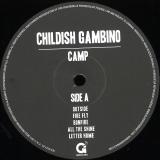
Buscar:a letter home
- A1: Let's Shake Hands
- A2: When I Hear My Name
- A3: Jolene
- A4: Death Letter
- A5: Cannon
- A6: Astro/Jack The Ripper
- A7: Hotel Yorba
- B1: I'm Finding It Hard To Be A Gentleman
- B2: Screwdriver
- B3: We're Going To Be Friends
- B4: You're Pretty Good Looking
- B5: Boll Weevil
- B6: Hello Operator
- B7: Baby Blue
- C1: Lord, Send Me An Angel
- C2: Dead Leaves And The Dirty Ground
- C3: I Think I Smell A Rat
- C4: Let's Build A Home/Goin' Back To Memphis
- C5: Little Room
- C6: The Union Forever
- C7: The Same Boy You've Always Known
- D1: Look Me Over Closely
- D2: Looking At You
- D3: St. James Infirmary Blues
- D4: Apple Blossom
- D5: Do
- D6: Rated X
- D7: Jumble, Jumble
- D8: Little People
- A1: Letter From Home
- A2: Fixed Income
- A3: Un Autre Introduction
- A4: Walkie Talkie
- A5: Giving Up The Ghost
- B1: Six Days
- B2: Mongrel
- B3: Meets His Maker
- B4: Right Thing / Gdmfsob
- C1: Monosylabik Parts 1 & 2
- C2: Mashin' On The Motorway
- C3: Blood On The Motorway
- D1: You Can't Go Home Again
- D2: Letter From Home
- D3: Giving Up The Ghost
Mercury Music Prize album of the year 2014
Deluxe remastered gate-fold double-LP with three bonus tracks (black vinyl version).
Noted for their hypnotic melodies, visceral bass-lines and tidal rhythm, Manchester-based leftfield piano trio GoGo Penguin are pianist Chris Illingworth, bassist Nick Blacka and drummer Rob Turner. Their music has been described as acoustic-electronica but they draw equally on rock, jazz
and minimalism, game soundtracks and glitchy-electronica to create their unique music. They are now one of the most successful bands in contemporary music, topping the jazz charts globally and playingsold out shows around the world and have just announced their biggest tour yet including the Royal Albert Hall in London (Nov 12).
Originally released in March 2014, v2.0, was their breakthrough album and the first to feature the rebooted line-up with new bassist Nick Blacka, pianist Chris Illingworth and drummer Rob Turner. It was named a Mercury Prize album of the year 2014 alongside albums from Damon Albarn, Young Fathers and Jungle.
The extended version was first released on 2xLP for RSD 18 on clear vinyl. This version features the same extended tracklist on black vinyl.
Newly remastered for vinyl (by the original engineer)
2xLP deluxe gatefold edition.
v2.0 includes the hit singles, Hopopono, Garden Dog Barbecue and Kamaloka as well as the remarkable One Percent and live favourite To Drown in You. Included here for the first time is theincessant 'Break' featuring a killer groove that offers a notdto the one and only Squarepusher, 'Wash', a haunting slice of the band at their most ambient and the wonderful 'In Amber', the first track that the new line-up wrote completely together.
- 1: Dead Smile (5:0)
- 2: Morning Song (4:15)
- 3: The Ocean In-Between (2:51)
- 4: I Love You (1:1)
- 5: I Don’t Want To Know (3:46)
- 6: Warning (4:04)
- 7: Spiral (1:50)
- 8: Love Is Gone (3:27)
- 9: Hear This (3:22)
- 10: Wait (2:38)
- 11: Tonight We Ride (2:44)
- 12: Through Your Eyes (7:13)
Originally released on CD in Japan in 2003, as a love letter & thank you to his Japanese fans. Recorded at home, produced, engineered & mixed by Matthew Sweet (bass, guirars & vocals) with the classic ‘Girlfriend’ era lineup of Ric Menck (drums), Greg Leisz (guitars) and the genius electric lead guitar of Television’s Richard Lloyd. The sleeve art is by renowned artist Yoshimoto Nara. In the liner notes, Sweet describes the album's title as an attempt at reverse English: "If I did it correctly, the title should seem a little strange or wrong, but still meaningful! The true definition is supposed to be a 'love you' life, one devoted to loving someone or something, even life itself!"
“an excellent modern guitar pop album, filled with great hooks and harmonies and irresistible ringing six-strings”
Allmusic
“Kimi crackles with Girlfriend‘s energy, as Lloyd and Sweet’s guitars provide antagonistic foils as they did more than a decade before on cuts like “Tonight We Ride.”
Rolling Stone
- 01: Somyot Tassanphan - It`s Not Raining All Over The Sky
- 02: Wongchan Pairot - Deceived
- 03: Ruangthong Thonglantom - Wedding Tomorrow
- 04: Wongchan Pairot - Begging The Moon
- 05: Songphan Kwanphoon - Touch
- 06: Komin Nilwong - Majesty Above The Sky
- 07: Poonsak Pattayakosol - Look
- 08: Phongsri Woranuch - Sorry Letter
- 09: Phon Pornphakdee - Frightening
- 10: Thanongsak Phakdithewa - One Love
- 11: Wongchan Pairot - Lonely
- 12: Ruangthong Thonglantom &Amp; Winai Chulabusapa - Swan And Crow
- 13: Phongsri Woranuch - The Farmstead Awaits You
- 14: Chen Yenkhae - Poor Homeless People
- 15: Nanta Pitanilapalin & Naris Aree - Love Me For A Long Time
- 16: Suwanna Seneewong - Beyond Desire
LP[23,32 €]
Following their recent appearance covering Sylvester and Patrick Cowley's 'I Need Somebody to Love Tonight' on Rocksteady Disco, the enigmatic cosmic pairing of Glenn Echo & Daniel Meinecke channel deep, shimmering disco and nu-disco vibes while calling on ethereal, cosmic textures. The throbbing 'Home Rule' opens with a warm, hypnotic pulse and well-worked vocals that deliver recognisable rhymes, while 'Love Letter' slows down to a heavyweight crawl with warped and twisted pads and plenty of texture. Both tunes here highlight the duo's skill at blending dancefloor immediacy with atmospheric nuance and feel like a journey through mirrored lights and late-night reverie.
The breakout underground star of the past year, the deservedly hyped Thought Leadership returns with another X ideas: the deck this time chooses the suit of Cups. This new collection is closer to the Post-Punk tonality of Pentacles, than the breezy Balearic Jazz of Swords. Gone are the brushed drum samples and airy synths and in their place are BIG guitars, 808 thumps and a decidedly more prominent use of bass as a melodic device.
As the suit of Cups reflects the emotional heart of the Tarot, presented within are a further X pieces, this time displaying the full range and fervour of Thought Leadership.
You know the drill by now. Originally out on cassette only, we present the first ever vinyl issue. It's a hideously limited pressing of 300 for the world, so don't sleep on this.
Side A explores the emotional levels of consciousness; angst, joy, love, sorrow, relief, regret – they are all represented across the first seven tracks, and often within the same piece. XXI kicks us off with a huge tumbling D minor passage, layers and layers of guitar front and centre, whilst the drums pound away in the distance. Release is provided with a gorgeous G Dorian section, where we hear the bass take flight with a high melodic line.
We’re still in familiar Durutti Column meets Dif Juz territory here, but things switch up with XXII. This piece showcases a darker, more angular palette of guitars; think Alan Rankine (The Associates), or Deb Demure (Drab Majesty) in the unexpected harmonic shifts, knotty arpeggiated patterns and heavy, goth-adjacent modulation. A real love letter to 45+ years of darkly inclined guitar heritage.
XXIII enters the fray with tight, thumping 808s and Marr-esque guitar figures; and again, the bass providing heavy melodic counterpoint to the guitars. Enter chiming, lyrical lead phrasing, reminiscent of the eternal opening to "Everybody Wants To Rule The World". Another accidental perfect pop moment from the Thought Leader. Whilst on the topic of Tears For Fears, XXIV comes swinging out of the gate with some serious Sophisti-chug; we’re reminded of "Shout" in the A section, before being beautifully juxtaposed in the B section with more Vini-eqsue patterns, reminiscent of his timeless classic, Another Setting.
XXV gives us welcome pause to take stock midway through the A side. No drums this time, but instead a heartbreaking conversation between two guitars; think Kevin McCormick and David Horridge’s masterful Light Patterns, or perhaps even the early solo-Bill Connors mid-70s cuts for ECM. The moment of quiet reflection passes, and is quickly shattered by the thudding march of XXVI – this piece comes across like The Associates playing "Wicked Game"; heavy, moody, and utterly compelling. XXVII ends our journey across Side A with more Marr-inspired playing; one for the heads and already featured on mixes, this one is real testament to the vision of Thought Leadership.
Side B again takes us on a trip through three long-form semi-improvised pieces. XXVIII is like those classic Jonny Nash, early Melody As Truth releases, slowly unfurling, additional details introduced deliberately piece by piece, this idea builds across 7+ minutes culminating in some utterly joyous ebow fireworks at the end – well Balearic.
XXIX again, like XXV before it, dispatches the drums with a focus purely on melody and mood. The piece feels like a lost Save Room Theme from the Resident Evil series, pure golden age Capcom Sound Team vibes. Unadulterated aural nostalgia for hours spent with a PS1 in haze of hash.
XXX completes this majestic voyage with another Modal exercise; this time the Thought Leader has opted for the Lydian Mode. Beautifully dreamy, undeniably Soundtrack-y, and arguably the most concise distillation so far of everything this project stands for; drum machines, guitars, pedals, one-take improvised solos – XXX has the lot, and is surely destined for greatness.
So, another X epic statements for guitar, homespun with the humblest of means, for all the dreamers out there. The first ever vinyl release of IV Of Cups has been carefully remastered by Be With's engineer Simon Francis to ensure it sounds better than ever after its initial tape release. Cicely Balston's expert skills have made sure nothing is lost in the cut at Abbey Road Studios whilst the records have been pressed to the highest possible standard at Record Industry, in Holland. The original tape cover artwork, so crucial to Thought Leadership's striking visual aesthetic, has been rejigged for vinyl issue here at Be With.
The last 2 LPs flew. You have been warned.
Guests is the home recording project of Jessica Higgins and Matthew Walkerdine. Vaguely named as such to avoid any problems with the poster if they pull out of a gig (which has only happened once, about a year and half before any songs were actually written to be fair) but also to capture a sense of reverse hospitality. That is, arriving at your door with a bottle of good wine (can’t turn up empty handed) or a fist full of savoury or sweet snacks (time of day dependant); oversharing at the afters (and then passing out on your couch); reading to your toddler while you make their lunch or put everything back where it was meant to go (only to get torn apart again). So, something about what happens when private worlds meet each other, making or having been made a space for. But at times, it’s a different kind of intimacy, a temporal or material one, like the feeling of crisp fresh sheets, and abundant and soft, body-part appropriate towels in a hotel in a city you’ve been to before and love to go back to.
Their debut record, “I wish I was special”, was variously described as “a collage of concrète experiments and outerzone pop gestures, music that sounds as if it’s been written from the depths of a dream”; “music for people who love music but also hate it too”; “something like chasing ghosts or befriending a wild animal”; “pulling apart nervous sensations with haphazard ease and requisite humour”; and “a melody of refusal, of being all-in (…) finding the exact right WRONG sound to express the discontent”. Common Domestic Bird continues in this vein, layering synthesiser, keyboards and samples over rudimentary drum rhythms and field recordings, which are in turn sung or spoken with to create nine new songs.
Written and recorded between autumn 2024 and summer 2025 in Reading, Berkshire, the music has matured since its last outing, in a way, leaning less into collage and more toward structured composition and melodic depth, yet retains a healthy dose of indeterminacy and off-kilter rhythms for the forever-amateur. The songs on Common Domestic Bird hint at some “about”-ness through a series of discrete vignettes which sound a bit like architecture or end of year lists, gossip or over-thinking subjectivity, like disappearances and impressions, the support structure of the spine, letters and signs offs, things you could really do without and where they should go, hoping you’ll see something that isn’t there, pretences and performance. At times they feel kind of funny, others kind of sad or a bit angry and annoyed, a bit like you really.
Engaging artistically with the unique oeuvre of the Pet Shops Boys through the form of cover versions is both an appealing and risky endeavour. Hundreds of such adaptations already exist, and covering songs is a complex undertaking, one that Neil Tennant and Chris Lowe themselves have mastered to perfection.
Exciting cover versions involve a skillful game of allusions and references, quotations and are entangled with personal as well as borrowed memories. Cover versions are homage, appropriation and interpretation — in many ways like adding letters in a Scrabble game: a new word, a new meaning emerge. Or, in the best case, a new song.
With her first debut EP ’Heart’, due for release in April 2026, Cat Storm dives into this labyrinth. It includes beguiling and intimate versions of 'Heart', ‘The Way It Used To Be’, ‘A Man Could Get Arrested’ and ‘Home And Dry’. The artist behind Cat Storm is Carmen Strzelecki. Born in Lörrach, raised in Mannheim and relocating to Cologne in the 1990s, Carmen has become an integral part of the Cologne art and culture scene since founding her publishing house ‘StrzeleckiBooks’ in 2009.
She produced her EP herself in collaboration with some of the grand masters of the Rhineland indie and electro aristocracy. The remixes by Christian Skrzypek, oskø and Clima ensure that it is well-suited for clubs.
Samo DJ, undeniable legend of global oddball house, finally debuts on hometown label Studio Barnhus after a decade-long, winding courtship and frequent collaborations with SB mainstays like Baba Stiltz and Pedrodollar. Every atom of his singular craft is on display as tracks like Third Guitar distill disco
tradition, club futurism and hip-hop attitude into cuts only Samo could deliver. Pressed on DJ-friendly 12'' vinyl, complete with a printed love letter from Stockholm underground hero, Nasty Nate
- A1: Sonora
- A2: Stella By Starlight
- A3: Speak Low
- A4: Nobody Knows The Trouble I've Seen
- B1: Old Country
- B2: Soultrane
- B3: Chasin' The Bird
- B4: Be My Love
Ryo Fukui, the renowned pianist from Hokkaido who sadly passed away in 2016, has earned global recognition among jazz listeners through his highly praised early works Scenery and Mellow Dream. A Letter From Slowboat, recorded in 2015, marked his first leader album in sixteen years. The sessions took place at Slowboat his musical home together with two young musicians whose talent Fukui himself deeply trusted. The lyricism that seeps through “Sonora”, the poetic warmth enveloping “Stella By Starlight,” the vibrant energy coursing through “Speak Low” each performance is filled with life. His touch grew more forceful, his emotions more profound, his musical fragrance even more luxuriant.
SPTLP008 - Aural Imbalance - Fractional Spaces LP
Returning for his third solo album on Spatial, Aural Imbalance continues his journey through the cosmos with a breathtaking array of breaks, bass and inimitable ambient wizardry.
A1 - Fading Reality
Kicking off the album we are treated to a blissfully ambient intro akin to a perfect sunrise across a tranquil unfurling landscape - just as we have come to know and love from Aural Imbalance. Long, airy washes of textured pads usher in a fantastically snappy break pattern which brings an alluring energy to proceedings, driving the track along with funnels of tuneful melodies lazily drifting by in the ambience.
A2 - This Time
Jumping right into the breaks DJ-style with a delicious Hot Pants pattern, This Time's central theme utilises a hypnotic simple but effective chime melody that plays a key role throughout the track, alongside fluttering birdsong and a luscious array of samples. The exquisite breakdown which delights with an incredible blend of bass atmospheric synths & pads is both beautiful and poignant.
B1 - Always With You
Introduced by what sounds like footsteps echoing through the darkness, Always With You lives up to its title by surrounding you with a warmth usually reserved for arriving home and nestling by the fire. Driven by delicate but vibrant breakbeats, this track showcases Aural Imbalance's relentless dexterity with ambient soundscapes dancing in perfect harmony with deep 808 bass and old school beats.
B2 - Solarity
Lightly excitable hats and elegantly filtered breaks open Solarity, a deeply evocative track with breakbeats rising through the intro towards a drop with solid analogue kicks and a wonderfully deep and persistent bassline. Sporadic micro melodies cruise the waves of floating synthwork, effects rippling gently in the foreground and background of the mix like playful phosphorescence.
C1 - First Protocol
Up next we see Aural Imbalance crack the amen knuckles with a real treat for old school heads - an ambient, synthy ambient laden with incredibly light spaced-out hats through the flowing waves is soon jolted into life by a satisfyingly crisp amen break, edited and programmed with flair and majestic detail that sits perfectly with the light, often sullen textured soundscape drifting above.
C2 - Crystals
An otherworldly landscape brimming with wonder and intrigue unfolds with Crystals, an atmospheric delight with a twist. The serene opening leads into a terrific old school break which takes center stage, punchy in the mix and edited with a precision as shimmering textures and meditative synthwork are expertly layered around the ever-rolling beats, perfect for any occasion at home or the 160bpm dancefloor.
D1 - Velarious
Continuing his showcase of breaks from across the atmospheric drum & bass spectrum, Aural Imbalance introduces Velarious with a quietly epic ambient flow, with filtered drums creeping in before the drop arrives, breakbeats buoyed by some seriously deep 808 bass and distinct hi hats. Micro melodies intersect and reverberate throughout the track to complete an enduring and eclectic composition.
D2 - South Coast Sunrise
Closing with a good old fashioned love letter to the Hot Pants break, South Coast Sunrise perfectly encapsulates its title with a gorgeous panoramic overlay of ambience, spread over an intensely memorable edit of that classic break - programmed and mixed to remarkable effect and cementing Aural Imbalance's ongoing rise as a master of edits as well as ambience, fully realised for our listening pleasure on Spatial.
Bringing together the elder statesman of the Zulu guitar Madala Kunene and internationally acclaimed Sibusile Xaba, kwaNTU pulls two generations of South African guitar mastery into a single point of focus. Under-represented on recordings outside of South Africa, Madala Kunene (b. 1951), the ‘King of the Zulu Guitar’, is revered as the greatest living master of the Zulu guitar tradition. Sibusile Xaba, whose collaboration with Mushroom Hour Half Hour reaches back to his first recording in 2017 (Open Letter To Adoniah/Unlearning), has garnered international acclaim for his unique voice and virtuoso guitar stylings, which bring together multiple South African guitar lineages in an original, spiritualised fusion. Collaborating with Mushroom Hour and New Soil for kwaNTU, the two players come together to weave a filigree sonic fabric which reaches down to the heartwood of Zulu guitar music but moves resolutely outward, building on the past to create a deeply rooted statement about present conditions and future travels. kwaNTU – which can be roughly translated ‘the place of the life-spirit’ – is also conclave of teacher and student, as Xaba has been taught by Kunene for the last decade. Meditative, rich and sonically sui generis, kwaNTU finds these two musicians linking up within the inimitable space of sound and spirit that they share through Kunene’s teaching.
The great masters of South African music have not all had equal exposure. For many years the generation of musicians who were exiled during apartheid took centre stage, as the regime made it very difficult for those at home to be heard. More recently, a new cohort of important voices, especially in jazz, has broken through to international consciousness. But for the generation of musicians in between – those who shone like beacons in the most difficult final years of apartheid and immediately afterward – international recognition has been slow in coming.
Madala Kunene, ‘the King of the Zulu Guitar’, is among this number. A revered figure for current generations of South African musicians, Kunene began his recording career in 1990, at the bitter end of apartheid, with a now classic self-titled LP for David Marks’ storied Third Ear imprint. Born in 1951 in Cato Manor, near Durban, he had determined to be a musician from early childhood, and by the time he first entered a recording studio he had already had a long career as a popular performer. His virtuoso absorption and transformation of the venerable Zulu maskanda guitar tradition and his richly spiritualised approach to music immediately marked him out as someone special, and in the years that followed, Kunene cemented his position as one of South Africa’s musical elders. He is without doubt the grand master of the Zulu guitar tradition, but his sound and sensibility ranges far beyond it into varied sonic terrain, and he has collaborated with a wide range of musicians both at home and abroad. Now in his mid-seventies, he remains a shining light for those that are making music in contemporary South Africa.
‘He is really an amazing person,’ says the guitarist Sibusile Xaba, who has been mentored by Kunene for over a decade, and now invites a collaboration with him on kwaNTU. ‘As a mentor, he's really powerful in showing us the way. For us to have this opportunity to make music together and have a project together is really a blessing to me.’
Xaba himself grew up in Newcastle, KwaZulu-Natal, where his mother had been in a band and his father sang in a church choir, and from early childhood Xaba played homemade tin guitars. He only later realised that music was his calling. ‘I just loved music. I was fortunate. My parents loved music. And when it was time for me to leave home and go to study outside Newcastle, I knew that music was what I wanted to do. There was no second option. It was just music.’ Moving to Pretoria to study music formally, Xaba committed himself to his craft, developing a unique style that draws on both US jazz masters such as Wes Montgomery and Jim Hall, and the rich and varied heritage of the South African guitar, from inspirational jazz players such as Allen Kwela and Enoch Mthalane, to the music of the Malombo groups and Dr. Philip Tabane (Xaba has previously collaborated with Dr. Tabane’s late son, Thabang), and the Zulu guitar tradition embodied by Kunene.
‘I was really in love with the jazz guitar, I really admired it, and I was digging a lot in that direction,’ says Xaba, recalling his first encounter with Kunene’s music, over a decade ago. ‘And then one day on my timeline, Kunene popped up, and I was like – “What's this sound?” I was so connected to it. It really touched me deep. I started checking out his records, and then I found out he's from the same region as I am, which is Zululand.’ After Kunene played a show at the Afrikan Freedom Station in Johannesburg, Xaba make contact with him, and visited him at home in Durban. They struck up a friendship, and Xaba became the elder’s student, as Kunene began to pass on his knowledge and his inimitable way of playing.
kwaNTU is a tribute to this relationship and the deep learning that has defined it. The album was recorded in Zululand in the town of Utrecht, at a cultural centre called Kwantu Village, which gives its name to the album. ‘It's such a broad word,’ Xaba says, ‘but the elders teach us that Ntu is basically an energy, almost chi, an energy, a force that all living beings have within them. It's a living energy, so kwaNTU is like, almost the place of this energy.’ The two men sequestered themselves for five days of jamming, improvising and planning, and then the session was recorded in one take over a single night, with Gontse Makhene joining on percussion and backing vocals and Fakazile on vocals. Other voices and overdubs were later added in the studio in Johannesburg.
The result is a rich and meditative recording that finds two generations in a deeply engaged dialogue. Teaching and passing on his knowledge, the elder Kunene has brought Xaba into a space of sound and knowledge that they now share; Xaba’s own practice of deep communion with nature and his dedication to his musical craft make him the perfect interlocutor for Kunene. The result is an album that foregrounds the two musicians engaged at the highest levels of responsive listening, sympathetic unity, and collaborative concentration. Bringing an elder statesman of South African music to an international listening audience for the first time in decades by pairing him with one of South Africa’s most important new voices, kwaNTU is a meeting of generations and a powerful demonstration of musical lineage and continuity.
‘Before music, there is sound,’ Xaba observes, speaking of Kunene’s unique approach to music. ‘And sound is like a common compartment…it's not restricted to particular people or particular geographic places, you know what I mean? It's sound. Everybody can hear it. So when he constructs that sound into music, I think everybody resonates with the energy behind his construction of sound into song. Here at home, we really love him for preserving our history through the guitar, through his stories as well the music, the songs that he writes. We really, really admire him.’
- 01: Tafese Tesfaye - The Dove &Amp; The Pigeon
- 02: Yetemwork Mulat - Heathen &Amp; Earth
- 03: Alemu Aga - The World Is But A Place Of Survival
- 04: Sosena Gebre Eyesus - Save Us From Our Death
- 05: Abiy Seyoum - The Last Judgement
- 06: Tafese Tesfaye - You Who Take Good Care Of Me
- 07: Sosena Gebre Eyesus - When I Say Your Name
- 08: Akalu Yossef - Who Can Doubt
- 09: Abiy Seyoum - We Are All Mortals
- 10: Yetemwork Mulat - The Second Coming Of Christ
- 11: Akalu Yossef - Our Father
- 12: Alemu Aga - Song Of Praise Played With A Plectrum
LP 2x12"[28,36 €]
The begena is a large ten-stringed lyre which is part of the traditional Amharic heritage of Ethiopia. The Amharas, who have long formed the politically and culturally dominant people of Ethiopia, mainly inhabit the central and northern part of the country. In the majority, they follow the monophysite Orthodox Tewahido Church established in the early fourth century AD.
Music plays a very important part in the life of the church. Most of the liturgy is sung and, contrary to secular music, it is accompanied by percussion instruments only. The begena occupies a special place because it is the one melodic instrument exclusively dedicated to the spiritual repertory. Because of its mythical origin, it is highly respected. Tradition holds that the begena was given to king David by God, and brought to Ethiopia by Menelik I, together with the Ark of the Covenant. It has always been the instrument of kings and nobles. Played by pious men and women of letters, it never became widespread. But it never disappeared either, not even under the Derg regime (1974-1991) which had banned the instrument.
Among Amhara string instruments, the begena is the most carefully crafted, especially with regard to the ornately sculpted crossbar. Its ten gut strings are cleaned and twisted several times. The characteristic buzzing timbre equalled by no other Amhara instrument is due to the enzirotch, that is, small bits of leather placed between each string and the bridge. This plays an important part in the sound production by creating a brief contact between the string and the upper rim of the bridge, thus modifying the vibrating properties of the string. In this manner, the spectrum of the sound is considerably enhanced (up to over 10 kHz).
The begena is a very powerful instrument, it keeps the devil thirty steps away, and its presence in the home wards off malicious spirits. Priests and preachers recommend its presence, especially during Lent (Fassika Tsom) when the Orthodox Amharas ponder their sins and repent. Because of its spiritual import, the begena generates intense emotion. According to some musicians, playing the begena brings them into direct contact with God or the Virgin Mary. The religious role of the begena is underscored by the shape of the instrument, each part symbolises an important element of the faith. The crossbar for instance, which reaches across the entire width of the instrument, represents God who is above all things. The belly which "gives birth" to the sound represents the Virgin Mary, and the ten strings recall the Ten Commandments.
Recorded by Stéphanie Weisser in Addis Ababa, Ethiopia, March 2002-December 2005.
Mastered by Renaud Millet-Lacombe.
Issued under license from VDE-Gallo, Switzerland.
- A1: Tafese Tesfaye - The Dove &Amp; The Pigeon
- A2: Yetemwork Mulat - Heathen &Amp; Earth
- A3: Alemu Aga - The World Is But A Place Of Survival
- B1: Sosena Gebre Eyesus - Save Us From Our Death
- B2: Abiy Seyoum - The Last Judgement
- B3: Tafese Tesfaye - You Who Take Good Care Of Me
- C1: Sosena Gebre Eyesus - When I Say Your Name
- C2: Akalu Yossef - Who Can Doubt
- C3: Abiy Seyoum - We Are All Mortals
- D1: Yetemwork Mulat - The Second Coming Of Christ
- D2: Akalu Yossef - Our Father
- D3: Alemu Aga - Song Of Praise Played With A Plectrum
Cassette[16,18 €]
The begena is a large ten-stringed lyre which is part of the traditional Amharic heritage of Ethiopia. The Amharas, who have long formed the politically and culturally dominant people of Ethiopia, mainly inhabit the central and northern part of the country. In the majority, they follow the monophysite Orthodox Tewahido Church established in the early fourth century AD.
Music plays a very important part in the life of the church. Most of the liturgy is sung and, contrary to secular music, it is accompanied by percussion instruments only. The begena occupies a special place because it is the one melodic instrument exclusively dedicated to the spiritual repertory. Because of its mythical origin, it is highly respected. Tradition holds that the begena was given to king David by God, and brought to Ethiopia by Menelik I, together with the Ark of the Covenant. It has always been the instrument of kings and nobles. Played by pious men and women of letters, it never became widespread. But it never disappeared either, not even under the Derg regime (1974-1991) which had banned the instrument.
Among Amhara string instruments, the begena is the most carefully crafted, especially with regard to the ornately sculpted crossbar. Its ten gut strings are cleaned and twisted several times. The characteristic buzzing timbre equalled by no other Amhara instrument is due to the enzirotch, that is, small bits of leather placed between each string and the bridge. This plays an important part in the sound production by creating a brief contact between the string and the upper rim of the bridge, thus modifying the vibrating properties of the string. In this manner, the spectrum of the sound is considerably enhanced (up to over 10 kHz).
The begena is a very powerful instrument, it keeps the devil thirty steps away, and its presence in the home wards off malicious spirits. Priests and preachers recommend its presence, especially during Lent (Fassika Tsom) when the Orthodox Amharas ponder their sins and repent. Because of its spiritual import, the begena generates intense emotion. According to some musicians, playing the begena brings them into direct contact with God or the Virgin Mary. The religious role of the begena is underscored by the shape of the instrument, each part symbolises an important element of the faith. The crossbar for instance, which reaches across the entire width of the instrument, represents God who is above all things. The belly which "gives birth" to the sound represents the Virgin Mary, and the ten strings recall the Ten Commandments.
Recorded by Stéphanie Weisser in Addis Ababa, Ethiopia, March 2002-December 2005.
Mastered by Renaud Millet-Lacombe.
Issued under license from VDE-Gallo, Switzerland.
Drawn from years of early-hour sets and the quiet intimacy of the booth before the room fills, Gimme The Sun marks the debut EP of Al-Veez (real name Alvise Marino). A seasoned guitarist raised in Italy with musical roots in funk, boogie, and blues, Marino’s release is a sonic travelogue of his formative years as a selector in a city, NYC, that quietly became home. The prominent guitar captures both the ache of departure and the bright, restless hope of return.
With a wistful blend of beachy, meandering textures, lush synth layers, and a hypnotic pulse, the EP lands in time for another steamy summer in the city—sure to strike a chord with longtime NYC house heads, whether they be behind the booth or lost in the crowd. Arranged in close collaboration with TSoNYC label boss Danilo Braca (also on mixing and mastering duties), theshimmering title track reads like a Dear John letter to New York. Tender, honest, and full of gratitude, it’s the kind of farewell only a true love could inspire—one that dances forward even as it looks back.
As the record warms up, “F Train Boogie” evokes snapshots of bright midsummer mornings gazing out a scratch-blurred train car window at the glistening city, while the track that follows, “Sneaky”, sizzles with cosmic allure—an intoxicating blend of luminous synths, tightly interlaced rhythms, and a commanding kick drum that locks the listener into an entrancing groove from the very first bar. “Underwater”, the fourth and final track, shares some of the same allure and mystery, but features a playful optimism, encouraging the listener to lean into curiosity of what the next chapter, night, or DJ set will hold.
Featuring: Coby Sey, Mica Levi and Mark Pell (Good Sad Happy Bad / Micachu & The Shapes)
‘Affectionately’ is the debut album by London based songwriter and musician Raisa K. With self produced instrumentals supporting Raisa’s signature vocal performance, the record delves into the intricate emotional cycles of relationships with heartfelt sincerity. Melodies appear simple and direct, while the themes explored present a great level of complexity. Whether about trust, kindness, doubt, frustration, annoyance, regret, honesty, insecurity, loneliness or friendship, each of the album’s twelve songs lie somewhere in between a diary and a letter.‘Affectionately’ is almost entirely produced on Raisa’s laptop and written in her home in London, as well as finding small pockets of time on trains and buses, during breaks at work, during the kids' nap-times, at the playground, in the park. The production's backbone is formed by a synthesiser sample, weaving together a range of recordings and sonic textures.
This creates a consistent expression where diverse electronic styles merge with Raisa's crisp, candid vocals in unique and personal songwriting. Some listeners might recognise Raisa’s voice and musical language from records by the band Good Sad Happy Bad, which she is a part of. While ‘Affectionately’ certainly moves in its own space, a kinship with fellow London artists is also present, as the record includes a feature with Coby Sey as well as instrumental contributions from long-time collaborators Marc Pell and Mica Levi.
Because of their mix of hellified gangster shit and progressive compositions, I once jokingly called Clipping "Deathrow Tull." Well, it's not a joke anymore. While Clipping's last few projects have been record-long concepts like classic prog rock, their cyberpunk-infused new album Dead Channel Sky is mixtape-like, a carefully curated collection in which every track is a love letter to a possible present. It sounds crisp and classic at the same time. When something strikes us as retrospective and futuristic at the same time, it's a reminder of how slipshod our present moment truly is. Juxtaposing high-tech, corporate command-and-control systems (the "cyber") with the lo-fi, D.I.Y. underground (the "punk"), cyberpunk proper starts in 1982 and ends in 1999, from Blade Runner to The Matrix. Concurrently, hip-hop matured, went through its Golden Era, then melted into further forms: it went from from Fab 5 Freddy to Public Enemy to Missy Elliott. While other genres flirted with it, hip-hop was fickle and fey. Rap and rock birthed mutant offspring maligned by most, and hip-hop's relations with electronica rarely fared any better. What if someone explicitly merged hip-hop and cyberpunk - those twin suns of the '80s and '90s - into one set and sound? After all, both movements are the result of hacking the haunted leftovers of a war-torn culture that's long since moved on. On Dead Channel Sky, Clipping texture-map the twin histories of hip-hop and cyberpunk onto an alternate present where Rammellzee and Bambaataa are the superheroes of old; where Cybotron and Mantronix are the reigning legends; where Egyptian Lover and Freestyle are debated endlessly, and Ultramag and Public Enemy are the undeniable forefathers; where the lost movements of 1980s and the 1990s are still happening: rave, trip-hop, hip-house, acid house, drum & bass, big beat-the detritus of a different timeline, the survivors of armed audio warfare. Clipping are no strangers to sci-fi: two of their records were nominated for Hugo Awards (one of science fiction's top literary prizes), and a novella spun-off from their music was nominated for a third. On Dead Channel Sky, Clipping's co-conspirators include everyone from the guitarist Nels Cline, to their labelmates Cartel Madras, rapper/actor Tia Nomore, and wordsmith Aesop Rock. Diggs is known for intricate lyrics and rapid-fire rapping, and the tracks that Snipes and Hutson build in the background are no less complex. All of the above serves to give us a glimpse of an adjacent possible present, where hip-hop and cyberpunk are one culture. Binary stars are often perceived as one object when viewed with the naked eye. Like those twin sun systems, it'll take some special equipment and some discerning attention to pull the stars apart on this record. As Diggs barks on the fire-starting "Change the Channel": Everything is very important!
- A1: Tee Mango - So In Love
- A2: Reinhard Voigt - Der, Der Mit Dem Gummiball Sang (Orange)
- A3: Jürgen Paape - Chee-Caruso
- B1: Rex The Dog - Laika
- B2: Michael Mayer - Urian
- C1: Jonathan Kaspar - Are You
- C2: Sascha Funke - The Heck
- C3: Argia - Love Keeps You Running
- D1: Jörg Burger - Legacy Of Ashes
- D2: Wassermann - Die Goldene Zeit
Hello 24! Nice to have you here. 23 is so yesterday, so over the top, really. Well, we’ve been dancing the following dances recently. What about you?
What lasts a long time usually turns out well. Having admired TEE MANGO from afar for many years, our A&R Michael Mayer took heart and invited him to this year’s TOTAL. “So In Love” is in the best tradition of the KOMPAKT minimal funk of the early years. We are delighted to have this lovely Englishman on board!
REINHARD VOIGT has always placed great emphasis on loving animals. On the track with the unsurprising title “Der, der mit dem Gummiball sang (Orange)”, he lets whole hordes of different four-legged friends and poultry on the microphone. Hopefully the stench will dissipate from the studio.
When Rhenish cheerfulness meets holiday anticipation, the result is something like this Hawaiian shirt turned music called “Chee-Caruso” by JÜRGEN PAAPE. No animals were tortured for this piece either, even if it sounds like it.
We stay in the realm of fauna and turn our attention to London’s award-winning pedigree dog REX THE DOG. “Laika” is a heart-warming ode to the mongrel dog of the same name, who was the first living creature to make it from the streets of Moscow into space. She would have loved that bleep.
A little-known fact about MICHAEL MAYER is that he is one of the fastest crossword puzzle foxes on the left bank of the Rhine, always in relentless rivalry with Wolfgang Voigt, who thinks he is even faster. The big battle is yet to come. Uninvited guest with five letters? “Urian”.
As an integral part of the family, JONATHAN KASPAR is of course not to be missed. “Are You” celebrates the kind of early morning rapture that is commonplace at his new DJ venue, the brand new Cologne superclub FI. Everything is so colourful here.
SASCHA FUNKE takes a bow to one of the greats of German showbiz with the trippy electro smasher “The Heck”. Born – like DJ Koze and Barnt – in Flensburg, died in Berlin in 2018 and wore glasses. More will not be revealed.
More emotion, more love, more sing-along factor? Si, claro! ARGIA’s “Love Keeps You Running” masterfully combines groove and pop – a blend that sounds very familiar to us. She may be at home in Madrid, but there’s Cologne DNA in her somewhere. We’re sure of it.
Let’s meet the legends, the veterans! JÖRG BURGER is still in a psychedelic mood in 2024. That suits him, that’s where he needs to be, that’s where we want him to be. A parallel universe is conceivable in which such music is affectionately called Goa.
Before going to bed, the WASSERMANN reads us a fairy tale from the Arabian Nights. At the same time, we focus on a point between everything, but really everything, and absolute, stark naked nothingness. 3, 2, 1… Let go.
Hallo 24! Schön, dass du da bist. 23 ist ja sowas von gestern, geht gar nicht, echt. Also, bei uns tanzt man neuerdings die folgenden Tänze. Und bei Euch?
Was lange währt, wird meist gut. Schon seit vielen Jahren aus der Ferne TEE MANGO bewundernd, hat sich unser A&R Michael Mayer ein Herz gefasst und ihn zur diesjährigen TOTAL eingeladen. “So In Love” steht in bester Tradition des kompaktschen Minimal Funk der frühen Jahre. Wir freuen uns, den quirligen Engländer an Bord zu haben!
Tierliebe wird im Hause REINHARD VOIGT schon immer groß geschrieben. Auf dem Stück mit dem nicht weiter verwunderlichen Titel “Der, der mit dem Gummiball sang (Orange)” lässt er gleich ganze Horden verschiedenster Vierbeiner und Federvieh ans Mikro. Hoffentlich zieht der Gestank wieder aus dem Studio ab.
Wenn rheinischer Frohsinn auf Urlaubsvorfreude trifft, dann kommt so etwas wie dieses Musik gewordene Hawaiihemd namens “Chee-Caruso” von JÜRGEN PAAPE heraus. Auch für diesen Beitrag wurden garantiert keine Tiere gequält, auch wenn es allenthalben so klingt.
Wir bleiben im Reich der Fauna und wenden uns London’s preisgekröntem Rassehund REX THE DOG zu. “Laika” ist eine herzerwärmende Ode an die gleichnamige Mischlingshündin, die es von den Strassen Moskaus als erstes Lebewesen ins All geschafft hat. Den Bleep hätte sie bestimmt gemocht.
Eine wenig bekannte Tatsache über MICHAEL MAYER ist, dass er zu den schnellsten Kreuzworträtsel-Füchsen links des Rheins zählt, stets in unbarmherziger Rivalität zu Wolfgang Voigt, der sich für noch schneller hält. Der große Battle steht noch aus. Ungebetener Gast mit fünf Buchstaben? “Urian”.
Als fester Bestandteil der Familie darf natürlich auch JONATHAN KASPAR nicht fehlen. “Are You” zelebriert frühmorgendliche Entrückungszustände, wie sie in seiner neuen DJ-Wirkungsstätte, dem nigelnagelneuen Kölner Superclub FI Gang und Gäbe sind. Alles so schön bunt hier.
SASCHA FUNKE verneigt sich mit dem trippy Electrosmasher “The Heck” vor einem der ganz Großen des deutschen Showbiz. Geboren – wie DJ Koze und Barnt – in Flensburg, gestorben 2018 in Berlin, Brillenträger. Mehr wird nicht verraten.
Mehr Gefühl, mehr Liebe, mehr Mitsing-Faktor? Si, claro! ARGIA’s “Love Keeps You Running” vereint meisterlich Groove und Pop – eine Melange, die uns durchaus bekannt vorkommt. Sie mag zwar in Madrid zuhause sein, aber irgendwo steckt in ihr eine Kölsche. Da sind wir uns sicher.
Auf zu den Legenden, den Urgesteinen! JÖRG BURGER zeigt sich auch in 2024 in einem psychedelischen Mood. Das steht ihm, da muss er hin, da wollen wir ihn haben. Es ist ein Paralleluniversum denkbar, in dem solche Musik liebevoll Goa genannt wird.
Der WASSERMANN liest uns vor dem Schlafengehen noch ein Märchen aus Tausendundeine Nacht vor. Wir fokussieren uns gleichzeitig auf einen Punkt zwischen allem, aber auch wirklich allem und dem absoluten, splitterfasernackten Nichts. 3, 2, 1… Loslassen
2025 Repress
Raffaele Attanasio drops his first EP for two years as he heads to SHDW & Obscure Shape's Mutual Rytm for his 'Quasar' EP.
A product of Naples' rich techno history, Italian DJ, producer and musician Raffaele Attanasio is an artist who represents the city's iconic sound while drawing from influences across the Atlantic and the genre's home of Detroit. Garnering plaudits from artists including Jeff Mills, Len Faki and Ben Sims, while releasing on Mills' Axis alongside Non Series, Third Wave Black, and his own Letter From Jerusalem imprint, Attanasio's eclectic sound now delves into Italian techno of the early 2000s as he makes his label debut on Mutual Rytm - revealing his first EP in over two years and showcasing a new side to his sound with 'Quasar'.
Title track 'Quasar' brings a tunnelling groove beneath floating melodies and zipping synths, before A2 'Asterion' combines dubby stabs and punchy kicks effortlessly. On the flip, 'Blazar' is a squelchy acid-led trip guided by sharp metallic hats, with 'Axial Inclination' utilising jittering drums and slinking bass to keep the energy levels rolling.
'Clara' shapes up the physical package, a skipping, spirited and classy cut fusing hazy textures and crisp percussion, while digital exclusive 'SGR' sees things return to acid territories, with purchasers able to access a darker impactful take on techno.
To need, to be needed, in four corners. Sleep and privacy, gases come and gases go, and now you are the only one in the room you sit in, you are one with the room you sit in, as if there are no negatives and no positives--did you know that you are an extension of your apartment? Did you know that you are in a codependent relationship with your apartment? Did you know that your apartment knows and appreciates all of your secrets?--I feel safe, which is not a new need for human beings, but a very ancient one, almost the first one. It is enacted by the possibility of sound, humming or strumming something mostly. But the quiet apartment makes its own sounds: a single longing note of birdsong told to the beat of restful breathing, the angelic insistence of tinnitus, the neighbours. Sometimes I wonder if silence means nobody's home. How still I sit. Sometimes I return to silence and feel hugged by the cool lightness of its touch, like sleeping with just a sheet in summertime. Like turning the key. Like a visit from the cat next door. Like a somnambulant ray reaching across the room, asking if you'd like to step outside. Reste Envie is a desirous message to oneself, made from a place of lived solitude: the parameters of home. Roger 3000 is a painter and a musician from Brussels, Belgium. Rest En Vie follows his 2020 release on his own imprint Tundra Records, Fiftine. His first solo EP, UFO Love Letters, was released by JJ Funhouse in 2014, followed by a contribution to Ekster's 2017 compilation album EXO3. Roger 3000 frequently collaborates with other musicians and artists, most recently with Lawrence le Doux (with whom he released the EP Chou Chou on Lexi Disques in 2021); with Carole Louis as Ondine & Turbotin for the EP Club Solitude, as well as with Bitsy Knox, with whom he released the LP OM COLD BLOOD in 2018 on Tanuki Records. Text by Bitsy Knox
(Produced, Arranged and Conducted by Claus Ogerman)
Not long after the dawn of her career, as a teenager in Rio de Janeiro, Joyce was declared “one of the greatest singers” by Antonio Carlos Jobim. Yet despite reputable accolades and the fact that she has since recorded over thirty acclaimed albums, Joyce never quite achieved the international recognition of the likes of Jobim, João Gilberto and Sergio Mendes, all of whom became global stars after releasing with major labels in the US.
There was a moment when it seemed she might be on the cusp of an international breakthrough. While living in New York, Joyce was approached by the great German producer Claus Ogerman. Ogerman had already played a pivotal role in the development and popularisation of Brazilian music in the 1960s, recording with some of the all-time greats like Jobim and João Gilberto, as well as North American idols like Frank Sinatra, Billie Holiday and Bill Evans.
"I met him in New York City, in 1977”, recalls Joyce. “I was living and playing there, and João Palma, Brazilian drummer who used to play with Jobim, introduced me to Claus. We had an audition, he liked what we were doing and decided to produce an album with us.”
Featuring fellow Brazilian musicians Mauricio Maestro (who wrote/co-wrote four of the songs), Nana Vasconcelos and Tutty Moreno, and some of the most in-demand stateside players including Michael Brecker, Joe Farrell and Buster Williams, the recordings for Natureza took place at Columbia Studios and Ogerman produced the album, provided the arrangements and conducted the orchestra.
But mysteriously, Natureza was never released, and what should have been Joyce’s big moment never happened. As Joyce remembers, “I returned home, but Claus and I remained in contact, by letters and phone calls. He was very enthusiastic about the album and tried to hook me up with Michael Franks. He wanted me to go back to NYC in order to re-record the vocals in English with new lyrics, which I actually wasn’t too happy about. But then I got pregnant with my third child and could not leave Brazil. And little by little our contact became rare, until I lost track of him completely. And that was it. I never heard from him again."
While Claus was known to be something of an elusive character, the album’s disappearance might also have been a result of timing. The Brazilian craze was coming to an end, making way for disco and new wave at the end of the seventies, and Ogerman struggled to find a major label interested in a new Brazilian sensation. Additionally, as Joyce mentions, it wasn’t quite finished. Ogerman wanted to add finishing touches to the mix and to record alternative English lyrics for the US and international markets - a critical artistic difference between Joyce and Ogerman.
As the military dictatorship’s grip on Brazil began to subside in the 1980s, Joyce had a handful of hits in her home county, including a tribute to her daughters ‘Clareana’, and the iconic ‘Feminina’ - an intergenerational conversation between mother and daughter about what it means to be a woman. But already a feminist pioneer, these successes were hard fought. Joyce had caused controversy as a nineteen-year-old when she became the first in Brazil to sing from the first-person feminine perspective, and the institutional sexism she faced was worsened by the dictatorship who would often censor her music. Even once the Junta was out of the way, Joyce found herself up against the male-dominated major record companies in Brazil, who sought to dictate her career and sexualise her image, before dropping her for refusing to play along.
A few years after the success of her albums Feminina and Agua E Luz in Brazil, Joyce’s music began to find its way to the UK, Europe and Japan, and “Feminina” and “Aldeia de Ogum” became classics on the underground jazz-dance scenes of the mid to late-eighties and early-nineties.
The full-length version of “Feminina” from the Natureza sessions was first heard on a Brazilian Jazz compilation in 1999 and “Descompassadamente” was licensed for a CD compiling the work of Claus Ogerman in 2002. Following these, word began to get out about an unreleased Joyce album with Claus Ogerman and the legend of Natureza grew.
Forty-five years since it was recorded, Natureza finally sees the light of day, as Joyce intended: with her own Portuguese lyrics and vocals. Featuring the fabled 11-minute version of ‘Feminina’, as well as the never before heard ‘Coração Sonhador’ composed and performed by Mauricio Maestro, Natureza’s release is a landmark in Brazilian music history and represents a triumphant, if overdue victory for Joyce as an outspoken female artist who has consistently refused to bow to patriarchal pressure.
***Disclaimer! While “Feminina” and “Descompassadamente'' were mixed by legendary engineer Al Schmitt and mastered from the original master tapes, the remaining five tracks are unmixed. Due to significant deterioration of the master-tapes, the best audio source for these tracks was an unmixed tape copy Joyce had kept of the recordings. The best care has been taken in the restoration and mastering of this release, but the sound quality may differ from other releases on Far Out Recordings. We advise listening to sound clips before buying where possible.
The light is at the end of the tunnel. The light is shining bright because of love. The love is the answer to the darkness + the remedy for the experience which might bring unclearness and letting drown in the metaphorical swamp which every single human has felt during the journey they are on. The EP by the Switzerland based mastermind Dan Piu is dedicated to the love and to the love only. The tracks that were produced from the artist’s creative inflow are from the year 1995 to our present days and are telling the story of hope and compassion. Starting from A side we have a demonstrative rollercoaster which is ‘Selfish War Machine’ gracing before the ‘Made in Japan’ which is inspired by the early arcade machines and the ethos they were bringing with them. Side B starts with seductive house number straight up from the year 1995, followed by Robotic tool ‘Robota’ and finishing off on the perfect and soul caressing track going by the name ‘Equinox of Ceres’. This precise body of work which has found its home with Sakskøbing is pure and direct message of love, in a way when things are seem bleak the light can be sparked again. The answer how this spark gets obtained is the four-letter word which is mentioned frequently in this text
- A1: Love Is All We Have Left
- A2: Lights Of Home
- A3: You're The Best Thing About Me
- A4: Get Out Of Your Own Way
- A5: American Soul
- B1: Summer Of Love
- B2: Red Flag Day
- B3: The Showman (Little More Better) (Little More Better)
- B4: The Little Things That Give You Away
- C1: Landlady
- C2: The Blackout
- C3: Love Is Bigger Than Anything In Its Way
- C4: 13 (There Is A Light) (There Is A Light)
- D1: Ordinary Love (Extraordinary Mix)
- D2: Book Of Your Heart
- D3: Lights Of Home (St Peter's String Version)
2x blue LP[33,57 €]
U2 return with their hotly anticipated new studio album 'Songs of Experience'. The Island Records priority release completes a stellar year for the Dublin band, following their return to stadiums with the critically acclaimed, sold out 'The Joshua Tree Tour 2017' playing to 2.4 million fans in just 51 shows across Europe and North and South America, as well as the successful 30th Anniversary re-issue of 'The Joshua Tree'.
Recorded in Dublin, New York and Los Angeles, Songs of Experience was completed earlier this year with its subject matter influenced by Brendan Kennelly's* advice to Bono, to ...write as if you're dead'.
The result is a collection of songs in the form of intimate letters to places and people close to the singer's heart: family, friends, fans and indeed himself.
Songs Of Experience is the companion release to 2014's 'Songs Of Innocence', the two titles drawing inspiration from a collection of poems, Songs of Innocence and Experience, by the 18th century English mystic and poet William Blake.
Produced by Jacknife Lee and Ryan Tedder, with Steve Lillywhite, Andy Barlow and Jolyon Thomas, the album features a cover image by Anton Corbijn of band-members' teenage children Eli Hewson and Sian Evans.
'The Blackout' and 'You're The Best Thing About Me' were the first songs to be made available from the album. 'You're The Best Thing About Me' is the band's first UK Top 20 airplay record in a decade and has also been remixed by Norwegian superstar DJ and producer Kygo.
*Brendan Kennelly - Irish poet, novelist and Professor Emeritus at Trinity College, Dublin.
12' x 12' rigid box (numbered).
- 2LP gatefold vinyl - cyan blue vinyl, 16 tracks.
- Deluxe CD, 17 tracks.
- Fold-out poster.
- Songs of Experience Newspaper.
- Download voucher.
- A1: Don't You Touch The Radio
- A2: Beirut
- A3: Do What You're Told
- A4: Ya Habibi
- A5: God's Own Remedy
- B1: We Are One
- B2: Gonna Be Fine
- B3: Run Run
- B4: Fallen Angel
- B5: Jericho
‘Under The Sun’ is the new album from The Wanton Bishops, a band by every definition of the word, but primarily the vision of one eclectic man – Nader Mansour. The album is an exploration of identity and ultimately a love letter to his hometown Beirut, capturing Nader’s kaleidoscopic life journey through a melting pot of musical influence; primarily gutsy blues-rock but with tinges of psychedelia, surf-rock, dance, as well as the Lebanese influences of Nadar’s hometown. “It’s Lebanese Rock”, adds Nader, “a new genre, a blueprint for future music. It’s not fusion, it’s confusion, it’s not world music, it’s rock music from the world, for the world”.
Following the release of The Wanton Bishops’ debut album ‘Sleep With The Lights On’, a Delta blues record inspired by the likes of RL Burnside and Muddy Waters, Nader journeyed to America’s deep south to experience the roots of Mississippi blues. The experience spawned a musical epiphany for Nader, as he returned home to Lebanon a changed man with a newly inspired musical vision. Nader’s music slowly emerged from the Delta swamps into the Lebanese mountains, and the music of The Wanton Bishops began to reflect Nader’s homeland, his people, and his personal journey. To quote Nader, "I’m finally getting to the core of the music I want to create, and that core is scarily confused, yet uniquely special, much like our own identity as Lebanese people living in Beirut, that eternal cultural crossroad."
Making a welcome return nine years on from his last outing on Dekmantel, Makam offers up a generous helping of wayward grooves that take his curious spirit even further into unmarked territory. With a strong dub sensibility grounding his rich tapestry of percussion and instrumentation, Guy Blanken follows his own path to arrive at an album that embodies house music as a launchpad for experimentation.
Blanken says himself he was determined to approach his first Makam productions in years from a place of total freedom — "It's not a single direction, but rather a landscape of sounds, moments, and textures. TARP feels like a new beginning, a free project that just had to happen naturally." The steady pulse of the club remains a guiding principle boldly manifested on heads down roller 'Static Shade', but even in the lilting organic loops and tumbling percussion of 'Forgive' there is a funkiness that's beholden to continuous movement.
At times the direct thump of 4/4 disco juts out as a call to dance, not least on 'Flying Birds' and 'La Tuna', but elsewhere the rhythms are more slippery. 'Dub In Loen' plots a delicate path through dub techno and 'Lummel Spirit' casts off into pattering Balearic bliss. The pervasive dub mood of the record comes to the fore on expertly crafted stepper 'Diagonal Rain' and crooked album opener 'Clear Skies'. 'Jackie B' lands as a love letter to quintessential deep house, and yet still there's a left-of-centre charm that gives the track a personality that is pure Makam.
Exuding warmth and imagination at every turn, TARP is the perfect example of how to make a groove-oriented album a rich home listening experience. There are ample moments primed for the spectacle of the dancefloor, but the mellow hue and broad sweep of approaches make Makam's welcome return utterly compelling from end to end.
- A1: Slap, Whack And Blow
- A2: Duck Strut
- A3: The Needle Nose
- A4: Wiretap
- A5: Wigged Out
- A6: Nuclear Wind I
- B1: Kaye Okay
- B2: Siren's Sea
- B3: Midnight Heist
- B4: Nuclear Wind Ii
- B5: Planet Nine
The funky, atmospheric, evocative and sometimes downright weird output of companies such as DeWolfe, Cavendish, Burton and the ubiquitous KPM have always been a guiding inspiration for ATA Records, as evidenced in the spooky soundtrack works of The Sorcerers, the big band brass of The Yorkshire Film & Television Orchestra and even in the soul-jazz of The Lewis Express ('Theme From The Watcher).
Everything released on ATA is written and guided by the label heads Neil Innes and Pete Williams, who frequently dip their toes in the Library pond while working on other projects. These occasional one-off tracks have accumulated over the past few years and have now found a home on the first volume of an ongoing series : The Library Archive
Recorded using the same techniques and equipment used to create the now legendary catalogues of music sold to the film and television industry of the 60's & 70's, The Library Archive could easily sit alongside the plain minimalist covers of KPM or Telesound.
The fierce Brass of 'Whack, Slap & Blow' and 'Kaye Okay' could both be a Keith Mansfield cut, acting as a theme tune to a glamorous saturday night tv show circa 1972. 'Duck Strut' is a cheeky slice of Bass driven Brit-funk, Muted horns and flute adding an element of Quincy Jones amongst the grooving drums and percussion. 'The Needle Nose', 'Midnight Heist' and 'Wiretap' are amongst the more cinematic tracks on the album. Moody and atmospheric, they conjure up images of dark alleys, shadowy figures and dead letter drops. 'Wigged out' channels the wonky organ weirdness of Italian library legends I Marc 4 while 'Nuclear Wind I & II' use Moog and Mellotron as electronic counterpoint to ethereal voices. 'Siren's sea's' acoustic interlude conjures up images of distant clifftops, gossamer vocals enticing you onto the rocks before album closer 'Planet Nine' traverses the cosmos.
DJ Support by Fabrizio Mammarella, Sean Johnston (ALFOS), Erol Alkan, Ame, Fango, Jaye Ward, SHMLSS, Camilo Miranda, Marco Passarani, Logan Fisher, Massimiliano Pagliara, Otto (Bordello a Parigi), Phil Mison, Giulia Gutterer, Pete Herbert, Franz Scala, Lauer, Pedro Bertho, Feel Fly ...
New music from legendary Adriatic DJ and producer Verdo is as rare as an MP3 in the golden age of disco. Which is why you should be hella excited for GRATIS CLUB, his first full-length album and a love letter to the iconic club he once called home in Senigallia.
A true Loyal Hell Yeah Recordings member and consummate musician, Verdo brings his signature piano melodies to Italo disco, hi-NRG, and trance magic across X cuts that are equal parts dancefloor propulsion and cosmic exploration.
GRATIS CLUB captures the energy, eccentricity and euphoria of the club Verdo played and directed, translating the pulse of a local institution into a timeless, high-voltage record. With previous releases on Danny Was A Drag King and this label, including his 2020 Symmetry EP, Verdo continues to prove he’s one of Italy’s best-kept secrets with this new album.
Opener and lead single ‘Let In The Light' is pure Italo disco adrenaline: shimmering arps soar over lush chords and retro analogue drums, igniting the dancefloor. Second single ‘Boulevardier’ is introspective yet radiant with rugged synths spiralling inward while shiny 80s chords inject colour and retro soul, all carried by supple, marching drums. 'Eyes Melody' is an ascent to a higher state with acrobatic drums and bass and more luminous synth magic, 'Ballad' has a more downbeat and late-night feel with pensive pads and sad vocoder, then the title cut is bold, bright and unabashed in its stomping disco brilliance. 'Our Love Come Back' has a sense of yearning that surely translates the sadness felt at the closing of Gratis Club, then 'Lest We Forget' is a reminder of how pumping and sweaty the main room got with Verdo in the booth. 'Little Blue's is the gentle comedown and comforting hand that leads you home in a reverie.
GRATIS CLUB is a pure hit of unbridled Italo disco joy.
- 1: What Are You Sayin
- 2: Bags Packed
- 3: Letter To The No. 2 Construction Battalion
- 4: Holy
- 5: La Joux
- 6: The Great Judgement Morning
- 7: Gallows
- 8: Keep Me Down
- 9: Make That Change
- 1: The Avenue
- 2: Old Bones
- 3: Black Doll
- 4: Matriarchs
- 5: Father's Fresh Start
- 6: I'll Be Damned
- 7: Show Me The Way To Go Home
- 8: Scotia Born
A chopped-and-screwed love letter to the sounds of rebajada – half-speed cumbia, pioneered by Sonido Dueñez in the 1990s, and born from an overheated turntable motor that didn’t make the crowd stop dancing. With Debit’s treatment, rebajada becomes an ethereal, at times intense ambient tapestry that’s also a history lesson.
Spend any amount of time pacing the streets of Monterrey, the bustling city in the north of Mexico where Delia Beatriz, aka Debit, grew up, and you’ll be sure to catch traces of cumbia echoing from Bluetooth speakers, DIY soundsystems, or car stereos. An Afro-Latin dance form and »practica cultural« originating in Colombia in the early 19th century, cumbia evolved rapidly in the early 1900s, as a localised sound played on drums and flutes quickly modernised to integrate European instrumentation like the accordion. When it reached Mexico in the 1940s, the sound shifted again, fusing with mariachi styles and integrating further vallenato folk elements. Eventually, cumbia spread across the entirety of Latin America, splintering into a spectrum of different musical styles such as chicha in Peru, and cumbia villera in Argentina. And over in Monterrey, cumbia inadvertently found its own idiosyncratic groove.
From the 1950s to the 1970s, waves of immigrants from across Mexico and Latin America headed to Monterrey to find work, making a home in Colonia Independencia. Colombian cumbia records, shipped in from Mexico City, Houston, and Miami, became the soundtrack of the neighbourhood, relaying familiar stories to a rural working class adjusting to their new industrial reality. The sound struck a chord with locals, and huge street parties hosted by ramshackle soundsystems known as sonideros unified the diverse community. So when cumbia rebajada materialised serendipitously in the 1990s, it emphasised and highlighted the memory distortions at the heart of the immigrant experience. Local record collector, selector, and sonidero Gabriel Dueñez had been playing cumbia for hours one night when disaster struck: his turntable’s motor overheated and slowed down, turning the music into a warped groan, with half-speed voices echoing over wobbly accordion drones and splashy drums. But the crowd kept dancing, and Sonido Dueñez realised he’d struck gold – cumbia rebajada was born.
Over the next few years, he dubbed a popular series of mixtapes, hawking them at the flea market on the dried-up Santa Catarina riverbed beneath El Puente del Papa, the bridge that links downtown Monterrey with Independencia. These woozy archives became the stuff of legend, poetically but subconsciously shadowing DJ Screw’s series of epochal cassettes that appeared over the border in Houston. Beatriz uses Sonido Dueñez’s first two tapes as the starting point for »Desaceleradas«, entering into a dialogue with time, culture, and geography as she recalls the sonic ecosystem that surrounded her decades ago, long before she emigrated to the USA. If 2022’s acclaimed »The Long Count« was an attempt to recover concealed pre-Columbian history in the face of colonisation, »Desaceleradas« jumps forward, figuring out how memory and shared celebration can resist a more contemporary form of cultural erasure. As AI systems scrape, blend, and decontextualise culture around us, leaving vapid slop, »Desaceleradas« proposes a slower, more careful, and ultimately more human kind of engagement. It’s an archive with a pulse.
- 1: Any God Of Yours (Instrumental)
- 2: Swell (Instrumental)
- 3: Arise Dear Brother (Instrumental)
- 4: Ammi Ammi (Instrumental)
- 5: Buffed Sky (Instrumental)
- 6: Sex With Nobody (Instrumental)
- 7: Eye’s Drift (Instrumental)
- 8: The Sea Liner Mk 1 (Instrumental)
- 9: Empty Vessels (Instrumental)
- 10: New Builds (Instrumental)
- 11: Dull Boys (Instrumental)
- 12: Thames Water (Instrumental)
XL Recordings is proud to mark the 10th anniversary of Archy Marshall’s (aka King Krule) A New Place 2 Drown with the release of a newly remastered instrumental edition.
Originally released on 10 December 2015, A New Place 2 Drown remains a singular entry in the Archy Marshall catalogue. Known to many for his work as King Krule, Marshall released A New Place 2 Drown under his own name, highlighting a different facet of his creative identity. An atmospheric blend of submerged beats, woozy textures, and diaristic storytelling, the project earned widespread acclaim upon release, including Pitchfork’s Best New Music.
Developed in parallel with a visual world shaped with his brother and longtime collaborator Jack Marshall, the quietly influential project stands as a multidisciplinary love letter to their home of South London, originally released alongside a Will Robson-Scott–directed short film and a book of artworks, photography, and poetry by the Marshall brothers.
The 2025 instrumental edition offers a newly illuminated perspective on the record’s sonic core, drawing fresh attention to the production craft that underpins the project. By stripping the songs back to their foundations, the release highlights the intricate textures, rhythmic detail, and atmospheric depth that have helped A New Place 2 Drown grow into a cult favourite over the past decade.
“A New Place 2 Drown evokes a septic world filled with flickering halogen bulbs, sticky synth keys, and corroded outputs. Marshall has made tremendous strides as a producer, gorgeously reproducing the gloom and loneliness of early '90s hip-hop and finding a way to integrate it into his own style.” - PITCHFORK
- You And Me
- You Are Giving Me Some Other Love
Transparent Purple vinyl. Sometime in 2005, a lone box of master tapes escaped an estate sale and made its way through a network of collectors, record dealers, and "junkers" into the hands of leading Ohio soul expert Dante Carfagna, who linked them to Columbus, Ohio's mysterious Prix label (See: Eccentric Soul: The Prix Label). A bit of research turned up Prix proprietor George Beter, who identified most of the unlabeled material. All it took was an endless series of phone calls and letters and two fields trips in Columbus. But one complete mystery wended its way onto our final Prix compilation. "You and Me," a simple but irrepressible demo credited only to Penny & the Quarters, was found tacked onto a mixed studio reel. Our survey of every willing lifer left on the Columbus soul scene, including retired DJs, producers, and important local artists, produced not so much as a glimmer of recognition at the name Penny & the Quarters. Though we loved the song from the first play, it may've ended up a bit buried on our original compilation, as #18 of 19 tracks.Four years later, Eccentric Soul: The Prix Label hadn't exactly become a huge seller, although listeners had repeatedly told us that the unfiltered studio demos that fill out the record's back half were true diamonds in the rough. But neither Penny nor her Quarters had appeared to claim credit for their efforts. Then, completely out of left field, we heard from respected screen actor and avowed Numero fan Ryan Gosling that Penny's piercing bit of stripped down doo-wop was being considered for inclusion in Derek Cianfrance's indie-weeper film Blue Valentine. What we didn't know was that "You and Me" had won a major role in what became an indie circuit hit, and that Penny & the Quarters would instantly assume the role of world's most famous unknown doo-wop group.Every week is a slow news week in Columbus, Ohio, and early January 2011 found the city recovering from the thrill of elevating Ted Williams_the formerly homeless guy with the awesome voice for radio_into a national news sensation. But both major daily newspapers in town, as well as the city's alternative weekly, also ran stories about how a lost and unknown Columbus soul group had become the musical centerpiece of a film already garnering Oscar buzz. That mainstream spotlight aimed at Blue Valentine and Penny & the Quarters did the trick: we finally made contact with the widow of Jay Robinson, lead Quarters' singer and songwriter. Robinson, it turned out, had also been the leader of Columbus doo-wop pioneers The Supremes (later known as "The Columbus Supremes," for reasons which should be obvious). Jay Robinson never did give up on the dream of writing a hit record; even so, the posthumous realization of his dream is cold comfort for his widow and daughter. With their blessings, we returned to those estate sale masters and pulled down another neglected track ("You Are Giving Me Some Other Love") from the still-unknown Penny and her now-partly-known Quarters. "You and Me" is a song that could not be suppressed: not when Prix failed to release it; not when Penny & the Quarters were forgotten; not when Numero stuck it at the bitter end of a much overlooked compilation. Its evolution from estate sale trash to silver-screen gold has finally returned it to big-hole 45, where it probably should have lived all along.
Letters Home is the debut full-length on ambient powerhouse Pas tInside The Present from Tennessee-based Slow Blink aka Amanda Haswell. And a fine one it is too with mesmerising routes through hazy soundscapes she calls "tape loop weather patterns." Across two half-hour pieces, bowed guitar, piano, bells, and toy synths dissolve into dreamy loops and create symphonies of colour and memory. Side one, 'The Heart's Docent', feels like a love-struck dance unraveling in slow motion, while 'Laughter at Cascade Park' evokes bittersweet nostalgia for long-lost joys. Handmade, analogue and alive with imperfections, Letters Home is an intimate meditation on memory, nature and impermanence.
Recital releases The Holy Restaurant, the new full-length album by Derek Baron, and their first solo LP since Curtain (Recital, 2020).
The album is built from years of miniature transcriptions of improvisations, functioning in many ways as a sister to Curtain. Half-thoughts and mistakes are revisited, gilded, and illuminated. The floorboards of the album are laid with piano, organ, string pads, while serrated accruements (distortions, flourishes, and recording interferences) step and drop overhead. The resulting conflux, as Baron notes in the accompanying booklet “becomes the point and the problem to explore.”
The second track “Oven Girls” opens with us galloping on a horse in some video-game meadow on a bed of MIDI strings. Abruptly, a helicopter soars over us and we transition to a latticed guitar and woodwind exploration. The album rolls on in this fashion, juxtaposing musical half-sentences within a museum of sounds rag-picked from history and daily life. Emotional interviews with Midwestern friars who build and sell caskets are set against gothic piano and guitar duets. On “Music in the Casket,” A disorienting and hilariously epic guitar solo erupts. The penultimate titular piece, “The Holy Restaurant,” sets a text written by Baron’s grandfather. A small chorus voices his words, echoing the humanistic storytelling of “Blue” Gene Tyranny’s A Letter From Home. Under sunlit piano progressions, a fleet of smokey trumpets emerges.
Running throughout the album is a series of “traces”: short melodic phrases painted over again and again with different real and MIDI instrumentation. The “luxurious asceticism of doubling” as Baron puts it. They explain, “Part of the allure for me is that the ‘original’ material is itself kind of thin, sketchy, meaningless, maybe calling attention to itself only by way of a felicitous mistake. Hearing, transcribing, and learning what was basically only ever played first on accident becomes the guiding concern.”
The album’s shifting, variegated forms and voices pass quickly; the record feels both comforting and elusive, suitable for any hour of the day.
The Holy Restaurant features guest players Ed Atkins, Lucy Liyou, Quentin Moore, Emily Martin, Dominic Frigo, Jacob Wick, and several of Baron’s family members. It is released in a limited edition vinyl pressing of 200 copies, accompanied by a booklet of effusive program notes by the composer, alongside an assemblage of photographs, scores, and artwork.
Initially founded in 2024 by Tantum, as an event series in Berlin, this new label will be the home for the music of its core artists Tantum & Hyunji-A, showcasing their music as well as hosting like-minded musicians. A platform for artists that dare to think differently.
Since our first release is so special to us, we decided to press KML001 as a vinyl, with a special edit to the tracklist exclusively for KMLV001.
A1 / Keep My Letters
What better way to start the label other than a very personal track that embodies our connection through music. We wrote this track in 2024 as a closing track for the first KML event where we hosted Guy J in Berlin.
Originally written in Montreal, we've managed to capture the magic in anticipation of something new. Hyunji-A's intimate Korean lyrics describe what this project stands for. We decided to keep it as close to the original sketch as possible - sometimes things don't have to be complicated.
A2 / Baires
Tantum's long sought-after 'Baires' will be part of KMLV001 as an exclusive gift to everyone supporting the vinyl release. A trippy and progressive track that was made, as the name suggests, in Buenos Aires. Capturing the vibrant feel of the city and the WeAreLost tour that inspired this track. Play it from start to finish, this record will make you move!
B1 / Keep My Letters (Simon Vuarambon Remix)
Simon is a close friend of ours and we could not think of anyone better to remix the title track for the label launch. He not only understands our vision but also puts his talent to use, crafting a soulful melodic twist on 'Keep MyLetters'. We are proud to call Simon our friend.
B2 / Mirror
This track is like the dark, evil twin of the title track. It was our first actual collab track, so of course it found its way on the debut EP . It's a proper secret weapon on the dancefloor. Try it out for yourself if you dare.