Three years after the original release date of Caterina Barbieri’s career defining album Ecstatic Computation, the Italian artist reissues the record on her newly found own label light-years.
Caterina Barbieri is an Italian composer who explores themes related to machine intelligence and object oriented perception in sound through a focus on minimalism. Ecstatic Computation revolves
around the creative use of complex sequencing techniques and pattern-based operations to explore the artefacts of human perception and memory processes by ultimately inducing a sense of ecstasy and contemplation. Computation is turned from being a formal, automatic writing technique into a creative, psychedelic practice to generate temporal hallucinations. A state of trance and wonder where the perception of time is distorted and challenged.
Equally nervous and ecstatic, the fast permutation of patterns can create a state where time stands still whilst simultaneously being in motion. Is this propulsive music moving forward or backward? As
long as the perception of the present is constantly enhanced and refreshed in an endless sense of loss, re-discovery and the search for self-orientation this question lies mute aside the thrilling and perplexing moment of the matter at hand.
Suche:related
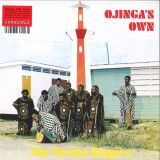
The 1974 debut album Ojinga’s Own and single Basa Bongo/Black Pepper by Guyanese Afro-Folk band The Yoruba Singers has been remastered for vinyl and digital.
The Yoruba Singers formed in Georgetown, Guyana in 1971. Despite their name they were not from Nigeria, but identified strongly with the area from which so many of the African diaspora in Guyana and neighbouring regions were originally descended.
The group started adapting Guyanese traditional folk music as well as writing their own - blending a mixture of protest, social commentary, blues, and genres inspired by the times. Beginning with about 12 people sharing vocal duties, most of the early repertoire was inspired
by folk songs that started life on plantations or in religious settings accompanied by a few sparse musical instruments.
Integral to the Yoruba Singers’ sound are echoes of Obeah traditions which are very closely related to the Santería religion of Cuba and the Orisha and Shango traditions of Trinidad and Tobago. Calypso and steel band culture from nearby Trinidad and Tobago was to some extent part of the musical DNA of the group, but they were naturally also influenced by the massive volume of rocksteady and roots-reggae coming from Jamaica.
Covet is fronted by Yvette Young who is revered by guitarists around the world for her mastery of the innovative two-handed tapping technique. Yvette says of the album - "I'd like to be honest - this album process was one of the most challenging ever, and none of the reasons for that was related to the actual music. There was a moment where it felt like it might not come out ever...but I think having patience and faith does pay off. I named this record "catharsis" because the word to me feels like a triumphant exodus. No matter the dire circumstances, music is one of those things that I’ve always needed to create to survive (in all senses of the word), and time and time again, I turn to guitar and songwriting as my outlet to uplift and feel like I have control over something in this chaotic universe. The overall theme of the album is escapism and fantasy, which also feels fitting because in a lot of ways, we use music and art to escape our anxiety, our pain, and our sometimes oppressive realities...to travel to universes that we so badly wished existed. Music is so powerful for this reason because it can be so transformative- it uplifts and empathizes with you without needing to say a single word. With this music, I wanted to tell a concise but dense story that goes many places- not necessarily all joyful. I have been working on it down to the last minute, and in less than 30 minutes, I'd like to take you to all the magical places I’ve been and show you all the highs and lows that I've had the privilege of experiencing during the last 2 years of creating this body of work."
Exit North are: Japan co-founder, solo artist Steve Jansen, Swedish singer songwriter Thomas Feiner, pianist Ulf Jansson, and renowned Swedish producer/multi-instrumentalist Charlie Storm. Their 2nd studio album 'Anyway, Still' continues the quartet's appetite for exploring provocative song structures. Weaving classic elements such as piano and strings into the layered threads of the bands material. Where intimacy and atmospherics give way to powerful dynamics, animated rhythms and grooves, driving distortions and crescendos in cinematic scale. Like excavators with uncompromising autonomy, Exit North relish the exploration of every nuance and detail of the recorded performance. Artwork contains full lyrics. " Exit North is truly about generating an aural gravity that pulls the best out of its participants. Those who admire Jansen's instrumental, experimental solo output, as well as his song-based work with Japan and Rain Tree Crow, will find much to enjoy on Book of Romance and Dust. Similarly, the audience Feiner has cultivated with his group Anywhen and its acclaimed recording The Opiates, will encounter a related, spacious aesthetic. LP limited to 500 copies on 180gm black vinyl with a gatefold sleeve (release date is later in July).
"Spirals" goes back to the roots of jazz, funk, and disco and brings elements of these music streams into house music. In the appearance of swing, jazz was originally a dance music genre, which later developed in many directions. Various other genres were born from it. Even electronic music streams like house belong to those genres.
Bearing this in mind, "Spirals" connects different points in the history of these genres. Bringing this fusion to life, the MIMIKOTO project works with electronic elements (analogue synths, drum computers, electronic modulations) as well as acoustic instruments (saxophones, keys, trumpet, bass, drums and percussions).
The MIMIKOTO project was founded in 2019 by Fabio Kumori as a collective of musicians related to jazz, funk, soul and electronic music, after a certain period of composing and playing as duo, trio and quartet. One of the central goals of the MIMIKOTO project is to include people from different backgrounds - to be inclusive regarding the music and the musicians themselves.
May the sound of "Spirals" be a social room in which everyone is invited to participate, and may this idea be spread everywhere where it will be played.
‘Crossing the Red Line’ is the eleventh release on First Cut and the second part of the label’s public transport-related trilogy.
As anyone who has used Dublin’s light rail knows, crossing the red line is an unforgettable experience.
Soundtracking the ups and downs of daily life on the tracks is Tr-One. ‘VCO Friday’ is a fist-pumping affair, as a flurry of razor-sharp percussion collides with rousing melodic builds and drops.
On ‘Uncle Bulgaria’, Giles Armstrong drops a pulsating, throbbing groove and swirling hooks, with this combination hitting harder than city centre gridlock.
Rounding off the release is the inimitable Reflection Port Assembly – the distinctive, shuffling drums and dusty synths of ‘Tranquilo’ the perfect, calming antidote to rush hour.
Focussing on DJ related cut & paste tunes, Needlework supply us with 2 more turntablist dancefloor bombs.
Redshape's visits to Running Back are a welcome recurrence and a soothing reminder that techno and house can still come in several shapes and sizes. Related and referring to earlier acid studies on Release Me and to a certain extend on Rise, the masked man continues to find new approaches to the 303 canon with Acid Leak.
True to form, the seasoned producer choses groove over governance, lets batteries leak and strikes a chord or two with old lovers and new votaries of the classic club techno titans of the nineties - strings included.
Wing Wing is an exemplary excursion into the special and unmatched Redshape zone that rejoins rock and dental drillers, while Acid Flow counterpoints the titles track's opulence with a dub version - both hit like a streak. The curveball and icing on the cake is Frantic. Hi-tech-jazz in technique and -soul in attitude, it feels like a late contender to the quintessential Deepest Shade of Techno compilations. Four to the floor!
The Joshua Jaswon Octet is a Berlin-based contemporary jazz ensemble, featuring a broad cross-section of exceptional young musicians from Europe's leading jazz scenes. Lead by the London-born saxophonist and composer, the ensemble released its debut album Silent Sea in October 2020, which was selected by BBC Music as one of the best jazz recordings of 2020/21 and received 4 and 5 star reviews across the UK and international media. Polar Waters draws out the distinct musical personalities of each member of the Octet into the group's collective sound was a part of the ensemble's natural evolution from its first record and something that has developed through extended time living with and performing the music. Jaswon focused on exploring the fluidity of roles, sound colours and textural combinations in the ensemble and how this related to both the collective and individual.
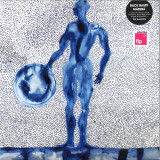
African Singer-songwriter Blick Bassy is back with a fifth album, again sung in the Baasa language of Cameroon. Madíbá brings together twelve songs in the form of fables, dedicated to the theme of water, in which his high and angelic voice dominates, carried by delicate guitar, synthesizer melodies, and sober brass arrangements. The cuts are diaphanous and nevertheless modernist songs, which testify to a contemporary and poetic Africanity at the crossroads of soul, folk, and electro.
Blick Bassy’s albums have a humanist and universal dimension. His fifth and new solo album, titled Madíbá, which means water in the Douala language of Cameroon, comes in the form of songs close to the fable, in which Bassy explores "a theme shared by all” of water, the source of life.
The fables of the album, all born in the imagination of Blick, explore in a more concrete way different themes related to water, its rarity, its necessity, its energy or its vital power. The twelve songs all bring together a series of figures, animals, or various characters, embodied in turn by Blick Bassy. "I have fun stepping into the shoes of a bird, a cat conversing with an elephant, a flower worrying about its declining beauty, a monkey looking for a spring or a storyteller with his grandchildren. In these texts, water can even take on a human appearance.”
Beyond the tale, the texts of the album also refer to our climate crisis, or to the problems of access to water, a way for the artist to approach serious subjects through a poetic form which avoids didactic or moralizing speeches.
- A1: Constantinople
- A2: Sinister Exaggerator
- A3: The Booker Tease
- A4: Blue Rosebuds
- A5: Laughing Song
- A6: Bach Is Dead
- A7: Elvis And His Boss
- B1: Lizard Lady
- B2: Semolina
- B3: Birthday Boy
- B4: Weight-Lifting Lulu
- B5: Krafty Cheese
- B6: Hello Skinny
- B7: The Electrocutioner
- C1: Shitty Rock ‘N Roll Rdx Suite (The ‘Duck Stab’ Multitrack Tapes)
- D1: Santa Dog '78
- D2: Guylum Bardot '78
- D3: Soulful Sax
- D4: Ow Bout That (Instrumental)
- D5: When Johnny Comes Marching
- D6: Unlisted
- D7: Bach Is Dead (1982 Rehearsal)
- D8: Birthday Boy (1982 Rehearsal)
- D9: Constantinople (1982 Rehearsal)
Formed in the early 1970s, The Residents have now been charting a unique path through the musical landscape for 50 years. In celebration of that remarkable and unlikely anniversary, we present an expanded vinyl reissue of the classic 1978 album ‘Duck Stab/ Buster & Glen’.
Compiling the legendary ‘Duck Stab!’ EP with another side of similarly themed ditties, The Residents’ produced one of their best-loved works during the punk rock explosion of 1978 - the album has remained a cornerstone of their remarkable body of work ever since; and has recently been featured heavily on the band’s ‘Dog Stab!’ tour. This expanded edition includes the ‘Shitty Rock ‘N Roll’ RDX suite (a reworked and remixed suite produced by The Residents using the album’s original multitrack tapes) alongside related bonus tracks, all packaged within the album’s long out of print original sleeve artwork.
Produced with The Cryptic Corporation, remastered by Scott Colburn and complete with insightful new sleevenotes, this set builds upon The Residents’ ongoing pREServed reissue project, which will continue into 2023 and beyond.
Critically acclaimed folk duo The Milk Carton Kids are back with I Only See The Moon. Produced by Kenneth Pattengale, this full-length album features a collection of timeless and traditionalist tracks with hauntingly lovely and rich vocal melodies and lyrical content spanning the themes of time, nostalgia, heartbreak, sadness, love, nature, grief, loss, freedom, solitude, and relationships. Founded in 2011, The Milk Carton Kids swiftly emerged as a major force in the American folk tradition, blending ethereal harmonies and intricate musicianship with a uniquely powerful brand of contemporary songcraft. 2013’s ANTI- debut The Ash & Clay proved their national breakthrough, earning The Milk Carton Kids their first Grammy Award nomination for Best Folk Album. A second Grammy nomination for Best American Roots Performance followed in 2015 for the track “The City of Our Lady” from band’s acclaimed third studio album, Monterey, and 2018’s All The Things That I Did And All The Things That I Didn’t Do was nominated for Best Engineered Album, Non-Classical. The band’s most recent album, 2019’s The Only Ones (out now via Far Cry Records in partnership with Thirty Tigers), was the subject of extensive praise, with Rolling Stone proclaiming that “Kenneth Pattengale and Joey Ryan get back to the beautiful basics with The Only Ones,” while NPR’s “World Café” noted that “even though Joey and Kenneth are not related, their voices together create a sibling-like harmony...the duo has a strong sense of respect and reverence for the musical traditions that they've grown from.”
Already a multi award-winning and established artist, with a growing global reputation, South African artist Bokani Dyer presents his newest record ‘Radio Secheba’ - due for release on digital, CD & LP vinyl formats on 12th May 2023 via Brownswood Recordings.
This 15-track album continues Dyer’s creative journey of making rich and immersive music which places him amongst the new wave of South African jazz artists, including the likes of Siya Makuzeni and Nduduzo Makhathini.
‘Radio Sechaba’ provides an intimate view into South Africa’s multifaceted people - and an opportunity for global connection through music. The meaning behind ‘Sechaba’ in the album title is nation. The record hones into the related topics of nation-building and unity and this is no ordinary topic for Dyer, who was born into a Botswanan community in exile from apartheid. The title of this thought-provoking album echoes that of “Radio Freedom” - the voice in exile of the African National Congress.
Dyer’s career highlights include acclaim as a solo artist (including being named the Standard Bank Young Artist Award winner for Jazz in 2011) and with his trio (the Bokani Dyer trio’s Neo Native won the South African Music Award for Best Jazz Album in 2019). Bokani features on the opening track of the critically acclaimed Johannesburg scene jazz compilation, ‘Indaba Is’ - released in early 2021. Bokani played at the 2022 North Sea Jazz Festival in Rotterdam, Netherlands, was a part of the South African Songbook (2019) at the Lincoln Centre USA, London Jazz Festival (2015), headlined the Cape Town International Jazz Festival (2015) and held an artistic residency at the Bird’s Eye jazz club in Basel, Switzerland (2014).
Murmer is the long-standing project for Estonian field recordist and composer Patrick McGinley, and in Tether, The Helen Scarsdale Agency welcomes Murmer back to our roster, over a decade since he graced us with his last production for the Agency. His field recordings often center upon the amplification and activation of resonance from a particular space, landscape, or object. Such sounds emerge from a condition as begin fleeting, inconsequential, or ephemeral and explode into that which alien, sublime, and profound. Here lies the tremendous prowess of the contact microphone, as wielded by an accomplished musician! The source material cited by McGinley includes cables, fences, wires, and vents.
There is a heft to many of these sounds as heard throughout all of "Taevast" with deep throbbing pulsations from arctic wind generating subharmonic patterns upon thick high-tension wires. Elsewhere the subtle dissonance from a rasping cooling fan blooms into a brooding ambience that is sublimely rich in its metallic timbres and complex reverberations. McGingley has long been an exemplary artist in the field of phonography even as he is less prolific than others. On Tether, he has produced a majestic if occasionally foreboding work on par with the mythic wire recordings of Alan Lamb, Jacob Kirkegaard's haunted resonance from Chernobyl, and much of the Touch catalogue for that matter!
Patrick McGingley on Tether:
In 2006, I made a collection of recordings at a mobile phone mast in Mooste, southeast Estonia. It is a guyed tower, 80 meters tall, affixed to 3 support points with heavy cables. I attached my self-made contact microphones to these cables with poster tack, and spent many hours over several weeks recording the various wind and weather variances (it was summer), and the birds that passed or settled on the tower or cables. This was one of my first visits to estonia, where i now live, and one of the things that marked me about that experience was the access: the tower had no fences or protections around it (I have not been back there recently to answer my own question of whether or not this is still the case); it stands in the middle of a field of tall grass along a dirt road in the countryside, just out of view of the few nearby houses, and during all the hours I spent there I was never disturbed or shooed away.
For more than 16 years, I have been thinking about this location and these recordings, and have made several attempts to work with them. I have used the sounds in installations a handful of times, and uploaded one short edit to the Aporee soundmaps, but have never managed to use them in any composed work. They always seemed too big for any structure I could provide them, whether I left them on their own, or partnered them with other sounds. Finally, in 2019, after putting them down and picking them up again repeatedly over so many years, they seemed to allow me in, although it took me another few years before they were happy with what I could offer. They stand now not quite alone - the majority of the layered sounds in the piece come from various edits of those cable recordings, but I added two other contrasting sounds, related to one another: one is snowflakes landing delicately on a plastic cakebox with microphones inside it, and the other is a frosted field of grass thawing on a lightly warming autumn morning (both these recordings can also be heard on their own on the Aporee maps).
Coming back to those cables brought to mind so many other wind-driven sounds that I had spent time with and recorded, but never returned to, that I began digging through my archives looking for them. I ended up with a pool of sounds from resonant wires, cables, fences, poles, fans, and vents, which became the basis for the 2nd work on this release. One of these sounds is among the first sounds I ever recorded, possibly within a month or so of buying my first microphone and minidisc recorder: the rhythmic fan of a beer cooler in a pub where I worked in North London in 1999. Other sounds in the piece include another phone tower, recorded on the northern coast of France in 2008, a telephone pole recorded in the Beaujolais region in 2010, the drone of ventilator fans at a factory in Tezno, Slovenia in 2012, an electric sheep fence in the Scottish borders in 2013, a hanging wire in a storage space in Rovaniemi, Finland in 2016, and, with no relation to cables or wind at all, calcium deposits being cleaned from the inside of an electric kettle here in Estonia in 2019.
I offer these two new pieces as my first solo publication since 2018, the first release on a physical medium since 2016. No one has ever accused me of working too fast, or being too prolific. I have a need, it seems, to leave a physical space of time around my work, before I can consider it 'finished'. Perhaps it is a simple need to forget how I did something, or that I did something; perhaps I have a need to be able to hear a work as a first-time listener would, before I can consider it ready for such an encounter. In some part of my mind I have to forget it before I can let it go. Well, I've just about forgotten that London beer cooler now, and that walk in the Beaujolais (with my father, who has since passed away), and that sheep fence next to our campsite in the borders, and that kettle that is now leaky. So I guess it's time.
LTD. MARBLE VINYL EDITION[23,95 €]
This is a new pressing on 180g Transparent clear vinyl. 500 copies only. We ThRee announce the reissue of the "Odyshape" the second album by The Raincoats originally released on Rough Trade Records in 1981.Re-mastered from original masters. Heavyweight 180-gram vinyl.
"It was The Raincoats I related to most. They seemed like ordinary people playing extraordinary music. Music that was natural that made room for cohesion of personalities. They had enough confidence to be vulnerable and to be themselves without having to take on the mantle of male rock/punk rock aggression…or the typical female as sex symbol avec irony or sensationalism". (Kim Gordon, Sonic Youth,1993). //
"We just really loved what The Raincoats were doing - they were a really exciting band. I think the thing that was good about The Raincoats simply was that the tradition that they were playing in was their own and so they had an original voice. You couldn’t ignore them - they were undeniably fascinating - the interplay between the two voices and the sound of the group was something original and that was what was exciting about them." (Geoff Travis, Rough Trade Records, February 2009)
Repress of the 2019 reissued special marbled 180g vinyl version! "Odyshape" the second album by The Raincoats was originally released on Rough Trade Records in 1981. Remastered from original masters. "It was The Raincoats I related to most. They seemed like ordinary people playing extraordinary music. Music that was natural that made room for cohesion of personalities. They had enough confidence to be vulnerable and to be themselves without having to take on the mantle of male rock/punk rock aggression_or the typical female as sex symbol avec irony or sensationalism". (Kim Gordon, Sonic Youth,1993). "We just really loved what The Raincoats were doing - they were a really exciting band. I think the thing that was good about The Raincoats simply was that the tradition that they were playing in was their own and so they had an original voice. You couldn't ignore them - they were undeniably fascinating - the interplay between the two voices and the sound of the group was something original and that was what was exciting about them". (Geoff Travis, Rough Trade Records, February 2009)
Blue Hawaii was Elvis’ 8th film, and on its release in 1961 became one of that year’s most
successful titles at the box office. It remained one of the singer’s all-time favourite movies,
and began a love affair with the island, which had become America’s 50th state in 1959.
Blue Hawaii was the usual Elvis mix of exotic locations, beautiful girls and lots of songs. The
soundtrack of Blue Hawaii did not disappoint – the sleeve boasting “14 Great Songs”. The
title track was a perfect introduction, while the Hawaiian setting meant that space was found
for the atmospheric Hawaiian Sunset and Island Of Love (Kauai). Room was also found for
two other island-related songs - Aloha Oe and Hawaiian Wedding Song, both of which had
been hits for Bing Crosby back in the 1930s. But where Blue Hawaii really scored for fans
was the inclusion of the boisterous Rock-A-Hula Baby and a song which would go on to
become one of the singer’s best-loved ballads – Can’t Help Falling In Love. Based in part on
an 18th Century French melody, for many years this became Elvis’ in-concert finale.
Brazilian experimental multi-instrumentalist Carla Boregas follows plates for Bokeh Versions and Hive Mind with a ghostly set of deep listening electronics that plays like a symphony for an imagined woodwind orchestra.
Carla Boregas is best known from her tenure in São Paulo's genre-bending experimental post-punk scene, playing in long-running outfit Rakta as well as other related offshoots. Her solo material has been knottier to unpick, here developing ideas from a collection of unfinished fragments and notebook scribbles exploring the possibility of finding a wind instrument that could be played collectively by several musicians. Coinciding with the pandemic, however, she soon realised the inherent risks involved with sharing breath and so the concept took a different direction, with added resonance.
Boregas developed a synthetic alternative, layering vocals and environmental recordings to suggest wind instrumentation without attempting to mimic it. The sounds here are airy, but rarely diegetic - on the title track, Boregas uses analog arpeggios and plucked, sustained tones to approximate the kosmische world of Ash Ra Tempel or more recently Emeralds, as if trapped in a wind tunnel, moved forward by an unseen force.
There's a whisper of the ancient past that harmonises with Wojciech Rusin's speculative medieval gasps, and Bloedneus & de Snuitkever's severely underheard ‘Milli Mille’, an examination of the ancient Greek aulos. On ’Grafia Do Invisível' the sound is completely different again, but the concept remains, using precise analog drones and minuscule timbral shifts to imitate the character of a wind instrument and simultaneously harmonise with the deep listening meditations of Éliane Radigue and Kali Malone.
A voice enters the frame on 'Sopro’, chopped into deviated gulps and syllables, creating a language that's unfamiliar and percussive. The use of breath is subtle, and vocalisations criss-cross between synths and faint whistles, forming an expression that's different from its predecessors but intrinsically interlinked. This is where ‘Pena Ao Mar’ excels, by viewing breath and its application in electronic music from multiple angles simultaneously. Fans of Lucy Duncombe, Lucrecia Dalt, or Sarah Davachi - don't miss this one.
- A1: India
- A2: Child Of Nature
- A3: Anna Was Mine (Demo Version)
- A4: Nature Boy (Mantovani Orchestra)
- A5: Land Of Love (Come My Love And Live With Me)
- A6: Hey Jacque (Hey Jacque)
- A7: Palm Springs (The Ray Anthony Orchestra)
- A8: Umgowah
- B1: Wild Boy ( With Mort Wise & The Wisemen And Rocky Holman)
- B2: Surfer John (Nature Boy & Friends)
- B3: Eden’s Island (Arthur Lyman)
- B4: Monterey (With John Harris And Paul Horn)
- B5: Overcomers Of The World (With John Harris)
- B6: The Clam Man
- B7: Nature Boy (The Talbot Brothers)
Colour Vinyl[31,89 €]
“Wild Boy …” is a reissue of the well-known 2016 release curated by Brian Chidester, renowned researcher and biographer of Eden Ahbez. Especially for this album, Brian wrote an interesting text about Abi’s life, which definitely became the decoration of the release.
With the new 2020 re-release, we went a little further and kept what is commonly referred to as studio cuts. It’s a few more minutes in the studio with ahbez himself, full of emotion and life. In addition, to the delight of fans, the edition includes an additional composition Nature Boy (Mantovani Orchestra).
Especially, it is worth noting the outstanding mastering prepared from practically decomposed tapes by the Grammy-nominated Jessica Thompson, which guarantees the deepest and warmth possible sound. Jessica a huge ahbez fan and we’re highly appreciated for what she has done to save his music for the future.
Eden Ahbez is definitely at the origin of psychedelic music and this release can be taken as further proof. Over the past twenty years, the iconic figure of the world’s first hippie Eden ahbez has become famous primarily for his 1948 song “Nature Boy”, praising universal love, and his amazingly solo album from the 1960s called “Eden’s Island” – one from the first concept albums in the history of music and probably the first psychedelic music album. “Wild Boy: The Lost Songs Of Eden Ahbez” deepens understanding of the origins of the psychedelic movement in the 1950s.
The disc contains a musical selection of works by Eden ahbez himself, written by him in the period after Nature Boy. The inclusion of songs such as “Palm Springs” – Ray Anthony Orchestra and “Hey Jacques” by Erta Kitt gives the listener the chance to discover for the first time the little-known recordings of world-famous artists composed by Eden ahbez. Through “Wild Boy” and “Surfer John” you can hear the author’s handling of absurd rock and exotic experimentation, as well as sweet psychedelic pop like Monterey (with Paul Horn on flute). Overall, Wild Boy: The Lost Songs Of Eden Ahbez offers an overview of the lost works of 1949-1971 with seven unpublished recordings and eight rare singles.
If in 2020 you are missing the hallucinogenic content in Eden Ahbez, it amazingly makes up for that deficiency with simple chords, expansive arrangements, and lyrics about travel, relaxation, free love, and spirituality. Thus creating the standard of psychedelic music. Eden Ahbez’s songs weren’t only fantasy and his personal philosophy was the real thing that he lived.
reviews:
“This carefully and extensively researched compilation culls covers by top notch mainstream artists juxtaposed with unreleased Eden recordings. What might sound like a mixed bag is actually more like a chronological, musical non-fiction novel about Eden Ahbez. While Eden was writing hundreds of songs and performing live and making recordings in various styles, his songs were also being picked up by popular artists like Nat King Cole and Eartha Kitt who recorded with a more polished mainstream style. There are also some early rock n roll style recordings here. Eden’s professionally recordings often end up as Novelty Pop records such as “Child of Nature” and “The Clam Man” but if you read between the lines and listen to the lyrics it is pretty eye-opening that he is singing about Eastern-religion-style and pre-hippie philosophies about being at one with the planet Earth.
All of this is explained in the lengthy liner notes inside the lp along with a few choice photos that establish Eden as a founding father of Southern California mystic/psychedelic music.” – Tiki_News
“Eden Ahbez’s life philosophy was summed up in the lyrics of his most famous song, “Nature Boy,” a 1948 hit for Nat King Cole: the song describes a “strange enchanted boy” who wanders the world in search of truth. “The greatest thing you’ll ever learn,” he concludes, “is to love and be loved in return.” Ahbez was a pre-cursor of California’s beatniks and hippies, and an exalted icon of ex-otica via his rare 1960 album Eden’s Island. Beyond “Nature Boy” and Eden’s Island, though, there were nu-merous lesser-known Ahbez record-ings. Ahbez biographer Brian Chidester has been doing an exemplary job of archiving and documenting that catalog of work. The Exotic World of Eden Ahbez (reviewed in UT#38) appeared a few years ago, gathering together 14 Ahbez-related rarities” – Ugly Things
Never released before recordings from Logos Foundation live sessions at Logos Foundation, January 3, 1981.
The music is free-improvisation - that is we make our music co-operatively while playing : by listening, reacting, throwing in new ideas, not by following preplanned schemes. At its simplest the group's intention can be said to be to play together as well as possible and to enjoy ourselves while doing so. We are very interested in the result and intend that the audience is as well. As well as the musicians reacting to each other the music itself is pretty reactive to context. In other words room acoustics, background noise, audience response have a strong effect on what happens. This is particularly true of the audience. We have done performances where conversation has broken out with some audience members. There is much to see as well as hear - this is partly to do with the instruments. Together Terry, Steve and David have hundreds, all sizes, all sorts, most colours. They completely cover the floor. Many of these are non-western. The wide range of instruments means that an extremely broad sound spectrum is covered, from sudden bangs to very quiet low notes, from squeaks to normal guitar sounds. This is what fixes the overal group sound.
David Toop: Flute, home-made reeds, percussion Peter Cusack: Guitar Steve Beresford: Piano, Small Instruments Terry Day: Percussion, home-made reeds
Logos Foundation, located in Ghent, is a unique professional organisation for the promotion of new music and audio-related arts by means of new music production, concerts, performances, composition, technological research and other activities related to contemporary music. This organisation has been founded in 1968 by Godfried-Willem Raes.
CVC (or Church Village Collective in full) hail from a sleepy village 10 miles north of Cardiff, nestling atop a hill in the Welsh valleys.
CVC is comprised of singer Francesco Orsi, bassist Ben Thorne, drummer Tom Fry, keyboardist Daniel ‘Naniel’ Jones and singing guitarists David Bassey and Elliott Bradfield. (It’s worth noting that the latter two, despite never having met them, are related to Welsh royalty Dame Shirley Bassey and Manic Street Preachers’ James Dean Bradfield.)
Maybe owing to genetics, Bassey states “I don’t think I’d be able to not do this, I don’t actively choose to, I’m just drawn to it.”
Their lush three-part harmonies echo the music they grew up on - contemporary pop’s building blocks: the Beatles, Neil Young and the Beach Boys - rich, melodic and pristine music that’s steeped in rock’s history.
‘Get Real’, CVC’s 11-track debut album, brings a touch of Laurel Canyon to the valleys. Made over four sun-baked weeks (once their time was up, Ross Orton Arctic Monkeys mixed the finished product), they kept it local by recording it in Bradfields’ living room.
Veils Of Transformation 1972 - 1980 is a collection of the earliest works of Gregory Kramer, one of the 20th century masters of textural electronic music. This collection is available on CD and cassette with liner notes from Gregory Kramer and Kaitlyn Aurelia Smith, who first brought this fascinating work to the attention of Important Records.
“Greg is one of the pioneers of electronic music and these pieces are unique opportunities to discover how intricate and dynamic early synthesizers are.” Kaitlyn Aurelia Smith
Kramer developed a musical language focused on continuous transformation of timbre, yielding a continuity of attention. This musical language, formed of timbral change, is a compelling aesthetic in its own right and a source of meditative experience. The four works on this album share a deep sense of order derived not from organizing pitches or rhythms, but from the evolution of timbre itself.
Gregory Kramer (b. 1952) is a pioneering electronic composer, inventor, researcher, teacher and author. In 1975 he co-founded Electronic Musicmobile, a synthesizer ensemble later renamed Electronic Musicmobile, a series of synthesizer concerts in New York from which he formed the Electronic Art Ensemble, a highly regarded all electronic quartet. His work extended to developing synthesizers and related equipment. Kramer also co-founded the not-for-profit arts organization Harvestworks in New York City. He is recognized as the founding figure of the intensely cross-disciplinary field of data sonification. Since 1980, Kramer teaches Buddhist meditation.
The four compositions collected here each represent Kramer’s unique approaches:
The structure of Meditations on 32 Parts of the Body (1978) is derived from the means of its production. Recording 5 people chanting an ancient meditation text, then layering to gradually achieve more than one million voices. The layering was all done using analogue tape recorders. The decomposition of the sound reflects the anomalies of tape machines out of sync, and the build up of artifacts from the audio tape itself, such as uneven response curves and tape hiss, are all engaged as musical materials.
Role (1972) was generated using one complex patch on a large hybrid Buchla 200/100 system. Emerging from a zeitgeist that valued pure synthesis as a combined artistic and technological research. At the time this piece was realized its as exceedingly difficult to produce electronic sounds that were internally complex.
Blue Wave (1980) is built on Kramer’s timbral development technique Veils Of Transformation which allows for disparate timbres to be woven into a continuously developing sound.
Monologue (1977) is a virtuosic performance of a massive patch on a Buchla/Electron Farm hybrid electronic instrument. Built into the patch is a pathway for continuous transformation of voice and voltage-controlled synthesizer. The blunt, raw and sometimes harsh sounds of this piece reflect an attitude prominent among composers that music can, or even should, be difficult, contrary to what’s already been done and, by all means, new.
- A1: Unreal Personality
- A2: Lights
- A3: Deutsches Madchen
- A4: Covergirl
- A5: Wahlerisch_
- B1: Ucx-S
- B2: Modern Air
- B3: Seit Wir Uns Kennen
- B4: Picture 210
- B5: Gentlemen _ Pettycoats
- C1: Deutsches Madchen (Demo)
- C2: Lights (Demo)
- C3: Wahlerisch (Demo)
- C4: Picture 210 (Demo)
- C5: Seit Wir Uns Kennen... (Demo)
- D1: Ucx-S (Demo)
- D2: Gentlemen _ Pettycoats (Demo)
- D3: Fire
- D4: Automobil
- D5: 40-50-60
Mannequin presents an expanded double-LP of 'Exploded View' from Dutch minimal synth pioneers The Actor. Originally released in 1982 by Trumpett Tapes, the album was repressed for the first time by Mannequin Records in 2014, and is now coming back to life again in 2022, enriched by an extra full-length of demos from a 1981-1984 period.
Singing both in English and German, The Actor songs are often related to modernism, fashion and dancing, like a sort of early incarnation of Depeche Mode but totally devoted to home taping and diy recordings, where Trumpett was definitely the perfect home for it, having releasing such amazing cassettes from Doxa Sinistra, Ende Shneafliet, Dr C.Stein, and many more. A must have for the dusty/rusty analog synthesizers lovers.
- A1: Kimina - Aliamka
- A2: Kmru - I Had The Impression
- A3: Barno - Calm, Chaos
- B1: Manch!Ld - Escape From Nyawawa
- B2: Budalagi - Mura
- B3: Ngat Maler - Nam Lolwe
- B4: Nyokabi Kariuki - Anjiru
- C1: Nabalayo - Mtwapa Siren
- C2: Avom - Waza
- C3: M3 - I Choose Violence
- C4: Munyasya - Borrowed Cadences
- D1: Snse - Ng'eetich
- D2: Mr Lu - Kaa Tukachome
- D3: Rushab Nandha - Sunset Over Vienna
In Kenyan cultural communities’ musical performance has always been linked with a long chain of related events and ideas. Music was often used to illuminate a specific topic and its implications to society. Through this method of explanation, musicians were able to reveal several underlying social concepts that determined people’s behaviour towards each other and the community.
This common recurring theme was seen mostly in ceremonies. African musical productions are abstract configurations that demonstrate a common fundamental creative principle of mediating the physical and metaphysical worlds. INSHA is centered on time and the evolution/relationship of these cultural-creative influences. The compilation inquires aspects of traditional cultures, physical or metaphysical from communities in Kenya, and act as inspirations and sonic paraphernalia. INSHA serves as a bridge between the past and future music creators on a more fundamental level than usual record keeping.
On her third album, Berlin-based Dutch-Italian composer and sound designer Aimée Portioli, aka Grand River, asks what guiding forces might be driving, enticing, and affecting us. “All Above” is rooted in her deeply personal philosophy as an artist, blurring the boundaries between electronic music and acoustic music and sculpting familiar ambient forms into personal themes painted with rich emotional colours. Written painstakingly over the last two years, the album is the most ambitious and divergent set of music Portioli has assembled so far, with a wide variety of instrumentation (including voices, strings, organs, guitars, and synthesisers) focused around the piano. She‘s keen to assure listeners that while that instrument isn‘t always heard, it‘s constantly at the forefront of the album, shepherding its emotions and anchoring its mood. It makes sense then that on the opening track ‘Quasicristallo’, the acoustic piano is the first element we hear, recorded closely, so its characteristic rattle and creak can speak as loudly as the familiar tones themselves. When the music blooms into abstraction and processed electronics, it‘s almost imperceptible: reverb mutates into ghostly vapour trails, and distortion forms the keys into another instrument entirely.
“All Above“ follows 2020‘s acclaimed “Blink A Few Times To Clear Your Eyes“ and 2018‘s “Pineapple” released on Donato Dozzy and Neel‘s Spazio Disponibile imprint. Having garnered praise from outlets like Resident Advisor, XLR8R, The Quietus, Inverted Audio, and The Verge, Portioli operates in a unique space within the electronic music scene, straddling the art world and the wider electronic music scene. She‘s developed sound art installations for Rome‘s La Galleria Nazionale and the Terraforma Festival-related Il Pianeta, and has appeared at Barbican, MUTEK, Le Guess Who?, Kraftwerk, and other internationally renowned venues and festivals, often collaborating with Marco Ciceri on A/V presentations. Ciceri also maintains the visual identity of Portioli‘s label One Instrument, a concept imprint that asks artists to create music only using a single device. All this experience is poured into “All Above”, a richly visual album that‘s far more than just an imaginary film score. While on ‘Human’, her piano punctuates a rhythmic synthesised bassline and smudged choirs that can‘t help but trace out the silver screen. The composer is keen to clarify that she doesn‘t think of her music (or sound in general) in visual terms.
Portioli studied as a linguist and used her art to develop an emotional language that‘s not bound by expected cultural constraints. When she adds a different instrument or process, it‘s not to reference a visual cue but to mark a journey through different states of being. Each element embodies a different emotion or mood: the electric guitar represents strength or violence, synthesisers shuttle us into the dream world, and the acoustic instruments highlight intimacy and warmth – even heart. Read like this, the tracks are like meditative poems rather than cinematic vignettes: ‘The World At Number XX’ is seemingly centred around a chugging synthesised arpeggio, but the cosmic, Klaus Schulze-esque pads, strangled guitar and evocative organ tones hint at the open-hearted, literate psychedelia of the 1970s; ‘In The Present As The Future’ meanwhile is breathy and windswept, juxtaposing urgent rhythmic phrases with light, flute-like gusts of harmony.
Dedicated to Editions Mego founder Peter Rehberg, who died suddenly last year, “All Above” demands engagement and refuses to evaporate into the background. The album asks listeners not just to absorb the album as a whole but notice the cracks in the structure and discern the tension they cause. That‘s never more evident than on the closing track ‘Cost What It May’, a piece of music almost jarring when Portioli chops into noisy waves of electric guitar. In the wrong hands, this might sound like a power move – some rock posturing to act as a finale. But Portioli‘s expression is different. She‘s forcing a level of engagement that perceives the negative space as just as necessary as the saturated positive, and what could be more haunting and emotionally resonant than that?
Composed, produced and mixed by Aimée Portioli.
Mastered by Stephan Mathieu.
Cut by Andreas Kauffelt at Schnittstelle, Berlin.
Photography by Federico Boccardi.
Design and layout by Riccardo Piovesan.
Jens Brands has created a large number of installations, musical performances and Interactive Media works. He uses the concepts of parallel activities rather then ideas of fusion. The pieces presented on this recording focus on sonic events related to electronic music (such as intense volumes and dynamics, white noise, square or sine waves) but stay entirely acoustic.
On a live performance of »Ratchets«, the sounds are generated with the idea of a physical, sculptural, yet invisible presence. It might happen that the body of a person moving around in the audience has more impact on the sound then the variations produced by instruments themselves.
"I was always interested in the idea of making acoustic music that has the quality of electronic music," muses Dortmund based musician and visual artist Jens Brand. "Electronic music is fantastic, but I don't like speakers very much."
Take his performance entitled »Motors And Styrofoam«. Pieces of glistening white styrofoam fitted with small motors hang from the ceiling above the audience's heads, squatting balefully in mid-air like lopsided clouds. Acting as a resonator, the styrofoam amplifies the whirr of the motors, which builds up into a loud, persistent drone overlaid with overtones.
Equally uncompromising is »Ratchets«, which deploys a number of football rattles, those small wooden devices originally used by hunters. The ratchets are set in motion by motors whose speed and direction are controlled by a computer: they click busily away, producing a dense, enveloping sound reminiscent of heavy rainfall. In performance, the sound of the ratchets is spellbinding in its rawness and intensity, attaining impressive volumes as it interacts with the features of the space.
The latest from Steve O'Sullivan and Mosaic's archive raiding series sees the first ever airing for an unreleased extended mix of the soft and soul-drenched 'Composure', plus two choice selections on the slip, the sleek sub-bass powered 'She Don't Do Chicks' and a dub mix of the equally streamlined 'Bumper Car'. If the A-side is a luxurious period piece of sorts - it could be related to Underground Resistance's 'Galaxy 2 Galaxy' for instance - then two on the other side could have been made yesterday they're so relevant and playable, coasting along with the kind of subtly jacking framework and dubby basslines that G Man made his own. All lovingly remastered at The Exchnage too.
Double LP - Remastered album on 180-gram vinyl, packaged in a sleeve that replicates the LP's first pressing in exacting detail.
The Led Zeppelin reissue campaign continues in 2015, turning the spotlight on the double album Physical Graffiti. The deluxe edition of the group's sixth studio album will arrive 40 years to the day after the original debuted in February, 1975. The reissues of the first five Led Zeppelin albums in 2014 found both commercial successes, with multiple titles reaching Top 10 chart status in countries around the world, as well as widespread critical acclaim, including the recent Classic Rock 'Reissue Of The Year' Award. As with the previous deluxe editions, Physical Graffiti has been newly remastered by guitarist and producer Jimmy Page and is accompanied by a disc of companion audio comprising previously unreleased music related to the original release.
The companion audio disc that accompanies the deluxe edition of Physical Graffiti has seven unreleased tracks, including rough mixes of 'In My Time Of Dying' and 'Houses Of The Holy,' as well as an early mix of 'Trampled Under Foot' called 'Brandy & Coke.' All the unreleased companion tracks offer fans a chance to hear well-known songs from a different perspective, including the Sunset Sound mix of 'Boogie With Stu' and 'Driving Through Kashmir,' a rough orchestra mix of the band's eight minute opus 'Kashmir.' Also featured is 'Everybody Makes It Through,' a strikingly different early version of 'In The Light' with alternate lyrics.
For Mal-one’s sixth single he has chosen to use what he calls his Punk Art Poetry to shine a light on one of Malcolm Mclaren and Vivienne Westwood’s most controversial / stylistic garment, the ‘Anarchy Shirt’.
Vivienne had made the prototype of the ‘Anarchy Shirt’ on some stock of ‘Wemblex’ shirts that Malcolm had acquired and had shown it to Malcolm who said it needed to say more. So, he added the text and the quotes from ‘Situationist’ related saying’s ‘Try Subversion’ to quoting revolutionist Durutti ‘We are not afraid of the ruins’. The text over the shirt front, made using their kids ‘letraset stencil’ would say ‘Dangerously Close To Love’ or ‘Only Anarchists Are Pretty’…. sounds like a good chorus for a song. Only fifty of these shirts were originally made but like all design classics have been copied many times.
‘Some say Only Anarchists are Pretty… or Dangerously Close to Love’
Hope you enjoy the story told on this 500-copy single backed with a dubbed-up version on the B-Side.
- A1: The Mighty Typhoons - I'm Com'un Home In The Morn'un (Feat Beaulah Enser)
- A2: The Spinshots - Seven Bullets, One Gun
- A3: Rosie Stevens & The Dry Riverbed Trio - Scorched
- A4: Working Voodoo Club - Do It All Night
- A5: The Uppertones - Open Your Heart
- A6: 44 Shakedown - Gigglewater
- A7: The Mighty Typhoons - Waddasei (Feat Viky De Sentis)
- B1: The Might Typhoons - One More Chance (Feat Beaulah Enser)
- B2: Rose Stevens & The Dry Riverbed Trio - Sweet Baby Of Mine
- B3: The Mighty Typhoons - The Snake
- B4: Voodoo Working Club - For A Minute
- B5: The Uppertones - Sometimes I Feel
- B6: 44 Shakedown - Ramrod
- B7: Skepticals - Diabolik
Tardam Records was born out of a collaboration between the Southern Italian City of Taranto at the top of the Puglian isthmus and Amsterdam, the far more northerly metropolis. The label was founded by DJ Goffredo Santovito and musicians Fabrizio Carrieri and Mikel Van Der Meulen. They were passionately motivated to release the music of a select set of European groups that were capturing a new sound in retro soul and R&B. Over the next four years they released nine singles from groups including the Mighty Typhoons, The Spinshots, The Ska related Uppertones and the raw R&B sound of the Working Voodoo Club, which resulted in dance floor winners, rare 45s and many great moments.
In celebration Acid Jazz asked their friends from Tardam if they could release a compilation of their work, and when they said yes, the label commissioned an exceptional mid-Century style illustration by Dutch illustrator Emanuel Wiemans to wrap it all up in.
With this release the label celebrates the return to the ranks of the founder Worg. A triumphant homecoming comparable to that of Jason, the main character of the Argonautica, who travelled in search of the Golden Fleece (Il Vello d'Oro) aboard the ship Argo. After many vicissitudes, the hero returned to Iolco, his homeland, to reclaim the throne usurped by his half-brother Pelias.
This new chapter in the Lykos saga focuses on the deeds of Jason and the Argonauts, but also on a key figure who was indispensable to the success of this quest, Medea. Thanks to her and her magical skills, the fellowship of heroes succeeded in grabbing the Golden Fleece. Through careful sound design, hinted melodic cells and complex rhythms, Il Piano di Medea by Worg, sums up details and facts related to this extraordinary legend. Starting from the prophecies of the Oracles, to the tragic and bloody ending of the epic poem, which took place with the death of King Pelias by his own daughters, hypnotized and manipulated by Medea's magic.
The narrative begins with the track Oracolo, characterized by a syncopated groove, nebulous atmospheres and the presence of a dark anthropomorphic synth, which alludes to the solemn, grave and authoritative voice of an entity. A prophetic spirit that warns the listener of the dangers that lurk for those who dare to enter this new sonic adventure. In order to foretell the future and to spread their word, the gods took possession of the bodies of priests who had fallen into ecstasy, using them as intermediaries. In his reinterpretation of Oracolo Neel, the grand Maestro of techno, in a similar way uses musical elements such as a harsh and acid bass line or a tight rhythm to lead the listener into a psychic state of suspension and mystical elevation.
In the music piece Il Vello d'Oro, Worg draws attention to the rare preciousness of this magical relic, rumored to have the power to heal all wounds and for this reason longed by Jason. To evoke the purity of the golden mantle, the artist uses shimmering percussion, radiant textures and the omnipresence of an FM synth bass, full of brilliant harmonics. All enhanced by sound details scattered throughout the arrangement.
Eryx, the record's final track, has a fluid and sinuous flow, with sound elements that recall water, a natural element, protagonist of the Argonauts' journey to the remote Colchis. A melody echoes in the distance, disappears and resurfaces to then collide, like waves on the rocks, with the complex and jagged rhythms that mark the gradual evolution of the
track.
The old adage about Elvis Presley is that his soundtrack work never held a candle next to his studio albums. Though true for a majority of his film-related outings, the traditional notion is forever disproved by his Blue Hawaii set. Originally released in 1961 in support of the film in which he starred, the triple-platinum LP spent nearly five months at the top of the Billboard album charts; outsold his two prior studio efforts; and ultimately, remains the second-best-selling soundtrack of the musical-dominant 1960s. And now, it has received sonic treatment befitting rock royalty.
Recorded before the King started to burn out on soundtracks and go into a creative tailspin, Blue Hawaii presents him in tremendous voice. The newly uncovered layers of detail, body, emotionalism, and tonality on this SACD bring that treasured element – as well as the brilliance of the arrangements and accompaniment – to light like never before. Presley's warm crooning alone warrants unmitigated attention. It's not for nothing that this record – replete with panache, whimsy, romance, and seriousness – forever altered the course of his career.
Much like the film itself, the music on Blue Hawaii subscribes to a feel-good aesthetic. Presley plunges into a stylistic deep end with equal parts fearlessness and fun. He delves into early rock ‘n' roll ("Rock-A-Hula Baby"); touching balladry ("Hawaiian Wedding Song"); playful rumba ("Beach Boy Blues"); relaxing luaus ("Hawaiian Sunset"); and naturally, island-inspired fare ("Ku-U-I-Po"). It becomes immediately evident that the King is enjoying himself and committed to the mission. Is Blue Hawaii all serious art? No, but it was never intended to be. Rather, it serves as a showcase of Presley's outgoing personality and chameleon-like ability – like that of Frank Sinatra – to inhabit different roles and entertain.
Of course, Blue Hawaii remains timeless for another reason: The inclusion of the timeless, gorgeous, and still-untouchable staple "Can't Help Falling in Love." Penned by Hugo Peretti, Luigi Creatore, and George David Weiss, the love song quickly transformed into an international standard – with Presley's definitive version hitting No. 2 on the charts and ultimately becoming the closing song to his concerts. Ranked among the 500 Greatest Songs of All Time by Rolling Stone, its conviction, sentiment, and depth testify on behalf of why Presley still reigns as the King.
However subtly, the staple also underscores another reason Blue Hawaii should never be overlooked in Presley's canon: the ace musicians involved in its creation. Guitarists Scotty Moore and Hank Garland; drummer D.J. Fontana; percussionist Hal Blaine; pianist Floyd Cramer; bassist Bob Moore; and iconic gospel backing vocalists the Jordanaires all contribute masterful performances. Hearing them with such expressiveness, openness, and realism on this 2LP 45RPM & SACD should forever alter how Presley's 1961 soundtrack – the finest of his career – is viewed. As he sings in the title track, dreams come true, indeed.
Florence Cats is a poet, visual artist, sound composer, performer and acupuncturist. Born in Vilvoorde (Belgium) in 1985, she is currently living and working where Brussels merges with the Sonian forest.
Florence Cats’ working process involves things about to appear or disappear, and echo one another : air, light, wind, tone, print, voice, water, color, dust, junk, rumor… She creates eclectic pieces related to travel, porosity, natural energies and celestial events. Each proposal is in tune to a context, a space, an environment.
Ys is a generous debut. Raw, courageous.
Sunken Cathedral is Florence interpreting Claude Debussy’s La Cathédrale Engloutie (trans. the Sunken Cathedral). The track reminds me of one of those fabled Charles Ives home recordings. Where he records himself on Speak-O-Phone - an old brand of recordable aluminium phonograph discs - while practicing and composing his music. But unlike Charles Ives treating these home recordings as personal sketches, Florence Cats shares her captured moments as compositions for the public.
Similar to the Speak-O-Phone recordings, we now meet the piano as a physical expression - not as an archetype. We are together with Florence in a room. The pedal. The keys. The hiss of the room. Learn, repeat.
Trough Florence’s hands and feet, La Cathédrale Engloutie is brought out of its pupa stage to become a presence. Instead of being grounded in luxurious concert halls or on high end recordings, the piece is now natural. Sunken Cathedral is a template, an affirmation for amateurs.
The piece was originally created for the group exhibition "Here Comes the Wave” at Project(ion) room, Brussels, February 2020.
In Fall Call, we find ourselves at QO2, a sound art initiative in Brussels. This piece was captured during a residency Florence took over the summer of 2022. We listen to the moment when a summer storm just washed the city.
Fall Call is a testament to Florence’s magical - humanistic way of playing her custom-made theremin. By pushing the controls of the instruments so high, her whole body starts to control the instrument - instead of just her hands. So when she walks around in the room, the instrument answers in full color.
And then, a phone-call. Giving it a bit of a Poulenc vibe.
For the last piece, Drop Out, we find ourselves in Florence’s apartment. When Florence opens the windows, the ambience of the surrounding Sonian Forest seeps in. This is an adorable moment. It predicts new beginnings. The smell of wet dirt and dripping leaves in the air. The poetry of rain.
For their sixth instalment, Lowlife Cartel follow up to their last two compilations (“Pimps Improvisations” in 2018 and “Omnia Vanitas” in 2020) with a new six-track VA named “Kodoku”; a vortical release, both bold and forward-looking, while fully geared for the club environment. Taking its title from a poisonous magic from the medieval Japanese era obtained by placing several venomous insects in a jar and letting them kill one another until only one survives, “Kodoku” - which interestingly also translates as “solitude” - features a cast of producers old and new to the fold including Saverio Celestri, the faceless △, Prince de Takicardie, Tundramane & Ko$te, Solar Alliance and Shampoo.
A staple element of the Lowlife Cartel bunch, Saverio Celestri paves the way and dishes out one of his signature jagged, EBM-informed weapons in “Sundays”. Through this hotchpotch of acid-steeped bass entangled with a frantic newbeat-ish swing and razor-sharp synthwaves, the Italian producer shows off the raw and playful facets of his craft to optimal effect. Unknown contributor △ clocks in with “Crachats de Lune”, a proper ominous banger going straight for the jugular with its clever mix of dusty, drum-laden churn, processed vox stabs and sci-fi-indebted laser bursts flashing by unrelentingly. Tailored for hi-octane action at the defunct Boccaccio or Hacienda, Prince de Takicardie “Jam’on’Acid (House Mix)” blows the winds of euphoria across the club like it was done in 1995. Vibing to a pulsating mix of rabid snares, 303-vehicled charges and mangled vocal samples on a classic free rave tip, throwback material that packs a punch.
Flip it over and here is North-American duo Tundramane & Ko$te shifting the scope to Memphis chopped-and-screwed in true hardcore fashion. Straight-out aggression, “Brick To The Face” lives up to its title, so expect leaving the place with a few teeth out your mouth and a good concussion, though more side effects could appear over repeated listens. A radical U-turn from the previous, Ute.- related triplet Solar Alliance - alias Ekkel, Oprofessionell and Mikkel Rev - bring their dashing trance touch to the comp with “Quest for Kiba”, an uptemp maelstrom for the senses, swirling and whirling up until space and time make no damn sense any more. Topping off that versatile tour de force, Japanese producer Shampoo adds his delectably sensuous spin on the record with the lush, sample-heavy lo-fi appeal of “四季ノ歌”. Unpolished feelgood vibes, sun- streaked soulfulness and deft-handed MPC wizardry are on the menu for this ultimate ride and jolly finale.
Amsterdam based Mausovic Dance Band make madcap music intent on expanding musical universes. Powered by elastic rhythms and some potent dub wizardry, the five-piece are synonymous with flipping global music traditions and creating new, sound-system stylised, synth powered, dance-floor experiments. Whilst their 2019 debut album on Soundway Records offered a frenetic mix, imbued by the Colombian champeta, Ghanaian highlife and spaced out disco, their new forthcoming album Buckaroo Bank, set for release on Swiss label Bongo Joe Records, feeds off the industrial sounds of New York City, post punk and early electronic explorers. At the very centre of the project is the dub, the Mauskovic echo chamber, guided by their universal hero Lee Scratch Perry and made possible by their studio friend Kasper Frenkel who provided the tools this new Mauscovic riddim philosophy. A proper family band (4 of them are related), and fronted by Nico Mauscovic who is also part of Zamrock touring band W.I.T.C.H., the group have released various singles since their debut album including on Berlin label Dekmantel and most recently, on experimental Swiss label Bongo Joe, their perfect home for brand new album Buckaroo Bank.
After the relative success of The Bitter Springs' last album, The Odd Shower, Simon Rivers promptly disbanded the long-running group and began recording his first solo album, Like Yer Wounds Too, under the name Poor Performer. As Jim Wirth wrote of a recent Bitter Springs reissue, "Weaving the messy threads of suburban life into dense tapestries, he has something of the Go-Betweens' gift for melody, something of Mark E Smith’s ear for language, something of Vic Godard’s common touch, and almost none of the acclaim that should have been his due." This holds true for Poor Performer's debut album, though the songs seem based around a loose concept of issues dealing with middle-age self-reflection . . . though nothing nearly as navel-gazing as that statement might imply! Rivers: "For as long as I can remember, I've been either making records or planning to make them. But for once, this is a record I didn't really plan to make. The strange circumstances of the Covid lockdown led to its coming together. I'd lost my Dad to a demential-related death, retired from work due to mental stress, and was shielded for seven months . . . I took my banjo, my Dad's Yamaha keyboard and a few of my guitars, and booked a month of studio days at One Cat with the brilliant Jon Clayton at the controls . . . after a week or so of recording backing tracks, Jon said, "I think 57 songs is a bit ambitious, Si", so together made the decisions that shaped this record and its accompanying EP." With 7" 45s now nearly as expensive to make as a full vinyl LP, a decision was made to include likely contenders on a bonus CD EP, which certainly rivals the album in quality and perhaps generally exceeds it in immediacy, but Like Yer Wounds Too is more of a grower than anything yet released by Tiny Global Productions, and one of the releases we're most proud to present to the public. Humour, insight and brilliance abound. Album tracks: Golden London Leaves / Kempton Park / Life U Chose / Hard To Be Happy / Lil' Bro / Sleepy Little Town / No Escape From Me And You / Right As Rain / The Point / Our Souls / The Frog's Tale / Can You Whistle? / Something's Gonna Kill Ya ep tracks: The World Has Had Enough / 2 Hard 2B Happy / For A While / Get Up Them Stairs / Daylight Robbery
Berlin electronic duo Donna Regina recorded two songs for the 10th edition of the Snowflakes Christmas Singles Club. In ‘Weihnachten Woanders’ (‘Christmas Somewhere Else’), singer Regina Janssen reflects on how it feels to spend Christmas away from home. Somewhere else, in a strange town where nobody knows your name and no one is waiting for you. You miss the familiar sounds of Christmas, like the child that sings ‘Stille Nacht’ and you dream of being home again. It’s a feeling many people can relate to. Especially this year, a year in which so many people were forced to flee from their homes. Günter Janssen, the other half of Donna Regina and Regina’s husband, lays down a minimalistic tapestry of synths and drum rolls. A loop of street sounds, a sample taken from sound artist Paula Schopf’s 2021 album ‘Especios En Soledad’, forces its way into the song, and in the end overpowers voice and other instruments. ‘Weihnachten Woanders’ very much captures the year 2022 and the worrying times we are living in, in both lyrics and music.
‘Christmas With You’, the B-side of the single, was originally written and recorded by Polish indie band Old Time Radio for their 2009 Christmas album 'Sketches For Another Christmas Songbook'. Donna Regina again goes for a minimalistic electronic sound, but also adds a certain melancholy to the song. Partly due to the synths that in places resemble the sound of an organ, an instrument that appeared on so many Christmas recordings from the 1950s and early 1960s. The love-hate relationship many people have with Christmas is perfectly laid down in the lyrics: “We watch the cartoons / We sing out of tune / Kiss by the fireplace / Listen to those horrible songs / Do we know / It’s Christmas time at all?”.
Regina and Donna Janssen debuted as Donna Regina in 1990 with the single 'Avec Le Temps' and released their debut album 'Lazing Away' in 1992 on Our Choice, a German sublabel of Rough Trade. In 1999, after four albums on Strange Ways Records, they signed to their current label Karaoke Kalk. Since then, they have released eight albums for the label. In 2015, Karaoke Kalk also released 'Dis Cover', a compilation of Donna Regina songs recorded by other artists like Dean & Britta, Bernard Burgalat, Mouse On Mars and many others. Donna Regina’s songs have been featured on compilations of labels like Rough Trade, Sonar Kollektiv, Klant Elektronik, Milan and Rolling Stone. Donna Regina was not Günther’s first band. In the early 1980s he was part of a Neue Deutsche Welle act with a very Christmas-related name: Heilige 3 Köninge ('Holy 3 Kings'). Their sole album, 1982's 'Zum Teufel Met Dem Kamel' has become very collectable. Günther was also featured as songwriter and musician on German singer Romie Singh's 1986 CBS album 'Masters' and later ventured into writing music for television and film. Regina Janssen also recorded as a vocalist with French musician Bertrand Burgalat, and sang several songs on his 2005 album ‘Portrait-Robot”.
Dickie Landry & Lawrence Weiner's Having Been Built on Sand was conceived as a vinyl edition and released by the Rüdiger Schöttle gallery in Munich with sleeve design by Weiner. The piece consists of eight untitled tracks. Lawrence Weiner, Tina Girouard, and Britta Le Va recite text with Dickie Landry’s woodwinds, all recorded in the natural reverb of Robert Rauschenberg’s studio, a former mission and chapel in Lower Manhattan. Layering Girouard in English, Le Va in German, and Weiner in English and German blocks of related or physically proximal texts repeat, invert, and intersect with Landry’s music as a constant. The layers of text and sound have meanings that fluctuate in complexity and scope, and like much of Weiner’s work, beyond mere facts.
The first piece is a trio for Landry’s keening tenor, repeating winnowed but breathy lines that contrast with and buoy Le Va’s clear, husky phrases, building in intensity as Weiner, in English, offers statements that are caught just off mic. The third cut adds Girouard, and one can hear woven parallels in the two women’s voices, cadences, and pitches, with Weiner’s cutting inflection dancing amid them. Landry’s bass clarinet is rich in its warble, full and gentle with woody footfalls that demarcate shapes through the chorus. Vocal rhythmic cycles, wordless in nature, are the energy that courses through the fourth song, urgent and sweaty as Weiner recites statements of political position in the Middle Ages, Le Va declaiming alongside in German. On soprano saxophone for the fifth tune, Landry pierces and darts in a bright manner in a private dialogue with himself, echoing Steve Lacy as female voices nearly bury one
Here is the much anticipated volume 3 of the HOT SAUCE compilation LPs dedicated to the Trojan related UK labels between 1965 and 1975.
HOT SAUCE VOLUME 3 features outstanding original Rocksteady, Boss Reggae and early Reggae (“Reggay”) tracks including rare songs, overlooked gems, hidden treasures and a couple of hits.
The record labels showcased on this third volume are Amalgamated, Duke, Gayfeet, Grape, Harry J, Rio, Randy’s, Treasure Isle, Upsetter and Trojan. The tracks here have been selected according to their musical interest firstly, their rarity, and their complementarity.
These tracks are all outstanding tracks, “killer tracks”, there is no “filler” whatsoever.
Particular attention has been paid to the way the songs are sequenced (or “mixed”) so that the album builds up nicely and gradually, generally starting with the Rocksteady songs on the A side and the 70s songs on the B side.
HOT SAUCE is a musical journey across early Jamaican Reggae - highlighting its diverse musical genres and outstanding artists – as it was once published by the U.K. record labels during this golden decade…
Since the early 70s “Tighten Up” series, no compilations have really explored these labels in depth on vinyl.