Brooklyn’s Broad Channel drops its first-ever collaborative release, “Intercity Relations Guide – Volume 1”. This special 4-track EP bridges vibrant underground scenes from NYC, Chicago, Detroit, and Japan, featuring tracks from Mark Grusane, Deon Jamar, DJ Monchan & Aota, and Derek Russo & Thomas Xu. Born out of a moment of inspiration in the fall of 2024 after returning from Japan, label founder Derek Russo envisioned this release as a bridge – linking the warm relationships built at home & abroad that were nurtured over years of DJing, producing, and hosting underground parties like Xoloft in
Brooklyn. The EP flows across a chugging tempo range, between 113 and 120 BPM, It’s a reflection of the label’s core ethos and catalog to date: genre-blurring and always rooted in the dancefloor.
London-based producer Alistair Gibbs grew up in a family of record collectors so picked up a love of everything from jazz to dub to hip-hop. He has made some fine moves as Nebraska but now debuts as Dubl Drat on his Friends & Relations label after outings on Rush Hour, Heist and Delusions of Grandeur. And a fine debut it is too as 'Jump-Rope' is a funky stouter that unfurls at 116bpm with neat guitar trills and a meandering lead all getting you in the groove. 'What You Did' is even more slow, heavy and hypnotic with a P-funk twist and more great guitar work. Sublime.
out of Stock
Last delivered 8 months ago available to reorder, subject to availability
Jetzt auch auf Vinyl: Musikalische Mitteilungen aus Oslo, New York, Basel und Lugano – aufgenommen zwischen 2018 und 2022 – werden auf dieser fesselnden Aufnahme, auf der der norwegische Schlagzeuger Thomas Strønen solo und in einer Reihe von Duetten zu hören ist, einander gegenübergestellt und neu kombiniert. Mit unterschiedlichsten Partnern wie Craig Taborn, Chris Potter, Sinikka Langeland und Jorge Rossy ist der musikalische Bezugsrahmen breit gefächert. Elemente von Langelands archaisch anmutendem Folk bis hin zu Potters Post-Coltrane-Saxophon und Taborns wirbelndem modernistischem Klavier finden alle ihren Platz in einem Projekt, das neue Verbindungen und kreative Beziehungen impliziert. Das Album wurde im Februar 2023 von Strønen und dem Produzenten Manfred Eicher in den Bavaria Musikstudios in München fertiggestellt und gemischt.
For its next outing, the Nebraska label has curated a mini best-of EP that serves up a quartet of tunes that have been digital only until now. Side A opens with 'Senza Parole,' featuring a weird and wonderful vocal sound and some loose hand claps under Italo-infused disco-funk drums. 'Let Me Be The One' is a nice tripped pout and slow motion 90s downtempo jam and 'Funkbraska' is an homage to French Touch with filtered synth loops fizzing with sugar goodness over a characterful bassline, and last of all is 'Love + Hate', another low slung hose groove that oozes cool and has a fantastic bassline propping it up.
out of Stock
Last delivered 15 months ago available to reorder, subject to availability
A1 is that classic Nebraska “This Is The Way” vibe; warm, atmospheric, sample-heavy 21st century disco with a truly euphoric build and release. A2 revises that first tune in a more tripped-out excursion. Both B-side tracks feature a French spoken-word vocal from BeBelle. “Fuis” is a blissed-out slow jam, whilst “Espace Fuis” picks the tempo back up again, adding a celestial choir and a fritzed-out arpeggiator solo.
out of Stock
Last delivered 4 years ago available to reorder, subject to availability
Trip further out with hypnotic, spacey, percussion-led disco collages from Peckham's Nebraska. Think King Tubby at The Loft or Echoes-era Pink Floyd at the Paradise Garage and you're in the area. The music of sound for deeper dance floors.
out of Stock
Last delivered 7 years ago available to reorder, subject to availability
Cochemea Gastelum is coming home to connect with his roots. After nearly 15 years of touring the world with Sharon Jones and The Dap-Kings, the saxophonist offers a deeply personal album of jazz and indigenous-influenced rhythms. All My Relations¸ out February 22 on Daptone Records, is 10 tracks of mesmerizing and spiritually ascendant instrumentation. The first single 'All My Relations' is available now.
'All My Relations is a way for me to explore my roots through music. Some of it is a memory that is imagined from a time and place I've never been ('Sonora') or a musical impression of ritual ('Mitote'),' Cochemea says. 'I felt compelled to add the way I feel when I go to ceremony, when I feel connected with my ancestors, to the musical narrative.'
A California native with Yaqui and Mescalero Apache Indian ancestry, Cochemea grew up surrounded by music but without knowing much about his heritage. Both his parents were musicians, and they gave their son a heavy name meaning 'they were all killed asleep.' Cochemea has spent much of his diverse musical career - as a soloist, musical director, composer and ensemble player - exploring and iterating on roots music, and All My Relations is a capstone meditation on his own ancestry.
Originally conceived during Sharon Jones and The Dap-Kings' final year of touring, Cochemea and Daptone's Gabe Roth cast a varied but familial set of New York musicians to bring All My Relations to life. A large portion of the album was created through improvisation and collective writing, where its 10 musicians created a melodic, percussive conversation. 'It was a beautiful experience - people would start playing and we'd work up these arrangements on the spot, then record it.'
'In a sense, this record is a prayer for unity, love and the recognition that we are all part of a web, and everything we do effects everything else,' Cochemea says. 'These days there's so many lines being drawn, I wanted to focus on what unites us.'
Cochemea has a long history of uniting multiple genres with his powerful polyrhythmic sensibilities. His roots in jazz, Latin, funk and rock led to multiple tours with funk-jazz organist Robert Walter's 20th Congress, and connected him with Sharon Jones & the Dap-Kings for their 2005 Naturally tour. Cochemea also played tenor sax with The Budos Band and Antibalas, and Baritone sax on the Amy Winehouse sessions, before becoming a full-time Dap-King in 2009.
In between marathon tours, Cochemea recorded a critically acclaimed solo album of soul, funk, and afro-Latin jazz, The Electric Sound of Johnny Arrow, all while doing session work for the likes of Mark Ronson, Rick Rubin and Quincy Jones. He's performed alongside Archie Shepp, Beck, David Byrne, Public Enemy and The Roots. Cochemea was also a featured soloist in the award-winning Broadway play Fela!, which led to historic performances in Lagos, Nigeria.
out of Stock
Last delivered 6 years ago available to reorder, subject to availability
Two Fresh Dancefloor-friendly Cut-ups From South London's Nebraska. 'the Guitar' Flips Addictive Jazz Guitar Loops Over Golden-era Hardcore Hip Hop Breaks. 'the Vocoder' Obsessively Re-thinks A Tiny Fragments Of Harmony From A Less Well-known Version Of A Disco Classic.
Following acclaim for his EP on NYC's Razor-N-Tape, Peckham-based producer Nebraska returns with two weighty string-led deep house grooves. 'Rien Ne Vas Plus' slowly builds to a lush, melodic wide-screen climax, while the crackly 'Don't You Know' offers a rootsier, more dusty flavour. Both tracks are augmented with trackier DJ-friendly 'version' cuts, a nod to the classic 80s reggae 12" format.
Bad-mannered, f*cked up club trax from Melbourne's Nerve. Stomping, nocturnal techno backed with a Photek-meets-Sunn O))) terror stepper. For fans of Regis, Emptyset and Blackest Ever Black.
Joe Fujinoki centered the compositions of his latest album Glass Torso round the idea of the fragility of the human body. Fujinoki described the narrative thread of the album as that of “holding the shape of a human body as if it might shatter like glass”. The precariousness of the body, the essence of the body as defined by Fujinoki as the torso, and the object relations between the boundaries of dialectical exercises pack themselves into his creative process.
Fujinoki recorded Glass Torso exclusively with analog synthesizers, stumbling in and out of structural loops to find space for accidental discoveries. The ten pieces of recorded material feel somewhere on the edge of typified form, feeling like a vascular system pumping in and out its undulating liquidities. Maybe this is the hollowed space held together by Fujinoki’s notion of the torso where you hear a microscopic world, dubby and generative. Fujinoki is adept at organizing this realm of subtle sound sources, giving proper considerations of shared tonal space. Seemingly, this handling of the precarity of sonic material elucidates Fujinoki’s mature attention to detail.
Ambient music genre tropes often affirm the listeners vessel for escape and dissociation. It provides an intoxicating allure by respite from an overwhelming exterior reality far outside the listeners controls. Here this space becomes apolitical, or its protest vocabulary softer and subtle. Fujinoki does not aim to tackle hyperobject topics on how to course correct the world, but he does something increasingly rarer to come across. On Glass Torso an alternative space is created not as shelter, but as a meditation on negotiation and compromise. This twenty eight minutes of audio lays down a foundation for imagination, for imagining how to negotiate the fragility of the self. Zoomed out, the implications of his negotiative sonics can be a playground for broader reflections on distributive care and attention.
Fujinoki says he feels “alert” to his physicality and placement in the world amidst vast digital cultures creating impositions on him and his surroundings. On Glass Torso he creates a concretized space on a vinyl record, where the virtual and the tangible antagonize one another that create the spectacle of the listening experience. This spectacle is a soft one, a considered one, and an utmost enjoyable one. Fujinoki juggles opposing forces brilliantly, and formulates an exquisite palette of soft passing music so he can also help the listener with the exquisite burden of their own Glass Torso.”
Midway through Martin Luther King, Jr's historic speech at the 1963 March on Washington, a voice rang out from behind him: "Tell them about the dream, Martin!" That voice belonged to Mahalia Jackson, King's close friend and one of the most revered gospel singers of the 20th century - Glorious Mahalia, a visionary tribute to Jackson's life by the internationally renowned Kronos Quartet, uses that moment as a springboard to explore the depth of Jackson's musical craft and its impact on the Civil Rights Movement, including her relationship with Clarence Jones and Studs Terkel, other luminaries of the time
Tenuous Links welcomes Torino’s very own VIOLA to the label with his new ‘Wrinkles’ EP. As the label owner of Reflue Records, VIOLA first caught my attention with his debut full-length release, a body of work that showcased a deep, rugged sound and a clear technical prowess shaped by his surroundings rugged coastlines and industrial landscapes of Torino in northern Italy. After speaking with Cristiano for over a year, it felt like a natural progression to bring his music to Tenuous Links. “The music I write almost always functions as a visceral soundtrack to whatever environment surrounds and infects me while I'm creating. Deeply rooted in the architectural contrasts of the places I’ve inhabited.”
‘Wrinkles’ is VIOLA’s second full-length body of work, yet the years of graft and dedication behind it are immediately apparent. Across three original tracks and a remix from London’s Jay Duncan, the EP delivers pure grit and crunch, inhabiting large, cavernous atmospheres grounded by pummelling bass, dynamic drums and intricate rhythmic detail.
The title track ‘Wrinkles’ is an ode to club spaces and the scene that revolves around them. Its broken rhythm channels the dancefloors of Cristiano’s formative years, spent partying in abandoned bunkers and warehouses in and around Torino. VIOLA explains: “Crafting such a raw, gritty bassline felt like an absolute necessity during the writing process, retracing memories of long nights spent dancing in silence.” The track’s cavernous atmosphere mirrors those pitch-black, unlit spaces, drawing us deeper and deeper into the abyss, with only brief glimmers of light offering reprieve from its relentless, all-enveloping bassline.
‘Mon Tom’ draws heavily from VIOLA’s hometown and his complicated relationship with Torino ,a city where tranquillity and beauty sit alongside heavy industry. The calm of the coastline is violently interrupted by vast steelworks and plumes of black smoke, leaving an imposing industrial mark on both the landscape and its people. The track reflects these contrasts. Metallic yet fluid, it moves at a faster pace, built around a driving 4/4 rhythm designed to suspend the listener while skittering percussion creates an increasingly uneasy sense of movement. It’s a meeting point between the beauty and brutality of the environment that inspired it.
‘P Maggiore’ was written between 2019 and 2020 while VIOLA was living in Rome’s chaotic Porta Maggiore district. Surrounded day and night by the grinding noise of trains, screeching tram brakes and beaten metal, he translated those raw auditory memories directly into high-pressure sound design. Yet, in contrast to the intensity of his surroundings, VIOLA deliberately pulls back the tempo.
Rounding off the EP is a skeletal remix of ‘Wrinkles’ from London’s Jay Duncan. She strips the original back into a techy, rolling cut, retaining its atmosphere and darkness while introducing a lighter touch of minimal-esque sound design. The result is a subtly transformed take on the title track that provides a fitting conclusion to the EP.
‘Wrinkles’ EP is a record shaped by place, by architecture, industry, memory and the physical spaces that leave their mark on us. From Torino’s industrial coastline to the chaos of Rome and the darkness of abandoned club spaces, VIOLA turns his surroundings into sound. Coming to vinyl and digital October 16th of October.
On Last Night At Marienbad's latest, the imprint brings together three of the brightest souls found within the realms of Jazz, namely Mauricesax, 9ick and Milan93, with their collective talents synergising effortlessly on 'A Garden Between Us', alongside a stellar cast of remixers who add even further delight between the grooves….
As a genre, Jazz has perhaps lent itself the most to other musical universes, in that its curious heart, endlessly experimental nature, and parameter-defying spirit have wrapped itself deep within the core of countless albums, scenes, and music makers. It's a genre that welcomes reinvention, consistently defying its contents and always reaching out to find new methods of expressionism. Electronic music, in its many forms, has truly embraced Jazz perhaps like no other movement of music has, with a truly astonishing array of records surfacing in the past 40 years which have blended Jazz's unique motifs with grooves, chords, and emotive excellence. From 90s Jazz house and UR Techno, through to Future Jazz, downtempo, and Hip Hop, and around many other suns, there remains such an intrinsic and symbiotic relationship between the two musical realms that caters to those who wish to live music both within and out with themselves.
As practitioners of blending electronica and Jazz, few do it like the trio of Mauricesax, 9ick, and Milan93. All three are known for their distinctive soundscapes, yet share commonalities in terms of musical language, feel, and sense of progression. Bringing them together allows for overlaps in their sounds to emerge, and just like Jazz itself, this is where the intrinsicness of sound begins to blossom. 9ick brings his softly evolving vibe to the table, one which was so prevalent and celebrated on his 2025 album 'SMIL'; Milan93 draws from his focal point of exploring fill-laden grooves and a myriad of emotive sensibilities; and Mauricesax draws up his extensive musicality that exists at the corner of jazz, electronic, and experimental music, along with running musical workshops all over the globe.
'A Garden Between Us' represents the trio's core tenets, with this immediately obvious from the record's opener, 'Rhodora'. A gentle solo piano quickly evolves into a series of powerful rhythmic pulses, with brass lines bringing vitality and feel to proceedings. The track shifts gears with purpose, transitioning between musical vignettes of the highest order, with the synth work doing much to bind the transitions together. 'Tulip' emerges slightly differently, with glossy Rhodes tones and an unravelling rhythmic undercurrent setting an enthralling stage. The track flourishes amongst sweeping textures, coming up for air amongst a deeply hypnotic rhythmic section that holds on and never lets up. 'Honeysuckle' lands next, which sees the trio emerge with a boundless, dynamic soundscape. The drums shift within the undertones, as keys, chords, horns and hip-hop vocal samples dance around the pulse, capturing the imagination with their narrative-like placement. Wrapping up the A side comes 'Camellia'. A dazzling array of harmonic sounds converges around the transfixing rhythm section, which emerges from deep below to lavishly roll out over the midsection, with the delicateness of the instrumentation a real highlight here.
The B side features two exquisite remixes, with Pacific Coliseum's version of 'Tulip' landing first. Beginning with a signature four to the floor to get things going, his careful handling of the source material is seen in the tactful introduction of the blissful elements that made the original cut so impactful, with great focus placed on emotive fidelity. The result is a summer-bound house number that reimagines the original in all the right ways, flipping it into a euphoria-driven jazz-laden pacer that reaches for the heavens as much as it drives right into the heart. Teuteu then showcases their take on 'Honeysuckle', and at 9 minutes long, represents the longest cut on the record - and the experience is all the richer for it. Leaning heavily into dance music flavours, Teuteu shifts perspective totally into the realm of the club, with the walls beating hard to the kicks. The sax lines that drift ethereally up top keep eyes closed and souls full, as the dance shifts into the next phase.
An experience that drifts from the daydreaming, to soul-warming through to the club shaking - what else is left to experience, except for 'A Garden Between Us' and how it will brighten up life itself….
Season Two continues with its fifth edition - a shift south this time, from KiF's English hedgerows to the island of Lutruwita, Tasmania, and the work of Soda Lite.
A gooseberry plant took root in the sand between the bricks of Alex's back patio - nutrient-deficient leaves and all - and fruited regardless. That's most of the appeal: "I'm drawn to species that survive in the interstices of human industrialisation." The husk itself carries the same idea, shielding the berry until it's ready to be let go.
Past Soda Lite records - Earthbound, Aqua Solar Cura, Vale & Stone - built outward from field recordings first. Here that flipped: you can't field-record a plant, only the noise around it, so only two tracks (Vibrant Matter and An Sí Gaoithe) carry field sound at all. The rest came from narrowing to a single species instead of the wider non-human world, and "trying to create and replicate sound and energy on the level of the plant and its perceptive world."
Two more things worth knowing. ‘Bryn Celli Ddu’ takes its name from a Neolithic burial chamber in Wales, aligned so the summer solstice sunlight reaches its back wall - the sun turning up again as its own recurring character. And ‘An Sí Gaoithe (Return)’ is a reworking of a Vale & Stone title, old fragments reprocessed into something new - "a bit like composting."
Soda Lite is the recording project of Alex Last, a gardener and composer working from Lutruwita on unceded Palawa land. Their music moves through field recordings gathered directly from the island's own biomes - coastline, forest, alkaline lake bed - alongside slow, warbling synth work, built less as backdrop than as document: proof of a specific place, at a specific time, being listened to closely. Past records have taken their titles and themes from geology and land relationships as often as botany - Aqua Solar Cura, Earthbound, Vale & Stone - so a plant with its own mineral-adjacent etymology (soda, found in dried alkaline lakebeds; lite, from the Greek for stone) suits the pairing.
British electronic music pioneer Dave Angel returns to R&S Records with “A Time And Place”, his first full-length album release for the seminal Belgian label. Arriving thirty-five years after Dave first joined the R&S family, the album reunites one of UK techno's defining voices with the imprint that helped launch his career, renewing one of electronic music's most enduring creative partnerships.
That relationship began in 1991, when R&S founder Renaat Vandepapeliere discovered Angel's ‘Rolling Thunder’ project and invited the young London producer to Belgium. Personally welcoming him into the R&S family alongside a new generation of forward-thinking electronic artists, Vandepapeliere released the landmark “1st Voyage” EP, helping establish Dave Angel as one of British techno's most distinctive new voices. A succession of acclaimed releases followed, including “Stairway To Heaven”, “3rd Voyage”, appearances on the influential “In Order To Dance’” compilation series, and releases on sister imprint Apollo, charting an artistic partnership that helped shape both Angel's career and the wider evolution of UK techno.
Three and a half decades later, “A Time And Place” feels less like a return than the continuation of a conversation left unfinished. Rather than revisiting former achievements, the album reflects the perspective of an artist whose creative journey has continued to evolve. Reconnecting with the label that first championed his work, Angel delivers his most personal and musically expansive statement to date.
Across fifteen compositions, “A Time And Place” reaches beyond the conventions of techno to reveal the full breadth of Angel's musical identity. Drawing on jazz, soul, improvisation and richly textured electronic production, the album balances rhythmic precision with warmth, melody and emotional depth. Reflections on family, heritage, nature and the communities that have shaped his life sit alongside broader observations of the world around him, creating a body of work that feels both intimate and expansive.
That openness is reflected in a carefully chosen cast of collaborators. Celebrated trumpeter Steve Waterman features on both “Réflexion” and “The Yellow Butterfly”, bringing a lyrical, Miles Davis-inspired voice to the album after first catching Angel's attention through his work on Paul Hazel's “Out Of This World”. Elsewhere, legendary Chicago vocalist Robert Owens appears on “Harmony Serenade”, while guitarist Merv Carswell and vocalist Aurii Sky (Dave’s daughter, adding a poignant family connection) add further colour and texture to a record rooted in musicianship and shared expression.
While Dave Angel's influence on British electronic music has long been established, “A Time And Place” reveals another dimension of an artist whose foundations were laid long before techno. Raised in a household immersed in live music and jazz culture, Angel has spent a lifetime absorbing sounds beyond the club, allowing those influences to surface naturally throughout a career defined by curiosity rather than convention.
For R&S Records, the album renews a relationship that stretches back to the label's formative years. For Dave Angel, it reflects both the path travelled and the road ahead. Thirty-five years after “1st Voyage” first announced his arrival, “A Time And Place” reunites artist and label with the same forward-looking spirit that brought them together in 1991, proof that the strongest creative partnerships continue to evolve.
‘Finally’, the forthcoming new record from Catz ’n Dogz, belongs to the latter.
There are albums you listen to, and there are albums you live with. ‘Finally’, the forthcoming new record from Catz ’n Dogz, belongs to the latter.
Across sixteen tracks, Voitek and Greg have created their most creatively ambitious and emotionally open work to date. An album about relationships, friendship and the people and places that shape us. At its heart is a simple idea: music should make you feel something, and sometimes the most meaningful moments are the quiet ones when you finally have time to yourself.
Finally is rooted in the emotional contradictions that make memories so powerful. Inspired by classic American Folk and Soul, its songs are happy and nostalgic; hopeful without pretending that the past doesn’t exist. There is melancholy inside the euphoria and warmth inside the sadness, a constant interplay between looking back and moving forward.
The album begins with the soulful breakbeat glow of 'We’re Gonna Be Alright' featuring Ajii, before moving through the smoky jazz and piano-led intimacy of 'Dance For You' with Miller Blue and the bass-driven energy of 'Sun Goes Down' featuring Charlotte Haining. Closing with the reflective 'Miss You' featuring Mateusz Krautwurst, the record takes in a rich cast of vocalists, musicians and producers, alongside a series of deeply personal Catz ’n Dogz solo productions.
Those collaborations are central to Finally. The album is, in many ways, a celebration of the creative friendships Voitek and Greg have built throughout their journey. Relationships that have allowed them to step outside their comfort zone and rethink what their music can be.
Written and recorded between Madrid, New York, Warsaw and the road, the album finds the duo placing renewed emphasis on songwriting, chord progressions and musical craft. Rather than simply chasing the next track, they took the time to learn, experiment and create something with a sense of permanence.
This is an album for driving without a destination. For watching the sun go down. For remembering somebody you haven’t thought about in years. For those rare stretches of time when there is nowhere else you need to be.
AMBASSADE ventures into the world of Manrira - a dark, alluring feminine presence that confronts systems driven by value, profit, and power. Emerging from dystopian structures, Manrira exists in the liminal space where organic and digital forces collide, merge, and mutate. This new audiovisual work is devoted to the enchanting acoustics of the human voice and its relationship to bodies, architectures, and shifting environments. At the heart of Manrira is the human voice - alive, breathing, and full of presence. It flows like a living instrument, shaping space and emotion. Manrira explores the voice as resonance, as body, and as spatial event. Manrira moves from dynamic song compositions into extended structures, blending live bass, neo-classical elements, ethereal vocals, drum machines, breaks, and techno-driven textures. The result is an immersive experience that invites the audience to listen closely and reconsider their connection to sound, space, and their surroundings.
*** Special edition on yellow flame colored vinyl. Comes with a poster and stickers *** AMBASSADE ventures into the world of Manrira - a dark, alluring feminine presence that confronts systems driven by value, profit, and power. Emerging from dystopian structures, Manrira exists in the liminal space where organic and digital forces collide, merge, and mutate. This new audiovisual work is devoted to the enchanting acoustics of the human voice and its relationship to bodies, architectures, and shifting environments. At the heart of Manrira is the human voice - alive, breathing, and full of presence. It flows like a living instrument, shaping space and emotion. Manrira explores the voice as resonance, as body, and as spatial event. Manrira moves from dynamic song compositions into extended structures, blending live bass, neo-classical elements, ethereal vocals, drum machines, breaks, and techno-driven textures. The result is an immersive experience that invites the audience to listen closely and reconsider their connection to sound, space, and their surroundings.
""Early Morning"" is the result of an intimate, personal experience within Mexican territories. It unfolds as an open-ended narrative, suspended in vast and indefinite environments where sound merges with the landscape.
Trumpet and electric keyboard act as the central forces within the composition, guiding its emotional core. Around them, additional elements are woven in through subtle interventions-reinforcing, dissolving, and reshaping the piece. The result is a form rich in suspense, positioned between electroacoustics and contemporary experimental music, maintaining a strong focus on timbre, spatial perception, and the relationship between acoustic sources and real-time processing. Jacopo Buda (born in 1994) is a trumpeter, composer, and sound artist. In addition to his work as a musician, he is an artistic director for experimental music festivals within the Italian underground scene and has been the co-curator, alongside Demetrio Cecchitelli, of The Cave hosted by Casa Madiba (Rimini) since 2021.
For South Central’s premier singer, songwriter, and producer, success was never an overnight accident; it was a blueprint executed with meticulous precision. With his highly anticipated project, Labor of Love, Blxst delivers a masterclass in modern West Coast R&B and Hip-Hop, proving that true artistry requires both sweat and soul. The album serves as a sonic manifesto on the price of ambition, the weight of loyalty, and the delicate balance of maintaining romance while building an empire. It stands as a definitive evolution of the distinct sound Blxst pioneered, blending crisp, trunk-thumping 808s with soulful, nostalgic chords and his signature, effortlessly smooth vocal runs.
Entirely self-produced and co-written, Labor of Love bridges the gap between the sun-drenched grit of Los Angeles street culture and the vulnerability of late-night bedroom playlists. From the bounce of celebratory anthems to introspective, late-night drive confessionals, Blxst curates a tracklist that feels both deeply personal and universally resonant. It explores the sacrifices made in the pursuit of greatness, paying homage to the sonic pioneers of LA while firmly cementing his own place as the vanguard of the city's modern sound. It is a celebration of independence and the self-made mentality, reminding listeners that he remains the chief architect of his own destiny.
Ultimately, Labor of Love is a testament to the grind, capturing the sleepless nights and tested relationships that pave the road to success. Blxst puts his heart on the line to show that the work itself is where the true passion lives, creating an album for the city, for his family, and for everyone who stays dedicated to their craft. More than just a collection of radio-ready hits, this project is a cohesive, cinematic experience from one of music's most reliable hitmakers. It is a definitive reminder that Blxst isn't just riding the wave—he is directing the current.
No Home is the new album by Lane Hartley, releasing October 23rd 2026 on Royal Oakie Records. Produced in collaboration with David Hartley of The War On Drugs & Adam McDaniel (Animal Collective, Angel Olsen, Geologist), the album was recorded at Drop of Sun Studios in Asheville and features contributions from North Carolina’s tight knit music community–including Mary Lattimore, Seth Kaufman of Floating Action & Dream Sitch, David Hartley, Jack Victor Johnson, and more.
After recording his debut album Naming Horses, Lane left Los Angeles and returned home to the Carolinas, eventually landing in Asheville. It wasn’t too long until the songs started flowing and Lane found himself reaching out to Adam McDaniel at Drop of Sun Studios–a vaunted space that’s been at the heart of indie-rock the past few years, bringing to life recent albums from MJ Lenderman, Wednesday, Fust, and more. McDaniel introduced Lane to David Hartley, and what originally started with discussions to record one song quickly turned into a plan to track a whole album live with a six piece band. Once in the studio, co-producer McDaniel encouraged the group to lean on intuition–“All of the players on this record really brought it to life in such a cosmic way. They instilled so much childlike wonder and fun into the making of the album. It inspired me to keep going” says Lane.
Lyrically the album is a collection of vignettes about people who’ve become alienated from their deepest desires of connection, belonging, intimacy, and autonomy–inspired both by Lane’s own life and the lives of people he’s loved. The unique character of the album emerged when Lane made the decision to pair the dark lyrical content with bright & lush arrangements, inspired by Gene Clark’s No Other, Neil Young’s After the Gold Rush, and Amen Dunes’ Love. In Lane’s words, “The content of the songs got way darker, and my reaction was to make the songs catchier, and to lean harder into the music that influenced me. I wanted each song to feel like a room in a haunted house, with a beautiful garden growing outside”.
Album opener “I Am Not Ashamed” was inspired by the anti-memoir of actress Barbara Peyton, a 1950’s Hollywood starlet who met an untimely end; “It’s about knowing that whatever you’ve done to survive, you still deserve love” says Lane. “Mother” pairs lyrics about ancestral trauma with the sunshine-pop influence of Colin Blunstone, featuring backing vocals from Lane’s sister Barrett Hartley. “It's about coming to terms with the fact that the people meant to protect us are dealing with their own trauma…”
Meanwhile, “All Of This Is Yours” and “Tone Poem” form the spiritual center of the album, an attempt to transmute anger & pain to bittersweet acceptance in the wake of a breakup. “I feel like on the surface this is essentially a breakup album, a lot of these songs are about mourning the end of a relationship and reflecting on what went down. I was falling in love and getting my heart broken, then waking up and driving across the country and doing it all over again.” “Love Is Not A Song” was inspired by Margo Guryan’s Love Songs, pairing bright piano with playful lyrics about an old man who’s been beaten down by life but still believes his greatest love is yet to come. Last but not least, title track “No Home” sums up the album’s key theme of alienation, “It all goes back to this feeling of wanting to belong to someone or somewhere, wanting to belong in your own body.”
Iconic Dutch techno pioneer Stefan Robbers returns to De:tuned with Nodes, a mesmerizing new 8-track album under his legendary Terrace alias. Serving as the sixth Terrace LP and the highly anticipated follow-up to 2025's Branches, Nodes further refines Stefan's signature blend of Detroit-inspired futurism and warm, dub-infused textures. Drawing on decades of studio experience, he delivers another finely balanced collection of expertly produced techno, enriched with warmth, groove and precision. Stefan's relationship with De:tuned spans many years and reflects a shared passion for timeless electronic music. From his acclaimed Phosphenes EP (2017) and his memorable remix of LA Synthesis - Agraphobia, to standout appearances on label compilations such as 10 Years of De:tuned with Estrings, Terrace has remained an integral part of the label's catalogue. Nodes is the latest chapter in that enduring collaboration. Rich in detail, depth and emotion, Nodes once again demonstrates why Terrace remains one of the most respected and enduring names in Dutch techno. The creative heartbeat of Eindhoven is still beating stronger than ever. Artwork has once again been created by Al White and Kevin Foakes (Openmind, DJ Food, Ninja Tune), while mastering duties were handled by Matt Colton at Metropolis. A separate digital edition will also be available through all major digital platforms.
Iconic Dutch techno pioneer Stefan Robbers returns to De:tuned with Nodes, a mesmerizing new 8-track album under his legendary Terrace alias. Serving as the sixth Terrace LP and the highly anticipated follow-up to 2025's Branches, Nodes further refines Stefan's signature blend of Detroit-inspired futurism and warm, dub-infused textures. Drawing on decades of studio experience, he delivers another finely balanced collection of expertly produced techno, enriched with warmth, groove and precision. Stefan's relationship with De:tuned spans many years and reflects a shared passion for timeless electronic music. From his acclaimed Phosphenes EP (2017) and his memorable remix of LA Synthesis - Agraphobia, to standout appearances on label compilations such as 10 Years of De:tuned with Estrings, Terrace has remained an integral part of the label's catalogue. Nodes is the latest chapter in that enduring collaboration. Rich in detail, depth and emotion, Nodes once again demonstrates why Terrace remains one of the most respected and enduring names in Dutch techno. The creative heartbeat of Eindhoven is still beating stronger than ever. Artwork has once again been created by Al White and Kevin Foakes (Openmind, DJ Food, Ninja Tune), while mastering duties were handled by Matt Colton at Metropolis. A separate digital edition will also be available through all major digital platforms.
On Oath's latest, the imprint keeps the jazz-fuelled atmospheres going with 'Seven Dogs', an EP that serves up an astonishing excursion through deeply hypnotic melodies and idiosyncratic grooves, courtesy of an iconic link-up between Rteph88 aka Robin Taylor-Firth and Steve Cobby.
Taylor-Firth and Cobby are musicians whose careers are so richly storied, broad-ranging, and impactful that it's difficult to summarise their output and impact in so few words. Both Taylor-Firth and Cobby firmly established themselves in the 90s, being involved in some of the era's most prominent and celebrated groups and for releasing some truly era-defining records. As such, their discographies reach far and wide, from house and techno cuts through to downtempo, drum'n'bass and leftfield, there is little that is left uncovered, and this spirit remains with them both as they continue to explore the outer parameters of their sounds.
Taylor-Firth, a songwriter, arranger, and producer, is perhaps best known for his long association with Warp Records and its sublabel Nucleus, and for his work as a member of Nightmares on Wax, where his signature keyboard playing style became a staple of the group's legendary sound. Alongside this, he has hundreds of songwriting and arranging credits on a dizzying array of records, and was a member of house music group Anon and Pio Bo alongside Richard Barratt - to name but a few selected highlights of his extraordinary career. Cobby's career is distinguished by his multitude of releases under a variety of aliases, along with his helming of a number of imprints, including Pork Recordings and his most recent label Déclassé. Experimenting with a wide variety of genres and sounds, perhaps his best-known work was with the duo Fila Brazillia alongside Dave McSherry, who released a plethora of immersive and innovative records in the 90s and beyond.
'Seven Dogs' represents a shared passion, vision, and musicality, two languages borne of similar spaces but reaching through time, space, and existence in creating a richly veiled musical experience that draws from lifetimes spent within the nucleus of music's soul. The EP speaks of the present as such as the past and indeed future, hinting with motifs that feel right at home within sun-kissed skies and within the walls of the chill out rooms. 'Early Doors', the EP's opener, displays the core fundamentals of the unfolding experience, namely the intrinsic relationship between keys and drums and how they express tone and mood. The piano gently caresses, ethereally floating with space to grow, as the drums lightly swing into life, providing an engrossing and rhythmically diverse groove that nods as much as it dives. The title track lands next and leads with a more driving feel. Sonically, the track leads with an oozing bass sequence that worms through the mid range before retreating under an array of compelling piano chords. The drums once again provide a strong backbone, allowing the melodic elements up top to fully express themselves - in a myriad of ways, murmuring and clamouring all at once.
'Visiting Hobo' brings the groove down a few notches. Slightly sombre in its delivery, the piano and bass interchange above a sparse yet hard-hitting groove, with as much emphasis placed on the emptiness as on the melodically full sections. The piano has a certain tonality here, with the notes containing a large amount of textural reverb that helps the track feel alive, almost growing out of the speakers. Wrapping things up is 'Titled', which begins with the keys and an array of whimsical features. The drums allow themselves time to grow into being, but when they do, they simmer within an enriching melange. It's a fitting end to a record that abounds with sonic consideration, environmental and emotive feeling, where two technicians bring their best and serve up four tracks of such sublimeness and thoughtfulness. One to drift deep within, on those hot summer days….
Tokyo-based producer aus debuts on Squama with his new album Mere Meer.
Grounded in the question of how a specific environment can emerge through voice and memory, rather than through recording of an objective reality, the album stands in the tradition of modern Japanese Ambient and Kankyo Ongaku.
aus is the solo project of composer, producer, and curator Yasuhiko Fukuzono. His music is characterized by a precise combination of cinematic strings, acoustic instrumentation, and concrete sound design derived from everyday life.
In recent years, he released music on EM Records, WRWTFWW and his own flau imprint. As a remixer, he put his touch on tracks by Matthew Herbert, Tenniscoats and Craig Armstrong, among others.
His sonic research also extends beyond traditional formats into spatial sound installations and site-specific works, collaborating with experimental figures like Ulla, Li Yilei, and Hinako Omori for institutions such as the Tokyo National Museum.
Much of the album consists of sketches made with synthesizer and voice. Sampled from social media clips, field recordings or a heavily processed version of Fukuzono's own vocals, the voice became a central element of the record. "I have long been interested in the relationship between words and melody.", aus says. In his former work as a speech therapist, he witnessed patients with severe dementia or aphasia, who all of a sudden could recall lyrics when they were sung with familiar melodies. An experience that left a deep impression on him.
During the Covid years, when hearing voices of friends and family sometimes was the only way to feel connected to the outside world, aus began reflecting on the connection between voice and environment. "Every voice represents an encounter with a person, but it's also an encounter with a place."
Unable to travel as freely as before, that limitation became part of his method: rather than just recording actual field material capturing the real world, he would write and perform melodies that simulate a sense of place - an imagined room, an imagined street.
"My interest lies not in the dichotomy between artificial and environmental sounds, but in how they collectively shape a single perceptual field."
By observing and mapping our world, aus creates his own and his new record is a prime example of that process.
Melissa Weikart and her piano have proceeded through life in step, from her early classical
training to the experimental practice that defines her work today, a blending of sounds and forms that has never been so clear—and so fully realized—as on her new album, Contact. Across twelve shifting and evocative tracks that examine the connective tissue binding us to ourselves and others, the Franco-American musician’s voice and piano navigate personal and emotional terrain with clarity and nuance, forging a rich dialogue between artist and instrument, artist and self, and artist and listener.
Winner of the 2022 Nancy Jazz Pulsations emerging artist award and the instrumentalist prize at the 2023 La Défense National Jazz Competition, Weikart has released two EPs and an album as a solo artist, and one EP and an album—Surprise and Secret—with her electronic duo Beatrice Melissa. A student of jazz and ’70s folk-pop, and a keen lover of improvisation since her time at the New England Conservatory in Boston, Weikart has always conjured the confessional candor of the singer- songwriter in her music, even as she dispenses her lyrics across rich, shifting, dreamlike tableaux.
On Contact, written and arranged entirely by Weikart (aside from “New angles”), she pushes her sound further than ever before. The album is animated by a pressing need for connection, observing what brings us together and what drives us apart, and the life-saving revelations that emerge along the way. The album’s opener, “Crash,” is a dreamy telephone-hour ode, a message in a bottle, to connections new and old. On the wistful “Mesurer le vent,” Weikart conjures Debussy or Ravel, layering contrasting sounds like an Impressionist painting. The title track begins as a showcase of Weikart’s frank lyricism, a splice-reel of missed connections and wasted time, then glides into a hazy, euphoric galaxy of pleas, circling around her thesis—“I wanted to make contact”—that ushers us into “The Intersection,” a song that recalls her the beginning of her career, when it was just Weikart and her keys. “Appétit.e” is built around a sample of her down-the-hall neighbor’s drumming—another subtle, affecting gesture toward proximity and connection—while pulsating synths reminiscent of Air lend the track an unsteady atmosphere. On the Carpenters-inspired “Expectations,” Weikart muses on the relationship patterns, universal and specific, that have always been a hallmark of her songwriting.
The psychedelic “L’amour de construit” is a slow-motion fall down the rabbit hole, as Weikart
considers the way her own emotions are captured and commodified by the confining ways we think about love. The interlude—“L’amour pt. 2”—finds her near the end of that trip, shouting into the void as a last-ditch effort to rescue herself from the fall. The drums near the end of the interlude warn us that there may be no cushion for, until she is saved, again, by the power of revelation, on the confident, resilient “Not Right”—on which a show-stopping, frenetic conversation between singer and piano is gracefully interrupted by a rush of transcendent strings, lifting her back up.
On solid ground anew, “New angles,” featuring Manu Delta, creates a percussion-less groove that relies on experimental synth sounds. The 11-o’clock stunner “Catching up”—composed in a church—meets the singer in a state of ecstatic confession, bringing her to the formative memory that propels “Bicycle,” the album’s closer. Younger, more wide-eyed, she reflects on her move from Boston to Strasbourg, those early days, when Weikart had no other companion than that loyal hunk of scrap metal that took her to the shores of her own soul. She seems to suggest, on “Bicycle,” that a backward-glance is not always troublesome, not always anxiety-producing, but can be grounding: a reminder of where we come from, so that we can keep moving forward.
The vibraphone may have gone quiet, but the groove hasn't. Roy Ayers passed away on March 4, 2025, in New York City, at the age of 84, but the man they called the Godfather of Neo-Soul left behind a vault deep enough to keep dancefloors moving for generations. BBE Music now hands the keys to Berlin's own Delfonic, whose second volume of reworks digs even further into that treasure chest for six fresh, floor-ready reimaginings. The series began when Delfonic shared a spontaneous edit with BBE founder Pete Adarkwah, and listener demand for a vinyl pressing turned the idea into a full official release. Volume 1 sold out fast and moved through collector circles at speed; Volume 2 arrives with even higher expectations attached, and record heads who missed out the first time won't want to sleep twice. Everything here is pulled from deep, previously-vaulted Ayers sessions. The reworks draw from BBE's celebrated Virgin Ubiquity compilations, a trove of unreleased Roy Ayers recordings cut between 1976 and 1981. These are the rarer cuts serious collectors have been chasing for years, now given a second life courtesy of BBE Music Delfonic is the alias of Markus Lindner, a Berlin lifer. He's been DJing professionally since 2004, building his name across Berlin and wider Europe with a sound rooted in hip-hop but stretched across many genres. For anyone who needs the primer: Ayers pioneered jazz-funk through his group Roy Ayers Ubiquity and was widely regarded as the godfather of neo-soul. His breakthrough came young; he got his first vibraphone mallets at age five after watching Lionel Hampton's band, and by 1963 he had his own recording contract. His records have been sampled for decades by artists including Mary J. Blige, A Tribe Called Quest, Common, and Kanye West, cementing him as one of the most sampled figures in soul-jazz history; a status that only grows with every year that passes. About BBE Music: This is a label with real archival credibility on Ayers specifically. BBE has held the license to the Virgin Ubiquity sessions since 2004, and this rework series is a natural extension of that decades-long relationship. Buyers trust the BBE stamp on soul-jazz reissues and edits precisely because of that history and the care, thought and quality that goes into every physical release, as BBE celebrates 30 years of real music for real people.
“Slide in the party like three monkeys wearing a trench,” GDP says in the opening seconds of Cross Off Matthew, his first solo album in over a decade. The line is indicative of the New Jersey emcee/ producer’s relationship with music, one that’s ebbed and flowed throughout his career and eclectic discography. Entirely self-produced, Cross Off Matthew feels like a reintroduction as well as an expansion of what makes the cult rapper so beloved. GDP came up in the respective punk, hardcore, and skateboarding scenes of New Jersey, roots that inspired his DIY approach to making hip-hop. He applied a decidedly punk ethos to his brand of neo- boom bap on early releases like 2009’s Realistic Expectations and 2011’s Useless Eaters, albums that celebrated his youthful indiscretions but also signaled an old soul lying beneath the surface.
He opted to release them on punk/indie labels (including Run For Cover and Ride The Fury Records) instead of more traditional hip-hop outlets, and along with an ambitious touring schedule, he carved out a dedicated fanbase throughout the early 2010’s. Cross Off Matthew is a slow-cooked labor of love, born out of taking enough time away from something to understand the journey with greater perspective and appreciation.“I’m older, arguably wiser, but that creative fire stayed with me,” he says. “I wanted to make something that felt nuanced, something that I could feel proud of.” Throughout the album, the production toggles between foreboding and facetious just as deftly as his bars. Tracks like “Island In The Sky” and “Location Therapy” make rap confetti out of caustic guitars and glaring distortion, while “Seroquel” and “Rock For Light,” (the latter a nod to NJ rap royalty, The Outsidaz) embrace GDP’s signature blend of East Coast hip-hop and punk sensibilities, with lyrics that highlight the sharp wit and heady philosophizing that he made his name on. GDP examines vices, interpersonal relationships, the collective dread of late-stage capitalism as well as the pitfalls and rewards of trying to lead a creative life throughout it all. The wiseman that peaked out from beneath the shield of debauchery on his early releases has now come to the forefront, as GDP’s trademark humor and commentary feel refined by years of life lived experience
Blume presents two pieces composed in 1970 by the American pianist and composer David Tudor (1926-1996), one of electronic music's most important pioneers, for the Pepsi-Cola Pavilion, a unique artist-designed and programmed space for Expo '70 in Osaka, Japan, created by Experiments in Art and Technology (E.A.T.). Pepsibird and Anima Pepsi deploy electronic technology as a means to experience sound in ways that are anything but matter of fact, rendering liberated environments within and through which one might democratically express and commune. Viewed through the lens of what was, is, and might have been, they offer the tools for time travel: an unmediated encounter with radical, optimistic ideas that gave way to the complex cultural landscape of our time.
Initially trained on organ and then piano, Tudor emerged as a leading figure within New York's musical vanguard after his groundbreaking 1950 performance of Stefan Wolpe's Battle Piece and the American premiere of Pierre Boulez's Second Sonata. Within less than a year he had joined the Merce Cunningham Dance Company as its accompanist, a role he kept until his death, and began one of his most lasting creative relationships with John Cage, who would state that his entire output between 1951 and the end of the 1960s was written with Tudor in mind. Christian Wolff, Earle Brown, Morton Feldman, Sylvano Bussotti, Mauricio Kagel, and Karlheinz Stockhausen all wrote works for him during the 1950s and '60s. Through indeterminacy and chance-based methods, Tudor was noted for radically intervening with the works he played, often making them entirely his own, and it was this same singularity of vision that led him to gradually abandon the piano in favor of electronic process, through which he began working as a composer in his own right.
His engagement with electronics dates to the early 1950s and Cage's Project for Music for Magnetic Tape. By the following decade the pair had moved to live electronics, with Tudor rendering works like Cartridge Music and Variations II through contact microphones and complex systems of feedback and amplification. Before modular synthesizers existed, he designed and built his own electronics, often with engineers from Bell Laboratories, producing dozens of unique instruments and processing tools that helped lay the groundwork for the technological needs embraced by most electronic musicians ever since. A clear marker of his emergence as a composer came in 1966 with 9 Evenings: Theatre and Engineering, where he premiered Bandoneon! (a combine), turning the cavernous performance space into a feedback instrument and a total environment. The event led directly to the founding of E.A.T. the following year by the engineers Billy Klüver and Fred Waldhauer, alongside Robert Rauschenberg and Robert Whitman.
Among the most ambitious of E.A.T.'s projects was the Pepsi-Cola Pavilion, for which Tudor composed four pieces between March and April 1970: Pepsibird, Anima Pepsi, Pepscillator, and Microphone. Together with Forrest "Frosty" Myers, Robert Whitman, the sculptor and filmmaker Robert Breer, and the architect John Pearce, he was tasked with the design and function of the building: a 120-foot diameter steel and polyvinyl dome, shrouded in mist and fog and lit in the evenings by a square of intense blue-white xenon light. Tudor worked with Gordon Mumma and Fred Waldhauer on a unique sound system capable of processing and variable distribution through 37 speakers, controlled both by automated means and by the performer, and with Lowell Cross on a sound-activated laser deflection system inside the pavilion's mirrored performance hall.
Both pieces are an advanced form of musique concrète: libraries of tape recordings, live mixed and processed through the pavilion's sound console and distributed through 8 channels of stationary and rotating patterns designated by Tudor's instructions (small circle, great circle, large rhomboid, spiral, small triangles, small ovals). Pepsibird is focused upon a physical interiority, its source tapes being recordings of the brain wave activity of humans and animals: cat's eye, nerve firing, bats, EKG, alpha waves, a modified nightjar. Recorded in situ in 1970 and mixed down to stereo, it retains a striking sense of the space and ambience that Tudor achieved in performance. For more than eighteen minutes he merges subtle textures and pulses, at times resembling birdsong, within a blanket of vast, resonant ambience of subaquatic density, foreshadowing the relationship to the natural world of later works like Rainforest IV (1973).
Anima Pepsi is centered on the exterior: field recordings that Tudor made of animal and insect sounds (mosquitoes in a jar, a fly on flypaper, a wasp chewing, a beetle walking) and a mix of human and animal sounds that he called the "funny tape". Where Pepsibird deploys interior sounds in ways that allude to the natural world, Anima Pepsi pushes the sounds of nature and humanity toward the otherworldly through the clear presence of electronic sounds and processing, moulding detailed, pointillistic patterns of abstract sonority into gauzy blankets of ambience and space.
The collaboration did not last: less than a month after the opening, Pepsi withdrew its support, fired E.A.T., and disregarded Tudor's tapes, which according to accounts had to be smuggled out by staff, playing its own soundtrack in the pavilion for the rest of the Expo. Heard today, Pepsibird and Anima Pepsi anticipate many territories of later electroacoustic practice, from field recording to live processing, while the terms on which they were made, radically unpredictable, indeterminate, and experimental to the core, reconfigure what we've come to expect from electronic process, making one wonder if the past was ahead. Issued by Blume in a highly limited vinyl edition of 300 copies on red vinyl, with a 20-page LP-size booklet containing You Nakai's essay and newly commissioned liner notes by Bradford Bailey.
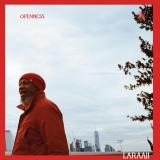
Recorded spontaneously in Brooklyn and created entirely without written compositions, this album is an essential release for fans of ambient music, spiritual jazz, meditation, and deep listening. Features Isaiah Collier on drums and tenor sax and produced by Sonny Daze.
=============================
A spontaneous musical transmission exploring healing, unity, laughter, and limitless possibility.
Recorded in Brooklyn, New York in 2025, Openness is a fully improvised full-length album from legendary ambient pioneer and sonic mystic Laraaji. Created without pre-written compositions or arrangements, the recording captures a rare moment of collective presence, where every sound emerges from intuition, listening, and trust in the unknown.
Guided by what Laraaji describes as a state of openness, the album unfolds as a meditation on timelessness, inexhaustible supply, right guidance, seamless unity, prosperity, healing, gratitude, understanding, relationship, and transformation. Moving fluidly between meditative vocals, Fender Rhodes, Moog synthesizer, zither, gong, and piano, Laraaji channels a deeply personal yet universal musical language intended for a global audience seeking connection, renewal, and inspiration.
A defining element of the recording is Laraaji's celebrated Laughter Meditation, woven throughout the performance as both a musical and spiritual practice. His joyful vocal expressions become an instrument unto themselves, creating moments of release, playfulness, healing, and communal connection. The laughter serves as a reminder that openness is not only a path toward deeper awareness, but also toward celebration, recreation, gratitude, and collective well-being.
The session features acclaimed saxophonist and composer Isaiah Collier on drums and tenor saxophone, bringing a responsive, exploratory energy to the recording. Producer Sonny Daze opens the album with a spoken invocation and shapes its expansive atmosphere throughout with the legendary Roland Space Echo RE-201, adding warmth, depth, and cosmic texture to the music's unfolding journey.
Described by Laraaji as a "vital music transmission," Openness was revealed spontaneously in the studio while remaining fully present to each new moment. The result is an immersive listening experience that feels both ancient and immediate—a celebration of right community, right recreation, right medicine, and the transformative power of creative freedom.
"This music is revealed and recorded spontaneously in Brooklyn, NY, with the attending presence of dear Sonny Daze and dear Isaiah Collier. Being totally in the new moment and allowing fresh communication to arrive, I remained open while touching various studio instruments. Being in channeling mode throughout the recording session, I sensed the world audience for whom this vital music transmission is intended."
The EP SHAME is an existential retrospective of musician 이명(earring) 20s and 30s, as well as an “audio essay.” Resonating deeply with Søren Kierkegaard’s statement that “anxiety is the vertigo of freedom,” the album captures the wandering, choices, and existential crises of youth confronted with excessive freedom and infinite possibilities in a personal and literary manner.
With cinema scores and underground dance music as the backbone, the artist juxtaposes distinct genres, such as trip-hop and techno. From everyday field recordings, such as the sounds of the Korean subway, traffic lights, and rain, to poems about human relationships or war, the production repeatedly intersects highly personal narratives with vast sociocultural phenomena in the style of an omnibus film.
Individuals cannot exist apart from society, nor can society be complete without them. [SHAME] is a record and a question in which the musician, 이명(earring), projects himself onto the entity known as “human,” seeking the reason and value of life.
credits
Composed by 이명(earring)
Mixed by 이명(earring), fandisk
Mastering by Jiyong Kim At Motherbird Studio
Pressed by champion pressing
Artwork by 이명(earring)
Repress 2026
Two years after releasing the acclaimed Crash Recoil, Anthony Child aka Surgeon returns to Tresor with new LP, Shell~Wave. Retaining the minimal equipment list and studio-version-of-live-show-sets approach of the previous album in order to focus on the work itself, Shell~Wave is a deeply personal document of both where Surgeon is and has been, converging three decades of experience with a continued curiosity in the untested.
“To make this project, I had to dig really deep in terms of what my relationship was to techno; I’ve been involved with it for a really long time and there’s a lot about it I feel dislocated from, so I had to really think hard about what techno is to me. I often get asked “what is techno to you?” but I can’t answer that with words; this album is the answer.” From the complex, twisting track Infinite Eye to the caustic Soul Fire, the eight tracks that make up the body of the album are single-take explorations of the vast, hard yet minimal techno Child is synonymous with.
Neatly dividing the record in two, the emotional centre of the record comes in the form of Dying, a vibrating, beatless piece that with a mantra-like vocal loop steeped in reverberating effects. Further echoes of dub production appear throughout the record as tracks like Divine Shadow, and Empty Cloud have an almost ever-present mist of reverberation, driven by the appearance of a new delay unit in the equipment list; while much of the philosophy of Crash Recoil’s creation is present, the process and the instruments have changed as Child again switches up his approach to studio work.
This insistence on trying novel techniques doesn’t preclude returning to old ones, as this use of modern digital machines with live, hands-on takes that are as inspired by 60s producer Joe Meek and 70s reggae as they are by this year’s synthesiser expos.
“For me, it’s an interesting experience returning to old techniques again after 30 years. I’m always exploring and finding myself back at the beginning. Connecting the present with the past.”
This philosophy of ‘time travel’ is inherent to the music itself as the synchronised loops repeat while the delay and effects branch out, forming unique eddies; distinct quantum moments within the circular whole; the future leaking through the spaces between the sounds. All of the concepts on the album are perfectly communicated through the painting by Taiwanese artist Jazz Szu-Ying Chen which suggests the movement of water, sound waves, and the chitinous shells of sea creatures.
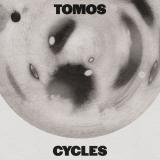
With Cycles, Tomos explores the different phases of a relationship through a boundless blend of jazz, disco, dub, broken beat, and deep house. Each track captures a specific moment in this cycle—from the spark of first feelings to heartbreak, seduction, and the beginnings of a new start.
Throughout the EP, trumpets, saxophones, and flutes intertwine with dub echoes, broken beat rhythms, and driving disco basslines. Tomos’s precise production ties these different elements together to create a record that moves seamlessly between the energy of the dance floor and the warmth of early evenings.
Following the success of his previous EP, Soul Feels Good, on Noire & Blanche, Cycles continues the exploration of the boundless musical universe that has become Tomos’s signature—a blend of warm instrumentation, groove-driven production, and a collage-like approach deeply rooted in his early French house influences.
There's a tendency in metal to mistake aggression for honesty, volume for depth. To confuse the performance of darkness with its actual weight. Hidden Fires Burn Hottest, the new album from San Francisco-based post-black metal band Bosse-de-Nage, sidesteps this entirely. It’s the group’s most fully realized work yet, precisely because it refuses to be pinned down.
Bosse-de-Nage have been working with The Flenser for over fifteen years. They were one of the first bands the label ever partnered with and have the longest active relationship in the label's history. But unlike most bands who build momentum through constant touring and visibility, Bosse-de-Nage has largely existed apart from the music world's usual machinery. They've evolved on their own terms, in relative isolation, allowing the work to develop without outside pressure or influence. What began rooted in black metal anonymity has mutated into something that actively defies categorization. The aggression is still there, but it's no longer the point. Hidden Fires Burn Hottest finds the band treating emotions like physical objects, feelings with spatial properties. “No Such Place"" describes a space that can't exist but does anyway, somewhere between thought and location. ""Immortality Project"" examines infinite possibility not as promise but as problem, endless options collapsing under their own weight. These songs don't use metaphor to describe emotion. They make emotion into something you could theoretically touch.
Tracked by Jack Shirley (Deafheaven, Oathbreaker) at Atomic Garden East and mixed and mastered by Richard Chowenhill of Agriculture, Hidden Fires Burn Hottest was years in development, with some tracks beginning in 2018.
The long writing process offered time that most records don't get. Time to live with ideas, revise endlessly, to let structures settle. For the first time, lyricist Bryan Manning wrote everything in advance, creating a surplus to pull from rather than working under deadline pressure. The difference shows.
Coming off Further Still, an album built on constraint and economy, Bosse-de-Nage sought the opposite: sprawl, strangeness, fewer rules. Space for ideas to develop without rushing them. Dynamics that move through quiet as much as noise. Presence earned through atmosphere instead of volume. The record even includes ""Mementos,"" which might be considered the first love song the band has ever written.
Nothing here coheres into a theme. These are pieces pulled from low moments and private feelings made public through sound. The band has never been interested in positivity, in music that resolves cleanly or offers comfort. But bleakness doesn't mean humorlessness. There's something darkly funny running through much of it, even when it shouldn't be.
Hidden Fires Burn Hottest doesn't explain itself. It just insists: what you feel is as real as what you can see."
La Dispute is an American post-hardcore band formed in Grand Rapids, Michigan in 2004. The band consists of vocalist Jordan Dreyer, guitarist Chad Sterenberg, drummer Brad Vander Lugt, bassist Adam Vass, and guitarist Corey Stroffolino. Known for their intense and emotionally charged sound La Dispute has released five studio albums to critical acclaim, including “Somewhere at the Bottom of the River Between Vega and Altair” (2008), “Wildlife” (2011), and “Panorama” (2019). Their music often explores themes of loss, grief, and human relationships through a series of interconnencted stories. La Dispute has developed a devoted fanbase and is known for the powerful, unforgettable live performances.
Priding themselves in having cultivated a community and culture at their club nights, they play some of the best music ever cut to wax. It might not be quite what you’d expect from a typical northern soul night, it isn’t stepping back into the past, it’s the music stepping forward into 21st century.
“We’re not interested in nostalgia – we love soul music because it’s brilliant. It probably still resonates with young people because it has a message of something bigger than what’s inside your own head – that what really matters resides in relationships with other people, not material things. We think that is beautiful” – DNSC.
“Deptford Northern Soul Club have emerged as the new faces of northern soul” – Yuck.
As featured in Alan Byron’s documentary Northern Soul: Still Burning (2026).
“By recontextualising northern soul in a modern context, they empower the genre to continuously evolve, imparting new meaning to younger, perhaps previously unaware audiences” – Pilot magazine
Toy Tonics Italomania Vol. 4 is a compilation dedicated to new ITALIAN DISCO. Not ITALO DISCO.
10 new tracks made by young producers from Italy, exclusively made for Toy Tonics. All songs with Italian vocals.
Made with a lot of love by
Cleeeo, Giorgio Lopez, Magnolia, Juan Soto & Sam Ruffillo, KOKO, Luca Averna, Ricardo Baez, Euro Nettuno, The Cube Guys and Paccone.
The Italomania compilation was initiated by Mathias ‚Kapote‘ Modica. Creative mind behind Toy Tonics and half italian producer himself.
The series is a manifesto to show the status of Italian disco of today.
Kapote invited the most relevant producers to show different new styles of modern Italian disco and house music.
With a wide range of influence: Live disco, indie dance, italo pop, and italo house.
Italian disco is not Italo disco. The last few years saw a big revival of the trashy pop music of the 1980s called Italo disco, mostly with English lyrics.
But this compilation is about something else. It is about this new Italian disco. Toy Tonics wants to show a new way to combine Italianity with dance culture.
The Italomania Vol. 4 Artists
Cleeeo - Come Tocchitu: A sexy and sophisticated disco house track by 22 year old newcomer DJ and producer Cleeeo. Driven by a warm, uplifting groove and strong dancefloor energy. The record is dedicated to Brazil. The vocals move between Italian and Portuguese. This creates a natural bridge between two cultures.
Giorgio Lopez - Italiani Brava Gente: Giorgio Lopez is an important player from the much talked about new music scene from Napoli.
For "Italiani Brava Gente," he teams up with Los Angeles artist Sueño. The track is a tongue-in-cheek take on the stereotypical Italian male. It pays homage to late Italodisco legend Pino D’Angiò. The story unfolds from the perspective of a foreign tourist navigating the contradictions of self-proclaimed Casanovas.
The Cube Guys - Saper Ringraziare: The legendary italo house duo shows their Italian vibes and musical taste with “Saper Ringraziare”. The track captures the warmth of summer and the infinity of urban nights. A combination of early Italo disco elements mixed with their typical groovy beats.
Magnolia - Vesuvio: Magnolia’s “Vesuvio” is a cover version of a song from the 1960s by artist E’ Zezi. While the original is more in a folk vibes, the new version is an irresistible piano house track with groovy, sun-soaked vibes. It is made for the dance floor. This track blends Mediterranean roots with the euphoric energy of modern house. Some might know the vocals already from another cover version by Nu Genea from the previous album.
Juan Soto & Sam Ruffillo - Italomexicano: What happens when a Toy Tonics artist hangs out in Mexico city and teams up with the local scene? The result is here. A blend a Toy Tonics sound and tons of vintage synthesizers and some additional production by Mexican producer talent Juan Soto.
You get "Italomexicano". A fuse of the mystique of Mexican mariachi with the magnetic pulse of Italo disco.
KOKO feat. Elena Moroder - I Can't Understand: This melancholic piano house track is a serious floorfiller! Goosebumps! Italian DJ and producer KOKO teams up with Elena Moroder on "I Can’t Understand". Elena delivers a captivating vocal performance. The track explores the misunderstandings of a relationship where emotions were never fully expressed. It blends an iconic piano melody with warm, uplifting grooves.
Luca Averna - Le Luci Della Pista: Luca Averna is a DJ, producer, and resident at the iconic Pikes Hotel in Ibiza. "Le Luci Della Pista" is an energetic track designed for peak-time Ibiza moments while keeping a strong groove and a playful spirit.
Ricardo Baez - È Venerdì: Ricardo Baez is an Italian-Venezuelan DJ and producer. He is known for his distinctive blend of house, dark electro, italo disco, and leftfield electronics. Well respected in Italy's contemporary electronic scene he has been releasing on labels such as Running Bag, Permanent Vacation, Bordello a Parigi, Correspondant, Mule music, Live at Robert Johnson.
Euro Nettuno - La Notte Chiama: These guys are hot! Part of the Polyamore Crew, one of the rising italian new disco collectives their sound mixes Italo house from the 1990ies, electro and Pop in a very cool new way.
Paccone - J'Adore Napoli: Vincenzo Paccone is a DJ, producer but also very renowned graphic designer. He is co-founder of NSS. A fashion agency that is by now one of the leading italian fashion crews. He has been also working as a designer for Circoloco Ibiza for many years and organizes some of the hottest parties in Napoli currently. He makes his official debut as a producer with “J’Adore Napoli”. It is a vibrant tribute to the house music culture born in Naples. The track draws inspiration from the late 1990s and early 2000s. And is part of a NSS campaign about the ’new coolness of the city of Napoli“.
For the second installment of its renewed imprint, Fuse's own in-house resident and one of Belgium's proudest exports Phara takes the reins for a deep dive into thick percussion and vibrant club landscapes. 'The Wall' puts current dance music under a microscope with a brush of truly vintage spontaneity, merging techno's confrontational nature with house's harmonic genuineness. This duality is reflected through Phara's own relationship with his home base Fuse and the complementary contrast between its two rooms.
The EP's title track serves as a hypnotic introduction for the A1, imposing a bass-heavy rhythm and a persistently oscillating synthline. A dense production full of energy, 'The Wall' inspires intrigue throughout its duration, revealing its true intentions through a capable sound system. Sharing the first side of the press is 'Blaes 208', a name that Fuse club goers will likely recognise, that guides the listener from effect into embrace. With lush keys echoing past a comforting drum sequence fit for a close-eyed dancefloor experience, Phara's impactful tendencies meet his affinity for the melodic through a blissful six minutes of crowd to selector connection. Switching sides, a return to a cold cold aesthetic is quickly apparent through 'Hush Now 206'. A pummeling, saturated bass competes with a kick of equal effect, rolling through a storm of metallic stabs. Mastering the message of urgency, Phara presents a lightshow of resonating percussive work, defining his space just to cut right through it. To close out with a lasting impression, the producer mutes the acoustics of his work through razor-sharp sound design dotting along playful snares, a duality reminiscent of the dynamism of Detroit electro. 'Motion Steps', referring to the stairs that ascend from Fuse's main room to its more left-field counterpart, captures the atmosphere of the almost shimmering music that can be expected to be played there; a place where Phara and many others have been known to explore the extremities of their music. He swiftly throws in melodic elements to recontextualize an otherwise pressing composition, and after three chapters of considerable weight, he concludes his record with infectious groove that flaunts technical ability.