Step into a cosmic journey with "Cocaine Kisses," an ethereal album that effortlessly blends spacey synthesizers, moody melodies, and loungey beats. This captivating musical expedition reflects the tumultuous emotions of love and trust issues, resonating with listeners on a profound level. Crafted during a period of personal transformation and isolation brought about by losing management and enduring the trials of quarantine for COVID-19, each track becomes a portal to both introspection and connection. From hauntingly beautiful melodies that mirror the depths of heartache to uplifting rhythms that evoke moments of hope, this album encapsulates the paradoxical nature of human relationships. As the celestial harmonies intertwine, listeners are reminded of the resilience of the human spirit and the power of forging meaningful bonds amidst adversity. Through "Cocaine Kisses," prepare to embark on an otherworldly sonic odyssey that transcends the boundaries of time, welcoming you to a universe where love, loss, and self-discovery collide in a symphony of emotions.
Following a masterful release from SWOY, Sounds of Sirius Music presents their first Various Artist Compilation SOSNZ007 – “Harmony of the Spheres”. Wrapping up 2023 with top notch underground music, joins the musical dots between talented and free-spirited artists working across the globe.
In this edition we have close friends and supportive artists from Sounds Of Sirius, including none other than Mihai Pol (Romania), rising Chilean talent Nibaaldo (Chile), brotherly duo Clay and Heath Ostrer aka Last Pines (UK) and Sevillian talent Alvaro Lamet aka Enzo Leep (Spain).
Harmony of the spheres is a philosophical concept highlighting proportions of the celestial bodies and their movements– the Sun, Moon and planets – as a form of music. These comic mathematical relationships express qualities or "tones" of energy which manifest in numbers, visual angles, shapes and sounds.
Early Support: Mihai Pol, userUNKNWN, Silat Beksi and Herman Saiz.
Aphrose reveals her sophomore album, 'Roses,' a captivating amalgamation of Neo-Soul and R&B, delving into the wellspring of ancestral strength and love.
Hailing from Toronto, Canada, Aphrose, also known as Joanna Mohammed, unveils her sophomore album, establishing her as one of Toronto's best-kept musical treasures. Known for her commanding vocal prowess within her hometown, this gifted songwriter and vocalist is rapidly garnering global acclaim and accolades from both fans and music critics alike. Signed to independent Soul label LRK Records, 'Roses' remains firmly rooted in Aphrose's signature style characterized by resounding R&B vocals. However, it also embraces a softer, more introspective aura that brilliantly showcases her remarkable versatility in navigating diverse genres, moods, and musical approaches with remarkable finesse.
This album offers a little something for everyone, catering to enthusiasts of Neo-soul, traditional Soul, Hip Hop, and R&B. Produced by her longtime friends/collaborators at SafeSpaceship Music (Scott McCannell, Chino De Villa, Ben Macdonald), the album serves as a compelling testament to the collective creativity of Aphrose and this exceptional production trio, delivering a kaleidoscope of soundscapes, textures, rhythms, and grooves. 'Roses' weaves together both lighthearted and profound elements as Aphrose explores her life journey, delving into her familial past and present, grappling with the challenges of new motherhood, and contemplating her relationships with herself, her partner, and her friends. Across the 35-minute LP, Aphrose draws inspiration from Neo-soul icons like Jill Scott and Erykah Badu, pays homage to Soul legends such as Aretha Franklin and MJ, and infuses contemporary R&B influences from artists like Frank Ocean, SiR, and SZA. The result is a sound that distinctly bears the 'Aphrose sound,' reflecting her deep admiration for her inspirations while imparting a refreshing twist to familiar genres.
The album commences with its title track, 'Roses,' which was released as a single on August 25th. This song sets the stage, invoking the strength of Aphrose's ancestors, particularly her late Grandmother Rose. Following suit is 'YaYa,' also released as a single on July 7th. This buoyant dance track whisks listeners back to the disco era of the late 70s and early 80s. The album's third track, 'Heavenly Father,' offers a brief interlude featuring a recording of Aphrose's Grandmother Rose engaged in prayer, setting the tone for the subsequent track, 'In The Time Of Sorrow.' This contemplative, chill piece captures Aphrose's musings on navigating a world often shrouded in fakery, while craving authenticity. 'Honey (Don't) Come Back' seamlessly transitions between two distinct musical personalities, commencing with a deep, almost Trap-like bass/drum beat before transforming into a spirited Funk/Soul jam—an anthem of empowerment encouraging the listener to leave a situationship that is no longer working. 'What You Don't See' strips the production down to its core, as Aphrose and guitarist/co-writer Heather Crawford craft an intimate ode to a friendship's sad ending.
The B-side opens with the evocative 'Weapons,' featuring a five-person choir including LRK label-mate Claire Davis, Nevon Sinclair (Daniel Caesar and LOONY), Kyla Charter (Aysanabee and Alessia Cara), Lydia Persaud, and Marla Walters. The track is adorned with a stirring string arrangement courtesy of Jessica Deutsch. 'Chop The Cake' acts as a breather, interlude-style, easing the intensity. 'Soft Nuclear' channels the spirit of the early 2000s R&B movement, bearing traces of influence from Lucy Pearl. 'Good Love,' released as the first single off this body of work on May 19th, transports listeners to the 70s with its soulful resonance, drawing inspiration from the likes of Michael Jackson and Teddy Pendergrass. 'Higher' stands as Aphrose's tribute to Prince, capturing the essence of his music within its hook and production. The album's culmination arrives with 'ZAG,' an acronym derived from Aphrose's daughter's name, commencing with the sound of her daughter's heartbeat in-utero from a sonogram taken when Aphrose was pregnant. This heartfelt composition serves as a dedication to her daughter and all parents navigating the rollercoaster of parenthood, emphasizing the imperative of nurturing love to shape the future.
'Roses' stands as Aphrose's homage to her history—her Grandma Rose and the ancestral trailblazers who paved her path to the present life she enjoys; her current experiences—her self-discovery, her relationships with her partner and friends; and her aspirations for the future—her daughter and the generations to come. This album crystallizes these temporal dimensions, prompting introspection, celebration, laughter, and tears. 'Roses' is a musical odyssey that scrutinizes the multifaceted beauty of existence, inviting listeners to partake in this thing called life.
The radio world has taken notice of Aphrose's talent, with national Radio Capital's Italy Massimo Oldani spinning her latest single "YaYa" for the entire month of July on his show "Vibe." And both singles getting to number 10 in the UK soul chart.Additionally, Aphrose has received national radio play on renowned stations such as BBC in the UK, RTVE in Spain, and Radio France FIP.
Aphrose has also made CBC's Top 100 finalist list for their Searchlight competition.
Huey Morgan played "YaYa" the second track off the album on his BBC radio six show
Kenn-Eerik is an Estonian versatile sound artist and musician working in Tallinn. His passion for music began in early childhood when he witnessed accordion playing as a six-year-old boy. Encouraged by this musical experience, he learned various instruments over the years, engaged in choir singing, and participated in the activities of several bands. Even today, he is part of a band called Käsi which was created with friends from teenage times.
Kenn-Eerik became interested in electronic music during high school when he composed the first songs – inspired by dubstep and dub. Wanting to cultivate his technical music skills, he went to study sound technology at the Viljandi Academy of Culture. Along with his studies in Viljandi, he acquired his first drum machines and synthesizers, which, in addition to his personal creative activities, were also used to compose music for dance performances.
While his first DJ sets consisted mainly of dubstep, with minor detours into the areas of techno and house, by now this relationship has become the opposite – techno and house beats have become more concrete and present, but the influences of dub and dubstep are still there.
Over the years, Kenn-Eerik has played in several Tallinn clubs such as Ulme, Ups, Asum, Uni, Hall, etc. His live debut took place at the festival Kuru Plirr (2015). In addition to DJ and live sets, cooperation with several theaters operating in Estonia has deepened over time, where he has composed soundscapes based on original music.
Kenn-Eerik’s music can be characterized as a search for a certain state. His sound language is centered on organically flowing synth lines and minimalistic rhythms, which combine the deeper areas of techno, house, ambient and experimental music. Kenn-Eerik does not directly set genre restrictions for himself, nor does he limit himself in the choice of choosing instruments – anything that inspires and drives will be used, starting from analog synthesizers and ending with recorded sewer pipe sounds.
Mind Against launch their eagerly awaited imprint Habitat with a 15-track compilation titled “METAFLORA”, available as a deluxe transparent vinyl 3LP box set including a 24x12” fold-out poster.
Suitably, the compilation features new and emerging artists with whom Mind against have relationships, and recurrent motifs of subtly unsettling melodic house/techno building alternate worlds in soundscapes.
Mind Against & Sideral – ‘Criseide’ heralds this new world with portentous pounding beat/bass, the melodic synth singing beneath like beauty surviving under threat, the vocal/lyrics with an edge of alarm: ‘if you think it couldn’t happen to you…’
‘Talk To Me’ by Dyzen (who also collab’ed with Mind Against on their fabric presents compilation) has stately chords riding a prancing beat while sombre piano and sweet high vocal create a heraldic, post-apocalyptic nu-medieval world, whereas Sam Shure’s ‘Plus Ultra’ has rattling percussion, with melody like a coded message from an abandoned spaceship to which something replies in stark tones…
Marino Canal, whose debut album was released by Nicole Moudaber’s MOOD, and who has support from many big names including fabric’s founder Keith Reilly, features plangent notes veering up, down and off the scale for a disturbing effect in ‘Ample’, while Swiss duo Read The News in ‘A Place’ set a fast, kicking beat against a female voice yearning for ‘a space where I can just be’.
Remcord, often played by Black Coffee, Tale of Us and more besides MA, show us why in ‘Entourage Effect’ while Laroz gives a lively melody and raucous chords in ‘Don’t Touch’ feat. Sheera as her cool, raunchy, layered vocals come to the fore.
Voted DJ Mag’s Underground Hero in 2022, DJ & producer Lauren Flax has been a fixture in Brooklyn’s electronic scene for two decades. On her latest project Liz & Lauren EP, she teams up with Liz Wight of shoegaze techno duo Pale Blue, whose sultry vocals explore questions of love and isolation to the tune of Detroit house and acidic techno.
Flax and Wight became fast friends in 2021 after being introduced by Pale Blue member & 2MR co-founder Mike Simonetti, who’d enlisted Flax to remix Pale Blue’s “Breathe.” Naturally, when Flax needed a vocalist for some tracks she was working on shortly after, she knew just who to call. “I was in my last year of grad school doing an internship in community mental health helping kids cope with the trauma of the pandemic,” Wight says of the time. She channelled this experience as she wrote and recorded the lyrics to Liz & Lauren EP from her home in Los Angeles.
As a result, the lyrics on Liz & Lauren EP are open-ended musings on connection, isolation, and convention. Lead single “Fix Everything” can be read both as an indictment of the trappings of marriage or, on Flax’s view, a rousing call to action, applicable to issues ranging from the degradation of the environment to the attack on LGBTQ+ rights in America. As the EP progresses, Wight’s airy vocals consider the pitfalls of love, from the destructive power of infatuation to the pain of outgrowing a relationship.
Sonically, Liz & Lauren EP feels like a natural progression from Flax’s first release on 2MR, 2021’s Out Of Reality, which saw her exploring a more minimalist production style for the first time in her work. “I Don’t Want To Hurt You” and “Fix Everything” pulse with bright, dynamic production, while slow burner “Return To Love” takes a sparser approach, anchored by a muted drumbeat and a simple, earworm synth refrain. “I’d Risk It All To Be With You” is a masterful balance of both; it even gets the club treatment on the EP’s closing remix, courtesy of Flax’s friends Mark Archer and Simon Neale (Shadow Child) of MASC.
Liz & Lauren EP is an impassioned collection that showcases both Flax and Wight’s artistry in equal measure. For both artists, it’s a testament to stepping outside the norm (DJing for Flax, performing in Pale Blue for Wight) and collaborating with others, the fruits of which are sure to be felt on the dancefloor for years to come.
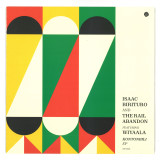
Following on from the successes of their first two LPs, "Kalba" and "Small Small", Isaac Birituro & The Rail Abandon return with the "Kontonbili EP". A collection of seven tracks that trace the traditional West African roots of their sound whilst adding their unique touch, largely courtesy of Isaac's xylophone, Sonny Johns' folky embellishments and the vocal prowess of powerful Ghanaian songstress Wiyaala.
The lead single "Hado Deeli" roughly translates to "My Rival" and is a vibrant discussion between two rivals, one of whom is always making a fuss about anything and everything, even when things are all good! "Gargar", with its collaboration of xylophone, whistles, Wiyaala's effervescent vocals and relentless groove represents, quite literally, the band's "joining together" for this EP. In contrast, "I Know" sees Sonny Johns takes over lead vocal duties to lament the breakdown of a relationship accompanied by muted horns and Wiyaala's soothing backing vocals. "Nimmbalia" continues in a mellow and reassuring tone before emerging as one of the most uplifting and simultaneously fierce cuts on the EP! The traditional version of "Bawa" - the original take of which can be found on last year's "Small Small" LP - strips things back a little, before culminating in a battle of xylophone, whistles and choir. "Yeri Villa" has a wonderfully laid back, sun drenched feel with some truly beautiful vocal refrains, and finally - only available on the digital version - comes the deeply percussive and trance inducing "Darpeny", rounding off a rather stunning EP from this cross continental outfit.
All tracks feature Ghanaian singer, song-writer, model and actor, Wiyaala. With a strong fanbase in Africa and beyond, "the lioness" made her mark on Wah Wah 45s and BBC 6 Music last year when she featured on the A-listed "Senye", described as "perfection" by Annie Mac and "pure joy!" by Tash LC.
For fans of psych rock, space rock, psych-prog, noise rock etc
Their journey started a long time ago, some say on Saturn, some say in the subconscious of the human psyche, coming out in different manners through the ages, channelled by mystics, witch doctors, shamans, free thinkers, free spirits. But we do know that what has become Codex Serafini travelled here from their home world on Enceladus in 2019 and crash landed into the music scene of Sussex.
Invoking many styles of psychedelic rock from the recent human musical history to open the minds of their human audience to the other world, and higher plane.
After releasing two EP’s, ‘Serpents of Enceladus’ in 2020 and ‘Invisible Landscape’ in 2021 Codex Serafini embarked on their most immersive journey so far creating what would become ‘The Imprecation Of Anima’ an exploration of the self, the duality of the human existence. The album is heavy, much heavier than their previous output and the albums longest song, ‘Animus in Decay’ is longer than either of the bands previous EP’s.
It snakes and weaves an epic motif through the wilderness of the sometimes barren lands of the unconsciousness, focusing the mind with it’s almost heavy metal mantra and using this to open up the third eye to the realisation of our mortal existence. The whole album is a pilgrimage into one's inner self and its relationship with its own shadow in its truest form, two parts coming together as a whole.
**Debut album from former 'Eighties Matchbox B Line Disaster' front man Guy McKnight's new band.** **ORANGE MARBLE COLOURED VINYL - VERY LIMITED!!** The DSM IV’s debut album, “NEW AGE PARANOIA,” is an impressive collection of stories, beats, guitars, and noise. The album seamlessly weaves together sobering but dream-filled songs that explore the ways in which our collective minds are influenced by mass media, entertainment industries, and social media. Formed by Guy McKnight of critically acclaimed and cult favourite The Eighties Matchbox B-Line Disaster. The DSM IV has a dark sound that blends noise-rock, synth-pop and industrial, that delivers a unique musical experience. Their music is cacophonous and epic, featuring rich textures and melodic hooks that keep listeners captivated. The band’s powerful soundscapes, combined with their thought-provoking lyrics, create a mesmerizing atmosphere that both entertains and encourages introspection. The album prompts important questions about our society, such as what’s driving the normalization of a narcissistic culture that prioritizes personal desires over altruism. It delves into the ways in which technology, social media, and mass media shape our collective psyche and affect our relationships with ourselves and each other. The DSM IV’s music offers a timely and compelling commentary on these issues. The DSM IV is a band that creates music with a powerful message that resonates with people who feel that a kinder world is possible. Their songs are both nasty and nice, reflective and entertaining. With “NEW AGE PARANOIA,” The DSM IV has crafted an album that will captivate and inspire listeners, while also prompting deeper reflection on our society’s values and priorities.
The Kyoto-based musician Yusaku Arai is known for his production work in the avant-garde scenes of Japanese hip-hop and R&B. On this solo album, though, he offers more lengthy, piano-centric meditations that use the techniques of musique concrète.
Arai’s compositions on the A-side emerged out of a reflection on the corporeal and interwoven relationship between his own body and things he encountered in the world—the ocean, a flower petal, a plastic sheet, a hand. His intent is to represent a process in which colors gently well up in inside of an object, pass through its entirety—and eventually permeate into the body itself. The B-side consists mostly of a long composition, which is about an unavoidable surplus that crops up in communication, whether of gestures or of language. This narrative work describes humans as beings torn between enthusiasm and emptiness.
The album’s artwork is by photographer Azusa Yamaguchi and designer Hejiro Yagi. Mastering by Sean McCann of Recital. An 18x24 inch poster is included.
The illustrious, London-based duo Kit Sebastian, aka Kit Martin and Merve Erdem, return with a limited edition 7” single. It features ’L’addio’, a breakbeat driven, sultry ballad, and ‘Hayat’, a hazy, psychedelic scorcher that delves into the band’s Turkish and Azerbaijan influences.
‘L’addio’ saw the band perfecting their production and orchestration, with strings, horns and double bass, and an Italian synth found in a French dump. The music was greatly influenced by Italian soundtracks and Italian female singers, such as Mina or Rita Pavone. The track announces itself with a break that is guaranteed to get samplers twitching. The tone of the melody and lyrics is heartfelt and aching. It has a beautiful, intimate sadness like the closing scenes to a love affair, and it exquisitely rides over the slow, psych-funk-dramatic backing track. The lyrics are inspired by a flat opposite Merve's window that's occupied by drug addicts, with many guests coming in and out every night. Merve elaborated “Being both neighbours and strangers, and with the boredom of a post-tour everyday domestic life and a pinch of urban voyeurism, it was hard not to wonder what was happening in that flat. The words imagine an addict before her/his golden shot as if it's a love relationship between them that comes to an end.”
Having spent much of 2022 touring and writing, ‘Hayat’ was the first original composition the band recorded since their October 2021 album, ‘Melodi’. Here we see them weaving a psychedelic tapestry of Mugham melodies, organ-driven grooves, and jazz-pop harmonies in classic Kit Sebastian fashion. Recorded to Fostex 1/4” tape, the essence of the production is perfectly balanced between being brand new and retro, which is a feat very hard to pull off.
‘Hayat’ is sung in Turkish and the title translates as ‘Life’ in English. The song examines our desire to find one's place in the world and the provisionality of existence. Merve's searching lyrics ask “Where are you? Where is the universe?”. Her vocal delivery perfectly reflects the lyrical focus, its texture is probing and ethereal, almost as if sung from looking above us.
To need, to be needed, in four corners. Sleep and privacy, gases come and gases go, and now you are the only one in the room you sit in, you are one with the room you sit in, as if there are no negatives and no positives--did you know that you are an extension of your apartment? Did you know that you are in a codependent relationship with your apartment? Did you know that your apartment knows and appreciates all of your secrets?--I feel safe, which is not a new need for human beings, but a very ancient one, almost the first one. It is enacted by the possibility of sound, humming or strumming something mostly. But the quiet apartment makes its own sounds: a single longing note of birdsong told to the beat of restful breathing, the angelic insistence of tinnitus, the neighbours. Sometimes I wonder if silence means nobody's home. How still I sit. Sometimes I return to silence and feel hugged by the cool lightness of its touch, like sleeping with just a sheet in summertime. Like turning the key. Like a visit from the cat next door. Like a somnambulant ray reaching across the room, asking if you'd like to step outside. Reste Envie is a desirous message to oneself, made from a place of lived solitude: the parameters of home. Roger 3000 is a painter and a musician from Brussels, Belgium. Rest En Vie follows his 2020 release on his own imprint Tundra Records, Fiftine. His first solo EP, UFO Love Letters, was released by JJ Funhouse in 2014, followed by a contribution to Ekster's 2017 compilation album EXO3. Roger 3000 frequently collaborates with other musicians and artists, most recently with Lawrence le Doux (with whom he released the EP Chou Chou on Lexi Disques in 2021); with Carole Louis as Ondine & Turbotin for the EP Club Solitude, as well as with Bitsy Knox, with whom he released the LP OM COLD BLOOD in 2018 on Tanuki Records. Text by Bitsy Knox
For more than twenty years, Roel Funcken has been a cornerstone in electronic experimentation. Alongside his brother Don, this Dutch sound sculptor melted hip-hop, industrial and soundscapes under monikers like Funckarma and Shadow Huntaz. A prolific solo musician and collaborator as well, Funcken teams up with Cor Bolten to revive the Legiac project with the eight tracks of Banisteriopsis Caapi. Keys appear through a sorrowful haze in "Mimosa Hostilis", this machined mist difussing as distorted strings penetrate before a dawning of icy brightness. Modulated forms and shapes billow in the bubble and trill of "Pyschotria Viridis" before the orbiting interference and introspection of "Epicatechine." Percussion is reduced to a texture, the duo finding structure in droplets of water, the stretch of steel and a litany of field recordings. The partnership dive deep into their chosen sounds, elongating and expanding tones to find harmony in the absence and isolation that is their focus. Pieces like "Solanaceae" bristle with an understated elegance, like starlight piercing a brooding night sky, while "Banisteriopsis Caapi" finds an eerie solace in its repurposing of voice as an undulating elegy. Legiac achieve a distant intimacy with their listener, a relationship forged through complex compositions, gentle movements and subtle shifts.
Stroom's 2023 valentine release in good times and in bad. In sickness and in health. These four songs were recorded over the course of a 3 and a half year relationship
Global pointing Brazilian jazz trio releases their new album Agôra, that sparkles with electric funk and Herbie-esque eclecticism. It features a myriad of guest vocalists and musicians including Brazilians Xênia França and Zé Leônidas, Jembaa Groove's Ghanaian singer Eric Owusu and South African artists Bongani Givethanks & Mpho Nkuzo
Re-wiring the concept of 'fusion' for 2023, Agôra is Brazilian trio Caixa Cubo's resurgent new record with the title referring to 'now', based upon the intuitive and fluid nature of the trio's method, and this inspired recording. With shoots to black music culture, from Brazil to Brooklyn, Ghana and South Africa, Agôra is the group's ninth album yet is their first where they've invited guests, mainly singers, onto each track and follows their last, Angela from 2020, released on Heavenly Records, which won a BBC 6 Music Album of the Year (Huey Morgan's selection) granting them much deserved international recognition.
The core musical elements of Caixa Cubo are Henrique Gomide (keys), João Fideles (drums) and Noa Stroeter (bass), all from São Paulo, Brazil and where they met as teenagers and would continue their friendship and musical bond at the Royal Conservatory in The Hague, Netherlands. Now all in their mid thirties, João and Noa live back in the city where it all started but Henrique has settled in Cologne, Germany where the recording of Agôra took place, over the course of 3 days, at the home cum studio of Chris 'Dusty' Doepke, their friend and owner of the label they signed to, Jazz & Milk.
In line with all their creations where flow and energy provide the magic, allowing what the moment provides, the album shines not only for its virtuosity but for its minimalism, the depth of space, and for the first time, the ability to figure in and outside of the jazz fold, as the trio decided, for the first time, to bring in singers and add a new aesthetic to their sound.
"Agôra is a wake-up call to reality, a reminder that the infinite possibilities of technological progress should not disconnect us from the earth, from eye-to-eye relationships, and from moments lived in person" the band are keen to point out. "And that we must not be consumed by greed, for all we truly possess.... is the NOW."
Turning hope and metaphor into music, the debut single Sábado, an electrified future- jazz-fizz reflects perfectly the spontaneity that permeated the entire recording of the album. "When we got to the studio, we had no idea what we were going to record. We started playing a groove, kind of inspired by Gilberto Gil's 80s albums, and our drummer João started singing this funny song 'Sábado Barrigudão' (Big Belly Saturday) alongside the bass groove and that was that". Inspired by their city of birth, São Paulo, it features long time collaborator and vocalist Zé Leônidas, with cuicas, tamborim, agogo and shakers providing the most obvious Brazilian affect from the album.
Dreams is the band's first foray into R'n'B melding the group's simple and sporadic instrumentation of drums, keys and bass into a Jill Scott inspired song that could have been born in Brooklyn yet sung by Brazilian singer and Grammy nominated Xênia França and Zé Leônidas in both English and Portuguese. Xênia recently performed online for hip-to-it website Colors and it's her latest collaboration with Caixa Cubo, having first met in 2009 for a series of live performances.
South African artists Bongani Givethanks & Mpho Nkuzo come to the record with a wholly different approach on Ndiyakhangela, providing spoken word and vocal refrains on top of an Afro-Brazilian percussion jam with a delivery and verse in Xhosa, Zula and Ndebele. Asase is the album opener and features vocals of Eric Owusu who is part of highlife pioneer Pat Thomas's live band and most recently, co-leader of Jembaa Groove, an Afro-soul band from Berlin. It's a synth wig out with djembe grooves and offers a brand new take on Afro-soul-jazz.
Other contributions come from Cologne based jazz singer Rebekka Ziegler (Oblique Sunshine), São Paulo based guitarist Eduardo Camargo (Caio & Eric) and trumpet player Matthias Schriefl on Kismeti, a gorgeous and rolling number that ebbs and flows, exemplifying the group's effortless ability to craft a sound energised by a belief in one-self and the idea of having faith without the need to look at each other for verification.
As drummer and percussionist João Fideles perfectly surmised upon arriving for the recording session, "What drums do you have? Whatever you have, I'll use it". Agôra is testament to nearly 20 years of camaraderie, friendship and most importantly, trust.
Feedback Moves kicks off 2023 with a new record by @xcrswx and Lolina. @xcrswx are Crystabel Riley (drum-/human-skin) and Seymour Wright (saxophone), they released ‘Call Time/Hard Out’ on Feedback Moves in 2020. Lolina is an electronic and digital musician, who has previously released music as Inga Copeland and was a member of the band Hype Williams.
Their collaborative relationship stems back to 2020. Lolina invited @xcrswx to contribute new work to a radio residency on NTS. They made 3 pieces played across 3 episodes. After these were broadcast, further ideas were exchanged which led to a collaborative audio-visual piece, streamed on Cafe Oto’s website in February 2021. They also performed as a trio live at Café OTO in 2022.
The artists now present a split 10” vinyl. @xcrswx weave the above-mentioned pieces into a 10 minute piece titled ‘FIXES’. The duo strip their sound to bare components. Beginning with the sound of fireworks, the pair then work through stuttered snare shots and warbled, interplaying saxophone.
Lolina presents ‘FM’; some of her strangest and most subtle work to date. Echoing and furthering the abstract turntablism found on previous records ‘Who Is Experimental Music?’ and ‘Fast Fashion’. We hear found sounds, close and distant, rhythmically gathered and dissolved in a swirl of dub tone and timbre.
Tracks have had early play on NTS Radio, Clydebuilt Radio and are expected to be played on BBC Radio 3’s ‘Late Junction’ and ‘Freeness’ show’s.
ENARCHY is the debut album by Leipzig-based producer and singer Maria die Ruhe. It is the result of a deep and thorough look the
artist took into both her own inner workings and the world around her. In 14 tracks, she explores different types of energy,
oscillating between head and heart. Final destination of this sometimes painful process of self- exploration is the embodiment of
her own power and creativity; the realization, that she manifests her role as catalyst, healer, and fighter for freedom and equality
by reporting on her experiences. These songs are about nothing less than that. And you can also dance to them.
In a musical sense, Maria surpasses herself compared to previous releases. She is bolder, more explorative and dissolves genre
boundaries. Acoustic instruments like the cello and the piano unite playfully with electronic beats. Her expressive voice speaks and
sings from the lowest lows to the loftiest heights. Her self-disclosing lyrics communicate the deepest messages of the soul. One can
tell right away: something is at stake here, this is about a real human living through something real, and now reporting from the
front lines of the human experience.
With lines like „Things are changing all the fucking time“ (ENARCHY) she posts a reminder for the current zeitgeist and the resulting
global uncertainty. „Some things need to be destroyed before they can heal“ is a demand for openness towards change, even if it is
challenging, requires energy, and leaves behind some scars.
In ART IS THE ONLY REAL TRANSLATION OF LIVING FOR ME, Maria uses sentences like „I’ve been trying to please you, I got headaches
and I still don’t fit“ to express her desperation with existing structures of injustice and the lack of livability of the artist lifestyle.
„Ah, you’re an artist - and what do you do professionally?“ Everyone loves music and art! When, o when, will the understanding
follow that there need to be people who make this art as a central part of their lives?
Frustration takes turns with hope and a growing acceptance of the self. In EQUALISTA, Maria discusses antiquated conditions like the
inequality between the sexes in a kind of manifesto, with a simple proposal for solution: „Let’s both be selfish and raise our
energies, to create a whole world with all the things we need.“
In WE BELONG TO NEVER, Maria sings about the everyday horror of toxic relationships. Lines like „Disengagement and rage, I’ve become such a slave.“ express the despair of the emptiness that results from a lack of affection. She also describes treacherous
narcissistic manipulation: „You cut me small just to feel tall.“
In SKIN, she confesses: „I’m not as enough as everyone else.“ and describes the long and painful way from rejecting her own body
to loving herself unconditionally. „I hate what I feel, while I pretend to be free“ means she doesn’t want to be reduced down to
her body, doesn’t want to be seen as an instagrammable, thoroughly designed product; she wants to be acknowledged as an
individual.
In LOST, she poses a question that many are currently forced to ask themselves: „What do we do with all this solitude?“ Maybe
making use of the reclusion by exploring the shadow self. „Can you cope with the truth?“
The conclusion: energy is being freed up through the means of self-experience and living through the personal darkness -
ENARCHY. The realization: every human being is self-determined and should simply do what they feel. It is everyone’s right to
choose their own life’s path. Here, intuition serves as a signpost. This is both feminine and strong.
ENARCHY celebrates an embodied anarchy by working through the personal shadow and the genuine, healthy integration of the
struggle survived - not as a destructive rebellion, but as a testament of shameless, joyful self-empowerment.
„In the end, I want to be alive, because in reality, I’m free.“
August Greene culminates years of mutual respect and friendship, channeling the musicians’ various talents into a cohesive project. The perfect marriage of jazz, hip-hop and soul, it’s music that just is. This is black expression the way God intended: earnest, unfiltered, and harmonious. Throughout August Greene, you feel the abundance of Glasper’s rolling keys, the sheer honesty of Com’s lyrics, and the nuanced subtlety of Riggins’ drum work. It’s a fluid sound that’s sorely needed in today’s landscape, and a teachable moment for the next wave of creators. “I feel like we need to set the bar for this generation of musicians and producers,” Riggins says. “There’s a lot of computer-driven music. This is the opposite of that. We’re showing you can still use your creative muscle on an instrument to generate your own sound.” August Greene is a meditative offering that stands tall against the era of “fake news.” “They body snatching black girls in D.C. / Politics and propaganda on the TV,” Common observes on the opening track. On “Nirvana,” the lyricist uses a stuttering percussive loop and faint piano chords to search his inner being: “Thought I was gonna fly when Obama became the king … when it’s all done, will I have heaven’s dress code, and been able to let God and let go.” As Com puts it, Glasper and Riggins’ soundtrack allowed him to open up in ways he hadn’t done previously. Like on “Fly Away,” for instance, where he riffs on the public relationships he’s had. Other songs, like “Black Kennedy,” feel spacious and scenic. “I got to go new places with the music, and it didn’t have to fit within a genre for me to participate on it,” he says. “This gave me an experience I haven’t had in a long time, so I want people to feel that. I want this to be a cleansing of whatever doesn’t feel good or inspiring.” In the end, August Greene speaks to those pushing through the dark for brighter days. It's a masterpiece from which virtue can shine. “I want people to go on the ride and be open,” Glasper says. “We just created and it became a sound. I want people to approach this with an open mind and without expectations.” —Marcus J. Moore
'Intensely textured, interlocking guitar riffs weave together on New Bright Object, the debut album from Berlin and Edinburgh-based duo I’m Not You.
Working under the name I’m Not You, artist Alex Gibbs (bass & vocals) and sound designer Niall McCallum (guitar & drums) have honed a sound that draws in equal measure from jazz funk of Weather Report and the math rock of Don Caballero. Their debut album, New Bright Object is their most developed statement to date, an intricate, robust and unique collection of songs born from serpentine jam sessions in rural idylls.
The duo make no secret of their admiration for bands like Battles and Tortoise. They reference Jim O’Rourke’s lounge numbers and the droll lyricism of Modern Lovers’ Jonathan Richman. There’s a touch of Vini Reilly in their sparse and serpentine guitar lines. A hint perhaps of Mogwai. All these names place New Bright Object within a constellation of albums made with bigger budgets for wider audiences.
New Bright Object opens In a flash of light, comet-like, with the sound of ‘Mr. Wind- Up Bird’. The threads they weave are full with intent, as moments of density rise like hills from the track’s quieter valleys. It’s easy to imagine the pair looking out over the rolling fields of the garden studio in East Lothian where they recorded the album, as they assiduously try and draw their own landscapes in sound.
Similarly, there is a crispness to ‘A Certain Arrangement Of Atoms’ - every clipped hat, rim-shot snare and tightly wound tom a fine-tipped mark on the score. It is intricate and precise, a result perhaps of Niall’s attention to detail. Then there is the piano, Alex’s grandmother’s, slightly out of tune, which adds a few expressionist strokes to this pointillist composition. The piece loosens, until all we’re left with is the bass.
Although the album orbits around the pendulum sway of ‘The Older I Get’, it is ‘What Cats Think About’ that stands out most. That it does is by design – a nod to the Sun City Girls and albums that like to throw their listeners a curveball every now and then. Pleasantly ramshackle, confusingly domestic, agreeably strange.
All this speaks to the spirit of the album and the creative relationship between two best friends whose differences seem to have been the only things they could agree on.'
Your Old Droog is back with another exhilarating hip-hop opus. Fresh off a series of outstanding projects, the prolific rhyme author is now debuting the new album Yod Stewart. Featuring captivating beats by Tha God Fahim, Nicholas Craven, Conductor Williams, Lee Scott, and more, the collection illuminates YOD's world-class songwriting and highly relatable storytelling prowess. Yod Stewart is a conceptual endeavor set within an intriguing narrative context: a recording artist comes across a Rod Stewart wig, takes it home, falls asleep, and becomes the pop star of his dreams. Follow the superstar on his turbulent but ultimately rewarding journey filled with musical meditations on lucid dreaming, keys to success, lost friendships, toxic relationships, teenage heartbreaks, and more. Your Old Droog does it all, again.
Following their iconic remix of ‘Space Date’ in 2019, the classic collaborative work of Adam Beyer, Layton Giordani and Green Velvet, we are thrilled to have Pleasurekraft back on Drumcode for their debut solo release on the label.
Not keen to colour within the lines, the production duo caught Adam Beyer’s ear as they carved out their self-dubbed ‘cosmic techno’ niche within the techno genre. Conceived as a musical vision that attempts to go beyond mere hands-in-the-air moments, Pleasurekraft incorporate a cinematic soundscape as a canvas for philosophical themes regarding humanity's place within the cosmos. Their 2020 album, ‘Love in the Age of Machines’ explored the myriad and often dystopian relationships we have with the ubiquitous technologies that pervade our every interaction.
The new two-tracker ‘Sex and the Machine’, continues this thematic trajectory in considering the role machines will increasingly play in satisfying the more carnal desires of our species. The title track considers questions such as, will machines of the future have the capacity for thoughts and feelings? Will our answers to such questions be forever tainted by our singular perspective, unable and unwilling to grant future silicon entities such capabilities? The EP’s second track, ‘Body Horror’, with its repeating refrain, “You are changing”, considers the manner in which future technologies will continue to merge with biological entities giving rise to all manner of unimagined consequences. Both tracks showcase the tough, yet still melody-driven cosmic techno sound Pleasurekraft has become synonymous with. However, despite the cerebral content that inspired the music – the form is still pure dance floor muscle.
The Tears of Joy label boss returns with an encompassing tribute to the power of the dancefloor. As a member of Pacific Horizons and under a host of other aliases, the Los Angeles-based producer has explored the breadth of dance music - from Mancuso-inspired loft house to bassbin rumblers that nod to his familial relationship with the U.K. - but his most personal statements have been reserved for the Live For Each Moon moniker.
As a result of this, and also by nature of its journey/trip sequencing, 'A Vision of Dance' reaches for a comprehensive sound, honed over decades of observation and participation. The producer's varied interests shine through, and they are pushed beyond genre experiment into new, hybridized shapes - sinewy, searching, warehouse techno shares space with crunchy, heaving breakbeat cut-ups and churning, slow motion chugs. While the overall pace leans toward the trancelike whirlwind, a few atmospheric, introspective interludes are cut in as kind of existential breathers - nods to LFEM's back catalog of haunted ambience as much as ravers' respites.
The London label continues to innovate with their biggest release to date.
10 tracks – 10 incredible artists adding to their string of solid releases by new and established art-ists.
Setting fire to the rage of acceptance.
–
Sublime Creatures, defiant of society’s cages, its definitions of power, beauty and status. A higher stance above bitter re-sentment. A pro-active community of thin- kers. A patch-work of empowered souls, ideas and experiences.
Directly related to one of the sentences in our manifesto, Sublime Creatures is a call to our most powerful selves.
–
The name of the label itself is about us working on bettering ourselves and being united in all our differences. “Reptile” is about our relationship with the reptilian brain and our efforts to understand what truly means to be human (tools to perfect your instinct), becoming aware of our-selves and the others around us. “House of” is a direct allusion to the “house and ball culture” movements in NYC in the early 80s.
The sense of a real family of strangers coming together around a shared sense of purpose.
Kurtiss is a shadowy and enigmatic figure working on the boundaries of civilization. A sporadic figure on the House music scene with eccentric habits, Kurtiss’ music is a rarified sonic experience for those who seek it out. The Ameri-can artist is hard to pin down and his music is a tantalizing little secret only for adept diggers who appreciate the style of Hi-Def House music that the artist has cultivated. Although he’s a known Soundcloud fixture, he’s only put out a handful of digital singles as Curtis Vodka in the past, with Mutual Intentions facilitating his latest and immortalizing his music on their next set of releases. A nomadic artist, who’s worked on music ranging from Ghetto Tech to House, his music has spanned the known musical spectrum, forging uncanny relationships with everything from 50 Cent to Mall Grab. Under the pseudonym Kurtiss (or Curtis Vodka), he’s all about HIGH-Fi House, life, aliens, Jazz and no trends. It’s an attitude that he lays bare on this rare contribution to the physical, recorded format for Mutual Intentions on ‘The Curtis Vodka EP’. The EP weaves classic House music influences through a penchant for vintage sound machines and arrangements that evoke a solemn air. Elements of Gospel and New York’s deeper inclinations in House music seep through his sound as archived vocal samples and noisy machines give his work its defining character. Glistening keys and strings that slither through airy textures create dense aural experiences on ‘The Curtis Vodka EP’, calling to mind the musical masterpieces of House music’s golden era when the likes of Kerri Chandler and Mas-ters At Work were producing som
Leo was born in 1972 and at the age of 15 discovered his passion for electronic music creating his first loops thanks to his Commodore Vic 20 and 64, spreading his own sound in the city when it was impossible to find in Rome any trace of electronic beats.
Soon after he became a true collector of analogue synthesizers with a serious approach in the study of modular synthesis which led him to develop unique skills as we have recognition of them from his early works for ACV records: Attack Random, Riders Of the Future, Noise Generation, Muta, Cannibald and Aeon are still a milestones for nowadays electronic music aficionados.
1989 marked the birth of The Sound of Rome, when Leo met Lory D in a small garage bringing life to a universal and alternative music movement who diffused Techno Music in Rome and all over Italy, pushing these two wizards behind the decks playing along the like of Dave Clarke, Joey Beltram, Robert Armani and UR among others.
In 1995 Leo decided to cut his relationship with ACV records and moved to Rephlex, Aphex Twin’s record label, starting touring with the Rephlex group after the Void album. Ten years later Leo recorded his first single for a new project: Cannibald Records. Back to Life main target is to focus on house and techno classics reissue, and the mission continue with the official reissue of 1991 Leo's Noise Generation, a true special record that snaps an unforgettable highlight in the rave scene. BTL004 will be available with a special insert, black version and very limited white press to delight every serious vinyl collector.
Leo was born in 1972 and at the age of 15 discovered his passion for electronic music creating his first loops thanks to his Commodore Vic 20 and 64, spreading his own sound in the city when it was impossible to find in Rome any trace of electronic beats.
Soon after he became a true collector of analogue synthesizers with a serious approach in the study of modular synthesis which led him to develop unique skills as we have recognition of them from his early works for ACV records: Attack Random, Riders Of the Future, Noise Generation, Muta, Cannibald and Aeon are still a milestones for nowadays electronic music aficionados.
1989 marked the birth of The Sound of Rome, when Leo met Lory D in a small garage bringing life to a universal and alternative music movement who diffused Techno Music in Rome and all over Italy, pushing these two wizards behind the decks playing along the like of Dave Clarke, Joey Beltram, Robert Armani and UR among others.
In 1995 Leo decided to cut his relationship with ACV records and moved to Rephlex, Aphex Twin’s record label, starting touring with the Rephlex group after the Void album.
Ten years later Leo recorded his first single for a new project: Cannibald Records. Back to Life main target is to focus on house and techno classics reissue, and the mission continue with the official reissue of 1991 Leo's Noise Generation, a true special record that snaps an unforgettable highlight in the rave scene. BTL004 will be available with a special insert, black version and very limited white press to delight every serious vinyl collector.
Bringing a combination of two conceptual artists Ultrastretch 11 moves away from dance music to present this comtemporary off kilter.
On the A side, Montreal based producer Ohm Hourani, known for minimalistic jazz influenced works on his own imprint ANOMA and beyond, with compositions showcasing infusions of organic sounds combined with modular synthestisers, drum machines and vocalists such as his collaboration with award winning Jazz singer and Vocalist Diminique Fils Aime.
On this release he presents a 14 minute stripped down, intrinsically and subtly arranged combination of elements Initiale by a minimalistic kick drum joined by a synth driven, quirky / hypnotic mind drilling element paired with the finest straight hihats delicately placed on the background as the Constant. The subtle movement of the track is introduced by percussive drumming, vocals and piano keys forming the most beautiful atmospheric melody. The last element of surprise brings shuffling hihats bringing amazing swing to the overall elegantly slick piece.
The B side brings the highly sought-after drummer Samuel Rohrer. Ranging from ECM sideman to member of KAVE, a quartet alongside techno pioneer Max Loderbauer, Stian Westerhus and Tobias Freund as well as collaborative works with Ricardo Villalobos and Laurie Anderson, he is known for his unique sound aesthetics on advanced musical cross-pollination, developments of improvisation in acoustic jazz and wider horizons of live electronics.
Rohrer also brings a hypnotic reinterpretation but in a very different manner / mood than the A side. Initiated by strings combined with Rohrer’s tight drumming patterns at the forefront and bass line underneath as the constant, combination by which forms a tense yet peaceful core pattern to this track. To compliment this, synths create movement by adding cosmic and quirky sounds forming an atmospheric soundscape with the whispering vocal “shake it” on top. Overall, the paradoxical relationship between tight (rhythm) and lose (soundscape) is presented in perfect harmony with each other.
* Following on from the hugely popular ‘Klavirni’ (Emika’s first solo piano album in 2015) her second installment of piano solos are a magical cluster of melodies, dreamy effects, obscure production mistakes with tape echo’s and other old analog gear.
* The pieces were recorded during the time she was pregnant with her first child Silvy, to whom she has dedicated this record ‘To Silvy who heard it first from the inside’.
* The collection of ‘Dilo’s’ which means moment in Czech, were recorded ‘in a state of ultra hyped up creativity combined with a massive fear about losing my identity or creativity as an artist once I would become a mother’ - says Emika about the album process.
* A truly personal affair and in keeping with the original style of the first Klavirni, all the Dilo’s were recorded improvisations by the composer on her home piano, this time in Berlin.
* Dilo 7 from the first album has been streamed more than 15 million times on Spotify and there will also be a ‘Red Edition’ repress of the album on vinyl.
* This release marks the 5 year anniversary of Emika Records, celebrating 5 years of independence since her days with Ninja Tune.
* Dilo Variations EP (not released previously before on vinyl) will come with the anniversary releases on a cute little 10’’ with updated artwork.
* This is also the final release in her Emika Records catalog before starting a new venture in 2020 with more details to follow later in the year.
* ‘Klavirni Temna’ which means dark piano in Czech, explores the relationship between dark and light, good and evil, death and rebirth.
* ‘Music is a powerful and sometimes unexplainable force.’ - Emika
We bring Patrik Carrera to our team, starting our relationship with this "Inevitable Decay EP". The Australian born, Berlin based producer, offers four slices of modern techno, balancing aggression with hypnosis along four cuts.
"Standing Fog" uses a mega distorted kick and resonant hypnotic bleeps on top, reminding the old X 102 feeling. No remorse in this track, straight to the point madness.
"Altered Form" relies on a complex groove, with asymmetrical components and is heavily texturized, the main synth line goes on forever while different elements go back and forth. The rhythm grows in intensity on the final moments, adding distortion and dirtiness.
"Liquid Toil" goes hyperspace, abstract sinusoidal sequences float over an opaque groove that is soon filled with shuffled 909 hats and sci-fi textures. Jeff Mills will love this one.
"Influx" puts the eye in old Birmingham tools, with a reverberated repetitive sequence over a shuffled beat, things move just a bit, keeping the pace linear and obsessive making a superb mixing tool.
A diverse EP with a personal approach to intelligent dance territories, music that could be from 10 years after today, from the future.
Born in Burlington, Vermont, and conservatory-trained in the US, the cellist Tristan Honsinger moved from Montreal to Amsterdam in 1974, quickly linking with Han Bennink and Misha Mengelberg, and opening a long and fruitful musical relationship with Derek Bailey. Recorded in 1976, Duo displays a performative musical approach already characterised by the lack of inhibition which would later endear him to The Pop Group: he is knockabout, exclamatory, explosively rhythmic; burping Bach and folk melodies with spasmodic lyricism, in amongst the garrulous textures and accents of his scraping, bowing and plucking, and gibbering like a monkey; throwing out his arms and stamping the floor, grappling with his instrument like an expert clown, always on the lookout for new ways to trip himself up. You can hear Bailey revelling in the company, as he ranges between scrabbling solidarity and an askance skewering of his partner's antics, on prepared (nineteen-string) and standard electric guitars — and a Waisvisz Crackle-box, for the garbled, quizzical, cross-species natter which closes The Shadow. Throughout, the spirited interplay between laconic, analytic wit and guttural, sometimes slapstick physicality is consistently droll, often laugh-out-loud funny; vigorously alert, alive and gripping.
When we started Ilian Tape 10 years ago in 2007, we were both basically kids at the ages of 23 (Dario) and 18 (Marco). There was no plan behind it, no concept, no promotion campaign or any budget, but just an early vision of where it could go. We wanted to build something that lasts. After a few years of playing at parties and producing music, it was the next logical step to start a label. You can clearly see us growing up through the label in terms of artwork, compiling the records and handling things. We made some mistakes along the way and there are surely things we could have done better, but looking back after 10 years now it all makes sense as it was a natural and human development with all its ups and downs.It was always a very personal project, never about making money, but about creating a platform for music we believe in and building relationships with artists in a transparent and fair way. We really appreciate that we were able to work with so many great artists, who shared the same vision and trusted in us, over all the years. A while ago we moved away from the ordinary release info write ups, because in general writing about music is tricky and who isn't tired of the typical, full of praise for every detail of a record, release textsBut this might be starting to get boring for you too, so just buy this lovely triple vinyl package including a poster and download code, light one up and turn up the volume!One last thing though - we want to deeply thank our parents for teaching us to live our dreams and find out who we really are, our friends for the vibes and honesty, all the artists releasing on the label, all the supporters & fans for buying vinyl and files, all the DJ's playing out the stuff, all the diggers selling the stuff overpriced on Discogs, all the dancers working out on the dancefloors & all the clubs doing label nights over all the years.
Since 2010, Jackie House aka Jacob Sperber has been driving the A&R side of the San Francisco dance-music troupe running the HNYTRX label and producing remixes with other members under the Honey name. Putting label duties on hold in 2013 Sperber cocooned into his music studio, entering as a brave brunette and exiting as an ambitious blonde. "Stydive" is Jackie's debut to wax and has as much house-party in it as it does warehouse 4am. With a vocal sample nod to punk's past, 'Stydive' pogo dances to dusty and stuttering live/analog drum rhythms and skips along a rude and infectious bass-line. Bound to find lovers of all persuasions for its dub-esque qualities, instantly recognizable hook, and open relationship with house music, this tune begged to have it's own side. That said, there is always room for some Matrixxman who takes Stydive to a strobe lit South of Market darkroom in his remix on the B. Spurting erotic lazers around a cavernous kick, this tune finishes off even the most experienced edger.
Cellaa Music are very happy to welcome our great friend Marc Faenger and Label Head Sven Jaeger back to the fold. This one - obviously called B2B Volume 1 features two artists, two universes, two different ways to approach the music theory to form a B2B Cellaa relationship.
Young, skilled and supremely talented, Marc Faenger, is an artist set for great things on the international scene. Marc´s - Nip' contains an infectious groove an elegant labyrinth of percussive dub textures and sinusoidal tones and fast shuffling hats. Deep, fresh and seductively satisfying, this tune was designed for the discerning dancefloor.
Sven Jaeger returns to Cellaa Music with his second release for his label. - Get The Fuck' is a track that immediately commands attention with it's rolling, rich bassline surrounded by punchy, organic drums that delivers a soothing atmosphere. The track is really powerful and works really well on all dance-floors. People love it!'
The first of the remixes comes from the in form, Reelow. His releases have been huge hits, ruling the DJ charts. Here he strips the oringinal of Marc Faenger to it's essential parts. The super dry kickdrum and percussion in combination with the deep subs together create Reelow´s own techno vision.
Next we have Dan Noel providing a soulful tech house surrogate to the original of Mr. Jaeger. His remix has a deeper twist with glittering sounds and a concrete percussive arrangement to convey a fantastic Remix.
It's hard to explain an album when one listen is enough. All the more so with MaMaMa: there's no room to stay passive. Listening to his new album, EST, means immersing yourself in an atmosphere that's softly psychedelic, comforting and organic all at once. A dreamy, electronic pop that proves this Strasbourg-at-heart, Paris-by-adoption musician, arranger, singer, songwriter and producer never stops reinventing himself. After changing his name — formerly Petit Prince — and delivering two critically acclaimed albums ("MaMaMa-gnificent." / "Hooks you carry in your head for a long time" / "sumptuous arrangements"), Elliott Diener now offers an even more sincere record. Real songs in French, after two albums where production sometimes took up all the space: "when you make heavily produced music, once you strip away the layers of sound, there's no fruit left underneath. On EST, I don't need makeup for the songs to work," he admits.
That's what this new album is about: the song and the French language first, then the pleasure of sound. An album less concerned with talking about its own making, more inhabited, more embodied, within a contemporary folklore. With this new album, don't expect to be bored: EST is his best record yet.
No pretense
Entirely conceived in his studio in Pantin — a room of his own, at last — imagined as a space free of any daydream, open to every sonic landscape, MaMaMa offers a record that's both hazy and downy soft. Often composed very early in the morning, it has become nostalgic without being dark, melancholic without being sad, with a few lineages showing through: Flavien Berger, Moodoïd, Feu! Chatterton for the taste for words and unease, Mount Kimbie for the approach to sound and rhythm. Unsurprising, given that EST was finalized with the British duo's producer. Live, MaMaMa is preparing a show in the style of Nicolas Jaar or UTO. Hypnotic and immersive.
The most liberating thing is that EST is an album without pretense. With it, we move through perseverance (in Aussi loin qu'il tiendra debout), the small arrangements we make to avoid facing reality (Tout sauf la vérité), and the fragility of bonds we thought were solid (Si bien ensemble). We also touch on lasting conflicts with the people we love (Anywhere You Are, There You Are), misunderstanding (Elle me parle une langue), and the erosion of friendships (S'envoler). EST draws an intimate and redemptive map of human relationships, in a body of work that's both lucid and sensitive — like when he also addresses social masks such as filial love (in Beau garçon, dedicated to his son) or relationships that have become impossible.
"It's really the album that sounds most like me, in terms of sonic landscape," Elliott points out. A record that rises above the noise of an imperfect, shifting world — like us — joyful in its words, liberating in its production. A true gem.
Heavyweight psychedelic improvisers EarthBall are back with their third and most monstrous record to date: ‘Outside Over There’, released on Upset The Rhythm (Nov 7th). Born from the haunted basements of Nanaimo, Canada, the quintet thrives on spontaneity, shaping improvisation into jagged hallucinations and ecstatic eruptions.
Recorded live-off-the-floor in 2024 in Jeremy, Izzy, and Kellen’s basement, and mixed by drummer John Brennan, ‘Outside Over There’ is an album that feels both summoned and inevitable. Each track lands with uncanny purpose, as if uncovered rather than written.
The opener, 100%, features a cameo from comedian and English icon Stewart Lee, who lent his blessing for the band to use a fragment of his stand-up. The album was mastered by John Dieterich (Deerhoof), with liner text contributed by longtime comrade John Olson (Wolf Eyes). Olson describes the album in his unmistakable style:
“This eight-track odyssey unfolds like a dreamscape, where whispered incantations brush against the shadowy fringes of the cosmos, and wild, Cézanne-inspired rock anthems erupt like geysers of color in the midst of a western warm and wet rain storm… culminating in the sprawling eleven minute masterpiece, ‘And The Music Shall Untune The Sky,’ aptly dubbed the Earth Crusher. A creation so utterly deconstructed and intertwined with the pulse of nature itself that if AI was called upon to conceive ‘Outside Over There’ anew, it would just spit back, “F.U. in Tree Font”. An enchanting invitation for even the flat-earthers to join the circle, if only just a little.”
EarthBall’s trajectory has been relentless. Their 2024 album ‘It’s Yours’ was praised by The Quietus as “fully aggressive and fully life-affirming,” and by The Wire as "a boisterous mind-melting album”. The band’s live double set LP ‘Actual Earth Music Vol. 1 & 2’ (2025) captured blistering performances: a performance opening for Wolf Eyes at the Fox Cabaret, and a Café OTO improvised throw-down featuring Chris Corsano and Steve Beresford. These releases on their own confirm them as one of Canada’s most vital experimental exports, not to mention the impressive self-released discography on their Bandcamp. The band’s reach has stretched far beyond their west coast roots with a UK tour May 2024, plus this past June, EarthBall closed Montreal’s Suoni Per Il Popolo Festival alongside Pulitzer Prize-winning composer Raven Chacon. This November they will perform at Le Guess Who? Festival in Utrecht, with a European tour to follow (tour dates below). Outside of EarthBall, each member carries their own torch. Jeremy Van Wyck, founding member of the legendary Shearing Pinx, has toured extensively, released over 100 records, and has been a vital force in the Vancouver and West Coast underground for the past 25 years. He and Isabel Ford (Izzy) play together not only in EarthBall, but also in Psychedelic Dirt, Shearing Pinx, Behaviours, and Crotch.
John Brennan collaborates widely, including recently with Endlings (Raven Chacon and John Dieterich), Evichen (Victoria Shen), Francesco Fonassi, Plan Your Future (with Greg Saunier of Deerhoof), Brennan/Corsano duo and Physics with John Dieterich. Kellen Maclaughlin performs with KVMP and Ora Corgan, while saxophonist Liam Murphy is a west coast staple, playing with the best across Vancouver Island and the mainland. On three of the tracks of ‘Outside Over There’, the band is joined by their comrade Justin Patterson, who also plays with Brennan in the duo Modale. This cross-pollination fuels EarthBall’s sound - a collective improvisation, psychically overdriven, and grinding into bloom.
Outside Over There’ is more than an album though, it is a ritual, a gathering of sound at the forest’s edge; where feedback, saxophone screams, and ecstatic vocals dissolve the boundary between chaos and clarity. EarthBall invite you into their circle, to share in the joyful terror of spontaneous creation. ‘Outside Over There’ will be released on November 7th through Upset The Rhythm digitally and as a limited blue-in-black vinyl LP.
Sadurn’s sophomore album The Underworld is a collection of heart-rendingly personal and instantly relatable songs, due out this fall on Run For Cover Records. Following years of lingering vocal issues for guitarist G DeGroot, the album is the culmination of an emotion- al and spiritual journey and a a deeply personal meditation on loss, healing, and transformation.
Sadurn began in 2017 as a solo project for G DeGroot, and from the start their approach to songwriting was informed more by emotional intuition than any kind of real ambitions to be heard. “I discovered songwriting as an outlet for processing my reality,” they explain. “A lot of times when something is hard to say, it flows more easily in songwriting. It’s a place where you can circle back to your own truth.” After moving to Philadelphia, DeGroot was joined by gui- tarist Jon Cox, drummer Amelia Swain, and bassist Tabitha Ahnert. The group recorded Radiator, a debut that immediately connected with listeners and was met with critical acclaim.
Throughout The Underworld, the rawness of DeGroot’s lyrics are matched by Cox, Ahnert, and Swain’s evocative playing. Stunning opener “the weight” describes the early stages of a relationship deteriorating, with brilliant soloing from Cox and DeGroot’s warm voice intertwining through its widescreen outro. Highlights like “mess,” “never tell me,” or “whole thing” strike a perfect balance be- tween lush arrangements and intimate performances, while tracks like “why does my heart” or “can’t stop” add unvarnished, single take moments of spontaneity, or GarageBand demo looseness that perfectly compliment the unabashed longing in the songwriting.
Sadurn’s sophomore album The Underworld is a collection of heart-rendingly personal and instantly relatable songs, due out this fall on Run For Cover Records. Following years of lingering vocal issues for guitarist G DeGroot, the album is the culmination of an emotion- al and spiritual journey and a a deeply personal meditation on loss, healing, and transformation.
Sadurn began in 2017 as a solo project for G DeGroot, and from the start their approach to songwriting was informed more by emotional intuition than any kind of real ambitions to be heard. “I discovered songwriting as an outlet for processing my reality,” they explain. “A lot of times when something is hard to say, it flows more easily in songwriting. It’s a place where you can circle back to your own truth.” After moving to Philadelphia, DeGroot was joined by gui- tarist Jon Cox, drummer Amelia Swain, and bassist Tabitha Ahnert. The group recorded Radiator, a debut that immediately connected with listeners and was met with critical acclaim.
Throughout The Underworld, the rawness of DeGroot’s lyrics are matched by Cox, Ahnert, and Swain’s evocative playing. Stunning opener “the weight” describes the early stages of a relationship deteriorating, with brilliant soloing from Cox and DeGroot’s warm voice intertwining through its widescreen outro. Highlights like “mess,” “never tell me,” or “whole thing” strike a perfect balance be- tween lush arrangements and intimate performances, while tracks like “why does my heart” or “can’t stop” add unvarnished, single take moments of spontaneity, or GarageBand demo looseness that perfectly compliment the unabashed longing in the songwriting.
Sadurn’s sophomore album The Underworld is a collection of heart-rendingly personal and instantly relatable songs, due out this fall on Run For Cover Records. Following years of lingering vocal issues for guitarist G DeGroot, the album is the culmination of an emotion- al and spiritual journey and a a deeply personal meditation on loss, healing, and transformation.
Sadurn began in 2017 as a solo project for G DeGroot, and from the start their approach to songwriting was informed more by emotional intuition than any kind of real ambitions to be heard. “I discovered songwriting as an outlet for processing my reality,” they explain. “A lot of times when something is hard to say, it flows more easily in songwriting. It’s a place where you can circle back to your own truth.” After moving to Philadelphia, DeGroot was joined by gui- tarist Jon Cox, drummer Amelia Swain, and bassist Tabitha Ahnert. The group recorded Radiator, a debut that immediately connected with listeners and was met with critical acclaim.
Throughout The Underworld, the rawness of DeGroot’s lyrics are matched by Cox, Ahnert, and Swain’s evocative playing. Stunning opener “the weight” describes the early stages of a relationship deteriorating, with brilliant soloing from Cox and DeGroot’s warm voice intertwining through its widescreen outro. Highlights like “mess,” “never tell me,” or “whole thing” strike a perfect balance be- tween lush arrangements and intimate performances, while tracks like “why does my heart” or “can’t stop” add unvarnished, single take moments of spontaneity, or GarageBand demo looseness that perfectly compliment the unabashed longing in the songwriting.
The premise of this compilation is simple: music we’d like to hear at the airport.
The idea came after learning that Honolulu’s international airport has been playing AI-generated music over its speakers since November 2025. First reported by Civil Beat, the news has caused frustration and disappointment among residents and visitors, as well as within the local music community.
Everyone knows Hawaii is one of the most musically rich regions in the world — why then is the airport using AI music? 'Music For The Airport' is our response.
Located in the middle of the Pacific at the outskirts of one the most remote cities on the planet, Honolulu’s Daniel K. Inouye International Airport (HNL) is for most people the first place they encounter when they arrive in Hawaii. Warm sun, tropical tradewinds, playful palm trees and majestic mountains welcome every traveler, as do the sounds of birds, familiar music from Hawaiian artists like Aunty Genoa Keawe and Israel Kamakawiwo’ole, and—at least for now—seventeen “island-themed” AI-generated songs.
In late 1977, while sitting in Germany’s Cologne Bonn Airport on a Sunday morning, Brian Eno noticed how terribly uncomfortable he felt hearing the airport’s “muzak” overhead. For a harried, hurried place like the airport where travelers scramble to their gates, stand in long border control lines, and wait impatiently for their luggage at the carousels, music can create more anxiety than calm. Asking himself, "What should we be hearing here?", Eno soon created ‘Ambient 1: Music For Airports’, a sonic remedy aimed at reducing nervousness in public spaces.
When we heard the news that HNL airport is playing AI-generated “muzak”, we were immediately reminded of Eno’s genre-defying 1978 album. And we were similarly inspired to react. But how? Recreating an ambient masterpiece wasn’t in our wheelhouse. We started digging through our catalog of licensed music which we haven’t yet re-released. We quickly realized this was our chance to highlight some of favorite songs from the so-called CD era: the 1990s and 2000s (with a few exceptions). In less than 20 minutes, we pulled 17 original songs recorded by local artists between 1984 and 2017.
The speed at which this project came together surprised us; reactionary gut instinct often produces swift and lasting results. Ironically, our new compilation likely took less time than it did for the state Department of Transportation to commission its AI songs in question. But even though ‘Music for the Airport’ came together in less than one week, the truth is that this collection of 17 songs is the result of years of hard work, trust, sacrifice, patience, and understanding. Building relationships with and licensing music from artists doesn’t happen overnight, but more importantly: these songs are the result of people pouring their hearts and souls into something they believe in. This music wouldn’t exist today without the artists and their loved ones who supported them along the way.
As of this writing, the DOT states its intention in creating AI-generated songs is to “highlight different aspects of the islands, aviation and the airport” and that “no state funds were used to produce them”. Okay, but at what cost? Technology disrupting the music industry isn’t news to anyone. AI music in public spaces are cost-saving measures, since its users (airports, for example) don’t have to pay the licensing fees typically required, which can be a worthwhile source of revenue for artists. But what happens when a place like HNL airport, which hosts more than 21 million passengers annually, uses music created by machines instead of people to represent Hawaii? The identity of a place beings to erode, diluted by a language learning model’s conceptual summary of what a people and its culture sounds like. To echo Brian Eno: what should we be hearing here? In other words: what should the music of Hawaii sound like?
We believe in the power of music, especially when it comes from the soul. We believe in supporting artists, especially as AI disrupts our lives. We believe that Hawaii must be represented authentically, especially when it comes to song. And of course we believe in vinyl, especially since it was a record from 1978 (Mackey Feary Band’s debut LP) that inspired Aloha Got Soul’s origins in 2010.
We hope you find as much joy in this compilation as we have. Perhaps it’ll soundtrack your next journey to Hawaii. At the very least, we hope some people take a moment to hear these sounds: in your headphones for now‚ maybe someday overhead at the airport in Honolulu.
Whilst Animalia's worldwide web of a family grows, we're also fostering relationships with our integral alumni, the ones that have helped build Animalia's identity, and made the label what it is today. A year on from part one, chapter two of Sub Basics' series has arrived, flowing organically from his 2026 release ''Wavelengths''. Familiar textures are woven throughout the release; the signature Sub Basics sound; dubby interpretations of UK techno, dubstep and tech house, all interwoven with an undefinably Animalia sound. The artists classic, rolling tunes slide naturally into the labels catalogue of psychedelic, groovy and genre bending sounds.