The occult and folk music have been friends for a while. In the 21st century, hauntology and the resurface of some cult soundtracks from the 1970s and 1980s helped to create a new sense of folk, not associated with the typical acoustic feeling, but more relatable with library, krautrock/kosmische and industrial music. João Kyron and Tony Watts, long time collaborators since the late 1990s with their band Hipnótica, and more recently with Beautify Junkyards (Ghost Box) are well acquainted with this friendship. Hidden Horse is their new project as a duo and “Opala” their first release.
With eight tracks and almost thirty minutes, their first release explores dense and greyish urban utopias. The song titles explore ideas that mix sci-fi, horror, science, space and urban phobia, and the music Kyron and Watts create delivers, using electronics and drums with great relish. Their relationship as musicians, which spans more than two decades, can be felt in the way their music flows with a continuous dialogue.
“Opala” is always keen to take you to another dimension. It lives in its own twilight zone, where the obscure entangles the most obvious senses of reality. It sounds like Jacques Tati “Playtime” with a hauntology soundtrack: it kind of feels that this imaginary world is real, but it’s not. And it sucks you in to be a part of it and enjoy it: close your eyes and let yourself go while listening to “Levitação Magnética” or “Fantasmas do Planeta”. You will feel like a foreigner in a new city.
"JP Cooper has announced his second album.
The follow-up to 2017's 'Raised Under Grey Skies' is called 'SHE' and is due for release on Feb 18th. It was inspired by the women in his life who've affected him, as well as relationships, faith and family.
The record will feature the singer-songwriter's new single, Call My Name, a soulful genre-blurring track that also incorporates elements of gospel and pop, among others."
'Dwell Time' focuses on the moments in between. Expanding on Satie's Furniture Music, which explores the role of music as a backdrop, Dwell Time explores the moments in between active and passive listening. A sound that maintains a unique balance of properties can start as an active relationship that slowly dissolves into the background and accompanies a listener over its course. The Dwell Time signal remains completely analog, utilizing homemade tape samples and hardware synthesizers to encourage the listener to move between the different states of listening. Produced by Rafael Anton Irisarri and Mastered by Taylor Deupree.
"Hall Of The Mountain King" marks the beginning of the successful
relationship with producer Paul O'Neill.
Considered a turning point in the band's musical identity, the album shows the beginning of their progressive tendencies as they explore new forms of expression in their music, distinguishing between the old and new Savatage.
Mastered for vinyl and reissued with the original cover design, enhanced artwork and extensive liner notes by Clay Marshall, the album will become available as a 180g Black Vinyl Gatefold Edition and as a Strictly Limited Heavyweight Collector's LP Edition on Golden Vinyl which includes an exclusive 7" Vinyl Single featuring the song "This Is Where You Should Be" on Side A and a 1987 live version of "Hall Of The Mountain King" on Side B.
"Hall Of The Mountain King" marks the beginning of the successful
relationship with producer Paul O'Neill.
Considered a turning point in the band's musical identity, the album shows the beginning of their progressive tendencies as they explore new forms of expression in their music, distinguishing between the old and new Savatage.
Mastered for vinyl and reissued with the original cover design, enhanced artwork and extensive liner notes by Clay Marshall, the album will become available as a 180g Black Vinyl Gatefold Edition and as a Strictly Limited Heavyweight Collector's LP Edition on Golden Vinyl which includes an exclusive 7" Vinyl Single featuring the song "This Is Where You Should Be" on Side A and a 1987 live version of "Hall Of The Mountain King" on Side B.
Tripe. It’s what graces the cover of Cassels’ third album, A Gut Feeling. It looks gross. And Cassels are a rock band who’ve often sounded gross. You know the adjectives. ‘Discordant’. ‘Angular’. ‘Cynical’. Shellac quickly mentioned. I’ve done it already, see?Listening to A Gut Feeling, though, Cassels sound different. Not too different – the molten riff of advance single ‘Mr Henderson Coughs’ puts paid to the idea that the London-based duo have taken a hard 180. But instead of writing as quickly as possible, riding the churn forced on DIY bands by an indifferent ecosystem, the Covid-19 pandemic gave the brothers Beck (Jim, guitar/vocals, and Loz, drums/BVs) some time to mull things over. Instead of sticking with the stripped-back recording approach of previous LPs, Jim and Loz spent time at Tom Hill’s Bookhouse Studios in South London, considering tone, layering tracks, and bringing new instruments into the fold. Lyrically, the approach has changed too. Rather than presented as personal experience, Jim notes that his words this time around “are an intentionally muddy mix of experience, opinion, red herrings and fiction,” adding, “I found that setting myself the brief of writing character pieces offered a nice way of sneaking quite personal things into the songs without being explicitly autobiographical.” The result is the most satisfying and unexpected collection of songs in the Cassels catalogue. Instruments at turns razor-sharp and bludgeon-blunt provide the backing track to a savage, hilarious, and tender collection of short stories. Jim notes that “writing can be a great way of unearthing hang-ups and becoming acquainted with your own anxieties”. Hardly new ground for a rock band, but presented in this third person format – unbiased and filled to the brim with human warmth – these songs are more empathetic than anything the band have written before. You might have been Michael on his daily commute. Perhaps you’re Sarah, or have a mum like her. And many of us will recognise ourselves in the heart-breaking ‘Family Visits Relative’. It’s clear that the band still aren’t afraid to tackle weighty subjects too, with A Gut Feeling picking up where their previous album, The Perfect Ending, left off. ‘Charlie Goes Skiing’ pulls a similar trick to Future of the Left’s ‘Goals in Slow Motion’ – setting a screed against consumerism to one of the most propulsive, catchy tracks on the record. It’s followed by ‘Dog Drops Bone’, a rustling loop overlaid with sad, simple chords reminiscent of a Sparklehorse tune, which uses the internal monologue of a beloved canine companion to question the true depth and sincerity of human relationships. This kicks into the breakneck ‘Beth’s Recurring Dream’ – a track exploring a sexual identity crisis which owes as much to early Los Campesinos! as it does Steve Albini. Of ‘Your Humble Narrator’, the album’s punishing, pulsing opener and A Gut Feeling’s thematic frame, Jim explains: “I liked the idea of introducing an unreliable narrator who frames the album as an exercise in manipulation for personal gain. When a person engages with a piece of art they are invariably being manipulated by the artist to some degree – that’s part of the fun. The artist aims to elicit some sort of emotional response, the audience buys into the conceit at the promise of experiencing some form of escape.” as listeners, we experience that manipulation first-hand on A Gut Feeling. But the fact Cassels have packaged it up as offal feels like another bleak wink. This is far from a stinking by-product, salvaged and sold to maximise profit. It’s nothing less than the most complete, relatable, and fully realised piece of art the duo has produced to date. Emotional response elicited. Conceit embraced.
The Slow Show release their fourth studio album, their first for three years, entitled ‘Still Life’,
via PIAS. The four-piece, who first formed in Manchester, will support the release with a
European tour in February and March 2022, culminating in an already sold-out hometown show
at Manchester’s Hallé St Peters on 4th March.
Lead track ‘Blinking’ is a perfect taster to the new direction ‘Still Life’ offers. Same but different
again. “An ode to love and loyalty. The song is a defiant pledge to never giving up on the
people you love. Musically we wanted the song to have impact, a directness and powerful
punch that we’d previously shied away from.” - Robert Goodwin (vocals)
The making of ‘Still Life’ has been quite the ride. Following their breakthrough album, ‘White
Water’, it was clear The Slow Show were not just ‘another band from Manchester’. The legacy
of The Smiths, Joy Division and all those other great predecessors is not something to be trifled
with, but The Slow Show didn't need to wear their address on their sleeve: this was something
else, fully formed, with a mesmerising sound, rich in atmosphere and melody.
With the band’s desire to push each other outside of their respective comfort zones during the
recording process, ‘Still Life’ subsequently offers a more diverse, rich and interesting sound
than previous albums.
“We did develop our sound,” says Rob Goodwin. “We had to try something else. We felt we
owed that to ourselves, and to the people that come and enjoy the music. We explored a lot of
stuff: different sounds, different feelings, different ideas, different processes as well. Some of
them didn’t work at all, but some did. It was difficult and challenging, but it felt good in the end.”
This experimental side to the creative process allowed the band to introduce new elements to
their work. “Some new approaches and sounds crept in,” keyboardist Frederik ‘T Kindt admits.
“Some were far from our older work. For instance: after some initial encouragement from me,
Rob was keen to sing a bit higher on this record. Chris was encouraged to make his drums a
bit more present; some things almost sound like a breakbeat to my ears.”
Recorded remotely over the course of the past year, with Goodwin recording vocals from
Dusseldorf in Germany and the rest of band recording in the UK, ‘Still Life’, as a concept, takes
inspiration from the experiences of lockdown: “Before the virus arrived, I had a busy life;
spending two weeks in Germany with my girlfriend, and then flying to Manchester to work with
Fred or to a gig.” Goodwin remarks: “And then all of a sudden, life came to a halt. It took a little
getting used to, but I actually had a really nice realisation during that time. I understood that the
slower life got, the more I saw. I spent a lot of time in nature, seeing things in a different
perspective. And that's what you need when you're trying to create. You have to really look,
and then you see things happening everywhere.”
The tracks themselves are brimming with emotion and reverence towards the significant
relationships we encounter in life. Stand-out anthem ‘Blinking’ is a defiant pledge to never
giving up on the people you love. Musically the band wanted the song to have impact, a
directness and powerful punch that they’d previously shied away from. Whilst ‘Woven Blue’
deals with the aftermath of uncoupling. The idea that meaningful relationships are very often
woven and complex, making resolve difficult.
These very personal tracks are counterbalanced with the more topical, ‘Breathe’, which
documents some of the unjust and heart-breaking scenes of 2020 with spoken word references
to John Boyega’s emotional rallying cry in support of Black Lives Matter movement in London’s
Hyde Park.
In all, Still Life marks another evolution of a band that have never tried to fit in any particular
box but have inhabited their own unique universe.
LP pressed on white viny
"Laurel Hell" ist ein Soundtrack zur Transformation. Eine Landkarte für den Ort, an dem Verletzlichkeit und Widerstandsfähigkeit, Trauer und Freude, Fehler und Transzendenz in unserer Menschlichkeit Platz finden und als würdig angesehen werden können - um letztendlich anerkannt und geliebt zu werden. "I accept it all," verspricht MITSKI. "I forgive it all." Auf "Laurel Hell" festigt MITSKI ihren Ruf als Künstlerin, die die Kraft besitzt, unsere wildesten und zwiespältigsten Erfahrungen in ein heilendes Elixier zu verwandeln. "I wrote what I needed to hear. As I've always done." Nach der Veröffentlichung von "Be The Cowboy", einem der meistgelobten Alben des Jahres 2018, das von Outlets wie Pitchfork (u.a.) zum Album des Jahres gekürt wurde, stieg MITSKI vom Kultliebling zum Indie-Star auf. Mit spürbaren Folgen: Die Schinderei des Tourlebens und die Fallstricke die mit der erhöhten Sichtbarkeit einhergingen, beeinflussten ihre Musik ebenso wie ihren Geist, die sich in der ersten Single "Working For The Knife" niederschlägt. Ein Song, wie ein Prüfstein für das Gesamtgefühl von "Laurel Hell": "I start the day lying and end with the truth / That I'm dying for the knife." "Be The Cowboy" wurde von weiblicher Stärke und Trotz angetrieben, lebte jedoch von seinem Spiel mit Masken. Wie der Berglorbeer bzw. die "laurel hell", nach dem das neue Album benannt ist, kann die öffentliche Wahrnehmung, wie das berauschende Prisma des Internets, eine verlockende Fassade bieten, hinter der sich eine tödliche Falle verbirgt. Die sich immer enger zieht, je mehr man sich anstrengt. "I got to a point, where I just knew that if I kept going this way, I would numb myself to completion." Erschöpft von diesem verzerrten Spiegel und unserer Sucht nach falschen Binaritäten, begann MITSKI, Songs zu schreiben, die die Masken abstreifen und die komplexen und oft widersprüchlichen Realitäten dahinter offenbaren. MITSKI dazu: "I needed love songs about real relationships that are not power struggles to be won or lost. I needed songs that could help me forgive both others and myself. I make mistakes all the time. I don't want to put on a front where I'm a role model, but I'm also not a bad person. I needed to create this space mostly for myself where I sat in that gray area." Die daraus entstanden Songs verkörpern genau diesen Raum. Wie die zweite Single des Albums, "The Only Heartbreaker", die gemeinsam mit Dan Wilson geschrieben wurde und der erste Song dieser Art in ihrer Diskografie ist. "The Only Heartbreaker" verbindet treibenden 80er-Pop mit einem trügerisch einfachen Text, dessen aufrichtiger Refrain ins Ironische kippt, sobald dieser "the person always messing up in the relationship, the designated Bad Guy who gets the blame," beschreibt und sich zugleich fragt, ob "the reason you're always the one making mistakes is because you're the only one trying." MITSKI schrieb viele Songs für "Laurel Hell" während und teilweise vor 2018. Das Album wurde allerdings erst im Mai 2021 final abgemischt. Es ist die längste Zeitspanne, die MITSKI jemals für ein Album gebraucht hat und für die Musikerin inmitten einer radikal veränderten Welt endete. MITSKI nahm "Laurel Hell" mit ihrem langjährigen Produzenten Patrick Hyland in der Zeit der Isolation während der Pandemie auf, als einige der Songs "slowly took on new forms and meanings, like seed to flower." Das Album als Ganzes entwickelte sich "to be more uptempo and dance-y. I needed to create something that was also a pep talk" erklärt MITSKI. Die Spannung, die zwischen ihren raffinierten, aber wehmütigen Texten und dem sprudelnden Pop-Sound der 1980er Jahre entsteht, ist eine dringend benötigte Infusion in Zeiten wie diesen und das Werk einer reifen wie unwiderstehlichen Künstlerin, die auch zu fröhlich ansteckenden Dance-Beats immer noch etwas Profundes beizutragen hat.
"Laurel Hell" ist ein Soundtrack zur Transformation. Eine Landkarte für den Ort, an dem Verletzlichkeit und Widerstandsfähigkeit, Trauer und Freude, Fehler und Transzendenz in unserer Menschlichkeit Platz finden und als würdig angesehen werden können - um letztendlich anerkannt und geliebt zu werden. "I accept it all," verspricht MITSKI. "I forgive it all." Auf "Laurel Hell" festigt MITSKI ihren Ruf als Künstlerin, die die Kraft besitzt, unsere wildesten und zwiespältigsten Erfahrungen in ein heilendes Elixier zu verwandeln. "I wrote what I needed to hear. As I've always done." Nach der Veröffentlichung von "Be The Cowboy", einem der meistgelobten Alben des Jahres 2018, das von Outlets wie Pitchfork (u.a.) zum Album des Jahres gekürt wurde, stieg MITSKI vom Kultliebling zum Indie-Star auf. Mit spürbaren Folgen: Die Schinderei des Tourlebens und die Fallstricke die mit der erhöhten Sichtbarkeit einhergingen, beeinflussten ihre Musik ebenso wie ihren Geist, die sich in der ersten Single "Working For The Knife" niederschlägt. Ein Song, wie ein Prüfstein für das Gesamtgefühl von "Laurel Hell": "I start the day lying and end with the truth / That I'm dying for the knife." "Be The Cowboy" wurde von weiblicher Stärke und Trotz angetrieben, lebte jedoch von seinem Spiel mit Masken. Wie der Berglorbeer bzw. die "laurel hell", nach dem das neue Album benannt ist, kann die öffentliche Wahrnehmung, wie das berauschende Prisma des Internets, eine verlockende Fassade bieten, hinter der sich eine tödliche Falle verbirgt. Die sich immer enger zieht, je mehr man sich anstrengt. "I got to a point, where I just knew that if I kept going this way, I would numb myself to completion." Erschöpft von diesem verzerrten Spiegel und unserer Sucht nach falschen Binaritäten, begann MITSKI, Songs zu schreiben, die die Masken abstreifen und die komplexen und oft widersprüchlichen Realitäten dahinter offenbaren. MITSKI dazu: "I needed love songs about real relationships that are not power struggles to be won or lost. I needed songs that could help me forgive both others and myself. I make mistakes all the time. I don't want to put on a front where I'm a role model, but I'm also not a bad person. I needed to create this space mostly for myself where I sat in that gray area." Die daraus entstanden Songs verkörpern genau diesen Raum. Wie die zweite Single des Albums, "The Only Heartbreaker", die gemeinsam mit Dan Wilson geschrieben wurde und der erste Song dieser Art in ihrer Diskografie ist. "The Only Heartbreaker" verbindet treibenden 80er-Pop mit einem trügerisch einfachen Text, dessen aufrichtiger Refrain ins Ironische kippt, sobald dieser "the person always messing up in the relationship, the designated Bad Guy who gets the blame," beschreibt und sich zugleich fragt, ob "the reason you're always the one making mistakes is because you're the only one trying." MITSKI schrieb viele Songs für "Laurel Hell" während und teilweise vor 2018. Das Album wurde allerdings erst im Mai 2021 final abgemischt. Es ist die längste Zeitspanne, die MITSKI jemals für ein Album gebraucht hat und für die Musikerin inmitten einer radikal veränderten Welt endete. MITSKI nahm "Laurel Hell" mit ihrem langjährigen Produzenten Patrick Hyland in der Zeit der Isolation während der Pandemie auf, als einige der Songs "slowly took on new forms and meanings, like seed to flower." Das Album als Ganzes entwickelte sich "to be more uptempo and dance-y. I needed to create something that was also a pep talk" erklärt MITSKI. Die Spannung, die zwischen ihren raffinierten, aber wehmütigen Texten und dem sprudelnden Pop-Sound der 1980er Jahre entsteht, ist eine dringend benötigte Infusion in Zeiten wie diesen und das Werk einer reifen wie unwiderstehlichen Künstlerin, die auch zu fröhlich ansteckenden Dance-Beats immer noch etwas Profundes beizutragen hat.
"Laurel Hell" ist ein Soundtrack zur Transformation. Eine Landkarte für den Ort, an dem Verletzlichkeit und Widerstandsfähigkeit, Trauer und Freude, Fehler und Transzendenz in unserer Menschlichkeit Platz finden und als würdig angesehen werden können - um letztendlich anerkannt und geliebt zu werden. "I accept it all," verspricht MITSKI. "I forgive it all." Auf "Laurel Hell" festigt MITSKI ihren Ruf als Künstlerin, die die Kraft besitzt, unsere wildesten und zwiespältigsten Erfahrungen in ein heilendes Elixier zu verwandeln. "I wrote what I needed to hear. As I've always done." Nach der Veröffentlichung von "Be The Cowboy", einem der meistgelobten Alben des Jahres 2018, das von Outlets wie Pitchfork (u.a.) zum Album des Jahres gekürt wurde, stieg MITSKI vom Kultliebling zum Indie-Star auf. Mit spürbaren Folgen: Die Schinderei des Tourlebens und die Fallstricke die mit der erhöhten Sichtbarkeit einhergingen, beeinflussten ihre Musik ebenso wie ihren Geist, die sich in der ersten Single "Working For The Knife" niederschlägt. Ein Song, wie ein Prüfstein für das Gesamtgefühl von "Laurel Hell": "I start the day lying and end with the truth / That I'm dying for the knife." "Be The Cowboy" wurde von weiblicher Stärke und Trotz angetrieben, lebte jedoch von seinem Spiel mit Masken. Wie der Berglorbeer bzw. die "laurel hell", nach dem das neue Album benannt ist, kann die öffentliche Wahrnehmung, wie das berauschende Prisma des Internets, eine verlockende Fassade bieten, hinter der sich eine tödliche Falle verbirgt. Die sich immer enger zieht, je mehr man sich anstrengt. "I got to a point, where I just knew that if I kept going this way, I would numb myself to completion." Erschöpft von diesem verzerrten Spiegel und unserer Sucht nach falschen Binaritäten, begann MITSKI, Songs zu schreiben, die die Masken abstreifen und die komplexen und oft widersprüchlichen Realitäten dahinter offenbaren. MITSKI dazu: "I needed love songs about real relationships that are not power struggles to be won or lost. I needed songs that could help me forgive both others and myself. I make mistakes all the time. I don't want to put on a front where I'm a role model, but I'm also not a bad person. I needed to create this space mostly for myself where I sat in that gray area." Die daraus entstanden Songs verkörpern genau diesen Raum. Wie die zweite Single des Albums, "The Only Heartbreaker", die gemeinsam mit Dan Wilson geschrieben wurde und der erste Song dieser Art in ihrer Diskografie ist. "The Only Heartbreaker" verbindet treibenden 80er-Pop mit einem trügerisch einfachen Text, dessen aufrichtiger Refrain ins Ironische kippt, sobald dieser "the person always messing up in the relationship, the designated Bad Guy who gets the blame," beschreibt und sich zugleich fragt, ob "the reason you're always the one making mistakes is because you're the only one trying." MITSKI schrieb viele Songs für "Laurel Hell" während und teilweise vor 2018. Das Album wurde allerdings erst im Mai 2021 final abgemischt. Es ist die längste Zeitspanne, die MITSKI jemals für ein Album gebraucht hat und für die Musikerin inmitten einer radikal veränderten Welt endete. MITSKI nahm "Laurel Hell" mit ihrem langjährigen Produzenten Patrick Hyland in der Zeit der Isolation während der Pandemie auf, als einige der Songs "slowly took on new forms and meanings, like seed to flower." Das Album als Ganzes entwickelte sich "to be more uptempo and dance-y. I needed to create something that was also a pep talk" erklärt MITSKI. Die Spannung, die zwischen ihren raffinierten, aber wehmütigen Texten und dem sprudelnden Pop-Sound der 1980er Jahre entsteht, ist eine dringend benötigte Infusion in Zeiten wie diesen und das Werk einer reifen wie unwiderstehlichen Künstlerin, die auch zu fröhlich ansteckenden Dance-Beats immer noch etwas Profundes beizutragen hat.
In the years between 2018’s BAMBI and LP3, Minneapolis’ Hippo Campus -- made up of vocalist/guitarists Jake Luppen and Nathan Stocker, drummer Whistler Allen, bassist Zach Sutton, and trumpeter DeCarlo Jackson -- has grown up and into itself. Although the five-piece has been friends since middle school and put out a number of studio releases since its inception, it’s the new record, LP3, that’s the most honest portrait of who Hippo Campus is. It’s also a study in the nuances of growing up -- coming to terms with mortality, the confusing journey of sexuality, bottoming out, seeing decisions from the night before in the harsh morning light; finding your identity as a person and as an artist -- how that can be a collision of elation and shame, painful and joyful all at once. LP3 marks a sort of ego death -- and ultimately feeling okay with that. So much of LP3 was written in the chasm between grappling with the value of your own art and the larger, chaotic context of the world. It traverses the end of relationships, of careers, and the chance of meeting yourself as a brand new person. If you take the signifier of “musician” away, what does it mean? And how do you expand your identity outside of work? Here, it’s something the band works through. And, in the end, it happens with the same ride-or-die crew at your back to hold you down -- or up -- the entire time. Over the last few years, the Hippo universe has expanded outward. Luppen and Stocker both put out solo records as Lupin and Brotherkenzie respectively, and the two also teamed up with Caleb Hinz to put out the debut Baby Boys record while DeCarlo Jackson founded, and collaborated with multiple bands around the Twin Cities, including DNM, Arlo, and FPA. Navigating solo projects and new dynamics and the spotlight alone is humbling, bringing up new insecurities and defense mechanisms. It was challenging in its own way to branch outside of Hippo -- and it made the eventual return to the project feel like coming home. “With LP3, Hippo felt like a very safe space to express those things because you have your best friends around you, rallying behind you,” Luppen says. “And each person could chime in with their own experience. I felt like it was a very safe space to be earnest.” Here, Hippo Campus killed what they knew and started again.
In the years between 2018’s BAMBI and LP3, Minneapolis’ Hippo Campus -- made up of vocalist/guitarists Jake Luppen and Nathan Stocker, drummer Whistler Allen, bassist Zach Sutton, and trumpeter DeCarlo Jackson -- has grown up and into itself. Although the five-piece has been friends since middle school and put out a number of studio releases since its inception, it’s the new record, LP3, that’s the most honest portrait of who Hippo Campus is. It’s also a study in the nuances of growing up -- coming to terms with mortality, the confusing journey of sexuality, bottoming out, seeing decisions from the night before in the harsh morning light; finding your identity as a person and as an artist -- how that can be a collision of elation and shame, painful and joyful all at once. LP3 marks a sort of ego death -- and ultimately feeling okay with that. So much of LP3 was written in the chasm between grappling with the value of your own art and the larger, chaotic context of the world. It traverses the end of relationships, of careers, and the chance of meeting yourself as a brand new person. If you take the signifier of “musician” away, what does it mean? And how do you expand your identity outside of work? Here, it’s something the band works through. And, in the end, it happens with the same ride-or-die crew at your back to hold you down -- or up -- the entire time. Over the last few years, the Hippo universe has expanded outward. Luppen and Stocker both put out solo records as Lupin and Brotherkenzie respectively, and the two also teamed up with Caleb Hinz to put out the debut Baby Boys record while DeCarlo Jackson founded, and collaborated with multiple bands around the Twin Cities, including DNM, Arlo, and FPA. Navigating solo projects and new dynamics and the spotlight alone is humbling, bringing up new insecurities and defense mechanisms. It was challenging in its own way to branch outside of Hippo -- and it made the eventual return to the project feel like coming home. “With LP3, Hippo felt like a very safe space to express those things because you have your best friends around you, rallying behind you,” Luppen says. “And each person could chime in with their own experience. I felt like it was a very safe space to be earnest.” Here, Hippo Campus killed what they knew and started again.
Soul Jazz Records new ‘Life Between Islands’ collection coincides with the launch of Tate Britain’s exhibition of the same name. This landmark exhibition explores the links between Caribbean and British art and culture from the 1950s to now.
Soul Jazz Records album, sub-titled “Soundsystem Culture – Black Musical Expression 1973-2006,” focuses on the most important Black British musical styles to emerge out of the distinctly Caribbean world of sound systems. The album features an all-star line-up including Dennis Bovell, Shut Up and Dance, Cymande, Digital Mystikz, Brown Sugar, Funk Masters, Janet Kay, Ragga Twins and more.
The album is a lightning-rod journey across Roots Reggae, Jungle/Drum & Bass, Jazz-Funk, Lovers Rock, Jazz, Dubstep and more. Much of Soul Jazz Records’ catalogue comes out of these genres and this album is partly an overview of some of Soul Jazz’s earlier releases (including Digital Mystikz’ long-deleted groundbreaking and now highly-collectible single, ‘Misty Winter’) alongside some choice rare and classic tunes that span over 30 years of sound system culture.
Many of the tracks represent how Black British artists defined their own identity with songs such as Brown Sugar’s righteous ‘Black Pride’, ‘I’m In Love with A Dreadlocks’ and Tabby Cat Kelly’s powerful ‘Don’t Call Us Immigrants’. Aside from being musically rooted in the distinctly Jamaican-born phenomenon of the sound system, much of this identity is also shaped by the triangular relationship of being British-born, of Caribbean heritage, and with an equal love of African-American Jazz, Funk and Soul, as evidenced with many Lovers Rock tunes reggae covers of American soul tunes (such as those of Jean Carn, William de Vaughan and Rose Royce featured here). This stateside influence can also be heard in groups such as the Funk Masters, a group formed by reggae radio DJ Tony Williams, whose jazz-funk music successfully crossed over into New York’s clubland, as well as the great Cymande, whose unique street-funk became staple material for numerous US hip-hop artists in the years that followed.
In the early 1990s, jungle and drum and bass artists took the essence of reggae’s soundsystem culture – MCs, dubplates, crews – and applied them to their own music, applying heavy reggae bass lines to intense double-speed drum breakbeats. At the forefront of this new movement were the duo Shut Up and Dance, working closely with The Ragga Twins, aka Deman Rocker and Flinty Badman, both MCs for North London’s infamous Unity reggae soundsytem. In the early 2000s, dubstep, spearheaded by Digital Mystikz, became the latest instalment in this ever-evolving soundsystem culture.
out of Stock
Last delivered 4 years ago available to reorder, subject to availability
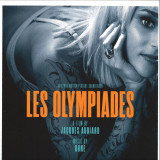
Sixteen musical vignettes of electrifying emotion at the crossroads of ambient, modern synthesizer productions and organic orchestral music experimentation, which tint French director Jacques Audiard's new feature film with the illuminated glow of a whole new generation.
Textextext - (add your write up)
When Jacques Audiard contacted him, Rone was just a few weeks away from receiving the Cesar award for best film score for his very first soundtrack "Night Ride", the highest honor in French film for a composer.
Throughout his career, the French director has been able to surprise his audience by playing on the codes of "genre films", while remaining faithful to the aesthetics of "art film". His cinema is both profound and entertaining, sophisticated and accessible, dark and dreamlike.
"Jacques' cinema is physical, sensual, modern", Rone says about the director, "when he asked me to do the music for Paris, 13th District , I immediately accepted, without seeing any images or reading the script. He is simply one of the greatest contemporary filmmakers."
His new feature film deals with youth in general and their sexuality in particular in a way no one may have done before. The story is based on four young characters and their existential questionings, whose destinies intertwined against the backdrop of the Parisian "Olympiades" high rises in the 13th arrondissement.
But time was already running out, as the film was set to be nominated for *Cannes' Palm D'or* at the rescheduled edition of the festival in July 2021. Between the releases of "Rone & Friends" and his remixes for Agnes Obel, Go Go Penguin and Jehnny Beth (who also plays a role in the film), the producer decided to lock himself away in in his brand-new Isola Studio in Cancale, French Brittany. He also invested in a large screen on which he projected loops of the film and started manipulating his gear. "I had Miles Davis in mind and the way he composed "Ascenseur pour l'échafaud" by improvising with his band while watching excerpts from the film."
After a first conclusive test on three scenes of the film which allowed Rone to showcase the skills he had developed in composition in various musical fields, a relationship of trust developed between the musician and the director, which resulted in over 45 minutes of Rone's music used for the final cut.
"There was a lot of music to be made in a short time, but the talks with Jacques were very stimulating. He had a fairly precise idea of what he wanted, while at the same time, I think, having the desire to be surprised, or even a little shaken up."
If the black and white aesthetic recalls the great hours of the "Nouvelle Vague", Rone´s music gives a new layer to the film which fits resolutely with 2020's zeitgeist.
This second soundtrack by Rone is a sonic urban adventure in itself. As it is used in the film, colouring in the lives of Audiard's protagonists, it will have the same impact on us, the listeners, in our own everyday lives.
out of Stock
Last delivered 3 years ago available to reorder, subject to availability
R.I.P MF DOOM…
MANUFACTURED EARLY 2020 AND HELD BACK FOR RESPECTFUL REASONS IS THE REMASTERED 7” VINYL OF THE GREEDY FINGERS TRACK.
I SELL RHYMES LIKE DIMES, TAKEN FROM THEIR SEMINAL 1999 HIP-HOP ALBUM SHADY SIRENS.
THE ALBUM FEATURED TWO TRACKS WITH MF DOOM & MEGALON, IT ALSO HAD TWO TRACKS
EACH WITH CAGE & NECRO AND FEATURED SCRATCH PERVERT TONY VEGAS. GREEDY FINGERS WERE THE FIRST TO COLLABORATE A FEATURING WITH MF DOOM. THIS EARLY RELATIONSHIP WITH MF GRIMM & MF DOOM ALSO LEAD TO
GREEDY FINGERS PRODUCING MONSTA ISLAND CZARS DEBUT 12” SINGLE RUN THE SPHERE.
THIS TRACK WAS REMASTERED DUE TO BASSLINE MASTERING DISPUTE AND NOW SOUNDS EXACTLY HOW IT SHOULD HAVE ALL THOSE YEARS AGO…
ON THE B-SIDE IS AN ALTERNATE INSTRUMENTAL TO THE LP VERSION.
THE 7” SINGLE IS LIMITED IN SHRINK WRAP WITH IN A STICKERED SLEEVE AND ACCOMPANIED BY A UNIQUE MUSIC VIDEO SHOT BY HMM COOL MOVIEZ.
out of Stock
Last delivered 4 years ago available to reorder, subject to availability
Tara Nome Doyle is a 24-year old singer-songwriter with Norwegian-Irish roots. In April 2018 her first release, the song Down with You came out. Since then it has been streamed more than four million times. More singles and an EP called Dandelion followed. In January 2020 her debut album Alchemy was celebrated by the German press (“… like Kate Bush singing songs by Nick Cave at Berghain”, SPIEGEL). TND’s second album, Værmin, will be released in January 2022 on Modern Recordings. The album was produced by Simon Goff, a Grammy-award winning producer (for his work for Hildur Guðnadóttir’s Chernobyl score), violinist and engineer.
TND likes to collaborate: In spring 2021 she co-wrote an original song with Isobel Waller-Bridge (Fleabag) for the upcoming Netflix feature film Munich - The Edge Of War. In July 2021 the EP The Moments We Keep, which she co-wrote and co-produced with the Italian pianist Federico Albanese, came out on Mercury KX. In late 2020 TND released recordings with Malakoff Kowalski (Bad Dreams) and 1k Flowers (Clemency). TND has also collaborated twice with Max Rieger (Die Nerven; producer of e.g. Caspar and Drangsal).
On Væermin TND tells a tragic love story, rich in symbolism and nuances, orchestrated with piano, violin and synthesizer and sometimes pulsating beats – and with singing that is both intense and varied, sometimes angelic, sometimes rough and threatening. Væermin is touchingly beautiful – and yet it also celebrates the supposed ugliness that lives in all of us and that we like to suppress and ignore. All songs are named after animals that are considered undesirable pests: leeches, caterpillars, snails and worms. Væermin celebrates their beauty and thus also asks a political question: What would happen if we welcomed these vermin instead of rejecting them? Wouldn't we then arrive at a much richer, balanced relationship with ourselves, to a more differentiated relationship to the world around us and to other people?
Værmin is a grand, wise, deeply moving album. And the songs get stuck in your head immediately, pulling you into their depths: existential music by an extraordinary artist.
As songwriters we spend a lot of our lives trying to bottle up a feeling into a song, and often, the biggest feelings, the best ones... the complicated, detailed, messy, incredible ones... just aren’t going to fit. Line by Line is our recognition of that... of how one song just isn’t enough to capture it all, but how we’re just going to keep writing, futilely and lovingly, anyway". - JP Saxe ABOUT JP SAXE Toronto-born, Los Angeles-based singer-songwriter, JP Saxe always finds a way to cut beyond the surface, tapping into a deep connectivity with universal emotion and human experience. His powerful duet with Julia Michaels titled “If The World Was Ending,” led to his late-night TV debut on The Tonight Show Starring Jimmy Fallon last November. JP and Julia also performed the song while quarantined for The Late Late Show With James Corden. Idolator proclaimed the song ‘packs a strong emotional punch,’ and PEOPLE Magazine praised the song as a “beautifully stripped back piano ballad.” JP has also amassed fans at The FADER, following his single “Women Who Look Like You”, featuring rapper Guapdad 4000. In February, JP released his anticipated six-track debut EP, Hold It Together. TIME Magazine praised the project for “exploring the weird – sometimes lovely – sometimes painful – emotions that bubble up in relationships” and included “3 Minutes” off the EP in their ‘5 Best Songs of the Week’ roundup. Over the last year, JP completed a nationwide summer/fall tour with Noah Kahan and joined Lennon Stella on her European tour.
Introducing Jackson + Sellers and their debut album Breaking Point, on ANTI records. Jade Jackson and Aubrie Sellers, two rising stars who aligned during the pandemic to write one of the most compelling duo albums of the last decade. Drawn together by instant chemistry, cosmic forces and their ability to write intuitive romantic breakup songs for each other, their album is a window into the dissolution of two different relationships and the formation of another: a perfect, platonic, creative union. United in their desire to write a record that reflected their expansive musical interest from 70s rock to raucous roots to indie pop, their LA written, Nashville recorded album is a masterclass in unexpected vocal har?monic convergence. With Breaking Point, Jackson + Sellers will establish themselves as two individual artists who together, share a deep friendship, musical kinship and the ability to craft tight singular pop rock songs that will embed themselves in your ears for the rest of time.
The album ‘Romeo’ explores Sega Bodega’s relationship
with his fictional girlfriend, Luci (after Lucifer: bringer of
light), who is a being made entirely from light.
Featuring some of Sega’s best production work to date,
with a few real sonic curveballs. His vocal performance
is brought more to the forefront than ever before.
The album shows Sega really coming into himself as a
multifaceted artist and independent great after a couple
of years of building a solid core fanbase and producing
for some impressive names in the alternative space
(from Shygirl to Caroline Polachek, for instance).
‘Romeo’ features guest appearances by acts including
Arca and Charlotte Gainsbourg.
Previous press support for Sega comes from Dazed,
L’officiel (cover), Fader, Office Mag, NME, DIY, i-D plus,
at radio, Annie Mac (Radio 1), Matt Wilkinson (Apple
Music 1) and Nemone (6 Music) have previously
championed Sega’s work.
Born in Ireland, raised in Glasgow and now based in
London, producer, performer and labelhead Sega
Bodega - aka Salvador Navarrete - has built a reputation
as being one of the UK’s most innovative and precocious
creative minds.
Inspired as much by his close network of peers as his
love of cinematic soundscapes, Sega has made impacts
spanning across music, fashion and film, soundtracking
some of the most important cultural moments in recent
years, as well as building a catalogue of prolific and
critically acclaimed solo releases that traverse genre,
style and composition.
Charlottefield put you on alert - ears pricking, pupils dilating, fur-on-end - like all the good stuff does. It happened every time I saw them. Fizzing and spitting like power lines in fog, tendons bulging through your skin, moments of calm, rip currents of colour. Sometimes you think you’re staring into the heart of the machine. Then panels shift, cogs twist and you’re facing in the opposite direction. Some kind of elastic relationship between guitars, drums and voice, desperately pulling away and snapping back to the centre. Disorientating and beautiful. I wish I could see Charlottefield again. Once more. - M Edward Cole.
A year after his debut on Atomnation, Milio unveils his exceptional first album Nachtzon. Due for release on October 8th, the 12-track album showcases the Dutchman's flair for escapist melodic sounds.
Email van den Dungen started this solo alias in 2020 after previous success as part of the Tunnelvisions duo. But he has ways been a skilled pianist from a musical family, which explains why his well-crafted, emotive melodies always make such an indelible mark. He has a love of beautiful voicings, coloring, melody and harmonies. Personal relationships and close friendships also instill his music with a sense of fun and honest connection and he is someone who spends hours honing his craft, practicing theory and growing ever more conformable with his array of both vintage and modern synths, pianos, guitars and drums. All of this translates to this debut album, which is an expansive affair stuffed with gorgeous grooves and real musicality.
Nachtzon is a widescreen record that proudly wears its heart on its sleeve.
out of Stock
Last delivered 5 months ago available to reorder, subject to availability
There’s an element of emotional abstraction and also something very intimate simultaneously on ‘Break into Blossom’. The stories find characters experiencing (and trying to make sense of) certain circumstances, but there’s at the same time a kind of distance from those experiences — a kind of cognitive reckoning that eventually gives way to understanding and actually feeling them.
Like picking up a tiny stone from the bottom of a riverbed. Turning it over in your hand. Holding it up to the sun. Inspecting it from every angle. But instead of a rock, it’s memories, dreams, relationships, losses, desires, anxieties, triumphs.
I took the title of the record from a poem called “A Blessing” by James Wright (1927-1980).
In the poem, the narrator is experiencing a moment of sublime beauty that’s also colored with a tinge of loss and of loneliness. The poem ends with, “Suddenly I realize That if I stepped out of my body I would break Into blossom.”
When you’re wading in the river, it may be gold… or it may just be a plain old rock. And that’s okay. Sometimes the loss itself creates a space for something profoundly beautiful.
So you keep going out and digging around, nonetheless. That’s the important thing.
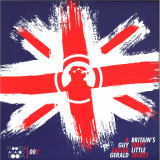
For a number of years now, A Guy Called Gerald has largely made music only for himself. But this special EP is borne from Gerald’s unique and long-lasting friendship with Analog Room founders Mehdi Ansari, Siamak Amidi and Salar Ansari. They first met in 2013 when Siamak booked Gerald to play his Analog Room party in Dubai – a leading underground light in the UAE’s then emergent scene. Away from the glossy VIP hotels and expensive bottle service parties
typically associated with Dubai, Analog Room only deals with quality bookings of the caliber of Move D, Roman Flügel, Moritz Von Oswald and the likes. Gerald immediately fell in love with the party. Its strict music-first, no-nonsense policy appealed to him and he’s returned many times over the years.
By then, of course, A Guy Called Gerald’s musical legacy was already assured. The Manchester icon is best known for his 1988 hit single Voodoo Ray – the touchstone of his hometown’s dawning acid house scene. As well as being an early member of 808 State, Gerald embraced breakbeat and jungle, ran his own Juice Box Records label and worked with the likes of Columbia, Perlon, K7! and many other vital labels. His skills on everything from synths to keys, samplers to
drum machines stood him apart then – and still do today.
“This release is based on a real friendship,” Gerald explains. “I feel part of the Analog Room family. Back in the early days, that’s how it was. These days, it’s like, ‘Oh, you’re famous, let’s do something.’ I’m not interested in that. I’m not interested in being a celebrity or living that life. I’m the same as I was 30 years ago, all I care about is the music. With Mehdi, we have spent hours jamming in private in Dubai, we have partied together. We’ve vibed together for so long and he’s shown me new parts of the world I should be making and playing music in, away from the trendy scenes in other places. So this is an exclusive just for him.
I’m not looking at doing anything else with anyone, and the music is just about celebrating individuality rather than trying to fit in anywhere.”
When Iranian-born Mehdi decided to start Moozikeh Analog Room – which translates from Farsi as “the music of the Analog Room” – Gerald was one of the first artists he asked to release on the label. It might have taken some time for Britain’s Dirty Little Secret to materialize, but boy it’s been worth the wait.
Says Mehdi, “The magic comes through proper relationships and friendships.
That’s why Analog Room worked. It was a great room, an amazing sound system, with amazing artists doing their thing. Bookings were so on-point because we had agents around the world, on the dancefloors, spying up artists who were killing it,
and Gerald was one of them. He was a perfect fit from the first gig and our friendship grew from there. He’s always been very kind to me. We have this common language of music without any bullshit, and that is where this EP comes from.”
The EP is a mixture of different things. Some of it is unreleased material from the vaults revisited, some of it is brand new. It opens up with the devastating Old Skool – a writhing, physical track with naughty bass. The drums hark back to Gerald’s early days of making jungle but reimagined through a modern perspective. As the synths spray about the mix and the percussion bounces atop the jostling drums, muttered vocals draw you in deeper. Sugoi is an experimental
track that fuses ambient synth design with the spacious and eerie atmospheres of jungle. Nimble drums get you on your toes as the spangled synths twist and turn in all directions. It is a thrillingly original, impossible to define track.
Flash Fight is built on a captivating rhythm that sits in the area where house, techno and jungle intersect. It is warm and cavernous, physical yet elegant as it bounces on rubbery kicks and lithe synths roam in and out of earshot. Perfect for those sweaty, cozy back rooms, it’s another masterclass from Gerald. Closing out the EP is False Religion, a deep-rooted house track with elastic drums and
haunting, wispy pads. As a subtle acid bassline rises and falls way down below,
Gerald’s own mystic whispers leave listeners hypnotized.
Following on from Analog Room co-founder Salar Ansari’s debut release on the label, this EP is a statement of intent. More releases will follow from some of Analog Room’s most frequent international guests, but only when the time is right. Moozikeh Analog Room is a label of love, one that is focused on putting out the best possible music at all times rather than chasing hype.
A timely reminder of why A Guy Called Gerald is one of the world’s most enduring electronic artists.
out of Stock
Last delivered 5 months ago available to reorder, subject to availability
These recordings, made in 2001 in the weeks before September 11, constitute a unique historical document. They are spoken-word adaptations of scenes taken from Destroy All Monsters, the first book by acclaimed writer and 'pop culture alchemist' Ken Hollings. A multistranded postmodern epic, Destroy All Monsters offers a radical retelling of Desert Storm, America's military operation targeting Iraq, using imagery derived from MTV videos, CNN news reports, Japanese kaiju movies and anime, Hong Kong action flicks and tales of alien abduction. The book's entire narrative nervously unfolds in an unstable of world of terror monsters, wrecked cities and dangerously tall buildings: where an event like 9/11 is inevitable. The book was officially launched on September 13, but distribution in the United States was delayed when ports on the Eastern Seaboard were closed to shipping post 9/11, leaving copies of the book stranded in the Atlantic. 'Published the very week of the "attacks on America",' Toby Litt wrote at the time, 'Destroy All Monsters is genuinely, spookily prescient…as a progress report on Planet Earth, it seems to have timeslipped onto the front pages.' Lydia Lunch praised it as 'a hallucinogenic spiral into future nightmare', while The Scotsman called it 'mind bending reading.'
In the summer of 2001, Ken Hollings was approached by sound designer and electronic music composer Simon James, who wanted to create an audio adaptation of scenes from the novel to share with subscribers to a spoken word channel launched by totallyradio. The idea was to record Ken reading his own words and then embed them in a soundscape that evoked the fragmented complexity of the original text. Ken concentrated on a small handful of threads from the overall narrative, while Simon directed and engineered the final recording. This resulted in the two sequences of words, sounds and electronic tonalities contained on this audiocassette: an unsettling portrait of people about to be overtaken by events.
In October 2001, having just got married in London, Ken and Rachel Hollings went to New York for their honeymoon, just as they had originally planned. They spent an unforgettable week in a city struggling to recover from the seismic changes that had just taken place while a sudden wave of anthrax attacks on government and media offices filled the news cycles. Rachel took a photograph of Ken at Ground Zero, where crowds of onlookers continued to gather, and the air still smelled of burning.
Ken Hollings is a writer and broadcaster whose main concern is the relationship between culture and technology. He has written and presented numerous critically acclaimed features for BBC Radio 3, BBC Radio 4 and Resonance 104.4 FM His other books include Welcome to Mars, The Bright Labyrinth, The Space Oracle and Inferno all available from Strange Attractor/MIT Press. His latest book, Purgatory, is due from Strange Attractor in Spring 2022.
Simon James is a producer, musician and sound designer based in Brighton, UK, whose work combines electronic sources with field recording techniques and sound treatments, using sound to transport the listener to fantastical audio worlds. Simon's latest release, Electro Smog, collects electromagnetic field recordings from Shenzhen's electronic markets, recorded while he was in China at the invitation of Musicity and The British Council.
The Destroy All Monsters audio adaptations marked the first occasion Ken and Simon worked together – subsequently they collaborated on the 12-part series Welcome to Mars for Resonance 104.4 FM and Connecting, an audio portrait of the original 'phone phreaks', for BBC Radio 3. In 2021 they teamed up again to make Fast Forward, a six-part documentary series for Kasperksy Lab.
out of Stock
Last delivered 4 years ago available to reorder, subject to availability
Years & Years has today announced details of brand new album, ‘Night Call’, which will see a release on Polydor Records on January 7th. Olly further introduces the record today with a brand new track, the pulsating ‘Crave’, and its incredible video featuring some of the cast of ‘It’s A Sin’ (Omari Douglas, Nathaniel Hall, David Carlisle) plus the likes of Munroe Bergdof. The record-breaking show won Best New Drama at the National Television Awards earlier this month, continuing a phenomenal year for Olly (which has also seen the release of first single ‘Starstruck’, its rework with Kylie, and a show-stopping performance of ‘It’s A Sin’ alongside Elton John at the BRIT Awards).
A daring dance track about leaning into submission to the point of embracing it, ‘Crave’ – says Olly – “is a playful way of inhabiting the deranged sexual energy I’ve always wanted. In the past I felt like I’ve been dominated by toxic relationships, and I felt like it would be fun to turn it on its head.” Consider this a risqué cut of kinked-up, club-ready pop, and Olly Alexander using his platform to push the boundaries of mainstream superstardom.
From its iconic artwork to its euphoric, rejuvenated sound, ‘Night Call’ is a thrilling new chapter for Years & Years. Inspired as much by pioneering figures like Sylvester as it is French House, at the centre of the record is that mermaid of a muse: a beautiful icon luring men to their death, on an album partly about those searching for love (or a lover) but ultimately finding power in themselves. Embodying the new perspective of a character – like Ritchie in ‘It’s A Sin’ - also deeply influenced Olly’s songwriting, with songs that blur the line between fantasy and reality but are bound together by their explorations of queer life. Hedonistic and escapist, ‘Night Call’ captures that joy and anticipation of going out precisely because, says Olly, “I was writing from a fantastical space, stuck in the same four walls. I wanted to have as much pleasure as possible in the music.”
As Years & Years, Olly Alexander has become one of the world’s most trailblazing modern pop stars. Across two hugely successful albums to date, the singer, actor, fashion icon and cultural vanguard has earned 5 Brit Award nominations, surpassed 4.4 billion global streams, and played triumphant homecoming shows at London’s O2 and Wembley Arenas. Along the way, Olly has also become a fearless, once-in-a-generation voice on important discussions around mental health, and issues affecting the LGBTQ+ community - all of which, in its own way, has taken him to ‘Night Call’, and the most essential Years & Years album to date.
*Limited edition of 200 copies, heavy weight vinyl, comes with poster* fmvee joins Queeste with who do u love?, an EP of fractious songs recorded over a tumultuous four-month period in Los Angeles. Having debuted in 2018 with a set of club contortions touching on jungle and 2-step, the US artist returns with a work of intense self-reflection. Lived experiences are transmuted into an amorphous bricolage of pummelling kicks, synthetic textures, and diaristic details, what they describe as an act of "remembrance." Working and living in LA, the "grind" alongside "aspirational partying," and the confrontation of depression during an intense relationship, informs the EP on levels both sonic and thematic. The slippery rhythm and melodic stabs of 'the way you see yourself' embodies a state of flux, also recalling the early experiments of the LA beat scene. Distant jazz drumming fills its peaceful coda before 'everythingUneverKnewUwanted' introduces an echo lifted directly from the artist's life: a trickling courtyard fountain. This first phase of the release finds resolution with 'thewayothersseeyou,' a conceptual mirror to its start, and one which carries a notable shift in tone; gleaming percussion has given way to ominous synths. Despite the EP's personal nature, collaboration is crucial. 'Seed Perfuming (LoLo v665)' is an fmvee original transformed into a cascading breakbeat by New York producer and engineer Loric Sih AKA LoLo, an ecstatic yet familiar form nestled amidst otherwise bruising encounters. 'sobbing' follows, a digital-age ballad of original lyrics exploring dependency: emotional, physical, and otherwise. It's a poignant conclusion to an appropriately hallucinogenic collection, an intoxicating chemistry of love and loneliness co
out of Stock
Last delivered 4 years ago available to reorder, subject to availability
Orfeu Da Conceição was originally a stage play in three acts by poet and lyricist Vinicius De Moraes with music by Antonio Carlos Jobim. Premiered in 1956 in Rio de Janeiro. The play put the basis for the classic films Orfeu Negro. Needless to remember that Jobim and De Moraes were two seminal figures in Brazilian music, two modernists whose work was a major influence for generations to come. In fact Orfeu Da Conceição can be considered the beginning of their songwriting relationship. First released as 10" in the same year of the theater premier, the album features vocalist Roberto Paiva and guitarist Luiz Bonfà. An essential release for all Brazilian music fans out there.
When Berus debuted in January 2021 on Kommerz Records with his “Voyage EP”, he had no idea how precise the title would be for the coming months. A little over a year before the release of “Voyage” the Berlin based multi-instrumentalist and producer had taken his focus away from his, more than a decade lasting, house and techno career towards a new sound, inspired from neo soul and hip-hop. Whilst his electronic projects found home on Kerri Chandler's Madhouse Recordings and DVS1’s infamous Mistress and gained his moniker Frag Maddin worldwide attention, it was part of his progress to focus on himself and Berus, his real name. He took this step not knowing it would lead him into a dark journey of self revelation, identity finding and for the foremost new hope: blue hope.
Berus was born to a Zaza family in Kurdistan, which eventually migrated to Germany escaping prosecution and discrimination of the nationalist regime in Turkey. The family settled in Hamburg and Berus grew up to be a New Release Information
musician. He played the drums, formed teen punk bands and started producing at an early age experimenting and shaping his future as an artist.
Since the beginning of his career Berus releases can be seen like a diary, always expressing his very personal state at the time. For the work on “Blue Hope” two main topics fall into the production of the album: love relationships and seeking identity.
There is a blue melancholy and reflection leading through the album. On “Talk to Me (Karþýlýklý)” Berus opens up about his feelings of true love and the need to set free when they are not answered. Whilst the incredible Mulay who is featured on “Holy Waters” answers with her female perspective. And there is hope. The hope (“Dream On”) and fears (“Being Alive” feat. Sedric Perry) of a young migrant generation. “Blue Hope'' is a coming of age story that’s relatable and yet unique, honest but vulnerable and for the foremost: 100% Berus.
The album is a neatly curated mixtape and delivers a wide range of styles like the jiggy sounding Mike Nasa on “On Me” all the way to “Wholesome” on which Barne delivers a John Mayer-esque performance.
On “Blue Hope” Berus gathered a mixture of old friends and new talent around him to produce the record. The outcome is an LP referencing different influences without the use of any samples.
out of Stock
Last delivered 4 years ago available to reorder, subject to availability
Unforgotten is a British crime drama television series. The program follows a team of London detectives, led by DCI Cassie Stuart (Nicola Walker) and DI Sunny Khan (Sanjeev Bhaskar), as they solve cold cases of disappearance and murder. Each season deals with a new case, introducing seemingly unconnected characters who are gradually revealed to have some relationship with the victim. Seasons 1 to 4 were broadcasted between 2015 and 2021. A fifth series was announced, scheduled for release in 2022.
Unforgotten has received critical acclaim, with Tom Courtenay winning the 2016 BAFTA TV Award for Best Supporting Actor for the first series and Mark Bonnar winning the 2017 BAFTA Scotland for Best Actor in Television for the second series.
Michael Price is one of the UK’s most sought after composers. His debut album Entanglement (2015) was critically acclaimed by furthermore Rolling Stone, Uncut and Clash. His work for film and television has been widely recognized in general, winning an EMMY award in 2014, a BAFTA nomination and 2 further EMMY nominations for his score with David Arnold for the critically acclaimed BBC series Sherlock.
This is a limited edition contains of 1000 individually numbered copies on crystal clear vinyl. The LP package contains liner notes by Andrew Collins and Michael Price.
New solo record from Philip Frobos of Omni (Sub Pop, Trouble in Mind), this record is released in conjunction with a novel by Philip of the same name.
Philip Frobos' ‘Vague Enough to Satisfy’ will be released on 180g black vinyl - Only 500 Pressed Worldwide October 1st 2021. The novel will be published by Hex Enduction Books in Seattle on the same day.
‘Vague Enough to Satisfy’, is Philip Frobos’ debut solo album, it is also the original soundtrack to his debut novel of the same title. This lounge-inspired punk album acts as the musical bedrock for the story of a young man who revels in the day to day details (both romantic and mundane) of his experiences in Leipzig and Atlanta. The tone of the record reflects the tides of the protagonist’s confidence and self-doubt throughout the novel.
‘Vague Enough to Satisfy’ rushes straight to the point with it's bossa nova beat and seductive lo-fi musings. ‘Vague Theme’ opens the album with a groove reminiscent of ‘Whammy’ era B-52s while the vocals tell the story of a young romantic confused of his place within a relationship and the city around him.
‘Vacant Street’ proceeds with a hooky bassline, the revolving, cryptic sort that Frobos is known for as a member of Atlanta post-punks Omni. ‘No Packages Today’ is similarly sprightly and circuitous, sounding like the Au Pairs refining an obsession with Bowie’s ‘Lodger’. “I’m afraid that you need more than I can offer” opines Frobos bedecked by shuffling beats and burgeoning waves of saxophone. ‘Never Noticed’ and ‘Through with Buzz’ introduce notes of tension and intrigue to the frisson of the story, “you’re stuck in the same day” confesses Frobos in the former.
Instrumental tracks help to prolong an uneasy feeling of ambiguity too, with compositions like ‘Pool Disturbance’ and ‘Inflatable Flamingo’ taking their musical cue from Henry Mancini. Curious flourishes, a metronomic headiness and shuddering xylophones bring to life the intensely vivid imagery and cynical humor that suffuse the novel.
‘Pathetic’ collides the casual, magnetism of Serge Gainsbourg with tight Cars-style vocals and choruses. Meanwhile ‘Singer Not The Song’ and ‘Saturn Return’ showcase a more sedate approach, languid and arch. ‘Vague Enough to Satisfy’ is a trip, plunging you into a curious world populated by the unexpected.
out of Stock
Last delivered 4 years ago available to reorder, subject to availability
Editions Mego is proud to welcome Powell to its roster with a bizarre and strangely emotive new LP of synthetic computer works entitled Piano Music 1-7.
Via his own Diagonal Records imprint, his work on XL Recordings and, most recently, the opening of audio/film platform A Folder afolder.studio, Powell has firm footing in the contemporary electronic landscape. During a wry and obstinate musical life he has twisted myriad synthetic forms into shapes that explore and expand upon the districts of post-punk, techno, noise + computer music, and in the the last year alone he has released four albums of hi-def abstractions, each inspired by a formalisation of music proposed by Iannis Xenakis.
As an extension of this intense period of work/research/play with stochastic functions using probabilities to compose music, various processes emerged that Powell then began to apply to more traditional musical events. Where ordinarily in his work the probabilities and relationships are used to define parameters such as wave-shape, folding, FM, filter modes etc., he now began to use them to create musical formations and visual scores that could be played back using any software/MIDI instrument one of these can be seen on the rear cover of the LP release. While mapping out this cartography of relations, he used a basic Grand Steinway sampler as a placeholder instrument; the longer the process went on, though, the more he began to embrace the acoustic properties of the synthetic piano and make it the bedrock for this new constellation of work.
Piano Music 1-7, subtitled 'Music for Synthetic Piano and Assorted Electronics', consists of seven different synthetic islands strung together into a single composition. All were composed using the aforementioned processes that allowed Powell to play a piano, even if he never learned to do so with his hands. After all, 'In writing electronic music,' Robin Mackay once wrote, 'you also have to direct the invention of new tools.'
At times the piano skips gleefully over shadowing synthesis, whilst at others the synthetic sheets swarm and envelope the keys. The interplay between the two create a fantastical alternate reality, a cosmic machine in which time is eroded, shrunk and expanded, like a wax upon which operations and relations are inscribed or engraved. Many of the pieces express a playfulness or optimism verging on vitalism, as bundles of piano notes dance and interpolate with a never-repeating range of electronic gestures. The feel is of a brightly coloured flower-bed in various stage of bloom. This interplay of the artifical acoustic and the electronic builds on the pioneering processes developed by David Behrman in works such as Leapday Night, and Piano Music 1-7 could also be posited as a modern take on Conlon Nancarrow's investigations for player piano. Similarly, the razor-sharp sonic properties and unfolding of non-human events recall the computer works of Xenakis and the surgical precision of Mego mainstay Florian Hecker.
Recorded in late 2020, these new Powell works propose not just a bold and bright vision of electronic music but serve also as a map with which, for 35 minutes at least, we can navigate our way out of the current milieu. As the artist himself remarks in the sleeve-notes, '. . . What emerged from this fog or soup for me were ideas and processes that felt affirmative and life giving — sensations I had always hoped to convey in my music. Perhaps the optimism or positivity I felt at these musical events unfolding, these clusters and knots tumbling in different directions across time, can also be felt by you.'
out of Stock
Last delivered 9 months ago available to reorder, subject to availability
On Top Records is extremely proud to welcome back Smasher with his sophomore album, ‘Vibes In Motion’. due for release the 16/07/2021
Following the release of his debut album ‘Locked In Locked On' in 2020 which featured in numerous 'Album of the Year' lists Smasher has spent the past year offering a high level of consistency among a time which has been very difficult for creatives.
With live shows stopping to a halt Smasher has taken this opportunity with both hands building a home studio to sustain creativity a very important factor for an individual who has a burning passion to create music, he has used the time productively “Vibes In Motion” is 51 minutes of future classic British UKG encompassing Hip Hop, Grime, RnB, 2 step Garage all blended together seamlessly to bring a fresh approach to a genre he has gone extremely hard for. As with previous material, the album is produced by Smasher himself collaborating with long time friend Aaron Greenwood bringing his soulful smoothed-out keys and backing vocals the pair have a great working relationship which spans over a decade which can be heard through out the record.
Smashers journey began with a love for late 90’s UK Garage collecting vinyls from record shops and dj’ing on pirate radio, which lead him to Hip Hop, RnB, Reggae, Soul and many different uk underground music styles, followed by decades of producing records for some pinnacle uk artists most recent production credit for “Ghetts” on the critically acclaimed ‘Conflict Of Interest’ album charting at number 2 in the uk albums chart, Giggs - Landlord album, Klashnekoff - Iona to name a few, Smasher is a producer who can deliver a very high level of production no matter the genre. Over the past 2 years Smasher has gained props far and wide: from Todd Edwards to DJ EZ releasing a record under his Nuvolve imprint, to guest mix for MBE clothes designer Wale Adeyemi, comedy UKG faves Kurupt fm posting his “lockdown freestyle challenge” Numerous guest shows & live streams for Rinse fm, Kiss fm, Phaze Transition & Mind Charity, limited vinyl run presses to collaborating with Capo Lee & Ayo beats for film soundtrack “Against All Odds”
Since releasing “Locked In Locked On” the feedback for the project was so greatly received i knew how i wanted to approach this next album and with plenty of time on my hands to experiment i wanted to include more collaboration, a lot of the link ups came together organically.
I feel you get a nice balance of some new school artists like Local, Solo Jane & Hotch mixed with some UKG generals like MC Neat, Mighty Moe, Preshus, Creed & Troublesome and original “Knightz of the round table” member Luckie Luciano, i always feel a duty to pay homage but i also want to evolve the sound and take it to the next level.
Since march 2020 its been a tuff time for people i feel like there are some hidden messages in the album it leans towards the underdogs of this world and at times i feel like that but there is always this burning desire inside me to want to do better hopefully that comes across for the listener.
Already with a dedicated fan base and support from tastemaking DJs such as DJ EZ, Conducta (Kiwi Records), Toddla T (Radio 1), Heartless Crew (1xtra), Majestic (Kiss), Scott Garcia (kiss), Smokey Bubblin B (Rinse fm), DJ Redhot (Rinse fm), Dj Cartier, DJ Spoony, Artful Dodger, MattJam Lamont (Rinse fm) Shosh (Kiss Fm) Rudekid (Kiss fm) Ricky Chalrie & Melvin (BBC Radio 1) amongst others from the burgeoning UK Garage scene,
The Smasher sound especially in UKG has brought a well needed fresh flava to a genre which has had very few full album offerings, with that said its time to share “Vibes In Motion” with the universe, This will solidify Smasher as an artist in every sense of the word and undoubtedly concrete him as one of the UK’s finest talents.
out of Stock
Last delivered 4 years ago available to reorder, subject to availability
Giving form to a broad personal project of continuous inquiry and existential expression, A World Of Servicemarks the Ostgut Ton debut of Spanish producer, DJ and artist JASSS aka Silvia Jiménez Alvarez.
The evolution of A World Of Servicehas curved around genre collapsing and unexpected metamorphoses. Formerly the name of the monthly radio show JASSS hosted in Berlin, and soon to be the title of her expansive multi-sensory touring concept in collaboration with Ben Kreukniet, here A World Of Serviceis powerfully concentrated in sonic form. Throughout the album JASSS muses on the especially current human and technological barriers to interconnectivity; both lyrically and musically she deconstructs the self, unmasks anxieties and interrogates the insufficiencies of language as applied to gender, identity and interpersonal relationships. Forming her own fluid, nuanced lexicon in response, JASSS seeks a deeper understanding of her multiple selves, emerging through unbridled adolescent rage and the wisdom of maturation, traversing liminality with abstract electronics and baroque industrial pop. Visually this is underscored by Matt Lambert’s uncanny floral cover portraiture, as well as the record’s distinct scent of wet earth, flower and woods developed for the album by Meri Bonastre and applied to the vinyl innersleeve.
Following the imaginative nostalgia of Weightless, her 2017 debut album for iDEAL Recordings, as well as her series of blistering dancefloor 12”s for Whities/AD 93, A World Of Servicefolds personal and societal concepts in on themselves, not seeking answers but rather luxuriating in the unique friction that questions create. JASSS is intensely focused yet musically unbridled; this is reflected in tonal shifts of A World Of Service. Through the computerised yearning and bruising of a heartbreak on “Luis”, to the jagged and wordless tundra of “Vapor Dentro”; the intriguing juxtaposition of warm, alluring Spanish vocals against rigid pillars of industrial heft and bass grind (“Camelo”), and the soaring maximalist industrial popof the album’s closer, “Wish.”
As intensity rises through the pandemic-era trip hop of the album’s title track “A World Of Service”, JASSS sings: “Pleasure / Is nowhere to be found inside this world of service / I call to be my life.” Pleasure may remain elusive to her, but in the determination to make peace with her various identities in this technological age, JASSS offers a compelling glimpse into an essential type of artistic voice.
out of Stock
Last delivered 17 months ago available to reorder, subject to availability
nown for her delicate compositions, soaked in dream-like surrealism, Icelandic musician Sóley has attracted a huge following since launching her solo career back in 2010. Her 2012 single ‘Pretty Face’ went on to generate an enormous amount of buzz, and quickly became a viral sensation. Now, with three solo LPs under her belt, Sóley is preparing to debut a completely new sound via the release of her new concept album, Mother Melancholia, on October 22nd.
Described by the artist as "Nosferatu meets Thelma and Louise in a vampire church under the watchful eye of David Lynch", Mother Melancholia is the soundtrack to the end of the world as we know it. As a self-confessed news addict, Sóley became obsessed with the idea that the world is ending. Having surrounded herself with real-life stories of global warming and patriarchal politics she couldn’t shake the feeling that she was going to die. This feeling was so all encompassing that it sparked the idea for a new project. Could there be a soundtrack for the last days of humans on earth? How would that sound?
“I read books about possible dystopian worlds and started writing poems about irrational and in love characters who live in gray and cold imaginary loneliness. In each other’s burning arms. Walking in circles with no way out” she explains. “After all, the album reflects our life here and now. Our life and reality is a kind of dystopian world.”
Whilst writing the album, which serves as a tongue-in-cheek eulogy to our planet, Sóley began reading about ecofeminism, a branch of feminism which uses the concept of gender to analyse the relationship between humans and the natural world. Ecofeminism emphasizes that both women and nature must be respected but also separated. Since the beginning of time, the natural world has been synonymous with female identity, phrases like Mother Nature are commonplace. “The patriarchy views women as volatile and hysterical. Earth and women are either our saviours or our destroyers,” explains Sóley. “It’s so easy to abuse the earth, like the patriarchy has abused women since the dawn of time, then ask for forgiveness afterwards and promise they´ll never do it again”.
The new album sees Sóley move away from the indie-pop of her previous releases. She began by experimenting with writing songs on the accordion, allowing her a new sense of freedom in her writing. The process allowed her to broaden her horizons even further and experiment with a whole range of new and exciting sounds. “I bought myself a theremin as I was really excited about the unpitched sound and there is no perfect pitch during the end of days,” she laughs. “I also bought a mellotron, my first moog and a cello and taught myself how to play each of them. All of these new instruments are particularly suitable for the kinds of aesthetic inconveniences which I have learned to embrace.”
Album opener ‘Sunrise Skulls’, one of the most cinematic moments on the album, was inspired by the Me Too and SlutWalk movements and tells the story of a group of women who rise up and fight the patriarchy. ‘Blows Up’, a track that would be at home on any horror soundtrack, is a sarcastic love letter from the Earth to humans. Standout track ‘Desert’ is an incredibly moving song dedicated to the next generation. “It’s about the guilt you feel, as a mother, for having children and leaving them on the frontline. My daughter, for example, will take over this inevitable war” explains Sóley.
In true soundtrack style, the album flows through the end of the world in chronological order, closing with the Earth’s final moments. ‘Sundown’ is a dark piano ballad detailing human kind’s final day on Earth. “And everyday, I dig my own grave, and as I dive in you´ll hold my hand” she sings, over twinkling piano and swirling synths. We then hear the world end on ‘XXX’, a dark and swirling soundscape that swells before fading to silence. On ‘Elegía’ the silence then turns to the sound of the ocean, as we hear the Earth, like a woman finally free from a violent relationship, healing on her own.
Mother Melancholia is the mark of an artist confidently striding into more experimental territory. With a lengthy and successful career behind her, Sóley felt compelled to try something new and express the real her. The music might be shrouded in darkness but it’s a move that fills her with joy and freedom. “I hope that people not only enjoy the new sound, but also that Mother Melancholia might raise some questions in people, particularly women,” she says. “I’m under no illusions that this album will change the world but I hope that people can connect with the idea”.
out of Stock
Last delivered 4 years ago available to reorder, subject to availability
Oak Corridor is the second full-length album from Newcastle, Australian duo Troth (Amelia Besseny & Cooper Bowman). It follows 2020’s warmly received album, Flaws In The Glass (Altered States Tapes) and 2021’s Small Movements In Radiance mini-album (Not Not Fun). While the same themes and intentions remain, this time Troth channel their ambient experiments into an environ located somewhere closer to minimal-wave and synth-pop.
While Oak Corridor is their most ‘song-based’ album to date, it continues the respectful treatment of natural themes found in their previous releases, further tying in elements of balance, truth, justice, humility, strains of mysticism from varied origins and an opposition to the encroachment of ill-advised development surrounding them in Newcastle (and Australia more broadly). The album is a truly collaborative affair and offers something of a sound-diary of the two’s relationship.
out of Stock
Last delivered 4 years ago available to reorder, subject to availability
Operating on a plane between avant-garde indie, bubbling electronica and cosmic psychedelia, London group Voka Gentle have an addictive, amorphous sound. A three limbed beast made up of twins Ellie and Imogen Mason, and William J. Stokes, each is a multi-instrumentalist, songwriter and producer with an imperious understanding of three dimensional sound.
The newest single ‘Necrofauna / The Garden of Eden’ - features Wayne Coyne from The Flaming Lips.
The hallucinatory mix of squelching synth bass and rhythmic samples, three-tiered harmonies playing off against William’s sprechgesang, and a cutting, full-bodied drum beat is reflected in the oneiric themes.
“This song is a dream sequence about the narrator entering the Garden of Eden, the emblem of an idealised pastoral relationship with the natural world, and realising they can’t stand it and want t o consume and bring destruction to it (I see a deer pass me by and I break its neck / Rip off its hind leg and take a bite through fur, sinew and bone).”
‘Necrofauna / The Garden of Eden’ - recorded with neo - metal battalion Pigsx7 guitarist and producer Sam Grant - is the first release in earnest since 2019’s acclaimed debut album ‘Start Clanging Cymbals’, released via Nude Records. Having come through the dues - paying gestation period that leads up to a debut record, there’s a sense of liberation around this new phase for Voka Gentle - a subtle confidence in their craft. It’s well earned too - with high praise from the likes of UNCUT, MOJO and The Line of Best Fit at press. Support comes too from BBC 6 Music - including presenting an edition of Stuart Maconie’s Freak Zone - and Radio 1. Tracks from that album also featured on FIFA 19 and The Sims 2020, aiding in recognition.
A live set at the prestigious Pitchfork Avant Garde festival, as well as a clutch of tastemaker festivals in the UK (Dot to Dot , Live At Leeds, The Great Escape, Kendall Calling, Bluedot, Neighbourhood), alongside the serendipit ous shows with The Flaming Lips and
[l] d2 [When We Go, We’re Taking You All With Us!]
1. Some records hit you with an instant impression of timeless brilliance, and Low Life’s Dogging is one of those records, what the wise call “an instant classic”. 2. From Squats to Lots: The Agony and the XTC of Low Life is more like their second album Downer Edn (read Edition), a little more withdrawn, a little more textured. Complex. Rich. Which is to say: you’re going to need some time with it. 3. Some show, some grow. Low Life have done both. This one is a grower. Spend some time with this one. It’s got that nuanced flavour. Don’t guzzle. Sip. Savour. 4. Sip it, and sense the recurring brilliance of Mitch Tolman’s lyrics, exploring the usual territory of gutter life, lad life, punk life, low life. The dirge. Disgust and shame in white Australia. Council housing, bills piled to the neck, substance abuse and rehabilitation, the fallen lads and lasses who stood too close to the flame, loss and loneliness, from squats to lots. Un-Australian gutter symphony. 5. There is a celebration of resilience and that’s a central theme of this record and a time like ours needs a record like Agony & XTC. Low times are coming through, but if you’re low they won’t get to you. 6. Iggy Pop’s Bowie produced studio rock masterpieces ‘The Idiot’ and ‘Lust For Life’ are important reference points to the 3rd album sounds of Low Life. Here comes success! 7. ‘The Agony and Ecstasy’ is a 1985 novel by Irving Stone about the life of Italian Renaissance painter Michelangelo. Stone wrote another novel about the single eared painter Vincent Van Gogh called ‘Lust For Life’. This synchronicity hit me. 8. Iggy and the Stooges are a pretty safe reference for Low Life (and all good rock music). Iggy and the Stooges are a low life’s Michelangelo, but solo Iggy like Lust for Life is a better reference for this particular incarnation of Low Life, which is to say they are studio rock albums. 9. Bowie later referred to this period of his life as profoundly nihilistic. But Iggy looked at it as the period of his life that saved him from an early grave. This confrontation is Low life lore. 10. Let’s stick to this, because there’s something about this era of Bowie that makes sense with Low Life’s new album, particularly Low. One should never miss the Low in our new album from Low Life. Producer and studio boss Mickey Grossman has the ear for the Low, and he has carved out a little statue of David right here. 11. Mickey’s ears are recording, mixing and producing the best of Sydney, most notably the Oily Boys Cro Memory Grin. A great companion record to this one. Use Agony & XTC AFTER Oily Boys. Not on an empty stomach, and don’t try to operate heavy machinery (bobcat, bulldozer etc). 12. The relationship between Low Life and Sydney hardcore should not be understated, but it also shouldn’t guide how to listen to Agony & XTC. This is not austere, disciplined music. 13. Think, like, if Poison Idea were given the kind of studio time and budget as Happy Mondays. You wouldn’t play it to a teenager. It’s not for children. This is a mature flavour, one for the adults who have had to contend with failure and hardship, medical bills and disappointed family members, betrayed lovers and worrisome growths, police brutality and tooth decay, humiliating bowels and collapsed septums, detoxing and drying out, for those who have seen themselves as corrupted and putrid and unloveable, for those who endure all of this and aren’t willing to lie down and cop it sweet: Low Life are still here and they ain’t going nowhere. NOTES ON HOW NOT TO LISTEN TO AGONY AND XTC OF LOW LIFE: 1. Don’t think of shoe-gaze. It suggests a safe passage to 90’s reminiscences, a vogue style of our time, but nothing to do with Low Life style. Low Life style is always of its time. The content changes. Agony & XTC shares weight of records like My Bloody Valentine’s Loveless and Slowdive’s Kebab, records that were laboured on after the songs were recorded, songs that were written as they were recorded. 2. We can call these “studio albums” as opposed to albums built in the heat of live performance. Studio albums from the 90’s are called shoe-gaze by some journalist nerds, but we know better than to use words like this. 3. Studio albums are excessive and, at the same time, so empty. Agony & XTC, Loveless, Kebab, Rumours: excessive! And empty. This is not to suggest this is Low Lite, some throwback, soft. A band like Low Life can make an overproduced studio rock album without having to use the word shoe-gaze. So, don’t think studio albums mean anything especially 90’s. Don’t look back. 4. Let’s lose these distasteful labels, like “shoe-gaze”, “rehab rock”, “stab”, “guitar OD overdrive”, “western Sydney wonder”. They can fade out. A low life was once referred to as a vagabond. Who uses this term today? Nobody. Language can murder. Words can die. Kill ‘em all! - Daniel 'DX' Stewart, Melbourne, 2021.
We used to enjoy presenting Chapelier Fou's work using the idea of music in the form of a treasure hunt. However, while the phrase in itself it still just as relevant today, we would never have imagined that it would become such an integral part of one of his albums. Or two of his albums to be perfectly exact - Méridiens and Parallèles. Two records with twelve songs each which answer each other back in the form of anagrams. They are like the two sides of the same planet - similar but simultaneously so different. They need to be discovered one after the other taking the time necessary to travel through the sound territories produced by his imagination. The starting point is a sombre night in Uqbar… Chapelier Fou's opening reference to Borgès was obviously not made by chance. He subsequently confided in us the objective of his diptych, namely to combine reality with fiction to question certainties and our relationships with the imaginary sphere. He has continued with his traditional classical-contemporary electronic approach which, although now known to a wide audience, has the advantage of opening up a whole range of possibilities right up to the infinite scale. Moving away from an "État Nain" (Dwarf State) to take refuge on an asteroid...Throughout Méridiens, each composition can be seen as a universe in itself or a specific landscape with its own temporality. Proof of this is the introduction to the chamber music format composed for and performed by only strings which can only be given the date we want to give it. This is "État Nain" in which violins are played like guitars. In some parts we find the spirit of the Penguin Cafe Orchestra and the idea of cheering up classical instruments and not taking everything too seriously. In other parts, we find something close to a mischievous and childish unplugged grunge anthem that could be from the French series Les Shadoks. This mischievous view of things is shown to full effect in Am Scharchtensee. The introduction shows Chapelier Fou's whole classical universe and mastery of orchestration in which "modular" electronics provide a subtle and discreet backdrop. Then, the record suddenly switches to a surrealist dialogue between these classical sounds and modular synthesizers with the flavour of the German pioneers Kluster/Harmonia to name but one example. Timelessness and imaginary places. La vie de cocagne confirms this choice of total freedom. It's traditional music with old sounds, a kind of forgotten bourrée (old French dance) in which electronic sounds disturb the established order and thus reach another musical dimension. Le méridien du Péricarde followed by Désert de Sonora push this idea of a trompe l'oreille and a hall of mirrors even further. The latter track ends almost like a catchy 80s melody and we can no longer find any logical meaning. We let ourselves be carried away by this profusion of madness and are a little amazed by this mastery of sound, composition and space. It sometimes all seems like a succession of conjuring tricks. Chapelier Fou takes not being serious very seriously indeed. The end song Everest trail is the perfect conclusion, a deadpan track in which the primary aspect of a totally classical melody in all its straightness is underpinned by a permanent exchange of electronic tweets which mocks the main musical posture. This impertinence harks back to Pierre Schaeffer who directed the ORTF's very serious experimental department in another era and allowed the development of Jacques Rouxel's series Les Shadoks thus introducing the general public to the notion of concrete music. This is also perhaps why Louis Warynski's stage name is French – because he has opted to use his French musical heritage. Thus the first singles selected from this album, Constantinople with its groovy and jazzy allure and Le Triangle des Bermudes evoke composers like Michel Magne or Michel Colombier both of whom have totally open minds and consider all music to have the same importance, namely that of sound. In absolutely all the tracks that make up Méridiens, you will find at least one detail - a pattern, melody, sometimes a simple sound - that will draw you back to explore it a little more. And the words are carefully weighed for sure. It's quite simple. This is undoubtedly his most hypnotizing and catchy album. Chapelier Fou has become a complete master of his own universe. He draws the start and finish lines himself and no one can follow him in a field that now belongs to him alone. Composed imaginary spheres, illustrated territories...Music is just as meaningful as the more visual arts. Therefore the artwork of Méridiens had to project each of the twelve tracks considered individually and not just the whole album as such. Chapelier Fou therefore asked his old friend the contemporary artist Corentin Grossman to create twelve windows to represent glimpses of the twelve worlds composed for the record. Windows or mirrors when it comes to that? You can never be sure of anything...Space OK. But what about time? The years go by and sometimes we forget that fact. But a simple glance back is often enough to gently touch the time that has passed. It is over 10 years since his first official record and he has been composing, recording and sharing his music for almost 20 years. 20 years is a long time. It makes some people look old while others fall into reassuring but sterile nostalgia. Chapelier Fou, on the other hand, has released his most ambitious project and tried to take a higher view of his discography that was itself nevertheless irreproachable. Although the journey is over we can see Parallèles universes on the horizon. Chapelier Fou has announced 12 additional tracks which are like echoes of the compositions on Méridiens' and will be released on the album Parallèles next spring. They are neither twins nor opposites – they are instead totally original new compositions which go further in exploring a universe which is already richly abundant.
Briti$h is a UK-based artist carving out his own niche using a unique blend of original sounds. Growing up in Ipswich, Briti$h’s relationship with hip hop was strengthened when he moved to Florida, where he lived for 10 years. He became immersed in the music of famed Southern ambassadors such as UGK, Outkast, Scarface and Rick Ross, which went on to subliminally inform his music.
Back in Ipswich, a town that has long been a hotbed of Hip-Hop talent, Briti$h stepped right into the scene and never looked back. His style is impossible to pin down in any one area of Hip-Hop, instead offering a smorgasbord of styles with its roots laid down across the spectrum, from boom bap to trap, but always with a heavy focus on lyrics.
Briti$h’s debut EP, ‘Stuck in a Bunker’, was released in 2018. It delivered a solid introduction to his music, and enjoyed a warm reception from both his fans and peers. The EP was produced by label mate Bunker Beats, on Briti$h’s fledgling label DJGT Entertainment, and was all recorded at his Purple Loft Studios.
Briti$h was involved in a few notable collaborations with the likes of Emjam, Skribblez, El-Emcee, and Rye Shabby. He has also enjoyed airplay from BBC Introducing, the FATP Hip-Hop Show and Graffiti Kings Radio.
out of Stock
Last delivered 4 years ago available to reorder, subject to availability
Textural sound reflections, communicating our enthusiastic, diverse relationship with nature, The Earth, woven from improvised patterns, forming the fabric of composition . . . Among each others closest friends, Jesse Peterson and Carlos Niño sonically painted land, sea and skyscapes, for Pablo Calogero to tell impressionist stories a top, full of questions and answers about the many experiences and adventures in life. Drives To The Beach is an eager companion for you, on your own unique journey.
out of Stock
Last delivered 4 years ago available to reorder, subject to availability