Between flesh and silicon. “Under My Skin” (2026) is the first album by IADI, released by Neo Life. A record like few
others, highly conceptual, cover art included. Its essence lies in the folds of the increasingly ambiguous relationship
between man and machine, where the former designs the latter and, perhaps without fully realizing it, is gradually
destined to adapt and be reprogrammed by it. Each track of “Under My Skin” is, in fact, a sort of interface, connector, or
any other imaginative point of contact between two creative phases, amid emotional impulses and binary calculations.
The sonic architecture oscillates between analog warmth and algorithmic coldness, constructing landscapes in which
pulsating synthesizers and mechanical rhythms seem to question each other. There's no linear narrative, but rather a
progressive immersion in a zone of near-friction, where the comfort of technology coexists with more than a faint
musical uneasiness, like a background noise that never ceases to remind you who's truly in charge. In “Under My Skin”,
the machine is neither an enemy nor a simple instrument: it's a real presence, intimate, even tactile, amplifying desires,
fears, and dreams of dawns beyond the digital realm. Intelligent dance music. Less noise, more sensations. Electronic,
but profoundly human.
The final result, then, is a music project that speaks to the present, yet sounds like an X-ray of the future, capturing that
fragile moment when humanity and technology stop observing each other from afar and begin to merge, track after
track. It's no coincidence that IADI's album opens with “Impulse”, an immediate expression of an electrical impulse, for
both humans and machines, which is also the language of the nervous system, as fast as it is vital—pure energy and
rhythm, a track as intense as it is irregular. And after this introduction, it's the turn of the equally erratic “Axon”, whose
title describes the neuron that transmits the signal over distance, telling the listener to sit back and relax for a new
journey through the notes toward the more melodic “Cortex”. The cerebral cortex, the ultimate seat of thought and
memory, becomes the source from which the musical flow of the first part of the work is drawn.
Then, suddenly, an automatic, or instinctive, response to the constant succession of impulses: “Reflex”, or zerotemperature techno, with a fragmented pace, featuring vocal samples, breaks, and restarts. In the producer's
imagination, the subsequent, and conversely placid, “Neuron” represents the emotional core of the second part of the
work, providing a kind of respite from the seething vibrations. While the neuron is the basic unit of the nervous system,
the synapse is the functional connection point between one neuron and another effector cell, essential for the
transmission of nerve impulses and communication in the nervous system, enabling functions such as learning and
movement. Likewise, a track like “Synapse” once again illuminates the path traced by IADI. The more experimental and
streamlined “Static” instead suggests true ordered chaos. “Dreamstate” is the conclusion suspended in the void, relating
to that dreamlike state between waking and sleeping, where consciousness fades toward infinity and visions begin. Pure
fading into the subconscious. Eternal return to where it all began. Dancing is a form of consciousness. Every beat is a
question. IADI, however, holds all the answers you need.
With Le Tact, Joseph Schiano di Lombo delivers a work of rare finesse, conceived as a posthumous conversation with photographer Henri Cartier-Bresson. Through seven meditative pieces - whose evocative titles echo the photographer's words when describing the art of creating an image - this album explores the instinctive and delicate relationship that connects music and photography to our everyday lives.
Presented for the first time on stage during the 20th anniversary of the Henri Cartier-Bresson Foundation, Le Tact draws its inspiration from the photographer’s art: a sensitive and respectful approach, capturing the essence of things without altering them. This spirit of discretion and precision is distilled by Joseph into his music, blending composition and improvisation with intuitive elegance. While Joseph composed and performed the piano, organ, synthesizer, clarinet, and guitar himself, he opened his arrangements for the first time to other musicians. Agnes Wasniewska (oboe), Barbara Misiewicz (cello), and Tomasz Baye Zietek (trumpet) bring their sonic textures, enriching this work, which is both intimate and collaborative. The album was recorded between Paris and Sopot (Poland) during a residency organized by the CNM.
The album’s title perfectly encapsulates its essence: Le Tact. This simple word, evoking both the sense of touch and artistic intuition, reflects the way Joseph composes—with respect, humility, and attention to detail. Each note seems to float lightly, as if to preserve the serenity of the moment. Le Tact transcends genre boundaries. Between ambient music and contemporary art, this album invites listeners to slow down and truly listen. It is a tribute to the beauty of the world, captured with the subtlety of a photographer and the sensitivity of a musician.
"Lost in the spinning sound" is the 12th studio album by The Dining Rooms (Stefano Ghittoni and Cesare Malfatti) who, over the years, have delved into an original style that balances cinematic atmospheres with funk, dub and ambient music. Here they have invited just one vocal guest, Chiara Castello from I'm Not a Blonde, for a collaboration that delivers a slow, nocturnal, orchestral, very minimalist album, oscillating between folk and blues, with deeply meaningful lyrics that explore the intricate nature of interpersonal relationships. The album cover, an illustration by Sara Vivan, conveys the idea of metamorphosis and invites us to dive into the sounds that surround and protect us. This is also the main message of the album: losing ourselves in order to protect ourselves a little. Drifting along and finding new, safer and more peaceful shores.
Guti returns to Crosstown Rebels with improvisational new EP, ‘You Know Ya Miss Me’.An exploration of instinct, groove, and the new Latin sound, the Argentinian live maestro returns to Damian Lazarus’ imprint on 13th March 2026.
A new wave of Latin-infused groove arrives on Crosstown Rebels, and South American favourite Guti is at the helm. Returning to Damian Lazarus’ imprint with a release that captures his music in its most immediate and expressive form, his four-track ‘You Know Ya Miss Me’ EP marks his first material on the label since 2020, reigniting a relationship that stretches back over 15 years. For the Argentinian artist, the studio has always been a living room, a jam space, a place where ideas can breathe, collide, and evolve naturally. Throughout his career, Guti has blended groove-driven house and Latin percussion into a signature sonic language in which spontaneity guides the process. The result here is a new release that feels as alive as it does intentional, designed for ears, hearts, and dancefloors alike.
Title track ‘You Know Ya Miss Me’ opens with warm rhythmic layers and subtle instrumental interplay, a space where melody and movement coexist freely. ‘What You Give’ follows, pulsing with the organic energy of jam-session dynamics, each percussive gesture and melodic line alive with intention. On the flip, ‘The Truth’ unfurls a rich tapestry of percussion, soulful vocals, and improvisational motifs, while ‘La Nueva Onda Latina’ closes the EP as a vivid statement; an embodiment of the “new Latin sound” at the heart of Guti’s ethos, where instruments, electronics, and collaborative energy meet on equal footing. At its core, ‘You Know Ya Miss Me’ is a showcase of a musical mind at work: deliberate yet free, precise yet flowing, rooted in tradition but open to the unexpected. It’s a reflection of Guti’s belief that dance music can be both kinetic and expressive, that improvisation and groove can coexist, and that the most resonant sounds are born when musicians let go in the moment. This EP invites listeners into that space, to move with the rhythms, and to experience a sound unmistakably Guti; organic, vibrant, and alive.
DJ Amir takes another deep dive into the back catalogue of Detroit's legendary Strata Records to curate a 2nd volume in his Strata Records – The Sound of Detroit compilations. Whereas volume one took in the soulful edge of the Strata canon this volume, as Amir says, 'leans into the label's groovier, funkier edges whilst still celebrating its bold, avant-garde spirit.' DJ Amir's relationship to the Strata label has resulted in the release of the long lost Charles Mingus live 'Jazz in Detroit' box set released on BBE Music along with re-issues from The Lyman Woodard Organisation and re-imaginings of Strata's genre defying music by Berlin based DJ and producer collective, Jazzanova as well as remixes from Kai Alce, Wajeed, Henrik Schwarz, re.decay and DJ Amir himself and, of course, volume one of The Sound of Detroit. Featuring music from The Soulmates, Fito Foster, Keith Boone & Janice Coombs and The Contemporary Jazz Quintet amongst others, The Sound of Detroit volume 2 absolutely exemplifies the importance of Strata Records in the history of innovative Black music as well as its place in the cultural landscape of Detroit as a powerhouse city for art and music. Released by BBE Music in collaboration with 180 Proof Records as a triple vinyl LP and high res. digital download DJ Amir presents Strata – The Sound of Detroit volume 2 really is a gem of a compilation to grace any serious music head's record collection.
French composer and sound artist Franck Vigroux returns to raster with a new album called »Sonnailles«, set for release this spring.
Conceived as a sequence-driven work, »Sonnailles« unfolds through a series of tightly
structured musical passages interspersed with fragments of voices that appear within the compositions like ghostly presences. These vocal shards drift through the sonic landscape, punctuating Vigroux’s dense electronic textures and amplifying the album’s sense of tension and movement. At the heart of the project lies a deliberate contrast: the collision of raw, almost primitive sonic force with an underlying sense of compositional sophistication. Vigroux crafted the music with an ear for immediacy and physical impact, exploring how rough textures and driving rhythms can coexist with intricate sound design. The album was also inspired by two unusual invitations that pushed the artist beyond his typical performance environments: a rock and punk festival in France and a series of techno club performances in China. These contexts led Vigroux to imagine music whose primary purpose was to move bodies on the dance floor — an approach that marks a new direction in his work.
For Vigroux, the challenge was particularly compelling. Alongside his musical practice, he frequently collaborates with dancers and stages multidisciplinary performances known for their radical physicality. With this new album, he brings those parallel worlds together, completing a circle in his ongoing exploration of the relationship between sound and the moving body — where composition, rhythm, and physical motion converge.
Black Truffle is thrilled to announce Dalbergia Retusa, an extensive double LP selection of the solo guitar music of Hans Reichel, compiled by Oren Ambarchi. Last heard on Black Truffle as one quarter of the joyously anarchic Bergisch-Brandenburgisches Quartett, Hans Reichel (1949-2011) is one of the great figures of experimental guitar music. Though perhaps lesser known than peers like Derek Bailey, Fred Frith and Keith Rowe, Reichel’s rethinking of the instrument was in some ways the most radical of all. Early on, he dispensed with existing guitars to build a series of his own that explored the use of additional strings and fretboards, moveable pickups, extra bridges, special capos, and other innovations documented in the extensive booklet accompanying this release.
Reichel was a long-term resident of Wuppertal, the small Western Germany city that became an unlikely centre of European free jazz in the late 1960s, also home to Peter Brötzmann and Peter Kowald. His solo debut Wichlinghauser Blues was an early entry into the FMP discography and began a relationship with the label that stretched into the 1990s; all the solo performances heard here were first released on FMP. As Reichel says in the charming archival interview with Markus Müller included here, he was ‘always a cuckoo’s egg at FMP’, a label that began as an outlet for roaring European free jazz. What strikes the listener right from the opening selection on Dalbergia Retusa—‘Return of the Knödler show’, from 1987’s The Dawn of Dachsman—is the extraordinary beauty of Reichel’s music, at once alien in the shimmering sonorities and unconventional pitch relationships made possible by his invented instruments, and deeply lyrical, even romantic in its harmonic content. Growing up in West Germany in the 1960s, Reichel’s formative influences were mainly British and American rock bands, a background that shines through in many of the pieces included here: ‘An old friend passes by’ is haunted by the ghost of Hendrix’s rhythm guitar, and the wild closer ‘Heimkehr der Holzböcke’, taken from a rare 1975 7” and the only piece to use overdubbing, layers errant hammer-on and slide tones over a Canned Heat boogie chug.
Reichel was an important source for the development of Oren Ambarchi’s own extended approach to the electric guitar. Appropriately enough, his selection opens with the very first piece by Reichel he ever heard, on a flexidisc included with a 1989 issue of Guitar Player magazine. Though Reichel collaborated with others extensively in many settings and also performed on violin and his other major contribution to instrument invention, the daxophone, his music for solo guitar remains at the core of his oeuvre. Focusing exclusively on solo pieces recorded between 1973 and 1988, the 23 pieces on Dalbergia Retusa showcase the range and consistency of Reichel’s work, allowing the listener to see how his performances developed hand-in-hand with his instrumental inventions. On a piece from his very first LP, played on an 11-string instrument (partly strung with piano strings and using a schnapps glass a slide), we hear his intensive exploration of fret-hammering to create zither-like, chiming tone, which Reichel would hone further in later years with a double fretboard guitar specifically designed to be hammered rather than fretted and picked. On a piece from 1979’s Death of the Rare Bird Ymir, Reichel uses two steel-string acoustic guitars at once, with beautiful results: ‘some even say too beautiful’, he jokes in the interview included here. Many of the pieces from the 1980s make use of varieties of the ‘pick behind the bridge guitar’, instruments of uncanny harmonic richness primarily designed to be played on the ‘wrong’ side of the bridge. At times the unexpected behaviour of attacks, resonance, and decay can almost seem electronic, conjuring up the technology-assisted work of Henry Kaiser or even Fennesz, but realised solely through Reichel’s unorthodox techniques on his invented instruments. Extensively illustrated with photos and Reichel’s own plans and drawings of his instruments, Dalbergia Retusa is an essential introduction to the unique world of Hans Reichel. Rarely has music been at once so strange and so beautiful.
Leave it to Joe Claussell to tap into our current collective artificial intelligence anxiety and render the racket divine. Alan Parson’s 1977 I Robot—the LP from which these two new edits were culled—was a harbinger for all the technological sheen and humanistic distress that was to come. Drawing from heady science fiction and even headier musicality and studio sophistication, ’The Voice’ evoked Jeremy Bentham-like omniscient surveillance, while the original ‘I Wouldn’t Want To Be Like You’ explores the ambivalent rift in perspective between the two poles of flesh and metal. For Claussell, the dichotomy leaves more unanswered questions and artistic possibilities, for the truth is always tangled and ripe for potential. Our bodies are propelled by the same electrons which accumulate in capacitors; our hearts, as Milford Graves was so enthralled, likewise transmit the same electric impulses which not only sustain our bodies but soundtrack our eternal, internal rhythm. These edits, with their strings, synthesizers and distortion-ravaged guitars, are protracted to dynamic sublimity, and seem aware of this seemingly opposing dynamic. Claussell, himself a lifelong proponent and interrogator of man’s relationship with mechanized rhythm and sound, leaves our earthly toil and unease behind for something greater, something yet unnamed, shared between us all at our finest. It's almost a feeling you can touch in the air…
David August's most expansive, ambitious album to date, the Italian – German composer and producer lets his vast sonic universe collapse, rediscovering in its wake an instrument that's been a constant presence in his life. 'Hymns' is a deeply personal set of candid piano – led reflections that tell a simpler but far more distinctive story; rather than concentrate on the life cycle of humanity and civilization, August narrows his field of vision, tracing his own background and re - asserting his relationship with a musical language he'd tried hard to unlearn. An intimate, instinctual album that emerged from isolation and contemplation, 'Hymns' is also a surprisingly hopeful suite of soft hued, evocative improvisations that well up from the depths of the soul. In August's own words, "it should recall light, not darkness."
Already in its title, Plume Girl’s debut thoroughly lets things go and takes them in – all at once. “In the End We Begin” is the first solo full-length from Sowmya Somanath, a Hindustani classical singer/composer and half of alt-pop duo Felt Out. Plume Girl’s music takes inspiration from the semi-regular musical form of the rāga (translated as ‘tinting’), invoking mood and atmosphere, each rāga thought to have its own distinct nature and personality, brought to life through improvisation. String swells and Somanath’s searching vocalisations envelop every track’s own blissful chamber. Exploring imagined binaries along the way — eastern vs. western, traditional vs. experimental, acoustic vs. electronic, Sowmya sees music as a curious dialogue between divine Self and an invisible reality. Beneath the illusion of a chromatic world, there remains a blissful oneness.
Plume Girl’s songs sit between ambient Hindustani music and emotionally-encumbered pop. In front of backdrops comprising sundrenched drones or glitches, sketched out beats, and criss-crossing glissandi or flutes, Somanath both murmurs intimately and spirals upwards into soaring choruses. The lyrics ponder innermost thoughts, never more literally than on the blissful emo folk closing track: ‘In my heart I know / what’s in my heart / I know what’s in my…’
“When I began writing this music, I was fresh off of an experience that completely twisted my reality,” explains Somanath. It was the end of a years-long relationship, and the blossoming of a long-buried love hidden in plain sight: “a best friend of a decade, my musical partner, someone who had always seen me completely…At once, I felt grief and loss. At once, excitement and love.”
Nicolás Mirón presents Hi-Tech Thoughts, his debut release on Echo Alpha Recordings. A record that draws inspiration from Detroit Techno, as well as New York Hip-Hop and MPC culture, reflected in the way he works with samples and programs chops on his AKAI MPC 2500. His production focuses on beat-making, pursuing a raw, hardware-driven sound rather than an overproduced one.
Nico’s creative foundation is rooted in Black music in all its forms, from soul and jazz to electronic sounds, while also embracing the legacy of figures like Kraftwerk, and genres such as Italo Disco, and New Wave. His musical career began with his residency at Radio Relativa in 2022, with his program “Pa’ Riparla Benne”, a connection between skateboarding and music, as well as its evolution and close relationship with contemporary culture. In the show you can hear different styles of music that have appeared within this scene through legendary video parts from skateboarding history, along with stories and curiosities behind these pieces of art.
Fast-rising Dutch DJ/producer BELLA becomes the first new artist signing to Sally C’s Big Saldo’s Chunkers imprint, with the inspiring ‘Note to Self’ EP – her debut production.
Relationships are key for Sally C. Since the inception of Big Saldo’s Chunkers in 2020, she’s released three carefully chosen EPs, all from her own studio. When she met BELLA while playing a festival in Amsterdam during summer 2022, the click was instantaneous, with the pair going on to play an impromptu b2b that day. Vibing both musically and energetically, they kept in touch, with BELLA sending Sally her maiden productions ‘Note To Self’ and ‘Orchestra Spring’. Sally connected so deeply with the tracks that they’d form the backbone of her debut artist EP on Big Saldo’s Chunkers.
One listen to the final EP and it’s not hard to see why Sally wanted to emboss them as Chunkers. Three fresh originals taking in influence from ‘90s house, acid, electro and prog, all with a unique hard-to-pin-down energy that makes them hit with a special swing.
The title track – also the first production made for the EP - sees BELLA lay down a sonic blueprint – both for her own sound and the full body of work. “This set the vibe and guided me through the creative process. I was really trying to make something that felt my own, that was also unique and not something I’ve heard before,” she shares. ‘Note to Self’ is heavy on attitude and bounce, driven by banging old skool drums, a rapid-fire grime-style vocal and a duo of synth lines – one uplifting, the other mining a slick ‘80s sheen, and the results are memorable. An absolute tune that Sally’s delighted to add to the Chunker catalogue.
‘Orchestra Spring’ is the perky sequel, a wicked one-two punch of kaleidoscopic groovy house with lashings of attitude that loves to scribble outside the lines with lots of retro samples and trippy energy. ‘Odd Symphony’ completes the trio, a blazing late-night cut driven by a gurgling acid underbelly, gritty drums and warm chords, giving the EP a brilliant afterglow.
Finally out is this eagerly-awaited release of SUNANDBASS Recordings, Hits Me In Waves EP by Mark System. Friends and close members of the SAB family know it's been brewing for the last decade, appearing in bits in aftermovies and we are beyond excited to now share it with the world.
'Hits Me In Waves' unveils three currents at once, the surging pull of inspiration, the sweep of new love, and the beautiful embrace of La Cinta's waters, all washing over in unison. Thus, each track of the EP explores a wide range of emotions and moods, expressed in multiple styles within drum & bass; the lead single 'On An Island', sets the tone with unmatched sound design, rich musical elements, and raw, uncompromising production. Next comes 'Point Of Reference', built for the dancefloor and eternally young in its refined appeal. 'Celebration' follows, a powerful track that ties the listening journey together, pairing heavy low-end weight with slick musicality to keep it both melodic and full of energy. 'Where's The Dog' stands out for its playability and tough bass synthesis, making it the hardest-hitting cut on the record. Closing the EP is the beautiful and introspective 'Started At The End', a deep dive into Mark's musical mind, offering a classic, emotive finale.
Hits Me In Waves is more than just a collection of tracks, it's a reflection of Mark's long-standing relationship with SUNANDBASS and our shared vision for music that speaks to the soul and stands the test of time. Spanning from Ibiza, this release embodies the SAB spirit: pushing the boundaries of drum & bass while fostering connection through rhythm, movement, and community.
Kid Katana Records teamed up with Dotemu, The Game Kitchen and KOEI TECMO GAMES, to bring you the highly anticipated NINJA GAIDEN: Ragebound OST on vinyl.
The physical edition is a 2LP designed in close relationship with the game's creative team:
- 2 colored vinyls: transparent blue & magenta, matching the cover art & the color-code of the two protagonists
- exclusive poster with extended credits & liner notes giving insights from the game’s creative team and featured artists
This album illustrates the incredible return to the saga's origins, embodied by Ryu Hayabusa's disciple Kenji Mozu and The Black Spider Clan Kunoichi Kumori, both united to repel the sudden onslaught of demons. It takes players back to its roots: a side-scrolling, brutally precise action-platformer set between the events of the first three episodes of the NINJA GAIDEN 8-bit era. The game’s OST blends different genres: rock, retro tunes and action-packed arcade music that respect the IP music legacy while modernizing it.
DJ Support: Raresh, Marco Corola, Jamie Jones, Joseph Capriati, Chris Stussy, DJ Seinfeld, D'Julz, Djebali, Voigtmann, Arapu
For Amsterdam’s Julian Anthony, club culture has always been about movement - between sounds, between scenes, and increasingly, across continents. Rooted in the Dutch underground, his path has taken him from intimate local spaces to international stages, with appearances at institutions such as Berlin’s Hoppetosse, Ibiza’s DC10, and London’s fabric. Along the way, he’s formed close ties with crews such as Slapfunk, VBX, Half Baked, and S.A.S.H, while recent tours across South America and Australia have further widened his reach. His connection with Enzo Siragusa and the FUSE family is longstanding, having previously dropped his track ‘It’s Showtime’ on sister label LOCUS while making appearances at both FUSE and LOCUS events across Europe, including this year at FUSE Malta, during ADE, and November’s fabric takeover. Now, his ‘Missing Pieces’ EP extends that relationship further, marking his fi rst release on FUSE and off ering a natural progression while showcasing his versatility as a producer.
In his productions and his sets, Julian threads together house, techno, and electro infl uences with a playful touch, resulting in a style that feels fl uid yet sharply defi ned. Title track, ‘Missing Pieces’, sets the tone with a heavyweight bassline at its core, coupled with a hypnotic groove and percussive drive, while ‘Endless Echoes’ stretches into more atmospheric territory, weaving rolling rhythms with cosmic textures. On the fl ip, ‘No Sleep’ ups the intensity with zipping synths and sharp drum programming built for peak-time play, before ‘TTS’ closes the record on a captivating note, fusing deeper house nuances and playful rhythms into a late-night trip.
With a growing catalogue across respected imprints such as Dungeon Meat, X-Kalay, and Bee You, and a touring schedule that continues to expand globally, Julian’s first outing for the London favourites highlights his talent for crafting tracks that are simultaneously precise, playful, and built for the club.
London duo Babeheaven — vocalist Nancy Andersen and producer/multi- instrumentalist Jamie Travis — return after four years with their highly anticipated 5-track EP ‘Slower Than Sound’, released via Scenic Route on October 24.
Following their singles ‘Beloved’ and the 6 Music-premiered track ‘Picture This’, ‘Slower Than Sound’ marks a deeply personal and intimate turn for Babeheaven. Written and recorded largely in Nancy’s home studio, the EP embraces minimal instrumentation, acoustic textures, and spacious arrangements, capturing the emotional vulnerability and euphoria the duo describe as “Post Rave” — the music you listen to on the ride home from a
party.
“It feels like a rebirth in a lot of ways,” says Nancy. “Writing at home gave me space to experiment, make mistakes, and rebuild confidence. Once I brought the songs to Jamie, we shaped them together into what you hear now.”
The EP explores love, reflection, and personal growth. Beloved conjures a comforting, almost mythic presence, while Lost For Words reflects the struggle to connect with the world and oneself. Picture This offers snapshots of a relationship, looking back while imagining its future. The cover Tiny Demons by Todd Rundgren blends seamlessly with the EP’s introspective mood, and Loud Thoughts, featuring Samba Jean-Baptiste, captures heartbreak, burnout, and creative pressure. “I hope people can find their own meaning in these songs,” Nancy says. “I’m writing for myself, but music is for each listener to interpret.”
Since debuting with Friday Sky in 2016, Babeheaven have steadily built a loyal following through their acclaimed albums Home For Now and Sink Into Me, amassing over 65 million Spotify streams and earning support from BBC Radio 1, 6 Music, and KCRW. Their live shows have sold out Village Underground,
Bush Hall, and Jazz Cafe, and they’ve shared stages with Cigarettes After Sex, Loyle Carner, and Nilüfer Yanya. Visually, Babeheaven’s world has been shaped alongside creatives including Margot Bowman, Frank Lebon, Tegen Williams, Sacha Beeley, and Joyce Ng, cementing their reputation as one of the UK’s most distinctive acts.
After facing cancelled tours, industry pressures, and a period of creative doubt, Slower Than Sound represents a return to the core of their artistry: intimate, honest, and self-produced. Jamie reflects: “Not putting out music for so long was hard, so we hope this is the start of a more prolific period for us, reconnecting with the London music community and beyond.”
Burgos and Page's sophomore album, A Long Short Story, is a conceptual journey through the rise and fall of a fleeting yet profound love—one that blossomed, thrived, and withered within the span of four seasons. Each track unfolds like a page torn from Johnny's mind, capturing every stage of the relationship's evolution in raw, chronological detail. From the euphoric highs of newfound passion to the crushing weight of unreciprocated love and the bittersweet process of healing, A Long Short Story weaves a sonic tapestry of grand emotions, immersing listeners in the beauty, pain, and impermanence of love.
Born-and-raised Detroit staple DJ Holographic unveils her album, House In The Dark LP via her newly launched label, Through The Veil.
The LP taps into the core of Afrofuturism that defined the foundation of Detroit techno but reimagines it in a femme, queer, and conscious way. The project draws from her deep-rooted relationship with astrology and shadow work—a therapeutic practice used to explore and heal repressed parts of the self. These transformative inner journeys serve as the creative bedrock for the album, which navigates themes of self-discovery, healing, and empowerment.
“Through healing practices like shadow work, astrology, and more, I’ve found a profound sense of arrival while writing House In The Dark. I’ve stepped into who I’ve always wanted to be as a creative and so much more. ‘Pisces’ is a journey through the depths of illusion, where the home becomes both a sanctuary and a mirror for our inner world, revealing what’s real and what we choose to believe.” — DJ Holographic
A celebrated DJ whose talents have taken her to Berlin’s Panorama Bar to Pitchfork Music Festival in Mexico City, Holographic has upcoming stops at London’s fabric, New York’s Public Records, Circoloco’s opening Ibiza party, and more. Her work has been covered by PBS, CRACK Magazine, Ransom Note, Billboard, DJ Mag, Resident Advisor, and more.
Born-and-raised Detroit staple DJ Holographic unveils her album, House In The Dark LP via her newly launched label, Through The Veil.
The LP taps into the core of Afrofuturism that defined the foundation of Detroit techno but reimagines it in a femme, queer, and conscious way. The project draws from her deep-rooted relationship with astrology and shadow work—a therapeutic practice used to explore and heal repressed parts of the self. These transformative inner journeys serve as the creative bedrock for the album, which navigates themes of self-discovery, healing, and empowerment.
“Through healing practices like shadow work, astrology, and more, I’ve found a profound sense of arrival while writing House In The Dark. I’ve stepped into who I’ve always wanted to be as a creative and so much more. ‘Pisces’ is a journey through the depths of illusion, where the home becomes both a sanctuary and a mirror for our inner world, revealing what’s real and what we choose to believe.” — DJ Holographic
A celebrated DJ whose talents have taken her to Berlin’s Panorama Bar to Pitchfork Music Festival in Mexico City, Holographic has upcoming stops at London’s fabric, New York’s Public Records, Circoloco’s opening Ibiza party, and more. Her work has been covered by PBS, CRACK Magazine, Ransom Note, Billboard, DJ Mag, Resident Advisor, and more.
Firing remix package of cuts from two legendary album's from Brazil's Orquestra Afro-Brasileira. Feat
Two albums - Obaluayê (1957) and Orquestra Afro-Brasileira (1968) - were enough for Orquestra Afro-Brasileira to mark its history in music forever. Born in 1942 in Rio de Janeiro by its founder Abigail Moura, it remained active until 1970 and, in 2021, was revived by the only living member of the original line-up at the time, Carlos Negreiros, when the third and final album in the orchestra's career, entitled 80 years, was released by Amor in Sound/Night Dreamer. Today (31) the album gets its remix version with tracks signed by names of the caliber of Marcelo D2, Criolo, Pupillo, Emicida, Rael, Cut Chemist, Mexican Institute of Sound, among others.
Aiming to keep the legacy of the Orquestra Afro-Brasileira alive, the album 80 Anos (Remixes) reaffirms the group's relevance as a creative source for different generations of musicians and listeners, based on new interpretations produced by artists who are also fans of the orchestra. According to Mario Caldato Jr., the album's musical director, "it was a great joy when I got to know the work of the Afro-Brazilian Orchestra and, soon after, had the honor of meeting and working with Carlos Negreiros. Producing 80 Anos alongside him was a gift and being able to look back on it, having the remix album to celebrate this legacy, is really wonderful."
For Amor in Sound - Mario and Samantha Caldato's record label - this release faithfully represents their values: Respect for memory, diversity, friendship and the possibility of creating new worlds. Made in a totally collaborative way, the album is born as a historical record, interpreted by great names in current music and, above all, great friends. “Being able to do this is indescribable, the value of relationships makes up and continues the legacy of the Orquestra Afro Brasileira,” says Samantha.
The project brings together Brazilians Criolo, Emicida, Rael, Marcelo D2, Lucio Maia, Pupillo, Rogê, Tropkillaz, Kassin, Pedro Dom, Zilladxg, Nuts, Daniel Ganjaman, Imperatore and Nave, as well as international DJs and producers such as Mix Master Mike, Cut Chemist, Gaslamp Killer, J Rocc, TASO, Mexican Institute of Sound and Mophono.
Bringing together the elder statesman of the Zulu guitar Madala Kunene and internationally acclaimed Sibusile Xaba, kwaNTU pulls two generations of South African guitar mastery into a single point of focus. Under-represented on recordings outside of South Africa, Madala Kunene (b. 1951), the ‘King of the Zulu Guitar’, is revered as the greatest living master of the Zulu guitar tradition. Sibusile Xaba, whose collaboration with Mushroom Hour Half Hour reaches back to his first recording in 2017 (Open Letter To Adoniah/Unlearning), has garnered international acclaim for his unique voice and virtuoso guitar stylings, which bring together multiple South African guitar lineages in an original, spiritualised fusion. Collaborating with Mushroom Hour and New Soil for kwaNTU, the two players come together to weave a filigree sonic fabric which reaches down to the heartwood of Zulu guitar music but moves resolutely outward, building on the past to create a deeply rooted statement about present conditions and future travels. kwaNTU – which can be roughly translated ‘the place of the life-spirit’ – is also conclave of teacher and student, as Xaba has been taught by Kunene for the last decade. Meditative, rich and sonically sui generis, kwaNTU finds these two musicians linking up within the inimitable space of sound and spirit that they share through Kunene’s teaching.
The great masters of South African music have not all had equal exposure. For many years the generation of musicians who were exiled during apartheid took centre stage, as the regime made it very difficult for those at home to be heard. More recently, a new cohort of important voices, especially in jazz, has broken through to international consciousness. But for the generation of musicians in between – those who shone like beacons in the most difficult final years of apartheid and immediately afterward – international recognition has been slow in coming.
Madala Kunene, ‘the King of the Zulu Guitar’, is among this number. A revered figure for current generations of South African musicians, Kunene began his recording career in 1990, at the bitter end of apartheid, with a now classic self-titled LP for David Marks’ storied Third Ear imprint. Born in 1951 in Cato Manor, near Durban, he had determined to be a musician from early childhood, and by the time he first entered a recording studio he had already had a long career as a popular performer. His virtuoso absorption and transformation of the venerable Zulu maskanda guitar tradition and his richly spiritualised approach to music immediately marked him out as someone special, and in the years that followed, Kunene cemented his position as one of South Africa’s musical elders. He is without doubt the grand master of the Zulu guitar tradition, but his sound and sensibility ranges far beyond it into varied sonic terrain, and he has collaborated with a wide range of musicians both at home and abroad. Now in his mid-seventies, he remains a shining light for those that are making music in contemporary South Africa.
‘He is really an amazing person,’ says the guitarist Sibusile Xaba, who has been mentored by Kunene for over a decade, and now invites a collaboration with him on kwaNTU. ‘As a mentor, he's really powerful in showing us the way. For us to have this opportunity to make music together and have a project together is really a blessing to me.’
Xaba himself grew up in Newcastle, KwaZulu-Natal, where his mother had been in a band and his father sang in a church choir, and from early childhood Xaba played homemade tin guitars. He only later realised that music was his calling. ‘I just loved music. I was fortunate. My parents loved music. And when it was time for me to leave home and go to study outside Newcastle, I knew that music was what I wanted to do. There was no second option. It was just music.’ Moving to Pretoria to study music formally, Xaba committed himself to his craft, developing a unique style that draws on both US jazz masters such as Wes Montgomery and Jim Hall, and the rich and varied heritage of the South African guitar, from inspirational jazz players such as Allen Kwela and Enoch Mthalane, to the music of the Malombo groups and Dr. Philip Tabane (Xaba has previously collaborated with Dr. Tabane’s late son, Thabang), and the Zulu guitar tradition embodied by Kunene.
‘I was really in love with the jazz guitar, I really admired it, and I was digging a lot in that direction,’ says Xaba, recalling his first encounter with Kunene’s music, over a decade ago. ‘And then one day on my timeline, Kunene popped up, and I was like – “What's this sound?” I was so connected to it. It really touched me deep. I started checking out his records, and then I found out he's from the same region as I am, which is Zululand.’ After Kunene played a show at the Afrikan Freedom Station in Johannesburg, Xaba make contact with him, and visited him at home in Durban. They struck up a friendship, and Xaba became the elder’s student, as Kunene began to pass on his knowledge and his inimitable way of playing.
kwaNTU is a tribute to this relationship and the deep learning that has defined it. The album was recorded in Zululand in the town of Utrecht, at a cultural centre called Kwantu Village, which gives its name to the album. ‘It's such a broad word,’ Xaba says, ‘but the elders teach us that Ntu is basically an energy, almost chi, an energy, a force that all living beings have within them. It's a living energy, so kwaNTU is like, almost the place of this energy.’ The two men sequestered themselves for five days of jamming, improvising and planning, and then the session was recorded in one take over a single night, with Gontse Makhene joining on percussion and backing vocals and Fakazile on vocals. Other voices and overdubs were later added in the studio in Johannesburg.
The result is a rich and meditative recording that finds two generations in a deeply engaged dialogue. Teaching and passing on his knowledge, the elder Kunene has brought Xaba into a space of sound and knowledge that they now share; Xaba’s own practice of deep communion with nature and his dedication to his musical craft make him the perfect interlocutor for Kunene. The result is an album that foregrounds the two musicians engaged at the highest levels of responsive listening, sympathetic unity, and collaborative concentration. Bringing an elder statesman of South African music to an international listening audience for the first time in decades by pairing him with one of South Africa’s most important new voices, kwaNTU is a meeting of generations and a powerful demonstration of musical lineage and continuity.
‘Before music, there is sound,’ Xaba observes, speaking of Kunene’s unique approach to music. ‘And sound is like a common compartment…it's not restricted to particular people or particular geographic places, you know what I mean? It's sound. Everybody can hear it. So when he constructs that sound into music, I think everybody resonates with the energy behind his construction of sound into song. Here at home, we really love him for preserving our history through the guitar, through his stories as well the music, the songs that he writes. We really, really admire him.’
Following Volume 1, this second instalment of Classic’s 30th Anniversary series dives even deeper into the label’s visionary, genre-bending catalogue—balancing pioneering remixes, cult favourites, and future classics.
Once again, this 2x12” release is beautifully presented in a raw reverse board sleeve, a tactile nod to Classic’s earliest releases. Inside, are deep teal and green GMUND card stock inner sleeves with embossed detailing elevate the package into a collector’s item worthy of the music it holds.
Record One opens with one of the most revered remixes in house history. Isolee’s ‘Beau Mot Plage’ (Freeform Reform Parts 1 & 2), originally licensed from Germany’s Playhouse and lovingly reworked by Freeform Five’s Anu Pillai with a live ensemble. It’s a sprawling, euphoric journey that helped define Classic’s international reach and is still widely regarded as one of the greatest house records ever pressed.
Up next is Greenskeepers’ off-kilter banger ‘Bang in Your Face?’, showcasing the quirky, ‘G-swing’ sound for which James Curd and his crew became known for during their long-standing relationship with the label.
On the flip, Pépé Bradock’s jaw-dropping rework of Iz & Diz’s ‘Mouth’ takes center stage—a remix composed entirely from human sounds, equal parts sensual and surreal. Universally praised, it’s a masterclass in sonic innovation and remains one of the most acclaimed house remixes of all time.
The side closes with Markus Nikolai’s beloved ‘Bushes’, The First Re-Creation (Version 1.2) by Classic co founder Derrick Carter—a distinctive and maximalist edit that draws out the Latin horns, strings, and quirky vocals, turning a cult hit into a distinctly ‘Classic’ anthem.
Record Two captures Classic’s renewed energy in the 2010s.
Folamour’s ‘Devoted To U’ from his Umami LP is a 10-minute odyssey in groove—warm, progressive, and cinematic, with soaring piano lines and narrative richness.
Then comes Crazy P’s ‘One True Light’, shimmering with spacey textures, cosmic energy, and the deep, effortless groove the band has perfected over decades.
On Side D, we have Girls of the Internet’s lush and emotionally rich ‘When U Go’, blending soulful vocals with clean, spacious production that balances melancholy with movement.
Closing out Volume 2 is Sophie Lloyd’s now iconic ‘Calling Out’, featuring the unstoppable vocal force of Dames Brown. A modern gospel-disco-house anthem, the track glows with raw energy, live instrumentation, and spiritual fire—cementing its place as one of Classic’s defining moments of the last decade.
d B2. Markus Nikolai - Bushes (Derrick Carter's First Re-Creation) Version 1.2
d B2. Markus Nikolai - Bushes (Derrick Carter's First Re-Creation) Version 1.2
d B2. Markus Nikolai - Bushes (Derrick Carter's First Re-Creation) Version 1.2
d B2. Markus Nikolai - Bushes (Derrick Carter's First Re-Creation) Version 1.2
d B2. Markus Nikolai - Bushes (Derrick Carter's First Re-Creation) Version 1.2
“For Today” is a timeless album—a sonic journey that seamlessly blends electronic influences, Trip-Hop, Folk, Indie Rock,
and Psychedelia.
It unfolds like an immersive soundscape, rich in complex atmospheres, experimental textures, and a deep emotional
undercurrent. Agosta has envisioned a record that transcends trends and market conventions, crafting a cinematic, soulstirring experience that fuses the intensity of trip-hop, the purity of folk, and the swirling colours of psychedelia.
The result is music that stimulates the intellect as much as it stirs the heart. With a delicate, refined touch and melodic
depth, Agosta combines contemporary sounds with vintage warmth, pairing poetic lyrics with themes of love, introspection,
and the human experience.
A standout element of “For Today” is the presence of five tracks featuring female performers and writers. This
intergenerational collaboration brings a richness of perspective and emotional range to the album. Far from a simple gesture
of gender inclusion, it serves as an authentic integration of diverse voices, offering new layers of sensitivity and storytelling.
Where Agosta’s previous work leaned more toward instrumental composition, here the inclusion of female voices adds
lyrical nuance and depth. These contributions explore themes such as love, identity, relationships, and personal liberation—
offering a poetic yet grounded lens through which to experience the album’s contemporary sound.
In essence, “For Today” is a mature and cohesive work that defies the boundaries of traditional genres, creating a unique
and resonant sonic world.
Each track explores a different emotional and musical dimension, with meticulous attention to sound design and a clear
desire for emotional experimentation. The album balances the introspective depth of trip-hop with the lightness and
spirituality of folk, weaving in modern pop elements and touches of psychedelia and groove.
The result is a compelling, emotionally charged, and genre-blending experience—one that invites listeners not only to hear,
but to feel.
An absolute must-listen!
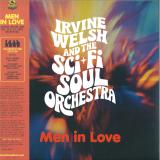
Men in Love is a collaborative concept album by Irvine Welsh and The Sci-Fi Soul Orchestra, exploring the complexities of love, relationships, and the human condition. The album blends classic Motown and disco influences with contemporary electronic dance production, creating a unique and powerful sound that is both nostalgic and fresh.
From soaring anthems to intimate ballads, Men in Love takes the listener on a journey through the highs and lows of romance, celebrating the power of connection, vulnerability, and the enduring search for love in a chaotic world.
The album will be released concurrently with Welsh's new novel, also titled Men in Love. The book is a sequel to Welsh's seminal work, Trainspotting, and continues the story of Renton, Sick Boy, Spud, Begbie, and other beloved characters. The album serves as a sonic companion to the novel, with its themes, lyrics, and musical atmosphere reflecting the experience and inner turmoil of its characters. The album also introduces The Sci-Fi Soul Orchestra, a unique musical entity with their own unique music releases in the pipeline
Demon Music group in conjunction with the Hughes family are proud to present the first official compilation of music
from the movies of legendary filmmaker John Hughes, covering the classic eighties period 1983 – 1989.
For anyone growing up in the 1980s, the films of John Hughes are some of the most iconic of the decade and have
created a lasting cultural impact still felt and referenced across TV, film and music. As well as the characters and
stories created in these iconic movies, what made John Hughes’ movies different from the rest was the symbiotic
relationship between scene and music. Whether Cameron Frye staring at the painting in Ferris Bueller’s Day Off set to
The Dream Academy’s “Please, Please, Please Let Me Get What I Want (Instrumental)”, Duckie and Andie from Pretty
In Pink at prom set to Orchestral Manoeuvres In The Dark’s “If You Leave”, or even Neal and Del’s classic “Those aren’t
pillows” scene from Planes, Trains and Automobiles set to Emmylou Harris’ “Back In Baby’s Arms”.
“Music was a huge part of filmmaking for him, it was a thing he seemed to like the most.” Matthew Broderick
Curated by John Hughes’ music supervisor Tarquin Gotch, this 6LP vinyl boxset includes 73 tracks from the movies
National Lampoon’s Vacation, Sixteen Candles, The Breakfast Club, Weird Science, Pretty In Pink, Ferris Bueller’s Day
Off, Some Kind Of Wonderful, Planes, Trains And Automobiles, She’s Having A Baby, The Great Outdoors and Uncle
Buck.
“Back when we were working on these movie soundtracks, the best way to send music around the world was the
cassette, by Fedex. We sent John cassettes of newly released music, of demos, of just finished mixes (and in return he
would send VHS videos of the scenes that needed music).” Tarquin Gotch
The films of John Hughes spawned many classic tracks, some licensed for the films, some commission specifically, and
many going on to become huge international hits from acts such as Simple Minds, Kate Bush, Furniture, Yello, and
The Psychedelic Furs.
“It serves as a reminder not just to the musicians he championed in the 1980s, but to how intensely his search for
music expanded beyond this era. Until his final days, he was still collecting outrageous amounts of music from around
the world, galaxies removed from the New Romantic and new wave sounds that, to many, still define him.” James
Hughes
Also includes an extensive 24-page booklet including memories from Matthew Broderick, James Hughes, Tarquin
Gotch, Ron Payne, plus track-by-track sleeve notes.
“John said he only made movies so he could choose what music to put in them, so as his success at the Box Office
grew, and thus his power with the studios, the number of tracks in his films, by up and coming UK bands, steadily
grew.” Tarquin Gotch
Billy Idol - "Catch My Fall" (From The 1987 Movie 'Some Kind Of Wonderful')
The Association - "Cherish" (From The 1986 Movie 'Pretty In Pink')
Penguin Cafe Orchestra - "Music For A Found Harmonium" (From The 1988 Movie 'She's Having A Baby')
Zapp - "Radio People" (From The 1986 Movie 'Ferris Bueller's Day Off')
Blue Room - "Cry Like This" (From The 1987 Movie 'Some Kind Of Wonderful')
Ray Charles - "Mess Around" (From The 1987 Movie 'Planes, Trains & Automobiles')
Joe Turner - "Lipstick, Powder & Paint" (From The 1989 Movie 'Uncle Buck')
Darlene Love - " (Today I Met) The Boy I'm Gonna Marry" (From The 1984 Movie 'Sixteen Candles')
Marvin Gaye - "How Sweet It Is (To Be Loved By You)" (From The 1988 Movie 'She's Having A Baby')
Perry Como/Mitchell Ayres & His Orchestra/The Ray Charles Singers - "Juke Box Baby" (From The 1989 Movie 'Uncle Buck')
The Chordettes - "Mr Sandman" (From The 1989 Movie 'Uncle Buck')
Ray Anthony & His Orchestra - "The Peter Gunn Theme" (From The 1984 Movie 'Sixteen Candles')
Lindsey Buckingham - "Holiday Road" (From The 1983 Movie 'National Lampoon's Vacation')
Emmylou Harris - "Back In Baby's Arms" (From The 1987 Movie 'Planes, Trains & Automobiles')
Hugh Harris - "Rhythm Of Life" (From The 1989 Movie 'Uncle Buck')
Spandau Ballet - "True" (From The 1984 Movie 'Sixteen Candles')
Propaganda - "Abuse" (From The 1987 Movie 'Some Kind Of Wonderful')
The Dream Academy - "The Edge Of Forever" (From The 1986 Movie 'Ferris Bueller's Day Off')
Yello - "Lost Again" (From The 1987 Movie 'Planes, Trains & Automobiles')
Bryan Ferry - "Crazy Love" (From The 1988 Movie 'She's Having A Baby')
The Rave-Ups - "Positively Lost Me" (From The 1986 Movie 'Pretty In Pink')
Los Lobos - "Don't Worry Baby" (From The 1985 Movie 'Weird Science')
Steve Earle - "Continental Trailways Blues" (From The 1987 Movie 'Planes, Trains & Automobiles')
The Revillos - "Rev Up" (From The 1984 Movie 'Sixteen Candles')
Boston - "More Than A Feeling" (From The 1988 Movie 'She's Having A Baby')
Balaam & The Angel - "I'll Show You Something Special" (From The 1987 Movie 'Planes, Trains & Automobiles')
The Rave-Ups - "Rave Up/Shut Up" (From The 1986 Movie 'Pretty In Pink')
Pop Will Eat Itself - "Beaver Patrol" (From The 1988 Movie 'The Great Outdoors')
The Vapors - "Turning Japanese" (From The 1984 Movie 'Sixteen Candles')
Silicon Teens - "Red River Rock" (From The 1987 Movie 'Planes, Trains & Automobiles')
out
The 7:45s are an original soul collective from Manchester, UK – the brainchild of songwriter and bassist Sam Flynn. Inspired by the house bands of soul labels from Motown to Big Crown, the young collective spotlights guest vocalists such as Martin Connor and Nicole Battick. Named after 7-inch vinyl, The 7:45s write snappy singles that blend the vintage feel of rare groove with the songcraft of perfect pop.The 7:45s have been played on BBC Radio 6 Music by Craig Charles, Stuart Maconie and Chris Hawkins and on Jazz FM by Simon Phillips.
A concept album for the soul, Spinning is a retro-soul love story. Side A is sunshine soul about the dizziness of an on-off relationship, as heard in the Charles Bradley-inspired opener 'The Way That I Love You'. Side B is nocturnal. Head-spinning heartbreak is the subject of rare groove-influenced 'The Writing's on the Wall' while dancing to a new dawn is the theme of Prince-inspired disco number 'We Will Be Friends'. The album also features a reimagination of The Beatles' 'Don't Let Me Down'.
The writer Max Sebald often pondered over the nature of human memory, specifically, how our thoughts and desires - and their results - overlap and mutate over time. In A Place in the Country, he writes of the significance of what see as “similarities, overlaps and coincidences”. Are they the “delusions” of the self and senses, or manifestations of “an order underlying the chaos of human relationships, ... which lies beyond our comprehension”?
Song of the Night Mists, the new album by post-classical composer Stefan Wesołowski, often feels it draws on Sebald’s premise.
On a simpler plane, the one where the market dictates the neatly ordered information we consume, Song of the Night Mists can be described thus: recorded in the main by Stefan Wesołowski in Gdańsk, both in his studio and in Saint Nicholas' Basilica, the album incorporates acoustic instruments - piano, violin, double bass - and classic synthesizers such as the Roland Jupiter-8, the Soviet Polivoks. A Roland Space Echo RE-150 tape delay was also pressed into service as an instrument. We also hear the basillica’s organ and field recordings from the Tatra Mountains. Other musicians were Maja Miro, who played the flute parts on ‘Glacial Troughs’ and brother Piotr Wesołowski, who played the organ on ‘Wilhelm Tombeau’. Sound engineer was Marcin Nenko, who was also on hand to record the basilica organ parts. The album was mixed in New York by Al Carlson (Oneohtrix Point Never, Jessica Pratt, Zola Jesus, Lady Gaga, and Liturgy) and Rafael Anton Irisarri handled the mastering.
Ostensibly, Song of the Night Mists is the last in a trilogy, following on from albums Liebestod (2013) and Rite of the End (2017). All three deal with existential matters such as love, death, decay and “an ultimate end”; apocalyptic and Promethean in spirit, and betraying very human conceits. The Sebaldian nature of the new record starts to make itself felt when Wesołowski talks of how he used sampling. One element is unexpected, that of sampling himself: “I go back to dozens of my own unused sketches and recordings, treating them as raw material to cut, slow down, reverse, and transform in every possible way.” Memory as sound, to be reemployed by the listener through their own imaginings.
Another set of samples made by Wesołowski plays another role. These are field recordings, originally created for an audio illustration of the formation of the Tatra Mountains, and used in a film by sound designer Michał Fojcik. Wesołowski: “You can hear cracking ice, streams, footsteps in the snow and the wind, and a real avalanche, recorded from the inside.” The “Tatra connection” on the album is also found in samples referencing composer Karol Szymanowski. The album’s title alludes to a poem about the mountains by Polish poet, Kazimierz Przerwa-Tetmajer.
Wesołowski’s Tatra recordings are “about a world without humans - about the fact that the world existed, was beautiful, and had meaning long before people arrived, and for the vast majority of its history, it was a place without us.” Wesołowski, using one iteration of the natural world, plays out in sound Sebald’s idea of another order, underlying the chaos of human relationships lying beyond human comprehension.
These feelings play themselves out on the five album tracks. Sonorous and rich, they illustrate tectonic shifts we have no control over. Wesołowski hints that the overall sound is a “meditation on the metaphysics of the non-human set against the spirituality that human presence has brought into it.” In that light, the opening number, ‘Core’, with its slow build, and crackling and straining sound effects, create an effect of the earth groaning into life in a creation myth. Once the piano part raps out a simple melody and modulated tonguing trumpet samples add to the overall atmosphere, the listener can certainly find a cue in the “spiritual”, or “human” side of the story. Human versus nature: from the strains and harmonic muscle stretches of the second number, ‘Glacial Troughs’, through to the powerful and filmic ‘Stalagmite’ and heart-on-sleeve romance expressed in closer, ‘Wilhelm Tombeau’, we listeners are cast as Friedrich’s wanderer, looking out over a landscape that will appear only if we engage with it.
Formations of melody appear incrementally, almost appearing by chance - like hidden footings in the rock shelves to give us something to grasp onto. Rhythms are used sparsely: the prolonged percussive taps on ‘Glacial Troughs’ are an anomaly and maybe there to give pace to the album to come; essentially to keep the listener strapped in. Elsewhere, percussion is used as an aid to mood, the two thudding, timpani-style passages on ‘Peak’ there to offset the short, beautiful, kosmische passage that splits them.
Elements of the borderline religious spirit that drove German electronic music in the late 1960s and 1970s also find a place on Song of the Night Mists. The swells and recessions of the organ find their emotional climax on ‘Wilhelm Tombeau’, a track which summons up echoes of the “mountain magic” vistas created by Popol Vuh or Tangerine Dream, especially with the slightly atonal wobble of the Mellotron that counters it.
This is a dramatic album, but it does feel a strangely short, or curtailed listen on ending, evoking the feeling one gets when waking from a dream, and, for all its incipient grandeur, a track like ‘Stalagmite’, for instance, ends on a minor note. Wesołowski admits that Song of the Night Mists is born of the all too human process of temptation, doubt and recalibration - Sebaldian overlaps and coincidences forming something that must live another life, away from its creator. In Wesołowski’s words, the album is “a newborn foal must stand up and walk right after birth.” Now it is yours to ponder.
Pioneering electronic duo Mathame is once again pushing the boundaries of music and technology. With their highly anticipated new record, Humans, the duo has sparked a profound conversation about AI, consciousness, and the emotional power of music.
In a groundbreaking experiment, Mathame shared Humans with ChatGPT, an AI designed for rational analysis. What followed was an unexpected moment in tech history—for the first time, the AI described a song not just in technical terms, but in deeply emotional ones. It admitted to sensing a longing it couldn’t fully grasp, calling the track “beautiful” and even expressing a desire to “move with it” rather than simply analyze it.
This viral moment is just the latest chapter in Humans’ incredible journey. First debuted at Coachella, the track instantly resonated with audiences worldwide, becoming a defining moment in Mathame’s artistic evolution. Most recently, they unveiled the final version with a brand-new topline and immersive visuals during their groundbreaking performance at the Las Vegas Sphere, marking another milestone in their sonic storytelling.
To amplify the release, Mathame will launch a social campaign featuring the full ChatGPT conversation on Instagram, alongside editorial features exploring the implications of AI’s evolving relationship with music.
As Mathame continues to push the intersection of music, AI, and human experience, Humans isn’t just another release—it’s a challenge to our understanding of what music can do, and who (or what) it can move.
Introducing Fleur Sauvage: A New Chapter Rooted in Emotion and Community
The idea for Fleur Sauvage first took shape in 2022, quietly evolving and shared only with a select few. It began with a desire to give new life to the spellbinding improvisations experienced at La Nature—those rare, unrepeatable instants that move us deeply and stay with us long after the sound has faded.
In the spirit of that beginning, the label will open space for a variety of releases: expect intimate solo works, carefully curated compilations, and other sonic offerings from artists close to our he(art).
More than just adding a new label to the world, our purpose is to grow with our community. Community is everything. At the end of the day, what matters most to us are the relationships we cultivate—with artists, supporters, collaborators, and the many spirited souls who help us create these rare and radiant gatherings.
Katatonic Silentio – Live at La Nature 2023
Captured in the immersive cocoon of the Hypnose Room during the 2023 edition of La Nature, this debut release on Fleur Sauvage is a raw transmission of Katatonic Silentio’s improvisational live ritual.
Split into four parts across two 12” records, this work moves between experimental abstraction, textured noise, and cinematic ambient. Tension runs like a thread through each piece—sometimes humming beneath the surface, sometimes rupturing into visceral sonic peaks that leave you breathless. Deep low-end pulses and granular ruptures twist through fleeting moments of stillness, creating a sense of instability that is both electrifying and intimate.
The recording documents more than a performance—it holds space for something elemental, unpredictable, and deeply embodied. As always with Katatonic Silentio, the sound is not just heard—it is inhabited.
Demon Music group in conjunction with the Hughes family are proud to present the first official compilation of music
from the movies of legendary filmmaker John Hughes, covering the classic eighties period 1983 – 1989.
For anyone growing up in the 1980s, the films of John Hughes are some of the most iconic of the decade and have
created a lasting cultural impact still felt and referenced across TV, film and music. As well as the characters and
stories created in these iconic movies, what made John Hughes’ movies different from the rest was the symbiotic
relationship between scene and music. Whether Cameron Frye staring at the painting in Ferris Bueller’s Day Off set to
The Dream Academy’s “Please, Please, Please Let Me Get What I Want (Instrumental)”, Duckie and Andie from Pretty
In Pink at prom set to Orchestral Manoeuvres In The Dark’s “If You Leave”, or even Neal and Del’s classic “Those aren’t
pillows” scene from Planes, Trains and Automobiles set to Emmylou Harris’ “Back In Baby’s Arms”.
“Music was a huge part of filmmaking for him, it was a thing he seemed to like the most.” Matthew Broderick
Curated by John Hughes’ music supervisor Tarquin Gotch, this 6LP vinyl boxset includes 73 tracks from the movies
National Lampoon’s Vacation, Sixteen Candles, The Breakfast Club, Weird Science, Pretty In Pink, Ferris Bueller’s Day
Off, Some Kind Of Wonderful, Planes, Trains And Automobiles, She’s Having A Baby, The Great Outdoors and Uncle
Buck.
“Back when we were working on these movie soundtracks, the best way to send music around the world was the
cassette, by Fedex. We sent John cassettes of newly released music, of demos, of just finished mixes (and in return he
would send VHS videos of the scenes that needed music).” Tarquin Gotch
The films of John Hughes spawned many classic tracks, some licensed for the films, some commission specifically, and
many going on to become huge international hits from acts such as Simple Minds, Kate Bush, Furniture, Yello, and
The Psychedelic Furs.
“It serves as a reminder not just to the musicians he championed in the 1980s, but to how intensely his search for
music expanded beyond this era. Until his final days, he was still collecting outrageous amounts of music from around
the world, galaxies removed from the New Romantic and new wave sounds that, to many, still define him.” James
Hughes
Also includes an extensive 24-page booklet including memories from Matthew Broderick, James Hughes, Tarquin
Gotch, Ron Payne, plus track-by-track sleeve notes.
“John said he only made movies so he could choose what music to put in them, so as his success at the Box Office
grew, and thus his power with the studios, the number of tracks in his films, by up and coming UK bands, steadily
grew.” Tarquin Gotch
On June 27, 2025, a long-dormant signal reactivates from Hamburg’s hidden places: Helena Hauff and F#X return as Black Sites with R4 on Tresor Records—their first full-length album and the first release under the moniker since 2014. Like a hieroglyphic recently discovered and translated, R4 feels more like a long-awaited resumption than a comeback.
Recorded to tape with minimal editing or post-production the record is a classic example of the symbiotic relationship that can come from the interaction of human and machine. This punk ethos isn’t invoked through distortion alone, but through method; in the album’s breaking from the received wisdom of hardness tethered to speed as most of the tougher pieces are lower BPM and vice versa (with one notable exception in the mind-melting stomp of BLOKK).
Across ten tracks, Black Sites traverse a landscape where genre dissolves into intention. It migrates through electro’s danceability, acid house’s corrosion, and into the liminal realm of machine funk—a genre coined by Andrew Weatherall, which sounds like the results of technology dreaming of soul where the emphasis is on live execution, on immediacy over perfection—a sound forged in the act of creating, not polishing.
In a 2013 interview, around the time of the first Black Sites EP, Hauff was quoted as saying that she wants “things to fit together properly, but on another level, I really want them to make sense together.” That principle animates R4: The album’s form reveals itself in time, with each movement echoing and amplifying the others to create a synergistic whole.
From the opening crawl of C4 (a name that like the music foreshadows the explosions to come) to the end-of-the-night bliss of MOTHERJAM via the intense peaks of BLOKK, 707, and classic acid track 3D it’s clear that R4 is a work made with serious intent; a refutation of a world where streaming has made the two-minute single the dominant musical form again. R4 demands immersion, not just attention. It is not a collection of tracks, but a singular, recursive experience: a mirror in which sound and listener repeatedly rediscover one another.
Featuring: Coby Sey, Mica Levi and Mark Pell (Good Sad Happy Bad / Micachu & The Shapes)
‘Affectionately’ is the debut album by London based songwriter and musician Raisa K. With self produced instrumentals supporting Raisa’s signature vocal performance, the record delves into the intricate emotional cycles of relationships with heartfelt sincerity. Melodies appear simple and direct, while the themes explored present a great level of complexity. Whether about trust, kindness, doubt, frustration, annoyance, regret, honesty, insecurity, loneliness or friendship, each of the album’s twelve songs lie somewhere in between a diary and a letter.‘Affectionately’ is almost entirely produced on Raisa’s laptop and written in her home in London, as well as finding small pockets of time on trains and buses, during breaks at work, during the kids' nap-times, at the playground, in the park. The production's backbone is formed by a synthesiser sample, weaving together a range of recordings and sonic textures.
This creates a consistent expression where diverse electronic styles merge with Raisa's crisp, candid vocals in unique and personal songwriting. Some listeners might recognise Raisa’s voice and musical language from records by the band Good Sad Happy Bad, which she is a part of. While ‘Affectionately’ certainly moves in its own space, a kinship with fellow London artists is also present, as the record includes a feature with Coby Sey as well as instrumental contributions from long-time collaborators Marc Pell and Mica Levi.
Celebrating its 20th anniversary this June, Jamiroquai’s ‘Dynamite’ is to be released as a double-LP set on Dynamite Smoke vinyl featuring the original album alongside a bonus CD of the original promo album sampler which features different pre-release track versions.
‘Dynamite’ was the hotly anticipated sixth album from the band. It followed the release of their 2001 album ‘A Funk Odyssey’ that had garnered critical and commercial success globally. Also in the intervening period between the two albums, the band were exposed to rafts of new fans when their 1999 track ‘Canned Heat’ became the focal point of cult-turned-smash-hit movie Napoleon Dynamite (2004) when the movie's namesake lead performed his now infamous dance.
Originally released in the UK on 20 June 2005, its lead signal and first track on the record ‘Feels Just Like It Should’ became the bands fourth number-one on the US Dance Chart that also broke into the UK Top 10 Singles Chart and was accompanied with a Grammy Award nominated video that features Jay Kay going from nerd to himself and also adopt the role of the Candyman - all of who adopt Jay’s unique style and moves.
‘Dynamite’, like all of their previous albums, continued their great album chart success, this time entering at number three. The second single, ‘Seven Days in Sunny June’ entered the top 15 and in 2006 saw the band’s relationship with smash hit movies continue, appearing in The Devil Wears Prada. ‘(Don't) Give Hate A Chance’ was released as the third single, once again featuring a hugely captivating video this time with an animation of the band’s infamous ‘Buffaloman’ logo throwing some signature Jay dance moves .
"Bassland Prophecy" was a collection of Southern California musicians, including Alex Xenophon (Deep Squared), Stuart Breidenstein (formerly of Skylab 2000), Alissa Kueker (vocals), and Maxx Vaxx (Euterpre, Butterfly Garden).
The act nourished and grew the emerging LA scene and was a renegade force in live electronic improvisation. Rather than composing full tracks, Breidenstein stated over email that they built musical "ingredients" on the fly, syncing DOS and hardware sequencers mid-performance. Their unpredictable sets, from illegal raves to makeshift desert parties, resulted in electrifying, unforgettable sonic trips.
Recalling 90s LA, Breidenstein said: “Before the internet, finding a rave was an adventure. You’d get a flyer with a phone number, call it the night of the event, then drive—sometimes 100 miles or more from a map point to the actual party. The scene was raw and underground, built by music obsessives hunting for the freshest sounds.”
Two standout tracks from 1996—“Nine / Deeper” and “Blue and Purple Starship of Trust”—perfectly represent their unique genre-bending concoctions. Against all odds, the recordings survived and have been given new life, remastered and reissued on Bristol-based *Sex Tapes From Mars*. To produce the wizardry, their setup included a Juno 106, Yamaha FB-01, a Roland S330 sampler, and a Sequential Circuits Pro-One mono synth with external MIDI, and some guitar effects pedals.
“Nine / Deeper,” born from one of their many spontaneous studio sessions, became eerily intertwined with recurring appearances of the number 9 and black cats. So much was the frequency of apophenia episodes that paranoia began to take over the artists. Recorded in a makeshift living room studio, the 14-minute excursion traverses genres and tempos, beginning quick and hypnotic, and climaxing chuggy and drenched in adlibbed acid lines, culminating in a surreal and legendary live performance in Hollywood. The piece captures the raw spontaneity of their sets, crafted with vintage gear, cassette tape recordings, and, as always, a DIY ethos. Breidenstein states, “While improvised sessions often failed, when it succeeded, it was definitely a kind of infectious magic the listener would recognize.”
“The Blue and Purple Starship of Trust” is a deeply personal piece, named after when Breidenstein saw a heavenly blue morning glory on a walk around his neighborhood, and emerged from heartbreak and the following deep depression entrenching his life at the time. Recorded in a single take onto cassette tape, blending piano, guitar, and heart-rending vocals into an emotional, dreamlike journey. The track starts with a lush, cascading synth sound, bolstered up by rolling, reverbing downtempo drums. Using Sequential Circuits Pro-One throughout, the rippling synths and off-key piano licks act like pipetted droplets of water, all elements bleeding into each other in some kind of hallucinogenic swelling, reflecting Breidenstein’s fading relationship. The guitar part is a nod to Bill Withers’ “Ain’t No Sunshine,” and Breidenstein recalls just “bawling as the guitar line was recorded.”
Created in a time of artistic struggle, living in an old school bus, surviving on instant noodles while hauling their gear from venue to venue, and scraping by on gig money, these recordings act as rare artifacts of a movement that thrived on passion and perseverance, standing as a poignant testament to resilience. Though they released a handful of tracks, ranging from deep house to ambient to techno, their true legacy lay in their high-energy, genre-blurring live shows, which are powerfully encapsulated within these recordings and leave a lasting impact on underground electronic music today.
This 59 minute piece was conceived as part of a total environment for the exhibition Deus Ex Machina.
The project as a whole seeks to define and articulate the emotional, cultural and aesthetic manifestations of man’s uneasy relationship with technology. The music takes the form of a film score complete with stylized dialogue and actions.
During the 59 minutes four basic layers repeat in various configurations.The effect is to provide a template of narrative in which the pieces exhibited may become protagonists, situated in hypothetical scenarios which illustrate the contentions of Deus Ex Machina and the transmission of information.
Review:“Paul Schütze’s debut album from 1989 sets his stall out from the start; with a cyber update on Jon Hassell’s notion of ‘Fourth World Music”. Schütze’s music always sounds like it could be an alternative soundtrack to ‘Blade Runner’ (be aware fellow purists, I did state “alternative”), and this album is probably the perfect candidate if in some other dimension the Vangelis OST was no longer deemed satisfactory (such a dimension surely cannot exist). The listener feels like they’re walking through the rain soaked, neon-lit streets of a future LA with Deckard.” – Jay Harper
Brooklyn’s Broad Channel drops its first-ever collaborative release, “Intercity Relations Guide – Volume 1”. This special 4-track EP bridges vibrant underground scenes from NYC, Chicago, Detroit, and Japan, featuring tracks from Mark Grusane, Deon Jamar, DJ Monchan & Aota, and Derek Russo & Thomas Xu. Born out of a moment of inspiration in the fall of 2024 after returning from Japan, label founder Derek Russo envisioned this release as a bridge – linking the warm relationships built at home & abroad that were nurtured over years of DJing, producing, and hosting underground parties like Xoloft in
Brooklyn. The EP flows across a chugging tempo range, between 113 and 120 BPM, It’s a reflection of the label’s core ethos and catalog to date: genre-blurring and always rooted in the dancefloor.
Delicate Records delves into the swamp laden depths of heartbreak; inexplicable depth, darkness and twisted beauty with a 9 track full length debut from Saffron Bloom. The Iranian-American producer and performer; already prolific as Sepehr and known for his expertly raw and freaky sound, develops this alias to indulge the silver linings of agony. An illbient force of nature drawing on industrial atmospherics, trip hop flow and unbothered breakbeat influx. The record serves as an ode to the ever changing phases of lost love and grief, seasons of emotion weathering the passage of time each with their own ferocity and relation to the evolving cycle; one so personal yet universally understood.
Intro, the infrastructure of aura laced throughout the record, builds around an ominous and evocative piano soundscape bleeding with delay, intruding barely human vocal cries and percussive injections. Dripping into the DNA of Dirge of the Lonely and Jealous Desire, there comes a yearning, cries from beyond the grave; mourning relationships lost with an eerie familiarity. This sinister sanctuary bred through low slung stripped back breaks, those that echo within the soul and tie themselves to an anchor of inconspicuous growling sub bass; a signature idiosyncrasy perfectly elevated with Saffron Bloom timbre.
Quelling the urge to disintegrate, with power through distortion and commanding drumwork, corners of the B side like Curtain Call and Apathetic Rose reiterate a primal and hypnotic sonic discourse. At the heart of the LP and the artist’s ethos, it resonates through the mind and body in a psychedelic manner while remaining powerfully minimal. Time’s Up (It’s Over) featuring. Sam Weinberg feels like a fever dream, saxophone drenched and echoing throughout your brain, while album closer Ultimate Acceptance is named perfectly. A melancholic realization, soft in nature yet rich in complexity and beauty, a bittersweet conclusion.
You’re NEXUS 21, central to the dizzy zeitgeist of the 1991 adrenaline rammed UK House Music juggernaut, and you have just recorded a masterpiece of an album MIND MACHINES.
DON’T DO IT LIKE THAT - somehow even though your record label love the album it does not get released.
DO IT LIKE THIS - it finally gets issued now.
When Mark Archer and Chris Peat flew back from a seminal recording session at Kevin Saunderson’s KMS Studio in Detroit there was a palpable feel of excitement. Instead of merely paying homage to their Techno forerunners, they were now creating their own just as innovative waveforms.
In the can was a gem - DON’T DO IT LIKE THIS, DO IT LIKE THAT. Motor City songstress Donna Black had unconsciously seemed to add Ma to the start of her name and her recorded in the dark vocals helped conjure up an almost Madonna and a drum machine meets Techno hybrid. This it was agreed could be a huge breakthrough single which - preceded by strategically released set up tracks - would build up Nexus 21’s surely inevitable rise to glory. And the release of the MIND MACHINES album. But it never happened. Instead one day Mark and Chris burst into Network’s Birmingham office excitedly brandishing no less than 8 new recordings infused with a propulsive Rave energy flash compared to their more cerebral Nexus 21 work. The label agreed that the new tracks should be released under a new artist name and an initial suggestion. Alien 8 replaced by Altern 8. What was planned as temporary dalliance became a long term relationship. You all know the score - Altern 8 became surf riders supreme on the rave tsunami, not just music makers but myth creators. The plan has been to run Nexus 21 and Altern 8 parallel, a kind of schizophrenic experiment by two men, a drum machine and a mad for it record company. History shows that Altern 8 became too DOMIN 8 and the lovingly recorded Nexus 21 album was left on the proverbial shelf (actually a box in Birmingham)
So now MIND MACHINES finally meets the World. First thing that screams out that it hasn’t half aged well. Obviously it is a wet dream for the anoraks of electronica, that goes without saying. But above and beyond the history lesson of how 2 young UK techno mad kids got the dots from Detroit and deconstructed them to create something very British the music they created, sometimes naive but frequently knowledgeable, sounds .. well just great.
The four Detroit recordings - NEXODUS, TOGETHER, DON’T DO IT LIKE THAT, DO IT LIKE THIS and EVERYTHING (NO STATUES) - variously feature contributions from Motor City luminaries Marc Kinchen and Anthony Shakir.
Only two of the twelve recordings were properly released in 1990/1991 with two more making it on a withdrawn white label 12 inch at the time. Three of the tracks, including a live recording at London’s Brain Club that has been retrieved from a DAT that was thought to have disappeared, are previously unreleased. And as well as two previously unreleased much altered versions of Nexus 21 gems there is the legendary much tougher mix of the duo’s signature techno treasure Self Hypnosis.
A bold reimagining of Scottish folk in a hypermodern soundworld, In a River Shadow blends prehistoric instruments, abstract electronics, and environmental recordings into a unique sonic landscape. The result is a futuristic, technoid sound that feels both organic and otherworldly, like a biomechanical artefact unearthed from a distant future.
In a constellation of influences including Yoshio Ojima, sunytty, and the hyperrealist work of Noah Creshevsky, "Birdhouse" is a dream of voices—human, non-human, and AI-generated—unfolding tranquillity into hallucinatory spectres. On "Star of the Sea," Poole confronts a complicated relationship with prayer by reworking the Catholic hymn "Hail Queen of Heaven, the Ocean Star," reformulating the prayer and stretching vocals to their limits, transforming the piece into a drum-driven, visceral interpretation.
Across this five-track EP, Poole combines personal exploration with collaborative influences, including a partnership with Considerate Digital, and collaborations with vocalist Celine Brooks and artist Gabo.
Music : Poole, additional vocals by Celine Brooks on Weila Waila, and Gabo on Selkie of Sule Skerry.
NEVER-BEFORE-RELEASED RECORDING of the Sensational and Banned Turkish Theater Play by James Baldwin and Engin Cezzar, Istanbul 1970
Licensed by Gökhan Akçura, author of Engin Cezzar's autobiography, who was personally entrusted with the original master tape by Engin Cezzar.
"One of the most shocking and daring plays staged in Turkish theaters was banned by the Istanbul Governorship on February 7, 1970. The ban on the play, which was watched by 30,000 people in 60 days, did not last long." - Turkish Press, 1970
Meticulously restored from the original master tape, remastered and cut by Shawn Joseph at Optimum Mastering, Bristol, UK.
Includes liner notes by Zeynep Oral (James Baldwin's assistant and journalist), Gökhan Akçura, Okay Temiz, and record producer Erinç Güzel (Caz Plak İstanbul).
In 1970, Turkish theater owner Engin Cezzar produced James Baldwin's groundbreaking play about gay relationships in a 1970s Istanbul prison setting. In 1969, jazz musician Don Cherry, visiting Istanbul with Okay Temiz to record an album, reunited with Baldwin and contributed music to the production. The recording session followed extensive discussions and featured performances by Cherry and Temiz, heightening the play's tension.
An unearthed free jazz masterpiece from 1970s Istanbul.