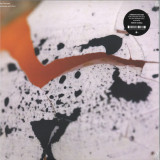
300 transparent green vinyl 12” albums / 400 black vinyl 12”. In their relatively brief lifetime, between 1996 and 2002, Hefner enjoyed an incredibly productive four-album, multi-EP career. Their beautiful, concise, intelligent songs earned a fiercely loyal, cult audience and the long-term support of legendary DJ John Peel, for whom they recorded innumerable sessions. Originally released in 2001, their final album, Dead Media, found Hefner reaching out and taking risks. Keen to break free of their indie-folk roots, they cocooned themselves in a home studio with broken analogue synthesizers, antique drum machines and battery-powered amplifiers. The band’s naivety and guile produced some curiously engaging music, with frontman Darren Hayman’s precise, economic, poetic dissections of quotidian romance draped over awkward, fuzzy beats: something like Cat Stevens covering Warm Leatherette. Dead Media caused confusion at the time and ultimately lead to the band’s break up. However, the songs like ‘Junk’, ‘The Night’s Are Long’ and ‘When The Angels Play Their Drum Machines’ are among Hayman’s most adult and affecting essays and stand out among the finest of Hefner’s achievements. Tracks: 1 Dead Media 2 Trouble Kid 3 Junk 4 When The Angels Play Their Drum Machines 5 Union Chapel Day 6 China Crisis 7 Alan Bean 8 Peppermint Taste 9 The Mangle 10 The King Of Summer 11 The Nights Are Long 12 Treacle 13 Half A Life 14 Waking Up To You 15 Home
Suche:relative
300 transparent green vinyl 12” albums / 400 black vinyl 12”. In their relatively brief lifetime, between 1996 and 2002, Hefner enjoyed an incredibly productive four-album, multi-EP career. Their beautiful, concise, intelligent songs earned a fiercely loyal, cult audience and the long-term support of legendary DJ John Peel, for whom they recorded innumerable sessions. Originally released in 2001, their final album, Dead Media, found Hefner reaching out and taking risks. Keen to break free of their indie-folk roots, they cocooned themselves in a home studio with broken analogue synthesizers, antique drum machines and battery-powered amplifiers. The band’s naivety and guile produced some curiously engaging music, with frontman Darren Hayman’s precise, economic, poetic dissections of quotidian romance draped over awkward, fuzzy beats: something like Cat Stevens covering Warm Leatherette. Dead Media caused confusion at the time and ultimately lead to the band’s break up. However, the songs like ‘Junk’, ‘The Night’s Are Long’ and ‘When The Angels Play Their Drum Machines’ are among Hayman’s most adult and affecting essays and stand out among the finest of Hefner’s achievements. Tracks: 1 Dead Media 2 Trouble Kid 3 Junk 4 When The Angels Play Their Drum Machines 5 Union Chapel Day 6 China Crisis 7 Alan Bean 8 Peppermint Taste 9 The Mangle 10 The King Of Summer 11 The Nights Are Long 12 Treacle 13 Half A Life 14 Waking Up To You 15 Home
- A1: You Were My Star
- A2: Death Wish
- A3: Get High, Breathe Underwater (#3)
- A4: Unwanted Houseguest
- A5: Groceries
- A6: I Will Always Be In Love With You (Final)
- A7: New Strategies For Telemarketing Through Precognitive Dreams
- A8: Violence Violence
- A9: Coyote (2015-2021)
- B1: Every Time I Hear Your Name Called
- B2: You Cant Blame Me
- B3: It Was Probably Nothing But For A Moment There I Lost All Sense Of Feeling
- B4: All Of Us Steady Dying
- B5: Complaining In Dreams
- B6: How To Disappear In America Without A Trace
- B7: Another Life (Bootleg)
Citrus Swirl Vinyl[22,27 €]
honeybee table at the butterfly feast is the first album from the elusive Baltimore’s band Teen Suicide in years. For over a decade, guitarist, vocalist and project runner Sam Ray has been sometimes quietly and sometimes very noisily setting standards in the indie scene by changing genres, live lineups and even band names, but the one constant has been an undeniable gift for songwriting.
honeybee table sits at an interesting point in the teen suicide timeline, following years of relative quiet following the releases a whole fucking lifetime of this (2018) and fucking bliss (2019), both released under the short-lived alias American Pleasure Club. Lockdown times saw a viral moment for the song “haunt me (x3)”, a cult-classic catalog track featured on the 2015 Run For Cover reissue
One of the most rare and sought after soul lp’s from the mid 1970s, Love Is a Very Special Thing by Charles Williams receives a lush reissue from Svart Records. Originally released in Finland only, American singer and songwriter Charles Williams has remained in obscurity ever since, only known to die hard soul record collecting enthusiasts. Williams’ Love Is a Very Special Thing is an epic concept album that has only been reissued in Japan some years ago in a limited edition run and is still a hard to find, highly prized collectors item. Brilliantly crafted black funk and soul from the disco era, Williams was a highly talented soul singer and musician influenced by a wide range of styles, from soul stars Marvin Gaye, Barry White and Isaac Hayes to folk rock band Crosby, Stills & Nash. Williams’ soul music is neither easy listening nor disco, but brings to mind the best of the creative 1960s Motown artists and singer-songwriters like Joni Mitchell and Judy Collins. Love Is a Very Special Thing began raising interest among soul collectors in the 1990s, when the internet brought record collecting into a new era. Williams’ name was discovered outside Finland and the prices soon went up. It’s no wonder: Love Is a Very Special Thing is as good as the best US soul albums of the era, but soul fanatics outside Finland didn’t have a clue about it, because it was released in Finland only, and as a relatively small pressing too. This new luxury edition by Svart Records is the LP plus a replica of the rare 7” Just As Long / Funky Music (1976) that has never been reissued until now. The CD has the single as bonus tracks. Get yourself acquainted with a rare piece of Finnish funk and soul history, and discover an artist whose music deserves to shine again.
When talking aout Ska Music one group of musicians whose name always comes to the forefront of the conversation are The Skatalites.
Formed around 1965 and named originally after the Soviet space satellite which was big news at the time.
With a little help from band member Tommy Mc Cook making a play on the characteristic 'Ska'sound made by the guitar when following the 'after beat' of the music.
The band would have a name to go with its distinctive musical style.
The time span of The Skatalites career considering their output of hundreds of tunes was a relatively short one of around two years.
We have caught a great set of tunes that the band cut at the legendary Treasure Isle Studios, built out of wood and positioned above Duke Reid's liquor store, it somehow worked in getting a great sound out of the band.
We have cherry picked a selection for your musical pleasure..
We hope you enjoy the set....
For their Drag City debut, the enigmatic duo expand into eight-armed wonder; all the better to reach ever-deeper into their bag o' tricks. Slinky and sliding elegantly, the kids forge tunes with a harmony of ambiguity and nostalgia, effortless yet precise, and rounded with thick bottom - a dancing clash of cognition and dissonance! Since 2015, Kamikaze Palm Tree have been a relative mystery. Now, in times no less mysterious, Drag City welcomes them, celebrating the energy of their second LP, where KPT play their offbeat strain of 21st century rock. Making MINT CHIP, Dylan Hadley and Cole Berliner reach deeper into their bag of tricks than ever before, dialoguing with an absurd shared intent they haven't yet paused to question. The off-center pieces gathered together for Good Boy have given way to pulsing aquatic compositions on MINT CHIP. Cole's guitar tones, wire thin, bell-like, bluesily downtuned, slinky and sliding elegantly, arc purposeful around their peripherals. Dylan's kit work, effortless yet precise, grounded with heavy bottom, drives and interacts organically with all the emerging structure, nailing down finely detailed frames and canvases to backdrop her singing and the unremitting landing of melodies and songs. With the addition of Josh Puklavetz, things that didn't make sense before - like bass - are now on the beach, fully lotioned, essence to essence. Violin and clarinet (Laena Myers Ionita and Brad Caulkins, respectively) round out the tonal spectrum. All strung together in the foothills of Altadena's Wiggle World Studios with Hartling back in the engineer's seat and Tim Presley producing the proceedings!
Of the many great talents of the classic Nigerian highlife scene, none contained the existential depth, transcendence and grace of Celestine Ukwu. During his brief time in this world, he pursued education, music, and philosophy; first as a school teacher, then ultimately a singer, lyricist and musician, first as a member of Gentleman Mike Ejeagha's Premier Dance Band, and eventually fronting his own groups, The Music Royals and The Philosophers National. Beginning in the early 1970s, The Philosophers National established a radical shift in the possibilities of Nigerian highlife by moving away from the typical mid-century style and cutting a new path with a distinctly hypnotic and cerebral atmosphere. This sense of depth was apparent in the lilting, multi-layered and pulsing music of The Philosophers National, as well as the concise and clear-eyed lyrics sung so beautifully by Celestine Ukwu. The arrangements establish a living, breathing environment for each song; muted trumpet solos, hypnotic guitar runs, driving percussion; every instrument gracefully following a tide of patience, tranquility, wonder, climax, knowing and unknowing. "Celestine ditched the jaunty dance rhythms and relatively facile lyrics typical of the reigning highlife tunes, and ignoring the soul music tropes most of the highlife bandleaders were appropriating in an effort to inject new life to their ailing format. Instead Celestine concocted a new highlife style that was more contemplative and lumbering; with the layering of Afro-Cuban ostinato basslines and repetitive rhythm patterns that interlocked to create an effect that was hypnotic, virtually transcendental. Meanwhile, Celestine himself sang as he stood coolly onstage in a black turtleneck and a sportscoat, looking like a university professor. The message was clear: this was not necessarily music for dancing_even though the rhythms were compelling enough. This was music for the thinkers." - Uchenna Ikonne This LP compiles some of Celestine Ukwu's deepest and most affecting songs from the 1970s, which have been gorgeously restored and remastered by Tim Stollenwerk to highlight the brilliant details of Celestine and the entire Philosopher's National. Pressed on 160 gram black vinyl at Smashed Plastic in Chicago, and comes in heavy 3 spot-color jacket, with fold-over insert with bilingual lyrics and notes by Uchenna Ikonne (Comb & Razor Sound).
Repress
In 1974 Mazzotti recorded her first album Ninguem Vai Me Segurar (1974), enlisting the in-demand arrangement talents of Azymuth’s original keyboard maestro Jose Roberto Bertrami who co-wrote several of the tracks and plays organ, piano and synthesizers on the album. It also features Azymuth’s bassist Alex Malheiros and percussionist Ariovaldo Contestini, with Romildo Santos who produced the album on drums. Recorded in Estudio Haway around the same time Azymuth recorded their debut album there, it’s no wonder the samba jazz-funk pioneer’s distinctive aesthetic is present throughout, and Mazzotti’s sensational compositions are made even more beautiful for it.
An artist as imaginative and unique as Ana Mazzotti doesn’t come around often. Dubbed a “super-musician” by fellow Brazilian virtuoso Hermeto Pascoal, Mazzotti’s short but rich musical career culminated in just two studio albums: Ninguem Vai Me Segurar (1974), and Ana Mazzotti (1977). Outside circles of Brazilian funk aficionados, these two gems of spellbinding samba-jazz, lysergic funk and trippy bossa have remained relatively obscure. This was partly as a result of Mazzotti’s premature death (she lost her battle with cancer in her mid-thirties), but also due to financial restraints and the prejudice she faced as a female songwriter in a fundamentally sexist society.
Born in Caixas, in Brazil’s Rio Grande do Sul municipality, Mazzotti began to play the accordion aged five, before moving with prodigious ease onto the piano. By the age of twelve she was already conducting her convent school’s choir, and at twenty-one she led her city’s premier chorus, the Coral Bento Goncalves. When rock and roll hit South America in the sixties, a young Mazzotti was one of the early adopters, fronting various guitar groups including an all-female Beatles cover band, and an eclectic, eight-piece psychedelic group Desenvolvemento. Before moving to Sao Paulo to start her career proper, Mazzotti met drummer, producer and fellow music educator Romido Santos, who she would later marry. Romildo introduced Mazzotti to jazz, and music by the likes of Chick Corea and Hermeto Pascoal who she would later befriend and perform with.
In 1977, Mazzotti took her debut album back to the studio, releasing the album with a new running order and new ethereal cover art, ostensibly another crack at commercial success following the small scale of the independently funded first release. With intimately re-recorded vocals, and the bonus of gorgeous horn arrangements and a new track: the carnivalesque ‘Eta, Samba Bom’, replacing Roberta Flack’s hit ‘Feel Like Making Love’, Ana Mazzotti (1977) delivers Mazzotti’s refreshingly cool musical style even more effortlessly, while retaining the all magical energy of her debut.
Far Out Recordings is proud to present the official reissue of this cult favourite Brazilian treasure. Remastered and pressed to 180g vinyl Ana Mazzotti (1977) will be available on vinyl LP, CD and digitally from 13th September.
In association with DJ Amir’s 180 Proof Records, BBE Music continues its exploration of rare gems from the Strata Records catalogue, with previously unreleased Sam Sanders album ‘Mirror Mirror’. A collector’s dream come true, this is musical treasure is so rare that the recordings on this album have never before seen a proper release and even the cover art had to be created from scratch. An almost unbelievable fact, given that it ranks as one of the strongest releases in the already air-tight era of Strata’s Detroit. Although he’s been compared to John Coltrane, Ornette Coleman and Joe Henderson, saxophonist Sam Sanders stands out as one of the most unique phenomena to come from the Motor City. Sanders’ approach to life was so 'out there' that one might say his relative obscurity was a personal choice. Sanders caught glimpses of fame early on performing with several internationally known acts and subsequently, he also learned a bit about what the Record Industry’s primary goals were. Realizing that he did not share them, Sanders chose instead to walk his own path. This drive for artistic freedom turned out to be a double-edged sword: while it allowed Sanders to produce some of the most electric jazz, funk, and soul to come from Detroit, it also meant that most of his recordings were never widely released, if they were released at all. Drawing on his experience with Motown acts like Stevie Wonder and Smokey Robinson, Sanders incorporated a fresh soul sound into recordings that would have otherwise been categorised as jazz. As such, 'Mirror Mirror' moves seamlessly between spirit and style: The album starts on the street with “Inner City Player,” a superfly breakdown of a Detroit hustler’s life, before moving into distinctly abstract territory with the melancholy “Face At My Window.” The experience is held together by a no-nonsense rhythm section featuring the aggressive drumming of Jimmy Allen and the intensely focused bass playing of Ed Pickens. Perhaps the most straightforward jazz song on the album, “Lover’s Gain” showcases Sanders at his freewheelin’ best. And if there was to be any doubt that 'Mirror Mirror' can get funky as hell, look no further than the wah-wah guitar and early synth sounds of “Funk’ed Up,” easily the greasiest cut on the album. 'Mirror Mirror' is remastered from the original reel to reel master tapes.
“Follow Your Heart is all about resilience, connection and joy. How we reunite with our souls, our power, our love’s and our heart as we go through the greatest challenges our world has seen. I wanted to make a record that was uplifting and vulnerable. These songs have all been written during the pandemic, a time in which I lost my father to Covid, lost my job (as a touring musician), and leaned on my wife, family and friends and found a closeness with them that I never knew before. I laughed louder, played harder, cried deeper and danced with more freedom than I’ve ever felt during this crazy time - this music reflects it all. While I will never be grateful to the pandemic that has taken many friends and relatives from my life, I am deeply indebted for the time it has given me to reflect, re-connect with my calling and re-envision the musical soundscape of my life’s journey and find the light in a way that’s brighter than ever!!!” -- Michael Franti
- 01: Cold Water
- 02: Opium Fogs
- 03: Docker Blues
- 04: Submerged
- 05: Haunted Cassette Spools From &Apos;92 Jungle Tape Packs Washed Up On Bermondsey Beach Waste Away And Dissolve Into The Thames Like Nightmares
- 06: Mysterious Rural Experiences Leak Into The Town And Colour His Perception Of It
- 07: The Relatively Poor Quality Of London's Water
- 08: Sliding Into The Thames
- 09: Drink The City
- 10: Subterranean Southwark
- 11: This Is Where C Wilson Wrote Ritual In The Dark
- 12: Have You Been To The English Deer Park?
'For the born Londoner the country ever remains an incredible mystery. He knows that it is there – somewhere – but he has no true vision of it. In spite of himself he Londonises it, suburbanises it; he sticks a gas lamp or two in the lanes, dots some largish villas of red brick beside them, and extends the District or the Metropolitan to within easy distance of the dark wood.' – Arthur Machen, Far Off Things
A Ride is the new dark alt-country concept album on the road by Phill Reynolds, to be released on June 17th, 2022 by Bronson Recordings; Like all the best concept albums, A Ride takes you on a journey. This one concerns the last three days of an American runaway’s life. Part road-trip, part engrossing mystery, part search for redemption, it’s the fictional tale of a troubled man whose past comes back to haunt him. Via eleven intimate, chronologically-sequenced songs, we travel with him. There are epiphanies and dream sequences, drunken dive-bar nights and chats with Jesus and Lucifer. As the narrator battles with his dark side, it is ultimately we, the listeners, who must weigh-up and flesh-out his story. According to its creator Phill Reynolds, AKA Italian alt-country singer-songwriter Silva Martino Cantele, the key to The Ride’s mystery might lie within its fifth song, A Clockwork Dream. “That’s where we discover that, because of some kind of courtroom trial, the narrator has lost someone who was very important to him”, Reynolds explains. “But we never find out her name or her relationship to the main character. Is she a blood relative? Is she his wife or someone else?”. The origins of A Ride go back to 2015. On tour in the US, Reynolds took in the shifting landscapes, the people he met and their stories. All of this fed into the album he recorded at the all-analogue TUP Studio in Brescia, near Milan. Reynolds played almost all of the instruments himself and co-produced A Ride with long-term collaborator Bruno Barcella. If A Clockwork Dream features a full band arrangement – “I think of it as the kind of thing Neil Young & Crazy Horse might do on a Sunday morning”, says Reynolds – other songs are sparer, more intimate. Banjo, Fender Rhodes, harmonica and glistening slide guitar all feature as Reynolds delivers haunting confessionals such as Run, Run Away and The Fault Is Mine, songs likely to appeal to fans of artists such as Damien Jurado, Strand Of Oaks or For Emma, Forever Ago-era Bon Iver. Intricate, rapid-fire fingerpicking on the first single This Isn’t Me and The Call of The Dark demonstrates Reynolds’ dexterity, while his voice is a rich, fully-lived in instrument seasoned with the salt of experience,and strengthened by the 120 or so gigs a year he used to do before COVID took his one-man show off the road. Long an inhabitant of picturesque Italian towns in the Vicenza province, Phill Reynolds was born in Marostica and currently lives in Zugliano. He was only five when The Beach Boys’ Barbara Ann worked its magic upon him via the radio. Later a fan of ‘90s Californian punk bands, Reynolds was writing and performing in his own post-hardcore bands by 13, but didn’t make it to the nearest big city, Milan, until he was 19. Bands still matter deeply to him. But his love for folk music has deepened over the last decade or so, hence his solo act alter-ego. Where did the name Phill Reynolds come from? “Everybody asks me this,” he smiles. “Especially in the UK. The truth is I needed an alternative name for a gig I was doing, and at the time I was in love with the music of Phil Ochs and Malvina Reynolds. Malvina Ochs didn’t sound too good to me, so I became Phill Reynolds, and I like that, because it sounds like a normal person”. The esteemed Italian label Bronson Recordings will release his fourth solo album A Ride on June 17th, 2022, on CD, vinyl and digital. A Ride is the most ambitious and fully-realised Phill Reynolds album to date. He was assisted by Stefano Pilia (lead guitar on Dive Bar Oblivion), IOSONOUNCANE (backing vocals, synth, bass and field recordings on World On Fire), and C+C=Maxigross (bass, drums and backing vocals on In The Dark). The record’s story is a dark one, but not one without hope. “Every end is a new beginning”, says Reynolds. “One of the main themes here is that life can be a sort of trap unless you recognise your own demons and try to deal with him. So we must be prepared and try to live well”.
In November 2020, in the midst of a global pandemic and driven by the desire to embark on an inner journey, Mario G. Quelart (Lucient) chose this peculiar enclave as a source of inspiration and focal point for his debut album 'Sa Casa des Carbó'. For ten days Lucient self isolated by choice and undertook an introspective journey to find himself. It was a voyage through uncertainty and fear, with moments of tranquillity; a personal pilgrimage traveling through light and the shadows, in which time became a relative element. Sa Casa des Carbó' is a sound journal of this experience, an album with an ambient base, but which opens the door to experimentation, rhythm and psychedelia. Field recordings - the sea, the birds, the wind, and a strangely silent airport - are fundamental parts of this journey and serve as a canvas for an album of cosmic electronica with Balearic overtones.
Limited to 500 copies worldwide.
Heavy as f-ck and deep as hell, this devastating split album gleefully corrupts and corrodes Dub’s sunshine reflections. Celebrating rhythm & noise in its dank echo chamber, these demolition dub tracks are built from obsessive studies in distortion, overdrive and seriously ruff textures, amongst an absolutely insane amount of sub-bass level.
‘Disintegration Dubs’ is a three way low end collision, between G36 (The Bug aka Kevin Martin/Gorgonn’s rig torturing beat project) and JK Flesh (Justin Broadrick of Godflesh/Jesu etc…). As the album title suggests, this instrumental pile up of floor crawling, sound system crushers, is a clearer sign than ever, that these three producers crave their dub cuts to be mutant and heavyweight, totally damaged and completely atomised. Dub as sonic obliteration
Anyone previously smitten by Techno Animal’s deeply psychedelic face off with Porter Ricks, on the long out of print ’Symbiotics’, or who worshipped Zonal’s recent rhythmic wreckage via Relapse records, will surely gorge greedily on Disintegration Dubs’. Likewise, newbies, who have snapped up this year’s ‘Fire’ by The Bug or ‘New flesh in dub’ by Godflesh, will find endless pleasure within these dread-tech, annihilated dubs and Industrial strength steppas rhythms. Echoes of Basic Channel, early Iration Steppas, Public Image Limited or even Andy Stott can be heard within this collection’s haunted atmospherics and bulldozing rumble. Yet, these three individual producers have obviously found their own recognisably original sound, within these monolithic grooves, and what makes this album so utterly refreshing, is just how well the three disparate sound manipulators complement each other fully, as they collectively set their sights on some shared, relentlessly futuristic sci-fi vision, for a new form of dub.
Obviously, Martin as The Bug, and Broadrick with his colossal dubs of Godflesh and his filthy back catalogue of JK Flesh releases, have both long since subscribed to the genre, aesthetic and fragmentation of Dub. Meanwhile relative newcomer, Gorgonn, is The Bug’s long time, live soundman, and former bandmate with DJ Scotch Egg in Devil Man, as well as having formed Dokkebi Q with Kiki Hitomi (ex-King Midas Sound), so he is no stranger to the art of deviant dubs either…
G36 dropped their appropriately titled debut EP ’Floor Weapons’, in 2018, on PRESSURE, as well as providing the backing riddim for the first ever release from Jamaican MC phenomena Nazamba, with his startling debut, ’Vexed’. Alternately, Justin has previously released seven albums solo, as JK Flesh, that systematically contorted, distorted and completely bastardised techno for labels such as Hospital Productions, Downwards and Speedy J’s Electric Deluxe… (Next year will also see a full JK Flesh album on PRESSURE too…!)
This album is Mastered by Stefan Betke aka POLE, at Scape Mastering.
Since forming on O'ahu, Hawai'i, in 2009, The Green has become one of
the most successful and beloved bands in the reggae genre
During their relatively short career, the band has been awarded a "Best Reggae
Album" nod from iTunes (2010, for their self-titled debut), four coveted Na Hoku
Hanohano awards in their native Hawai'i (2014, including Group of the Year, two
time Reggae Album of the Year and Entertainer of the Year), and two #1 Billboard
Reggae chart debuts, along with charting on the Billboard Top 200. Not bad for a
band that was formed by six members of Hawai'i's tight- knit music scene to
record a few songs and have some fun. The Green was one of the first Hawaiian
reggae bands to tour extensively on the mainland, as well as going further afield
to New Zealand, Japan, and other locales. Before becoming a headliner on their
own, the band supported bands like Bruno Mars, Rebelution, Iration, Soja, and
Damian Marley. The Green's fourth studio album, 'Marching Orders' continues the
group's steady march to the top ranks of their genre and beyond, with early
reviews already calling it "innovative" and "imaginative."
LP[11,98 €]
‘Raise Hell’, the third album from London DIY punks Fresh out 1st July on Specialist Subject Records. Fresh have been an unwavering fixture within the UK punk scene since their first record in 2017. A joy to behold live, Woods honed her craft not only fronting Fresh but as a member of several heralded indie and punk bands, including cheerbleederz and ME REX alongside Fresh bandmate Myles McCabe. Their new album radiates with their signature mischievous British charm and flourishes of brilliant pop punk flair – though underestimate Fresh at your peril. ‘Raise Hell’ dares to dive deeper than most, delivering Woods’ darker moments and contemplative thought processes through the sharply focussed lens of upbeat indie punk. Since their inception the band have been working tirelessly recording and touring. They released their last EP 'The Summer I Got Good at Guitar' in Spring 2021, to praise from Upset, Stereogum, Brooklyn Vegan, BBC6 Music, Radio X and have toured with the likes of Jeff Rosenstock, The Beths, PUP, Adult Mom. For a band that have existed for a relatively short period of time, the four-piece have already released a hefty catalogue of work – prolific, ever evolving and always fresh (in every sense of the word).
LP[23,32 €]
‘Raise Hell’, the third album from London DIY punks Fresh out 1st July on Specialist Subject Records. Fresh have been an unwavering fixture within the UK punk scene since their first record in 2017. A joy to behold live, Woods honed her craft not only fronting Fresh but as a member of several heralded indie and punk bands, including cheerbleederz and ME REX alongside Fresh bandmate Myles McCabe. Their new album radiates with their signature mischievous British charm and flourishes of brilliant pop punk flair – though underestimate Fresh at your peril. ‘Raise Hell’ dares to dive deeper than most, delivering Woods’ darker moments and contemplative thought processes through the sharply focussed lens of upbeat indie punk. Since their inception the band have been working tirelessly recording and touring. They released their last EP 'The Summer I Got Good at Guitar' in Spring 2021, to praise from Upset, Stereogum, Brooklyn Vegan, BBC6 Music, Radio X and have toured with the likes of Jeff Rosenstock, The Beths, PUP, Adult Mom. For a band that have existed for a relatively short period of time, the four-piece have already released a hefty catalogue of work – prolific, ever evolving and always fresh (in every sense of the word).
Concocted in a share house in the South of Brisbane in the mid-80s, a small collective of well-acquainted musicians including Jon Anderson, Rainer Guth, Gary McFeat & Rod Owen gathered to compose film soundtracks, music for pictures, therefore ‘Picture Music’. To this end, a ‘spec’ tape of Picture Music recordings would be produced to give to potential clients and or sold to local stores. A distinct album comprising a collection of ambient, minimal-jazz and experimental music.
If there is a red thread running through the Picture Music album, it is its "late night" ambience. The wrath of the sub-tropical summer heat of Brisbane is not kind on electronic equipment, which would crash regularly by day. So, all recording was done in the relative cool of the late evening, in a room only dimly lit by lamp and candle. The Picture Music collective would make music and party all through the night, departing around sunrise. They would sleep through the heat of the day, only to return in the evening for more of the same.
This 2021 reissue of their self-titled 1987 cassette, was taken from the original master tapes and remains an evocative representation of the music that resulted from the late-night, dimly-lit, atmospheric-enabled environment, that sparked the creativity of a group of like-minded friends in a tiny corner of Brisbane. Dedicated to the memory Rainer Guth.
Songs My Friends Wrote is an album I've been threatening to make for
years - It's a bunch of tracks that are my versions of a bunch of'songs my
friends wrote
I'm fortunate to count a lot of world class songwriters as good pals and I wanted
to shine a little light on some of my favorite examples of their work. In most
cases I've picked relatively obscure songs that have always spoken to me, even
though many of them won't be so familiar to people. The best part about
recording all these tunes was that they reminded me of all the people who I
haven't been able to hang out with for the past two years because of the plague
we've all been dealing with. All of these tunes bring a smile to my face and I hope
they do the same for you. - Corb Lund
White Vinyl
Remastered reissue of Het Zweet's 1987 self-titled LP + a bonus LP, consisting of previously unreleased material.
Marien Van Oers work under the name Het Zweet (“The Sweat” in English) originally came out in the 1980s (specifically 1983-1988), but listening to the new reissue of this self-titled album from 1987 can feel like one is listening to something that’s both much more current and also much, much older than that. Van Oers, who passed away in 2013, made music that tended to get classed as “industrial”, and tracks here like the steady, clanging churn of “From the Lowland” or “On Earth” show why, but he was as or more inspired by tribal music intended to produce trance-like effects via rhythm and (percussive and vocal) repetition. Using instruments made by himself out of anything from shopping carts to cardboard tubes, the music of Het Zweet locks into grooves that somehow feel more elemental and physical than many of his contemporaries. It never quite feels like Van Oers is emulating or echoing the music of any particular region or tradition so much as trying to synthesize all the ones he’s heard into some sort of ur-pulse, an overtone so powerful as to compel the “Massive Trance” the title of the last song on the record evokes.
While the 1987 Het Zweet has four track titles per side, and on listening you can discern some segues and places where it feels like new movements do shift into place, it’s fitting to have this record on vinyl where the listener is encouraged to experience each side as one uninterrupted piece. The bonus material included on this reissue expands Het Zweet from one LP to two, the second LP consisting entirely of previously unreleased material. This bonus LP is sequenced similarly, with three untitled tracks and two live excerpts presented as side-long experiences that belie their disparate origins with a unity of sound and purpose. Van Oers’ percussive nous and distantly yelled chants certainly sound capable of working up a sweat in both the performer and any movement- minded listeners, but maybe the most striking thing about Het Zweet is how vital it still sounds, despite its age and relative obscurity.
A revelatory collection of recordings from Japanese free-sound quintet Gu-N. Formed in 1994 by Fumio Kosakai (Incapacitants, Hijokaidan, C.C.C.C.) and Hidenobu Kaneda (Yuragi), alongside Ikuro Takahashi (Fushitsusha, Kousokuya, LSD March), Ryuichi Nagakubo (C.C.C.C., Yuragi), and Morihide Sawada (Yura Yura Teikoku, Marble Sheep), Gu-N played regularly at Plan-B in Tokyo, but released little during their relatively short time together. Hazy and hypnotic, their laminar improvisations, four of which appear on this untitled album, are compelling, oneiric visions for the ear.
In his liner notes for the album, Michel Henritzi writes that these Gu-N recordings situate the group within a broader trajectory of free improvisation and collective sound within Japan – Taj Mahal Travellers, East Bionic Symphonia, Marginal Consort, each of whom sprung, in many ways, from the radical vision and creativity of Takehisa Kosugi. But there’s a unique spirit here that aligns Gu-N with these predecessors, while also marking out singular territory.
Kosakai’s background in noise, via his participation in Hijokaidan and Incapacitants, can be heard in the unrelenting oscillations and heavyweight drones that purr throughout each of these four tracks. Both Kosakai and Nagakubo were members of C.C.C.C., perhaps the clearest precursors to Gu-N in their psychedelic density, though Gu-N trade in C.C.C.C.’s volcanic energy for a more tempered, sensuous exploration of tone and time.
There’s also a brutish element to Gu-N’s improvisations – see the saturated spectrum, rumbling and phasing throughout the album, and the crushing, almost Amon Düül-esque drum tattoos that Takahashi pounds out on the second track (recorded in 1998), punctuating the music from deep inside its hallucinatory murk. Elsewhere, as on the third track (one of three recorded in 1994), Kosakai’s cello scrapes out armfuls of buzz-tone as Sawada’s bouzouki trills out, elastic and vibrant, across spindrift electronics and lung-spun winds.
What’s most impressive here, though, is the way each player, formidable musicians in their own right, defers to the might of the communal and the collective. The quintet broke up in 1998, leaving behind scant recorded evidence – just one, self-titled CD, on Pataphysique, released in 1995. This LP is a most welcome addition to the small but blissful body of recorded work made public by this mysterious quintet of spirit channelers.
One of Swedish Death Metal most sought after albums, and rightfully so! Therion’s relatively unknown beginnings as a “standard” Death Metal band seem to be misunderstood by many Metal listeners. Although the general consensus seems to be that “Beyond Sanctorum” is just “straight up Death Metal” while their later releases are neoclassical style, upon closer inspection, the opposite seems to be true. Although “Beyond Sanctorum” uses mainly instruments and performance aspects of standard Death Metal, the songs are alreafy composed in a style more similar to actual classical music. “Future Consciousness” starts the album off with a churning Morbid Angel style intro alternating with dark tremolo melodies and some heavy groove. Other bright spots include “Cthulhu”, featuring deep, cavernous doom sections evoking the famous sunken city, alternating with frantic fast passages. “Enter the Depths of Eternal Darkness” goes from a sludgy opening section to fiery death metal, with some eerie lead guitar moments and is also quite satisfying. “Symphony of rhe Dead” has an early The Gathering feel, that bursts into Death Metal later on. The highlight of this album is definitely “The Way”. This is where the bands developing symphonic style is most obvious, so “Theli” fans should definitely hear this song first. We cannot recommend it enough - “The Way” is not only the best song on the album, but one of the best examples of adventurous, progressive (yet uncompromising) Death Metal one is ever likely to hear. This album released around the time when Death Metal was abandoning its primitive roots and going off into more complex territory. For anyone willing to take the time to really listen to music beneath surface level aesthetics, this is actually a surprisingly complex and rewarding listen. This album is light years ahead of their debut.
'Ride with the Rasses' was an unequivocal statement of Prince Lincoln's
Rastafarian faith and a discernible demonstration that his "determination
(was) inexhaustible"
The LP found favour with listeners worldwide, but, without the extensive,
expensive promotion and publicity a major label could provide, the album went
relatively unheard outside of those who had kept the faith with conscious music
making. This Burning Sounds re- release will, hopefully, secure a long overdue
measure of re-appraisal and positive reassessment.
Vocals – Prince Lincoln Thompson
Album first released 1983
Released on 180 gram RED vinyl
Promotion across social media platforms
Advertising in Riddim, Black Echoes and Record Collector Magazine
"The past 5 years we have taken our music all over the world: Europe, Asia, Africa besides our homeland Denmark, and even though we cannot speak with many of the people we meet, our music is a universal language that transcends borders. The meetings we have had (and continue to have) all over inspire us to create new music. But of course we are the composers of the music, so this is our representation of those meetings.
Our 3rd album is called AFROTROPISM. Tropism is a biological phenomenon that indicates growth of a plant in response to the environment; so when you see a plant turning for the sunlight, this is tropism. In other words, this is not so much about the plant's roots but more about how it reacts when it touches the air, feels sunlight or rain - in other words the outside world. So AFROTROPISM refers to the fact that we are drawn towards the African traditions, but we are "growing" our own music.
On our first two albums we have recorded extensively with African musicians, and AFROTROPISM is centered around The KutiMangoes (TKM) as a band. We are developing our artistic direction by going more in depth with how we can mix our inspirations with our own musical heritage. Our musical mission is (and has always been) to mix cultures and create our own sound.
With our background in jazz music, TKM counts virtuoso instrumentalists with a heartfelt intent and sound innovators with our horns, effect pedals, synthesizers, drums and percussion from all over the world. AFROTROPISM is a further and deeper development of our trademark bold sound that experiments with synthesizers, soundscapes and a bit of electronic effects without losing it's focus on groove, melody, atmosphere and musicianship."
The KutiMangoes, July 2019
About each track:
STRETCH TOWARDS THE SUN
This track opens up with a synthesizer groove that is inspired by the polyrhythmic grooves played by the balafon (a predecessor of the piano) from West Africa. Our rolling sequence could not be played on the balafon because of the key changes, but the basic idea comes from that instrument. Quick and light, we wanted to write a song where you can feel the sun coming out and feel the energy it's rays give. The combination of the programmed groove, the horn-arrangement, the huge percussion section and the live instruments makes for a sound that we have not heard before, and it illustrates what this album is all about (and what the track's title refers to): that we stretch towards the things that give us energy – and that although our roots are in Denmark, when we encounter a musical tradition as rich as in West Africa, it changes us and our music.
A SNAKE IS JUST A STRING
The first time we saw Mali-bluesman extraordinaire Vieux Farka Touré on stage was just after we had played at a huge festival in Burkina Faso, and we almost literally caught on fire. Their groove was so strong and insistent that we were mesmerized, and it inspired us to come up with the opening guitar part of this song. Basically a bluesy tune with some unusual chord changes and a crazy synthesizer solo by Johannes Buhl Andresen reminiscent of that fuzzy guitar-sound we love so much in the Mali blues. The title is an homage to the Nigerian writer Chinua Acheba, who in his masterpiece novel "Things Fall Apart" tells that in the village during the night, to ward off the fear of darkness, people would call dangerous animals by a different name: don't be afraid, a snake is just a string.
KEEP YOU SAFE
It is a basic human necessity to have a place where you can feel safe. But there are far too many people in our world that fear for their safety, their livelihood, their children, their relatives – and this is surely not a feeling that helps us to flourish as humans. With this song we are saying that we all need to make it a priority to help our fellow humans to feel safe. And of course, if our song can offer a feeling of safety and comfort for a short time to those who listen, we are truly thankful.
MONEY IS THE CURSE
This track is directly inspired by Fela Kuti's ability to create music that is both physical and political. Dance music with a serious message about our times. For the solo part we wanted a more melancholy, pensive feel (than the full-on baritone-trombone melody) and also wanted to experiment with some choppy, stuttering effects to make the horns sound desperate. Money is the curse because it can become the objective of our life; money is the curse because it changes the relationships we have with our fellow humans. Money is the curse.
THORNS TO FRUIT
This melody is inspired by the scales and developments of a traditional Bambara folk-song. We love the way these melodies constantly evolve with small developments and changes. We felt like an accompaniment that is really dry, sparse and earthy would fit well and then made a contrasting solo part. As a group we are interested in how to develop our improvisations together and create sonic landscapes that evoke a distinctive atmosphere – so here, we have no soloist, but a collection of synthesizer parts, saxophone lines and guitar-sounds that together create a dreamy and lush ambience.
SAND TO SOIL
We started out with a short ngoni riff played by our good friend and master musician Aboubacar Konaté. We then sampled it, built soundscapes and our own both meditative and pumping groove around it. We created a melody with both melancholy and joy, with afterthought and impulse and then the brilliant Aske Drasbæk added an emotive and blistering saxophone solo. The title refers to the contrasts in our humanism. As part of our human nature, we have a dark side that drives us (and each other) towards destruction – making the fertile soil into barren sand. The title is an encouragement to emphasize the opposite movement in our nature: to create life and help it flourish. We keep ourselves human by insisting that we must never forget this side of our nature no matter how tough, tiresome or trying it might be. Let's keep our focus on the light, the warmth, the positive energy – that can turn the cold stone into fertile ground.
- A1: Alberto Radius - California Bill
- A2: Mario Lavezzi - In Alto Mare
- A3: Beppe Cantarelli - Se Il Mio Canto Sei Tu
- B1: I Ricci - Vienimi A Pigliare
- B2: Eduardo De Crescenzo - Alle Sei Di Sera
- B3: Im Porto - Smettila (Po-Para) (Po-Para)
- B4: Barnaba - Bianco E Nero
- C1: Enzo Cervo - Solo Mo
- C2: Peppino Di Capri - Mo
- C3: Franco Camassa - Non Andar Via
- C4: Stefano Pulga - La Mia Nave
- D1: Massimo Stella - C'e Una Donna Sola
- D2: Gino D'eliso - Ti Ricordi Vienna?
- D3: Enzo Carella - Contatto
- D4: Serafini - Serafini
Between the late 70s and the early 80s, pop music was in a transitional phase. After a return to the roots of punk, rock was morphing into new wave, while disco was rapidly declining and the electronic revolution, already on the rise, was ushering in the transition from analog to digital. This period also saw the emergence and relatively brief flowering of a commercially dominant style that mixed soul influences (especially Stevie Wonder and Ear th Wind & Fi re) , folk/pop songwriting and jazz sensibilities in equal measure, creating a hybrid easy on the ears but also emotionally and musically rich. It was the style represented by artists like Christopher Cross, Michael McDonald, Gino Vannelli and Kenny Loggins, who were all influenced by black music. They belonged to a larger trend that took place in all major music producing countries, including Italy where, like so many other things, the style was not merely imported or copied, but reshaped into a specifically local version based on the nation's tastes and cultural traditions. In Italy, a soulful and sophisticated approach to pop music was embraced not only by established names like Mina, Alan Sorrenti and Loredana Berté, but also, and perhaps most importantly, by an entire generation of writers, arrangers and musicians who had grown up listening to early fusion, to Steely Dan's refined recordings, and to Quincy Jones's productions. So, with this compilation we hope to give new exposure to artists and songs that, despite having moderate or little success when first released, must be regarded as among the creative peaks of Italian pop music. "Paisà Got Soul" features pop veterans Peppino Di Capri, Mario Lavezzi and Alberto Radius alongside atypical singer-songwriters (Enzo Carella, Enzo Cervo, Gino D'Eliso), Italo-disco heroes (Stefano Pulga), international hit composers (Beppe Cantarelli, who has co-written for Aretha Franklin and Mariah Carey), Brazilian-born naturalized Italians (Jim Porto) and complete unknowns (Franco Camassa, I Ricci, Massimo Stella).It brings together little gems that in most cases are no longer available on the market, or only available in their original and now very rare vinyl format. We believe they all deserve to be rediscovered today, partly because of the recently renewed interest in "yacht rock", as this music style has been retrospectively named, and partly because they provide further evidence that Italian artists rework international music styles in creative and original ways.
Compiled and conceived by David Nerattini partnered by Pierpaolo De Sanctis
- A1: Sleepwalkers
- A2: Money For All
- A3: Do You Know Me Now?
- A4: Angels
- B1: World Citizen - I Won't Be Disappointed
- B2: Five Lines
- B3: The Day The Earth Stole Heaven
- B4: Modern Interiors
- C1: Exit - Delete
- C2: Pure Genius
- C3: Wonderful World
- C4: Transit
- D1: World Citizen
- D2: The World Is Everything
- D3: Thermal
- D4: Sugarfuel
- D5: Trauma
REMASTERED
Grönland Records announce a revised, remastered reissue of “Sleepwalkers” by DAVID SYLVIAN. Available as a gatefold 2LP with exclusive art print and as a gatefold digipack CD, this new edition also features the previously unreleased track “Modern Interiors”.
in the 00s, DAVID SYLVIAN produced two of his strongest and most solitary statements, BLEMISH and MANAFON. but those records don’t tell the whole story. during that the same period, SYLVIAN created an alternate body of work: a series of collaborations and side projects with leading talents of pop and improv, electronic and contemporary classical music. the best of these recordings are gathered here on SLEEPWALKERS, meticulously sequenced and remixed: the fruits of one-off meetings and lifelong partnerships, they jump from bliss to intrigue, romance to sensuality, as arch experiments lead into the lushest pop.
the single ‘world citizen – i won’t be disappointed,’ written with RYUICHI SAKAMOTO, is a sublime example, with an impeccable melody and lyric warmed by SYLVIAN’S gorgeous tenor. SYLVIAN has worked with SAKAMOTO for close to three decades. by contrast, on ‘pure genius,’ a collaboration with CHRIS VRENNA aka tweaker, he sounds like he’s walked into a heist flick, singing the part of a delusional, dangerous bedroom genius. as sylvian explains, tracks like this ‘give me a chance to write in a way that’s completely non-personal, playful. it’s an exercise of some kind, working within the parameters of a given assignment.’
intrigue of a different kind drives ‘sugarfuel,’ with music by JEAN-PHILIPPE VERDIN, aka READYMADE FC. the lyrics offered ‘an opportunity to grapple with a more overt sexual theme than anything i’d previously attempted, as suggested by a vocal sample in the original track provided, a threateningly insistent ‘i’m on your side.’ so i took that as my point of entry and ran with it. i would love to write more on this subject should i find the right context. you’re always aware of walking a thin line exploring sexuality with language alone. the failings of the great and the good are strewn all around.’
NINE HORSES’ ‘wonderful world’ strolls in on a black tie bassline and the echoing coos of swedish chanteuse STINA NORDENSTAM, whose high chirps brush hands with SYLVIAN’S lead; there’s the blistering ‘money for all’ by FRIEDMAN and SYLVIAN, an oblique response to the fallout of 9/11 and the war on iraq. this is followed by the last known recording of SYLVIAN’S singing voice in over a decade, ‘do you know me now?’, a live studio recording later augmented by JAN BANG, EIVIND AARSET and ERIK HONORÉ. it’s certainly a title that’s become more relevant over time as SYLVIAN, in the latter stages of his career, repeatedly comes face to face with a new generation of admirers fixated on the life and times of the band formed by his younger self. SYLVIAN is one of only a handful of musicians to have successfully moved on from overt pop beginnings into a domain all his own but is consistently plagued by the misguided desires or expectations of some unfamiliar with his evolution to do a u-turn, pick up where he left off in the late 90s. although this compilation, as well as his writing for NINE HORSES, adequately shows SYLVIAN’S traditional love of melody is
intact, that it’s consistently remained part of his output, there’s no denying his focus has shifted, evolved.
the refusal to embrace complacency, the need to cover new ground ‘as older generations of popular musicians have a moral duty to explore despite, or because of, the greater possibility of failure’ will, i believe, lead to a reassessment of his later work that embraces a sightly more complex relationship with what we’re referring to as ‘melodic’, accompanied by an exploration of improvisation without dogma or beholden to any ‘givens’ for which he’s not infrequently been castigated. for SYLVIAN, there are no such boundaries. it’s obvious that different facets of his work co-exist without conflict but not necessarily for the majority of his audience. again, this places SYLVIAN in the odd, rare, unenviable(?) position of moving forwards leaving many in his devoted audience behind as, should he decide to return to music, it’s unlikely he’ll be aiming to placate an audience in love with work that preceded the 00s. in fact we’ve no idea where new work, should it surface, may lead.
SLEEPWALKERS also spotlights the innovators who contributed to MANAFON and BLEMISH. CHRISTIAN FENNESZ hangs a crackling, shimmering curtain behind the vocal on ‘transit,’ matching his signature mass of sui generis sounds to sylvian’s stately performance. and the title track began with an instrumental handed to SYLVIAN by MARTIN BRANDLMAYR of POLWECHSEL, soon after the first recording session for MANAFON. spite crackles in the gaps between the percussion, and onkyo artists TOSHIMARU NAKAMURA and SACHIKO M set the stage for the scathing lyrics in the chorus.
it cuts close to the bone and so do the two spoken word cuts, ‘angel’ and ‘thermal,’ produced by SAMADHISOUND recording artists JAN BANG and ERIK HONORÉ (and featuring ARVE HENRIKSEN on trumpet). SYLVIAN describes the latter work as a ‘love poem’ to his daughter. ‘‘thermal’ reflects on a period when our time in sonoma, ca was coming to an end. we’d stayed in temporary accommodation which had lulled us into a false sense of security. we had pear, apple, lemon, and figs trees growing in the yard. a small but exotic paradise. a cocoon. but the cracks were beginning to show in the relationship between ex-wife INGRID CHAVEZ and i which is where i think this underlying sense of anxiety, which runs throughout the poem, is derived from, coupled with the need to provide physical and spiritual stability to the children, the youngest of whom was just under two at the time. the poem is addressed to her. our world was dissipating, coming apart at the seams, but we were an island unto ourselves.’
‘five lines’ marked the start of a new partnership with acclaimed young composer DAI FUJIKURA, who at the time of recording was also working on remixes of MANAFON for what became DIED IN THE WOOL. the string quartet was performed by the celebrated ICE ENSEMBLE and written for SYLVIAN, who FUJIKURA cites as an early influence. says SYLVIAN, ‘the composition moves through numerous changes in time signature but as i had no knowledge of what these were i just relied on my gut instinct, and responded, as i always do, with what felt right to me, composing an entirely new melody in the process. some months later i was working in a studio in london and dai dropped by. i rather tentatively asked if he’d like to hear a rough mix of the song as it stood, painfully aware that my contribution might make no sense to him at all but, to my relief he loved the result.’
there’s one further new addition to this collection, the first official release of a track composed in response to the tsunami in fukushma, ‘modern interiors’, featuring SYLVIAN once again in collaboration with BANG and AARSET.
like 2000s EVERYTHING AND NOTHING, SLEEPWALKERS is a retrospective of a particular decade when SYLVIAN was free of major label interference and could follow his own instincts without having to explaining himself – but it’s also an eye-opening complement to his solo releases. as SYLVIAN explains, ‘some collaborations seem to be a one-off exchange but you can never be too certain of that fact. others have been long term. in this respect, RYUICHI comes to mind. there’s others with whom you hope to continue working as you feel you’ve barely scratched the surface. other times offers come out of the blue, welcome, inspired. regardless, it’s wonderfully explorative to have so many possibilities to juggle with. each collaboration seems timely. it’s as if there’s a rightness to the exchange at a given moment in time.’
in the meantime, we hope you enjoy the work presented here, personally selected, remixed and sequenced and entirely remastered. these are the orphans, abused, estranged, exotic, migrating from diverse corners of the globe, brought together under one roof which they're learning to share despite their differences.
‘as many of you will already be aware, despite relatively continuous work on solo albums, i’ve maintained strong ties with a number of musicians throughout my life in one context or another. on this new collection, let’s call it SLEEPWALKERS 2.0, a selection of collaborative work produced over the period encompassing blemish through to manafon, i’ve included compositions by nine horses as well as more fleeting flirtations and one-offs. neglected offspring. represented also is long term friend and writing partner, RYUICHI SAKAMOTO, as well as more recent but potentially equally productive partnerships such as CHRISTIAN FENNESZ, ARVE HENRIKSEN and contemporary classical composer DAI FUJIKURA.
i hope you enjoy the work presented here, personally selected, remixed and sequenced and entirely remastered. these are the orphans, abused, estranged, exotic, migrating from diverse corners of the globe, brought together under one roof which they're learning to share despite their differences.
we contain multitudes. we’re nothing if not contradictory.’
DAVID SYLVIAN, 2010
(consistency is contrary to nature, contrary to life: aldous huxley)
Black Truffle is pleased to present Landscape and Voice, a radical new work (and rare vinyl release) from major Japanese sound artist Toshiya Tsunoda. Undoubtedly one of the most influential artists working with location recordings since the 1990s, Tsunoda’s work possesses a rigorously searching quality that sets him apart from his contemporaries. Tsunoda is known to many listeners for the subtle atmospheric poetry of his early Extract from Field Recording Archive series, which focussed on vibrations recorded in various indoor and outdoor environments in his native Miura Peninsula, often inside pipes, bottles and other vessels. In more recent years, his work has explored the implications of his claim that field recording should be seen as ‘depiction’ rather than ‘documentation’. He has explored disorienting editing and processing in his works with Taku Unami, and, perhaps most radically, represented Maguchi Bay as a kind of kinetic sculpture for shaking speakers by removing all but the inaudible low frequencies from a field recording (Low Frequency Observed at Maguchi Bay).
One of the recurrent concerns of Tsunoda’s recent work, as he explains in the crystalline liner notes accompanying this release, is ‘exploring how I can establish a subjective relationship with an environment, rather than seeing it merely as an object to be recorded’. This has taken various forms, from documenting simultaneously an outdoor environment and the blood flowing through the listener/recorder’s body (captured with a stethoscope) on The Temple Recordings, to representing his own experience of the landscape as made up of ‘grains of space and time’ by inserting looped fragments into field recordings in Grains of Spring.
On Landscape and Voice, this meeting between subject and object becomes an almost mystical union between the natural and the human. As with all of Tsunoda’s work, a relatively simple concept leads to compelling, thought-provoking results. Landscape and Voice combines vowel sounds spoken by six voices with short, looped fragments of field recordings, their noise character suggesting consonants: voice and landscape thus join together in something like words. The record consists of three pieces, each using a different, richly evocative field recording, which periodically freezes, catching on a looped fragment to which is synchronised an abruptly looped spoken vowel sound. The lengths between these interruptions vary, as do the tempi of the loops. The interruption of these lushly immersive recordings of the world – bristling with bird song, rushing water, distant traffic, and clinking metal – only serves to intensify them, as if the depicted environment itself had been returned to the listener each time it abruptly reappears. At the same time, the constant interruption creates an uncannily frozen effect, as if the recorded environment were an object rather than a stretch of recorded time. When combined with the bare human presence of the vowel sounds, the result is both austere and magical. Pressed on 45RPM for maximum fidelity, in a gorgeous sleeve designed by Lasse Marhaug with liner notes from the composer, Landscape and Voice is a radical proposition from one of the deepest thinkers in contemporary sound.
ANATHEMA'S NIGHT OF ETHEREAL DOOM METAL MAGIC FROM
KRAKOW, POLAND, 1996, WITH A SELECTION OF CLASSICS FROM THEIR FIRST TWO ALBUMS - PRESENTED ON VINYL FOR THE FIRST TIME'A
Vision Of A Dying Embrace' contains a night of spellbinding Doom Metal from Anathema's live show in Krakow, Poland, in 1996 Whilst still reasonably early in the career of the band & with rhythm guitarist Vincent Cavanagh taking on vocal duties only relatively recently for the sublime 'The Silent Enigma' opus, the set contained a whole selection of now-established classics from Anathema's first two studio albums & 'Pentecost III' EP, with epics like 'A Dying Wish', 'Sleepless', & 'Mine is Yours' captured in their purest & rawest form in the live setting. Anathema has spent most of their career making music that defies description. As part of the "Peaceville three", along with Paradise Lost & My Dying Bride, Anathema have carved a strong legacy since their inception at the turn of the 1990's, to become a widely revered & respected band within both the metal world & beyond, as their sound & compositions progressed from doom/ death metal into more rock & progressive territory with each subsequent release, becoming one of the UK's most cherished & critically acclaimed rock bands. This edition of 'A Vision Of A Dying Embrace' is presented on the vinyl format for the first time & includes printed inner sleeve.
Two albums on 1CD with 28-page booklet, includes specially prepared
liner notes by the Penguin Guide to Jazz writer, Brian Morton
The idea of an LP as a single aesthetic unit, pioneered by Frank Sinatra and a few
others, was still relatively new at the time. Not the least of Coltrane's
achievements was to harness the long player's potential and to give it nearperfect, lastingly satisfying content. This is one of the great modern records." -
Penguin Guide To Jazz
Since its release in 1960, the fascination with Giant Steps has never wavered.
This is a true masterpiece that should be in everyone's collection." - DownBeat
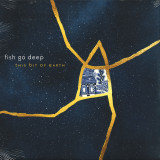
Greg Dowling and Shane Johnson return to the Go Deep label for their third album, ‘This Bit of Earth’. Beginning work in the relative normality of 2019 and finishing over the strange summer of 2020, the resulting music mirrors the thoughts that such upheaval brings out - our world and our place in it - while also functioning as a kind of travelogue of journeys past and planned, real and imaginary.
Mixing samples with modular synths, programmed drums with jazz loops, and quirky plugins with outboard gear, the album ranges far and wide while retaining a warm, natural core sound.
The title track opens proceedings on an ambiguous note. A simple double bass motif weaves around a misheard vocal sample, layers of piano and vibraphone take up the call, and the whole thing gradually spins off axis to a distorted, disjointed finish. ‘Suburban Key’ follows on a groove of busy drum work and deep sub bass, the stately piano and strings setting the stage for an undulating synth solo.
Further in, ‘Alice on Jupiter’ takes a deep breath and blends field recordings, gently swelling pads, modular bursts and a recurring picked melody.
‘Back Trace Dub’ strolls the imagined streets of Irish author Kevin Barry’s ‘City of Bohane’, noting the “taint of badness” in the air and revelling in the tense, dub-noir atmosphere. Later on, the spoken word intro of ‘I Could See’ expresses the dread of confinement and the relief and ecstasy of release, a theme the music reflects as it steadily builds to a joyful climax.
And closing the album on an optimistic note, the languid, emotional Culatra Ferry remembers better, beautiful days in the sun and looks hopefully forward to more.
“Highlights are the stunning sonics of Suburban Key, with its dusty groove and fast paced drums, stately piano, and cinematic strings reminiscent of a Four Hero orchestral masterpiece. High As Scaffold is full of warmth and soul and is yet another example of Fish Go Deep going even deeper into the dark blue waters of their brilliant musical minds.” Ban Ban Ton Ton review, Japan
“So good. Real beauty” Laurent Garnier, Radio FG, France
“Really liking this, would love to support on radio” Colleen 'Cosmo' Murphy, WorldwideFM, UK
“Lovely album” Osunlade, Yoruba Soul, US
“Very very nice album...love the new directions here” Charles Webster, Openlab, SA
“Absolutely beautiful piece of work” Darimont, RWAV, Germany
“A lovely LP of eclectic sounds” Jimpster, Freerange Records, UK
“Delightful album this. Very much appreciate the musicianship and we need that in the world right now as the commercial music world starts to fire up its nonsense for the new beginning” Vince Watson, Yoruba, Netherlands
“Such a fucking great body of work, and on par with ANY of the great albums I've listened to recently” Billy Scurry, Ireland
“There’s some REAL magic here. Possibly the deepest year from this duo” Charles Levine, Soul Clap, US
“A fabulous surprise. I'm sure if he were still alive Jose Padilla would have hailed this as his number one album of the year, it certainly is mine” Steve Miller, Afterlife, UK
“Great album... will play in next shows” Franck Roger, Real Tone, France
“Beautifully produced and great atmospherics” Ashley Beedle, Black Science Orchestra, UK
Radio and DJ support from Ron Trent, Hector Romero, Ame, Cian Ó Cíobháin, Bill Brewster, DJ Sprinkles, Harri, Honey Soundsystem, Alexkid, Moodymanc, Hifi Sean, Kassian, Freddie Garcia, 6th Borough Project, Stuart Patterson, Lars Behrenroth, Fred Everything, Mark Roberts, Cut n Shut, Will McGiven, Stefano Tucci, Tristan Jong, Matthias Schober, Trevor Fung, Ben Davis, Max P and more.
Was tun, wenn man Desert Rock und Doom aus der Wüste mag, die Umgebung aber alles andere als besonders trocken ist? BESVÄRJELSEN haben auf beeindruckende Weise eine Antwort in den dunklen Wäldern ihrer schwedischen Heimat Dalarna gefunden. Aufgewachsen am Schnittpunkt altnordischer und finnischer Kulturen im hohen Norden, umgeben von Runen und alten Göttern, Schamanen und Geistern, hat das fesselnde Quintett seinen Namen aus dem schwedischen Wort für "Beschwörung" abgeleitet. Außerdem lassen sich die Nordschweden nur zu gern von lokalen Überlieferungen, der Mystik und den dunklen, alten Musiktraditionen ihrer Heimat inspirieren. Doch BESVÄRJELSEN sind alles andere als eine weitere "Pagan Folk"-Band, die sich nach einer Zeit zurücksehnt, die niemals war. Mit wehmütigen Melodien und gleichzeitig mächtiger Riff-Power macht ihr zweites Album "Atlas" einen großen Schritt auf dem Pfad, den BESVÄRJELSEN von Anfang an eingeschlagen haben. Die Gitarristen und Sänger Andreas Baier und Staffan Stensland Vinrot haben die Band im Jahr 2014 mit der klaren Vision gegründet, den Geist und die Traditionen der weiten Wälder Dalarnas, einer Region, die sonst eher für ihre bemalten Holzpferde bekannt ist, in zeitgenössische Heavy-Musik zu transformieren. Als die Sängerin Lea Amling Alazam mit ihrer Leidenschaft für Punk- und Stoner-Rock, die im örtlichen Skatepark im zarten Alter von 13 Jahren begann, zur Besetzung stieß, reduzierten Andreas und Staffan ihren Gesang gerne auf eine Nebenrolle. Die Entscheidung fiel leicht, da Leas unverwechselbare Stimme die Intimität und das Charisma von Sängerinnen wie NINA SIMONE oder AMY WINEHOUSE heraufbeschwört. BESVÄRJELSEN veröffentlichten im Jahr 2015 ihre Debüt-EP "Villfarelser" und kurz darauf folge die "Exil" EP (2016). Das Debütalbum "Vallmo" der Schweden detonierte im Jahr 2018 in Stockholm und schaffte es bis in den staatlichen Rundfunk, kam aber auch anderen Orts hervorragend an. Das Album verband krachende Riffs und stürmische Drums mit ausgefeilten Melodien und nachdenklichen Themen. Mit ihrer Mini-Album "Frost" wollten BESVÄRJELSEN im Jahr 2019 die Bühnen in ganz Europa erobern, bevor auch die Schweden in den nächsten zwei Jahren eine Zwangspause einlegen mussten. Obwohl die Band gezwungen war, getrennt zu komponieren, nutzte BESVÄRJELSEN die freie Zeit, um eine Fülle von Ideen zu sammeln. Diese teilten die Musiker über die Meilen und Monate ihrer relativen Einsamkeit hinweg miteinander, bis sie schließlich im Jahr 2021 die Aufnahmen zu "Atlas" mit dem Produzenten Karl Daniel Lidén begannen. Mit melancholischen Harmonien, die aus dem Skizzenbuch von ALICE IN CHAINS stammen könnten und einer Heaviness, die Windhand zur Ehre gereichen würde, haben BESVÄRJELSEN einen massiven musikalischen Monolithen aus dem lokalen Granit gemeißelt und dann in den magischen Wäldern ihrer Heimat aufgestellt, um dessen Kraftlinien über die gesamte vom Titanen "Atlas" geschulterte Erdkugel zu schicken.
Camille Bertault and David Helbock are two of the most jawdroppingly talented members of the cohort of European jazz
musicians currently in their mid-Thirties. Their journeys in improvised
music are always adventurous, playful and exciting.
She is the rising star of French vocal jazz. He, Austrian-born, is one
of the most fascinating pianists on the scene. Their personalities
appear to be polar opposites, yet Bertault’s livewire humour and
Helbock’s calm self-assuredness only appear different on the surface.
When it comes to the musical choices they make, they are
emphatically on the same page. Each is astonishingly versatile, with
an innate sense of dramaturgy. This voice / piano duo reaches
unbelievable levels of inventiveness here on ‘Playground’.
“We both love Egberto Gismonti and Hermeto Pascoal, Björk and
Monk,” Helbock explains. “We also wanted a classical piece.” The
duo found the initial repertoire to explore and to spread their musical
wings with relative ease. Bertault’s vocal artistry is hers and hers
alone. Her voice is a magnificent instrument to carry a melody,
whether at breakneck speed and with devastating precision or at
pindrop volume. Helbock’s creativity, as he exploits all the sound
possibilities of the grand piano, is completely ‘sui generis’ as well. He
dampens the piano strings, he plays directly on them, he uses the
piano case as a percussion instrument, he makes use of electronics.
And ‘Playground’ is the first time he has worked with loops.
His accompaniment therefore has an almost orchestral scale and
depth, a jewel case for this scintillating and very special voice. The
pair have written seven new numbers for the album: we hear the
whimsical blues of ‘Lonely Supamen’, the mysterious ‘Fabelwesen’,
the chanson-esque ‘Aide-moi’ and the ethereal-melancholic ‘Bizarre’.
‘Playground’ is a kaleidoscope of sounds and emotions which
invigorates, excites - and will always surprise. The craft and
technique may be breath taking, but neither musician ever forgets the
essential: “It’s not about showing strength or virtuosity, but about
expressing the truth of the moment,” says Camille Bertault. And that
is what she and David Helbock have delivered with each and every
track.
- 1: White Over
- 2: Time To Drink
- 3: Rites Of Spring
- 4: Interlude
- 5: I Think, I Think
- 6: Litres Into Metres/Susurrus
- 7: Ghost Story (Flexidisc - Bonus)
Repress[24,16 €]
This is the second Haress album, a five piece from Shropshire. They channel the sounds of Fairport Convention, Lungfish, Papa M, Earth, Robert Wyatt, John Fahey, and Talk Talk. Taking influence and making it their own. The first vinyl press comes with a bonus flexi disc telling the story of the week the band spent recording the album, the weirdness, the positively supernatural happenings. On this album the core duo of Elizabeth Still and David Hand are joined by David Smyth (Mind Mountain, Kling Klang) on drums, Chris Summerlin (Hey Colossus, Kogumaza) on guitar, Thomas House (Sweet Williams, Charlottefield) on vocals and Nathan Bell (Lungfish, Human Bell) on trumpet. In early 2020 the group travelled to a disused water mill in North Wales for a week to record with engineer Phil Booth (JT Soar) and his mobile studio. The stories of what occurred are told on the flexi disc that accompanies the LP but the group’s plans for a relaxing break in the country were scuppered by events that were either highly unusual, or positively supernatural (depending on your own beliefs in such things). Well-made plans were abandoned and the recording was forced to develop according to the location it was being made in. Chance and accident were welcomed as a collaborator rather than a saboteur and the group exited the sessions extremely freaked-out but with the makings of an album. Ghosts is an incredible piece of work and posits Haress on their own when it comes to developing new approaches to traditional musical forms. The music contains many moments of immediate joy - the relative pop of House’s vocals on White Over, the wild horns of I Think I Think, the rush of warmth as Time To Drink morphs into focus. But it also stretches the sound Haress have carefully developed almost to breaking point with sections of music that feel like somebody - something - else is steering the ship. The 2 final songs – Litres Into Metres and Sussurus – are joined together by a collage of site-specific sound. It was decided to add the output from a detuned long wave radio to this section on the final night of recording. Static hissed from the device but as soon as the record light illuminated, a rich male baritone voice sang loud and clear from the radio, taking a solo right where it was needed and then disappearing into space forever like the Ghosts of the title.
"Svalbard are a great example of a band who have done things The Right
Way
Existing as a band for approximately 4 years before releasing their debut album,
Svalbard played the slow and steady game, holding their cards relatively close to
their chest. This enabled them to finely hone their craft over a number of 7”s, EPs
and split releases, each time improving slightly on their songwriting and recording
methodology, allowing themselves to experiment and push their sound in
different directions along the way. This plan of attack enabled the band to
consistently improve without the stringent spotlight, or pressure thereof, of an
album. It also, rightly, seemed to keep people wanting more… "
Funny to think there was a time not so long ago when Stiff Richards was a name that required explanation - but not to you, of course, o punk connoisseur. This is your territory, after all. Music is your oxygen and the sound of the underground is your clarion call. You can explain the distinction between ‘Know Your Product’ and ‘No, You’re Product’. Hey, you’re probably pretty good-looking too. You know your shit, either way. So no wonder you’re drawn to this relative holy grail of modern garage rock - the 2017 self-titled debut album by the aforementioned Stiff Richards. Originally released on their own Stiff Records (and again by Legless in 2020), it lays down all the elements that made last year’s mighty ‘State of Mind’ LP such an instant classic. OK, we’ve established you know the drill, but let’s recap: scintillating Aus-punk that recalls the heroic high-speed riffs of their countrymen The Saints and Radio Birdman. It sounds like Royal Headache covering Motörhead, or maybe the other way around. It’s a full-on riot in 30 minutes - the rawest of rock’n’roll bleeding into the grimiest of power chords with hooks for days. You already know you’re gonna love it. Whether going full-throttle and aiming straight for the nerve receptors that get your head a-nodding and your toes a-tapping - like on sub-three-minute highlight ‘Strung Out’ - or sludgin’ their way through groovier cuts like ‘Bustin’ Out’, they’re never less than a treat that’s guaranteed to get your serotonin flowing and your speakers up to 11 (or beyond). As a certain similarly-named record label once said, if it ain’t Stiff, it ain’t worth a fuck. Frightfully rude, but that’s rock music for you, I suppose. Get it in your ears.
New York-based duo Bottler, Pat Butler and Phil Shore, are the vanguard of their own distinctly eclectic sound. Raw, emotive, bold and highly creative, the duo has successfully carved out their own path with a series of EPs that represent the broad scope of their production prowess. Over the last five years Bottler have been working on their debut album, ‘Journey Work’, a milestone achievement that marks a pivotal moment in their music career. The LP is a distillation of the duo’s multifaceted upbringing, blending a variety of styles together bound together by an overarching attitude and approach that embraces creative freedom and self-acceptance.
Pat and Phil are childhood friends whose bond is akin to that of blood relatives. Their parents are best friends and they grew up side by side, developing their deep love for music together; sharing discoveries and inspirations, learning to play and perform, and nurturing their creativity together. Now formally ordained as Bottler, they channel their eclectic tastes into a sound that encapsulates the love and trust that forms the foundation of the friendship. The duo blends a myriad of styles to create songs that emanate warmth, joy, sorrow, pain and the full spectrum of human emotion.
The album title, like their music, is open to interpretation. The duo reveals themes related to chronicling life’s many ups and downs, the deep preparation that must be taken ahead of a spiritual ceremony or psychedelic experience, and, simply, the journey taken during the conception and creation of an album. A quote from Walt Whitman also partly inspired the title; “every leaf of grass is no less than the journey work of the stars”. However, the intention behind the title is to allow for ambiguity, giving the listener an opportunity to write their own narrative.
Across 11 cuts Bottler illustrate their distinct take on electronic music, weaving in elements of indie, pop, rock, house and techno with confidence and panache. ‘Journey Work’ starts at ‘Home’, a song that is fizzing with positive energy, Pat’s vocals welcoming the listener to the start of this meandering audio adventure.
‘Chrysalis’ opens with delicate piano keys that guide us into a bombastic bassline and energising drum beats. As it progresses, scintillating layers of synth and strings are added, creating a highly affecting, uplifting atmosphere.
‘Melatonin’ follows up next, merging heartfelt vocal delivery with a sombre instrumental, and a stirring guitar riff. A glorious demonstration of Bottler’s songwriting capabilities, which are also evident on ‘Vinyl’, an uptempo dance number with an unbelievably catchy chorus. Here we see the duo channel their experience of playing in multi-member bands, as the breaks and arrangement feel perfectly suited to a festival-sized crowd.
On ‘Tacoma’, Pat and Phil channel their appreciation of house and techno into a haunting cut that utilises reverse strings and extended vocal refrains to chilling effect. A heady club track for the twilight hours. ‘Meds’ incorporates muted singing, mystical pad work and a mesmerising riff to produce a captivating slice of uncomplicated dance music.
This is followed by ‘Hot Water’, which feels like a trip to a Californian beach, circa 1965. The vocals drift over a bouncing bassline with a complementary guitar riff. ‘Mako’ features Samurai Velvet singing about fireflies and afterlife in a wonderfully heartrending manner, Bottler’s instrumental keeping things simple, yet highly effective.
We head back underground with ‘Weed’, a dense, gloomy cut with inspired use of chopped up vocal clips, stuttered throughout, alongside a mean bassline. ‘You’re Old’ is the soundtrack to an explosion of festival euphoria, dancing shoulder to shoulder with your best friends, forgetting all your troubles and living in the moment. An anthemic song that transposes Bottler’s idiosyncratic style onto the pop blueprint. Finally, ‘Cicada Rhythm’ closes the LP with a pensive, yet joyful feeling. A chunky bassline is juxtaposed with Pat’s angelic vocals cascading over the top. A hint of tribalism comes through, as we approach the end of the Journey Work…
Five years in the making, fuelled by the desire to express their deep love for music of all varieties, Journey Work is symbolic of the long road it takes to accept oneself and be comfortable expressing one’s truth. Diverse, dynamic and daring with a rawness and honesty that is rare to find, the album marks a triumphant debut for Bottler and one that crystalises their unique identity.
On their third album »Constant Connection«, West Australian-based Erasers create hypnotic compositions of synth, guitar and voice, evoking the vast expanse of their native landscape and the shrouded emotions behind the senses. Comprising of vocalist, synth player Rebecca Orchard and Rupert Thomas on guitar and synths, Erasers have developed their earthly kosmische music into an open language based on drone, variation in repetition and minimal song structures. Based in Perth, regarded one of the most isolated cities in the world, Orchard and Thomas’s music has brewed in the city’s vibrant DIY/Outsider community and evolved into a meditation on landscape, power, the shadow-world of human emotions and stream of consciousness. »Constant Connection«, with its waves of sound and chant-like vocals evokes a trance that suggests an infinity just beyond the senses.
At the heart of each Erasers composition is the interplay between the instrumentation, played with stoic restraint and recorded directly with minimal effects and the transcendental states induced in the listener. It’s a magic that is performed in plain sight and all the more powerful for it. The recognisable vibrato of Fender Rhodes keyboards and simple drum machine loops, the subtle strands of analog synth melodies that snake in and out of the ear, above all the towering encantations of Rebecca Orchard’s undeniably Australian-accented hymns; all of this is presented with minimal ostentation and yet it instantly engenders a dream state, hints at an infinity beyond the material.
Shades of John Cale’s 70s work with Nico, early 70s German synthesists Kluster and even fellow Australians Fabulous Diamonds can be seen as stylistic touchstones for Constant Connection. Where Nico hinted at the macabre and gothic, Rebecca Orchard’s similarly gliding vocal is more zoned in to a kind of oceanic openness, with words becoming chants and spells that suggested themselves to the singer during recording sessions. It’s this hidden hand of improvisatory, automatic writing that lends a sense of expanse to the music. On opener I Understand, while the lyrics might hint at discontent the emotional spectrum it opens up is far more rich and complex, as layered as the waves of droning chords that are the bedrock of each Erasers track. The title track talks of flow, continuum and balance, the protagonist in the song seemingly weightless, gently pulled through a walking reality that borders on dream. In Erasers’ world, it seems, the borders between reality and dream, consciousness and sub-consciousness are blurred and eroded.
On Constant Connection, Erasers’ music might be deeply evocative of landscape but it’s never clear which one. The vast, open terrain that surrounds Perth is dusty, burned by the sun into desert and Constant Connection feels like the product of the heat and relative isolation, the altered states these elements can create. But it’s these altered states of mind that appear to be the real landscape described by Erasers. It’s a landscape that’s hazy, in-and-out of focus, with emotional undertows pushing and pulling you into a weightlessness. On album closer Easy To See the band dispense with percussion all together, field recordings of the water at the edge of their native city ushering in two duetting synths. Orchard’s vocal undulates with the flow, viewing both the geographical and psychological landscape from the perspective of a consciousness not bound by bodies and from a timescale measured in millennia. The album ends as it begins, with field recordings of the real world that the music seeps out from, temporarily, before regressing back into the other realm it feels like it belongs to.
Between these two recorded hints of reality, Erasers manifest a deeply sensual dreamscape that constantly feels like it’s dissolving at its seams. A desert psychedelia emanating from a real world that might not be that real in the first place.
Often when music is constructed with synths and other electronically generated sound makers, their level of exactitude and control is such that the vocalist will either wittingly or otherwise seek to emulate the relative artifice of the soundscape. This is often done to great effect, think Kraftwerk. But what if there was a unit whose music was synth-generated but the vocals were coming from a hot-blooded, singing-for-the-cheap-seats approach? If done well, it’s a case of two great tastes that taste great together, which brings me to System Exclusive.
Their multi genre / time period collision is like a car accident where all parties walk away not only unscathed but sure they had a great time, like two different recording sessions sharing the same space and making it work. Vocalist Ari Blaisdell (previously of Lower Self, The Beat Offs) co-exists excellently amidst the driving beats and synth waves and her guitar further helps to jailbreak the tunes from the often sterile entrapments that synths provide. Matt Jones (previously of Male Gaze, Blasted Canyons, and continuing Castle Face behind-the-scenesman)’s smart use of live drums bring great juxtaposition against the machines. Ari’s irony-free sincere delivery is the perfect closer on this very cool record, recorded ably by Enrique Tena Padilla (Osees, Wand, Beach House) in their backyard studio mid-pandemic and adorned with original artwork by Miles Wintner (L.A. Takedown, Mr. Elevator, Devon Williams). If you don’t get this slab of goodness, well, that act of non-compliance will confirm you as the pain-in-the-ass that many have described you to be in great detail during Zoom chats. How dare they! Prove them wrong! Reduce their snark to mere pseudo-intellectual piffle! Your lifeline arrives in March. Grab it. — Henry Rollins
Throughout his relatively short career to date, Groovence’s boss man Moonee (real name François Lefevre) has delivered some top shelves tracks in the passed years , appearances like his debut track on Groovence last year « Faith & Sorrow » and an official remix for Sweely’s banger « Gotta Keep On » in 2020. His music brilliantly blend contemporary house with dusty sampled house, the whole magnified by his MPC workflow and his own savory and taste on music sampling. « Wabi-sabi »is above all an aesthetic and spiritual concept that celebrates the imperfection of things. Focused on the notion of beauty and the passage of time, this first EP is dedicated to his love for mixed-up soul infused grooves and « out of the grid » beats & sounds.