Kristian Matsson has never remained in one place for very long. Having spent much of the last decade touring around the world as The Tallest Man on Earth, Matsson has captivated audiences using, as The New York Times describes, “every inch of his long guitar cord to
roam the stage: darting around, crouching, stretching, hip-twitching, perching briefly and jittering away…Mr. Matsson is a guitar-slinger rooted in folk, and his songs are troubadour ballads at heart.”
Now, Matsson returns as The Tallest Man on Earth with Henry St., his sixth studio album following 2012’s There’s No Leaving Now, full of “vivid imagery, clever turns-of-phrase, and devastating, world-weary observations” (Under The Radar) and 2015’s Dark Bird Is A
Home, his “most personal record… surreal and dreamlike” (Pitchfork). Henry St. notably marks the first time he recorded an album in a band setting. “My entire career I’ve been a DIY person––mostly fueled by the feeling that I didn’t know what I was doing, so I’d just do everything myself.”
But now, longing for the energy that’s only released when creating
together with others, Matsson invited his friends to come and play.
Nick Sanborn (of Sylvan Esso) produced Henry St., which includes contributions from Ryan Gustafson (of The Dead Tongues) on guitar, lap steel and ukulele, TJ Maiani on drums, CJ Camerieri (of Bon Iver) on trumpet and French horn, Phil Cook on piano and organ, Rob
Moose (of Bon Iver, yMusic) on strings and Adam Schatz on saxophone.
All tracks from 2021 transfers and newly remastered - LP editions include a booklet featuring unseen photos and liner notes by Lenny Kaye, plus contributions from Nick Cave and Devendra Banhart // Karen Dalton's 1971 album, In My Own Time, stands as a true masterpiece by one of music's most mysterious, enigmatic, and enduringly influential artists. Celebrating the album's 50th anniversary, Light in the Attic is honored to present a newly remastered (2021) edition of the album on LP, CD, cassette, and 8-Track. All audio has been newly remastered by Dave Cooley, while lacquers were cut by Phil Rodriguez at Elysian Masters. A newly expanded booklet-featuring rarely seen photos, liner notes from musician and writer Lenny Kaye, and contributions from Nick Cave and Devendra Banhart-rounds out the CD (32-pgs) and LP (20-pgs) packages.
BKM Etah 167 - Vinyl 180gr - Transparent Green - Poster A1 - ltd500
Re-Release of the 1998 original (CD)
Missing tracks will be released as part of the DJDead Vinyl
UK Hip Hop regulars Lasagna Baghdad (Luca Brazi), Paolo Pumpernickel (Benny Diction) and
Bald Daniels (MNSR Frites) combine forces as their alter-egos for an introspective take on getting
older in rap and an appreciation for the finer things. Expect tales of borderline mid-life crises told
over a background of fast cars and seafood
On Labyrinth, Heather Woods Broderick serves as our reflective host, subverting expectations of conventional songcraft with impressionistic language and quietly relentless explorations of the human experience that's at once light and dark, more circular and less linear. "Many of us yearn for stillness and peace, as an escape from the movement all around us," she explains when asked about the themes of the album. "Yet movement is perpetual, happening all the time on some level. It's as wild as the wind, yet eternally predictable in its inevitability. It is linear in part, but infinite in its circuitry. Our lives just punctuate it." Broderick began crafting Labyrinth in March 2020, when most forms of move- ment were brought to a screeching halt. The Maine-born, Los Angeles-based songwriter _ who, in addition to her work as a solo musician, built a life playing and touring with acts such as Sharon Van Etten, Beth Orton, Damien Jurado, and Efterklang _ was suddenly forced off the road for the first time in her career. She used this disruption as an opportunity to pare down her creation process and construct the scaffolding for Labyrinth in her apartment. Employing only the most crucial tools at her disposal, Broderick found herself opening different artistic doors as she focused on sharpening her recording skills, capturing the majority of the album on her own before finishing the remainder with co-producer D. James Goodwin. For all of Broderick's sage lyricism and vocal authority, Labyrinth never provides the listener with any easy answers. If the image of the labyrinth represents the enormity of modern life and the difficulty of navigating it, Heather Woods Broder- ick provides a guide to its endless kinetic wonders _ of being present, aware, and connected despite its disconnects. She describes the texture of its walls, its indifferent rhythms, and the inherent poeticism of feeling lost amid the dead-ends and unexpected turns. At this point in our history, perhaps that's all we need to keep moving.
On Labyrinth, Heather Woods Broderick serves as our reflective host, subverting expectations of conventional songcraft with impressionistic language and quietly relentless explorations of the human experience that's at once light and dark, more circular and less linear. "Many of us yearn for stillness and peace, as an escape from the movement all around us," she explains when asked about the themes of the album. "Yet movement is perpetual, happening all the time on some level. It's as wild as the wind, yet eternally predictable in its inevitability. It is linear in part, but infinite in its circuitry. Our lives just punctuate it." Broderick began crafting Labyrinth in March 2020, when most forms of move- ment were brought to a screeching halt. The Maine-born, Los Angeles-based songwriter _ who, in addition to her work as a solo musician, built a life playing and touring with acts such as Sharon Van Etten, Beth Orton, Damien Jurado, and Efterklang _ was suddenly forced off the road for the first time in her career. She used this disruption as an opportunity to pare down her creation process and construct the scaffolding for Labyrinth in her apartment. Employing only the most crucial tools at her disposal, Broderick found herself opening different artistic doors as she focused on sharpening her recording skills, capturing the majority of the album on her own before finishing the remainder with co-producer D. James Goodwin. For all of Broderick's sage lyricism and vocal authority, Labyrinth never provides the listener with any easy answers. If the image of the labyrinth represents the enormity of modern life and the difficulty of navigating it, Heather Woods Broder- ick provides a guide to its endless kinetic wonders _ of being present, aware, and connected despite its disconnects. She describes the texture of its walls, its indifferent rhythms, and the inherent poeticism of feeling lost amid the dead-ends and unexpected turns. At this point in our history, perhaps that's all we need to keep moving.
If Es’ debut album for Upset the Rhythm explored the “tension between intent and interpretation”, the London group’s 2023 EP, ‘Fantasy’, constructs a coda for resistance against the distorted gaze. A four-track contact-high anxiety amid fact and facsimile, the new release attempts to define a sound that still resonates in an increasingly confused public theatre, where cerebral dreams manifest in corrupt fascination.
Echoing the legendary Pylon or the later, disco-inspired releases from PIL, tracks like ‘Emergency’ and ‘Unreal’ blend the band’s established disjunctive style of gothic restlessness with brighter, poppy, and danceable tones. These stylistically unwind in transition with the increasingly claustrophobic pieces like ‘Too Late’ and ‘Swallowed Whole’, syncopating a parallel design of the frantic and the fashionable.
Paired with a lyrical intricacy which emits a desire to break the fetish of false representation, ‘Fantasy’ reminds us that worthy punk records, like any manifesto of neurotic suspicion, balance testimonial, speculative-fiction, and social critique. Indebted to the past but pointed sharply to the future, Es deconstruct our modern wreckage of personhood and self-deceit, granting a sense of solidarity inside alienation. Inside ‘Fantasy’ we visualize our own estrangement, and it is only when this mirror fades that we find the tools to fight back.
Everything eventually turns to dust. Everyone knows this, but few want to acknowledge that our time on this mortal coil is fleeting, preferring to remain in stasis, in hopes that "the end" will pass them by. Chicago trio FACS (guitarist Brian Case, bassist Alianna Kalaba & drummer Noah Leger) have been perfecting their brand of intense, cathartic post-punk over the course of four ever-evolving albums, beginning with 2017's "Negative Houses" thru 2021's landmark "Present Tense', which saw the trio dig deep into the gaping maw of a black hole & pulling back whatever debris they could grasp onto. Their newest "Still Life In Decay" comes as an addendum to the last album - a "post-event review" if you will. "Still Life In Decay" starts with a squall of white noise before collapsing into the band already locked into "Constellation"s lumbering groove, with Case's guitar a ghostly presence, appearing & disappearing in washes of gauzy feedback throughout the track. FACS have never been more locked in as a unit, and "Still Life In Decay" is a decidedly more focused effort. The apocalyptic chaos that defined their previous album "Present Tense" is waved away in favor of an examination of events with cumbrous clarity. FACS are a heavy band, but they don't necessarily FEEL like one (see side two's "Still Life", where Case's fluttering, melodic guitar lines are buoyed by the insistent, underlying pulse of the bass & drums). As a rhythm section, Kalaba & Leger dance & twist around each other like a double helix, forming the DNA of what makes FACS special. Collectively they approach rhythm from outside the groove as opposed to inside it, creating a lattice where Case weaves guitar lines like creeping vines, which makes the moments on "Still Life In Decay" where the band DOES lock in even more powerful. When the guitar punctures the lock-step swing of "When You Say", it hits like a hammer. Case utilizes his lyrics like a person suffering from anterograde amnesia; repeating phrases & holding onto old memories in a desperate attempt to avoid the slide into oblivion. Freeform poetic missives touching on themes of resignation, cynicism, class warfare, and a search for identity & meaning in a crumbling society; A primal desire to hold onto anything in a post-pandemic barrage of sensory overload. The album is a decidedly local affair; recorded once again at Chicago's famed Electrical Audio by renowned engineer Sanford Parker & mixed at his Hypercube Studio in Chicago's Ravenswood neighborhood & mastered by Matthew Barnhart at Chicago Mastering Service.
Everything eventually turns to dust. Everyone knows this, but few want to acknowledge that our time on this mortal coil is fleeting, preferring to remain in stasis, in hopes that "the end" will pass them by. Chicago trio FACS (guitarist Brian Case, bassist Alianna Kalaba & drummer Noah Leger) have been perfecting their brand of intense, cathartic post-punk over the course of four ever-evolving albums, beginning with 2017's "Negative Houses" thru 2021's landmark "Present Tense', which saw the trio dig deep into the gaping maw of a black hole & pulling back whatever debris they could grasp onto. Their newest "Still Life In Decay" comes as an addendum to the last album - a "post-event review" if you will. "Still Life In Decay" starts with a squall of white noise before collapsing into the band already locked into "Constellation"s lumbering groove, with Case's guitar a ghostly presence, appearing & disappearing in washes of gauzy feedback throughout the track. FACS have never been more locked in as a unit, and "Still Life In Decay" is a decidedly more focused effort. The apocalyptic chaos that defined their previous album "Present Tense" is waved away in favor of an examination of events with cumbrous clarity. FACS are a heavy band, but they don't necessarily FEEL like one (see side two's "Still Life", where Case's fluttering, melodic guitar lines are buoyed by the insistent, underlying pulse of the bass & drums). As a rhythm section, Kalaba & Leger dance & twist around each other like a double helix, forming the DNA of what makes FACS special. Collectively they approach rhythm from outside the groove as opposed to inside it, creating a lattice where Case weaves guitar lines like creeping vines, which makes the moments on "Still Life In Decay" where the band DOES lock in even more powerful. When the guitar punctures the lock-step swing of "When You Say", it hits like a hammer. Case utilizes his lyrics like a person suffering from anterograde amnesia; repeating phrases & holding onto old memories in a desperate attempt to avoid the slide into oblivion. Freeform poetic missives touching on themes of resignation, cynicism, class warfare, and a search for identity & meaning in a crumbling society; A primal desire to hold onto anything in a post-pandemic barrage of sensory overload. The album is a decidedly local affair; recorded once again at Chicago's famed Electrical Audio by renowned engineer Sanford Parker & mixed at his Hypercube Studio in Chicago's Ravenswood neighborhood & mastered by Matthew Barnhart at Chicago Mastering Service.
Everything eventually turns to dust. Everyone knows this, but few want to acknowledge that our time on this mortal coil is fleeting, preferring to remain in stasis, in hopes that "the end" will pass them by. Chicago trio FACS (guitarist Brian Case, bassist Alianna Kalaba & drummer Noah Leger) have been perfecting their brand of intense, cathartic post-punk over the course of four ever-evolving albums, beginning with 2017's "Negative Houses" thru 2021's landmark "Present Tense', which saw the trio dig deep into the gaping maw of a black hole & pulling back whatever debris they could grasp onto. Their newest "Still Life In Decay" comes as an addendum to the last album - a "post-event review" if you will. "Still Life In Decay" starts with a squall of white noise before collapsing into the band already locked into "Constellation"s lumbering groove, with Case's guitar a ghostly presence, appearing & disappearing in washes of gauzy feedback throughout the track. FACS have never been more locked in as a unit, and "Still Life In Decay" is a decidedly more focused effort. The apocalyptic chaos that defined their previous album "Present Tense" is waved away in favor of an examination of events with cumbrous clarity. FACS are a heavy band, but they don't necessarily FEEL like one (see side two's "Still Life", where Case's fluttering, melodic guitar lines are buoyed by the insistent, underlying pulse of the bass & drums). As a rhythm section, Kalaba & Leger dance & twist around each other like a double helix, forming the DNA of what makes FACS special. Collectively they approach rhythm from outside the groove as opposed to inside it, creating a lattice where Case weaves guitar lines like creeping vines, which makes the moments on "Still Life In Decay" where the band DOES lock in even more powerful. When the guitar punctures the lock-step swing of "When You Say", it hits like a hammer. Case utilizes his lyrics like a person suffering from anterograde amnesia; repeating phrases & holding onto old memories in a desperate attempt to avoid the slide into oblivion. Freeform poetic missives touching on themes of resignation, cynicism, class warfare, and a search for identity & meaning in a crumbling society; A primal desire to hold onto anything in a post-pandemic barrage of sensory overload. The album is a decidedly local affair; recorded once again at Chicago's famed Electrical Audio by renowned engineer Sanford Parker & mixed at his Hypercube Studio in Chicago's Ravenswood neighborhood & mastered by Matthew Barnhart at Chicago Mastering Service.
Voïvod’s commercial peak and one of their many artistic peaks, 1989’s
Nothingface marked a move away from the Quebec metal band’s thrash beginnings to a more progressive rock sound epitomized by their fantastic cover of Pink Floyd’s “Astronomy Domine.” But it remains quintessential Voïvod, complete with sci-fi themes and tricky tempo changes. Long out of print on vinyl, Nothingface returns with a metallic (natch!) red vinyl pressing remasteredfor vinyl by Peter Moore.
This album originally came out on vinyl only in Europe, so there is still a lot of pent-up demand for a new LP reissue of this 1991
classic from the Voïvod catalog (especially in Canada, where the
band is worshipped). Produced by Terry Brown of Rush fame, Angel
Rat moved the band further into spacy psychedelic territory with
such tracks as “Golem” and the title track. A mesmerizing, moody head trip of a record. Metallic blue vinyl pressing. Remastered for vinyl by Peter Moore
Remastered Deluxe-Ausgabe von Braids legendärem Album 'Frame & Canvas' (1998) zum 25-jährigen, ein genredefinierendes Grundnahrungsmittel und laut Rolling Stone US Rang #5 der Top40 Emo-Alben aller Zeiten. Im neuen Mix von Originalproduzent J. Robbins (The Promise Ring, Against Me!). Braids Einfluss auf zahlreiche Bands und DIY-Szenen, die in ihrem Gefolge entstanden sind, ist enorm und unbestritten. Silberfarbenes Vinyl im neuen Packaging mit zusätzlichen Linernotes von jedem einzelnen Bandmitglied.
This genre-bending album takes the listener on a sonic journey through moments of gritty hip hop as well as lush soul/R&B soundscapes, also providing a glimpse into modern jazz.
World Champion Battle DJ, Rhettmatic, reminds you why he’s one of the most respected DJs in the world with his masterful scratches throughout the album. In a time where musicians are scrambling to copy whatever the latest trend in music is, more than ever.
JRawls’ signature Jazz-Hop sound meshed with Rhettmatic’s West Coast bounce creates an undeniably hypnotic & original sound that is all their own.
Tracklist RawlsMatic Intro
Play Your Position
Excalibur
State My Case
Doty X & The Sen
Stay Good
Role Reversal
Brazil
Straight Shot Of Whiskey
Everyday Sh-t
The Brink
The Sun
Xanadu
Key Selling Points
-The powerful duo, Rawlsmatic, consists of respected hip hop producer-DJ’s, Rhettmatic (Member of the World Famous BeatJunkies, Cypress Junkies) & J Rawls (Produced for Black Star, Slum Village, Beastie Boys, & more).
-Their debut collaborative album "Role Reversal" via Chavez Sound features Craig G, Blu, Ras Kass, Illa J & Frank Nitt, John Robinson, Wordsworth, Sadat X & El da Sensei, Trek Life & Supastition, Ann One, Cyrus Baty & B-Jazz.
7A Records are proud to announce the 50th Anniversary
Edition of Michael Nesmith’s “Pretty Much Your Standard
Ranch Stash” album. The LP version is pressed on 180g
opaque grey vinyl and comes in a gatefold sleeve, includes
extensive liner notes and session details by Andrew
Sandoval and lyrics to all of the songs. Also included is a
bonus track, the 1973 alternate version of “Marie’s Theme”.
The Album:
Nesmith’s time with the Monkees was well and truly in the
rear-view mirror and he needed a new place to live and
work. He caught the ear of Jac Holzman, head of Elektra
Records, and a path forward miraculously appeared.
Realising that most of the record companies at the time
didn’t understand Country Rock, Nesmith convinced
Holzman to start a new label, Countryside. Nesmith would
run the label, put together a ‘house band’ and produce
albums by various up and coming country artists.
Unfortunately, most of the new label’s releases didn’t make much of an impression and Nesmith soon started to
contemplate his own music again. Aided by the power of his Countryside house band, he quickly crafted Pretty Much
Your Standard Ranch Stash, a full and final RCA album. Despite its commercial sheen, Ranch Stash wasn’t a success saleswise and it became the closing remark to a heavy chapter in Nesmith’s life, a final “adios” to Monkee Mike, to the cosmic
cowboy, and to his family, as he moved further on up the trail.
7A Records are proud to announce the 50th Anniversary
Edition of Michael Nesmith’s “Pretty Much Your Standard
Ranch Stash” album. The LP version is pressed on 180g
opaque grey vinyl and comes in a gatefold sleeve, includes
extensive liner notes and session details by Andrew
Sandoval and lyrics to all of the songs. Also included is a
bonus track, the 1973 alternate version of “Marie’s Theme”.
The Album:
Nesmith’s time with the Monkees was well and truly in the
rear-view mirror and he needed a new place to live and
work. He caught the ear of Jac Holzman, head of Elektra
Records, and a path forward miraculously appeared.
Realising that most of the record companies at the time
didn’t understand Country Rock, Nesmith convinced
Holzman to start a new label, Countryside. Nesmith would
run the label, put together a ‘house band’ and produce
albums by various up and coming country artists.
Unfortunately, most of the new label’s releases didn’t make much of an impression and Nesmith soon started to
contemplate his own music again. Aided by the power of his Countryside house band, he quickly crafted Pretty Much
Your Standard Ranch Stash, a full and final RCA album. Despite its commercial sheen, Ranch Stash wasn’t a success saleswise and it became the closing remark to a heavy chapter in Nesmith’s life, a final “adios” to Monkee Mike, to the cosmic
cowboy, and to his family, as he moved further on up the trail.
Pressing Info: 180g translucent pink vinyl, limited to 250 copies, download card included. Five years on from their 2018 debut album 'Great Vowel Shift', Lviv, Ukraine-based krautrock outfit Sherpa The Tiger are now returning with their second album, 'Ithkuil, via Fuzz Club Records - with 100% of the profits from the release going to the band to help support them during the war. Where their previous work was centred around vintage synths, minimal ambient and neon-lit kraut-disco grooves, 'Ithkuil' sees Sherpa The Tiger explore more expansive and layered structures and compositions - incorporating intricate guitars, flute, arpeggiators and jazzy piano references, alongside an array of other elements that originate from a broad spectrum of past and present music genres. "This album bears the name of 'Ithkuil' for a reason", the band state: "Like the language we borrowed the title from, the sound of the record has a lot of levels, layers, and orchestral nuances. We consider this album and its pieces a single journey. Every track of the LP works as a mandatory stop for contemplation and reflection that happens on the route of the listener." Sherpa The Tiger began working on the new material in 2019 during their EU live shows in support of 'Great Vowel Shift' and chalk the more textured and cinematic results down to a more collaborative approach. "We wanted to rethink the Krautrock heritage explored on our last album and made a clear stylistic shift that was determined by a totally different approach to our music-making. The tunes on 'Great Vowel Shift' were cooked in a sort of live-looping mode with two musicians jamming. This time, with 'Ithkuil', the process of creation was shared among 4 musicians, and that approach had a great impact on the final result." Several years in the making and now released against a backdrop of war and invasion in their home country, 'Sherpa The Tiger' say that 'Ithkuil' acts as a snapshot of pre-war times: "Since the war caught us in the middle of planning the release as opposed to creating the music itself, the album can be perceived as a wistful reminder of the pre-war life that doesn't seem to be coming back. The life we actually experienced but lost any recollection of and which we are desperately trying to bring back through the music created by the other us now dwelling in an absolutely different reality."
Del Jones, a poet, and proto-rapper, recorded Court is Closed in 1973. It was underground Philadelphia’s response to Amiri Baraka’s and Gil Scott-Heron’s indictments of the Black American experience - a call to action not just for his city, but for the nation. The set includes an oversized 10 page booklet by Jeremy Cargill, with contributions by Now-Again founder Eothen “Egon” Alapatt which delves into Jones’ music, milieu and life as an author, activist and orator, shining a light not only on his prescient awareness of hip-hop, but also on the struggles he confronted, and his urgent, current mandate. Court is Closed, equal parts psychedelic rock and deep funk, had a limited release of 500 copies and was rarely heard before Jones overdubbed horns on the album, remixed and augmented it with additional music, and issued it as the better-known Positive Vibes. Here we present both versions of the album on the 23rd release in the deluxe Now-Again Reserve Edition series. Jones’ story, and that of his family, is like his music: a loud, vital voice long silenced. Understanding it now is not just a visceral musical experience, but an essential dissection of racism and classism in America.
"Released in April 1966 by Decca Records, Aftermath was the Rolling Stones’ fourth British studio album. It was issued by London Records in the US in June 1966. Recorded at the RCA Studios in California, it was their first album released in true stereo.
It is also one of the first ‘popular’ albums to eclipse the 50-minute mark, and contains one of the earliest rock songs to exceed 10 minutes (the blues jam Goin’ Home). The album’s release was briefly delayed by controversy over the original packaging idea and title – Could You Walk on the Water? – due to London Reocord’s fear of offending Christians in the US.
The album was considered an artistic breakthrough for the band, being the first to consist entirely of Jagger–Richards compositions, (after their maverick young manager, Andrew Loog Oldham, had shut them in the kitchen of their flat until they had written some more original songs!).
It also featured strongly the immaculate guitar work of Brian Jones and the remarkably wry, observant song-writing of Jagger–Richards
Jones played a variety of instruments not usually associated with their music, including sitar, dulcimer, marimbas and Japanese koto, as well as guitar, harmonica and keyboards, though much of the music is still rooted in Chicago electric blues. The burgeoning influences of psychedelia, Bob Dylan and the tensions around the world, are evident in classics like Paint It Black, an eerily insistent number one hit, available on the US version of the LP.
Other classics included the jazzy Under My Thumb, where Jones added exotic accents with vibes, and the delicate Elizabethan ballad Lady Jane, with distinctive dulcimer, the wry observational Mother’s Little Helper with its unashamed lyrical drug references, and the overlooked gem – the brooding, meditative I Am Waiting.
The American edition was issued with a shorter track listing, substituting the single Paint It Black in place of four of the British version’s songs, in keeping with the industry preference for shorter LPs in the US market at the time."
"Released in April 1966 by Decca Records, Aftermath was the Rolling Stones’ fourth British studio album. It was issued by London Records in the US in June 1966. Recorded at the RCA Studios in California, it was their first album released in true stereo.
It is also one of the first ‘popular’ albums to eclipse the 50-minute mark, and contains one of the earliest rock songs to exceed 10 minutes (the blues jam Goin’ Home). The album’s release was briefly delayed by controversy over the original packaging idea and title – Could You Walk on the Water? – due to London Reocord’s fear of offending Christians in the US.
The album was considered an artistic breakthrough for the band, being the first to consist entirely of Jagger–Richards compositions, (after their maverick young manager, Andrew Loog Oldham, had shut them in the kitchen of their flat until they had written some more original songs!).
It also featured strongly the immaculate guitar work of Brian Jones and the remarkably wry, observant song-writing of Jagger–Richards
Jones played a variety of instruments not usually associated with their music, including sitar, dulcimer, marimbas and Japanese koto, as well as guitar, harmonica and keyboards, though much of the music is still rooted in Chicago electric blues. The burgeoning influences of psychedelia, Bob Dylan and the tensions around the world, are evident in classics like Paint It Black, an eerily insistent number one hit, available on the US version of the LP.
Other classics included the jazzy Under My Thumb, where Jones added exotic accents with vibes, and the delicate Elizabethan ballad Lady Jane, with distinctive dulcimer, the wry observational Mother’s Little Helper with its unashamed lyrical drug references, and the overlooked gem – the brooding, meditative I Am Waiting.
The American edition was issued with a shorter track listing, substituting the single Paint It Black in place of four of the British version’s songs, in keeping with the industry preference for shorter LPs in the US market at the time."
Released in the UK in January 1967 by Decca Records and February by London Records in the US – Between The Buttons was the Stones’ fifth British and seventh US studio album. Released as the follow-up to Aftermath, this album marked a high point in the band’s career, continuing their ventures into psychedelia and baroque pop balladry, it is among the band’s most musically eclectic works. Brian Jones sidelined his guitar on much of the album, instead playing a wide variety of other instruments including organ, marimba, vibraphone, and kazoo. Piano contributions came from two session players: former Rolling Stones member Ian Stewart and frequent contributor and studio legend Jack Nitzsche. It was the last album produced by Andrew Loog Oldham, the band’s manager and producer of all of their albums to this point.
The album has one of the most striking sleeves of the period, featuring a classic Gered Mankowitz image on the cover. The photo shoot took place at 5:30 in the morning following an all-night recording session at Olympic Studios. Using a home-made camera filter constructed of black card, glass and Vaseline, Mankowitz created the effect of the Stones dissolving into their surroundings – according to Mankowitz… ""to capture the ethereal, druggy feel of the time; that feeling at the end of the night when dawn was breaking and they’d been up all night making music, stoned.”
The songs continued Aftermath’s lyrics of acute social observation and savage insight, their earlier raw, rootsy power enhanced by other influences of the period – notably The Beatles, The Kinks, and again Dylan. It is one of their strongest, most varied LPs, with many great songs that remain unknown to all but Stones devotees.
The inventive arrangements and innovative instrumentation on brooding near-classics like All Sold Out, My Obsession and Yesterday’s Papers brought a new dimension to the music. She Smiled Sweetly shows their hidden romantic side at its best, Connection is one of the record’s few pieces of more conventional driving rock and album closer Something Happened To Me Yesterday includes Keith’s first solo vocal.
The US version includes contemporaneous hits – the two songs that gave the group a double-sided number one in early 1967: the shameless and controversial Let’s Spend The Night Together and the beautiful, melancholy Ruby Tuesday.
Released in the UK in January 1967 by Decca Records and February by London Records in the US – Between The Buttons was the Stones’ fifth British and seventh US studio album. Released as the follow-up to Aftermath, this album marked a high point in the band’s career, continuing their ventures into psychedelia and baroque pop balladry, it is among the band’s most musically eclectic works. Brian Jones sidelined his guitar on much of the album, instead playing a wide variety of other instruments including organ, marimba, vibraphone, and kazoo. Piano contributions came from two session players: former Rolling Stones member Ian Stewart and frequent contributor and studio legend Jack Nitzsche. It was the last album produced by Andrew Loog Oldham, the band’s manager and producer of all of their albums to this point.
The album has one of the most striking sleeves of the period, featuring a classic Gered Mankowitz image on the cover. The photo shoot took place at 5:30 in the morning following an all-night recording session at Olympic Studios. Using a home-made camera filter constructed of black card, glass and Vaseline, Mankowitz created the effect of the Stones dissolving into their surroundings – according to Mankowitz… ""to capture the ethereal, druggy feel of the time; that feeling at the end of the night when dawn was breaking and they’d been up all night making music, stoned.”
The songs continued Aftermath’s lyrics of acute social observation and savage insight, their earlier raw, rootsy power enhanced by other influences of the period – notably The Beatles, The Kinks, and again Dylan. It is one of their strongest, most varied LPs, with many great songs that remain unknown to all but Stones devotees.
The inventive arrangements and innovative instrumentation on brooding near-classics like All Sold Out, My Obsession and Yesterday’s Papers brought a new dimension to the music. She Smiled Sweetly shows their hidden romantic side at its best, Connection is one of the record’s few pieces of more conventional driving rock and album closer Something Happened To Me Yesterday includes Keith’s first solo vocal.
The US version includes contemporaneous hits – the two songs that gave the group a double-sided number one in early 1967: the shameless and controversial Let’s Spend The Night Together and the beautiful, melancholy Ruby Tuesday.
Lo Fidelity is back with another edition of Rave Invaders. This time Lennard Ypma drops a diverse selection of tracks, ranging from utterly deranged acid, classic house, and electro to a track that you can see as a sarcastic take on what modern society is doing to humanity. That's not all though: Legowelt joined in and made a remix of the acid-infused electro track "Wolf Men", transforming it into a spaced-out house tune that entirely morphs into total kick madness halfway, being a true potential closing anthem for the heavier sets.
out of Stock
Last delivered 2 years ago available to reorder, subject to availability
Paul 'Damage' Bailey, one of the original resident DJs at Birmingham's House Of God club nights along with Surgeon and Sir Real, strikes back on De:tuned with 2 new relentless techno cuts. On offer, a mind-bending modular exploration that takes no prisoners from the Brummie powerhouse accompanied by top drawer remixes. James Ruskin transforms 'Hadal Zone' into a rare darkroom electro orientated piece, while Makaton turns out a deep pulsating 4/4 techno version of 'Decompression'. It's a real burner.
Kevin Foakes (Openmind, DJ Food, Ninja Tune) created all the graphic work. Mastered by Matt Colton at Metropolis and pressed on 180 gr vinyl. A separate digital release will also be available at the usual digital shops. Stay tuned!
out of Stock
Last delivered 2 years ago available to reorder, subject to availability
For the inaugural vinyl release of Psycho Bummer, we bring an EP from one of our label founders, DJ Scam (Brandon Ivers). Jungle and drum'n bass was the starting point for us as DJs, friends, and collaborators, so it seemed fitting to begin the story here.
The EP's opener, "Darkside Geezer", is a tribute to the transition point right before hardcore morphed into jungle in 1993. Although producers worked with a small palette of sounds back then, the emotion and freshness they were able to pull out of their limitations remains unrivaled. "Darkside Geezer" imagines an alternate reality of that period, drawing parallels between it and the transitions that 2020 brought us.
"Sodium Pentothal" is the roughest tune on this release, adopting the sonics of modern drum'n bass production, but channeled through the tropes of the music in its early stages. DJs like Sherelle, Tim Reaper, and Coco Bryce played a tremendous role in inspiring us (and keeping us sane) over the last year, so we wanted to stick to the tempo they helped rekindle.
The closer, "Black Swan", focuses on the simplicity of early hardcore and jungle, but breaks away with glassy chimes and a folding, geometric structure. Made with old samplers and tracker software, "Black Swan" was the first track Scam did for this release and it helped set the tone for what followed.
Psycho Bummer loves the feel of weighty vinyl, so we've opted for 180 gram pressings with a brilliant purple color. The album art, created by Canadian artist Ben O'Neil, is printed on a higloss laminant sleeve, which retains the striking colors of the original digital art.
out of Stock
Last delivered 17 months ago available to reorder, subject to availability
Dirt, das von der Kritik gefeierte und mit 5x Platin ausgezeichnete Studioalbum von Alice In Chains feiert seinen 30. Geburtstag. Das Album enthält einige der größten Hits der Band, darunter "Them Bones", "Would?" und "Rooster", und ist jetzt zum ersten Mal auf Vinyl als 2-LP mit remastertem Audio erhältlich.
out of Stock
Last delivered 43 days ago available to reorder, subject to availability
Did you know that miracles happen every day? We don't always see it that way We look at the state of the world and think, "It'll be a miracle if we make it out alive." But miracles are what humans do. We're Earth's most inventive and unpredictable species, when we're allowed to be. Also the most destructive. Miracle-Level is Deerhoof's mystical manifesto on creativity and trust. It celebrates the infinite small wonders of existence that spontaneously present themselves, when not obstructed by our death-driven masters. Musically, Miracle-Level is vulnerable, brave, and brimming with spicy surprises. Deerhoof's 19th album is also their their first to be recorded and mixed in a recording studio. Production was entrusted to Mike Bridavsky, at No Fun Club in Winnipeg, Manitoba. This is also their first album written entirely in Satomi's native language. Deerhoof once again speak in a secret code that only their fans understand, in which hooks abound, and genre is nonexistent.
out of Stock
Last delivered 3 years ago available to reorder, subject to availability
A1 - French artist aka Dylan Dylan hits first on the record with energetic groove, breaks and deep synths - that's how we do it!
A2 - HATT.D is a Belgian music maker. A truly moving track with a soothing bass and both broken and straight rhythms. The tune may conjure up images of tropical flora and fauna.
A3 - Dawn Again, a faraway Australian artist, hits with the charming track “I’m Like a Bird" - a minimalistic style house tune with catchy rhythms.
B1 - Manhood is a collaboration of two Russian artists, Denis Kazakov and Lachetto.
The boys wrap us in delicate breaks with cosmic sounds, as if to remind us that we are not alone in this universe.
B2 - German musician Palmate continues the vibe with his dreamy and slightly lo-fi deep house "departure," which sounds like you're going home with happy recollections after a fantastic time with old friends.
B3 - The conclusion of this story will be presented to us by Dj Bigspin, a musician originally from France who now lives in Copenhagen.
He reminds us with his melancholic deep acid hous
out of Stock
Last delivered 3 years ago available to reorder, subject to availability
The UK Electro duo Transparent Sound reissue the infamous Slang City EP.
Long before electro returned to prominence Transparent Sound were serving up world class must-check slabs of body-popping electronic brilliance.
In fact, Transparent Sound are now approaching the third decade of continuous releases and and yet remain more current now that ever with releases lined up with Tresor, Pressure Traxx, John Selways - Serotonin and various others in the pipeline along with clusters of live sets and Dj gigs around Europe and US lined up this year.
It seems Orson Bramley the original founder of Transparent Sound one of the UK longest running electro acts is unstoppable.
out of Stock
Last delivered 4 months ago available to reorder, subject to availability
The charm of exploration leads to cinematic echoes that fuse rattling break drums and synergetic nuances, creating a sphere of ancestral musical paths in which a poly-form stylistics gives a recognisable imprint to 'Foreshadow', Marco Bruno's new album that embarks on a new sonic exploration and delves into the meanders of research with an abysmal attention to detail, a significant project in the evolution of the artist and his Evighet Records label.
For this release, two veterans such as James Ruskin and Mark Broom, with their alias The Fear Ratio, set in time their experience, masterfully reinterpreting that pivotal feeling of free expression that reigns at the heart of the project.
out of Stock
Last delivered 2 years ago available to reorder, subject to availability
The transcendental ambiance of the Kāthā cassette continues its amphibian metamorphosis. Adapting to its new terrestrial reality.
Cerebral elements spread through the spine of Kusuma’s double offering towards Nic Ford’s ‘Cyberd’ layering percussive realms with a delicate balance of obscurity and enlightenment. Bolstering into the raw energy of a scared rainforest at dawn.
On the flip side, Konduku stays fearless on Khun Fluff’s ‘Daw’ with his signature style of ominous drum patterns, fluttering low-ends. Goosebump-inducing textures across the grid - keeping the feline’s voice and meditative presence reverberating throughout.
Cosmic veteran, Higher Intelligence Agency, transforms Temple Rat’s “The Garden of Earthly Delights” through his trademark synthetic modulations into a spellbinding B2 dream.
out of Stock
Last delivered 4 months ago available to reorder, subject to availability
Let's get it straight: "This is" is THE album by Ghia. It catches the band at its peak and features 10 songs, including not only their impeccable hit, "What's Your Voodoo?" but a full arsenal of yet unheard, timeless, and soulful music without equal. The songs on the album, which were recorded between 1988 and 1991, could be considered forerunners of the downtempo genre, with one foot in the late 1980s street soul direction but sparkling with touches of synth pop and contemporary jazz-funk. Genre limitations aside, all that Ghia ever wanted to do was create music-good music-and you will hear this in the depth of the compositions.
The album starts with "Keep Your House In Disorder," which has yet again become another classic song from the band's catalog since it was featured as the B-side of the "What's Your Voodoo?" reissue. The song is about a relationship in which the woman has trouble adapting to her boyfriend's turn in life. He tells her to "keep your house in disorder," meaning don't take things too seriously, don't stand still, and you will do better to take the sideroads in life.
"This Is" continues with the downtempo numbers "Crystal Silence" and "Close to You." Both are deep, one-of-a-kind, and previously unissued street soul ballads. On these two tracks, you can still hear the band's roots in jazz-funk. Hence, as a follower of the band's output may have yet recognized, instrumentals of these two tracks can be found on their first LP, "Curaçao Blue." In fact, "Close to You" was one of the band's first compositions. Earlier recordings of the song exist with different singers and different vocals, but it wasn't perfect until Lisa laid down the final version and a choir was added. It's difficult for us to recall any late-80s soul tune as beautiful and intriguing as this one. The final section, which begins with "so much baby we can say," sounds ahead of its time, reminiscent of mid-90s contemporary R&B.
Next up is "Eskimo," an equally brilliant and soulful downtempo composition, but with more focus on synth sounds than the previous tracks. Once more, it showcases the creative lyricism of the song writers, Boberg and Simon, imagining a train ride during a rainy and cold night: "feeling like an Eskimo in an igloo in New York."
Eskimo leads to the aforementioned classic, "What's Your Voodoo?" Originally released in 1991 on the small Mikado label, it was reissued on our label in 2019. We already called this "one of the most wonderful and mystic slow motion synth pop tunes ever recorded"-and we still mean it! Let's face it: this was done before British bands like Massive Attack, Tricky, and Portishead laid the foundation of trip-hop. Dare we call Ghia's music "proto trip-hop"? As a special bonus, the digital version of the LP features a previously unreleased mix of the song, which includes added samples; this should clarify how close Ghia actually was to the sound of the mid-'90s.
"Angel On Your Shoulder" and "L O M E" are two more completely unissued and great tracks from the band's shelved works. Being a bit more uptempo than the rest of the album, they fall between contemporary soul/R&B and synthesized pop music. And of course, another downtempo hit needed to be featured on the album: "You Won't Sleep on My Pillow." It was the original A-side of their single release in 1991, and since then it has been featured on various compilations.
The album concludes with a really strong ballad entitled "I Haven't Got The Power." Here we hear only pianist and keyboardist Lutz Boberg with Lisa Ohm, without further instrumentation. Basically recorded in a live session, this showcases once more the talent and ingenuity within the Ghia project.
Whether you agree or not, "This is" may easily be considered one of the best German late 80s/early 90s soul pop and downtempo albums ever recorded. Cautiously, it may even be submitted as the missing link between mid/late 80s soul by bands such as Sade, and later trip-hop groups like Massive Attack. Let us celebrate Ghia and their music, which had been shelved for more than 30 years but has now finally been released on The Outer Edge.
out of Stock
Last delivered 3 years ago available to reorder, subject to availability
We are very happy to welcome Richard Brook to our roster. This UK-based veteran, better known for the releases on Warp Records as part of the Wildplanet™️ duo in the 90s, opens the EP with “Caldera V” an emotional breaky workout with an acidic switch halfway through. The unpredictable rhythms and contrasting melodic elements are reminiscent of the golden Sheffield days. On the flip-side “Skaros” is a straight acidic workout with sinister overtones and a steady groove that will keep the dancer glued to the floor at all times of the night.
out of Stock
Last delivered 18 months ago available to reorder, subject to availability
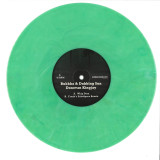
For dubcom's 10th vinyl release we welcome 'Bukkha' & 'Dubbing Sun' to the label with a Deep heavywheight Sound System track featuring 'Donovan Kingjay' on vocals.
B-Side has 'Frenk Dublin' echoing things out with his 'EchoSpace Verion'. Pressed on a 10" Minty Ice vinyl.
out of Stock
Last delivered 3 years ago available to reorder, subject to availability
Hot on the heels of last year’s Mermaids reissue retrospective, Hull’s deep listening house forerunners return: this time revisiting a pair of originals as well as previously unreleased versions.
It’s testament to the depth of feeling that Steve Cobby and David McSherry can conjure, that these tracks sound as potent and impactful as they did when they first came out - and not just for the dance. Throughout their 30+ years, the Yorkshire duo have produced ten albums amid many more collaborations, and transformed the remix into an artform, putting their fingerprints on everyone from Busta Rhymes to The Orb to Radiohead.
This EP collection finds them at the full scope of their powers: from disembodied mood music, to tripped-out dubby beats and raw house sessions for the club. The title track Subtle Body sounds like it drifted in through the window in the middle of a snowy night. Its layered chimes, looped delay feedback and floaty chords (played on a Wurlitzer Electronic Piano that Steve bought from Bill Nelson), mark it out as an enduring piece of ambient music, and a favorite for film-makers, able to soundtrack both haunted memories and afterparty comedowns with finesse. It precedes an unreleased instrumental version of Nightfall from Fila Brazillia’s 2002 album Jump Leads (named Mixmag’s chill album of the year), and as an instrumental, the chunky electro bass and mix of ephemeral tones and bird-like chirrups are brought clearly into focus. The attention to detail is what makes Fila Brazillia’s sound palette so rich, and Nightfall a certified smokers’ anthem.
On the B side, the tempo and temperature rises, and we’re treated to The Light Of Jesus, a favorite from Fila Brazillia’s 1994 debut LP Old Codes: New Chaos. Atop a bumping house groove, the song weaves together smooth organ pads and electrified guitar licks with syrupy bass and gospel-tinged exaltations from Charles Bukowski. The EP rounds out with Room ‘96, a live house jam from Hull’s Room nightclub, and a veritable time capsule back to the halcyon ‘90s rave days, when the lights were still on, everyone was home, and anything seemed possible.
The songs here on Subtle Body might be a window into a time long past, but they remain in the present: and as long as bodies seek pleasure, and dancers want to keep going til sunrise, Fila Brazillia will endure, and soundtrack those moments for us all to get lost in.
out of Stock
Last delivered 7 months ago available to reorder, subject to availability
Tommy The Cat returns to UTTU after recent forays on underground stapes such as E-Beamz, Vibez ’93 & his regular collabs with Coco Bryce - here he drops 4 cosmic-jungle-ambient-breakbeat-braindance workouts for UTTU’s Cosmic Connection series which has previously hosted the likes of Tim Reaper, Kloke and Tommy The Cat himself!
out of Stock
Last delivered 2 years ago available to reorder, subject to availability