
4
pas en stock
Commandez maintenant et nous commanderons l'article pour vous chez notre fournisseur.
20,63 €
Last In: 2 years ago
Commandez maintenant et nous commanderons l'article pour vous chez notre fournisseur.

Pink Blue Marbled Vinyl
Angelo is an EP, named after a car, featuring nine songs Brijean have crafted and carried with them through a period of profound change, loss, and relocation. It finds percussionist and singer Brijean Murphy and multi-instrumentalist/producer Doug Stuart processing the impossible the only way they know how: through rhythm and movement. The months surrounding the acclaimed release of Feelings, their full-length Ghostly International debut in 2021 which celebrated tender self-reflection and new possibilities, rang bittersweet with the absence of touring and the sudden passing of Murphy's father and both of Stuart's parents. In a haze of heartache, the duo left the Bay Area to be near family, resetting in four cities in under two years. Their to-go rig became their traveling studio and these tracks, along with Angelo, became their few constants. Whereas Feelings formed over collaborative jams with friends, Angelo's sessions presented Murphy and Stuart a chance to record at their most intimate, "to get us out of our grief and into our bodies," says Murphy. They explored new moods and styles, reaching for effervescent dance tempos and technicolor backdrops, vibrant hues in contrast to their more somber human experiences. Angelo beams with positivity and creative renewal _ a resourceful, collective answer to "what happens now?". Angelo the car is a 1981 Toyota Celica they got off Craigslist during their first stint in Los Angeles, where Murphy and Stuart have since settled. "Such a bro-y, `80s dude car, it's been super fun to drive around in a new town," Murphy says. "He's older than us, he's a classic, he's got a story." It is a spiritual vehicle with a cinematic appeal, first dropping them off in an alleyway for the scene-setting intro, "Which Way To The Club." The question is quickly resolved by "Take A Trip" as a cruising bassline mingles with crowd sounds, hand-claps, cuíca hiccups, whip-cracks, even a horse neigh. Brijean have found some club on this cross-dimensional trip - the kind of imagined space or chamber within one's self capable of "shifting a fraction of who you are," says Murphy. They wrote the track with the simple intention to be "as free as we could be," adds Stuart, likening the flip on the B section to a realm unlocked: "What if the world changed completely? You open the door to a new room." Next is "Shy Guy," a motivational anthem for the wallflowers among us. Murphy sets up the daydream: "We are in junior high, we're on the dance floor, what's going down, who is dancing, who is not, how are we gonna make them dance?" The narrator, the MC, hypes up the room as conga-driven rhythms bounce between languid synth and guitar lines. "Show me how to move...I feel something...I know you feel it too," Murphy sings sweetly, calling back to the opening lines of Feelings, and this time the audience chants it back. It is easy to picture Brijean performing this one - something they only got to do a handful of times until more recently, opening shows for Khruangbin and Washed Out, an experience they found informative. Murphy explains, "It was inspiring to be out there and let loose more. To see how people can expand their expression on stage gave me more liberty with how I viewed my musicianship. My role for so long was to be a backup percussionist, so why would I ever leave the drums, you know? But then after playing all these runs, you see these artists and realize you can, you have permission." "Angelo" and "Ooo La La" deliver the danciest stretch in Brijean's catalog to date. The title track adopts a deep house pulse replete with strings, hi-hats, and kicks. The latter opts for a funkier groove that foregoes verses in favor of warbled hums and extended breakdowns. What follows is perhaps the duo's dreamiest run, a comedown initiated with the honey-hued interlude "Colors" drifting into "Where Do We Go?", a tropicália reverie where Murphy contemplates the passage of time and space. It all culminates in "Caldwell's Way," a fond farewell to their Bay Area community - "a part of my life that I knew couldn't come back," says Murphy. Above shimmering organ sounds, lush strings, and the birdcall of their former neighborhood, she wistfully articulates the uncertainty of moving on by remembering the characters dear to them. There's the wisdom of their neighbor, Santos, who refused payment when helping them move out: "I'd rather have 100 friends than 100 dollars." And the song's namesake, Benjamin Caldwell Brown, a friend and club night cohort for many years. "I'm only miles away, maybe I'm just feeling lonely," the line resigns to warm nostalgia, and "Nostalgia" runs the closing credits to this healing and transportive collection.
Commandez maintenant et nous commanderons l'article pour vous chez notre fournisseur.

Joel Vandroogenbroeck was an arranger, conductor, producer and, above all, a unique multi-instrumentalist in the world of music. The Belgian artist was also famous for being the only permanent member of the group Brainticket and the main promoter of its creativity, often renewed with the contribution of exotic instruments. At the dawn of the Seventies, this versatile musician began a parallel life as a composer of singular music libraries tailored to comment documentary images. “L'Immagine Del Suono” was one of them, originally released by Italy's Flirt Records and now repressed on vinyl
by Musica Per Immagini for the first time. This album circulated, however, unnoticed in a limited number of copies among insiders, only rediscovered later by fans, thus raising Joel Vandroogenbroeck as a real pioneer of ambient and new age music.
It is appropriate to consider the twelve short-lived pieces of L'Immagine Del Suono” as a sort of continuous and visionary experiment, with the addition of electronic gasps, a strong dose of inevitable psychedelia, fragments of synthesized jazz, all coming from experiences both internal and external, hallucinatory and hedonistic. All of this combined creates a mysterious and abstract hybrid. Sonic raw material is sculpted with artisanal care, at times twisted and cryptic, characterized by a transversal irony, to the point that the interference of rock elements in the course of the set divert the listener's attention and momentarily interrupt the flow of consciousness. “L'Immagine Del Suono” is a concentrated example of the avant-garde, free from categorisation of any kind, developed in a non-commercial key and, equally, is drawn from a direct line via what was previously expressed within the folds of the then contemporary works of Brainticket.
il devrait être publié sur 14.04.2023

"We've now been at this since 2010 and over the years we've really tried to deliver the kind of house music (and beyond) that we would play, listen and dance to ourselves.
We really tried to avoid the dangerous traps of following trends which in the long run can water down labels to just a music portal instead of a music brand with character.
Basically, we aim to deliver our own musical personality via artists and producers that we love and respect. To sum things up, we are proud to present Local Talk - 13 Years Later.
On this 13 Years Later compilation we reached out to some of our friends on the house scene and as always, we try and aim for a wide spectrum of styles.
You'll hear everything from classic house, deep house and soulful house to Detroit(ish) and Jazz(ish) from some of our fave producers.
We sincerely hope you will enjoy this selection of dance MUSIC as much as we do and that there's something for everyone on our compilation."
Commandez maintenant et nous commanderons l'article pour vous chez notre fournisseur.

Franco-Swiss composer & director of INA GRM François J. Bonnet, aka Kassel Jaeger, returns with a new solo album. Following a compositional approach stemming from the musique concrète tradition, without adopting a structuralist aesthetic, Shifted in Dreams explores a wide range of instruments and techniques, going seamlessly from instrumental improvisation to field recording, via micro-editing and the use of asynchronous loops. Mixing the electronic sounds of an ARP 2500 synthesizer with the acoustic drones of a positive organ, articulating guitar layers with the resonance of the Cristal Baschet, bringing together recordings of slamming windows and sound produced by complex modular synthesis patches, Bonnet offers a rich and generous palette of sounds, inviting a constantly renewed sonic investigation.
Commandez maintenant et nous commanderons l'article pour vous chez notre fournisseur.

Commandez maintenant et nous commanderons l'article pour vous chez notre fournisseur.

Commandez maintenant et nous commanderons l'article pour vous chez notre fournisseur.

Paolo Aniello FKA New Digital Fidelity returns one final time since his last appearance on Italian Synth Planetarium – Sistema 1 in 2020 and readies some serious and sexy goodness for 2023.
“Gonna Touch The Sky” marks his debut on Moods & Grooves and there is no doubt that it will literally make you touch the sky! The EP opens with the reshape from none other than deep house legend Fred P. When it come to (ultra) deep house beautiness, Fred is the real don. Melodic, dreamy and groovy. Simply what you would expect from him and what he does best.
To follow is the original mix, awash in syncopated tribal rhythms, gorgeous female vocals and a rich tapestry of ethereal pad. “Gonna Touch The Sky” is a dancefloor-pleasing Afro house cut à-la Ron Trent/Trinidadian Deep featuring Sasha Paige on lead vocal and Rhia Reneè on background vocals that bubble over a deep, tribal groove.
On the flip, “Make Up Your Mind” takes tribal rhythms to a new, more mental level. It’s an Afro-Chi-meets-Detroit affair. The percussive rhythms and energy that constantly interplays with the synth line create an uplifting basement tune that could safely run at opening, peak time, or closing time. Last but not least, “Horizon” speaks for itself. It will definitely transport you to new horizons, toward a tropical beach at sunset, closing this incredible journey.
Commandez maintenant et nous commanderons l'article pour vous chez notre fournisseur.

Dwight Trible announces new album “Ancient Future” out 17th March via Gearbox Records + Shares new single “Truth” Album features special guests Kamasi Washington, Georgia Anne Muldrow, Greg Paul, Megashia Jackson, G. E. Stinson, André Gouché, John Beasley, and Rene Fisher Today, the inimitable jazz vocalist, activist, and nominal godfather of the LA jazz scene, Dwight Trible, returns with the announcement of his new album “Ancient Future”. Out 17th March via London jazz aficionados and analog specialists Gearbox Records, the new record follows his critically acclaimed album “Mothership”, which was released in 2019 and saw him collaborate with the likes of Kamasi Washington, Mark de Clive-Lowe, Miguel Atwood-Fergus, and more. On “Ancient Future”, Trible collaborates once again with Kamasi Washington (saxophone), as well as lauded LA multi-instrumentalist, Georgia Anne Muldrow (vocals), who is signed to Brianfeeder and has previously worked with the likes of Madlib, Denzel Curry, Mos Def, Blood Orange, and Brittany Howard. Elsewhere, the record also features Grammy nominated pianist, John Beasley; Kamaal Williams touring drummer Greg Paul; gospel bassist André Gouché; percussionist and backing vocalist, Megashia Jackson; LA guitarist G. E. Stinson; and percussionist Rene Fisher.
il devrait être publié sur 17.03.2023

The word Babble brings two things to mind: A person pouring out their thoughts with reckless abandon, or a gentle sound coming from water cascading over rocks as it flows past. In the case of this reissue from Kendra Morris, Babble is a sublime melding of these two meanings. The original release in 2016 came in the form of a self-released EP. A fan cult favorite; it has now grown to include three additional tracks: Playing Games, Dial Back and Ride On. The journey through human emotion is accomplished through Kendra's songs, bringing us, the listeners, into her enchanted world of pain and strength, feeling renewed on the other side. The ability to take trepidation, desire, and insecurities and turn them into comfort and make you want to get up and move with them is a selfless gift she grants to us. With the support of Karma Chief Records (A division of Colemine Records), Babble is getting the official release it deserves.
Commandez maintenant et nous commanderons l'article pour vous chez notre fournisseur.

"Death or Glory? ist das fünfte Studioalbum der
deutschen Heavy-Metal-Band Running Wild, das am 8.
November 1989 über Noise Records veröffentlicht wurde.
Es ist das letzte Album der Band mit Gitarrist Majk Moti
und Schlagzeuger Ian Finlay. Als eine ihrer
erfolgreichsten Veröffentlichungen enthält es die
Konzertfavoriten "Riding the Storm" und "Bad to the
Bone". Diese spezielle silbergraue Vinyl-Version ist in
limitierter Auflage erhältlich.
il devrait être publié sur 10.03.2023

American singer, actor, dancer, and civil rights activist Eartha Kitt was
celebrated for her highly distinctive singing style
Her recordings of "C'est Si Bon" and the Christmas novelty song "Santa Baby"became instant classics and are presented here along with many other hits.
Limited edition audiophile pressing on 180gram premium vinyl.
Eartha Kitt epitomized the idea of the sex-kitten chanteuse, rising to fame with a nightclub act centred on her slinky stage presence and her throaty purr of a voice. As much as she enjoyed vamping it up, she also projected the image of an exotic international sophisticate. She brought a definite zest to her torch songs and Orson Welles once called her "the most exciting woman in the world".
Eartha Kitt , lead vocals on all tracks,
plus: Henri René Orchestra,
Maurice Levine Orchestra,
Shorty Rogers Orchestra,
Anton Coppola Orchestra.
New York, 1953-59
il devrait être publié sur 10.03.2023

The word Babble brings two things to mind: A person pouring out their thoughts with reckless abandon, or a gentle sound coming from water cascading over rocks as it flows past. In the case of this reissue from Kendra Morris, Babble is a sublime melding of these two meanings. The original release in 2016 came in the form of a self-released EP. A fan cult favorite; it has now grown to include three additional tracks: Playing Games, Dial Back and Ride On. The journey through human emotion is accomplished through Kendra's songs, bringing us, the listeners, into her enchanted world of pain and strength, feeling renewed on the other side. The ability to take trepidation, desire, and insecurities and turn them into comfort and make you want to get up and move with them is a selfless gift she grants to us. With the support of Karma Chief Records (A division of Colemine Records), Babble is getting the official release it deserves.
il devrait être publié sur 03.03.2023

Coming February 2023 pre-order your copy today!
AAA Audiophile 200g 33rpm Double LP!
Mastered by René Laflamme at 2xHD on Nagra Equipment!
Cut All Analogue at Bernie Grundman Mastering!
Plated by Master Craft & Pressed at Le Vinylist in Quebec!
Jazz at the Pawnshop is a multi-session recording made by Swedish sound engineer Gert Palmcrantz on December 6-7, 1976, at Jazzpuben Stampen (Pawnshop) in Stockholm, Sweden. A pawnshop had operated on the site prior to the jazz club. Proprius Records founder Jacob Boethius produced the album, and it has been issued several times under multiple labels and formats. The album is regarded by many audiophiles as one of the best jazz recordings of the 20th Century.
The recording features Arne Domnérus (alto sax, clarinet), Bengt Hallberg (piano), Lars Erstrand (vibes), Georg Riedel (bass), and Egil Johansen (drums).
In the high end audio world, audiophile sound engineer René Laflamme has carved out a reputation for definition of excellence. Manufacturers of audiophile equipment such as Nagra Audio, renowned D to A converter manufacturer dCS Ltd and high-end turntable manufacturers, Kronos Audio seek his expertise in representation and assistance in design. Audiophile quality microphone designer and 8 times winner of 'Best sound in show' at high-end audio equipment conventions, Laflamme uses his knowledge and unfailing instinct to match various audio components to create the best all-encompassing sound experience. The exclusive 2xHD system is the fruit of Laflamme's total experience and imagination.
il devrait être publié sur 24.02.2023

Presented here on limited edition gold vinyl, ‘Ogdens' Nut Gone Flake’ is the third studio album, and only concept album by the Small Faces. Originally released in May 1968, the LP peaked at number one on the UK Album Charts the following month, where it remained for six weeks and is the Small Faces' best-known and most successful album.
Including the hit tracks ‘Lazy Sunday’, ‘Ogdens Nut Gone Flake’ and ‘Rene’, side two of the LP is based on an original fairy tale concept about a boy called Happiness Stan - six songs interlinked with narration provided by comic performer Stanley Unwin in his unique, nonsensical private language.
It ultimately became the group's final studio album during their original incarnation. The album title and distinctive packaging design was a parody of Ogden's Nut-brown Flake, a brand of tinned loose tobacco that was produced in Liverpool from 1899 onwards by Thomas Ogden
il devrait être publié sur 24.02.2023

White Vinyl[33,24 €]
DOUBLE BLACK LP : 2 x 140 G Black Vinyl , Sleeve & 2 x Heavy Weight Printed Inner with UV Gloss Finish
Legendary electronic music duo Orbital return Early 2023 with new album “Optical Delusion”, the Hartnoll brothers first studio album since 2018’s Monster’s Exist. Recorded in Orbital’s Brighton studio, “Optical Delusion” includes contributions from Sleaford Mods, Penelope Isles, Anna B Savage, The Little Pest, Dina Ipavic, Coppe, and perhaps most surprisingly, The Medieval Baebes.
Earlier this year, Orbital celebrated their storied history with “30 Something” which, unlike other Best Of’s, contains reworks, remakes, remixes and re-imaginings of landmark Orbital tracks including “Chime”, “Belfast”, “Halcyon”, “Satan”, and “The Box”
SHORT BIOG:
“A human being experiences himself, his thoughts and feelings as something separate from the rest of humanity – a kind of optical delusion of his consciousness. This delusion is a kind of prison for us, restricting us to our personal desires and to affection for a few persons nearest to us. Our task must be to free ourselves from this prison…”
You many have seen this quote attributed to Albert Einstein on social media, the archetypal Smartest Guy Ever apparently having an out-of-character religious epiphany. It certainly leapt out at Paul Hartnoll of Orbital who spotted it in Michael Pollan’s 2018 book How to Change Your Mind: What the New Science of Psychedelics Teaches Us About Consciousness, Dying, Addiction, Depression and Transcendence.
“As soon as I saw ‘optical delusion’ I thought Oh hey, that’s the album title,” says Paul. “It just seemed to say so much about how people construct their own realities, how we see patterns that aren’t there, how we see what we want to see.
“But it’s actually a misquote. He never quite said that. In the German original what he’s really saying is that human experience is as relative as physics. Wouldn’t it be good if we could accept that, and find a kind of universal theory of everything for the human race? Then you look at everything from history to art to your Twitter feed and you think yeah, that’s what we’re all trying to do all of the time…”
Hence ‘Optical Delusion’, the tenth original Orbital album and the latest in a burst of renewed post-pandemic creativity for two brothers who’ve stayed at the top of their game longer than anyone from the post-1988 Class of Acid House.
Now with ‘Optical Delusion’ the Hartnolls dig deeper into the unquiet psyche of our increasingly surreal and disordered world. Sketched out partly during lockdown but fully recorded in the uncertain After Times, the album summons up conflicting emotions and sometimes beguiling images from years when the science fiction doomsdays that the Hartnolls watched on TV as kids finally came true. There are mesmeric tracks with names like ‘The New Abnormal’ and ‘Requiem For The Pre-Apocalypse’ and ‘Day One’. But there are also straight-up bangers and ethereal cosmic dreams, abstract sound wars and deeply human songs of separation and loss.
And it all starts with a bang. Lead single ‘Dirty Rat’, an outright Fall-meets-Front-242 class rant with vocals by Sleaford Mods mob orator Jason Williamson, harks right back to the Hartnolls’ days of politicised anarcho-squatpunk. It began as a remix swap (Orbital did the Sleafords’ ‘I Don’t Rate You’) and morphed into a comic, brutal, bass-driven harangue not so much against our rulers but at the petty, mean-spirited, frightened, Mail-reading voters who put them there: the people who are “blaming everyone in hospital/blaming everyone at the bottom of the English Channel/blaming everyone who doesn’t look like a fried animal.”
Also key to the album is opening track ‘Ringa Ringa (The Old Pandemic Folk Song)’ which returns to an Orbital truism, that time always becomes a loop. This chugging, cyclical Orbital groove gives way to an unnerving past-meets-present timeslip fit for ‘Sapphire And Steel’ as goth maenads The Mediaeval Baebes materialise to sing ‘Ring O’Roses’ – the innocent nursery rhyme whose roots are in the Black Death.
“I’ve always liked folk music and mediaeval sounds,” says Paul, himself an occasional Morris dancer. “I had the basis of that track and I wanted to spin it off somehow.” Trawling his archives he stumbled on The Mediaeval Baebes’ version of ‘Ring O’Roses’ “and my hackles just went up. I was like, my God, this is the original pandemic folk song.”
?his being Orbital, there are collaborations galore on the album, the roles once played by Alison Goldfrapp, Lady Leshurr or David Gray now filled by new talents. London singer-songwriter Anna B Savage contributes a compellingly fragile, Anohni-like vocal to ‘Home’, in which nature reclaims the scorched and vacant mega-cities. ‘Day One’ is a pulsing techno track featuring the singer Dina Ipavic. Paul got in touch with her after working on a score for a sculpture show of giant robotic installations by his friend Giles Walker during the pandemic. First Paul cut up his own score and Ipavic’s vocals on the track The Crane, which appears on the deluxe version of the album. Then he thought, Why not work with her for real? The result is school of ‘Belfast’, a bassy dreamscape with vocalised clouds billowing above.
The pensive ‘Are You ?live?’ adds to the Orbital product range of existential questions (‘Are We Here?’, ‘Where Is It Going?’) in collaboration Bella Union signings Penelope Isles, AKA brother and sister act Lily and Jack Wolter. “They’re our studio mates, they work upstairs!” says Paul happily. “And they’ve both got amazing voices.”
But Orbital are Orbital and never far from the dancefloor. “Eventually the more abrasive bits came back into the fold…” ‘You Are The Frequency’, first of two tracks to feature mysterious vocalist The Little Pest, surrounds the listener with warped voices ordering you to the dancefloor (Phil: “we wanted the idea that the music is kind of absorbing you”). And the second, the sinister ‘What A Surprise’, traps you in a paranoid electronic hall of mirrors.
In another nod to Orbital’s resurgent past the cover artwork once again comes from fine art painter John Greenwood, creator of fantastical grotesques for the covers of ‘Snivilisation’, ‘In Sides’ and Orbital’s most recent album, 2018’s ‘Monsters Exist’. Orbital had just had a slick Mark Farrow cover for ‘30 Something’ – this is a return to the overripe and bulbous techno-organic constructions that somehow express Orbital’s own uncontrollably fertile sound.
There are gaps in the future that Orbital are desperate to fill too; there will be tours and festivals and rooms and fields full of people. Those long paralysed months when we had little to look forward to but a Zoom DJ set made Paul and Phil appreciate the things that make life worth living.
Commandez maintenant et nous commanderons l'article pour vous chez notre fournisseur.

Black Vinyl[31,05 €]
2 x Solid White LP, 5mm spine Sleeve UV Gloss Finish, 2x Heavy Weight Printed Inner Sleeve UV Gloss finish, marketing sticker.
Legendary electronic music duo Orbital return Early 2023 with new album “Optical Delusion”, the Hartnoll brothers first studio album since 2018’s Monster’s Exist. Recorded in Orbital’s Brighton studio, “Optical Delusion” includes contributions from Sleaford Mods, Penelope Isles, Anna B Savage, The Little Pest, Dina Ipavic, Coppe, and perhaps most surprisingly, The Medieval Baebes.
Earlier this year, Orbital celebrated their storied history with “30 Something” which, unlike other Best Of’s, contains reworks, remakes, remixes and re-imaginings of landmark Orbital tracks including “Chime”, “Belfast”, “Halcyon”, “Satan”, and “The Box”
SHORT BIOG:
“A human being experiences himself, his thoughts and feelings as something separate from the rest of humanity – a kind of optical delusion of his consciousness. This delusion is a kind of prison for us, restricting us to our personal desires and to affection for a few persons nearest to us. Our task must be to free ourselves from this prison…”
You many have seen this quote attributed to Albert Einstein on social media, the archetypal Smartest Guy Ever apparently having an out-of-character religious epiphany. It certainly leapt out at Paul Hartnoll of Orbital who spotted it in Michael Pollan’s 2018 book How to Change Your Mind: What the New Science of Psychedelics Teaches Us About Consciousness, Dying, Addiction, Depression and Transcendence.
“As soon as I saw ‘optical delusion’ I thought Oh hey, that’s the album title,” says Paul. “It just seemed to say so much about how people construct their own realities, how we see patterns that aren’t there, how we see what we want to see.
“But it’s actually a misquote. He never quite said that. In the German original what he’s really saying is that human experience is as relative as physics. Wouldn’t it be good if we could accept that, and find a kind of universal theory of everything for the human race? Then you look at everything from history to art to your Twitter feed and you think yeah, that’s what we’re all trying to do all of the time…”
Hence ‘Optical Delusion’, the tenth original Orbital album and the latest in a burst of renewed post-pandemic creativity for two brothers who’ve stayed at the top of their game longer than anyone from the post-1988 Class of Acid House.
Now with ‘Optical Delusion’ the Hartnolls dig deeper into the unquiet psyche of our increasingly surreal and disordered world. Sketched out partly during lockdown but fully recorded in the uncertain After Times, the album summons up conflicting emotions and sometimes beguiling images from years when the science fiction doomsdays that the Hartnolls watched on TV as kids finally came true. There are mesmeric tracks with names like ‘The New Abnormal’ and ‘Requiem For The Pre-Apocalypse’ and ‘Day One’. But there are also straight-up bangers and ethereal cosmic dreams, abstract sound wars and deeply human songs of separation and loss.
And it all starts with a bang. Lead single ‘Dirty Rat’, an outright Fall-meets-Front-242 class rant with vocals by Sleaford Mods mob orator Jason Williamson, harks right back to the Hartnolls’ days of politicised anarcho-squatpunk. It began as a remix swap (Orbital did the Sleafords’ ‘I Don’t Rate You’) and morphed into a comic, brutal, bass-driven harangue not so much against our rulers but at the petty, mean-spirited, frightened, Mail-reading voters who put them there: the people who are “blaming everyone in hospital/blaming everyone at the bottom of the English Channel/blaming everyone who doesn’t look like a fried animal.”
Also key to the album is opening track ‘Ringa Ringa (The Old Pandemic Folk Song)’ which returns to an Orbital truism, that time always becomes a loop. This chugging, cyclical Orbital groove gives way to an unnerving past-meets-present timeslip fit for ‘Sapphire And Steel’ as goth maenads The Mediaeval Baebes materialise to sing ‘Ring O’Roses’ – the innocent nursery rhyme whose roots are in the Black Death.
“I’ve always liked folk music and mediaeval sounds,” says Paul, himself an occasional Morris dancer. “I had the basis of that track and I wanted to spin it off somehow.” Trawling his archives he stumbled on The Mediaeval Baebes’ version of ‘Ring O’Roses’ “and my hackles just went up. I was like, my God, this is the original pandemic folk song.”
?his being Orbital, there are collaborations galore on the album, the roles once played by Alison Goldfrapp, Lady Leshurr or David Gray now filled by new talents. London singer-songwriter Anna B Savage contributes a compellingly fragile, Anohni-like vocal to ‘Home’, in which nature reclaims the scorched and vacant mega-cities. ‘Day One’ is a pulsing techno track featuring the singer Dina Ipavic. Paul got in touch with her after working on a score for a sculpture show of giant robotic installations by his friend Giles Walker during the pandemic. First Paul cut up his own score and Ipavic’s vocals on the track The Crane, which appears on the deluxe version of the album. Then he thought, Why not work with her for real? The result is school of ‘Belfast’, a bassy dreamscape with vocalised clouds billowing above.
The pensive ‘Are You ?live?’ adds to the Orbital product range of existential questions (‘Are We Here?’, ‘Where Is It Going?’) in collaboration Bella Union signings Penelope Isles, AKA brother and sister act Lily and Jack Wolter. “They’re our studio mates, they work upstairs!” says Paul happily. “And they’ve both got amazing voices.”
But Orbital are Orbital and never far from the dancefloor. “Eventually the more abrasive bits came back into the fold…” ‘You Are The Frequency’, first of two tracks to feature mysterious vocalist The Little Pest, surrounds the listener with warped voices ordering you to the dancefloor (Phil: “we wanted the idea that the music is kind of absorbing you”). And the second, the sinister ‘What A Surprise’, traps you in a paranoid electronic hall of mirrors.
In another nod to Orbital’s resurgent past the cover artwork once again comes from fine art painter John Greenwood, creator of fantastical grotesques for the covers of ‘Snivilisation’, ‘In Sides’ and Orbital’s most recent album, 2018’s ‘Monsters Exist’. Orbital had just had a slick Mark Farrow cover for ‘30 Something’ – this is a return to the overripe and bulbous techno-organic constructions that somehow express Orbital’s own uncontrollably fertile sound.
There are gaps in the future that Orbital are desperate to fill too; there will be tours and festivals and rooms and fields full of people. Those long paralysed months when we had little to look forward to but a Zoom DJ set made Paul and Phil appreciate the things that make life worth living.
Commandez maintenant et nous commanderons l'article pour vous chez notre fournisseur.

The 2nd solo EP by Bielefeld’s finest RR on Feuilleton is bringing jazzy & classic house music feels toge-ther with a fresh & futuristic twist on 5 cuts - dedicated to the fine stereo systems & sophisticated dancefloors on the planet. Written & produced by René Raabe, mixdown by Tim Eder, mastering by Sven Weisemann, lacquer cut by Stefan Betke at Scape Mastering and photography by Paula Theiss.
Commandez maintenant et nous commanderons l'article pour vous chez notre fournisseur.

Priscilla Renea Hamilton , known professionally as Muni Long (pronounced "money long"), is an American singer and songwriter. Under her birth name, her solo debut studio album, Jukebox, was released through Capitol Records in 2009. She then spent the following decade co-writing songs for other recording artists, including the singles "California King Bed" by Rihanna, "Worth It" by Fifth Harmony, "Love So Soft" by Kelly Clarkson, "Imagine" by Ariana Grande, and the global chart-topper "Timber" by Pitbull featuring Kesha. She has received four Grammy Award nominations throughout her career, including for Best New Artist, Best R&B Song ("Hrs & Hrs"), and Best R&B Performance ("Hrs & Hrs"). She also received a nomination for Album of the Year through her work on Back of My Mind (2021) by H.E.R. . Public Displays of Affection is a soundtrack of intimacy that seemed to offer an answer: You let love lead. "I am a lover," Muni Long explains. "I prefer to be kind. I believe in fairytales. The reason Public Displays of Affection worked is because love was absent in R&B." For that breakthrough project, Muni wanted to mimic the ebbs and flows of a relationship, dipping and diving between moods and sounds - which is real, because love can be tumultuous, too.
il devrait être publié sur 10.02.2023

The pandemic affected each of us in different ways. From colossal stars to complete unknowns, it up-ended our lives, and demolished our expectations.
Take Lil Skies. The Philly talent found himself back in his home city, completing a journey that began in pace on his 2017 mixtape ‘Life Of A Dark Rose’. Re-connecting with his roots – his moniker is a nod to his father, while 2019 debut album ‘Shelby’ named after his mother – he’s delivered some of his most potent, open material to date.
‘Unbothered’ is a tight, focussed return – a snappy 14 tracks, is exudes a sense of purpose, retaining the swagger of his debut while upping the word play. It’s an inward journey, one exemplified by those early viral singles ‘OK’ and ‘Havin’ My Way’ but it’s also lit up by some special guests.
Working with alacrity, Lil Skies built ‘Unbothered’ from a series of freestyles, yet every element on the album feels exact, placed with real precision. Using a mere three features – a trilogy that boasts Wiz Khalifa, Lil Durk, and Jodeci – the emphasis is placed on his vocals, on his ability to utilise the voice as an instrument.
‘Trust Nobody’ hinges on fragile paranoia, while ‘Riot’ bristles with a palpable sense of rage. An attempt to channel the repressed – and often extreme – emotions of the past 12 months, ‘Unbothered’ pitches a cool facade against a depth of feeling that often threatens to explode – just check out ‘Think Deep Don’t Sink’ for a mission statement.
Working within clear definitions, ‘Unbothered’ feels more distilled than Lil Skies’ previous work, the sound of someone choosing to work with what they know. Lyrically it’s marked by pain and redemption, lingering on messages of perseverance, and renewal. He may claim to be ‘Unbothered’, but the marks of the pandemic are there for all to see on a brave, at times powerful, new album
Commandez maintenant et nous commanderons l'article pour vous chez notre fournisseur.

il devrait être publié sur 03.02.2023

The recordings on this album constitute the material from a June 20th, 1968 studio session recorded by Hans Georg Brunner-Schwer (HGBS) and Joachim-Ernst Brendt in Germany's Black Forest. This is no ordinary recording. This enthralling Bill Evans session was recorded five days after a famous performance at the 1968 Montreux jazz festival by Evans, bassist Eddie Gomez and drummer Jack DeJohnette. Verve's Montreux live recording won a Grammy, but this studio session has been in the vaults ever since.
For the first time this album was mastered in all analogue (AAA), from the original analog master. Mastered by René Laflamme at 2xHD Mastering lab and cut at Bernie Grundman at 45 RPM.
The 2xHD Fusion Mastering System is an innovation in audio restoration for a virtual audio reality. In the constant evolution of its proprietary mastering process, 2xHD has progressed to a new phase called 2xHD Fusion, integrating the finest state-of-the-art analog Nagra-T tape recorder modified with high-end tube playback technology, wired with OCC silver cable for better transparency and 3D imaging. 2xHD Vinyl are sourced from first generation analog recordings without any digital corruption. The cutting is done at Bernie Grundman Mastering Lab on tube cutting equipment.
il devrait être publié sur 31.01.2023

If naming is a form of claiming, of being claimed, how is one tethered to both the physical landscape that surrounds us, as well as our own internal emotional landscape_at times calm, at times turbulent, and ever changing? H.C. McEntire's new album Every Acre grapples with those themes_themes that encompass grief, loss, and links to land and loved ones. And naming_claiming land, claiming self, being claimed by ancestry and heritage_permeates the hauntingly beautiful landscape that is this poignant collection of songs. The songs straddle the line between music and poetry. In "New View," McEntire cites poets "Day, Ada, and Laux, Berry, and Olds"_fixtures in the world of writing, whose works are beacons of light over bleak horizons. The beginning of the song is backed by soft guitar plucks that fall on the downbeat and spangle like stars, and, throughout, guitar, bass, and drums swell together gently, mimicking ebbing and flowing tides under the moon. McEntire's voice (at once tender and fierce) intones the truth of both giving and taking, releasing and claiming: "Bend me, break me, split me right in two. Mend me, make me_I'll take more of you." Permeated by heartbeat-like drums, "Shadows" develops quiet ruminations on surrender and loss_reminiscing, moving on. This ponderous, dreamlike song asks the question of how "to make room." How does one make room, for self and for renewal and surrender, when it is so difficult to leave what you know behind? Playing with slivers of descending chromatics, along with the occasional downward-stepping bass, here McEntire yearns for home, and for nesting. Perhaps one of the more grief-stricken songs, "Rows of Clover" is a lamentation, one that touches on the loss of a "steadfast hound." The lone piano in the beginning of the song is rhythmically hymn-like. The stark verse arrangement gradually leads to a chorus that reads like a moody exhale, swollen with lush guitar strums and a Bill Withers-esque understated soul groove. But what stands out the most is an image of being "down on your knees, clawing at the garden"_the only explicit mention of a person in the song. "It ain't the easy kind of healing," sings McEntire, seemingly from further and further away as her voice echoes; and healing ta;kes time, time takes time_truths that linger painfully. "Dovetail" is a song that tells of various women. The song moves back and forth between solo piano and the addition of bass and drums under vocals. McEntire's gentle, trembling vibrato_harmonized in thirds in a celebratory manner_calls to mind a rejoicing psalm and shines through these images, leaving the listener cuttingly fraught with emotions_such as wonder, sadness, nostalgia_that can only arise with these juxtapositions. Gracious (and graceful) with its lilting melodies and lush harmonies, Every Acre ex - plores the acres of our physical and emotional homes. These songs are reaching for the kind of home that we all seek: one where we can rest and lay down (or tuck away) our burdens of loss. And maybe, moving through every acre of a world that often tries to tear our sense of identity and heritage down, McEntire sheds light on what it is to be human in this life_both stingy and gracious, both hurtful and kind.
il devrait être publié sur 27.01.2023

Orange Viny
If naming is a form of claiming, of being claimed, how is one tethered to both the physical landscape that surrounds us, as well as our own internal emotional landscape_at times calm, at times turbulent, and ever changing? H.C. McEntire's new album Every Acre grapples with those themes_themes that encompass grief, loss, and links to land and loved ones. And naming_claiming land, claiming self, being claimed by ancestry and heritage_permeates the hauntingly beautiful landscape that is this poignant collection of songs. The songs straddle the line between music and poetry. In "New View," McEntire cites poets "Day, Ada, and Laux, Berry, and Olds"_fixtures in the world of writing, whose works are beacons of light over bleak horizons. The beginning of the song is backed by soft guitar plucks that fall on the downbeat and spangle like stars, and, throughout, guitar, bass, and drums swell together gently, mimicking ebbing and flowing tides under the moon. McEntire's voice (at once tender and fierce) intones the truth of both giving and taking, releasing and claiming: "Bend me, break me, split me right in two. Mend me, make me_I'll take more of you." Permeated by heartbeat-like drums, "Shadows" develops quiet ruminations on surrender and loss_reminiscing, moving on. This ponderous, dreamlike song asks the question of how "to make room." How does one make room, for self and for renewal and surrender, when it is so difficult to leave what you know behind? Playing with slivers of descending chromatics, along with the occasional downward-stepping bass, here McEntire yearns for home, and for nesting. Perhaps one of the more grief-stricken songs, "Rows of Clover" is a lamentation, one that touches on the loss of a "steadfast hound." The lone piano in the beginning of the song is rhythmically hymn-like. The stark verse arrangement gradually leads to a chorus that reads like a moody exhale, swollen with lush guitar strums and a Bill Withers-esque understated soul groove. But what stands out the most is an image of being "down on your knees, clawing at the garden"_the only explicit mention of a person in the song. "It ain't the easy kind of healing," sings McEntire, seemingly from further and further away as her voice echoes; and healing ta;kes time, time takes time_truths that linger painfully. "Dovetail" is a song that tells of various women. The song moves back and forth between solo piano and the addition of bass and drums under vocals. McEntire's gentle, trembling vibrato_harmonized in thirds in a celebratory manner_calls to mind a rejoicing psalm and shines through these images, leaving the listener cuttingly fraught with emotions_such as wonder, sadness, nostalgia_that can only arise with these juxtapositions. Gracious (and graceful) with its lilting melodies and lush harmonies, Every Acre ex - plores the acres of our physical and emotional homes. These songs are reaching for the kind of home that we all seek: one where we can rest and lay down (or tuck away) our burdens of loss. And maybe, moving through every acre of a world that often tries to tear our sense of identity and heritage down, McEntire sheds light on what it is to be human in this life_both stingy and gracious, both hurtful and kind.
il devrait être publié sur 27.01.2023

If naming is a form of claiming, of being claimed, how is one tethered to both the physical landscape that surrounds us, as well as our own internal emotional landscape at times calm, at times turbulent, and ever changing? H.C. McEntire’s new album Every Acre grapples with those themes that encompass grief, loss, and links to land and loved ones. And naming claiming land, claiming self, being claimed by ancestry and heritage permeates the hauntingly beautiful landscape that is this poignant collection of songs. The songs straddle the line between music and poetry. In “New View,” McEntire cites poets “Day, Ada, and Laux, Berry, and Olds” fixtures in the world of writing, whose works are beacons of light over bleak horizons. The beginning of the song is backed by soft guitar plucks that fall on the downbeat and spangle like stars, and, throughout, guitar, bass, and drums swell together gently, mimicking ebbing and flowing tides under the moon. McEntire’s voice (at once tender and fierce) intones the truth of both giving and taking, releasing and claiming: “Bend me, break me, split me right in two. Mend me, make me I’ll take more of you.” Permeated by heartbeat-like drums, “Shadows” develops quiet ruminations on surrender and loss reminiscing, moving on. This ponderous, dreamlike song asks the question of how “to make room.” How does one make room, for self and for renewal and surrender, when it is so difficult to leave what you know behind? Playing with slivers of descending chromatics, along with the occasional downward-stepping bass, here McEntire yearns for home, and for nesting. Perhaps one of the more grief-stricken songs, “Rows of Clover” is a lamentation, one that touches on the loss of a “steadfast hound.” The lone piano in the beginning of the song is rhythmically hymn-like. The stark verse arrangement gradually leads to a chorus that reads like a moody exhale, swollen with lush guitar strums and a Bill Withers–esque understated soul groove. But what stands out the most is an image of being “down on your knees, clawing at the garden” the only explicit mention of a person in the song. “It ain’t the easy kind of healing,” sings McEntire, seemingly from further and further away as her voice echoes; and healing takes time, time takes time truths that linger painfully. “Dovetail” is a song that tells of various women. The song moves back and forth between solo piano and the addition of bass and drums under vocals. McEntire’s gentle, trembling vibrato harmonized in thirds in a celebratory manner calls to mind a rejoicing psalm and shines through these images, leaving the listener cuttingly fraught with emotions such as wonder, sadness, nostalgia that can only arise with these juxtapositions. Gracious (and graceful) with its lilting melodies and lush harmonies, Every Acre explores the acres of our physical and emotional homes. These songs are reaching for the kind of home that we all seek: one where we can rest and lay down (or tuck away) our burdens of loss. And maybe, moving through every acre of a world that often tries to tear our sense of identity and heritage down, McEntire sheds light on what it is to be human in this life both stingy and gracious, both hurtful and kind.
il devrait être publié sur 27.01.2023

* 2022 Repress ** Profondo Nero compiled by Cinema Royale
Profondo Nero narrates a storyline that goes beyond the borders of Italy’s musical legacy. Cutting across the face of Italo disco’s leftfield musicians between the early and late ‘80s, Profondo Nero champions a multi-faceted sound that nods to the blueprint of Italo disco but tries to dig deeper. The music is unmistakably Italo disco but moves away from the familiar classic sound. Amsterdam based collector Cinema Royale stitches together eleven tracks from 1983 – 1989, celebrating a sound he fittingly describes as ‘leftfield Italo’.
The compilation connects the dots between soulful disco (Louise Freeman – Mirage), synth-pop (Mark – Dreamland), electro-rap (Loukas Thanos – Jazzburger), breaks (Santoro – Lover Message), 80s dub disco (Jet Set – Love Break), Balearic (Isamar & Compañia - No Estas), boogie (Tom Hooker – Talk With Your Body) and proto-house (International Music System - An English ’93).
Profondo Nero’s title salutes the legendary oeuvre of Italian horror director Dario Argento. His Profondo Rosso (1975) is a classic example of exquisite cinematic storytelling, boasting courageous colors, expressionist camera angles and an unforgettable Goblin score forming the ingredients for an intriguing piece of art. Profondo Rosso’s music, created the spark for a new Dekmantel Records endeavor led by Amsterdam based experimental film score connoisseur, record collector and DJ Cinema Royale.
For those in the know of underground Amsterdam music culture, Arne Visser aka Cinema Royale is among the city’s longest standing record collectors. Born to an Italian mother and Dutch father, Arne was brought up on a diet of Italo disco in the 80s. Cinema Royale explains: ‘For Profondo Nero I took a plunge into the lesser known fringes of Italo disco. From there I tried to connect, among others, San Francisco boogie, Balearic, Japanese late era Italo-electro and synth-pop funk. I hope you can hear what I had in mind: an infectious showcase of my take on traditional Italo disco that will hopefully get a lot of listeners itching for a spin. It’s fair to say that lately this particular sound has seen a reappraisal and renewed interest.
As a party-starting collection for entry-level connoisseurs or suave but lazy types, I hope Profondo Nero can be an education. I’m not claiming I’m the first DJ or collector to do so, but I did try do present something special by digging deep.’ It wasn’t my goal to unearth the most obscure tracks, instead I wanted to compose a compilation that takes you on a journey.
‘In my opinion the best DJs create something extraordinary out of illogical selections by combining music against all odds and showing different kind of moods along the way. There’s a certain amount of arrogance involved: you take the music out of its original context. But by doing so in a very conscious way, you might be able to enhance the power of the individual records. Hopefully each song on Profondo Nero provides an intimate and memorable experience.’
Commandez maintenant et nous commanderons l'article pour vous chez notre fournisseur.

Barely heard in his lifetime (1961-2002) but hailed as an outsider hero of ur-punk since 2009’s ‘Cosmic Lightning’ compilation, J.T. IV strikes back!
15 unheard-of tracks found on an obscure cassette tape make the schizo split in his music - rabid rock & roll fantasy and cold-eyed acoustic introspection - an epic. ‘The Future’ is J.T. IV’s mad magnum opus.
The 2009 comp LP, ‘Cosmic Lightning’, cast his tragic silhouette up on the big screen
for all to see: the lost boy, alone in the world, standing before the mic and releasing
his inner star with glee and vengeance, his antisocial visions flying high atop a raging
funnel of distorted guitars and blunt rhythms. Or couched, childlike, within a heart
breaking billow of acoustic guitars - a schizophrenic split that only magnifies the
display of his deep emotions.
‘The Future’ goes even further, excavating fifteen recordings from a previously
unheard-of cassette entitled ‘The Best Of Johnny Zhivago Retrospective 1979–1993’,
and adding four more uncollected tracks from his slim (and impossible to find
anyway) discography.
Of these nineteen tracks, eight are covers - and J.T. IV’s picks, from Velvets to Mott
the Hoople, Roxy Music, Lee Hazlewood, The Kinks, Eno and Stephen Sondheim,
sharpen our image of the misfit adrift; on the outside looking in, but maybe just a few
steps away from his goal.
‘The Future’ unfolds like an epic, as both sides of J.T.’s persona - the street-smart,
damaged rocker and the heart struck poet of the scene - live on together in the best
performances of his short career.
A punk of the old order, John Henry Timmis IV was born in 1961 into a dysfunctional,
abusive and eventually broken family. By the mid-70s, he was desperate to get out,
running away from his mother’s home several times while still a teenager living in the
greater Chicagoland area. At wit’s end, she had him committed to the Menninger
Clinic for a year or so. Released on his own reconnaissance, he began his meteoric
ascent to the mythic level of self-aggrandizement in which he appears here. Inspired
by the underground, proto-punk sounds in the air (the likes of which any sharp-eyed
young thing might chance upon in the back pages of Creem, Crawdaddy, Trouser
Press, etc.) and desperate to be heard himself, J.T. presented like the scabby
younger brother of Bangs and Laughner: born only to rock, his musical conception a
rabid personality crisis of proselyte elitism and nihilist excess.
Now, 20 years on from his passing, ‘The Future’ is ever farther away from the world
in which he struggled so mightily - but his stinging iconoclasm, whether screamed
from Marshall amps or mic-ed up close, feels ever more powerfully infused with his
unique breadth of illness and essence.
These songs represent the two sides of J.T. - and while they emanate from the 80s,
they find themselves potently renewed in the polarized world of today, making ‘The
Future’ a worthwhile destination for everyone who ever had a heart touched by the
transgression and freedom promised by rock & roll.
il devrait être publié sur 20.01.2023

In summer 1958, João Gilberto -an unknown 28 year-old Brazilian guitarist and singer from Bahia- made his recording debut as a singer with two songs "Chega de Saudade" and "Bim Bom." With a new rhythmic feeling, batida, and rich harmonies he laid the basis of the modern Brazilian samba, now known as Bossa Nova. Underpinned by his insouciantly swinging guitar, Joãos seductive, vibratoless vocals caressed both ear and soul in a mesmerizing, highly addictive combination, refreshing and modern. Chega de Saudade was a hit, launching Gilbertos career and the bossa nova craze. Soon, singers and guitarists were trying to imitate him and composers were all on a Desafinado (the second Gilbertos hit) and Chega de Saudade kick. The longawaited renewal of the Brazilian samba was now a fact. Antonio Carlos Jobim said: Gilberto appeared as a light, as a big star in the firmament, in the heavens. He became a focus, because he was pulling the guitar in one way and singing the other way, which created a third thing that was profound. Yes, the guy who brought the Bossa Nova beat to the world was João Gilberto.
il devrait être publié sur 13.01.2023

7" Black Vinyl in Fold-out Concertina Sleeve, 500 copies only. An anachronism in current times where individualism reigns supreme, Teeth Machine are a rare band knitted together through close camaraderie: a collective in the truest sense of the word, whose intricate, improvisational style resolutely resists being reduced to one single contributor. Teeth Machine found its beginnings in the close friendship and musical collaborations of Arthur Bently (saxophonist/lead guitarist) and Gray Rimmer (lead vocals/guitar). Having played together in various other projects since the age of 17 and disaffected with the music industry, the pair’s first furtive experimentations with the music that would later become Teeth Machine took place at a deliberate distance from the Outside world. This early incubation period, and the music made through endless bedroom sessions and demos recorded on laptops and tapes, became the spine of the project, fostering a sound that still retains both a precious intimacy and a large, expansive sonic scope. The band’s lineup as it stands today features long term friends and collaborators Anthony Boatright (Bass), Jamie Staples (Drums), and Ciara Reddy (Vocals/Synth). On their first self-assured, recorded offering to the wider world, Teeth Machine still bear the imprint of their origins, the band’s sound firmly grounded in the ethos of mutually weighted contribution, as well as the closeness cultivated in their early experiences, always retaining an air of uninhibited creativity and adolescent intimacy. ‘Gumball’, their first release on RaRaRok (Wulu, The Goa Express) was self-produced, mixed by Dilip Harris (King Krule, Mount Kimbie). It’s a song that conveys the tension and impossibility of communication and language, even when attempting to connect with those closest to us. Despite this, and however much the track itself bristles with an unmistakable air of friction, the listener gets the strong sense that there has not been a love lost, but rather one renegotiated, even expanded. Speaking about ‘Gumball’, Teeth Machine said: “‘Gumball’ is about the impossibility of talking. It was written during quite a chaotic period, and the lyrics came about after we had a big argument in the kitchen while trying to record a demo at the time - it tracks the madness and intensity of trying to make sense to someone you care about, or to yourself in your head. There’s a kind of antagonistic self help mantra that resonates throughout; it’s about internal and external conflict. It’s angry, but it’s also full of love too
il devrait être publié sur 10.01.2023

Commandez maintenant et nous commanderons l'article pour vous chez notre fournisseur.

Personnel: "Ascenseur pour l'échafaud" - Miles Davis (tp); Barney Wilen (ts); René Urtreger (p); Pierre Michelot (b); Kenny Clarke (dr
In 1957, Miles Davis is in Paris for an engagement at the Club Saint-Germain and a wonderful concert at the Olympia Theatre. Once in Paris, Miles came into contact with many members of the modern existentialist cultural environment in the neighborhood of Saint-Germain-des-Près. These include the director Louis Malle who had just finished his first movie : "Ascenseur Pour L'échafaud".
Jean-Paul Rappeneau, a Jazz fan and Louis Malle's assistant at the time, suggested asking Miles Davis to create the film's soundtrack. A private sceening has been organized.
On December 4 1957, Miles Davis brought three French Jazzmen - Barney Wilen on tenor saxophone, René Urtreger on piano, Pierre Michelot on bass and his american compatriot Kenny Clarke on drums - to the recording studio Le Poste Parisien without having them prepare anything. Miles Davis only gave the musicians a few rudimentary harmonic sequences he had assembled in his hotel room.
This recording was made at night in a most informal atmosphere.
The soundtrack was not released on it's own in the USA but ten songs from this soundtrack were released as one side of the album "Jazz Track" which received a 1960 Grammy nomination for Best Jazz Performance, Solo or Small Group.
"Ascenseur Pour L'échafaud" has become a great achievement of artistic excellence.
il devrait être publié sur 30.12.2022
What a privilege to start a new record label with an album of such quality. As we're sure most of you will know, Tom was the front man of the legendary US psychedelic/folk band PEARLS BEFORE SWINE. Recording for the ESP label in the 60s, then moving to Reprise, PBS left us a legacy of strange, beautiful music. In the early 70s Tom went solo, recording more albums for Reprise and Blue Thumb. As a schoolkid he came third in a talent show in which fellow schoolboy, Bobby Zimmerman (yes, that Bobby Zimmerman), came fifth! He played gigs with Pink Floyd, Crazy Horse, Patti Smith and many more before calling time in 1976, and becoming a Civil Rights lawyer. Renewed interest in Tom and PBS in the late 90s led to him making some staggeringly good live appearances. Then in 1999 he released his first album for over 25 years. The prophetically titled 'A Journal Of The Plague Year'. Featuring appearances from Damon Krukowski and Naomi Yang (of Galaxie 500 fame) and Masakai Batoh of Japanese band Ghost, came out on the British label Woronzow to great acclaim. This is the first ever reissue of 'Plague Year' and it comes with the original artwork and lyric insert, as a limited vinyl edition of 400 and a CD version of just 200. Tragically, Tom died in 2018 aged 70. It was a joy to count him as a friend. Blue Matter would like to thank Lynn Madison-Rapp & Ade Shaw for their help with making this reissue a reality.
il devrait être publié sur 30.12.2022

The story of Del cuarto rojo (From The Red Room) began in March 2020, when the Peruvian composer and percussionist Manongo Mujica received a call notifying him that the visual artist Rafael Hastings, his friend of almost half a century, had passed away. Since then, and in the midst of the pandemic, Manongo Mujica began a personal journey searching for sounds, which has resulted in a new set of pieces that evoke the memory of a friendship. Del cuarto rojo (From The Red Room), subtitled Homenaje sonoro escuchando la pintura de Rafael Hastings (Sound Tribute Listening To Rafael Hastings' Paintings), is Manongo Mujica's new album, and it has also motivated the preparation of a new show by the dancer and choreographer Yvonne von Mollendorff, wife of Hastings. The history of this friendship dates back to 1974, when a young Manongo returned to Lima, after ten years living in London, while young Rafael Hastings and Yvonne von Mollendorff settled in Peru after a long period in Europe. Since then, the collaborations between these artists have been continuous, always marked by an experimental impetus. The attitude of listening to images and painting sounds was more than a metaphor and became a code that identified them and a way of working, where the crossing of disciplines set the tone, both in video works and in unusual visual / conceptual scores, works of dance and experimental music, in the context of a creative effervescence that renewed the arts and music in Lima in the 70s. Del cuarto rojo is an album that integrates many of the musical resources developed by Mujica. It is an amalgam that well sums up his own language: from the creation of environments with extended techniques and objects, to experiments in jazz fusion; from the use of field recordings and sound montages to compositions with string arrangements: everything around the hypnotic pulse of percussion and drums, which oscillate between moments of subtlety and explosive improvisation. The album features the participation of outstanding musicians such as Pauchi Sasaki (violin), José Quezada (cello), Terje Evensen (electronic effects), Jean Pierre Magnet (Saxophone), Cristobal, Daniel and Gabriel Mujica (sons of Manongo Mujica, on percussion, string and wind arrangements). It is published in vinyl LP and includes a full color 12-page booklet with a sample of Rafael Hastings' visual art, which also illustrates the album cover.
il devrait être publié sur 30.12.2022

If, among the Afro-Peruvian music groups that have emerged in recent years, there is one that has dared to take the sound to new dimensions, it is Perkutao. Heirs to the best Afro-Peruvian tradition, they have been able to integrate Afro-Cuban elements and various contemporary popular styles, which they play with amazing with speed and precision. "Mis ancestros", is their debut album for Buh Records. Perkutao is an Afro-Peruvian percussion ensemble founded in 2005, directed by Percy Chinchilla, musician, percussionist, zapateador and teacher of young generations of percussionists. "Mis Ancestros" (My ancestors) is their first record under the production of Manongo Mujica and is the fourth title of the collection "Perspectivas de la Música Afroperuana" (Perspectives on Afro-Peruvian Music). Chinchilla shares the artistic direction of Perkutao with William Nicasio 'Makarito', another outstanding percussionist. Both grew up in the famous Callejón del Buque, in the district of La Victoria, a spot preferred by bohemians and known by local music partying -jaranas criollas. Both were also formed in Perú Negro, an emblematic Afro-Peruvian ensemble, and both carry in their blood the cult of percussion and Afro tradition. Chinchilla comes from a family of Afro-Peruvian musicians including Caitro Soto and Ronaldo Campos. And Makarito is the son of Macario Nicasio and grandson of El Niño, legendary Cuban percussionist in charge of introducing congas and bongo to Afro-Peruvian rhythms. Perkutao arose precisely from the merging of these traditions, Afro-Peruvian, Afro-Cuban and Caribbean music, and have become one of the most sought-after percussion ensembles due to the intensity of their sound and their powerful performances that include stage movements and surprising acrobatic skills. In addition to Chinchilla and Makarito, the ensemble is completed by Edu Campos, Andree Liendo and Víctor Sánchez Pitín. "I follow in the footsteps of my ancestors, to the beat of the cajita, the quijada and the cajón, to the rhythm of a zamacueca, a festejo and a good landó". This is an excerpt of the lyrics of "Poema", the opening track of the album, the rhythmic base accompanies Chinchilla's voice and then increases in a crescendo that announces the paths to be explored by Perkutao. "Azañero Colorao", "Trucutum Kiti Pa" and "Cancha con Sabor", composed based on minor percussion (cajita, quijada), zapateo and cajón, respectively, are compositions that serve as an introduction, a tribute to the essential instruments of the Afro-Peruvian tradition. The last one in particular already defines Perkutao's style: a trepidant and orgiastic rhythm, hypnotic and hard hitting, Dionysian and cathartic. With "Madre Africa" and "Al Tayta Bukense", for djembes and congas, respectively, we find Perkutao retaking the Afro-Cuban heritage embedded to the Afro-Peruvian sounds, abakuá and festejo. "Lloraré", a version of a famous Cuban song, mirror the ensemble's fascination with Caribbean music (salsa is another genre cultivated by its members). "Mis ancestros" is an album about a tradition, but it is also a renewal. Perkutao opens a new direction for Afro-Peruvian music, its sound is an evocation and the here and now, it is deep-rooted but freely flowing percussion. Perkutao are Percy Chinchilla, William Nicasio "Makarito", Edu Campos, Andree Liendo y Víctor Sánchez Pitín. Produced by Manongo Mujica y Daniel Mujica. Recorded and mixed by Juan José Salazar at La Encía del Leopardo Estudio, Chorrillos, Lima, Perú. Mastered by Mario Breuer en Sensei Mastering, Córdoba, Argentina. Cover and Design by Yerko Zlatar.
il devrait être publié sur 30.12.2022

Repress !
One of the first true moments of genius from saxophonist Nathan Davis - a mid 60s European session cut for the tiny SFP label - and a record that's even rarer than his early classics for MPS! The sound here is similar to the MPS sides - a mixture of soul jazz and modal jazz - served up with a bit more freedoms than Davis might have gotten on the US scene, and featuring a lineup that includes Woody Shaw on trumpet, Jean-Louis Chautemps on baritone sax, Rene Urtreger on piano, Jimmy Woode on bass, and Kenny Clarke on drums. The tight rhythm of Woode and Clarke is a nice counterpoint to the modernism of Davis and Shaw - Davis works a bit on soprano, which sounds especially great!
il devrait être publié sur 25.12.2022

Best known for being Anderson .Paak’s live band The Free Nationals have toured the world meeting countless artists who inspire them. While the amount of all the contemporary musicians who inspire them would take an anthology of box sets, they boiled it down to a handful to include on the album, all of whom lend their talents in spreading the funk. Free Nationals means The first people of America, Indigenous to the land before Columbus came. Staying Indigenous to the funk, The Free Nationals wanted to tribute their inspirations such as Stevie Wonder, B.B. King, Herbie Hancock, and Al Green by incorporating musicianship while pioneering musical euphoria for a new generation.
The album features friends they’ve met along their musical journey including the late Mac Miller, Syd, Anderson .Paak, Kali Uchis, T.I., JID, Westside Gunn, Conway, Chronixx, Daniel Caesar, Unknown Mortal Orchestra, Kadhja Bonet, MIKNNA, Benny Sings, Callum Connor, T. Nava and Joyce Wrice. This pressing sees the album pressed on 180g Black Vinyl for the first time.
Commandez maintenant et nous commanderons l'article pour vous chez notre fournisseur.

This compilation brings together 22 sound poems, including both pioneering and current pieces, and constitutes itself as the first great overview of sound poetry from Peru. It continues a cycle that began in 2009 with the appearance of a CD called Inventar la voz: Nuevas tradiciones orales To Invent the Voice: New Oral Traditions and was followed up in 2011 with another one called Irse de lengua [To Let It Slip], both of which contributed to articulate diverse manifestations of poetry that used technological means, also in the context of intense activity in the local scenes of experimental music and sound art that opened spaces for interdisciplinary dialogues. What we know as sound poetry is the product of a technological revolution associated with the appearance of various means of recording, transmission and amplification of the voice. A long process that took shape in the 20th century, until it became a discipline, articulated as an international movement which, based on phonetic research, expanded into a universe of oral/vocal artistic practices as part of a new technological context. The recordings gathered here comprise a time frame that goes from 1972 to 2021. We find poems that work with montage techniques, either because they explore simultaneity or juxtaposition, such as those by Mario Montalbetti, Frido Martín, Florentino Díaz, Carlos Estela, Luisa Fernanda Lindo, Macri Cáceres, Rodrigo Vera Cubas, Tilsa Otta, Giancarlo Huapaya/Omar Córdova, Virginia Benavides, Lisa Carrasco and Luis Alvarado. Others emphasize vocal/oral performance: we find the phonetic poems of Carlos Germán Belli and Eduardo Chirinos, as well as the concrete conceptual poems of Michael Prado, Sandra Suazo, Peru Saizprez, and the oral/guttural poem of Omar Aramayo. Finally, we find another group of pieces where the poem starts with the creation of a computational parameter or algorithm, as is the case with the pieces by Jorge Eduardo Eielson and Enrique Verástegui, eventually reaching the use of Artificial Intelligence as in the poems by Francisco Mariotti and Paola Torres Núñez del Prado. The Verbal Matter: An Anthology of Peruvian Sound Poetry is part of a series produced by Buh Records for Centro del Sonido, a website set up as a digital archive of Peruvian experimental music and sound art. The compilation has been made by Luis Alvarado and is published in a limited edition of 300 copies in vinyl format. It includes extensive notes and visual documentation. Mastered by Alberto Cendra. Art by René Sánchez.
il devrait être publié sur 23.12.2022

Ayahuasca: Music for Film, by Luis David Aguilar (1978-1983) compiles works by Luis David Aguilar, one of the most prolific composers of film scores in Peru. It shows the great versatility and avant-garde style that has distinguished his work. Luis David Aguilar (Arequipa, 1950) occupies a fundamental place in the history of film music in Peru, not only because of the prolific nature of his work (which also includes music for television and advertising), but because of the singular, experimental style found in many of his scores. Aguilar's music blends modern academic composition with the use of native instruments, synthesizers, sound collages and a diversity of resources, which identify him as a key figure to understand a period of Peruvian music marked by the imprint of the avant-garde and the use of native sounds, which developed during the late 70's and the early 80's. Aguilar belongs to the so called "Generation of the 70's", along with Peruvian composers such as Walter Casas, Seiji Asato and Aurelio Tello, who were then immersed in the languages of contemporary classical music. But he also shares the spirit of renewal of a generation of musicians who came from the world of jazz and electronic experimentation such as Manongo Mujica and Arturo Ruiz del Pozo. Ayahuasca is an album that collects pieces from 1978 to 1983 and offers an overview of the different musical paths that Aguilar followed during his career as a soundtrack composer. The album opens with music from the film El viento del ayahuasca The Wind of Ayahuasca (1983), by director Nora de Izcue, performed by the National Symphony Orchestra and Choir of Cuba under the baton of Luis David Aguilar, with Chucho Valdés on piano. Recorded at the ICAIC studios (Cuba), it is an ambitious orchestral and vocal composition, in which you can hear the beginning of the famous melody of "Mujer Hilandera" [Female Weaver], popularized by the Amazonian cumbia group Juaneco y su Combo, which serves as an introduction to the sound world of the jungle, a dense and hypnotic atmosphere that, without a doubt, places this work as one of the most important compositions of the author's repertoire. The next track is the music for the documentary Anónimo cotidiano [Anonymous Everyday] (1979), by director Jorge Rey, a unique experimental piece for synthesizers (played by Aguilar), drums and percussion (played by Manongo Mujica), with the addition of various Andean instruments (panpipes, charango, among others). It is a clear example of fusion of sound experimentation and timbres from the Andean world. And finally Los constructores [The Builders] (1978), by director José Carlos Huayhuaca, a salsa which incorporates unusual sounds of tubular bells and prepared pianos. Ayahuasca: Music for Film by Luis David Aguilar (1978-1983) is the second album by Aguilar released by Buh Records, following the celebrated Hombres de Viento/Venas de la Tierra (1978-1982), appeared in 2015. The album is published in vinyl format, in a limited edition of 300 copies, as part of the Essentials Sounds collection. It includes a booklet with notes by Luis David Aguilar. The audio has been remastered from the original reel tapes by Aldo Montalvo. The artwork and design is by About Studio.
il devrait être publié sur 23.12.2022

Nearly 10 years on since his last solo LP, Berlin techno icon Marcel Dettmann arrives on Dekmantel with an expansive album captured in a flash of inspiration.
In many ways Fear Of Programming is a reflection on the artistic process – the critical hurdles one has to overcome, the constant strive for originality, the ability to capture inspiration in its pure moment of inception. Bar the closing title track (and we all know Marcel loves a surprise closing), these 13 tracks came together during a period in which our hirsute host was able to immerse himself in studio practice and set the intention to record an album’s worth of material every single day. From the resulting mass of work there were many options to choose from, and Fear Of Programming stood out as one of the most complete statements on Dettmann’s approach in the here and now.
Unconcerned with an overarching concept, it was the work in the studio which drove the musical direction. No labouring over knotty arrangements, no painstaking mix downs – just honest expression, a moment caught, a groove locked, a stroke of synth sent pirouetting over a cavernous bed of texture. The results are varied, and while you might well hear plenty of bruising machinations in line with the techno Dettmann has made his name on, there are plenty of other shades expressed across the album.
Ambient sojourns, beatless epics and angular electronica have equal footing with strident, floor-friendly workouts. Standout piece ‘Water’ offers an icy ballet of swinging minimal and drip-drop melodics fronted by Ryan Elliott on lesser-spotted vocal duties, urging, ‘give me a sign, just a little something to let me know that you’re mine’. It’s playful, but still underpinned with the sincerity that comes with Dettmann’s work.
Running on instinct, Dettmann presents an honest version of himself in the here and now, speaking through the sonics and not over-thinking the results. His decades of experience helming a thousand techno parties speak for themselves, while his evolution as a musical entity through collaboration and his own BAD MANNERS label demonstrate his appetite for change. Indeed, the working method which resulted in the album also spurred him on to create a live set beyond his well-established DJ practice. Without resorting to a conceited overhaul, Fear Of Programming opens up the idea of what Dettmann represents in the modern techno landscape.

Vector Lovers has remained a firm favourite of the underground electronic music scene cognoscenti and holds a coveted place among the most hallowed of record shelves, and with good reason. Since the early 2000s Martin Wheeler has explored a sparse audio wasteland in order to develop a new sonic palette that looks outward to electro, IDM and ambient.
After self-releasing a handful of his own productions on the Iwari label, Wheeler’s career defining album was signed by British label Soma in 2005, leading to the first great revival of 90s IDM. Capsule for One' was an unrivalled masterpiece that perfectly synthesised the heritage of the Hardcore Continuum with renewed airs and degree of clarity that ushered in a new millennia and sound. It arrived as a worthy successor to the venerated Warp artists of the time, while embracing new panoramas and technologies.
Capsule for One' is a melancholic album, with an almost cosmic spirituality that provokes daydreaming. From its opening track 'City Lights From a Train' it welcomes the listener onto an infinite journey at the speed of light, connecting the past, present and future, folding time and space and painting neon cities populated by cyborgs. The album reaches its zenith with 'Melodies and Memory', featuring Wheeler’s very own voice, which has arguably become one of this century’s greatest electronic ballads to date. In fact, the impact of 'Capsule for One' was such that Tracey Thorn commissioned him to produce her song 'Easy', from the album 'Out of the Woods' Virgin, 2007.
For its forthcoming release on Lapsus Records, Martin Wheeler has remixed each and every song on 'Capsule for One', as well as adding two previously unreleased tracks 'A Simulation' and 'Perfect Score', both produced around the same epoch. This extra special release, with artwork redesigned by Josep Basora, features a double marbled vinyl and a limited edition insert print.
Commandez maintenant et nous commanderons l'article pour vous chez notre fournisseur.

Solid Pure hardtek Tribe. Renewing the old school out of the Happytek/core, hardfloor etc... A real old school LBEmeeting DSP sounds-like... Enjoy !
Commandez maintenant et nous commanderons l'article pour vous chez notre fournisseur.
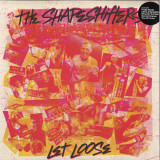
From an aspiring b-boy to working with luminaries Billy Porter, Joss Stone, Kimberly Davis and Teni Tinks, The Shapeshifters, Simon Marlin announces the release of his brand-new studio album “Let Loose”.
Wrapped in a defining optimistic mood and colourful palette, “Let Loose” plays with the friction between musical persona and influence, delivering a masterclass in Simon’s flourishing depth of integrity as a producer and admiration to those that exert their enduring influence upon him.
“I'm a facilitator of talent. I'm blessed that over the years I've managed to put a team of people together - as a producer, that's what I do, very much in the old school sense like a Quincy Jones or Gamble & Huff, they’re the guys I try to emulate - and make something magic out of nothing, but do it in a contemporary way. That’s what really floats my boat, and that's what this whole project is about.” Simon Marlin – The Shapeshifters
Across the latest and long-awaited studio album “Let Loose” The Shapeshifters pledge rhythmic allegiance to the golden era disco records and their spellbinding qualities; embracing the tension often found between tradition and future to craft a euphoric, certifiable body of work presented to the devoted audience he deserves. The Shapeshifters exemplify a scene in rude health one that is now switching on an ever-younger fan base, and with Marlin being the beating heart of it it’s easy to see why The Shapeshifters are more in demand in the clubs than ever.
The twelve-track album is illuminated with vocal collaborations including the recently released and debut collaboration with the Grammy, Tony and Emmy Award-winning Billy Porter.
Layers of rushing strings, flares of brass and hedonistic grooves provide refreshing dancefloor power dynamics and deliver a liberating, triumphant and inherently uplifting record.
Taking an impeccably smooth course through disco-infused house, The Shapeshifters continue the rich relationship with Glitterbox and its record label; one that has yielded instant classics that epitomise the label’s ethos for preserving disco’s mission to uplift and empower.
Commandez maintenant et nous commanderons l'article pour vous chez notre fournisseur.

Swaddled in a blanket of Dolce Vita strings and
voices, Baker delivers here a struggling beauty
through his timeless childlike and choirboy vocals.
4 pretty and decadent ballads, impossibly pretty,
built over three forces: Baker’s trumpet, exotic
vocal imprint and Ennio Morricone satin cinematic
score. Romantic, intriguing and seductive, this
unique Chet Baker set will make you fall in love
just like a tourist visiting Italy’s renewed beauty.
il devrait être publié sur 09.12.2022

clear red vinyl
Stuttgart's David Lohlein has been involved in electronic music for a number of years and launched the Vision Ekstase event in his hometown of Stuttgart together with his friends before providing the inaugural release on the same titled label which picked up support from the likes of Ben Sims, Luke Slater, Efdemin and many more established names within the techno world. David now invites remixes from Mote-Evolver artist Rene Wise, Hayes producer VIL and Vision Ekstase residents Rove Ranger and Fabian Wegmeth.
Commandez maintenant et nous commanderons l'article pour vous chez notre fournisseur.

In hugo, there’s a central question that Loyle Carner keeps coming back to: “I’m young, Black, successful and have a platform - but where do I go next?” The answer is explored in this epic scream of a third album. With urgent delivery and gloriously widescreen production, Carner confronts both the deeply personal (“You can’t hate the roots of a tree, and not hate the tree. So how can I hate my father without hating me?) and the highly political (“I told the black man he didn’t understand I reached the white man he wouldn’t take my hand”). Cinematic in scale and scope, hugo is both a rallying war cry for a generation forged in fire and a study of the personal internal conflict that drives the rest of the album - as a mixed-race Black man, as an artist, as a father and as a son. With Mercury and Brits nominations, NME Awards and appearances in global brand campaigns (Nike, YSL, Timberland), Carner has undoubtedly had a meteoric rise to the top, culminating with his second album Not Waving, But Drowning charting at number 3 in the UK albums chart in 2019. However, hugo sees Carner taking a sharp detour from his previous work, putting it down to lockdown and the “hedonistic side of career being stripped away. There were no shows, no backstage, no festivals, no photoshoots”. By continuing to write in these tumultuous times with a renewed clarity and sense of artistic freedom, Carner reached deeper beneath the surface than he ever had before. The result is his most cathartic and ambitious record yet, a coruscating journey into the heart of what it means to be alive in these tumultuous times, and one which looks set to neatly cement his position as one of the most potent and vital young talents around today. Working alongside renowned producer kwes. (Solange, Kelela, Nao), Carner leaves no stone unturned on this album, in both its sound and its stories. In a 10-track album that moves from gorgeous neo-soul moments to thundering hip hop, with immediate, infectious bangers and sampled interludes from non musicians (mixed-race Guyanese poet John Agard and youth activist and politician Athian Akec) Carner shifts seamlessly from micro to macro, confronting everything from strained relationships with family to the societal tears caused by class stratification. It also lays bare bruises in his personal life that he has never revealed before – often in painful, deeply uncomfortable ways, focusing on Carner's experience of becoming a father in the context of growing up without contact with his biological father. With the song “Polyfilla”, against the backdrop of a warm melodic beat, Carner explores his desire to “break the chains in the cycle” of dysfunctional Black fatherhood, commenting on the narrative of fatherhood in the genre, and saying a key part of the process was realising that his father “grew up in a world where nobody showed him how to love or nurture”. The follow up track “A Lasting Place” is an exploration of the MC’s failure and inability to be perfect in this mission. The album closer is a powerful statement of love and forgiveness; with his signature lyrical dexterity, Carner declares his relentless commitment to his son and sees forgiving his father as a key part of this. The song closes with an emotional ending of Carner telling his dad “still I’m lucky yo that we talk”. There’s a striking duality of hugo’s bold, multilayered tracks and its often starkly intimate and tender lyricism, and that dichotomy is deliberate - it is a message for young Black men, but really, anyone, who is listening. Cognizant of the immense pain and fear and confusion that we are faced with everyday, Carner has thrown down the gauntlet, defying us not to rise above the fray, wake up each day and be ambitious. Ambitious in building strong personal relationships. Ambitious in our pursuit of our goals. Ambitious in never refusing to back down against injustice. Rejecting the title of leader, Loyle Carner sees himself “as holding up a mirror”, and that clearly translates into the album's universal messages.
Commandez maintenant et nous commanderons l'article pour vous chez notre fournisseur.

A NEED FOR SPEED, A NEED FOR ACTION.
ANFS BECOMES BOY TZORTZ.
A NECESSARY CHANGE IN A TIME THAT THE WORLD CHANGED AROUND US.
UNEXPECTEDLY. WITH FORCE.
RIOT OF LIFE.
A YOUNG PRINCE IN HIS ARMA THAT IS RIDING WITH DEVASTATING SPEED TOWARDS THE ETERNITY.
FOLLOWING THE PATH TO HIS DESTINY.
AND THROUGH CHAOS HE BRINGS ORDER.
THIS IS HIS KARMA.
4 SINISTER CUTS OF PURE MEGACITY ENERGY FROM ONE OF THE BEST IN THE GAME.
ENOUGH SAID.
Commandez maintenant et nous commanderons l'article pour vous chez notre fournisseur.

Among the great moments in the career of Blossom Dearie, an exceptional singer and pianist, are the concerts she gave and recorded in the Netherlands between 1968 and 1989, of which we have a faithful reflection here, thanks in particular to a fine recording. She dominates all instrumental formats, from solo to the large Metropole Orchestra, and all repertoires, from the film song "Raindrops Keep Falling On My Head", which she magnifies, to Joni Mitchell's "Both Sides Now", which she renews with intelligence, not forgetting a masterpiece for which she is responsible, "Winchester in Apple Blossom Time". Not forgetting her other personal works, as well as "Bring All Your Love Along", of which we hear the first recorded version here. Blossom's sublime farewell, eternal spring, in the form of a delicate reverence.
il devrait être publié sur 25.11.2022

The last flight – we have arrived! Fasten your seatbelt and buckle up – Denn die erfolgreichste Dance- & Trance-Compilation unseres Planeten setzt einmalig zu ihrem letzten Landeanflug an.
Anlässlich des 100. Jubiläums erscheint die beliebte Produktreihe als galaktische Sonderausgabe und Fans dürfen sich neben der 3CD und dem eAlbum auf eine streng limitierte Fan-Box mit 3CD, galaktischem Comic-Poster, Fan-Socken und Schlüsselanhänger freuen. Damit aber noch nicht genug: Diese letzte Ausgabe unserer FUTURE TRANCE erscheint am 25.11.2022 zudem exklusiv als 4LP inkl. Comic-Poster!
Echte Fans werden zudem bei der besonderen Optik ein Flashback erleben – das erste Mal seit der Landung der FUTURE TRANCE Vol. 60 erlebt die Reihe wieder ein Alien-Revival und erscheint in außerirdischem Design.
Die FUTURE TRANCE 100 besticht durch ein randvolles Aufgebot mit den größten Stars der Szene und ihren aktuellen Bangern. Ein letztes Mal zünden wir die Trance-Booster - mit dabei sind z.B. Scooter,
Pulsedriver, Armin van Buuren, Rocco und und und. Abgerundet wird dieser Senkrechtstarter mit einem exklusiven FUTURE TRANCE UNITED Mix „The last flight – we have arrived!“ Hier ist Gänsehaut vorprogrammiert!
Commandez maintenant et nous commanderons l'article pour vous chez notre fournisseur.

Meltdown was the fourth smash hit album from Ash. The album again reached No.5 within the UK and has since become a gold record. The hard rock album contains mega hits including Clones, Orpheus, Starcrossed, Renegade Cavalcade and Meltdown.
Ash and BMG are proud to reissue Ash’s fourth LP ‘Meltdown for the first time on Orange and Black splatter vinyl. This album has not been re-issued since it’s 2004 release, so will be an exciting prospect within the Ash community. Meltdown contains hit after hit and with its hard rock sound resonates strongly with a wide audience. Upon release Ash drew critical acclaim from multiple publications including Pitchfork, The Guardian, Drowned In Sound and many more, whilst touring with allusive contemporaries The Darkness, and headlining Coachella Festival.
il devrait être publié sur 18.11.2022

Deluxe gloss laminated gatefold reissue with bonus 7” The Silly Egg E.P . Pressed on half & half colour vinyl (Red/Turquoise) with a white vinyl 7”. Includes printed inner sleeve.
East London’s The Gymslips, Paula Richards, Suzanne Scott and Karen Yarnell, barged their way onto the post punk scene in 1981. They openly embraced drinking, Pie & Mash, monkey boots and double denim right from the start. Often credited with being the first female Oi! band, but they brought so much more to the table with their punky 60s influenced girl pop.
Formed in 1980, The Gymslips started playing live the following year, and opened for Dolly Mixture on a 1981 UK tour. The band referred to themselves as “Renees” a late 60s term for mod girls, the same subculture that named boys “Ronees”. Drummer Karen Yarnell told the NME that a “Renee was a girl who got as much shagging done as a bloke while also matching him for pint drinking, fag smoking, nose-picking, farting and the wearing of skinhead style double denim”.
They recorded 5 sessions for the John Peel show, after signing to Abstract Records their first single was a cover of Suzi Quatros 48 Crash, which was released in 1982. The following year they released Their sole album Rocking With The Renees along with 2 further singles “Big Sister” & “Robot Man”
After Karen Yarnell left to join Serious Drinking, this ended The Gymslips Mk 1. Although they were to return 2 years later with a new line up to release their final single “Evil Eye”
il devrait être publié sur 18.11.2022

1988 debut from these US ska legends, finally reissued.
il devrait être publié sur 15.11.2022

The Local Moon (East Berlin 1987/88) The name The Local Moon originated from an intimation by the oriental jester Nasreddin that every city had its own moon. This idea did not go without a certain local colour in the bipolar frontline city of Berlin; from an astropolitical view, its divided sky never saw a full moon, the light conditions were ideologically broken. From the black light of those years emerged The Local Moon. René Le Doil and Ronald Lippok took wings like two crows from a pigeon’s nest when quite suddenly in 1987 light entertainment permeated East Berlin’s Offground and the two musicians were hired for the New Romantic revue New Affair. Before that, Le Doil had been involved in the Stattgespräch fashion spectacle and in Allerleirauh, the “thing of light, space, sound and leather”. Lippok had been the drummer for Rosa Extra, one of the earliest punk rock bands in East Berlin. Together with his brother Robert, who had already come into the picture with an avant-punk project named after the Jules Verne novel Fünf Wochen im Ballon (Five Weeks in a Balloon), Ronald Lippok then founded the post-punk commune Ornament & Verbre- chen, for whom Le Doil would occasionally guest as an... more credits released July 20, 2022 Tape (Side A, B, C – Track #1 - #16) Music by The Local Moon, recorded in April 1987 René Le Doil: accordion, bass, guitar, keyboards, piano, voice Ronald Lippok: acoustic guitar, keyboards, percussion, voice Produced by The Local Moon Single (Side D – Track #17 - #19) Music by The Local Moon, recorded in May 1988 René Le Doil: keyboard Ronald Lippok: keyboard, voice Charlotte Jansen: oboe, voice Alex Wolf: percussion Bo Kondren: emax, traktor Detelf Pegelow: guitar Robert Lippok: clarinet, ethno brass Produced by Bo Kondren Recorded at Gunther Krex Studio Vinyl published by Henryk Gericke Texts and liner notes by Henryk Gericke Remastered by Calyx/ Bo Kondren Digital distribution via aufnahmeundwiedergabe.de
il devrait être publié sur 11.11.2022

Eugene Lamont Johnson a.k.a E Lamont Johnson or Lamont Johnson holds the distinction of being the first internationally recognized fretless bassist in R&B music. Born April 20th 1955 in Highland Park, Michigan. Lamont rose to prominence as a session musician on Gloster Williams &The King Vision’s 1977 gospel album project “Together” (Gospel Roots -5005). In the same year Lamont featured as part of the celebrated Detroit based band Brainstorm their best-selling 1977 album “Stormin’” for Tabu Records. Brainstorm was initially formed during 1975 by bandleader and saxophonist Charles ‘Chuck’ Overton, and included lead vocalist Belita Woods, Lamont Johnson on Fretless bass, Renell Gonsalves on drums, Trenita ‘Treaty’ Womack on percussion, flute and backing vocals, Bob Ross (a.k.a Professor RJ Ross) on keyboards, Gerald ‘Jerry’ Kent on guitar, Jeryl Bright on trombone and ‘Leaping’ Larry Sims on trumpet and flugelhorn. The album was recorded during 1976 and released the following year. It contained the disco hit “Loving Is Really My Game” the popular “Wake Up And Be Somebody” and the radio hit “This Must Be Heaven” a beautifully crafted ballad featuring the lead vocals of Lamont which still receives continued airplay to this day. Lamont did not feature on the band’s two subsequent album projects “Journey To The Light” (Tabu 35327) in 1978 and “Funky Entertainment” (Tabu 35749) in 1979.
The year1978 was to prove to be one of the most prolific of Lamont’s recording career, playing bass on three studio albums. Firstly, on Hamilton Bohannon’s “On My Way” (Mercury SRM-i-3710), Jimmy McKee’s “First Time Out” (Champion- 8083N5) and Keith Barrows “Physical Attraction” (Columbia JC-35597) albums respectively. The final project of that year would be Lamont’s own album project “Music Of The Sun” (Tabu-35455) featuring Lamont on both bass guitar and vocals, the album also spawned two lead 45’s “Sister Fine/Yours Truly, Discreetly” and “Hey Girl/Differently”.
During 1979 Lamont would feature as a guest bassist on a further two studio album projects, firstly the self-titled debut album of fellow Detroit musicians Chapter 8 (Ariola 50056) followed by another self-titled album “Nightflyte” (Ariola 50060) who’s line-up included Howard Johnson prior to him embarking on a solo career. During 1980 Lamont began work on a second solo album for Tabu. Two lead 45 singles were recorded “Rock You Baby/Something More” (Tabu ZS9-5521) followed by the album’s title song “Rhumba” backed with the modern soul favourite “Masta Luva” (ZS9-5525) for whatever reason CBS/Tabu decided to shelve the remainder of the project. Later recording projects to feature Lamont instrumental talents were Was Not Was ‘s “Tell Me I’m Dreaming and Robert Lowe’s “Double Dip” jazz funk album. Later solo CD album projects from Lamont, “This Must Be Heaven” arrived in 2004 and “Amore’ Dance” in 2001 both on his own Allee Records Label. From the mid 70’s through to the present day, Lamont has been a notable electric bass instructor in the Detroit area and beyond. As well as the previously mentioned projects, Lamont and many of his prot’eg’es work can be found on many other world renown artists recording projects the most notable being, Earth Wind & Fire, The Dramatics, Anita Baker, Lady Gaga, Alicia Keys, Phyllis Hyman, Beyonce, Howard Johnson, David T. Walker, Aretha Franklyn, Stevie Wonder, Herbie Hancock, George Duke, The Temptations, The Winans amongst others.
Fast forward to the present and Soul Junction have licensed two previously unissued dance orientated Lamont Johnson produced compositions for this 45sinlge release with more to come. Under the project/artists name of “Lamont Johnson & Eugene” the recordings feature several different local Detroit musicians and vocalists. The a-side is a male vocally led early 90’s mid-tempo feel good dance number. While the b-side in contrast is a more synthesized bass driven 80’s female dancer which should appeal to the Boogie crowd,
Enjoy.
Commandez maintenant et nous commanderons l'article pour vous chez notre fournisseur.

Collaboration between Broken English Club and Autumns exploring dub, post-punk atmospheres and political unrest. Debut EP is a bold and eclectic taster of this duo. Vacant Heads is the duo of Christian Donaghey (Autumns) and Oliver Ho (Broken English Club). Anyone familiar with their work, or underground electronic music in the last two decades, probably needs no further introduction. Having worked together (Autumns' album ‘Shortly After Nothing’ was released on Oliver’s ‘Death and Leisure’ label) and shared stages over the years. Vacant Heads was borne from a desire to collaborate on tracks and form a live unit.
Their debut self-titled EP is a bold taster of where Vacant Heads are at and where Vacant Heads are headed. These four tracks reek of a brutal and busted city - after-hours prowls with fuck all to do and nowhere to go. In “Crawling Up The Pisser”, Ho’s world-weary treatise on consumerism drools over the nag, nag, nag of the tightest and tautest post-punk electronics. “Heavy Rain Dub” is a ten-minute low-end cruiser. A deep, Digi-dub riddim underpins clarinet squalls, jaw harp twang and screwed vocals that feel like a nocturnal trip into Chris Morris’ ‘Blue Jam’…On Side B, “Street Toucher’s” rowdy snare hits, new wave synths and trademark distorted howl from Donagheyhint at the potential ferocity of their upcoming live shows. “Swan Dive” rounds off the EP - slowing down the tempo and pulling influence from the renegade sound of Adrian Sherwood’s revered production work with the likes of Tackhead and Keith LeBlanc. The heaviest breakbeats meet industrial churn and clipped vocal samples. Vacant Heads. Nothing up top. Pure body music.
Commandez maintenant et nous commanderons l'article pour vous chez notre fournisseur.

Having torn up raves for well over a decade, the Detroit duo Rickers and Ted Krisko AKA Ataxia present their debut longplayer ‘Out Of Step’. Featuring guest spots from close peers DJ Minx, Andrés and Mr Joshooa, they twist house, techno, electro, breakbeat and rave into revitalized new shapes; embellished with a touch of soul, funk and hip hop. With backgrounds in hardcore and punk, Ataxia’s debut is suffused with that energy, attitude, and approach; this is raw, lean and unashamedly no-nonsense dance floor tackle that goes straight for the jugular. Heavily analogue, the album experiments with tape saturation, which harks back to the duo’s formative years in bands, recording demos to cassettes. These straight-up, in-the-red tracks give preference to overdriven drum machines, rather than generic polished sheen, but conversely, it’s all deceptively well-crafted too; ‘Out Of Step’ is a standout record that’s big in character, bringing to mind the renegade spirit of Underground Resistance, and the bombastic brilliance of The Prodigy and Chemical Brothers.
Defiantly optimistic despite the state of the world, a “life is good” vocal sample meets minor chords sliding over 808 hats on the exemplary house/techno pumper ‘Detroit Gospel’, before a lighter moment on the album, but no less impactful with its hefty low-end thump, is ‘Pine Island’ featuring Motor City hero Andrés. Together they cook up a Motown-inspired house cut awash with horn swells and backup singers, bouncing to wide swung funk bass, in classic 313 style. ‘Language’ turns the club on its head – busting out one of the most distinct basslines in recent times, and bristling with buzzy, undulating chords, whilst ‘Maxia’ features influential Detroit royalty DJ Minx. Inspired by her classic ‘A Walk In The Park’, with a fat distorted kick and stealthy bass groove, this is low-slung, stripped-back, heads-down coolness. The high-tech funk of ‘Spit In Your Percolator’, is laser-guided in its efficiency, with a strobe-like, increasingly intensifying energy, peppered with clever, tripped up vocal chops. With the next cut, conveyor belt noises and fast churning low-end gives way to a dubbed-out breakdown, on the deep breakbeat roller ‘98 Degrees’. Charged with a blistering, rave intensity, ‘Number Streets’, is a futuristic distorted techno workout that booms through the subs, whilst ‘The Formulator’ mixes filtered snippets, abstract synth noises and melodic bleeps with a bassline echoing Paperclip People’s ‘The Floor’. Closer to the UK definition of hardcore, combining 4/4 and breakbeat, ‘The Pusher’ evokes the spirit of late 80s orbital raves, adding a natty keys solo, and deadly bass used sparingly, for even deadlier effect. ‘Feels Like’ sees Rickers and Ted team up their studiomate and fellow TV Lounge resident and club booker, Mister Joshooa. Inspired by Photek but also almost UKG in style, this breakbeat session is stamped with MJ’s signature chopped vocals and intricate rhythmic interplay. The bubbling, wobbly loose swing of ‘WM’ is constructed around a classic chopped-up MTV cribs sample, with a filtered vocal creating a far out psychedelic effect – all of which is propelled apace by a huge bruising LFO. The LP concludes in fine style with ‘Dance The Bridge’, where bouncy beats and wigged-out keys meet bright, gently uplifting synth chords that bring a clear-skied mood; ending the record as it began, on an optimistic note.
‘Out Of Step’ marks another chapter in the ongoing relationship between Life and Death co-founder DJ Tennis and Ataxia. Their connection goes back to the earliest days of the label, where they played gigs together on some of Tennis’ initial visits to Detroit. It’s a friendship that’s blossomed organically over the last decade through their shared love of punk and hardcore, and led to the fruition of one of Ataxia’s most compelling projects to date. Labels to release Ataxia’s output include legendary Detroit techno imprints Planet E and KMS, plus the seminal American house label Nervous Records. Their catalogue also includes music for Visionquest, Leftroom, 20/20 Vision and Seth Troxler’s Play It Say It.
Commandez maintenant et nous commanderons l'article pour vous chez notre fournisseur.

Commandez maintenant et nous commanderons l'article pour vous chez notre fournisseur.

Laurel Premo's latest solo work presents original and traditional music
voiced on finger-style electric guitar and lap steel
Perhaps by its most honest classification "roots guitar," the sonic vocabulary of
'Golden Loam' is informed by guitar's antecedents in American traditions - fiddle
and banjo, the rhythms, melody and intonation therein, as well as that music's
relationship to movement. Glowing, droning, tugging, scraping, revolving, Premo
bears renewed electric dirt, the golden loam layered by centuries of folk.
Following 'The Iron Trios' (2019), Premo's sophomore release builds on the dark
roots world she arranged, with seeking, untethered delivery and a masterful use
of space, on a dynamic wave of warm, gritty sustain. Laurel's vocals on two
pieces "Hop High" and "I Am A Pilgrim" are traditional calls beaconing the guitar's
response, and fold in timberly like additional instrumental lines sustaining the
drone. 'Golden Loam' was self produced and recorded during the pandemic
lockdown of summer/fall 2020. The majority of the record is solo performance,
but two featured collaborators are woven in to this embodied rhythmic collection.
Percussive dancer Nic Gareiss (Michigan) appears on tracks 5 & 9, and bones
player Eric Breton (Quebec) on track 3. Laurel Premo is a Michigan-based artist
who has been writing, arranging music and touring since 2009 with vocal and
instrumental roots acts. She is internationally known from her duo Red Tail Ring.
il devrait être publié sur 11.11.2022

50th Anniversary Reissue! With the original gatefold layout plus all lyrics, new liner notes plus an interview with vocalist Harri Saksala. The album has been remastered for vinyl by Finland's premier progressive rock specialist Pauli Saastamoinen at Finnvox. Kalevala and especially their debut album People No Names is a prime example of a record that should've been big, sold only a handful and only later on was reappraised as the masterful progressive rock epic that it is. Originally released 50 years ago on Finnlevy, then one of the largest labels in Finland, and not marketed at all, there were not more than 500 copies of the album pressed. When people finally realised the quality of the music on this piece of wax, prices for original copies on the second hand market went blasting through the roof and eventually into four figures. Kalevala's story began at the turn of the new decade in 1970, and they played Cream-style hard rock with a power trio lineup. The band's founding member Remu Aaltonen was kicked out the following year, and a renewed lineup immersed themselves in progressive rock. People No Names was released in 1972, and eventually Finnlevy had no idea what to do with this kind of difficult new youth music. This 50th Anniversary reissue is put together with the approval of original vocalist Harri Saksala The album is remastered for vinyl by Pauli Saastamoinen at Finnvox.
il devrait être publié sur 04.11.2022
For Fans Of: J. Tillman, Phosphorescent, Low, Damien Jurado, Bill Callhan. “It’s going to be hard to talk about this when it’s done.” So begins A Mold For The Bell, the new album from Colorado singer-songwriter and producer Logan Farmer. What follows that enigmatic lyric is a collection of stark and ambient folk songs, tethered solely by Farmer’s unadorned vocals, acoustic guitar, and moving embellishments from contributors, including saxophonist Joseph Shabason (who also mixed the album) and renowned harpist Mary Lattimore. With the help of Grammy-nominated producer Andrew Berlin (Gregory Alan Isakov), Farmer tracked all of the vocal and guitar parts over two days in the early months of 2021. The tracks were recorded quickly, live in the studio to capture the raw intimacy and immediacy of Farmer’s live performances. The rest of the album’s creation occurred remotely, over texts, phone calls, and emails with Shabason and a handful of other musicians, as wildfires, insurrections and the pandemic raged around them. “I was working at a bookstore that winter,” Farmer explains, “and I’d walk to my shift every day, obsessing over lyrics and early mixes in a cheap pair of earbuds.” These daily walks would take him past a church, where he’d often stop on the sidewalk and listen to the bells at the top of the hour. “I’ve always loved the sound of church bells, but as the situation worsened, what began as a comfort began to feel ominous, almost threatening.” This experience, alongside influences as disparate as Tarkovsky’s film Andrei Rublev and the novels of Olga Tokarczuk, led to a collection of songs that are similarly foreboding, expanding upon the stark and spacious universe of Farmer’s last album (2020’s Still No Mother) to reveal an atmosphere that’s even more oppressively still, like an abandoned Victorian home. Tracks: 01 Silence or Swell 02 Cue Sunday Bells 03 Horsehair (feat. Mary Lattimore) 04 Crooked Lines 05 William 06 The Moment 07 Renegade 08 South Vienna
il devrait être publié sur 30.10.2022
Treviso, Italy-based two piece Kill Your Boyfriend will release their fourth album 'Voodoo' on October 14th via Sister 9 Recordings (Europe), Little Cloud Records (North America) and Shyrec (Itay). A frantic and hypnothising bacchanalia of Psych & Industrial tinged soundwaves, the new album is a collection of reverb laden necromantic charms, summoning the souls and bones of the greats in the Rock & Roll pantheon of the 1950s. The duo delivers such glittery dark enchantment via 7 hoodoo hymns, travelling with a crumbling, ghostly and magically whizzing Rocket 88, in the company of Marie Laveau and madame Lalaurie. It's a relentless whirl of Voodoo-Psych, Industrial-Billy, Electro-GrisGris, which you can dance to. The new LP follows 'Killadelica', where Kill Your Boyfriend had refined their debut signature sound, bridging the gap between the semi-obscure but hauntingly fascinating tradition of Veneto's Post-Punk (Death In Venice, Evabraun, Pyramids, etc.) and contemporary Psych-Nouveau. With 'Voodoo', Matteo Scarpa and Antonio Angeli, explore new genres and expand the sonic borders, without losing their original intent. They replace the synth bass with a bass-guitar, adding more fluidity and weight to a renewed and punchier rhythmic section. Electronic and acoustic percussion are fuller and heavier, and the band's new stomp-machine is a hyper-convulsive version of the saturated Rock & Roll and R&B drumming, from the cheap garage studios of 1950s indie labels. Sida A is the most Rock & Roll of the two, and it is inspired by Michael Ventura's essay "Hear that Long Snake Moan", which brought forward the idea that "the Voodoo rite of possession by the god became the standard of American performance in Rock’n’Roll" where the performers "let themselves be possessed not by any god they could name but by the spirit they felt in the music”. Each song invokes one or a set of the lost souls of the Rock & Roll era, with 'The Day The Music Died' referring to the infamous 3rd of February 1959. Side B descends deeper into the magic swamps of Creole magic, with music taking on a much more liturgical function, conjuring shamanic possessions via extra layers of tribal percussion. The band says of side B: "we see it as a one long ritualistic descent into a psychedelic underworld made of echoing voices, claustrophobic spaces populated by lost souls, enchanters and witchdoctors."
TRACKLIST 1. The King 2. The Man In Black 3. Mr Mojo 4. Buster 5. The Day The Music Died 6. Papa Legba 7. Vodoo
il devrait être publié sur 30.10.2022
Limited Natural White Vinyl[10,04 €]
For Fans Of... Sunny and the Sunliners, Rene Y Rene, Ray Camacho. The second offering by The Revues continues to explore the intersections between Tejano music, Latin Soul, and funk. This updated take on Rene y Rene’s coveted version of “Mi Corazón Esta Llorando” is tough but with a touch of sweetness. On the flip side we get the instrumental version only with the vocal melody being swapped out for tenor and alto saxes, heightening the Tejano influence and flavor. Also Available From The Revues: Take Me For A Little While 7”. Tracks: 1. Mi Corazón Esta Llorando 2. Mi Corazón Esta Llorando
il devrait être publié sur 28.10.2022
For Fans Of... Sunny and the Sunliners, Rene Y Rene, Ray Camacho. The second offering by The Revues continues to explore the intersections between Tejano music, Latin Soul, and funk. This updated take on Rene y Rene’s coveted version of “Mi Corazón Esta Llorando” is tough but with a touch of sweetness. On the flip side we get the instrumental version only with the vocal melody being swapped out for tenor and alto saxes, heightening the Tejano influence and flavor. Also Available From The Revues: Take Me For A Little While 7”. Tracks: 1. Mi Corazón Esta Llorando 2. Mi Corazón Esta Llorando
il devrait être publié sur 28.10.2022

2022 repress.
Monopolis.
It is in this fictional capital of the West, imagined by Michel Berger for Starmania, that the Pirouettes have decided to settle down to write their second long format: an album that wants to be more narrative, giving pride of place to storytelling, whether in the form of a love story, a true/false diary, or even... an oriental tale.
A perspective, a decentring and a will to open up which is also felt in terms of composition, since the duo has this time collaborated with several musician friends (Dodi El Sherbini, Lewis OfMan, Krampf, or Vaati). A way of renewing themselves of course, but above all of surpassing themselves, and of keeping ahead of the competition.
il devrait être publié sur 28.10.2022

Limitierte Auflage - nur 500 Exemplare - alle auf violettem Vinyl. Buzzsaw Joint ist eine monatlich stattfindende Londoner Clubnacht, die die Fans mit einer hochoktanigen Mischung aus Rhythm & Blues und Rock & Roll Trash betankt. Buzzsaw Chef Fritz hat zudem eine Mixcloud Seite ins Leben gerufen, mit Mixen zum Thema von Sammlern und Jägern rund um den Globus. Da war es nur folgerichtig, dass das ganze auch auf Vinyl und CD stattfindet. Mit Stag-O-Lee fand sich schnell jemand, der das für eine gute Idee hielt. Mehr Volumen/Cuts to follow. Get your ears around the wild"n"weird sounds of the extraordinary and inimitable Buzzsaw Joint! Für den 8. Cut der Buzzsaw Joint Serie wühlen Johnny Alpha und Carl Combover in ihren reich bestückten 7"-Kisten. Beide sind Meister in Sachen sleazy, greasy und fuzzy. Carl ist Chef der Go Go Cage Nacht in Liverpool und Johnny legt in und um Wigan (legendärer Ort - Wigan Casino!) auf. Beide sind auch weltweit gefragt und unterwegs. Für Cut 8 wählten sie Tracks, die sich nicht auf anderen, ähnlich gelagerten, Compilations finden. Ein weiteres Highlight in dieser starken Serie.
il devrait être publié sur 28.10.2022

A new series from Jazzman featuring the lowest of the lowball schlock n' roll 45s never known to exist!
After many years in hiding, notoriously shady Super Spiv of the record world Greasy Mike has finally opened up his vinyl dungeon, and we were first to raid it!
We have left no box untouched, no crate unrummaged, no pile unpilfered! Just the greasiest and grimiest, the most shocking and sordid 45s have made it onto our selections. Watch out for more!!!
But first - and just in time for your Halloween Horror Shock Hop - Greasy Mike unearths his alltime all-hallowed Halloween Monsters: The Zombie Walk, Night Sweats, the Chiller, Prowler and Screaming Vampire! Putrid pieces of raucous rot n' roll records direct from Greasy Mike's manky mitts! Oww-ooooh!!!
Commandez maintenant et nous commanderons l'article pour vous chez notre fournisseur.

A showcase of Monty Alexander’s iconic Montreux Jazz Festival live performances between 1993 to 2016.
The audio has Expertly restored and remastered in superlative HD audio; The Montreux Years is released on superior audiophile heavy weight vinyl, MQA quality CD and in HD digital. Brand new liner notes based on an interview with Monty has been created for this release, which also includes rare photos from his Montreux shows.
il devrait être publié sur 21.10.2022

Giorgia Angiuli’s 13 track album ‘Quantum Love’ on her UNITED label combines and contrasts fast, insistent dance beats with her signature melodic synths and dreamy lyrics; ‘an eclectic work including piano downtempo tracks and techno melodic tracks with ethereal vocals’ (Angiuli).
The multi-talented live artist/DJ/producer/vocalist/lyricist and studio-building tech wizard used lockdown as a creative nexus. Einstein’s ‘Imagination is more important than knowledge’ led her to explore quantum physics, while her first India tour inspired ongoing interest in sound meditation and philosophy, culminating in the LP.
‘Quantum Love’ has many moods and speeds; physics and philosophy, contemplative and full-on fast, sweet vocals, meaningful lyrics or purely instrumental, it’s all there. ‘’Quantum Love’ is my inner soundtrack to my recent transformation, summarized in the following sentences: we are made of energy, everything is vibration. We are each our own placebo, happiness can be a choice, we have all the elements inside us for the right path. Nature can teach us everything.’ (Giorgia Angiuli)
Press:
DJ Mag Feature
Flow Music Interview
DJ Mag Post
Four Four Magazine News Piece
DJ Feedback:
Sasha (Last Night On Earth) - solid!
Guy Mantzur (Kompakt, Bedrock, Lost & Found, Sudbeat) - love them all
Anthony Pappa (Selador) - The Timo Maas Remix is excellent.
AFFKT (Sincopat) - Superb remixes!
Fur Coat (Oddity / Delete) - Nice Armonica and Glowal remixes
Israel Sunshine (Fur Coat / Oddity) - Great job! digging all tracks specially Timo and Glowal
Animal Trainer (Mobilee / Stil Vor Talent) - fab remix by Armonica!
Dee Montero (Knee Deep in Sound, Selador Recordings, Anjunadeep) - Timo Maas mix for me
Siavash (You Plus One) - Glowal mix takes the cake in this ep
Chris Fortier (Thoughtless / Sullivan Room / Balance) - super super
Pisetzky (JUST THIS / Last Night On Earth / Oddity) - amazing giu
Sinca (Anjunadeep) - Great remix ep
James Trystan (Suara / Bedrock) - Feeling this!!! Timo Maas for me
Henri Bergmann (Automatik) - armonica always!
Cesar Romero (Simply City) nice!
juSt b (Bedrock / Configurations of Self) nice release, love the key work and vox.
Nhii (No Human Is Illegal) (Sounds of Khemit / Stil Vor / Kindisch) - Timo Maas remix right up my alley!
Commandez maintenant et nous commanderons l'article pour vous chez notre fournisseur.

Commandez maintenant et nous commanderons l'article pour vous chez notre fournisseur.

Vinyl LP[23,49 €]
As the sun sets on a quaint East Nashville house, a young man bares a piece of his soul. Facing the camera, sporting a silky suit jacket/shirt/slacks/fingerless gloves ensemble that announces "singer" before he's even opened his mouth, Lee Tracy Johnson settles onto his stage, the front yard. He sways to the dirge-like drum machine pulse of a synth-soaked slow jam, extends his arms as if gaining his balance, and croons in affecting, fragile earnest, "I need your love… oh baby…"
Dogs in the yard next door begin barking. A mysterious cardboard robot figure, beamed in from galaxies unknown and affixed to a tree, is less vocal. Lee doesn't acknowledge either's presence. He's busy feeling it, arms and hands gesticulating. His voice rises in falsetto over the now-quiet dogs, over the ambient noise from the street that seeps into the handheld camcorder's microphone, over the recording of his own voice played back from a boombox off-camera. After six minutes the single, continuous shot ends. In this intimate creative universe there are no re-takes. There are many more music videos to shoot, and as Lee later puts it, "The first time you do it is actually the best. Because you can never get that again. You expressing yourself from within."
"I Need Your Love" dates from a lost heyday. From some time in the '80s or early '90s, when Lee Tracy (as he was known in performance) and his music partner/producer/manager Isaac Manning committed hours upon hours of their sonic and visual ideas to tape. Embracing drum machines and synthesizers – electronics that made their personal futurism palpable – they recorded exclusively at home, live in a room into a simple cassette deck. Soul, funk, electro and new wave informed their songs, yet Lee and Isaac eschewed the confinement of conventional categories and genres, preferring to let experimentation guide them.
"Anytime somebody put out a new record they had the same instruments or the same sound," explains Isaac. "So I basically wanted to find something that's really gonna stand out away from all of the rest of 'em." Their ethos meant that every idea they came up with was at least worth trying: echoed out half-rapped exhortations over frantic techno-style beats, gospel synth soul, modal electro-funk, oddball pop reinterpretations, emo AOR balladry, nods to Prince and the Fat Boys, or arrangements that might collapse mid-song into a mess of arcade game-ish blips before rallying to reach the finish line. All of it conjoined by consistent tape hiss, and most vitally, Lee's chameleonic voice, which managed to wildly shape shift and still evoke something sincere – whether toggling between falsetto and tenor exalting Jesus's return, or punctuating a melismatic romantic adlib with a succinct, "We all know how it feels to be alone."
"People think we went to a studio," says Isaac derisively. "We never went to no studio. We didn't have the money to go to no studio! We did this stuff at home. I shot videos in my front yard with whatever we could to get things together." Sometimes Isaac would just put on an instrumental record, be it "Planet Rock" or "Don't Cry For Me Argentina" (from Evita), press "record," and let Lee improvise over it, yielding peculiar love songs, would-be patriotic anthems, or Elvis Presley or Marilyn Monroe tributes. Technical limitations and a lack of professional polish never dissuaded them. They believed they were onto something.
"That struggle," Isaac says, "made that sound sound good to me."
In the parlance of modern music criticism Lee and Isaac's dizzying DIY efforts would inevitably be described as "outsider." But "outsider" carries the burden of untold additional layers of meaning if you're Black and from the South, creating on a budget, and trying to get someone, anyone within the country music capital of the world to take your vision seriously. "What category should we put it in?" Isaac asks rhetorically. "I don't know. All I know is feeling. I ain't gonna name it nothing. It's music. If it grabs your soul and touch your heart that's what it basically is supposed to do."
=
Born in 1963, the baby boy of nine siblings, Lee Tracy spent his earliest years living amidst the shotgun houses on Nashville's south side. "We was poor, man!" he says, recalling the outhouse his family used for a bathroom and the blocks of ice they kept in the kitchen to chill perishables. "But I actually don't think I really realized I was in poverty until I got grown and started thinking about it." Lee's mom worked at the Holiday Inn; his dad did whatever he had to do, from selling fruit from a horse drawn cart to bootlegging. "We didn't have much," Lee continues, "but my mother and my father got us the things we needed, the clothes on our back." By the end of the decade with the city's urban renewal programs razing entire neighborhoods to accommodate construction of the Interstate, the family moved to Edgehill Projects. Lee remembers music and art as a constant source of inspiration for he and his brothers and sisters – especially after seeing the Jackson 5 perform on Ed Sullivan. "As a small child I just knew that was what I wanted to do."
His older brother Don began musically mentoring him, introducing Lee to a variety of instruments and sounds. "He would never play one particular type of music, like R&B," says Lee. "I was surrounded by jazz, hard rock and roll, easy listening, gospel, reggae, country music; I mean I was a sponge absorbing all of that." Lee taught himself to play drums by beating on cardboard boxes, gaining a rep around the way for his timekeeping, and his singing voice. Emulating his favorites, Earth Wind & Fire and Cameo, he formed groups with other kids with era-evocative band names like Concept and TNT Connection, and emerged as the leader of disciplined rehearsals. "I made them practice," says Lee. "We practiced and practiced and practiced. Because I wanted that perfection." By high school the most accomplished of these bands would take top prize in a prominent local talent show. It was a big moment for Lee, and he felt ready to take things to the next level. But his band-mates had other ideas.
"I don't know what happened," he says, still miffed at the memory. "It must have blew they mind after we won and people started showing notice, because it's like everybody quit! I was like, where the hell did everybody go?" Lee had always made a point of interrogating prospective musicians about their intentions before joining his groups: were they really serious or just looking for a way to pick up girls? Now he understood even more the importance of finding a collaborator just as committed to the music as he was.
=
Isaac Manning had spent much of his life immersed in music and the arts – singing in the church choir with his family on Nashville's north side, writing, painting, dancing, and working various gigs within the entertainment industry. After serving in the armed forces, in the early '70s he ran The Teenage Place, a music and performance venue that catered to the local youth. But he was forced out of town when word of one of his recreational routines created a stir beyond the safe haven of his bohemian circles.
"I was growing marijuana," Isaac explains. "It wasn't no business, I was smoking it myself… I would put marijuana in scrambled eggs, cornbread and stuff." His weed use originated as a form of self-medication to combat severe tooth pain. But when he began sharing it with some of the other young people he hung out with, some of who just so happened to be the kids of Nashville politicians, the cops came calling. "When I got busted," he remembers, "they were talking about how they were gonna get rid of me because they didn't want me saying nothing about they children because of the politics and stuff. So I got my family, took two raggedy cars, and left Nashville and went to Vegas."
Out in the desert, Isaac happened to meet Chubby Checker of "The Twist" fame while the singer was gigging at The Flamingo. Impressed by Isaac's zeal, Checker invited him to go on the road with him as his tour manager/roadie/valet. The experience gave Isaac a window into a part of the entertainment world he'd never encountered – a glimpse of what a true pop act's audience looked like. "Chubby Checker, none of his shows were played for Black folks," he remembers. "All his gigs were done at high-class white people areas." Returning home after a few years with Chubby, Isaac was properly motivated to make it in Music City. He began writing songs and scouting around Nashville for local talent anywhere he could find it with an expressed goal: "Find someone who can deliver your songs the way you want 'em delivered and make people feel what you want them to feel."
One day while walking through Edgehill Projects Isaac heard someone playing the drums in a way that made him stop and take notice. "The music was so tight, just the drums made me feel like, oh I'm-a find this person," he recalls. "So I circled through the projects until I found who it was.
"That's how I met him – Lee Tracy. When I found him and he started singing and stuff, I said, ohhh, this is somebody different."
=
Theirs was a true complementary partnership: young Lee possessed the raw talent, the older Isaac the belief. "He's really the only one besides my brother and my family that really seen the potential in me," says Lee. "He made me see that I could do it."
Isaac long being a night owl, his house also made for a fertile collaborative environment – a space where there always seemed to be a new piece of his visual art on display: paintings, illustrations, and dolls and figures (including an enigmatic cardboard robot). Lee and Issac would hang out together and talk, listen to music, conjure ideas, and smoke the herb Isaac had resumed growing in his yard. "It got to where I could trust him, he could trust me," Isaac says of their bond. They also worked together for hours on drawings, spreading larges rolls of paper on the walls and sketching faces with abstract patterns and imagery: alien-like beings, tri-horned horse heads, inverted Janus-like characters where one visage blurred into the other.
Soon it became apparent that they didn't need other collaborators; self-sufficiency was the natural way forward. At Isaac's behest Lee, already fed up with dealing with band musicians, began playing around with a poly-sonic Yamaha keyboard at the local music store. "It had everything on it – trumpet, bass, drums, organ," remembers Lee. "And that's when I started recording my own stuff."
The technology afforded Lee the flexibility and independence he craved, setting him on a path other bedroom musicians and producers around the world were simultaneously following through the '80s into the early '90s. Saving up money from day jobs, he eventually supplemented the Yamaha Isaac had gotten him with Roland and Casio drum machines and a Moog. Lee was living in an apartment in Hillside at that point caring for his dad, who'd been partially paralyzed since early in life. In the evenings up in his second floor room, the music put him in a zone where he could tune out everything and lose himself in his ideas.
"Oh I loved it," he recalls. "I would really experiment with the instruments and use a lot of different sound effects. I was looking for something nobody else had. I wanted something totally different. And once I found the sound I was looking for, I would just smoke me a good joint and just let it go, hit the record button." More potent a creative stimulant than even Isaac's weed was the holistic flow and spontaneity of recording. Between sessions at Isaac's place and Lee's apartment, their volume of output quickly ballooned.
"We was always recording," says Lee. "That's why we have so much music. Even when I went to Isaac's and we start creating, I get home, my mind is racing, I gotta start creating, creating, creating. I remember there were times when I took a 90-minute tape from front to back and just filled it up."
"We never practiced," says Isaac. "See, that was just so odd about the whole thing. I could relate to him, and tell him about the songs I had ideas for and everything and stuff. And then he would bring it back or whatever, and we'd get together and put it down." Once the taskmaster hell bent on rehearsing, Lee had flipped a full 180. Perfection was no longer an aspiration, but the enemy of inspiration.
"I seen where practicing and practicing got me," says Lee. "A lot of musicians you get to playing and they gotta stop, they have to analyze the music. But while you analyzing you losing a lot of the greatness of what you creating. Stop analyzing what you play, just play! And it'll all take shape."
=
"I hope you understood the beginning of the record because this was invented from a dream I had today… (You tell me, I'll tell you, we'll figure it out together)" – Lee Tracy and Isaac Manning, "Hope You Understand"
Lee lets loose a maniacal cackle when he acknowledges that the material that he and Isaac recorded was by anyone's estimation pretty out there. It's the same laugh that commences "Hope You Understand" – a chaotic transmission that encapsulates the duality at the heart of their music: a stated desire to reach people and a compulsion to go as leftfield as they saw fit.
"We just did it," says Lee. "We cut the music on and cut loose. I don't sit around and write. I do it by listening, get a feeling, play the music, and the lyrics and stuff just come out of me."
The approach proved adaptable to interpreting other artists' material. While recording a cover of Whitney Houston's pop ballad "Saving All My Love For You," Lee played Whitney's version in his headphones as he laid down his own vocals – partially following the lyrics, partially using them as a departure point. The end result is barely recognizable compared with the original, Lee and Isaac having switched up the time signature and reinvented the melody along the way towards morphing a slick mainstream radio standard into something that sounds solely their own.
"I really used that song to get me started," says Lee. "Then I said, well I need something else, something is missing. Something just came over me. That's when I came up with 'Is It What You Want.'"
The song would become the centerpiece of Lee and Isaac's repertoire. Pushed along by a percolating metronomic Rhythm King style beat somewhere between a military march and a samba, "Is It What You Want" finds Lee pleading the sincerity of his commitment to a potential love interest embellished by vocal tics and hiccups subtlely reminiscent of his childhood hero MJ. Absent chord changes, only synth riffs gliding in and out like apparitions, the song achieves a lingering lo-fi power that leaves you feeling like it's still playing, somewhere, even after the fade out.
"I don't know, it's like a real spiritual song," Lee reflects. "But it's not just spiritual. To me the more I listen to it it's like about everything that you do in your everyday life, period. Is it what you want? Do you want a car or you don't want a car? Do you want Jesus or do you want the Devil? It's basically asking you the question. Can't nobody answer the question but you yourself."
In 1989 Lee won a lawsuit stemming from injuries sustained from a fight he'd gotten into. He took part of the settlement money and with Isaac pressed up "Saving All My Love For You" b/w "Is It What You Want" as a 45 single. Isaac christened the label One Chance Records. "Because that's all we wanted," he says with a laugh, "one chance."
Isaac sent the record out to radio stations and major labels, hoping for it to make enough noise to get picked up nationally. But the response he and Lee were hoping for never materialized. According to Isaac the closest the single got to getting played on the radio is when a disk jock from a local station made a highly unusual announcement on air: "The dude said on the radio, 107.5 – 'We are not gonna play 'Is It What You Want.' We cracked up! Wow, that's deep.
"It was a whole racist thing that was going on," he reflects. "So we just looked over and kept on going. That was it. That was about the way it goes… If you were Black and you were living in Nashville and stuff, that's the way you got treated." Isaac already knew as much from all the times he'd brought he and Lee's tapes (even their cache of country music tunes) over to Music Row to try to drum up interest to no avail.
"Isaac, he really worked his ass off," says Lee. "He probably been to every record place down on Music Row." Nashville's famed recording and music business corridor wasn't but a few blocks from where Lee grew up. Close enough, he remembers, for him to ride his bike along its back alleys and stumble upon the occasional random treasure, like a discarded box of harmonicas. Getting in through the front door, however, still felt a world away.
"I just don't think at the time our music fell into a category for them," he concedes. "It was before its time."
=
Lee stopped making music some time in the latter part of the '90s, around the time his mom passed away and life became increasingly tough to manage. "When my mother died I had a nervous breakdown," he says, "So I shut down for a long time. I was in such a sadness frame of mind. That's why nobody seen me. I had just disappeared off the map." He fell out of touch with Isaac, and in an indication of just how bad things had gotten for him, lost track of all the recordings they'd made together. Music became a distant memory.
Fortunately, Isaac kept the faith. In a self-published collection of his poetry – paeans to some of his favorite entertainment and public figures entitled Friends and Dick Clark – he'd written that he believed "music has a life of its own." But his prescience and presence of mind were truly manifested in the fact that he kept an archive of he and Lee's work. As perfectly imperfect as "Is It What You Want" now sounds in a post-Personal Space world, Lee and Isaac's lone official release was in fact just a taste. The bulk of the Is It What You Want album is culled from the pair's essentially unheard home recordings – complete songs, half-realized experiments, Isaac's blue monologues and pronouncements et al – compiled, mixed and programmed in the loose and impulsive creative spirit of their regular get-togethers from decades ago. The rest of us, it seems, may have finally caught up to them.
On the prospect of at long last reaching a wider audience, Isaac says simply, "I been trying for a long time, it feels good." Ever the survivor, he adds, "The only way I know how to make it to the top is to keep climbing. If one leg break on the ladder, hey, you gotta fix it and keep on going… That's where I be at. I'll kill death to make it out there."
For Lee it all feels akin to a personal resurrection: "It's like I was in a tomb and the tomb was opened and I'm back… Man, it feels so great. I feel like I'm gonna jump out of my skin." Success at this stage of his life, he realizes, probably means something different than what it did back when he was singing and dancing in Isaac's front yard. "What I really mean by 'making it,'" he explains isn't just the music being heard but, "the story being told."
Occasionally Lee will pull up "Is It What You Want" on YouTube on his phone, put on his headphones, and listen. He remembers the first time he heard his recorded voice. How surreal it was, how he thought to himself, "Is that really me?" What would he say to that younger version of himself now?
"I would probably tell myself, hang in there, don't give up. Keep striving for the goal. And everything will work out."
Despite what's printed on the record label, sometimes you do get more than one chance.
Commandez maintenant et nous commanderons l'article pour vous chez notre fournisseur.

TOWNES VAN ZANDT STUDIO SESSIONS FROM 1974 AVAILABLE ON VINYL FOR THE FIRST TIME EVER In 1974, Townes Van Zandt recorded what would have been his seventh album, ‘Seven Come Eleven’. Business issues prevented its release until the recordings surfaced two decades later as ‘The Nashville Sessions’. To commemorate the 50th anniversary of the beginning of Van Zandt’s turbulent musical career and launch of a major catalogue reissue programme, Charly has restored and re-mastered ‘The Nashville Sessions’ to present a stunning document of the folk-blues master at his absolute peak. “These are songs that tap into the timeless myth of the American troubadour, a place where wandering souls tramp the byways of their homeland...” Restored and mastered to vinyl from the original tapes provided by producer and manager Kevin Eggers. Full colour LP sleeve with original Milton Glaser portrait cover. Fully illustrated inner with detailed sleeve notes by Uncut magazine journalist Rob Hughes. Part of Charly’s 50th anniversary programme celebrating the start of Van Zandt’s career. All original Poppy and Tomato albums which Townes Van Zandt recorded at the peak of his career will be newly re- mastered, restored and lavishly repackaged and available on CD & limited edition 180g heavyweight vinyl. The death of Townes Van Zandt in 1997 at age 52 robbed the world of a troubled genius as well as one of America’s finest songwriters. His reputation and popularity has grown greater by the year inspiring books, a documentary and renewed interest from the media, passionately loyal fans and contemporaries such as Willie Nelson, Merle Haggard and Emmylou Harris who have covered his songs to the upper-reaches of the American charts. “From Neil Young and Willie Nelson, Bono and Bob Dylan (who reportedly once said that Townes was “in some ways the better writer”) to Tindersticks and Mudhoney, songwriters and musicians speak of Townes with reverence.” MOJO MAGAZINE “He was the best songwriter and most riveting solo performer I’ve ever seen.” STEVE EARLE “An effortless masterclass in emotionally effecting Americana”.
il devrait être publié sur 14.10.2022

'Back In Business Again', the long-anticipated new record from blues-rock
eccentrics The Hooten Hallers, is a fever-dream of thoroughly American
rock and roll from the fertile musical heartland of Missouri, USA
On this ten track thrill-ride, The Hooten Hallers inhale a wealth of roots and rock
influences — blues, soul, punk, even New Orleans jazz — and spit forth a highvoltage, swinging rumpus that defies what you thought you knew about rock and
roll. Bubbling beneath the rip- roaring surface are all- original songs of outsider
Americana delight, from tall tales about near-mythological characters to a eulogy
commemorating the demise of 15 years worth of tour vans to heartfelt blues and
well beyond. John Randall's infernal howl and frenzied guitar swirls into a
demon's brew with Andy Rehm's otherworldly falsetto screams and unbridled
drumming. Kellie Everett drives the unorthodox low end with the rich tones of her
rumbling baritone and bass saxophones, rounding out the band's sound and
placing it firmly in a class of its own.
Produced by Dominic Davis (Jack White, Greensky Bluegrass), 'Back In Business
Again' takes a match to The Hooten Hallers' fuse and explodes the renegade
power trio to the edge of madness and back again, one vigorous, swinging,
perfectly peculiar song at a time.
il devrait être publié sur 14.10.2022

“I’ve been coming a thousand years / you could call me the endless fuck,” goes the memorable opening line of Rubblebucket’s Earth Worship, a dance-forward, joyously layered collection of songs which work to dissolve the imaginary lines between the natural world and its inhabitants. Kalmia Traver and Alex Toth, the group’s front persons and co-writers, first began a friendship as jazz students at the University of Vermont. Soon after, they formed a prolific band that has delved into pop, funk, dance and psychedelia over five records, with performances spanning Bonnaroo to their self-curated Dream Picnic Festival, and collaborations with kindred genre-blenders including Arcade Fire and Questlove. But Traver and Toth initially bonded over another shared passion: the two were part of UVM’s Sustainable Community Development program. Though Toth communes with nature as part of his morning routine, and Traver is adept at foraging in the band’s adopted home of New York, songwriting explicitly about environmentalism in Rubblebucket has felt immaterial—besides, the band has shared its beliefs over the years by inviting anti-fracking, reproductive justice, and other organizations to table at their shows. But Traver was interested in writing love songs for and from the natural world, and both were inspired by their parents’ work in ecology and community facilitation, from which they saw a throughline to music’s communal healing. Traver suggested “earth worship” as a lyrical prompt for their sixth record, and with this concept at its core, the duo began writing Earth Worship: a Rubblebucket album with renewed shimmer, showcasing the group’s intricately sparkling beats, hushed yet hooky vocals and infectious melodic complexity.
il devrait être publié sur 14.10.2022

“I’ve been coming a thousand years / you could call me the endless fuck,” goes the memorable opening line of Rubblebucket’s Earth Worship, a dance-forward, joyously layered collection of songs which work to dissolve the imaginary lines between the natural world and its inhabitants. Kalmia Traver and Alex Toth, the group’s front persons and co-writers, first began a friendship as jazz students at the University of Vermont. Soon after, they formed a prolific band that has delved into pop, funk, dance and psychedelia over five records, with performances spanning Bonnaroo to their self-curated Dream Picnic Festival, and collaborations with kindred genre-blenders including Arcade Fire and Questlove. But Traver and Toth initially bonded over another shared passion: the two were part of UVM’s Sustainable Community Development program. Though Toth communes with nature as part of his morning routine, and Traver is adept at foraging in the band’s adopted home of New York, songwriting explicitly about environmentalism in Rubblebucket has felt immaterial—besides, the band has shared its beliefs over the years by inviting anti-fracking, reproductive justice, and other organizations to table at their shows. But Traver was interested in writing love songs for and from the natural world, and both were inspired by their parents’ work in ecology and community facilitation, from which they saw a throughline to music’s communal healing. Traver suggested “earth worship” as a lyrical prompt for their sixth record, and with this concept at its core, the duo began writing Earth Worship: a Rubblebucket album with renewed shimmer, showcasing the group’s intricately sparkling beats, hushed yet hooky vocals and infectious melodic complexity.
il devrait être publié sur 14.10.2022

“I’ve been coming a thousand years / you could call me the endless fuck,” goes the memorable opening line of Rubblebucket’s Earth Worship, a dance-forward, joyously layered collection of songs which work to dissolve the imaginary lines between the natural world and its inhabitants. Kalmia Traver and Alex Toth, the group’s front persons and co-writers, first began a friendship as jazz students at the University of Vermont. Soon after, they formed a prolific band that has delved into pop, funk, dance and psychedelia over five records, with performances spanning Bonnaroo to their self-curated Dream Picnic Festival, and collaborations with kindred genre-blenders including Arcade Fire and Questlove. But Traver and Toth initially bonded over another shared passion: the two were part of UVM’s Sustainable Community Development program. Though Toth communes with nature as part of his morning routine, and Traver is adept at foraging in the band’s adopted home of New York, songwriting explicitly about environmentalism in Rubblebucket has felt immaterial—besides, the band has shared its beliefs over the years by inviting anti-fracking, reproductive justice, and other organizations to table at their shows. But Traver was interested in writing love songs for and from the natural world, and both were inspired by their parents’ work in ecology and community facilitation, from which they saw a throughline to music’s communal healing. Traver suggested “earth worship” as a lyrical prompt for their sixth record, and with this concept at its core, the duo began writing Earth Worship: a Rubblebucket album with renewed shimmer, showcasing the group’s intricately sparkling beats, hushed yet hooky vocals and infectious melodic complexity.
il devrait être publié sur 14.10.2022

On his fourth solo album, much as in Oh! (2020), the French composer, pianist and vocalist follows his ongoing exploration of the crossroads between poetry and songs, piano and synth, old-time verses and contemporary sounds. Inspired by the rhythms, effects and speech patterns of urban music, he also delivers, with a warm and moving voice, the texts of three poetesses from the past.
Since 2013, Ezéchiel Pailhès has been crafting a unique French synth pop. On his first three albums, he switched between songs inspired by poetry, instrumental ballads and electronica with hummed
choruses. This latest record is a collection of eleven new songs, two of which he wrote: "Opaline" and "Ni toi, ni moi" (neither you nor me). The others are adaptations of poems written in the 16th, 18th and
19th centuries by French poetesses Louise Labé (1524-1566), Marceline Desbordes-Valmore (1786- 1859) and Renée Vivien (1877-1909).
Poetesses from the past...
From classical music to songs, poetry adaptation is an old French tradition. "My universe has always embraced the musicality of this literary genre," the artist recalls. He actually started this project in 2017 with poems and sonnets by William Shakespeare, Pablo Neruda, Victor Hugo and above all Marceline Desbordes-Valmore, who can be heard again on songs such as "Dors-tu?" (Are you sleeping?),
"Élégie" or "L'attente" (The wait). A figure of romanticism, the author left her mark on the early 19th century through the quality of her texts and her formal inventions, particularly praised by Balzac, and
apparently a decisive influence on Verlaine and Baudelaire. "Marceline's poetry is very musical," says Ezéchiel admiringly. "Her use of rhythm and repetition sounds great and takes on a new perspective when set to music. In fact, she wrote some of her texts with singing in mind.”
“Ces longs secrets dont l'amour nous accuse, Viens-tu les rompre en songe à mes genoux ? Dors-tu, ma vie ! ou rêves-tu de moi ?”
“These long secrets for which love accuses us, Do you come to my knees to break them in a dream?
Are you sleeping, my life! or do you dream of me” (“Dors-tu ?”, after “Les pleurs” (the tears), 1833)
Besides her, we find the more famous, and rebellious, Renée Vivien, whose texts inspired three songs, "Regard en arrière" (Looking backwards), "Mélopée" (Melopoeia) and "La fille de la nuit" (The
night girl). Sometimes nicknamed "Sapho 1900", this figure of lesbian culture and, more broadly, of female genius, combined in her work the themes of desire, dreams, melancholy and the relationship with nature.
“Ta forme est un éclair
Ton sourire est l’instant Tu fuis, lorsque l’appel
T’implore, ô mon Désir !”
"Your shape is a spark of lightning
Your smile, the very moment
You flee, when the calling
Begs you, O my Desire!"
(After “Parle-moi, de ta voix pareille à l’eau courante” (Speak to me, with a voice like flowing waters) and “Ta forme est un éclair” (Your shape is a spark of lightning), Renée Vivien, 1901)
Lastly, with "Tant que mes yeux" (As long as my eyes), Ezéchiel was inspired by a 1555 poem by Renaissance poet Louise Labé, whose main topic explored female love, physical and spiritual desire,
and the torments and pains they generate.
" At the start of the project ", Ezéchiel continues, " I was interested in many poets, men and women, past and present, before my selection was narrowed down to these three female authors. Their works,
often written in difficult or secret conditions, express a raging romanticism, a passionate soul, fuelled by desperate and tormented love. I found it interesting, as a man coming from another world and time, to face this otherness, to trade viewpoints. Obviously, I could loudly claim that the album was the result of a concept, that it reflects today's world, and that it allows me to explore the notion of gender,
giving visibility to the work of a few women, while at the same time pairing these ancient texts with a more modern and rhythmic music, and obviously, there is some truth in that. But more than anything, I
wanted to serve the text itself, to express the emotion and connection I felt with these works.”
Today's rhythms and prosody...
Ezéchiel Pailhès combines texts from French literature with electronic music, its effects and rhythms, as well as a form of scansion that echoes rap, R&B or the current fusion between hip hop and pop,
which is part of our musical background and that of younger generations. "I wanted to cross-reference texts from the beginning of the century with this type of music. I wanted to use today’s techniques to tell the tale of different daily lives and experiences.
The album is thus marked by contemporary electronic orchestrations, in which he drops his favourite instrument, the piano, and his digital collage technique to use more extensive synth melodies, enhanced by drum machines, bringing a gentle and bright vibe to the romantic texts. Lastly, we can hear slight digital tones of Auto-Tune, which Ezéchiel uses sparingly and inventively.
Beyond its sophistication, the term "melopoeia" means a "sung declamation", a "recitative song", sometimes interpreted in a monotonous way. On this album, it could also refer to a sense of phrasing, which does not come from rap, but rather from jazz, Ezéchiel's first love. " In the past, I tried to hide my jazz culture, but it naturally came back on this new album, as can be heard, for instance, in Regard en arrière.” With its verses anchored in our literary memory, the following track "Mélopée", perfectly illustrates the album's vision. It manages to transcend eras, mixing past romanticism with a modern
prosody, fuelled by the nonchalance of hip hop and the warm chords of jazz.
“Qu’un hasard guide enfin mon désespoir tranquille
Vers l’eau d’une oasis ou les berges d’une île,
Où je puisse dormir, mon voyage accompli,
Dans la sécurité profonde de l’oubli”
"May chance guide my quiet sorrow, at last
To the water of an oasis, the shores of an island,
Where I may sleep, having traveled my way,
In the safe depths of oblivion".
(After “Sillages” (Trails), René Vivien, 1908)
Commandez maintenant et nous commanderons l'article pour vous chez notre fournisseur.

Stólar label boss Philipp Priebe delivers his new album ‘Apparent Calm Palms’ this October, joining
the roster of Mainz/Hamburg, Germany’s Feuilleton.
Berlin-based artist Philipp Priebe has been steadily making his mark on the contemporary deep hazy
house and leftfield electronica scene over the past few years with a series of releases on his own
Stólar imprint. Here though we see him deliver his second album following his debut LP ‘The Being Of
The Beautiful’ released on Japan’s IL Y A Records back in 2014. Feuilleton is the brainchild of Chris
Gruber (Fossar) and Tim Eder and since 2018 has unveiled material from the duo themselves, RR
(René Raabe), Snad, Gari Romalis, Melina, Jakob Seidensticker and more.
Throughout the ‘Apparent Calm Palms’ LP Priebe delivers a concoction of styles and sounds cohesively fused together to form the bigger concept which is he tells us is ‘’an album about small towns and
villages and the needs and desires that brings one night out in clubs. The transport/travel, the preparty, all the things that you had to do, when you are not directly living in the big party places, but still
want to have a decent night out, away from your usual suspects.’’.
Throughout the ten-track LP Philipp delivers ethereal deep house with opening track ‘Desires’, the
succeeding ‘Interborough’ and ‘Chimera’, murky dub house leaning cuts like ‘Quiet Decay’, ‘Slalom’, ‘
Unfold’ and ‘Conclusions’ while ‘Transfiguration’ showcases a more classic Chicago House influence.
Title-track ‘Apparent Calm Palms’ and the interlude ‘Behind Their House’ then see Priebe offer a foray
into textural ambient sounds, once again showcasing his unique ability to craft raw, understated and
emotion fuelled material across a variety of genres.
Mastering by Sven Weisemann and Lacquer Cut by Stefan Betk
Commandez maintenant et nous commanderons l'article pour vous chez notre fournisseur.

Nathan Fake's fourth album, Providence, crafted in the wake of a crippling two year spell of writer's block. Is his most personal and profoundly emotional work to date.
.
Providence sees the British producer collaborate with vocalists for the first time, joining forces with Prurient (aka Vatican Shadow / founder of Hospital Productions) and Raphaelle Standell-Preston from Braids. Both arose from chance meetings in Geneva and Osaka as their tour schedules crossed. Prurient contributed the heavily distorted vocal to 'DEGREELESSNESS' - I was a huge fan of Dominic's (Prurient) music before we met and I love the way he situates his vocals in his productions. I really like how you can't make out what he's saying at all...' - whilst Raphaelle, who lends her voice to 'RVK', was introduced to Nathan by their mutual friend Jon Hopkins. I deliberately kept the first half of the track instrumental and I love the way her vocal lands,' he says. It's quite unexpected when she starts singing.'
It's the quickest album I've written and because of that it's got a close thread running throughout,' says Nathan of his creative process. It also has a distinct sonic signature as a result of the producer refreshing his set-up. I was feeling nostalgic and bought a cheap Korg Prophecy on a whim and it ended up being the backbone of the album,' he explains. I remember reading an article in Sound On Sound back in 1995-96 and I didn't really know much about music production then, but I remember thinking that it must be AMAZING. As it turns out, it's actually quite crap really... It's very hard to program, looks unimpressive, doesn't sound great (laughs), but I recorded it through loads of different pre-amps and tape and mixers and roughed it up. I'm always intrigued by low-end gear, I like the challenge and the limitations it poses.'
Norfolk born and bred, Nathan's first encounters with electronic music came via the radio (hearing the likes of Aphex Twin and Orbital) and reading about the equipment that they used in magazines. This was the stimulus for him to buy some gear and begin his own sonic experiments and, linking with James Holden in 2003, Nathan's early output came via his fledgling Border Community label. His debut album Drowning In A Sea Of Love' (2006) was a triumphant record, drawing a rapturous reception from the likes of Pitchfork, The Guardian and Mixmag (who hailed it among the best of the year). Recording two further albums for Border Community, Hard Islands' (2009) and Steam Days' (2012), Nathan found himself in frantic touring mode for two years and, in this nomadic state, found it impossible to write any new music. On his return, events in his personal life intertwined with, and exacerbated, this creative block. I didn't write any music at all for about two years,' Nathan explains. Overall there was roughly a three year break from writing.'
Emerging from this extended period of inactivity with renewed vigour and lust for life, Providence was recorded during the first six months of 2016 in Nathan's home studio / living room. The meaning behind the title is two-pronged: on the one hand it's a nod to the aforementioned Korg Prophecy synth that features so heavily on the record. But on a deeper level it means guidance or divine guidance' - not necessarily in a religious sense but more to be guided by a higher power - or more specifically to Nathan, music as therapy and a path out of a dark period in his life.
Commandez maintenant et nous commanderons l'article pour vous chez notre fournisseur.

Raised somewhere between Ministry Of Sound’s ‘The Annual’ and early music message boards, Kolya’s taste still extends from obscure tape-only releases to turn-of-the-millennium trance anthems.
As a DJ, it’s taken the South Londoner from Bugged Out! to Berlin – at home supporting Demdike Stare with coldwave, spinning runway house alongside MikeQ while a House Of Trax resident, or unleashing noughties fidget at the closing of Camden’s infamous Lock Tavern. All of which is to say, his debut EP for Ecstasy Garage Disco arrives steeped in musical history.
Recorded during lockdown, it draws on perhaps his greatest love, deep (deep, deep) house. A soaring synth work out, opener ‘Stick Together’ is a case in point, standing on the shoulders of giants like Peter Daou, but with a life-affirming exuberance all of its own. ‘Miss Honey Prancin’ In The Twilite’, meanwhile, is a tribute to Moi Rene, as well as a love letter to Project X Records in general, her vocal recast over a groove that alternates between outer space iciness and snare-rolling high drama.
On the flip, ‘Crying Over Spilt Poppers’ blends the flavour of amyl-soaked Gherkin with the emotional nuance of Nu Groove, joyous and reflective in equal measure. And ‘Jamais Vu’ signs off, its bumping kick pattern and intertwining melodic layers connecting glimmering 90s electronica and contemporary, future-facing house.
.
Commandez maintenant et nous commanderons l'article pour vous chez notre fournisseur.

Cassette[11,72 €]
As the sun sets on a quaint East Nashville house, a young man bares a piece of his soul. Facing the camera, sporting a silky suit jacket/shirt/slacks/fingerless gloves ensemble that announces "singer" before he's even opened his mouth, Lee Tracy Johnson settles onto his stage, the front yard. He sways to the dirge-like drum machine pulse of a synth-soaked slow jam, extends his arms as if gaining his balance, and croons in affecting, fragile earnest, "I need your love… oh baby…"
Dogs in the yard next door begin barking. A mysterious cardboard robot figure, beamed in from galaxies unknown and affixed to a tree, is less vocal. Lee doesn't acknowledge either's presence. He's busy feeling it, arms and hands gesticulating. His voice rises in falsetto over the now-quiet dogs, over the ambient noise from the street that seeps into the handheld camcorder's microphone, over the recording of his own voice played back from a boombox off-camera. After six minutes the single, continuous shot ends. In this intimate creative universe there are no re-takes. There are many more music videos to shoot, and as Lee later puts it, "The first time you do it is actually the best. Because you can never get that again. You expressing yourself from within."
"I Need Your Love" dates from a lost heyday. From some time in the '80s or early '90s, when Lee Tracy (as he was known in performance) and his music partner/producer/manager Isaac Manning committed hours upon hours of their sonic and visual ideas to tape. Embracing drum machines and synthesizers – electronics that made their personal futurism palpable – they recorded exclusively at home, live in a room into a simple cassette deck. Soul, funk, electro and new wave informed their songs, yet Lee and Isaac eschewed the confinement of conventional categories and genres, preferring to let experimentation guide them.
"Anytime somebody put out a new record they had the same instruments or the same sound," explains Isaac. "So I basically wanted to find something that's really gonna stand out away from all of the rest of 'em." Their ethos meant that every idea they came up with was at least worth trying: echoed out half-rapped exhortations over frantic techno-style beats, gospel synth soul, modal electro-funk, oddball pop reinterpretations, emo AOR balladry, nods to Prince and the Fat Boys, or arrangements that might collapse mid-song into a mess of arcade game-ish blips before rallying to reach the finish line. All of it conjoined by consistent tape hiss, and most vitally, Lee's chameleonic voice, which managed to wildly shape shift and still evoke something sincere – whether toggling between falsetto and tenor exalting Jesus's return, or punctuating a melismatic romantic adlib with a succinct, "We all know how it feels to be alone."
"People think we went to a studio," says Isaac derisively. "We never went to no studio. We didn't have the money to go to no studio! We did this stuff at home. I shot videos in my front yard with whatever we could to get things together." Sometimes Isaac would just put on an instrumental record, be it "Planet Rock" or "Don't Cry For Me Argentina" (from Evita), press "record," and let Lee improvise over it, yielding peculiar love songs, would-be patriotic anthems, or Elvis Presley or Marilyn Monroe tributes. Technical limitations and a lack of professional polish never dissuaded them. They believed they were onto something.
"That struggle," Isaac says, "made that sound sound good to me."
In the parlance of modern music criticism Lee and Isaac's dizzying DIY efforts would inevitably be described as "outsider." But "outsider" carries the burden of untold additional layers of meaning if you're Black and from the South, creating on a budget, and trying to get someone, anyone within the country music capital of the world to take your vision seriously. "What category should we put it in?" Isaac asks rhetorically. "I don't know. All I know is feeling. I ain't gonna name it nothing. It's music. If it grabs your soul and touch your heart that's what it basically is supposed to do."
=
Born in 1963, the baby boy of nine siblings, Lee Tracy spent his earliest years living amidst the shotgun houses on Nashville's south side. "We was poor, man!" he says, recalling the outhouse his family used for a bathroom and the blocks of ice they kept in the kitchen to chill perishables. "But I actually don't think I really realized I was in poverty until I got grown and started thinking about it." Lee's mom worked at the Holiday Inn; his dad did whatever he had to do, from selling fruit from a horse drawn cart to bootlegging. "We didn't have much," Lee continues, "but my mother and my father got us the things we needed, the clothes on our back." By the end of the decade with the city's urban renewal programs razing entire neighborhoods to accommodate construction of the Interstate, the family moved to Edgehill Projects. Lee remembers music and art as a constant source of inspiration for he and his brothers and sisters – especially after seeing the Jackson 5 perform on Ed Sullivan. "As a small child I just knew that was what I wanted to do."
His older brother Don began musically mentoring him, introducing Lee to a variety of instruments and sounds. "He would never play one particular type of music, like R&B," says Lee. "I was surrounded by jazz, hard rock and roll, easy listening, gospel, reggae, country music; I mean I was a sponge absorbing all of that." Lee taught himself to play drums by beating on cardboard boxes, gaining a rep around the way for his timekeeping, and his singing voice. Emulating his favorites, Earth Wind & Fire and Cameo, he formed groups with other kids with era-evocative band names like Concept and TNT Connection, and emerged as the leader of disciplined rehearsals. "I made them practice," says Lee. "We practiced and practiced and practiced. Because I wanted that perfection." By high school the most accomplished of these bands would take top prize in a prominent local talent show. It was a big moment for Lee, and he felt ready to take things to the next level. But his band-mates had other ideas.
"I don't know what happened," he says, still miffed at the memory. "It must have blew they mind after we won and people started showing notice, because it's like everybody quit! I was like, where the hell did everybody go?" Lee had always made a point of interrogating prospective musicians about their intentions before joining his groups: were they really serious or just looking for a way to pick up girls? Now he understood even more the importance of finding a collaborator just as committed to the music as he was.
=
Isaac Manning had spent much of his life immersed in music and the arts – singing in the church choir with his family on Nashville's north side, writing, painting, dancing, and working various gigs within the entertainment industry. After serving in the armed forces, in the early '70s he ran The Teenage Place, a music and performance venue that catered to the local youth. But he was forced out of town when word of one of his recreational routines created a stir beyond the safe haven of his bohemian circles.
"I was growing marijuana," Isaac explains. "It wasn't no business, I was smoking it myself… I would put marijuana in scrambled eggs, cornbread and stuff." His weed use originated as a form of self-medication to combat severe tooth pain. But when he began sharing it with some of the other young people he hung out with, some of who just so happened to be the kids of Nashville politicians, the cops came calling. "When I got busted," he remembers, "they were talking about how they were gonna get rid of me because they didn't want me saying nothing about they children because of the politics and stuff. So I got my family, took two raggedy cars, and left Nashville and went to Vegas."
Out in the desert, Isaac happened to meet Chubby Checker of "The Twist" fame while the singer was gigging at The Flamingo. Impressed by Isaac's zeal, Checker invited him to go on the road with him as his tour manager/roadie/valet. The experience gave Isaac a window into a part of the entertainment world he'd never encountered – a glimpse of what a true pop act's audience looked like. "Chubby Checker, none of his shows were played for Black folks," he remembers. "All his gigs were done at high-class white people areas." Returning home after a few years with Chubby, Isaac was properly motivated to make it in Music City. He began writing songs and scouting around Nashville for local talent anywhere he could find it with an expressed goal: "Find someone who can deliver your songs the way you want 'em delivered and make people feel what you want them to feel."
One day while walking through Edgehill Projects Isaac heard someone playing the drums in a way that made him stop and take notice. "The music was so tight, just the drums made me feel like, oh I'm-a find this person," he recalls. "So I circled through the projects until I found who it was.
"That's how I met him – Lee Tracy. When I found him and he started singing and stuff, I said, ohhh, this is somebody different."
=
Theirs was a true complementary partnership: young Lee possessed the raw talent, the older Isaac the belief. "He's really the only one besides my brother and my family that really seen the potential in me," says Lee. "He made me see that I could do it."
Isaac long being a night owl, his house also made for a fertile collaborative environment – a space where there always seemed to be a new piece of his visual art on display: paintings, illustrations, and dolls and figures (including an enigmatic cardboard robot). Lee and Issac would hang out together and talk, listen to music, conjure ideas, and smoke the herb Isaac had resumed growing in his yard. "It got to where I could trust him, he could trust me," Isaac says of their bond. They also worked together for hours on drawings, spreading larges rolls of paper on the walls and sketching faces with abstract patterns and imagery: alien-like beings, tri-horned horse heads, inverted Janus-like characters where one visage blurred into the other.
Soon it became apparent that they didn't need other collaborators; self-sufficiency was the natural way forward. At Isaac's behest Lee, already fed up with dealing with band musicians, began playing around with a poly-sonic Yamaha keyboard at the local music store. "It had everything on it – trumpet, bass, drums, organ," remembers Lee. "And that's when I started recording my own stuff."
The technology afforded Lee the flexibility and independence he craved, setting him on a path other bedroom musicians and producers around the world were simultaneously following through the '80s into the early '90s. Saving up money from day jobs, he eventually supplemented the Yamaha Isaac had gotten him with Roland and Casio drum machines and a Moog. Lee was living in an apartment in Hillside at that point caring for his dad, who'd been partially paralyzed since early in life. In the evenings up in his second floor room, the music put him in a zone where he could tune out everything and lose himself in his ideas.
"Oh I loved it," he recalls. "I would really experiment with the instruments and use a lot of different sound effects. I was looking for something nobody else had. I wanted something totally different. And once I found the sound I was looking for, I would just smoke me a good joint and just let it go, hit the record button." More potent a creative stimulant than even Isaac's weed was the holistic flow and spontaneity of recording. Between sessions at Isaac's place and Lee's apartment, their volume of output quickly ballooned.
"We was always recording," says Lee. "That's why we have so much music. Even when I went to Isaac's and we start creating, I get home, my mind is racing, I gotta start creating, creating, creating. I remember there were times when I took a 90-minute tape from front to back and just filled it up."
"We never practiced," says Isaac. "See, that was just so odd about the whole thing. I could relate to him, and tell him about the songs I had ideas for and everything and stuff. And then he would bring it back or whatever, and we'd get together and put it down." Once the taskmaster hell bent on rehearsing, Lee had flipped a full 180. Perfection was no longer an aspiration, but the enemy of inspiration.
"I seen where practicing and practicing got me," says Lee. "A lot of musicians you get to playing and they gotta stop, they have to analyze the music. But while you analyzing you losing a lot of the greatness of what you creating. Stop analyzing what you play, just play! And it'll all take shape."
=
"I hope you understood the beginning of the record because this was invented from a dream I had today… (You tell me, I'll tell you, we'll figure it out together)" – Lee Tracy and Isaac Manning, "Hope You Understand"
Lee lets loose a maniacal cackle when he acknowledges that the material that he and Isaac recorded was by anyone's estimation pretty out there. It's the same laugh that commences "Hope You Understand" – a chaotic transmission that encapsulates the duality at the heart of their music: a stated desire to reach people and a compulsion to go as leftfield as they saw fit.
"We just did it," says Lee. "We cut the music on and cut loose. I don't sit around and write. I do it by listening, get a feeling, play the music, and the lyrics and stuff just come out of me."
The approach proved adaptable to interpreting other artists' material. While recording a cover of Whitney Houston's pop ballad "Saving All My Love For You," Lee played Whitney's version in his headphones as he laid down his own vocals – partially following the lyrics, partially using them as a departure point. The end result is barely recognizable compared with the original, Lee and Isaac having switched up the time signature and reinvented the melody along the way towards morphing a slick mainstream radio standard into something that sounds solely their own.
"I really used that song to get me started," says Lee. "Then I said, well I need something else, something is missing. Something just came over me. That's when I came up with 'Is It What You Want.'"
The song would become the centerpiece of Lee and Isaac's repertoire. Pushed along by a percolating metronomic Rhythm King style beat somewhere between a military march and a samba, "Is It What You Want" finds Lee pleading the sincerity of his commitment to a potential love interest embellished by vocal tics and hiccups subtlely reminiscent of his childhood hero MJ. Absent chord changes, only synth riffs gliding in and out like apparitions, the song achieves a lingering lo-fi power that leaves you feeling like it's still playing, somewhere, even after the fade out.
"I don't know, it's like a real spiritual song," Lee reflects. "But it's not just spiritual. To me the more I listen to it it's like about everything that you do in your everyday life, period. Is it what you want? Do you want a car or you don't want a car? Do you want Jesus or do you want the Devil? It's basically asking you the question. Can't nobody answer the question but you yourself."
In 1989 Lee won a lawsuit stemming from injuries sustained from a fight he'd gotten into. He took part of the settlement money and with Isaac pressed up "Saving All My Love For You" b/w "Is It What You Want" as a 45 single. Isaac christened the label One Chance Records. "Because that's all we wanted," he says with a laugh, "one chance."
Isaac sent the record out to radio stations and major labels, hoping for it to make enough noise to get picked up nationally. But the response he and Lee were hoping for never materialized. According to Isaac the closest the single got to getting played on the radio is when a disk jock from a local station made a highly unusual announcement on air: "The dude said on the radio, 107.5 – 'We are not gonna play 'Is It What You Want.' We cracked up! Wow, that's deep.
"It was a whole racist thing that was going on," he reflects. "So we just looked over and kept on going. That was it. That was about the way it goes… If you were Black and you were living in Nashville and stuff, that's the way you got treated." Isaac already knew as much from all the times he'd brought he and Lee's tapes (even their cache of country music tunes) over to Music Row to try to drum up interest to no avail.
"Isaac, he really worked his ass off," says Lee. "He probably been to every record place down on Music Row." Nashville's famed recording and music business corridor wasn't but a few blocks from where Lee grew up. Close enough, he remembers, for him to ride his bike along its back alleys and stumble upon the occasional random treasure, like a discarded box of harmonicas. Getting in through the front door, however, still felt a world away.
"I just don't think at the time our music fell into a category for them," he concedes. "It was before its time."
=
Lee stopped making music some time in the latter part of the '90s, around the time his mom passed away and life became increasingly tough to manage. "When my mother died I had a nervous breakdown," he says, "So I shut down for a long time. I was in such a sadness frame of mind. That's why nobody seen me. I had just disappeared off the map." He fell out of touch with Isaac, and in an indication of just how bad things had gotten for him, lost track of all the recordings they'd made together. Music became a distant memory.
Fortunately, Isaac kept the faith. In a self-published collection of his poetry – paeans to some of his favorite entertainment and public figures entitled Friends and Dick Clark – he'd written that he believed "music has a life of its own." But his prescience and presence of mind were truly manifested in the fact that he kept an archive of he and Lee's work. As perfectly imperfect as "Is It What You Want" now sounds in a post-Personal Space world, Lee and Isaac's lone official release was in fact just a taste. The bulk of the Is It What You Want album is culled from the pair's essentially unheard home recordings – complete songs, half-realized experiments, Isaac's blue monologues and pronouncements et al – compiled, mixed and programmed in the loose and impulsive creative spirit of their regular get-togethers from decades ago. The rest of us, it seems, may have finally caught up to them.
On the prospect of at long last reaching a wider audience, Isaac says simply, "I been trying for a long time, it feels good." Ever the survivor, he adds, "The only way I know how to make it to the top is to keep climbing. If one leg break on the ladder, hey, you gotta fix it and keep on going… That's where I be at. I'll kill death to make it out there."
For Lee it all feels akin to a personal resurrection: "It's like I was in a tomb and the tomb was opened and I'm back… Man, it feels so great. I feel like I'm gonna jump out of my skin." Success at this stage of his life, he realizes, probably means something different than what it did back when he was singing and dancing in Isaac's front yard. "What I really mean by 'making it,'" he explains isn't just the music being heard but, "the story being told."
Occasionally Lee will pull up "Is It What You Want" on YouTube on his phone, put on his headphones, and listen. He remembers the first time he heard his recorded voice. How surreal it was, how he thought to himself, "Is that really me?" What would he say to that younger version of himself now?
"I would probably tell myself, hang in there, don't give up. Keep striving for the goal. And everything will work out."
Despite what's printed on the record label, sometimes you do get more than one chance.
Commandez maintenant et nous commanderons l'article pour vous chez notre fournisseur.

This compilation presents for the first time various underground techno groups and projects that emerged in Lima in the mid-1980s. Projects such as Disidentes, Paisaje Electrónico, T de Cobre, Meine Katze Und Ich, El Sueño de Alí, Cuerpos del Deseo, Círculo Interior, Ensamble and Reacción. Disidentes and T de Cobre brought extreme sounds to local electronics, and which has made them an unavoidable reference for any historical account of techno and industrial music in Latin America. This compilation presents for the first time various underground techno groups and projects that emerged in Lima in the mid-1980s. Projects such as Disidentes, Paisaje Electrónico, T de Cobre, Meine Katze Und Ich, El Sueño de Alí, Cuerpos del Deseo, Círculo Interior, Ensamble and Reacción were responsible for introducing styles such as techno-pop, EBM, industrial and minimal synth in Peru. Coinciding with the explosion of punk in Lima and the appearance of the so-called Rock Subterráneo underground rock, these techno groups shared the same DIY spirit, performing in many punk concerts and even creating their own fanzines, and, above all, opening a space for other types of sonic experiences. Meine Katze Und Ich, El Sueño de Alí and Paisaje Electrónico were also the parallel projects of the members of Narcosis, the iconic punk band, one of the founders of Rock Subterráneo. Disidentes and T de Cobre brought extreme sounds to local electronics: viscerality, mechanical rhythms and the use of Casiotones or synthesizers, which resulted in an atypical sound that, in turn, portrayed a critical time in Peru, and which has made them an unavoidable reference for any historical account of techno and industrial music in Latin America. The title of this compilation is inspired by the name of a concert held in Lima in 1991, considered to be the first techno concert to have taken place in Peru. Even though not all intervening groups were doing techno at that time, they did share the fact that they all used keyboards. Four of them, however (Cuerpos del Deseo, Ensamble, Círculo Interior and Reacción), were in fact affiliated to an electronic sound (techno-pop, EBM). The concert was a sign of the diversification of musical styles in Lima's alternative scene, and in particular of the emergence of a micro scene, for which the concert Síntomas de techno [Symptoms of Techno] represented an important step towards the development of a local culture of electronic music during the 90s. Many of the recordings included here are extracted from demos with limited circulation, practically impossible to find. Other tracks are unpublished pieces which come from the private archives of the artists themselves. The compilation has been made by Luis Alvarado and is part of the Essential Sounds Collection, with which Buh Records is making available a vast archive of avant-garde Peruvian music. This compilation is published in vinyl format in a limited edition of 300 copies, with extensive information and visual documentation. Mastered by Alberto Cendra. Art by René Sánchez. Cover photography by Rogelio Martell. This project was awarded with funding from the Economic Stimuli program of the Peruvian Ministry of Culture.
il devrait être publié sur 23.09.2022
