NYC's Afro-Latin house player Doug Gomez, who was also half of the defunct Drrtyhaz, leans into club weight and musical detail on Signals 3, a confident new drop built on persuasive rhythms. 'The Space Between Us' introduces his vocal production with Fe Malefiz, who has a sultry, stylised tone that drifts between deep house and Afro-soul with great control. 'The Red Room' shifts gears into peak-time territory with a groove shaped by late-night exchanges with DJ Loka. Closing cut 'To Do Good Na Em Dem Pay' widens the palette further, pulling from Afrobeat's restless rhythmic energy and layering in some bold and brassy horns.
Leopard DaVinci is the official keyboardist of Dabeull's Band.
“Casual Conversation” pairs Leopard DaVinci’s high-gloss funk production with Moniquea’s signature vocal charisma for an instantly addictive modern funk single. Flirty, confident and groove-heavy, the track balances retro-inspired synth textures with a contemporary boogie pulse, making it a strong fit for editorial playlists centered around funk-forward, danceable and soulful music.
Moniquea already holds a respected position in the global modern funk community, and this release delivers exactly what that audience wants: attitude, melody, replay value and undeniable groove. “Casual Conversation” has crossover potential between dedicated funk listeners, nu-disco audiences and feel-good R&B selectors.
“Flaws” pairs Leopard DaVinci’s signature synth-led funk production with Helena’s fresh and expressive vocal presence for a release that feels both timeless and relevant. Built around a message of self-acceptance and inner strength, the track transforms vulnerability into groove, offering a refined mix of modern funk, boogie and soulful pop energy.
Its lyrical theme makes it especially effective beyond niche funk circles, opening space for playlisting tied not only to groove and retro-funk aesthetics, but also to confidence, empowerment and uplifting mood. “Flaws” is melodic, elegant and emotionally direct — a strong crossover track with both artistic identity and listener accessibility.
The Ron Trent Collection Vol. 1 launches the long-awaited return of the legendary Nite Grooves label, revisiting the deep house roots that helped define the sound of New York’s underground scene.
Kicking off the relaunch with house pioneer Ron Trent, this first volume brings together a selection of his productions and aliases from the label, including New African Orchestra, Lost Tymeez and USG.
With deep rhythms, rich percussion and hypnotic grooves, these tracks showcase the musical depth and spiritual house sound that has made Ron Trent one of the genre’s most respected producers.
As the first release in the relaunched Nite Grooves catalogue, this collection offers strong appeal for both deep house DJs and collectors of classic New York house.
A strong opening chapter for the return of Nite Grooves and an essential addition for stores supporting deep and soulful house.
Turn On The Sunlight is the long-running project of Texas-born, Maui-based musician and producer Jesse Peterson.
Originally formed in New York in the late 2000s, Turn On The Sunlight has evolved into a fluid, location-spanning practice rooted in collaboration, intuition and process. Now based on Maui, Peterson’s work draws together a wide network of musicians and environments, with recordings taking shape across Los Angeles, Tokyo, London, San Miguel de Allende and Haʻikū.
Loosely situated within a framework of organic, ambient-leaning jazz, 'Iseo' unfolds as a series of open, exploratory pieces, with electronics sitting subtly beneath acoustic and environmental elements. Built from layered instrumentation including synthesizers, guitar, zither, flutes, voice and field recordings, Peterson moves between grounded, tactile detail and more expansive, immersive states. A sense of warmth and permeability runs throughout: organic percussion, environmental textures and drifting rhythmic elements lend the record a gently saturated humidity, reflecting Peterson’s base in Hawaii, where the presence of nature is felt as much as it is heard.
Underlying the project is a way of working rooted in gathering, listening and tending. Instruments, ensemble sessions, field recordings and everyday environments are approached with attentiveness, shaped through collecting, refining and allowing things to settle. Relationships, landscape and lived experience shape the sound, giving 'Iseo' a tactile, almost hand-made quality.
Rather than fixed arrangements, the album feels as if it has been organically and lovingly assembled through a process of listening and response, each element finding its place within a wider, evolving whole. This approach reaches a natural centre point in the 15-minute piece 'Medianoche En La Calle Aurora', which unfolds patiently, bending through shifting environments as motifs and textures emerge and dissolve with quiet continuity.
Peterson’s role as both instigator and facilitator is central to the project. Bringing together a diverse group of collaborators including Carlos Niño, Mia Doi Todd, Laraaji, Ko Ishikawa, Luis Pérez Ixoneztli and Miles Spilsbury, he creates space for individual voices to emerge within a shared language. The result is a music defined by openness and generosity.
'Iseo' takes its title from Peterson’s son’s middle name, a word that can be understood to mean ‘one-world life’. The piece itself takes the form of a gentle lullaby, its melody loosely shaped around the syllables of his name and sung to Peterson’s son by Luis Pérez Ixoneztli, a close collaborator whose presence across the record reflects a long-standing relationship that extends beyond the music itself.
Sleeve art and design by Michael Willis.
'Electronic lullabies and folk songs from Ethiopia! A landmark recording from Ethiopia’s vibrant cassette era of the 1980s, Resonance of Time features pioneering composer Wesenyeleh Mebreku reimagining Ethiopian folk melodies through the humble circuitry of an early Casiotone keyboard.
'Historically, the works featured on Resonance of Time (የጊዜ ቃና Yegizie Kana) stand as quiet documents of Ethiopian musical memory. Many of the original songs included in this release emerged during important moments in Ethiopian history when music carried the collective emotion of the nation - love, loss, resistance, dignity, and hope. By arranging these pieces from Ethiopia’s musical heritage instrumentally, Wesenyeleh Mebreku aimed to preserve their essence while protecting them from being confined to a single era or performance style. In doing so, his preservation of Ethiopia’s musical heritage became a contribution to his country’s musical legacy itself, as Resonance of Time serves as an important musical milestone of this composer’s innovative recordings and musical developments in the prolific era of Ethiopia’s 1980s cassette tape culture.
'On Resonance of Time, Wesenyeleh made use of the first Casio electronic keyboard - the Casiotone CT-201 - to arrange and perform Ethiopian folk songs in his own unique style. Implementing the soulful, lo-fi character of the keyboard, Wesenyeleh’s interpretations of these works take on a life of their own. Charming analog tones interpret swirling sounds of organ and piano in kignit modality to the beat of a nostalgic rhythm machine while twinkling synthesizer sounds carry the melodies drifting out of time. The recordings reflect a watershed moment in Ethiopian musical history - when traditional melodies started being interpreted on electronic keyboards, and the advent of cassette tape recording allowed for music to be transmitted more accessibly than centuries-old oral traditions. During this time, Ethiopian musical modes were syncretized with new technology and budding musical experimentation, and Wesenyeleh’s interpretations on Resonance of Time are a landmark recording of this era, following in the tradition of reflecting upon and re-interpreting historical Ethiopian music for a new generation.
'Featured on the release are timeless Amharic folk songs and lullabies, Tigrinya love songs, Gurage and Oromifa popular songs, and even works closely associated with performers from Ethiopia’s 1970s popular music era such as Tiz Alegne Yetintu (ትዝ አለኝ የጥንቱ) which was famously performed by Tilahun Gessesse. Each piece, thoughtfully chosen by Wesenyeleh, is beautifully transformed into instrumental music of his own style - allowing these worlds of song to echo into the future while they are synthesized with the electronic innovations of the 1980s and Wesenyeleh’s own musical history.
'Wesenyeleh says this about his musical approach - ”Instrumental music, for me, is a space of reflection. Without words, the listener is invited to remember, imagine, and feel freely. In Resonance of Time, I hear my own musical philosophy: respect for Ethiopian kignit, careful dialogue with Western harmony, and a deep trust in melody as a storyteller.”
'Each piece performed on Resonance of Time speaks to a time when Ethiopian music was shaped by oral transmission through live performance and communal listening. In today’s fast-moving musical environment, revisiting these works is an act of cultural responsibility. These works remind us that melody once traveled slowly, settling deeply in the listener’s heart. The instrumental format allows these works to cross linguistic and generational boundaries, making them accessible to audiences who may not know the original lyrics but can still feel their spirit.
'Resonance of Time also reflects a broader historical dialogue: the meeting of tradition and adaptation. Ethiopian music has always evolved while holding onto its core identity. These arrangements affirm that evolution does not mean abandonment. Instead, it can be a form of safeguarding - ensuring that the musical wisdom of the past continues to resonate in the present and inspire the future.
'In this sense, the album is both personal and collective. It carries Wesenyeleh Mebreku’s own musical fingerprint, shaped by decades of practice, but it ultimately belongs to a wider cultural continuum. It is the artist’s contribution to keeping time audible so that memory, history, and sound may continue to speak to one another.'
Melody As Truth and Future Days Radio present ‘At the Emerald Pool’, an album by Tomo Katsurada and Jonny Nash.
Netherlands-based artists Tomo Katsurada (Ex-Kikagaku Moyo / Future Days Radio) and Jonny Nash (Melody As Truth) combine forces for an exploration into the sonic potential of the guitar duo, rooted in their experiences performing together over the last 12 months.
Friends and admirers of each other’s work for a decade, their musical collaboration began in 2024 with Katsurada asking Nash to contribute guitar to his debut EP ‘Dream Of The Egg’. Sensing the need to explore this further, they spent the following year performing together in different configurations, with Nash joining Katsurada’s trio and Katsurada in turn playing with Nash as a duo, across a wide spectrum of spaces, from churches and temples to concert halls, theatres and outdoor festivals. With new ideas developing organically out of these performances, recording new material became the next logical step. A short period of three days was set aside with a clear goal: to capture the essence of their fluid, intertwining melodies and guitar playing in a way that felt as direct and unfiltered as possible. Working from a handful of pre-existing sketches, they left ample room for experimentation to unfold within the process.
The results are presented on ‘At The Emerald Pool’, a collection of ten pieces that offer the listener a full immersion into the pair’s sound. With guitar as the primary instrument for both artists, it is no surprise that the core of the album lies here, specifically in the fluid interplay between the two players. Layers of gentle, delay-soaked fingerpicking often make it almost impossible to distinguish where one player ends and the other begins. As soloists, both Katsurada and Nash have a gift for crafting melodic lines that feel open and ascending, expressive and hopeful without becoming saccharine. Longer, more abstract pieces are counterbalanced by a series of shorter songs, with five vocal tracks appearing across the album. The decision to share vocal duties lends the record a unique quality and a strong sense of variation, bringing a wide expressive range out of a deliberately focused musical framework.
‘At The Emerald Pool’ represents the first chapter in an ongoing musical dialogue, an attempt to capture a moment of connection, openness and discovery, laying the foundation for what continues to unfold.
Mit "Consume" erweitern The Joy Hotel ihr musikalisches Universum.
Die für den SAY Award nominierte Glasgower Band The Joy Hotel veröffentlicht ihr zweites Album "Consume" (SO Recordings). Mit dem Nachfolger ihres von der Kritik gefeierten Debüts "Ceremony", das auf der Shortlist für den "Scottish Album of the Year Award 2025" stand, führt die Band ihren weitläufigen, cineastischen Sound in ungewöhnliche und dringliche Gefilde. Das Album setzt sich mit der endlosen Flut an Informationen, Ablenkungen und digitalem Konsum auseinander, die das moderne Leben prägen. Dabei werden Themen wie Liebeskummer, Nostalgie, Panikattacken, Ambitionen und das Ringen um Hoffnung in einer zunehmend gleichgültigen Welt behandelt. Musikalisch bewegen sich The Joy Hotel im Spannungsfeld zwischen Psychedelic Rock, Folk, Indie und cineastischem Alternative. Vielschichtige Harmonien, Call-and-Response-Gesang sowie eine stetig wachsende Palette an Gitarren, Keyboards und Rhythmus-Sektionen erzeugen einen Sound, der sich zugleich intim und gewaltig anfühlt.
Want to know who “Poo-Sun” really was? Start here. A landmark masterpiece featuring the era-defining classic “Dancing Mist”.
Widely regarded as one of Japan’s greatest pianists, Masabumi Kikuchi was a towering figure whose unique musical vision and commanding presence helped shape the Japanese jazz scene from his professional debut in the late 1950s until his passing in 2015. Acclaimed both at home and abroad, his discography is filled with essential works, but POO-SUN, named after his longtime nickname, unquestionably stands among his finest achievements.
Driven by the powerful interplay of twin keyboards and twin drums, the album generates a groove that is both weighty and intensely dynamic. The center piece, “Dancing Mist”, can be seen as the culmination of the musical territory Kikuchi had reached during this period, a stunning statement of artistic maturity and vision. The album also features the ethereal beauty of “Yellow Carcass in the Blue” and the thrilling, edge-of-your-seat intensity of “Puzzle Ring”, making every track a highlight in its own right.
Sharp yet resilient, sophisticated yet visceral, POO-SUN is a masterwork that captures Kikuchi’s extraordinary talent at full force.
On this recording, one can hear both resolve and farewell. Just before departing for the United States, Masabumi Kikuchi pours himself into these now-legendary compositions.
Gifted with a singular artistic voice and a keen sense of his time, Masabumi Kikuchi established himself as a pianist of international stature. In 1973, he relocated his base of operations to New York. Recorded immediately before that move, End For The Beginning captures a studio live performance held in front of invited fans, documenting a pivotal moment in his career.
During this period, Kikuchi was exploring innovative sounds through the use of electric instruments and unconventional ensembles. Yet on this album, he returned to a more traditional format: a two-horn frontline backed by a piano trio. The program consists entirely of five original compositions by Kikuchi himself.
The determination surrounding his imminent departure fuels the music's intensity, while the sense of farewell evokes a distinctly Japanese emotional depth. Masterpieces such as “Shuuu”, “GinKai”, and “Green Dance” emerge like waves from beyond an atmosphere charged with tension and anticipation. Each performance unfolds with remarkable focus, lyricism, and power.
A work of striking conviction and emotional resonance, End For The Beginning stands as one of the defining achievements of Kikuchi's career and a fitting summation of his artistic vision.
SUPREME STRIKER returns with its second release following the breakthrough success of Quasar — Ritmo Love, widely supported on dancefloors and notably played by James Zabiela, igniting crowds and confirming the label’s direction: uncompromising underground music built on culture, not trends.
The new chapter comes from Italian producer John De La Noise, delivering a powerful and deeply authentic EP entirely co-produced by Michele Lamacchia, the mind behind Rhythm Of Paradise (ROP), Love Island, 34th Floor Experience, Nu-Cleo, Qubrique, Soulvibe Inc. and many other essential projects tied to the extended SKYLAX universe. A true architect of sound, Lamacchia brings his unmistakable analog finesse and musical intelligence into every detail of this record. From the opening track, A1 — Just With U (Special Skylax Edit) sets the tone with a refined filtered house approach — balancing French touch heritage with modern underground precision. Warmth, control, and elegance without excess. A2 — Tributo Al Maestro operates as a direct transmission — a respectful and elevated nod to the legacy of Soichi Terada and Larry Levan, where rhythm becomes language and space becomes emotion. A3 — 1986 (Special Skylax Edit) pushes deeper into the source code — merging old school Italo disco, proto-Chicago house and early European electronics. With strong melodic identity and raw analog textures, the track echoes the spirit of Klein & MBO while feeling immediate and alive.
On the B side, the journey expands with Piacere D’Estate, a fluid and luminous house track built for open air systems and extended sets, followed by Città Di Frontiera, where darker tones and hypnotic structures meet urban tension. Vecchio Ritmo Italiano closes the record as a statement — rhythm as memory, rhythm as identity, reprojected forward. Across the entire EP, the production carries the aura of early ‘90s Italian and New York house — not as a reference, but as a living system. Every element is intentional. Every frequency serves a purpose. SUPREME STRIKER continues to define its path: records made for the dancefloor, for DJs, for those who understand that music is not content, but structure.
In a landslide of writhing textures and hypnotic rhythm, prolific techno explorer DOLTZ. returns to DJ Nobu's Bitta imprint for an expansive album that foregrounds his skill creating living, breathing soundscapes out of pure synthesis. Since debuting in 2020, Shun Watanabe has issued a steady stream of LPs and EPs that quickly established him at the forefront of techno innovation in the Japanese scene. It was natural then for him to forge a connection with DJ Nobu's celebrated Bitta label via 2024 release Inception EP, a forthright club-focused statement to balance out his more experimental output on Muzan Editions and other labels. Elsewhere, Watanabe has also been developing a fruitful collaboration with German techno veteran Tobias Freund, resulting in two bold yet elegant albums on Dutch label Delsin. On Final Trace, the DOLTZ. sound is steered with purpose towards tactile sonic terrain where microscopic detail rewards the patient listener. He explains a core inspiration for the album was Kobo Abe's avant-garde 1960s novel Woman In The Dunes, which drew on repetition and the quiet madness of an inescapable environment. That manifests as a forbidding demeanour that courses throughout Final Trace, detectable in every slithering trail of static interference and mind-warping tonal loop. This is expertly sculpted wormhole techno of the highest calibre, delivered by an artist with the creative spark to make something visceral and thrilling out of a technically advanced approach. The power of Final Trace lies in the subtlety of its progression as a seemingly incessant refrain slowly morphs before your ears, but this is far from a static album. From the mesmerising throb and thrilling crescendo of 'Faz' to the sprightly ripples and pulses darting across 'Resonance', there is a constant sense of movement and the bright-eyed wonder of new ground being broken at every turn. It's the perfect summation of everything exciting about Watanabe's rich expression as DOLTZ. -- stunning sonics driven by brilliant ideas.
The second release on Soil Trax is by the promising German dub techno producer Gockel. 4 tracks and 4 locked grooves. Pure driving dubbey vibes for festivals and clubs. Don’t miss out!
Bosconi Records is thrilled to announce a distinctive vinyl release that harks back to berlin 2000’s good old days
The featured track of this release unveils Console’s , known and active as Acid Pauli, reinterpretation of a track that gained fabio’s attention during his stay in Berlin in 2000. Fabio Della Torre, the owner and A&R of Bosconi Records, stumbled upon this hidden gem during his year in Berlin as many djs in the city were spinning it. Finally his quest to uncover the origins of this track led him to a CD release on the label of Angelika Köhlermann. The track in question is Console’s reimagining of “Let’s Rock Baby” a composition by the independent musician and video artist Anne Laplantine, who adopted the Japanese-sounding alias Michiko Kusaki. This version was originally released alongside a series of remixes by artists such as Dmx krew, Felix Kubin, and Adult, all featured on Angelika Köhlermann’s label.
Today, Bosconi Records is thrilled to bring this iconic track to light again on vinyl, accompanied by fresh interpretations. It’s important to note that these reinterpretations breathe life into Console’s work, not Laplantine’s original track, making Console’s version the centerpiece of this release. We have a banger version from German electro luminary The Exaltics which his typilcal electro techno trademark sound. The Exaltics had just released his new album on Clone and has been featured by Helena hauff in her Fabric Mix compilation. Italian producers Voodoos & Taboos, known for their homonymous label and with an recent “banger” on Bordello a Parigi with an electro playful version. The vibrant Queen of Coins have breathed new life into Console’s track, delivering a fresh new-beat acid ebm burner, giving the track a new and personal perspective.
This project mirrors Bosconi Records’ commitment to exploring diverse dimensions of electronic music and featuring compelling compositions. The release looks to resonate with DJs and electronic music enthusiasts, offering a contemporary perspective on a timeless track.
Detroit meets the West Coast! DJ Maaco (Detroit in Effect) and Alden Tyrell commanding you to get on the dance floor. Resistance is futile against the Grays...
Music springs eternal. Recognising the enduring power of timeless albums to guide us through life, Forever Records is a reissue series dedicated to rediscovering lost musical treasures from across the spectrum of head-feeding, heart-rending electronic music.
Established by Rush Hour co-founder Christiaan Macdonald and Delsin founder Marsel van der Wielen, Forever Records places heartfelt faith in a carefully curated sequence of seminal, largely forgotten records from disparate eras, scenes and spaces within electronic music history. Tipped towards the mellow and introspective, these are albums that stop time when the needle hits the groove, stirring only when it's time to flip over before you sink back into the experience. That's what albums were always meant to be about, back then, right now, always and forever.
The Release:
Striking the sweet spot between sampledelic downtempo and earth-rooted deep house, Fila Brazillia's Old Codes New Chaos is a maverick patchwork of grooves and soundscapes. Crafted in North East England in the vibrant period before chill-out was co-opted by advertising, Steve Cobby and Dave McSherry's sharp-eared funk formula remains a cult classic suite of exquisite productions spanning deep house, broken beat and ambient shot through with wry humour.
Last physically released in limited quantities in 2002, Forever Records are revisiting this 1994 gem with an extensive reissue led by a triple vinyl pressing. As well as a new LP edition of the album, there will also be a uniquely numbered, limited edition housed in a gatefold sleeve that comes with a bonus 10" featuring two previously unreleased tracks.
'Chemistry' and 'Rankine', plus an exclusive print of Catherine Brennand's watercolour painting that graces the front of the album. All editions also features liner notes by veteran music journalist John McCready.
Press response to Old Codes New Chaos:
"The album that made the world finally sit up and take notice of the avant funk grooves coming from Hull's immaculately stoned tech funk magicians." Frank Tope, Mixmag, UK 1994.
"This album… stands out a mile from most of its peers as a work of untouchable genius." Bill Brewster, DJ Mag UK 1994.
"Fila works because they fit into that no man’s land, the space in your record collection where ambient seems too much like wallpaper and house seems just too braindead for your bedroom " Frank Tope, Mixmag, UK 1994.
"Having already created the perfect desert island disc, "Mermaids" and explored the darker side of sub bass on the 17-minute extravaganza "Fila Funk", Fila Brazillia have just unleashed their moving debut LP, "Old Codes New Chaos", and to be quite honest, you'd be fool to miss out this time around." Mandi James, Melody Maker, UK 1994.
“Where Cobby and Man rip up the rulebook on the four to the floor and probably make the greatest afterhours house album in the word”. Tony Marcus, Mixmag, 1996.
POWEL and Alexander Murygin inaugurate their new A//P project here with their ‘Nachtleuchten’ EP for Philipp Priebe’s Stólar label, featuring remixes from Merv, and Noc:turne.
Winter Collection arrives a little late, but it arrives right. Four tracks across two sides, drawing from Chicago, Detroit, Oakland, and Portland, mastered for DMM cut by Lawrie Dunster of Curve Pusher. The vinyl sounds like it means business.
The A-side opens with the Bryan Zentz Remix of Basic Analogue, originally written and produced by Mazi and Joshua Collins. Dunster’s remaster serves the synth work well, keeping the melodic lines clear and the low end present without overcrowding the mix. Zentz built something durable here, and the vinyl pressing confirms it.
Sound Whore by DJ Mes follows, and Mes doesn’t waste any time. The wah-wah guitar arrives early, the trumpet not far behind, and then the Latin percussion and vocal samples start stacking up. It’s a lot, but Mes holds it together with a groove that keeps pulling everything back toward center. You don’t resist it. You just follow.
The B-side belongs to the most requested track in the label’s catalog, and it’s easy to understand why. Mike Huckaby’s remix of Cesar Ramirez’s Congo Fury anchors itself to a conga line and then opens outward, synth lines drifting across the rhythm like smoke. Huckaby had a particular gift for this, the ability to make a moment feel like it could last forever without ever losing tension. Ramirez’s own keyboard solo survives toward the end, a subtle crescendo that feels earned. Dunster captures the whole thing with care.
It’s Time to Jack by Da Outlawz closes the record. 909 drums, cracking snares, chopped vocal fragments. Barebones Chicago house, designed for a sound system that can take the weight. Nothing complicated about it, and that’s the point.
Play it loud.
Track A1 written and produced by Maziar Namvar and Joshua Collins. Remixed by Bryan Zentz.
Track A2 written and produced by Jason Sutton.
Track B1 written and produced by Cesar Ramirez. Remixed by Mike Huckaby.
Track B2 written and produced by Gabriel Palomo & Geto Mark.
Mastered by Lawrie Dunster at Curve Pusher, UK.
Copyright Control
2026 Fresh Meat Records
Shorter Version
Winter Collection arrives a little late, but it arrives right. Four tracks across two sides, drawing from Chicago, Detroit, Oakland, and Portland, mastered for DMM cut by Lawrie Dunster of Curve Pusher. The A-side opens with the Bryan Zentz Remix of Basic Analogue, originally written and produced by Mazi and Joshua Collins. Dunster’s remaster keeps the melodic lines clear and the low end present. Zentz built something durable here, and the vinyl confirms it. Sound Whore by DJ Mes follows. The wah-wah guitar arrives early, the trumpet not far behind, then Latin percussion and vocal samples start stacking up. Mes holds it together with a groove that keeps pulling everything back toward center. You just follow. Mike Huckaby’s remix of Cesar Ramirez’s Congo Fury anchors itself to a conga line and opens outward, synth lines drifting across the rhythm like smoke. Huckaby had a gift for making a moment feel like it could last forever without losing tension. Ramirez’s keyboard solo survives toward the end, a subtle crescendo that feels earned. It’s Time to Jack by Da Outlawz closes the record. 909 drums, cracking snares, chopped vocal fragments. Barebones Chicago house, designed for a sound system that can take the weight. Play it loud.
Written in the wake of a relocation year that quietly rewired the Australian-Macedonian DJ/Producer’s instincts, the latest record on Aldonna’s own Re-leaf Imprint trades the melodic density of earlier work for something more intimate, immediate, and bodily. ‘Infatuate’ closes the gap between what she is making and what Aldonna is reaching for in her record bag. That shift manifests in a tighter focus on groove. Gritty, swung drum samples lifted and reshaped from vinyl, FX drenched stabs flickering through delays, and basslines that feel less composed than inhabited.
The A-side rides a continuous low-end groove. The environments that shaped these tracks are still embedded in them: the sunburnt euphoria of a Brussels day party bleeds into “Squeaky,” while “Keep Up” captures the nervous, sleepless churn of a Berlin weekend on the edge of breakthrough.
The B-side’s “My Dear” softens into something more viscous and intimate, its warmth underscored by Aldonna’s own spoken word vocal in the Macedonian language, an understated but pointed nod toward underrepresented Balkan textures in club music. The EP rounds off with a functional remix from Berlin’s ‘Revivis’, applying his signature rolling sound to ‘My Dear’.
As a whole, the record feels deliberately situational, equally at home under low red lights in a sweat-slicked club or stretched across a festival system in broad daylight, but always orbiting that same core impulse: to pull bodies closer, lock them into the groove, and let everything else dissolve.
Still compelled by the space they first opened, Gūsū returns with a second release, “Inhabiting Me”. What began as a shared approach, sprouted from intuition, has grown denser and more defined, holding on to that same fragility and openness. The duo continues to befriend with contrast, friction and proximity, shaping a language that inhabits their uncommon ground.
Vintage drum machines, tape delays and bass guitar widen the sonic ground, adding pulse, grain and instability, while the guzheng holds its place in full clarity. Each sound source becomes each other’s ornament, forming to gesture the next currents.
What emerges is less a fixed composition than a shifting form: precise in detail, impossible to contain. Listeners who have experienced Gūsū’s live performances will recognise this rare quality: a music of great sensitivity that expands with quiet force, drawing them inward rather than confronting them directly. The sound fades, re-enters, and leaves behind the trace of a lighthearted heaviness, echoing back in fragments, reappearing in memory with altered weight and colour.
Time bends inward and tones return altered. Between repetition and resonance, a tensile form begins to emerge. Neither nostalgic nor futuristic, neither static nor loose. Gūsū does not merge its materials into one smooth surface; it lets them stand close enough to sharpen one another.
Gūsū is a transcultural music project born from the confluence of two distinct artistic voices: Xueyan Chen and Nicolas Balmer. Together, they create a complex dialogue of sound that bridges the ancient and the modern, exploring the liminal spaces between tradition and experimentation. Gūsū’s inception was serendipitous, sparked by a shared stage in late 2022. What began as spontaneous improvisations has since evolved into a profound collaboration. The duo has performed under various monikers, finding their ultimate identity in the name Gūsū, a nod to both heritage and transformation.
One of the UK’s best loved and most respected dance music producers, Michael Gray, unveils his exciting third artist album, ‘You & Me’, on his own ever vibrant Sultra Records. Featuring a superb array of both fresh and regular vocal and musical collaborators, Michael delivers another superb helping of lovingly crafted discofied, boogie and soulful dance treats, where meaningful songwriting, passionate vocal performances and impeccable musicianship combine to create one of Michael’s best bodies of studio work to date!
“I’m really excited about this album. I enjoyed making ‘Optimism’ 2 years ago, but I feel like my sound and creativity have developed further during the production of my third album ‘You & Me’. I think there will be a few tracks that people are not expecting from me… and that’s the joy of making an album! You can really get creative”. – Michael Gray
Across the album, Michael brings together an impressive array of world class talent. Rising 29 year old vocalist Bran Mazz features prominently, delivering fresh performances on the standout cover of Maxwell’s ‘Ascension (Don’t Ever Wonder)’, as well as on ‘I Like The Way’, ‘Medicine’ and ‘Breaking Away’. Chi town house legend Mike Dunn joins Michael on the title track ‘You & Me’, built around a clever sample of Freeez’s ‘Flying High’. Vocal powerhouse Tania Foster turns up the heat on the Latin disco flavoured ‘Shake’. New York singer Kelli Sae lends her unmistakable soul to ‘Give It To Me’ and ‘Detonate’, the latter also featuring singer/songwriter Errol Reid (China Black / Axwell). Jamiroquai’s Derrick McKenzie adds his signature live drums to ‘Detonate’ and ‘I Like The Way’. Sian Lee appears on the current single ‘Gravity’, which is sitting at the top of the Traxsource chart. ‘Universe’ sees Michael deliver an instrumental jackin’ house twist, set for a full single release on Toolroom in June. Adding further depth to the album, superstar diva Phebe Edwards brings her impeccable soulful tone to a cover of Cleo Sol’s ‘Life Will Be’, Brit soul favourite Dyanna Fearon shines on ‘I’m Falling For You’, and Audrey Martells lifts ‘Beautiful’ with her stunning, uplifting vocal.
Produced after a period spent alone, surrounded by the elements of nature, this record brought Katatonic Silentio back to her essence and her roots. The result is a dedication to the dancefloor through the genre she first became involved with, and to the music itself as the conductor of her whole life; an ever-changing entity of the essence of the soul; a bridge to the unknown and the depth of existence. A luminous voyage in the profound lightness of sound. Far from being an intellectual exercise, the album - the first club-oriented release by Krisis Publishing - is a physical and spiritual journey. This one is for the body, mind and soul, so that there may be harmony between the parties, between the inside and the outside, between the self and the other.
JKS is back on his own imprint with Temples, opening a different chapter of his sound. Across three original tracks, he explores a more melodic and expansive direction, while keeping the raw rhythmic energy and distinctive percussion that have always defined his productions. Processed instruments, playful synth lines and organic textures come together with a sense of openness and curiosity, always anchored in movement and groove. Alongside the originals, three remixes by Aloka, A Strange Wedding and Olympe4000 extend the scope of the release. Each artist brings their own sensibility to the project, reinterpreting the material in their own language and broadening the spectrum of both the record and the imprint. Together, they highlight different facets of JKS’s influences while keeping a shared sense of drive and tension. The result is a collection that balances movement and emotion, precision and spontaneity. Deeply rooted in the dancefloor, yet unafraid to venture beyond familiar boundaries, the release captures an artist and a label continuing to evolve while staying true to their core.
Much like the fusion resulting in the output of light and heat within a star, the last seven years for Dave Sumner, aka Function, have been defined by immense change and an outpouring of creative energy. What began in late 2016 as a period of burnout from a relentless touring life became a catalyst for the most prolific recording era of his career. At the time, the studio became the only viable escape, a space to transmute exhaustion into a gestalt work.
Aeternum (Existenz) serves as the missing element in this creative arc. It acts as the final chapter of a cycle, that began with the 2019 album Existenz and moved through Subject f (Transcendence), Awakening from the Illusory Self, and Green EP. Drawing inspiration from the seven stages of alchemy, this mini-album represents a cathartic process; a natural end point of a psychological cycle and the beginning of a new curve.
Across the six tracks on the mini-LP, recorded 2016-2019, Function builds a unique world, one which underlines his place as one of the luminaries of contemporary techno. Opening track, Ascent, traverses the space between ambient and techno; second track City Of Luz almost fades into itself across its twelve minutes before Transmutation brings around a reawakening with a beat that would not have sounded out of place on an early Rephlex or even a Sähko release. Final track on the 12”, Growth Cycle is fittingly a re-version/re-vision of a track on the Existenz LP; Robert Owens’ soulful vocal now Stefanie Parnow's floating Siren-like voice with music that feels reborn: fresh, strong and insistent. The digital pack contains two further tracks, the deep electro of November 29, as well as Rubedo, a spacial ambient track that feels like the final glowing red embers of a fire turning to ash as the sun rises to reveal a new, golden dawn.
Aeternum (Existenz) is the final chapter of the soundtrack to Function’s spiritual awakening, the closing of a door and the clearing of a path. It’s a sonic manifestation of the Magnum Opus completed, a moment of total integration, where the leaden weight of the journey is finally perfected into the incorruptible gold of the spirit.
It is dedicated to John Mendez, aka Silent Servant, Sumner’s dear friend and lifelong collaborator.
After the dissolution of his wave-making duo project Ameli Paul, Berlin based musician and producer Paul Valentin aims to venture down new roads and finds help from illustrious folks like Liv Lisa Fries, DJ Koze, Thomass Jackson and Philipp Fein along the way. Valentin’s debut EP on Feines Tier marks his first solo release in 10 years and is a colourful journey through sonic worlds and emotions in the continuous search for his own sound.
Opener ELVAU is a collaboration with actor Liv Lisa Fries built around their intimate voice recordings which are woven delicately into a dreamy web of shimmering synths atop pulsating break beats that would make Bicep proud. For his remix, His Kosiness, the Tripsitter Himself also known as DJ Koze follows the breakbeat path further down, gleefully taking all sorts of wonky and fun diversions on the way, which makes one hope that the ride never ends.
Follow-up tune MALFUNCTION is a more straightforward affair with its rolling synth arps and is - in Valentin’s own words - “about personal failure, dissolution, and the distortion of the self“. Equally dark under- and overtones are throwing shades over WHATTHE!, dealing with anger and transformations, resulting in a banger for the heavier moments on the dancefloor or the mind between your headphones. The EP closes on a more hopeful note with LISTEN, which stands for „everything that could be, if we listened to each other“. And it’s never a bad idea to listen to chirping 303 basslines, especially when paired with melancholic synth pads and weird vocal samples, as is the case here. The rework of Thomass Jackson and FT-head honcho Philipp Fein feels beautifully anachronistic with its reduced tempo and could have been something Andrew Weatherall would have played when he was still playing our earthly dancefloors.
The first installment in an ongoing series of re-edits from the New York Disco Machine. Stretching and reshaping obscure gems and cult classics from the leftfield edges of disco for the dance floor. Limited pressing.
As WARNING prepares to release Rituals of Shame - their first new music in twenty years,vocalist/guitarist Patrick Walker is self-effacing about what led to this moment. Over the last two decades he continued to write and release music, satisfied that he had achieved what he set out to do with WARNING. In those intervening years, interest in WARNING swelled, organically gathering an ardent fanbase. In particular, the 2006 album, Watching from a Distance, has gained a cult following. In response to a transformative period in his life, Walker turned towards writing new songs, and it soon became apparent that these belonged to WARNING. In early January 2025, he started with a completely blank canvas, and piece by piece, he started to fill it with ideas that evolved to become the songs that make up Rituals of Shame.
His immersion in the project became a full-time pursuit. After successfully demoing the five songs, Walker retreated to a remote house on a hill outside Florence, Italy, to refine the lyrics. Recording took place at The Arch Studio, a 140-year-old former church in Southport, UK. Chris Fullard (Idles, Sunn O))), Ulver) handled the recording and mixing. Walker's lifelong musical inspirations can be traced through Rituals of Shame. The ambitious structural arrangements harken to Marillion’s complex but soaring episodic songs. They retain a sparsity that is reminiscent of June Tabor’s economic arrangements; thick with melody but with a diaphanous air to them. Citing John Brenner of Revelation as an enduring inspiration, Patrick credits him with introducing the idea of how to infuse heavy music with significant emotional depth. Often reluctant to discuss the minutiae of his lyrics, Walker does acknowledge that making this album was a direct response to the immediate concerns of his current life period. Rituals of Shame also echoes the enduring themes and fixations that have marked most of his work: guilt, shame, personal failure, obsession, longing, and separation, but, most of all, he says, love. Short: WARNING return with Rituals of Shame - the pioneering Doom band's first new music in 20 years! FFO: My Dying Bride, Candlemass, YOB, Black Sabbath, 40 Watt Sun, Pallbearer, Pagan Altar
Chami and DHAEUR step up for the first release on DIG Curated, the sub label of Dust in Grooves (DIG), a pioneering force in the world of vinyl techno, born in Berlin. This passion project, launched by Olivia Mendez and Chami, spotlights emerging artists who embody the essence of the imprint's signature style--sophisticated, timeless, and groovy. With each release, a new talent is endorsed by a seasoned digger from the scene, aiming to push forward undiscovered sounds and empower the community.
After years of refining his palette as a dedicated DJ and acoustics master, the Italian-born, Berlin-based DHAEUR
has developed his distinct creative vision rooted in sound quality and stylistic research. At the time of crossing
paths with Chami, DHAEUR had already produced a handful of immersive tracks, exploring unknown territories
while keeping things minimalistic, giving DJs the freedom to construct their preferred sonic environments. Four of these tracks are pressed on DIG Curated 001, marking the beginning of a chapter for the sub-label that brings forth the future sound of techno.
The opening track of the release SUBJECT ZERO is a cinematic, mental, elegant journey, playing with the
perception of built up anticipation. This boundless, loopy soundscape is designed to induce inner quests on the
dancefloor and is a grand point of departure to unknown adventures ahead. This interlude of primordial grooves sets the scene for a voyage through a not-so-distant world where dystopian visions and technology merge with hypnotic synths. Evoking human emotions and desires is the hot and groovy track MIN(E)D, with vocals that could be from a female replicant building her own sonic web3 through the soundsystem of a steamy dancefloor.
On the B side, things quickly gain power and intensity, with STEPS racing through pounding beats, enigmatic
pads, and unpredictable claps, only tamed by DHAEUR's impeccable acoustic design. The EP closes with the cryptic, mechanical sounds of HEX 1904d1, deconstructing old patterns and programming a new form of evolved consciousness--inspired by precision and a reverence for organic movements.
Who, or, what, exactly is a Matured Sinner? In this case it's the result of a meeting of both minds and bodies between Swedish producer Johan Blende, freshly relocated to Athens, and fellow Eskimo artist and native Athenian NTEIBINT. Between the decidedly weak minds of succumbing to night time activities and day time regret an idea was born to create the best Greco-Norse creation since ABBA stole a bouzouki and used it shamefully for the best part of Mamma Mia (OST ?).
"I took one of my half-baked beats to George (aka NTEIBINT) to see what he could add to it and voilà - Mist 9000 was born!" explained Johan. Now complete with pulsating analogue arpeggios, a throbbing bass line and increasinglydistressed synths all writhing together in composed ecstasy that dance floors are made for, the track that emerged from George's studio left them hungry for more.
Returning to the studio, it isn't long before the song that would give this new project its name emerged. Created with the help of a friend Olga on backing vocals and an unnamed, equally sinning, young lad, Matured Sinner paired hypnotic disco beats, sinuous synths, squawking sine waves and almost queasily blissful sighs with a cautionary tale of drugs, flying saucer cults and a spiral deeper and deeper into sin and moral ruin.
Was it enough? It was. But then the third one came around, mainly by sheer want to continue, lingering like the third child of a marriage running out of ideas. Shall we keep going? "Of course we shall, this is our gift to the world!" Like a modern day cult, Bright Bum was conceived in a non-sexual context from leftover sounds after a nightof confusing creations and not necessarily tender compliments in an equal manner, chugging synths squelching their way over a mesmerising guitar loop as bright stabs cut through the humid funk of the track's insistent rhythm which, like all good nights out, increasingly fray at the edges as it rolls towards oblivion. Nobody requested it but like the nature of humanity itself, it must keep going.
Phone Me Tonight was recorded in 1981 at Studio Maïa in Bondy, just outside Paris - a creative hub where many artists of the African diaspora shaped their sound. On this track, Eko Roosevelt collaborates with producer Gabriel Nahas, known for his work with artists such as Pasteur Lappe, Marthe Zambo, Toto Guillaume, and Manu Dibango. The result is a shimmering blend of synth-driven groove and Eko’s signature ‘Funky Disco Music’ sound, capturing a moment where analogue warmth met futuristic ambition.
For this 2026 reissue, Phone Me Tonight has been carefully restored and remastered, breathing new life into Eko’s iconic Yamaha DX7 synth lines. The track has been subtly tightened to the grid, making it perfectly suited for contemporary dancefloors & dj’s while preserving its original spirit and charm.
This EP also offers a glimpse into Eko’s creative world: rare photographs of his home studio in Lobé, featuring the very DX7 synth used during the original recording. In addition, you’ll discover exclusive footage from the Phone Me Tonight video shoot, filmed at the breath-taking Lobé Waterfalls, documented together with Lobé’s community throughout 2025 and 2026.
ABOUT LOBE MON AMI
Lobé Mon Ami was written by Eko Roosevelt in 1981 as a heartfelt tribute to his home community of Lobé in Cameroon. Two versions of the song exist; this EP presents the rare and original version, restored and remastered here for the very first time. Using the download code, listeners can also access an exclusive alternate version of Lobé Mon Ami and the full EP in digital formats.
The song weaves together multiple languages, including Batanga and French, reflecting the rich cultural fabric of the region. Through its lyrics, Eko tells the story of his life - born and raised in Lobé, venturing abroad in pursuit of music, yet always drawn back home. Each return rekindles his deep connection to Lobé. In a poetic gesture, he names surrounding villages in various languages such as Batanga throughout the song, turning it into both a personal memoir and a cultural map.
ABOUT EKO ROOSEVELT
Born on November 13, 1946, to princess Kethy Mbenyo and William Roosevelt, Eko Roosevelt has led a life filled with mythical appeal and musical excellence. Local lore recalls how, at the age of ten, he bravely fought off and killed a serpent near the waterfalls of Lobé. An event that became part of his local legend prior to his enduring legacy as a musician and traditional chief.
Eko Roosevelt discovered his passion for music in church before furthering his studies in Dakar, where he met his wife, Nicole. Together they moved to France, where Eko launched his recording career - first with the Dikalo Group, and later as a solo artist. His discography includes standout releases such as Kilimandjaro My Home, Funky Disco Music, and the hit single Nalandi. In 2020 he renewed his status as hitmaker through his work with Disclosure on the revised version of his single ‘Tondoho Mba’, originally released in 1982. His enduring legacy and pioneership within Makossa and Funky Disco music helped shape the sound of many DJ’s and producers such as Gilles Peterson, Disclosure, Folamour, Diplo, ANOTR, Jax Jones, Sonny Fodera and Daphni.
Over the years, he shared stages and collaborations with renowned artists including Claude François, Nino Ferrer, Manu Dibango, and Miriam Makeba. As a producer and arranger, he became a respected figure across the African diaspora, working with talents such as Toto Guillaume, Marthe Zambo, M'Pongo Love, and experimenting in the studio with visionary artist Francis Bebey.
In 1998, Eko returned to Kribi, where he continues to live, create, and perform. Alongside his musical career, he has composed three albums of Catholic music, still awaiting release, and is currently working on new material. Today, he remains a beloved figure both locally and internationally.
Since 1996, he formally assumed his role as traditional chief of Lobé (usually reffered to as 'Chef Traditionnel'), following in the footsteps of his grandfather; his majesty ‘Bevigna Eko Louis’ - an enduring source of inspiration throughout Eko Roosevelt’s life. Despite his royal duties, he continues to perform regularly across Cameroon. When he takes the stage, entire crowds sing along to Lobé Mon Ami and classics like Nalandi and Attend-Moi, celebrating a legacy that bridges generations.
Balancing tradition and music, his majesty Eko Roosevelt Louis remains deeply committed to both his community and his art. This reissue of Phone Me Tonight / Lobé Mon Ami marks a renewed chapter in sharing his rich musical legacy, and his musical future with the world.
Three musicians, three worlds: raga, jazz, and their own imagination. East, West, and the fusion in between. Rhythm, melody, and harmony. Past, present, and future.With 3, Ragini Trio experiences a rebirth - after years of deep exploration into long-form ragas, South Indian Carnatic traditions, konnakkol, and Western jazz.Thirteen years after their debut, this album stands as an homage to both worlds. By refusing to play things "as they should be played," Ragini Trio finds the in-between space - that magnetic tension where jazz and Indian classical music meet and transform each other.
Inspired by the traditional Indian trio of tabla, flute, and tanpura, Ragini offers its mirrored jazz response: drums, saxophone, and double bass. The result unites jazz, which seeks freedom within structure, with raga, which seeks structure within freedom. Far from purism or imitation, Ragini Trio crafts a living dialogue between rhythm, melody, and tone colour.
And it's a statement. Bursting with energy, depth, and self-irony, 3 is a vibrant antidote to the algorithmic recycle-music of today and tomorrow - born from the chemistry of three exceptional artists: saxophonist Nathan Daems, drummer Lander Gyselinck, and double bassist Marco Bardoscia.
After he dropped his full debut with Sneaker back in 2024, Oxford’s own Silas steps back up to serve more crispy grime variations. With a deep affinity for the power of a 140 instrumental, his breakthrough streak continues to yield the toughest beats with a stripped back, steely resolve that could fold into all manner of dance situations.
Continuing the pressure laid down on the ‘Wot’ EP, the A side bowls in heavy with ‘Dimensions’, a cool and deadly whip-up of nervy string stabs and crooked, cubist drums. Meanwhile ‘Lost Souls’ amps up the atmospheric tension and lets the bass flex out behind the groove for a potent sidewinder joint to get the whole club shifting its stance.
‘Book Of Spells’ on the flip stretches the nervous energy out even further, leading in on the iciest ambience before locking into a devastatingly stripped down drop evoking the assured restraint of the weightless grime days. Making sure nothing feels too predictable, Silas pivots to a rugged, 2- step informed structure on final floor wrecker ‘Ritual Step’ . It’s another demonstration of the clear-eyed intention at the heart of everything this must-check producer puts out — a consistency of vision yielding some of the dankest workouts in the wider bass music sphere.
Felipe Gordon is back on Shall Not Fade with his new album Tezeta and f*ck is it special.
Felipe Gordon is SNF label mainstay... (we released his triple repressed debut album "A Landscape Onomatopeya" in 2022 as well as 7 x 12" EPs on SNF over the years plus an extra 12" on Lost Palms)... so given his consistent and exceptional output on our record label you'd probably forgive some complacency with this write up, you might even afford us license to assume we're preaching to the choir and allow us to rest easy knowing that at this stage Felipe Gordon's records sell themselves.... Well none of those things are happening here because when an artist makes a record this complete, this good, you have to try to find the words. You use words like "timeless", "complete and "special". Words that can carry the weight. Because when you've listened to an album dozens of times, and not once, in any part, on any listen in any way has it fatigued you, you need to say. When a record felt so wonderfully familiar from the first listen and just kept on giving you the same feels ever since, you need to say. When a record makes you think about you how you feel about certain Air & St Germain albums (even when you know what it means to put that in a press release), you need to say. So here we are, saying these things.. Tezeta is a special record, one that exists in the rarefied air. A proper album. A record that every time you press play you will immediately remember why you own it and why you love it. A record that your subconscious will know so well that if shuffle is on you will know in an instant. An album that when it's in your collection and the first track starts you get a twinge of annoyance because you didn't listen again sooner and when the final track stops you stop too.
Given paint and a canvas we can most of us paint a picture, but only those that are gifted can paint something that makes us feel. Tezeta makes you feel. Feel familiarity when it's playing, yearning when its not, and absence when it ends. This alone would be enough to make the argument as to why this album is special and justify the gushing opening paragraph of this press release. But we're not done yet.
We don't really have a word in english for what Felipe Gordon has created with this album and how it makes you feel. "Tezeta" that word.
Tezeta is a one of four musical modes within the traditional Ethiopian modal music system known as Qiñit. Mulatu Astatke, the father of Ethio-jazz, frequently uses this mode, often translating it as "nostalgia" or "longing". Gordon says Mulatu's own tezeta recordings convey to him "feelings of melancholy and longing from a point of affection". This is exactly the feeling Gordon has captured. It is what he has woven through every recording on this album. Tezeta is the prime ingredient. It's the base note in recipe, it's sprinkled over the signature jazz-sampled house tracks. It powers the vast array of synthesizers Gordon deploys. It underpins the explorations into trip-hop. It's present in Gordon's varied vocal deliveries and it tunes his guitar. It's in the running order. It's the flow. Tezeta is tezeta in electronic music form, with 4/4, breakbeats, samples and synths.
Gordon says a big part of what differentiates this album from from his previous albums is that is was recorded in a period where he allowed himself to create music without the constraints of time or self-pressure which coincided with a moment of heavy personal growth which allowed him to reflect deeply on his work.
There is a word in Portuguese "Saudade" that Gordon says has a similar meaning to Tezeta - Saudade is defined as a deep, sometimes bittersweet, longing or nostalgia for someone or something that is absent or lost. But here at SNF we think that in Tezeta nothing has been lost. Quite the opposite. Through Felipe Gordon's artistic explorations we have all gained something very special indeed.
First Word Records proudly present ‘One 4 Detroit’; the third single from Above The Clouds (aka kidkanevil & Magic Manfred), complete with a remix by 14KT.
This 7" vinyl release follows on from last Summer's MF DOOM cover 'Arrow Root', which received strong support from the likes of Japan's DJ Koco and Philadelphia's DJ Jazzy Jeff, and their recent cover of ‘Change’ which was originally by Shadez of Brooklyn, most notably appearing on DJ Premier's 1997 mix album 'New York Reality Check 101.
One of the original First Word roster, UK Producer/DJ and all-round laptop music geek kidkanevil has developed a distinctive and progressive sound over the years, gleefully exploring the beats and bleeps of the electronic music universe to international recognition. Leeds born, sound system bred and raised on a (un)healthy diet of video games and anime, his solo work inhabits the curious space between bass frequencies and otaku culture. But as a devoted teenage backpack rap nerd, somewhere in the back of kid's mind was a lingering desire to reconnect with his first love, hip hop.
Not long after moving to Berlin he joined a studio space in graffiti plastered Kreuzberg, where he met multi instrumentalist wizard Magic Manfred; a disciple of all things boogie, disco, funk and soul. Born and raised in Berlin, and currently a touring musician for many an act, Manfred's musical map joins the dots from piano lessons at four, to starting a band with his teenage friends, leading him to his true calling - the bass - via the club vibrations of his hometown, which introduced him to the world of DJing and production, and a stint studying in the explosive London jazz scene to finalise his Jedi training.
Bonding over their mutual love of '90s hip hop, a friendship and musical kinship developed, coupled with a desire to honour past eras but push things forward, Above The Clouds was born; named after their joint favourite Primo beat, with a touch of irony regarding their basement based studio of a windowless variety.
kidkanevil explains that “after we made a bunch of piano joints it felt like time for a switch up, I had these raw drums looped and Manfred started playing this simple synth line on the Prophet - it kind of happened in an instant. This one was really a case of capture a moment and let it be. It had this cold, industrial bounce to it that really felt ‘Detroit’ somehow, so it became something of a tribute to that sound. Obviously there’s a rich musical history there that’s beyond anything we could encapsulate, but I hope the respect comes across. From Berlin to the D with love!
We felt pretty strongly that if we’re gonna nod to Detroit, we needed a remix from someone who reps there directly. I’ve been a fan of 14KT since the early 2000s beat scene, and as he’d previously released music on First Word, it made perfect sense to approach him. We asked and did he oblige!! I’m very comfortable saying we got schooled! He really blessed us with an amazing remix that brought a life and soul to what was originally a pretty stark beat, we’re super honoured to have this as our first ever remix.
‘U3P1’ (named after a synth preset so we didn’t forget!) is on the flip - this also came about pretty fast. I was thinking Ummah-era Tribe with the drums, and Manfred once again put down this super nice riff and it grew from there. It kinda felt like it needed some trumpet and it's always nice to highlight some of the amazing musicianship lurking beyond the club systems here in Berlin, so we called up Berlin based trumpeter and composer Paolo de Jesus, who blessed us with a beautiful performance and arrangement. And that was that; we hope you enjoy!”
‘One 4 Detroit / U3P1’ is released on limited 7" vinyl & digital platforms, June 12th 2026.
The Reloved series – Four Flies Records’ ongoing project where today’s producers reimagine select gems from the golden age of Italian library music and soundtracks – welcomes a new chapter from the formidable pairing of Nicola Conte and Nico Lahs.
The tracks reworked in this vinyl EP all originate from the first half of the 1970s, a period when a fascination with African imagery and sounds was so pervasive among Italian composers that it became a prominent cultural and aesthetic trend. Applying their refined touch, Conte and Lahs have expanded the rhythmic and atmospheric potential of the original recordings without the need for invasive overwriting. Instead, they have emphasized the unique identity of each piece, adding a contemporary club energy that remains entirely respectful of the original spirit, structure, and essence.
The EP opens with Piero Umiliani’s “Nel Villaggio” (originally found on the 1975 library album Continente Nero), which Conte and Lahs have filtered through a hypnotic, sensual tribal-house lens. Side A continues with “Orgiastic Ritual”, a reimagining of Gianfranco Reverberi’s main theme for Black Magic Rites (Renato Polselli’s 1973 erotic-horror film), which elevates the original percussive groove, amplifying its ritualistic dimension and drawing the listener into a mesmeric sonic spiral.
On side B, “Oasi nella Giungla” – from Giuliano Sorgini’s Africa Oscura (recorded in 1974) – takes a more minimalist, electronic approach: the original material remains front and centre, enveloped in delays and subtle rhythmic touches. Closing the EP is Romolo Grano and Gianni Oddi’s “Kilimangiaro”, originally composed for the 1974 documentary Le Montagne della Luce; through the use of sampling and loops, Conte and Lahs transform it into an elegant afro-house cut, at once sleekly restrained and irresistibly magnetic.
This is undoubtedly the most club-oriented instalment of the Reloved series to date, propelling Italy’s library music heritage from the flickering screens and analogue airwaves of the past onto the dancefloors of the present.
A-side is Bill Withers' Harlem, taken from a rare recording and reworked into a slower, DJ-friendly version that really opens it up.
On the flip is FPI Project's Everybody Around The World, completely rebuilt from scratch, slowed down and driven by the piano. A real Balearic, feel-good summer record.
Discothèque Credits – Forgiveness Not Permission EP 4:
Four, soul-feeding edits drop just in time for sunshine. ‘Harlem’ serves up a light-touch edit approach, preserving the original street-corner poetry of ‘Harlem’ - with two versions supplied: Mix one for DJs with a clean intro and outro, plus an alternative second version with a tempo shift and fade. Backed with unmistakable, loved-up and iconic poolside pianos – ‘Everybody (All Over The World)’ now stripped into a global Balearic pulse: built for sunlit dancefloors & late-night gatherings.
Featuring virtuosos of "Contemporary Armenian" music such as Bei Ru, Lara Sarkissian and Armen Ra, as well as shedding a light on the independent music scene in Yerevan, "YERAZ" is an exercise in ethnomusicology. Classical songs and instruments collide with the full spectrum of electronic-based music from ambient to techno and everything in between, building a mosaic inside of a specific cultural context. Whether you are looking to get lost in meditation or bring dynamic energy to a room, this record serves as a tool kit for all intents and purposes with a traditional touch. The double-LP is split between Angeleno artists (Sides A and B) incorporating folk instruments and melodies to reinterpret the "Contemporary Armenian" idea outside of the established pop landscape, and Yerevani artists (Sides C and D) emulating popular musical trends of the West through their native lexicons. Critique will be donating 100% of its net profits from sales of YERAZ to Kooyrigs, a non-profit organization providing resources for women and transparent aid to the Armenian homeland.
In the beginning of the 1970’s, Guinea-Bissau was a country broken up into many ethnic groups and at the heart of a war for independence. By reviving traditional musical genres as Gumbé and singing in guinean Kriol, José Carlos Schwarz & Cobiana Djazz established an immediate affective bond with their audiences. Through its music and politically engaged spirit of the lyrics, the band played a significant role in shaping the social and political consciousness of the masses. As well as influencing local bands like Super Mama Djombo and giving back a deep sense of cultural identity to bissau-guineans.
The explosive birth of Cobiana Djazz brought about other kinds of detonation. Schwarz became involved in urban guerilla activities which resulted in several bombings in the centre of Bissau, leading to his imprisonment and torture. He remained in lockup for a total period of about 2 years, between 1972 and 1974.
The process of decolonisation, in the wake of the Portuguese revolution of 25 April 1974, led to the recognition, during the same year, of the sovereign nation of Guinea-Bissau.
Schwarz, a key figure in the fight for independence, played an important part in the transition to the democratic regime, profiting from his popularity as an artist. Soon, his criticism (underscoring opportunism and irresponsibility in high places) became a thorn in the side of the political elite. Uneasy with the disquieting effects of his work, government officials effectively separated the author from the masses by assigning him to the embassy in Havana.
José Carlos Schwarz met a tragic and untimely death at the age of 27, when his plane crashed on arrival at Cuba's José Martí International Airport, on May 271th 1977.
Hailed by african giants like Orchestra Baobab, Letta Mbulu or Miriam Makeba (with whom he recorded his first and only solo album), “Zé Carlos” and his poetry won a lasting position in the annals of Guinea-Bissau. However, this collection of songs remains relatively unknown outside the country and its diasporas.
We are proud to offer, in close collaboration with the Schwarz family, this first official reissue on vinyl. Remastered and pressed on heavyweight vinyl.
G76 returns to Playedby with a one-sided EP "L5S1" after his debut LP "A World Without Mirrors". The producer is known for a distinctive approach to sound that results in a very original work of art.
"L5S1" represents a part of the spine that is typically subjected to excessive biomechanical stress. The track links emotions in an associative, algorithmic manner with the vulnerabilities of the producer, which are revealed in sonic narratives.
Struggling with severe back pain while in the studio, the producer translated the voice of his physical suffering into arrangements that are arresting. The chords that underpin them are equally insistent and immersive, deep enough to make you close your eyes but with a bass line that could keep a crowd moving forever.
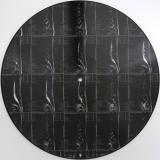
Cote's influence on the imprint adds an extra artistic value to the release, as Playedby strives for a multidisciplinary art vision. The audio is complemented by a special visual support, as the vinyl is fully printed with a stylized, noisy L5S1 MRI scan on its blank surface.
It's clear why Playedby curated this one-sided EP. G76, whose new release already feels like a classic, has reaffirmed his status as an artist to keep an eye on.
Following the exploratory framework of Closer Now, Everlasting Flame sees Bartosz Kruczyński aka Earth Trax moving further into introspection, embracing a more experimental language that drifts between ambient abstraction and rhythm-driven forms.
The album unfolds through cold, shimmering atmospheres and submerged low-end structures, navigating a subtle tension between melancholy and propulsion. Its sonic palette remains fluid, shifting between hazy ambient passages, dub-inflected textures and more fractured, bass-driven moments, while maintaining a strong sense of cohesion throughout.
A defining element of the record lies in its contrasts: low, brooding pads and diffused beats are set against piercing high-end details, distant vocal fragments and flashes of raw, distorted intensity. This interplay creates a sound world that feels at once fragile and forceful, intimate yet expansive, with a persistent sense of longing running beneath the surface.
With Everlasting Flame, Earth Trax continues to move beyond strictly club-oriented structures, shaping a body of work that exists in a liminal space between functionality and free-form expression — immersive, textural and emotionally resonant. A record that lingers in the in-between, where rhythm dissolves into atmosphere and emotion takes the lead.
co:clear is blessed to share the latest offering of Leipzig-based artist, tibslc. Like many, we were introduced to her work through those two stunner long-players on Sferic at the turn of the decade. Five years have passed since then and her work continues to mesmerise – a string of accomplished self-releases have nestled themselves amongst contributions to STROOM.tv and SoundSupply_Service, to name but a few.
In the here and now, we are pleased to showcase ‘City of Something’ – 8 fragments of deluxe hi-fi ambient that further dissolves us in digital haze. Traversing through meticulous fragments of sound, tiblsc entices the listener to her synthetic dreamworld with an album of deep, euphonic electronics. Serene moments of singer-songwriting are sprinkled throughout and remind us of the artist’s delicate ability to captivate with her ethereal voice.
Artwork comes courtesy of Berlin-based artist, Margarita Maximova. Strictly limited to 250 copies of 12” wax and via most digital outlets. Out 29th May 2026.
Out on limited edition 12” vinyl & digital, 29th May 2026. Limited to 250 copies.