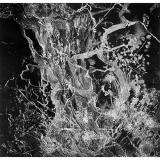
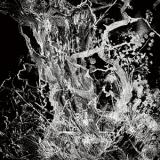
Glasgow-based Effective Dreaming—the solo project of Scottish artist and musician Iain Ross—unveils Dream Catalogue Vol. 1, arriving June 21st, 2025 (Summer Solstice) via Swedish experimental label Fluere Tapes.
Issued as a limited run of 50 cassettes, each adorned with hand-worked, corroded copper sheet inserts and labels, Dream Catalogue Vol. 1 feels less like a release and more like an unearthed artefact: weathered, humming, quietly alive. The materials echo the music’s exploration of fragile impermanence and erosion: oxidised metal, magnetic tape, hiss, hum. A tactile world where sound wears its decay like a patina.
Across its length, the album unfolds in a series of flickering vignettes—drifting, dissolving, reappearing. Shaped by synths, environmental recordings, tape loops, and soft drones, the pieces move like glints of light on water—never fixed, always in motion. Achingly beautiful melodies rise and vanish, tracing fragile pathways through a landscape of shifting sensations. Some moments glow with a gentle warmth, like sunlit glass or breath on a fogged mirror. Others slip into shadow: slow, submerged passages feel closer to memory than music. The album feels loose and weightless, yet dense with feeling—a presence more sensed than held.
There is no fixed narrative here—only fragments and artefacts, half-remembered places, echoes of dreams. Each track hovers just at the edge of clarity, evoking not specific stories, but moods, textures, and the quiet drift of time. It’s music that feels both intimate and remote, like overhearing a distant signal only you can understand.
The name Effective Dreaming is drawn from Ursula K. Le Guin’s The Lathe of Heaven, where a dreamer's visions alter the very fabric of reality—past and present reshaped, histories rewritten, unnoticed by all but the dreamer himself. In a similar spirit, Ross’s music inhabits a space where memory, perception, and matter blur—where each sound carries the residue of something once real, now transformed and dissolving as one drifts through the seams of the world.
Dream Catalogue Vol. 1 is a meditation on texture, transience, and the quiet resonance of what slips away.
For listeners of: Wave Temples, Dolphins Into the Future, Guenther Schlienz"
Поиск:resonance
Все
Moments of Solace is the introspective new EP from London-based artist, musical director, and producer Amane, released via Música Macondo.
Across six beautifully crafted tracks, Amane distills elements of ambient electronica, IDM, and jazz, creating music that evokes a deeply emotional journey through sound.
From the outset, Moments of Solace is contemplative and hypnotic, weaving together the pulse of electronic percussion, the glow of nocturnal pads, and the calming resonance of synths. Echoes fade and return like tides — forming ecstatic waves of sound that invite the listener into a space of reflection and emotional release.
For Amane, this collection serves as a creative response to a world that feels increasingly chaotic and dark — offering listeners a sonic refuge. The EP channels the ambient excursions of Boards of Canada, the rhythmic urgency of a Floating Points club set, and the cinematic sweep of night drives along the Pacific Coast Highway or meditative rides on Japan’s Shinkansen.
Despite an intense touring schedule, Amane found the time to craft this personal and globally resonant work. Moments of Solace mirrors his life experience as a nonstop traveling artist — soundtracking late nights, contemplative moments, and euphoric dance floors alike.
- Amane combines ambient textures, IDM structures, jazz influences, and club sonics into a cohesive sound.
- Inspired by artists like Boards of Canada and Floating Points.
- Reflects a global journey: from London nightlife to Pacific coastlines to Tokyo train rides.
- Released via Música Macondo, a label known for global, genre-blending innovation.
Amane is an East London-based musician, producer, and musical director whose career spans an eclectic range of genres and high-profile collaborations.
He has served as Musical Director for Little Simz, Jorja Smith, Amaarae, Ego Ella May, and Maverick Sabre; performed alongside global stars such as Ed Sheeran, Elton John, Anne-Marie, Sigrid, Dermot Kennedy, King Krule, and Ata Kak; and was a key member of the acclaimed London ensemble Maisha, whose debut was released via Gilles Peterson’s Brownswood label as part of the landmark We Out Here compilation.
In his solo work, Amane channels his deep musicality into soundscapes that reflect on the state of the world, offering listeners spaces for reflection, calmness, and emotional connection.
Composer Corneliu Cezar (1937-1997) was a distinctive personality within the Romanian post 1960 avantgarde: a visionary of music, a thinker and a prophet, a richly gifted artist also active with writing, poetry, painting and astrology. Cezar was an activist rediscovering the natural resonance of sound within a different historical context and he embraced the recovery of authenticity as a reaction against the artificialized culture of serial doctrines. When, after 1975 the spectral music trend became official in Paris, with much fuss and remarkable support from musicologists, nobody knew that this trend has already been practiced by a small group of Romanian composers lead by Corneliu Cezar for ten years. The four electro-acoustic pieces on this album (privately released on CD in Romania in 2000), recorded with little means between 1967 and 1975, display the incredibly strong ideas of a truly visionary artist. Everything Corneliu Cezar has done during his short earthly life bared the shade of authenticity.
- 1: Overture
- 2: Illusions Of Polyphony
- 3: Echos Et Fantasies
- 4: In Simplicity We Trust
- 5: Octus
- 6: Volatiles
- 7: Resonances
- 8: 224 Steps
- 9: Subtracting The Superflous
Crafted entirely on an analog monophonic synthesizer with no overdubs, Pièces Monophoniques is a tribute to simplicity in an era of limitless digital possibilities. Since his debut album, Music For Prophet (Les Disques du Festival Permanent, 2017), Majorca-born composer Marc Melià, now a long-time resident of Brussels, has been redefining the contours of electronic music through a minimalist, reductionist approach. Much like a solitary hike through the vastness of mountains, where one carries only the essentials, Melià’s work invites listeners on a journey stripped of excess, focusing instead on the purity of sound and intention.
While some have dismissed monophonic music as overly simplistic, others have embraced its distinct charm. Historical records, such as those by Johannes Quasten, reveal that early Church leaders were drawn to monophonic music because it resonated with the era's cosmological beliefs, highlighting the harmony and unity of all creation. In an age of digital abundance, Marc Melià deliberately embraces constraint, crafting an album that thrives within a limited palette of choices. Yet, from these self-imposed boundaries emerges a stunning universe, brimming with rich textures and elegant harmonies. For his debut album, Melià worked exclusively with a Sequential Prophet. With Pièces Monophoniques, his third LP, he returns armed solely with an analog monophonic synthesizer and handcrafted MIDI sequences etched directly onto a single stereo track. These recordings seek to uncover beauty within the boundaries of limitations and simplicity, rejecting any embellishments that are not essential. Melià presents the bare skeleton of music, highlighting the power of absence and silence as creative forces. Like the hidden mass of an iceberg, what is not heard becomes as significant as what is heard.
The album navigates the boundary where the quest for an uninhibited emotional response intersects with the mechanical sounds generated by synthesizer circuitry. Despite being a collection of beatless tracks, a pulse occasionally surfaces, like in the closing piece, "224 Steps. A sharp sequence blended with multiple delays and reverbs creates the vaporous celestial specter of multiple voices in "Illusions of Polyphony", while "Échoes et Fantasies" conjures the illusion of dual harmony. The expansive reverbs and silences between the euphoric synth phrases in "Overture" transport us to an imaginary magestic landscape shaped out of an electric field. "Resonances," a one-note drone-like sequence, embodies the album's aims as a series of resonances created with the synth filter emerge from the fundamental note.
"Pièces Monophoniques," aims to contribute to a tradition that dates back to the dawn of humanity. After all, there is no denying that the earliest music crafted by humanity was monophonic, from the soothing lullabies sung to newborns to Gregorian chants, traditional labor songs, and the repertoire of solo compositions by countless composers.
- Through The Heat Waves
- Eight Miles High Alone 07:46
- In Motion
- Inhale
- Crystalline 06:38
- Exhale
- One More Rush
- Silence Is Gliding 05:56
- Cloud Surfing
Marconi Union, one of the most influential names in contemporary ambient and electronic music, announce their twelfth studio album, The Fear of Never Landing, set for release 6th June via Just Music. The news is paired with the release of first single Eight Miles High Alone, out 20th March on all major streaming platforms.
Known for their ability to craft cinematic, immersive soundscapes that blur the lines between ambient, electronic, and experimental music, the Manchester-based duo once again push the boundaries of sonic exploration. The Fear of Never Landing takes us on a dynamic journey that’s atmospheric, diaphanous and never short of mesmerising. While the new record is certainly infused with a sense of hope, there’s more than a soupçon of anxiety too, as the title suggests.
A 55-minute odyssey presented as one seamless piece divided into nine movements, they transcribe the nexus of modern living into a mostly wordless odyssey. The album encapsulates Marconi Union’s ability to translate the complexities of the human experience into sound, all while maintaining a stunning sense of cohesion.
While the music feels effortless, the creative process was anything but. During the two years it took to complete the album, members Jamie Crossley and Duncan Meadows faced creative struggles that even led them to briefly question the band’s future. A pivotal moment came when they performed a live soundtrack to the 1975 skateboarding film Downhill Motion, rekindling their connection to atmospheric composition. By testing new material live and returning to their roots, Marconi Union redefined their creative process, leading to some of their most emotionally impactful work to date.
“We’ve always made atmospheric music but we had started to lose that aspect. Other than some rough ideas, we had no sense of what we were doing anymore, a kind of musical wilderness. Eventually a couple of things fell into place, and it was like, ‘Ah, okay.”
With a foundation to build upon, they went back to basics and decided to take their time going forwards. “We tried out a few new tracks live which gave us the opportunity to see what worked and what didn’t. We've never given ourselves that luxury before.”
The first track to be shared, Eight Miles High Alone, is a mesmerizing sequencer-driven track that builds an immersive, atmospheric soundscape. Its hypnotic pulses and intricate layers evoke a sense of solitude and weightlessness, perfectly capturing the album’s blend of tension and introspection. “Eight Miles High Alone was the first piece that we managed to complete and helped to inform our approach to the rest of the album.”
Formed in Manchester in 2003, their debut album, Under Wires and Searchlights (2003), introduced their signature sound, but it was their 2011 release of Weightless that brought international acclaim. Developed in collaboration with a sound therapist, Weightless was scientifically recognised as “the world’s most relaxing song”, praised for its ability to reduce anxiety and heart rates. With over 900 million streams and widespread coverage across media, the track remains a cultural phenomenon.
Over the years, Marconi Union has continued to evolve, producing critically acclaimed albums such as Signals (2021), Ghost Stations (2016), and Tokyo+ (2017). Their work has been hailed for its emotional resonance and sonic depth, with The Quietus noting their ability to find “beauty in the bleakest places” and The Sunday Times describing them as “amongst today’s most talented musicians.”
Beyond their studio albums, Marconi Union has collaborated with visual artists, provided soundtracks for installations, and remixed notable acts like Max Richter and Vök. Their invitation by Brian Eno to perform at Norway’s Punkt Festival further cemented their reputation as innovators in the ambient music sphere.
With The Fear of Never Landing, Marconi Union once again showcases their unmatched ability to create immersive soundscapes that resonate deeply. The album reaffirms their position as masters of atmosphere and emotional storytelling, making it an essential addition to their storied catalog.
In Marking A Boundary With The Turning Point, Ard Bit and Radboud Mens explore the tension between stasis and movement. Operating within the realm of drone and electroacoustic music, they construct a sonic landscape where sustained tones and microscopic events constantly shape and reshape each other. What initially appears static reveals itself to be rich with detail: tiny acoustic shifts breathe life into apparent stillness, inviting focused and attentive listening. The album emerged from a process where sound research, improvisation, and sound design merge. Self-built instruments, the search for timbre and texture, and recordings of the learning process itself form the foundation of these compositions. Rather than following a traditional musical structure, the result is a sonic field in which the minimal continually transforms, depending on the listener's perspective. Ard Bit (Ard Janssen) is a composer, sound artist, and field recordist based in Rotterdam, trained at the Institute of Sonology in The Hague. His work moves between improvisation and system-based composition, exploring the space between ambient, drone, and sound art. Radboud Mens is a sound artist with a decades-long practice grounded in minimalism, acoustic subtlety, and physical resonance. His work focuses on the perception of sound, the materiality of audio, and the creation of spatial listening experiences. Together, they present a layered and handcrafted album that doesn't narrate but questions. Marking A Boundary With The Turning Point is not a boundary, it's an invitation to listen beyond expectation.
- Troublemaker
- We Forgotten Who We Are
- Fantastic Justice
- Bastogne Blues
- Of A Lifetime
- Burning Bridges
U.K. progressive post-rock supergroup Crippled Black Phoenix is a musical collective that has featured nearly 30 members in it's rotating roster. The constant driving force is multi- instrumentalist Justin Greaves (Electric Wizard, Iron Monkey Se Delan), who formed the band in 2004 with Mogwai bassist Dominic Aitchison. Creating what they describe as "endtime ballads" to signify both the slightly macabre nature of their songs & the unusual blend of styles as the final evolution in music. The band have made live shows a focus by performing in unusual venues across the world as well as using Victorian-era instruments in tandem with more modern instruments, often involving more than a dozen members onstage. In 2006, Crippled Black Phoenix released their first album, 'A Love Of Shared Disasters', followed in 2009 by 'The Resurrectionists' & 'Night Raider', but it was their fourth album released in 2010 on Invada Records - 'I, Vigilante' - an album of uncompromising soundscapes that garnered the band & album widespread critical acclaim within the media worldwide. On 'I, Vigilante', CBP create songs that feel both sky-crackingly epic & intimate at the same time. "We Forgotten Who We Are" is an 11 minute thundering storm which powers through sections of head-nodding chugging guitars to a sunrise of happy melody & back, "Fantastic Justice" is a staggering display of songwriting, with twists & turns that make the band sound like a mini orchestra - horns, strings, crashes & swoons with Greaves the dark conductor. The spoken-word opening to "Bastogne Blues" is perfectly evocative for a genuinely troubled song, CBP's command of bleakness is at it's strongest here; cinematic doesn't come close to describing the song's emotional resonance. When 'I, Vigilante' threatens to disintegrate into a black hole of misery, a faithfully screaming version of Journey's "Of A Lifetime" shows a sense of humour & some sweet guitar tones. This edition of 'I, Vigilante' is presented on black vinyl LP & is the first time the album has been released on single vinyl
- A1: Rhytmicon Example
- A2: What When Ear
- A3: Out Of Town Buying
- A4: Low Tide
- A5: Flight (Instrumental)
- A6: Not To Work
- A7: Papillion
- A8: Steine Nachts
- A9: Untitled 1(Svdh,Ms,Dn)
- B1: Ez Iz
- B2: Neujahrs Wandelen
- B3: Tubing Alone
- B4:
- B5: Item Number
- B6: Xil Sec
- B7: Pala Ping Pong
- C1: Drum Midi Drum
- C2: Rahmentrommel
- C3: Resonance Circul 2
- C4: Aquinas Symposium Remix
- C5: Test (Basel)
- C6: Slow Stroll Words Come
- C7: Shipped Twice
- C8: Untitled 2 (Svdh,Ms)
- D1: Ghost Pipe
- D2: Paper Pen
- D3: Gila Circuit (Short)
- D4: Gila Circuit (Extension)
- D5: Stacking Days Thru U
- D6: Brühl
- D7: Fm Bop
- D8: Fm Test
- D9: Lacandon Vox
This material was released digitally via Belgian label, Stroom as single tracks, as well as located on the Internet Archive as a free download in the form of 4 bulky sides (A,B,C,D) as it was originally conceived. Now available for the first time as physical, compact double MC-set via Tax Free Records.
Alepher “Dodges Aim” was made by iRiAi Verlag and TRii Compiler ca. between 2020-24.
The Ottawa composer/performer and head of Black Bough Records plays every instrument on his CST debut: an accessibly avant-garde work of dark/ambient modern chamber music. Mark Molnar has been a linchpin of the Ottawa experimental music scene for over two decades, spanning contemporary classical, electroacoustic, industrial/noise, and improv. As a string player in a wide range of projects, an organizer and curator of innumerable shows, and via his own avantgarde label Black Bough Records, Molnar's unflagging contributions to independent music culture in Canada's capital city have been significant. EXO is his Constellation debut: a remarkable and bracing suite of post-classical composition on which Molnar plays every instrument. Meticulously self-recorded, primarily with strings, harp, and piano, EXO balances thematic melodicism, polytonality, and dissonance across three elegiac pieces of exquisitely expressive dynamism. This is exacting modern chamber music that blends formal and harmonic complexity with a solemn emotive sensibility accessible to a broad audience. Listeners that yearn for some edge and disquietude in a landscape of often all-too-approachable post-classical music should find EXO eminently worth their time and attention. While Molnar is a highly trained string player, and studied music under Aubrey Wolfe, microtonality with James Tenney, and composition with R. Murray Schafer, his trajectory has been entirely and intentionally outside the academy, signalling a socio-artistic commitment to DIY culture, forged from an early passion for the sonic worlds of post-hardcore, post-punk, no-wave, free improv, power electronics, and other independent/underground musics. His classically-informed works have been described as "tense currents of musical modernism invigorated with punk's raw vitality." EXO carries an undercurrent influenced by dark industrial and ambient metal in particular, with microphones purposely placed to pick up the low-end frequencies of the piano body, and of a bass drum positioned as a resonant skin in the acoustic space; an electroacoustic strategy organically meshed to the crisply defined and pristinely recorded pointillisms and polychords of strings, harp, and piano, which feed into this noisefloor of crepuscular sub-bass disquietude and decay. It's a production aesthetic that lends EXO a distinct undertow of tension and feeling, a sort of roiling maximalism where the chamber instrumentation traces arcs and waves of form and flow as if drawn from a dark, impervious ocean below. It also reinforces the profound hermeticism of Molnar's process, as a forbiddingly solitary creative act of immersion and navigation. The album artwork, featuring semiabstract stills of the sea by British photographer Ed Allen, further reifies this metaphor. The album's opening piece 'Sub Luna' (and its shortest at 8 minutes) showcases Molnar's adeptness at naturalistic and flowing complexity: tight cascades of climbing and descending chordal clusters hold their polytonal densities for various durations, yielding to more clarified harmonic suspensions and motifs, as melodic themes led primarily by violins in the higher registers provide a fractured lyricism. Molnar says: "the opening and closing figures of this piece act as opposing shorelines; the shorelines provide a reliable expression of range and key signature, and the tides come in and swallow them up, the motion of a body that addresses the relationship between states of lucidity and melodic figures." On 'Terre Sacer' everything happens in soupier waters, as a slow and doleful theme, anchored by grinding bass notes, circles in a gyre of dark resonances, until glistening strings gradually ascend to enrobe a plaintive and gently harrowing single-voiced ostinato over the composition's final third. Molnar's drone, ambient, minimalist, and goth-industrial influences are on display here. Side Two of EXO features the 18-minute multi-movement 'pallida Mors' (pale death): a waterfall of heterophony introduces dense chordal movements where strings are recorded and mixed to evoke pipe organ, in the album's most overtly dissonant and (anti)liturgical sequence. This gives way to ever more open and fragile spaces, before a resurgence of dark clusters and noise treatments introduces a final repeating piano coda, shrouded in devastated bass resonance, settling into what Molnar calls "a meditative hollow." Constellation is honoured to release this work by Mark Molnar, a longtime fellow-traveler whose selfless and boundlessly generous activities as an independent arts enabler sometimes obscure his own accomplished and uncompromising artistry. We trust EXO can help shed some much deserved light on this fine composer. Thanks for listening.
"In 2020, Chick Corea—27-time GRAMMY® winner, National Endowment for the Arts Jazz Master, and one of the most iconic figures in jazz—hit the road with his powerhouse trio of Christian McBride and Brian Blade, and embarked on what would be his final tour. Candid Records and Chick Corea Productions proudly present the recordings from that tour as Trilogy 3, the third installment from this extraordinary group. This unforgettable double live album showcases their unparalleled chemistry and cements their legacy in contemporary jazz history.
With years of collaboration to draw from, 9-time GRAMMY®-winning bassist Christian McBride and 4-time GRAMMY®-winning drummer Brian Blade bring a profound musical connection to their work with Corea. Their longstanding partnership fuels a dynamic, ever-evolving soundscape that elevates the art of the jazz trio to new heights.
Following the critically acclaimed Trilogy (2013) and Trilogy 2 (2018) albums, which each earned two GRAMMY Awards® including Best Jazz Instrumental Album, Trilogy 3 marks yet another milestone for this celebrated ensemble. The release brings together live performances from their February-March 2020 tour, cut short by the onset of the pandemic, capturing the trio’s extraordinary interplay and artistic brilliance. The album features fresh interpretations of jazz standards and Chick Corea originals, including the first trio recording of Corea’s iconic composition ""Windows"" since its appearance on the album Now He Sings, Now He Sobs, nearly six decades ago.
Widely regarded as one of Chick’s most acclaimed ensembles, this trio has consistently pushed the boundaries of jazz with technical brilliance, playful camaraderie, and deep emotional resonance. Trilogy 3 invites listeners to join these masters on a journey through music that is both timeless and groundbreaking."
- Apartment Life
- The Machinist
- The Men Are Fighting
- Lakeland
- Seven And Seven
- Over & Over, Pt. 1
- Bells And Bells
Fit for Consequences: Original Recordings, 1984–1987 is the first ever archival release from Repetition Repetition, the “two-man electric minimalist band” consisting of Ruben Garcia and Steve Caton hailing from Los Angeles in the mid 1980’s. Repetition Repetition’s unique blend of cosmic art-rock minimalism / maximalism was self-released across a series of cassettes produced in micro editions, and while garnering the attention and participation of luminaries such as Harold Budd, remained under the radar during the band’s existence. Fit for Consequences: Original Recordings, 1984–1987 collects select material from across the duo’s catalog.
It was over a plate of Mexican breakfast food when Ruben Garcia and Steve Caton first told Harold Budd of Repetition Repetition and the worlds they intended to explore by respective way of synthesizers and guitars --- a rendezvous instigated by the former’s fan mail to the legendary composer. If the upstarts entered this restaurant from a one-way street of admiration, they would leave with not only Budd’s interest but, sometime later, a blessing in the wake of many hours shared by the three in Garcia’s Los Angeles home recording studio: “This is going to be difficult, but God help them, I think they’re great,” noted Budd in a USC lecture in 1985. Now several degrees removed from prior rock music aspirations, the real game was afoot.
Between 1984 and 1988, Repetition Repetition operated within something akin to the underground of the experimental underground, although even that designation perhaps overstates the case. The duo’s sparse output consisted of three cassettes self-released on Garcia’s Third Stone Music label: Repetition Repetition (1985), Lakeland (1987), and The Machinist (1987). Their songs would also be included during this period on Trance Port Tapes’ vital scene-scanning compilations assembled by A Produce. Live performances occurred with similar infrequency, but Garcia and Caton counted converts in quality over quantity, numbering among them the aforementioned Budd, a Chambers Brother, and, judging by a memorably drop-jawed reaction following a rare Repetition Repetition gig, Jackson Browne.
Likewise, critical support materialized in the form of KCRW deejays Brent Wilcox and Dean Suzuki, whose steady airplay positioned Repetition Repetition’s music amidst fearless company like Jon Hassell, Hiroshi Yoshimura, and Richard Horowitz. Yet, to hear fellow Trance Port featured players like Tom Recchion and Bruce Licher of Savage Republic tell it, Garcia and Caton moved as ghosts --- a notion more vexingly endorsed by the silence of record companies that failed to come knocking --- and therein lies an overarching truth to the work itself.
Journey to the heart of Repetition Repetition and one discovers a collective ear impossibly attuned to the hypnotic possibilities of stylistic convergence, the resulting music possessed of seamless multimodalities which beckon to a glimmering plane of the disembodied. Where Caton sought his artistic fixes at an intersection of popular genres, Garcia zoned in on the sonically spare, drawing from the same wellspring as the Enos and Rileys of his personal avant-garde pantheon, and in their coming together the two tapped into a deeper cosmic source. Synthetic walls of keyboard sound in forever states of reprise met waves of shimmering --- and at times even punishing --- guitar in reply, their soundscapes hovering convincingly between, as suggested in fittingly dualistic fashion in a press kit assembled by Garcia, such disparate sensations as bird flight in one song and oil drilling in the next.
But don’t call it a push-pull dynamic, as this was a creative partnership founded upon fluidity and organicism by way of, naturally, repetition. In contrast to, say, the Bressonian ideal of repetitive motion as a great stripping away, the concept in the hands of Garcia and Caton equated to ascendancy via continuous unfolding, a maximal route to minimalism. To be sure, their recording philosophy morphed over the course of the act’s short history, and what started as a process defined by consistent in-person interplay developed into a more isolated method formulated by Garcia, who eventually took to his own one-man bedroom-studio sessions in order to fully chart any and all potential ostinato-loaded paths which he could travel down, the Tascam-captured resonances subsequently provided to Caton as blueprints from which to take flight himself, adding layer upon layer of steel to the proceedings.
If the practice and execution changed, however, the evidence certainly didn’t rest in the results: The seamlessness remained, and, despite the brevity of their time together, so has Repetition Repetition. With this finely calibrated collection of songs in Fit for Consequences: Original Recordings, 1984–1987, Freedom To Spend sees to it that the private worlds of Garcia and Caton can now be visited by all rather than just the count-‘em-on-both-hands lucky few whose musical endeavors or collector vocations carried them into this once-distant dimension.
Repetition Repetition’s Fit for Consequences: Original Recordings, 1984–1987 will be released on Freedom To Spend in vinyl and digital editions on May 30, 2025. The collection includes extensive liner notes from Bill Perrine, and wil be offered alongside Over & Over, a supplemental collection of music available exclusively as a mail order cassette from Freedom To Spend and RVNG Intl.
- 1: My Goddess
- 2: Nuits Paisibles
- 3: 00/700
- 4: Refuge
- 5: Four Walls
- 6: My God
- 7: Papillon
- 8: Reprise
A deeply intimate and cinematic body of work, My Goddess unfolds as a self-contained emotional universe; an album about grief, depression, healing, and the enduring human urge to find beauty in a world that often feels unrelenting.
Composed against the backdrop of Lebanon’s ongoing political and economic collapse, My Goddess captures what it means to process personal heartbreak and collective trauma simultaneously. Across nine emotionally charged tracks, Etyen draws from profound loss, existential reflection, and the tragic death of his beloved cat Lucy to craft a record that is as fragile as it is resilient; both a personal reckoning and a universal portrait of survival through art. “This album is a conversation with myself. It’s about loss and grief, about finding beauty and trying to hold on to it,” says Etyen. “It’s about confronting the painful parts of life while still believing there’s something gentle and divine to hold onto.”
Blending cinematic textures, Etyen's unique and inspired electronics, and minimally sculpted yet immersive melodies, My Goddess pushes further into the raw introspection first glimpsed on Etyen’s 2022 debut album Untitled. But this time, the sonic architecture is more distilled, the emotional stakes more immediate. The result is a record that gently lingers in the spaces between memory, absence, and hope.
The album’s first single, the title track “My Goddess,” drops May 5 with a self-directed music video, one of three cinematic visuals accompanying the album. The trilogy further expands the emotional world of the record and affirms Etyen’s role not only as a musical artist, but as a multidimensional storyteller.
With over a decade of work that spans Netflix scores (Jinn), international festivals (Sonar Barcelona, Mutek), and critical acclaim and editorial support from Bandcamp Daily, BBC Radio and much more, Etyen has carved out a singular voice in electronic music—bridging personal, cultural and political resonance through sound. As the founder of Thawra Records, he also continues to champion independent artists from the region, building a vital platform for forward-thinking music in and beyond the Arab world.
- All Our Days 04:47
- Little Sparrow 04:41
- Fair Maids Of February 04:27
- The Housewife's Lament 05:55
- A Toast 03:51
- One In Ten 03:57
- Jeannie 06:36
- Her Bright Smile Haunts Me Still 05:02
A collection of songs and stories with women at the centre, that
I hope everyone can find some resonance, strength and solace with.
credits
released February 28, 2025
Jenn Butterworth: Vocals, Backing Vocals, Guitar, Mandolin & Mandola
Seonaid Aitken: Violin
Kirsty Orton: Violin
Patsy Reid: Viola
Alice Allen: Cello
James Lindsay: Double Bass, Electric Bass & Moog
Louis Abbott: Drums & Percussion
Signy Jakobsdottir: Percussion
Keir Long: Synths & Pianet
Tom Gibbs: Piano (track 5)
Arranged and produced by Jenn Butterworth
All string arrangements by Seonaid Aitken, apart from tracks 3 & 4 which are by Jenn Butterworth and Seonaid Aitken
- Proceed To Memory
- Glide
- Drawstring
- Sherman
- His Phase
- Diminished
- True North
- A Request
- Denslow, You Idiot!
- Sediment
Colored vinyl repress of last Pinback album, originally released in 2012. On one hand, their fifth album, Information Retrieved, is the logical and accessible realization of a sound Pinback have been developing and refining for over a decade. However, that consistency that we've taken for granted is what makes Information Retrieved such a euphoric surprise; their finest and most fully realized album, a dozen years deep into a career that includes bona fide modern classics like "Good To Sea" and Summer In Abaddon. Simply put, this is better than we ever could have expected. They could have coasted on automatic pilot to another lauded album that likely would have made it onto plenty of year-end lists, but instead they shot the moon, and the result is a major triumph. The touchstones are still there: Zach Smith's stunningly unique bass guitar acrobatics driving both rhythm and melody in lock-step unison; the incredible immediacy of Rob Crow's voice that could make a phone book sound compelling; and the musical and lyrical interplay between the two of them that made Pinback so special in the first place. The difference now is their exquisite control over dynamics and a greater emotional resonance throughout. It's the most complete and soulful Pinback album by a fair distance, the finest moment in the career of a band whose unfettered brilliance we've come to count on, but will never again take for granted. For Fan of The xx, Deerhunter, Built To Spill, Broken Social Scene
After a collage tape collab with Bardo Todol back in 2022 (SUC52, Magnetic Road to Hell) Robert Millis finally gets his Discrepant debut proper, a much overdue entryin our random catalogue of lost musical oddities.
The not so self explanatory title Interior Music explores Millis obsession with hidden sounds and its anomalies. An hermetic rearrangement of emptiness could be another more big headed title. But I leave the man to talk about his thing:
‘’The phrase interior music occurred to me a few years ago as a way to describe some recent work. It’s about the resonances inside of hollow wooden chambers (and hollow heads) like gramophones and talking machines, music boxes, instruments, metal containers, and resonant rooms. It’s about exploring tiny audio fragments—single notes, vinyl and shellac surface noise, recording mishaps and anomalies—and arranging them into something meaningful. It is about my own interior mishaps and anomalies and attempts to arrange THEM into something meaningful. It also references “interior design” with the placement of sounds in specific locations, layers or in juxtapositions.
Inspirations include Steve Roden’s lowercase work, Toshiya Tsunoda’s field recordings, Eliane Radique’s slowly shifting ambiances, and the musique concrete of Pierre Schaeffer, as well as the dhrupad and kayal traditions of Indian classical music—especially Kesarbai Kerkar and the Dagar family who have a sublime way of stretching out individual notes and exploring their endless permutations, combinations and connotations.’’
Robert Millis is a sound artist known for his work with Climax Golden Twins, the Helen Scarsdale Agency, the soundtrack to cult horror film Session 9, the Victrola Favorites book and cassette series, and many releases on Sublime Frequencies including Indian Talking Machine, Paris to Calcutta: Men and Music on the Desert Road, compilations of the earliest music recorded in Korea, Japan and Myanmar, and the documentaries This World is Unreal Like a Snake in a Rope and Phi Ta Khon: Ghosts of Isan. Somehow he is a Fulbright scholar (to India 2012-13) and the recipient of a Guggenheim Fellowship (2020). He has or currently does play with AFCGT, Idol Ko Si, and/or Telescoping.
Die aus der estnischen Metalszene stammende Band PRIDIAN wird ihr Debütalbum "Venetian Dark" über Century Media Re-cords veröffentlichen. Ihr moderner, energiegeladener und atmosphärischer Metalcore mit futuristischem Einschlag erinnert an Genre-Größen wie Northlane, Spiritbox und Architects. Beim Songwriting legen PRIDIAN den Schwerpunkt auf cineastisches Storytelling und ein starkes narratives Konzept in ihren Texten, ihrer Musik und ihren visuellen Elementen. "Wir wollen Songs schreiben, nicht nur instrumentenbasierte Musik. Wir könnten technische Sachen schreiben, weil wir alle unsere Instrumente beherrschen, aber gute Songs, interessante Strukturen und gute Geschichten sind wichtiger."Der Albumtitel "Venetian Dark" wurde von einer Farbe inspiriert, die sich in Jörgs Kopf festsetzte und sich langsam zu ihrer end-gültigen Form mit den allgemeinen Themen des Albums entwickelte. Das Album wurde komplett von PRIDIAN geschrieben und produziert, die viel individuelle und gemeinschaftliche Arbeit in die Entwicklung der Tracks gesteckt haben. Tracks wie "Out For Blood", "DINY" und "Void Resonance" vereinen chaotische, energiegeladene Riffs mit EDM-artigen Synthies, krachenden Break-downs und atmosphärischen Elementen. PRIDIAN schöpft aus dem Metalcore der 2010er-Ära, dem Djent und dem von Deftones inspirierten Post-Hardcore und lässt sogar eine Korn-ähnliche Nu-Metal-Kante erkennen, vor allem beim schweren, aber ein-gängigen "Darker Tides". Das Zwischenspiel "Synthetic Salvation" unterstreicht den kühnen Ansatz der Band, wie Laur erklärt: "Einige Tracks sind mehr Produktion als Song... das ist kein Metal, aber das ist mir egal. Es ist uns egal, was andere sagen." Abgemischt von Matt Thomas (Kingdom Of Giants, Invent Animate), bietet "Venetian Dark" eine hochmoderne Produktion in Be-zug auf Ausgewogenheit und Modernität. Venetian Dark" ist als Standard CD Jewelcase, als limitierte transparent blau-schwarz marmorierte LP, sowie als digitales Album erhältlich.
Justin Moore
The Radio Phonics Laboratory - Telecommunications, Speech Synthesis, and the Birth of Electronic Mus
The Radio Phonics Laboratory by Justin Patrick Moore is the story of how electronic music came to be, told through the lens of the telecommunications scientists and composers who helped give birth to the bleeps and blips that have captured the imagination of musicians and dedicated listeners around the world.
Featuring the likes of Leon Theremin, Hedy Lamarr, Max Matthews, Hal 9000, Robert Moog, Wendy Carlos, Claude Shannon, Halim El-Dabh, Pierre Schaeffer, Pierre Henry, Francois Bayle, Karlheinz Stockhausen, Vladimir Ussachevsky, Milton Babbitt, Daphne Oram, Delia Derbyshire, Edgar Varese & Laurie Spiegel.
Quotes
“From telegraphy to the airwaves, by way of Hedy Lamarr and Doctor Who, listening to Hal 9000 sing to us whilst a Clockwork Orange unravels the past and present, Moore spirits us on an expansive trip across the twentieth century of sonic discovery. The joys of electrical discovery are unravelled page by page.”
Robin Rimbaud aka Scanner
“Embark on an odyssey through the harmonious realms of Justin Patrick Moore’s Radio Phonics Laboratory echoing the resonances of innovation and discovery. Witness the mesmerising fusion of telecommunications and musical evolution as it weaves a sonic tapestry, a testament to the boundless creativity within the electronic realm. A compelling pilgrimage for those attuned to the avant-garde rhythms of technological alchemy.”
Nigel Ayers (Nocturnal Emissions)
“In this captivating exploration of electronic music, Justin Patrick Moore unveils its evolution as guided by telecommunication technology, spotlighting the enigmatic laboratories of early experimenters who shaped the sound of 20th century music. A must-read for electronic musicians & sound artists alike—this book will undoubtedly find a prominent place on their bookshelves.”
Kim Cascone
Hyldon, Brazil’s highly revered vocalist, musician and producer, has partnered with Adrian Younge to create a new psychedelic soul album, HYLDON JID023. The duo, highly inspired by Hyldon’s seminal work in the ‘60s and ‘70s, revisits’ the spirit of this epoch while creating a modern-day classic. Hyldon’s unique voice and lyrical depth, combined with Younge’s innovative analogue production, ensures this album will not be forgotten. JID023 is one of the last recordings featuring Hyldon’s long-time collaborator and friend, the late drummer Ivan “Mamao” Conti of Azymuth.
Hyldon, a musical pioneer and early contributor to the “Black Rio” movement is a genius in synthesizing the sounds of MPB, Tropicália and Black American R&B. His unique voice, coupled with his rich arrangements and laid-back grooves set him apart from the contemporaries of the time. In ’75, his remarkable debut album, Na Rua, Na Chuva, Na Fazenda changed the sound of Brazil forever. Hyldon’s earnest and experimental approach in creating that album served as the inspiration for Younge’s production on the new JID023.
Months before Mamão's untimely passing, Adrian Younge and Hyldon invited the legendary drummer to join them at Younge’s Linear Labs studio in Los Angeles. Mamão and Hyldon shared a rich musical history — Azymuth, Mamão’s group, served as the rhythm section for much of Hyldon’s work, including his iconic 1975 LP, Na Rua, Na Chuva, Na Fazenda. Their goal was ambitious: to craft an album that would stand alongside Hyldon’s finest achievements, one that would captivate fans who love his unique blend of psychedelic and soulful “Música Brasileira.” The result is nothing short of remarkable.
“Producing a Hyldon album was a dream come true. I’ve studied his catalogue for so many years and highly respect the way he mixed the sound of The Beatles, with that of Marvin Gaye and Tim Maia. I’m still enamored by the fact that he is even a better singer now than he was, in what many deem, his prime. Also, we greatly miss our dear friend and contributor Mamão, the late drummer of Azymuth. We dedicated this album to his memory, and we wish he could have had the chance to hear the finished album.” – Adrian Younge
Songs such as “Olhos Castanhos” evoke the ethereal nature of The Beatles “Strawberry Fields” as the mellotron flutes and Hyldon’s vulnerable performance captivates our hearts. Mamão’s gritty and funky drumming on “Nhanderuvucu (The Creator of God)” showcase what made him a leading pioneer in Brazil’s samba funk scene. Apart from the remarkable drumming, multi-instrumentalist Younge accomplishes the unthinkable by playing every other instrument on JID023. The experimental fusion of horns, analog synthesizers and acoustic instrumentation on songs like “Viajante de Planeta Azul” take listeners on a funky journey to the blue planet; a fictional space that Hyldon lyrically describes with passion and conviction.
Hyldon JID023 is an unexpected, yet remarkable addition to the canon of Brazilian Music. Hyldon’s emotional resonance, coupled with Younge’s sophisticated production and Mamao’s outstanding drumming make this a standout album within the deep catalogue of Jazz Is Dead.
On ‘Animal’, Ash Fure appeals to “animal intelligence” by using sounds that are inherently physical and driven by perception, athleticism and interaction. Placing polycarbonate sheeting over an inverted subwoofer she built alongside her partner Xavi Aguirre and brother Adam, Fure isolates the physical impact of sound by focusing on psychoacoustic sub-bass pulses, semi-perceptible micro-rhythms and discomfiting white noise bursts, linking the process to her experiences in Berlin and Detroit’s techno dungeons where the sound has to adapt to the space it’s performed in. When she performed ‘Animal’ for the first time, Fure fabricated a “listening gym”, allowing the audience to interact in real-time by circuit training in response to the sound. The sweat is almost audible across the record, a run-on selection of rhythms, resonances and abstractions that sound like interlocking heartbeats on a series of treadmills. Her fascination with techno’s cavernous cathedrals is clear from the beginning, but Fure doesn’t worship at the altar: we’re hit with the feeling, not the aesthetic. The beats themselves, made from unstable vibrations and waterlogged, reverberating clicks, echo the brain’s unconscious reaction to repetition in a vast concrete box, the feeling you get when each percussive snag ricochets from every surface in the building. Coddling these whirring, criss-crossing polyrhythms with harsh, distorted low-end retches, Fure accurately recreates the energy and fatigue of the endless weekend sesh. We never once encounter techno in its expected shell, just its residue - the outline of humans figuring out their relationship with technology, architecture and each other. Fure’s use of dynamics is also deviously smart, marking out an overall rhythm that’s not tied to the strength of the sounds themselves, but just volume and physical impact. Often her most brutal sounds - ear-splitting squeals and overdriven mechanical whirrs - are reduced to an almost inaudible level, a bit like the bandy legged trip to the bathroom, or the escape to some dimly lit nook, the part of the night where you can still detect the sound on your skin without being battered by it. When the undulating rhythm returns in earnest, Fure masks acidic sequences in jet engine expulsions, still refusing to objectify anything that an AI model might be able to pick up on.
Remember: you could be dreaming. Sinking or flying, sound-catching or singing. Witnessing a distant storm in silence, how it exposes purple clouds in unpredictable flashes. Hearing a submarine eruption and finding natal comfort in the warm, fragrant smoke that only wants to sheathe all your edges. The circus has left, only placards remain. And the snow. Look how the flakes sway to your feet without effort - any distance is misleading, illusory. There’s only dream and memory – the two wings of a bird that flaps with an ocean wave, blinks with an eye of a lighthouse. Fragile, you could be dreaming not alone, holding hands with the core of things. The molten core, like touching ice. You could be dreaming. Dreaming in perfect memories of shapes imperfect. Dreaming of the earth raining from the sky, of the wind inside the sea, of the lighthouse & the ship kissing, of exotic fishes in the bay of your ear. Everything is real. If you play. If you dare to ignore the margins. Echoes go on forever. They play with themselves in a stream of mirrors. Echoes of a forgotten language, of a language unwritten - a soothing, indifferent creole that reconciles feeling with understanding. Bathe in the fountain at the source of resonance. Bathe in the clouds on the eyes of intimate strangers passing. Disappear. Disappear and be seen, like the moonlit mist behind your eyes. And sway between hope and wisdom.
All songs written, performed and produced by Sasha Vinogradova and Alina Anufrienko
Recorded in Garnet village, Dmitrovsky region, Russian Federation (February 2020)
Scheurneus EP is Vunks latest 12 inch vinyl release on his own legendary imprint Moustache Records. This release is a tribute to the underground scene, no hipster house only pure electro techno acid EBM sounds. This release is part of his 30 year anniversary as a DJ. Produced in his atomic basement Baan Studios downtown Rotterdam. A1 has a crazy funky 303 bassline, 606 hi-hats, 909 toms and more cowbell, vocoder voices and some italo-ish Legowelt-ish melody , this all blends together for this "You Sexy Bassline". When David played it in a B2B with Tom Trago, Tom said are you kidding me, is this your track? A2 "Sorry ain't enough" is a musical tribute to the legendary Emmanuel Top from Belgium. Electro acid and a building up deep track. Expect some extra cut off frequency and resonance. Already played on National Dutch Radio 3FM by the best and funniest radio DJ the Netherlands has to offer; Justin Verkijk. B1 provides a tribute to the EBM wave scene, originally made for a VA compilation that was never released. Now brought to you on Moustache Records because we don't want you to miss this! Expect TR909 hats, vocoders, modular Fenix 4 system and more modular. A hit from the legendary Paradisco Festival in Belgium. B2 is filled to the brim with Flangers, TR 606 Drums and a sharp bassline form the Roland SH101, Davids first and favorite synthesizer ever! He paid 37,50 euro for it back in the days SH101 :) This is a tribute to Robert Armani and Chicago house pumping, jacking and goes up, up, upper, upperst! A pure club banger.
The compositions of Miłosz Kędra (b. 2001) explore synthetic sound, electroacoustic music, and self-built acoustic instruments, seeking diverse timbres, tunings, and textures. His main field of work is the pipe organ. Through minimalist motifs, he has transported the instrument’s sound beyond the church space by synthetically processing its tones. He is currently pursuing a Master’s degree in New Media Music at the Academy of Music in Poznań and recently completed a Bachelor’s degree in Electroacoustic Composition, during which he built his own pipe organ from scavenged pipes.
~ Liner notes ~
Miłosz Kędra - "their internal diapasons"
The pipes that Miłosz Kędra used to craft his own organ emulator have lived many lives. They come from churches scattered across Greater Poland—some trimmed for a more presentable façade, others left to gather dust in parish houses until, stripped of purpose, they were cast away. Their first voices have faded, their inner resonance unsettled, yet with patience, one can teach them to sound again—to sing in their altered state, to be gently coaxed out of silence.
Audiomancy—the conjuring of lost sounds—is the word that lingers when I try to grasp the lore crystallizing with Kędra’s second album.
The resolve with which the musician and composer has inhabited his self-built instrument recalls Witold Szalonek and his search for “unexploited properties of wind instruments in classical music.” Szalonek sought to map these hidden voices into a system of multiphonics, revealing over 160 on the oboe alone by 1968. Some sound eerily alike, yet emerge through distinct gestures—“a particular breath, a precise choreography of levers and apertures, the seamless fusion of the two.”
The splitting of a single note into its spectral fragments—allowing a melodic instrument to speak in two, three, even four voices at once—enabled Szalonek to bend the rigid structures of Western music. "their internal diapasons" follows a similar path: an aesthetic bypass through which Kędra taps into the sacred gravity of the church organ, only to reveal it as a domesticated echo of something far older—the primal theater of transformation. To listen closely to an instrument is to learn its flaws, to turn its imperfections into a new way of speaking.
Each of the nine compositions on "their Internal diapasons" is an invitation—to approach the material world with the intent of letting it speak beyond expectation. An instrument that is at once a sculpture, a performance, and a manifesto of voicing the discarded suggests that its creator—following the path of Didier Eribon (Returning to Reims)—might take as his motto, a principle of asceticism, Sartre’s words: “What matters is not what is made of us, but what we ourselves make of what is made of us.”
Filip Szałasek
Listeners will drift through soundscapes with even greater expanses than before as Geir Sundstøl releases his new album, Sakte Film,. This marks Sundstøl’s sixth solo album on Hubro and his tenth anniversary as a solo artist. Geir Sundstøl has had a rich and varied career, to say the least. Within the HUBRO universe, his music has remained a pillar for years, and Sakte Film is no exception. However, this release embraces a broader scope, with multiple layers of strings that create even more room for resonance and exploration. Sundstøl explains: - What sets this album apart from my previous ones is, first and foremost, the string arrangements. Erik Sollid, Sunniva Shaw, Håkon Brunborg, and Mari Persen have contributed with violin, viola, and cello, adding a new dimension.
Geir Sundstøl(born in 1969) is a Norwegian musician who plays a wide range of string instruments, including the marxophone, acoustic guitar, electric guitar, mandolin, pedal steel, bouzouki, lap steel, banjo, and dobro, as well as harmonica and various keyboards. He is a highly sought-after and respected session musician and was awarded the Gammleng Prize in the studio category in 1994. In 2015, he released his first album under his own name, Furulund, which was nominated for the Spellemann Prize in the open category. He later won the Spellemann Prize in 2018 for his third album, Brødløs
- Orchid Mantis
- Breach
Orchid Mantis, by Michelle Helene Mackenzie and Stefan Maier, is a work that draws its inspiration from the history of the Sanzhi Pod City, in northern Taiwan. Sanzhi Pod City was built from 1978 onwards, made up of buildings constructed from assemblages of `pods' inspired by the futuro houses of Finnish architect Matti Suuronen. The project was abandoned in 1980, following a number of accidents during construction and persistent rumours that the site was haunted. However, this wasteland of a city has allowed insects to proliferate, in particular five species of orchid mantis. It is this strange environment, made up of utopian buildings, proliferating insects and vegetation reclaiming the site, that serves as the imaginary space for Michelle Helene Mackenzie and Stefan Maier's music, a music of carefully designed pace and progression, drawing, through resonance and stridulation, subtle sonic materials that guide and accompany us into multiple worlds with admirable ease and grace. Breach, by American composer Olivia Block, engages in a dialogue between field recordings and synthesised sounds, creating a vibrant plea for wild spaces that face an ever-growing threat to their survival from human activities. The work is based on recordings collected in the San Ignacio lagoon in the Mexican part of Southern California. This lagoon is known as a breeding ground for eastern Pacific grey whales. With the help of precise electronics, the music unfolds like a drift, depicting the subjective soundscape of whales caught up in the noise of the Anthropocene. The composer uses otoacoustic emissions in particular, representing the sound saturation caused by humans in the habitat of these large marine mammals. Going beyond a merely descriptive dimension, Olivia Block manages to transcend her subject to offer a fascinating musical form that engages the listener in a constantly renewed way.
- あみめ / Amime 05:33
- 麻雀砂漠 / Majan Sabaku 05:09
- かくれんぼ / Kakurenbo 04:07
- 嘆きの亀 / Nageki No Kame 05:31
- クローゼット / Closet 04:23
- スロウな夢 / Slow Na Yume 04:37
- ペイズリー / Paisley 06:00
- 波紋 / Hamon 04:37
- 水 / Mizu 04:17
- 飛んでる / Tonderu 05:10
- さよなら / Sayonara 04:03
- 真夜中の音楽 / Mayonaka No Ongaku 05:35
- とらとらいおん / Tora To Lion 04:48
- 新しい場所 / New Season 06:02
- さらうかぜ / Saraukaze 03:42
- ストロボ / Storobe 03:53
- 交信 / Koshin 05:33
- 少女 / Shoujo 06:07
- ひまわり絶叫 / Himawari Zekkyo 03:36
- いつのまにかわたしたち / Itsunomanika Watashitachi 04:16
»Carpet Of Fallen Leaves« is an introduction to the folk-pop world of Eddie Marcon. It follows in the footsteps of other collections of Japanese artists on Morr Music, such as yumbo, Andersens, and the »Minna Miteru« compilations. »Carpet Of Fallen Leaves« draws together songs from Eddie Marcon’s twenty-two-year history, including fragile, yet rich in melody material, collected from a prodigious run of limited edition, self-released CD-Rs.
Eddie Marcon is the project of Eddie Corman and Jules Marcon, who met through their involvement in Japan’s underground music scene. Eddie was a member of noise-rock duo Coa, while both Eddie and Marcon were part of psych-rock collective LSD-March. Forming in 2001, Eddie Marcon’s sound is markedly different from these groups, though they do, at times, share a sense of psychedelic dislocation, through the gentle, limpid pace of their songs. But with Eddie Marcon, melody and gentleness is at the music’s core.
They’ve long marked out their own, unique territory within a worldwide community of psych-folk and folk-pop artists; sharing their music through a subterranean network of colleagues and friends, they count groups like The Pastels and The Notwist as their fans, and Eddie has collaborated with the likes of Shintaro Sakamoto, and Aki Tsuyuko (in Tondekebana, and with Marcon and Ippei Matsui in the quartet Wasurerogusa). Eddie Marcon have also recently worked with drummer Ikuro Takahashi, who’s played with groups such as Fushitsusha, Maher Shalal Hash Baz, and Nagisa Ni Te.
Across the songs on »Carpet Of Fallen Leaves«, Eddie Marcon’s songs are performed by Eddie on guitar, organ and vocals, and Marcon on bass; they’re variously joined by Takahashi, Yojiro Tatekawa (drums), Tomoko Kageyama (vibraphone), Yasuhisa Mizutani (flute), Madoka Asakura (vocals), and Ztom Motoyama (pedal steel). The arrangements are pared back to best serve the core of each song, and the playing is gorgeous – fluent but not showy; capable of great intricacy, but aware that simplicity is key to direct communication.
Songs like »Mayonaka No Ongaku« stretch their limbs languidly, the music shivering with beauty as guitar and cymbal drift across Eddie’s poised vocal delivery. »Tora To Lion« began as an improvisation, but it’s become a firm favourite of the group’s fans: as Eddie says, »it has become a very important song for us, to the extent that it can be said to be our representative song.«
Perhaps the most moving thing about »Carpet Of Fallen Leaves«, though, is the way it captures the subtle yet significant moments of everydayness that ask for our attention. »Shoujo«, a song for a beloved cat who passed away, possesses rare emotional resonance. »At the end of the song,« Eddie remembers, »I wanted to have her throat rumbling endlessly.« When the song was cut, a television voice appeared behind the purring, saying ›thank you‹. »For us, it felt like words from Poco-chan, and tears came to our eyes.«
- I
- Ii
Sediment is an assemblage of field recordings made in the Swiss canton of Jura on a single day in August 2022. Jura's rock and limestone formations create a complex topology which hosts a diversity of sound spaces; human, more-than-human, geophonic, subterranean and extra-terrestrial. By walking and driving through this landscape curious pockets of activity are revealed to the listener. The layers of strata that make up Jura; earth, rock, forest, cables, pipes, factories, planes and radio towers inform the sound strata. These recordings incorporate and embrace these many layerings; the acoustic, radio, magnetic, vibrational, tectonic, resonant.
Over the course of a day Tim Shaw and Laurent Güdel followed their ears, they visited forests, mountains, rivers, hydroelectric plants, caves, radio broadcast towers, wind turbines, train tracks, sacred wells, man made tunnels and abandoned factories, harvesting sounds from this tangled and ever-changing soundscape. Using various listening devices they attempted to listen into the full spectrum of activity, hydrophonic, geophonic, air-pressure, electromagnetic and radio.
Sounds harvested include pieces of limestone being submerged into water, electromagnetic fall out from cell towers, the resonance of a limestone processing factory, VLF radio, the mechanisms of infrastructure, radio controlled airplanes and acoustic signals. These files are mixed and blended together to create a new stratification.
The final compositions were separately pieced together in each of the artist's studios using the collective corpus of recordings. The result is two different sonic interpretations of this layered, ancient and complex landscape.
Tim Shaw works with sound, light, and communication media to create performances, installations, and site-responsive interventions. His practice spans environmental sound art, digital media, media archaeology and walking. He frequently presents his work at festivals, in forests, caves, warehouses, up mountains, and in museums and art galleries all over the world.
Laurent Güdel explores analogue synthesis, phonography, and sound archives through multi-channel electroacoustic compositions, live performances, installations, and audio publications. His work explores the politics of sound, the means of production of early electronic music, and the archaeology of audio technologies, their infrastructures and institutions. He is also co-curator of Kopfhörer, a series dedicated to live experimental music.
Belgian musician and filmmaker Jef Mertens has been an active force in the experimental music and film scene for nearly two decades. Known for his documentaries on artists like Sonic Youth and Borbetomagus, as well as his work with the now-defunct Dadaist Tapes label, Mertens continues to push the boundaries of sound exploration. His previous solo works include NO MATHEMATICS, released on KRAAK/Feeding Tube Records.
With Orchid Alto, Mertens dedicates himself to the taishogoto, a Japanese stringed instrument that became a new focal point in his sonic explorations. Initially drawn to its unique tonal qualities, he approached the instrument with an open-ended curiosity, using it as a means to reshape his musical language. The transition to taishogoto marked a shift away from guitar-based compositions, offering a fresh perspective on texture and resonance. Through these explorations, Orchid Alto serves as a blueprint for new sonic possibilities.
A bold and immersive sonic journey, Orchid Alto merges traditional resonance with modern experimentalism, further shaping Mertens' artistic voice—one influenced by artists like Michael Flowers, Turner Williams Jr., and Bill Nace.
- Ishi
- Many
- Tonbo
- Horo Horo
- Mushi Dance
- Spells
- Nami
- Wakaranai
- Dottsu
- Kodama
- Tent
- Metallic Gold
- Omajinai
- Ghost
Taba voices a subtle yet surprising shift for the Japanese musician and producer Satomimagae. Observing and absorbing the fleeting scenes and sounds of life flowing outside of her home studio, Taba unfolds as a series of vignettes that document the personal and the universal. Satomi sings beyond herself in an orbit of souls and systems known and unknown, seen and unseen, in the present and in the strange flux of memory, leaving linear songwriting to rest for circuitous stories expanded and expansive in tone and texture. Following the logic of taba, a Japanese term for a bunch, bundle or grouping together of different things, the album is assembled as a loose collection of short stories. Shapeshifting into something like a poet-narrator, Satomi casts her writer's eye to the often perplexing shapes that form from quotidian events and exchanges defining our increasingly alienated age. Where Satomi's last full-length, 2021's Hanazono, bloomed from the lush soil of a private inner sphere, the bird's eye of Taba searches to place the artist_somewhere, somehow_within a wider, wilder world. Collaborations with other artists and musicians close to Satomi's universe further elevate the album's sweeping sonics. Synthesizer lines from Norio, who also helps define the album's visual identity through photo and video, enliven the tender ballad "Kodama." The bell-like Rhodes piano ringing in and around Satomi's guitar on "Dottsu" is played by Akhira Sano, who created the cover art for her 2021 Colloid EP. Yuya Shito's clarinet was the missing puzzle piece that completed "Spells," and it was also Yuya who mixed Taba with an ear for its organic textures and elegantly frayed edges, giving utterance to a distinctly different energy than Satomi's earlier expressions. The tonal and rhythmic play that lay the foundation of these songs also animates a colorful palette of melodic gestures, noisy resonances and pointed moments captured by Satomi's close-at-hand recorder. While Taba is still carried by the innate intimacy that has defined Satomi's music to date, these songs channel her newly spacious and inquisitive songwriting approach, unlocking unusual layers in the process. Some are subsumed in the speculative poetics of sound design, while others peer through the window of bedroom pop. Gathering imagistic reflections, tracing vast ideations and quietly lingering in humble moments, Taba connects vivid lines between the individual and the collective, the constructed and the cosmic, the articulated and the felt. Satomi's sonic tales gain an eloquent coherence by the simple fact of existing in conversation, humming a harmony of parts that buzzes with the tangled circuitry of a life in motion. Taba is the fifth album from Japanese musician, songwriter and dream traveler Satomimagae, following her 2021 album Hanazono and the 2023 reissue of her debut album Awa, both for RVNG Intl. On Taba, Satomimagae leaves linear songwriting to rest for circuitous stories expanded and expansive in tone and texture, unfolding as a series of vignettes that document both the personal and the universal. Some of the songs on Taba feature intimate moments captured on Satomi's hand recorder, poetic moments of sound design animated by tonal and rhythmic bedroom pop foundations. As with Hanazono, Taba's album artwork features a wooden block print by Satomi's sister, the artist Natsumi Magae.
"Vilhelm Bromander Unfolding Orchestra returns with Jorden vi ärvde (""The Earth We Inherited""), the follow-up to their acclaimed 2023 debut, In This Forever Unfolding Moment. Set for release on April 25, 2025, the album deepens Bromander’s unique fusion of cosmic jazz, free jazz, folk music and Indian classical traditions while carrying a powerful message about environmental and social responsibility.
Bromander composed this work as both a dedication to his children and a reflection on humanity’s role as caretakers of the planet. “The album is an attempt to spread light, beauty, hope, and resistance while acknowledging the gravity of our times,” he explains. “Right-wing forces are rising, wars continue, and climate disasters escalate. How do we find the strength and hope to change?”
The music balances urgency with a deep trust in humanity. Bromander’s meticulous arrangements, performed by an all-star ensemble, offer moments of both fiery resistance and serene contemplation. Tracks like “Jorden vi ärvde, den skall oss också ärvas” unfold patiently, blending vibrant improvisations with lush orchestration. The evocative ballad “Erde”, with stunning solos by pianist Alex Zethson and the bass-player himself, nods to Charlie Haden’s Liberation Music Orchestra, while “For Dewey” pays tribute to the elastic interplay of Keith Jarrett’s legendary quartet, high-lighting the fire-y saxophone playing of Elin Forkelid. The closing piece, “Calliope,” channels Indian classical influences, with harp evoking a swarmandal’s shimmering resonance.
With Jorden vi ärvde, Bromander expands his artistic vision, weaving together intricate compositions with a passionate call to action. The result is an album that doesn’t just demand to be heard—it invites listeners to reflect, feel, and, ultimately, act."
The debut album from CEM, 'FORMA' was developed as a soundtrack to Mauro Ventura’s series of "action painting performances" and uses various bell sounds (cowbells, doorbells, Shinto bells, singing bowls) to pick out anxious giallo sequences and heaving Dadaist formations.
CEM's best known for pneumatic DJ sets that have propped up Berlin's queer underground for a decade at this point, but don't expect to find any vaped darkroom tek on 'FORMA'. Each of the six compositions were commissioned for Ventura’s performative installation at Volksbühne in 2022, and CEM opted to represent the piece's themes of labor and repetition by sampling an arsenal of bells and metal objects that anchor his varying widescreen vignettes. 'The Calling' is a relatively subtle introduction, establishing the space with double bass drones and ratcheting digitally altered chimes - it's 'Bells Corrupt' that cements CEM's concept more righteously, harking back to Goblin's iconic 'Suspiria' score without pastiching any of its Italo-prog themes. Cycling ritualistic bell loops with squashed, industrial-strength thuds and granulised laptop belches, CEM silhouettes the tension and the vivid color of Argento's film, chrome plating the result.
'An Industrial Satire' is even more convincing; this one takes its cues from legendary German sound artist Limpe Fuchs, and the first part integrates scraped, alien resonances with CEM's loping industrial rhythms and squelchy EBM bassline. The real shift occurs in the second part, when CEM's choppy electroacoustic minimalism falls away to unlock his rolling hand drum performance, that he matches with a ghaita sample lifted from the Master Musicians of Joujouka's 1971 album with Brian Jones. With the future-facing deconstructions a memory, 'Statue Garden' beds reedy organ drones in eerie gallery ambiance, and closer 'The New Sincerity Test' finds Lithuanian performance artist Gertrūda Gilytė skewering the wellness industrial complex over nauseous subsonic oscillations and scratchy noise.
- Hangover Game
- You Have Bought Yourself A Boat
- Tlc Cage Match
- Toontown
- Suv
- Under Control
- Dan Marino
- You Are Every Girl To Me
- Tastes Just Like It Costs
- Six Flags
Cassette[10,04 €]
After months of developing elaborate acoustic guitar versions of the songs for what he at first intended to be a solo acoustic guitar album, a burst of inspiration hit and he rearranged the music for electric guitar, where he has long been at home with his two decades of work as composer and bandleader for morphing avant-prog outfit Ahleuchatistas. What Parish ended up with are arrangements in his intuitive, intense, and intimate style, more directly aligned with his flagship electric band. While acoustic guitar produces resonance through tactile manipulation, the electric guitar harnesses the flow of electricity, allowing Parish to cut a more urgent and colorful slice through our historical moment with these haunting melodies which were first formed under the most ruthless of working conditions, defiantly affirming the creative human spirit's ability to burst forth from any circumstances.
The needle drops, and with it, a fresh chapter in the world of re-edits comes to life. This electrifying
new EP offers four masterfully crafted tracks, each one a gateway into a distinct musical world.
From epic anthems to intimate grooves, these cuts promise to leave a lasting imprint on the dancefloor.
Vinyl-only, limited edition—this is not one to miss.
A1 - Rewind The Drill Step back in time with an epic late 80’s anthem that channels the power and
raw energy of a golden era. With thunderous beats and soaring melodies, "Rewind The Drill" is an
instant classic that bridges past and present with finesse and force.
A2 - Pizzichella An ode to Tokyo’s iconic 90’s Shibuya Kei movement, "Pizzichella" is a vibrant
tribute to a beloved scene. Melding playful nostalgia with modern production, it’s a kaleidoscope of
sound that’s as colorful as the streets of Shibuya themselves. A must-listen for fans of cross-cultural sonic adventures.
B1 - Jara Sevo Immerse yourself in the haunting beauty of "Jara Sevo." With a Balkan-inspired feel, this melodramatic anthem evokes the chill of a winter’s night and the warmth of love’s glow.
Poignant strings and cinematic swells make it a standout moment of emotional resonance.
B2 - Come Vanno i Grøøvöni Closing out the EP is "Come Vanno i Grøøvöni," a sweet, romantic
groovy house cut that’s as gentle as it is infectious. Smooth, soulful, and effortlessly cool, it’s the
sound of a perfect night in motion. With lush pads and subtle swing, it’s the kind of groove that’s
impossible to resist.
Limited Edition, Vinyl Only As always, exclusivity is key. This EP is a one-time pressing, and once
it’s gone, it’s gone for good.
Collectors and DJs, take note: this is a sonic treasure you’ll want in your arsenal.
Stay tuned for release details and grab your copy before it’s too late. Four tracks, four journeys—and one unforgettable record.
MARTHIAL joins NECHTO with ‘NECH029’, a four-track vinyl release blending tradition and futurism. The record pays homage to a genre central to MARTHIAL’s imagination, drawing on its history to shape a forward-thinking sonic vision. The Milan-born and -based artist describes the EP as “a reflection on change: everything transforms, everything evolves, and we are tasked with finding harmony between what has been and what could be”.
Born Alessandro Vaccari, MARTHIAL is a DJ, producer, and founder of Milan’s independent cultural hub, the Tempio del Futuro Perduto. Through this unique space and his 24/H Records label, MARTHIAL has collaborated with influential artists like Stanislav Tolkachev and Fabrizio Rat. His music evokes ethereal atmospheres and hypnotic rhythms, bridging Detroit-inspired soundscapes with innovative, interstellar journeys.
The EP represents a personal journey for MARTHIAL, who describes the process of revisiting this sonic language as an opportunity to redefine himself and his perspective on the world. By channelling the past as a guide and embracing the future as a responsibility, he crafts a cohesive narrative that combines deep emotional resonance with forward-thinking energy.
‘NECH029’ is a cohesive exploration of these elements, delivering pulsating energy and emotional depth across its four tracks: ‘Don’t Wanna’, ‘Soul Groove’, ‘The Dancer Gift’, and ‘Infinito Imperfetto’.
- Excerpt 1
- Excerpt 2
- Excerpt 3
- Excerpt 4
With Umwelt, room, An’archives releases the first vinyl LP by Japanese singer, songwriter and guitarist, Kotonashiso. An elegant collection of seven slow-moving, free-ranging song forms, Umwelt, room is reflective, pensive, and yet has a great, expansive sense of movement, each song’s parameters feeling almost infinitely flexible.
Born in Tokyo in 1984, Kotonashiso began playing music in 2000. After taking a long break from making music between the years 2005 to 2016, he returned with renewed focus, and over the past eight years, he’s toured Japan and Europe, performing in venues, street performances and open mic events. Currently, Kotonashiso plays either solo, on in three separate duos, with Sou Mori, 泥, and Hideya Kyooka, respectively. He’s not released much music, as yet – a single, “in the cavern”, with Sou Mori, in 2021, and a soundtrack to Hiroki Nakajima’s solo exhibition, Ray, the following year.
All of this gives Umwelt, Room the feeling of a major statement, a debut shot across the void. The seven songs collected here were recorded in 2024, with a guiding principle, for Kotonashiso, being his desire to “imagine the time when people started recording blues and folk songs on analog records,” creating a ghost-like presence in the listener’s room. When talking about the songs on Umwelt, Room, Kotonashiso focuses on a number of concepts, such as prayer, tragedy, ‘the cycle of life’, and the disappearance of the gulf between fantasy and reality.
They’re songs with deep, rich resonance, performed without guile. You might be able to hear, at times, the fragility of fellow Japanese singer-songwriter Hisato Higuchi, or the bluesy touch of Loren Connors in the guitar. However, Kotonashiso’s aesthetic remit is wide, identifying with artists like Bill Callahan, Scout Niblett, Inukaze, and Tomoko Shimazaki, and sharing sympathies with “the psychedelic rock, avant-garde and ambient communities.” Ultimately, though, the pellucid, dream-like songs of Kotonashiso, somewhere between folk, pop and blues, sit, disarmed and lovely, within their own universe.
Japanese artists Yumiko Morioka and Takashi Kokubo unite for Gaiaphilia, a journey through ambient soundscapes that seamlessly blends Morioka’s graceful piano compositions with Kokubo’s immersive field recordings and atmospheric synthesisers.
This collaboration brings together two of Japan’s most influential pioneers in ambient and new age music, each with decades of groundbreaking work. Morioka, celebrated for her 1987 album Resonance—reissued to critical acclaim by Métron Records—infuses her introspective playing with Kokubo’s vivid environmental textures, creating a dialogue between nature and melody.
After releasing Resonance, Morioka stepped away from music, moving to America to raise her family. For years, her work was quietly cherished by fans, only gaining wider recognition with its reissue in 2020. A devastating wildfire destroyed her California home seven years ago, prompting her return to Tokyo where she became a chocolatier before rediscovering her passion for the piano in recent years, playing live shows and making new recordings.
Takashi Kokubo’s legendary discography spans over 30 years, and has found wider acclaim in recent years via YouTube algorithms and bootleg uploads, wracking up tens of millions of plays. Yet he is probably best known for his sound design work, specifically the Japanese earthquake alert sound as well as credit card payment jingles - his creations are pervasive in Japanese society.
“From our love and concern for our planet, we both offer a unique sensibility and spirit of inquiry which we express through our music.”
Rooted in shared philosophical interests, Gaiaphilia reflects a profound reverence for nature’s resilience and harmony. Themes of Gaia, Mother Earth’s renewal, and the interconnectedness of life are central, with inspirations drawn from cosmology, sacred geometry, and Japan’s mystical Katakamuna tradition. The album invites listeners into a meditative space where sound mirrors the delicate balance of the natural world.
A master of sound design, Kokubo enhances this vision with his distinctive field recordings, captured using a self-made binaural microphone shaped like a crash test dummy’s head. From the jungles of Borneo to the gentle rhythm of ocean waves, Kokubo’s globe-spanning recordings transform into immersive soundscapes that perfectly complement Morioka’s introspective piano compositions.
“The title, Gaiaphilia, is a newly created word to encompass our love and respect for nature and life, this feeling is the theme we hoped to express.”
Released on Métron Records on 12/03/25 and with artwork from Ventral Is Golden, Gaiaphilia marks a remarkable new chapter for Morioka and Kokubo. Recorded at Kokubo’s log house studio named Studio Ion in Yamanashi, their collaboration offers listeners a deeply emotional and transcendent experience, rooted in the timeless beauty of Japan’s natural landscapes.
Yearly compilation series RADAR KEROXEN return with its fifth volume of themed based albums showcasing the talents and misfortunes of carefully selected musical projects based or connected with the Canary Islands.
With its first volume released in 2020 aiming to introduce and divulge adventurous Island based music, the Keroxen imprint now presents Vol.5 with a collection of tracks born out of an in-situ collective performance at the Keroxen Festival iconic venue - a massive disused gasoline tank near the harbour of Santa Cruz de Tenerife.
The Radar Drone Ensemble, as it was named for that night only, took advantage of the tank’s natural reverb to perform an improvised piece exploring the cavernous resonance corners inherent to the locale. The four artists then took a few months to compose a 9 track LP inspired by the site’s peculiar sound.
Gonçalo F. Cardoso kicks opens up the proceedings with two broody new tracks, in a style not heard since his 2015 album A Study of 21st Century Drone Acoustics. Doomed and menacing atmospherics brush shoulders with creepy and ethereal chants creating the perfect opening for this drone themed edition of Radar Keroxen. Eduardo Briganty (also from MINIATURa) follows with two equally deranged feedback based compositions letting his guitar riffs and distortions roam free. Afgan aka Mladen Kurajica (from GAF, Lagoss and Tupperwear) takes things further to an Angus MacLise inspired drone collage of mystic percussions, field recordings and electronic modular storms. Resonance aka Javier Perez wraps up the journey with his now trademark soothing synth compositions full of warm tones and blissful melodies.
The album comes, as always, wrapped into a dizzying post-tropical collage artwork by Pura Marquez.
- Miaux - 22H44 05:45
- Miaux - Bal(L)Ade Bucolique 04:47
- Miaux - Midnight Snack 02:12
- Miaux - Rêverie Parallèle 05:01
- Miaux - And The Nose 04:12
- Miaux - Ice Cream 05:12
- Miaux - Lunar Surface 03:59
- Miaux - Stare 02:24
- Miaux - Improvisatie 02:24
- Miaux - Nebulus 04:10
- Lieven Martens & Luc Dockx - The Bird Sings, Variations I 06:42
- Lieven Martens & Luc Dockx - The Bird Sings, Variations Ii 09:17
- Lieven Martens & Luc Dockx - The Bird Sings, Variations Iii 07:44
- Lieven Martens & Luc Dockx - The Bird Sings, Variations Iv 08:15
2025 cassette edition, originally released in 2023 on 2CD/digital.
Recordings + booklet of the unveiling of »Katharina AW«, a relational artwork by Joris Martens. The unveiling event took place at St. Catharine’s Church in Hoogstraten - a city in the northeast of Belgium - on two Saturdays in May 2021.
While beholding the artwork, a woven tapestry, you listen to organ music by Miaux. Outside the church, you hear the carillon gurgle with music by Lieven Martens and town carillonneur Luc Dockx, prolonging the event into the public space.
Joris Martens created »Katharina AW« for the city hall of Hoogstraten. The tapestry now serves as an informal conversation starter in the conference room. Joris Martens is a multi-disciplinary artist and works in the field where applied arts and fine arts meet.
Miaux played her own compositions on the church organ. The songs appeared on the albums Black Space White Cloud, Hideaway, Dive and Gigi - released by Ultra Eczema, Lal Lal Lal, and Alien Passengers - and were originally written for electronic keyboard. Mia demonstrates that the church organ, which is normally used as an underscore for sadness or compelling thoughts, is a fitting instrument of connection. Through its resonance, we communicate our sounds.
Lieven Martens invented sketches for the carillon—by loading bird sounds into the computer program Melodyne, varying them and converting them to musical notes. As a nod to the religion crazy Olivier Messiaen, who considered the birds to be God’s chosen singers and songstresses. The trifles were translated on the carillon by town carillonneur Luc Dockx. The playing comes into and out of focus. In this way, Lieven creates a dreamscape and breaks with the dreary carillon as an instrument of power.
Luc Dockx studied church music at the Lemmens Institute in Leuven and the carillon at the Royal Carillon School in Mechelen. He is the city carillonneur of Hoogstraten since 2002. Dockx is an active practitioner of the art of improvisation on the carillon.
Armagedda’s “Ond spiritism” (2004) is held in the same regard as the iconic releases by black metal contemporaries such as Funeral Mist, Watain, and Deathspell Omega. Boasting one of the best productions ever to emerge from Necromorbus Studio, the unique tonal quality of the guitars casts a hollow, haunting resonance – impeccably conveying the wistful, folk-infused dissonance. Creative basslines weave through sinister melodies, seamlessly integrated with the minimalist yet masterful percussion.
Artwork by E. Danielsson (Watain)
Joni Void, the artistic persona of Montréal-based French-British producer Jean Néant (he/them) returns to songcraft on their warmest and most welcoming record yet, where the acclaimed sampledelic sound collagist chills out with an emotionally resonant song cycle tinged by downtempo, lo-fi, avant-pop, and trip-hop. Guests include Haco, Ytamo, Sook-Yin Lee, Pink Navel and N NAO. Every Life Is A Light expands on Void's recent stylistic turn towards more languorous and mellow lo-fi production, foreshadowed by the drifting looseness and ambient bricolage of their preceding experimental sound-art record. This transitional sensibility now shapes more defined song structures and styles, with loops are given time and space to unspool, and rhythms shot through the softer-focus lens of trip-hop and dub. Every Life Is A Light swaps the twitchy insistence of Void's acclaimed early albums for a newfound lightness and suppleness, still imbued with all the restlessness, sonic detailing, and emotional resonance that made their name. The neurotic brokenmachine kinetics of earlier Void, summarized by Sasha Geffen as "drawing despair and wonder from within the vast unfeeling of digital communication" in an 8.0 Pitchfork review, may be chilling out, but Void is becoming an ever better conjurer of hauntological feeling. Every Life Is A Light summons this in a comparatively buoyant, benevolent, head-nodding journey more open to tenderness and modest joys. Perhaps it's the sound of Void at greater peace with themselves and the world, despite the bittersweet cost: even as it channels grief, memorializing comrades and companions recently deceased, this album wants light. Void's raw materials continue to draw heavily from samples (their own Walkman cassette fieldrecordings and songs by others) and from a wide community of musical guests. Vocalists Haco on "Time Zone" and Ytamo on "Cloud Level" help levitate what could be lost tracks from a mid-90s Too Pure Records compilation of skewed-lounge electronica. Canadian musician Sook-Yin Lee sings on lead single "Vertigo," a sinewy 80bpm tape-loop and bassline groove propelled by psychedelically-layered lyrics that eventually turn the song in on itself entirely, like Grace Jones' "Nightclubbing" covered by Animal Collective. One of Void's greatest hip-hop loves is the Ruby Yacht collective; charter member Pink Navel drops some brilliant verses on "Story Board." The album's two minimal tracks, an extended piano loop set to a slow beat and shimmering electronics on "Muffin-A Song For My Cat" and the languid sampled bass riff and breakbeat of "Event Flow," are perhaps most overtly `lofi chill.' Indeed the whole album could be said to sit adjacent to those viral (if not already AI-generated) genre trends, which maybe begs the question on a lot of our minds: can specificity and authenticity of musical materials still be heard, still meaningfully signify substance and difference, still matter? Perhaps a question that fades in comparison to the career break Void could catch by landing on generic streaming playlists. More likely, these tracks remain too off-kilter, too genuinely lo-fi and ineffable, and too disqualified by the status of its peasant rights-holders, to catch the algos. Context remains the poor cousin of content. Meanwhile Void marches on, as a tireless organizer of local music events, bouncing around and often living in DIY venue, depending on the latest apartment eviction. With an ubiquitous polaroid camera in tow, they also document each communal happening with a single shot (and often a blinding flash bulb): a memory and metaphor for lives illuminated preciously, singularly, `imperfectly' in the moment. Dozens of these polaroids adorn the album's back cover and inner sleeve art in grid-like montages, as a fitting analog for the careful construction, grainy intimate materiality, and ephemeral feeling of these songs. Every Life Is A Light is Joni Void's most coherent and congenial record while relinquishing none of their experimentalist acumen as a producer or emotional attunement as a composer. Instead these qualities flourish, on an album that lights a humble flame for the fragile promise of homespun creative collaboration as unalienated labour and therapeutic communion, making an enchantingly idiosyncratic contribution to downtempo sample music along the way. Thanks for listening.