The magnificent and incomparable Muddy Waters performed 3 legendary concerts at the Montreux Jazz Festival throughout the 1970s. Each of these historic concerts were recorded. Muddy Waters name is synonymous with the authenticity, excellence and individuality of the festival and this collection is a celebration of his unique talent.
The Montreux Years collection will bring together for the first time, some of the finest moments from Muddy Waters’ celebrated performances alongside rare material, unheard since the original recording.
Expertly curated by the Montreux Jazz Festival and BMG, restored and remastered in superlative HD audio; The Montreux Years is released on superior audiophile heavy weight vinyl, MQA quality CD and in HD digital.
Montreux Media Ventures (MMV) in partnership with BMG are working together to produce and release a premium series of albums and activities, curated from the unique Montreux Jazz festival archive; one of the finest music collections in the world.
As part of this exciting new joint venture MMV and BMG have commenced work to establish a new series of deluxe artist collections under the new official Montreux Jazz records imprint. These initial collections; The Montreux Years will bring together the most iconic performances from the most significant artists to perform in the festival’s impressive five decade history.
The collaboration is an unprecedented curation project. The most extensive exploration of the official archive in the festival’s history. Expertly curated by the MJF and BMG teams and overseen by Claude Nobs’ partner and president of the Claude Nobs foundation, Thierry Amsallem, who will act as executive producer across the series.
The Montreux Years series is a celebration of Claude’s love of the artists and passion for the festival and are a fitting tribute to his legacy.
The BMG and Montreux Jazz music festival design teams will work in partnership to produce new and authentic creative, faithful to the festival’s reputation for iconic artwork.
Must have rare groove classic from Hawaii.
Original tracklisting includes full version of “Powerslide”.
Meticulously restored and remastered by Jessica Thompson.
First official reissue outside of Japan.
Highly coveted Hawaiian jazz/soul album. The debut album from Mackey Feary’s solo band after departing seminal contemporary Hawaiian group, Kalapana.
This LP reads like a who’s who in the local 70s music scene: Nohelani Cypriano (of “Lihue” cult fame), Azure McCall (of Lemuria), Jimmy Funai (who produced Hal Bradbury’s debut), and Gaylord Holomalia (who now runs the island studio where stars record, incl. Kanye West, Jay-Z, Mariah Carey).
Unlike other reissues, this Aloha Got Soul pressing includes the full version of “Powerslide” in all its 7-minute glory. An all-time classic must-have record from the Hawaiian Islands.
Leeds art-rock outfit Mush return with new single "Peak Bleak" on limited edition green vinyl. Never ones to rest on their laurels, Peak Bleak is the immediate follow up to their hugely acclaimed second album "Lines Redacted", and sees Mush further exploring the outer reaches of art-rock with the coruscating wit and unique delivery that has become their trademark.
Tom Frankel and Dayne Harper, founders of the record label Council Work and purveyors of British underground dance sounds, make their debut as duo Frankel & Harper on Time Is Now's white label series. They serve up five killer cuts of explorative bass-driven production.
The EP opens with "Track & Trace", a smooth but high intensity roller that never gives you a breather from the heavy sub bass. The breaks that hit after the drop push the momentum for the rest of the record. "Ultraheat" features clever chopped up vocals and bubbling effects that create a skippy, upbeat shine to a forward beat that would be at home in the dark of the club.
More clubwise production on "Every Grain of Sand", where echoed samples give a cavernous space to the track which is filled by shimmering arps and the low-end rumble of bass, real late night business that rolls into "Heinous Fly Trap's classic heads-down garage sound. Shuffling house energy meets two-step on "Magnolia", bringing the party energy for
the record closer.
out of Stock
Last delivered 5 years ago available to reorder, subject to availability
’Angelo lost his shit over it. Aaliyah’s 3rd favourite track of all time is on it. David Bowie rocked up with it to a TV interview, declaring it “the most exciting sound of contemporary soul music”.
In 1996, Lewis Taylor released his self-titled masterpiece. A true modern classic, it’s an album that was years ahead of its time. Forget 25 years ago, it could easily have been made in 2021. An effortless blend of neo-soul, sophisticated pop, smart grooves and laid-back white funk, it enjoyed rapturous reviews from critics and music legends alike. But the album never managed to make an impact and given what was likely a token vinyl release at the time, the original records have long since been near-impossible to find. Lewis Taylor’s Lewis Taylor remains a holy relic for some and criminally unknown to most.
Lewis Taylor’s impeccable influences created a dazzling sonic palette: the LP as a whole suggests the visionary brilliance of Prince; the vocal stylings evoke the yearning power of Marvin Gaye; the effortless guitar playing shares the virtuosity of Jimi Hendrix; the haunting tones conjure Tricky; the innovative production and engineering invite comparisons to studio mavericks like Todd Rundgren and Brian Eno; the multi-layered, complex harmonies flash on Pet Sounds-era Brian Wilson; the dark, drama is reminiscent of both Scott Walker and Stevie Wonder; the complex arrangements create textures and moods with the feel of Shuggie Otis on Inspiration Information; the bold experimentation is akin to progressive artists like Faust and Tangerine Dream; the atmosphere is in conversation with Jeff Buckley’s Grace… and we could go on. That might all sound like marketing hyperbole, but not as far as Be With is concerned. It is a genuine wonder how an album this good could’ve passed so many people by.
But despite all the reference points, the similarities are really only skin-deep because the album sounds truly original. It occupies its own distinct, strange universe that feels dark and brooding one moment, bright and joyous the next. Ultimately, Taylor sounds like Taylor.
Although you wouldn’t know it from the credits, the album wasn’t the work of Lewis alone. Sabina Smyth gets an executive producer credit on the original sleeve, but in fact she worked with Lewis on the production and arrangements, did a lot of the backing vocals and she co-wrote Track, Song, Lucky and Damn with Lewis.
Lewis clarified all this in a Soul Jones interview with Dan Dodds in 2016. He explains how not giving Sabina the credit she was due at the time was an unfortunate consequence of where his head was at and he’s now trying to set the record straight.
Together they created an exquisite and sensually-charged record, with a freshness to the writing that makes the songs catchy, melodic-yet-deep and sometimes even funky. The music is predominantly guitar-led and a mixture of organs and synths, live drum loops and electronic percussion make for a sort of modern soul backing orchestra.
On the surface the album is gorgeously laidback, but beneath the lush, sometimes slick, production there’s a murkiness in the seriously gritty funk/hip-hop instrumentation. Lewis Taylor can be a claustrophobic listen. Even its one-word, often seemingly throw-away track titles add to the sense of unease. In its most positive moments, there’s still a sense that things aren’t quite right. The magic comes from this compelling tension.
The languid, strutting “Lucky” is a sensational opening statement. Sinuous electric guitar winds around the shaking percussion with a killer bass line rattling your bones, and Lewis’s voice is sublime. Its six-and-a-half unhurried minutes manage to distill the work of Marvin, Al Green and Bobby Womack because yes, it’s *that* good. Up next is the tough, dusty drum and jazzy, unsettling psych-guitar workout of “Bittersweet”. Aaliyah described it the “perfect song”, which says it all. By turns loping and soaring, tightly coiled and blasting free, 25 years on its discordant, swaggering majesty still sounds like future R&B.
The swinging, blue-eyed funk of “Whoever” oozes sophisticated sunshine soul for hazy days before “Track” sweeps in. The music tries to lift us up, beyond the reach of the vocals trying to drag us back down as Taylor sings “my mood is black as the darkest cloud”. The spare, dubby electro-soul of “Song” closes out the first half of the album with barely contained dread as it creeps towards the lush, synth-heavy coda.
The smouldering “Betterlove” eases us into the second half, coming on like a languorous response to the call of “Brown Sugar”, before sliding into the shuffling, softly-rocking “How”. Somehow the remarkable “Right” manages to both warm things up and smooth things out even more. Taut yet luxurious, it’s definitely not wrong.
“Damn” was to have been the album’s title track and you might also be able to hear its influence on D’Angelo’s Voodoo, maybe most obviously in the chaotic closing moments of “Untitled (How Does It Feel)”. Building to a screeching wall of noise that suddenly cuts dead, “Damn” sounds like the natural end to the album, with the celestial a cappella “Spirit” serving as a heavenly reprise.
When it came to the sleeve, art director Cally Callomon heard Taylor’s music as “sideways off-camera glances at a plethora of influences he had” and wanted to interpret that visually: “I went off into night-time London to see if I could find his song titles in off-beam low-fidelity photographs. I even found a shop called Lewis Taylor”. With a slide for each of the album’s ten tracks, nine of them are on the inner sleeve and the slide for “Damn” makes the front cover. It should’ve been the album’s title, but concerns over distribution in the US scuppered this.
One of UK soul’s most fascinating artists, Andrew Lewis Taylor is an enigmatic figure and a hugely under-appreciated talent. A prodigious multi-instrumentalist who got his start touring with heavy blues/psych outfit the Edgar Broughton Band, he released two albums of psychedelic-rock as Sheriff Jack before Island signed him on the strength of a demo alone. But Taylor was destined to be one of those artists unable (or unwilling) to be pigeonholed and despite the best efforts of Island’s publicity department the music never sold in the quantities it needed to or deserved to. Island eventually let him go in the early 2000s and in June 2006, Lewis Taylor retired from music.
Typical for the mid-90s, this CD-length album was squeezed onto a single LP for its original vinyl release. Simon Francis’s fresh vinyl mastering now spreads out the ten tracks over a double LP so nothing is compromised. And as usual, the records have been cut by Pete Norman and pressed at Record Industry. The original artwork has been restored at Be With HQ and subtly re-worked to work as a double.
This sprawling psychedelic soul opus really is a forgotten should-be-classic. We know that there are those of you who know, and as for the rest of you, we’re a bit jealous that you’re getting to hear Lewis Taylor for the first time.
out of Stock
Last delivered 5 years ago available to reorder, subject to availability
Das britische Produzentenduo Jungle meldet sich zurück.
Das kommende Album von Jungle - ihr drittes - „Loving In Stereo" wird wahrscheinlich der Soundtrack zu einem Sommer werden, der anders ist als alle anderen. Das Duo hat das vergangene Jahr im Studio verbracht und ist mit einer unbändigen Dancefloor-Platte für die post „social distancing" Zeit herausgekommen: „With this record we’ve learned to trust our instincts and go with our gut,” sagt T. „We want it to be more raw, open, fun, enjoyable and entertaining, because that’s what music is,” fügt J. hinzu.
J und T sind das pulsierende Herz von Jungle, wo Musik, Ästhetik und Choreografie als eine unverwechselbare künstlerische Vision nebeneinander bestehen. Mit dem gleichen Ethos wie z.B. Gorillaz oder The Avalanches sind die beiden die Produzenten, Songwriter und Musiker, aber sie sind auch die Regisseure, Content-Schöpfer und Kuratoren. Sie stehen an der Spitze einer größeren Gemeinschaft von Kreativen. Sie sind Weltenbauer.
Mit dem neuen Album wird dies auf eine neue Ebene gehoben, wobei das größere Jungle-Kollektiv von Tänzern ein integraler Aspekt ist, wie die Musik visuell erlebt wird. Mit jedem Video, bei dem Josh Lloyd Watson und sein langjähriger Mitarbeiter Charlie Di Placido Regie geführt haben, schaffen sie es die Fans zu begeistern. Das Video zu „Keep Moving" ist in einem Take gedreht - teils Birdman, teils West Side Story und zeigt zwei Gangs von Tänzer*innen. Es beginnt mit dem Tänzer Che Jones (der im Video zu „Smile" vom letzten Jungle-Album mitspielte) in seinem Schlafzimmer und führt zu einer Szene im Freien, in der wir Mette Linturi (die im Video zu „Casio" vom letzten Album mitspielte) finden. Der Rest ist eine wunderschöne Entfesselung, die so atemraubend zu beobachten ist, dass sie den Zuschauer mit einem Gefühl der Ehrfurcht zurücklässt.
In ihrer bisherigen Karriere haben Jungle bereits auf mehreren Kontinenten gespielt und eine stetig wachsende internationale Fangemeinde gewonnen: Headline Shows von Sydney bis Moskau, vom ausverkauften Londoner Alexandra Palace mit 10.000 Plätzen bis zum 9.000 Kilometer von ihrem zu Hause entfernten ausverkauften Hollywood Palladium und Festivals wie Coachella, Bonnaroo und Lollapalooza. Ihr für den Mercury Prize nominiertes und mit Gold ausgezeichnetes Debütalbum und der Nachfolger "For Ever" von 2018 erreichten beide die UK Top 10. Diese beiden Alben haben seitdem 750.000 Verkäufe und fast eine Milliarde Streams erreicht.
With a style from decades before her time and a voice for the ages, Andra Day creates what she calls "retro-pop-soul" music. "It's a blend of jazz, soul, doo-wop, plus a little bit of rock and a little bit of hip-hop as the underbelly," she says.
As comfortable as she is with contemporary R&B, it is the emotions and voices of Billie Holiday, Nina Simone, Amy Winehouse, Adele, Lauryn Hill and Erykah Badu that call to Andra the loudest. Originally released on CD in 2016
"Darryl is a crazy mysterious person. From what I know, he grew up alone with his mother without being much in contact with the rest of the world. His father's music record collection was the only connection with the other cultures and the world. Somehow he got a weird idea in his early childhood that this record collection contained all the music that had been ever created. He persuaded himself that the only way to make new music is to combine bits and pieces from that collection together. So he kept listening to those records and after a while, he was able to recollect their parts and combine them in his head — thus creating new music from what was already there. My role in this process is to communicate with Darryl and transfer his ideas into reality". Mr. Ultrafino
out of Stock
Last delivered 21 months ago available to reorder, subject to availability
Lift-top box including the first 10 numbered records and objects, with a 60-page exhibition style book, plus a bonus 12” single and 2CDs of unheard Joy Division interviews. Strictly limited and numbered to 4000 units WW.
Use Hearing Protection: Factory Records 1978-1979 contains facsimile editions of the first 10 numbered Factory items: 4 vinyl records, 3 posters, a short film, Factory stationery and an egg-timer design. The early history of the label is traced in a 60 page book with text by James Nice, photos by Kevin Cummins and archival interviews with Tony Wilson, Rob Gretton, Joy Division and more.
All 3 original Factory posters are contained in the box as well as the first 4 records: The Factory Sample EP (Fac 2), including the Fac2 stickers, All Night Party by A Certain Ratio (Fac 5), Electricity by Orchestral Manoeuvres in the Dark (Fac 6) and classic album Unknown Pleasures by Joy Division (Fact 10).
Bonus items include a white label 12” single by The Tiller Boys (originally intended as FAC3 but ultimately not released), and a lengthy audio interview with Joy Division, Tony Wilson and Rob Gretton, conducted in August 1979 by journalist Mary Harron, never before heard and now restored across two CDs. Also newly restored, and seldom seen since 1979, is evocative 8mm short No City Fun (Fac 9), featuring music by Joy Division.
Oneknowing is the debut artist album by acclaimed composer and producer Lena Raine, most recently known for her multiple award-winning soundtrack for the video game Celeste. Based in Seattle, Raine has been composing soundtracks for games and media for 12 years, her breakout momentcoming with her work on the classic PC game Guild Wars 2. Her most celebrated work, however, has come in the form of 2018’s Celeste soundtrack. A game based around themes of anxiety, self-examination and more, Celeste is considered by many to be the key indie game of 2018, and has won multiple awards for both game and soundtrack – something which Raine painstakingly developed in tandem with the game’s design since its first steps. A flagship year for Raine was capped off in December, where she performed live with soundtrack legend Hans Zimmer at The Game Awards, the video game industry’s flagship annual award show (Celeste was nominated for fourawards, and won two). Although she’s released several nonsoundtrack releases, both under her real name and her Kuraine alias, Raine considers Oneknowing her debut artist album - a 10 track set that ranges from distorted paranoia to ambient pop, brought together by the shimmering melodies that make her soundtracks so memorable. An album that draws from “personal experiences, important places, dreams and the lack of dreams”, Oneknowing’s tracks are also threaded together by Raine’s own vocals, sung in a language unique to the album and manipulated by the software Vocaloid. In Raine’s words, “I have nostalgia for my voice as it sounded when I was younger. I can't de-age my voice, but I was able to use software and tweak its settings to a point that it has a similar quality to my voice from backthen”. At times (‘Tsukuyomi’, ‘Light Rail’) her vocals lean towards traditional pop structures, while on tracks such as ‘Wake Up’, they’re repeated, chant-like, to create a hypnotic effect. As well as vocals and software, Raine plays rhodes piano, zither and various hardware synthesizers on Oneknowing, while Michaela Nachtigall contributes violin and viola to various tracks. A succinct but expansive record full of detail, Oneknowing represents Raine’s most personal and realised original material yet, while showing a different side to one of the most unique and accomplished composers of the modern era.
Imbued with the grit of vintage country music and the grace of gospel, Leah Blevins’ debut album is a scrapbook of sorts, a collage of feelings and memories from a decade spent working in the big city of Nashville while missing the small town she left behind. “It’s a timestamp of my twenties,” says the Sandy Hook, Kentucky, native. “Here are all the stories and all the experiences from that decade. Here are all the mixed emotions I’ve felt about things I’ve gone through and people I’ve met along the way.” First Time Feeling turns tribulations into what Blevins calls “bundles of triumphs,” which lend weight to her well-observed lyrics and gravity to her soulful vocals. “It’s about coming into womanhood, but it’s more than just a coming-of-age story. It’s me discovering that I’m capable of writing a song on my own. I’m capable of staying sober. I’m capable of all these things that once felt so far out of reach. Within those walls these songs had to be unapologetically honest.” Or, as she puts it on the bluesy opener “Afraid,” “Have you ever been afraid, with nowhere to hide? Scared of nothing, but you’re running inside?”
. “I want people to find something relatable within these ten songs. But for me they’re a reminder that all the pain that I went through—which isn’t that different from the pain every human goes through—it’s all mine. By making this album, I’ve taken it, I’ve owned that pain, I’ve made it mine, and I’ve wrapped it up with a bow on top.”
Joshua is the follow-up album to Olympic. While the second album, typically, often shows what critics call “maturity”, here Simon has released instead an album of adolescence. The musician opened up his own memory box to contemplate his childhood souvenirs, and dust them off of all nostalgia. At that time, he would VHS-record movies from TV and tape record soundtracks directly from the TV speaker, so he could listen to them in his bedroom. This is when he “discovered the power of music, the way it makes you enter another world, far from reality. I wanted to pay tribute to the era I shaped myself in – the ’80s and ’90s”. Tangerine Dream, Kraftwerk and Soft Machine. Logically, these are the sonic signatures that seem to haunt the album. The timeless pioneers of synthetic music constitute the sound references, without any established chronological timeline, that blend with the atmosphere of typically “French Touch” movie soundtracks – long before the term was even coined. “I use a musical palette that acts as a flashback to my favourite teenage movies: the synth sounds of Close Encounters of the Third Kind; the synth pads in Jean-Jacques Cousteau’s fascinating documentaries about the sea world; the melodies in the manner of François De Roubaix; the themes that evoke the soundtracks of late-night TV sessions (those by Verneuil, those with Belmondo, Depardieu, etc.); and the sci-fi ambiences like in Blade Runner.” In short, an aesthetic was decided on by Simon very early on: French analog synths instead of North American symphonic orchestras.
The name Joshua has two meanings for French 79: one is linked to the idea of nostalgia, the other to adventure. On the one hand, the computer in the 1983 movie Wargames, and on the other, the boat of French sailor Bernard Moitessier.
The track titled Joshua synthesizes the spirit of the album – an odyssey, a neverending crossing of the world in search of oneself, a spontaneous escape into the future, under the benevolent eye of the past. This epic invites everyone of us to a specific place in our imagination, which is also the source of an indescribable pleasure for French 79: a gust of wind, a sailboat ride, a skateboarding trick, the smell of freshly fallen snow, or the dull roar of an impatient audience.
The same aesthetic preferences are found in the videos that illustrate Joshua’s first tracks: for Hold On, the skateboarder chose to recall the cult ’90s skate videos that he would watch on repeat as a teenager, while Hometown hints at Close Encounters of the Third Kind. Although he now calls Marseille home, Simon continuously draws with passion from the anachronic contemporaneity of his childhood in the Eastern French region.
“I need escape to be able to create. A two or three-day sailing trip gives me enough inspiration to lock myself in the studio for a week when I’m back on dry land.” His boat takes him far away from everything, far from the Old Port where she moors, the rest of the time Simon would escape by walking the streets of his city or climbing the Alpine mountains.
Not only does the new version French 79 reveal a few biographical pieces of Simon henner's history, but it also inaugurates the first vocal track for the musician. One feels a guilty pleasure when hearing him take the lead on the first track, The Remedy. The electronic fugue that opens the album sets the tone: Simon has found the cure for his inner turmoil and wants us to discover our own treatment too. Hold On is a sonic explosion that celebrates the feeling of freedom - what's more of a teenage dream than this feeling - and it eventually command one to feel the same way too. Echoing Olympic, the electronic argonaut invites his muse again, singer Sarah Rebecca. On By Your Side and Touch The Stars, the native of Ocean Springs, Mississippi, now based in Paris, hoisted the mainsail of dream pop. First, though a dialogue that surfaced their unfailing attachment to the bonds of friendship, then through the light hearted atmosphere that leaves us with no choice but to believe in our own dreams and do anything possible to fulfill them. The quest for peace in the midst of the daily din is heard in both Code Zero and the title track Joshua, two majestic journeys in search of hedonism, combined with introspection.
out of Stock
Last delivered 4 years ago available to reorder, subject to availability
Walter Lure, best known as co-frontman and songwriter of the Heartbreakers, also led his own band, The Waldos. Their debut ‘Rent Party’ LP has been unavailable on vinyl since 1994. This limited edition in blue vinyl has two bonus tracks, from the 'Crazy Little Baby' 7" of 1991.
Sadly, Walter died in August 2020, the last of the ‘L.A.M.F.’ Heartbreakers. His memoir "To Hell And Back: My Life In Johnny Thunders’ Heartbreakers - In The Words Of The Last Man Standing" will be published by Backbeat in paperback edition on July 1, 2021. Upon the original ‘Rent Party’ release, AllMusic said - "The long awaited Waldos album proved to be a big success, at least artistically ... the Waldos tear through a set of tunes that are as much fun as a CD can have with its clothes on."
Walter Lure’s guitar-sparring partner in The Waldos in place of Johnny Thunders is Joey Pinter, whose self-titled solo album was released in 2015. The rest of the band is the late Tony Coiro on bass and Jeff West on drums except on the bonus 7” tracks, the late Charlie Sox.
The album features six Walter Lure originals, plus covers of Jerry Nolan, Gary US Bonds, Claudine Clark and Ray Charles songs. A limited edition in transparent blue vinyl, with inner bag.
Adam Beyer invites the legendary DJ Rush to make his Drumcode debut, as the pair link for a stirring maiden collaboration, ‘Restore My Soul’.
The DC boss holds a deep respect for the iconic Chicago artist, the relationship stretching back 25+ years to their time touring the German techno circuit in the 90s.
The title track builds dramatic tension via elastic synths that oscillate alongside Rush’s vocal, taking things to heady levels. ‘Control’ is a thick wedge of industrial-edged rhythms, with Rush’s famous vocal providing a commanding presence throughout.
On the B side, ‘Take Me There’ is stirring in composition, transitioning from crushing percussive loops to deep techno funk, before working towards a teased out crescendo as Rush’s hypnotic refrain echoes in the air. A deliciously pumping DJ Rush remix of ‘Restore My Soul’ rounds out the package.
out of Stock
Last delivered 76 days ago available to reorder, subject to availability
After enduring a year like 2020, no one could have possibly expected Al Jourgensen to stay silent on the maelstrom of the past 12 months. As the mastermind behind pioneering industrial outfit Ministry, Jourgensen has spent the last four decades using music as a megaphone to rally listeners to the fight for equal rights, restoring American liberties, exposing exploitation and putting crooked politicians in their rightful place—set to a background of aggressive riffs, searing vocals and manipulated sounds to drive it home.
As Jourgensen watched the chaos that befell the world during the height of a global pandemic and the tensions rising from one of the most important elections in American history, he seized on the opportunity to write, spending quarantine holed up in his self-built home studio—Scheisse Dog Studio— along with engineer Michael Rozon and girlfriend Liz Walton to create Ministry’s latest masterpiece, Moral Hygiene (out October 1 on Nuclear Blast Records). Anchored by last year’s leadoff track “Alert Level”—which asks listeners to internalize the question “How concerned are you?”—the 10 songs on this upcoming 15th studio album cover the breadth of the current dilemmas facing humanity, while ruminating on the sizable impact of COVID-19, the inevitable effects of climate change, consequences of misinformed conspiracies and the stakes in the fight for racial equality. And most importantly doing so with the lens of what we as a society are going to do about it all.
Moral Hygiene comes on the heels of Ministry’s acclaimed 2018 album AmeriKKKant (hailed by Loudwire as Jourgensen’s own “state of the union” address) that was written as a reaction to Donald J. Trump being elected president—though Jourgensen says this new album is more informational and reflective in tone. “With AmeriKKKant I was in shock that Trump won. I didn’t know what to do, but I knew I had to do something. Because I believe if you are a musician or an artist you should be expressing what’s going on around you through your art. It’s going to happen whether you do it consciously or unconsciously. Moral Hygiene however has progressed even further into a cautionary tale of what will happen if we don’t act. There’s less rage, but there’s more reflection and I bring in some guests to help cement that narrative.”
In addition to recruiting long-time cohort Jello Biafra (Jourgensen’s partner in the side project Lard) for the quirky earworm “Sabotage Is Sex,” other guest appearances include guitarist Billy Morrison (Billy Idol/Royal Machines) on a rendition of The Stooges hit “Search & Destroy.”
Another standout track is “Believe Me,” featuring a throwback vocal style from Jourgensen that harkens back to his singing on Twitch and cult classic “(Every Day Is) Halloween.” The song came out of a jam session with Morrison, Cesar Soto and sampling from Liz Walton, and reminded Jourgensen of his formative days at Chicago Trax Studios where communal ideas were constantly informing early Ministry records. “’Believe Me’ had such an old school vibe I wanted to bring back old school vocals. …It’s funny how things come back to you,” says Jourgensen, also reflecting on Ministry turning 40 in 2021.
With the release of Moral Hygiene, Jourgensen is more positive than before. “This may sound crazy but I’m more hopeful about 2021 than I have been in two decades at least,” he says. “Because I do see things changing; people are starting to see through all the bullshit and want to get back to actual decorum in society. We could just treat each other nicely and be treated nicely in return. I never thought Ministry would be in the position of preaching traditional values, but this is the rebellion now.”
These Foolish Things is the debut solo studio album by Bryan Ferry, who at the time was still Roxy Music’s lead vocalist, released in October 1973 it consists entirely of cover versions. Most of the tracks on the album were personal favourites of Ferry’s and spanned several decades from 1930s standards such as the title track “These Foolish Things” through 1950s Elvis Presley to Bob Dylan and the Rolling Stones. The Music press agreed that, throughout These Foolish Things, “Ferry’s instantly recognizable croon carries everything to a tee, and the overall mood is playful and celebratory”, calling the album “one of the best of its kind by any artist.” A commercial and critical success, peaking at number five on the UK Albums Chart. It received a gold certification from the British Phonographic Industry in May 1974. Lovingly Re-Mastered from the original tapes by Frank Arkwright at Abbey Road Studios. London. Featuring artwork that has been faithfully restored to reflect its original first press “These Foolish Things” is presented on 180g heavy weight vinyl and is one of those classic albums that would not look out of place in any record collection.
Another Time, Another Place was Bryan Ferry’s second studio album as a solo artist. The album reached #4 in the UK charts in 1974. Essentially a cover album, with the exception of the last song, which gave its title to the album and was written by Ferry. While These Foolish Things emphasized an early-’60s girl-group repertoire, Another Time, Another Place turned to soul music (Sam Cooke, Ike & Tina Turner) and country music (Kris Kristofferson, Willie Nelson, Joe South). “The album as a whole feels a touch more formal than its predecessor, but Ferry and company, plus various brass and string sections, turn on the showiness enough to make it all fun. Lovingly Re-Mastered from the original tapes by Frank Arkwright at Abbey Road Studios. London. Featuring artwork that has been faithfully restored to reflect its original first press “Another Time, Another Place” is presented on 180g heavy weight vinyl and is one of those classic albums that would not look out of place in any record collection.
Let’s Stick Together by Bryan Ferry was his third solo release, his first following the disbanding of Roxy Music earlier in the year of 1976. Unlike Ferry’s two previous solo recordings, Let’s Stick Together was not a dedicated album project, instead being made up of material released as singles, B-sides and an EP. Five of the tracks on the album were re-recordings of Bryan Ferry songs previously recorded with Roxy Music. “Re-Make/Re-Model”, “2HB”, “Chance Meeting” and “Sea Breezes” were from the band’s eponymously titled debut album (1972), while “Casanova” was taken from Country Life (1974). In most cases the re-recordings were smoother and more oriented to jazz and R&B than the original Roxy Music versions. The other six tracks on the album were covers. The sax-driven “Let’s Stick Together” was written and originally recorded by Wilbert Harrison. Other up-tempo numbers were The Everly Brothers’ “The Price of Love” and Jimmy Reed’s “Shame, Shame, Shame” (which includes a counter-vocal by the backing singers which quotes Marvin Gaye’s “Can I Get A Witness”). The remaining covers, which included The Beatles’ “It’s Only Love”, were performed in a mellow cabaret style. Lovingly Re-Mastered from the original tapes by Frank Arkwright at Abbey Road Studios. London. Featuring artwork that has been faithfully restored to reflect its original first press “Let’s Stick Together” is presented on 180g heavy weight vinyl and is one of those classic albums that would not look out of place in any record collection.
In Your Mind Bryan Ferry’s fourth solo outing and his first of all original songs. Critically applauded In Your Mind “remains the secret highlight of Ferry’s musical career, an energetic album that would have received far more attention had it been a full Roxy release. In Your Mind was peaked at No’5 in the UK album charts certified Gold selling more than 100,000 units. Lovingly Re-Mastered from the original tapes by Frank Arkwright at Abbey Road Studios. London. Featuring artwork that has been faithfully restored to reflect its original first press “In Your Mind” is presented on 180g heavy weight vinyl and is one of those classic albums that would not look out of place in any record collection.
The Bride stripped Bare Bryan Ferry’s fifth album released independent of Roxy Music. Ferry approaches much more effectively, allowing him to cover such romantic soul standards as “That’s How Strong My Love Is” alongside his despondently modern “When She Walks in the Room.” It has been considered as Bryan Ferry’s most stunningly personal album. Lovingly Re-Mastered from the original tapes by Frank Arkwright at Abbey Road Studios. London. Featuring artwork that has been faithfully restored to reflect its original first press “The Bride Stripped Bare” is presented on 180g heavy weight vinyl and is one of those classic albums that would not look out of place in any record collection.
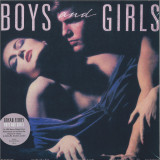
Boys And Girls released in June 1985 is the sixth solo outing from English singer and songwriter Bryan Ferry it would be both a critical and a commercial smash. A No’1 album in the UK certified Platinum selling over 300,000 copies with two top 40 singles “Slave to Love” one of Ferry’s most popular solo hits and “Don’t Stop the Dance” in the US it would go on to sell over half a million copies certified Gold. An album rich with musical aristocracy The guitar solo at the end of “Slave to Love” featured Neil Hubbard and the album featured other famous guitarists such as the Dire Straits guitarist Mark Knopfler, Pink Floyd’s guitarist David Gilmour, Chic guitarist Nile Rodgers and Bryan Adams’ guitarist Keith Scott. Lovingly Re-Mastered from the original tapes by Frank Arkwright at Abbey Road Studios. London. Featuring artwork that has been faithfully restored to reflect its original first press “Boys and Girls” is presented on 180g heavy weight vinyl and is one of those classic albums that would not look out of place in any record collection.
out of Stock
Last delivered 7 months ago available to reorder, subject to availability
After the release of the charts hitter “Don’t Need Your Love” earlier this year it’s now time to follow up with the last two songs out of the reel to reel tape
recorded by The Words at Talun & Trc Studios in Indianapolis in 1982. I feel I really need to explain what went on with the original recordings though. Please be
patient and ber with me. A magnetic tape recorder is made basically by two parts, one electronic and one mechanical. I’ll leave the electronics out of this as it
has no relevance here, to talk about what occurred with the mechanical, specifically with the “heads”, which are the most important part of the recording
action. They are components to be treated with great care, especially when they need to be cleaned; their good condition strictly depends on the functioning
of the entire recorder and - in part - also on the life of the tape. In this case the tape was found god knows where and played again exactly 40 years after the
recording session, on a reeltape player which had good part the “heads” very damaged. The artists themselves transferred it on digital doing it with what they
had on hand, that is basically nothing. It resulted in a stereo soundfile which had the right channel completely flat. Basically the music could be heard on the
left ear only, full of that noise only a cheap and malfunctioning Akai could provide. It took a hell of a restoration to make this second release possible and we
hope you will appreciate the undertaking well beyond the music, that is awesome on its own. Thanks to the first release we think you already know a lot about
Herman Slaughter and The Words of Wisdom. For those who are new to these artists, this awesome band started earning some good popularity at the
crossing of the seventies and eighties. Stable artists at the legendary Lamp - the so called “Naptown’s Motown” - these guys were part of the sparkling funk
soul scene of Indianapolis alongside the likes of The Vanguards and The Fabulous Souls. Support The Words of Wisdom and bring home one of the last slices
of original soul from Napptown’s legacy
Cindytalk is the mercurial, expressionist outlet of Scottish artist Cinder. An evolution of her early 1980's Edinburgh-based punk band The Freeze, she launched the project upon moving to London, inspired by the crossroads of exploratory UK post-punk and early European industrial. Her work thrives on chance and transformation, collaging elements of noise, balladry, soundtrack, catharsis, and improvisation. After a series of celebrated albums for the Midnight Music label as well as collaborations with This Mortal Coil and Cocteau Twins, Cinder migrated to the United States, becoming involved with various underground techno collectives around the Midwest and West Coast. Subsequent relocations to Hong Kong and Japan further expanded Cindytalk's horizons, resulting in a fruitful partnership with Viennese experimental institution Editions Mego, for whom she released five albums of swooning, granular atmosphere. 2021 finds her as engaged as ever, at the precipice of long-awaited back catalog reissues alongside multiple new works, guided by her lasting love of discovery and deviation: “new pathways always being uncovered.”
Across decades of activity Cinder’s body of work has forever followed its own elusive muse but nowhere is this restless spirit more apparent and ambitious than the 4th Cindytalk LP, Wappinschaw. Conceived as “a call to arms” inspired by Scotland and its struggle for independence, the title refers to an archaic Scottish battle inspection during which clan chieftains surveyed their group's weapons to ensure they were combat ready. A mindset of reflective preparation threads throughout the record, manifested in forms both naked and noisy, ancient and anguished.
Opening with an aching solo vocal rendition of the British folk standard “The First Time Ever (I Saw Your Face),” the album then surges into the Cindytalk classic, “A Song Of Changes,” sparkling and spiraling in strange waves of sorrow and joy. From there the mood fragments, tracing asymmetrical paths of feverish dirge, pensive spirituals, noir abstraction, spoken word (landmark Glaswegian writer Alasdair Gray guests on “Wheesht”), bagpipe drone, and apocalyptic post-punk. Given its aggressive eclecticism, it's not surprising that Cinder describes the creation of Wappinschaw as a “precarious” process, composed from “scraps” with abruptly shifting personnel – a situation only compounded by the impending dissolution of their label at the time, Midnight Music.
Recorded in a rare moment of freedom between lockdowns, Flightcase represents the joy of collaboration and the importance of human connection.
This is an album of many voices. Influences ranging from Herbie Hancock to Sun Ra, but also from other projects Akin is involved in, Amara & GABO, shine through in an album which acknowledges the various music that inspires and influences Akin, whilst trying to create something new and unique.
Akin Subscribes to the philosophy of allowing each musician to create however they feel to, trying to do little more than create the framework and allow the other musicians to express themselves within this. This felt particularly important in a time marred by restrictions.
»Dog Mountain« is the second release by the Zurich-based producer and composer Laurin Huber on Hallow Ground. After last year’s »Juncture« saw the Edipo Re co-founder work mostly with synthesizers and programmed rhythms, the four tracks are much more restrained, drawing on tape loops and feedback, recordings of acoustic guitar and synthesizers such as the Korg MS-10 as well as field recordings that relate to the overarching topic that informed the making of the record. While »Juncture« had previously aimed at deconstructing the binaries and dualities that shape our lives and thinking, »Dog Mountain« is dedicated to geographical divisions that result from political processes and social constructions. »›Here‹ means one nation, ›there‹ another,« writes Huber in a literary piece that accompanies the record. »Being in sound, such a separation seems odd.«
While treating the metaphor of the border as a »membrane, registering and translating the vibrations of its surroundings« and thus as something that is constantly (re-)defined, maintained and defended however, the artist also takes into consideration that »one cannot escape one’s standpoint,« as he puts it. The music on »Dog Mountain« may transcend and overcome certain borders, but it does not deny the realities that they impose on each and every one of us – whether in our political lives or in the realm of sound. This is mirrored in Huber’s engaging in the structural and sonic interplay of repetition and difference. Working with slowly evolving and modulating elements that are exposed to slight shifts, »Dog Mountain« puts a focus on the interaction between small elements that together form a bigger whole which is marked by constant evolution and change.
Opener »Raja« (»border« in Northern Sami and Finnish) starts off with a two-note melody played on an out-of-tune guitar. Different field recordings and synthesizer sounds drop in and out of the mix until the dynamic shifts and Huber starts playing more notes on his instrument, thus increasing the tension. It’s a meditation on minimalism, but also a piece that mediates between notions of what constitutes the difference between noise and music or referentiality and abstraction in sound. After »Nickel« (named after a Russian monotown near the border to Norway) dedicates itself to explore the friction between hissing white noise and melancholic tape loops, »A Town Is Not a Town« (a phrase taken from the documentary »Kiruna – Rymdvägen«) structurally mirrors the experiment of »Raja« with very different sonic means.
Closing the record, »Storskog-Borisoglebsk« (the title refers to the northernmost land border between Schengen-Europe and Russia) is the longest and most challenging piece, working with both long-form drones and musique concrète elements. It proposes a synthesis of the opposites that are explored patiently and with much attention to detail throughout this record.
"Precision ambient might be a suitable genre description for metra.vestlud's work. Every element has a clearly delineated meaning and purpose, and the precise interaction between these elements makes the musical pieces seem more like songs rather than Eno-style ambiences. From flowing water, to nervous birds and rich emotional textures, ∞ sends us onto a deep and thoughtful sonic journey about the flow of life and the many springs therin."
Artem Dultsev was born in 1993, in Revda, Russia. In 2010 he started to write music and later released under different aliases: Artem Dultsev, Moon Rabbit, Virusmoto. In 2017 he founded with a friend Daniil the label Faktura, where they began to release records from the Urals region. The history of metra.vestlud began In 2019 with the release of the album - Hydrogen Lifeforms (Faktura).
metra.vestlud began as a protest against the standard principles of sound recording and musical theory. All the rules and boundaries were shifted towards the unconscious - that something unique would emerge. But on the album ∞ - the other side of this sub-personality showed itself, the sensual side. The music of metra.vestlud is inspired by the eco-futurism and new age of the 80's-90's.
“The album is dedicated to my wife. In April 2021 we had a son.”
"Two days before the birth of our first child, I was sitting at home alone while my partner was already in the hospital. I wasn't able to visit due to Covid restrictions. Anxiously waiting for any updates, while Germany being in complete lockdown, searching for distraction, I did something I rarely do: look into the public-facing email account of my previous label. Normally, I only find spam in there, but this time there was an email that looked different, it was a demo I was supposed to consider for release. I could tell this person had listened to previous music I had been involved with and deliberately chose to send this to me. I could also tell right away that something special was being sent to me. I downloaded the music, listened to it, and to my surprise, was moved to tears. This was on a Friday night in Leipzig, around 32 hours before our child was born.
Sometimes this world can be incredibly strange but in the most beautiful way. For some reason, someone from Yekaterinburg in Russia, close to where the European and Asian continental plates meet, decided to send me an unspeakably beautiful album for release on my new label (which I technically hadn't even founded yet). The album is centered around love and birth, and it sounds like emotion-fueled beginnings, like a meta-version of spring you can visit any season you like. And I received it less than two days before the birth of our child and a couple of months before the birth of their child - what are the odds? And not just that, I had visited Yekaterinburg many years ago with my parents due to a somewhat mysterious obsession my father had with the place and it had left quite an impression on me. There are some moments in life where you think: "please just pinch me". I am just not sure anymore how much of all of this can be attributed to chance. Probably a lot, but if so, it also means incredibly unlikely and beautiful things do happen even if they probably shouldn't.
In any case, I am grateful metra.vestlud reached out to me at this very special moment in time and I am grateful we have created something that will forever document a very special time in our lives. And we are incredibly happy that we are able to share this document with the world." - kofla tapes
∞ is dedicated to metra.vestlud's wife, In April 2021 they had a son.
MAT is proud to announce the forthcoming release of ‘The Side I Never See’, by Hugh Small & Brian Allen Simon. Hugh forms half of Scottish post-punk duo Vazz, whose work was the subject of a recent retrospective by Belgian label Stroom. Brian is known best for his solo project Anenon, under which name he has released four full length albums and multiple remixes for artists including Ryuichi Sakamoto.
An improvised recording of Brian playing over the Vazz piece ‘Kazimierz’ catalysed this long-distance collaboration; 2000 feet up a mountain in Andalucia, Hugh heard the recording on a broadcast of Brian’s dublab LA radio show. Immediately taken in by Brian’s playing, the pair soon established contact and began discussing the possibility of working to create something new together.
The rest, as they say, is history: the results are fully realised in ‘The Side I Never See’, a shimmering suite of ten compositions for piano, soprano saxophone, synthesizer and guitar. In Hughs words… ‘so, what is it? It’s Ambient-Punk, Abstract-Jazz, Disaffected-Classical, it’s whatever the fuck you want it to be!’ :-)
‘The Side I Never See’ will be released on Melody As Truth in early August 2021, as always on vinyl and digital. Mastered by Stephan Mathieu, Artwork by Michael Willis.
out of Stock
Last delivered 5 years ago available to reorder, subject to availability
* Restless Mashaits hailing from Geneva are based around the core of Jil and Stuf.
They released a sizeable amount of new roots classics throughout the 90s and 2000's.
* This set comprises of the bulk of the instrumental sessions they recorded in Kingston, Jamaica in the mid/late 90 and early 2000’s with legendary musicians such as Dean Fraser, Flabba Holt, Deadly Headly, Dwight Pinkney, Bongo Herman and more.
out of Stock
Last delivered 4 years ago available to reorder, subject to availability
Two Underground London Jazzfloor hits from Paul Murphy's Jazz Room Records.
On the A side Latin Supergroup's wild and infectious "Caliente" with Paquito's Banging piano riff and heavy Bass Line action from Descarga originator Cachao overlaid with Driving vibes from Tany Gil and a Percussion Meltdown from Walfredo De Los Reyes.
On the B side the Vienna Art Orchestra provide a dark and mysterious version of the Bud Powell classic "Un Poco Loco" keeping that Be-Bop Afro-Cuban vibe but adding that East of the Border darkness you'd expect from a sound recorded at the time the city was on the Cold War fault line.
Gilles Peterson (Worldwide / Brownswood):
"Paul Murphy found almost every jazz dancefloor classic. He is the original messenger of jazz. He opened the door to an alternative way of being a Dj. The rest is history.
out of Stock
Last delivered 5 years ago available to reorder, subject to availability
The International Feel label is back from an extended meditation. Well-rested and with a cornucopia of new ideas and records, IFeel is happy to announce the debut album from Charlie Charlie as the starting shot. „Little Things“ is the brainchild of Gabriella Borbély alias Bella Boo and Jens Resch better known as Chords. Born on a beach in Southern California instead of their hometown Stockholm, it is exactly what you would hope for such a record to be: pop music that is informed by hippie or counter culture and by a Balearic ethos (hence the International Feel address) that is free of blinkered definitions. In equal parts, the duo’s ten songs take the listener through honey dripping r&b, while respelling that certain Californian recording studio sound aesthetic, revisit vintage yacht rock and pop tropes as well as they are reflecting dance music influences in a broken, yet gold framed mirror. Most of all, it’s like a day dream that you don’t want to end. To quote our Italian friends from Edizioni Mondo: good listening experience!
Band info:
Charlie is Gabriella Borbély – also known as Stockholm's deep house virtuoso Bella Boo. Charlie is Jens Resch – also known as prodigious producer/musician Chords. The two Charlies met on a beach in Southern California and immediately decided to write a song together.
That first track was built on the sampled sounds of a rusty drainpipe. Charlie fired up a dusty ARP Odyssey and played a woozy solo over the drainpipe beats, then the other Charlie did the same, using that same legendary 70's analogue synth. When they realized the two separately recorded solos played together in perfect harmony, they knew they had to keep heading down their newly found, shared musical path.
Charlie & Charlie have since continued making music together, describing their common process as liberating, free-flowing, genre-less. "Little Things", their debut album, is made up of tracks recorded in Los Angeles and Stockholm, using that very same ARP as well as pianos, electric guitars and machines like the Prophet 6, the Juno-106 and the Syncussion SY-1. Vocal contributions come from the Charlies themselves as well as friends like Mapei and Julimar Santos.
out of Stock
Last delivered 4 years ago available to reorder, subject to availability
Fine Art Book, Ltd. to 400 copies:
Hardcover book printed on Munken Print White 115g/m2 // 108 pages, 24cm x 22cm, 65 photos // Logo, slot and circle embossed // Matt laminate + selective varnish // Hand-numbered, hand-stamped
"Même Soleil" is the result of a dialog between the French photographer Gaël Bonnefon and the French musician Frédéric D. Oberland initiated by IIKKI, between December 2019 and June 2021.
Self-taught multi-instrumentalist & photographer, Frédéric D. Oberland finds himself at the crossroads of image and sound, favoring a synesthetic approach. He articulates different modes of narration, combining the raw character of the documentary form with the transfigured reality of myth and poetry, allowing him to question notions such as the sacred, the monstrous, the fraternity, while at the same time returning to the political news of the present. Attentive to the pulse of the body, his work is willingly itinerant, modulating between the ripples of dreams, watching the points of incandescence and the bursts of electricity that act as revelations of our presence in the world, here and now. He’s the co-founder of leading bands such as Oiseaux-Tempête, FOUDRE!, Le Réveil des Tropiques, FareWell Poetry and is co-curating the label NAHAL Recordings.
"Fueled by travels and their emanations, Frédéric D. Oberland’s music had to build new horizons this year, outlined by the curves of semi-modular synthesizers, the avalanches of effect pedals and the zigzagging paths of electric circuits. Même Soleil, his third solo album, manages to merge mystical visions of the unconscious and the absurdity of an apocalyptic present in a sensory whirlwind, operating an astonishing mutation with tones still unexplored in his previous releases. A visual as well as a musical journey that takes shape in a book and a record of the same title, Même Soleil is the result of a collaboration with the photographer Gaël Bonnefon. Seeking the tension between the blinding light of day and the glittering visions of saturated night skies, the two pieces in dialogue transcend reality to deliver their own truth, as bright as the first light of the sought-after morning." (Alice Butterlin)
Gaël Bonnefon graduated with highest honours from the Fine Arts School of Toulouse (Isdat) in 2008. He has exhibited at Villa Pérochon, at the Eté photographique in Lectoure, at the 104 in Paris during Jeune Création 2012, at Rencontres Internationales de la Photographie d’Arles and at PhotoEspaña, at the Abattoirs Museum in Toulouse in 2014, at the Château d’Eau Gallery in 2012 and 2019 and in the Vitrine of Frac Île-de-France in 2020. His work is part of the collections of Frac Midi-Pyrénées, Château d'Eau gallery, Kulturamt in Dusseldorf and Kiyosato Museum in Japan ; he participated in Temps Zero projects Berlin, Braga, Rome, Bucarest, Groningen and Thessaloniki. He has also been granted artist’s residencies in Germany, France and Israel. His first book Elegy for the Mundane was published by La Main Donne in 2019. He continues his intimate and dense journey and presents his second publishing, Même Soleil with photographic works from 2009 to 2021.
"At first brutal and declining, the substance of Gaël Bonnefon's photography is just like a gaze that fears being one day extinguished and that is always looking to be born again. In photography as in love, recoil and desire, tension and easement, repetition, wandering and rest, flight and pursuit. Here photography allows itself to be traversed by flashes of life, renewed forces, echoes of far-off kindnesses and lost joys. It sings silently, lover of a thousand faces from which the thread of a single and same image is born, followed without relent, from the snowy peaks of childhood to the lost worlds of the present." (Michaël Soyez)
The Dandara: Trials of Fear Edition Original Soundtrack features over one hour of ethereal, surreal and organic music created specifically for the exploration of the Salt's surreal world. Blending eclectic electronic scores with sweeping, melodious soundscapes, Thommaz Kauffmann's score is like taking a ride into a new, wonderous land.
Dandara's light but incredibly strong presence was the starting point for all the sound presented in this album, consisting of a soundtrack that sounds hopeful and melancholic at the same time. Her lonely journey into the corrupted regions of Salt narrates each gesture made to fight the fears deep inside the Salt's most uncharted caves.
The textures and musical aesthetics in this soundtrack match a world that suffers from its abandonment to spontaneity, creativity, and vitality. It is with the presence of Dandara that there is a break in these standards imposed in Salt by an authoritarian regime.
Wrapped up in a beautiful, sturdy tip-on gatefold with a rough, black and white aesthetic, this vinyl 2xLP comes with two "Salt" white 180g in two printed inner sleeves.
More dancefloor dynamite from Benin's almighty Orchestre Poly-Rythmo de Cotonou Dahomey, this time in the form of 'Gbeti Ma Djro'. Confusingly described on the centre label of the 1971 original issue as ’Soul’, this is in fact a prime slice of Afro-psych-funk complete with wails and grunts over fierce drums and picked guitar. 'Angelina II’ is a much warmer affair that rides a shuffling mid-tempo pachanga groove. Both tracks were transferred, restored and mastered from the original 1/4 inch tape.
out of Stock
Last delivered 5 years ago available to reorder, subject to availability
Schmer brought these two together to battle it out for Schmer019: Snazelle vs Loveland : Get this special 6 track maxi EP of pure techno and YOU will be the winner.
Brooklyn based techno producer and Snazzy Fx boss. Much of the hardware Dan uses in his productions and live sets was designed and built by him. His focus as an artist is on electronic music as a vehicle for achieving transcendent states. This comes out in his sets as a respect for both the funky and hypnotic aspects of dance music. As a DJ and live act, Dan has performed throughout Europe and is a regular fixture in NYC.
2018 saw Dan release the "Exposure to a Steady Stream Ep" on Jacktone records. Fact Magazine included the track " Broken Saucers" in their best of September round-up.
In early 2019 Nina Kraviz and Dan released their collaboration "u ludei est pravo"on the trip compilation "Happy New Year! We Wish You Happiness".
In August, Schmer released his newest EP, "Swarm Draze".
Jasen Loveland is a mercurial force about whom little is known with any certainty. Much of Loveland’s life and exploits are shrouded in an opaque and often contradictory mythology that includes many other characters who may or may not be Loveland himself. Born sometime around 1950, Loveland seems to have been operational within the dance music community for decades, allegedly interning for Giorgio Moroder in Munich after finishing a medical degree in the 1970s. It is rumored he was the individual who did the actual synth programming on “I Feel Love”, however this was never confirmed. Documentation of Loveland’s past was further obscured by a “studio fire” while operating out of Chicago in the mid-1990s that destroyed all of Loveland’s memorabilia from the past, except for a handful of lo-resolution, poorly-scanned photographs Loveland (an early user of Hyperreal.org and the #mw.raves listserv) had emailed to a friend. Fortunately, Loveland was able to save his two favorite synthesizers, a battered Roland TB-303 and it’s demented sibbling, the MC-202, but the rest of Loveland’s equipment, and the documentation of his past, was lost in the blaze, leaving Loveland homeless for several months. Regardless of the veracity of his tales, Loveland’s music speaks for itself; the intense, maniacial vibes that pervade the ouvre are undeniably suited for the most far-out, dancefloor head trips, thus making it only a matter of time before he joined the Interdimensional Transmissions family.
Most recently, Loveland has been presenting DJ-style musical performances under the name “Loveland & Friends”, which has become an umbrella term for all projects related to his work, including JL-303, DJ Curtis Chipp, Chip Curtis, MIDI Master, Remote Perception, The Limit, Acid Musik Department, The Gaze, Ace of Fades, East German Chemistry, The Universal Vision, Clonus, Gamma Polaris, R.O.M. and DJ Kline, and Da House Band. Many of these, such as the DJ Kline project (with Prof. Dr. Alice B. Kline, a self-described “unremarkable scientist” and researcher at CERN), seem to be collaborations or ghost productions, although even this is not clear. In fact, the only confirmed Loveland collaborations are LW Productions (with Clay Wilson) and Pervocet (with Patrick Russell), the latter presented as a 12” by Interdimensional Transmissions, Detroit.
out of Stock
Last delivered 5 years ago available to reorder, subject to availability
Techno Culturae records launches its first EP and debuts in the world of vinyl with a really hard release. Composed of an original mix, by Indeck and three remixes, D. Carbone, Electrorites and Warind. Dark sounds distinguish this output which represents a real introspection of the dark soul of the artists, where the distorted sounds of the drums and the properly saturated lead / pads, emphasize the frequencies, standing out in a basically hard techno mix that is really
interesting. They follow the metrics in a very precise way with different pauses and restarts typical of a sound that is not monotonous, but hard and motivating.
out of Stock
Last delivered 4 years ago available to reorder, subject to availability
Finnish producer Sasu Ripatti has been torching the fringes of electronic music since the mid 1990s, a process that's found him melting a wide spectrum of musical innovation into his cult brand of experimental minimalism. From the skeletal jazz deconstructions of his 1997 Vladislav Delay debut "The Kind of Blue EP" to the blurred dub techno variations of 2000's "Multila" and 2012's "Kuopio", Ripatti has betrayed a restless, voracious passion for sound. "Fun is Not A Straight Line" builds on this impressive legacy, retaining his sonic signature and adding a playfulness that harks back to his beloved deep house smash, Luomo's "Vocalcity". After becoming frustrated by the inflexibility of the 4/4 house idiom, Ripatti found solace in rap and bass music's rhythmic complexity and anarchic structures. "I bought Nas's 'Illmatic' when it came out in '94 and have more or less been listening to rap since," he explains. "I'm not really sure why now, but that rap influence wanted to come through." Chopped rap vocals, booming subs and gritty, neck-snapping beats are the primary colors of "Fun is Not A Straight Line", painted into the foreground and blended into an immediately recognizable rhythmic palette. The tracks cross into the same continuum as Chicago footwork, with stuttering samples that build thick walls of bass and flurries of wordless rhymes amid a narcotic haze of beats. On 'monolith', Ripatti's love of New York rap is in full focus as he obscures chipmunked vocals with tight, crackling percussion that disintegrates into rolling kicks; 'speedmemories' is even more upfront, channeling the raw sunshine energy of So So Def electro into rhythms that are powerfully skeletal. Elsewhere, syrupy Southern-fried TR-808 bass womps are tangled with molasses-slow vocals on 'videophonekitty', fuzzed into textured, dissociated ambience. Since the beginning, Ripatti has tried to find a balance between his experimental urges and drive to create more universal music. As his more recent albums have traveled into darker, more extreme realms, he has craved something different for balance. By drawing a crooked line between DJ Premier, DJ Screw and DJ Rashad, Sasu Ripatti has emerged with the most accessible and unashamedly enjoyable album he's produced in years.
out of Stock
Last delivered 4 years ago available to reorder, subject to availability
Pleasure is a Sydney based music project that utilizes distorted synths, irregular drum beats and fluid song structures to create energetic and hypnotic pieces that straddle the line of bright and abrasive.The trio is comprised of Adam Connelly (synthesizers + vocals) Jonathan Boulet (bass guitar + fx pedals) and Hugh Deacon (drums). When playing live and on record, their music is improvised and unrehearsed with no laptops or backing tracks. “One of us will introduce an idea and the rest will follow.”
Their debut LP Saint Albans, was conceived and recorded in a small farm house in the town of Saint Albans, New South Wales, over 3 days from the 12th to the 14th of October 2019. The building has since burned down in the 2019 Australian Bushfires. “We came away from this session with close to 20 hours of material that we edited down into consumable pieces.” This is the case for all tracks except BRAIN WASTE 191013 which was left intact and unedited.
They launched the Australian release of the album by playing a 6 hour endurance set in a warehouse in Sydney’s Inner West. “Our sonic influences seem very obvious but we haven't been called out yet. Mainly Boards of Canada, Black Moth Super Rainbow, Aphex Twin, Fuck Buttons, Blanck Mass and Lightning Bolt.”
Tonnon produced the album with longtime collaborator, and The Beths’ guitarist and producer, Jonathan Pearce. Tonnon wrote the bulk of the songs during an extensive period of touring after the release of Successor - a period where Tonnon performed with Nadia Reid in Europe, The Veils in the USA, and The Chills, The Phoenix Foundation and Don McGlashan in New Zealand. The pair workshopped songs between tours, often recording new parts as the live versions developed.
Tonnon and Pearce recorded between 2017 and 2020, and in that time, Tonnon’s practise evolved heavily. He incorporated new technology into his set, including the Wellington-designed Synthstrom Deluge, which allowed him to adapt his set for new performance environments;Art Galleries, Museums, even New Zealand Fashion Week. He took that technology further when he collaborated with the Otago Museum on the immersive show for Planetariums, A Synthesized Universe, which travelled to Arts Festivals around New Zealand in 2019.
Creating a music video for ‘Old Images,’ which explored a lost passenger train network, Tonnon came to the idea for a new experience-based show called Rail Land. It took audiences on railways to reach distant community halls around Aotearoa. The show saw Tonnon combine historical research and spoken word narrative, with the immersive lighting and musical technology he developed for A Synthesized Universe. In March, Rail Land finished a three-night run at Auckland Arts Festival, cementing Tonnon’s move to the concept show.
Over time, Tonnon and Pearce’s production moved further from the traditional rhythm sections that powered songs like Successor’s ‘Water Underground.’ In their place came off kilter electronic rhythms, like the beat in ‘Two Free Hands,’ and textures that blur lines between organic and synthesized sound. Guitars are set against synthesizers, and drums against drum machines in ‘Entertainment’ and ‘Peacetime Orders,’ which Tonnon also used in his soundtrack for RNZ’s 80s spy-themed podcast The Service. In ‘Leave Love Out Of This,’ a ballad starts with a piano and a string quartet, but ends in a wall of electronic sound.
The constant has been Tonnon’s lyrics. Whether singing about evolution and the future of work in ‘Two Free Hands,’ the television industry in ‘Entertainment,’ or environmental disaster and regulatory failure in ‘Mataura Paper Mill,’ Tonnon has followed a distinct approach to subject matter, description and phrasing that have seen him longlisted for the APRA Silver Scroll three times.
Tonnon’s explorations of local government and civic infrastructure in his work - an unusual preoccupation for a songwriter, have taken new meaning in his adopted home of Whanganui, where last year, he was elected by councillors as Whanganui District Council’s representative for public transport.
After Tonnon moved to Whanganui, and Pearce toured almost constantly after the success of The Beths’ first album, the pair conducted their collaboration over distance, but with key sessions at Pearce’s Karangahape Road studio, including drums and bass with long time band members Stuart Harwood and David Flyger, a string quartet led by Charmian Keay and arranged by Matthew Bodman, and additional drums with The Beths’ Tristan Deck.
As Leave Love Out Of This is released, Tonnon and Pearce find themselves in very different places to where they started, working on Auckland’s Karangahape Road, close to the venues like Wine Cellar and Whammy Bar where they regularly performed. Back in New Zealand since Covid, Pearce has had to adjust to being in one of Aotearoa’s best-known bands, while Tonnon, when not working on conceptual shows, wrestles with how to restore civic infrastructure to a post industrial city in the regions.
Created over a life-altering period of, Leave Love Out Of This is the culmination of years of experimentation and development - with new technology, new sounds, and new ways of creating, and performing music.
An actor, musician, visual artist and unyielding creative spirit, Dreaming of You (1971-1976) gathers for the first time the best of Karen Black’s studio and demo recordings. Produced by Cass McCombs and meticulously restored from the original tapes, the collection’s fifteen tracks are a holistic depiction of Black’s dreamy, introspective and earnest musical identity. Cass McCombs and Karen Black became fast friends. They collaborated again on “Brighter!” from McCombs’ 2013 album Big Wheel and Others, and also wrote toward a solo album for Black. “She’d given me all of her poetry and I was trying to work them into some kind of meter that would work as songs,” McCombs says. They were able to record two of them before she died, “I Wish I Knew The Man I Thought You Were” and “Royal Jelly.” See EPK for full description