** warehouse find price ... nice!
The iconic digger's journal Wax Poetics returns in a beautiful, heavyweight format. Each issue features 148-pages of deep music insight, unique stories, lush photo spreads, and inspiration for your record collecting. The first issue in the relaunch features Motown stars Marvin Gaye on the front cover, and Tammi Terrell on the back cover. You'll also find articles on hip-hop ground zero Harlem World, Sergio Mendes, Herb Alpert, Cymande, Toots Hibbert, and much more within.
Also included with each purchase is three months of digital access to Wax Poetics. Expect weekly stories, music, insight, members-only offers, and more!
FULL CONTENTS
Re:Discovery: Timothy Leary & Ash Ra Tempel
Re:Discovery: Light of the World
Re:Discovery: Leon Huff
Re:Discovery: Superb DJ K-Nyce ft. Supreme Nyborn
Feature: High Art - Lee Quiñones
Feature: The Hip-Hop Shangri-La - Harlem World
Feature: Patta Cover Story - Steven Julien
Feature: See Me - Tammi Terrell
Feature: The Fire From Within - Marvin Gaye
Feature: The Maestro - Sergio Mendes
Feature: Beyond Boundaries - Herb Alpert
Feature: Native Sons - Redbone
Feature: Mighty Heavy Load - Cymande
Feature: Perpetual Glory - Toots Hibbert
Suche:return of the native
- 10TH ANNIVERSARY EDITION OF TESS PARKS DEBUT ALBUM.
- GOLD VINYL, GATEFOLD SLEEVE, HANDWRITTEN LYRIC BOOKLET.
A native of Toronto, Tess Parks moved to London, England at the age of seventeen where she briefly studied photography before deciding to focus on music.
Tess made an impression on industry legend Alan McGee, founder of Creation Records, albeit the timing of their meeting could hardly have been less ideal; McGee was no longer involved in music and Tess was due to move back to Toronto. After moving back to her hometown in 2012, Tess formed a band on the advice of McGee and less than a year after their meeting, he returned to music with his new label, 359 Music.
Tess became one of his first signings and released her debut record ‘Blood Hot’ in November 2013 to excellent reviews. One reviewer described her as “Patti Smith on Quaaludes”. Others have mentioned her “gauzy psychedelic sound” and“smouldering voice”.
Alan McGee himself said: “She’s only 24 and is already an amazing songwriter... she just doesn’t quite know she is yet ... her most beautiful quality is her lack of ego. Tess is an amazing lady”.
‘Blood Hot’ is inimitably confident. It’s slow and psychedelic at times, while being loud and ready to fill a stadium at others. There isn’t a moment on the album that isn’t relatable or that doesn’t ring to the tune of a timeless classic to be talked about for years to come (the same way people discuss The Velvet Underground or My Bloody Valentine records today).
Her cult-like following has turned into a movement. And Tess is gladly leading us all back into that space within ourselves, both deeply personal and entirely universal. Incredibly relevant yet timeless.Cool and anti-cool. An enigma that doesn’t need solving. Tess Parks is as she’s always been. Her best work is already out there. And her best yet is still to come.
After her debut album “OUCH” on 10K in late 2022, the Brooklyn native returns with her most polished work to date and presents her latest project titled “Wooden Floors”.
Inspired among other things by a scene in the 80's movie "Risky Business"; she treats each song as a journal entry where she depicts her life in New York and touches on various subjects like love, family, personal achievements, morals and future goals.
Delivering an array of multiple flows and emotions on groovy beats; she stands out from other mcs with her sweet voice tone, raw style and poignant lyrics.
Sea Blue Vinyl[27,31 €]
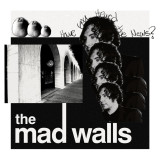
Eight years since the breathtaking Somewhere Anywhere EP, The Mad Walls return to re-ignite psych rock with this gorgeous, floatily heavy, effortlessly groovy and sublimely sinuous debut LP. Driven by bone shaking acoustic guitar, visceral drums, wonderfully trippy basslines and the throwaway perfection of Christopher Mercado’s spooked vocals. Pure rock n’ roll yet devoid of cliché. Informed by, but no way in hock to, early MC5, Skip Spence, Sonic Youth, Syd Barrett and Jefferson Airplane when they still all lived together.
Recorded on tape in Mercado’s garage, there’s a DIY heart with epic results across sixteen songs. Only one track over three minutes and some under thirty seconds. “It’s just chatter about life and human feelings. Stylized human expression”. - Is Christopher's self effacing explanation of his mind bending, playful, storytelling. It opens with the walloping drum canter/bass attack of WHO WANTS TO DIE FOR RELIGION. Passes through the furious distorted acoustic guitar solo on I TELL YOU HOW I FEEL. The woozy, elastic time-stretching of COOL TRIPPER. The brief, funky lurch of IN YOUR DREAM YOU ARE NO ONE. The almost lush, cinematic SEVEN DAYS which conjures Serge Gainsbourg by way of Moby Grape. HIP COMMA’s floaty strut and the groovy raga of MAKA THE NATIVE, which has not one but two ‘breath solos’. CLOUDS OF DUST is a skeletal Krautrock fragment and THERE ONLY IS a luminous psych-pop single. Final track APPLES ends the album with a sinewy twelve bar blues and a killer psych guitar break. Bliss.
Somehow the MAD WALLS manage woozily florid and sharp as a blade. Studiedly detailed but effortless. Whip smart and dumb. And as we said at the start - just gorgeous…
Black[25,17 €]
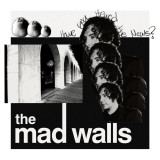
Eight years since the breathtaking Somewhere Anywhere EP, The Mad Walls return to re-ignite psych rock with this gorgeous, floatily heavy, effortlessly groovy and sublimely sinuous debut LP. Driven by bone shaking acoustic guitar, visceral drums, wonderfully trippy basslines and the throwaway perfection of Christopher Mercado’s spooked vocals. Pure rock n’ roll yet devoid of cliché. Informed by, but no way in hock to, early MC5, Skip Spence, Sonic Youth, Syd Barrett and Jefferson Airplane when they still all lived together.
Recorded on tape in Mercado’s garage, there’s a DIY heart with epic results across sixteen songs. Only one track over three minutes and some under thirty seconds. “It’s just chatter about life and human feelings. Stylized human expression”. - Is Christopher's self effacing explanation of his mind bending, playful, storytelling. It opens with the walloping drum canter/bass attack of WHO WANTS TO DIE FOR RELIGION. Passes through the furious distorted acoustic guitar solo on I TELL YOU HOW I FEEL. The woozy, elastic time-stretching of COOL TRIPPER. The brief, funky lurch of IN YOUR DREAM YOU ARE NO ONE. The almost lush, cinematic SEVEN DAYS which conjures Serge Gainsbourg by way of Moby Grape. HIP COMMA’s floaty strut and the groovy raga of MAKA THE NATIVE, which has not one but two ‘breath solos’. CLOUDS OF DUST is a skeletal Krautrock fragment and THERE ONLY IS a luminous psych-pop single. Final track APPLES ends the album with a sinewy twelve bar blues and a killer psych guitar break. Bliss.
Somehow the MAD WALLS manage woozily florid and sharp as a blade. Studiedly detailed but effortless. Whip smart and dumb. And as we said at the start - just gorgeous…
180 Proof Records & BBE Music continue to bring new life to the Strata catalogue, this time with the short-lived label's swan song: Larry Nozero’s 1975 passion project, Time. The final album to be released on Strata Inc., Time is a dream- like mix of mood, an album full of range, tempo, and feeling; from the impulsive and airy rendition of the jazz standard “All The Things You Are” to the brooding melancholia of “Tony,” Nozero’s Time is destined to become known among aficionados as a classic of 1970s jazz. Like time itself, each song is open to individual interpretation - something Nozero himself confessed to on the album’s original liner notes, saying “It got so deep that we decided to call the group and our album after that concept of TIME, because it seemed to mean something to just about everyone.” A native of Detroit, Nozero spent time in Charles Moore’s Detroit Contemporary 5 (part of Strata Inc.) before being drafted into the military. While enlisted, Nozero capitalised on his time by honing his craft in the Army Band. By the time he returned to Detroit, Nozero had little trouble landing high-profile gigs. No stranger to success, Nozero’s previous credits and collaborators include Henry Mancini, Sergio Mendes, and playing Soprano sax on Marvin Gaye’s iconic 1971 album, What’s Going On. Working with his cousin and collaborator Dennis Tini, Time is unlike many albums of the era in that it truly feels like a work fuelled by freewheeling expressionism. The pieces are funky, soulful, strange and soothing all at once. Tini’s stand-out contribution to the album is “Tune for L.N.”, a funk-fuelled piece of rhythm-centric jazz. A distinguishing feature of the album is the use of wordless vocals. The scat work on part two of “Chronicle Of The Murdered House” adds a distinct counterpoint to Nozero’s reed work, while the high pitch bebop of “Baubles, Bangles and Beads” closes out the album with a carefree and buoyant groove. Time has been remastered by the Grammy nominated studio The Carvery, along with the artwork, which has been restored and includes never seen before photos.
2024 Repress
DANNY DAZE returns to KOMPAKT EXTRA / SPEICHER with one of the most intense and gratifying tracks we have had the pleasure to hear this year. The Miami native's relentless passion for underground '90s electro and techno resounds in "Aire". A collaboration with up and comer SHOKH - a name you may recognise from DANNY DAZE's imprint OMNIDISC. For those that like their techno dark and dirty.
The rise of PATRICE BÄUMEL since last's years now ironically titled "Surge" (KOMEX89) has been steady for good reason - positivity, passion and a lot of hard work. With his days as a resident of TROUW well behind him and now a key member of the KOMPAKT family, he has had what one would call a breakthrough year. There's that remix of CUBICOLOR that was nearly impossible to avoid. Then there's been a steady stream of remixes for SASHA & POLIÇA, MAX COOPER, DAMIAN LAZARUS and DEPECHE MODE. Oh yeah, he's also become a part of the AFTERLIFE crew and put out an EP called "Glutes". Welcome to "Sorcery" - a catch and release techno roller that ripens with a fundamental percussion lead.
So there it is - two luminous artists responsible for two of our most beloved singles of 2016 - now together on one 12".
THE 1968 ALBUM ON WHICH JOHNNY CASH BECAME A LEGEND: AT FOLSOM PRISON AMONG THE MOST IMPORTANT AND POTENT STATEMENTS OF THE 20TH CENTURY
Johnny Cash already knew his way around Folsom Prison when he and his band stepped inside the institution’s forbidding walls on the morning of January 13, 1968 to record At Folsom Prison. He’d played there two years prior. But this time was different.
Cash took the stage that day for two shows amid a darkening sociopolitical atmosphere and a raging war in Vietnam, as well as the knowledge his career and health hung on by a thread. The Arkansas native shared many of the long odds and abject failures of the inmates for which he performed. The songs he chose, and the conviction with which he delivered them, say as much. The point at which Cash transformed from a country star into a legendary artist, and a bold statement about the American prison state and its commitment to rehabilitation, the triple-platinum At Folsom Prison remains one the most important, potent, and fabled records of the 20th century.
You can hear it echo off the walls of the room; pulse through the itchiness of the Tennessee Three’s acoustic-based boom-chick rhythms; crackle in the announcements conveyed over the intercom; ring in the comedy of the off-cuff remarks and pair of novelty tunes; sense it in palpable energy that wells up within Cash and his audience. And you can experience it like never before via Cash’s knockout singing. The bedrock foundation of all his music, the singer’s baritone resonates with profound degrees of depth, pliability, and passion that underscore how much this appearance meant to him — and the extent he was living the narratives.
Indeed, every song on At Folsom Prison serves a purpose and speaks to the conditions — mental, emotional, physical, geographical, legal, social — the inmates confronted on a daily basis. Beginning with the explicit messages of the opening “Folsom Prison Blues,” Cash makes it clear he understands and shares many of their plights. Not for nothing did the myth of Cash having done hard time persist for decades once this record hit the streets. That’s how real it is, and how dedicated Cash remains to conveying every note with the same truth he invests in the impromptu comments he makes between and amid songs.
Listen to the sorrow, regret, pity, and loneliness of Merle Travis’ “Dark as the Dungeon,” Cash pulling syllables til they threaten to break and inhabiting the mood of bleak phrases such as “pleasures are few” and “the sun never shines.” Witness the isolation, dejection, and sadness punctuating the walking-blues “I Still Miss Someone,” matched in gravity by a solemn reading of “The Long Black Veil” — a traditional dirge that involves murder, cheating, and deception. Cash cuts even deeper on a heartbreaking solo rendition of “Send a Picture of Mother” and plainspoken version of Harlan Howard’s “The Wall,” detailing a suicide disguised as jailbreak through cliched-jaw deliveries that softly curse the impossible situation.
In chronicling temptations, mistakes, mortality, punishment, and life “inside” — for better or worse, the stories of the disenfranchised, forgotten, written-off, and unrepentant — At Folsom Prison also has a blast playing the outlaw role. Cash captures wild-eyed craziness and out-of-control mayhem on a revved-up take of “Cocaine Blues,” taking extra satisfaction in its dastardly tales by way of voice that shifts into character for the sheriff and judge. The gallows humor and racing drama of “25 Minutes to Go”; quicksilver accents and resigned acceptance of “I Got Stripes”; train-whistle blare and twangy locomotion of “Folsom Prison Blues” — all fight the law only to see the law win.
Cash remains deeply committed at every moment, and inseparably connected with the tortured souls removed from the goings-on of the outside world. No wonder all but two songs here stem from the day’s first performance that saw Cash, Luther Perkins, Marshall Grant, and company give everything. As does the Man in Black’s soon-to-be-wife, June Carter. The couple’s fiery duet on “Jackson” scorches; their combination of surrender and fortitude “Give My Love to Rose” puts us in the dying protagonist’s shoes.
And with the closing “Greystone Chapel,” famously penned by convict Glen Sherley, who watched it all happen under the watchful eye of guards, Cash separates the corporeal from the spiritual, relaying lessons about salvation and survival. Heady themes to which he’d return for the remainder of his illustrious career.
Isaiah Collier & The Chosen Few return with a new musical journey, "The Almighty". The first quartet offering since 2021's Cosmic Transition.
Collier's compositions and lyrics focus on using music to communicate deeper principles that are part of everyday. Isaiah showcases these principles through sounds that evolve within the titles: Love, Compassion, & Perspective. These principles once taken fully in are arranged to deliver the message that there is a Divine energy connecting through us all and is seen within all things. The album opens up with LOVE, featuring the legendary Chicago vocalist Dee Alexander channeling her energy to deliver the message of love to the human family. With lyrics written by Collier specific to Alexander's qualities as a maternal figure to him and other musicians, the message remains strong within the music throughout the album. Searching deeper to share more sincerely through our interactions with others, is the albums objective. Collier & The Chosen Few showcase those Principle with Musicianship and an unyielding commitment to put their all into each breath of this episodic journey. The album features the legendary Saxophonist Ari Brown, who has mentored Isaiah for over a decade in their native Chicago. The conversation between student and master evolves on the song "Compassion". Collier's steps into the vocalist roll on the infectious, Perspective (Peace & Love) which serves as Collier's acknowledgement of Pharoah Sanders for his musical contributions, that features percussive sounds that connect the ancestors of the diaspora. Throughout "The Almighty" the group explores elements heard on 2021’s Cosmic Transitions and 2022’s Beyond by I AM (Isaiah Collier and Michael Shekwoaga Ode), and streamline the sound with laser focus in this incarnation.
Neither Timothy J. Fairplay, nor Norwell are strangers to the Dalmata Daniel family: both of them are trustworthy contributors to DD compilation albums of earlier years, plus Norwell has released his 'ODD' EP and 'Joint Spaceflights' EP back in 2017 and 2019 on the label. So this time, it's a return for Norwell, and a debut for Mr. Fairplay: their DDS09 split EP is here to present 4 tracks full of outer space lights, eerie vibes, mesmerizing beats and cosmic energies.
Timothy J. Fairplay's side A starts with the explicit kicks and ominous basslines of 'Caliber 9'. Slowly and steadily, the laser blasts and relentless drums all add up to define a world of space cadets on the run, where any odd-looking figure can turn out to be a malignant, speedy alien. 'TV Tower' takes us to another planet with an even higher rotation velocity. Fast percussion elements and squished lower frequencies take center stage in this intergalactic episode, but the whistle-like melodies and descending, bubbling robot signals make the journey complete.
Flip to side B, and enter the contemplating, otherworldly atmospheres of Norwell. 'Midnight Rituals' gives you the chills with its breath-like swooshes, grievous sirens and deadly asteroid belts. Yet, there is no need to worry: after an intense ride with your spaceship, eventually you end up in the same spot, where you started: in the stable and steady mid-tempo beats of an expertly-programmed drummachine. The orbital mission comes to an end with 'Natives', a dense and heroic hymn with emotive structures and well-crafted harmonics. The track starts with the bittersweet, lamenting synths of a solo voice, pouring their heart out in the spotlight, all alone on the stage. All of a sudden, a hard-hitting, rhythmic groove commences its last rush of dedicated cadences. It is full of breaks, it is full of 303s, completed with airy echoes and dreamy, light gestures. 'Natives' keeps on building its structure with elegant paces, providing a massive, yet delicate experience of Norwell's defined aesthetics. The track lets the last strokes of its gloomy synths roll out, along with the final round of looping drums, thus putting an end to DDS09.
Mesmerizing and exuberant Argentinian La Yegros, probably the most magnetic artist on the South American continent, is back with a new album!
The undisputed Queen of "Nu Cumbia" has not rested on her laurels. Surrounded by the same accomplices who have supported her for the last ten years, but eager to renew herself, she has set about recording her fourth album, which stands out from her discography. Although her personal folklore is still rooted in South American folklore, La Yegros is now absorbing contemporary, global music, while tackling intimate, often melancholy and even painful subjects, which she overcomes with the same resilience that drives her in concert. Nothing stands in the way of this Argentinian whirlwind, all the more fascinating for the fact that personal considerations are now surfacing beneath the veneer of the party atmosphere she sets alight.
La Yegros returned to the stage in 2022 to celebrate the 10th anniversary of Viene de Mí, her single hit from the self-titled album, released in 2012 in Argentina and then worldwide in 2013, which catapulted her to international fame. We then discovered a singer who had grown up in the traditions of her country. Her parents come from Misiones, a province bordering Brazil and Paraguay, where balls are filled with the sounds of chamamé (a mix of polka and Guaraní music), Carnavalito (Andean folklore) and Colombian Cumbia. But she herself is a native of Buenos Aires, whose nights are enlivened by the bass of Dancehall and electronic music.
These influences have merged in two further successful albums, Magnetismo (2016) and Suelta (2019), followed by high voltage tours during which La Yegros has been able to display her generous nature, inexhaustible energy, exuberant personality and infectious enthusiasm.
To record her new album entitled 'HAZ', La Yegros has put her faith in the same team that has worked with her since Viene de Mí. On one hand, producer Gaby Kerpel (also known as King Coya), a pioneer of synthetic experimentation applied to traditional music, who has remained her faithful accomplice for over twenty years. On the other hand, composer Daniel Martín, who knows how to come up with melodies to dream about and hymns to sing along to. Inseparable and complementary, the trio continues to concoct this mesmerizing mixture where acoustic instruments meet samples and the rolling of machines. But the new productions don't rely on a tried and tested formula. Generally co-produced between France and Argentina, they break away from over-defined genres. La Yegros knits together new rhythms and incorporates sounds that are unheard of in her country, derived from the latest urban trends, as well as echoes of reggae and funk. As for the lyrics, signed alternately by the trio, they are embodied by La Yegros whose charismatic voice questions a period of her life tossed by waves of love and lovelessness, joy and sorrow, euphoria and anguish, indulgence and resentment.
The album is open to a wealth of musical styles. You'll hear funk guitar and Andean flutes, melancholy accordion and rolling drums, Tuareg blues enhanced by brass, house and electro Cumbia loops, and the bassoons of a chamber orchestra. The folklore 2.0 of La Yegros, nourished by its colorful inspiration, at times tender or exalted, has been imagined as a hymn to love and the contradictory feelings that come with it. As always, it has also been conceived with the stage in mind. Hatching in a storm of overturned emotions, the album is all the more explosive for the strength of the live show that accompanies it. In addition to the usual line-up of guitar, accordion and percussion, a musician handles synthesizers and machines to boost the electronic turboshaft. In any case, you can count on the singer to assert her increasingly clear-cut character with each new project. And, above all, she won't give up. L.a Yegros is back and her batteries are fully charged.
Before coming to Europe, in 1970, pianist Manuel Villarroel was a vet in his native Chilli. A few years later, as leader of the Machi Oul Big Band, he returned to the animal kingdom. A very specific kind of animal, for sure, the Quetzalcoatl, also known as the Feathered Serpent. What is behind this title (also the name of one of the three original compositions on this album released on the Palm label in 1976), is first and foremost a sort of homecoming...
After discovering the jazz of Herbie Hancock, McCoy Tyner, Miles Davis and John Coltrane, Villarroel was taken by the free jazz which was all the rage at the time in America and Europe, and this would inspire the first version of his Machi-Oul, project. This was a septet, with which the pianist would record, in 1971, the tremendous Terremoto (re-released by Souffle Continu FFL085). After this masterstroke Villarroel was invited to record with Perception (Perception & Friends) and with Baikida Carroll (Orange Fish Tears). While these were notable contributions, Villarroel was already looking into other combinations.
“I had to deal personally with my situation as an expatriate, without disavowing it. I tried not to betray my roots, I tried to translate into my music what was essential to me, to reflect my origins – Latin America, its musical and above all human feelings – while remaining faithful to jazz, which is the mode of expression of the musicians in the group”. This then is the ‘homecoming’ we mentioned, which would incite Manuel Villarroel to compose what he would call “structured free music”. In January 1972 the pianist enlarged his formation to reach the size of a real big band: the Septet became the Machi-Oul Big Band. Three years later in January 1975, with producer Jef Gilson at the helm, fifteen musicians including those from the old Septet (Jef Sicard, François and Jean-Louis Méchali, Gérard Coppéré) worked on a rare form of jazz. From togetherness to dissonance, we danse to it “Bolerito” then shake it up on “Leyendas De Nahuelbuta”. As for the concluding serpent, it is a piece which is impossible to pin down: “Quetzalcoat” is as impressive as it is difficult to grasp. To remind ourselves of this, lets listen to it again.
Bringing to life intensely personal memories of her native County Derry and the
people, places, and customs she holds closest to her heart, Cara reveals a new
found freedom to express herself within the tiniest of details and life's larger
mysteries, leaving a profound impression.
Originally written for entirely personal reasons and without an intention to be
shared publicly, Cara's collection of poetry didn't resist the pull to be set to music
for very long. However, allowing the process of writing and recording to unfold
unconstrained by time and pressure has resulted in the finished album exceeding
expectations.
Comprising ten tracks, "Coming Home" was produced and recorded under the
expert guidance of long time musical partner Sam Lakeman and its sonic
character was brought to life with mixing by multi- Grammy winning producer/
engineer Kevin Killen, known for his work with music legends such as Kate Bush,
David Bowie, U2 and Peter Gabriel. The album marks a return to the singersongwriter style she and Sam first explored on her first solo recordings over 23
years ago, sitting within an original and contemporary soundscape. Significantly,
this is also the first of Cara's releases comprised entirely of original material.
Hailing from an exceptionally strong cultural background in the North of Ireland
and with a profound connection to her home- place and people, Cara's "Coming
Home" succeeds in distilling her reflections and feelings into compelling and
highly emotive pieces.
* Press/Publicity/Highlights:
50 years after the genre turned the music world upside-down, GRADE 2 bring the raw power of old school punk to a new generation. Their second release on Tim Armstrong"s legendary Hellcat Records is a thumping 15 track tour de force melding the uncompromising ethos of punk with the howl of contemporary injustice, personal identity and frustrations of Gen-Z youth, authentically told by three lads with punk coursing through their veins. Formed on their native Isle of Wight when they were just 14 years old, Jack Chatfield (guitar & vocals), Jacob Hull (drums) and Sid Ryan (bass & vocals) honed their craft covering punk pioneers before creating a sound uniquely theirs: ten years on, the eponymous Grade 2 is their magnum opus. The new album was produced by the band along with Tim Timebomb (Armstrong) and T.J. Rivers at Armstrong"s Ship Rec Studio in Los Angeles. "Returning to Ship Rec Studio resparked that magic dynamic" says guitarist Jack Chatfield. "When we"re in there I feel like we reach our full potential. Tim would offer tweaks and tips for some songs, while others he"d compliment as finished first time we played them." "We worked flat-out recording this record," says drummer Jacob Hull, "but we never felt pressured, Tim keeping us in the zone to make the best tunes of our li ves.
Brooklyn-based artist Jonah Parzen-Johnson returns with the new album You're Never Really Alone, out on We Jazz Records, March 8. If you look at the label on the LP containing eight intimate compositions for baritone sax & flute, you will find the words, “we made this together”. At first thought, this simple phrase may seem out of place on a solo record, but just like the compositions on this album, it was carefully crafted to cut to the core of what this music is all about.
In Jonah’s words: “It’s pretty hard to end up at a solo saxophone concert by accident. Odds are pretty good, if you are there, it is because you light up when you experience something new, something experimental. That shared desire connects us, and suddenly, for a night, we are a community. For me, being connected to those spontaneous communities is the best part of being an experimental artist. Everything I make is in service to the cultivation of that community, our community. Without it my music doesn’t exist and because of that I can joyfully say to each person, at every concert, that we made this together.
”You’re Never Really Alone arrives in stark contrast to Parzen-Johnson’s 2020 We Jazz Records solo debut, Imagine Giving Up. Where Imagine Giving Up was celebrated for Parzen-Johnson’s ability to assemble deeply evocative electr acoustic sound worlds, “filling the landscape in one element at a time until a picture emerges that could almost be a full band,” (Wire Magazine, March 2020) You’re Never Really Alone shows us that Jonah can look you in the eye and say “my voice alone is enough”.
Across eight tracks, Parzen-Johnson, a Chicago native, explores the technical limits of his baritone saxophone and flute without ever making the listener feel like he has something to prove. You will find circular breathing, multiphonics, and explosive levels of sound, but more importantly, you will enjoy every moment of musical storytelling and compositional skill. This album is made for repeat listening.
The opening track, “When I Feel Like Myself” is a meditative invocation of self realization. Parzen-Johnson summons three and four note harmonies from his saxophone with deep control, as he gently explores how tension can become its own release. An unadorned melodic thread gently weaves each musical expression to the last, guiding us deeper into an album that simultaneously celebrates the power of one, and the yearning for exploration that unites us all.
With "Onaida", Natascha Rogers shares a liberating folk spell that draws inspirations from Yoruba spirits, Afro-Latin rhythms and her Native American ancestry. Born in the Netherlands to a Dutch mother and a father with Amerindian origins, Natascha Rogers dares to be intimate and unveils a highly spiritual chiaroscuro record, raising purity, care and reconciliation to the level of the art, through folk enchantments. Sensitive to the ancestral call of the drums, she travelled the Black Atlantic for several years and received the teachings of the greatest Mandingo and Afro-Cuban master percussionists. As a distinguished percussionist and vocalist, she has graced the stage and has accompanied artists around the world, but for Onaida she set out on her own, retreating to a studio to escape the noise, rush and fast information cycles of our modern world. This album marks a rebirth for Natascha Rogers, as it symbolizes her return to the piano, her first instrument. Channelling these inspirations for Onaida, Natascha Rogers, has created a space of her own, where themes of humanity, spirituality, nature and womanhood are centre stage while also paying tribute to her ancestors. Sung in English, Spanish, or Yoruba, the album is a tapestry of intimate ballads and universal prayers, drawing inspiration from dreams, Amerindian poetry (Joy Harjo), and Cuban santería with ritualistic batá drum pulsations. On the powerful folk-tinged song "The West", she invited gifted singer-songwriter Piers Faccini. Onaida is a true initiatory experience, a second birth for Natascha Rogers who finds balance and accuracy with this singular opus. Natascha Rogers headed to the quiet commune of Pommerit-le-Vicomte, to write this new release, accompanied by sound engineer Joachim Olaya and published on acclaimed French imprint No Format!
Opaque white vinyl in printed innersleeve, includes Bonus 7". A Welsh rock trio with a predilection for delivering stadium-sized riffs with shoegazey vistas and dreamy post-punk riffage, The Joy Formidable return with their new album 'Into The Blue', to be released August 20th 2021. Taking a cue from bands like Yeah Yeah Yeahs, My Bloody Valentine, and Arcade Fire, the trio have continued to push their expansive sound on previous studio albums, from the breakthrough debut 'The Big Roar' (2011), through to the last studio album 'AAARTH' (2018), whilst always maintaining the hook-driven indie rock foundation laid down on their debut EP 'A Balloon Called Moaning' (2009). Currently the band split their time between their native Wales and the closest thing they could find in the U.S, "In the middle of nowhere" Utah, where they recorded the new album 'Into The Blue', which is being released worldwide this summer. March 26 brings us the first single in the campaign, title track 'Into The Blue'; we invite you to hear a band that reflected on where they've been, and where they needed to go for their next chapter. "Into the Blue is about opening your eyes to beauty & love again. Making it to the other side. Whilst not conceived as a metaphor for the times we all live in now, it certainly turned out that way" - Ritzy, Rhydian & Matt - The Joy Formidable
repressed
Pioneering NYC house label Nu Groove Records is proud to unveil a four-track EP of originals from fellow NYC house legend Jovonn.
After nearly three decades without a release, the cult house label relaunched in 2021 spearheaded by none other than Jovonn with ‘Random / Get Over It’. Following his ‘Funn Houze EP’ released earlier in 2023, the Brooklyn native is back with his ‘Blaque Katt EP’, a masterful display of innate musicality combined with an affinity for roaring '90s-inspired club music.
For the lead, ‘The Piano Fix’, Jovonn creates a dichotomy between the delicate nature instrument and the heavy, sweaty feel of the dancefloor. This is followed by a harder pianistic technique in both ‘The Piano Fix Returns’ and ‘Let Me Tell You Somethin’, showcasing the producer’s flair for harmony and melody.
Closing the immersive collection is ‘Drop That Traxx’, a playful track featuring addictive, syncopated hooks over a pounding four-on-the-floor beat. Throughout the EP, Jovonn displays his talent for gritty, hard music made with tender care.
A blistering advancement of the knife-sharp hooks and urgently efficient post-punk structures that they’ve spent over a decade refining since their formation in 2011, the band’s fourth album – and second on Specialist Subject - emerges from a period of flux for the band’s chief songwriting partnership of Emma Wigham (drums/vocals) and Mark Jasper (guitar/vocals). First came a move north to Yorkshire from their native London. “We had decorated a tiny, rented house in Mytholmroyd” Jasper explains. “We setup a practice room in the top of a mill nearby and tried to write music, which we did amid stress about money, and a fear of having made the wrong decision. We had left our jobs, friends and a nice but absolutely tiny flat in London behind, and moved to a small village in West Yorkshire.” Although they found the location to be beautiful, the transition from city life to rural turned out to be an odd fit – too much so, it turned out. From this relatively short stay in West Yorkshire, however, came a more permanent change as the couple welcomed their first child Ivy into the family. Although, they’re hesitant to put too much of Streams and Waterways influence on the shoulders of their young daughter – she arrived a year and a half into the album’s conception – there’s no denying that its themes of loss, birth, and being part of this eternal, momentary life were brought into sharp focus following their new arrival. “Streams and Waterways is about the struggle of looking at the clock, realising it’s actually going pretty damn fast and knowing that really you have no control over anything” Jasper confirms. Perhaps that explains the way that opener The Valley doesn’t even introduce itself before careering into a full-throttled, three-minute scuzzy rager that would approach the descriptor anthemic had it not been kicked and scuffed along the way; it’s maybe why the wiry, ferocious Choice You Make feels like a charge into a storm despite the uncertainty of what you might find. It’s perhaps why even when Witching Waves allow themselves respite on the pared down Open A Hole, there’s a churning anxiety that lies below the acoustic guitar and harmonising vocals: in many ways musically and thematically Witching Waves are relinquishing the control that’s always been a fixture of their music – with all the thrilling and nervous fallout that comes from that. Although the pair have since returned south (having relocated to Exeter), Streams and Waterways also serves as a document of their foray northwards. The surviving artefact from Jasper’s never-to-be-finished studio that he’d began to build in Yorkshire – following the ending of his London-based Sound Savers studio – the record is also the first to feature current bassist Will Fitzpatrick, who joined initially live on their support tour with Australian punks Camp Cope. Fitzpatrick – a key component of Liverpool’s DIY scene for two decades – quickly became a key part of the writing process. Recording sessions were done during periods of lockdown that allowed congregation, Jasper recalling a still unborn Ivy kicking hard during an early mix playback of It’s A Shame’s layered noise rock assault. “The song was about my past, a much harder time. But my future was egging me on” he says. It’s a neat summation of Streams and Waterways and its representation of the discomfort of life amidst the compulsion to ride on its journey regardless. It’s a record that finds Witching Waves looking into the future more than ever before, but still bristles with the rush of being in the moment – because ultimately, despite what may have happened or may yet come, the band’s strongest trait remains being able to keep you feeling in the present.
Temple, Bassey, MacLaine and now, Hurt; in a world of Shirleys, the name Sophia Ruby Katz has chosen for her music is perhaps prophetic as it captures her stunningly emotive vocal approach. And whilst Shirley Hurt might be the perfect nom de plume for the creative Toronto-based artist, it’s her self-titled debut album which positions her as protagonist of her own universe.
Traversing sonic landscapes, Shirley Hurt’s vocals ebb and flow like lyrical Ley lines tracking the contours of her own well-travelled map. By the age of 18, Hurt had travelled extensively, having lived in upwards of 20 different apartments and houses, as a result never really feeling “at home” anywhere. At this age was when Hurt found herself in New York, dipping her toes into various scenes and musical realms. The first and only place she ever felt at home, and a partial home-base for her, she travelled between Toronto and New York until the age of 26.When the project she was working on in New York reached a dead-end she returned West, moving in with musicians Harrison Forman (Hieronymus Harry, Zones) and Patrick Lefler (Roy, Possum). Being surrounded by their improvising at all hours, a new approach emerged. “Harrison is a virtuosic guitar player, and I hadn't picked up a guitar in any serious way since I was 16,” she says, “by osmosis I started playing again for fun.” Without agenda, the process grew organically from there.
Hurt and Forman decided to travel across the US and Canada in a trailer for half a year, with the entire album written in the final months of their trip. Hurt had been writing loose ideas here and there but felt blocked creatively. When the pair reached Berkley, they wound up house-sitting for a tuned-in friend who recommended she pray, in a very direct way, to remove the block. “I took her advice and to my surprise it worked. The album was conceptualized and finished within a couple of months.” Shapeshifting in tone and phrasing, Hurt’s music alchemizes the furthest corners of experimental indie folk, pop, and country into a singular sound with elegant unpredictability.
Whilst Shirley Hurt’s lyrical and structural ideas may have emerged on the road, the album was self-produced and recorded at Joseph Shabason (The War on Drugs)’s Aytche studio in Toronto’s West End. It was engineered by Nathan Vanderwielen and Chris Shannon (Bart), and Hurt enlisted collaborators Jason Bhattacharya, Nick Dourado, Patrick Lefler, and Harrison Forman to hone her vision. “I wasn’t sure what was going to happen with the songs until we returned to Toronto,” she recalls. “Joseph and I had been talking about working together after sending across some demos and Jason happened to recommend his studio at the exact same time, so everything came together naturally at that point.”
Whilst her most recent adventures may have seen Shirley Hurt bound for Texas as an official SXSW artist (hand-picked by Gorilla Vs Bear to perform at their own showcase), she currently resides in her native Canada, more specifically rural Ontario, close to friends and family, and is already working on her second album. The ties to lineage are interwoven in the fabric of the music. Hurt’s mother, artist Leala Hewak, instilled a lust for life and innate value of creativity in her from a young age as she explored the role of gallery owner, vintage jewellery show host, mid-century modern furniture expert, real estate agent, painter. Hurt’s father, a civil litigation lawyer and new-wave obsessed music lover with an extensive vinyl collection, introduced Hurt to a wide-range of artists at a young age such as Nina Hagen, Laurie Anderson, Tom Tom Club, and endless others.
In her video for ‘Problem Child’ Hurt’s grandmother walks her through a generationally revered pie-making process. One would be tempted to hear this, and other songs, as autobiographical. Yet, Hurt’s lyrics are rarely pulled from her relationships or personal history––at least not consciously. Rather, they arise from somewhere less tangible or defined. “Lyrics tend to come to me when I am doing non-musical things - washing dishes, brushing my dogs, walking to the grocery store. I have a lot of voice memos on my phone and half-filled notebooks and when I hear something, I have to stop what I'm doing to get the idea down. Usually it’s bits and pieces. It's rare a full song comes to me in one go, but it's great when they do, and those are often my favourites.”
Carving out a space of her own in an all-encompassing universe, Shirley Hurt is the introduction to a long artistic story, and if the journey so far is anything to go by, it will be stippled with evermore unpredictable chapters.