After the iconic Musica da Discoteca series, l’oggetto returns with DANCE, a new 12” continuing his exploration of the rooted electronic music interplay between his native Italy and his adopted home, the US.
With his signature deep vibes and iconoclastic style, these four new tracks deliver a sonic journey through oblique electronic textures: raw and sharp yet smooth and uplifting; leftfield and trippy, percussive and bouncy, hypnotic and transcendental.
l’oggetto is the moniker of NY-based Italian multidisciplinary artist Marco Scozzaro. With roots in the Italian hardcore/punk subcultures of the ’90s, he quickly embraced electronic music production and club culture. True to his DIY ethos, in 2020 he co-founded MKDF Records to release and distribute his uncompromising sound.
Cerca:return of the native
It’s written in the Agreement Terms. There’s no getting out alive in Life. And yet, mankind keeps striving for eternal life; through art, through power, through cryogenics, through singularity. In that misguided quest against the inevitable, we all fall into the category of lost travellers. No one is exempt. In that understanding, Confucius MC and producer Bastien Keb offer no misgivings about the destination on the somber “Time Will Come”: Time will come for all of us / try to take your time.
Songs For Lost Travellers is a collaborative album by Con and Bastien Keb that merges unexplored pathways between rap, folk, and jazz into a spiritual triumvirate. Each genre is a balancing force within the record. The result is an album unlike either artist have made previously, possibly unlike any record in existence. Songs For Lost Travellers opens with bedtime stories and fairytales. Both “Tell Me Lies” and “Fairytale” present the creature comforts that trick us into forgetting the truth. Con’s first words spoken are “tell me lies ‘til I swear I can’t remember” over Keb’s lo-fi plucking that feels like it was lifted from a handheld recorder capturing a nursery mobile above a crib. Third track “Time Will Come” resets the album after acknowledging on “Fairytale” there’s “no nourishment in half-truths / no sustenance in eating lies.”
Honest and direct, Con and Keb imbue Songs For Lost Travellers with knowledge and truth from their lived experiences. There is grief hidden in the notes, an inherent sadness that is balanced with an awareness that grief is a protest against the social machinery of remaining numb. The record lingers in a meditative state, unafraid of restlessness and embracing solitude, with the expectation that peace is just as imminent as death.
The production contains a complimentary authenticity. Neither Con nor Keb bothered much with the professional studio in making Songs For Lost Travellers. Instead they opted for the raw state of their home recordings and first takes, matching the intimacy of being alone and reflective in their creative energies. Room static on “Tell Me Lies” makes it feel like you’ve entered their apartments. The immediacy continues on “Gutters,” as Keb plays guitar while watching the tele and Con hums along to the vocal melody in search of the proper pocket for his verse. Someone snaps their finger to mark a cue, but the snap never returns to the mix to keep time.
More drawn to Keb’s recent folk recordings on the Songs For Lilla EP than his funk roots circa Dinking In The Shadows of Zizou or the cinematic soul of The Killing of Eugene Peeps, Con leaned into the spacial freedom he heard in Keb’s lo-fi production cobbled from field recordings and voice notes. Both artists placed their families into the tableau. Con wrote “Little Man” for his son, hoping to add a positive contribution to the canon of parental rap songs. Later, his son appears at the end of “Paramount” to deliver a passage from Kahlil Gibran’s The Prophet. Keb secretly recorded his mum playing saxophone and sampled his cousin playing sax as well. The result is a near-drumless album (save for “Toulouse” and light tapping on “It Would Speak”) in which Keb’s raw production (plus a few sessions with Kofi Flexxx) gave Con a liminal zone, unencumbered by beats per minute, to craft melodies that turn his philosophical rhymes into mantras.
Perhaps there’s a message in the presence of family? It would be one of many. Con and Keb’s reflective, somber approach to Songs For Lost Travellers does not wallow in the mire. Music is action and it’s taking them through a portal to the other side of grief. We are welcome to join (which is also in the fine print of the Agreement Terms), but first there’s a password in the final song, a single request to answer: Tell me what you care about.
Biography by Blake Gillespie
credits
AYA Records presents: Humazapas' debut with 'Sara Mama', homage to the land and Kichwa tradition. The concept of "getting back to your roots" rarely has such a literal meaning, or at the same time such an ancestral meaning, as in the case of the Ecuadorian group Humazapas. Usually in the music industry this concept is used when an artist returns to a past sound, going back to that moment of newness, exploration and ingenuity, perhaps. But not Humazapas. These natives of the Kichwa communities of the Ecuadorian Andes, who have been working on this project for a decade, see "getting back to your roots" as a profound connection with their cultures, language, dance, the rituals that connect them to their deities and, of course, music.
- Love (The) Ominous World Is A Defining Moment For Blu & Exile, Who Are Eager To Share It With Both Their Longtime Fanbase As Well As Those Just Catching Onto Their Celebrated Discography
- 5: Tracklist Hello La (Feat. Georgia Anne Muldrow)
- Undisputed
- Smack (Feat. Fashawn)
- Homies (Feat. Pistol Mcfly & Cashus King)
- Suga & Butta (Feat. Rae Khalil & Love Anwar)
- Gold (Feat. Nana & Love Anwar)
- Chucks (Feat. Kxng Crooked & Kurupt)
- Suge Knight
- The Ominous World (Feat. Rbx & Tamara Blue)
- A Song Called Precipitation
- Valley Of Kings (Feat. Love Anwar)
- Love Is Blu (Feat. Aloe Blacc)
With the release of Love (the) Ominous World, Blu & Exile have returned with an album that brilliantly builds on their soulful, reflective foundation with stunning musicality and sharp songwriting. Their shared history as one of hip-hop’s best duos continues to grow, especially as they venture into new territory while embracing and refining what made them special.
“This album is our most unique work to date,” Blu says. “We took a different approach with the direction while still staying true to the culture our music has built with our fan base.” That direction is one that finds the two California natives crafting records that would sound right at home on the radio and hip-hop charts. Like “Suga & Butta,” for example, which features recent Def Jam signee Rae Khalil and rising star Ahmad Anwar. Every element of the track is as sweet and smooth as its namesake, from the lyrics to the production. There’s also the raw G-funk banger “Chucks,” a snarling collaboration with West Coast stalwarts KXNG Crooked and Kurupt.
Shepdog returns with 2 brand new killer blends in his inimitable dancehall/hip hip style, both utilising the vocals of the legendary Native Tongues collective. First up, A Tribe Called Quest's most popular posse cut gets the soundclash treatment as Shep lines up a selection of classic riddims for the seasoned MCs to flow over, creating a devastating dancefloor weapon. On the flip, De La Soul's classic Buddy gets flipped in a dancehall style riding another instantly recognisable instrumental, giving a new vibe and energy to this well loved anthem.
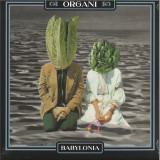
Well-versed in vintage vernaculars, Oakland-based producer/musician Mike Walti is about to return with his sophomore offering under the Organi moniker – as new album “Babylonia” follows 2020’s “Parlez-vous Français?,” a landmark in vibe acquisition ever since.
Wyldwood Studios is a portal. It’s a secret gateway to analog spheres. Cross the threshold and you’ll feel the difference: you can pick any ol’ time, any place, any tongue or vibe, in fact. Hit the dancefloor in 1967, feel that plushy loveseat in the early 70s. It’s a welcoming place where better, saner vibes are still within reach. Fueled, at least in part, by those long-classic 12”s on the walls – just imagine the sepia-tinted countenance of Melody Nelson alongside actual Birkin sans wig, right next to Shadow’s immortal crate diggers, forever blurred –, and channeled through ancient time travel devices such as the MCI 416B only to arrive on classic 2-inch tape (MM1000 aka Ol’ Bessy), it’s a haven for all things organic, for all things imbued with that warm élan. Built and run by Oakland’s own Mike Walti, countless artists from many different genres have felt that flair, creating sonic spheres and moving back and forth along the malleable axis that is space-time. Capturing magic.
Emerging from this unique portal back in 2020, Walti’s aka Organi’s first studio album was a stunning answer to its titular question – “Parlez-vous Français?” It was a soothing, somewhat psychedelic trip so magnétique and alluring that it immediately brought back those bits of Franglais you never knew you remembered. Whereas the debut LP indeed felt like a spontané voyage to the French Riviera ca. 1968, its follow-up “Babylonia” is so much more than linguistic confusion and ancient Akkadian Rhythms. Using that hidden portal near Alameda’s finest port to access all kinds of remote regions and sonic spheres, it’s super tight and feels, well, decent, even though, just like the ol’ Babylon, it’s full of surprising tongues and dreams, schemes and melodies.
“Where do we go from here?,” someone asks in opening “Organii-“ – all majestically cinematic boom bap, buoyant bass, sick strings. A fittingly massive opener that feels like cracking open a cold one after long weeks at work (that ecstatic “ahhhh”), it perfectly sets the tone for another half hour of pure time traveling, globe-spanning bliss. Whereas that certain prédilection pour all things French makes “La Rockette” so tempting and tantalizing (think MalMalNonBien), the sophomore album’s Berlin-based guest singer Nana Lacrima soon takes us elsewhere: title track “Babylonia” spins ever so softly, like a magic lantern, with images of dreamier Stones Throw funksters or Savath y Savalas looming over the steady flow of an arrangement that washes you clean like an ancient, unpolluted River Euphrates or Brazil’s actual Amazon. A sexy Portuguese-flavored anthem, occasional guest singer Alix Koliha also enters the scene to add yet another layer of French chic to this Brazilian landscape. Next, we’re back at the Riviera, but the “Italiano” version of it, splendido sunsets and bell towers in the distance, the ragazze laughing and shaking it up, perhaps even some Portofino Gin so you can really feel that “me ne batto il belin,” as your fingers align form some half-serious “ma che vuoi?”
Tim Maia-penned “Padre Cicero” (1970) deals with the stunning transformation of the titular hero – “De reverendo a lutador,” and what a soaring, sensual hook –, and Organi’s take on Elephant Memory’s “Old Man Willow” (now an “Old Man Waltz”) perfectly underlines what Walti’s Wyldwood endeavor is all about: Easy-Going Experimental Dream Pop, fueled by Gainsbourg, Broadcast, Stereolab, etc.
Later on, even though something seems to be tres complique in “Remembering Anna,” it all sounds carefree like a spontaneous Friday afternoon with a bottle of fine wine. Right before the outro, key album guest Yea-Ming Chen (of Yea-Ming & The Rumors) returns to the mic, adding her dark and dusky trademark timbre to melancholy anthem “Pictures Of Your Face”. Reminiscent of Nico and Trish (rip & rip), it’s a track that’s both dark and strangely propelling, hypnotic and hip-shaking.
A third generation Bay Area native, Mike Walti aka Organi has been running Wyldwood Studios in Oakland CA for some 15+ years (recording artists like Tommy Guerrero, Spelling, Why?, Latyrx, Del, Dan The Automator, and Big Freedia, to name but a few). A multi-instrumentalist who’s obviously in love with the 60s/70s, he loves to work with analog equipment (“We just love us some analog!” “Just listen to those relays purr…”). Recorded and mixed by Mike Walti at Wyldwood, “Babylonia” will be released on vinyl/digital by Alien Transistor.
- Yellowstone Theme
- Returning
- Through The Ages
- The River
- Regret
- Wandering
- Reunion
- Let Them Come
- Expansive Horizon
- Dawn
- Trapped Souls
- Mourning
- Adagio
- Proud Thieves
- Lost And Found
- Burying Secrets
- Valley Of The Soul
- Stratus
- Unimagined
- Crimes Of Heritage
- Impressions
- Code White
- Shame Hurts The Most
- Yellowstone Main Titles
180g Black Vinyl[39,08 €]
"Yellowstone is an American neo-Western drama television series. The series stars Kevin Costner, Luke Grimes, Kelly Reilly and follows the conflicts along the shared borders of the Yellowstone Dutton Ranch, a large cattle ranch, the Broken Rock Indian reservation, Yellowstone National Park, and land developers.
The first part of the fifth and final season premiered on November 13, 2022, with the second part scheduled to premiere on November 10, 2024.
Composer Brian Tyler, who once worked and performed in a Native American musical group, said he worked hard to blend his knowledge of traditional Native American music with the melting pot of western cultures in his score.
“What I ended up doing was finding ways to incorporate some of the percussion, some of the woodwinds, some of the instrumentation and weave it into things like cellos, basses, cimbaloms and all these exotic instruments,” Tyler said.
This is a limited edition of 500 copies on red coloured vinyl. The package includes an insert. "
- 1: Kitaro Rides A Boat
- 2: Daily Hotel
- 3: Slowly Walking
- 4: Piggyback
- 5: Castle Ruins
- 6: In The Can
- 7: Came To Sell Water Meter By Measure
- 8: Eiji Mitooka’s Arrangements
- 9: Cheap Flat
- 10: Year One And Public
Kumio Kurachi is a Japanese singer-songwriter who has been active since the 1980's.
This is his 11th solo album and only the second to be released outside of Japan following ‘Sound of Turning Earth’ (2018) on bison. Though his songs are written and performed primarily on guitar, “Open Today” is a return to Kurachi’s full, multi-instrumental recording style - featuring drums, bass, strings, keys and Kurachi’s rich, distinctive vocals in multiple voicings. Incredibly, all instrumental performances and arrangements were performed and recorded by Kurachi himself - marking a brilliant return to the fully fleshed out visionary world we fell in love with on Supermarket Chitose (Enban, 2006). The super fine detail and dense landscapes of ‘Open Today’ should come as no surprise really - Kurachi is an illustrator by trade and it bleeds right through to his music. Even to the non-native speaker Kurachi’s vocals hold centre stage - at times enormous and thundering over urgent guitar and toms, then switching to softly spoken words amongst keys. Frequently Kurachi multiplies, whether multitracking himself or summoning voices for the characters he writes from sightings on train platforms or supermarkets. His lyrics - translated to English for both formats - are more like poetry, and though written about the mundane they quickly become surreal, bringing the quality of dreams into the everyday. The hours spent on buses, trains or walking home towards a cheap flat - familiar to us all - are catalysts for microcosms of detail.
Again, we shouldn’t be surprised - Kurachi is well known in Japan for winning the national championship of NHK's "Poetry Boxing" in 2002, which also might explain his amazing Discogs photo. Poet, illustrator, multi-instrumentalist - Kurachi is thought of by many as a genius. He’s worked with Jim O’Rourke, Tori Kudo, Eiko Ishibashi and Taku Unami (who did the mastering on this LP). There are lines to be drawn between Kurachi and Kazuki Tomokawa or Kan Mikami, but also Francis Plagne and Fairport Convention.
Ultimately though there is nothing else like it - it’s a brand of strange songcraft that’s totally captivating.
180gram HQ pressing on Seaside Blue blue colored wax. Non-Returnable.
Old school style tip-on sleeve & insert.
Lacquer cut by Kevin Gray at Cohearent Audio.
First-time vinyl reissue.
Safari was a jazz-fusion unit led by keyboardist Toshiyuki Daitoku, who had recorded with the likes of George Otsuka and Mukai Shigeru, and Gregg Lee, a Californian who had previously played in fusion bands such as Caldera and Native Son.
This band, and this album, function as critical missing links that takes one from The Fall to Yard Act, from Television and The Minutemen to Parquet Courts and Sleaford Mods, from punk as a sound to punk purely as an ethos. While any Van Pelt album is a stand alone album, the unique approach they take begs one to enter their world and dig deep in.
RELATED TO: The Lapse, Native Nod, St Vincent, Blonde Redhead, Enon, Jets to Brazil, Vague Angels, Ted Leo and the Pharmacists, American Football, Texas is the Reason.
‘The lines between post-hardcore, indie rock, and emo blurred on the two mid-’90s full-lengths from the Van Pelt.’ Pitchfork
‘New York City’s The Van Pelt are an influential, but too often overlooked indie rock band -- cult favorites for many an emo-inclined crate digger.’ Consequence of Sound
‘...should be mentioned a lot more than they are when you talk about the history of emo.’
Washed Up Emo
Back in the day there was this thing called an A&R guy. They would hang out at small venues looking to throw money at the next big thing. In the early 90s, everyone was looking for the next Nirvana of course. NYC's The Van Pelt had just released an album of anthems called "Stealing From Our Favorite Thieves" that seemed to be just that. The only thing is, they didn't want to sign. Legend has it $2 million was turned down over pierogies and coffee one Monday morning because The Van Pelt didn't want to risk crashing and burning. Instead, they were gunning for a long and stable stride even if that meant they would largely remain out of the public's eye forever.
Lack of willingness to play the game didn't mean people weren't waiting with baited breath for their follow up album though. In 1997 The Van Pelt released "Sultans of Sentiment", an album nearly devoid of the anthems and licks people were expecting. In fact, it's a complete bummer of an album that subjects the listener to the point on life's curve where the hubris of youth gives way to a cresting crashing defeat no kid with heart could ever have seen coming. Seeing as humanity are sick fuckers who revel in the misery of both themselves and others, the popularity of Sultans grew and grew and continues to win new loyal fans even today. It's for this classic album The Van Pelt has never fallen off the radar.
That being said, their swan song "The Speeding Train" was recorded while they were working on their third album. In any other age, in any other way, this song would have been a hit. The Van Pelt broke up mid-recording, released Speeding Train as a single, and the rest of the songs from that session didn't see the light of day until they were released in 2014 as the "Imaginary Third" lp.
Why are we here talking about them today in 2023? Because in preparation for the release of "Imaginary Third" The Van Pelt started playing some reunion shows. Soundchecks revealed to them that this band has a voice that was prematurely muted by their inability to see clearly in the thick of it. Returning to explore just what that is 25 years later has led to this first collection of 9 songs, "Artisans & Merchants". This is not a reunion album. This is vindication for that decision made over pierogies and coffee decades ago. The Van Pelt is a band in it for the long haul, free from whatever trappings the mayflies of trends and markets may bring.
For lovers of The Van Pelt, listening to "Artisans & Merchants" is like hearing the voice of a dear friend you haven't seen in years, a friend you used to share countless beers with over banter that went nowhere other than delivering a solid night. Your friend is older, they've changed. In some ways you're worried for them, looks like they might be teetering on the brink of something. In other ways it's the same old them, a nugget of a soul too unique to ever be altered. It's for those unfamiliar with The Van Pelt though for whom we should be truly jealous. This is a stand alone album, incredible vital song writing in and of itself regardless of the long history this band has. The climax of the single "Image of Health" perhaps describes the beautiful desperation best: "And you never felt more alive / Than when the priest came to read you your rites!"
Way back in 2008 Soul Junction released a 45 on Duane Williams “Yes My Love Is Real” with Duane being one half of the Detroit husband and wife singing duo Beverley and Duane. The duo under the guidance of their lifelong friend Will Hatcher recorded six songs of which two “ We Got To Stick Together” and “Glad I Got You Baby” were picked up by local Detroit label president Woodrow ‘Woody Wilson for release as a 45 single on his Fee label. The popularity of the 45 was to attract attention from the major Ariola label, who picked it up for national distribution during 1978 leading to the subsequent Ariola album ‘Beverley & Duane”. As the 1980’s dawned Beverley and Duane recorded a solitary 45 single for the independent Detroit Brown Bomber label “Love/You Belong To Me”. The label was owned by John L. Barrow a nephew of former heavyweight boxing champion Joe Louis, (Brown Bomber being Louis’s nickname). Beverley and Duane later moved to the west coast until their amicable divorce which led to Duane returning to his native Detroit to reacquaint himself with his former mentor Will Hatcher. This meeting of old friends led to the creation of Duane’s first solo project which Will brought to Soul Junction in late 2007. Hot on the heels of Duane’s hugely popular Soul Junction 45 came his subsequent CD album “These Songs Are For You” (SJ5001) released in 2009. Contained within this album was the very pertinent gospel/social commentary song “Father We’re Having Trouble” a song which two very close and knowledgeable friends of mine the late John Anderson and Bill Randle claimed had all the right ingredients for a potential hit record. Over the ensuing years this song has always remained in my thoughts until a few years ago I broached the idea with my good friend Jesse James recording a cover version of it, Jesse upon hearing the song was very receptive to the idea. Another period of time elapsed before we again reignited the idea. A decade or so on from Duane’s original version and the lyric’s of this particular song still remain as pertinent as ever, if not more so! During early 2020 Jesse entered, Con Funk Shun multi-instrumentalist and vocalist Felton Pilate’s Felstar Studio in Atlanta to lay down the basic tracks with Felton acting as co-producer on this project. Everything was progressing nicely until a worldwide pandemic intervened. With Jesse locked down in his new home on the West Coast and Felton in Atlanta the project unfortunately came to a holt. During this enforced period of inactivity further racial and political upheaval occurred which only added more poignance to the project. Eventually with the lifting of lockdown restrictions Jesse finally made it back to Atlanta to finish the project, the fruits of which you have before you now.
"“There are times in life when you’re so present, so fully immersed in the moment that you can catch a glimpse of another universe, of a realm beyond our own,” says Louisa Stancioff. “It might last for a second or an hour, it might come in the midst of bliss or sadness, you might be alone or with a lover, but when it happens, there’s nothing quite like it.”
When We Were Looking, Stancioff’s stunning Yep Roc debut, is full of those moments. Written and recorded through a period of deep heartbreak and uncertainty, the collection is the raw and unflinching work of a nomadic soul who spent stints living in Alaska, California, New York, and North Carolina before returning home to her native Maine, one that holds nothing back in its bittersweet reckonings with pain, healing, acceptance, and growth. Stancioff writes with a cinematic eye here, conjuring up richly detailed stagings for her emotionally-charged character studies, and the guitar-and-synth-focused arrangements are immersive and nuanced to match, thanks in part to the evocative sonic landscaping of producer/keyboardist Sam Kassirer (Josh Ritter, Craig Finn), who proves to be an ideal creative foil on the record. Add it all up and you’ve got a dreamy, nostalgic Polaroid of an album that blurs the lines between indie stoicism and folk sincerity, a lush, cathartic work that hints at everything from Phoebe Bridgers and Arlo Parks to Big Thief and Waxahatchee as it learns to find the beauty in grief and rebirth."
From Cape Town to Cairo, and now to fans, stages and screens around the world, PJ Morton shares his newest album, fully made in the motherland. Cape Town to Cairo is a collection of songs that he created in 30 days throughout 4 countries in Africa — South Africa, Nigeria, Ghana and Egypt. Described as the best trip of his life, this transformative journey began as just the seed of an idea last fall, but instantly grew into his most sonically-sprawling and immediately-inspired record to date. With no music, lyrics or preconceptions, he stepped foot onto the continent with two thoughts: a wild dream to write and record his next LP in less than a month, and a mission to immerse himself in as many different cultures, stories and communities as he could.
Surrounded by featured collaborators like Fireboy DML, Mádé Kuti, Asa, Ndabo Zulu, and Soweto Spiritual Singers, as well as additional producers including P.Priime and The Cavemen., his own live band and local musicians, PJ Morton used music as his common language. Always his greatest way of communicating, he expressed his feelings and experiences of Africa through songs he and others were forming together on the spot, side-by-side in different studios, cities and towns for the very first time. None of the tracks were written before he arrived or after he left, and the arrangements showcase both the countries’ native genres as well as the innate, stylistic instincts that have made Morton a 5x GRAMMY-winner and 20x GRAMMY-nominee, whether it be his soul, R&B and gospel roots, or the pop prowess he has further honed as a member of Maroon 5.
“When you’ve been in music as long as I have, you’re constantly looking for inspiration,” says PJ Morton. “And you’re looking for the things that made you want to do it in the first place. I’ve made albums every type of way you can think, so I wanted to try something I hadn’t done before. As a Black American who had never been to South or West Africa, I knew there was something there waiting for me. So I put a little pressure on myself to make a full record in a month, but I also said, ‘If I’m gonna go to Africa, I want to see Africa.’ We made music, but we also formed connections. We made new friends, and this is just the start.”
ESSENCE adds, "This trip is not just a physical move, it's a spiritual return…The soul of Africa pulses through every note he plays and every word he sings,” and VIBE adds that “the multi-faceted artist is fully embracing a new phase in his life.” Cape Town to Cairo marks PJ Morton’s first album since 2022’s Watch The Sun, which featured collaborations with Stevie Wonder, Nas, JoJo, Wale, Jill Scott, Alex Isley and more. Since then, Morton has become the first Black composer to write an original song for a Disney attraction, having just finished making the music for Tiana's Bayou Adventure, opening on June 28th, 2024 at Disney World and Fall 2024 at Disneyland. He also won his latest GRAMMY earlier this year, worked with Samara Joy on “Why I’m Here” for Regina King’s Netflix film Shirley, and landed a cover of his song “Don’t Let Go” as the soundtrack to Apple’s iPhone 15 commercial.
PJ Morton recently returned from headlining his debut shows in Asia, New Zealand and Australia, and announced an extensive Cape Town to Cairo Tour for North America summer and fall 2024. Following iconic performances at New Orleans Jazz Fest, The Kennedy Center, Roots Picnic and Newport Jazz Fest, Morton will embark on a run of more than 25 dates across the country, including New York City’s Beacon Theatre, Chicago’s Chicago Theatre, Nashville’s Ryman Auditorium, Los Angeles’ The Wiltern, and dozens of others.
On the heels of his headline tour and Maroon 5’s Las Vegas residency, PJ Morton will publish a life-spanning new book titled Saturday Night, Sunday Morning. The memoir sees him recounting and reflecting upon a trailblazing path that continues to defy expectations and straddle the tensions of music and faith, race and culture, expression and identity. As the son of two pastors and gospel artists, Morton grew up grounded by the sound of the Church, but soon found himself drawn to R&B, pop and soul, writing songs that the industry, his family and community struggled to understand. In the face of mounting pressure, rejection and constant miscategorization, he committed himself to a steadfast path of independence: making music on his own terms, launching his own record label, joining one of the biggest bands in the world while staying true to his New Orleans roots. The risks he took paid off, and through his transformation from preacher's kid to the busiest man in showbiz – performing everywhere from his local congregation to the Super Bowl, collaborating with everyone from his father to Stevie Wonder, Erykah Badu, Jon Batiste and Lil Wayne – he hopes to encourage readers and listeners to overcome obstacles as they seek their dreams.
Saxophonist Walter Smith III pays homage to his hometown of Houston, Texas on his sophomore Blue Note album, three of us are from Houston and Reuben is not, the follow-up to 2023’s return to casual. The album’s wry title signifies the lineup, which includes fellow Houston natives – pianist Jason Moran and drummer Eric Harland – while bassist Reuben Rogers, who hails from the Virgin Islands, rounds out the quartet. Together they enliven 10 compelling Smith originals and an imaginative rendering of a Sam Rivers composition – all of which speaks to Smith’s ascending status as one of modern jazz’s most engaging talents of his generation.
The Petersons’ were a vocal trio from Waycross, GA, their performing name came from their founder, lead vocalist and drummer Kenneth Peterson, along with Keyboard player Salem Chatman and vocalist/bassist Johnny Members. The trio regularly performed shows along America’s East Coast, and it was while working in Philadelphia during early 1973 that the group answered an advertisement in Billboard Magazine quote “Masters Turned Down? We Are Looking for New Acts to Sign, Contact Omega Sound Productions, Philadelphia, PA”.
Omega Sound was a fledgling independent Recording Company formed by Frank Fioravanti a budding songwriter and former Encyclopedia Britannica Salesman for the initial purpose of find some extra work for the musicians of The Philadelphia Orchestra who were looking to earn some side money. As a result of answering the Billboard advertisement ‘The Petersons’ found themselves booked into Frank Virtue’s recording studio to record two Fioravanti and the late Alan Felder penned songs, the up-tempo “What’s It Gonna Be” backed by the melodic “Just What I’ve Been Looking For” Mel Omega (1833). With the release failing to make much noise, The Petersons returned to their native Georgia where they continuing to perform and record but under the group name of ‘Toll Darkness’. Fast forward circa 30 years and a couple of copies of this obscure Mel Omega 45 was introduced into the UK by Soul Bowl’s John Anderson where they gained belated recognition initially at the Soul Essence Weekenders through resident DJ Steve Guarnori with “Just What I’ve Been Looking For” being his chosen side. These initial copies had a paper sticker on them crediting the Artist as ‘Toll Darkness’ but the subsequent find of further copies with no sticker coverings, revealed the real artist to be ‘The Petersons’, intriguing? The reason behind the differing artist names is reputedly assumed to be that Ken Peterson took some copies of the Mel Omega 45 back to Georgia and pasted the ‘Toll Darkness’ group name stickers over the Petersons label credits to enable him to sell them at shows with his other ‘Toll Darkness’ 45 “Party/Love Makes Me Do Foolish Things on Alpha Records. The up-tempo backing track of The Peterson’s “What’s It Gonna Be” was a Frank Virtue arrangement that he had great faith in, hence it’s usage on plethora of other Philly artists recordings, i.e. Fred Mark, Liza Mae, Michael Christian, Cody Michaels etc over different record labels, Melomega, Concept, Fox Century Plaza and Merben.
Frank Fioravanti also founded the Sound Gems label which brought us the timeless classic “Your My Main Squeeze” recorded on the New Beford, MA group ‘Crystal Motion’. Omega Sound’s most notable achievement would be William DeVaughn’s 1974 hit “Be Thankful For What You Got”.
Wildly acclaimed Grammy-winning artist Flume returns with a
new album, ‘Palaces’, on Transgressive Records.
‘Palaces’ began to take shape when Flume returned to his
native Australia after struggling to write music in Los Angeles at
the beginning of the pandemic. Settling in a coastal town in the
Northern Rivers region of New South Wales, Flume quickly
found the inspiration he needed through reconnecting with the
nature around him - the rolling hills, walking around barefoot,
the green colour the sky turns before a big storm, growing and
eating his own vegetables, the smell of rain.
He and his neighbour and long-time collaborator, the visual
artist Jonathan Zawada, became fascinated by the local wildlife,
in particular the birds, collecting field recordings that ultimately
worked their way in to the album. As Flume continued to forge a
strong connection to his surroundings, the album he wanted to
make started to form, eventually adopting a title to properly
highlight the luxury and magic of the natural world.
‘Palaces’ is his most confident, mature and uncompromising
work to date, a true testament to nurturing the relationships that
make us whole and bring us peace.
The album features a host of vocalists and collaborators, its
cast list spanning new and household names from around the
world - breakout US star Caroline Polachek, British polymath
icon Damon Albarn, Spain’s Vergen Maria, France’s Oklou and
fellow Australian Kučka, who returns following her standout turn
on ‘Skin’.
Deluxe CD including two exclusive bonus tracks in 6-panel
heavyweight board digipack with tube pocket and 8-page
booklet. Matte finish on digipak board with glossy spot UV
finish.
CD digipack with poster insert.
Black 180G double vinyl in widespine jacket with full colour
centre labels and digital download card.
Japanese vibraphonist and marimba player Masayoshi Fujita returns with Migratory, his masterful new solo album, where his sonic explorations into the unknown continue.
In 2019, after 13 years of living in Berlin, Fujita returned to his native Japan with his wife and their three children, fulfilling his life-long dream of living and composing music in the midst of nature. The family found their new home in the mountain hills along the coast of Kami-cho, Hyōgo, three hours west of Kyoto.
Once settled in, Fujita spent his time turning an old kindergarten into his own music studio, Kebi Bird Studio, which became the birthplace of Migratory. On his new album, the composer and producer masterfully reimagines and mesmerises with his trademark sounds of vibraphone, and resumes his experimentation with the marimba and synthesisers that he first incorporated on his 2021 album, Bird Ambience, which followed the release of his acclaimed vibraphone triptych: Stories (2012), Apologues (2015) and Book of Life (2018).
On Fujita’s ever-evolving list of collaborators, Migratory introduces vocals from Moor Mother on ‘Our Mother’s Lights’ and Hatis Noit on ‘Higurashi’, as well as shō and saxophone to its soundscapes. Whilst at a music residency in Stockholm in 2021, Fujita met Swedish shō player Mattias Hållsten. Although it was a brief encounter, the two musicians stayed in touch. During a visit to Japan, Hållsten stopped by the studio and played on three of the tracks, including the alluring album closer ‘Yodaka’, exceeding Fujita’s own expectations.
Japanese vibraphonist and marimba player Masayoshi Fujita returns with Migratory, his masterful new solo album, where his sonic explorations into the unknown continue.
In 2019, after 13 years of living in Berlin, Fujita returned to his native Japan with his wife and their three children, fulfilling his life-long dream of living and composing music in the midst of nature. The family found their new home in the mountain hills along the coast of Kami-cho, Hyōgo, three hours west of Kyoto.
Once settled in, Fujita spent his time turning an old kindergarten into his own music studio, Kebi Bird Studio, which became the birthplace of Migratory. On his new album, the composer and producer masterfully reimagines and mesmerises with his trademark sounds of vibraphone, and resumes his experimentation with the marimba and synthesisers that he first incorporated on his 2021 album, Bird Ambience, which followed the release of his acclaimed vibraphone triptych: Stories (2012), Apologues (2015) and Book of Life (2018).
On Fujita’s ever-evolving list of collaborators, Migratory introduces vocals from Moor Mother on ‘Our Mother’s Lights’ and Hatis Noit on ‘Higurashi’, as well as shō and saxophone to its soundscapes. Whilst at a music residency in Stockholm in 2021, Fujita met Swedish shō player Mattias Hållsten. Although it was a brief encounter, the two musicians stayed in touch. During a visit to Japan, Hållsten stopped by the studio and played on three of the tracks, including the alluring album closer ‘Yodaka’, exceeding Fujita’s own expectations.
Trying to define what it is that makes Dr. John special is much like trying to define the word "soul'—you can surround it. But nailing it down is a whole ‘nother smoke. You can point to his sense of history, how he's never forgotten from whence he came, how his music always returns to his roots, even honoring the proud heritage of his native New Orleans. You can dissect his technique, marveling at the adroitness of the hands right and left; admiring the strong second line; respecting the tributes to his inspiration, Professor Longhair, apparent at every turn. And you can note how his peers consider his presence at a session as lending instant credibility to that particular project. "Upon the release of The Brightest Smile in Town, the reviews were effusive. Chicago critic Bill Knight’s comparisons to Fats Waller and James P. Johnson were high compliments indeed. Downbeat’s Jim Roberts called the playing 'graceful'; noting that the LP had a broader scope than its predecessor. Jazz Times’ Rhodes Spedale summarized: 'He’s never been in better form than here.' We kept in touch over the years. Mac was always generous and encouraging. Little did we know when The Brightest Smile in Town was released, what accolades lay ahead for Mac Rebennack and Dr. John. From the innovative guitar triumph 'Storm Warning' on the Rex label in 1959, to his 2012 Grammy-winning Locked Down album, Mac’s musical light shone brightly for seven decades. We were fortunate he chose to play for us. I’m sure he’d say that he was lucky too." - Jack Heyrman, Clean Cuts Producer